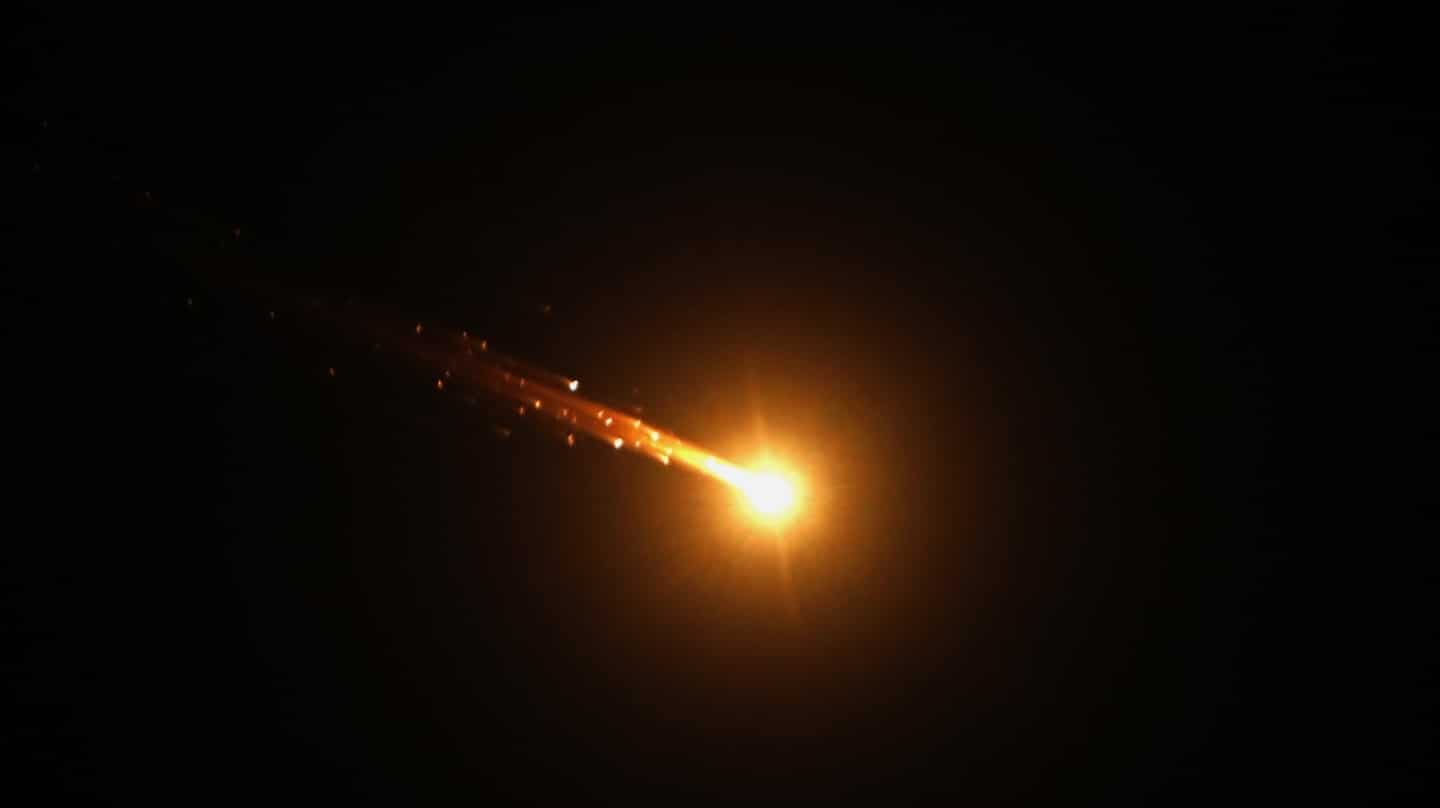
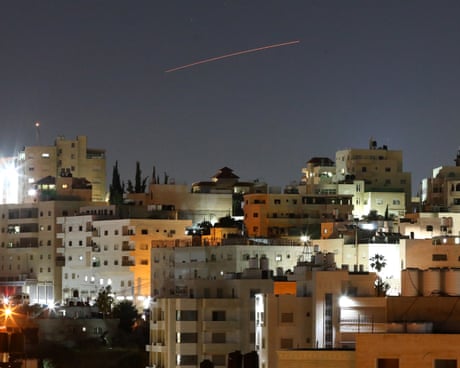
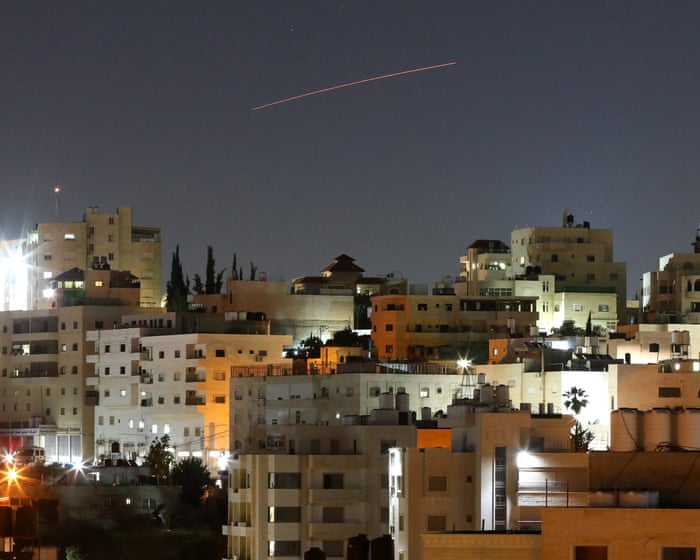
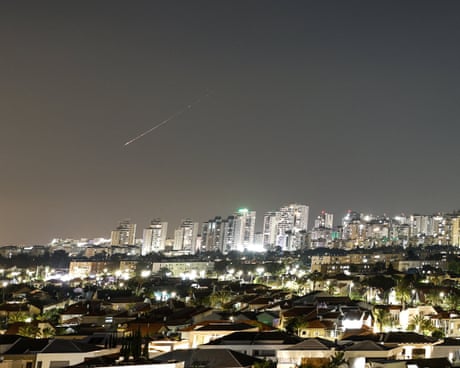
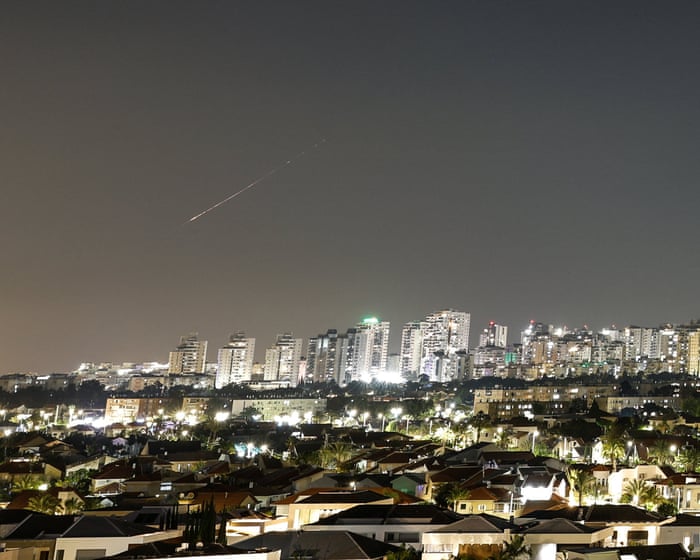
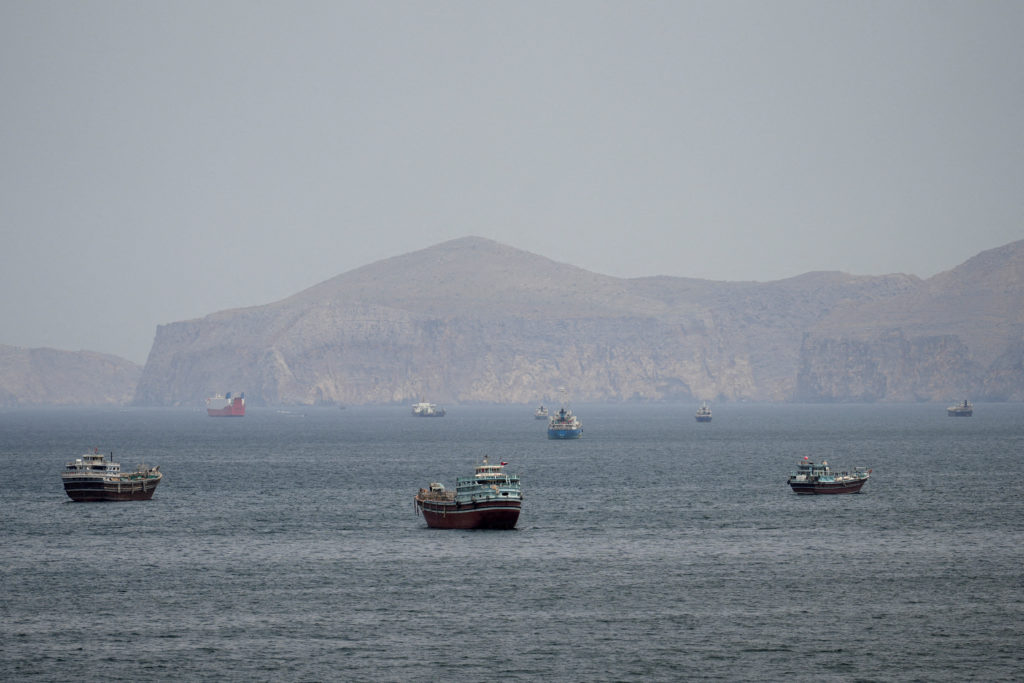
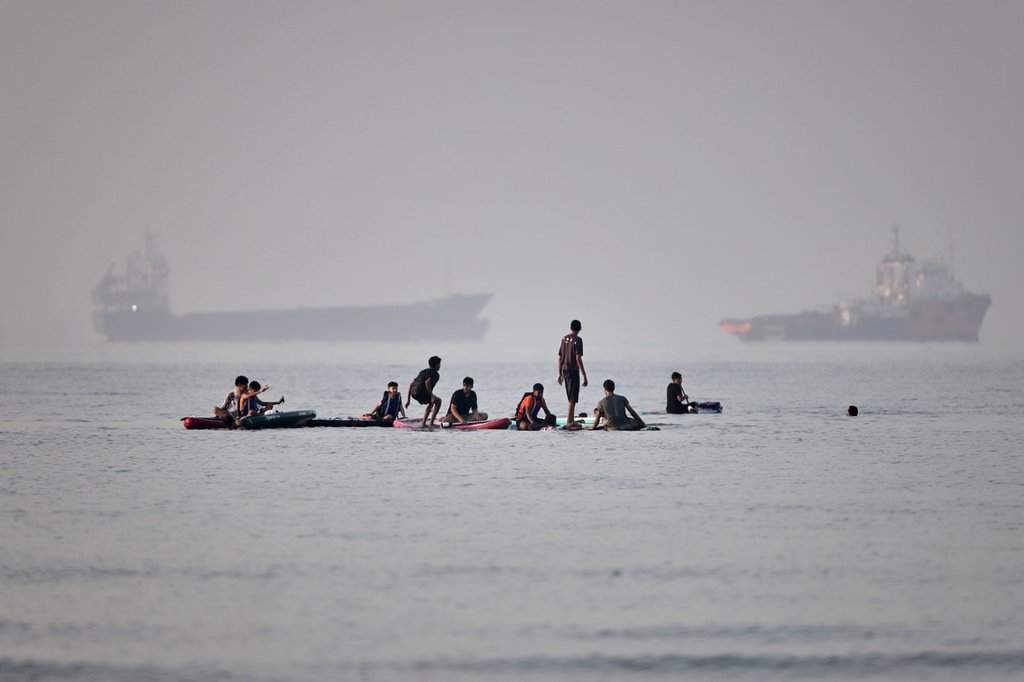
Am Sonntagabend meldete die israelische Armee Raketenstarts aus dem Iran. In zahlreichen Gebieten Nordisraels, darunter auch in der Region Haifa, Lwurde uftalarm ausgelöst. Später meldete die israelische Armee, bisher alle aus dem Iran auf Israel abgefeuerten Raketen erfolgreich abgefangen zu haben, es gäbe jedoch weitere Raketenstarts aus dem Iran und die Bedrohung bestehe weiter. Ali […]
El Ejército israelí ha bombardeado este lunes el complejo petroquímico de Mahshahr, situado en el suroeste de Irán. Esta contundente respuesta militar se da apenas horas después de la embestida inicial de Teherán.
Según ha detallado un breve comunicado militar emitido a las 8.00 hora local (5.00 GMT), la Fuerza Aérea israelí ha sido la encargada de atacar "varios objetivos" de estas estratégicas instalaciones energéticas iraníes. "Hace poco, la Fuerza Aérea israelí atacó varios objetivos en el complejo petroquímico de Mahshahr, en el suroeste de Irán. Más detalles próximamente" decía el comunicado.
Las autoridades de la provincia iraní de Juzestán no han tardado en reconocer el impacto de los bombardeos. A través de medios oficiales como la cadena Press TV, el encargado de seguridad regional confirmó que la compañía petroquímica Karun en Mahshahr ha sido alcanzada por los proyectiles israelíes, lo que ha provocado "daños parciales" en diversas partes del complejo industrial.
La respuesta militar de Tel Aviv se ha extendido más allá de este complejo. Israel también ha informado de ataques adicionales a zonas del oeste y centro de Irán. El desafío bélico del Gobierno de Benjamín Netanyahu cobra especial relevancia por las presiones internacionales que lo rodeaban. Con la tensión en máximos desde el alto el fuego del pasado mes de abril, el presidente estadounidense, Donald Trump, intentó este domingo, sin éxito, aplacar la intención del primer ministro israelí de contraatacar a Irán. El mandatario estadounidense buscaba evitar a toda costa que la represalia hebrea entorpeciera las frágiles negociaciones que Washington mantiene con Teherán para intentar poner fin a la guerra.
El detonante directo que ha llevado a esta incursión en Mahshahr fue el ataque de Irán, que durante la noche del domingo lanzó sucesivas oleadas de misiles contra territorio israelí. El Ejército israelí se vio obligado a activar las alertas en "varias zonas" del norte del país tras la detección de una primera andanada de dos misiles, seguida inmediatamente de una segunda ráfaga. Este grave episodio ha supuesto el primer ataque de Irán contra Israel desde la tregua del pasado abril.
Frente a la amenaza iraní, la Fuerza Aérea israelí operó intensamente para "interceptar y atacar donde sea necesario". Pese a la magnitud de la ofensiva, el servicio de emergencias israelí, Maguén David Adom (MDA), confirmó la ausencia de víctimas o heridos. No obstante, los equipos del Servicio de Bomberos y Rescate de Israel tuvieron que desplegarse para inspeccionar varios puntos en los Altos del Golán tras recibir múltiples alertas telefónicas derivadas de los impactos.
Potential proposal would secure control of Diego Garcia base amid stalled UK plans to cede sovereignty of territory
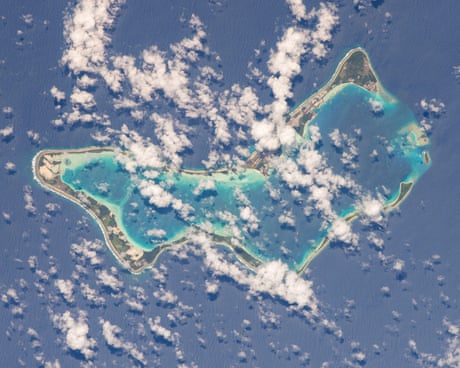
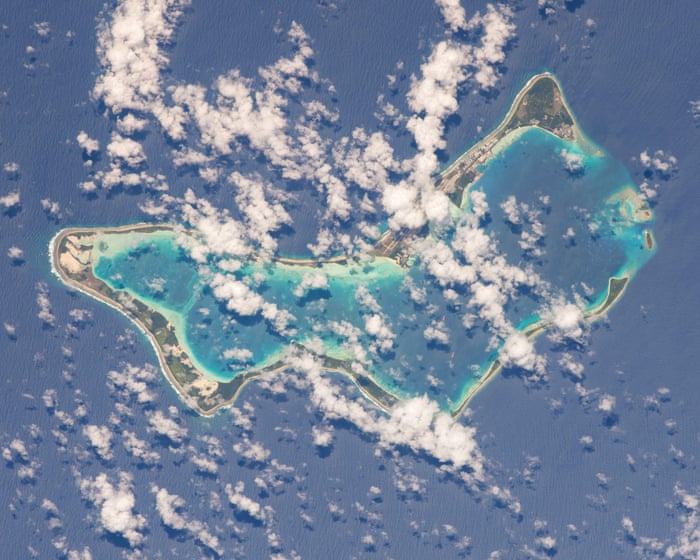
Donald Trump is reportedly weighing a plan to buy the Chagos Islands from Mauritius amid stalled plans from the UK to cede sovereignty of the territory, the Telegraph first reported.
The White House did not respond to the Guardian’s request for comment on the report about the potential plan.
Ancient Elamite ziggurat Choqa Zanbil in Iran. Credit: Wikimedia Commons, GFDL
In the Trojan War of Greek mythology, many nations were allied with Troy to fight against the Greeks. This included many of the nations of ancient Anatolia. Perhaps the most surprising participant in the Trojan War, however, was a prince from ancient Iran. He was Memnon, best known as the Ethiopian ruler who died at the hands of Achilles in the final year of the war.
Memnon, king of the eastern Ethiopians
Since Memnon is usually remembered as being a king of the Ethiopians, how can he have been from ancient Iran? The reason is that there was more than just one group of people known to the Greeks as Ethiopians.
For example, notice the words of Greek historian Herodotus of the fifth century BCE in his description of the large army of Xerxes the Great:
“Ethiopians above Egypt and the Arabians had Arsames for commander, and the Ethiopians of the east (for there were two kinds of them in the army) served with the Indians.”
This shows that the Greeks recognized the existence of Ethiopians outside of Africa. Specifically, these other Ethiopians lived in the east, evidently not too far from India. Since Memnon was the king of the Ethiopians, he could potentially have been the king of either the eastern Ethiopians or the African ones.
It is worth mentioning that in ancient Greek, the word Αἰθίοψ (Ethiops) was used not only to describe a specific group of people, but also more generally to refer to individuals with darker skin. The term is a compound of αἴθω (to burn) and ὤψ (face or appearance), literally meaning “burnt-face.” It appears frequently in early Greek literature, such as Homer’s epics, where Ethiopians are depicted as distant, noble figures living at the edges of the known world, rather than as members of a clearly defined nation.
The Ethiopians of Iran
Herodotus himself states that the city of Susa, the ancient capital of Elam (a prominent region in what is now Iran), was known as the city of Memnon. This suggests that Memnon was the king of the eastern Ethiopians, evidently a people in the region of Iran.
This is confirmed by Ctesias, just a few decades after Herodotus. According to this Greek historian, Memnon’s father, Tithonus, was the ruler of Persia. He was either subject to or allied with the king of the Assyrian Empire.
The territory of Persia in the time of the Assyrian Empire corresponded to a large part of what is now Iran. According to Ctesias, Memnon built a palace for himself at Susa. He goes on to claim that Memnon’s army, which he led to Troy, was composed of many Ethiopians and Susians, or inhabitants of Susa.
As for why the Greeks called the inhabitants of that region ‘Ethiopians’, we cannot be sure. However, it may be related to the use of the word ‘Cissians‘ (‘Kíssioi’ in Greek) for the inhabitants of the region of Elam. The Greeks might have confused this for ‘Kush’, the name for the kingdom of the Ethiopians south of Egypt.
How ancient Iran participated in the Trojan War
Ctesias provides the most detailed early account of this army from ancient Iran that fought in the Trojan War. According to Ctesias, King Priam of Troy was subordinate to the king of Assyria, named Teutamos. Due to the difficulties he was facing in the Trojan War, he sent word to Teutamos to ask for help.
As a result, Teutamos sent a large army of 10,000 Ethiopians and 10,000 Susians under the command of Memnon. This army from ancient Iran marched from the furthest corner of the Assyrian Empire over to Troy. Ctesias wrote:
“Memnon assisted the Trojans with 20,000 infantry and 200 chariots and… he was admired for his courage and for killing many Greeks in battle.”
Despite his prowess in battle, Ctesias goes on to explain that the Thessalians killed him. This refers to his death at the hands of Achilles, as per other sources. Achilles was from the kingdom of Phthia in ancient Thessaly.
Did an army from ancient Iran fight in the Trojan War?
Could Memnon have been a historical king or prince of Elam in ancient Iran? Some scholars have speculated that he might be identical to Humban-Numena I, the king of Elam in the Bronze Age. Furthermore, the latter half of his name is admittedly similar to ‘Memnon’.
However, he likely reigned in the first half of the 14th century BCE. Therefore, this king from ancient Iran lived too early to have fought in the Trojan War.
Two other possibilities are Humban-Numena II, possibly in the 11th century BCE, and Humban-Numena III, who lived at the end of the eighth century BCE. The latter’s name is often written in modern sources as “Humban-menanu.” The similarity to “Memnon,” while not exact, is there.
This latter candidate, although living much later than the traditional date of the Trojan War, is particularly noteworthy given Ctesias’ chronological information. He places Memnon’s activities at the height of the Assyrian Empire.
Another candidate from approximately the same time is a prominent Elamite known only as Menanu, referenced in a letter from Ashurbanipal, the king of Assyria. The letter makes it clear that Menanu is a supporter of Assyria. This fits what Ctesias tells us about Memnon.
However, this does not necessarily mean that an army marched from ancient Iran to fight in the Trojan War. In part, this depends on when the Trojan War occurred, a continued historical debate.
Nevertheless, the legend itself is clear. Memnon led an army from ancient Iran to Troy, where they fought in the Trojan War against the Greeks.
Iran launched missiles at Israel on Sunday in response to Israeli strikes on Beirut’s southern suburbs, shattering a fragile ceasefire and marking the most serious escalation since April, after 100 days of war.
A senior Iranian official has promised a “decisive and painful” response to Israel’s airstrikes on the southern suburbs of Beirut and, a few hours later, sirens sounded across northern Israel.
This blog is now closed – our live coverage of the Middle East crisis continues here
Donald Trump also aggressively pushed back against claims that he broke a key campaign promise to keep the US out of new foreign conflicts.
“Well, well, first of all, I didn’t guarantee no war,” Trump said during the Meet the Press interview. “Why would I have built the strongest military in the world?”
I Mondiali 2026 sembrano già essere pieni di problemi per le nazionalimusulmane. I controlli strettissimi degli Stati Uniti, uno dei tre paesi che ospiterà la competizione insieme a Messico e Canada, infatti, non stanno colpendo solo l’Iran.
Secondo quanto riferisce su X l’agenzia Tansim News, Ayman Hussein, stella del calcio iracheno, è stato bloccato in aeroporto e sottoposto a lunghissimi controlli: il calciatore è stato fermato e interrogato per setteore prima di essere autorizzato a entrare nel Paese.
“Perché l’America ospita la Coppa del Mondo se è così ostile nei confronti dei cittadini stranieri?”, si è chiesto Hussein. Anche il fotografo ufficiale della nazionale dell’Iraq è stato respinto al suo arrivo negli Stati Uniti e detenuto in aeroporto. Il visto di Tala Salah, questo il suo nome, è stato rifiutato all’ingresso e l’uomo è rimasto bloccato all’aeroporto internazionale di O’Hare per circa 12 ore.
Intanto l’ambasciatore iraniano in Messico Abolfazl Pasandideh, ha fatto sapere le condizioni di gioco della nazionale iraniana. I calciatori di Teheran potranno entragli negli Usa solo il giorno delle partite e poi ripartire poche ore dopo il fischio finale. Restrizioni americane che non renderanno sicuramente semplice la permanenza degli iraniani ai Mondiali.
“Possiamo entrare la mattina e dobbiamo ripartire lo stesso giorno”, ha affermato il diplomatico parlando con i giornalisti.
Per le tensioni tra Washington e Teheran, la nazionale iraniana ha trasferito il proprio ritiro a Tijuana, in Messico ma vicino al confine con gli Stati Uniti, rinunciando alla sede inizialmente prevista di Tucson, in Arizona. La rosa iraniana attraverserà quindi il confine solo per disputare gli incontri del girone programmati negli Stati Uniti, tornando subito in territorio messicano al termine delle partite.
The US and Israeli aggression against Iran, which began on February 28, has undermined confidence in the American administration, especially given that Donald Trump has repeatedly promised to renounce new wars of aggression. It has shaken international affairs, led to a serious energy crisis, seriously complicated the economic life of many countries in the Global […]
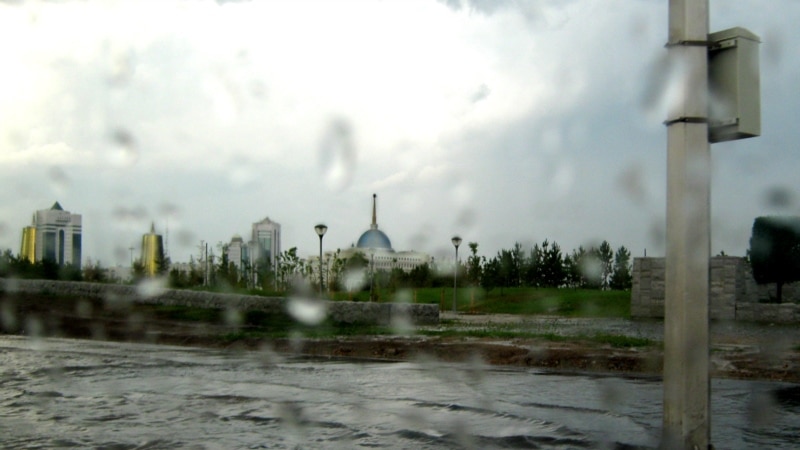
When Kazakhstan launched Central Asia’s first large-scale cloud-seeding program on May 17, it called it a high-tech response to drought, water scarcity, and accelerating desertification.
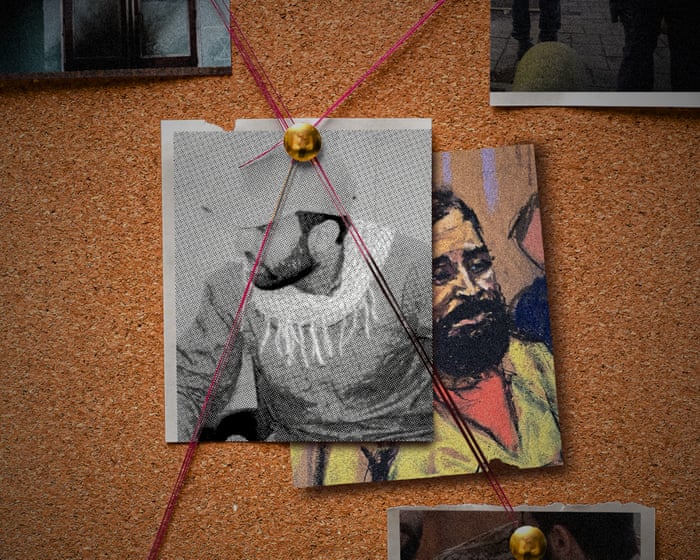
Legal papers, expert investigations and social media posts tell story of how a 32-year-old Iraqi appeared to run ‘proxy’ campaign
On Monday, a slightly dishevelled Iraqi man, shackled and dressed in beige prison overalls, was ushered into a Manhattan courtroom.
Mohammad Baqer Saad Dawood al-Saadi, 32, pleaded not guilty to a series of terrorism-related offences, then gestured toward the judge and prosecutors. “I’m a prisoner of war. I’m not a threat,” he told them. “Children and women are being killed by your rockets.”
Iran fired ballistic missiles and drones toward Bahrain and Kuwait that were intercepted early Saturday, Bahrain's government said, and called on Tehran to halt attacks on Gulf neighbors that test a fragile ceasefire in the Middle East conflict.
President Trump has told his aides that he may restart the full-scale bombing campaign against Iran if US troops are killed, The Wall Street Journal has reported, as the US and Iran have traded multiple rounds of attacks despite a nominal ceasefire. The report came after the president downplayed Iranian attacks targeting US bases in […]
President Trump on Thursday attacked House lawmakers as “unpatriotic” for passing a War Powers Resolution that would direct him to end the war with Iran, which he launched with Israel without congressional authorization, in violation of the US Constitution. The bill passed on Wednesday in a vote of 215 to 208, with four Republicans joining […]
President Trump on Wednesday downplayed Iranian attacks that targeted US bases in Kuwait and Bahrain, saying they may have been “slightly provoked” since the US launched strikes against Iran beforehand. “There’s a reason for everything, and we hit them pretty hard last night,” the president told reporters in the Oval Office. “Some people would say […]
Correction on June 4, 2026, at 3:09 pm: An earlier version of this article incorrectly stated that President Trump could veto the War Powers Resolution. The measure is a concurrent resolution, meaning the president cannot veto it. The House on Wednesday passed a War Powers Resolution that would direct President Trump to end his war […]
Por Alfredo Jalife Rahme El libro del 2005 Cómo los débiles ganan las guerras: teoría del conflicto asimétrico (https://bit.ly/43BOReX), del académico de la Universidad de Chicago y anterior analista de…
El Pentágono ha ocultado las cifras reales de muertos y heridos de las fuerzas de EE.UU. en la guerra contra Irán. Así lo informa el medio norteamericano The Intercept afirmó que…

 Login
Login