Reading view

Levissi: The Ghost Village in Turkey Once Home to 10,000 Greeks
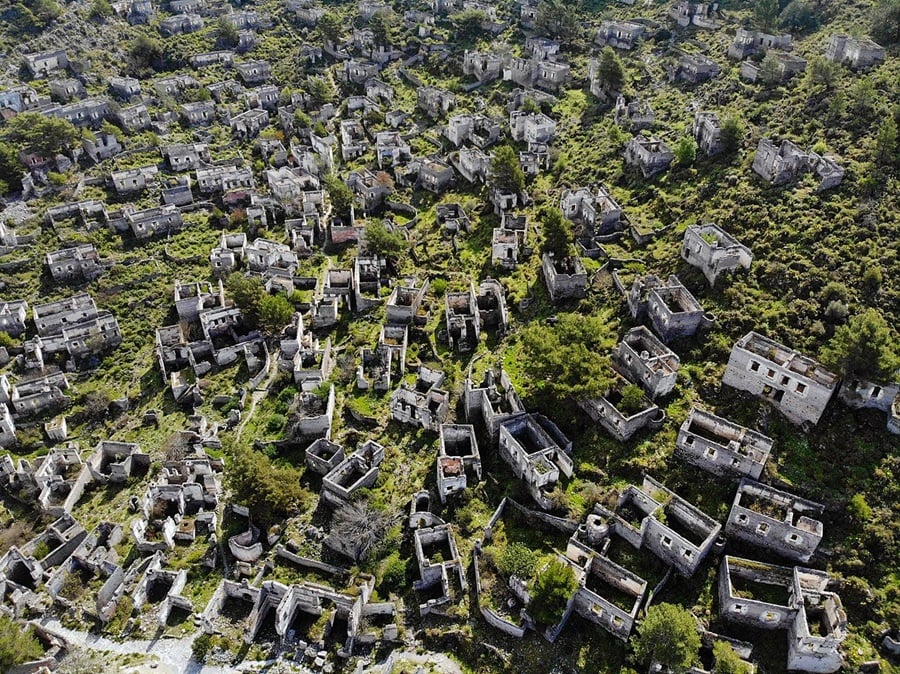
Levissi: The Abandoned Greek Village
Greeks of the 5,000-year-old village were ethnically cleansed and then forcibly expelled in 1922. Credit: Wikitestaccountlogin, CC BY-SA 4.0/Wikipedia

The ghost village of Levissi (known today as Kayaköy) was once a bustling Greek village on the slopes of a hill in the district of Fethiye, Turkey.

It was practically right across from the island of Rhodes.

Greeks of the 5,000-year-old village were ethnically cleansed and then forcibly expelled in 1922, causing 10,000 people to leave behind the land of their heritage.

It was anciently known in Greek as Karmylessos. In late antiquity, the inhabitants of the region had become Christian, and, following the East-West Schism with the Church of Rome in 1054 AD, they came to be called Greek Orthodox Christians.

These Greek-speaking Christian subjects and their Turkish-speaking Muslim Ottoman rulers lived in relative harmony from the end of the turbulent Ottoman conquest of the region in the 14th century until the early 20th century.

The massacres of Greeks and other Christian minorities in the Ottoman Empire during World War I (1914–1918) led to the almost total depopulation of the town’s 6,500 Greek inhabitants by 1918. These former inhabitants were deprived of their properties and became refugees in Greece, or they died in Ottoman forced labor battalions.

Following the Greco-Turkish War of 1919–1922 and the subsequent Treaty of Lausanne in 1923, the town’s Greek Orthodox residents were exiled.
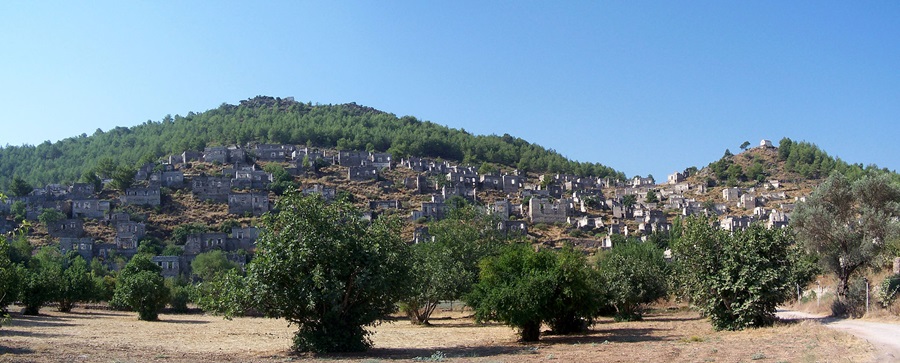
Levissi: The Abandoned Greek Village
A panoramic photo of the abandoned village. Credit: Darwinek, CC BY-SA 3.0/Wikipedia

Greek ghost town

Since then, the homes have remained vacant, left to decay after being further damaged by a huge earthquake in 1957.

Houses and churches in the area have been used for summer festivals. However, plans to lease the area and auction it off for commercial interests have caused local Turks as well as Greeks with roots in the area to protest. They are worried that the investors could further ruin the authenticity of the area.
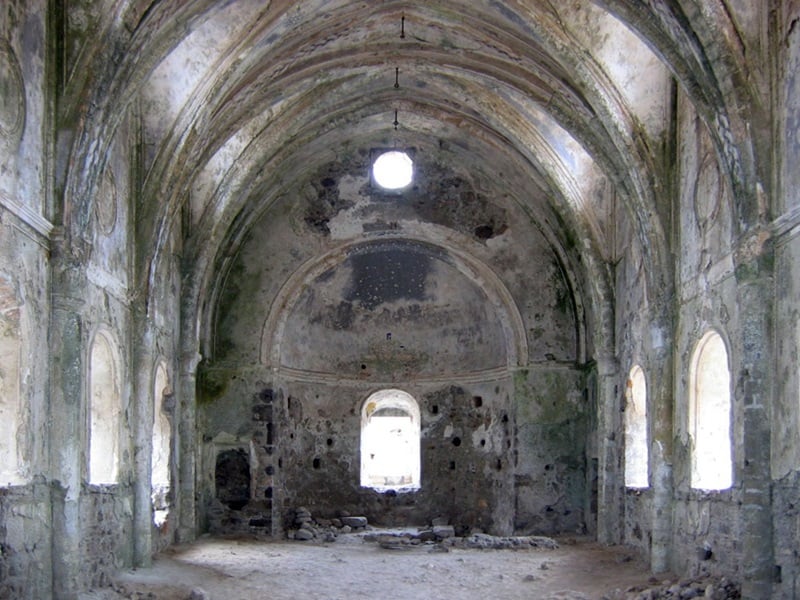
Levissi: The Abandoned Greek Village
An abandoned church. Credit: Orderinchaos , CC BY-SA 3.0/Wikipedia

The ghost town, now preserved as a museum village, consists of hundreds of rundown but still mostly standing Greek-style houses and churches that cover a small mountainside and serve as a stopping place for tourists visiting Fethiye and nearby Ölüdeniz.

The village is now empty except for tour groups and roadside vendors selling handmade goods. There are a few houses which have been restored and are currently occupied.

American filmmaker Joerg Schodl set out to document what is left of the ghost town in his documentary, “Ghosts of Levissi.”

Schodl tells the tale of the small Greek community in Asia Minor that was torn apart during the final days of the Ottoman Empire. It focuses on the disappearance of the population practically overnight thanks to campaigns, designed to scare Greeks from Levissi and nearby Macri (known as Fethiye), including offensives by Turks. The site Greek Genocide reports that women were raped and their clothes and shoes taken from them.

When making the film, Schodl had the help of members of the Greek community in Melbourne, Adelaide, Sydney, Perth and Brisbane and he was able to find thirteen descendants of Levissi families.

More descendants were found in Toronto, Rhodes, London, Athens and Istanbul.

  •  

“A 20 anni ho interpretato un cadavere, esperienza traumatica. Una delle più grandi delusioni della mia carriera? La mancata nomination per ‘Suburra’”: parla Greta Scarano

Greta Scarano ha presentato al Taormina Film Festival “Piccolo miracolo”, dal 25 giugno nelle sale. Il protagonista è Davide Lancia (Marco D’Amore), ricco quarantenne dai gusti raffinati e un debole per tutto ciò che è bello, dalle donne all’arte, deve la sua fortuna al fatto di essere figlio di uno dei più potenti e spregiudicati costruttori romani.

Il padre (Giorgio Colangeli), per spronarlo, gli offre l’occasione per dimostrare finalmente di poter essere il degno erede del suo impero: deve demolire una palazzina malandata e realizzare al suo posto un edificio di lusso. Un affare a cui Davide non può rinunciare. Nella palazzina però vive ancora una inquilina che non intende lasciare il suo appartamento: Ursula (Scarano), una donna cieca, bella, determinata e battagliera. L’incontro con Ursula scompagina i piani di Davide e gli permette di aprirsi a un nuovo modo di vivere e vedere le cose.

Scarano a La Repubblica ha ricordato i primi passi nel mondo del cinema: “Ho iniziato a lavorare a e guadagnare a ventidue anni. Ricordo una parte in Ris. Interpretavo un cadavere. Fu un’esperienza estremamente traumatica. Ero in una vasca da bagno, completamente nuda e morta. Non c’era nulla di sensuale o di ambiguo, era una scena asettica. Però, avevo vent’anni, e la vissi malissimo, anche se poi mi ha reso più forte”.

E ancora: “Poco dopo arrivò Un posto al sole. un ruolo importante, un anno di lavoro. Poi però decisi di andarmene senza avere nient’altro ad aspettarmi. Facevo la pendolare tra Roma e Napoli. Ma soprattutto avevo bisogno di muovermi, di andare oltre. Una delle più grandi delusioni della mia carriera, invece, è stata non essere stata candidata ai David per Suburra. Poi, col tempo, ho capito che premi e candidature contano, ma non bisogna lasciare che definiscano il proprio valore”.

“Oggi, guardandomi indietro, – ha concluso – vedo quasi vent’anni di lavoro. Ho fatto talmente tante cose che forse sono diventata più lucida. Ora so che ciò che resta è il viaggio, le persone incontrate. Da questo nuovo film porto a casa una bellissima amicizia con Marco D’Amore”.

L'articolo “A 20 anni ho interpretato un cadavere, esperienza traumatica. Una delle più grandi delusioni della mia carriera? La mancata nomination per ‘Suburra’”: parla Greta Scarano proviene da Il Fatto Quotidiano.

  •  

Ukrainian drones hit Dzhankoi as strike unit declares hunt on Russian Crimea logistics

Ukrainian strikes on the Dzhankoy

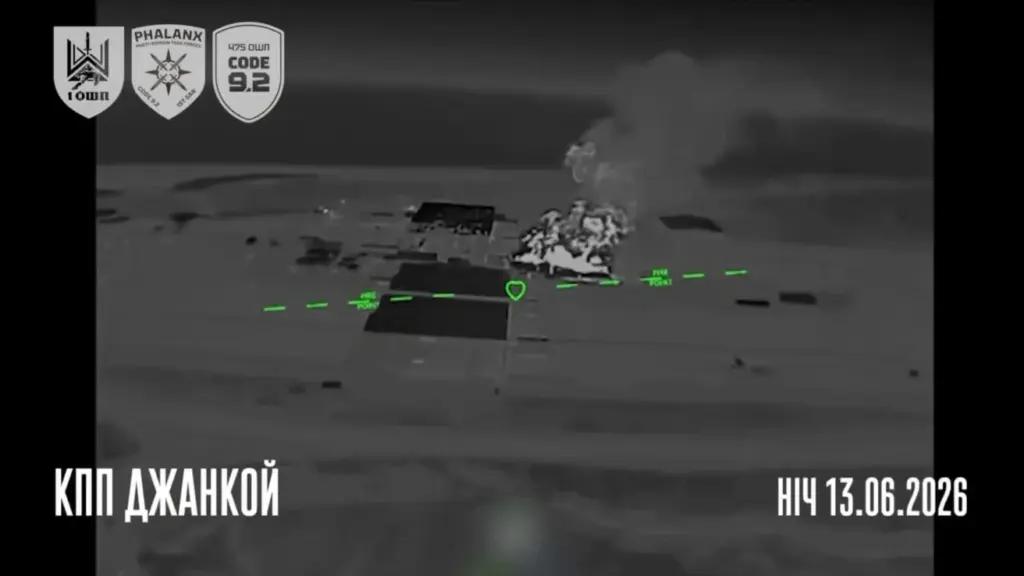
Ukrainian drones struck the Dzhankoi checkpoint, a railway bridge, a Russian pontoon crossing, and trucks at Chonhar overnight on 13 June, hitting four targets along the only land corridor between Russian-occupied Crimea and the southern front. Traffic toward the Dzhankoi checkpoint was halted, Russia's installed head of occupied Kherson Oblast Vladimir Saldo said on Telegram, claiming Russian air defenses shot down 25 Ukrainian drones overnight.

The strike marks a stated change in Ukrainian operational concept. The 1st Separate Assault Regiment named after Dmytro Kotsiubailo, which led the operation jointly with the 475th Separate Assault Regiment "CODE 9.2," announced it is moving from one-off attacks on the bridges themselves to sustained patrol of the entire logistics route. "We are transitioning to patrolling enemy logistics from temporarily occupied Crimea and blocking attempts to restore crossings," the regiment said in a statement posted to Facebook. "Pontoon throughput is low. Trucks accumulate in queues, becoming ready targets for us." Russian fuel and ammunition supplying Russia's southern front pass through this corridor.

What was hit

The Dzhankoi checkpoint controls the main road between northern Crimea and the Kherson Oblast mainland and serves as the busiest highway and rail junction in occupied Crimea. Saldo also said a bridge between Henichesk and the Arabat Spit, an alternative crossing point Ukraine first struck on 10 June, was attacked again overnight. Ukrainian forces did not confirm Saldo's air defense claim.

The Chonhar bridge — the main highway link between Crimea and occupied Kherson Oblast — was first hit on 7 June by the joint Falanga multidomain operations center of the two regiments, using Fire Point company drones and long-range "Behemoth" UAVs. Traffic was rerouted, then halted again after a second strike on 9 June. Four vehicular bridges at Crimea's northwestern entrance near Armiansk were struck on 11 June, Euromaidan Press reported. The overnight strike on the Dzhankoi checkpoint extends the pattern — and signals the campaign has moved from the bridges to the trucks themselves.

The logistics spine

The corridor Ukraine is now patrolling carries the supplies that sustain Russian operations across Ukraine's south. Russian fuel for the Huliaipole direction is shipped by ferry to Crimea and then trucked across the peninsula to the front, regiment commander Dmytro Filatov, call sign Perun, told Ukrainska Pravda earlier this week. Russian cargo, he said, does not move across the Kerch Bridge — its railway link has not been restored since the October 2022 explosion. Cyber intelligence inside Russian military networks now allows Ukrainian planners to target specific units waiting for fuel, Filatov added. The 37th Motor Rifle Brigade was the target of the 7 June Chonhar strike, he said. Trucks ordered for that brigade had still not arrived at the time of his interview.

A multiplying problem for Russian logistics

The interdiction campaign confronts Russia with a layered constraint. Pontoons replace damaged bridges, but they throttle throughput and concentrate trucks in queues — the conditions the 1st Assault Regiment now describes as "ready targets." Rerouting through Armiansk and Perekop runs into the bridges hit on 11 June. Ferrying fuel from Krasnodar Krai bypasses the corridor entirely but cannot scale to replace road transport on the timeframes Russian units in southern Ukraine need.

Filatov said on 10 June that the Chonhar bridge had sustained critical damage and that the occupation forces were searching for new logistics routes for ammunition and fuel.

What changes

The announcement is what makes this strike news rather than another item in a logistics campaign. Until now, the Crimea land corridor functioned — slowly, under pressure, but it functioned. As of overnight on 13 June, the regiment that led the bridge strikes is declaring the corridor a sustained engagement zone. Not a target struck once. A route to be patrolled.

"We bleed the enemy to advance forward," the unit said. "This is not the end.

  •  

Three teenagers arrested over death of man in Essex

Boy, 14, among three people held after 21-year-old was found critically injured in Central Park, Chelmsford

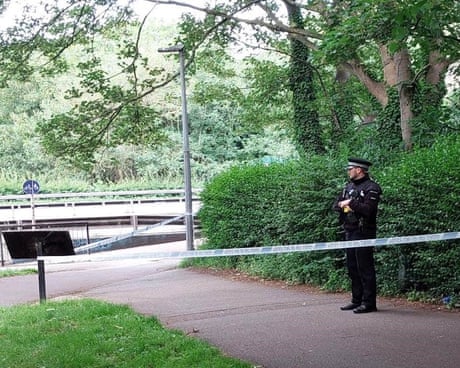
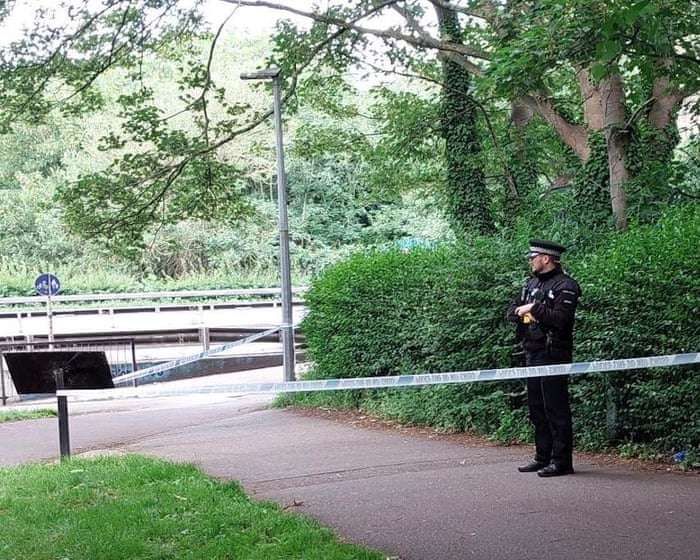
Three teenagers, including a 14-year-old boy, have been arrested on suspicion of murdering a 21-year-old man in a park in Essex.

Emergency services attended Central Park in Chelmsford at about 7pm on Friday, where the victim was found with critical injuries.

Continue reading...

© Photograph: Essex Police

© Photograph: Essex Police

© Photograph: Essex Police

  •  

Ukraine to supply NATO ally Latvia with strike drones, ground robots, naval systems

latvia ukraine drone

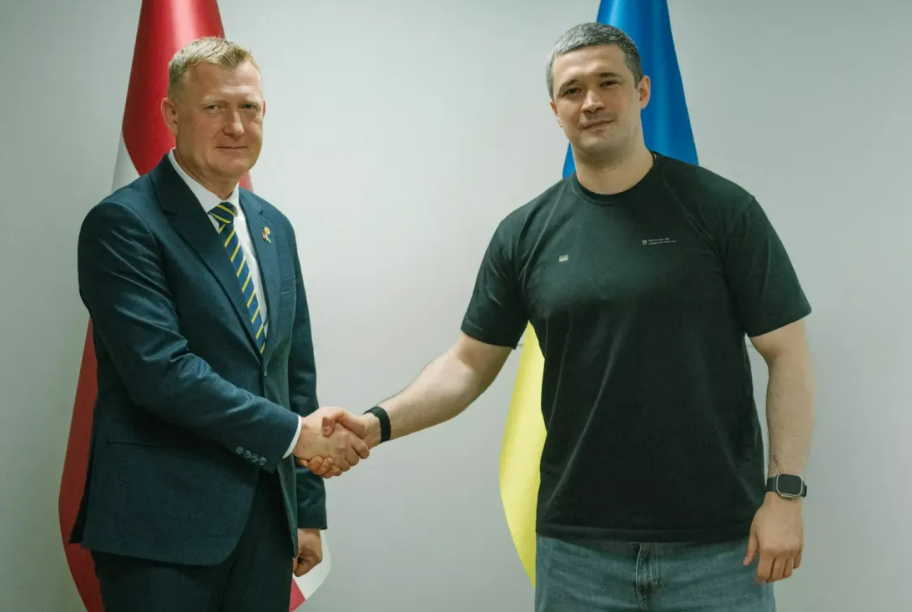
Ukrainian and Latvian defense ministers named specific categories of unmanned systems that will move between the two countries under the Drone Deal, Ukraine's defense minister Mykhailo Fedorov said on 13 June.

Latvia will supply Ukraine with anti-drone systems of Latvian manufacture. Ukraine will supply Latvia with strike drones, ground robotic complexes, and maritime drones, following a Kyiv meeting between Fedorov and Latvian defense minister Raivis Melnis.

The exchange formalizes what until now ran one way. Latvia has been a heavyweight donor of drones and equipment since 2022, pledging 10 million euros to joint defense manufacturing in 2025 alone.

Today's agreement makes Ukraine a supplier to a NATO member for the first time under this format.

"Ukrainian technologies and combat experience help partners adapt faster to the challenges of modern warfare," Fedorov wrote on Telegram, "while support from allies makes it possible to scale solutions that have already proven effective on the battlefield."

The meeting is Melnis's first foreign trip as defense minister. He took office on 28 May after his predecessor Andris Sprūds resigned over a 7 May Ukrainian drone crash near Latvia's Rēzekne oil storage facility — an incident that brought down Prime Minister Evika Siliņa's government.

Before his appointment, Melnis served as the Latvian defense ministry's representative at the embassy in Kyiv.

In a separate meeting on the same visit, Melnis told President Volodymyr Zelenskyy: "We have supported Ukraine and continue to support it with training and our expertise since the very beginning. And now we are asking Ukraine to support us, because there is only one country in the world who knows how to fight Russia, how to stop Russia."

What the Drone Deal opens

The 9 June Drone Deal, signed in Tallinn between Zelenskyy and Latvia's new Prime Minister Andris Kulbergs at the Nordic-Baltic Eight summit, is the sixth bilateral framework Ukraine has concluded under this format.

At the signing, Zelenskyy offered Ukrainian counter-drone experts to Baltic states facing repeated drone incursions. The Fedorov-Melnis meeting gives that offer operational content.

Latvia has spent recent months as the country most exposed to drone spillover from Russia's war on Ukraine. French NATO fighters shot down a drone over eastern Latvia on 8 June — the first NATO intercept on Latvian soil.

Latvia's military chief Kaspars Pudāns warned on 4 June that Russia could exploit its drone manufacturing edge to attack the Baltics by 2028.

Fedorov did not specify volumes, timelines, or financial terms.

  •  

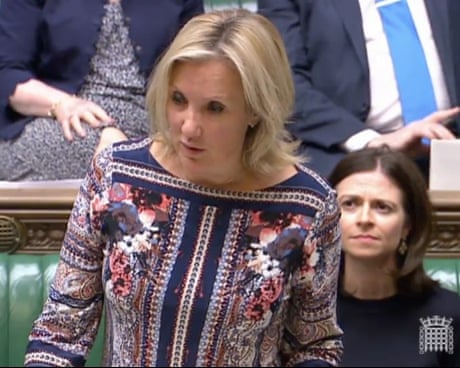
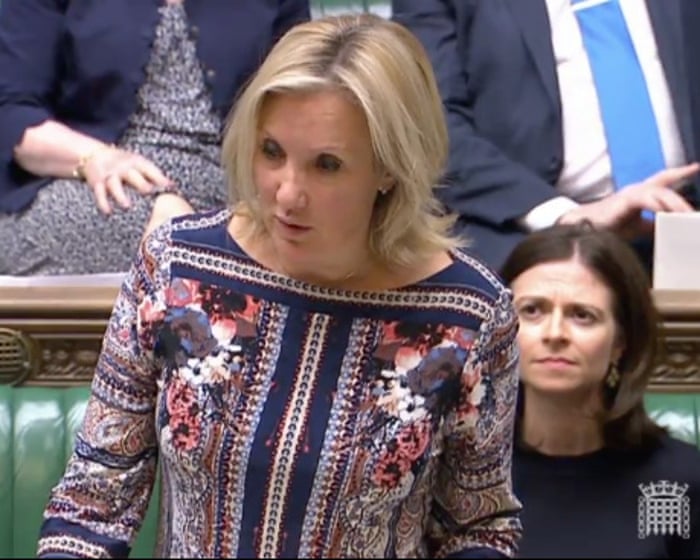
Head of Commons media committee denies writing article accusing BBC of bias

Excoriating article under Caroline Dinenage’s name remains on ConservativeHome website

It was a crisis that toppled a BBC director general and his head of news. After contentious accusations of bias by a former external adviser, Michael Prescott, both Tim Davie and Deborah Turness quit the corporation.

At the height of the media storm that ensued last November, the corporation was struck by another blow. A key figure in scrutinising the BBC – the chair of the Commons culture, media and sport committee – delivered an equally damning verdict.

Continue reading...

© Photograph: House of Commons

Dinenage’s article has been on ConservativeHome since November last year.

© Photograph: House of Commons

Dinenage’s article has been on ConservativeHome since November last year.

© Photograph: House of Commons

Dinenage’s article has been on ConservativeHome since November last year.
  •  
❌