Reading view

Ukraine built 90% of its newly authorized weapons itself. Year ago, it was 70%
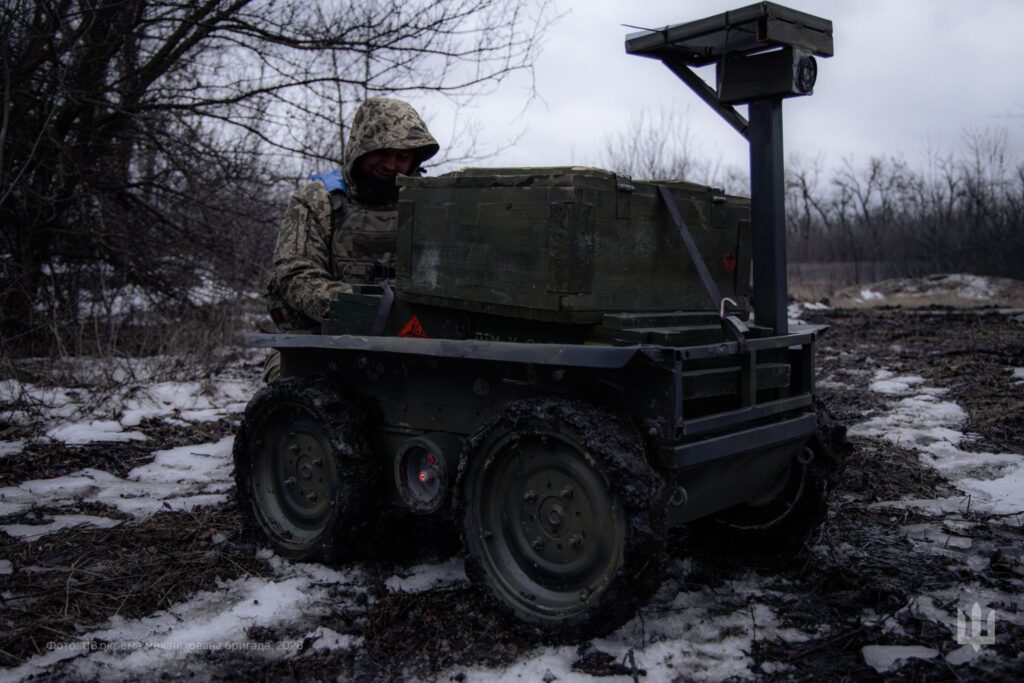
A Ukrainian soldier is loading a ground robotic system. Source: The General Staff

Ukraine's Defense Ministry has announced that it has codified and authorized 1,000 samples of weapons and military equipment since the start of 2026. It's a 50% increase from the 659 samples authorized during the same period in 2025.

The pace of codification and the domestic share signal a substantive shift in Ukraine's wartime defense-industrial dependency, with Ukrainian defense industry capacity progressively scaling over three years of full-scale war.

Of the 1,000 samples authorized, 892 are produced in Ukraine, raising the domestic share to nearly 90%, up from 69.6% in 2025 and 74.6% in 2024.

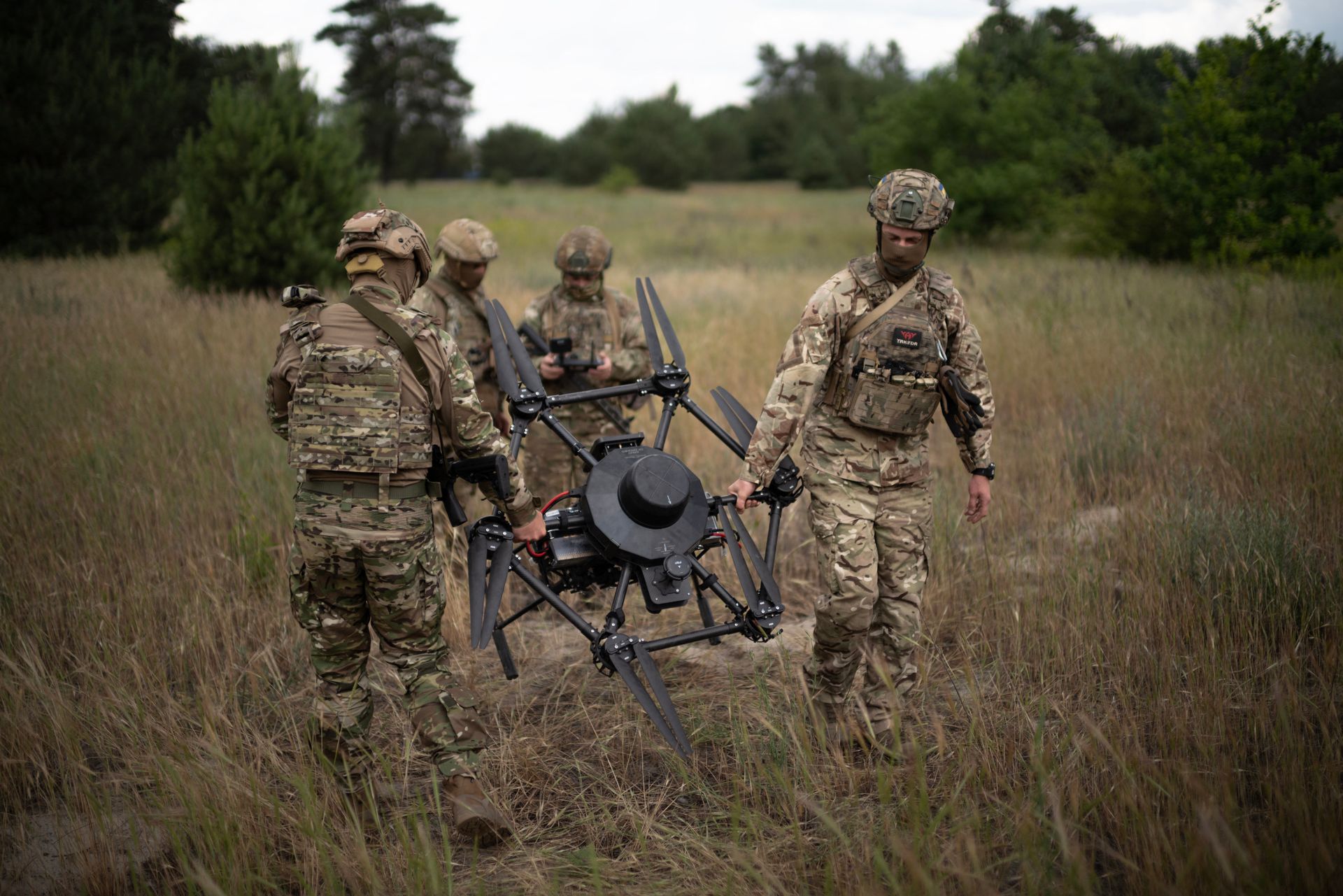
The 1,000 samples include over 300 unmanned aerial complexes, 188 ammunition types, 128 communication systems, more than 60 electronic warfare and electronic intelligence systems, 50 ground robotic complexes, and nearly 50 armored vehicles and special armored cars. 

Unmanned aerial systems lead 2026 weapons codification

"All of the codified samples have passed the necessary testing and confirmed their declared characteristics. A significant portion is already being used by Defense Forces units," the Defense Ministry stated.

The pace of codification accelerated through 2026: in May 2026 alone, the Defense Ministry codified 175 new weapons models for operational use.

The dominance of unmanned aerial complexes among the 2026 codifications reflects Ukrainian battlefield priorities — Russia's intensified Shahed-type drone strikes, Ukraine's middle-strike operations against Russian rear targets, and the operational shift toward unmanned-systems integration across combat arms.

Ukrainian manufacturers expand domestic share to 90%

The Ukrainian-made share of newly authorized weapons has risen sharply over three years of full-scale war from 74.6% in 2024 to 69.6% in 2025 to nearly 90% in 2026. The Defense Ministry emphasized that Ukrainian manufacturers are increasingly producing high-technology weapons and military equipment designed with consideration of contemporary war experience and frontline needs.

Cabinet allocates $244.6 million to boost defense capabilities

The Cabinet of Ministers additionally allocated $244.6 million in May 2026 to strengthen Ukraine's defense capabilities. Of this amount, $204.2 million is directed to new weapons procurement, modernization, and the repair of military equipment, while $40.4 million is invested in the development of the Ukrainian defense industrial complex.

The defense-industrial investment is allocated to implementing new technologies, expanding production capacity, and supporting further sector development. Fedorov took over as Defense Minister on 14 January 2026 and has focused his tenure on the technological transformation of the Ukrainian Armed Forces.
  •  

Ukraine war latest: Russian double-tap strike kills 4 rescuers in Kharkiv amid large-scale attack on Ukraine

Key developments on June 15:

  • Russian double-tap strike kills 4 rescuers in Kharkiv amid large-scale attack on Ukraine
  • Soldiers who decline new contracts will keep serving until demobilization, Defense Ministry says
  • From propagandists to energy revenues, EU hits Russia with new sanctions over Ukraine strikes
  • Russian Tu-22M3 bomber crashes during

  •  

Ukraine launches major army reform: fixed contracts, revamped pay structure, and broader access for foreigners

Ukrainian soldiers of the 1st Assault Battalion, 3rd Infantry Brigade. Photo: 1st Assault Battalion

Ukraine’s Ministry of Defense is introducing a sweeping overhaul of military service rules that restructures contracts, pay systems, personnel movement, and reintegration procedures across the armed forces, the ministry announced on 12 June.

The reforms are part of a broader 2026 reorganization of service conditions under the new defense leadership of Minister Mykhailo Fedorov, aimed at stabilizing manpower, improving retention, and formalizing career pathways during wartime. The package establishes a more predictable framework for service terms, compensation, and transfers while prioritizing reinforcement of frontline combat units.

President Volodymyr Zelenskyy endorsed the reform package, saying military and government leaders had agreed on a path to “increase the financial sustainability of our defense and ensure the further transformation of the Ukrainian army.”

New contract system split into three service categories

The Ministry introduced three contract types: infantry-assault (“pihotno-shturmovyi”), combat, and basic service contracts, each linked to specific roles and operational exposure.

The infantry-assault contract covers frontline positions including infantry, assault troops, combat medics, gunners, and drivers in combat units. Combat contracts apply to drone operators, electronic warfare specialists, artillery crews, and other battlefield support roles, while basic contracts cover non-combat and rear-area positions.

Service terms are fixed: 6, 10, or 14 months for infantry-assault roles depending on prior service status, and 24 months for combat and basic contracts.

Pay structure tied to role and operational intensity

The system combines a base salary of 20,000 hryvnias ($450 USD) with variable payments based on role and battlefield conditions.

Monthly compensation ranges from at least 30,000 hryvnias ($670 USD) in rear positions to significantly higher levels in combat roles, with infantry-assault positions at the top of the scale. Under the framework, total monthly pay may reach up to 120,000 hryvnias ($2,670 USD) depending on deployment intensity and task execution.

A tiered bonus system adds payments linked to operational activity, including participation in frontline operations, command-level missions, and assault actions. Additional fixed incentives apply for outcomes such as capturing prisoners or confirmed combat kills.

Eligibility for certain payments is verified through a digital mission control system that records presence in designated operational zones.

Zelenskyy also announced planned pay increases for combat commanders, saying the measure is intended to help retain experienced leadership within frontline units.

He said the Cabinet of Ministers is expected to approve the implementation mechanism, with the first additional payments potentially beginning in June.

Fixed-term service with post-contract leave guarantees

All contract types include defined service terms followed by a structured post-service leave period. The duration of this leave is calculated based on total service length and combat participation, with longer operational involvement extending the guaranteed break.

The system is designed to create a predictable cycle of service, recovery, and re-engagement, supported by legally defined post-contract guarantees.

Automated transfers through Army+ system

Automatic transfer approvals are introduced through the Army+ digital platform. Eligible personnel up to senior sergeant rank and outside officer positions can request transfers once per year within their corps’ operational sector.

Transfers are limited to units within the same command area, with processing handled digitally to reduce administrative delays while maintaining operational control. A pilot rollout is planned in selected corps before wider expansion across the armed forces.

Structured return from unauthorized absence

A temporary 100-day mechanism allows personnel who left service without authorization before 11 June 2026 to return under a simplified procedure.

Applications are processed digitally, with verification completed within several days. Returning personnel can select from a list of eligible units, with pay and benefits restored upon formal reintegration into service.

The mechanism is designed to streamline reintegration while restoring personnel to active duty under controlled conditions.

Part of wider force restructuring

The Ministry of Defense says the package is intended to modernize Ukraine’s wartime force structure by combining fixed-term contracts, role-based compensation, and digital personnel management tools.

Separately, Zelenskyy instructed officials to expand recruitment pathways for foreign volunteers seeking to serve in Ukraine’s armed forces, saying additional recruitment mechanisms would be introduced. No further details were immediately released.

Further stages of reform are expected as the system is tested and expanded across the armed forces.

  •  

Ukraine war latest: Sweeping new reforms to terms of service announced in effort to ease manpower crisis

Key developments on June 12:

  • Ukraine announces landmark military service reforms with record pay raise for infantry
  • Russian rubber plant, oil refineries struck by Ukrainian drones in latest overnight attack, military confirms
  • Ukrainian drone maker Skyfall partners with Airbus on defense innovation
  • Sumy hit by morning artillery bombardment as Russian

  •  
❌