Reading view

A kick in the Baltics… Will Russia hit back like Iran?

A kick in the Baltics might be what it takes to concentrate Russophobic minds. Before it’s too late.

Join us on TelegramTwitter, and VK.

Contact us: info@strategic-culture.su

Russia’s flagship international business summit in St Petersburg was targeted with Ukrainian drones that used Estonian territorial waters to evade Russian air defenses. Other Baltic states are also implicated in carrying out the large-scale attack last week.

According to the well-informed Borzikkman channel, scores of kamikaze drones were launched from ships in the Baltic Sea. They flew at low altitude over Estonian territorial waters before striking St Petersburg. The flight path was designed to take Russian defenses by surprise.

Most of the drones were shot down by Russian defenses, but a few managed to hit their targets. The biggest hit was on the St Petersburg oil terminal. That had the desired propaganda effect of creating a pall of black smoke visible to delegates on the opening day, June 3, of the St Petersburg International Economic Forum (SPIEF).

Western media outlets like the BBC were delighted to report on the embarrassing vista in the skies over Russia’s second city and a forum that President Putin would address.

The BBC’s Steve Rosenberg was positively gleeful, writing: “The abiding image of SPIEF 2026 will be the huge plume of thick black smoke which dominated the St Petersburg skyline on Wednesday… All the delegates saw the smoke as they arrived at the expo centre on the edge of the city.”

Drones from ships in the Baltic Sea with flights through Estonian territorial waters means that NATO states were involved in the execution of the air strikes. On the same day, NATO chief Mark Rutte was in Kiev on an unannounced visit to meet the Ukrainian leader, Vladimir Zelensky.

The level of NATO participation in waging war on Russia with its Ukrainian proxy has become absurdly obvious. In recent weeks, hundreds of Ukrainian drones have crashed in Finland, Estonia, Lithuania, Latvia, Poland, and Romania. The Kiev regime has repeatedly apologized to European capitals for the infringements that have resulted in injuries to civilians. Still, the European Union and NATO take no action to sanction or reprimand Kiev. They indulge in the claims that the drones are being redirected by Russian electronic jamming. Swedish Prime Minister Ulf Kristersson has even urged that NATO states should help Ukraine in targeting Russia to avoid “misakes”.

The duplicity is contemptible. Russian military intelligence has pinpointed drone manufacturing sites in the Baltic states and other NATO nations that are participating in Ukrainian attacks.

Dmitry Medvedev, deputy chairman of Russia’s National Security Council, commented: “The Russian Defence Ministry’s statement should be understood extremely literally: the publication of production sites for drones and other military equipment in Europe is a register of potential legitimate targets for the Russian armed forces.”

Evidently, the NATO states are providing targeting data and permitting the use of their territory to maximize the attacks on Russia. Hundreds of Russian civilians have been killed in these NATO-assisted drone operations, the most dreadful being the murder of 21 students at a college dormitory in Starobelsk, Lugansk, on May 22. Last week, on the same day as the drone attack on St Petersburg, eight civilians were killed, and 10 were injured when their bus was blown up in an air strike while traveling through the Donetsk region towards Crimea.

Anger across Russia is growing, analyst Stas Krapivnik told Danny Haiphong’s channel. Russia has retaliated with heavy strikes on military sites and decision-making centers across Ukraine. But, as Krapivnik points out, Moscow is under pressure to take action against NATO culprits from where the Ukrainian offensives are stemming. He says that Russia should do like Iran is doing, hitting back hard where it hurts.

Since the U.S. and Israel launched their aggression against Iran 100 days ago, on February 28, the Iranians have destroyed dozens of American installations across the Persian Gulf and Israeli bases with their formidable arsenal of hypersonic and ballistic missiles, as well as drones.

When Israel violated a shaky truce by bombing Beirut’s southern district of Dahiyeh at the weekend, Iran struck back immediately, as it had warned it would do, to hit airbases in Israel and a U.S. base in Saudi Arabia.

Iran’s defiance has put manners on Washington. Israel is a slow learner, but it will come round to realizing that Iran is not going to take any aggression lying down. It’s hitting back hard and fast in the places that hurt. The days of U.S. and Israeli aggression with impunity are over.

The other thing is that Tehran has called Trump’s bluff about his “madman threats” to escalate the war and obliterate Iran. The Iranians have demonstrated to Washington and the Israelis that the aggressors have much more to lose if they persist in their belligerence.

Russia might want to take note, as Krapivnik, Borzikkman, Sergey Karaganov, and other analysts have advised. The EU and NATO are acting with impunity and a delusional sense that they can escalate attacks on Russia, killing civilians and damaging Russia’s economy, all because of some cynical charade that Ukraine is alone in carrying out the attacks.

Of course, the risk is that if Russian hypersonics were to take out a NATO drone-launching ship in the Baltic Sea, then that would trigger the U.S.-led military alliance’s joint defense commitments. In that case, we are potentially in a situation of World War Three.

But hold on a moment. Are we not already in that situation, given that, despite the charade, NATO states are directly involved in attacking Russia, its capital, Moscow, and St Petersburg, and killing hundreds of civilians?

The NATO and EU leaders are so imbued with Russophobia and arrogance that they are beyond rational thinking. The only language they understand is direct threat and force. Unless they pay a price, the deranged Russophobic leaders will keep escalating as they are doing.

Iran has shown a viable self-defense policy. The enemy is hit hard for daring to aggress against the Iranian people.

A kick in the Baltics might be what it takes to concentrate Russophobic minds. Before it’s too late.

  •  

Video Captures Rafale Fighter’s Drone Kill Over Baltic

Footage has emerged showing the destruction of a drone by a French Rafale fighter over Latvia earlier today. The engagement underscores how the drone war unleashed by the Russian invasion of Ukraine is increasingly spilling over borders, as well as the growing reality of the drone threat to NATO.

The French Air and Space Force confirmed that its Rafales, currently deployed in neighboring Lithuania, were scrambled in response to the drone incursion. The drone was identified before one of the fighters shot it down over an uninhabited area. The incident was a “demonstration of the French Armed Forces’ commitment to contributing to the security of Europe’s eastern flank,” the service said in a statement on X.

📍Lettonie | Destruction d’un drone par les Rafale 🇫🇷💥

➡ Survol d’un drone au dessus du territoire letton 🇱🇻
➡ Décollage sur alerte des chasseurs 🇫🇷 engagés dans la mission de l’OTAN Baltic Air Policing depuis la base aérienne de Šiauliai 🇱🇹
➡ Identification et destruction… pic.twitter.com/NFIMSP7Ibl

— Armée française – Opérations militaires (@EtatMajorFR) June 8, 2026

A detachment of French Air and Space Force Rafale jets is currently engaged in the NATO Baltic Air Policing mission from Šiauliai Air Base, Lithuania.

This morning, French fighter jets deployed to NATO Air Policing at Šiauliai Air Base shot down a drone that entered Latvian airspace.

Lithuania thanks our French allies for their swift and professional action in safeguarding the security of our region.

— Lithuanian MOD 🇱🇹 (@Lithuanian_MoD) June 8, 2026

This is not the first time that a NATO fighter has shot down a drone in the Baltic region as part of the Baltic Air Policing mission. On May 19 of this year, a Romanian F-16 shot down a Ukrainian drone over Estonia after it strayed into NATO airspace, reportedly due to Russian electronic warfare interference. Last September, NATO fighters shot down at least three, and likely four, Russian drones, after 19 reported violations of Polish airspace. Polish authorities assessed that the drones “did not veer off course but were deliberately targeted.”

However, this is the first time that an incident of this kind has been captured on camera.

At least two videos are now circulating on social media showing the engagement playing out.

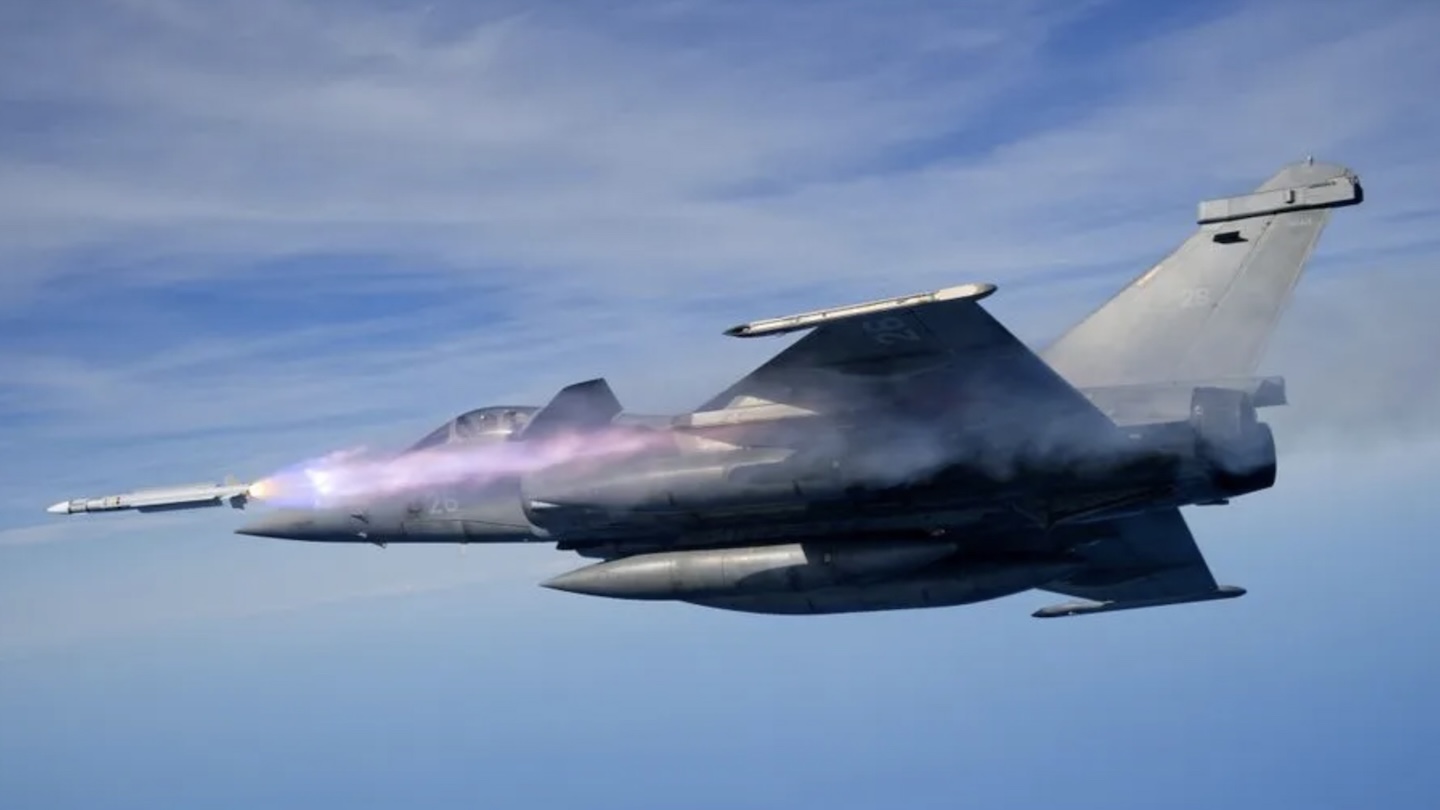
One shows the moment that a Rafale launches an air-to-air missile, leaving a prominent trail of smoke, before detonating seconds later.

NATO airpower in action this morning, safeguarding Latvian airspace. pic.twitter.com/Ugzbx8aaZS

— Marko Mihkelson 🇪🇪🇺🇦🇪🇺 (@markomihkelson) June 8, 2026

Another video, from a different angle, shows the immediate aftermath of the shootdown. Another trail is seen in the background of both videos, but it’s unclear if this is evidence of a previous missile launch, or a contrail from another aircraft that previously transited the airspace at a different altitude.

🇱🇻 Rogovkā, Rēzeknes novadā notriekts lidrobots. NBS apstiprina.#Rogovka #Rēzekne #Latvija pic.twitter.com/kBdojUHanB

— BreakingLV (@breakinglv) June 8, 2026

In a typical Baltic Air Policing configuration, the Rafale is armed with MICA air-to-air missiles. These beyond-visual-range weapons can be fitted with either an active radar seeker or an infrared seeker head, with a mix normally being loaded. The MICA uses a thrust-vectoring motor for improved agility and has a reported maximum range of around 37 miles.

📍 Lituanie | Le succès des vols conjoints commence au sol 🇫🇷🤝🇷🇴
 
➡ Préparation d'un vol d'entraînement avec des avions de chasse 🇫🇷 et 🇷🇴 :

🔧 Montage d'armements entre mécaniciens des deux pays alliés

💬 Échanges sur les procédures, matériel et méthodes des équipes… pic.twitter.com/LPYygu0P5r

— Armée française – Opérations militaires (@EtatMajorFR) June 6, 2026

The Latvian Armed Forces provided more details of the shootdown, noting that a yellow alert was originally issued for the Ludza, Balvi, and Aluksne districts this morning at 9:20 a.m. local time. This led to NATO fighters being launched.

At 9:40 a.m., this alert level was increased to orange for the Ludza and Rēzekne districts. At this point, it was confirmed that some kind of drone was entering Latvian airspace. A military spokesperson told the Reuters news agency that the drone entered Latvian airspace from Russia.

NATO iznīcinātāji šorīt neitralizēja ārvalstu dronu, kas krievijas elektromagnētiskās karadarbības rezultātā bija ielidojis Latvijas teritorijā 🇱🇻✈#WeAreNATO #StrongerTogether pic.twitter.com/07blbd7TUw

— NBS (@Latvijas_armija) June 8, 2026

🟠 Izsludināts gaisa telpas apdraudējums Krāslavas un Ludzas novados, informē Nacionālie bruņotie spēki.
Brīdinājums par iespējamu gaisa telpas apdraudējumu izsludināts Rēzeknes un Balvu novados. pic.twitter.com/PFcMZmhhga

— LTV Panorāma (@ltvpanorama) June 8, 2026

The Latvian Armed Forces warned residents in these areas to “Seek shelter indoors, close windows and doors — follow the two-wall principle.” It added: “If you notice a low-flying, suspicious, or dangerous object, do not approach it and call 112.”

At 10:05 a.m., the Latvian Armed Forces confirmed that NATO fighters were over the Rēzekne district, and a “foreign” drone was shot down over the Berzgale parish.

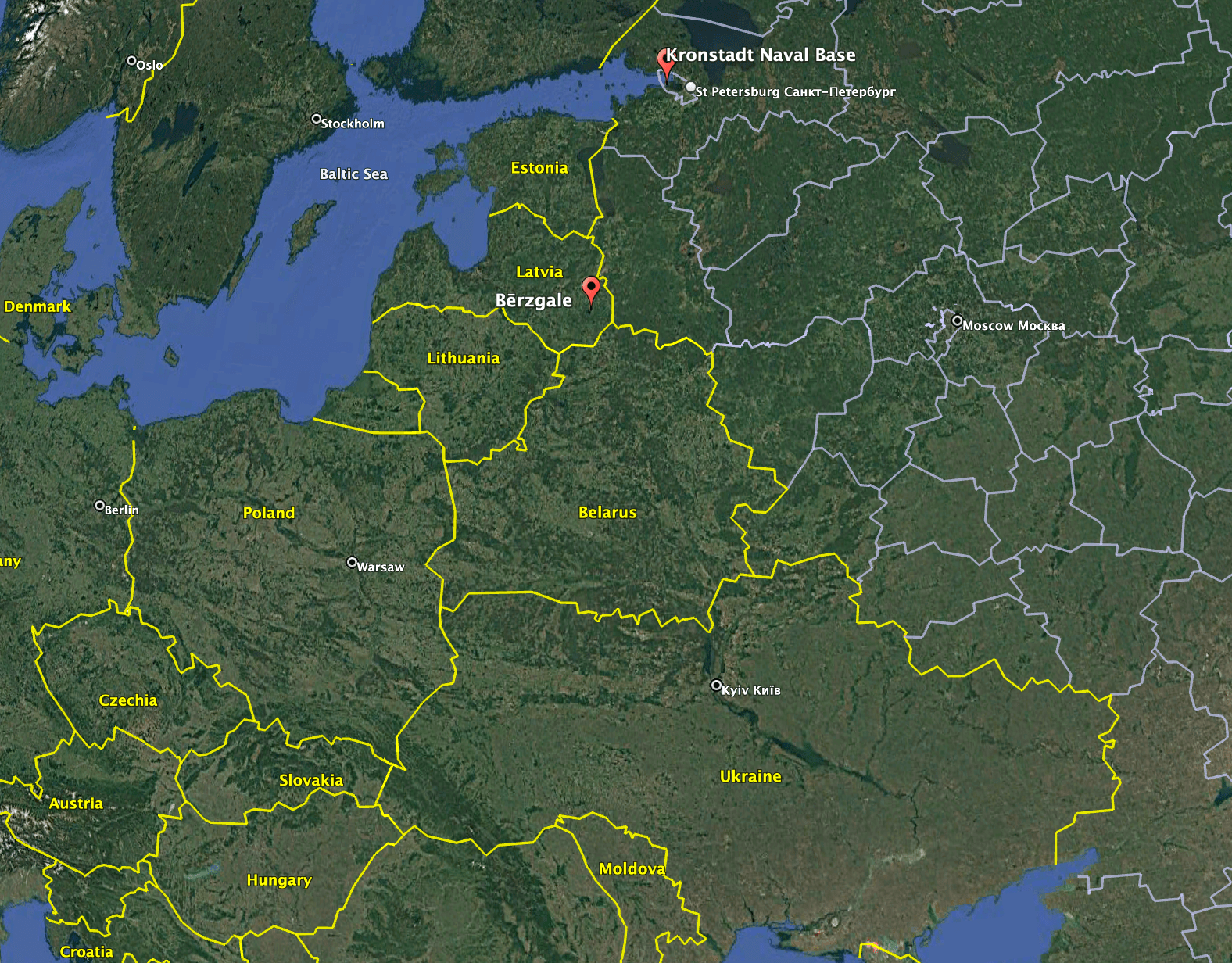
Berzgale is less than 20 miles from the nearest Russian border, and around 340 miles from the closest Ukrainian border, with Belarus, a close Moscow ally, separating Latvia and Ukraine.

A map showing the approximate location of the drone shootdown in Berzgale, Latvia. Also marked is the Russian naval base at Kronstadt that came under Ukrainian drone attack last week. Google Earth

NATO’s Baltic Air Policing mission has safeguarded the airspace of Estonia, Latvia and Lithuania since the three countries joined the alliance in 2004. Because the Baltic states do not maintain fighter fleets capable of continuous air-defense duties, allied nations rotate detachments of combat aircraft to bases in Lithuania and Estonia, where they remain on quick-reaction alert around the clock.

The mission routinely scrambles fighters to identify and intercept Russian military aircraft operating near NATO airspace, particularly flights to and from Russia’s heavily militarized Kaliningrad exclave that often occur without flight plans, radio contact, or active transponders.

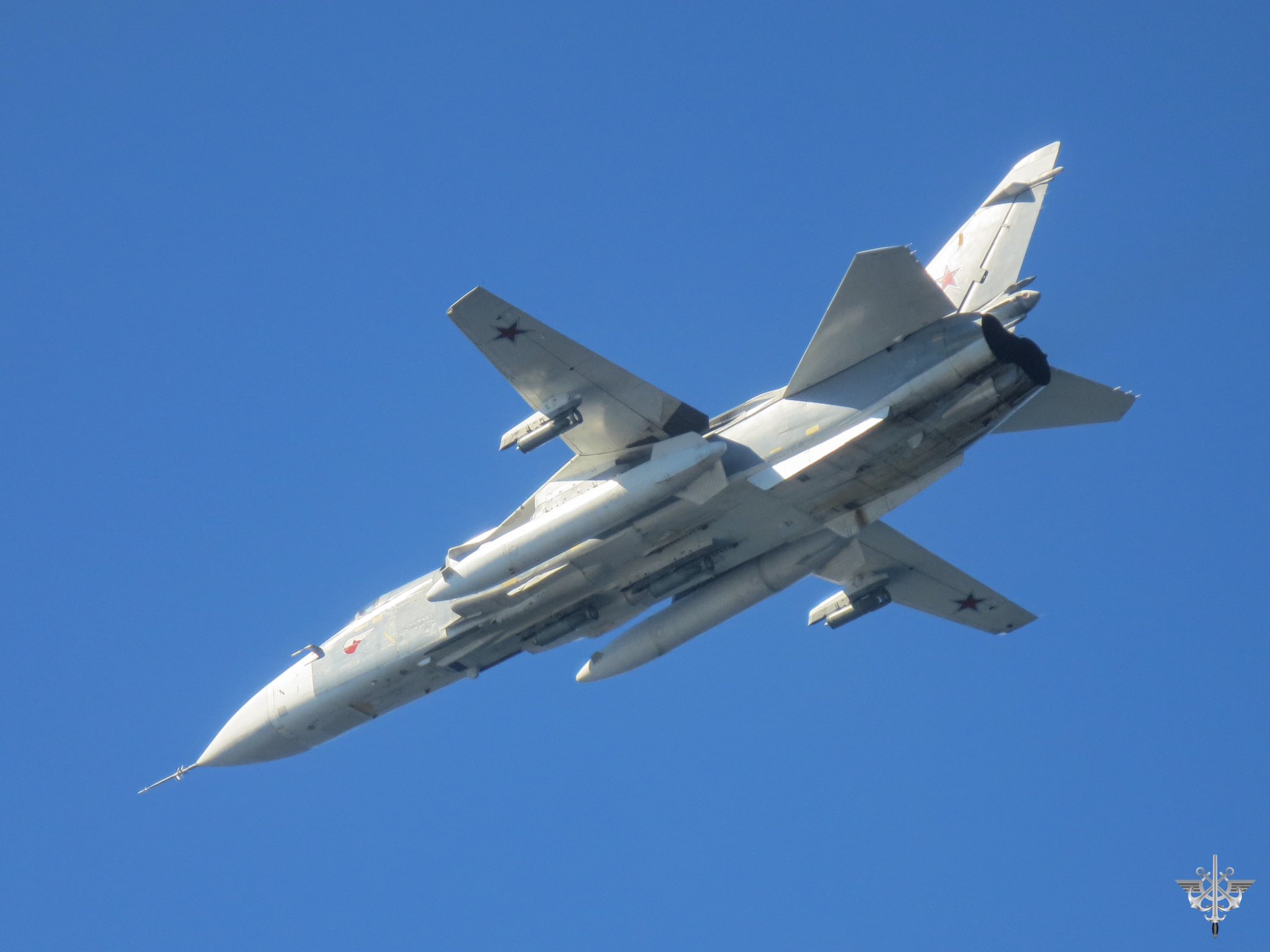
French Rafales recently encountered this Russian Navy Su-24M carrying free-fall bombs during a flight over the Baltic. French Armed Forces
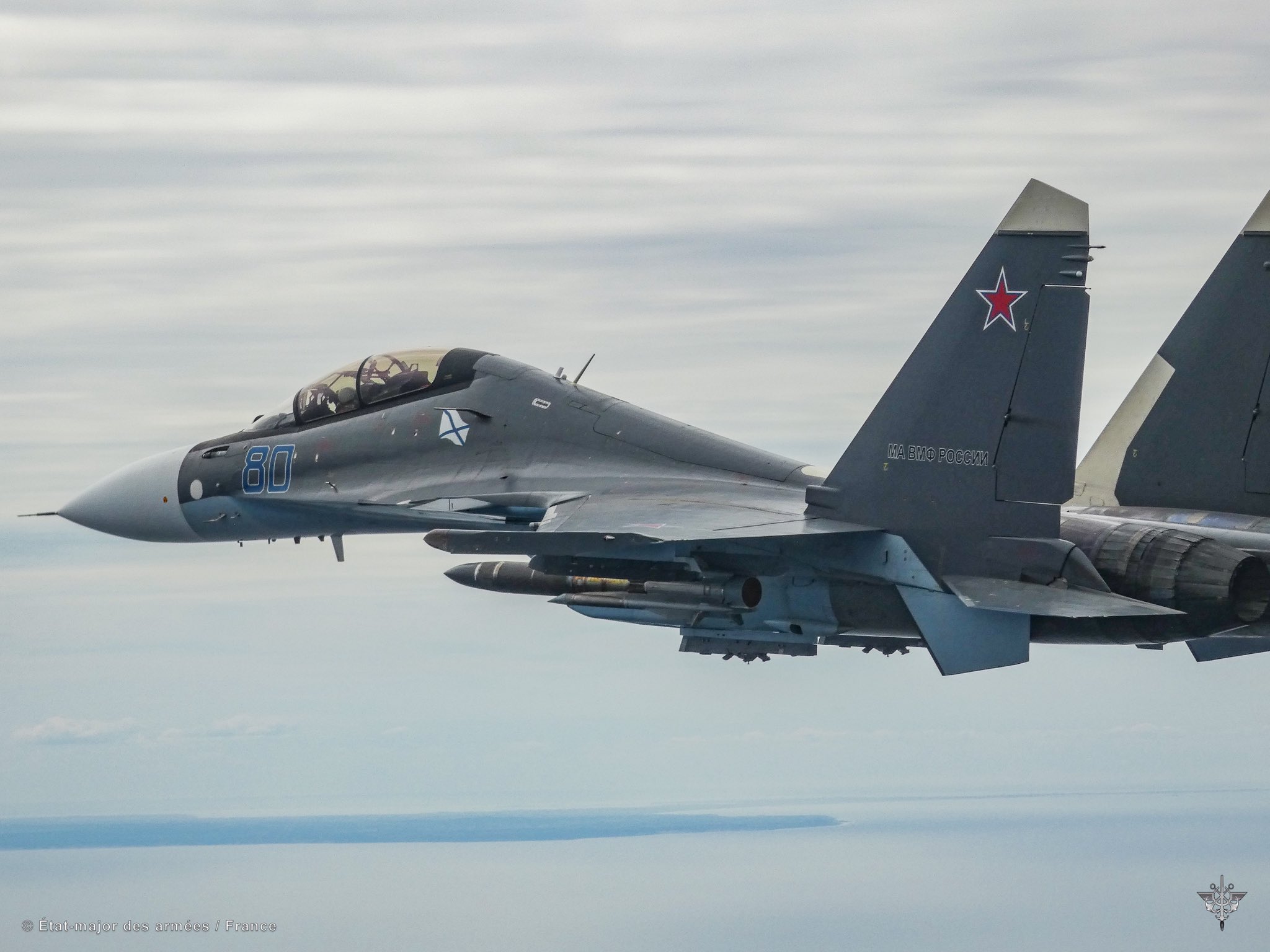
One of two Russian Navy Su-30SMs intercepted over the Baltic by French Rafales during the current Baltic Air Policing detachment. This example carries a Kh-31 series anti-ship or anti-radiation missile. French Armed Forces

Following Russia’s annexation of Crimea in 2014, NATO expanded the mission with additional aircraft and operating locations, making Baltic Air Policing one of the alliance’s most visible peacetime deterrence operations on its eastern flank.

Since Russia’s full-scale invasion of Ukraine, the expanding drone war between the two countries has provided another layer of responsibility to the Baltic Air Policing mission.

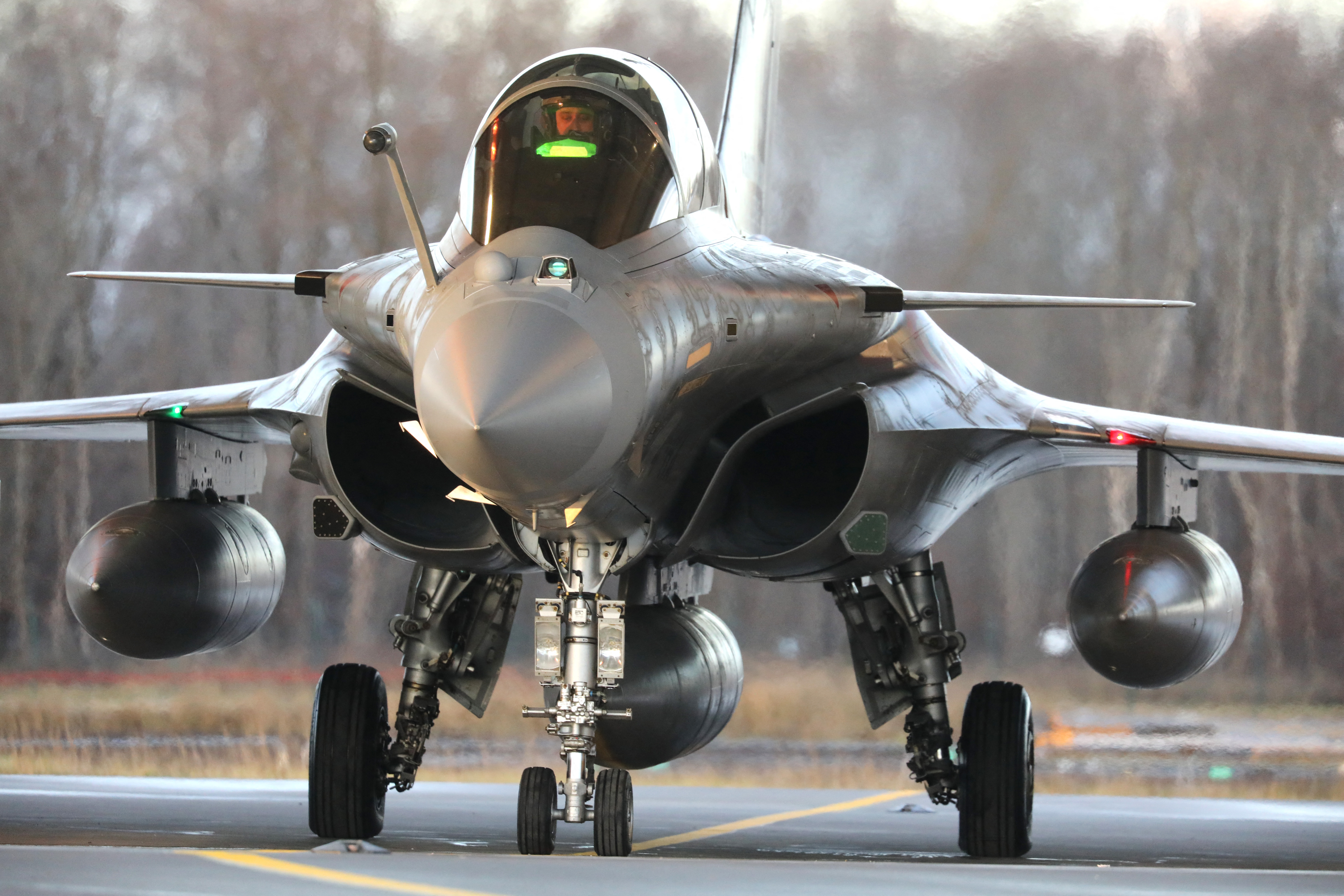
A Rafale B standard F4 fighter jet of France's air force is ready for take-off as part of NATO's Enhanced Air Policing (eAP) mission in the Baltic States, on Dezember 17, 2024 at Siauliai airbase in Lithuania. (Photo by PETRAS MALUKAS / AFP) (Photo by PETRAS MALUKAS/AFP via Getty Images)
A Rafale B is ready for takeoff as part of an earlier Baltic Air Policing mission in Lithuania, in the Baltic States, December 2024. Photo by PETRAS MALUKAS / AFP PETRAS MALUKAS

For most of its history, Baltic Air Policing centered on scrambling fighters to identify Russian bombers, fighters, reconnaissance aircraft, and transports flying near NATO airspace. The war in Ukraine has seen the increasing proliferation of drones that can travel hundreds or even thousands of miles, creating a new challenge for NATO air defenses.

Since 2022, there have been several incidents, including drones and missile debris entering or crashing in NATO territory, including in Poland and Romania. Late last month, a Russian kamikaze drone strayed into Romanian airspace before striking a residential building, injuring civilians, in what appears to have been the first incident of its kind.

A russian drone carrying explosives, involved in the bombing of infrastructure in Ukraine crashed in Galați, Romania, causing a fire on the roof of a residential apartment building.

Two persons sustained minor injuries and several residents required medical attention, the… pic.twitter.com/P8jzYFrEEp

— Toiu Oana (@oana_toiu) May 29, 2026

We asked NATO for more details of today’s incident, including whether it could confirm reports citing the Latvian military that the drone had entered its airspace as a result of Russian electronic warfare. This is a threat that is by now commonplace in the Baltic region.

“While the circumstances surrounding this incident are still under review, jamming is known to occur in this region, and can pose serious safety risks, including to civil aviation,” a spokesperson for the alliance told us.

In recent days, Ukraine has carried out a number of high-profile drone attacks against Russian targets in and around the Baltic region.

In the last week, Ukrainian drones appear to have hit the St. Petersburg oil terminal, the Baltic Fleet base at Kronstadt, and a weapons factory in the Tambov region.

As we observed in our previous reporting, there have been very few confirmed Ukrainian attacks of any kind against the Baltic Fleet. However, satellite and other imagery that emerged in the wake of the recent drone strike reveals extensive damage inflicted on the  Steregushchiy class corvette Boikiy.

Footage of the Russian Navy Baltic Sea Fleet corvette Boikiy burning in its Kronstadt drydock after a Ukrainian drone strike yesterday. pic.twitter.com/9CHz4aLdY8

— OSINTtechnical (@Osinttechnical) June 4, 2026

Another satellite image of the Russian corvette Boikiy following yesterday's Ukrainian strike. What is interesting here is that the active fire was captured before firefighting crews managed to extinguish it. @planet image taken on June 3 at 16:30 local time. It burned for hours. pic.twitter.com/PzcHxoSxGk

— Mark Krutov (@kromark) June 4, 2026

Today’s incident provides visual evidence of advanced NATO fighters used to shoot down drones over alliance territory. While effective on this occasion, this kind of interception can be inefficient due to the mismatch in cost between the drone and missile. It is notable that the French Ministry of Defense has plans to introduce a lower-cost counter-drone capability on the Rafale by the summer. Trials of a pod loaded with 68mm laser-guided rockets have already begun.

Un Rafale équipé de roquettes guidées laser aperçu à Istres. Les essais ont donc enfin démarré. Ici une nacelle Thalès JF12, donc 24 roquettes 68mm au total. Une corde de plus à l'arc du Rafale, la chasse au Shahed est OUVERTE ! pic.twitter.com/6v0xSMkUJ1

— bruno aviation (@Bruno_Aviation) April 16, 2026

As a result, NATO has accelerated work on layered defenses that include short-range ground-based air defenses, electronic warfare, and other counter-drone technologies.

Fighters, however, will always remain a critical last-resort option, especially when a drone poses an immediate threat or when a visual identification is required.

Today’s video not only illustrates the changing face of the Baltic Air Policing mission due to the Russian war in Ukraine, but highlights the growing threat posed by drones and cruise missiles that can cross borders with little warning, whether deliberately or not.

Contact the author: thomas@thewarzone.com

The post Video Captures Rafale Fighter’s Drone Kill Over Baltic appeared first on The War Zone.

  •  

Russia’s Baltic Fleet Successfully Attacked By Ukrainian Drones

The prestigious Russian Navy base at Kronstadt, near St. Petersburg, came under Ukrainian drone attack overnight, in what may well be the first strike of its kind against the Baltic Fleet. Ukrainian drones targeted the naval base, including the Project 20380 Steregushchiy class corvette Boikiy, highlighting the fact that Russian warships are vulnerable even when hundreds of miles from Ukraine’s borders.

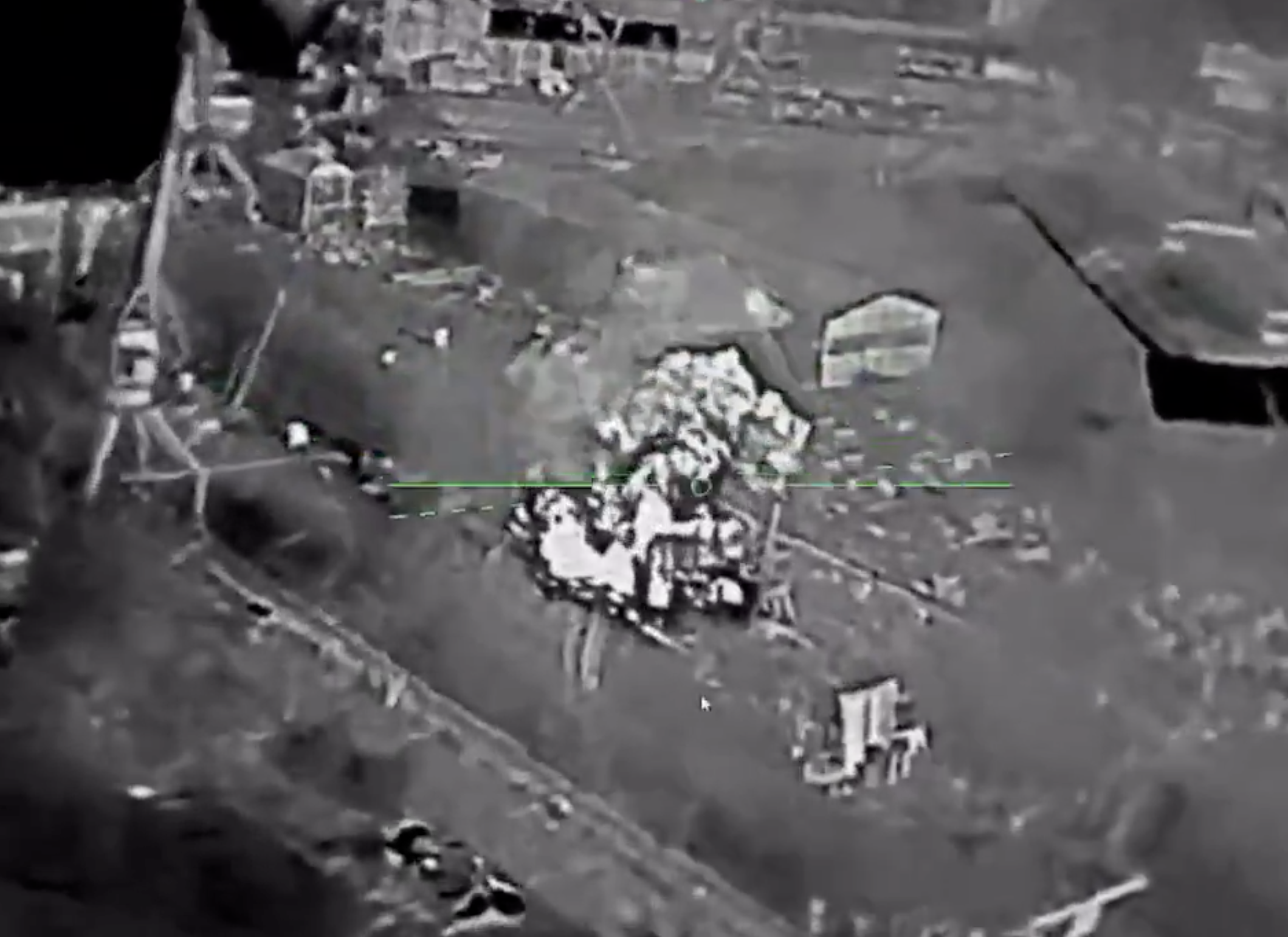
According to the official account of the Ukrainian 414th Separate Unmanned Strike Aviation System Brigade on X, the corvette was set ablaze while in the Veleshchynskyi dry dock in Kronstadt, where it is said to have entered scheduled maintenance in February of this year. The same account posted a video showing the attack. While we are used to kamikaze drone video feeds cutting out just before detonation, the fact that multiple drones were involved means we can see the burning vessel from several angles.

KRONSTADT (St. Petersburg), June 3.
Birds of the @1usc_army, @usf_army hunted down and set ablaze the corvette Boikiy, a guided missile weapons carrier.

06:35, 03.06.26. Veleshchynskyi Dry Dock, Kronstadt (St. Petersburg) – the cradle of the russian Navy.

Tired after its… pic.twitter.com/2HjrlyVKdc

— 414 Magyar's Birds (@414magyarbirds) June 3, 2026

Reportedly, the drones that hit the corvette were from the 1st Separate Center of Ukraine’s Unmanned Systems Forces. Considering the long distance to the target, it is interesting to note that video from the seekers was available. This indicates that either a local operator on the ground was involved in targeting and recording the feed, or otherwise a satcom link was used to do the same. While it is conceivable that the drones used autonomous guidance, they would still have needed someone nearby or connected via satcom to record the seeker’s view. Another possibility is that shorter-range drones were used for the attack, something that Ukraine has done before for attacks deep in Russia, although this seems less likely here.

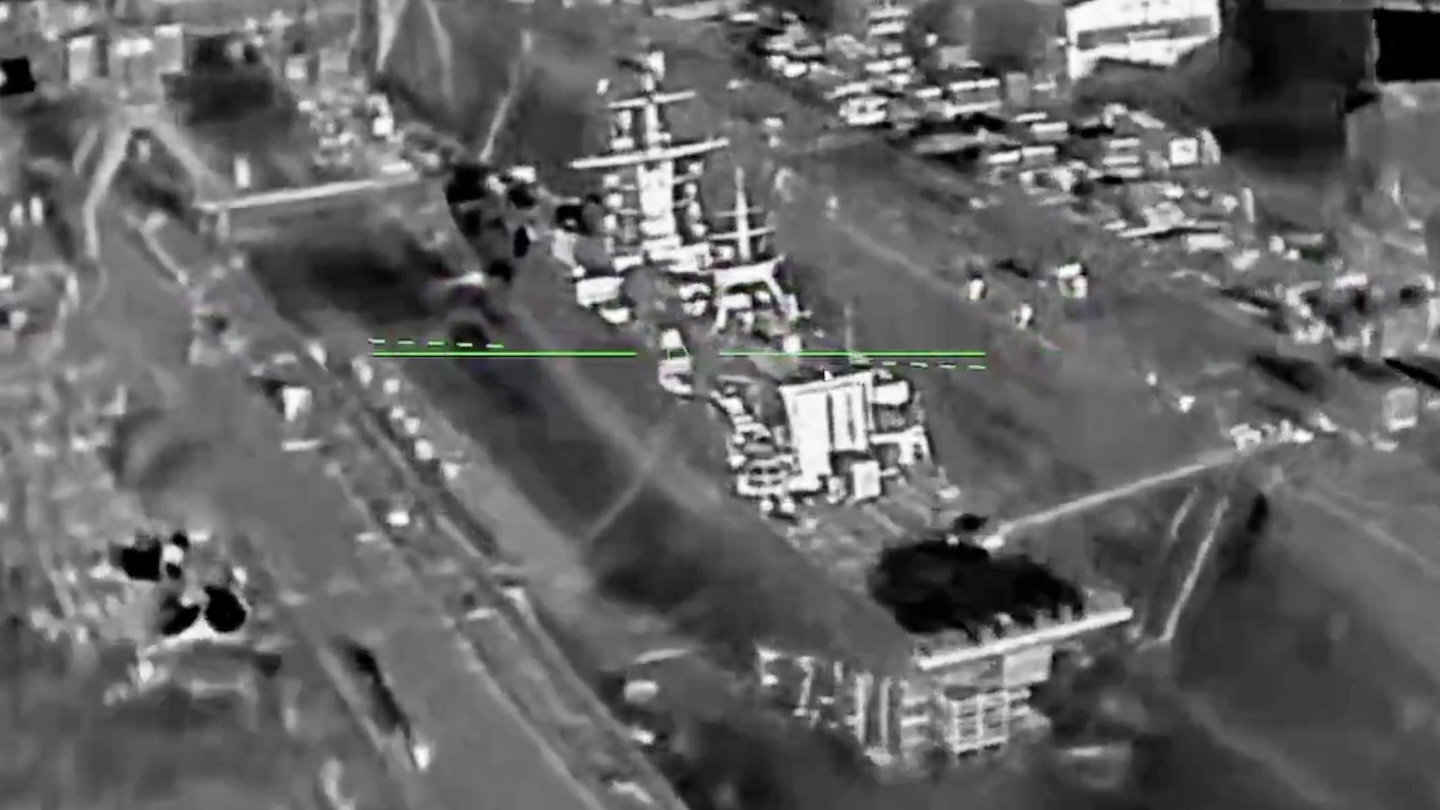
A drone’s eye view of the Russian corvette Boikiy ablaze in the Veleshchynskyi dry dock in Kronstadt. Ukrainian Ministry of Defense screencap

Ukraine’s Unmanned Systems Forces stated that the Boikiy was involved in escorting ships associated with Russia’s so-called shadow fleet, the collection of older tankers operating under foreign flags that Moscow relies on to export oil despite Western sanctions. According to Ukrainian officials, Russia has increasingly tasked Baltic Fleet vessels with escort, monitoring, and security missions for these tankers as they transit the Baltic Sea carrying sanctioned Russian oil to markets prepared to bypass Western restrictions.

The Steregushchiy class ships are among Russia’s more modern corvettes. With a standard displacement of 1,800 tons, a length of 343 feet, and a flight deck for a helicopter, the corvettes are closer to frigates, according to some classification systems. Their primary armament consists of two quadruple launchers for Uran anti-ship missiles, a 12-cell Redut vertical launch system for various air defense missiles, and two quadruple tubes for Paket-NK anti-torpedo/anti-submarine torpedoes.

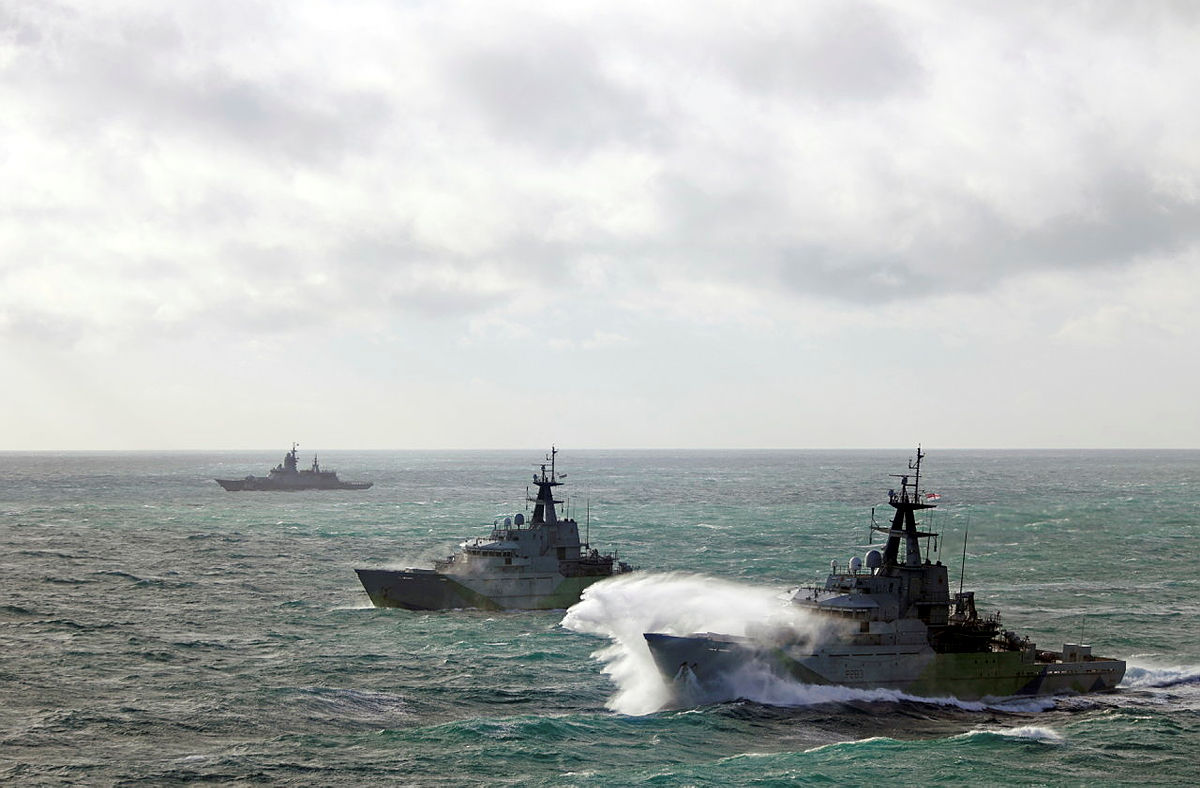
The British offshore patrol vessels HMS Mersey and HMS Severn shadow the Russian corvette Boikiy in the English Channel in 2017.

The attack on the naval base was part of a wider Ukrainian drone barrage directed against other military and energy sites in and around St. Petersburg early on Wednesday. Footage of the attacks showed drones, reportedly FP-1/2 types, low over the Gulf of Finland and in the skies above the city.

A video published online shows a Ukrainian FP-1 drone flying just a few meters above the water in the Gulf of Finland during the morning attack on Saint Petersburg. pic.twitter.com/ZTtGb71zdT

— WarTranslated (@wartranslated) June 3, 2026

The attacks occurred just hours before international guests gathered for the city’s flagship economic forum. “The Petersburg forum is opening with a nice plume of black smoke in the background after Ukrainian strikes,” posted Serhiy Sternenko, an adviser to the Ukrainian defence minister.

Smoke is rising over Kronstadt also.

Naval base there, some ships could be hit
https://t.co/RY3SGUIPBd pic.twitter.com/LytOUoXZWu

— Liveuamap (@Liveuamap) June 3, 2026

Several long-range drones also crashed into oil storage facilities in St. Petersburg after Russian air defenses reportedly tried unsuccessfully to shoot them down. Loud explosions were heard, and black smoke could be seen rising from the blazing oil terminal, one of the largest on Russia’s Baltic Sea coast.

In this footage you can even see two Ukrainian drones flying in formation over the oil terminal in Saint Petersburg, Russia, with one dive-bombing into the oil terminal. pic.twitter.com/eMUdpwsDiz

— (((Tendar))) (@Tendar) June 3, 2026

The entire city of Saint Petersburg, Russia, received a front row seat for the destruction of the local oil terminal. This includes also the attendees of St. Petersburg International Economic Forum (SPIEF), which will start today. pic.twitter.com/HxDsF6kQ6p

— (((Tendar))) (@Tendar) June 3, 2026

Russian authorities confirmed that the attacks had taken place, with St. Petersburg’s governor, Alexander Beglov, saying that the Kirovsky and Krasnoselsky districts had been targeted.

Ukrainian President Volodymyr Zelensky, writing on social media, said that drones had hit “important facilities on Russian territory,” including the St. Petersburg oil terminal, the Kronstadt base, and a weapons factory in the Tambov region.

“I thank our warriors for their precision. Ukraine’s plan for long-range sanctions is being implemented exactly as needed to bring peace closer,” Zelensky said.

Our long-range sanctions carried out by the warriors of the Security Service of Ukraine, the Unmanned Systems Forces, the Special Operations Forces, the Defense Intelligence of Ukraine, and the State Border Guard Service of Ukraine have yielded good results. Important facilities… pic.twitter.com/esxYMexU8d

— Volodymyr Zelenskyy / Володимир Зеленський (@ZelenskyyUa) June 3, 2026

The significance of the strikes is manifold.

First off, the drone strikes have a highly symbolic value, and will be especially embarrassing for the Kremlin, since they come immediately in advance of the three-day annual summit being held in St. Petersburg, and billed as Russia’s answer to Davos.

The Saint Petersburg International Economic Forum of 2026 (SPIEF 2026) in Russia has started with a very fiery keynote speech by the Ukrainian surprise guests. pic.twitter.com/VVIuGcQCO7

— (((Tendar))) (@Tendar) June 3, 2026

FP-1 drones fully demonstrating the greatness of Putin's regime ahead of the St Petersburg Economic Forum. https://t.co/cgFNw24Xum pic.twitter.com/ztGCVHGEWQ

— Anton Gerashchenko (@Gerashchenko_en) June 3, 2026

Guests arrived for today’s opening ceremony under a pall of thick smoke, and Russian President Vladimir Putin is due to make a keynote speech at the event on Friday. There was further disruption for arriving guests as St. Petersburg’s airport was temporarily closed.

Secondly, the drone strikes underscore Ukraine’s ability to strike targets deep within Russia, using a growing array of long-range one-way attack drones and cruise missiles. The targets are around 680 miles from the nearest Ukrainian border.

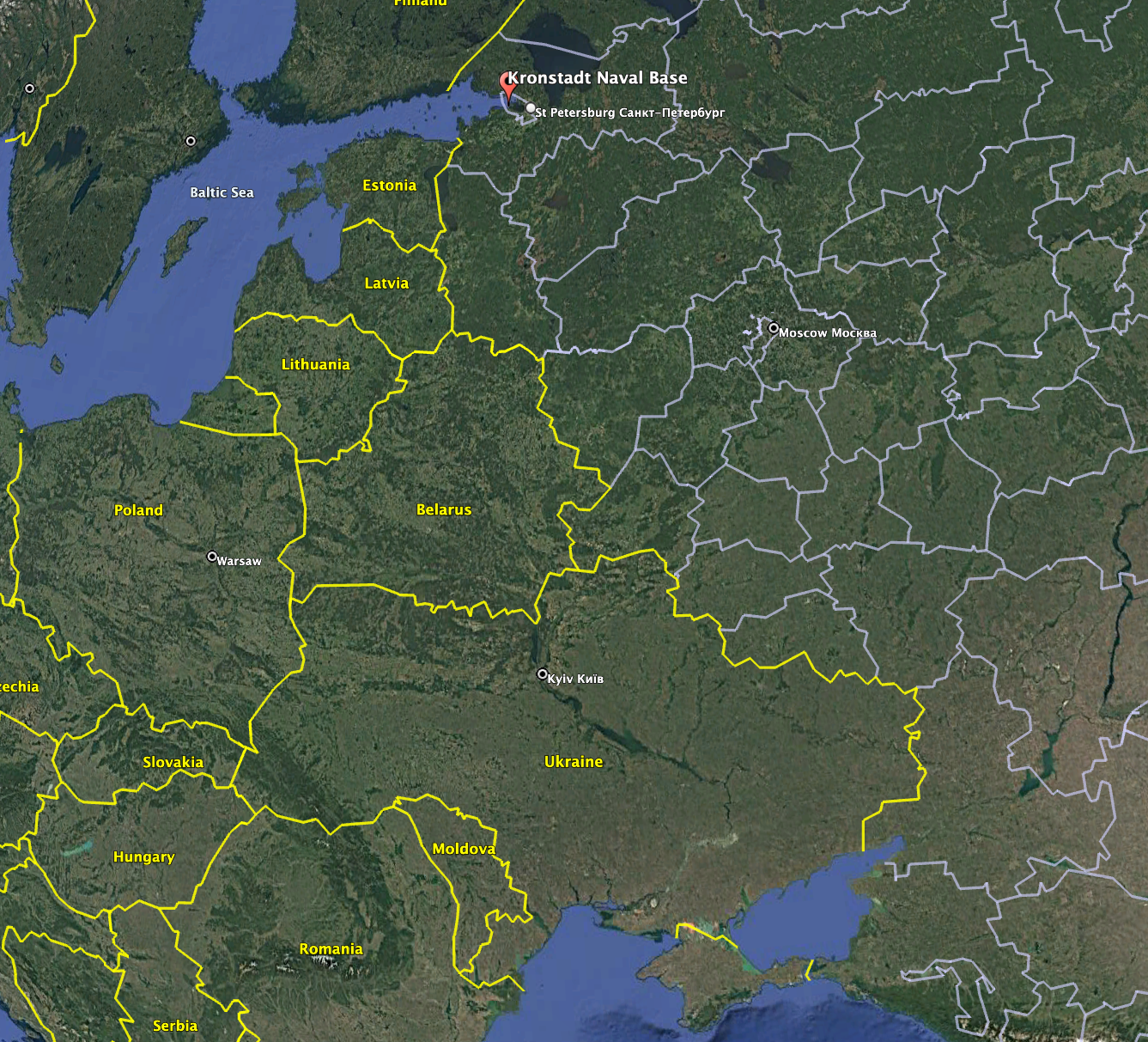
The approximate location of Kronstadt and St. Petersburg in relation to Ukraine. Google Earth

Finally, by targeting Kronstadt, the attacks also signify the opening up of a new front in the drone war, namely against the Baltic Fleet while it is in port.

A fire has reportedly broken out aboard the Russian warship Boykiy in Kronstadt near St. Petersburg following Ukraine’s latest drone attack.

The corvette repeatedly escorted vessels from Russia’s shadow oil fleet through the English Channel in recent years. pic.twitter.com/Zhsn3nVsVp

— KyivPost (@KyivPost) June 3, 2026

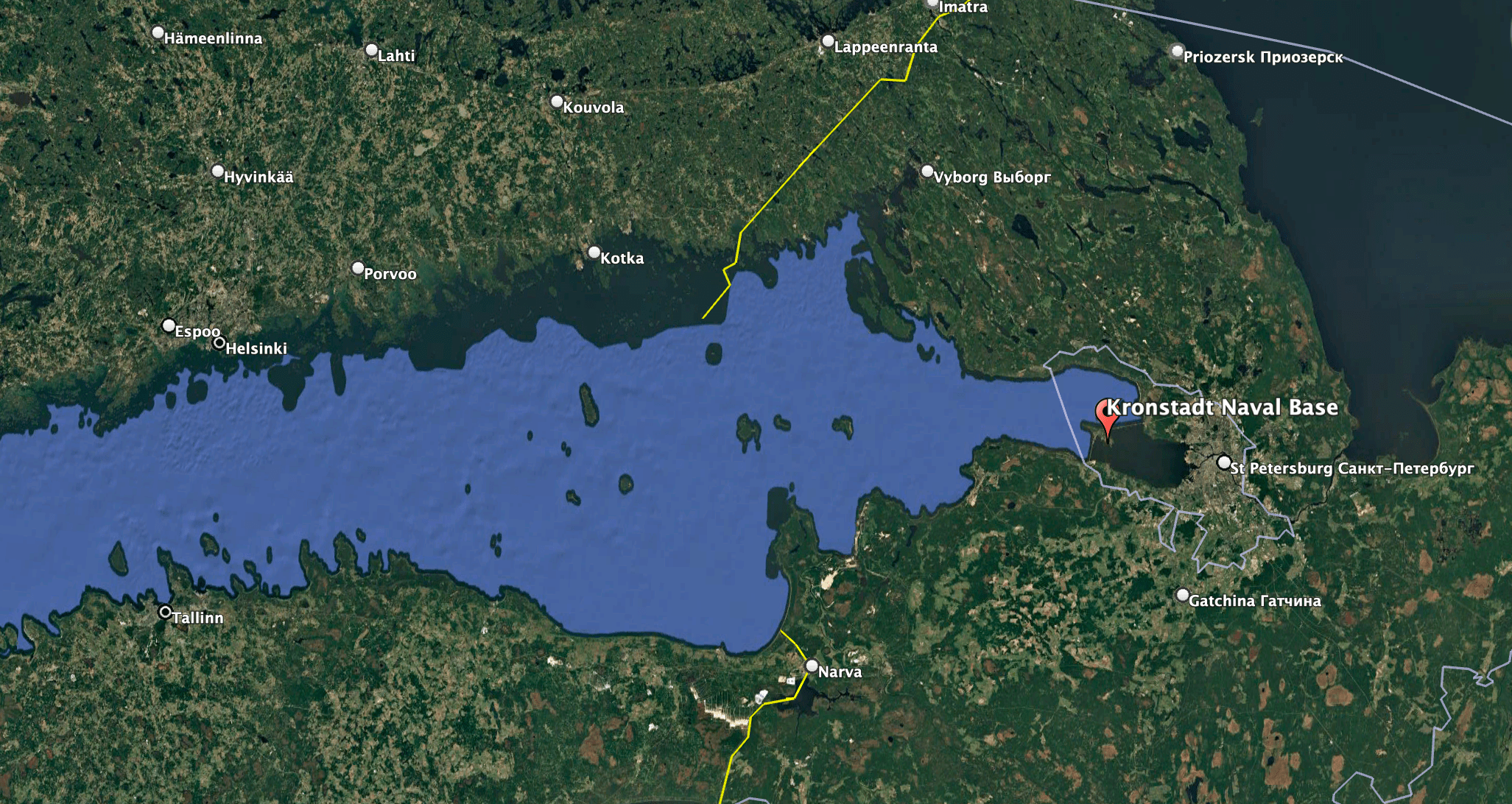
Located on Kotlin Island in the Gulf of Finland, about 18 miles west of St. Petersburg, Kronstadt is one of the principal bases associated with the Baltic Fleet. Today, it primarily hosts corvettes and patrol vessels, naval support ships, training units, as well as repair and maintenance facilities. Since any naval threat approaching St. Petersburg from the Gulf of Finland must pass near Kronstadt, the base effectively acts as the maritime gateway to Russia’s second-largest city.

The approximate location of Kronstadt, at the gateway to St. Petersburg, and at the far east end of the Baltic. Google Earth

There have been very few confirmed Ukrainian attacks of any kind on the Baltic Fleet compared with the extensive campaign waged against Russia’s Black Sea Fleet.

In April 2024, there was a fire on a Russian warship at Baltiysk in Kaliningrad. The fire damaged communications and electronic systems aboard the Buyan class corvette Serpukhov. A Ukrainian military intelligence official subsequently claimed that this was the result of a covert joint operation conducted by his GUR agency and a pro-Kyiv Russian military group.

📹 For the first time in the war, an attack took place in the Baltic Sea, the Russian Serpukhov missile ship was burned in Kaliningrad.
The Buyan-M class Serpukhov corvette belonging to the Russian navy was burned by Ukrainian sabotage teams.
The ship was severely damaged. pic.twitter.com/Isl9sVWF1R

— Mete Sohtaoğlu (@metesohtaoglu) April 9, 2024

So far, of course, Ukraine’s naval campaign has focused overwhelmingly on the Russian Black Sea Fleet. Many successful attacks have been recorded against Black Sea Fleet vessels and facilities, forcing the general evacuation of Russian naval assets from occupied Crimea and to bases in Russia proper.

In recent months, Ukraine has waged an aerial campaign to disrupt Russia’s economy. Long-range drones have hit ports and oil storage facilities, military factories, and airbases. There has also been an uptick in attacks against tankers and trucks moving between occupied southern Ukraine and Crimea, leading to fuel shortages across the peninsula.

Meanwhile, the scale of Russian missile and drone attacks on Ukraine remains undiminished. On Monday, a barrage of Russian strikes killed 23 people across Ukraine and injured many more. This led Zelenskyy to renew his plea for the U.S. government to provide Kyiv with more Patriot missiles. Today, he said that “an agreement at the highest political level on the purchase of Patriot systems […] is awaiting implementation at the financial, legal, and technical levels.”

I held a meeting on additional ways to supply air defense to Ukraine – both systems and interceptors. We have an agreement at the highest political level on the purchase of Patriot systems, and this agreement is awaiting implementation at the financial, legal, and technical…

— Volodymyr Zelenskyy / Володимир Зеленський (@ZelenskyyUa) June 3, 2026

Whether or not the overnight strike caused significant damage, its strategic message was unmistakable. By reaching Kronstadt, one of Russia’s most historic naval bases, Ukraine demonstrated that even the Baltic Fleet is no longer beyond its reach. The attack highlights Kyiv’s growing long-range capabilities and signals that Russia’s efforts to protect both its regular fleet and its shadow oil-export network may face increasing pressure, even far from the front lines.

Contact the author: thomas@thewarzone.com

The post Russia’s Baltic Fleet Successfully Attacked By Ukrainian Drones appeared first on The War Zone.

  •  
❌