Reading view

Defense minister says Ukraine’s drones are turning Crimea into an island

Fedorov

Ukraine's drone campaign against Russian supply lines is cutting occupied Crimea off from the mainland, and the peninsula will soon "turn into an island," Defense Minister Mykhailo Fedorov said in an interview published on 17 June.

Fedorov's words put a cabinet minister's name to a forecast Ukraine's military has been demonstrating for weeks — every land corridor into Crimea struck, traffic on the main route down by more than two-thirds, fuel rationed inside the peninsula. The isolation "could lead to very unexpected consequences for the Russians," he told the PRESSING channel, declining to say more.

A correlation the ministry says it can see

Fedorov linked the strikes directly to the fighting on the front. The more Ukraine hits Russian logistics, the fewer assault operations Russia mounts on the first line, he said, describing a "direct correlation" the ministry tracks.

He said the Defense Ministry contracted 300% more Middle Strike drones in the first four months of 2026 than in all of 2025. That figure sits below a larger one already on the record: in late April, after a briefing from Fedorov, President Volodymyr Zelenskyy said five times more mid-range strike assets had been contracted this year than last.

The campaign behind the forecast

Fedorov announced on 27 May a program he calls Logistics Lockdown, directing an extra 5 billion hryvnias ($112 million) to the drone units striking Russian supply routes 20 to 200 kilometers behind the front. Two weeks later, Unmanned Systems Forces commander Robert Brovdi, known by his call sign Madyar, vowed to isolate Crimea in a Reuters interview, saying strikes had cut traffic on the Novorossiya highway by 71% in a fortnight.

Between 7 and 13 June, Ukrainian drones hit the Chonhar bridge, the Henichesk–Arabat Spit crossing, four bridges near Armiansk, and the Dzhankoi checkpoint. Russian-installed officials said no intact bridges remained at the peninsula's land entrances, with traffic rerouted, then halted again under repeated strikes.

What Fedorov did not say is what the "unexpected consequences" might be, or when.
  •  

Ukraine strikes sanctioned shadow fleet tanker FINA A in the Black Sea

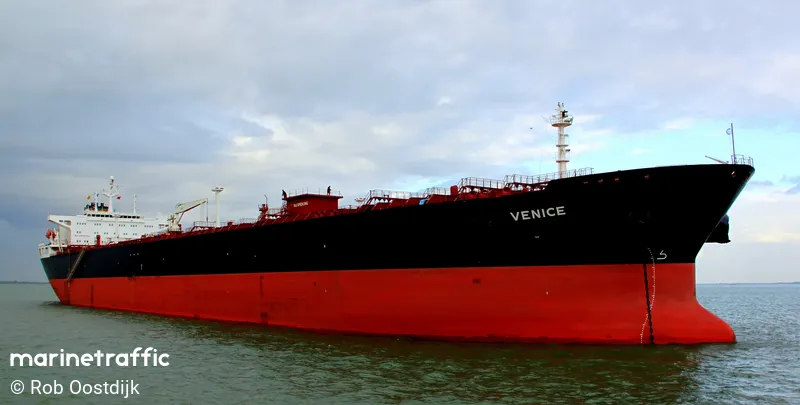
vessel FINA A.

Ukraine's Defence Forces struck the Russian shadow fleet tanker FINA A in the Black Sea on 16 June and overnight into 17 June, hitting the sanctioned vessel along with bridges and command posts that sustain Russian military logistics near occupied Crimea.

The 244.6-meter tanker, with a gross tonnage of 62,002, is under sanctions from the European Union, Switzerland, the United Kingdom, Canada, and Ukraine, and had been used to move crude oil and petroleum products for Russia in circumvention of those restrictions. The General Staff said the hit was confirmed and that the extent of the damage was still being assessed.

The strike is the latest in a campaign Kyiv calls kinetic sanctions — naval drone attacks on the tankers Russia uses to keep oil revenue flowing despite Western sanctions. Ukrainian forces hit two such vessels at the entrance to Novorossiysk in early May, part of a pattern that has tripled Black Sea war-risk insurance premiums since late 2025.

Bridges and command posts near Crimea

Beyond the tanker, the Defence Forces struck two road bridges in Kherson Oblast — one across the North Crimean Canal near Stavky and another near Voinka — that Russia uses to move troops and equipment between occupied territories in southern Ukraine. A Russian command-and-observation post and a command post were hit near Velyka Novosilka in Donetsk Oblast.

Ukrainian units also reported strikes on Russian drone control points across Zaporizhzhia, Donetsk, Kherson, and Dnipropetrovsk oblasts, as well as two sites inside Russia's Kursk Oblast.

  •  

Storm Shadow maker MBDA to develop Neptune-2 cruise missile with Ukraine’s Luch

Russo-Ukrainian war Romania intends to collaborate with Ukraine on developing R-360 Neptune anti-ship missiles. The partnership aims to control Black Sea waters post-war.

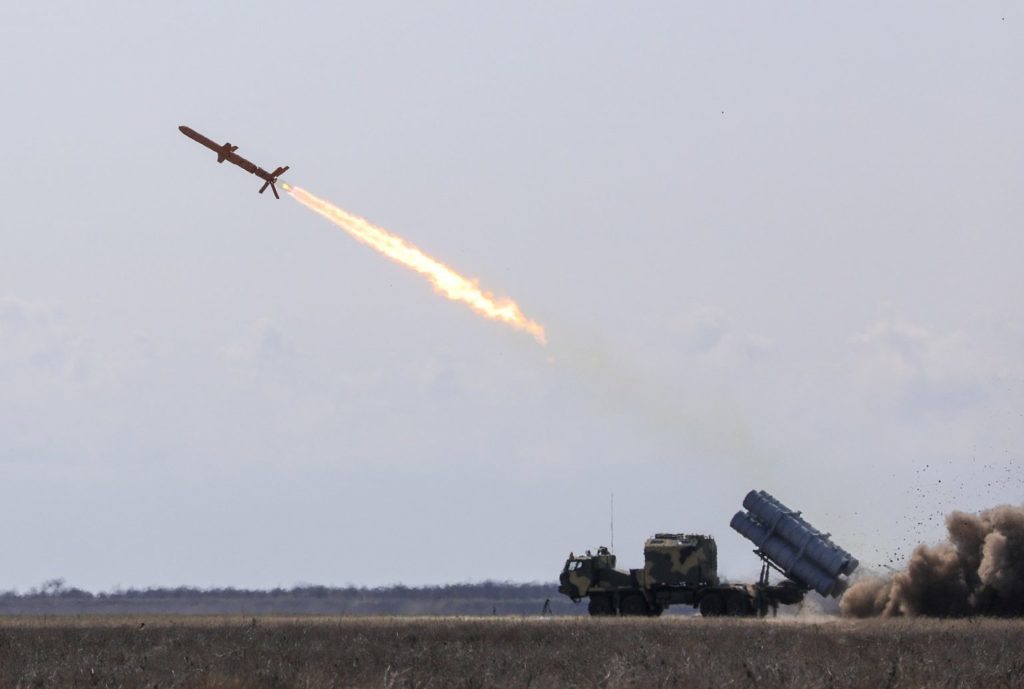
MBDA, Europe's largest missile manufacturer and the maker of the Storm Shadow cruise missiles Ukraine already fires at Russian targets, has signed a memorandum of understanding with Ukraine's state-owned Luch Design Bureau to jointly develop the Neptune-2 cruise missile. The two sides announced the deal on 16 June 2026 at the Eurosatory defense exhibition near Paris.

The agreement attaches a Western prime contractor to Ukraine's flagship homegrown deep-strike weapon — the missile Luch built that sank the Russian cruiser Moskva in April 2022. MBDA credited Luch with "specific knowledge, abilities and experience" in building complex weapons, and said the partners would "pursue disruptive innovation to develop the deep strike capability" for Neptune-2, according to the company's published statement.

For now the memorandum commits the two companies to cooperation, not production. It sets out joint work on long-range strike capabilities, with no signed contract, delivery schedule, or shared funding figure attached.

Luch's R-360 Neptune entered service with the Ukrainian Navy in 2021, adapted from the Soviet-era Kh-35 anti-ship missile. Ukraine has since stretched its range from around 300 km to a reported 1,000 km in the Long Neptune variant, fitted with a 260 kg warhead, and turned it from a ship-killer into a land-attack weapon used against Russian air bases, oil refineries, and ammunition depots — more than 50 targets in a single year, by the Navy's count.

MBDA is not the first European partner to reach for Neptune. Romania announced plans to co-develop the missile with Ukraine in 2024. Earlier in June, MBDA signed a separate strategic partnership with Ukrainian manufacturer Ukrainian Armor on drones and counter-drone systems.

MBDA is a joint venture of French, German, Italian, Spanish, and British defense firms, with a catalogue running from Storm Shadow and the naval cruise missile often described as Europe's answer to the Tomahawk to the Aster, CAMM, and Mistral air-defense families. The company sells finished missiles to other nations' armed forces. Here it is doing the opposite — building on a design a Ukrainian bureau has spent the war proving in combat.

  •  

Ukraine loses two pilots in Su-24M crash in Khmelnytskyi Oblast

Su-24M crash

A Su-24M bomber crashed near a settlement in Khmelnytskyi Oblast on 16 June at approximately 7:00 pm, killing both crew members, Air Force of the Armed Forces of Ukraine reported.

The crash comes as Ukraine's Air Force operates aging Soviet-era aircraft under combat conditions, with flight crews drawn in part from test pilots and other specialists who volunteered or were mobilized after Russia's full-scale invasion began in February 2022.

The crew

Bohdan Babenko, 23, held the rank of senior lieutenant and served as a navigator with the 7th Tactical Aviation Brigade named after Petro Franko of the Ukrainian Air Force. He was from Bohodukhiv in Kharkiv Oblast. "He chose the path of a warrior not by circumstance, but by calling," Bohodukhiv city mayor Volodymyr Bielyi wrote on Facebook. Babenko had graduated from the Kharkiv National University of Air Force named after Ivan Kozhedub and was his parents' only son, Bielyi said.

Bohdan Zahoruiko, 55, held the rank of major and was a test pilot known, among other things, for performing aerobatic maneuvers on the military transport aircraft An-32RE. He was mobilized on 24 February 2022 among the first volunteers. "After the start of the full-scale war, Bohdan Hryhorovych was one of the few pilots who did not leave for Germany, but was mobilized into the Air Force and, having mastered the Su-24M, defended our country with the controls in his hands," aviation technician Anatolii Uvarenko wrote on social media.

Investigation

The flight was being conducted in accordance with a combat order, according to the investigation. An investigative response team has been dispatched to the site. The aircraft's flight data recorder has been recovered for expert examination. Investigators are also seizing the aircraft's logbook, the crew medical examination log, the airfield flight director's log, and other operational and authorization documentation.

The preliminary legal classification is violation of flight rules or flight preparation resulting in a crash or other grave consequences, under Part 2, Article 416 of Ukraine's Criminal Code, DBR said.

  •  

ISW: Zelenskyy keeps offering to meet Putin, the Kremlin keeps refusing

zelenskyy g7

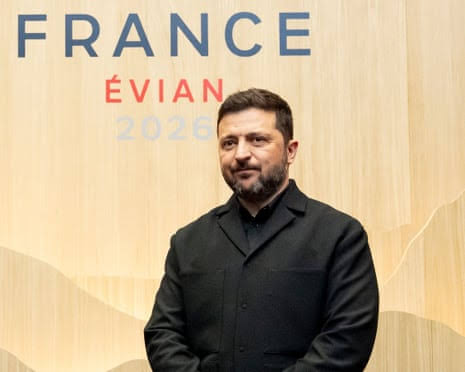
Ukrainian President Volodymyr Zelenskyy offered to meet Russian President Vladimir Putin on the sidelines of the G7 summit in Évian-les-Bains, France, but Russia did not provide a clear response, Zelenskyy told journalists on 15 June, as reported by Reuters. US President Donald Trump, who met Zelenskyy at the summit on 16 June, stated that Russia "should make a deal" with Ukraine to end the war, the Institute for the Study of War (ISW) reported on 16 June.

The offer was the latest in a series of Ukrainian proposals for high-level talks that the Kremlin has rejected or ignored. Putin had dismissed Zelenskyy's 4 June open letter proposing a bilateral leader-level meeting, and Russia's non-response to the G7 offer extended that pattern into a multilateral setting backed by both the United States and Europe, ISW reported.

G7 as a proposed venue

Speaking at the Kyiv-Pechersk Lavra, damaged in Russia's overnight attack, Zelenskyy said the United States had agreed to invite Putin to the summit. "We sent a message about readiness to meet with Putin during the G7 summit, because Trump and Macron are there, so Europeans plus America. This is a good, I think a very good, opportunity to meet all together," he said. Ukraine transmitted the invitation through US and French channels and directly to Russian counterparts, a Ukrainian official told Reuters, but received no clear answer. The Élysée Palace did not respond to a request for comment.

"Europe and the United States reached agreement, and Russia once again demonstrated that they are not ready to talk," Zelenskyy said.

US as an alternative venue

Zelenskyy said on 15 June that he and Trump had discussed on 14 June the possibility of holding peace negotiations in the United States in a format designed to be more difficult for Putin to refuse, ISW reported. On 16 June, Zelenskyy said he wants talks with Putin held in a neutral country before the start of winter 2026–2027, naming the United States as a possible venue.

Kremlin disputes the account

Kremlin Presidential Aide Yuriy Ushakov claimed on 16 June that Russia had not received any offers to organize a Putin–Zelenskyy meeting in the United States, and said the possibility was not discussed during Putin and Trump's 14 June phone call, ISW reported. Kremlin Spokesperson Dmitry Peskov separately claimed that Zelenskyy had not invited Putin to meet on the G7 sidelines.

Ukraine has repeatedly offered to arrange high-level peace negotiations with Russian officials, including Zelenskyy's 4 June open letter to Putin proposing a head-of-state meeting, which Putin subsequently rejected, ISW reported.

  •  

Latvia returns 19 sets of historical Ukrainian documents found in its archives

archive from latvia

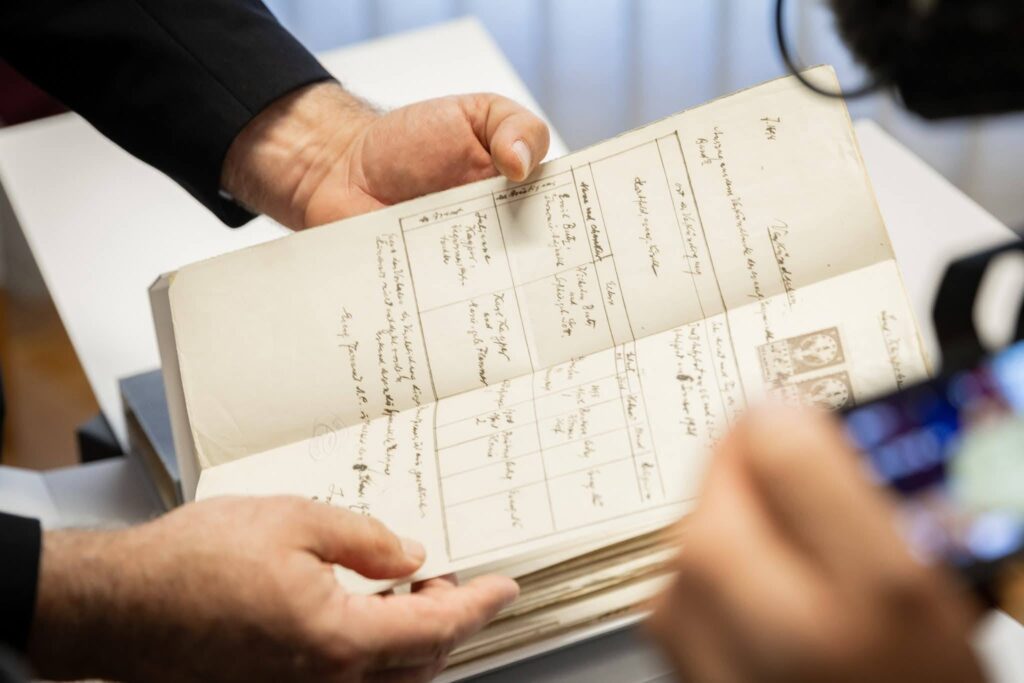
Latvia's National Archives has returned 19 sets of historical documents to Ukraine, the State Archival Service said on 17 June. The records date from 1860 to 1940.

The transfer comes two days after Ukraine's prosecutor general, Ruslan Kravchenko, put the number of cultural objects looted from occupied territory since 2014 at more than 7.8 million.

The documents include reports, parish registers, and a design drawing for a prayer house used by Evangelical Lutheran and German settler communities, the service said in a statement. They come from what are now Ivano-Frankivsk, Lviv, Odesa, and Volyn oblasts.

Researchers found the records in 2025 while working through the holdings of Latvia's State Historical Archive. Latvia's archive concluded they were not part of its national heritage and should return to Ukraine under bilateral agreements.

Anatolii Khromov, who heads Ukraine's State Archival Service, said some of the documents come from the Bilhorod-Dnistrovskyi area, where he began his career. Those will go to the State Archive of Odesa Oblast.

Two of Russia's largest museums hold more than 110,000 catalogued items from present-day Ukraine. Russian officials have called returning them legally impossible, Texty reported.

Recovering heritage taken from Ukraine usually means restitution claims and years of legal effort. The Latvian transfer required neither.

  •  

Ukraine and Albania sign road transport deal, opening freight “transport visa-free”

albania ukraine flags

Ukraine and Albania signed an agreement on international road transport on 16 June, establishing the legal basis for direct freight and passenger road links between the two countries and liberalizing cargo haulage.

Until now, no accessible mechanism existed for that traffic. Trucks and buses registered in Ukraine could not enter Albania except through one-off permits, and the same restriction applied to Albanian carriers — leaving no standing route for exporting goods, importing them, or moving passengers by road.

The deal removes that barrier and introduces what Kyiv calls a "transport visa-free" regime — the liberalization of freight transport — alongside rules for bilateral and transit traffic across both states, the Ministry for Communities and Territories Development said.

Albania becomes the 37th "transport visa-free" partner

"Expanding the geography of transport is a direct priority for the Ministry of Development and our team," said Oleksii Kuleba, Deputy Prime Minister for the Restoration of Ukraine and Minister for Communities and Territories Development. "Albania is the 37th country with which we will have a 'transport visa-free' regime."

The agreement was signed by Deputy Minister Serhii Derkach and Albania's Minister of Infrastructure and Energy Enea Karakaçi. It also creates a joint commission to coordinate implementation, including transport procedures, the exchange of statistical data, and cooperation between the two governments' competent authorities.

The ministry framed the deal as a step toward closer transport ties with Southeast Europe and new logistics routes for Ukrainian business. The document takes effect once both countries complete their domestic ratification procedures.

The deal deepens ties that have grown sharply since Russia's full-scale invasion. Albania, a NATO member, joined EU sanctions on Russia at the outset and has been among Kyiv's firmest backers in the Western Balkans. Ukraine and Albania signed a ten-year security cooperation pact in January, and in late May Tirana summoned Russia's ambassador twice after a Russian strike damaged its envoy's residence in Kyiv.

The transport agreement fits a wider push to build alternative trade corridors while Russia's war on Ukraine disrupts shipping. In April, Parliament ratified a comparable road-transport agreement with Morocco, opening a direct route to a market where bilateral trade reached about $280 million.

  •  

Russian strikes kill four across Ukraine, hit children’s riding school in Sumy

sumy

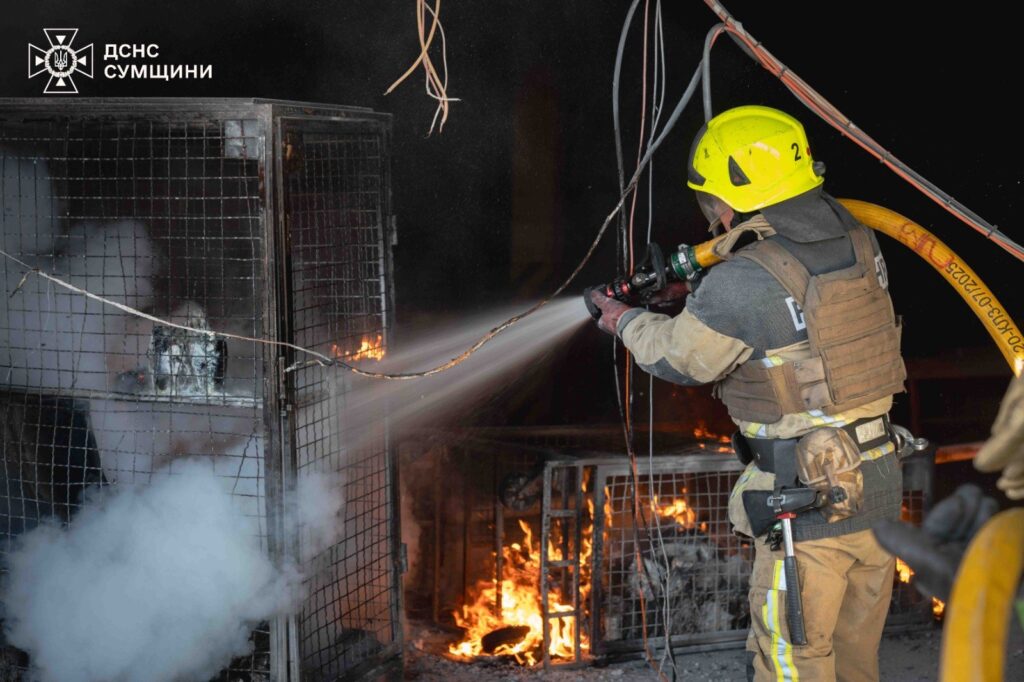
A Russian drone struck the stable of a children's equestrian school in Sumy after midnight on 17 June, killing three horses. The strike was part of Russian attacks over the past day that left at least four people dead and more than 30 injured across Ukraine.

Air defense downed most of the drones launched overnight — 97 of 119. The ones that got through hit homes, an elevator, gas stations, and the riding school, where children train every day.

Sumy: a riding school, then a wider night

The drone that hit the school was a Geran-2, the Russian-made version of the Iranian Shahed. It damaged the stable and started a fire that crews later contained, Sumy Oblast governor Oleh Hryhorov said on Telegram. No staff were hurt.

Hryhorov said the Russians "deliberately struck a civilian object where children train every day." Acting mayor Artem Kobzar confirmed three horses were killed.

Elsewhere in the oblast, a drone strike on the Bilopillia hromada injured three people — two men, aged 59 and 47, and a 62-year-old woman, regional police reported. Strikes damaged homes, vehicles, and infrastructure in several other hromadas.

In Trostianets, a mass overnight strike destroyed gas stations and damaged many homes. Mayor Yurii Bova reported no civilian casualties.

Kharkiv: 11 injured across 10 settlements

Kharkiv and nine other settlements came under fire over the past day, injuring 11 people, regional governor Oleh Syniehubov said.

Among the injured was a 60-year-old man hurt near Petrivka when a car set off an explosive device. Russian forces used a missile, a guided aerial bomb, and dozens of drones, damaging an elevator, a warehouse, a school, and homes across the oblast.

Zaporizhzhia: one killed, 931 strikes in a day

One person was killed and 14 injured in Zaporizhzhia and the surrounding district on 16 June, regional head Ivan Fedorov said. Nine residential buildings were among the damage in two city districts.

Over the day, the occupiers carried out 931 strikes on 50 settlements," Fedorov wrote, citing 72 reports of damage to housing, cars, and infrastructure.

Sloviansk: three killed in glide-bomb strikes

Russian forces struck Sloviansk several times on 16 June, killing three people and wounding five, the Donetsk regional prosecutor's office reported. An 81-year-old woman died in her home in a strike that used a FAB-250 bomb fitted with a UMPK glide kit, which left her husband concussed.

A second strike hours later fatally wounded two residents, aged 36 and 37, and injured four more civilians. At least 117 private homes were damaged.

Dnipropetrovsk and the air picture

Drones hit the Nikopol district overnight, damaging infrastructure with no casualties, regional governor Oleksandr Hanzha said. Air defense downed 22 drones across the oblast.

Ukraine's air defense forces have shot down or neutralized 97 Russian UAVs of the Shahed, ”Gerbera,“ ”Italmas," and other types in the north, south, and east of the country. Twenty attack UAVs were recorded striking 11 locations, and debris from downed UAVs was found at 6 locations. The attack came from Russian regions including Bryansk and Kursk and from occupied Crimea, and was still under way at 08:00.

  •  

G7 leaders agree to boost Ukraine’s air defense, weigh licensing missile production

g7

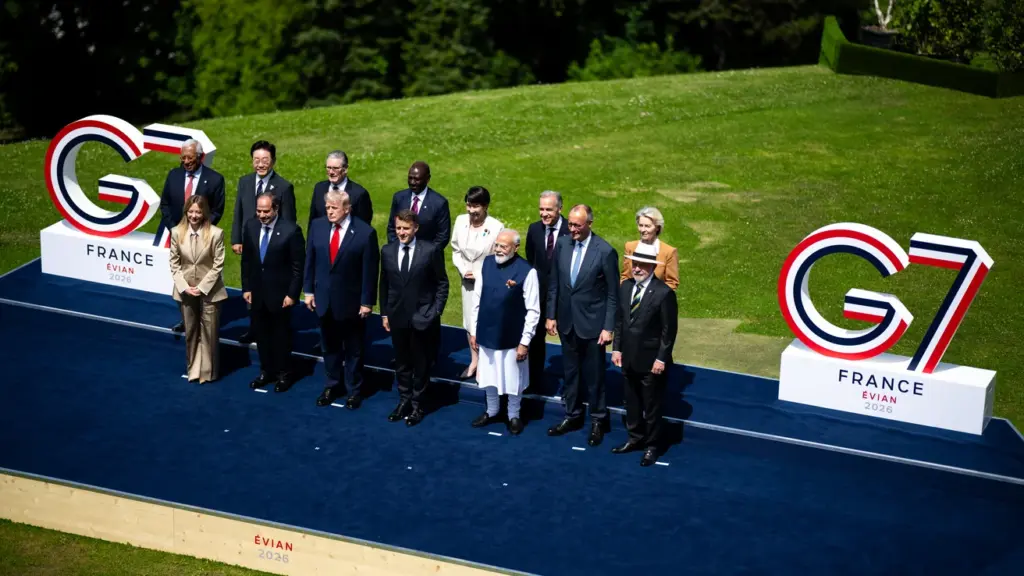
G7 leaders agreed to send Ukraine more air defense systems and interceptor missiles, and said they are ready to consider licensing Ukraine to build them domestically. The commitment came in the bloc's joint statement on 17 June, the final day of the summit in Évian-les-Bains, France.

Ukraine's problem is arithmetic. Russian ballistic and drone strikes outpace the interceptors Washington can supply, and Zelenskyy has spent more than a year asking allies to let Ukraine and Europe produce their own. The statement turns that ask into collective language — but it commits the G7 only to consider it.

What the G7 agreed

The leaders said they would increase deliveries of air defense, additional systems, interceptor missiles, and long-range capabilities, and were ready to consider granting Ukraine licenses to raise its own military output.

"To support and accelerate this new momentum, we agree to increase the delivery of air defence capacities, additional systems and interceptors, and long-range capabilities. We are also ready to consider extending to Ukraine the benefit of licenses to allow for an increase in Ukraine's military production," said in the statement.

The statement also pledged support to strengthen Ukraine's energy grid before next winter, and committed the G7 to tighten pressure on Russia's war economy through expanded sanctions on its oil and gas sector.

Why licensing matters more than supply

The licensing ask is not about handouts. It is about capacity. US interceptor lines are stretched across Ukraine, Europe, and the Middle East at once, and more deliveries from a fixed supply do not change that ceiling — domestic and European production does.

Zelenskyy made the case directly to Trump in a bilateral on 16 June, asking for licenses to produce American anti-ballistic systems, including for the Patriot. Trump reacted "positively," Zelenskyy said, and teams from both countries would begin work on the question.

Ukraine has built the parallel track already. Kyiv lined up its first partner in late May to produce interceptors in Europe rather than lean on a shrinking supply of US Patriots, keeping the effort out of reach of outside political bargaining.

What the statement does not do

It does not commit anyone to anything. "Ready to consider" is not a license, and the joint text names no timeline, no system, and no manufacturer. Whether the language becomes hardware on Ukrainian soil is the question Évian left open.

The pressure behind the ask keeps rising. Russia has turned to faster Geran-4 jet drones built to outrun the cheap interceptors Ukraine fields against mass attacks, narrowing the margin Kyiv's air defense has been working to hold.

  •  
❌