
Normal view

G7 leaders agree to boost Ukraine’s air defense, weigh licensing missile production

17 June 2026 at 07:08

g7

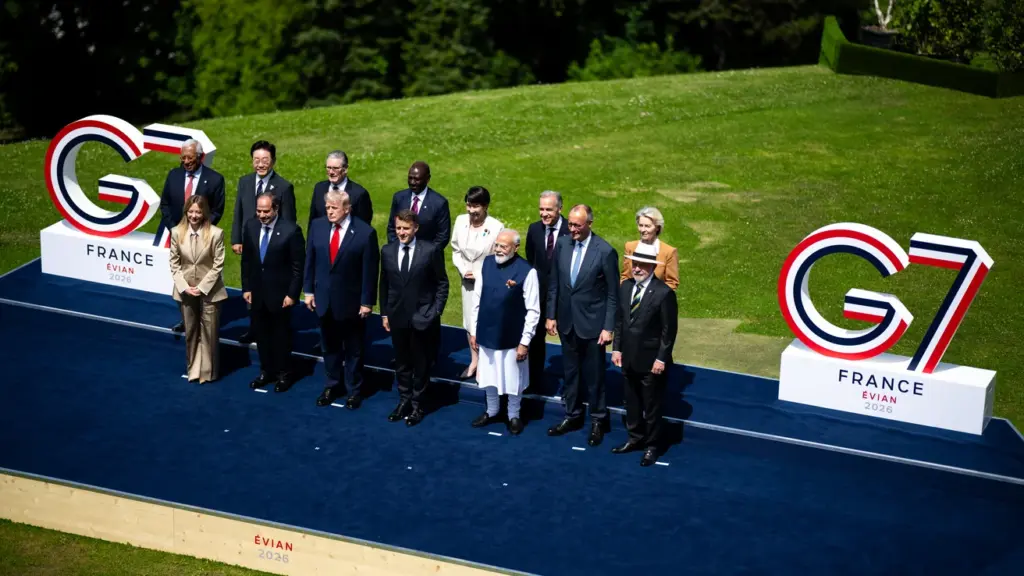
G7 leaders agreed to send Ukraine more air defense systems and interceptor missiles, and said they are ready to consider licensing Ukraine to build them domestically. The commitment came in the bloc's joint statement on 17 June, the final day of the summit in Évian-les-Bains, France.

Ukraine's problem is arithmetic. Russian ballistic and drone strikes outpace the interceptors Washington can supply, and Zelenskyy has spent more than a year asking allies to let Ukraine and Europe produce their own. The statement turns that ask into collective language — but it commits the G7 only to consider it.

What the G7 agreed

The leaders said they would increase deliveries of air defense, additional systems, interceptor missiles, and long-range capabilities, and were ready to consider granting Ukraine licenses to raise its own military output.

"To support and accelerate this new momentum, we agree to increase the delivery of air defence capacities, additional systems and interceptors, and long-range capabilities. We are also ready to consider extending to Ukraine the benefit of licenses to allow for an increase in Ukraine's military production," said in the statement.

The statement also pledged support to strengthen Ukraine's energy grid before next winter, and committed the G7 to tighten pressure on Russia's war economy through expanded sanctions on its oil and gas sector.

Why licensing matters more than supply

The licensing ask is not about handouts. It is about capacity. US interceptor lines are stretched across Ukraine, Europe, and the Middle East at once, and more deliveries from a fixed supply do not change that ceiling — domestic and European production does.

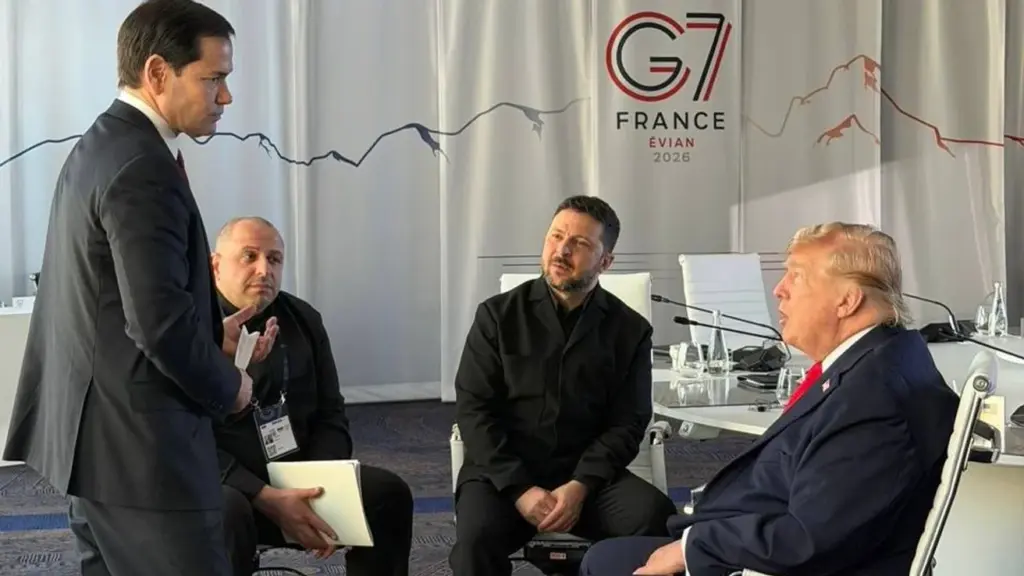
Zelenskyy made the case directly to Trump in a bilateral on 16 June, asking for licenses to produce American anti-ballistic systems, including for the Patriot. Trump reacted "positively," Zelenskyy said, and teams from both countries would begin work on the question.

Ukraine has built the parallel track already. Kyiv lined up its first partner in late May to produce interceptors in Europe rather than lean on a shrinking supply of US Patriots, keeping the effort out of reach of outside political bargaining.

What the statement does not do

It does not commit anyone to anything. "Ready to consider" is not a license, and the joint text names no timeline, no system, and no manufacturer. Whether the language becomes hardware on Ukrainian soil is the question Évian left open.

The pressure behind the ask keeps rising. Russia has turned to faster Geran-4 jet drones built to outrun the cheap interceptors Ukraine fields against mass attacks, narrowing the margin Kyiv's air defense has been working to hold.
Zelenskyy at G7: Trump “positive” on missile licenses, but Europe needs a cheaper option

16 June 2026 at 14:14

ze trump

President Volodymyr Zelenskyy said US President Donald Trump responded "positively" to Ukraine's request for licenses to produce American air defense systems and missiles, speaking on the sidelines of the G7 summit in Évian-les-Bains on 16 June. But he warned that US output cannot meet the demand of Ukraine, Europe, and the Middle East at once, and urged European states to build their own, cheaper anti-ballistic systems.

The ask is not new. Ukraine has pressed Washington for production licenses since at least last spring, and Zelenskyy has said before that the US once promised Europe the right to manufacture Patriot missiles, then pulled the offer back. What changed in Évian is the framing. With American interceptor lines already stretched, partly by the war between the United States and Iran now in its fifteenth week, Zelenskyy is no longer only asking the US to share. He is telling Europe to build a substitute the continent can actually afford.

Licenses, and the limit of American production

"US production is not as large as our needs. We need licenses," Zelenskyy said in an online conference with Reuters. He has met repeatedly with manufacturers, he added, and knows that producing Patriot systems and missiles is hard. Whether the licenses come depends on Trump.

"Right now he was positive. And when President Trump is positive, I hope that means 'yes,'" Zelenskyy said.

That hope has been disappointed before. Washington promised the licenses and then declined to follow through when Ukraine first proposed European production years ago, by which point Germany had nearly exhausted the air defense missiles it could send.

So he turned to the alternative. "From the European side, we very much need the world to try to produce European anti-ballistic systems, strong ones and, between us, cheaper ones," he said. "Otherwise we, Europe, the Middle East will not have enough."

The meeting itself

The licenses came up in Zelenskyy's first in-person meeting with Trump in nearly four months, a behind-the-scenes encounter of the G7 summit. Zelenskyy has aslo had a bilateral meeting with French president, and the summit's roundtable with all G7 leaders, the Ukrainian and American leaders were seated on either side of Macron. The outcome of the conversation was not disclosed.

Publicly, Zelenskyy kept his stated priority narrow. "The main thing is to strengthen air defense for Ukraine and to push diplomacy so that Russia ends its war. Peace is needed," he wrote on Telegram.

Beyond weapons, Zelenskyy told G7 leaders Ukraine needs a "winter package," money for diesel, gas, and fuel to keep energy facilities running through the cold months if the war has not ended by then. Every country present would back it, he said. Before arriving, he had also discussed with Trump the possibility of organizing a meeting with Russian President Vladimir Putin in the US.

Pressure through sanctions

Zelenskyy said every G7 participant condemned Russian strikes on civilian sites, including one on the Lavra, a major Orthodox monastery, and that the main lever against Moscow would be sanctions. Canada and the United Kingdom raised the issue, he said, with London proposing measures against the tankers of Russia's "shadow fleet." All countries would act on it, he said.

Whether any of it converts into systems on Ukrainian soil is the question Évian did not answer. Zelenskyy has called Trump "positive" before.

❌