Reading view

The Epicurean Paradox: The Ancient Greek Question That Still Challenges Faith

temple of Apollo, Delphi Greece
The ruins of Delphi—once believed to be the centre of the world—where Ancient Greeks sought divine answers to life’s mysteries. Credit: Berthold Werner, CC BY-SA 3.0, via Wikimedia Commons.

The very air we breathe here in Greece, the same air that ancient philosophers inhaled, often seems to carry ideas that still intrigue modern minds. And among them, few are as stubbornly persistent and as profoundly unsettling as that ancient riddle that became known by Epicurus.

The question that has endured throughout millennia, posing a challenge to both theologians and laypeople, is referred to as the Epicurean paradox, more commonly recognized as the Problem of Evil. It asks, plainly and simply, how a truly good, all-powerful God can exist alongside a world so utterly overflowing with suffering.

This conundrum has sparked numerous theological and philosophical debates, challenging us to confront its deeply significant implications.

Epicurus head sculpture
Epicurus was a Greek philosopher, born in 341 BC on the island of Samos in an Athenian family. Credit: Richard Mortel, Wikimedia Commons, CC-BY-2.0

The Epicurean paradox is a challenge to the divine

Now, while we often attribute this to Epicurus, the exact words we use—”Either God wants to abolish evil and cannot; or he can and does not want to. Or he wants to and can, and he is good. So, where does evil come from?” These were put down much later by a Christian man named Lactantius.

He was only trying to sum up what he understood of Epicurean thought. But you can bet your last drachma that the core of the problem, that uneasy tension between divine attributes and human experience, absolutely resonated within the Lyceum and the Academy of Athens, two of the most famous philosophical schools of Ancient Greece. Just imagine, if you will, those heated debates under the Athenian sun, where bright young minds wrestled with the implications of a whole pantheon of powerful, often quite moody, gods and the undeniable reality of plague, famine, and all-out war. This was truly a fascinating time to be alive.

How, then, could you possibly square the benevolent side of gods like Zeus, the protector of justice, with the glaring injustices you saw all around you? The Epicurean paradox, therefore, wasn’t just a logic puzzle; it was a full-blown existential crisis, a question that cut right to the very core of how Ancient Greeks understood the universe and their tiny place within it.

Wrestling with the Epicurean paradox from Ancient Greece to modern thought

Fast forward a few centuries, and this problem intensified with the arrival of monotheistic religions, especially Christianity, which, of course, posits a single, all-loving, all-powerful God. This really made the intellectual and emotional burden of The Epicurean paradox even bigger. If God truly is omnipotent, capable of absolutely anything, and omnibenevolent, desiring nothing but good, then why do we still witness such unspeakable horrors around the globe? Why the gut-wrenching agony of a child, the sheer devastation of a natural disaster, the creeping, insidious grip of disease, the unfathomable destruction of war?

Think about the Lisbon earthquake of 1755, a cataclysm that shook Enlightenment Europe to its core, inspiring Voltaire to write his biting satire Candide, which skewered the overly optimistic philosophies of the day. That earthquake, a seemingly random act of immense suffering, became a crucial symbol of the problem of evil, forcing thinkers around Europe to stare down the uncomfortable truth that even in an age of supposed reason, the existence of suffering remained a massive issue for anyone who believed in a good and powerful God. The entire debate, in essence, shifted from the sometimes whimsical nature of many gods to the unsettling feeling of indifference or impotence from just one.

Painting of the Da Vinci's Last Supper
Christianity often comes under attack by atheists, who use the argument of the Epicurean paradox. The Last Supper by Leonardo da Vinci (1495-1498). Credit: Unknown photographer via Wikimedia Commons. Public Domain

Why the problem of evil still resonates

Even today, in our supposedly secular age, the Epicurean paradox continues to provoke debates worldwide. While most people might not frame it in theological terms, that fundamental question just won’t leave humanity alone: why is there so much suffering in the world? We see it every day in the news, in the quiet struggles of individuals, and in the grand, sweeping stories of human history across civilizations.

The “New Atheists” of our time often brandish the problem of evil like a sword against religious belief, arguing that the mere existence of suffering is an insurmountable logical contradiction for any benevolent, omnipotent God. And yet, religious thinkers, from ancient Church Fathers like Augustine right up to modern theologians, have offered a dazzling array of “theodicies”—attempts to make sense of God’s attributes in light of evil. Some argue that suffering is simply the unfortunate consequence of free will, a necessary price for genuine moral agency.

Others suggest it serves some greater, grander, perhaps utterly inscrutable, divine plan, maybe to foster compassion or spiritual growth. Still, others just admit that our tiny human brains can’t grasp the full scope of divine purpose. The true genius of these arguments, however, isn’t that they definitively solve the paradox, but rather that they wrestle with it, reflecting humanity’s endless, sometimes heartbreaking, efforts to find meaning in a world that often seems utterly devoid of it.

Ultimately, the Epicurean paradox, whether debated by Ancient Greeks who argued about their gods or by modern minds contemplating a singular deity, remains relevant today. It’s a question that forces us to squarely face the uncomfortable realities of existence, to grapple with the limits of our understanding, and constantly re-think our place in a world that is both beautiful and, at times, heartbreakingly cruel.

So, the next time you are wandering through some ancient ruins in Greece or elsewhere, or even just scrolling through the daily headlines of current affairs, take a moment to consider the power of Epicurus’ ancient challenge. It’s a question that, far from offering easy answers, invites us all into a profound and, quite frankly, ongoing conversation about faith, reason, and that beautiful, bewildering mystery we call life, suffering, and God.
  •  

How Ancient Greeks Used Chicken Feathers to Defeat the Romans

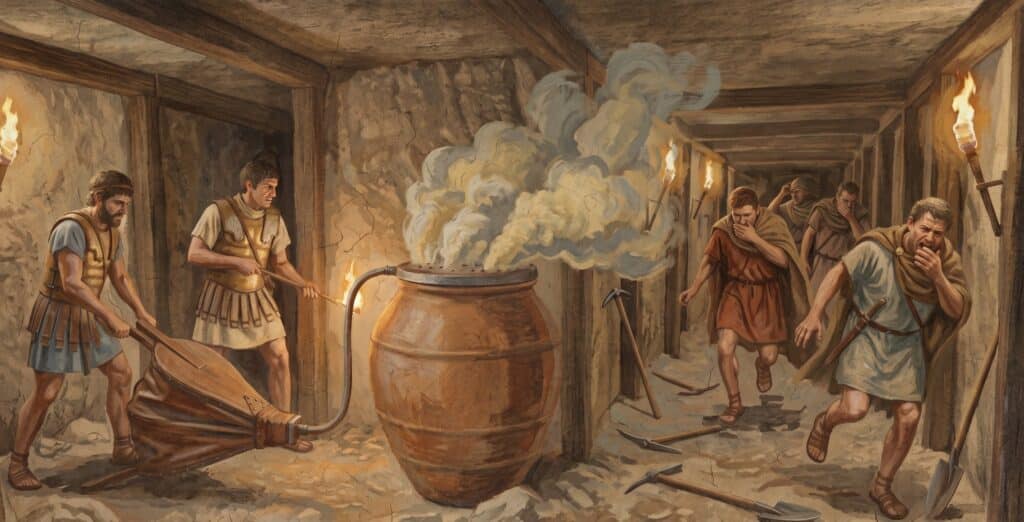
Siege of Ambracia image depicting a barrel in which burning feathers are used as a type of early chemical warfare tactic
The burning feathers tactic used by the Ancient Greeks is considered one of the first chemical weapons in human history. Credit: Greek Reporter archive

In 189 BC, Ancient Greeks defending the city of Ambracia used an early form of chemical warfare against Roman forces during a siege, deploying a clay jar filled with burning chicken feathers.

At first, the story sounds almost absurd, but it becomes far more striking once the details are unpacked and we understand what was happening beneath the city walls—and, more importantly, why this moment even matters in the history of ancient warfare.

Ancient Greeks turn to chemical warfare and burning feathers as siege intensifies

The Romans arrived in Ambracia with overwhelming force. Consul Marcus Fulvius Nobilior deployed battering rams under a two-hundred-foot covered gallery, a massive mobile shed designed to protect his engineers from arrows and boiling pitch as they hammered away at the walls. The Ambraciot defenders held firm. The walls didn’t collapse.

Frustrated and running out of options above ground, the attackers eventually turned underground. Their plan was straightforward enough: tunnel beneath the city, collapse the foundations, and force the stubborn Greeks to surrender. For a while, the effort proceeded in silence. Then the Greeks noticed the piles of excavated earth building up outside the camp and understood exactly what was going on. Locating the tunnel was another matter. The Greeks solved it with one of the most clever pieces of field engineering in ancient history.

They placed thin bronze vessels against the ground at various points inside the city and then pressed their ears to them to listen. The vibrations traveling through the earth from the pickaxes told them exactly where the tunnel was heading. It functioned as an early acoustic detection system, and it worked brilliantly. They then dug a counter-tunnel and broke through into the mine. What followed was the kind of close-quarters underground fighting where normal weapons become useless. Spears are too long, shields too wide, and you can’t even see the man you’re fighting, so they built something new.

The Greeks took a large clay jar, a pithos, sized to precisely fit the tunnel, capped it with an iron lid drilled with holes, inserted an iron tube connected to a blacksmith’s bellows, and filled the jar with glowing charcoal covered in a dense layer of fine feathers, creating what can be described as an early chemical warfare device. When it was pushed into the tunnel and activated with the bellows, it produced a thick cloud of acrid, choking smoke that billowed forward into the darkness.

The Roman miners couldn’t breathe, couldn’t see, and had nowhere to go. They abandoned their tools and fled to the surface to escape the choking fumes. The Greeks had driven off a superior Roman force solely with clay, iron, fire, and feathers. Military historian Adrienne Mayor has pointed to this episode as evidence of just how sophisticated ancient weapons technology really was.

This deliberate act of chemical engineering would be remembered in later accounts of ancient warfare. The pithos was matched to the tunnel width specifically to prevent blowback. The feathers were chosen for the particular quality of smoke they produced when burned at high temperatures. Someone thought this through. The parallels to later warfare are hard to ignore. The same basic horror—an invisible, suffocating enemy in a dark enclosed space—would define trench warfare on the Western Front more than two thousand years later.

The psychology hasn’t changed even if the chemistry has. Ambracia ultimately surrendered. Cut off and outnumbered, the city eventually negotiated terms rather than fight on indefinitely, but the defenders had already shown what was possible. Historians now regard what happened in those tunnels as one of the earliest documented uses of asphyxiating chemical weaponry in a tactical military context—a genuine milestone in the history of warfare.

@timelinehistoryoffical

During the Roman siege of Ambracia in 189 BC, the defenders deployed what is one of the earliest recorded uses of a chemical weapon in history — and they used it underground. Rome was besieging the Greek city, held by the Aetolian League. When the walls held and the siege artillery failed, the Romans turned to mining — digging a tunnel beneath the walls, concealed behind a two-hundred-foot covered walkway, worked in relays day and night. For days the defenders didn’t notice. Then the pile of excavated earth grew too large to hide. Unable to see the tunnel, the defenders pressed bronze vessels against the ground to detect the vibration of digging, located the Roman mine, and dug a counter-tunnel straight toward it. The two tunnels met. Soldiers fought face to face in darkness too cramped to swing a sword. When direct combat failed, the defenders built a device described in detail by the historian Polybius: a clay jar fitted to the tunnel’s width, packed with feathers over burning coals, sealed with a perforated iron lid, and connected to a blacksmith’s bellows. They pumped the choking smoke directly into the Roman tunnel. The Romans were driven out of their own mine. According to Polybius, it was among the first uses of toxic smoke in the history of war. 📖 Further reading — Polybius, The Histories: https://amzn.to/4uWM9wN #AncientHistory #RomanEmpire #Ambracia #Shorts #HistoryShorts #ChemicalWarfare #TimelineHistory #history #shorts #ancientrome #education

♬ original sound – Timeline History

  •  

Fugitive James Dalamangas Wanted for 1999 Sydney Murder Arrested in Greece

police greece
James Dalamangas was arrested in Aigio, Western Greece, ending a 27-year cold case. File photo. Credit: AMNA

Greek authorities have arrested a 55-year-old Greek-Australian fugitive wanted for a 1999 murder in Sydney, ending a 27-year international manhunt. James Dalamangas, the target of a longstanding Interpol Red Notice, was apprehended in the Peloponnesian town of Aigio, near Patras, where he had been living off the grid under a false identity.

The arrest is a major development in a cold case that has spanned nearly three decades. Dalamangas is the prime suspect in the murder of Greek expatriate George Giannopoulos.

Who did Dalamangas kill in Sydney in 1999

The fatal incident occurred in 1999 at a nightclub in Sydney, Australia. According to the case file, Giannopoulos attempted to act as a peacemaker, stepping in to stop a violent brawl that had erupted between two patrons. During his intervention, Dalamangas allegedly launched a sudden attack, inflicting fatal knife wounds on the victim. While Australian law enforcement issued an arrest warrant within 24 hours of the stabbing, the suspect managed to flee Australia and escape to Greece before he could be detained.

For 27 years, Dalamangas lived undetected in the Aigialeia region, specifically in the Alsos community. He adopted the alias “Antonios Tzimas” to integrate into the local society, leaning on his family ties to the area, as his mother originally hailed from the nearby village of Temeni.

To maintain his cover, he resided in a property described by local media as a fortress. The house was entirely enclosed by high walls and guarded by a large pack of aggressive dogs, apparently a deliberate measure designed to prevent anyone from approaching the premises uninvited.

Greek police recently obtained significant intelligence regarding his exact whereabouts and initiated a strict stakeout. Officers maintained continuous surveillance outside the fortified compound for three days, waiting for the suspect to make a mistake. The operation concluded successfully when Dalamangas exited the property, accompanied by his father and his partner.

Officers immediately intercepted the group and requested identification. The 55-year-old initially stuck to his cover story, giving his alias. Because authorities possessed concrete proof regarding his true identity, they brought him in for further questioning. Faced with persistent interrogation at the police station, he ultimately confessed to being the fugitive wanted by Australian authorities since 1999. Following the admission, investigators searched the Aigio property to determine if he possessed additional forged documents. The search yielded a crossbow and various sharp objects.

What will happen to Dalamangas now

Dalamangas is currently held at the Aigio police headquarters. He is scheduled to appear before the appeals prosecutor in Patras on Monday, June 8, 2026. This hearing will initiate the official judicial procedures required for his extradition back to Australia.

The successful capture drew praise from the commander of the Aigio Security Department, who played a central role in coordinating the raid.

  •  

Hamas Suspect Arrested in Crete Over Alleged Israeli Cruise Ship Bomb Plot

Anti-terrorism unit
The 37-year old Palestinian was arrested in Agios Nikolaos, Crete. File photo. Credit: AMNA

Greek authorities arrested a 37-year-old Palestinian man in Agios Nikolaos, Crete, on Saturday, preventing an alleged plot to detonate explosives on a cruise ship carrying Israeli tourists. The suspect is accused of being an operative for Hamas. He was apprehended in a highly classified joint operation by Greece’s National Intelligence Service (EYP) and the Anti-Terrorist Unit.

Intelligence officials moved quickly to detain the man just days before the targeted cruise ship was scheduled to dock in Crete on Tuesday. While the suspect reportedly claimed during interrogation that he had planned an attack but ultimately backed out, Greek authorities remain unconvinced and are treating the threat as exceptionally serious.

The connection of the Hamas associate in Greece to Cyprus

The success of the Greek investigation originated from a coordinated intelligence effort with Cyprus. Approximately two weeks ago, Cypriot authorities arrested four individuals suspected of planning strikes against Israeli interests in the European Union, allegedly motivated by the ongoing conflict in Gaza.

During the investigation in Cyprus, intelligence officers analyzed mobile phones belonging to the suspects. A specific phone number surfaced as a critical link, leading Greek counter-terrorism units directly to the 37-year-old in Crete.

Security services in Greece noted that the suspects in both countries received specialized training at a camp outside the Gaza Strip. This training specifically focused on manufacturing improvised explosives using chemical substances. Officials in Nicosia consider the group found in Cyprus deeply concerning, noting that two of the arrested individuals had lived in Cyprus for years and had reportedly even managed to obtain Cypriot citizenship. One of the suspects in Cyprus has already admitted to planning attacks against Israeli targets.

The suspect in Crete

The man arrested in Crete arrived in Greece approximately one year ago and filed an active asylum application. He integrated quietly into the local workforce, taking a seasonal job at a hotel in Agios Nikolaos. Local reports indicate he had no family on the island and intentionally maintained a low profile to avoid arousing suspicion.

Following his arrest on Saturday afternoon, Greek counter-terrorism officers raided his current residence in Crete, alongside a property he previously occupied in the Patissia neighborhood of Athens. Investigators confiscated several items that could be used as evidence against his plot. Among them, Greece’s anti-terrorism unit found chemical substances and laboratory measuring equipment, a number of mobile phones, laptops, and USB data storage drives, as well as bank cards and financial documents.

Law enforcement did not find assembled explosive devices or firearms during the raids. Intelligence assessments indicate the suspect was in the final stages of preparation for the plot but was intercepted before he could formally order the final explosive components.

The 37-year-old remains in custody and is scheduled to appear before a public prosecutor. Greece’s EYP and the Anti-Terrorist Unit are actively tracing his movements, communications, and potential local contacts to verify whether he operated alone within Greece.

  •  

Greek-Swiss Christina Kitsos Becomes Mayor of Geneva for Second Term

Three adults stand closely together with Christina Kitsos in the middle, smiling for a photograph outdoors against the backdrop of a historic stone building.
Attendees gathered to celebrate and show their support for Christina Kitsos (middle) during a public ceremony in Geneva. Credit: Embassy of Greece in Switzerland

Christina Kitsos, a prominent politician of Greek descent, has officially assumed office as the Mayor of Geneva for a second, separate one-year term. The Greek Embassy in Switzerland publicly congratulated the diaspora leader following a formal proclamation ceremony held in the Swiss city on June 3, 2026.

Geneva’s unique annual mayoral rotation

Local Swiss executive government operates very differently from what mayoral terms normally do elsewhere in Europe, including Greece.

The City of Geneva is not governed by a single powerful mayor elected for a standard four- or five-year mandate. Instead, the municipality is run by a five-member executive committee known as the Conseil administratif (Administrative Council).

Kitsos inauguration
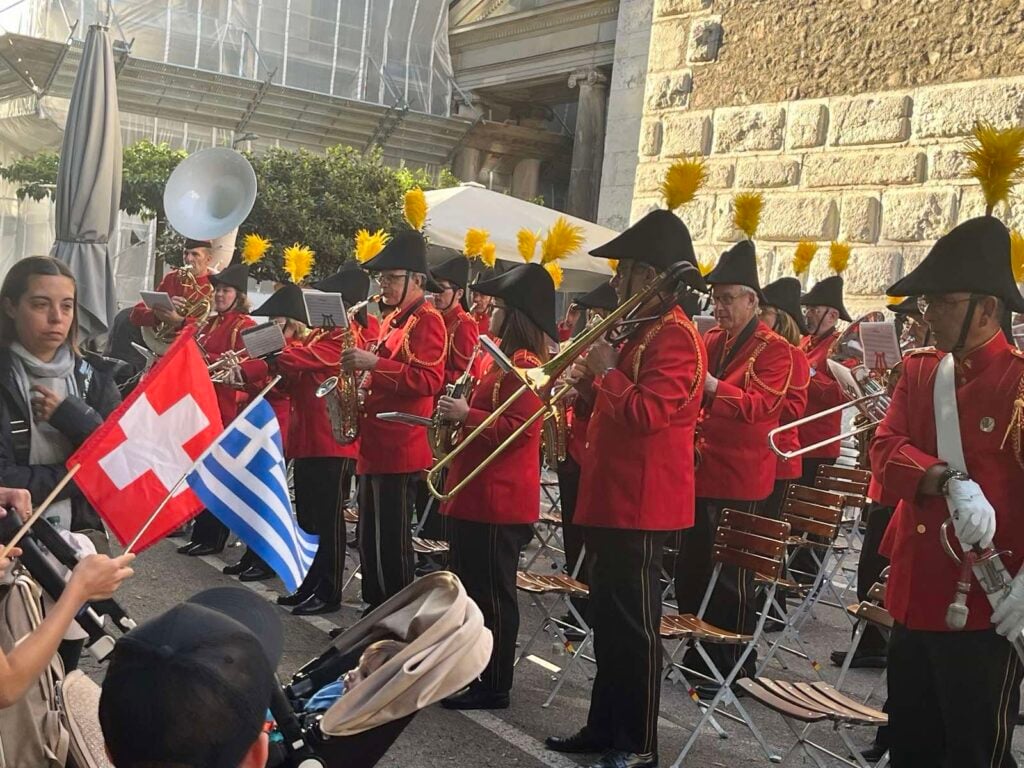
Musicians entertain the crowd during the public inauguration of Kitsos. Credit: Embassy of Greece in Switzerland

The title of mayor rotates annually among these five elected council members. The individual who holds the title acts primarily as the chairperson of the executive council and the ceremonial face of the city, holding no additional unilateral governing powers. Every mayoral rotation term begins strictly on June 1 and concludes on May 31 of the following year.

The timeline of Kitsos’s re-election Kitsos’s political timeline follows this exact cycle. She was inaugurated for her first term as mayor on June 1, 2024. When that specific administrative year ended on May 31, 2025, she passed the mayoral title to another member of the five-person council and stepped back into the role of Deputy Mayor.
Shortly before her first term concluded, citywide elections were held in April 2025.

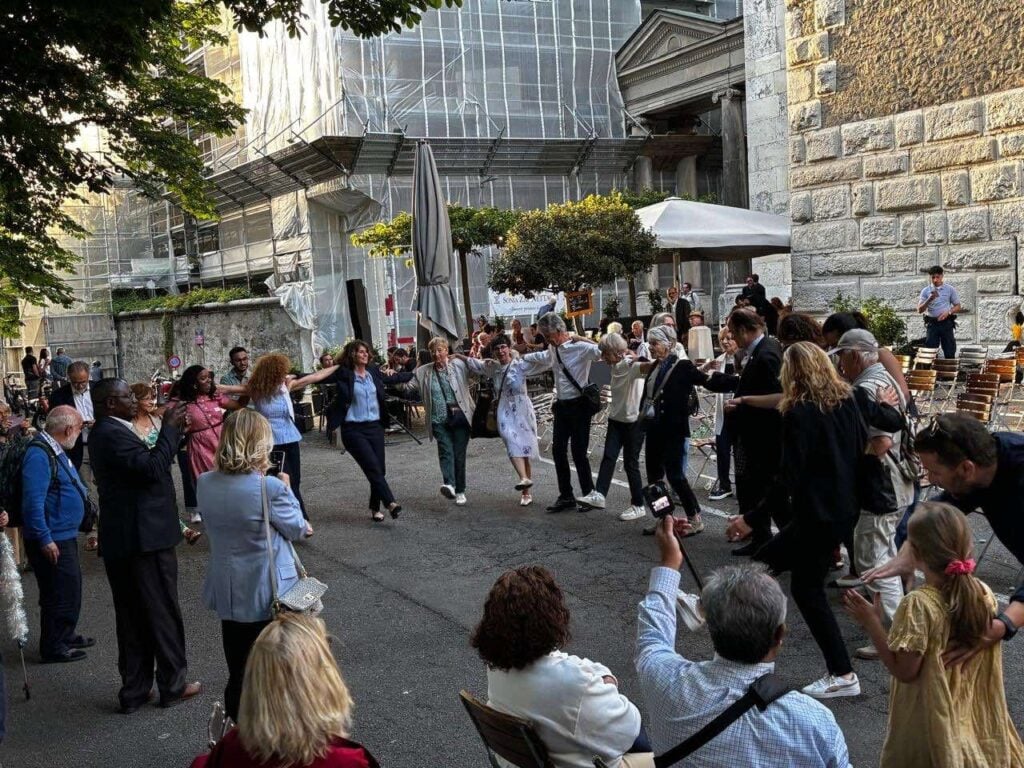
A large group of people holds hands in a circle to perform a traditional Greek dance on a paved outdoor square while spectators look on and take photos.
Kitsos joined community members and visitors in a vibrant Greek circle dance, bringing lively energy to the streets of Geneva. Credit: Greek embassy in Switzerland

The public successfully re-elected Kitsos to stay on the executive council for another multi-year mandate. Because she retained her seat on the executive committee, her turn in the annual rotation eventually came back around.

She was officially inaugurated for a completely new, distinct one-year term as mayor on June 1, 2026.

Who is the new mayor of Geneva? Born to a mother from Thessaloniki and a father from Edessa in northern Greece, Kitsos holds dual citizenship and maintains strong ties to Greece. Representing the Socialist Party, she directs the Department of Social Cohesion and Solidarity within the administrative council.

In an interview she gave in 2024 on Greek public television ERT, Kitsos highlighted the importance of her Greek heritage in shaping her worldview and approach to governance.
“Sometimes we believe that there is equality, but there are many things that are not so obvious, but which will have a meaning in everyone’s journey,” she said.

  •  

Strong 5.2 Magnitude Earthquake Shakes Greece’s Evia and Athens

earthquake
The earthquakes rattled large parts of central and southern Greece, including Evia and Athens. Credit: AMNA

A series of strong earthquakes, culminating in a 5.2-magnitude tremor, rattled the Greek island of Evia (Euboea) and the greater Athens metropolitan area on Sunday afternoon. The seismic activity triggered extensive landslides across the northern part of the island of Evia, though local authorities report no injuries or significant structural damage to houses.
The initial shock, measuring 4.8 on the Richter scale, occurred at 12:58 p.m. local time on Sunday, June 7.

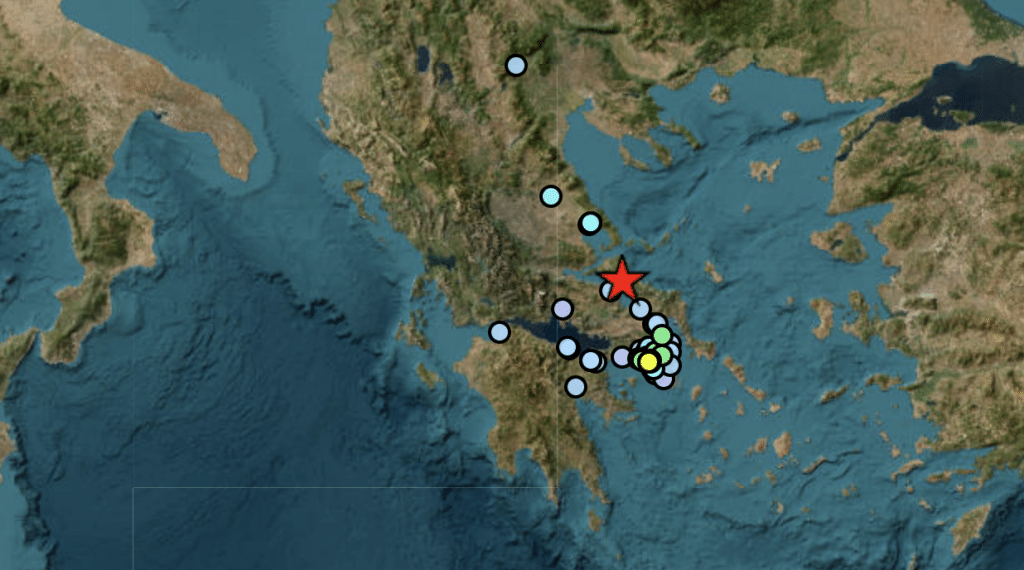
According to the automated system of the Geodynamic Institute of the National Observatory of Athens, the epicenter was located six kilometers (4 miles) southwest of the village of Prokopi in northern Evia, with a shallow focal depth of just 14.1 kilometers.

More earthquakes followed, rattling central and southern Greece

Minutes later, a stronger 5.2-magnitude earthquake struck the same localized fault line. This second, more powerful tremor originated just two kilometers east-southeast of Prokopi at a much shallower focal depth of only five kilometers. A third notable tremor followed shortly after in the exact same region, compounding the anxiety of local residents.

All three shocks were felt prominently across the Attica region, rattling windows and disrupting the Sunday afternoon routines of millions of residents and tourists in the Greek capital.

Despite the intensity of the tremors and their shallow depth, the immediate fallout appears limited. Giannis Tsapourniotis, the mayor of Mantoudi on Evia, provided an update on the situation on the ground during a statement to the state broadcaster ERT.

Earthquake Greece map
The epicenter of the tremors on the island of Evia (red star). Credit: EMSC (European Mediterranean Seismic Centre)

“We have extensive landslides, but no injuries have been recorded,” Tsapourniotis confirmed. He specified that heavy rockfalls and landslides have primarily obstructed rural roadways in the areas of Plakia and Dafnousa. Emergency crews of the local council and local civil protection units are currently working to clear the affected traffic routes and assess any isolated impacts on village infrastructure. To date, homes and commercial businesses remain intact.

Greek seismologists tried to calm public fears regarding the consecutive tremors. Kostas Papazachos, a prominent professor of seismology at the Aristotle University of Thessaloniki, described the events as a series of consecutive earthquakes that align with the area’s known geological profile. Northern Evia sits directly atop a complex network of active fault lines, making such localized clusters a known phenomenon.

“These seismic tremors are not a cause for concern,” Papazachos stated, offering a reassuring outlook despite acknowledging it is still early in the post-earthquake evaluation process.

The region surrounding Prokopi is highly trafficked, especially on weekends, as it is home to the widely venerated pilgrimage site of Saint John the Russian, drawing thousands of visitors from across Greece and the global diaspora. The lack of infrastructure collapse in such a populated sector of the island has brought significant relief to state authorities.
Greece ranks among the most seismically active countries globally, located at the geological boundary where the African tectonic plate pushes beneath the Eurasian plate.

While minor tremors are a daily occurrence across the nation, shallow earthquakes above a 5.0 magnitude near heavily populated zones like Attica consistently prompt rapid responses. Local authorities in Evia remain on standby for potential aftershocks over the coming days, actively advising residents and tourists to avoid driving through steep mountainous routes prone to further rockfalls.

The statement issued by Greece’s Civil Protection

“According to official reports from the Geodynamic Institute, consecutive seismic tremors measuring 4.8, 4.3, and 5.2 on the Richter scale were recorded in northern Evia. Concurrently, the General Secretariat for Natural Disaster Recovery and State Aid has been placed on high alert and is in continuous communication with local authorities to assess the situation.

Based on initial inspections currently underway in the area, reported damages include a collapsed wall in one home, minor cracks in a few residences, and small-scale landslides affecting sections of the road network. So far, no injuries or severe damages have been reported.

Minister of Climate Crisis and Civil Protection Evangelos Tournas Tournas, accompanied by the General Secretary for Natural Disaster Recovery and State Aid, Petros Kampouris, is heading to Prokopi and Dafnousa for an on-site briefing. The Ministry of Climate Crisis and Civil Protection continues to monitor the situation closely and will immediately take any further action if necessary.”

  •  

Greece Bans Sale of Sodas and Processed Meats in Schools

Greece classroom Greek school
Greek schools will now sell or serve much healthier options to their students. Credit: Wikimedia Commons / Nikolaos Kotopoulis / CC BY SA 4

The Greek Ministry of Health has announced a sweeping overhaul of food guidelines for school canteens across the country. In a targeted effort to combat high rates of childhood obesity, the new regulations impose strict dietary standards, including a total ban on processed meats and soft drinks.

Set to take full effect during the 2026-2027 school and academic year, the updated framework replaces guidelines that have been in place since 2013. The policy applies to all primary, secondary, and high schools in Greece, covering canteens, dining areas, and vending machines.

Alternate Minister of Health Eirini Agapidaki introduced the initiative as a core component of the National Program for the Prevention and Treatment of Childhood Obesity. The health ministry drafted the new rules based on contemporary recommendations from Greece’s National Nutrition Committee.

Under the revised regulations, school menus will undergo structural changes. Authorities have completely prohibited the sale of cold cuts and sodas. The ministry has also mandated a reduction in portion sizes for specific food items to prevent overeating.

Greece overhauls school meals entirely

The approved product list now prioritizes fresh foods and traditional Greek cuisine staples. Students will have access to fresh fruits, vegetables, fruit salads, and unsweetened dried fruits. Dairy options include plain milk, yogurt, kefir, ariani, and rice pudding, all strictly without added sugars.

Baked snacks remain available under healthier parameters. School vendors can sell the traditional Koulouri of Thessaloniki, whole-grain rusks, cereal bars, pasteli, and halva. Nuts are permitted exclusively for middle and high school students.

Sandwiches will no longer contain processed meats. They must be made with whole-wheat bread and filled with Greek cheeses, boiled chicken or turkey, egg, or tuna. Spreads are restricted to olive oil or soft margarine. Similarly, savory pies and pizzas can only contain vegetables or cheese, prepared using an olive-oil-based dough.

Beverage options will now also be tightly regulated. Canteens will stock water and natural juices. Older students can purchase plant-based milk alternatives and tea. Coffee sales are strictly restricted to teaching staff.

“The fight against childhood obesity is not a theoretical battle, but a daily act of responsibility that starts where our children spend most of their day: at school,” Agapidaki stated following the announcement.

She emphasized that the updated framework relies on rigorous scientific data. “With the new health regulation, we are radically changing the rules of the game. We are permanently removing cold cuts and soft drinks from school canteens and reducing portions, creating an environment that actively protects students,” she said.

Agapidaki urged school administrators and suppliers to begin preparations immediately to ensure full compliance. “We make no discounts on the health of the new generation,” she added, noting that the ultimate goal is to equip Greek youth with lifelong healthy eating habits.

  •  

Can Anything Truly Stay the Same? Plutarch’s Ship of Theseus Paradox Still Baffles Minds

Ship of Theseus
Plutarch’s Ship of Theseus paradox questions if identity remains when all parts change, challenging what it means to be the same over time. Credit: Greek Reporter archive

Have you ever wondered if your favourite old jumper, battered by time and use, is still truly the same as the one you fell in love with at the shop many years ago? That seemingly silly question is one of philosophy’s oldest and most fascinating puzzles, known as the Ship of Theseus.

The Ship of Theseus is an ancient brain-teaser

Plutarch, the ancient Greek writer and historian, presented us with a real head-scratcher with his tale of Theseus’ trireme.

Picture this: the Athenians, immensely proud of the ship that carried their hero Theseus to victory over the Minotaur, kept it docked for centuries. But as we all know, wood doesn’t last forever, as it can start to rot very quickly. So, whenever a plank rotted away or timber decayed significantly, the smart Athenians would meticulously replace it with a new one. Bit by bit, year after year, every single original piece of that ship was swapped out and replaced with brand-new wood.

Now, here’s the one-million-drachma question: was this still the Ship of Theseus? Or had it, piece by piece, become an entirely different vessel that had nothing to do with Theseus’ heroic journey? This was a profound thought experiment that kept brilliant minds confounded for millennia. It makes us wonder about identity and what makes something… something. Is it about what an object or a human is made of? Does it have to do with their materials? Their shape, maybe? What about their personal story? Or could it be something else entirely? This simple story by Plutarch prompts us to delve into what we mean when we say something is “the same.”

A digital illustration depicting the Ship of Theseus, an ancient philosophical paradox questioning whether an object that has had all its components replaced remains fundamentally the same
The Ship of Theseus, an illustration representing the famous thought experiment on identity and change. Credit: Yosemite Belbury, Wikimedia Commons, CC BY-SA 4.0.

The Ship of Theseus and the idea of change

The brilliance of the Ship of Theseus story lies in its elegant illustration of the uncomfortable truth that everyone and everything, eventually, changes. Consider yourself as an example. Most of the cells in your body are replaced every few years. Are you, reading this right now, the same person you were a decade ago, even though practically all the biological components that constitute the physical you are new?

This is why the Ship of Theseus is a perfect example of this constant flow of renewal. It shows the tension between how we perceive something as permanent and its ever-changing physical reality.

And right when you think you understood the whole story, here comes a twist, often credited to Thomas Hobbes, the English philosopher.

This twist is asking us what if, hypothetically, all those old, discarded planks from Theseus’ ship were gathered up and used to build a second ship? Which one, then, is the “true” Ship of Theseus? The one that has been continuously in the harbour, even with all new parts? Or the one made of all the original pieces, just reassembled to create a brand new ship? You can almost hear the ancient Athenians debating this topic, wondering which ship deserved the glory of their hero.

change
Does something remain the same if every part has changed? Credit: Markus Winkler, Pexels.

The modern implications

The deep implications of the Ship of Theseus go beyond the confines of ancient Greek mythology. They truly resonate in our modern world, where things are constantly being upgraded, recycled, and reinvented only to be presented as something brand new. Take your mobile phone, for example. With every software update, every component replaced, is it still the “same” phone you bought two years ago? What about a classic car that has been restored and fixed with love, often with hardly any original parts left? Is it still that iconic model, or a new creation in an old shell?

This paradox even touches on larger ideas, such as national identity. Countries evolve, populations shift, and cultures adapt. Are we, as a nation, the “same” as our ancestors from centuries past? Is the US truly a nation or just a creation of many smaller parts of people who came from distant lands to find a better future?

Is modern Greece truly the grandchild of ancient Greece? What about the Roman identity that became synonymous with the Greeks for more than a thousand years? The word ‘Romios,’ which is Greek for Roman, still defines the notion of Greekness. Thus, are Greeks a continuation of the ancient identity, or are they something new, composed of thousands of different ethnic and cultural components that migrated to their lands over time? We share history, language, and heritage, of course, but the actual people, the “material” of the nation, have changed countless times.

The Ship of Theseus tells us that identity–whether it’s ours, our nation’s, or even a beloved object’s is a fluid and ever-changing concept, rarely as straightforward as it seems.

  •  

Zeno’s Paradox: When Achilles, Greece’s Fastest Hero, Lost to a Tortoise

Triumphant Achilles dragging Hector's body around Troy, from a panoramic fresco of the Achilleion
Triumphant Achilles dragging Hector’s body around Troy, from a panoramic fresco of the Achilleion. Credit: Franz Matsch / Public Domain

He was the swift-footed Achilles, the greatest warrior of the Trojan War, a semi-divine hero whose very name was synonymous with speed and power. And yet, for centuries, the smart brilliance of an ancient Greek philosopher has left him perpetually—and quite comically—stuck behind a tortoise. Zeno’s paradox presents a philosophical conundrum that still captivates people millennia after it first questioned the intellectual doctrines of Ancient Greece.

It is a paradox that prompts us to question the nature of motion and reality itself. Specifically, it compels us to explore the infinite—a concept that still confounds quantum physicists today.

Zeno’s Paradox: The problem with Achilles and infinite steps

Picture the scene: Achilles, in all his glorious, muscular beauty, lines up against a tortoise. The tortoise, naturally, gets a head start—a gesture of fair play, one might say, that quickly devolves into philosophical torture.

Achilles and the tortoise
Credit: Loco Steve, Wikimedia Commons, CC BY-SA 2.0 (left), Greek Reporter archive (right)

During this event, Achilles, being well, would instantly sprint past the slow tortoise. But Zeno, with a mischievous twinkle in his eye, argued otherwise. Before Achilles can even reach the position where the tortoise started, the cute little animal will have managed to go forward a little compared to its initial position.

When Achilles finally arrives at that particular spot, the tortoise has moved again. This would carry on forever. This continuous cycle, Zeno noticed, continues ad infinitum, meaning Achilles is forever playing catch-up, never truly reaching the tortoise. It sounds childish and blatantly wrong, but is it? Think about it. It makes sense. It’s enough, at least, to make you wonder about what’s real and what isn’t.

Zeno of Elea's Achilles paradox
Zeno of Elea’s Achilles paradox. Credit: Aelwyn. CC BY-SA 4.0/ Wikimedia Commons/Aelwyn

This confused the ancient Greeks, whose understanding of infinity was still rudimentary. It challenged the very idea of continuous motion, suggesting that movement itself might be an illusion, a series of frozen moments rather than a fluid progression. Indeed, Zeno’s mentor, Parmenides, had famously argued that reality was static and unchanging, and our perception of movement was nothing but a trick of the senses.

Zeno, always the loyal—and brilliant—student, used his paradoxical skills skillfully as an intellectual shield for this peculiar paradox. One can almost imagine the expressions on the faces of Athenian philosophers as Zeno calmly explained why their fastest runner could never quite outrun a slow tortoise.

Of course, modern humans comprehend concepts such as calculus, therefore understanding that Zeno’s apparent deadlock is resolved. Mathematicians like Newton and Leibniz, centuries later, demonstrated that an infinite series of ever-decreasing distances can indeed sum to a finite total.

This means that in Zeno’s paradox, Achilles does overtake the tortoise; the finish line, for him, is not an illusion. Yet, to dismiss Zeno’s paradox completely as a mathematical footnote and a logical mistake would be to miss its profound impact on human thought.

It was a puzzle that had such a consequential effect that it shaped our understanding of the universe. Consider quantum mechanics, for example, where particles seem to exist in multiple states simultaneously—a concept similar to Zeno’s discomfiting fragmentation of reality.

Our digital devices work by breaking down continuous processes into tiny, distinctive steps. This is similar to how a movie creates the illusion of motion from individual frames. This approach, which traces back to Zeno’s ideas about infinitely dividing space and time, is embedded in much of our modern technology.

However, beyond academia and the complex equations of physics that ordinary people can’t even comprehend, the paradox of Achilles and the tortoise has a surprisingly relatable, almost melancholic, wisdom for our own lives that is easier to grasp.

people Thessaloniki metro
Modern life sometimes feels like the paradox of Achilles and the tortoise: A never-ending struggle to reach our goals, only to realise it’s not possible. Credit: Greek Reporter

Achilles and the tortoise as a modern metaphor for our lives

How many times have we felt like Achilles, tirelessly chasing a goal, a dream, or even just the promise of a calmer, better tomorrow, only for it to perpetually remain just out of reach? Life, too, often feels like a series of infinite, tiny steps, each requiring immense effort, each seeming to bring us no closer to the finish line despite the progress we make daily.

Yet, Achilles and the tortoise, when illuminated by the light of calculus, can become a story of hope. It tells us that even an infinite process can have a finite, tangible result, perhaps representing the better tomorrow we all strive for. Progress is undeniably real, however gradually it arrives.

So, the next time you feel stuck, relentlessly pursuing a goal that seems to go further away with every step, remember Achilles and that remarkably slow tortoise.

Zeno, the ancient Greek mastermind, may have created this paradox to confound his contemporaries. But in doing so, he left us with a timeless truth: movement—whether through space, thought, or life itself—is never as simple as it appears. Yet, if we keep putting one foot in front of the other, even if the journey feels impossibly long, like Achilles, we will get there. Eventually.

Related: The Strange Paradoxes and Puzzles of Zeno of Elea

  •  

Greece’s Finance Bill Raises Orthodox Bishops’ Salaries by Up to 95%

Ieronymos
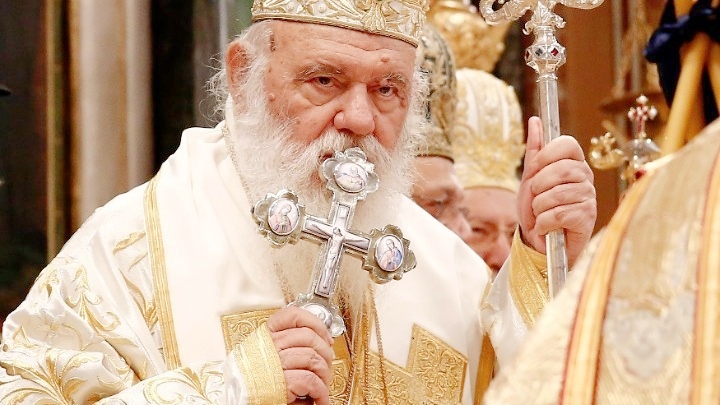
Archbishop of Athens and all of Greece, Ieronymos. Photo Credit: AMNA

A new bill introduced by the Greek Ministry of Finance recently in the nation’s Parliament includes sweeping salary increases for the highest-ranking officials of the Orthodox Christian Church of Greece. Under the proposed legislation, the Archbishop and Metropolitan Bishops will see their monthly gross pay rise by as much as 95%, standardizing their new salaries at €4,671.90.

Greece to restructure how Bishops are paid

The adjustments, outlined in Article 56 of the extensive finance bill, fundamentally change how the state compensates senior clerics. Rather than utilizing the previous tiered allowance system, the new legislation equals the base pay of Metropolitan Bishops with that of the Archbishop of Athens and All Greece.

Both positions are now pegged directly to the compensation of top government executives. Specifically, the hierarchs will receive 90% of the maximum gross salary allotted to a Ministry General Secretary. The public sector basic salary limit for General Secretaries adjusts to €5,191 effective April 1, 2026. The legislation calculates the new clergy pay explicitly as 90% of this figure. The bill firmly states that no other supplementary benefits or allowances will be paid beyond this established rate.

Prior to this legislative update, senior clergy salaries fluctuated based on specific representation expenses and educational qualifications, such as holding a master’s or doctoral degree. The contrast with the new pay scale is significant:

The Archbishop: Previously earned a monthly gross income ranging from €2,840 to €2,915. The adjustment delivers an approximate 60% baseline increase.

Metropolitan Bishops: Previously collected between €2,400 and €2,475 monthly. Under the new equalization framework, their gross pay jumps by up to 95% to match the Archbishop.

Assistant and Titular Bishops: The bill standardizes compensation for lower-ranking hierarchs, setting their total monthly salaries at exactly 70% of the top-tier rate.

Wider public sector wage adjustments

While initially framed around measures combating the energy crisis and supporting vulnerable groups and pensioners, the bill extends far beyond ecclesiastical pay. The legislative package contains comprehensive wage restructuring for various sectors of the Greek state apparatus.

Articles 49 through 55 dictate specific salary and promotional adjustments for the judiciary and civil service. Judicial officers facing delayed promotions due to a lack of open vacancies will receive calculated percentage adjustments to their base pay, depending strictly on their accumulated years of service.

The bill also implements hard compensation caps for other public servants. Members of constitutionally protected independent authorities who hold supplementary government positions cannot exceed 80% of a judicial officer’s total pay. Finally, the legislation actively standardizes the pay scales for administrative staff serving both the Presidency of the Government and the Presidency of the Republic, ensuring direct alignment with the updated 2026 public sector guidelines.

  •  

Ctesibius: The Ancient Greek Tech Genius You’ve Never Heard Of

Ctesibius
A digital representation of Ctesibius. Credit: Greek Reporter archive

Ever found yourself scratching your head, wondering if aside from legendary philosophers and epic poets there were also any “tech gurus” in ancient Greece? When the conversation turns to Greek scientific minds, one might think of figures like Archimedes and Euclid and rightly so. However, there’s a name that truly deserves a much brighter spotlight—that of Ctesibius.

Ctesibius was a true genius of Hellenistic Alexandria, who, quite literally, set the wheels (and yes, the water organ, or hydraulis!) in motion. Due to his brilliant mind, he laid down fundamental principles for technologies that, believe it or not, continue to shape our everyday world to this very day.

Ctesibius was one of ancient Greece’s greatest innovators

Born into the vibrant, intellectual epicenter of Alexandria during the Ptolemaic era, Ctesibius became a hands-on inventor, driven by an almost insatiable curiosity to truly understand and harness the raw power of the natural world.

Imagine at a time when entire civilizations relied on human muscle and simple machines, seeing someone create music from water or build a clock accurate for two thousand years. The sheer innovative audacity of Ctesibius was difficult to fathom.

Of course, at a time of wizards, this wasn’t a magic trick but the real, unadulterated brilliance of the mind of this Greek man. His groundbreaking contributions to pneumatics, the study of compressed air, and hydraulics, the science of liquids in motion, were utterly revolutionary for their time, making Ctesibius the “father of pneumatics.”

Just think about the fact that long before your car tires ever saw a pump or your pneumatic drill came to life, Ctesibius meticulously explored the very principles that made these tools possible. It’s a bit humbling, isn’t it, how many unsung heroes from antiquity have genuinely shaped the modern world we so often take for granted?

Reconstruction of the ancient Greek hydraulis, the first keyboard instrument, displayed at the Kotsanas Museum of Ancient Greek Technology in Athens, displaying its pipes, water basin, and control mechanisms.
Reconstruction of the ancient hydraulis on display at the Kotsanas Museum in Athens. Credit: Aga39memnon, Wikimedia Commons, CC BY 4.0.

From melodic water organs to clocks

Among Ctesibius’ most well-known creations was the hydraulis, a genuinely revolutionary water organ. This was, quite simply, the world’s very first keyboard instrument. What an astonishing feat of engineering from over two millennia ago! It ingeniously utilized water pressure to guarantee a completely constant supply of air to its pipes, producing a sound that was remarkably stable and resonant. Imagine the awe of ancient audiences in hearing such a complex, melodic instrument for the absolute first time. It must have felt like nothing short of a miracle.

Beyond the enchanting music, Ctesibius’ improvements to the clepsydra, or water clock, were equally impressive. Prior to this tech guru, water clocks were notoriously imprecise. He revolutionized them through innovative mechanisms for regulating water flow and added an indicator system that provided unprecedented accuracy.

For over 1,800 years, his water clocks were the absolute gold standard in timekeeping. In other words, the pinpoint accuracy of your smartphone’s clock owes an indirect yet profoundly deep debt to a man who lived centuries before the mere concept of electricity was even a thing.

ancient greek inventions
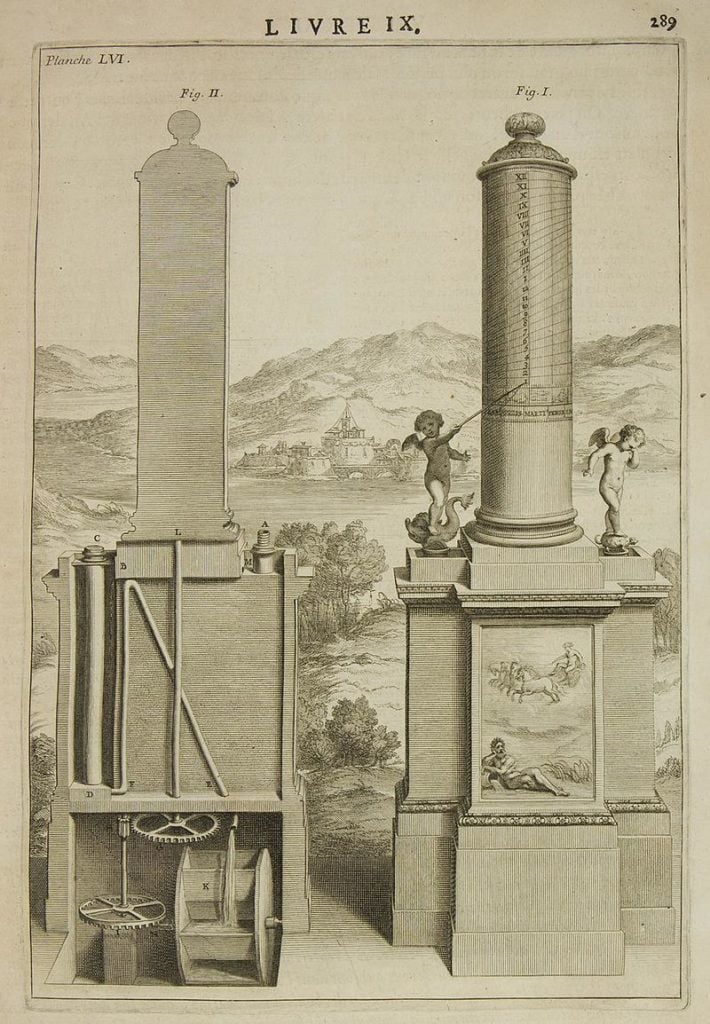
Ctesibius’ water clock, the first alarm clock ever, as depicted by an architect in the 17th century. Credit: Wikimedia Commons, Public domain

Ctesibius’ impact on our world

While Ctesibius himself may not have managed to become one of ancient Greece’s top names, his principles and inventions survived the test of time. They influenced later Roman and Arab engineers and eventually powered the European Renaissance. The very force pump he designed, for instance, is a direct progenitor of modern pumping systems, absolutely essential for everything from our city water supplies to the fire engines we rely on to keep us safe on a daily basis.

His profound understanding of the properties of air-laid processes set the foundation for all future pneumatic applications which today power everything from colossal industrial machinery to delicate medical devices. Hence, next time you hear the satisfying whoosh of a bus door, the gentle hiss of an automated machine, or simply admire the quiet precision of a modern watch, take a moment to think back to Ctesibius, the ancient Greek tech genius.

  •  

New “Mega-Metro” Will Connect Athens to Nearly 40 Cities

trains in Europe
Under these plans, the Sofia-to-Athens route would be completed in six hours, compared to the current 13.5 hours. Credit: 21st Europe

A highly ambitious transportation proposal aims to connect Athens with approximately 40 other destinations in Europe through a high-speed “mega-metro” rail network by 2040. Dubbed “Starline,” the blueprint of this plan hopes to replace Europe’s fragmented national railways with a unified 22,000-kilometer (14,000-mile) system, significantly reducing travel times for Greek and European passengers overall, offering a green alternative to short-haul flights.

Developed by the Copenhagen-based think tank 21st Europe, the Starline project proposes five major railway corridors spanning 22 nations across Europe. The proposed routes include Line A from Naples to Helsinki, Line B from Lisbon to Kyiv via Madrid, Line C connecting Madrid to Istanbul, Line D from Dublin to Kyiv, and Line E linking Milan to Oslo. Operating like a city metro on a continental scale and obviously above ground, the network will link European cities under a single transit identity, with trains reaching speeds between 300 and 400 kilometers per hour.

Where do Athens and Greece come into the equation of this Europe-wide system?

For Greece, the infrastructure upgrade would drastically alter regional connectivity within the country and across southeastern Europe. Τhe European Commission recently announced targets to cut Sofia-to-Athens travel from 13 hours and 40 minutes to six hours, and Berlin-to-Copenhagen from seven hours to four.

The proposal complements these targets across the continent, where similar reductions will happen. A trip from Berlin to Copenhagen, from example, will drop from seven hours to four, while historically overnight routes like Kyiv to Berlin will become predictable, direct daytime connections.

Map
Credit: 21st Europe

Transportation remains one of Europe’s largest climate challenges, generating roughly a quarter of all greenhouse gas emissions. While aviation accounts for a smaller percentage globally, short-haul flights remain the default for millions of European travelers. High-speed rail produces up to 90 percent less carbon dioxide per journey. 21st Europe states that a large-scale shift to rail represents the best path toward meeting the European Union’s 2050 net-zero emissions targets while maintaining fast mobility.

The proposal moves away from traditional railway conventions as the dark blue trains will abandon standard first- and second-class divisions, replacing them with purpose-built spaces such as quiet workspaces, family-oriented sections, ergonomic seating, and communal coffee areas. This layout aims to democratize long-distance travel and prioritize passenger comfort.

  •  

Greece Plans 15% Tax on Cryptocurrency Profits

Bitcoin and statistic diagram
Greece is planning on taxing profits from cryptocurrencies. Credit: Jorge Franganillo / Wikimedia Commons CC BY 2.0

The Greek government is reportedly finalizing legislation to impose a 15% tax on capital gains derived from cryptocurrencies, aiming to formally integrate digital assets into the national tax code. According to government officials who spoke to Reuters on Friday, the Ministry of National Economy and Finance in Greece is drafting the bill, which authorities expect to submit to Parliament for approval in the coming months.

Under the proposed financial framework, the initial 500 euros of cryptocurrency profits will remain exempt from the new tax to shield small-scale retail investors. Any capital gains exceeding this threshold will face a flat 15% rate, aligning the taxation of digital assets with traditional securities sales in Greece.

It is believed that people engaged in personal cryptocurrency mining will not face taxation on their yields. However, if the mining operation functions as a registered corporate entity, standard business tax rules will apply.

The current situation regarding cryptocurrency taxation in Greece

At present, Greece operates without a comprehensive legal framework specifically targeting cryptocurrency profits and people making a living out of them. This regulatory gap reflects a broader inconsistency across the European Union, where member states currently lack a unified fiscal system for the rapidly expanding sector. Across the continent, tax rates on digital capital gains vary significantly, ranging from an 8% low in neighboring Cyprus to 30% in France. The upcoming Greek legislation seeks to close domestic loopholes and bring Athens in line with European peers that have already established clear rules for digital investors.

The legislative move coincides with a wider European push to curb tax evasion and financial opacity within the digital space. The European Union recently introduced the Markets in Crypto-Assets (MiCA) Regulation and the DAC8 Directive, which mandate strict reporting standards and demand that crypto-asset service providers share user transaction data with national tax authorities. Greece’s updated tax code will operate in tandem with these measures on a European level.

A pointless measure?

Despite the planned implementation, government sources acknowledged severe difficulties in measuring the actual size of the domestic cryptocurrency market. The vast majority of Greek investors execute their trades through international, offshore platforms rather than locally registered exchanges. This decentralized structure makes it nearly impossible for financial authorities to accurately track the total volume of digital assets held by people. Consequently, the Ministry of Finance has not yet published any specific projections regarding the exact state revenues the 15% tax might generate.

Until the proposed legislation officially becomes law, cryptocurrency profits remain largely undeclared in Greece, leaving a substantial pool of potential state revenue untapped.

  •  

Ukraine Apologizes to Greece for Sea Drone Found Off Lefkada

Ukraine Ukranian marine drones
Ukraine officially apologized to Greece late on Friday over the presence of a sea drone off of the island of Lefkada. Credit: AMNA

Ukraine officially apologized to the Greek government on Friday following the discovery of a Ukrainian sea drone near the Ionian island of Lefkada. The unexpected discovery of the uncrewed surface vessel prompted swift diplomatic action from Athens, which raised serious safety and environmental concerns regarding the military presence in Greek territorial waters.

Last week, the Greek government escalated the issue by lodging a formal double diplomatic demarche. Athens directed its official protests to both the Ukrainian Embassy located in the Greek capital and directly to the Ukrainian Ministry of Foreign Affairs in Kyiv. Greek authorities clearly stated that the stray sea drone severely compromised the safety of civilian maritime navigation in the busy Ionian Sea, which is a popular tourist destination both for Greeks and foreigners. Experts noted that any accidental detonation or collision involving the device could have led to human casualties and inflicted extensive environmental damage on the region’s marine ecosystem.

Ukraine’s response to Greece

In direct response to the diplomatic protest from Athens, Ukrainian Foreign Ministry spokesman Heorhii Tykhyi released a public statement on social media late on Friday evening, addressing the issue. Tykhyi offered a formal apology on behalf of Ukraine, attributing the drone’s errant journey into Greek waters to the unpredictable circumstances generated by the ongoing Russian invasion of Ukraine.

“The Ukrainian side expresses its apologies for the incident, stressing that it was the result of circumstances brought about by the ongoing Russian aggression,” Tykhyi wrote in a statement published on Friday. He argued that the discovery off the coast of Lefkada, along with similar events reported in other regions, demonstrates how the current conflict threatens not only Ukraine but also friendly European states and the broader international community.

Addressing the specific maritime concerns raised by the Greek demarche, the Ukrainian foreign ministry noted its strict commitment to international law and the fundamental principles of civilian maritime safety. Ukraine also reiterated a strong, vested interest in preventing any similar occurrences from happening in the future.

Tykhyi pointed out that international and regional security, specifically maritime safety and combating the operations of Russia’s “shadow fleet,” remain urgent, shared priorities for both Greece and Ukraine. Despite the immediate friction caused by the drone’s discovery, Ukraine utilized the statement to emphasize the strength of its bilateral relationship with Greece.

The foreign ministry expressed deep gratitude to the Greek government and the Greek people, praising the country for its steadfast, continuous support of Ukraine since the very first days of Russia’s full-scale invasion. Kyiv concluded by reaffirming its dedication to deepening these friendly relations and maintaining a constructive dialogue across all areas of mutual interest.

  •  

Prominent Greek Conservative Politician George Souflias Dies Aged 85

Souflias
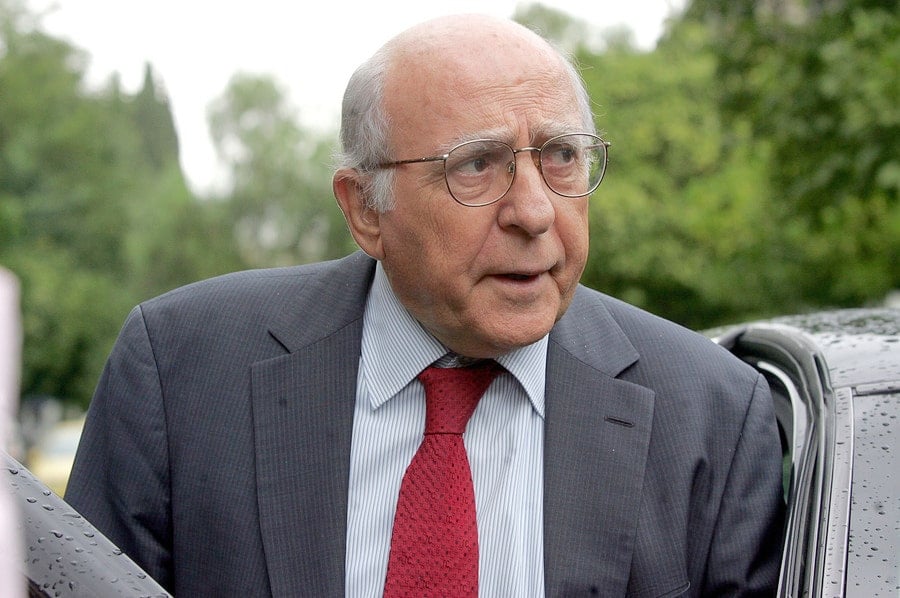
George Souflias in 2009, weeks before his retirement from active politics. Credit: Katerina Mavrona, AMNA

George Souflias, a prominent figure in Greek politics and a long-serving cabinet minister for the center-right New Democracy party, died at the age of 85, it was made public late on Friday evening. Known for his long political career across multiple key ministries and his two bids for the New Democracy (ND) party leadership, Souflias leaves behind an impressive political record spanning over three decades. He had reportedly been facing several health challenges in his final years that led to his death on Friday.

Who Was Souflias

Born on July 7, 1941, during the German Nazi occupation, in the village of Agia Triada in the Farsala municipality of Thessaly, Souflias initially built a career far from politics. He earned a degree in civil engineering from the Polytechnic School of the Aristotle University of Thessaloniki. By 1967, he had established his own design and construction firm in the central Greek city of Larissa, working extensively in the private sector prior to his transition to public service.

His political career launched alongside the restoration of Greek democracy following the junta of 1967–1974. As a candidate for the ND party, Souflias was first elected to the Greek Parliament representing the Larissa constituency in 1974. He quickly established a formidable local stronghold, securing re-election in 11 subsequent national contests: 1977, 1981, 1985, both the June and November elections of 1989, 1990, 1993, 1996, 2004, 2007, and finally in 2009.

Throughout his parliamentary tenure, Souflias was entrusted by party leaders and prime ministers with some of the most critical portfolios in the Greek government. He began his executive service as Deputy Minister of the Interior under Prime Ministers Konstantinos Karamanlis and Georgios Rallis. His influence grew significantly in subsequent administrations. During the Tzannetakis government in 1989 and the later Mitsotakis one between 1990 and 1993, he served as Minister of National Economy. He also held the cabinet positions of Minister of Finance, Minister of National Education and Religious Affairs, and Minister of Environment, Physical Planning, and Public Works (ΥΠΕΧΩΔΕ).

Within the center-right ND party, Souflias was a powerful internal factional leader, mounting two high-profile campaigns for the party leadership. He challenged Miltiades Evert for the leadership in 1996 and subsequently ran against Kostas Karamanlis during the party’s fourth congress in 1997. Both bids were ultimately unsuccessful. Political friction eventually led to his formal expulsion from New Democracy in 1998. The rupture proved temporary, and he was readmitted to the party ranks in 2001, resuming his position as a senior conservative official.

Souflias officially stepped away from public life following the 2009 national elections.

Although he was re-elected as a Member of Parliament for Larissa, he chose to resign his seat immediately. His retirement came amid heavy internal party criticism, as Souflias had been the primary proponent of calling the 2009 snap elections, a strategic decision that resulted in a severe electoral defeat for ND and the landslide election of the center-left PASOK party under George Papandreou, only months before the beginning of the Greek financial crisis. Following the loss, he accepted the political fallout and permanently withdrew from active politics.

  •  

How Roman Emperor Julian Fought Christianity to Save the Ancient Greek Gods

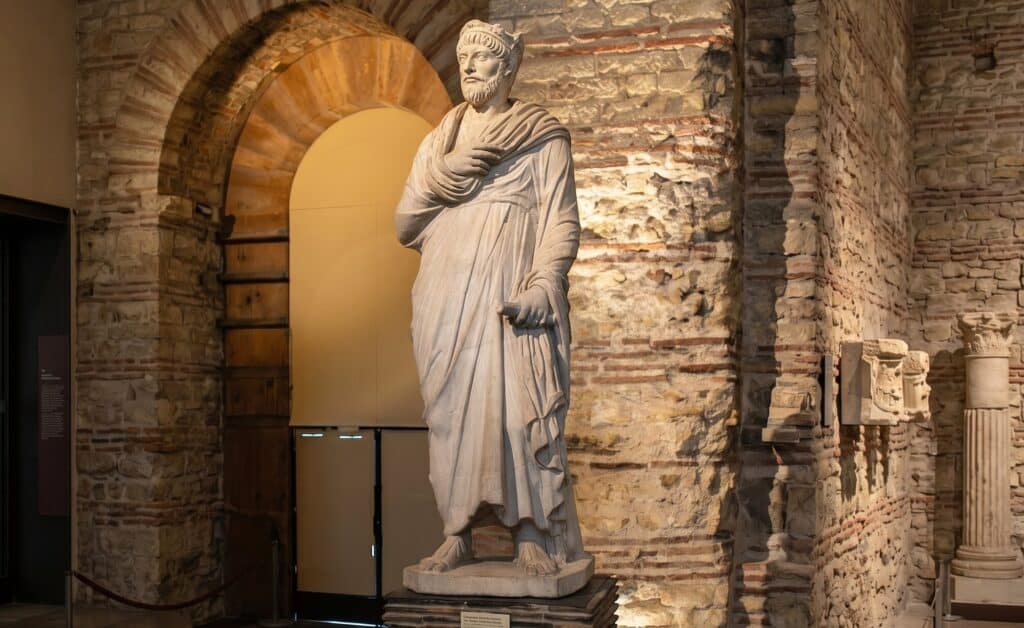
A full-length marble statue of a bearded man draped in a traditional Roman cloak and holding a scroll stands within a stone gallery.
The depiction of Julian in this classical guise shows his commitment to Neoplatonism and Greek culture over the rapidly spreading Christian faith. Credit: Ash Crow, Wikimedia Commons, CC BY-SA 4.0

Few figures in late antiquity present as compelling a historical debate as Julian the Apostate’s attempt to restore the Greek gods in opposition to Christianity in the Roman Empire.

During his brief but highly consequential reign in the fourth century AD, the Roman Empire stood at a profound religious crossroads. For a short period, Julian attempted to slow the empire’s accelerating Christianization, launching a sweeping effort to revive the ancient Olympian pantheon and return Rome to its traditional pagan practices. His sudden death on the battlefield has led historians to debate how dramatically the cultural trajectory of Western civilization might have shifted had his reforms endured.

Julian was born into the heart of the Constantinian dynasty, a family that had only recently converted to Christianity. Nonetheless, he became the last Roman emperor to openly support and worship the traditional Greek gods. He ruled for only about two years from 361 to 363 AD, but he acted with urgency and purpose. Julian the Apostate initiated an extensive program of philosophical and religious reform, aiming to reverse the Christian expansion advanced by his predecessors. To the growing Christian population, he was seen as a traitor to the new religious order, but to those who still admired the intellectual and cultural legacy of the classical world, he appeared as a philosopher-king attempting to restore an older vision of Rome.

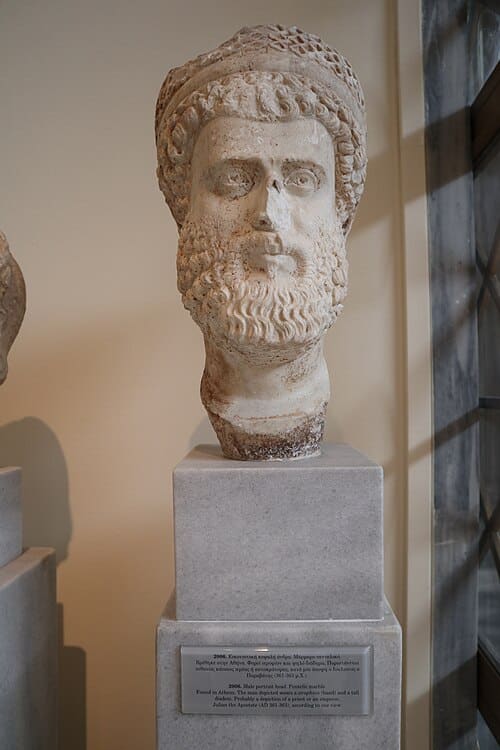
A sculpted marble portrait head of a bearded man wearing a diadem rests upon a stone pedestal inside a museum.
This marble head from Athens is widely believed to be a rare surviving portrait of the Roman Emperor Julian the Apostate. Credit: George Koronaios, Wikimedia Commons, CC BY-SA 4.0

Julian the Apostate’s early life

Julian did not experience the typical sheltered upbringing of an imperial heir. He grew up constantly looking over his shoulder, surviving political purges that eliminated many members of his own family. Although he was raised in a strict Christian environment under the supervision of powerful bishops, he is often understood to have developed a private intellectual attraction to classical texts and traditions associated with the ancient world.

His life took a decisive turn when he went to study in Athens. There, he was secretly initiated into the Eleusinian Mysteries, an experience that deeply shaped his philosophical outlook and strengthened his commitment to rejecting Christianity in favor of Neoplatonism. This forced dual existence helped form a uniquely strategic mindset. He became familiar with the inner workings of the Church, knowledge he later leveraged in support of his own religious and philosophical aims. By the time his troops in Gaul unexpectedly proclaimed him emperor, Julian was convinced that the gods themselves had chosen him to restore the ancient order.

Julian the Apostate as Emperor and the worship of the Ancient Greek gods in the Roman Empire

When he finally took power, Julian did not launch the kind of widespread, violent persecutions often associated with earlier periods of religious conflict. Instead, he pursued a more calculated cultural strategy. His approach focused on weakening Christian influence within imperial institutions while strengthening traditional religious structures. Julian the Apostate reduced the privileges and state support enjoyed by Christian clergy and redirected resources and prestige toward the priesthood of the traditional Greco-Roman religion centered on the Greek gods.

In a particularly controversial move, he restricted Christians from teaching classical literature. His reasoning was that those who rejected the traditional religious framework of Homer and Hesiod should not profit from instructing it. At the same time, Julian sought to make traditional religion more socially competitive by encouraging pagan priests to adopt public charitable functions, including aid for the poor and the establishment of hospitals—areas in which Christianity had been especially successful in gaining support. He appears to have believed that traditional worship had declined not because of its inherent weakness but because its institutions had failed to match the organizational and charitable presence of Christianity.

In practice, many historians argue that this cultural and intellectual strategy posed a different kind of challenge to early Christianity than outright violence. While persecution could strengthen Christian identity through martyr narratives, Julian the Apostate’s policies instead aimed to limit the social structures that supported its continued expansion while restoring the worship of the Ancient Greek gods within the broader Greco-Roman religious tradition.

A weathered page from an illuminated manuscript features three stacked, colorful panels showing medieval figures in royal and religious garments amidst dramatic interactions.
This illuminated manuscript page depicts vivid scenes of Emperor Julian ordering the arrest of a Christian bishop and overseeing acts of persecution. Credit: Wikimedia Commons, Public Domain

Unfortunately for his beliefs, that grand vision of such a revived Greco-Roman empire came to an abrupt end in the arid regions of Persia. During a military campaign, Julian was struck in the side by a spear, cutting his reign tragically short. Ancient sources and later traditions continue to debate the circumstances of his death, with some attributing the blow to a Persian soldier and others speculating—without evidence—that it may have come from within his own ranks. The true origin remains uncertain.

A well-known tradition holds that, as he lay dying, Julian the Apostate is said to have declared, “Thou hast conquered, O Galilean,” acknowledging the perceived triumph of Christianity. Whether or not he actually spoke these words, his brief reign left a lasting imprint on Roman and Western history. His efforts to restore the Ancient Greek gods within the Roman world continue to be discussed by historians as a striking moment in the empire’s religious transformation. Even in modern Greek cultural memory, echoes of this tension can still be felt in the broader contrast between the rational legacy of ancient philosophy and the spiritual tradition of Orthodox Christianity.

  •  

Andreas Michalakopoulos: The Forgotten Prime Minister Who Shaped Modern Greece

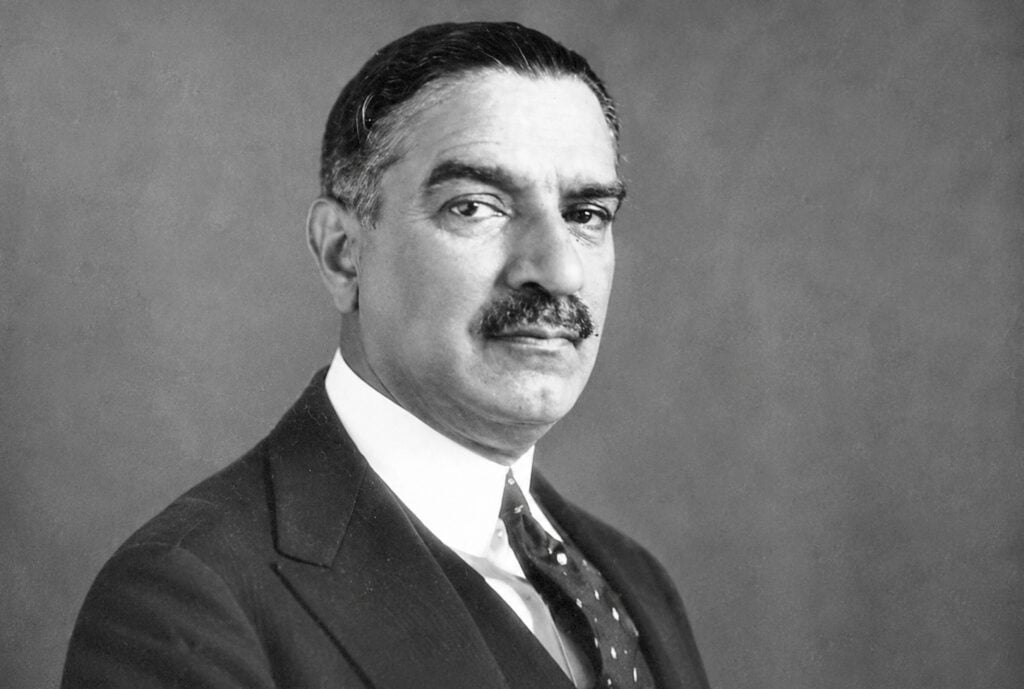
A black-and-white portrait features Greek politician Andreas Michalakopoulos wearing a dark suit, white collared shirt, and a patterned tie.
As a key political figure in early 20th-century Greece, Michalakopoulos served in numerous ministerial roles and briefly held the office of Prime Minister from 1924 to 1925. Credit: Agence de presse Meurisse – Bibliothèque nationale de France, Wikimedia Commons, Public Domain

Every day, thousands of Athenians and visitors pass through Michalakopoulou Avenue, one of the main arteries of central Athens. Yet few know the story of Andreas Michalakopoulos, the forgotten Greek Prime Minister and diplomatic genius whose name the avenue carries.

Who was the man behind the Michalakopoulos name?

Andreas Michalakopoulos was born in Patras in 1876 and went on to become one of the most important statesmen in modern Greek history. He was a man who helped redraw Greece’s borders, solved Athens’ water crisis, and brokered peace with Turkey at a time when Greece couldn’t have suffered more militarily.

Yet most Greeks today could not tell you a single thing about him. History has been unkind to Michalakopoulos, largely because he spent most of his career standing next to one of the most towering figures Greece has ever produced: Eleftherios Venizelos. That proximity was both his greatest role and the reason he is so rarely remembered—a blessing and a curse for a public figure like him. Michalakopoulos rose through the Liberal Party (Κόμμα των Φιλελευθέρων) ranks after 1910, holding portfolios in Economy, Agriculture, and Military Affairs under successive Venizelos governments.

He was not a man who craved the spotlight. He was a man who understood how government actually worked, and he was trusted with the levers of it accordingly—a true politician in the best definition of the term possible. When Venizelos went before the great powers of Europe to argue for a bigger Greece after the First World War, Michalakopoulos was beside him at the negotiating table. He participated in the long, tough diplomacy that produced both the Treaty of Sèvres in 1920 and the Treaty of Lausanne in 1923, the two documents that first promised the unthinkable and then permanently fixed, without too heavy losses, the borders of the modern Greek state. Venizelos got 100% of the credit.

However, Michalakopoulos did much of the work. He became Prime Minister in October 1924, inheriting a country in a genuine, profound, and almost existential crisis. The Asia Minor Catastrophe of 1922 had sent over a million Greek refugees flooding into Greece in a matter of months. From dreams about the reinstatement of Byzantine glory, Greece woke up in ruins, literal and metaphorical. Athens had nearly doubled in population within just a few years, and the city’s ancient water infrastructure simply could not cope. Water was being sold from carts in the streets. Taps ran dry. For a capital city that had stood for thousands of years, it was an embarrassing and dangerous situation. Greece was on the brink of collapse.

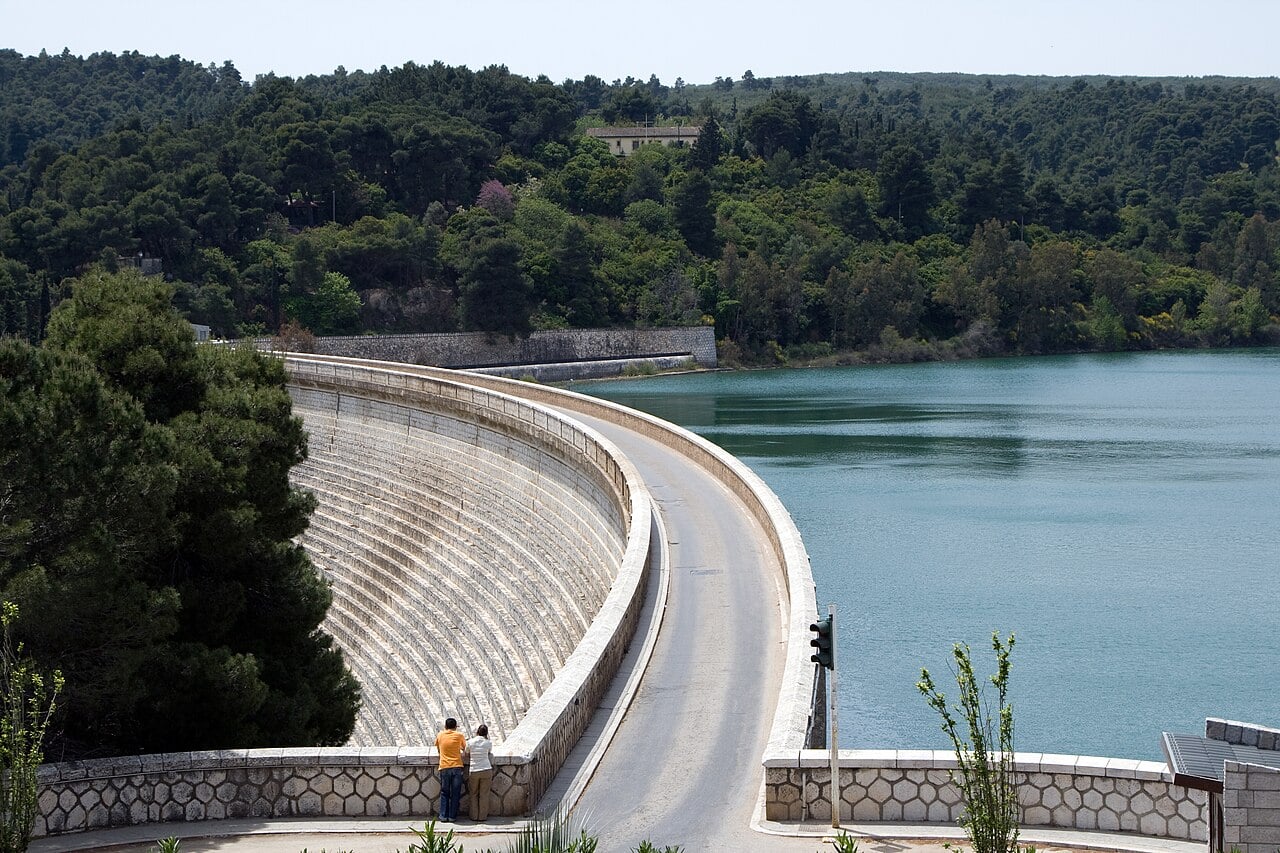
Michalakopoulos wasted little time. In December 1924, his government signed a landmark contract with American engineering firm Ulen & Company and the Bank of Athens to construct the Marathon Dam. It was one of the largest infrastructure projects in Europe at the time. The Marathon Dam was a gravity dam built of the famous Pentelic marble—the same stone used to construct the Parthenon—rising 54 meters above the Haradros River outside of Athens. The project cost more than the entire National Bank of Greece and was funded with a $10 million loan. Yes, modern Greece and loans, this stereotypical love affair…

A wide view captures the curved, stepped stone structure of the Marathon Dam holding back a large reservoir flanked by forested hills, with two people observing from a lower walkway.
Completed in 1929 and uniquely faced with Pentelic marble, this historic engineering project was instrumental in securing a reliable water supply for the rapidly expanding city of Athens. Credit: Vitaly, Wikimedia Commons, CC BY-SA 3.0

Construction ran from 1926 to 1929. The finished system delivered water to Athens through nearly 880 kilometers (547 miles) of new pipes and was inaugurated in 1931. The water that flows from Athenian taps today finds its roots in that contract and in that decision. Michalakopoulos never saw it completed. A military coup by General Theodoros Pangalos ended his government in June 1925, just months after the contract was signed.

But, thankfully, the work was done. He returned to government as Foreign Minister under Venizelos starting in 1928, and it was here that he made perhaps his most lasting contribution to the nation. Greece in the late 1920s was a country that had been through a lot. The Megali Idea, the great dream of a Greece stretching across the Aegean and into Anatolia, had collapsed spectacularly and catastrophically. The population exchange with Turkey had displaced more than a million people on each side. The two countries were locked in mutual suspicion and unresolved property disputes.

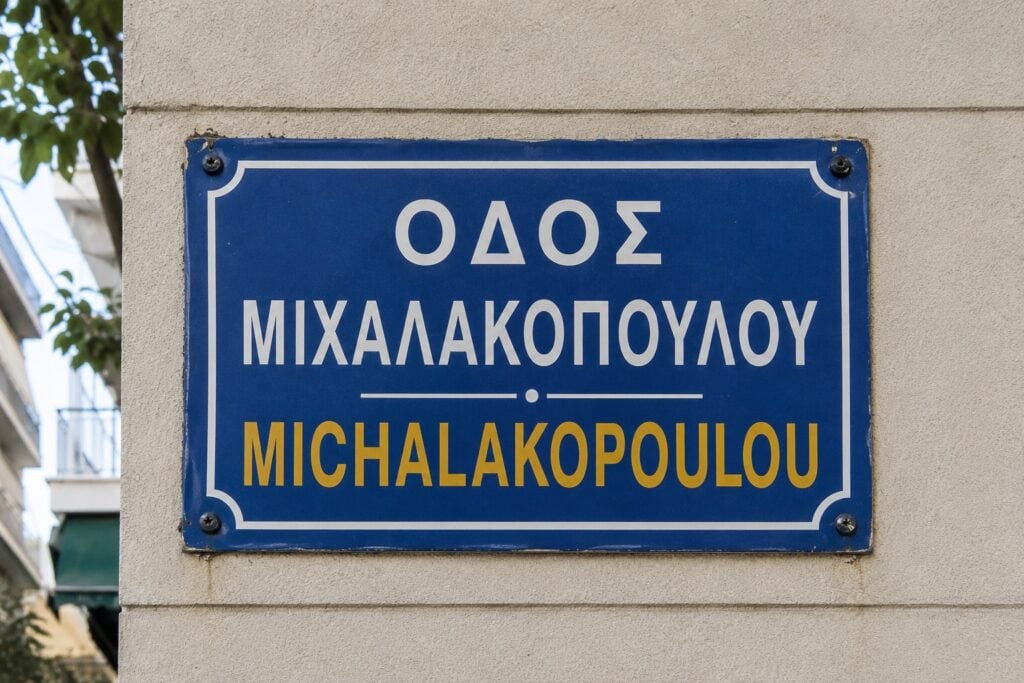
A blue enameled street sign mounted on a textured beige wall displays the name "Michalakopoulou" in white Greek lettering and yellow Latin characters.
A bilingual street sign marks Michalakopoulou Street, a major avenue running through the city of Athens. Credit: Greek Reporter archive

Michalakopoulos understood, more clearly than most, that Greece could not afford to stay that way. On October 30, 1930, he co-signed the Greek-Turkish Friendship Convention, also known as the Treaty of Ankara. He did that alongside Venizelos and Turkish Prime Minister İsmet İnönü. The treaty settled the border, resolved the property claims of the displaced populations, and established naval parity in the eastern Mediterranean.

It was a remarkable diplomatic achievement that helped lay the groundwork for the Balkan Pact of 1934 and brought a genuine, working peace between two nations that had spent generations at war. When Ioannis Metaxas declared his dictatorship on August 4, 1936, Michalakopoulos refused to go along with it. He had spent thirty years building democratic institutions from the inside. He spoke out against the regime and paid a heavy price for it. He was sent into internal exile on the island of Paros. He died on March 7, 1938, aged sixty-one.

Michalakopoulos’ legacy is a strange one: a man who brought water to a thirsty city, helped draw the map of modern Greece, made peace with its archenemy, and died in exile because he would not pretend that democracy was something you could simply switch off. Next time the traffic backs up on Odos Michalakopoulou in downtown Athens, take a moment to read the sign. The water in your glass and the borders of this nation have everything to do with the man it honors.

  •  

Ancient Greece’s Fascination With India’s “Naked Philosophers”

Gymnosophists India Greek philosophers
Medieval miniature reproducing the meeting of India’s gymnosophists with Greece’s commander Alexander the Great, c. 1420. The ancient Greeks were fascinated by India’s gymnosophists. Credit: Unknown Author, Wikimedia Commons, Public Domain.

Throughout history, and since the first exchanges between India and ancient Greece, Greeks have been captivated by the intriguing stories of the mysterious gymnosophists of India or the “naked philosophers.”

These philosophers became infamous for their austere and ascetic lifestyle along with their enigmatic wisdom. There are numerous Greek accounts of these wise people, offering a fascinating picture of the important cultural exchanges between two of the greatest civilizations on Earth.

Encounters with Alexander the Great

One could argue that perhaps the most famous interactions between Greeks and the gymnosophists took place during the campaign of Alexander the Great in India in 326 BC.
Ancient historians such as Onesicritus and Nearchus described (in their works) the dialogues that the great Macedonian Greek commander had with these naked wise men.

During these dialogues, we can see their distinctive disregard for any material possessions and their truly spectacular willingness to embrace death as a part of life. The philosopher Calanus famously demonstrated this by actually setting himself on fire in front of Alexander in an extreme attempt to showcase his fearless nature.

Gymnosophists Alexander the Great
Miniature of Alexander encountering the gymnosophists. Image taken from f. 17v of Poems and Romances (the ‘Talbot Shrewsbury book’). Written in French. Credit: British Library, Europeana, Public Domain.

These examples are only a part of the entire collection of accounts that have managed to paint a vivid picture of the unconventional way of life of the gymnosophists. Porphyry, for instance, noted in his works that these Indian philosophers were strictly vegetarians, much like the Brahmins. Their absolute rejection of garments and clothing, in general, along with their distaste for worldly goods in pursuit of spiritual enlightenment made a deep impression on the Greeks, who were genuinely amazed by the dedication of these men.

Ancient Greece’s views on philosophy of India

For the Greeks and their worldview, the gymnosophists represented a very different and acutely unique philosophical tradition with both many similarities to but also divergences from their own. From the accounts of ancient writers we learn that Greeks saw similarities between the ideas from gymnosophists of India and their own Greek philosophical concepts.

The belief of the gymnosophists for example in reincarnation, or metempsychosis, was of particular interest to many. Some scholars even speculated that Greek thinkers such as Pythagoras may have been influenced by Indian thought in the way he shaped his own worldview.

However, it is obvious that the Greeks also noted differences. This is something that probably led to a greater curiosity about and fascination with the Indian gymnosophists. Unlike the gymnosophists, mainstream Greek philosophers tended to engage more with society and politics, becoming much more active in the everyday life of their cities. The radical asceticism of the gymnosophists, on the other hand, as well as their rejection of material life, was more extreme than most Greeks had ever witnessed.

Asceticism and self-denial—from India’s gymnosophists to ancient Greece

What seems to have impressed the Greeks the most about the gymnosophists and their life was their incredible commitment to self-denial and extreme austerity. These naked wise men renounced almost all possessions and lived in the wilderness away from urban centers of the time.

Their sole goal was to pursue spiritual wisdom through material deprivation. To Greek eyes, their extremely ascetic lifestyle represented the ultimate mastery over physical desires and earthly attachments. For the Greeks, this was almost inherently difficult to comprehend, as the Greeks had a fundamentally different view, which was much closer to today’s Western attitude towards material possessions.

This is the reason why the example of living adopted by the gymnosophists inspired some Greek philosophical movements, particularly the Cynics. The Cynics were the ones who emulated the Indian rejection of social norms and material goods in favor of the benefits of asceticism. Christian ascetics also later looked to the Indian philosophers as true role models of self-discipline and pure piety.

India’s gymnosophists and influences on ancient Greece

As is understandable, the gymnosophists played a fundamental role in shaping and affecting the Greek imagination. They appeared as archetypal wise men in works by authors like Plutarch, Lucian, and Clement of Alexandria. Their fascinating way of life continued to amaze later Greek and Roman writers. These writers saw them as exotic embodiments of the philosophical ideal.

More broadly speaking, the Greek encounters with the gymnosophists show us the importance and richness of the cultural exchanges and the discourse of ideas between ancient cultures and civilizations. These Indian wise men expanded many of the Greek notions of philosophy and the possibilities of the ascetic path, even shaping Christian thought, although they lived centuries before the birth of Jesus. At the same time, the Greek accounts give us valuable information about the fundamentals of Indian thought and practice.

  •  

World’s Oldest Toothpaste Recipe Found in Egypt Reveals Ancient Greek Dental Secrets

A variety of ingredients, including herbs, coarse salt, and peppercorns, are arranged on a rustic wooden table alongside a mortar and pestle for making ancient-style toothpaste.
The natural, abrasive components used by Ancient Greeks to maintain oral hygiene, such as crushed oyster shells, charcoal, and mint. Credit: Greek Reporter archive

Most of us assume that looking after our teeth is a modern habit shaped by supermarket shelves, mint-flavored ads, and childhood dentist scares, but a surviving Ancient Greek toothpaste recipe suggests otherwise.

Sitting quietly in the Austrian National Library in Vienna is one of the most remarkable documents in the history of medicine: a small, faded papyrus from the fourth century AD containing what is widely considered the world’s oldest surviving, precise toothpaste formula.

The existence of this Ancient Greek toothpaste recipe points to something larger at work. By the time it was copied onto papyrus, Greek had long since become the language of science, medicine, and intellectual life across the Mediterranean. This linguistic dominance was a legacy of the conquests of Alexander the Great and, above all, of Alexandria, the city his successors transformed into the ancient world’s foremost hub of knowledge. Even in Roman Egypt, centuries after the Ptolemies had given way to the Caesars, Greek remained the language a physician used when he wanted to be taken seriously.

When was the toothpaste recipe written in Ancient Greek discovered?

The papyrus first came to the attention of modern researchers in 2003, when curators at the Austrian National Library in Vienna identified it while preparing for an international dental congress. It had likely been sitting in the collection for years, its significance unnoticed and largely forgotten. Once translated, however, scholars quickly realized what they were looking at—a toothpaste formula that predates the first commercially marketed toothpaste, Colgate, launched in 1873, by well over fifteen hundred years.

The formula itself is strikingly systematic. The scribe prescribes “a powder for white and perfect teeth” composed of four ingredients: one drachma of rock salt, two drachmas of mint, one drachma of dried iris flower, and twenty grains of pepper. The drachma in this context was a standard unit of Greek medical weight, roughly equivalent to one-eighth of an ounce (about 3–4 grams), part of the same measurement system used throughout the major pharmacological texts of the ancient world. Taken together, the recipe reads less like folklore and more like a physician’s deliberate prescription, carefully calibrated for a patient.

But one might wonder if it actually worked. In 2003, Austrian dentist Dr. Heinz Neuman decided to test it for himself by recreating the formula. His conclusion was cautious but intriguing: the mixture was mildly abrasive and caused slight gum bleeding, yet it also produced a noticeable sensation of cleanliness and freshness. Modern dental science helps explain why. Dried iris flower, or orris root, is now known to contain antibacterial compounds that target the pathogens responsible for gum disease. What might once have looked like ancient guesswork increasingly appears to be empirical knowledge derived through observation and practice. In this sense, modern pharmaceutical science is only now arriving at conclusions the Greeks and Egyptians had already explored more than a thousand years earlier.

Ancient Greek father of pharmacology
Dioscorides is considered the father of pharmacology. Painting of unknown artist depicting Heuresis (the personification of discovery) presenting Dioscorides with a mandrake root. Credit: Unknown artist. Wikipedia Public Domain

None of this should entirely surprise us when we consider the world from which this recipe emerged. Ancient Greece had produced Pedanius Dioscorides, whose monumental work on medicinal plants shaped medical practice for more than a millennium. It had also produced physicians, botanists, and scholars who approached the human body with a level of rigor and curiosity that few ancient traditions matched. The anonymous scribe who recorded this formula was working squarely within that intellectual lineage, effectively encoding practical medical knowledge in Greek because it was the language in which serious medicine was conducted at the time.

The paste itself would have been applied without anything resembling a modern toothbrush. A folded linen cloth or a frayed chew stick—a fibrous twig worn soft at the tip through repeated use—would have served the purpose well enough. The tools were simple, but the intention was essentially the same as ours.

There is a quiet continuity in that detail. The next time you reach for mint toothpaste in the morning, you are participating in a ritual that a Greek-speaking scribe in Roman Egypt thought important enough to preserve on papyrus seventeen centuries ago. The ingredients have been refined, the packaging has changed beyond recognition, and no one is applying the mixture with linen anymore. Still, the impulse behind it—the very human desire for clean, white teeth—remains as old as the ancient world itself, and in many ways, the Ancient Greek world had already put the first working version of the answer into writing.

  •  

The Mystery of Alexander the Great’s Visit to Cyprus

The envoys of Alexander the Great clothe the gardener Abdalonymos with the insignia of the royal dignity of Sidon.
The envoys of Alexander the Great bestow the insignia of the Kingship of Sidon upon the gardener Abdalonymus. This takes place outside the city walls. People follow the events from the city walls. On the right, a man is fishing in a small boat on the water. In the foreground lie the gardener’s tools, a spade and a watering can. Credit: Nikolaus Knupfer, Wikimedia Commons, Public Domain

It turns out that one of the most intriguing stories of Alexander the Great and his time in Cyprus is simply fake ancient news. Even more surprising is how this story evolved. It truly reveals something about the dynamics of power, propaganda, and the complexity in distinguishing between what is historical truth and merely fabricated.

It all started with a picture described by ancient Greek biographer Plutarch centuries ago: Macedonian soldiers, bronzed and battle-hardened, marching not into combat but into a quiet garden in the ancient city of Paphos. Their mission was to find a man in rags hauling water. According to Plutarch’s De Fortuna Alexandri, Alexander had just deposed the corrupt tyrant of Paphos and wished to restore the island’s ancient royal bloodline, the Cinyradae.

The last surviving heir, he was told, was a pauper named Abdalonymus, reduced to a troubled man working the soil. In a moment worthy of Hollywood, the soldiers draped the stunned gardener in royal purple, the Ancient Greek porphyra, and Alexander crowned him king. Plutarch loved this story precisely because it served a moral purpose and signified that the great Greek conqueror from Macedonia possessed something close to divine judgment, able to recognize noble character even beneath layers of garden dirt.

We have to admit it is a genuinely moving story. The one problem, however, is that it almost certainly never happened.

Alexander the Great's campaign in India left an indelible legacy of military excellence that would echo through millennia.
Alexander the Great’s campaign left an indelible legacy of military excellence that would echo through the millennia, but did he personally ever visit Cyprus? Credit: Public Domain, via Wikimedia Commons.

Alexander the Great, the conqueror of Cyprus who never set foot on it

Modern scholars are in broad agreement on this disconcerting point. For all the glory attached to the legend of Alexander the Great in Cyprus and his personal role in reestablishing the old royal authority on the island, the man himself never set foot on the island.

The Cypriot kingdoms did submit to him voluntarily and contributed an impressive fleet of one hundred and twenty ships to support his grueling Siege of Tyre. That much is historically documented and impossible to deny. Nevertheless, Alexander personally bypassed Cyprus entirely, driving his forces south from Anatolia along the Levantine coast toward Egypt and securing the Mediterranean littoral as he proceeded. Plutarch’s vivid scene in Cyprus’s ancient city of Paphos, so compelling as literature, is geographically and historically impossible.

That leaves an obvious and fascinating question. How did one of antiquity’s most respected biographers get it so spectacularly wrong, and, more importantly, why would he lie about Alexander’s role in Cyprus?

The Sidonian gardener

The answer begins with the name Abdalonymus. To anyone familiar with Semitic linguistics, something is immediately off. This is not a Greek Cypriot name. The suffix -us sounds Greek, as this is the Latin transliteration of the Greek suffix -os. Nonetheless, to those who know a few things about Semitic languages, it is distinctly Phoenician, rooted in the words Abd or Ebed, meaning “Servant of the Gods.” This was a naming convention native to the Levantine coast rather than the Aegean Greek world. Roman historian Quintus Curtius Rufus narrates an almost identical story to that of Plutarch but places it exactly where the linguistic evidence points: in Sidon in what is today Lebanon.

The real history, based on wide consensus among historians, is this. Alexander deposed Straton II, the pro-Persian king of Sidon, and searched for a replacement from the old Phoenician royal line. He found his man, Abdalonymus, working as a destitute gardener. The purple robe, the soldiers, the cinematic reversal of fortune—all of it happened but in Phoenicia. It did not actually happen in Cyprus. Somewhere in the centuries between the event and Plutarch’s retelling, the story migrated across the Mediterranean and took root in Paphos instead.

It is, as classical scholars have pointed out, ancient misinformation operating by exactly the same mechanics as the viral fake news rooted in real events we deal with today.

antique map of Cyprus
Cyprus has remained a core strategic focal point in the Eastern Mediterranean for centuries, but did Alexander visit it? The answer is probably not. Credit: Abraham Ortelius / Public Domain / Wikimedia Commons

Political propaganda older than democracy

How does a Phoenician story become a Cypriot one, you might ask? Two theories dominate the scholarly debate. The first is the simplest: honest error. Plutarch wrote centuries after Alexander’s campaigns, relying on sources that themselves came into existence only generations after the actual historical events of the Macedonian king’s life. Geography gets muddled. Coastal cities get blurred together. A Phoenician Sidon and a Mediterranean Cyprus are not so difficult to confuse when you are working from fragmentary oral tradition. They are not that far anyway.

The second theory is considerably more interesting. Cyprus spent quite a long time under the control of the Ptolemaic dynasty, the Greek rulers of Egypt who inherited a slice of Alexander’s fractured empire. The Ptolemies had every political incentive to tie their Cypriot territories to the Alexander legend to legitimize their claim on this strategic island. If the people of Paphos believed the great Macedonian conqueror had personally visited their city, handpicked their king, and blessed their royal line, that made Ptolemaic rule over the island feel rather more legitimate, didn’t it? It is political myth-making in its purest form, and it worked well enough that the story survived for millennia.

The parallel to the present is hard to miss. Governments and strongmen have always understood that controlling how history is told is as valuable as controlling territory. Ancient rulers were no different. They shaped the Alexander legend the same way modern state media shapes the news—carefully, purposefully, meticulously, and with a clear audience in mind.

None of this diminishes the pleasure of reading Plutarch or his significance as a source of historical events. If anything, knowing the story is wrong makes it richer because now we are reading two texts at once: the ostensible biography of Alexander and, right beneath it, the political machinations of the world that produced it.

The story of a humiliated man-turned-king resonated with audiences so much because it speaks to our desire to believe that virtue will eventually be recognized and that a man pouring water in a muddy garden might one day wear a crown. That urge is genuinely Greek in the deepest cultural sense and also deeply human. In the end, the story of Alexander the Great in Cyprus is really a masterclass in how legends are constructed, with the aim of weaponizing the past to the advantage of the present.

  •  
❌