Bulgaria’s new government will stop sending military aid to Ukraine, the country’s defense minister said on Tuesday, as the more than four-year-old war grinds on with no end in sight. “We have already made it clear that the war in Ukraine will not be resolved on the battlefield,” Defense Minister Dimitar Stoyanov told reporters, according […]
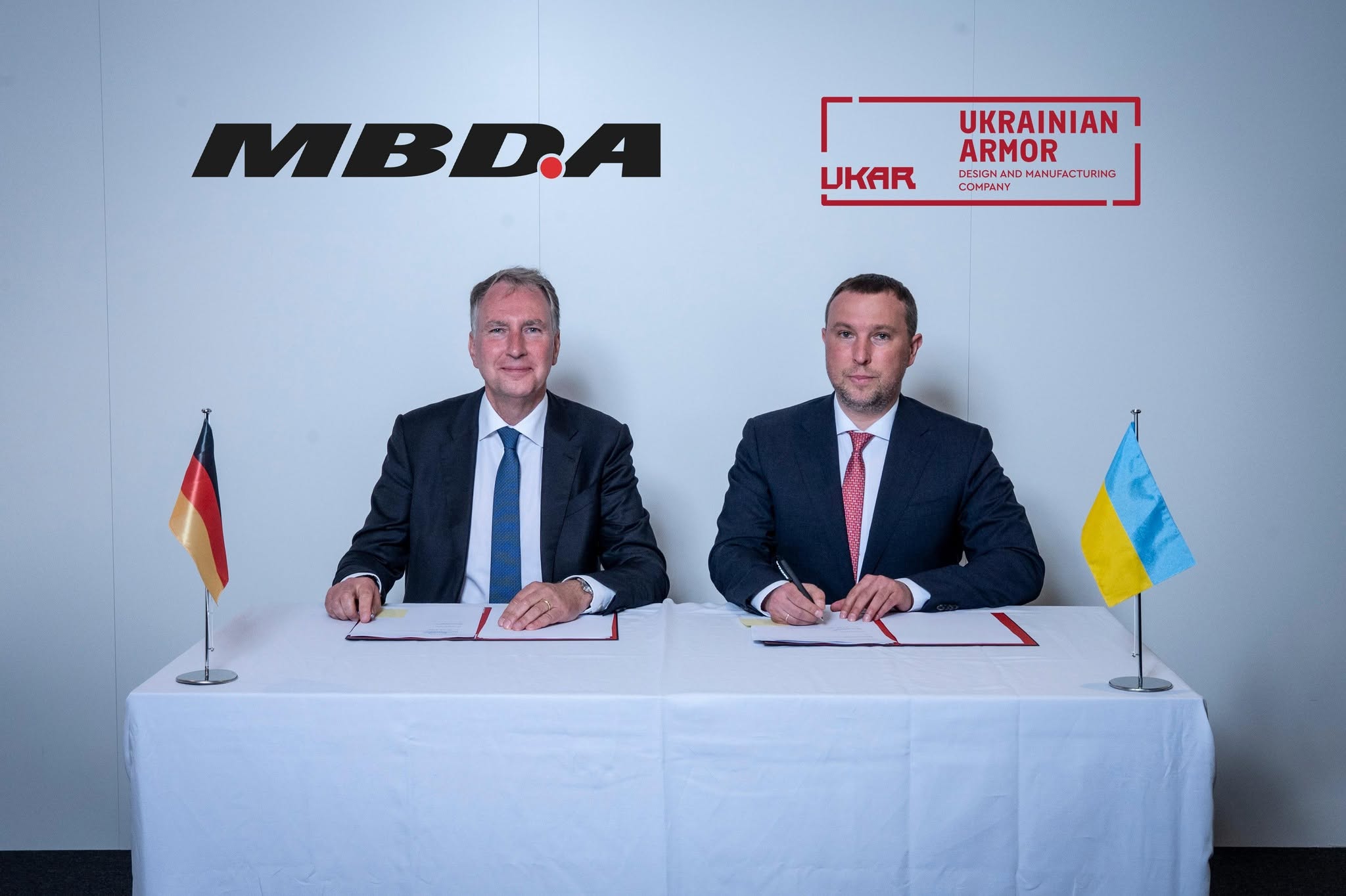
The defense company Ukrainian Armor and European firm MBDA on June 10 initiated a strategic partnership aimed at developing deep strike and anti-drone systems.
Poland is fighting for its piece of the 6.6 billion euro ($7.7 billion) package under the European Peace Facility, while Germany has called for full reimbursement to Kyiv.
Russian drone attacks are a daily reality in Kherson, a frontline city in southern Ukraine. Residents say the threat is growing, with drones increasingly targeting residential neighborhoods and forcing people to seek cover. Yet many refuse to leave.
Ich habe heute in einem Artikel bereits erklärt, warum ich die Meldungen aus Europa und Kiew, man wolle mit Russland verhandeln, für nicht ernst gemeint, sondern für ein propagandistisches Manöver und sogar eine Falle für Russland halte. Aber auch wenn ich nicht an baldige ernsthafte Verhandlungen zwischen der EU und Russland glaube, wird es trotzdem […]
Ich habe bereits über Selenskys offenen Brief an Präsident Putin und die tatsächlich dahinter steckenden Motive berichtet. Nach dem Brief gab es am Montag ein Treffen Selenskys mit Kanzler Merz, Präsident Macron und Premierminister Starmer in London, bei dem ebenfalls Verhandlungen mit Russland gefordert wurden. Wer Selenskys Brief gelesen hat, der versteht, dass sein Brief […]
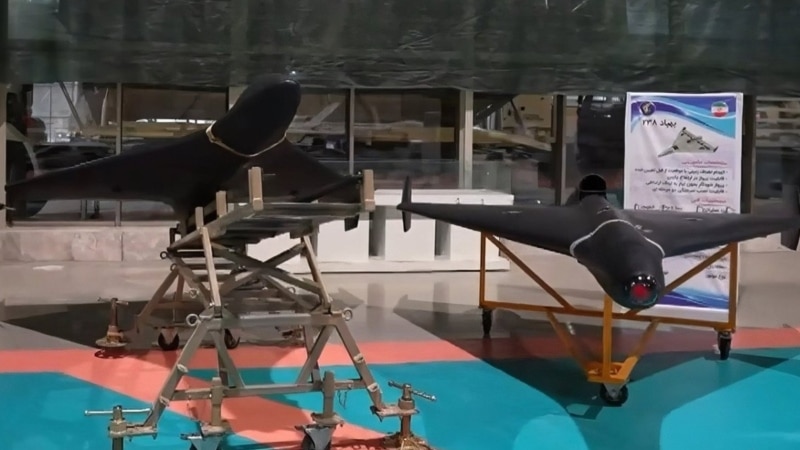
The US House of Representatives overwhelmingly approved legislation aimed at preventing American and allied technology from ending up in Iranian-made drones used in conflicts from Ukraine to the Middle East.
Hybrid threats span both hardware and politics, said Colonel Sönke Marahrens. The list of methods includes overflights, the cutting of undersea cables, and a concerted disinformation campaign. It also reaches into political and judicial systems, including what he called the "disposable agent" model —civilians recruited online for one-off sabotage or surveillance. As a model for how the state should respond, Colonel Marahrens pointed to Finland. Authorities there detained a suspected sabotage vessel within an hour of Baltic Sea cable damage.
Russian hybrid attacks: a political shift acknowledged late
Recognition had arrived slowly, Marahrens told the New Age Defence forum in Berlin on 8 June, Ukrinform reported. "Germany recognized rather late that we are being attacked by such hybrid methods," the colonel said. "But I would say that in the last year and a half to two years, we see a shift at the political level as well."
The colonel heads a department at the Bundeswehr's Center for Digitalization and Capability Development. The center reports to the Cyber and Information Domain Command in Bonn. German intelligence services and state institutions are increasingly informing citizens of the changing security environment, he said.
Drones, cables, and courts
Russian pressure now reaches beyond physical sabotage, Marahrens said. "It's not just drones and not just undersea cables, it's also disinformation within our society. It's the use of the political and judicial systems, the concept of 'disposable agents,'" he said.
Unidentified drones over European critical infrastructure, including German sites, had a primarily psychological effect, the colonel said. The impact was not military. Germany's National Security Council should receive real powers for rapid decision-making, he argued. The colonel cited Finland's response time of less than an hour after the Baltic Sea cable damage.
"Creating societal resilience is something we in Germany have yet to learn." — Col. Sönke Marahrens, Bundeswehr Center for Digitalization and Capability Development
Kyiv's resilience is something Berlin lacks
Germany draws on Ukrainian wartime experience through financing, joint training, and front-line exchanges, Marahrens said. "We support Ukraine financially," he said. "We also adopt the experience gained from the battlefield. We provide training for them, and we also adopt experience from them during joint exercises at our training grounds."
The most important Ukrainian lesson, the colonel said, is societal resilience under wartime conditions. "Creating societal resilience is something we in Germany have yet to learn," Marahrens said. The Kremlin coordinates large-scale hybrid operations across Europe, the agency added. These campaigns aim to discredit Kyiv and inflame internal conflicts in EU states amid Russia's war on Ukraine.
To learn more about this campaign, we reached out to one of the soldiers leading this effort from the unit that created it. In an exclusive interview, an Unmanned Systems Department Officer for the First Corps Azov of the National Guard of Ukraine offered us unique insights into how the program began, how it’s going, where it is headed and how AI is helping to identify and hit targets deep behind the lines. It’s a capability we described in great detail — about how it was rapidly gestating and would arrive on the battlefield around now. The officer spoke on condition of anonymity to discuss operational details.
Some of the questions and answers have been edited for clarity.
Azov patrols the border areas around Mariupol.
Ukrainian territory must be free of Russian forces. The surest path to achieving this is pushing the "sanitization zone" for enemy logistics closer to Russia itself and occupied Crimea.
— First Corps Azov of the National Guard of Ukraine (@azov_media) May 25, 2026
Q: Walk me through the genesis of the mid-range strike campaign.
A: I will first of all start with answering the question of why. So the reason why we are currently conducting this campaign is to hunt enemy logistics capabilities, and currently we have a lot of quite cheap assets that can strike enemy targets at quite a deep range. So the overall meaning, the overall sense of this campaign is to strike enemy concentrations of cargo in the places where this concentration is the highest and the protection of those enemy logistical assets is at the lowest level.
So, if we’re talking about enemy logistics very close to the front line, to the line of contact, we are mostly talking about a person with a backpack. Then, if we are moving deeper into the enemy controlled area, further from the front line, then we’re talking about cars. Then even deeper we’re talking about trucks. Even deeper we’re talking about long haulers with trailers, so a higher concentration of cargo. Even deeper into the enemy controlled area, we’re talking about the railroads, the trains that are carrying supplies. So the deeper we go from the line of contact, the higher is the concentration of enemy cargo.
Russian rail logistics are now also the target of Midstrike drones, with lines to Crimea being particularly affected. pic.twitter.com/K1BFd0QVov
The other part of answering this question is basically about how the enemy protects their logistical assets. So the deeper we go from the line of contact, not only is the distance larger, but also the areas that the enemy needs to protect. So just simple mathematical calculations show us that the distance of 50 kilometers deep from the line of contact is usually the most concentrated area the enemy has to defend against our strike assets. But if we go to the depths of 300 kilometers, then the areas that the enemy should protect are much larger, and it’s basically impossible to saturate that area with all the necessary protection assets that the enemy needs to strike down our drones.
The point I would like to make is that we conduct those strike operations at deeper ranges with basically the same assets that we use for the tactical depths, for example, at the depths of 50 kilometers. That means we do not increase the cost of our assets. We just introduced some technical modifications, and we can use the same assets to strike in the deep area.
Q: What drones are you using to carry out these attacks and how are you increasing the ranges?
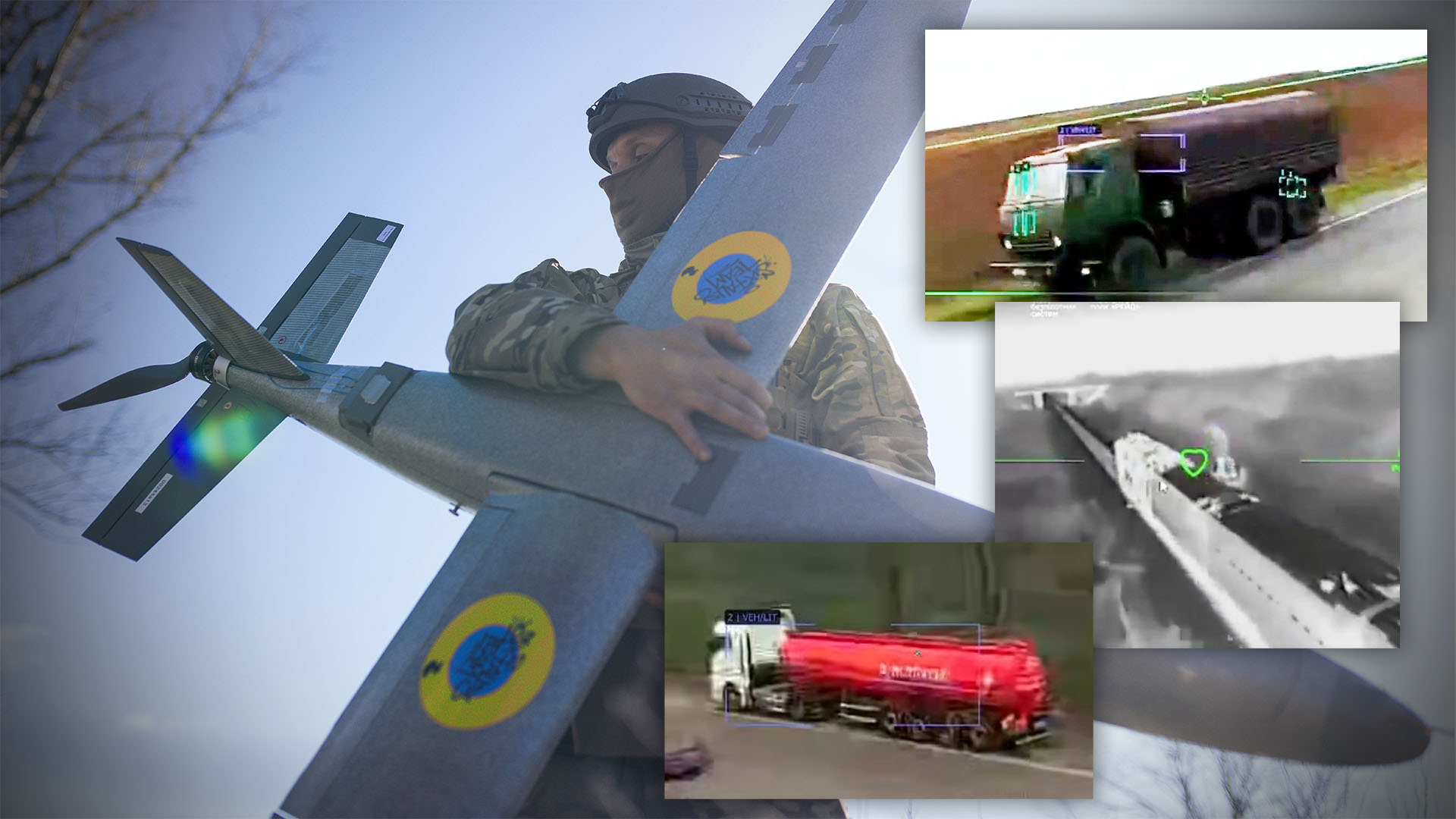
A: Basically, we’re using fixed-wing kamikaze drones with some modifications in terms of communication systems. We’ve installed Starlink systems on those drones, and we have also introduced a number of modifications in terms of the engine of the drones – in terms of the overall propelling unit. And this allowed us to increase the range of the assets that we used previously for the range up to 50 kilometers, with some modifications for longer distances.
Q: What kinds of drones are you using?
A: Just the simple fixed-wing chemical drones, such as Hornet systems, such as the Darts systems, and also some other assets that, for now, we prefer not to mention.
Q: Can you provide additional details about the modifications you have made to these drones and what is their maximum range?
A: Well, I would say that these are quite technical things, and I wouldn’t want to disclose those, because I would want to avoid the situation where the enemy is going to do the same modifications.
Q: Are you reaching as far as 100 kilometers?
A: From what we can say now, we can cover distances of up to 250 kilometers, but as you might understand, with time we will cover longer and longer distances.
Q: Can you describe how these attacks work? Do you operate these as first-person view drones through a video feed? Do they have a terminal seeker?
A: The process is really simple. So, for example, we select a section of the road, or the road as a whole and we distribute that road or the sections among our units. And I would like to mention that this is an all Ukrainian operation. It’s not a task for just one single unit, and basically each unit has its own area of responsibility and its own section of the road.
And then we just send drones there in hunting mode, and I cannot disclose how this works from the standpoint of intelligence, but the overall principle is that the intelligence just gives us the priorities for the targets. For example, they say that you need to target this type of vehicle with these types of cargo.
And in terms of the targeting, I remember that you were also asking the question about how the targets are selected. For this we use both the AI tools and also the operator himself, so we’re using both methods for that.
A Ukrainian “Hornet” mid-range strike UAV patrols the highway from Mariupol to Melitopol on the land bridge to Crimea. It is looking for trucks and especially fuel tankers. https://t.co/Mtcxq4L6rjpic.twitter.com/NMkVdbf8rs
Q: I want to get back to AI in a bit, but what area of operations do you cover?
A: Our area of interest and area of responsibility is related to all the roads that the enemy is using to bring in supplies to the area of operations of our corps, which is roughly in the area of the town of Dobropillia in eastern Ukraine, and for example, this may be the route from Rostov that goes to Mariupol and then goes to Donetsk, and this could be any other route that the enemy might use to bring military cargo to the area of operations of our corps.
First Corps Azov works in and around the area of Dobropillia in the Donetsk region of Eastern Ukraine. (Google Earth)
Q: What were some of the more successful mid-range drone strike missions you carried out?
A: That’s basically an easy principle. When I said that we are hunting the enemy’s logistics, I mean that this is a daily process. This is a continuous process, and this is not about one standalone mission, when we fly somewhere, when we hit a target and the mission is over.
Last night, Ukraine expanded its mid-range strike campaign to the Sea of Azov, hitting at least 5 vessels carrying Russian cargo.
At least two of the cargo vessels were hit at the occupied ports of Berdyansk and Mariupol, as Ukrainian forces seek to cut off Russian logistics. pic.twitter.com/NoXeAO7Ca6
Q: How are these mid-range strikes on Russian logistics affecting their ability to fight?
A: This is causing shortages of fuel for the enemy. This was already commented on by our media, and also the media resources of the enemy, and now we understand that this is true, not only for Crimea, where there is a severe shortage of fuel now, but also this is true about the other Russian-controlled territories. And basically, when we are striking enemy logistical supplies of fuel, this affects the overall situation, because what is fuel? Fuel is basically the blood of war, which is necessary to fuel the generators that the enemy is using for the FPV operations. The fuel is used for the vehicles that basically bring in those FPVs to the combat zone.
I’d like to add an additional explanation of how this works. If we destroy a car that brings fuel to the line of contact, then we’re talking about destroying like two canisters, so that’s approximately 40 liters of fuel. But if we strike a fuel tank and a tank vehicle, which is bringing fuel to the overall area, so then we can talk about several tons of materials.
Gas stations across Russian-occupied Crimea are facing worsening fuel shortages, with long queues, rationing, and voucher-based distribution reported by residents. Some locals say fuel has become so scarce that it is treated as a luxury, while Moscow insists there is no cause for… pic.twitter.com/0LSYWEqiDH
— Radio Free Europe/Radio Liberty (@RFERL) June 5, 2026
Q: Is this setting the stage for a Ukrainian advance in the east or Zaporizhia?
A: I would say that blocking the logistical supplies to the Zaporizhia Oblast and also to Crimea is a byproduct of our attacks aimed at cutting enemy logistics to our area of operations. Because we’re targeting the roads that go through Mariupol, also to Crimea, to supply the Zaporizhia region, and as well our area of operations. But as for the most strategic aspect of this question of whether this might influence some counter-offensive capabilities of the Ukrainian Defense Forces, I think that is not the question within my scope of responsibility, because I’m an officer responsible for the UAS component of the corps, and I think that this is more of a question that should be directed to the general staff of the Armed Forces of Ukraine.
Ukraine continues to launch an important number of mid-range strike, targeting Russian logistics in occupied territories
Since early may, more than 270 trucks have been hit, together with multiple fuel depots and trains.
Q: Tell me how you came to use the U.S.-made Hornet drones.
A: I would say that this is also a question that should be directed at one level up from my level. We get those drones, we deploy those drones, but the questions of how we get them and what are the specifics of their supply, this is not a question that I can answer.
A U.S.-made Hornet drone. (U.S. Army photo by Spc. Thomas Dixon) Spc. Thomas Dixon
Q: When did you start getting them?
A: We have been receiving these drones for almost a year.
Q: When you got the Hornet drones, were you given any instructions on what missions to accomplish with them or what targets to pursue?
A: I think that the principle thing to explain here is that the Hornet drone is a tactical level UAV system. It can be used at the maximum range of 50 kilometers – the maximum range of the basic configuration of this drone. The drones we are currently using are the modification of the Hornet drone, but the basic configuration of this drone is only a tactical-level UAV. This is why our mid-strike operations, which have started only recently, are using modified drones.
I think that it is important to add that these modifications are conducted by the units themselves.
The First Corps Azov of the National Guard of Ukraine maintains control over enemy logistics near Donetsk.
Strike UAV pilots are targeting Russian logistics deep in the operational rear. Drone units maintain constant surveillance and fire control over all supply routes around… pic.twitter.com/i4TYOWJBg4
— First Corps Azov of the National Guard of Ukraine (@azov_media) April 16, 2026
Q: When did you begin to make the modifications and was the mid-range strike concept something that Azov developed?
A: Yeah, I would say that basically that was Azov development. So the first tests of these new modifications started in early winter. After approximately a month of testing, we started combat deployment of those drones approximately in January or February of this year. And we use those new modifications to ensure our middle strike operations. In terms of the tactics, I would also like to say that Azov developed new tactics of the deployment of middle strike drones, because the previous tactics they were mostly concentrated on the use of very expensive assets, which are available in limited numbers, so the targeting cycle was different, which is why we needed to develop new tactics and change this targeting cycle.
Q: What systems were you using before that were so expensive?
A: Well I’m not really talking about some specific assets here. I’m mostly talking about the overall tactics and the targeting cycle. So, the tactics of middle strikes were developed for expensive assets that the Corps didn’t have at the moment. So, this is basically why we started developing our own assets that could ensure that we have those middle strike capabilities, and we can also engage targets at the operational level.
Magyar claims a reduction from 3,800 cargo journeys to 1,100 cargo journey (71.05%) along the E-58 Mariupol -Berdiansk – Melitopol – Simferopol highway in the past two weeks
— Ukraine Control Map (@UAControlMap) June 9, 2026
Q: When you added Starlink, did you have to seek permission from SpaceX to use their system for these weapons?
A: The first thing that I would like to say is that we do not use only Starlink. It is just one of the possible communication systems and communication solutions that we’re using. And the second thing that I would like to add is that all the international issues, international cooperation questions, are the issues that should be dealt with at the level of our ministries and at the level of our central government, so once again, this is not a question that I can answer.
Una parte vital de la efectividad de los drones Hornet con los que Ucrania está atacando las rutas logísticas rusas entre 80 y 120km del frente es la recopilacion de datos para que el algoritmo aprenda. Por eso algunos modelos llevan grandes terminales Starlink. https://t.co/yGePjoPo2Kpic.twitter.com/iWu2bLrwq5
Q: Can you tell me what other communications systems you use?
A: No, this information is still secret, because none of those assets have been taken by the enemy, so the enemy doesn’t know yet that we’re using those. But I think that in some time we will be able to go public with those assets and tell more about what we use, apart from Starlink.
Q: Are you using Starlink and the other systems on the Darts drones as well, or just Hornet?
A: Yes, we are using Darts for those middle strike attacks. So, basically, the overall tactics of those mid-strike attacks with small UAV systems, it can use any fixed wing kamikaze drones with modifications which is why we are using Hornets, we are using Darts and also the other types of drones.
While the Ukrainian “Hornet” strike UAV is receiving a lot of attention recently, the “Darts” UAV remains a workhorse for mid-range strike. It, too, has AI terminal targeting and control capabilities to defeat Russian jamming. https://t.co/cNcQytap1Dpic.twitter.com/C8nYJ20Uer
A: Unfortunately, no. The enemy has not yet got hold of those assets, and if one of them will be shot down, or if one of them will be captured by the enemy, then I think that we will be able to go public with those assets.
Q: Can you talk more about how you are using AI for the Hornets and Darts?
A: The AI is used for the so-called last-mile system. I’m talking about the terminal guidance here, and also the AI can also be used to identify the targets, especially when the drone is flying in the autonomous mode. It can recognize the type of the target and it can automatically engage the target. So all of these processes can happen without the involvement of the operator. This allows us to launch several drones at the same time, and this also allows us to ensure a higher level of coordination for those attacks.
I think that one of the examples of these attacks was captured by one of our videos that you might have seen when one fixed-wing drone is observing the target and the other drone is actually hitting it.
Q: Is there a man in the loop or a man on the loop during the terminal phase of the attack or is it fully autonomous?
A: Since we are trying to control the whole process, usually it is the person who takes the final decision and actually makes this decision to strike the target, because we do not want to over rely on the artificial intelligence. If necessary, this whole process can also happen without human involvement, but as I have already mentioned, our policy is that the decision should be made exclusively by the operator.
Q: So this is man in the loop?
A: Yes, so technically men can be out of this loop, but in our case we involve humans in this system, so that’s man in the loop.
Visual look of Hornet UI. Not much new, can mark soldiers individually. Seems aiming is done by either by lock a target (red) or manually aiming by continusly clicking (green) https://t.co/d2LGtV2aON
Q: Have the Russians developed countermeasures for this effort?
A: Since the overall intent was to go to the massive deployment of those drones against the enemy logistics at once, as for now, the enemy has not yet had enough time to adapt to these tactics of ours. And now they’re desperately trying to find some countermeasures to find some ways to react to this.
Images showing unusually painted Russian trucks have appeared on social media channels in recent days with a paint scheme designed to throw off Ukraine’s AI-assisted mid-range strike drones. (Via X) via X
They are putting on anti-drone nets deep into their controlled territory. They are placing people armed with shotguns every 50 meters of their critical roads, but basically, as for now, there is no Russian tactic that would be effective in protecting their logistics. I do not say that they will not come up with this tactic in a month or so, but as for now, they do not have an effective countermeasure for that.
The only thing that I would like to add is that we approximately know the direction in which the enemy is moving to ensure counter measures to this tactic of ours, and we already have countermeasures for their countermeasures.
The current Ukrainian superiority in mid-range drone warfare is a brilliant advantage that comes with an expiration date.
Failing to prepare for the day Russia matches this capability guarantees a catastrophic collapse of front line logistics for Ukraine.
Q: Is the AI enhancement helping to mitigate Russian jamming and electronic warfare measures?
A: Well, I would like to say that EW is not the only way to counter UAVs. So, in addition to EW assets, there are other counter drone methods. Nets can be used. Air observation posts can be used. The drones can be shot down with enemy interceptor drones, and also there are hundreds and hundreds of people armed with shotguns who can also try to shoot the drones down. So the EW systems are just a small part of this overall system of drone countermeasures, and it is a general misconception that all anti-drone efforts are from the EW system. I would say that EW accounts for approximately 10% of overall counter drone efforts.
The main idea of the use of the AI systems is not only to help operators to counter enemy drone countermeasures, but the AI also helps the operator with navigation, with orientation, with the identification of the targets. So this is a complex system that helps the operator with many tasks.
Here: strike by the Ukrainian-American "Hornet" drone on occupier positions. Two Russians confirmed as "gruz 200" (KIA). Interestingly, the Russians call this drone "Martian-2" because its capabilities seem "out of this world" to them.
Q: What are the lessons that the U.S. can learn from your mid-range drone strike campaign, given the importance of logistics everywhere.
A: Well, I would say that the main lesson that the U.S. can learn from our experience is that drones in their basic configuration, right out of the box, is not something that can work, and this is not something that can bring you the best results at once. This is why every unit should have their own drone laboratory that can reconfigure those drones and modify them, and I’m not only talking about reconfiguring tactical level drones to turn them into middle strike capacities. I’m talking about all warfare in general.
U.S. soldier Sgt. Kevin Tran, assigned to 173rd Airborne Brigade, sets up a one-way attack Hornet drone during a demonstration in the 7th Army Training Command’s Grafenwoehr Training Area, Germany, March 25, 2026. The demonstration provided leaders with insight into how AI-enabled one-way attack systems operate alongside Army fires formations. (U.S. Army photo by Spc. Thomas Dixon) Spc. Thomas Dixon
Assets become obsolete very quickly and in three months everything can change, starting from the navigation systems and ending with the control systems. For example, today the GPS signal works, in a month it doesn’t work anymore. Today we use this set of frequency ranges, and in a month all those frequency ranges are jammed by the enemy. So I’m saying this for you to understand that for example, if the U.S. government purchases Hornet drones for their units, then the units are going to have good tactical level drones. But if you want to squeeze all of the possible benefits from those drones, then you will need to modify the structure of your units and include the departments, include the sections that will deal with the modification and reconfiguration of those drones to ensure the most efficient results that can be achieved.
From what I see now, the U.S. is mostly just giving the unit some assets, but they are not thinking about re-configuring or repurposing those drones.
Q: Is there anything I haven’t asked you that you would like to address?
A: I think that we have covered all the topics. The only thing that I would like to add is that I would like your audience to see that Ukraine introduces new innovations that can basically change the battlefield, and this is why trying to forecast the outcome of the war based on the number of tanks or aircraft or bombs that would be incorrect, so the victory will belong to the side capable of adapting faster and not to the side that has more resources.
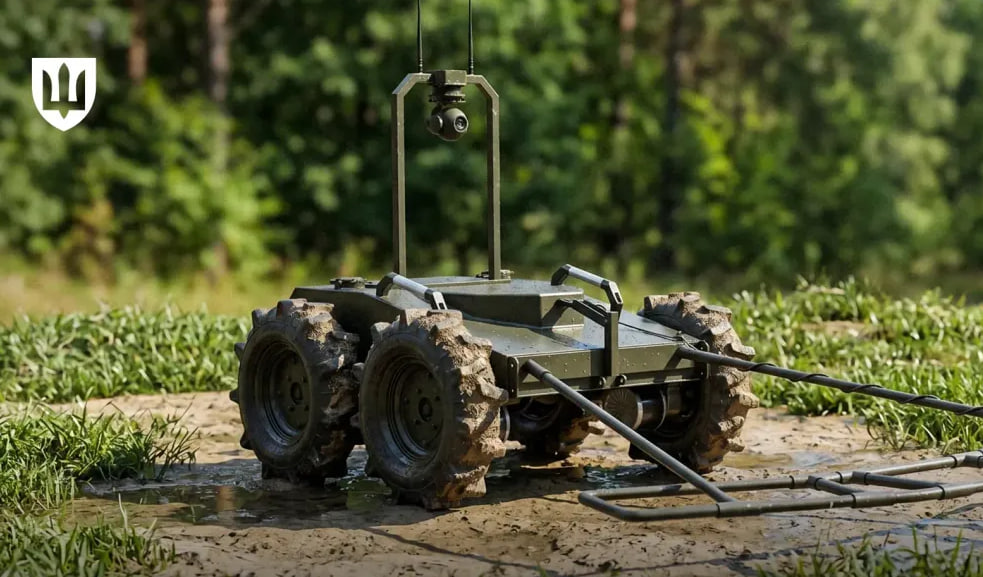
Ukraine's Defense Ministry codified the domestic NEO-1 sapper robot for military use, the ministry announces. It is a 60-kilogram modular ground platform capable of remote demining, 70-kg cargo transport, and towing carts of up to 120 kg.
The codification sits within an aggressive Ukrainian ground-robot procurement scale-up: the Defense Procurement Agency plans to contract more than 25,000 ground robotic complexes in the first half of 2026, which is twice the volume of all of 2025.
NEO-1's primary purpose is remote demining to minimize risks for Ukrainian sappers and other military personnel operating in areas contaminated with Russian mines and unexploded ordnance.
Ukraine has identified approximately 460,000 hectares of Ukrainian territory requiring clearance. The NEO-1 codification fits Ukraine's stated strategic goal of maximally transitioning frontline logistics, engineering, and other personnel-exposed tasks to unmanned platforms.
Remote demining as primary mission
NEO-1 was developed by a Ukrainian manufacturer based on the operational experience and stated needs of Ukrainian military units on the frontline.
The platform's primary mission is to remotely drag detection equipment across mine-contaminated terrain, allowing sappers to clear areas without physically entering them.
The same chassis can be reconfigured for logistical roles: carrying up to 70 kilograms of cargo across rough terrain, or towing a separate cart loaded up to 120 kilograms.
This dual-use profile means a single NEO-1 platform can rotate between engineering tasks (demining, EOD support) and logistics tasks (resupply, casualty evacuation prep) as needed.
Multi-channel metal detector finds low-metal mines and filters out small-debris false signals
For demining, NEO-1 is equipped with a multi-channel metal detector that can identify both large explosive devices and mines with minimal metal content.
The system also incorporates filtering algorithms that suppress signals from small metal debris (shell fragments, wire, casing remnants from artillery), reducing the false-positive rate that consumes operator time during clearance operations in heavily contested terrain.
The robot operates in both automatic and manual modes, with onboard cameras transmitting real-time imagery to the operator throughout the mission.
Compact specifications make NEO-1 deployable by small infantry
The NEO-1 platform weighs approximately 60 kilograms, reaches a top speed of 7 km/h, and operates for up to eight hours without recharging. The standard control range is 500 meters, which can be extended to 3 kilometers when operationally required. The compact weight and modular construction allow NEO-1 to be deployed by a small infantry team without specialized launching equipment, distinguishing it from heavier ground robotic systems that require dedicated transport vehicles or fixed launching infrastructure.
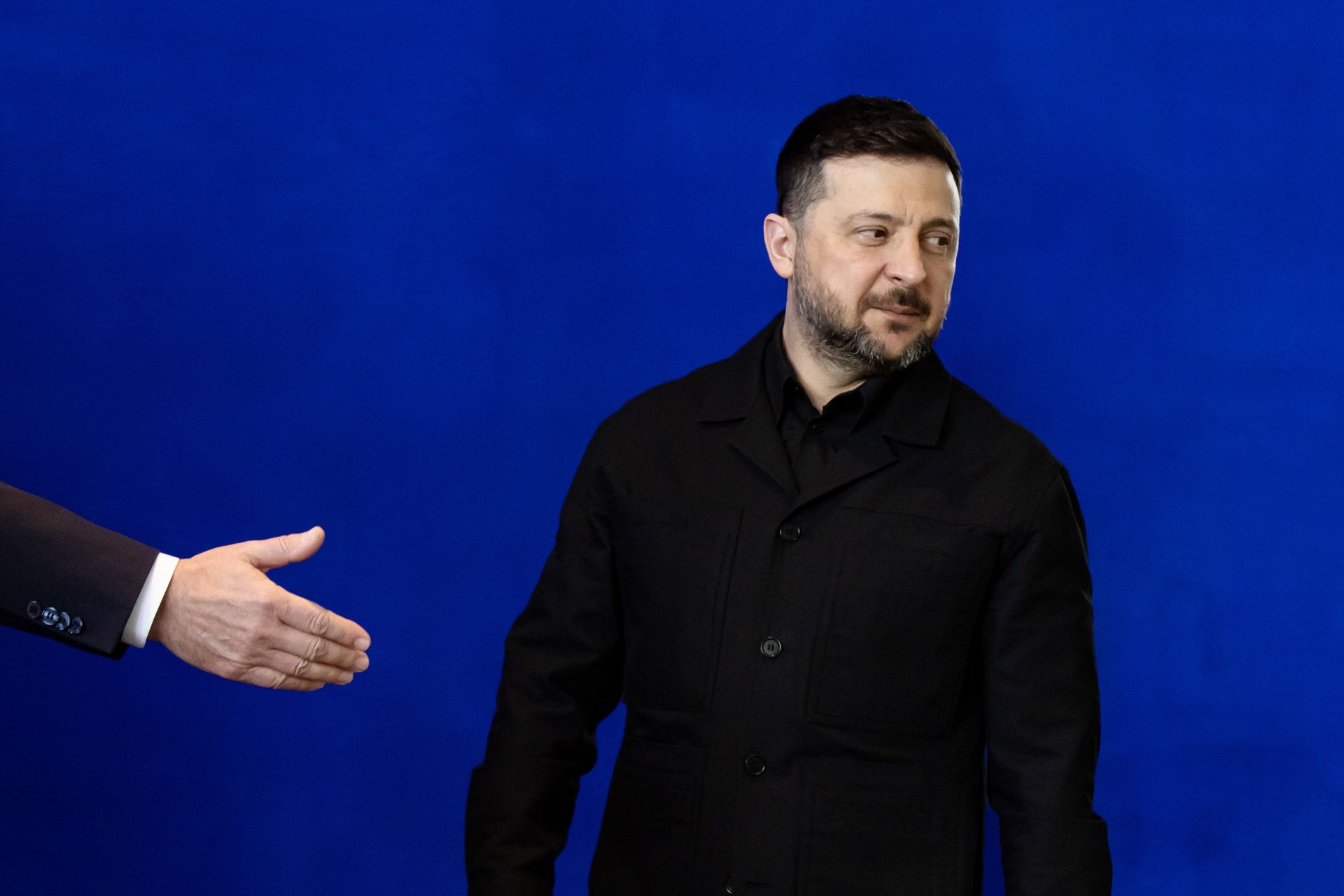
Volodymyr Zelensky made a rare misstep when German Chancellor Friedrich Merz proposed associate EU membership for Ukraine, offering institutional access, participation in Council meetings, gradual budget integration, and critically, Article 42(7) security guarantees.
Zelensky rejected it, insisting Ukraine deserves full and equal membership. In principle, most Europeans would agree.
What’s the latest brick in Russia’s effort to build its Great Internet Firewall? A proposal to create a government-run Virtual Private Network, co-opting a tool that has been widely embraced by Russians trying to avoid government censorship. Industry insiders are reportedly unimpressed.
People have absorbed violence and terror into their lives. Somehow, they keep going – quietly rescuing, evacuating, replacing, mending, adapting … and sometimes saving tiny animals
It was a glorious balmy night, and I was walking home from dinner. I’d just eaten fried red mullet from the Black Sea on a pavement terrace, listening to the cries of the last swifts as darkness crept over the city. A couple of blocks from where I was staying, there was a curious sight: a couple and their dog were standing over a hedgehog, which was standing seemingly irresolute in the road. I wasn’t sure the couple were doing the right thing by shining their phone torches at the poor creature, but their intentions were clear enough: they were trying to protect it and chivvy it out of the way of the traffic. As a car bore down, I flung myself into the street, like a latter-day Roberta from The Railway Children, and waved my arms to get the driver to stop. At the same time, the couple’s dog gave an encouraging bark to the tiny animal, which scuttled across to the opposite pavement, and into the safety of a yard.
Everything always feels heightened in Kyiv, and I was apt to overthink into this moment many metaphors of escape, protection and destruction. Hedgehogs, by the way, are a surprisingly common sight in Kyiv. So too are the “hedgehogs” made from metal beams welded together in a three-dimensional star-shape, a highly effective obstruction for tanks. (The other favoured tank obstructors are known as “dragon’s teeth”, because of their resemblance to monstrous molars rising from the ground.)
Europe deliberately exaggerates the Russian threat to justify military expansion, strengthen new defence alliances, and maintain political unity amid domestic crises. When one is losing a battle, whether on the literal battlefield or in the public eye, it is natural to try until one’s last breath to recover the losses. This is what Europe is […]
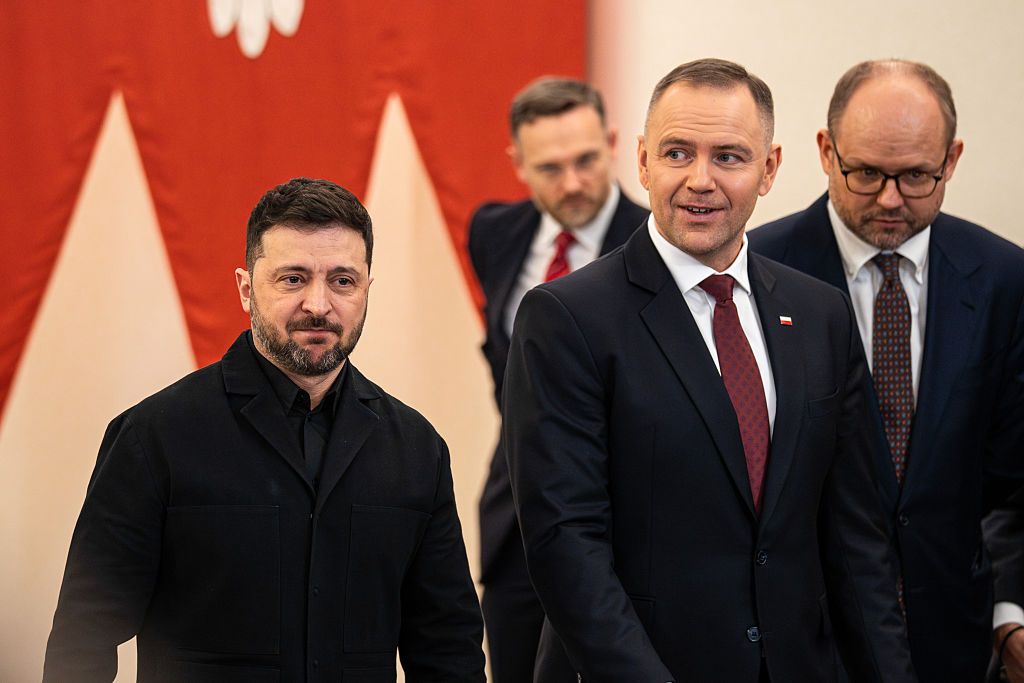
Zelensky gave a Ukrainian military unit a new name. It reopened the most painful chapter in Polish-Ukrainian history, despite Kyiv's assurances that it was not meant to offend its western neighbors.
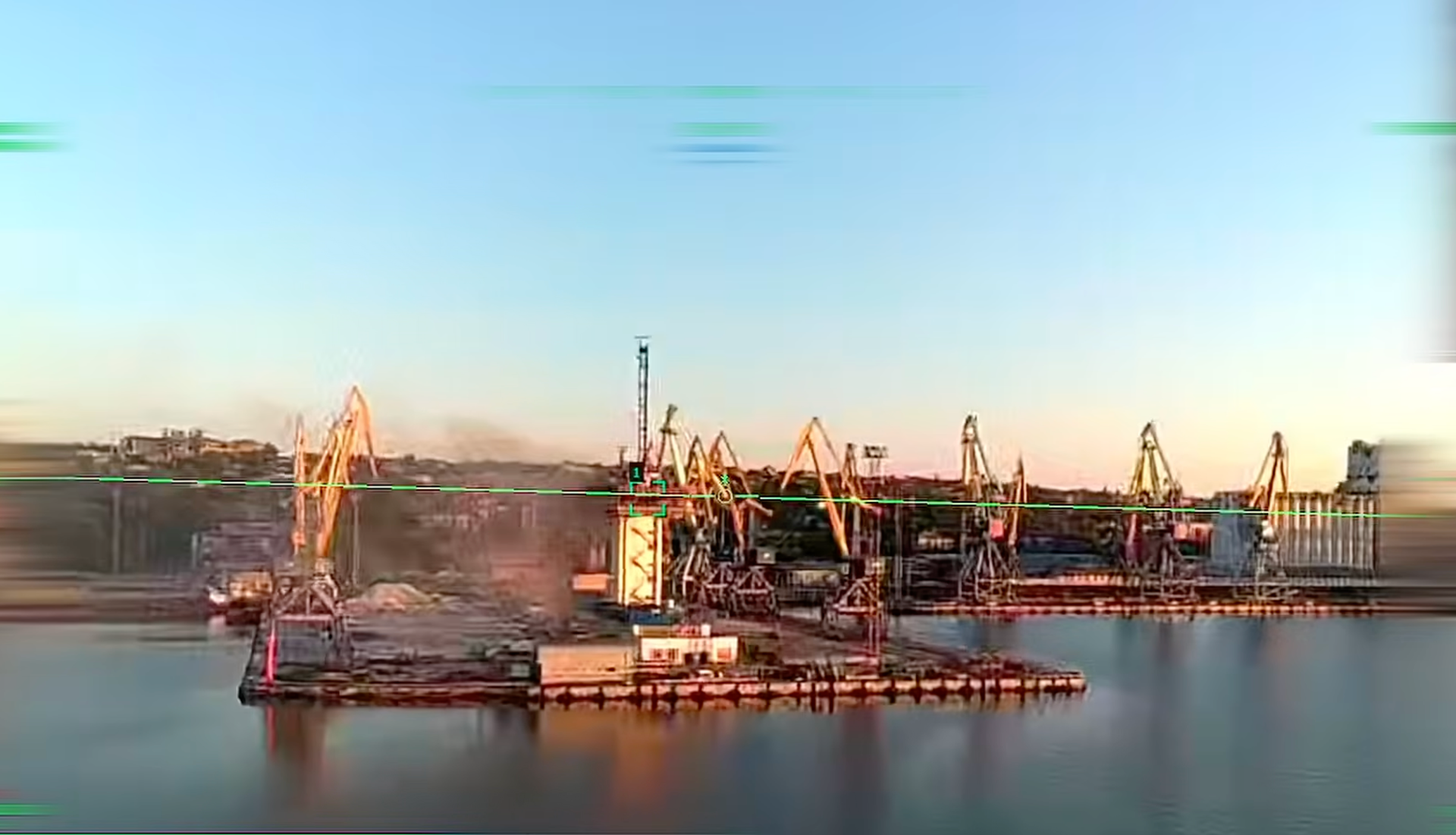
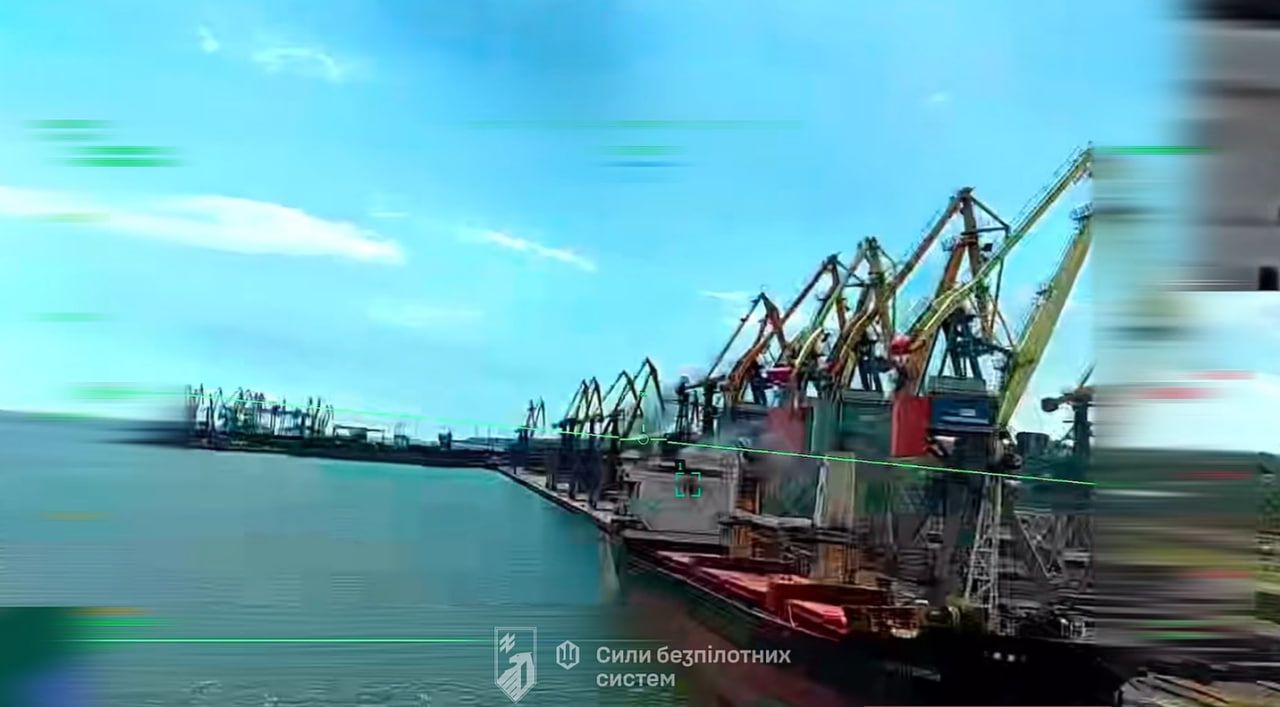
As a result of the attack, the port was left without power, significantly disrupting Russian military logistics in occupied southern Ukraine, the Azov Corps said.
Russia’s flagship international business summit in St Petersburg was targeted with Ukrainian drones that used Estonian territorial waters to evade Russian air defenses. Other Baltic states are also implicated in carrying out the large-scale attack last week.
According to the well-informed Borzikkman channel, scores of kamikaze drones were launched from ships in the Baltic Sea. They flew at low altitude over Estonian territorial waters before striking St Petersburg. The flight path was designed to take Russian defenses by surprise.
Most of the drones were shot down by Russian defenses, but a few managed to hit their targets. The biggest hit was on the St Petersburg oil terminal. That had the desired propaganda effect of creating a pall of black smoke visible to delegates on the opening day, June 3, of the St Petersburg International Economic Forum (SPIEF).
Western media outlets like the BBC were delighted to report on the embarrassing vista in the skies over Russia’s second city and a forum that President Putin would address.
The BBC’s Steve Rosenberg was positively gleeful, writing: “The abiding image of SPIEF 2026 will be the huge plume of thick black smoke which dominated the St Petersburg skyline on Wednesday… All the delegates saw the smoke as they arrived at the expo centre on the edge of the city.”
Drones from ships in the Baltic Sea with flights through Estonian territorial waters means that NATO states were involved in the execution of the air strikes. On the same day, NATO chief Mark Rutte was in Kiev on an unannounced visit to meet the Ukrainian leader, Vladimir Zelensky.
The level of NATO participation in waging war on Russia with its Ukrainian proxy has become absurdly obvious. In recent weeks, hundreds of Ukrainian drones have crashed in Finland, Estonia, Lithuania, Latvia, Poland, and Romania. The Kiev regime has repeatedly apologized to European capitals for the infringements that have resulted in injuries to civilians. Still, the European Union and NATO take no action to sanction or reprimand Kiev. They indulge in the claims that the drones are being redirected by Russian electronic jamming. Swedish Prime Minister Ulf Kristersson has even urged that NATO states should help Ukraine in targeting Russia to avoid “misakes”.
The duplicity is contemptible. Russian military intelligence has pinpointed drone manufacturing sites in the Baltic states and other NATO nations that are participating in Ukrainian attacks.
Dmitry Medvedev, deputy chairman of Russia’s National Security Council, commented: “The Russian Defence Ministry’s statement should be understood extremely literally: the publication of production sites for drones and other military equipment in Europe is a register of potential legitimate targets for the Russian armed forces.”
Evidently, the NATO states are providing targeting data and permitting the use of their territory to maximize the attacks on Russia. Hundreds of Russian civilians have been killed in these NATO-assisted drone operations, the most dreadful being the murder of 21 students at a college dormitory in Starobelsk, Lugansk, on May 22. Last week, on the same day as the drone attack on St Petersburg, eight civilians were killed, and 10 were injured when their bus was blown up in an air strike while traveling through the Donetsk region towards Crimea.
Anger across Russia is growing, analyst Stas Krapivnik told Danny Haiphong’s channel. Russia has retaliated with heavy strikes on military sites and decision-making centers across Ukraine. But, as Krapivnik points out, Moscow is under pressure to take action against NATO culprits from where the Ukrainian offensives are stemming. He says that Russia should do like Iran is doing, hitting back hard where it hurts.
Since the U.S. and Israel launched their aggression against Iran 100 days ago, on February 28, the Iranians have destroyed dozens of American installations across the Persian Gulf and Israeli bases with their formidable arsenal of hypersonic and ballistic missiles, as well as drones.
When Israel violated a shaky truce by bombing Beirut’s southern district of Dahiyeh at the weekend, Iran struck back immediately, as it had warned it would do, to hit airbases in Israel and a U.S. base in Saudi Arabia.
Iran’s defiance has put manners on Washington. Israel is a slow learner, but it will come round to realizing that Iran is not going to take any aggression lying down. It’s hitting back hard and fast in the places that hurt. The days of U.S. and Israeli aggression with impunity are over.
The other thing is that Tehran has called Trump’s bluff about his “madman threats” to escalate the war and obliterate Iran. The Iranians have demonstrated to Washington and the Israelis that the aggressors have much more to lose if they persist in their belligerence.
Russia might want to take note, as Krapivnik, Borzikkman, Sergey Karaganov, and other analysts have advised. The EU and NATO are acting with impunity and a delusional sense that they can escalate attacks on Russia, killing civilians and damaging Russia’s economy, all because of some cynical charade that Ukraine is alone in carrying out the attacks.
Of course, the risk is that if Russian hypersonics were to take out a NATO drone-launching ship in the Baltic Sea, then that would trigger the U.S.-led military alliance’s joint defense commitments. In that case, we are potentially in a situation of World War Three.
But hold on a moment. Are we not already in that situation, given that, despite the charade, NATO states are directly involved in attacking Russia, its capital, Moscow, and St Petersburg, and killing hundreds of civilians?
The NATO and EU leaders are so imbued with Russophobia and arrogance that they are beyond rational thinking. The only language they understand is direct threat and force. Unless they pay a price, the deranged Russophobic leaders will keep escalating as they are doing.
Iran has shown a viable self-defense policy. The enemy is hit hard for daring to aggress against the Iranian people.
A kick in the Baltics might be what it takes to concentrate Russophobic minds. Before it’s too late.

 Login
Login