US lawmakers are alarmed that Bill Pulte, a housing official with no intelligence experience, is poised to take charge of one of the government's most powerful surveillance tools.
An attempt to negotiate a three-week extension on the nation’s warrantless spy powers is already facing objections from Democrats. Efforts to fast-track an extension of Section 702 of the Foreign Intelligence Surveillance Act (FISA) until July 2 were largely rejected by Democrats unless President Trump rescinds the appointment of Bill Pulte as acting Director of…
An attempt to negotiate a three-week extension on the nation’s warrantless spy powers is already facing objections from Democrats. Efforts to fast-track an extension of Section 702 of the Foreign Intelligence Surveillance Act (FISA) until July 2 were largely rejected by Democrats unless President Trump rescinds the appointment of Bill Pulte as acting Director of…
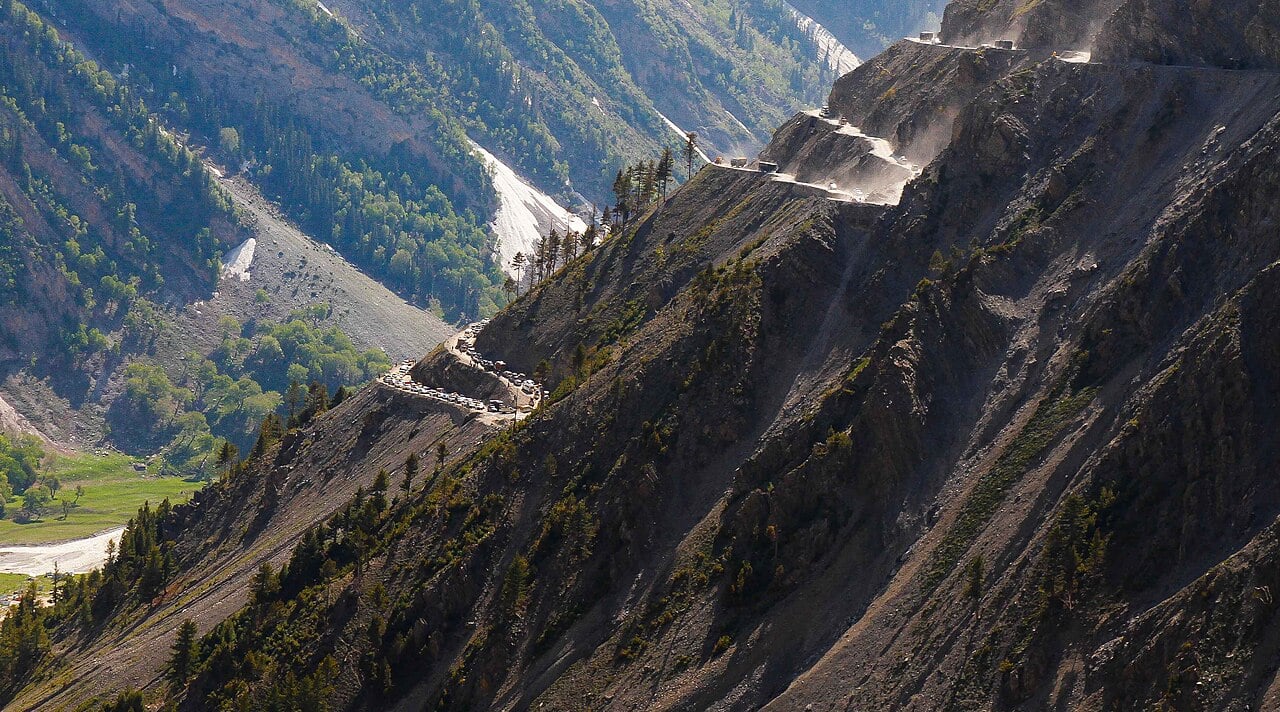
On Tuesday, engineers working inside a Himalayan mountain completed the final blast of a critical tunnel that links India’s Kashmir Valley to its Ladakh frontier with China, marking a key step in the country’s push to secure year-round access to one of its most sensitive border areas.
The Zojila Tunnel, stretching 13.14 kilometers (8.2 miles) beneath the mountains, will become India’s longest road tunnel once finishing work is done, with full operation expected by 2028.
Road Minister Nitin Gadkari remotely triggered the last detonation at the eastern portal near Minimarg in Ladakh, joining excavations driven from both ends of the mountain over more than five years.
Gadkari described the project as far more than a transport link, saying it serves as a vital lifeline for communities cut off by winter weather.
Project engineer Manmohan Singh said the team completed the job without a single accident despite working through extreme cold and difficult conditions around the clock.
Himalayan tunnel gives India year-round access near China
The Zojila Pass, which the tunnel cuts beneath at an elevation of 11,578 feet, currently shuts down every winter under heavy snowfall that can pile well above the roof of a large truck, blocking road travel between Srinagar and Leh for months. More than 3,000 workers have been involved in excavation since October 2020.
In Photos | Zojila Tunnel Poised for Historic Breakthrough
Security personnel stand guard outside the Zojila Tunnel in Minamarg ahead of the landmark breakthrough ceremony of the ₹6,500-crore project. Set to provide all-weather connectivity between Kashmir and Ladakh, the… pic.twitter.com/PkM4tqDIC3
— Kashmir Observer® (@kashmirobserver) June 9, 2026
This tunnel is one of four major passages in a $712 million road corridor that also includes the 6.5-kilometer (4 miles) Sonamarg tunnel, with all components targeted for full operation by 2028.
Beyond road access, India launched a $3.9 billion railway from its lowland plains to Kashmir in June 2025, as reported by Al Jazeera, featuring the Chenab Rail Bridge, currently the world’s tallest railway bridge.
The 272-kilometer (169 miles) line starts at Udhampur, the base of the Indian Army’s northern command.
Billions in rail and roads back India’s border push
The push behind all these projects traces to a deadly confrontation in Galwan Valley in June 2020, when Indian and Chinese soldiers fought hand-to-hand at high altitude, killing 20 Indian troops.
The clash set off an accelerated construction race on both sides of the 3,500-kilometer (2,175 miles) shared border.
The Himalayan tunnel is central to India’s effort to close the infrastructure gap with China, where both countries completed troop disengagement at contested frontier points in October 2024, as reported by The Diplomat.
Kashmir has been split between India and Pakistan since the end of British rule in August 1947, with both countries claiming it in full.
A key foreign intelligence authority is set to expire this Friday unless it is renewed by Congress. The nomination of Federal Housing Finance Agency (FHFA) director Bill Pulte to serve as the nation’s next top intelligence officer has placed the renewal of Section 702 of the Foreign Intelligence Surveillance Act (FISA) in peril. Senate Democrats…
A key foreign intelligence authority is set to expire this Friday unless it is renewed by Congress. The nomination of Federal Housing Finance Agency (FHFA) director Bill Pulte to serve as the nation’s next top intelligence officer has placed the renewal of Section 702 of the Foreign Intelligence Surveillance Act (FISA) in peril. Senate Democrats…
Rep. Jason Smith (R-Mo.) said Wednesday that Congress has to act on Social Security, a day after the Trump administration projected that one of the program’s trust funds will run out by 2032. “Congress needs to get their act together to address Social Security and the insolvency that’s coming, instead of poking blame at other…
Rep. Jason Smith (R-Mo.) said Wednesday that Congress has to act on Social Security, a day after the Trump administration projected that one of the program’s trust funds will run out by 2032. “Congress needs to get their act together to address Social Security and the insolvency that’s coming, instead of poking blame at other…
The U.S. failed to "take Vienna" in the Iran conflict, resulting in an undeterred and belligerent Iran that has been awarded a vote in deciding the control of the most strategically important commercial chokepoint in the world.
The U.S. failed to "take Vienna" in the Iran conflict, resulting in an undeterred and belligerent Iran that has been awarded a vote in deciding the control of the most strategically important commercial chokepoint in the world.
The ACLU is suing two Florida police departments over the arrest of a Fort Myers man in a child-abduction case, saying officers treated a flawed face-recognition match as a near-certain ID.
The recent developments in the Middle East indicate that the dynamics of the regional conflict are entering a new phase. Although the ceasefire reached in recent months has reduced the intensity of direct confrontations, recent events demonstrate that the structural factors fueling the war remain in place. The exchange of attacks between Iran and Israel reveals not only the fragility of existing agreements but also an important shift in Tehran’s strategic posture.
For years, Iranian military policy was characterized primarily by responses to actions it considered hostile. Since 2024, every case of direct confrontation between Iran and Israel occurred with an Iranian response to a previous Israeli attack. However, the events of the past weekend suggest a significant change in this behavior. By launching an offensive against Israeli targets following military operations conducted in Lebanon, Iran demonstrated a willingness to act before additional threats materialize, presenting its actions as part of the right to collective self-defense, expressed through the protection of regional partners.
The Iranian justification is based on the interpretation that Israeli attacks on Lebanese territory constitute violations of previously established understandings. According to this view, the continuation of military operations in urban areas and the expansion of actions against different regions of Lebanon create a scenario that legitimizes a proportional response. In addition, Tehran also links its reaction to incidents involving what it describes as American piracy on strategic maritime routes.
The most significant aspect of this escalation lies not merely in the launching of missiles or drones, but in the political message it conveys. Iran appears to be signaling that it no longer intends to limit its actions to the direct defense of its own territory. Instead, it is showing a willingness to respond to military operations targeting actors considered part of its regional alliance network. This represents a shift with the potential to profoundly alter the strategic calculations of all parties involved.
At the same time, the international response highlights the difficulties faced by powers attempting to manage the crisis. Fears of an uncontrolled expansion of the conflict come at a particularly sensitive moment for the global economy. Military tensions in one of the world’s most important regions for energy production and transportation tend to generate immediate impacts on financial markets, logistics chains, and investor expectations.
Israel’s response to the Iranian attacks, followed by further military actions by Tehran and the involvement of regional allies, demonstrates that the cycle of retaliation remains active. The involvement of Yemen, which has moved to restrict access to the Red Sea for vessels linked to Israel, adds an additional factor of insecurity for the Zionist regime, creating a supporting front for Iran.
In light of this scenario, it becomes evident that the current ceasefire has significant limitations. Although it has temporarily reduced the level of violence, it has not resolved the principal elements sustaining regional rivalry. Issues related to the American military presence and Israeli territorial expansionism remain unresolved, prolonging the atmosphere of tension.
However, perhaps the main consequence of recent events is the emergence of a new strategic precedent. By demonstrating a willingness to respond to actions carried out against third parties, Iran is establishing a broader deterrence logic than previously observed. This means that future military operations conducted by Israel or the United States against Tehran’s partners could trigger direct responses, even when Iranian territory itself is not the immediate target.
Just as Iran is now responding to Israeli attacks against Lebanon, in the future such retaliatory measures could be launched to punish Tel Aviv for its actions in Gaza, Iraq, Yemen, and other countries in the region. In practical terms, this means that the regional balance of power has changed substantially: Iran is now making it clear to Israel that its actions will not go unanswered.
Russia’s flagship international business summit in St Petersburg was targeted with Ukrainian drones that used Estonian territorial waters to evade Russian air defenses. Other Baltic states are also implicated in carrying out the large-scale attack last week.
According to the well-informed Borzikkman channel, scores of kamikaze drones were launched from ships in the Baltic Sea. They flew at low altitude over Estonian territorial waters before striking St Petersburg. The flight path was designed to take Russian defenses by surprise.
Most of the drones were shot down by Russian defenses, but a few managed to hit their targets. The biggest hit was on the St Petersburg oil terminal. That had the desired propaganda effect of creating a pall of black smoke visible to delegates on the opening day, June 3, of the St Petersburg International Economic Forum (SPIEF).
Western media outlets like the BBC were delighted to report on the embarrassing vista in the skies over Russia’s second city and a forum that President Putin would address.
The BBC’s Steve Rosenberg was positively gleeful, writing: “The abiding image of SPIEF 2026 will be the huge plume of thick black smoke which dominated the St Petersburg skyline on Wednesday… All the delegates saw the smoke as they arrived at the expo centre on the edge of the city.”
Drones from ships in the Baltic Sea with flights through Estonian territorial waters means that NATO states were involved in the execution of the air strikes. On the same day, NATO chief Mark Rutte was in Kiev on an unannounced visit to meet the Ukrainian leader, Vladimir Zelensky.
The level of NATO participation in waging war on Russia with its Ukrainian proxy has become absurdly obvious. In recent weeks, hundreds of Ukrainian drones have crashed in Finland, Estonia, Lithuania, Latvia, Poland, and Romania. The Kiev regime has repeatedly apologized to European capitals for the infringements that have resulted in injuries to civilians. Still, the European Union and NATO take no action to sanction or reprimand Kiev. They indulge in the claims that the drones are being redirected by Russian electronic jamming. Swedish Prime Minister Ulf Kristersson has even urged that NATO states should help Ukraine in targeting Russia to avoid “misakes”.
The duplicity is contemptible. Russian military intelligence has pinpointed drone manufacturing sites in the Baltic states and other NATO nations that are participating in Ukrainian attacks.
Dmitry Medvedev, deputy chairman of Russia’s National Security Council, commented: “The Russian Defence Ministry’s statement should be understood extremely literally: the publication of production sites for drones and other military equipment in Europe is a register of potential legitimate targets for the Russian armed forces.”
Evidently, the NATO states are providing targeting data and permitting the use of their territory to maximize the attacks on Russia. Hundreds of Russian civilians have been killed in these NATO-assisted drone operations, the most dreadful being the murder of 21 students at a college dormitory in Starobelsk, Lugansk, on May 22. Last week, on the same day as the drone attack on St Petersburg, eight civilians were killed, and 10 were injured when their bus was blown up in an air strike while traveling through the Donetsk region towards Crimea.
Anger across Russia is growing, analyst Stas Krapivnik told Danny Haiphong’s channel. Russia has retaliated with heavy strikes on military sites and decision-making centers across Ukraine. But, as Krapivnik points out, Moscow is under pressure to take action against NATO culprits from where the Ukrainian offensives are stemming. He says that Russia should do like Iran is doing, hitting back hard where it hurts.
Since the U.S. and Israel launched their aggression against Iran 100 days ago, on February 28, the Iranians have destroyed dozens of American installations across the Persian Gulf and Israeli bases with their formidable arsenal of hypersonic and ballistic missiles, as well as drones.
When Israel violated a shaky truce by bombing Beirut’s southern district of Dahiyeh at the weekend, Iran struck back immediately, as it had warned it would do, to hit airbases in Israel and a U.S. base in Saudi Arabia.
Iran’s defiance has put manners on Washington. Israel is a slow learner, but it will come round to realizing that Iran is not going to take any aggression lying down. It’s hitting back hard and fast in the places that hurt. The days of U.S. and Israeli aggression with impunity are over.
The other thing is that Tehran has called Trump’s bluff about his “madman threats” to escalate the war and obliterate Iran. The Iranians have demonstrated to Washington and the Israelis that the aggressors have much more to lose if they persist in their belligerence.
Russia might want to take note, as Krapivnik, Borzikkman, Sergey Karaganov, and other analysts have advised. The EU and NATO are acting with impunity and a delusional sense that they can escalate attacks on Russia, killing civilians and damaging Russia’s economy, all because of some cynical charade that Ukraine is alone in carrying out the attacks.
Of course, the risk is that if Russian hypersonics were to take out a NATO drone-launching ship in the Baltic Sea, then that would trigger the U.S.-led military alliance’s joint defense commitments. In that case, we are potentially in a situation of World War Three.
But hold on a moment. Are we not already in that situation, given that, despite the charade, NATO states are directly involved in attacking Russia, its capital, Moscow, and St Petersburg, and killing hundreds of civilians?
The NATO and EU leaders are so imbued with Russophobia and arrogance that they are beyond rational thinking. The only language they understand is direct threat and force. Unless they pay a price, the deranged Russophobic leaders will keep escalating as they are doing.
Iran has shown a viable self-defense policy. The enemy is hit hard for daring to aggress against the Iranian people.
A kick in the Baltics might be what it takes to concentrate Russophobic minds. Before it’s too late.
Lawmakers warn appointment of presidential loyalist will scuttle bipartisan agreement to renew Fisa surveillance law
Donald Trump stood firm on his decision to install the controversial loyalist Bill Pulte as the country’s top intelligence official, demanding Congress pass a short-term extension of a surveillance law set to expire amid intense criticism of the appointment.
Pulte has been asked “to execute the immediate and needed downsizing” of the office of the director of national intelligence, the US president declared on Wednesday, after lining him up to serve as acting director on a temporary basis.
From anti-drone tech to face recognition, 2026 World Cup stadiums in the US, Canada, and Mexico are subjecting fans to an array of surveillance tech. Here’s what you need to know.
Most US World Cup stadiums are surrounded by surveillance cameras. Want to know if you’re being watched on your way to a match? These maps will help you.
 Login
Login