Normal view

U.K.’s Crime and Policing Bill 2025 Reignites Facial Recognition Controversy

10 April 2025 at 23:19
by Laura Harris | Natural News The United Kingdom’s Crime and Policing Bill 2025, now at the Committee stage, grants police access to over 50 million driver’s license photos for facial recognition searches. The bill revives a dropped Conservative plan, with Labour justifying it as necessary to combat crime, terrorism and violence against women. Big Brother Watch warns that the bill enables mass biometric surveillance, risking misidentification and unjust tracking of innocent citizens. Russia plans a 2025 rollout of facial recognition payments via 2 million terminals, linked to its state biometric database (UBS). Both systems face criticism for enabling government […]

Russia Bets On Education To Sustain Influence In Central Asia

2 June 2026 at 15:52
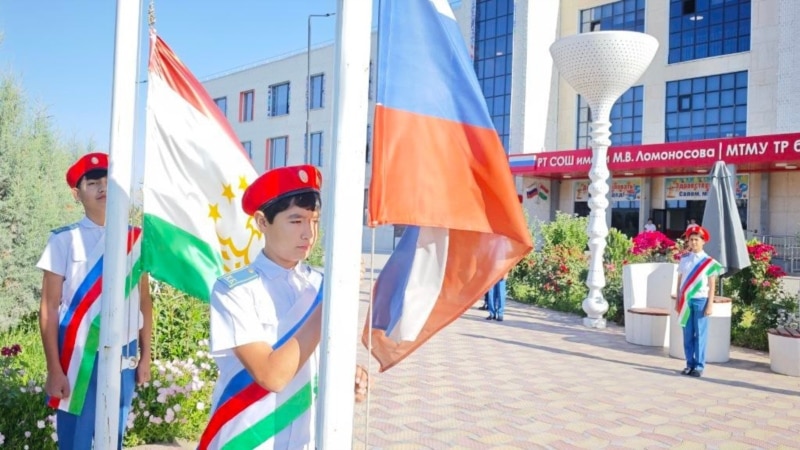
Russia is investing hundreds of millions of dollars to build schools and universities across Central Asia, reinforcing the use of the Russian language at a time when younger generations in the region are increasingly exposed to Western and Chinese influences.

Kremlin critic says Ukraine war ‘backfiring’ on Putin as discontent grows

29 May 2026 at 18:54
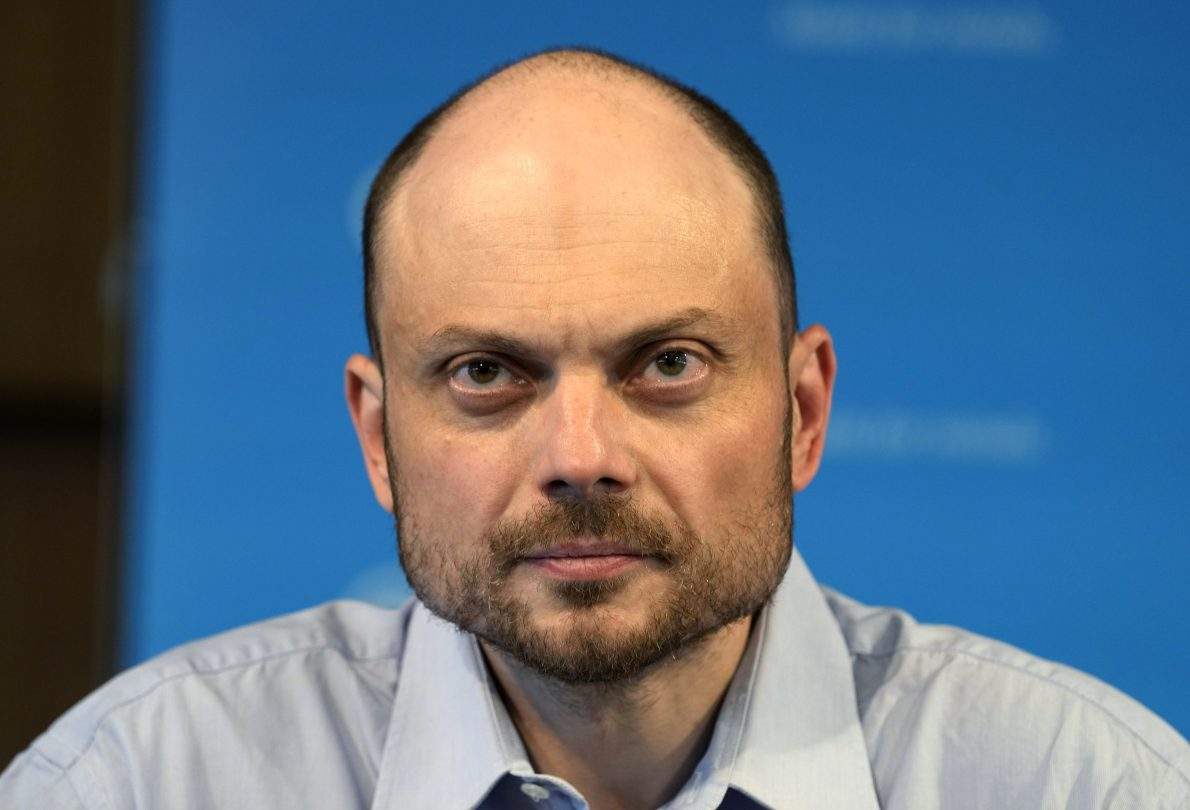
Vladimir Kara-Murza told Global News that mounting military and economic failures have stripped away Putin's strongman image and exposed him as 'increasingly weak.'

Kremlin critic says Ukraine war ‘backfiring’ on Putin as discontent grows

29 May 2026 at 18:54
Vladimir Kara-Murza told Global News that mounting military and economic failures have stripped away Putin's strongman image and exposed him as 'increasingly weak.'

Putin in China : Diplomatic Choreography in Response to Trump

19 May 2026 at 16:55
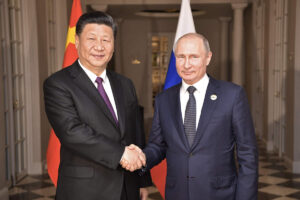
Xi Jiping et Vladimir Poutine en 2018 (Kremlin.ru, CC BY 4.0 , via Wikimedia Commons) Xi Jiping et Vladimir Poutine en 2018 (Kremlin.ru, CC BY 4.0 , via Wikimedia Commons)

Xi Jiping et Vladimir Poutine en 2018 (Kremlin.ru, CC BY 4.0 , via Wikimedia Commons), via Wikimedia Commons) Xi Jiping et Vladimir Poutine en 2018 (Kremlin.ru, CC BY 4.0

One week after Donald Trump, Vladimir Putin is traveling to China for a 48-hour official visit aimed at strengthening the comprehensive partnership and strategic cooperation between Russia and China.

A Diplomatic Trip Rich in Geopolitical Symbolism

Putin’s visit to China, expected on Tuesday, May 19, is part of a carefully planned diplomatic strategy. The timing is no coincidence: it coincides with the 25th anniversary of the signing of the Treaty of Good-Neighborliness and Friendly Cooperation, a landmark agreement signed by the two countries in 2001.

This treaty holds major significance in Sino-Russian relations, as it marked the end of decades of mutual mistrust, border disputes, and geopolitical rivalries that characterized the Soviet era.

The timing of the visit is particularly revealing of current international dynamics. By arriving in China one week after Trump’s departure from Beijing, Putin creates a symbolic succession that deserves close analysis. This diplomatic “passing of the baton” among the world’s three major powers offers a valuable lens through which to observe today’s balance of power and each country’s positioning strategy.

Strengthening the Comprehensive Strategic Partnership Amid Global Turbulence

The official purpose of the visit is clear: to reinforce the comprehensive partnership and strategic cooperation between Russia and China.

Beyond formal statements, however, the trip carries deeper significance for both governments. Moscow is seeking to consolidate its ties with Beijing at a time when the international environment has become highly volatile.

Dmitry Peskov, spokesperson for the Russian presidency, said on Friday that the trip would be “a good opportunity to exchange views on the contacts the Chinese have had with the Americans.”

This statement clearly shows that trilateral diplomacy lies at the heart of the visit. Russia wants to understand how China is negotiating with the United States and ensure that Russian interests are not sidelined in Sino-American discussions.

An “Eternal Friendship” Tested by Geopolitical Realities

The concept of an “eternal friendship” between Russia and China, frequently reaffirmed by both powers, is a central element of their diplomatic rhetoric.

However, this visit demonstrates that both countries are actively seeking to prove the strength of their ties in the face of current global upheavals. The phrase itself is revealing: it implicitly acknowledges that the international order is going through a period of major instability.

For Xi Jinping, the meeting with Putin offers a valuable opportunity to present himself as a world leader committed to geopolitical balance and harmony.

By hosting Trump and Putin in succession, the Chinese leader positions himself as a potential mediator in global conflicts and as a guardian of international stability. This posture significantly enhances China’s prestige and influence on the world stage.

The Dynamics of a Three-Way Geopolitical Rivalry

The triangular relationship among the United States, Russia, and China now shapes global geopolitics as a whole.

Every bilateral meeting between two of these powers is closely watched by the third as an indicator of emerging alliances and growing fractures. Putin’s trip to China must therefore be understood within this three-dimensional strategic framework.

Russia, while a major regional power, remains economically secondary compared with China. As a result, Moscow must continually reaffirm the importance of its partnership with Beijing.

This relative asymmetry helps explain why Russia places such importance on diplomatic rituals and public displays of strategic friendship. Maintaining strong ties despite structural imbalances is essential to preserving international equilibrium.

Toward a New Global Geopolitical Architecture

This visit takes place during a period of profound transformation in the international order.

China’s rise, Russia’s return as a disruptive power, and shifts in American foreign policy have created an environment in which old certainties no longer apply.

Diplomatic exchanges between Beijing and Moscow are therefore strategically crucial to maintaining stability in international relations.

The strengthening of the Sino-Russian partnership is not necessarily intended to form an alliance against the United States. Rather, it aims to establish a balance of power capable of withstanding external pressures and attempts at hegemony.

In this context, strategic cooperation between Russia and China has become an essential stabilizing factor in contemporary global geopolitics.

🚨Putin has arrived in Beijing and received the same “warm welcome” package as Trump: a red carpet, the PLA Tri-Service Honor Guard, and the jumping children…

Xi Jinping can be heard saying “hello” (“你好,” nǐ hǎo) to Putin.

Will Putin be able to achieve his 4 goals mentioned… https://t.co/OxMXG3l3Uq pic.twitter.com/TUENKMajcy

— Inconvenient Truths — Jennifer Zeng Reports (@jenniferzeng97) May 19, 2026


L’article Putin in China : Diplomatic Choreography in Response to Trump est apparu en premier sur FrenchDailyNews.

Putin has the last laugh

5 March 2026 at 22:06
Methanier_aspher_(photo d'illustration Pline, CC BY-SA 3.0 via Wikimedia Commons)

Methanier_aspher_(photo d'illustration Pline, CC BY-SA 3.0 via Wikimedia Commons)

Just as the European Commission was polishing up its new plan to ban all supplies of Russian gas disaster struck and at the worst possible moment.

Robert Harneis (DR)
Robert Harneis (DR)

By Robert Harneis

The Ban was announced to take effect in stages up to November 1st 2027. After that no more Russian gas and then as a result of the US Israeli attack on Iran, Teheran closed the straits of Hormuz and Qatar declared ‘force majeure and its inability to fulfill gas contracts. One fifth of global LNG gas passes through the straits. This comes as France and Germany have critically low levels of gas in storage – 21% and 20% respectively.

Record imports

Europe imported a record 142 billion cubic meters of LNG in 2025, a 28% increase from the previous year. US supplied 55% of Europe’s LNG imports last month, while Russia contributed just over 25%, In January, the EU’s monthly LNG imports from Russia hit a record high of 2.3bcm, up more than 10% y/y and nearly a fifth of all LNG imports.
President Putin chose this moment to observe that maybe it would be better if Russia stopped supplies to Europe immediately and got on with finding other more reliable trading partners as soon as possible.

New markets for Russia

““Other markets are opening now,” Putin said in an interview with state TV. “Maybe it’s better for us to end supplies to the European market right now? To go to those markets that are opening now and get a foothold there.”
At least half of Russia’s LNG exports already go to Europe but now without the Qatari supplies, the demand in Asia will spike and, Russia should be able to redirect all those exports to markets in Asia without difficulty.
Putin met Hungarian foreign minister Peter Szijjarto at the Kremlin on March 5 and said that Moscow intends to maintain supplies to what he described as reliable partners within Europe. Russia “remains ready to deliver energy resources to those who want to work with us,” he said, referring to Hungary and Slovakia as continuing customers.

To the highest bidder

He twisted the knife further reminding Brussels “there are customers who are ready to buy this natural gas at a higher price. In this case, this results from the developments in the Middle East and the closing of the Strait of Hormuz, and so on. Once you have these premium buyers on the market, this means, and I really believe that this is the case, that some suppliers who have been serving the European market for quite some time now, for example, the United States and US companies, will definitely switch to the highest bidder. This is quite natural.” He said.

Dictature du réel, les livraisons de gaz liquéfié russe vers la France ont augmenté de 41 % en 2023. Avec le retrait du gaz nord américain, la Russie pourrait devenir le premier exportateur de GLN vers la France. C’est aussi bien que par #nordstream2 mais c’est quatre fois plus… pic.twitter.com/G9Mla5LKYy

— Stratpol (@stratpol_site) February 11, 2024


Methanier_aspher_(photo d'illustration Pline, CC BY-SA 3.0 via Wikimedia Commons)
Methanier_aspher_(photo d’illustration Pline, CC BY-SA 3.0 via Wikimedia Commons)

L’article Putin has the last laugh est apparu en premier sur FrenchDailyNews.

An Anglo-French plot to arm Ukraine with a nuclear weapon?

26 February 2026 at 05:00
War in Ukraine (Unlimphotos)

War in Ukraine (Unlimphotos)

The United Kingdom government has denied Moscow’s claim that the UK and France have been secretly working on providing Ukraine with a nuclear weapon. The French government has issued a denial through its Moscow Embassy.

Robert Harneis (DR)
Robert Harneis (DR)

By Robert Harneis

Russia’s foreign intelligence service, SVR, has publicly claimed that the UK and France are “actively working” on providing Ukraine with a nuclear weapon, or a radioactive makeshift “dirty bomb”. The claim has been referred to by President Putin and his spokesman Dimitry Peskov.
The UK Prime Minister’s official spokesman claimed in a statement; “This is a clear attempt by Vladimir Putin to distract from his heinous actions in Ukraine… There is no truth to this.”

Illegal transfer of components

The intervention by President Putin indicates that the Russians take the claim seriously. Russia’s Foreign Intelligence Service state that Britain and France are actively working to resolve the issue of providing Ukraine with nuclear weapons and their delivery systems. “This involves the covert transfer of European components, equipment, and technologies in this area. One option being considered is the French TN75 small-size warhead from the M51.1 submarine-launched ballistic missile,” the statement reads.
According to the SVR, British and French elites believe that Kyiv would be able to secure more favorable terms for ending the fighting if it possessed a nuclear bomb or at least a so-called dirty bomb. “The British and French recognize that their plans constitute a gross violation of international law,” the statement continues.

A flagrant violation of international law

If true, this would be a serious breach of the Treaty on the Non-Proliferation of Nuclear Weapons (NPT). London and Paris allegedly risk undermining the global non-proliferation system. “Consequently, Westerners are focusing their efforts on making Kyiv’s acquisition of nuclear weapons appear to be the result of Ukrainian development,” the SVR wrote in their statement.
Putin’s press secretary, Peskov, called information about the possible transfer of a nuclear bomb to Kyiv extremely important and dangerous for the non-proliferation regime. “This is a flagrant violation of all norms and principles, and relevant acts of international law,” he emphasized. Meanwhile, Vladimir Putin’s aide, Yuri Ushakov, told the Vesti news service that Moscow intends to inform Washington of the possible transfer of nuclear weapons to Kyiv from London or Paris.

Clichés

According to the official Russian government news agency Tass, Deputy Speaker Konstantin Kosachev, of the Russia Federation Council, has commented that the statements issued by the French and British embassies denying plans to arm Ukraine with nuclear weapons appear to be nothing more than rehearsed clichés, lacking depth or credibility, according to Federation Council.
Kosachev criticized these responses, stating, ‘The comments from the relevant press services – particularly, in France, not even from the government ministries but solely from the embassy here in Moscow – are simply pre-cooked clichés that add no real value. They deny the findings of the Russian Foreign Intelligence Service.” He further pointed out that these statements fail to confirm that the involved countries are adhering to their obligations under the Treaty on the Non-Proliferation of Nuclear Weapons.

France’s awkward position

Britain has no independent nuclear weapons and depends entirely on US supply and consent for use. France is in a more embarrassing position as it has full control of its nuclear arsenal. The idea that Washington knew nothing about any of this – if it is true – is far-fetched. But it seems at the moment it suits Moscow to appear believe it.

War in Ukraine (Unlimphotos)

L’article An Anglo-French plot to arm Ukraine with a nuclear weapon? est apparu en premier sur FrenchDailyNews.

Ukraine: why is the war lasting so long?

25 February 2026 at 09:17
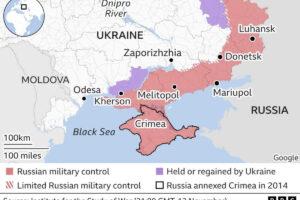
Ukraine, contrôle de l’armée russe (Wikipédia)

Ukraine, contrôle de l’armée russe (Wikipédia)

Between geopolitical calculations, Russian economic resilience, and diverging interests, the conflict is bogged down in a war of attrition that neither side seems willing to end.

Robert Harneis (DR)
Robert Harneis (DR)

By Robert Harneis

The war in Ukraine is entering its fifth year with no negotiated way out in sight for either belligerent. Behind the mud of the trenches and the victory communiqués, a complex machinery — military, economic, diplomatic — has taken hold, keeping the conflict in a precarious equilibrium, so far. An in-depth look.

A long war no one wanted, pursued by everyone

Neither Moscow nor Kyiv anticipated such a prolonged conflict. In 2022, Russia hoped for a lightning victory through decisive strikes on Kyiv, Kharkov, and the corridor leading to Crimea. The West, for its part, was betting on a rapid collapse of the Russian economy under the weight of unprecedented sanctions — the freezing of $300 billion in reserves, exclusion from the SWIFT system, diplomatic isolation. Both sides were disappointed, although Russia did achieve the land corridor to Crimea and the capture of Europe’s biggest nuclear power plant.
Today, the conflict follows a logic of attrition much encouraged by the drone revolution. Russia is waging a slow war, aware that it faces a Ukraine backed by the financial and military arsenal of the United States, NATO, and most Western countries. The model is simple: Ukraine provides the men; the West provides the weapons. Unfortunately Ukraine is running out of men and the West is running out of weapons. Unlike the state owned Russian armaments industry, the Western military industrial complex is focused on profit not mass industrial warfare. The line of conflict in Ukraine is twice the length of the Western Front in the First World War, a situation totally outside modern Western military experience.

Russia: a more resilient economy than expected

One of the great surprises of this conflict has been the resilience of the Russian economy. The West had severely underestimated its degree of self-sufficiency. As a producer of its own energy and food resources, with an industrial base inherited from the Soviet era and relatively insulated from financialization, Russia has managed to adapt.
According to the IMF, measured in purchasing power parity (PPP), the country is now ranked the world’s fourth-largest economy, behind China, the United States, and India. Paradoxically, the sanctions stimulated local production through import substitution and encouraged the repatriation of capital. Russia’s military-industrial complex has demonstrated its capacity to sustain a prolonged war effort, notably through the reactivation of Soviet-era stockpiles and the use of low-cost guided munitions. Western media have regularly predicted Russia suffering economic collapse and running out of weapons.

There are no signs of either happening

By contrast the European Union, especially Germany has suffered severe economic damage, through the loss of a reliable supply of cheap Russian energy. This undoubtedly suits Russia but also the United States. The Eurozone has lost credibility as a result of freezing Russian government funds. Central banks across the world calculate, if they can do it to Russia, they can certainly do it to us.
Some commentators believe Washington deliberately pushed Europe to adopt these extreme sanctions with a view to weakening it as an economic rival. True or not, it is what has happened.

Ukraine: between survival and dependency

Ukraine, contrôle de l’armée russe (Wikipédia)

On the Ukrainian side, internal factors are complicating any prospect of negotiation. The Kyiv government benefits, both legally and illegally, from massive financial flows tied to the war effort. The radical nationalist units that form part of the military apparatus have publicly threatened to turn on Zelensky should he sign a peace deal with Moscow — thereby forcing him to betray his 2019 electoral promise that brought him to power. The Ukrainian people have never voted for a policy of hostility to Russia but it is what they are forced to endure. The idea that Ukrainians are dying heroically to defend democracy is laughable. The extreme nationalist minority is fighting with courage, skill and determination, the rest of the population is being forced to enlist and fight.
The war has many of the characteristics of a civil war. The Ukrainian commander in chief has a brother who is a colonel in the Russian army. Many Russians have relatives living in Ukraine.

A conflict with global geopolitical dimensions

For Moscow, as Foreign Minister Sergei Lavrov has stated, the Ukrainian war is not an isolated territorial conflict but a symptom of a broader struggle: the one waged by Washington to preserve its hegemony in the face of China’s rise and Russia’s renewed military power. In this context, Beijing is quietly backing Moscow — Sino-Russian trade has grown significantly — while Russia simultaneously maintains good relations with New Delhi to avoid exclusive dependence on a single partner.
The accession of Finland and Sweden to NATO represents a strategic setback for Moscow, however, adding some 1,340 kilometers of shared border with the Atlantic Alliance. By contrast, the development of BRICS offers Russia channels to circumvent sanctions, reducing its dependence on the dollar in international trade.

War objectives in flux

On the Russian side, war aims have gradually shifted. From a simple stabilization of the status quo in 2022, Moscow moved to formally annexing four Ukrainian regions, while some internal voices are now calling for even broader territorial conquests. Should the conflict continue without a negotiated solution, Ukraine could lose much more territory. Public opinion in Russia is strongly in favor of occupying Odessa and the Black Sea coast.
There has never been any doubt that the United States and its European allies are backing the war as a way to weaken Russia regardless of the fate of the people of Ukraine. It is more than a remote possibility that the United States would be happy to see Moscow maneuvered into occupying the whole country, resulting in years of economic strain and troublesome political complications. For the EU this would have the advantage of encouraging electoral support for re-armament but it would lead to serious political risks with governments like Hungary, Slovakia and the Czech Republic no longer landlocked and benefiting from a border with Russia. This would give them new geopolitical choices in the face of a European Union determined on using the war to centralize control over member states.

BY THE NUMBERS

• 1.5 million lives lost according to various estimates since the conflict began in 2022
• 4th largest economy in the world — Russia’s ranking according to the IMF in purchasing power parity.

L’article Ukraine: why is the war lasting so long? est apparu en premier sur FrenchDailyNews.

Dynamics of Indonesia’s Strategic Relations with Russia in the Context of Eurasian Development

2 June 2026 at 14:59
Indonesia’s relations with Russia have entered a new phase marked by intensified economic and geopolitical cooperation, particularly in the context of Eurasian regional development. While in the past, the partnership between the two countries was dominated by defence cooperation, contemporary dynamics show a significant shift toward strategic economic integration, underpinned by Indonesia’s membership in BRICS […]

Russia Moves Forward With Single-Engine Su-75 Checkmate Fighter Program

2 June 2026 at 13:50
The construction of the first prototype of Russia's Su-75 Checkmate fifth-generation fighter jet has officially begun, Vadim Badekha, Chief Executive Officer of the United Aircraft Corporation (UAC) said. According to the official, the Checkmate program has already advanced to the prototype assembly stage, marking a significant milestone for one of Russia's most closely watched military aviation projects. "The work on the Checkmate has already reached the stage of building a prototype aircraft," the official  said, TASS reports.

❌