Normal view

Israeli Strikes Kill at Least Three Palestinians in Gaza

11 June 2026 at 18:57
Israeli attacks in Gaza on Thursday killed at least two Palestinians, according to the Palestinian medics speaking to Reuters, as the IDF continues its constant violations of the US-backed ceasefire deal. The Palestinian news agency WAFA reported that one of the strikes targeted a residential building in Gaza City, killing one and wounding several others. […]

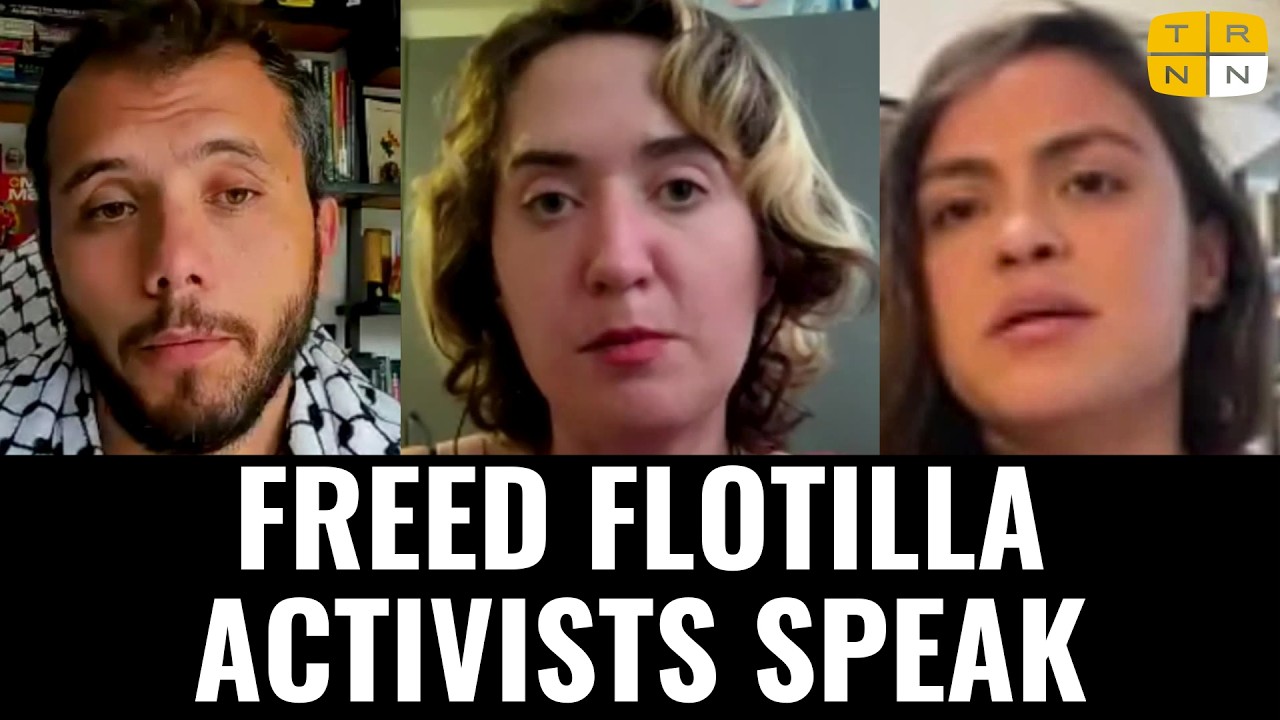
Torture, abuse, sexual violence: Freed Gaza flotilla activists speak

10 June 2026 at 16:13
Screenshot via TRNN

Israeli military forces captured the latest convoy of humanitarian aid ships sailing to Gaza with the Global Sumud Flotilla (GSM) between late April and mid-May. Activists who were imprisoned by Israel for days and eventually deported have reported harrowing treatment by their captors, including targeted torture, abuse, broken bones, unauthorized injections of undisclosed substances, and sexual violence by Israeli soldiers. We speak with a panel of freed GSM participants—Thiago Ávila, Catríona Graham, and Ariadne Teles—about what they saw and endured, and about the successes, defeats, and future of the movement to break Israel’s siege on Gaza.

Guests:

  • Thiago Ávila is a member of the Global Sumud Flotilla Steering Committee who was abducted in international waters by the Israelis in late April off the coast of the Greek Island of Crete. At the time, Ávila was one of two Flotilla participants and leaders forcibly transported to Israel where he was held as a political prisoner for 10 days.
  • Catríona Graham is a member of the Irish delegation who sailed with the most recent voyage of the Global Sumud Flotilla. While being detained by Israel, Graham shouted “Free Palestine” in Itamar Ben-Gvir’s face and was subsequently shoved down to the floor.
  • Ariadne Telles, is a member of the Brazilian delegation who sailed with the most recent voyage of the Global Sumud Flotilla and who also experienced abuse while detained by Israel.

Credits:

  • Producer / Videographer / Editor: David Hebden
Transcript

The following rushed transcript may contain errors. It will be updated as soon as possible.

Maximillian Alvarez:

Welcome back to The Real News Network. I’m Maximillian Alvarez. After 78 years of occupation and ethnic cleansing in historic Palestine and after three years of all out genocide in Gaza, Israel’s government and military continued to display to the world what it looks like when a settler colonial ethnationalist and increasingly and openly fascist regime is openly allowed to rule and operate and slaughter and bomb with geopolitical impunity and without any accountability to international law, reason or human morality. This has been on full display from Israel’s continued ethnic cleansing of Gaza in the occupied West Bank, regardless of the so- called ceasefire that’s supposed to be in effect, to Israel’s aggression and reckless violence in Iran and Lebanon to its illegal abductions and torture of peace activists sailing with the global Samud Flotilla to break the siege of Gaza and bring lifesaving aid to Palestinians. And the latest convoy of the humanitarian age ships was intercepted by Israeli forces in late April and in early May.

And activists sailing with the global Samuel Flotilla were captured in prison for days in Israel and eventually deported. But the testimonies and affidavits coming from flotilla members who have been released are frankly horrific. They describe days of targeted torture, abuse, broken bones, unauthorized injections of undisclosed substances and sexual violence by Israeli soldiers. And these stories along with the viral videos of Israeli national security minister, Itmar Ben Gavier, taunting detained flotilla activists and the videos showing Basque police officers violently beating flotilla activists returning to Spain at Bilbao Airport have rightly sparked global outrage. And as we always do here at the real news, we’re going to take you to the front lines of this struggle so that you can hear directly from folks at the center of it. And I am really grateful to be joined today by three guests. Tiago Avila is a member of the Global Samuel Flotilla Steering Committee who was abducted in international waters by the Israelis in late April off the coast of the Greek island of Crete.

At the time, Avila was one of two Flotilla participants and leaders forcibly transported to Israel where he was held as a political prisoner for 10 days. We are also joined by Katrina Graham. The Flotilla activists who while being detained by Israel shouted free Palestine in Benjavier’s face and was subsequently shoved down to the floor and the video that Ben Gavier posted of that exchange has gone globally viral. And we are also joined today by Ariaj Nitelis, a global Samud Flotilla participant who also experienced abuse during this latest round of detentions. Thank you all so much for joining me today. I really appreciate it. And I want to start by just going around the table and giving y’all the floor. And I want to ask if you can describe for viewers and listeners what you yourself experienced on this latest mission with the Global Samud Flotilla from the time that you set sail to now.

Catríona Graham:

So for myself, I was sailing from the Italy port and it was a few smooth days of sailing. And then shockingly, we were intercepted on the waters just off Crete, which really spoke to us. Usually we have what we call this orange zone, which is just much, much closer to Gaza waters. But this time the IOF came all the way into European waters for the interception, which I think speaks to how the Greater Israel Project is not only being seen as being taken into Lebanon, but also right across the Mediterranean. We were kidnapped in the open seas illegally and we were held in detention on a makeshift prison vote for two nights. After being released into Crete, we continued on our mission and we sailed to Marmorous and then set sail towards the shores of Gaza, where once again, we were intercepted illegally in international waters.

The first time we were about 145 participants that were kidnapped and detained and the second was over 420 participants. We were subjected to extreme violence. I think it was very clear there is a marked escalation. This was the third time that I had been kidnapped also with the 2025 mission with the global smooth flotilla. And each time there’s been a marked increase in aggression, the scale of aggression, the extent. This time, as soon as the IOF rib was approaching the boat I was on, they started firing rubber bullets immediately. They pulled somebody out and subjected them to violence to having their hands cable tied to blindfolding and from there the violence continued to escalate. Within 20 minutes of being put on a prison boat, one of the others already on the boat was shot with a pellet gun. She did not have adequate treatment until we arrived in Istanbul.

And while we were in the port at Ashdod and in Ketziak prison in the desert, we started to hear more and more accounts of the extent of violence, of people being tasered, people being stabbed, shootings, rape. So this really showed a marked increase in the kinds of violence, but we’re very clear that we were there for a few days, whereas there are still more than 9,600 Palestinian political prisoners and hostages being subjected to far worse forms of torture in Palestine right now.

Ariadne Teles:

Yeah, we suffer the same. I have a fist bone, a hand actually. My radial bone in the left end is fractured and I have smashed nerves. It’s just one of all the fractures that our volunteers have. We have people inject with substance like cats say it. We have testimony of people listening to the soldiers make pleasure noises when they are without clothes. So this experience was very different and like Kat say, they improve the violence and they improve the violence because they still in punity for all the crimes that they are committed with the Palestinian people and against the Flagilias and other things that we pass through is nothing. It’s not 0.01% of the Palestinian people facing every day. Actually now we have kids in the same position that we are days ago. So just when I was in the prison car that they used to transport us to the prison, to the porch, to the prison, I saw draws of a smiley face, a sad face, and I scared phrase drugs that obviously was made for a kid.

So everything that you saw in the videos, everything we talk about our experience in this moment that I saw the draws, I just feel that all the feelings that I have some kids was passing through this too. And we in our position, we know that we have people outside, we have lawyers, we have our governments and our investors trying to make something, but the Palestinian kids, the Palestinian people, the Palestinian hostage, they are kidnapped by Israel all these days until today and maybe now, actually certainly now, they don’t have anyone. They don’t know how long they are being in this prison.

I think that the world cannot allow anymore. It’s not because we like people Western people. I’m from Global South. I know the difference that European pasta pots had in our mission too, because they are very racist and we still have people struggle for us in outside and it’s because of this that we need to be stand with the Palestinian people too and we surfer all of these things, but how my comrade Casio from Brazilian delegation say our morality was intact. We have breaking bombs, we have injuries, we have people that are hated, but our morality and our conscience are very impacted and actually we are more strong. I came from Amazoni and the struggles are very similar in my place. My place was occupied with this slogan that we need people and lands that don’t have anyone like they said about Palestine for the creation of this so- called state.

So it’s the same struggle for lands and territory and we know that we need to continue because the future of Gaza is the future of the entire humanity and we from Global South. We know what is colonization, what is imperialism when we see and definitely this is the most cruel face of the colonization in our time and I think it’s our duty, historical jury in this time, you struggle against this until Palestine will be free and all the people can be free too.

Thiago Ávila:

Yeah. Thank you Ari. Thank you, Kat. Thank you Maximillian for bringing this important subject. I was part of the first interception on April the 29th along with 180 other people on 22 boats, over 30 other boats managed to get to Greek territorial waters and escape this illegal interception, 700 narcical miles from Gaza. From there, they were testing the waters and the methods of violations that they escalated a lot three weeks later against the second wave of our global smooth flotilla. We got intercepted and sent to a prison boat and that prison boat, there were many people assaulted, very precarious place where people were put. So many psychological violence, so many physical violence after that they transferred the people, transferred 179 people to a Greek boat and then to Greek, to Greece territory. But me and Saifa Bukeshek, Spanish, Swedish, Palestinian origin, were taken illegally and kidnapped, taken to occupied Palestine.

We were taken to Ashkall and prison to a interrogation and tortured facility from Shabbat, the Israeli internal intelligence. That was a very troubled moment as well because the first three days on the transit there, we were severely assaulted. I could barely see from my right eye because I was beaten up so hard. I passed out twice while being assaulted by them. They put ropes on my neck and said that now they were allowed legally to hang people. They pretended they would throw me from the boat. They did so many violations. They would put me in stressful positions for a long, long time. They would close so tight the handcuffs that until today it’s been more than a month and I still cannot feel this part of the palm of my hand. I don’t know if it’s ever coming back because there were obviously some nerve damage.

And then after that, in this 10 days in interrogation facility, they were saying that they would kill us or would put us for a hundred years imprisonment and there was torture everywhere. We were in solitary confinement, not the first time in other flotilla missions. I was already put in solitary confinement before, but this time it was more intense, like 18 hours interrogation some days, many court hearings where they would always try to extend, extend, extend the stay and would threaten all the time. They would question about every single aspect of life. They would show everyday photos of my wife and my baby and asking what the context of the photo was, but it was not like a photo from social media. So just to show that they had the capacity to spy and to do surveillance over our families, they did so many violations. But the problem is that despite all they did with us, the first group intercepted got severely beaten more than 30 people have to get hospitalized, but then in the second moment in May the 18th, they put not 30 people they put dozens and dozens and dozens of people to get hospitalized, 30 broken bones and a lot of people under severe violations.

And the problem is that despite all this that they did with us, we’ve seen and we heard they’re doing a lot worse with the Palestinians themselves. At the interrogation and tortured facility that I was for 10 days, my neighbors were Palestinians being tortured every day and every night. So the violations that they make us go through like losing a family member and not being able to say goodbye to them, Palestinians goes through every single day like Hussama Busafia, who’s been more than 500 days being tortured in Israeli dungeons, also lost his mother like me and could not say goodbye to her. Marijuan Barguti has been arrested for so long, also lost family members, could never say goodbye to them. So the problem is that they violate international people because they only don’t do the same that they do to Palestinians because of the political cost that it has, but they wanted to do the same because they are say this.

This is a fascist supremacist regime and that needs to be defeated. But the reason why they don’t do is because they cannot pay the political cost, but they dehumanize Palestinians so much that with Palestinians, they believe they can pay the political costs. So that’s why they’ve been doing the most horrific things with the almost 10,000 Palestinians, almost 400 of them children under these Israeli dungeons. And it’s for them that we must scream and that we must keep on mobilizing.

Maximillian Alvarez:

Well, and I appreciate all three of you so much for sharing that with us. I know that there’s so much more to say and so much more that you and other members of the Flotilla have said, and I would just encourage folks out there, this is not private information. If you want to learn what these folks went through at the hands of Israel with the support of our government here in the United States, you can go listen to more of their testimonies. You can read these affidavits. It is horrific. And rather than just kind of going deeper into those horrific details, I want to use the remaining time that we have to sort of take a step back here because we’ve been covering these flotilla missions and speaking to participants for years, from union organizers like Chris Smalls to military veterans from the United States, part of different peace groups, all manner of folks who have joined these important flotilla missions and our viewers and listeners have told us how much these missions mean to them, but they’ve also asked us questions about what the ultimate mission is, what the ultimate goals are and what has and hasn’t been achieved over the course of the past nearly 20 years from the first missions in 2008 to the Gaza Freedom Flotilla in 2010, which included six ships that were raided by Israeli forces and 10 participants killed to this latest voyage and all the other voyages that were intercepted or raided or captured by Israel.

So I want to go back around the table and ask you three to respond to that and give folks your perspective on this years long mission and movement and what is being achieved even if it feels like a defeat every time Israel and the IDF prevent one of these voyages from reaching the shores of Gaza.

Catríona Graham:

So of course our ultimate goal is to support the Palestinian people in their leadership and their struggle for liberation, specifically with the Flotela missions. It is to open a humanitarian corridor to Gaza, to break Israel’s illegal siege on Gaza that has been held for nearly 20 years. We know that Qaza should not be dependent on aid. What we bring on our boats is a token amount of aid trying to bring some support that we can to those in Gaza, but ultimately we need to make sure that the siege is ended and that the people of Gaza are able to have self-agency, be able to live for themselves, work for themselves, no longer to be dependent on aid. While we are working to break the siege, there is so much else that we are working to do. So we know that at the moment since the so- called ceasefire agreement was brought in, Is are no longer on Gaza, on the daily realities being experienced not only in Kaza, but also in the West Bank.

We know, for example, on the first day of Eat, there were 10 Palestinian people murdered, including five children. We know that the violence continues, the bombing continues, the lack of access to food and resources and medical care continues. So we need to do whatever we can to raise our voices to draw attention back to Haza to the struggle for Palestinian liberation. We’ve seen as a result of this flotilla, there has been widespread condemnation. So we know that Benjavier posted this video and it received widespread condemnation from many global leaders, but this is the kind of action he has been taking for years posting videos attempting to humiliate Palestinian prisoners speaking about his intention to execute them under the new legislation that is coming through and this doesn’t receive the same kind of condemnation. Even when Netanyahu spoke out and said that he wasn’t representing the values of Israel by posting this video, it’s very clear that was more about the tone and that he shared the video rather than the extent of violence that was perpetrated against us under Flotilla, but also showing the real values of Israel, the continued abuses that are well documented being committed against Palestinian people for many, many decades, which is why we need to move beyond words of condemnations from our government leaders into real actions, into sanctions, into divestment, making sure that Israel is isolated on the international stage and finally they are forced to follow international law.

Ariadne Teles:

Maybe we cannot until now break the physical siege, the physical illegal siege. Actually, one of our boats or part of our boats reached the shore of Gaza in these days with penal solars and some food and material for the people that they are very happy to receive just because it’s important because the research are so low and a minimal thing that we arrive Gaza, it’s a good thing, but actually what’s reach Gaza with this part of our vote was hope that people, the Palestinian always says this, they feel they are not alone and the world are talking about and they have people fight for them. Like I said before, when we are in the prison, we know they’ll have people outside of the prisons fight for us and this is about humanity solidarity too. We cannot break the physical illegal siege now, but we break a lot of other seeds now I am Amazonian person talk to you right now because of this movement and we are talking about Palestine and we are talking about the liberation of the people for other people can hear and join us to what the Flotillas are.

For me, it’s an instrument of struggle for liberation for the Palestinians and the entire world. We are a global operas in this moment, it’s happening and this was built since the first Platilla create these we just not accept that Israel commit crimes. And if the government are complicit, we are not. And we just saying because the governments are doing nothing like in all the history of the humanity we see like this, all our rights we need to fight for them. And in our training we studied about the legacies of the nonviolence techniques like in the independence of the India we have Ganji make marks and struggle against the more armed in the time, the British arm and they just walk. But this cause mobilization, this cause strike, this cause and this is what we need. We need not just Platillas, we need all the people trying to do something because like we always say this is our historical duty.

So I think in the history of the Flotillas, we just create more and more united, we create solidarity, can see each other like human beings and people that need to free themselves like people, people for the people.

Yeah. I think it’s very connected with all the struggles in the entire world and it’s just an instrument, but it makes some noise and not just break the physical seats, but all the other seeds. And for me, we have a lot of seas, like Kat says in the next Fuchila, we have the Caesar fire, but we still was a victory and in this time we already have UN pronuciate against Vishal and now it’s proven they use sex of violence against the Palestinian and we don’t know if was the Flitilla that make this more in the media right now, but I think it’s a movement, a global movement and you just need to increase this solidarity how much we can.

Thiago Ávila:

I’m very satisfied with the answers of my comrades. I’d just like to add that whenever we are mobilizing solidarity with people, we need to be at the service of these people. The Palestinian people have been very clear on their callings for solidarity. They need people to stand side by side with them in their struggle for liberation. They need to stop the genocide. They need to break the siege, this illegal siege of 19 years by sea by land and by Air of Gaza and they need the internationalists of the world, the free people of the world to break their country’s complicity with the genocide. So this is being very clear calling that the Palestinian people made and that have been our line of action since day one, since the very first people that started mobilizing 18 years ago to break this siege by sea missions by using boats, it has always been the goal to break this illegal siege, to create this humanitarian corridor, but most about to be solidarity, Palestinians in their struggle for liberation.

The tactic is one with many, like all my comments said before, the boats are not more important than the massive demonstrations in the streets, not more important than the boycott campaigns, not more important than the people disrupting the armed factories and facing huge criminalization than the people spreading real news like you do here on this media, like people sharing knowledge, historical knowledge, like people doing the grassroots work, banging door to door, talking to people. So all of this is part of the same struggle to defeat Zionism, this racism supremacist ideology, to defeat their alliance with United States imperialism that uses the Israeli regime as a mean to produce and to maintain his Gemini over that region and over the world. So it’s important for us to be there doing all the actions that we can with the people that go on Flotillas, they don’t do just that.

They do all the other actions of solidarity actions with Palestine and they’re not mobilized only for Palestine. We do Flotillas to Cuba as well. We’ll be doing mobilizations for all the oppressed people in the world. So we believe in a better society free of exploitation, free of oppression, free of the destruction of nature. The Flotillas are a mean to bring more people together to push for Palestinian solidarity and hopefully to achieve concrete victories. Like Ariadne said, the last mission in October 2025 was a key factor to convince Trump that they will never succeed in implementing the complete ethnic lensing of Palestine. So Trump came from a person that four months before October was saying that they would displace Palestinians to Eritrea, South Sudan, to Congo, to Somali land, to a person say, “No, we need a peace. Israel cannot fight the whole world by himself.” So that was the mobilization of the people, the public, the global uprising that promoted that.

So we need to do this again when we decided that we would sail again, it’s not that the conditions were easier in this almost eight months of the so- called ceasefire, people are still getting killed, they’re still being restricted, but land is being stolen with the so- called yellow line and their plans are the worst by the land being ruled by war criminals like Trump and Netanyahu, by the big text with techno authoritarian regimes or by the industrial military complex that profits from war. We don’t want any of that. We decided that we would sail because the Palestinian people are saying, “Please expose that there’s no real cis fire. Please expose that the genocide is ongoing.” And we decided that we would do that despite the hard conditions, despite the increasing and escalating use of force and violence against our fotilla. And we did our best with the resources that we had.

We are very proud of what we did, but it’s an incomplete task because the genocide is still going on and we still need to defeat Zionism and imperialism, which is the key task, the historical task of this generation.

Maximillian Alvarez:

Well, I think that was really powerfully put by all of you and I know I’ve got to let you go and I wanted to just sneak in one final question here, a sort of rapid fire around the table, final message that you want to share with folks watching and listening because obviously the common feeling for people with a beating heart these days is everything is getting worse and there’s nothing I can do about it, right? The bastards are winning the genocide is continuing the wars are proliferating the fascists are rising. There’s a lot to be despondent about right now, but I know from what our viewers and listeners have told me that they see so much hope in the global Samuel Flotilla in the Palestine solidarity movement around the world, even in spite of things objectively getting worse in the world. And so I wanted to sort of bring things back down to like the ground level and ask you all if you had any messages to folks out there who were feeling despondent hopeless and they feel like they don’t have the strength to fight back right now, I want them to hear from y’all about how you find the strength, Katrina, to stare Itmar Ben Gaver in the face and shout free palace Stein.

I want to hear where you find the strength, Tiago and Ariajni to be beaten and tortured in these prisons and to still stand up and speak out for what’s right. So I wanted to just have that be our concluding question. Any final messages you want to share with folks out there about how to find that strength and how to keep going even when all seems dark and hopeless?

Catríona Graham:

Thank you for this really important question. I think we need to be clear that this is the moment to claim our collective power. There are imperialist forces trying to silence us and we need to absolutely refuse this. We need to continue resisting and we need to make sure that across the world we rise together. There is so much power in collective action and there’s so much power in our communities. Love we know will win out overall. So when we lean into these kinds of actions, when we come into community with each other and claim our power, whether it’s through going to demonstrations, participating in direct action, speaking out to political leadership, driving and pushing for change wherever we can, we can have an impact. We have had an impact and we will continue to do this until Palestine is free.

Ariadne Teles:

Yeah. I want to tell about something that happened with me in the immigration process when we are beaten, when we are arriving Ashdad and they ask us if we try to enter in Israel illegally and break and attempted to decid to Gaza. And I interrupt the soldier and I say, “First of all, it’s not Israel. It’s occupied Palestine.” And they, “What?” And I say, “Okay, Palestine.” I say, “What?” And I say, “Okay, Palestine.” And then a woman that was in the side, first of all, they asked me where I’m from and I just point to my passport and they say, “Oh, Brazil to Dubai or Brigado.” They say in Portuguese, something like that. And this woman says, “Brazil, did you know that Brazil’s occasion and you are a colonizer?” And I say, “No, I am from Amazonia and I’m life proof that the original people always win and you know that you are in the wrong side of the history.” And when I talk to the people, just to continue the story, the other one says, “Amazon, I make indigenous people.

” And I call him racist and the other God that take me to the other step. But I can say these things in his face and something that I always say is when I have conversation my side, they are question because it’s not an easy ask. We question all the time. We obeducate our families, we have educate our times, but we did this because we are on the right side of the history and when you fight the right side of the history, you already win. And when we win, we win two times. So every time that we just organize ourselves, we already work for ourselves, not for other person. It’s a work that go back to us 100% and this is very pleasure, this is joy, stay in community and fight for the liberation, fight for the future, fight for the present, fight for the person on your side, but it’s fight for you too and make your life more meaning and we can recognize ourself and stay a little bit off of this system that exploit us at 24 hours that we need to work a lot to survive, to see that a person in our side is our competitor and not a comrade and not a brother, a sister.

When you are organizing a struggle in solidarity with the people of the child work, you are in a community and you are acting like a human being, a collective person that we are a collective person. And these give us not just hope, but purpose in our life. So I just want to say that come to join us because it’s amazing what they did with us, I don’t know, it’s not compared like all the strength, all the power that we feel when we are in a collective and the power of the people and the power of the survey director can change the world and this is beautiful and this is amazing. I want to say come to join us. It’s not necessarily that you went in a vote, but you can support in many, many, many ways, but just being collective in community because this can change the world.

Thiago Ávila:

Thank you, Ariajin. Thank you, Kat, for bringing this up as well. I understand that situation is really not easy. Whenever we are analyzing the international conjuncture, we need to be very concrete in our analysis and the truth is that our enemies are getting bolder and sometimes they’re getting stronger. They are more willing to cause harm. They’re more willing to commit genocide. They see total impunity over almost three years of this escalation of genocide of Gaza, that they feel empowered to attack Lebanon, to attack Syria, to attack Iraq, to attack Yemen, to attack Iran, to attack Venezuela, and kidnap the president, to create a never naval blockade in Cuba, to threaten Mexico, Colombia, Brazil, to intervene in elections. So we are going to a very hard moment of world politics and international relations. But on the other hand, thanks to the gift that the Palestinian people gave to humanity, people woke up billions of people understood what imperialism is by the lenses of the communicators from Gaza who gave their lives to livestream of genocide and to counter the lives of the mainstream media that was saying that that was not happening, that there was no starvation, that these homes were actually tunnels below, that these hospitals actually had weapons hidden.

They gave their lives to show that that was false, that was simply wrong. There was a genocide regime bombing hospitals, schools, shelters, residential areas, all in the name of a racist and supremacist ideology called Zionism, which was not actually new. This was part of eight decades of genocide and ethnic lensing that structured itself into an apartheid colonial state. So this factor changed things because people, once they became aware, they started mobilizing as well. So that for the first time we saw a general strike based on an international topic in Italy, for example, we’ve seen the history of revolutions, many general strikes in many countries, but never for an international topic like this, like the Italians went to the street to port Palestine. We’ve seen millions and millions of people in so many countries breaking the narrative of the governments, deteriorating their image with their complicity, challenging the mainstream media point of view and winning in public opinion when they challenge that.

So that is something that shows the power. It’s not like this battle is won. Actually, we have a long way ahead. It’s a long march to freedom, but we see the means. We see the popular mobilization can defeat even the most powerful empire of our generation. Can defeat Donald Trump? Can defeat Penjamini Taniau and can corner them so much that they need to change their strategy, that they need to find other ways. So we need to do this all of our lives all the time, every time more aligned, more together, every time more courageous, more bold, because this is the mission that we have. So it’s not that it’s easy, but we’ve seen that it work and the people together, they are more powerful than any army. All they have is their violence, their hate, their bombs, and their weapons. We have all the rest.

We have solidarity. We have love. We have the history of anti-colonial struggle that shows when people are decided to take this long march of freedom. They are unstoppable and we have the idea that all people deserve to be free and equal, deserve to have the right to live in peace, but not abstract peace, but a peace with justice, peace where people can live despite their religion, despite their ethnicity, despite their race, despite their gender, people can live with all their rights guarantee. And that’s what we are aiming for. That’s what we keep mobilizing. And that’s why we know that despite being very hard way, we see that we are advancing. Our enemies advancing one way, we advance in another. And if we organize better, if we mobilize more and more, we will be victorious.

💾

“We need to continue resisting and we need to make sure that across the world we rise together… We have had an impact and we will continue to do this until Palestine is free.”

Omer Bartov a La7: “A Gaza è genocidio, chi vede e non agisce ne è complice. Definire antisemitismo il rifiuto del sionismo è una sciocchezza”

10 June 2026 at 12:48

“La mancata pubblicazione del mio libro in Israele? La dice lunga sulla mentalità del paese nel quale sono nato e cresciuto, un paese che non è disposto a sentirsi dire la verità su quello che sta accadendo al suo interno, il che ci porta al tema del genocidio a Gaza“. Sono le parole pronunciate a Otto e mezzo, su La7, da Omer Bartov, uno dei massimi storici contemporanei e accademico israelo-americano di fama mondiale per i suoi studi sull’Olocausto. Il suo ultimo libro, “Nell’abisso. Dal sionismo al genocidio: la sconfitta morale di Israele”, appena uscito per Laterza e già tradotto in decine di lingue, resta invisibile nelle librerie di Tel Aviv e Gerusalemme: nessuna casa editrice israeliana ha voluto pubblicarlo.
Bartov non nasconde il rammarico per questo silenzio editoriale, evidenziando come l’impossibilità di veder uscire il volume in ebraico sia sintomatica di una chiusura mentale preoccupante.

Alla conduttrice Lilli Gruber, che gli chiede perché a Gaza c’è un genocidio, Bartov ricorda che non è un’opinione, ma un crimine definito con precisione dalla Convenzione dell’Onu del 1948, firmata da Israele come dall’Italia, dalla Francia, dal Regno Unito e dagli Stati Uniti. Chi riconosce che sta avvenendo ha l’obbligo giuridico di agire; chi tace o nega diventa complice.
Tutti gli Stati firmatari che vedono un genocidio accadere – spiega lo storico – sono obbligati ad agire; se non lo fanno, diventano complici del suo svolgimento. Quando si identifica il genocidio, non si individua soltanto un particolare crimine, cioè il tentativo di distruggere un gruppo in parte o totalmente in quanto tale. Si sta anche dicendo che c’è un impegno da parte della Comunità internazionale, che si è raggiunto dopo i crimini dei nazisti e dopo l’Olocausto per impedire questi tentativi di distruggere gruppi e nazioni, interamente o parzialmente”.

L’analisi di Bartov si spinge oltre la cronaca militare, toccando la carne viva della struttura sociale israeliana. A differenza dei crimini di guerra, che possono essere circoscritti all’operato di un singolo generale o di un’unità, il genocidio è descritto come un vero e proprio “evento sociale” che chiama in causa l’intera popolazione. In un Paese caratterizzato dalla leva obbligatoria, dove i soldati sono i figli e le figlie di quasi ogni famiglia, l’attività bellica diventa un’esperienza collettiva inscindibile dall’identità nazionale.
Tutti fanno parte di questo evento – osserva lo storico – Quelli che lo compiono, quelli che lo negano e quelli che non fanno nulla a riguardo. Israele si trova oggi in una fase forte di profonda negazione“.
Con estrema lucidità, lo storico respinge infine l’accusa che equipara ogni critica al sionismo e a Israele a una forma di antisemitismo: “Francamente questa è una sciocchezza, non ha nulla a che vedere con l’atteggiamento verso gli ebrei, ma con il rifiuto di una specifica ideologia che non è più sostenibile”.

L'articolo Omer Bartov a La7: “A Gaza è genocidio, chi vede e non agisce ne è complice. Definire antisemitismo il rifiuto del sionismo è una sciocchezza” proviene da Il Fatto Quotidiano.

Cisgiordania, nel 2025 record di violenze dei coloni israeliani: +133% di morti. Gaza, Hamas compie esecuzioni e torture

10 June 2026 at 11:00

Stretti in una morsa di violenza le cui ganasce si avvicinano ogni giorno di più. Così vivono i palestinesi tra la Cisgiordania e Gaza. Da un lato la furia dei coloni israeliani che nel West Bank ha raggiunto livelli senza precedenti. Dall’altro la campagna di esecuzioni sommarie, torture e punizioni pubbliche che Hamas porta avanti con intensità crescente nella Striscia. L’ultimo rapporto della Commissione internazionale indipendente d’inchiesta delle Nazioni Unite sui Territori occupati e Israele, pubblicato ieri, analizza uccisioni e violenze commesse da attori non statali tra il 2024 e il 2026, denunciando gravi violazioni del diritto internazionale da entrambe le parti.

Il 2025 è stato l’anno con il più alto numero di palestinesi uccisi direttamente da coloni israeliani da quando vengono raccolti dati sistematici sul fenomeno: le vittime sono state almeno 7 quando nel 2024 erano state 3, un aumento del 133%. Ancora più netta la crescita dei feriti: da 362 a 832 in un solo anno (+130%). Complessivamente, tra gennaio 2023 e dicembre 2025 almeno 26 residenti nel West Bank sono stati uccisi e 1.570 feriti da aggressioni attribuite ai coloni. Il fenomeno, evidenzia il report, non è nato dopo le stragi compiute da Hamas il 7 ottobre 2023. Nel 2008 i palestinesi uccisi dai coloni erano stati 6 e i feriti 183, ma da allora il trend è stato costantemente crescente fino ad arrivare, tra il 2008 e la fine del 2025, a un totale di 61 morti e 3.778 feriti, tra cui almeno 608 minori e 317 donne.

Dal 2023, tuttavia, gli attacchi contro villaggi e terreni agricoli palestinesi si sono intensificati. Gruppi di aggressori col volto travisato e armati, spesso scortati dalle forze di sicurezza israeliane, hanno dato vita a spedizioni punitive con incendi di abitazioni, distruzione di proprietà, pestaggi e sparatorie. Tra il 7 ottobre 2023 e il 10 marzo 2026 59 comunità pastorali palestinesi sono state costrette ad abbandonare le proprie terre a causa della violenza dei coloni. Una delle maggiori comunità sfollate è stata quella di Khirbet Zanuta, situata sulle colline a sud di Hebron: i raid sarebbero partiti dall’avamposto di Meitarim Farm, con gli assalitori accompagnati da soldati di Tel Aviv.

Tra gli episodi più gravi figura l’attacco dell’11 luglio 2025 nell’area agricola di Al-Batin. Un gruppo di contadini dei villaggi di Sinjil e Al-Mazraa venne assalito mentre lavorava i campi, 2 palestinesi furono uccisi: uno colpito da arma da fuoco e un altro picchiato a morte. Almeno 20 persone rimasero ferite, tra cui 4 bambini. Agghiacciante il caso del villaggio di Beitin, dove il 13 aprile 2024 gruppi di coloni attaccarono il centro abitato come rappresaglia per l’uccisione di un adolescente israeliano: durante l’assalto, un ragazzo di 17 anni venne ucciso da un colpo d’arma da fuoco alla testa. Tra gli episodi simbolo viene ricordato l’assalto di Huwara del febbraio 2023, che provocò un morto e centinaia di feriti, e l’attacco al villaggio di Burkin nel maggio 2025, conclusosi con una vittima e due persone ferite.

Tra le pratiche usate ci sono anche le violenze sessuali. L’Onu afferma di aver verificato nel 2026 lo stupro di un uomo mediante l’inserimento di un bastone nel suo ano. La Commissione ha inoltre documentato un tentativo di stupro nel 2023 e un’altra aggressione sessuale nel 2025 contro un attivista israeliano. Il 13 marzo 2026, durante un attacco a Khirbeit Humsa, donne e ragazze sarebbero state minacciate di stupro per costringere la famiglia a lasciare la zona; un uomo fu denudato, aggredito sessualmente, legato ai genitali e trascinato davanti agli abitanti mentre veniva picchiato.

Sul fronte opposto, il rapporto documenta anche gli abusi commessi da Hamas e da altre forze armate nella Striscia di Gaza. La Commissione ha identificato 249 casi di esecuzioni sommarie e violenze gravi commesse tra agosto 2024 e gennaio 2026, il cui bilancio è di almeno 108 morti e 384 feriti. Le vittime erano accusate di collaborare con Israele, di saccheggiare gli aiuti umanitari, di furto, traffico di droga o di appartenere a gruppi rivali. Le punizioni comprendono esecuzioni pubbliche, fratture provocate con tubi metallici e blocchi di cemento, torture e pestaggi sistematici. Almeno 60 episodi sono opera di forze paramilitari affiliate ad Hamas. Le Brigate Ezzedin al-Qassam sarebbero responsabili di almeno 6 casi nel 2025, con 9 esecuzioni e 20 feriti, l’unità Sahm di almeno 45 casi tra il 2024 e il 2025, con 14 esecuzioni e 101 feriti, e la forza Rad’a di almeno 6 episodi tra il 2025 e il 2026, con 12 esecuzioni e 3 feriti.

L’orrore era emerso con chiarezza il 21 settembre 2025 quando tre uomini erano stati uccisi in un’esecuzione pubblica davanti all’ospedale Al-Shifa di Gaza City . Bendati e con le mani legate dietro la schiena, i tre furono accusati di collaborazionismo e di appartenere al gruppo armato di Yasser Abu Shabab e dopo la lettura della sentenza di morte furono abbattuti con numerosi colpi alla testa e al torace davanti a una folla di spettatori. Poche settimane dopo, il 13 ottobre 2025, otto membri del clan Doghmosh furono consegnati ad Hamas con la promessa di un’indagine regolare ma meno di due ore dopo vennero portati in uno spazio aperto nel quartiere Sabra di Gaza City e fucilati da militanti delle Brigate Qassam e della Rad’a.

L'articolo Cisgiordania, nel 2025 record di violenze dei coloni israeliani: +133% di morti. Gaza, Hamas compie esecuzioni e torture proviene da Il Fatto Quotidiano.

Israeli Navy Abducts Nine Fishermen Off the Coast of Gaza

9 June 2026 at 22:25
The Israeli navy on Tuesday detained nine fishermen off the coast of Gaza and took them to an unknown location, the Palestinian news agency WAFA has reported, as Israel has been stepping up its attacks and restrictions on Gaza’s fishermen. The WAFA report said that the fishermen were abducted while they were working off the […]

Israeli Strike in Northern Gaza Kills Eight-Year-Old Boy

8 June 2026 at 22:06
An eight-year-old boy was among seven Palestinians killed by Israeli attacks in Gaza on Monday as the IDF continues its constant violations of the US-backed Gaza ceasefire deal. The boy, identified as Jad Salman, was killed when an Israeli airstrike struck a group of Palestinians in the northern Jabalia refugee camp. According to the Quds […]

“L’Occidente è morto a Gaza”: le storie di resistenza dalla Striscia che i media non vogliono più raccontare

8 June 2026 at 14:50

Una manciata di toccanti e risolute storie di resistenza umana da Gaza che i giornali non vogliono più raccontare. “L’Occidente è morto a Gaza” (Solferino), sottotitolo ancor più pregnante Israele e Palestina: il sonno della ragione, scritto dalla giornalista italo-egiziana Randa Ghazy, squarcia ulteriormente il velo sullo sterminio di inermi e innocenti in corso a Gaza (e “a breve in Cisgiordania”, viene suggerito tra le pagine del libro) scolpendo nella pietra della storia le testimonianze dirette, di ogni età e sesso, dell’impossibile quotidianità gazawa. In mezzo alle macerie di uno spazio politico che viene ogni giorno sistematicamente e militarmente annientato, metro dopo metro, casa dopo casa, ci sono, tra gli altri: Yusef, il ragazzino rapper che adorava il Real Madrid, morto con una pallottola a farfalla – “che si frantuma all’impatto polverizzando tessuti, arterie ed ossa” – conficcata nella schiena sparata da un cecchino israeliano; Bushra, una giovane palestinese vissuta sempre in Europa che si innamora via social di Hisham, un giovane gazawi che non potrà mai uscire dalla Striscia; oppure Hani, diventato giornalista suo malgrado, ostaggio sotto gli orrori delle bombe del territorio occupato che non risparmiano nessuno, per testimoniare l’invisibile e volontariamente nascosta (spoiler: non ci fa una bella figura nemmeno il New York Times) distruzione di Gaza.

Per ogni storia, per ogni donna e uomo che incredibilmente resiste, senza mai sconfortarsi, senza retrocedere un centimetro, Ghazy ne dipinge un ritratto a tutto tondo, di sincera e prossima umanità, evidenziando in ogni capitolo, dati alla mano, il genocidio di un popolo e ancor di più le ragioni politico-culturali e le pratiche comunicative dell’occultamento del criminale agire israeliano. “Quante volte ci siamo sentiti dire che Israele è l’avamposto dei nostri valori occidentali o l’unica democrazia del Medio Oriente, così a giustificare nel corso degli anni la repressione del popolo palestinese?”, si è chiesto Peter Gomez, direttore del FattoQuotidiano.it, durante l’ultimo Salone del Libro di Torino presentando il libro di Ghazy. “Noi europei, e gli occidentali in genere, vivono innanzitutto in una sorta di peccato originale: gli ebrei nei campi di concentramento ce li abbiamo messi noi. Un peccato originale in virtù del quale, anche noi italiani, chiudiamo gli occhi su Gaza”.

Gomez ha così analizzato quello che ritiene la grande finzione da cui tutto ha origine: la tesi secondo cui l’Europa abbia radici giudaico cristiane. “E allora perché non Zeus e Giove? Le radici europee e occidentali non sono quelle, ma risiedono nella rivoluzione francese. L’Europa è figlia del secolo dei lumi, dove si consentiva l’ateismo o di credere in un dio o un altro, come del resto cita anche la costituzione americana. Le radici cristiane dell’Europa volevano dire potere temporale della Chiesa, dimenticando che la Chiesa fino al Concilio Vaticano II considerava gli ebrei come “perfidi giudei”. Quando dopo un mese circa dal 7 ottobre 2023 io, e pochi altri, abbiamo detto ‘ma non vedete cosa sta succedendo a Gaza’ e che quella israeliana non è una guerra contro Hamas ma una vendetta, mi sono sentito dare all’antisemita. Ma come? Io sono per gli esseri umani”.

Il tema del “vittimismo collettivo” e dell’ “infallibilità morale” israeliani costruiti socialmente sotto quintali di retorica educativa dell’Holocaust upbringing (“che permette di giustificare ogni male fatto ai palestinesi”) nelle scuole e nella cultura ebraica è centrale nelle analisi dell’autrice del libro. “Una sorta di esclusiva del dolore e del vittimismo, che ha permesso di trasformare lo Stato di Israele in una specie di divinità” – scrive Ghazy citando il collega Peter Beinart-, “un approccio che ha soprattutto reso impossibile essere critici nei confronti dello stato di Israele”. L’autrice, seguendo il ragionamento di Elian Wizman, professore di relazioni internazionali alla London South Bank University, affianca il celebre concetto coniato da Hannah Arendt della “banalità del male” all’agire dei soldati israeliani “che saccheggiano case di palestinesi sfollati, ridono mentre lanciano le bombe e postano su TikTok video in cui deridono le vittime”. Infine rifacendosi al professore Roberto De Vogli, Ghazy scrive: “De Vogli dice, con parole forti che non temono giudizi: “Quando il mondo verserà per Hind Rajab le stesse lacrime che ha pianto per Anna Frank forse inizierà a decolonizzare la propria memoria e la propria empatia”.

L'articolo “L’Occidente è morto a Gaza”: le storie di resistenza dalla Striscia che i media non vogliono più raccontare proviene da Il Fatto Quotidiano.

Flotilla, presidio davanti all’ambasciata libica a Roma per la liberazione di 11 attivisti (tra cui gli italiani Alberizia e Centrone)

8 June 2026 at 09:36

Un presidio domenica 7 giugno a Roma davanti all’ambasciata libica di via Nomentana. Altre manifestazioni, cartelli e striscioni da Atene a Toronto e a Johannesburg. Attivisti in sciopero della fame in tredici Paesi tra cui l’Italia. La Global Sumud Flotilla si mobilita in tutto il mondo per fare pressione sui governi e chiedere il rilascio dei “Sirte 10+1”, come li chiamano sui social, i dieci negoziatori del convoglio umanitario che cercava di raggiungere Gaza via terra, detenuti dal 24 maggio a Bengasi, più l’undicesimo in carcere a Tripoli. Domani, martedì 9 maggio, i dieci saranno davanti al giudice della Cirenaica: se non li scarcera la situazione rischia di complicarsi.

Arrestati a Sirte, dove erano andati per ottenere almeno il passaggio degli aiuti umanitari verso l’Egitto e poi Gaza, sono nelle mani del governo della Libia Orientale, guidato del generale Khalifa Haftar, non riconosciuto a livello internazionale. Tra loro ci sono gli italiani Dina Alberizia e Domenico Centrone, la prima è un’educatrice in pensione che vive ad Albugnano (Asti) e il secondo è docente a contratto all’Università di Bari. Ci sono poi una polacca, una spagnola, una statunitense, due argentini, un uruguaiano, una portoghese e un tunisino. “Sono medici, educatori, giornalisti e difensori dei diritti umani. Sono genitori, figli, figlie, fratelli, sorelle, partner, amici e membri stimati delle loro comunità che si sono recati in Nord Africa per portare aiuti pacifici e solidarietà alla popolazione assediata di Gaza”, scrive la Global Sumud in un comunicato.

Le accuse, a quanto si è appreso, sono di ingresso illegale nel Paese e manifestazione illegale. La Farnesina assicura tutto il suo impegno, così come le diplomazie di altri Paesi coinvolti, ma i dieci sono detenuti in condizioni dure. Alberizia, 67 anni, ha avuto il permesso di telefonare di nuovo al fratello solo dopo giorni di sciopero della fame e della sete: ha detto che sta “relativamente bene”. Un altro tunisino è stato invece arrestato dalla polizia che risponde al governo riconosciuto di Tripoli.

Il Global Sumud Land Convoy era partito dalla Mauritania a fine aprile, durante la navigazione della Flotilla poi intercettata dalla Marina israeliana tra il 18 e il 19 maggio scorsi. Si era riunito a Tripoli con gli attivisti provenienti dall’Europa. Erano circa 200 a percorrere le strade costiere della Libia su cinque pullman insieme a camion che trasportavano case mobili e alle ambulanze destinate alla popolazione civile di Gaza. Il 24 maggio la carovana si era fermata nell’ultima porzione di territorio controllata da Tripoli e i negoziatori erano andati a Sirte, a 10 chilometri di distanza, per trattare con le autorità locali. Non sono più tornati.

L'articolo Flotilla, presidio davanti all’ambasciata libica a Roma per la liberazione di 11 attivisti (tra cui gli italiani Alberizia e Centrone) proviene da Il Fatto Quotidiano.

“Sono imbarazzato. Negli ultimi anni sono successe e stanno succedendo cose gravissime e nessuno dice niente. Viviamo in un’epoca in cui abbiamo paura”: così Massimiliano Gallo

8 June 2026 at 09:28

“Viviamo in un’epoca in cui abbiamo paura: sembra che non si possano nemmeno pronunciare parole come pace, Gaza o genocidio. Si preferisce far vedere solo ciò che conviene”. Massimiliano Gallo non si sottrae dal prendere una posizione politica netta sull’attualità. Il 57enne attore napoletano è tornato a parlare di arte e impegno politico durante un incontro tenutosi al Distretto Campano dell’Audiovisivo, nell’ex Base Nato di Bagnoli, a Napoli. Come riporta Vanity Fair, Gallo ha criticato quei colleghi attori che non prendono posizione per paura di perdere il posto di lavoro: “Sono imbarazzato. Negli ultimi anni sono successe e stanno succedendo cose gravissime e nessuno dice niente. Viviamo in un’epoca in cui abbiamo paura: sembra che non si possano nemmeno pronunciare parole come pace, Gaza o genocidio. Si preferisce far vedere solo ciò che conviene”.

Gallo ha poi ricordato che l’artista “non ha il dovere, ma certamente il compito di guardare le cose con un altro occhio” e per questo ha citato il caso di Eduardo De Filippo che scrisse Napoli Milionaria! mentre gli alleati stavano entrando in città: “Un artista impiega poco tempo a capire quanto sia terribile una guerra. Non bisogna aspettare dieci anni per parlare di Gaza o di un genocidio. Abbiamo tutti paura. C’è un Ministro che non parla con chi lavora nel cinema, il settore è bloccato, e nessuno dice niente. Nemmeno i produttori. Siamo abituati a curare il nostro orticello e a pensare soltanto ai nostri interessi. Io sono abituato a dire quello che penso. Non mi sono mai preoccupato delle conseguenze, non ho mai frequentato salotti e ho sempre costruito la mia carriera da solo. Credo che molti abbiano paura di perdere il posto di lavoro”. Gallo tornerà a breve sul set per rivestire i panni dell’avvocato Vincenzo Malinconico, giunta alla terza stagione, e sta scrivendo il suo secondo film da autore/regista, dopo La salita che sarà un remake di una “grandissima commedia all’italiana che mi è rimasta dentro da sempre”.

L'articolo “Sono imbarazzato. Negli ultimi anni sono successe e stanno succedendo cose gravissime e nessuno dice niente. Viviamo in un’epoca in cui abbiamo paura”: così Massimiliano Gallo proviene da Il Fatto Quotidiano.

Perché Amnesty International e altre Ong hanno denunciato FedEx Belgio per il transito illegale di armi dirette a Israele

8 June 2026 at 05:51

Amnesty International, Azione per la pace, Lega dei diritti umani e Coordinamento nazionale d’azione per la pace e la democrazia hanno presentato alla procura di Liegi una denuncia contro FedEx Belgio, sussidiaria del gigante statunitense delle spedizioni, riguardante l’asserito transito illegale di armi dirette a Israele, comprese parti degli aerei da combattimento F-35 ampiamente usati dall’aviazione di Tel Aviv durante il genocidio tuttora in corso contro la popolazione palestinese della Striscia di Gaza occupata.

Secondo le leggi in vigore nella Vallonia, regione federale dotata di poteri legislativi, FedEx Belgio era tenuta a ottenere una licenza di transito dalle autorità locali, cosa che non è avvenuta. Per la legge belga, il trasferimento senza licenza di armi come quelle oggetto della spedizione è un reato.

Gli F-35 sono i più avanzati aerei da combattimento in dotazione all’aviazione israeliana. Hanno causato morti e distruzioni massicce, spazzato via intere generazioni di famiglie palestinesi e ridotto la maggior parte della Striscia di Gaza in macerie. Il genocidio israeliano tuttora in corso ha bisogno di costanti nuove forniture di armi.

Secondo informazioni disponibili sul sito di FedEx, nell’ottobre 2024 una spedizione soggetta al Regolamento statunitense sul traffico internazionale di armi è stata trasferita dalla Hill Air Force Base, situata nello stato dell’Utah, alla Base dell’aeronautica israeliana di Nevatim.

Nel giugno 2025 FedEx ha dichiarato che “alcune rotte di volo sono state riconfigurate all’ultimo momento per ragioni operative” a causa della chiusura dello spazio aereo israeliano durante la cosiddetta “guerra dei 12 giorni” tra Iran e Israele. Conseguentemente, “alcuni prodotti soggetti al Regolamento statunitense sul traffico internazionale di armi possono essere passati involontariamente per Liegi”.

Ciò che era a bordo del velivolo di FedEx è stato scaricato a Liegi, trasportato su strada all’aeroporto di Colonia in Germania e poi fatto proseguire verso Israele.

Fonti giornalistiche hanno riferito di successivi transiti illegali di spedizioni attraverso l’aeroporto di Liegi, evidenziando la mancata applicazione delle leggi locali. Potrebbe emergere, dunque, uno schema secondo il quale le autorità federali belghe e quella della Vallonia non stanno applicando provvedimenti per regolare efficacemente il transito di armi. “Con questa denuncia, speriamo che ulteriori transiti illegali di armi destinate a Israele attraverso il Belgio verranno fermati e che si risponda sul piano giudiziario di quanto avvenuto. Non è accettabile che multinazionali come FedEx possano ignorare le regole quando fa loro comodo. Non sono al di sopra della legge”, ha dichiarato Carine Thibaut, direttrice della sezione francofona di Amnesty International Belgio.

Il diritto internazionale vieta a tutti gli stati di trasferire armi a tutte le parti coinvolte in un conflitto armato, laddove vi sia il chiaro rischio che tali trasferimenti potranno contribuire a gravi violazioni del diritto internazionale umanitario.

Nel suo parere consultivo del 2024, la Corte internazionale di giustizia ha concluso che gli stati hanno l’obbligo di non assistere Israele nel mantenimento della sua occupazione illegale del territorio palestinese. Dunque, gli stati che continuano a trasferire armi a Israele agiscono in violazione dei loro obblighi ai sensi delle Convenzioni di Ginevra e, per quelli che lo hanno ratificato come il Belgio, anche del Trattato sul commercio di armi.

Anche le aziende che producono ed esportano armi hanno la responsabilità di rispettare il diritto internazionale dei diritti umani e il diritto internazionale umanitario, attraverso procedimenti rafforzati di due diligence sui diritti umani lungo tutta la catena di valore, per assicurare che le armi esportate non vengano usate per compiere possibili crimini di diritto internazionale. Amnesty International ha contattato FedEx Belgio per commenti e ha ricevuto la seguente risposta da un portavoce dell’azienda: “FedEx è impegnata a rispettare le leggi e i regolamenti in materia. Non effettuiamo spedizioni internazionali di armi o munizioni e abbiamo in vigore procedure di verifica per impedire tali spedizioni”.

L'articolo Perché Amnesty International e altre Ong hanno denunciato FedEx Belgio per il transito illegale di armi dirette a Israele proviene da Il Fatto Quotidiano.

Rula Jebreal sul Nove: “Caro De Gregori, chiedere agli artisti di stare in silenzio è ormai qualcosa di criminale”

By: F. Q.
7 June 2026 at 08:15

“Netanyahu, latitante per crimini di guerra, dice che sta commettendo questo massacro dei bambini, questo genocidio in mondovisione, nel nome dell’Occidente”. Lo ha dichiarato Rula Jebreal ad Accordi & Disaccordi, il programma condotto da Luca Sommi con la partecipazione di Marco Travaglio e Andrea Scanzi, in onda ogni sabato sul Nove, commentando le dichiarazioni di Francesco De Gregori.

“Non saranno i governi a fermare quella strage. Sarà soltanto la discesa in campo dei popoli, perché l’unico modo per fermare davvero questa strage è cominciare a boicottare, a parlare e, soprattutto, a usare ciascuno il mezzo che preferisce. Gli artisti possono usare le parole, i pittori possono usare la pittura, i musicisti possono usare la loro musica. Chiedere loro di stare in silenzio, significa chiedere loro di continuare nella complicità e, soprattutto, nell’omertà, che io trovo non solo intollerabile, ma a questo punto veramente criminale”.

L'articolo Rula Jebreal sul Nove: “Caro De Gregori, chiedere agli artisti di stare in silenzio è ormai qualcosa di criminale” proviene da Il Fatto Quotidiano.

Israeli Airstrikes Pound Apartments in Gaza City, Killing Nine, Including Two Women and Two Children

4 June 2026 at 17:51
Overnight Israeli airstrikes in Gaza City targeted apartment buildings and killed at least nine people as the IDF’s constant violations of the US-backed ceasefire deal continue. According to the Palestinian news agency WAFA, at least 15 other people were injured by the attacks, which hit four separate apartment buildings. The al-Shifa Hospital, which received the […]

The New School investigates student leaders who voted to strip Hillel of funding over genocide complicity

5 June 2026 at 18:57
Pro-Palestinian protesters confront supporters of Israel outside The New School in lower Manhattan as tensions over the war in Gaza continue on campuses and inside of colleges and universities throughout the city on May 02, 2024 in New York City. Photo by Spencer Platt/Getty Images

This story originally appeared in Prism on June 04, 2026.

When members of The New School’s Student Senate were faced with a report detailing how Hillel International was providing material and logistical support to Israel’s atrocities in Gaza, they voted on May 1 to cut all ties with their campus chapter of the national Jewish college network and to strip its funding. The student leaders hoped the school’s administration would go on to investigate Hillel’s presence on its New York City campus. 

Instead, after an intense pressure campaign by pro-Israel groups, advocates, and elected representatives, the university’s administration is now investigating the student senators who voted to cut ties with Hillel. 

“We were hoping that the university would act on the the evidence provided by the Student Senate report about Hillel’s complicity in genocide. They are investigating us instead,” said Ryder Glickman, who is chair of The New School Student Senate and helped produce the report.  

The Student Senate acted upon the recommendations of the Registered Student Organizations (RSO) Compliance Committee, which presented a comprehensive report about the ways in which Hillel had assisted the Israeli military during its ongoing genocide in Gaza. 

The report found that students from The New School and a host of other New York City-based schools volunteered at the Israeli military’s Hatzerim Air Force Base in January 2024, as part of the Hillel on Base program. “Our students are packaging a days worth of rations to our soldiers,” stated an Instagram story by Hillel at Baruch College, the umbrella organization of Hillel at The New School, alongside a photo from the airbase, according to the report. 

The Hatzerim airbase reportedly has been used by the Israeli Air Force for hundreds of airstrikes in Gaza, with F-15s from the base dropping bombs in civilian areas. 

In the days following the publication of the report and the Student Senate vote to terminate funding to The New School’s Hillel, the university’s administration acted swiftly to discredit the findings.

“To avoid any misunderstanding, the University Student Senate does not have the authority to determine official status, funding eligibility, or the recognition of RSOs. Our Hillel chapter remains, as it always has been, in good standing, eligible for funding, and supporting Jewish life at The New School,” said an schoolwide email sent to from the university signed by President Joel Towers, Provost Richard Kessler, and Vice Provost Robert Mack. 

“By distorting a qualified student organization and characterizing it as something it is not,” the statement continued, “the [University Student Senate] is using its platform to target fellow students in a misguided attempt to hold those students responsible for the acts of governments.”

On May 3, two days after the vote, Ilya Bratman, the executive director of Hillel at Baruch College, wrote in an email to Towers and other members of The New School’s leadership that the Student Senate’s actions were “a direct attack on Jewish students.” Bratman bcc’d the Student Senate email address, and members shared the email with Prism.

“We hope to meet with you in the coming days so that you can hear directly from the students affected by this action, and so that we can better understand the university’s plan of action moving forward. The [University Student Senate] has shown no indication that it intends to step back from these egregious and deeply troubling actions,” Bratman wrote. 

The New School administration and Hillel at Baruch College did not respond to Prism’s inquiry about whether university leadership and Hillel officials had the meeting. 

Days later, on May 8, Glickman received an email, viewed by Prism, from The New School’s office of Student Equity, Accessibility & Title IX. The email said that the school was investigating him for an allegation that the Student Senate’s decision to cut ties with Hillel was in “potential violation of Title VI of the Civil Rights Act of 1964 on the basis of race, color, or national origin in any program or activity receiving federal financial assistance.” The administration later clarified to Glickman that the university is investigating all student senators involved in the vote. 

External pushback

The university launched its investigation into student senators following a string of social media activity by pro-Israel groups, advocates, media, and elected representatives attacking the report. 

Glickman was called a “virulent anti-Israel activist” in an X post by Canary Mission, the secretive group notorious for doxing and targeting pro-Palestinian activists. 

A string of articles by pro-Israel publications, including The New York Post and The Times of Israel, reported on The New School administration rejecting the Student Senate vote while omitting the details and evidence found by the RSO about Hillel’s ties with the Israeli military. 

Two New York members of Congress took to social media to denounce the report. Rep. Dan Goldman—who recently marched in New York’s Israel Day parade featuring Israeli cabinet ministers who are wanted by the International Criminal Court for war crimes or have made genocidal statements about Palestinians—said the students were engaged in “hateful and vile antisemitism.” Rep. Ritchie Torres also condemned the vote, calling it “shameful” and “discrimination against Jewish individuals and institutions.” Goldman and Torres are heavily backed by the American Israel Public Affairs Committee. 

“The fact that there was such open repression and universal condemnation of the report shows that the administration’s response was coordinated with Zionist organizations accusing us of antisemitism,” Glickman told Prism. “This is extremely worrying when we made a very basic case about international law.” 

Students volunteering with the Israeli military

Hillel at Baruch, which organized trips to Israel, acts as an umbrella organization for chapters in multiple New York schools in addition to The New School, including Fordham University, John Jay College, and City College. 

“Volunteer on an IDF (Israeli Defense Force) base in Southern Israel, wear IDF uniform, give back to the community on base, and explore Israel!” reads a description about the program on Hillel at Baruch’s website.

The 38-page report by the RSO compliance committee found that Hillel at Baruch organized several trips between May 2022 and January 2025 for students to volunteer at multiple Israeli army and air force bases. Hillel International also operates the Onward Israel program which organizes internship trips for American students to Israel and facilitates volunteering opportunities within the Israeli military.

The report further found that in July 2024, another post from Hillel at Baruch and New School Hillel’s Instagram account said, “Tonight, some of our onward students had the incredible opportunity to volunteer at the Tze’elim army base, where they helped prepare a barbecue for over 700 soldiers from the Oketz, Kfir, Golani and Handasa units in the IDF.” 

Soldiers of the Golani Brigade’s 631st Reconnaissance Battalion were behind the March 24, 2025, killing of 15 Palestinian emergency responders that included Red Crescent ambulance workers in Rafah, according to an investigation by Haaretz

In May 2024, a BBC analysis found that 11 soldiers of the Kfir brigade were responsible for posting photos and videos of Palestinian prisoners being abused.

By registering for the Hillel on Base program, participants also automatically register for the Volunteers for Israel (VFI) program, the report found.  

“VFI is the ONLY organization that creates opportunities for American students to volunteer in Israel on IDF bases,” says a description of the program, which includes activities such as packing medical supplies and repairing machinery and equipment for military units. 

The VFI program is run by Sar-El, an Israeli volunteer nonprofit organization under the direction of the Israeli Logistics Corps, a support branch of the Israeli military, establishing direct collaboration between Hillel and the Israeli government, according to the report. 

“I am nauseated by the fact that I have classmates who have provided direct material and logistical support to genocide,” Glickman said.

According to official sources, over 75,000 Palestinians, including over 35,000 women, children, and the elderly have been killed by the Israeli military since Oct. 7, 2023—which the United Nations Human Rights CouncilAmnesty International, and multiple Israeli human rights groups have concluded constitutes a genocide. Experts have estimated the actual death toll could be much higher.

A week after The New School vote, the student leadership of the Hillel chapter of Middlebury College, Vermont, voted to change its name to the Jewish Association at Middlebury, after growing demand from its members to disaffiliate from Hillel International and its activities, according to reporting by the school’s newspaper.

Editorial Team:
Sahar Fatima, Lead Editor
Lara Witt, Top Editor
Rashmee Kumar, Copy Editor

Cacciari: “Zelensky e Putin si parlino e si vedano dove vogliono, anche sulla luna”. Poi rifiuta gli auguri di compleanno

5 June 2026 at 17:03

Il caso Erri De Luca? Togliere la parola a chicchessia significa mettersi dalla parte del torto“. Sono le parole pronunciate ai microfoni di Uno, Nessuno, 100Milan (Radio24) dal filosofo Massimo Cacciari, che ribadisce quanto espresso nella sua intervista a Tommaso Rodano sul Fatto Quotidiano in merito alla vicenda dello scrittore napoletano. De Luca era stato invitato a tenere il discorso di apertura della kermesse, prevista dal 13 al 20 giugno, ma la direzione ha deciso di revocare l’incarico dopo le sue recenti dichiarazioni al quotidiano israeliano Israel Hayom, dove De Luca si è definito sionista e ha rifiutato di qualificare come genocidio gli stermini israeliani a Gaza. Cacciari ammette di non conoscere i particolari del caso, ma precisa: “Se Erri De Luca dice che non c’è genocidio a Gaza, la questione può essere anche discussa sotto il profilo giuridico e tecnico. I criminali nazisti a Norimberga non sono stati accusati di genocidio. E non perché non ci avessero pensato, ma perché ritenevano che fosse, da un punto di vista formale e giuridico, un’accusa difficilmente sostenibile. C’è stata però quella di crimini di guerra e crimini contro l’umanità – continua – Se Erri De Luca preferisce accusare Israele di questo, si accomodi pure. Io a quel festival l’avrei fatto parlare lo stesso, perché, come ho detto in tutte le occasioni, la democrazia è forte quando dà la parola a chiunque“.

Sulla guerra tra Russia e Ucraina, Cacciari ha commentato la lettera che Zelensky ha inviato a Putin, un’offerta pubblica di dialogo con cui il presidente ucraino propone un incontro diretto in un Paese terzo neutrale (Svizzera, Turchia o uno Stato arabo), un cessate il fuoco durante i negoziati, lo scambio “tutti per tutti” dei prigionieri, il ritorno dei civili e dei bambini deportati e garanzie di sicurezza internazionali. Il Cremlino ha confermato di aver ricevuto la missiva, ma la risposta resta la consueta: Zelensky sarebbe il benvenuto a Mosca, opzione che lo stesso leader ucraino ha già escluso. “Zelensky e Putin sono gli unici che possono risolvere il conflitto – ha affermato Cacciari – Per gli Stati Uniti non è assolutamente una priorità: questa guerra può continuare all’infinito perché le attenzioni di Trump sono rivolte altrove, al confronto globale con la Cina e, per certi versi, con l’Iran. L’Europa politicamente non esiste: non ha difesa comune, non ha esercito comune, non ha politica estera comune. Alla fine devono essere i due protagonisti a trovare un’intesa“. Il filosofo ricorda che neppure l’elezione di Trump ha cambiato le cose, nonostante le aspettative: “Non ce l’ha fatta, non era la sua priorità”. Quando Leonardo Manera gli ha chiesto se, a suo avviso, Zelensky dovrebbe recarsi a Mosca, Cacciari ha risposto con un moto di impazienza: “O Putin a Kiev, ma che ne so io. Si vedano a metà strada, insomma, si trovino sulla luna o dove vogliono“.

Ben diversa, per il filosofo, è la natura della guerra condotta da Netanyahu a Gaza: “Netanyahu, per dirla con Kant, sta conducendo una Ausrottungskrieg, cioè una guerra di sterminio. Quando chiede che per la sicurezza di Israele si debba arrivare al 70% di occupazione della Striscia di Gaza (e già siamo al 60%), vuole cacciare dalle spiagge le tende dell’ultimo milione di palestinesi rimasti. Vuole eliminarli, disperderli per il mondo, continua a occupare territori contro tutte le risoluzioni dell’Onu, colonizza tutto il possibile. Non c’entra nulla con la guerra russo-ucraina, che resta una guerra tra due eserciti, del tutto tradizionale, con l’aggravante di una dimensione civile. Qui non c’è nessun parallelo possibile“.

La conversazione si è conclusa con un siparietto esilarante: i conduttori hanno scoperto che proprio oggi Cacciari compie 82 anni e hanno provato a fargli gli auguri. Ma Cacciarli, davanti alle insistenze di Milan, lo ha gelato in diretta: “Per carità, non celebro anniversari di nessun genere. Ogni forma di anniversario e di ricorrenze è detestata dal sottoscritto, quindi la prego di tenersi i suoi auguri“. Neppure il tentativo di intonare “tanti auguri” in diretta ha avuto successo. “No, no, per carità, auguri a lei”. A conversazione conclusa, Manera ha comunque intonato la canzoncina di auguri per il filosofo, mentre la regia ha riproposto in mix la frase con cui mesi fa Cacciari aveva elegantemente declinato una domanda sul proprio matrimonio. Soundtrack: Che fastidio di Ditonellapiaga. Un commiato ironico e affettuoso per un intellettuale che continua a rifiutare con la stessa coerenza sia le celebrazioni, sia le censure.

L'articolo Cacciari: “Zelensky e Putin si parlino e si vedano dove vogliono, anche sulla luna”. Poi rifiuta gli auguri di compleanno proviene da Il Fatto Quotidiano.

Per spiegare la catastrofe di Gaza esiste anche una dimensione più profonda. Che non esime nessuno

4 June 2026 at 16:11

di Gabriele Accascina

Di fronte alla tragedia umana che si sta consumando a Gaza e in Cisgiordania e alle conseguenze del conflitto sull’intera regione, molti osservatori cercano spiegazioni nelle categorie tradizionali della sicurezza nazionale, della geopolitica e della lotta al terrorismo. Sono certamente fattori reali e importanti. Eppure credo che, almeno in parte, esista anche una dimensione più profonda. Quella che segue è soltanto un’ipotesi che considero degna di riflessione.

La memoria della Shoah occupa un posto centrale nell’identità collettiva israeliana. Per molti cittadini non si tratta di un evento lontano studiato sui libri di storia, ma di una vicenda familiare. Nonni, genitori e parenti hanno conosciuto persecuzioni, deportazioni e sterminio. È difficile immaginare che un trauma di tale portata non abbia lasciato conseguenze profonde nel modo di percepire il mondo, le minacce esterne e il rapporto con gli altri popoli.

La mia impressione è che, soprattutto negli ambienti più nazionalisti e radicali, questa memoria possa talvolta trasformarsi in una convinzione implicita: l’idea che ciò che il popolo ebraico ha subito sia stato talmente eccezionale da collocare Israele in una condizione storica speciale, non completamente assimilabile a quella di qualsiasi altro Stato. Non parlo di vendetta nel senso immediato del termine. Piuttosto di una rivendicazione storica interiorizzata, di un bisogno permanente di affermare forza e controllo dopo secoli di vulnerabilità.

In questa prospettiva, alcune azioni che dall’esterno appaiono sproporzionate potrebbero essere percepite dai loro sostenitori come una riaffermazione di sicurezza e potenza resa necessaria dalla storia stessa.

Esiste però un paradosso che meriterebbe di essere considerato. Le grandi tragedie della storia dovrebbero insegnare all’umanità a riconoscere per tempo le sofferenze altrui e a impedirne il ripetersi. Se invece restiamo indifferenti, rischiamo di contribuire alla nascita di una nuova ferita storica destinata a segnare generazioni future. Ottant’anni fa il mondo ha lasciato al popolo ebraico una memoria di dolore che ancora oggi influenza identità, politica e visione del mondo. Nessuno può sapere come verranno giudicati gli eventi attuali, ma è legittimo domandarsi quale memoria collettiva stiamo consegnando oggi al popolo palestinese e ai suoi discendenti e con quali conseguenze.

La presenza nel governo israeliano di figure ultranazionaliste e apertamente radicali rende questa interpretazione almeno plausibile. Quando si arriva a limitare o negare perfino l’accesso agli aiuti umanitari destinati ai civili, il problema sembra andare oltre la sola sicurezza. Entra in gioco una visione ideologica nella quale qualsiasi pressione esterna viene vissuta come un’ingerenza inaccettabile.
Cercare le possibili radici psicologiche e storiche di un comportamento non equivale a giustificarlo. Al contrario, è il primo passo per affrontarlo con lucidità.

Se questa ipotesi contiene anche solo una parte di verità, allora il resto del mondo non può limitarsi all’indignazione periodica. La comunità internazionale, e in particolare i Paesi europei, dovrebbero passare dalle dichiarazioni ai fatti. Il riconoscimento di uno Stato palestinese pienamente sovrano dovrebbe tornare a essere un obiettivo concreto e non una formula ripetuta senza conseguenze pratiche. L’accesso agli aiuti umanitari deve essere garantito e le violazioni del diritto internazionale devono avere conseguenze politiche reali.

Se oggi non si costruisce una soluzione giusta e duratura, la ferita palestinese, aperta ormai da generazioni, continuerà a trasmettersi ai discendenti di chi la sta vivendo oggi. Ottant’anni dopo la Shoah, vediamo quanto a lungo il dolore collettivo possa influenzare l’identità e la memoria di un popolo. Dovremmo chiederci quale eredità stiamo lasciando ai palestinesi dei prossimi ottant’anni. La storia è scritta non solo da chi compie le ingiustizie, ma anche da chi le osserva e non agisce.

Il blog Sostenitore ospita i post scritti dai lettori che hanno deciso di contribuire alla crescita de ilfattoquotidiano.it, sottoscrivendo l’offerta Sostenitore e diventando così parte attiva della nostra community. Tra i post inviati, Peter Gomez e la redazione selezioneranno e pubblicheranno quelli più interessanti. Questo blog nasce da un’idea dei lettori, continuate a renderlo il vostro spazio. Diventare Sostenitore significa anche metterci la faccia, la firma o l’impegno: aderisci alle nostre campagne, pensate perché tu abbia un ruolo attivo! Se vuoi partecipare, al prezzo di “un cappuccino alla settimana” potrai anche seguire in diretta streaming la riunione di redazione del giovedì – mandandoci in tempo reale suggerimenti, notizie e idee – e accedere al Forum riservato dove discutere e interagire con la redazione.

L'articolo Per spiegare la catastrofe di Gaza esiste anche una dimensione più profonda. Che non esime nessuno proviene da Il Fatto Quotidiano.

Studente di Gaza lascia la Striscia per andare a studiare a Tor Vergata: arrestato da Idf. “È di Hamas”

4 June 2026 at 08:34

Martedì stava per lasciare Gaza insieme con un gruppo di altri 17 giovani diretti a Roma, perché era riuscito ad entrare nella lista degli studenti palestinesi ammessi a percorsi di studio universitari in Italia. Ma al Valico di Kerem Shalom, Mahmoud Al Najjar è stato arrestato dall’Idf con l’accusa di essere un operativo della brigata nord di Hamas e di aver preso parte al massacro del 7 ottobre 2023. A rivelarlo su X la nuova portavoce dell’esercito israeliano, Ariella Mazor, in risposta ad un post del sito di notizie della Striscia Drop Site.

Secondo il racconto del giornalista Muthanna al-Najjar al media di Gaza, “Mahmoud, originario di Jabaliya, è stato arrestato martedì dopo aver finalmente ottenuto il permesso di lasciare la Striscia e recarsi all’Università di Tor Vergata a Roma, dopo mesi di sforzi per ottenere un permesso di uscita”. Drop Site riferisce pure che “Mahmoud ha pubblicato tre articoli di ricerca accademica” e che dopo l’arresto “è stato portato in un luogo sconosciuto e la sua famiglia non ha ricevuto alcuna informazione”. Inoltre, nel racconto del giornalista Muthanna, il presunto studente “é l’unico sopravvissuto della sua famiglia”, che sarebbe stata uccisa in un raid israeliano.

Se Mahmoud è riuscito davvero ad entrare nella lista di studenti in partenza per l’Italia, la presentazione deve essere stata preparata con molta efficacia. E a tradirlo al Valico di Kerem Shalom potrebbe essere stata la tecnologia israeliana che consente anche il riconoscimento facciale: pur essendo sfuggito per quasi tre anni alle ricerche dell’Idf, potrebbe essere stato tradito proprio dai tanti video che Hamas postò online dai kibbutz del sud di Israele durante il massacro. Ora le facce di quei 7mila che assaltarono Israele sono nella lista dell’unità speciale che dà la caccia ai miliziani del 7 ottobre. Intanto è arrivato a Roma il gruppo di studenti tra cui si sarebbe infiltrato Mahmoud e che hanno potuto lasciare Gaza nell’ambito dell’iniziativa promossa da Roma a sostegno degli studenti palestinesi. Dallo scorso autunno sono già arrivati in Italia da Gaza 229 universitari.

L'articolo Studente di Gaza lascia la Striscia per andare a studiare a Tor Vergata: arrestato da Idf. “È di Hamas” proviene da Il Fatto Quotidiano.

Altro che sanzioni a Netanyahu, l’Europa continua a comprare armi da Israele: nel 2025 esportazioni record per 19,2 miliardi di dollari, +30% sul 2024

4 June 2026 at 07:13

A parole l’hanno condannato per i 72 mila morti mietuti a Gaza, hanno criticato l’escalation militare contro l’Iran e ora protestano per l’avanzata di terra in Libano. Eppure i governi continuano a comprare armamenti da Israele. Nel 2025 lo Stato ebraico ha esportato sistemi d’arma per una cifra che ha superato per la prima volta i 19 miliardi di dollari (19,2 per l’esattezza), un aumento di quasi il 30% rispetto ai 14,8 miliardi del 2024, una quota “più che raddoppiata in cinque anni e quadruplicata nel decennio”, ha affermato il ministero della Difesa di Tel Aviv. Un risultato ancor più impressionante se si pensa che circa 10 miliardi di dollari sono arrivati da accordi “G2G”, ovvero Government-to-Government, ovvero tramite contratti stipulati direttamente tra il governo Netanyahu e gli Stati acquirenti.

L’invasione russa dell’Ucraina del febbraio 2022 e la minaccia degli Stati Uniti di abbandonarla al suo destino hanno gettato l’Europa in una frenetica una corsa agli armamenti. Nonostante alcuni Stati abbiano annullato contratti con le sue aziende a causa delle stragi di civili compiute nella Striscia, per Tel Aviv il Vecchio continente resta il principale mercato, ha reso noto la Sibat, l’agenzia governativa che in Israele fa da ponte tra le autorità statali, l’esercito e le aziende del settore strategico. I paesi dell’Ue hanno acquistato il 36% delle sue esportazioni totali nel 2025, pari a 6,9 miliardi di dollari. Un risultato in calo rispetto ai 7,9 miliardi del 2024 (il 54% delle esportazioni di quell’anno), quando la sola Germania si garantì il sistema di difesa missilistica a lungo raggio Arrow 3 per 4,6 miliardi, ma in crescita rispetto al 35% del 2023, anno delle stragi di Hamas in seguito alle quali il governo Netanyahu ha messo in atto la distruzione sistematica dell’enclave palestinese. La Difesa israeliana non ha fornito la lista dei singoli Paesi , ma in base ai contratti firmati negli ultimi anni tra i principali clienti figurano Finlandia, Grecia, Polonia e Romania, tutte impegnate nel rafforzamento delle difese aeree.

La regione Asia-Pacifico è al secondo posto con il 32% delle esportazioni, in forte aumento rispetto al 23% del 2024, davanti ai paesi del Medio Oriente e del Nord Africa – tra cui gli Emirati Arabi Uniti, Bahrein e Marocco – che hanno normalizzato le relazioni con Israele nel 2020 grazie agli Accordi di Abramo promossi da Donald Trump, principale alleato di Netanyahu, e sono saliti al 15% rispetto al 12% dell’anno precedente. Il Nord America, che le armi se le produce da solo, ha rappresentato invece appena il 13% delle esportazioni di Tel Aviv, l’America Latina il 2% e l’Africa subsahariana il 2%, cifre peraltro rimaste stabili negli ultimi anni.

A trainare l’export sono soprattutto i sistemi missilistici, i razzi e la difesa aerea, che da soli rappresentano il 29% delle vendite. Seguono i sistemi di sorveglianza e il puntamento dei bersagli (22%), mentre radar e guerra elettronica e il comparto aeronautico pesano entrambi per l’11%. Una quota significativa riguarda poi i sistemi di comando, controllo e comunicazione (7%) e le postazioni di lancio e i sistemi d’arma terrestri (6%). Più contenuto, ma comunque rilevante, il contributo di droni e UAV (4%), satelliti e tecnologie spaziali (3%), veicoli militari blindati (2%), sistemi di intelligence e cybersicurezza (2%) e piattaforme navali (2%). Le munizioni rappresentano invece appena l’1% del totale, a conferma di come il punto di forza dell’industria militare del Paese sia soprattutto nei sistemi ad alta tecnologia.

Nonostante il raffreddamento che hanno comportato nei rapporti con alcuni Stati occidentali, le guerre di Israele fanno bene alla sua economia. Lo stesso governo di Tel Aviv collega esplicitamente quello che definisce il “record di tutti i tempi” nelle esportazioni ai risultati ottenuti dall’esercito nei conflitti “a Gaza, in Libano, in Iran e in Yemen”. “Esiste un filo conduttore chiaro e inequivocabile che lega i successi sul campo di battaglia delle Israel Defense Forces su tutti i fronti, le straordinarie capacità dell’industria della difesa israeliana e il successo delle esportazioni di materiale bellico israeliano in tutto il mondo”, ha esultato il ministro della Difesa Israel Katz. Un successo che, secondo lo stesso governo Netanyahu, si traduce anche sul piano politico. “Il forte aumento delle esportazioni”, mettono in chiaro gli uffici di Katz nel comunicato ufficiale, sono uno strumento per “promuovere gli obiettivi di politica estera“.

L'articolo Altro che sanzioni a Netanyahu, l’Europa continua a comprare armi da Israele: nel 2025 esportazioni record per 19,2 miliardi di dollari, +30% sul 2024 proviene da Il Fatto Quotidiano.

Israel weiter Aggression gegen Libanon und Gaza aus, aber die EU schweigt

1 June 2026 at 12:10
Es waren Erklärungen, die deutschen Medien keine großen Artikel wert waren. Am 28. Mai hat der Spiegel einen Artikel mit der Überschrift „Anweisung an Streitkräfte – Netanyahu ordnet Einnahme von 70 Prozent des Gazastreifens an“ veröffentlicht, der nur fünf kurze und sachlich formulierte Absätze lang war, dabei war die Meldung ein Skandal. Als Trump im […]

Despite the ceasefire, Israel resumes bombing entire residential blocks in Gaza, displacing dozens of families

29 May 2026 at 17:58
Palestinians inspect the extensive damage to their homes and streets after the Israeli army violated the ceasefire and bombed a house and shops in the Bureij Refugee Camp in the central Gaza Strip, Palestine on May 23, 2026. Photo by Moiz Salhi/Anadolu via Getty Images

This story originally appeared in Mondoweiss on May 29, 2026. It is shared here with permission.

On May 24, Karam Ismael, 43, received a phone call from someone who identified himself as an Israeli army officer. The caller delivered one message: evacuate your home in 20 minutes before we bomb it. At first, he thought it was another scare tactic, similar to the messages the Israeli army used to send during incursions into neighborhoods. It was one of several calls made to residents of Nuseirat refugee camp in central Gaza, with a warning that covered residential blocks near al-Quds Supermarket and a local UNRWA clinic. The area included dozens of homes that had not previously been bombed throughout the past two years.

Four minutes after receiving his first call, Ismael’s phone rang again. The officer told him they had 10 minutes left, ordering him to evacuate immediately and to notify his neighbors. This time, he took the threat seriously and fled with his neighbors, leaving his belongings behind.

After half an hour, quadcopter drones appeared and hovered above the residential block, followed by the fighter jets. The entire block was leveled.

This was not the first such incident in recent weeks in which the Israeli army warned entire residential areas to evacuate and then bombed their homes. The Israeli army has been following a new pattern during the ceasefire: targeting residential blocks that had not experienced a ground invasion and had not been bombed during the war, remaining intact and still sheltering their owners. Over the past week, the army appears to have escalated this approach by specifically targeting residential blocks that had previously remained undamaged.

The officer who had called Karam Ismael stayed on the line with him for more than half an hour, making sure everyone had left. When Ismael asked which house they were targeting, the officer cut him off. “That’s none of your concern,” he recalled being told. “Just inform the neighbors.”

Over the past week alone, the army struck residential blocks belonging to the Al-Kurd family in Nuseirat on May 22, the al-Khatib family in al-Bureij and the Abu Shamala family in al-Maghazi on May 23, and the al-Tawil family in Nuseirat again on May 26. In each case, the pattern that emerged was clear: civilian residential blocks with no apparent connection to military activity were bombed for the first time in the war, displacing their families for the first time as well.

The escalation comes as Israel has been openly threatening to resume the genocide in Gaza. After Palestinian factions refused a U.S. demand to disarm, rejecting conditions put forward by Trump’s envoy Nickolay Mladenov in mid-April, Israeli media reported that the army was preparing to restart operations “as early as next month.” Netanyahu signaled the same after the U.S.-Iran ceasefire, stating that Israel would now “focus on Hamas.” According to reporting by Drop Site News, Mladenov presented Hamas with a 15-point roadmap, making total disarmament a precondition for any reconstruction or Israeli withdrawal. Hamas and other factions rejected these terms as “the occupation’s conditions,” pointing out that Israel had not implemented a single one of its own obligations under the first phase of the deal: the Rafah crossing remained blocked, no reconstruction materials had been allowed in, and Israeli forces had expanded their presence deep beyond the agreed boundaries.

Palestinians inspect the extensive damage to their homes and streets after the Israeli army violated the ceasefire and bombed a house and shops in the Bureij Refugee Camp in the central Gaza Strip, Palestine on May 23, 2026. Photo by Moiz Salhi/Anadolu via Getty Images

No more options

According to residents who were made homeless during the Nuseirat bombing, the Israeli army targeted one home, but the strike damaged six neighboring houses, rendering them uninhabitable.

Ahmad al-Kurd, 34, said that the army did not initially specify which house it intended to strike, instead ordering the entire block to evacuate. “We left our homes carrying nothing and returned to rubble, finding nothing,” he told Mondoweiss

Al-Kurd added that even the house that had been targeted was home to over 12 families, each comprising at least 5 people, while the surrounding buildings housed many more, totaling around 25 families.

“What did we do to deserve this?” he exclaimed. “This is happening during a ceasefire, during blessed days as we await Eid al-Adha”.

Al-Kurd also mentioned that there was no Hamas presence in the residential neighborhood. “There’s no resistance here,” he said. “There was no justification for the Israeli army to target us.”

Khalil al-Najjar, 41, a resident of al-Bureij who experienced a similar strike, told Mondoweiss that residents also received the same calls from Israeli officers.

“We ran out in fear that missiles would fall on our heads,” he said. “We couldn’t even take a change of clothes. Just what we had on our backs.” 

When they returned to the site of the bombing, they found their homes lying in ruins, al-Najjar added, leaving over 50 families homeless and without any belongings.

“We have no more options left,” he said, explaining that every school-turned-shelter in the area turned them away, while tent encampments had no room or tents to speak of. “So we’re just going to live in the ruins of our homes. What else can we do?”

A displaced Palestinian child runs with her schoolbag past building destroyed the day after a house was targeted in an Israeli strike in the Bureij refugee camp, in the central of Gaza Strip on May 20, 2026. Photo by Eyad Baba / AFP via Getty Images

‘In Gaza, even the child is wanted’

Naama Salem, 49, said that at first she saw neighbors carrying some belongings and rushing out of their homes. When she asked what was happening, they told her a call had come from the Israeli army ordering the neighborhood to evacuate within twenty minutes. 

“At that moment, I felt that the house could be bombed at any second, so I got dressed and left,” she said. “I could not even reach my ID card, which I kept in my bag beside me.”

Her daughter, a high school student, lost all of her books, notebooks, and study materials in the bombing. For the entire war, Salem’s home hadn’t been bombed. She considered herself lucky to have escaped that fate that had befallen most of Gaza’s population, and believed that the worst was behind her in light of the ceasefire. She assumed the army might strike the home of a wanted person, and that would be it.

“We never imagined that the policy of bombing whole residential blocks would return,” she said.

She added that the situation is getting worse day by day, even during the ceasefire. “Every day, there are people killed. Every day, homes are destroyed, and families are displaced. We sleep in fear of the bombing, we walk the streets in fear, and we sit with our children in fear. Fear has become a permanent guest in our homes, our hearts, and among our loved ones,” she said. “This situation is unbearable. It is more than human beings can stand.”

Khalil al-Najjar, the Bureij resident who lost his home, said he knows his neighborhood and all of its residents one by one — and that there are no members of Hamas or resistance groups among them.

There was no one wanted by the Israeli army inside the residential block, he asserted. Rather, what Israel really wants is to turn as many Palestinians in Gaza as possible into displaced and homeless people. “It’s to pressure us into leaving our homeland,” he explained.

“In Gaza, the child is wanted. The woman is wanted. The man is wanted. The elder is wanted. Even the animals are wanted by the Israeli army,” he said.

It’s the genocide, stupid

22 May 2026 at 18:48
US President Joe Biden and U.S. Vice President Kamala Harris wave to members of the audience after speaking at a campaign rally at Girard College on May 29, 2024 in Philadelphia, Pennsylvania. Photo by Andrew Harnik/Getty Images

This story originally appeared in Mondoweiss on May 22, 2026. It is shared here with permission.

On Thursday, the Democratic National Committee (DNC) finally released its long-awaited autopsy of Kamala Harris’s failed presidential campaign.

The rollout was highly on-brand for the Democratic establishment. The 192-page document seems slapped together, is full of typos, and was released only because CNN obtained a copy. In an accompanying note, DNC Chair Ken Martin said the report didn’t meet his standards, but that it was being released “because people need to be able to trust the Democratic Party and trust our word.”

In fact, the report has further eroded that trust by omitting some big, obvious reasons why Harris lost. Concerns about Biden’s age and his inexplicable decision to run for reelection are barely mentioned, and there’s virtually no analysis of the Democratic policies that might have helped propel Trump to another victory.

If one were compiling such a list, support for the Gaza genocide would presumably be near the top, but the issue is not mentioned once in the massive report.

You’ll recall that Harris never distanced herself from Biden on this question. In her first interview after becoming the nominee, she maintained the party line on Israel, reciting the usual claptrap about the country’s right to “defend itself.” Asked point-blank whether her foreign policy would differ from Biden’s at all, she said it would remain the same. That is to say, the United States would continue to send weapons to Israel while the country carried out a genocide.

A couple of months later, she reiterated her position on The Viewtelling the hosts that she couldn’t think of anything she would do differently. Although later in the interview she said that, unlike Biden, she would put Republicans in her cabinet.

Throughout the Harris campaign, Palestine advocates called on the former Senator to shift her position and take a firm stance against Israel’s actions.

“By taking a strong stand against Netanyahu’s authoritarian policies, the Biden-Harris administration can unify the Democratic Party and regain the trust of key voter bases, including young people, Arabs, and Muslims,” read an open letter to Harris from the Not Another Bomb coalition to Harris at the time. “This decisive action will reinforce the administration’s commitment to democracy and human rights, contrasting sharply with the far-right extremism embodied by Trump and his supporters. It sends a clear message that the Democratic Party stands for peace, justice, and the protection of all people, thereby strengthening the coalition needed to secure victory in the 2024 elections and beyond.”

She wouldn’t budge.

At the Democratic National Convention that August, the Uncommitted Movement pushed for a Palestinian speaker to be included. “The difficulty in approving even a single Palestinian American speaker among the dozens of speakers on the convention stage sends a troubling message to our anti-war voters, suggesting they aren’t truly included in this party,” explained a statement from the organization’s founders.

The request was denied.

It’s inaccurate to say the campaign simply ignored these issues. On the contrary, they leaned in from the opposite direction, embracing hawkish former House member Liz Cheney and sending Rep. Ritchie Torres to Michigan, the state with the highest percentage of Arab Americans, to tell voters that Harris would stand with Israel.

There’s a certain kind of centrist pundit who likes to wax sarcastic about the 2024 election and point out that Trump is also an ardent supporter of Israel. The inference is that people concerned about Gaza accomplished nothing by voting against Harris.

However, this brand of snark often presupposes that people fed up with the genocide actually voted. Yes, some people backed Trump because they irrationally believed that the guy currently bombing Iran was antiwar, but the actual number of people that foolish is presumably negligible. Much hay is also made over the Green Party, but Jill Stein got fewer than 900,000 votes and thus had no discernible impact on the ultimate result.

One of the biggest stories of the 2024 race is how many people stayed home.

“The most telling fact in this race is the drop in voter turnout,” wrote Mitchell Plitnick days after the election, pointing out that Harris netted millions less votes than Biden did in 2020.

“Theories will emerge, but the cause of Harris’ disastrous failure will forever be debated,” he wrote. “Still, there are good reasons to believe the Middle East in general and Gaza in particular played a significant role.”

“Nobody is going to get excited about the ‘politics of joy’ and ‘endless brat summer’ when they’re watching a kid raising his hands while he’s being burned to death attached to an IV,” political consultant Peter Feld told me at the time. “It pretty much puts an end to any of the vibes that they were trying to run on.”

“I don’t think you can explain this election without explaining the non-voters, and I think some of the post-election polling that’s come out and attempts to explain it by talking to voters is going to miss this story,” he continued. “If you haven’t spoken to non-voters, you haven’t explained the election.”

Insofar as polling exists on this issue, it backs up the assertions of Plitnick and Feld. A January 2025 YouGov survey found that 2020 Biden voters who stayed home in 2024 cited Gaza as the top reason.

If you need further proof that Gaza hurt Harris at the polls, just look at what’s happened since November 2024. Israel critics are prevailing in Democratic primaries, and groups like AIPAC have become entirely toxic, and support for Israel has plummeted to historic lows amid the war on Iran. A recent NBC News poll found that just 32% of U.S. voters view Israel positively, which is down from 47% in 2023.

It’s difficult to overstate the incompetence of the DNC, but leaving this kind of stuff out of the “autopsy” report certainly feels like much more than oversight. Officials formerly connected to Biden and Harris are openly admitting as much.

“What’s important is what’s missing, what they’re not releasing,” Harris’s former communications director, Ashley Etienne, told Politico. “It feels like what the DNC is doing is cherry-picking the parts of it that it wants to actually release, that [are] less problematic for the party going forward.”

It’s an oversimplification to say Gaza is what cost the Democrats the election. There are multiple factors in every presidential race, and many of them have nothing to do with foreign policy. However, ignoring the genocide’s obvious impact on voters is malpractice and suggests that Democratic leadership could be poised to repeat the same mistakes in 2028.

❌