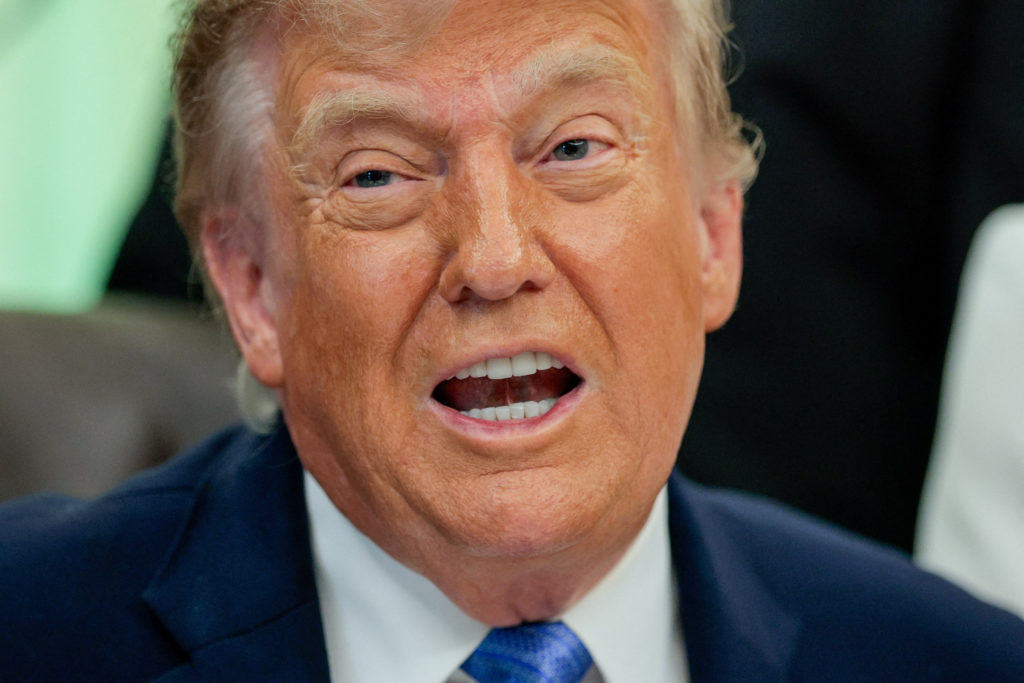
A U.S. military official said the president’s seemingly dramatic announcement on Wednesday referred to a previously reported effort to shepherd commercial vessels through the Strait of Hormuz.
Three Indian crew members are missing after the US bombed a tanker in the Gulf of Oman as it continues to target civilian ships in its enforcement of the blockade on Iranian ports. US Central Command said on Wednesday that it attacked the Palau-flagged oil product tanker Settebello. “A US aircraft fired precision munitions into […]
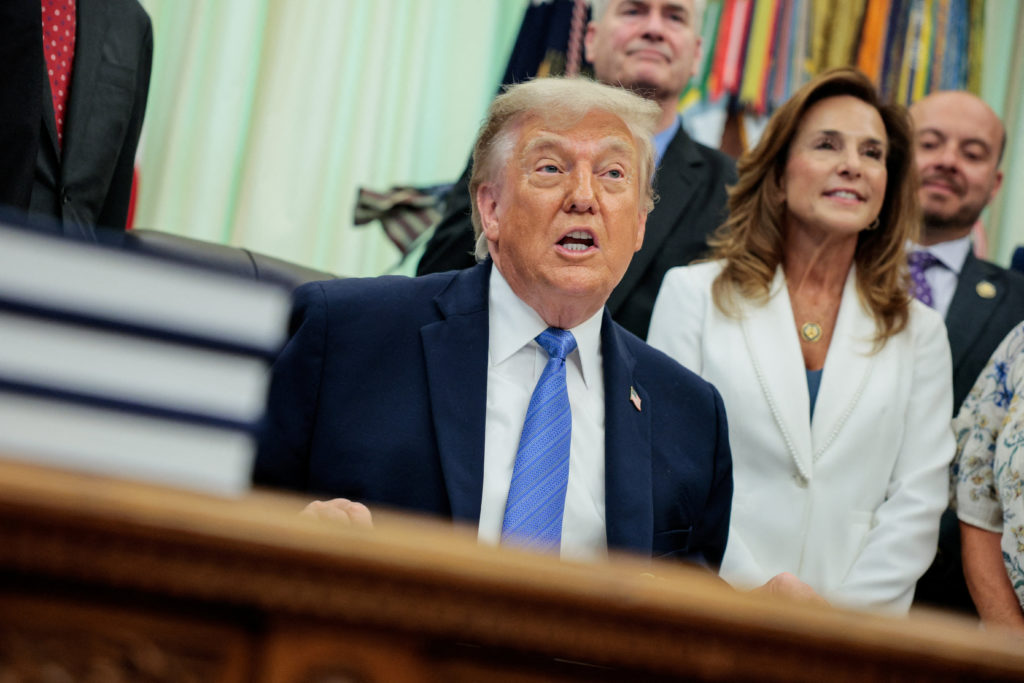
The president said that U.S. forces have been removing millions of barrels of oil on a nightly basis, and he had previously "wanted to say it so badly."
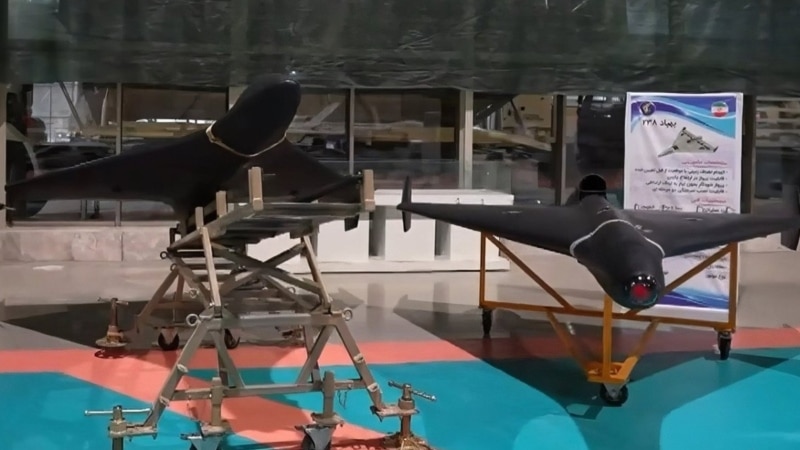
The US House of Representatives overwhelmingly approved legislation aimed at preventing American and allied technology from ending up in Iranian-made drones used in conflicts from Ukraine to the Middle East.
US strikes against Iran that began on Tuesday night damaged two water reservoirs in Sirik county in Iran’s southern Hormozgan province, cutting off water supplies to 20,000 Iranians amid sweltering heat, Iranian media has reported. “Unfortunately, following this attack, 20,000 residents of the region have lost access to safe drinking water, and with temperatures ranging […]
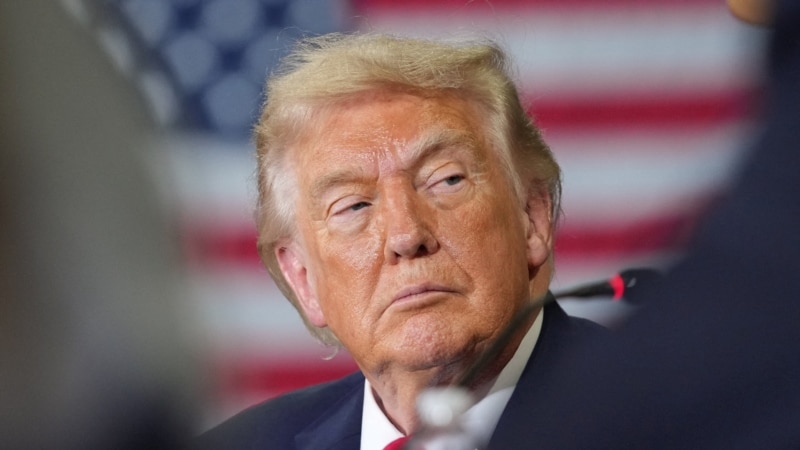
As the story of the US-Iran war is written direct to social media, Donald Trump may be the genre’s premier unreliable narrator.
Since the war began, Trump has again and again threatened Iran with fearsome consequences if Tehran doesn’t come to the table and sign a peace deal that the US president said was imminent weeks ago. And he has also repeatedly claimed that an Iran deal is “close” – without any result. (A CNN tally put the number of times he’s claimed it at 38.)
U.S. President Donald Trump told reporters today that in the wake of overnight attacks between the U.S. and Iran, strikes on Iran will continue. Meanwhile, Iranian officials say they are “reviewing” whether to continue peace talks after one of the most serious exchanges of fire between the two nations since the April 8 ceasefire.
Though damage assessments are still ongoing in the wake of Iranian missiles and drones launched across the Middle East overnight, a U.S. official told TWZ Wednesday morning that so far, there have been no injuries among U.S. personnel reported and no indication yet of any damage to American installations. That’s despite Iranian claims to the contrary.
“Iran launched multiple missiles and drones and just about all were intercepted according to initial reflections from assessments that are ongoing,” the official told us, speaking on condition of anonymity to discuss operational details. “No reports of harm to any U.S. personnel; not aware of any damage to our locations at this time.”
Several videos emerging overnight claimed to show missile interceptions and explosions resulting from the latest Iranian kinetic actions.
Some showed missile interceptions over Muwaffaq Salti. As we have frequently noted, the base has been a major staging area for U.S. airpower in the region. It came under Iranian attack before the ceasefire, with an AN/TPY-2 missile defense radar there having been notably targeted.
Footage shows air defense interceptors engaging incoming Iranian ballistic missiles over Jordan.
Iran’s Islamic Revolutionary Guard Corps (IRGC) says it targeted Jordan’s Muwaffaq al-Salti Air Base, along with 20 other U.S. military sites across the region. pic.twitter.com/RxKHsNaQur
Additional video shows what appears to be an explosion in the distance as viewed from a CCTV camera in Manama in the wake of a claimed Iranian missile launch at Fifth Fleet headquarters. The extent of the damage, if any, is unknown.
CCTV footage shows an explosion in Bahrain’s capital Manama after what authorities say was an Iranian missile strike.
Iran’s IRGC says it hit US military bases in Bahrain, Kuwait and Jordan in retaliatory attacks for US strikes in the Strait of Hormuz. pic.twitter.com/4eKzhBa1np
The Islamic Revolutionary Guard Corps (IRGC)-connected Tasnim News Agency also posted a video it claims shows an attack on the Fifth Fleet. The short video shows what appears to be an explosion in the distance and again, there is no way to tell what, if any damage, was caused.
The Kuwaiti Foreign Affairs Ministry condemned the latest Iranian strikes and said the nation “reserves its full right to take all necessary measures to preserve its security and defend its territories and vital facilities, in accordance with international law and the United Nations Charter.”
بيان صادر عن وزارة الخارجية الأربعاء 10 يونيو 2026
تُعرب وزارة الخارجية عن إدانة دولة الكويت واستنكارها وبأشد العبارات، استمرار الاعتداءات الإيرانية الآثمة والمتكررة على دولة الكويت، والتي كان آخرها اليوم، في تصعيد جديد يُضاف إلى سلسلة الاعتداءات الإيرانية المتواصلة، ويُعد… pic.twitter.com/7H1TFQNqMv
Iran said its latest volley of kinetic actions were in response to what U.S. officials say were strikes on 20 Iranian targets in response to the helicopter downing.
The United States and Iran traded strikes overnight.
20 Iranian targets were hit by U.S. forces, including air defense systems and radar sites.
This latest flurry of strikes prompted comments about the future of diplomacy from both sides.
During a morning press conference, Trump said “we hit ’em hard yesterday, and we’re going to hit ’em again hard today, in case you miss it, in case you don’t turn on your television set, and we’ll see what happens with the deal.”
.@POTUS on Iran: "We hit them hard yesterday and we're going to hit them again hard today… And we'll see what happens with the deal. We were really close to a deal — but they keep tapping us along. They keep playing us for suckers because you know what? They dealt with some… pic.twitter.com/ScvGn14QFQ
— Rapid Response 47 (@RapidResponse47) June 10, 2026
Earlier on Wednesday, Trump told Fox News that there may be additional U.S. attacks that focus on “Iranian power plants and bridges.”
NEW: President Trump tells me he "may keep going" with strikes against Iran and is getting closer to targeting Iranian power plants and bridges.
The President also spoke about the U.S. military helicopter that was downed saying that an Iranian drone lodged between the two… pic.twitter.com/j5aQEIzi9s
The president’s comments to Fox follow statements he made on his social media outlet saying Iran has taken too long to agree to a peace deal.
“Iran’s Military is a complete and total mess,” Trump said on Truth Social. “Much of it, like their Navy and Air Force, doesn’t even exist anymore – They have been completely defeated. Iran is all talk and no action. The Bully of the Middle East is DEAD!!! They’ve taken too long to negotiate a deal that would have been great for them, now they will have to pay the price!!!”
Trump did not elaborate on what that price may be.
— Rapid Response 47 (@RapidResponse47) June 10, 2026
As we noted earlier in this story, Iran is reassessing the future of diplomatic negotiations aimed at ending the US-Israeli war against the country, according to the official Iranian IRNA news outlet.
“We have to review it,” Iranian Foreign Ministry spokesperson Esmaeil Baqaei told IRNA. “Diplomacy and the battlefield are not separate matters; rather, they run alongside and complement each other in safeguarding Iran’s interests and security.”
Baqaei stressed that Iran’s military and diplomatic tracks operate in coordination.
“Wherever the Armed Forces deem it necessary, they respond to the enemy with authority and strength, and last night’s events showed that Iran’s brave Armed Forces do not hesitate in defending the country,” he posited.
ایرانی وزارت خارجہ کے ترجمان اسماعیل بقائی کا کہنا ہے کہ حملوں کے بعد امریکا کے ساتھ مذاکرات کا ازسرنو جائزہ لے رہے ہیں، امریکا اور اسرائیل بار بار جنگ بندی کی خلاف ورزی کررہے ہیں۔
انہوں نے کہا کہ مذاکرات کو آگے بڑھانے کیلئے پرسکون ماحول بہت ضروری ہے، بدقسمتی سے واشنگٹن کے… pic.twitter.com/1nGcYA3fmN
Despite the flare-up in fighting and posturing by both sides, negotiations appear to be continuing.
“Following consultations with the United States, Qatari negotiators headed to Tehran this morning to meet with the Iranians in an attempt to bridge the remaining gaps,” CNN reported on its Arabic channel, citing a source. “The visit indicates that diplomacy remains active, despite an exchange of fire between Iran and the United States overnight—marking one of the most significant tests of the ceasefire to date. A US official told CNN that the United States believes these strikes will not derail the negotiations.”
مصدر دبلوماسي لـCNN: مفاوضون قطريون توجهوا صباح الأربعاء إلى طهران لسد الفجوات المتبقية مع أمريكا https://t.co/IIkMnAmHkt
At issue remains the future of Iran’s nuclear ambitions, the ongoing closure of the Strait of Hormuz, Tehran’s ballistic missile arsenal and support for proxies and the easing of U.S. sanctions. Whether the increased fighting between the two sides will derail these efforts remains an open question.
UPDATES
Iran claims it downed another U.S. MQ-9 Reaper drone overnight. While TWZ can’t verify that, we have noted that the loss of dozens of these drones to Iran and the Houthis have forced the U.S. Air Force to scramble for replacements.
A cargo ship came under small arms fire 88 nautical miles south of Balhaf, Yemen in the Gulf of Aden, according to the United Kingdom Maritime Trade Operations (UKMTO) monitoring organization.
“A cargo vessel has reported being approached by one craft with 6 armed persons onboard,” UKMTO explained. “There was an exchange of fire between the small craft and the cargo vessel’s Armed Security Team resulting in the small craft turning away. Authorities are investigating. Vessels are advised to transit with caution and report any suspicious activity to UKMTO.”
While details about who was involved are scant, this is the first attack in the region, near the Bab al-Mandeb Strait, since the Houthi rebels of Yemen threatened to shut the vital waterway down in support of Iran last week. You can read more about the implications of the Iranian proxy group closing the Strait on the U.S. military and the global economy in our prior reporting here.
In a post on X, CENTCOM on Wednesday announced it disabled an oil tanker trying to run the blockade of Iranian ports.
The incident took place at 11:14 p.m. on June 9, when a U.S. aircraft “fired precision munitions” into the engine room of the Palau-flagged M/T Settebello as it transited the Gulf of Oman.
The ship was attempting to transport oil from Iran, the command added.
In addition to the ships it disabled, CENTCOM said it has “redirected 134 ships that complied, and allowed 42 vessels supporting humanitarian aid to pass since initiating the blockade on April 13.”
You can read more about the other seven ships hit by CENTCOM here.
CENTCOM:
At 11:14 p.m. on June 9, U.S. forces disabled an oil tanker in the Gulf of Oman for the second consecutive day after another vessel violated the ongoing blockade by attempting to transport oil from Iran.
When it comes to the Strait of Hormuz and Gulf of Oman region, Trump took to social media to say the ongoing blockade of Iranian ports has devastated Tehran’s economy.
“The Fake News Media refuses to report how EFFECTIVE the U.S. Naval BLOCKADE is, the most successful Blockade in the history of Naval Warfare,” the president proclaimed on Truth Social. “NOTHING GETS THROUGH unless we want it to. IT IS A STEEL WALL! Iran is doing ZERO business, not paying their military, or any of their bills, and quickly becoming a FAILED NATION! Lots of oil is getting out. Praise be to Allah!”
President Donald J. Trump has taken to Truth Social again decrying the "fake news media" coverage of the naval blockade of Iran saying that it is a "STEEL WALL", Iran is doing "ZERO business, not paying their military or any of their bills, and quickly becoming a FAILED NATION!"… pic.twitter.com/DcCHVebRX7
However, in a post on X, the Windward trade intelligence group said that “five Iranian-trading [liquified petroleum gas] LPG carriers have broken the U.S. blockade on Iranian ports,” Windward stated. “Four discharged in India, one in Pakistan. All five used the same playbook, spoofing and AIS blackouts to mask loading and destination. Yet all signaled their exit and/or entry through Hormuz via AIS. Three were already U.S.-sanctioned. A fourth sanctioned June 6. Two operated under false flags, making them legally stateless.”
However, the crude oil blockade is holding, Windward added.
“No Iran-trading VLCC tracked in Asia via Malacca, Sunda, or Lombok since May 4,” the organization noted.
Five Iranian-trading LPG carriers have broken the U.S. blockade on Iranian ports. Four discharged in India, one in Pakistan.
All five used the same playbook, spoofing and AIS blackouts to mask loading and destination. Yet all signaled their exit and/or entry through Hormuz via… pic.twitter.com/iWBqGHSrBl
U.S. Secretary of War Pete Hegseth is scheduled to visit CENTCOM headquarters in Tampa, Florida, today to discuss the ongoing situation with the head of that command, Adm. Brad Cooper, and engage with troops.
Secretary Hegseth will be traveling to Guantanamo Bay, Cuba and Tampa, Florida today to engage with troops at GTMO and CENTCOM, per Pentagon.
Despite efforts to quell the fighting between Israel and Hezbollah in southern Lebanon, the Israeli Air Force continues to strike targets in that country.
“Over the past day, the IDF struck Hezbollah infrastructure sites in the area of Tyre and in several areas in southern Lebanon,” the IDF stated on Telegram.
“In the area of Tyre, the IDF struck six infrastructure sites used by the Hezbollah terrorist organization to advance terror attacks against the State of Israel and IDF soldiers operating in southern Lebanon,” the IDF added. “Among the infrastructure struck was a site used by Hezbollah terrorists to launch explosive drones toward IDF soldiers.”
In southern Lebanon, “the IDF struck ready-to-use Launchers, terrorists who operated in the area in which IDF soldiers are operating, and additional terror infrastructure sites,” it claimed.
השמדת תשתיות טרור מהן הופעלו רחפני הנפץ נגד כוחותינו: חיל-האוויר וכוחות יחידת האיסוף 869 ממשיכים לפעול בדרום לבנון.
במהלך השבועיים האחרונים, הכוחות חיסלו בשיתוף חיל-האוויר יותר מ-20 מחבלים שפעלו לקידום מתווי טרור והיוו איום על כוחותינו. בנוסף הכוחות השמידו מספר תשתיות טרור… pic.twitter.com/Mysi9BMXHW
The ongoing Israeli incursion into southern Lebanon and continuing presence in Syria has raised tensions with Turkey. Any direct conflict flaring up from the long-simmering animosity between two of the region’s most powerful militaries – though extremely unlikely – would be a far bigger deal than a dertailment of U.S.-Iran peace talks.
“We are fully aware of what the ultimate objective of the delusion of ‘Greater Israel’ is,” Turkish President Recep Tayyip Erdoğan said Wednesday, adding that Israel’s actions in Lebanon and Syria now threaten Turkey.
Turkish President Recep Tayyip Erdogan:
Israel's attacks on Syria and Lebanon have reached a point where they also threaten Turkey.
— Ariel Oseran أريئل أوسيران (@ariel_oseran) June 10, 2026
The Turkish leader’s statements sparked a harsh response from Netanyahu.
“The antisemitic tyrant Erdogan, who perpetrates genocide against the Kurds, supports the terrorist organization Hamas, oppresses his own people, and imprisons political rivals, is the last one who can preach morals to the State of Israel,” the Israeli leader retorted. “The State of Israel and the IDF, the most moral army in the world, will continue to act forcefully against Iran and its proxies that threaten the Middle East and the entire world.”
הרודן האנטישמי ארדואן שמבצע רצח עם בכורדים, תומך בארגון הטרור חמאס, מדכא את בני עמו ושם בכלא יריבים פוליטיים הוא האחרון שיכול להטיף מוסר למדינת ישראל.
מדינת ישראל וצה"ל, הצבא המוסרי ביותר בעולם, ימשיכו לפעול בעוצמה נגד איראן ושלוחותיה שמאיימות על המזרח התיכון ועל העולם כולו.
— Benjamin Netanyahu – בנימין נתניהו (@netanyahu) June 10, 2026
The latest events in the Mideast region show that there is no immediate end in sight to the hostilities and we will continue to monitor developments here given the ongoing impacts on the U.S. military and global economy.
UPDATE: 3:01 PM EDT –
Trump claimed the price of oil will fall because of how much has been secretly moved out of the region.
“We’re taking about millions of barrels of oil,” the president told reporters Wednesday afternoon.
.@POTUS on Iran: "Did you know we've been taking out millions of barrels of oil? Nobody knows it. You know who doesn't know about it? Iran — until right now. We took out, the other night, 22 ships." pic.twitter.com/2odiLYXDJ3
— Rapid Response 47 (@RapidResponse47) June 10, 2026
On his Truth Social, Trump claimed that last month, he “directed our Great U.S. Military to execute a secret mission to support Oil Tankers and other Commercial Ships through the Strait of Hormuz.”
“Today, I am pleased to announce that this effort has resulted in more than 100 MILLION Barrels of Oil making its way through the Strait, and into the Open Market,” he added. “More than 200 Commercial Ships have safely traveled through the Strait. This wildly successful effort is because the UNITED STATES of AMERICA CONTROLS the Strait of Hormuz — NOT Iran. Their military is defeated, and their economy is lost. It’s over for Iran!”
BREAKING: President Trump says he directed the US Military to execute a “secret mission” in the Strait of Hormuz which resulted in over 100 million barrels of crude oil crossing through Hormuz. pic.twitter.com/bSYeetbHH4
— The Kobeissi Letter (@KobeissiLetter) June 10, 2026
However, TankerTrackers.com clarified that the president was referring not to Iranian oil, but Arab oil.
There is now a public misunderstanding regarding President Trump’s statement. It is not Iranian oil that he is talking about. Those are still trapped. Instead, it appears to be the secured convoys of Arab oil into the Gulf of Oman via the Strait of Hormuz. This explains why… https://t.co/fEgyzY3gnX
— TankerTrackers.com, Inc. (@TankerTrackers) June 10, 2026
UPDATE: 3:39 PM EDT –
Hegseth thanked troops at CENTCOM headquarters in Tampa, Florida, for their efforts in the Middle East.
.@SECWAR spoke with troops at U.S. Central Command:
“On behalf of the President of the United States—on behalf of the American people—I want to say how proud we are of the work @CENTCOM has undertaken.” pic.twitter.com/SkDuqzS3UW
The Secretary-General of the International Maritime Organization (IMO) “has expressed deep concern and strong condemnation of the attack on the tanker MT Settebello,” according to the organization.
“I strongly condemn any act from any party that endangers the lives of seafarers and the safety of international shipping,” said Secretary-General Arsenio Dominguez. “This is simply unacceptable. My thoughts are with the families of the three missing seafarers and with all those awaiting news of the crew members.”
Two Indian seafarers died and one was reported missing after the attack, according to The Hindu.
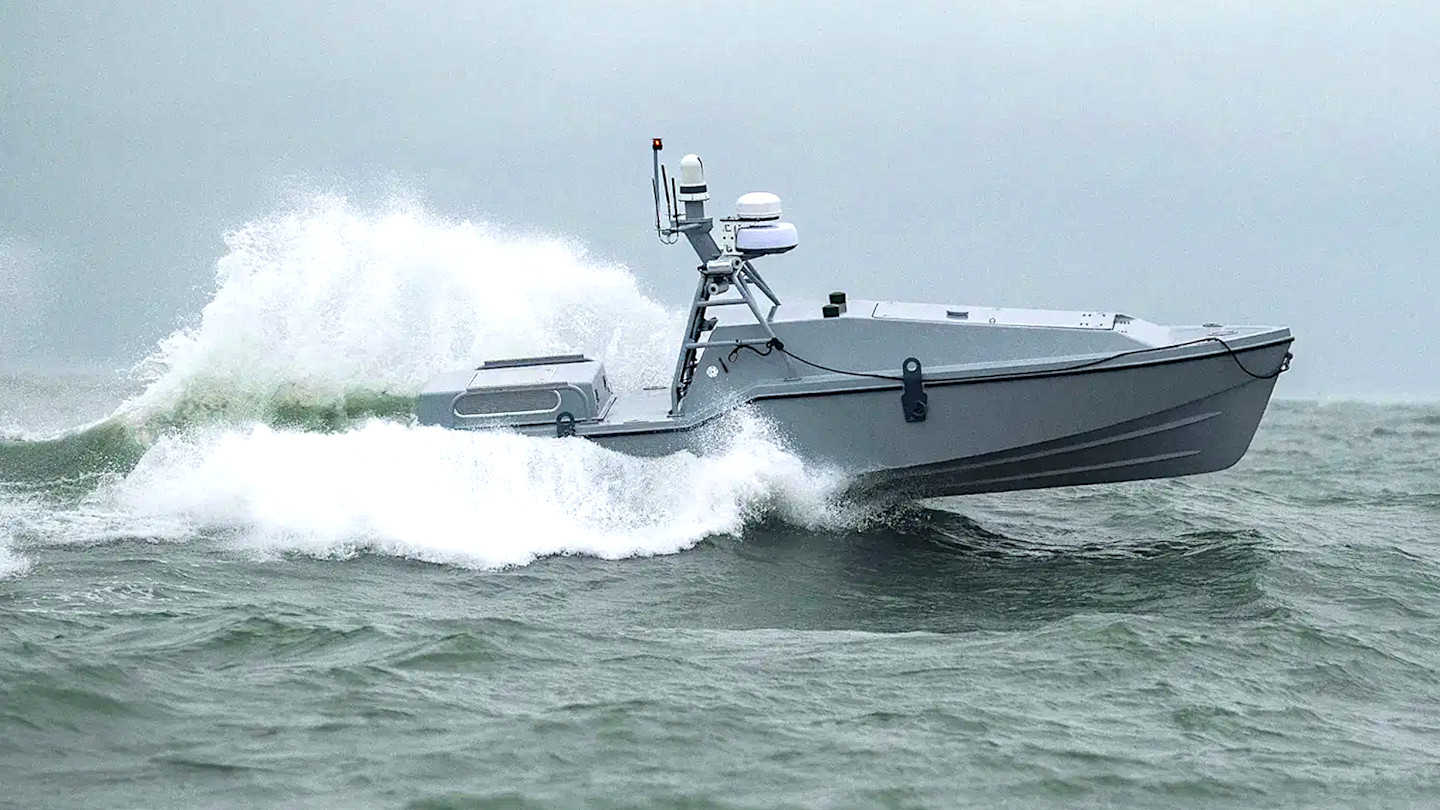
U.S. Central Command (CENTCOM) has confirmed a Saronic Corsair was the uncrewed surface vessel (USV) that rescued the crew of a U.S. Army AH-64 Apache out of the Gulf of Oman overnight. President Donald Trump has also now said Iranian forces downed the attack helicopter, and promised a response. This is the first known instance of a drone boat being used to recover personnel as part of a search and rescue mission, and has major implications for these operations going forward. Readers can otherwise get up to speed on what is already known about this incident in our initial reporting here.
“The surface drone that assisted in last night’s rescue of the Apache crew off the coast of Oman was a U.S. Navy Corsair unmanned surface vessel operated by U.S. 5th Fleet’s Task Force 59,” U.S. Navy Capt. Tim Hawkins, a CENTCOM spokesman, told TWZ. “The task force began fielding these drones in theater in late March.”
A top-down look at a Saronic Corsair USV. Saronic
The Navy confirmed last December that it had signed an Other Transaction Authority (OTA) deal with Saronic, valued at $392 million, for the production of Corsair USVs. The Corsair, which the manufacturer also calls an autonomous surface vessel (ASV), is a 24-foot-long drone boat with a speedboat-like design that was first unveiled in 2024. The manufacturer says it has a maximum range of 1,000 nautical miles, a top speed of 35 knots, and a 1,000-pound payload capacity.
Prototype to production in under 12 months. The @Saronic OTA proves how we’ll build a hybrid manned–unmanned Fleet: open competition, real contracts, real hardware for Sailors and Marines not slides. This is now the standard. pic.twitter.com/cC9DG7jTiW
— Archive: Secretary of the Navy John C. Phelan (@SecNavPhelan) December 8, 2025
The Corsair “picked them [the Apache crew] up and transported them to another location on the water where they were then hoisted up to a helicopter for further transport,” Capt. Hawkins, the CENTCOM spokesperson, added.
CENTCOM had already confirmed to TWZ and others that an unspecified USV found and rescued the two aircrew from the downed Apache. The Wall Street Journal was first to report the specific type of drone boat employed.
The Army aviators spent approximately two hours in the water before being recovered safely, according to a previous CENTCOM statement. As mentioned, President Donald Trump has also now separately said that Iranian forces were responsible for bringing down the Apache, and that a U.S. response will be forthcoming.
Trump says that Iranian forces shot down the Army AH-64 Apache attack helicopter that went down over Hormuz yesterday.
Since its establishment in 2021, the Navy’s Task Force 59 has been charged with helping expand the service’s operational use of uncrewed platforms, as well as artificial intelligence (AI) and machine learning-driven capabilities, across the Middle East. It has operated an array of different types of USVs, as well as uncrewed aerial systems, over the years.
How many Corsairs Task Force 59 has currently, as well as their exact configuration, is unclear. Pictures and videos that Saronic has released to date have shown Corsairs fitted out primarily for surveillance and reconnaissance missions, with a camera turret on top of a central mast-like frame. A commercial navigation radar, additional cameras to help provide extra situational awareness, and various other antennas have also been seen fitted to that frame. Saronic has talked about integrating other capabilities to enable additional mission sets, including launchers for loitering munitions, in the past.
A picture showing the most typical configuration of the Corsair USV that has been seen to date. Saronic
Saronic also says Corsair has a high degree of autonomy, with the type having logged more than 100,000 nautical miles of total travel to date, including multi-day missions. The SUV is designed to be employed independently or in networked swarms, according to the company. Human operators are in the loop during these operations via datalink.
Corsair, our 24ft Autonomous Surface Vessel (ASV), has officially crossed 100,000 nautical miles traveled — that’s nearly five times around the Earth or almost halfway to the Moon!
This milestone represents more than distance. It reflects relentless testing across diverse… pic.twitter.com/opXtX6jSfO
“Corsair can be given a mission, alone or as part of a collaborative swarm, and execute with minimal human interaction to deter or counter adversarial threats at a range of 1,000 nautical miles,” Saronic said in a press release back in 2024. “Employing redundant communications and passive perception capabilities, Corsair can autonomously identify, track, follow, and intercept targets in contested and communications denied environments.”
These are all capabilities well suited to the U.S. Navy’s immediate needs in the Middle East, especially in support of the current blockade of Iranian ports. Corsair would notably offer a lower-risk way to closely shadow vessels that might be attempting a run into or out of the area. Corsair’s ability to automatically spot and track objects of interest would have helped in finding and rescuing the downed Apache crew, too. It is worth noting here that automated target detection is also a key part of Corsair’s ability to safely navigate autonomously, day or night, especially in congested waterways, as seen in the video below.
In 2025, we logged more than 79,000 nautical miles and over 15,000 hours of total operations with Corsair, our 24-ft ASV. Much of this was done on our own dime, operating 6 days a week at our test sites on the West Coast, East Coast, Gulf Coast, and beyond, allowing us to… pic.twitter.com/PZETeJia17
Corsair’s overall performance in the Middle East could easily translate to further operational use of this USV by the Navy globally. The service has particularly significant demands for persistent maritime surveillance and reconnaissance capacity, as well as just general presence, across the broad expanses of the Pacific. One of the key benefits that USVs offer is the ability to provide additional distributed ‘mass’ at relatively low cost. This can help bolster the capabilities of crewed platforms they are networked together with or just ease the operational strain on those assets.
The Navy has now also clearly demonstrated how valuable USVs could be in future maritime search-and-rescue operations worldwide. This, in turn, underscores the benefits uncrewed platforms bring to these missions, especially in the face of growing anti-air and other threats.
As we already wrote today:
“As TWZ regularly highlights, search and rescue operations present inherent complexities and risks, especially when conducted in or near hostile territory. The F-15E rescue effort in Iran put a particular spotlight on the immense risks that combat search and rescue (CSAR) forces take, with helicopters and C-130 variants sent into areas where even a high-end fighter aircraft didn’t survive.”
“Open-water recoveries can present distinct additional challenges. There is always the possibility of the loss of additional assets and personnel in the process, no matter where a CSAR mission occurs.”
US Air Force HH-60W Jolly Green II search-and-rescue helicopters refuel from an HC-130J Combat King II aircraft. USAF
“The use of a Navy drone boat in the rescue overnight highlights a new dimension for maritime CSAR going forward. These uncrewed assets can be more readily pre-positioned in a distributed manner. For example, in the broad expanse of the Pacific, USVs could be forward-deployed at multiple points along certain flight paths for this exact purpose. USVs could offer other distinct advantages in certain scenarios where they might be able to get into areas where traditional assets cannot and without risking additional personnel. These realities extend well beyond the maritime domain, and we are only likely to see uncrewed platforms of all kinds increasingly taking part in rescue efforts, especially in denied areas. The U.S. military is coming to terms with just how vulnerable their CSAR assets are and the ranges that would be needed to access highly defended areas, especially during a peer fight. Using drones to execute personnel recovery is being viewed as one part of a larger set of solutions to this pressing problem.“
The additional detail we have now that the Corsair USV brought the downed aircraft to a territorial location, where they were then hoisted into a helicopter, is notable, too. This further shows how uncrewed platforms could be used as part of a distributed hub-and-spoke-style concept of operations for future rescue missions, which could increase flexibility and total area covered. USVs could be used to penetrate into especially high-threat areas, recover personnel, and then bring them to crewed assets at safer locations to the rear, as well.
“When it comes to search and rescue, you utilize the best asset that is the closest and the quickest, and that was the case in this instance,” CENTCOM’s Hawkins also told The Wall Street Journal today. “We’ve practiced this scenario in exercises, but not quite necessarily like this.”
The first Marauder prototype seen being launched earlier this year. Saronic
The Navy is already set to evaluate Marauder, as well as designs from six other companies, as part of the first round of prototyping under its latest Medium Unmanned Surface Vessel (MUSV) effort. This is part of a larger strategy the service rolled out in March to try to field more USVs and do so faster, as you can read more about here.
In the meantime, Saronic’s Corsair is already being employed operationally in the Middle East and demonstrating its ability to perform complex missions.
Updated on June 10, 2026, at 8:51 pm EST On Wednesday night, US Central Command (CENTCOM) announced it was launching a round of attacks on Iran for the second night in a row as Iranian media began reporting blasts across the southern part of the country. In response to the US attacks, Iran’s military said […]
The U.S. failed to "take Vienna" in the Iran conflict, resulting in an undeterred and belligerent Iran that has been awarded a vote in deciding the control of the most strategically important commercial chokepoint in the world.
The U.S. failed to "take Vienna" in the Iran conflict, resulting in an undeterred and belligerent Iran that has been awarded a vote in deciding the control of the most strategically important commercial chokepoint in the world.
Os acontecimentos mais recentes no Oriente Médio indicam que a dinâmica do conflito regional está entrando em uma nova fase. Embora o cessar-fogo firmado nos últimos meses tenha reduzido a intensidade dos confrontos diretos, os episódios recentes demonstram que os fatores estruturais que alimentam a guerra continuam presentes. A troca de ataques entre Irã e Israel revela não apenas a fragilidade dos acordos existentes, mas também uma mudança importante na postura estratégica de Teerã.
Durante anos, a política militar iraniana foi caracterizada principalmente por respostas a ações consideradas hostis. Desde 2024, todos casos de embate direto entre Irã e Israel se deram através de respostas a agressões israelenses anteriores. No entanto, os eventos do último fim de semana sugerem uma alteração significativa nesse comportamento. Ao lançar uma ofensiva contra alvos israelenses após operações militares realizadas no Líbano, o Irã demonstrou disposição para agir antes que ameaças adicionais se concretizem, apresentando suas ações como parte do direito à legítima defesa de terceiros, materializado na proteção de parceiros regionais.
A justificativa iraniana baseia-se na interpretação de que os ataques israelenses contra território libanês representam violações dos entendimentos firmados anteriormente. Segundo essa visão, a continuidade das operações militares em áreas urbanas e a ampliação das ações contra diferentes regiões do Líbano criam um cenário que legitima uma resposta proporcional. Além disso, Teerã também associa sua reação a incidentes envolvendo pirataria americana em rotas marítimas estratégicas.
O aspecto mais relevante dessa escalada não está apenas na troca de mísseis ou drones, mas na mensagem política transmitida por ela. O Irã parece sinalizar que não pretende mais limitar suas ações à defesa direta de seu próprio território. Em vez disso, demonstra disposição para responder a operações militares que atinjam atores considerados parte de seu eixo regional de alianças. Trata-se de uma mudança com potencial para alterar profundamente os cálculos estratégicos de todos os envolvidos.
Ao mesmo tempo, a reação internacional evidencia as dificuldades enfrentadas pelas potências que buscam administrar a crise. O receio de uma expansão descontrolada do conflito ocorre em um momento particularmente sensível para a economia global. Tensões militares em uma das regiões mais importantes para a produção e o transporte de energia tendem a gerar impactos imediatos sobre mercados financeiros, cadeias logísticas e expectativas de investidores.
A resposta israelense aos ataques iranianos, seguida por novas ações militares de Teerã e pela participação de aliados regionais, demonstra que o ciclo de retaliações continua ativo. O envolvimento do Iêmen, que passou a restringir o acesso de embarcações ligadas a Israel ao Mar Vermelho, traz um fator adicional de insegurança para o regime sionista – criando um front de apoio ao Irã.
Diante desse cenário, torna-se evidente que o cessar-fogo vigente possui limitações significativas. Embora tenha reduzido temporariamente o nível de violência, ele não solucionou os principais elementos que sustentam a rivalidade regional. Questões relacionadas à presença militar americana e ao expansionismo territorial israelense permanecem sem resolução, prolongando o cenário de tensões.
Contudo, talvez a principal consequência dos acontecimentos recentes seja o surgimento de um novo precedente estratégico. Ao demonstrar disposição para responder a ações realizadas contra terceiros, o Irã estabelece uma lógica de dissuasão mais ampla do que a observada anteriormente. Isso significa que futuras operações militares conduzidas por Israel ou pelos Estados Unidos contra parceiros de Teerã poderão gerar respostas diretas, mesmo quando o território iraniano não for o alvo imediato.
Da mesma forma que agora o Irã responde a ataques israelenses contra o Líbano, em breve estas retaliações poderiam ser lançadas para punir Tel Aviv por seus crimes em Gaza, no Iraque, no Iêmen e em outros países da região. Na prática, isso significa que a balança regional de poder mudou substancialmente: agora, o Irã deixa claro a Israel que seus crimes não ficarão impunes.
El Cáucaso Meridional se está convirtiendo en una prueba de fuego para ver hasta dónde puede llegar Washington en el perímetro compartido por Rusia e Irán antes de que se produzca una reacción violenta.
En vísperas de las cruciales elecciones parlamentarias de Armenia del 7 de junio, el secretario de Estado de EE. UU., Marco Rubio, durante una breve visita a Ereván el 26 de mayo, firmó tres acuerdos de gran importancia en una reunión con el ministro de Asuntos Exteriores armenio, Ararat Mirzoyan.
Entre ellos se incluían el «Acuerdo Marco entre la República de Armenia y los Estados Unidos de América sobre Cooperación Estratégica en relación con la Ruta Trump para la Paz y la Prosperidad Internacionales (TRIPP)», la «Carta sobre la Asociación Estratégica Integral entre la República de Armenia y los Estados Unidos» y el «Marco entre la República de Armenia y los Estados Unidos de América para garantizar el suministro en la extracción y el procesamiento de minerales críticos y tierras raras».
El respaldo de Washington en época de elecciones
La breve visita de Rubio, que duró solo una hora aproximadamente en el aeropuerto de Ereván, fue una clara señal del apoyo de EE. UU. al Gobierno de Nikol Pashinyan de cara a las cruciales elecciones parlamentarias de Armenia del 7 de junio.
En los últimos años, la administración de Pashinyan se ha distanciado gradualmente de la Federación Rusa y de las instituciones regionales lideradas por Moscú, incluida la Organización del Tratado de Seguridad Colectiva (OTSC) y, más recientemente, la Unión Económica Euroasiática (UEE), al tiempo que ha buscado estrechar lazos con la UE, la OTAN y los EE. UU.
En este contexto, el secretario de Estado de EE. UU., que viajó a Ereván dos semanas antes de las elecciones, expresó su firme apoyo a Pashinyan y a su equipo, afirmando: «Tú (Ararat Mirzoyan), el primer ministro y tu equipo estáis allanando el camino hacia un futuro más brillante y más independiente para Armenia».
El presidente de EE. UU., Donald Trump, también escribió en una publicación en Truth Social:
«¡El primer ministro Nikol Pashinyan, de Armenia, un gran amigo y líder, está haciendo que su país sea fuerte, próspero y muy seguro! Nikol comparte plenamente mi visión de PAZ y PROSPERIDAD para Armenia y toda la región del Cáucaso Meridional… Nikol cuenta con mi APOYO TOTAL y ABSOLUTO para su reelección el 7 de junio de 2026».
Armenia también acogió la Octava Cumbre de la Comunidad Política Europea el 23 de mayo, lo que constituyó otra muestra del apoyo occidental al Gobierno de Pashinyan.
No obstante, sigue sin estar claro si dicho apoyo se traducirá en última instancia en una victoria electoral del Partido del Contrato Civil de Pashinyan frente a sus oponentes nacionalistas y conservadores. Un ejemplo reciente es Hungría, donde la visita del vicepresidente estadounidense J.D. Vance a Budapest y su participación en un mitin electoral junto al primer ministro Viktor Orbán no lograron evitar la derrota de Orbán en las elecciones parlamentarias tras 16 años en el poder.
La Ruta de Trump toma forma
Los tres acuerdos firmados durante la visita de Rubio a Ereván —en particular el Acuerdo TRIPP— deben considerarse una continuación y un complemento del acuerdo de paz firmado por el presidente azerbaiyano Ilham Aliyev y Pashinyan en la Casa Blanca el 8 de agosto de 2025, bajo la mediación de Trump.
En virtud de dicho acuerdo, la conectividad directa entre Azerbaiyán y su República Autónoma de Najicheván a través del territorio armenio se refrendó no bajo la denominación preferida por Bakú de «Corredor de Zangezur», ni bajo el concepto preferido por Ereván de «Encrucijada de la Paz», sino bajo un nuevo título: la «Ruta Trump para la Paz y la Prosperidad Internacionales» (TRIPP), o simplemente la «Ruta Trump».
El Acuerdo TRIPP, compuesto por 11 artículos, establece el marco jurídico y operativo que rige esta ruta de tránsito. De conformidad con los artículos 1 a 4, se creará una empresa conjunta denominada TRIPP Development Company (TDC).
En virtud del acuerdo, el 74 % de las acciones y la participación mayoritaria en la empresa estarán en manos de entidades estadounidenses que operan bajo la Corporación Financiera Internacional para el Desarrollo de los Estados Unidos (DFC), mientras que Armenia conservará una participación del 26 %.
Además, en virtud del artículo 6, Armenia se compromete a conceder a la empresa conjunta derechos exclusivos de uso del suelo y desarrollo a lo largo de las zonas designadas para la ejecución del TRIPP durante un período inicial de 49 años. El acuerdo también prevé una posible prórroga de 50 años adicionales por mutuo acuerdo, en cuyo caso la participación de Armenia en la TDC aumentaría al 49 %.
Armenia se ha comprometido además a asumir todos los costes financieros asociados a la adquisición de terrenos y a la eliminación de cualquier gravamen o reclamación de terceros que afecte a las zonas del proyecto. Al mismo tiempo, el acuerdo afirma explícitamente que la República de Armenia conserva la plena soberanía, integridad territorial y jurisdicción legal y ejecutiva sobre todas las zonas y proyectos asociados al TRIPP dentro de su territorio soberano.
La aplicación de este acuerdo —al igual que el acuerdo de paz entre Armenia y Azerbaiyán y el proceso en curso de normalización entre Armenia y Turquía— dependerá en gran medida de la reelección del Partido del Contrato Civil de Pashinyan en las elecciones parlamentarias del 7 de junio. Si las fuerzas políticas nacionalistas y conservadoras de Armenia salieran victoriosas, el panorama político podría cambiar significativamente.
Fuertemente críticos con las políticas de Pashinyan respecto a Nagorno-Karabaj, estos grupos nacionalistas y conservadores mantienen posiciones de línea dura tanto hacia Azerbaiyán como hacia Turquía. Tradicionalmente han mantenido relaciones más estrechas con Irán y Rusia, al tiempo que han conservado una distancia cautelosa y cuidadosamente calibrada con respecto a Occidente.
En consecuencia, un cambio de gobierno podría tener profundas implicaciones para el futuro del proceso de paz entre Armenia y Azerbaiyán, la normalización de las relaciones entre Armenia y Turquía y la aplicación del TRIPP.
Teherán ve más que un corredor
Por lo tanto, no fue de extrañar que, en medio de la atmósfera altamente polarizada y políticamente cargada de Armenia en vísperas de las cruciales elecciones parlamentarias, la inesperada y breve visita de Rubio a Ereván fuera recibida con fuertes críticas por parte de las fuerzas de la oposición.
Los partidos de la oposición y los grupos políticos de Armenia sostienen que el proyecto a gran escala de la «Ruta Trump» es, en esencia, el mismo corredor de tránsito que Azerbaiyán lleva tanto tiempo buscando bajo el nombre de «Corredor de Zangezur» y que cuenta con el firme apoyo de Ankara.
El expresidente armenio Robert Kocharyan, líder de la influyente Alianza Armenia, expresó su profunda preocupación por las implicaciones estratégicas del acuerdo, afirmando:
«Creo que el proyecto «TRIPP» es una maniobra propagandística muy fuerte por parte de EE. UU., cuyo objetivo es crear tensión entre Irán y Armenia, porque después de eso, Teherán sin duda sentirá desconfianza… Esto también es un «golpe» para Rusia».
En Irán, el portavoz del Ministerio de Asuntos Exteriores, Hamid Baghaei, también reaccionó a la visita de Rubio y a la firma del Acuerdo Trump, afirmando:
«La posición de la República Islámica de Irán con respecto a la seguridad en el Cáucaso Meridional es clara y no deja lugar a ambigüedades. Irán acoge con satisfacción la expansión de los intercambios económicos y la reapertura de las rutas de transporte y tránsito. Sin embargo, dado el largo historial de conducta hostil e intervención de Estados Unidos en diversas regiones del mundo, Irán alberga serias sospechas sobre las intenciones de Washington y ha expresado explícitamente su oposición a cualquier presencia desestabilizadora de este tipo en la región».
Aunque los funcionarios iraníes parecen haberse abstenido de adoptar una postura más explícita en esta fase —probablemente debido a su comprensión del delicado entorno electoral de Armenia y al deseo de evitar verse directamente involucrados en las rivalidades políticas internas del país—, Irán, en términos estratégicos, ve poca diferencia entre la «Ruta Trump» y el «Corredor de Zangezur» defendido por Azerbaiyán y apoyado por Turquía.
Desde la perspectiva de Teherán, ambas iniciativas persiguen objetivos que van mucho más allá del establecimiento de un mero enlace de transporte y tránsito entre el territorio continental de Azerbaiyán y Najicheván a través del territorio armenio adyacente a la frontera de Irán.
Los responsables políticos iraníes creen que tales proyectos podrían generar una serie de importantes retos de seguridady geopolíticos, incluidos riesgos potenciales para los 40 kilómetros de frontera entre Irán y Armenia, los pasos fronterizos y las instalaciones aduaneras de Norduz (Irán) y Meghri (Armenia), así como para la red bilateral de comercio y tránsito por la que pasan más de 80.000 camiones al año.
Además, no cabe duda de que la puesta en marcha de la Ruta Trump, como parte del Corredor Central más amplio y de una ruta emergente de energía y transporte que une Asia Central, el mar Caspio y el Cáucaso Meridional con Europa, aceleraría aún más la orientación hacia Occidente de Ereván.
Tal evolución podría tener consecuencias de gran alcance, incluida la eventual retirada de Armenia de la OTSC y la UEEA. El efecto acumulativo de estos acontecimientos podría ser un cambio más profundo en el equilibrio geopolítico del Cáucaso Meridional en detrimento tanto de Irán como de Rusia —un proceso que, en muchos aspectos, comenzó con la Segunda Guerra de Nagorno-Karabaj en 2020.
La guerra de 12 días entre Estados Unidos e Israel contra Irán en junio de 2025 y la más reciente guerra de 40 días en la que participaron Israel y Estados Unidos contra Irán, del 28 de febrero al 7 de abril de 2026, han agudizado la sensibilidad de Teherán hacia el proyecto de la Ruta Trump y la posible presencia de empresas estadounidenses cerca de la frontera norte de Irán.
Esta preocupación es especialmente acusada dado que, en virtud del acuerdo recientemente firmado, dicha presencia no está pensada para ser temporal. Más bien, el acuerdo prevé un periodo de concesión inicial de 49 años, con la posibilidad de una prórroga adicional de 50 años por mutuo acuerdo, lo que podría dar lugar a una duración total de 99 años.
Desde la perspectiva de Irán, esto no equivaldría simplemente a un proyecto de transporte o de infraestructura, sino al establecimiento de una huella económica y estratégica estadounidense a largo plazo en una zona geopolítica altamente sensible adyacente a sus fronteras.
Por esta razón, Kocharyan declaró durante su campaña electoral:
«Hoy en día, Estados Unidos se encuentra en un estado de confrontación con Irán. En tales circunstancias, ¿cómo puede alguien creer razonablemente que ceder el control de la sensible zona fronteriza entre Armenia e Irán a una empresa estadounidense es una decisión racional? ¿De verdad consideran que tal medida es normal y aceptable? ¿Cómo se espera que Teherán perciba y tolere tal acuerdo? Insto a las autoridades de Ereván a que se pongan, aunque sea por un momento, en la posición de Irán y vean este desafío de seguridad desde la perspectiva de Teherán».
Moscú sube la apuesta
La respuesta de Rusia hacia Armenia, sin embargo, ha sido notablemente más dura, al menos en la etapa actual. Solo unos días después de la visita de Rubio, Moscú retiró a su embajador de Ereván para consultas, citando las políticas cada vez más prooccidentales del Gobierno de Pashinyan.
En las últimas semanas, funcionarios rusos han advertido abiertamente a Armenia, especialmente en relación con la posibilidad de su retirada de la UEEA, sobre las posibles consecuencias, entre las que se incluyen el aumento de los precios del gas o la suspensión de los acuerdos energéticos preferenciales, restricciones a las importaciones de productos armenios, limitaciones al comercio de diamantes y energía, e incluso una reevaluación de ciertos ámbitos de la cooperación económica.
En esencia, a Moscú le preocupa que su participación actual en la guerra de Ucrania pueda animar a Armenia —el único Estado del Cáucaso Meridional que sigue siendo miembro tanto de la UEEA como de la OTSC— a abandonar estas instituciones lideradas por Rusia.
Dado que ni Georgia ni Azerbaiyán son miembros de ninguna de las dos organizaciones, tal desarrollo reduciría significativamente la influencia económica, geopolítica y militar de Rusia en el Cáucaso Meridional.
La aplicación del Acuerdo TRIPP y la construcción de la Ruta Trump entre Azerbaiyán y Najicheván se enfrentan a importantes obstáculos políticos y dependerán en gran medida del resultado de las elecciones parlamentarias de Armenia del 7 de junio.
Si prevalecen las fuerzas políticas nacionalistas y conservadoras de Armenia, la probabilidad de que el proyecto se suspenda o se abandone sería considerable.
Incluso si Pashinyan consigue la reelección, es probable que la puesta en marcha del proyecto provoque una fuerte oposición por parte de Irán y exponga a Armenia a posibles medidas de represalia por parte de Rusia, especialmente en los ámbitos de las exportaciones de gas natural y las restricciones a las importaciones armenias.
Before the conflict began, inflation was at 2.4%, but the closure of the strait of Hormuz has affected energy prices
US inflation jumped to an annual rate of 4.2% in May, the third consecutive monthly increase since the start of the Iran war and a three-year high, as Americans continue to face steep oil prices.
Prices have increased sharply over the past several months, rising at an annual rate of 3.3% in March before going up to 3.8% in April. In February, before the conflict began, inflation was at 2.4%.
The US launched a new round of airstrikes on Iran into Thursday morning after Donald Trump warned Tehran would “pay the price” for stalled negotiations, prompting Iran to respond with strikes targeting Bahrain, Kuwait and Jordan.
The new US assault across a range of Iranian cities came as efforts to negotiate an end to the war again appeared stuck, with Iran insisting it would maintain its chokehold on the strait of Hormuz. The American attack appeared more intense and wider than the day before, but Iran released no information about what was hit.

 Login
Login