The defense company Ukrainian Armor and European firm MBDA on June 10 initiated a strategic partnership aimed at developing deep strike and anti-drone systems.
Ukrainian forces conducted 50,000 missions with unmanned ground vehicles as of January, the Ministry of Defense announced. The number is constantly growing: from 7,500 missions in January to 14,000 in May, and the number of units employing UGVs grew from 117 to 230.
"The UGV is a very, very promising thing," callsign Electric of the 93rd Brigade told Euromaidan Press—his brigade was an early adopter, having used UGVs for three years running.
"It has already proven its effectiveness, developing and scaling quickly, and becoming one of those tools of war that is already contributing to victory."
UGVs are meant to solve Ukraine’s chronic personnel shortages and battlefield casualties and have been rather effective, according to testimonials such as these. The General Staff has credited ground robotic platforms with cutting personnel casualties by up to 30%. In the Azov Corps, a single battalion moves over 40 tons of equipment per month with UGVs.
However, just having more machines is not nearly enough. Ukrainian forces are working to solve a myriad challenges before these machines can live up to their fullest potential, including:
Creating a military doctrine for their use
Establishing sufficient training for their operation
Building the infrastructure to deliver, modify, and repair them
Ironing out spare parts shortages, intercompatibility, and delivery challenges
Figuring out how to employ the menagerie of the dozens of systems in service
“The development of UGVs is one of our priorities: the more tasks robots perform, the more lives of military personnel can be saved,” Defense Minister Mykhailo Fedorov said in a statement.
More doctrine, more training
While remote-controlled ground crawlers existed before the full-scale invasion, mass adoption only exploded in 2026. The number of units using UGVs doubled between January and June. “The majority of brigades don’t have a (specialized) working UGV unit inside,” said Andrei Kushniarou, Commander of the 108 Battalion “Da Vinci Wolves.”
As a result, many units are getting UGVs for the first time without much of an idea of what to do with them, soldiers said in interviews. This applies not just to driving them but planning missions, figuring out what models work best for specific tasks, and which ones to commit to purchasing.
“They began rapidly scaling up UGVs in just over six months,” Electric said. “Before that, there was no systematic use of this in the army. There were only isolated units that were doing something, trying things out.”
“Systematic implementation began in just over six months and it scaled up from a dozen units, to hundreds of units. That is, this is an incredibly rapid leap, so there is no doctrine, nothing. There is only the experience of certain successful units, which share it and finally scale it up.”
This is natural: any new way of war requires figuring out. Ukrainian air defenders and UAV operators have had a long and difficult learning process over the past four years before Ukraine began to tip the drone war in its favor. UGVs must tread a similar path.
For the time being, for every story of a UGV rescuing a wounded soldier or capturing a Russian position, there are lesser-known stories of troops flailing about and learning on the job. Kushniarou said he has seen logistics UGV operators using the same route to deliver supplies to front line troops for half a year, as though inviting Russian FPV drones to come and destroy them.
“We have some classes for FPV drones, for the bombers, where they use simulators before taking the real drones. But we don't have this kind of thing for UGV's,” said Olexiy Severin, the financial director of Ukrainian Unmanned Systems, which produces the heavy-duty Ravlyk ground drone for units including the military intelligence (GUR).
Lyuba Shipovich stands near a Ukrainian TERMIT unmanned ground vehicle (UGV). (Photo David Kirichenko)
The solution is more training. There are some military training centers, such as the one operated by the 3rd Corps, as well as others scattered among different units. The military is working on creating more—for example, the South Operation Command, which plans to not only train soldiers how to use drones but to better integrate them with infantry. Volunteer-led initiatives like Dignitas are launching their own programs.
One bottleneck is the lack of experienced instructors, soldiers said. Experienced operators are at a premium, both on the front line and in the classroom. Meanwhile, current best practices become outdated in roughly six months. Another bottleneck is cash.
"We need money. A lot," Electric said. "First and foremost, money for scaling up production facilities, training centers and infrastructure development workshops. Everything is ready for it, it's just a matter of stating the facts and writing a doctrine."
Managing the menagerie of systems
Around 33 different models are available through the DOT-Chain marketplace. The actual number of different models of UGV floating around the country is closer to 200, soldiers said.
This can be an overwhelming number of systems to get used to. Every system comes with its own nuances, use cases, and teething troubles. And “basically every one” has to be modified by the unit before it can be used, said Mykyta Puz, a technology liaison with the Azov Corps. Other soldiers agreed with him.
“That's why we were the first to create our own universal control board, which we're installing throughout this entire zoo, standardizing the electronic components at a minimum,” Electric said. They must also add their own cameras and Starlink terminals.
The 93rd isn’t alone in this. Starlink is the standard army-wide control method for driving UGVs at a distance, yet Starlink doesn’t come standard with UGVs. Many robots come without night vision and thermal cameras integrated into the basic package.
Other parts require tinkering as well, especially when UGVs come from outside Ukraine. Multiple soldiers were quite negative with their reviews of foreign-made machines, with reviews like "highly expensive, utterly useless" and "the quality of work is really bad.”
Specific complaints ranged from the act of driving toggling a safety cutoff switch, antennas jostling loose, or radio controls dying when a friendly UAV was flying nearby.
The 93rd is trying to solve the “zoo” issue by limiting themselves to no more than 10 systems they trust, of which two are the mainstay and several more sit in backup.
Spare parts and infrastructure
The challenge there is access to spare parts, with Electric calling it “critical… We only supply them through our own resources and methods.”
Kushniarou said that units have a choice to make. They can decide to rely on just one or two developers, to buy UGVs from them. But if these developers get hit by a Russian missile or some parts fail to arrive from China, they can be screwed.
Or they can embrace the “zoo,” work with many developers at the same time, which spreads out the risk, but turns into a “logistical hell” where parts are concerned. This also calls for really good specialists who know how to work with a dozen different systems.
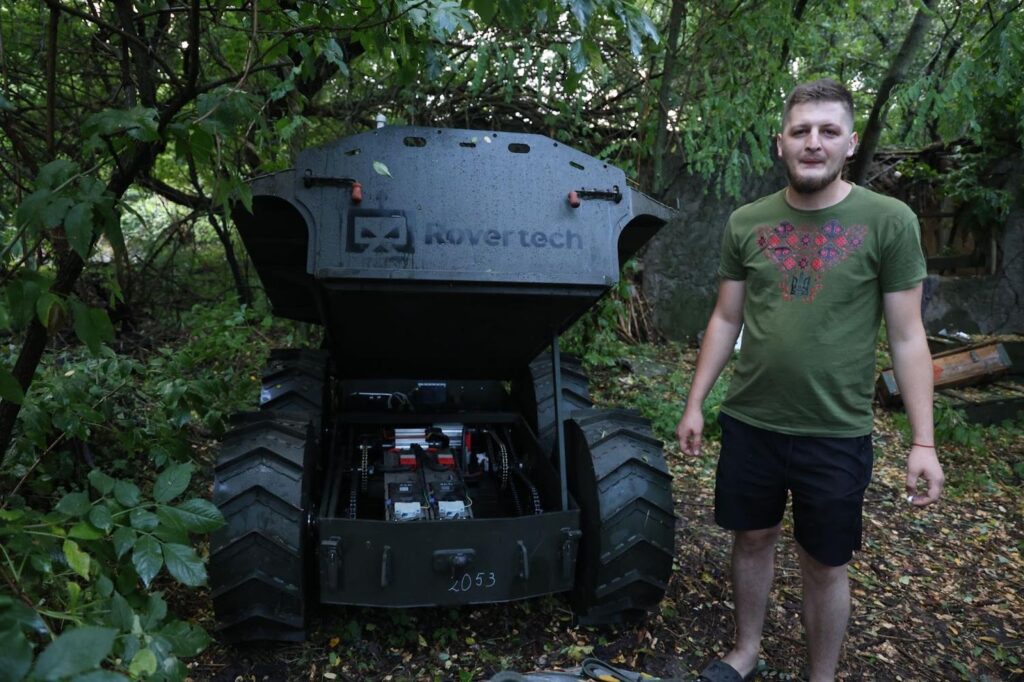
A small tracked unmanned ground vehicle of the kind multiplying across the Ukrainian front in dozens of locally-built variants. The vertical mast carries an elevated camera or communications antenna; the exposed controller board on the chassis is the workshop signature — the visible mark of a platform iterated in the dugout R&D labs Yabchanka describes, not on a factory production line. These small UGVs handle resupply, reconnaissance, and serve as radio relays extending the range of other robots and FPV drones operating deeper into the kill zone. Photo: Oleksandr Yabchanka / Facebook.
Getting parts can be a doozy, even when they are available. Severin said that units are begging his company to include a second battery for the Ravlyk UGV into the standard purchase package because "to buy additional batteries is all the circles of hell, harder than to buy a new UGV, because they have to go through multiple layers of military permission."
He said that the company replaces wheels free of charge at its own expense, just so Ravlyk users can get them repaired in a week instead of a month.
The solution is to build a more robust military-wide infrastructure for UGVs, soldiers said. That includes a spare parts pipeline, repair and servicing centers, and analytical centers for what can be improved.
"You can’t just have a UGV, you need to create infrastructure around it,” like workshops, R&D and analytical centers, and logistics systems for parts, Kushniarou said. “Without infrastructure, any UGV is just a tool without a master.”
Scaling up adoption
Ukraine has set a goal to offload 100% of logistics tasks to UGVs. If all of the doctrinal and military-industrial teething troubles can be resolved, many more frontline warfighters’ lives can be saved.
The Defense Ministry previously mentioned several things it’s doing to accelerate adoption.
One is the development of “a separate UGV competence center” that will liaise between the General Staff and the military and become a “single point of contact” for manufacturers.
The ministry also said it’s working on “comprehensively resolving” a VAT issue that led to contract delays. Severin told Euromaidan Press that a VAT that applies to electric vehicles has hit the Ravlyk, making it cost 30% more when purchased directly by units, discouraging them from using it.
Procurement contracts are now being signed for the following year to ensure the lots can be delivered.
As for 2026, Ukraine has plans to contract for 50,000 UGVs. But as of mid-May, the Ministry of Defense wrote that over 3,000 orders have been filed through the DOT-Chain marketplace and over 1,000 of them were delivered. Even though this number doesn’t include direct unit purchases, getting to 25,000 units by the end of June seems unlikely.
It would be in the military’s best interest to prioritize getting good systems rather than fulfilling the number at any cost, developers said.
Global data centre capital expenditure is on course to exceed $1 trillion in 2026 according to new research from Dell’Oro Group, as hyperscale AI deployments accelerate and rising memory and storage costs push overall server spending higher.
The research company raised its worldwide data centre capex outlook for the year following a strong Q1, citing a combination of AI expansion, continued investment in general-purpose infrastructure and component cost inflation as the primary drivers.
Baron Fung, senior research director at Dell’Oro Group, stated rising memory and storage pricing substantially increased overall server system costs in the quarter and will likely remain a major capex growth factor throughout the year.
“At the same time, AI infrastructure deployments continue to accelerate rapidly, while hyperscalers also expanded general-purpose infrastructure to support public cloud growth, agentic AI workloads, and rising AI-related storage requirements,” he said.
The scale of spending among the largest cloud providers is striking. Amazon, Google, Meta, and Microsoft, the top four US hyperscalers, increased data centre capex by 78% year-on-year, reflecting the intensity of the AI infrastructure race.
On the supply side, Dell led server OEM revenue followed by Supermicro and Lenovo, though white-box vendors serving the hyperscale market accounted for most overall server revenue. Nearly all server vendors benefited from higher memory-driven system pricing.
Despite already exceptional spending growth in the first half of the year, Dell’Oro expects capex growth to accelerate further in the second half, driven by the ramp-up of Nvidia’s Vera Rubin platform and refresh cycles for hyperscaler custom accelerator platforms.
Beyond the major cloud providers, Fung noted select enterprise verticals and sovereign cloud providers are also increasing AI infrastructure adoption, “though growth remains constrained by uncertain returns and infrastructure readiness”.
“While near-term demand remains healthy, some spending may have been pulled forward ahead of expected price increases later this year,” explained Fung.
Chiara Ferragni in silenzio in attesa dell’autunno
Dopo la fine della vicenda giudiziaria legata al Pandoro-gate, Chiara Ferragni sembra essere tornata sulla cresta dell’onda. La campagna di Guess, il nuovo amore, i riflettori nuovamente puntati. Circolano insistentemente voci su una possibile nuova apparizione – da protagonista – dell’influencer di Cremona sui canali televisivi, ancorché on demand.
Pare ormai confermato, infatti, che in autunno le sarà dedicata una serie Netflix, notizia anticipata da Chi e che Affaritaliani ha avuto modo di verificare. Ma c’è di più: secondo quanto ci risulta, l’influencer avrebbe deciso di annullare ogni tipo di apparizione pubblica, comprese interviste, proprio per concentrarsi sulla nuova fatica.
Dopo The Ferragnez, che aveva mostrato lustrini e debolezze del duo Ferragni-Fedez, ora l’imprenditrice digitale, 39enne e mamma di due figli, tornerà a calcare i palcoscenici delle tv on demand. C’è curiosità per capire come verrà gestita la privacy dei due bambini, oggetto di un contenzioso con l’ex marito Federico Lucia (in procinto di diventare padre per la terza volta) che aveva intimato a entrambi di oscurare i volti dei figli in modo da non renderli riconoscibili sui social.
Negli ultimi giorni ha fatto molto discutere la elefantiaca intervista a mezzo podcast di Selvaggia Lucarelli a Fabio Maria Damato, ex direttore generale della galassia Ferragni, su cui era stata scaricata molta parte delle responsabilità per quanto fatto in materia di beneficenza dall’influencer.
Lui, a sua volta, ha raccontato le sue verità tra la famosa (e famigerata) letterina di Sanremo – “Cara Chiara” ecc – e la scelta del video di scuse che parlava di un “errore di comunicazione” per la vicenda Pandoro. Insomma, la Ferragni dopo un periodo di appannamento torna sotto i riflettori. D’altronde, è stata la prima influencer nel nostro Paese e, dopo la pausa Pandoro, ora torna a stare in prima fila. Come andrà a finire?
SK Group, NTT and Chunghwa Telecom were among the parties to form an AI investment fund expected to reach $500 million, with the aim of backing companies working on technology related to optical and wireless networking.
The IOWN AI Fund has been established alongside Catalight Capital, a company set-up to manage the project from offices in Japan and the US.
Other current financiers are Development Bank of Japan, and Young Sohn, an entrepreneur who is founding managing partner of VC company Walden Catalyst Ventures and former chief strategy officer of Samsung Electronics.
In a joint statement, the companies and Sohn revealed more than 20 parties around the globe had expressed an interest in contributing to the fund, which is expected to reach $500 million in size.
Businesses apparently mulling the opportunity include KDDI, NEC, Samsung Electronics, SK Hynix, Sony, Fujitsu and various VC companies.
Catalight Capital will be charged with hunting down promising start-ups for investment. Targets will be in technologies related to the Innovative Optical and Wireless Network (IOWN) ecosystem.
It intends to invest in companies working in areas including: photonics; AI processors and advanced packaging; light source and modulators; management technology for distributed AI infrastructure; software; AI models and inference; and applications and services.
Global push SK Group chair Chey Tae-won stated he hoped the fund would: “play a key role in identifying and fostering AI start-ups not only across Asia but around the world”, noting “to emerge as a competitive AI nation, proactive and large-scale investment in AI infrastructure is essential, and trust-based global cooperation is equally important”.
NTT President and CEO Akira Shimada added “to realise AI-native infrastructure, it is essential to combine the optical and networking technologies that NTT has cultivated with advanced technologies and the strengths of partners”.
“Through the IOWN AI Fund, we will promote business collaboration with promising startups, work together with our global partners to build the IOWN ecosystem, and contribute to the creation of a new industrial foundation”.
IOWN is a vision initially pushed by NTT to drive next generation ICT infrastructure which uses optical networking technology to vastly cut electricity use while delivering high performance. The associated IOWN Global Forum has 170 member organisations.
Ontem revi dezenas de ex-alunos meus num sarau de ginástica. Após muitas emoções e, já em casa, com alguma frieza, revi rostos, momentos e ensinamentos e percebi que o tempo também nos pode dar felicidade, por permanecermos no coração e na memória de quem partilhou conhecimento e sentimento numa sala de aula connosco.
Foi aí que o meu pensamento, antes de adormecer no sofá, me levou para mais longe… As palavras de um comentador “elétrico”, aos berros na televisão, ecoavam, dizendo que a profissão de professor iria ser dizimada pela Inteligência Artificial.
Pensei para comigo: será que este comentador diria o mesmo se tivesse ensinado o António, que agora ama a disciplina de História porque viveu as minhas aulas sobre a cultura egípcia como se tivesse sido o melhor amigo de Ramsés III? Será que este comentador tem noção de que o Manel descobriu o seu jeito para fazer os outros rir, por se sentir à vontade comigo, quando contou uma piada provocadora na sala e fez o resto da turma rir? Será que o comentador da televisão tem noção de que a Matilde disse à mãe, no dia em que me despedi da sua turma, que queria ser professora de Português quando crescesse, tal e qual como o professor Paulo era?
A Inteligência Artificial, por mais que pense sozinha, aja sozinha e até possa dar aulas, nunca ouvirá um agradecimento de um aluno por o ter mandado para a rua numa aula por ter feito uma asneira, como a Rita me disse ontem durante o sarau… E já passaram quatro anos desde que fui professor dela, em Évora.
Por mais que a Inteligência Artificial se ligue a um robô e resulte num maravilhoso humanoide, ao rever a Catarina, jamais lhe perguntará, como lhe perguntei ontem, se as razões das lágrimas que deitou no seu 5.º ano já desapareceram. Jamais conhecerá o olhar cúmplice ou o abraço sentido que ontem troquei com o Dinis, por saber das dificuldades que passou com os seus colegas… e que ele sabe que eu sei.
A exigência de um professor no futuro não pode ser a mesma que pautou o ensino quando éramos crianças. Nisso dou razão aos “profetas da desgraça” que vaticinam o desaparecimento da profissão de professor. Aos professores mais insensíveis para com os alunos, a sua hora chegará.
A profissão de professor no futuro, utilizando o recurso expressivo da comparação e recorrendo ao exemplo de uma profissão que, segundo o comentador “elétrico” da televisão, jamais desaparecerá, terá de ser como a de um canalizador: analisa (ensina), descobre o problema (cativa os alunos para gostarem da sua disciplina) e repara (encaminha os alunos para serem bons profissionais).
Os discursos monocórdicos da exigência do passado terão de ser reformulados. A alegria de ensinar e a construção de bons seres humanos não passam por uma máquina, por mais que ela se assemelhe ao ser humano.
Aquilo que faz correr um aluno para um abraço de reencontro a um professor é muito mais do que um algoritmo disfarçado de “olhar humano”.
Os avisos da Anthropic para os professores servirão apenas para aqueles que acham que uma nota reflete toda a exigência do mundo, que a alegria é sinónimo de irresponsabilidade e que uma cara mal-disposta representa autoridade.
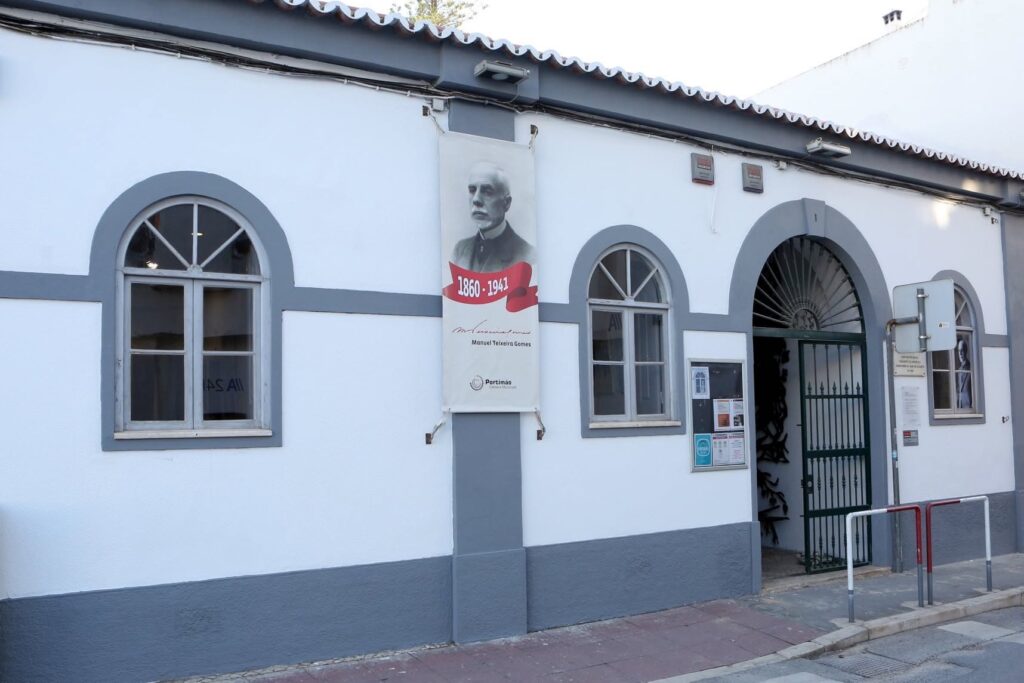
A StartUP Portimão promove, no dia 19 de junho, entre as 09:00 e as 13:00, na Casa Manuel Teixeira Gomes, o Future Business Summit – O Futuro das Empresas e da Liderança, uma iniciativa dedicada aos desafios da transformação empresarial.
O encontro vai reunir empreendedores da comunidade StartUP Portimão e do Portimão Cowork Space, que irão partilhar experiências, soluções e perspetivas sobre temas como aceleração digital, liderança, inteligência artificial, cibersegurança, comunicação e inovação.
Segundo o Município de Portimão, a iniciativa pretende juntar empreendedores, empresários, gestores e profissionais de diferentes áreas, criando um espaço de reflexão, aprendizagem e partilha.
Promovido pela incubadora de empresas do Município, o Future Business Summit procura aproximar o conhecimento e a capacidade de inovação existentes no ecossistema empreendedor local das empresas e organizações da região.
Digitalização e inteligência artificial em debate
De acordo com a autarquia, o evento pretende ir além de uma conferência sobre tendências, assumindo-se como uma oportunidade para reforçar a ligação entre o tecido empresarial e a comunidade empreendedora, promovendo a transferência de conhecimento, a inovação e a competitividade empresarial.
Ao longo da manhã, o encontro vai promover dois painéis centrais. O primeiro, dedicado à Aceleração Digital nas Empresas, contará com os contributos de Nádia Veloso, da 3HR Solutions, Carla Martins, da BLiSS Image & Life Consulting, e Raquel Melo, da Inboundware.
Neste painel serão abordadas experiências e perspetivas sobre liderança e alta performance, comunicação com propósito, valorização do talento e construção de marcas diferenciadoras num contexto empresarial cada vez mais exigente e digital.
O segundo painel, intitulado O Fator Humano na Era da Inteligência Artificial, reunirá Luís Silva, da Tecnologias Imaginadas, João Amado e Sara Cartucho, da JFA Training, e Tiago Fernandes, da Thinkerdots.
A sessão irá abordar temas como literacia digital, cibersegurança, utilização prática da inteligência artificial nas empresas e o seu impacto nos processos de inovação, tomada de decisão e desenvolvimento de produtos e serviços.
Workshops aproximam empresas e empreendedores
A componente prática do Future Business Summit será assegurada através de workshops temáticos dinamizados pelos empreendedores da comunidade StartUP Portimão e Portimão Cowork Space.
As sessões permitirão aos participantes aprofundar conhecimentos e experimentar metodologias e ferramentas aplicáveis ao contexto profissional, em áreas como gestão de pessoas, estratégia de imagem e comunicação, construção de marcas diferenciadoras, inteligência artificial em contexto empresarial e cibersegurança.
Segundo a organização, os workshops pretendem proporcionar momentos de “aprendizagem, experimentação e contacto direto com quem diariamente desenvolve soluções e projetos inovadores no mercado”.
Ao reunir empreendedores, empresários, gestores e profissionais de diferentes setores, o Future Business Summit reforça a missão da StartUP Portimão enquanto plataforma de dinamização do empreendedorismo, inovação e transferência de conhecimento.
A autarquia sublinha que a iniciativa promove “a criação de redes de colaboração” e contribui para o fortalecimento do ecossistema empresarial do concelho e da região.
A participação é gratuita, mediante inscrição prévia, estando sujeita à lotação disponível. O programa detalhado e o formulário de inscrição encontram-se disponíveis em: https://forms.office.com/e/YjGzHQJsiv.
In the fifth year of Russia's full-scale invasion of Ukraine, mil-tech startups still struggle to access bank financing amid strict secrecy and lack of collateral.
Anthropic launched a public version of its Mythos AI model, but with guardrails in place to block its use in sensitive areas such as cybersecurity.
The AI player stated its Claude Fable 5 model is its most powerful to date on its launch yesterday (9 June), which is two months after Anthropic first unveiled its Mythos-class model.
The limited Mythos preview sent shockwaves through the industry after the model uncovered thousands of software vulnerabilities.
Last week Anthropic expanded the reach of its Mythos AI model to an additional 150 companies across more than 15 countries.
The startup describes Fable 5 as state-of-the-art on nearly all tested benchmarks of AI capability, claiming exceptional performance across software engineering, knowledge work, vision and scientific research. The longer and more complex the task, Anthropic stated, the larger Fable 5’s lead over its other models.
Anthropic stated it has done extensive testing to ensure users cannot manipulate Fable 5 into bypassing its guidelines. Queries on restricted topics will instead receive a response from the company’s Claude Opus 4.8 model.
The AI player acknowledged the safeguards are tuned conservatively and will sometimes catch harmless requests but said they trigger on average in fewer than 5% of sessions.
“With more capable models arriving in the coming months, we’re working to improve our safeguards and reduce false positives as quickly as we can,” Anthropic stated.
For a smaller group of cyber defenders and infrastructure providers, Anthropic is simultaneously launching Claude Mythos 5, which is the same underlying model as Fable 5 but with safeguards lifted in some areas.
Mythos 5 will initially be deployed through Project Glasswing in collaboration with the US government. It carries what Anthropic described as the strongest cybersecurity capabilities of any model in the world.
Users who had access to the Claude Mythos Preview will be able to upgrade to Mythos 5, with broader access planned through an expanded trusted-access programme.
Fable 5 and Mythos 5 are priced at $10 per million input tokens and $50 per million output tokens, less than half the price of Claude Mythos Preview.
The rollout comes as Anthropic, now valued at $965 billion, looks to extend the momentum which has pushed its valuation above rival OpenAI, with both startups racing toward public listings.
Axon Networks acquired Greenwave Systems, combining two companies with shared roots to create a more unified, AI-powered network orchestration platform.
The US-based company stated the deal strengthens its cloud-agnostic Axon Maestro platform, purpose-built for telecom operators, institutions and enterprise service providers.
Greenwave’s software-defined mobile network services, including its network-as-a-service orchestration portfolio, will be added to Axon Maestro.
Greenwave’s technology will be folded into the Maestro platform as dedicated modules, with its engineering team shifting focus to OSS/BSS product development with expanded support for mobile connectivity.
Financial terms are not available.
At the heart of the integration is Axon’s real-time digital twin technology, which the company said will serve as the foundation for next-generation network inventory management.
Axon CEO Martin Manniche, who co-founded Greenwave in 2008 alongside other current Axon executives, stated operators are too often constrained by legacy operational support systems which require heavy customisation and slow down innovation.
“This limits their agility and effectiveness, delaying innovation and time-to-market for new services,” he said.
The deal also positions Axon to capitalise on growing operator interest in fixed wireless access and low earth orbit satellite connectivity.
As those technologies gain traction in access networks, the company argues end-to-end orchestration from the mobile core to in-home devices will become increasingly critical for delivering a consistent subscriber experience.
O Banco Central Europeu (BCE) tomou medidas para restringir as operações da fintech Revolut no ano passado, avançou esta quarta-feira o Financial Times. Estas limitações à filial europeia da fintech, com sede no Reino Unido, deveu-se às preocupações sobre a rapidez com que a empresa aprovava novos produtos financeiros.
De acordo com fontes consultadas pela publicação britânica estas restrições temporárias, que foram aplicadas no verão passado, continuariam em vigor até que fossem corrigidas as “deficiências” nos processos de aprovação. A Revolut foi obrigada a realizar uma revisão por terceiros das suas funções de risco, conformidade e jurídicas que regem os lançamentos de novos produtos na Europa.
O Financial Times adianta também que as restrições foram ainda mais apertadas fora do bloco para a filial europeia da Revolut, impedindo-a de fazer aquisições ou de conquistar novos clientes fora do continente.
A publicação britânica referiu que o conselho europeu da Revolut foi informado das restrições em julho de 2025. Uma fonte referiu ao Financial Times que, desde o verão passado, a Revolut melhorou o seu processo interno de lançamento de produtos, com análises mais rigorosas de novas iniciativas por parte de especialistas internos.
A Revolut citada pela publicação britânica referiu que mantém um “diálogo contínuo e construtivo” com os seus reguladores, incluindo o Banco Central Europeu, como parte das suas operações normais enquanto banco totalmente licenciado. “A Revolut está empenhada nos mais elevados padrões de governação e gestão de riscos. Em conformidade com as expectativas de supervisão, reforçamos regularmente o nosso ambiente de controlo interno e os nossos processos operacionais”, acrescentou a fintech.
Sabrina e Giovanni sono la terza coppia ufficiale di Temptation Island 2026. Dopo Gabriele e Sara e Francesca e Danilo, il programma aggiunge un’altra storia segnata da dubbi, convivenza e fiducia in bilico
Sabrina e Giovanni, la terza coppia accende Temptation Island
Sabrina e Giovanni sono la terza coppia svelata per la nuova edizione di Temptation Island. Il loro video di presentazione ha subito acceso i commenti social, perché la crisi arriva da una frase di lei che non è passata inosservata. Sabrina ha parlato di una “distrazione” e ha ammesso di non sapere più se ama ancora Giovanni.
I due stanno insieme da sei anni e convivono. La loro storia entra nel programma già carica di tensione, senza bisogno di grandi premesse. Il pubblico ha ascoltato il racconto di Sabrina e ha iniziato a dividersi: da una parte chi vede nei suoi dubbi un gesto di sincerità, dall’altra chi considera Giovanni il più esposto in questa prova davanti alle telecamere.
Il reality condotto da Filippo Bisciglia torna così a costruire l’attesa sulle coppie prima ancora della messa in onda. Dopo i primi annunci, il cast sembra muoversi su relazioni già segnate da sospetti, incomprensioni e parole difficili da rimettere a posto.
Dopo Gabriele e Sara, Francesca e Danilo: cresce l’attesa
Sabrina e Giovanni arrivano dopo Gabriele e Sara, la prima coppia presentata. Nel loro caso, il racconto ruota intorno ai sospetti di lui, convinto di essere stato tradito dopo alcune chat trovate sul telefono della fidanzata. Sara nega, Gabriele si dice ancora innamorato, ma il rapporto arriva nel villaggio con una fiducia già compromessa.
La seconda coppia, Francesca e Danilo, ha portato un’altra dinamica molto discussa. Anche qui tornano accuse, gelosia e sospetti legati alla presenza di Danilo su un’app di incontri. La presentazione ha subito alimentato i commenti online, soprattutto tra chi si chiede quanto una coppia possa reggere quando il dubbio diventa parte della quotidianità.
Con Sabrina e Giovanni il programma cambia prospettiva. Non è lui ad accusare lei con prove o chat, ma è lei a mettere sul tavolo l’incertezza sui propri sentimenti. Questo dettaglio ha reso la coppia una delle più commentate nelle ultime ore, perché sposta l’attenzione dalla gelosia alla paura di restare in una relazione che potrebbe non avere più la stessa forza.
Temptation Island 2026, le novità sul programma
La nuova edizione di Temptation Islandè attesa su Canale 5 con Filippo Bisciglia alla conduzione. Il programma dovrebbe tornare a fine giugno, con le coppie pronte a separarsi nei due villaggi tra single tentatori, video e falò di confronto.
Il format resta quello che il pubblico conosce: fidanzati e fidanzate separati per giorni, convivenza con i single, reazioni davanti ai filmati e decisione finale al falò. La differenza, quest’anno, sembra stare nella partenza già molto carica delle prime coppie. Gabriele e Sara arrivano con sospetti di tradimento, Francesca e Danilo con chat e app di incontri, Sabrina e Giovanni con una crisi dichiarata da lei.
Sui social, la terza coppia ha già prodotto commenti duri, battute e prime tifoserie. Sabrina viene letta da alcuni come una donna che ha scelto di non fingere più. Giovanni, invece, raccoglie la solidarietà di chi vede nella sua posizione una prova difficile da affrontare davanti a milioni di spettatori.
La prima puntata dovrà trasformare questi video di presentazione in racconto televisivo. Le premesse ci sono tutte: tre coppie, tre crisi diverse e un pubblico già pronto a scegliere da che parte stare.
Chi l’ha visto? anticipazioni: si parlerà anche del caso di Paula Andrea, scomparsa nel 2012
Torna una nuova puntata di Chi l’ha visto?, il programma condotto da Federica Sciarelli e in onda mercoledì 10 giugno in prima serata su Rai3. Testimonianze inedite sul caso di Paula Andrea Bran Yépez, scomparsa nel 2012. La donna non se n’è andata abbandonando il suo bambino: secondo la Procura non si è mai allontanata da Farneta. Paula aveva tanti progetti e la mamma che non ha mai smesso di cercarla dice: “Quando è venuta l’ultima volta a trovarmi mi disse che aveva paura di essere uccisa”.
Documenti inediti anche sul caso di Pamela Genini, l’ex modella uccisa a Milano da Gianluca Soncin: secondo gli inquirenti la tomba è stata profanata tra il 27 ottobre e il 2 novembre. L’unico indagato è Francesco Dolci che continua a proclamarsi innocente. Ma Pamela poteva esser salvata?
E poi Liliana Resinovich: ancora una proroga per analizzare i reperti, in particolare si confronteranno le fibre ritrovate su Lilly con i vestiti che il marito indossava il giorno della scomparsa. E il fratello Sergio sempre più amareggiato dice: “Arriveremo mai ad una verità? “
Come sempre spazio agli appelli, alle richieste di aiuto, alle segnalazioni dei telespettatori di persone in difficoltà.
Giornate campali ieri e oggi in Rai, precisamente dalle parti della direzione approfondimento. Si è svolto ieri l’annunciato da noi incontro fra la direzione della struttura in oggetto nella persona del suo direttore responsabile Paolo Corsini ed il giornalista e suo vice direttore ad personam Milo Infante.
Il conduttore di Ore 14 aveva informato l’azienda solo 24 ore prima dell’offerta ricevuta da Mediaset di entrare nella squadra news del biscione diretta da Mauro Crippa. Appena informata la tv pubblica da Infante, mentre nel frattempo la cosa era diventata di pubblico dominio, si era subito attivata per cercare di convincere l’ex giornalista di Telelombardia a restare in Rai.
Del resto la tv pubblica aveva già ampiamente dimostrato la stima verso Infante, collocando una costola del suo quotidiano appuntamento di Ore 14 anche nel prime time di Rai2. Una stima che nasce da lontano, ricordiamo quando Infante da vice direttore di Rai1, rimasto ai box per la decisione della direzione di rete di allora, fu cooptato da Ludovico Di Meo quale suo vice direttore e al contempo gli fu affidata proprio la trasmissione di Ore 14, che restò in onda anche se nei primi anni gli ascolti non erano di certo quelli di queste ultime due stagioni.
La proposta della Rai sarebbe stata quella di portare al massimo consentito dalla legge il suo compenso fisso a 240.000 euro. Lo stipendio di Infante si divide in due, la prima parte, quella fissa per la mansione che ha in azienda di vice direttore ad personam dell’approfondimento, più una “indennità” di conduzione per quando va in video.
E’ stata accolta da parte di Rai quella che sarebbe stata la richiesta di Infante, di portare cioè la quota fissa del suo stipendio a 240.000 euro, indipendentemente dal numero di conduzioni. Se invece avesse voluto un trattamento come quello riservato a Vespa, Sciarelli, Maggioni e Floris, avrebbe dovuto dimettersi da dipendente Rai, al fine poi di confezionargli un contratto da esterno, che può sfuggire al tetto di 240.000 euro, cosa che però non è avvenuta. La Rai secondo quanto apprendiamo sarebbe stata anche favorevole a questa opportunità.
Infante si era preso 24 ore di tempo per decidere e nelle scorse ore è arrivata la sua decisione. Secondo quanto risulta ad Affaritaliani Infante avrebbe comunicato alla Rai stamattina che a breve avrebbe consegnato le sue dimissioni. Secondo quanto si apprende Infante andrebbe a condurre una striscia quotidiana sulle reti del biscione. In Rai a questo punto si discuterà sulla sua successione e sull’opportunità di mantenere Ore 14 nel pomeriggio di Rai2 o cambiare magari tornando ai tempi di Detto fatto.
A judge's ruling in Texas is sending shockwaves through college sports. Texas Tech quarterback Brendan Sorsby, who wagered $90,000 on sports games, was banned from the sport. But he and the school appealed, arguing he has a gambling addiction and anxiety issues. The judge agreed, and Sorsby will most likely play this year. William Brangham discussed more with Danny Funt.
A recente fuga para a Argentina do bilionário tecnocrata Peter Thiel, mais conhecido por sua empresa Palantir, envolvida na captura dos serviços de segurança e inteligência dos EUA, chamou a atenção para os seus possíveis interesses na América do Sul. O papel de Javier Milei na implementação do Plano Andinia (a promoção da colonização judaica da Patagônia, para fins de criação de um novo Estado sionista) já tornou-se notório, e especula-se sobre a possibilidade de Thiel ter aí algum papel. Outros falam na hipótese de Thiel estar simplesmente saindo dos EUA para escapar a alguma possível futura responsabilização num governo estadunidense pós-Trump.
Agora, independentemente de quais sejam os reais interesses de Thiel na Argentina, não parece ser o alvo principal das operações do bilionário na América do Sul.
Veio a público recentemente o fato de que o ex-ministro do Supremo Tribunal Federal Luis Roberto Barroso e o apresentador de TV Luciano Huck, ambos sionistas radicais e representantes do establishment liberal-progressistas, seriam parte do Conselho da empresa brasileira de IA “Enter”. Essa empresa “Enter” está desenvolvendo um sistema, criado a partir dos modelos da OpenAI e da Anthropic, cuja finalidade será gerenciar de forma autônoma os casos dos principais escritórios de contencioso de massa do Brasil, cuidando da produção dos peticionamentos.
Espera-se, ademais, que a “Enter” eventualmente passe a operar também dentro dos tribunais, já que o objetivo declarado da startup é se tornar uma empresa monopolista para IA do setor jurídico. Ao se situar em ambas pontas principais das relações jurisdicionais (advogados e juiz), a “Enter” estaria basicamente dissolvendo a necessária “separação” que deve haver entre autor, réu e juiz, para que se possa preservar, concretamente, a imparcialidade da aplicação do Direito.
Ademais, é importante considerar a possibilidade de que, sutilmente, através de prompts, a “Enter” poderia prejudicar seus próprios clientes em casos nos quais um desses clientes representasse interesses contrários aos interesses dos investidores, diretores e conselheiros por trás da “Enter”.
A questão assume uma dimensão internacional, porém, a partir do momento em que descobrimos que a principal investidora da startup “Enter” é o Founders Fund, um fundo de investimentos de capital de risco criado por Peter Thiel e que conta, entre seus parceiros, com uma miríade de magnatas e especuladores ligados ao Vale do Silício.
Através do Founders Fund, Thiel tem um controle, no mínimo parcial, não apenas sobre a Palantir e a SpaceX do Musk, mas também Facebook, Polymarket, Spotify, Airbnb, entre outras, todas elas vinculadas ao mundo da Big Tech e do Vale do Silício, projetos que parecem dedicados à virtualização e algoritmização do mundo, para controlá-lo e influenciá-lo mais facilmente.
Assim, quando Thiel investe num projeto cujo objetivo declarado é controlar a atuação de advogados e juízes no Brasil, necessariamente estamos diante de um risco institucional significativo. Principalmente porque o Brasil parece ter se tornado laboratório de experimentação para inúmeros projetos liberais de todos os tipos, e os resultados alcançados no Brasil podem servir para determinar a internacionalização desse esforço de controlar as atividades jurídicas ao redor do mundo.
O próprio esforço, já existente no Brasil, de tornar as atividades jurídicas mediadas pela inteligência artificial já é, em si, um risco institucional. Os juízes pararam de ler os processos, bem como de produzir as próprias sentenças. E advogados bem treinados já passaram a incluir em suas petições prompts disfarçados cuja finalidade é manipular a IA do tribunal para que ela dê sentenças favoráveis. Com isso, o fator humano vai sendo excluído do Direito.
O problema é que todos os conflitos jurídicos são, fundamentalmente, sobre interesses humanos, e apenas pessoas podem entender as demandas de outras pessoas; razão pela qual praticamente deveríamos considerar imprescindível, e mesmo um direito fundamental, o ser defendido e julgado exclusivamente por seres humanos.
O impulso de Peter Thiel por controlar as relações jurídicas brasileiras deve servir de alerta para a necessidade de afirmar e reafirmar a importância fundamental da centralidade humana em todas as instituições e relações.
AST SpaceMobile decoupled from recent launch disappointments by scheduling the orbital deployment of its next three satellites on a SpaceX Falcon 9 rocket.
The space-based mobile network company hopes to blast its BlueBird 8, 9 and 10 satellites into low Earth orbit (LEO) on 17 June. As ever, launches are dependent on various environmental and other factors, so precise timing is fluid.
AST SpaceMobile expects the latest satellites to deliver almost twice the data rates of its initial BlueBird models, which it noted recently hit 98.9Mb/s in the downlink.
Company president Scott Wisniewski said the significance of the satellites goes beyond expanding its constellation and coverage: they represent the culmination of an in-house manufacturing drive and bolster claims to having birds with the largest phase-arrayed antennas at LEO heights.
AST SpaceMobile stated the trio of satellites are already stacked using a proprietary architecture and ready to be integrated with the SpaceX rocket.
The scheduled launch is something of a firing back by AST SpaceMobile at commentators who questioned whether a recent failure of a Blue Origin New Glenn rocket during a test would impact a plan to conduct regular launches throughout 2026.

 Login
Login