On December 10, 2024, a woman arrived at a health facility in Pariak, a town in the state of Jonglei in South Sudan, with diarrhea, vomiting and symptoms of dehydration. She had recently returned from an area affected by cholera. In one of the most vulnerable countries in the world, where millions of people lack regular access to clean water and health services, this could have been the beginning of a new emergency.
Os protestos no Quênia contra a construção de um centro para quarentena de estadunidenses expostos ao vírus ebola no Continente Africano resultam em três mortos. O acordo entre Estados Unidos (EUA) e Quênia tem repercutido no país da África Oriental, onde a população teme risco à saúde pública com a transferência de americanos expostos ao vírus.
Com cerca de 56 milhões de habitantes, o Quênia faz fronteira com Uganda, um dos locais do surto do ebola. O outro país onde os casos têm sido registrados é a República Democrática do Congo (RDC). Devido à proximidade com os epicentros do surto, a Organização Mundial da Saúde (OMS) considera o Quênia um dos países em risco de contaminação.
Nessa terça-feira (9), manifestantes denunciaram o assassinato de mais uma pessoa em um protesto em Nairóbi, a capital do país, contra a instalação do centro de quarentena ligado aos EUA. Na semana passada, outras duas pessoas foram mortas em protestos pelo mesmo motivo, segundo a Comissão de Direitos Humanos do Quênia (KHRC).
“A polícia destacada em Nairóbi atirou e matou um manifestante. Os moradores saíram às ruas exigindo transparência sobre a instalação de ebola apoiada pelos EUA e garantias sólidas para a proteção da saúde pública”, diz comunicado da organização não governamental.
A coordenadora do Núcleo de Estudos e Negócios Africanos (Nenaf) da ESPM, Natalia Fingermann, explicou à Agência Brasil que o Quênia ainda não registrou qualquer caso de ebola, mas que a população teme a instalação desse centro, fruto de um acordo com o governo de Donald Trump. Os detalhes desse acordo permanecem em sigilo.
“O governo do Quênia optou, secretamente, em fazer esse acordo com o governo Trump para criar um centro de quarentena para todos os cidadãos norte-americanos no território africano que tivessem qualquer tipo de suspeita de ebola. E lógico que a juventude, e a população de Nairóbi, ficou muito apreensiva”, comenta.
O acordo foi revelado em uma comunicação do governo Trump sobre a ajuda prestada pela Casa Branca ao continente africano para enfrentar o mais recente surto de ebola, que foi classificado pela Organização Mundial da Saúde (OMS) como uma emergência global.
“Essa questão coloca a saúde pública da população em risco porque ninguém sabe como é que vai ser feita essa construção, onde ela vai ser e quais serão as condições”, acrescentou a professora de relações internacionais da ESPM.
Nesse contexto, o Tribunal Superior de Nairóbi emitiu ordem cautelar suspendendo a instalação do centro de quarentena, previsto para ser instalado em Laikipia, a cerca de 150 quilômetros da capital. A mídia local afirma que o centro teria 50 leitos com previsão de expansão até 250 leitos.
“O tribunal proibiu especificamente os réus de admitirem, transferirem, receberem ou facilitarem a entrada no Quênia de pessoas expostas ou infectadas com o vírus ebola, conforme o acordo relatado com os EUA”, disse o jornal Kenyans.
Por meio de nota, a Embaixada dos EUA no Quênia afirmou que trabalha para resolver qualquer obstáculo para resposta conjunta dos dois países contra o surto de ebola.
“A unidade de bioisolamento em Laikipia faz parte de uma resposta abrangente para prevenir a disseminação da doença e reduzir os riscos à saúde em toda a região; ela não representa risco para as comunidades vizinhas”, informou a representação de Washington no Quênia.
Segundo a professora Natalia Fingermann, o presidente do Quênia, William Ruto, tem tido uma política bastante alinhada à pauta ocidental na região, com certas características autoritárias.
“O Quênia já vem de algumas semanas de protestos contra o governo, em especial, devido ao aumento do preço dos combustíveis”, completou. O valor da gasolina vem subindo no Quênia no contexto da guerra contra o Irã, que vem perturbando o mercado de petróleo no mundo.
Surto de ebola
Autoridades de saúde de países africanos, em parceria com organismos internacionais e outros países, se esforçam para conter o surto da rara cepa Bundibugyo, para qual ainda não há vacina ou tratamento. O surto, que é o terceiro maior já registrado, vinha avançando mais rapidamente do que a resposta global.
A União Africana e a Organização Mundial da Saúde (OMS) publicaram um plano para conter a expansão do vírus, tido com altamente mortal. Até o dia 8 de junho, foram registrados 626 casos confirmados na República Democrática do Congo (RDC), com 112 mortes associadas ao vírus; além de 19 casos e duas mortes confirmadas em Uganda.
Os dados são consolidados pelo Centro de Controle e Prevenção de Doenças (CDC) da União Africana, alimentado por dados dos ministérios da Saúde da RDC e de Uganda.
Os protestos no Quênia contra a construção de um centro para quarentena de estadunidenses expostos ao vírus ebola no Continente Africano resultam em três mortos. O acordo entre Estados Unidos (EUA) e Quênia tem repercutido no país da África Oriental, onde a população teme risco à saúde pública com a transferência de americanos expostos ao vírus.
Com cerca de 56 milhões de habitantes, o Quênia faz fronteira com Uganda, um dos locais do surto do ebola. O outro país onde os casos têm sido registrados é a República Democrática do Congo (RDC). Devido à proximidade com os epicentros do surto, a Organização Mundial da Saúde (OMS) considera o Quênia um dos países em risco de contaminação.
Nessa terça-feira (9), manifestantes denunciaram o assassinato de mais uma pessoa em um protesto em Nairóbi, a capital do país, contra a instalação do centro de quarentena ligado aos EUA. Na semana passada, outras duas pessoas foram mortas em protestos pelo mesmo motivo, segundo a Comissão de Direitos Humanos do Quênia (KHRC).
“A polícia destacada em Nairóbi atirou e matou um manifestante. Os moradores saíram às ruas exigindo transparência sobre a instalação de ebola apoiada pelos EUA e garantias sólidas para a proteção da saúde pública”, diz comunicado da organização não governamental.
A coordenadora do Núcleo de Estudos e Negócios Africanos (Nenaf) da ESPM, Natalia Fingermann, explicou à Agência Brasil que o Quênia ainda não registrou qualquer caso de ebola, mas que a população teme a instalação desse centro, fruto de um acordo com o governo de Donald Trump. Os detalhes desse acordo permanecem em sigilo.
“O governo do Quênia optou, secretamente, em fazer esse acordo com o governo Trump para criar um centro de quarentena para todos os cidadãos norte-americanos no território africano que tivessem qualquer tipo de suspeita de ebola. E lógico que a juventude, e a população de Nairóbi, ficou muito apreensiva”, comenta.
O acordo foi revelado em uma comunicação do governo Trump sobre a ajuda prestada pela Casa Branca ao continente africano para enfrentar o mais recente surto de ebola, que foi classificado pela Organização Mundial da Saúde (OMS) como uma emergência global.
“Essa questão coloca a saúde pública da população em risco porque ninguém sabe como é que vai ser feita essa construção, onde ela vai ser e quais serão as condições”, acrescentou a professora de relações internacionais da ESPM.
Nesse contexto, o Tribunal Superior de Nairóbi emitiu ordem cautelar suspendendo a instalação do centro de quarentena, previsto para ser instalado em Laikipia, a cerca de 150 quilômetros da capital. A mídia local afirma que o centro teria 50 leitos com previsão de expansão até 250 leitos.
“O tribunal proibiu especificamente os réus de admitirem, transferirem, receberem ou facilitarem a entrada no Quênia de pessoas expostas ou infectadas com o vírus ebola, conforme o acordo relatado com os EUA”, disse o jornal Kenyans.
Por meio de nota, a Embaixada dos EUA no Quênia afirmou que trabalha para resolver qualquer obstáculo para resposta conjunta dos dois países contra o surto de ebola.
“A unidade de bioisolamento em Laikipia faz parte de uma resposta abrangente para prevenir a disseminação da doença e reduzir os riscos à saúde em toda a região; ela não representa risco para as comunidades vizinhas”, informou a representação de Washington no Quênia.
Segundo a professora Natalia Fingermann, o presidente do Quênia, William Ruto, tem tido uma política bastante alinhada à pauta ocidental na região, com certas características autoritárias.
“O Quênia já vem de algumas semanas de protestos contra o governo, em especial, devido ao aumento do preço dos combustíveis”, completou. O valor da gasolina vem subindo no Quênia no contexto da guerra contra o Irã, que vem perturbando o mercado de petróleo no mundo.
Surto de ebola
Autoridades de saúde de países africanos, em parceria com organismos internacionais e outros países, se esforçam para conter o surto da rara cepa Bundibugyo, para qual ainda não há vacina ou tratamento. O surto, que é o terceiro maior já registrado, vinha avançando mais rapidamente do que a resposta global.
A União Africana e a Organização Mundial da Saúde (OMS) publicaram um plano para conter a expansão do vírus, tido com altamente mortal. Até o dia 8 de junho, foram registrados 626 casos confirmados na República Democrática do Congo (RDC), com 112 mortes associadas ao vírus; além de 19 casos e duas mortes confirmadas em Uganda.
Os dados são consolidados pelo Centro de Controle e Prevenção de Doenças (CDC) da União Africana, alimentado por dados dos ministérios da Saúde da RDC e de Uganda.
Um novo caso suspeito de ebola está sendo investigado pela Secretaria de Estado da Saúde e pelo Centro de Vigilância Epidemiológica Professor Alexandre Vranjac (CVE-SP).
Segundo a secretaria, a paciente é uma brasileira de 31 anos que esteve recentemente a trabalho na província de Kivu do Norte, no leste da República Democrática do Congo. O país passa por um surto da doença, classificado pela Organização Mundial da Saúde como de importância internacional.
Ela desembarcou no Brasil no dia 6 de junho e nesta terça-feira (9) começou a apresentar sintomas como diarreia e febre, procurando um serviço particular de saúde. Nesta madrugada (10), ela foi transferida para o Instituto de Infectologia Emílio Ribas (IIER), referência nacional para casos suspeitos ou confirmados da doença.
Segundo a secretaria, a paciente está estável e permanece em leito de isolamento, seguindo os protocolos de biossegurança previstos para esse tipo de situação. Um teste rápido para malária já foi realizado, que deu resultado negativo.
Até o momento, não há confirmação laboratorial de doença pelo vírus ebola. As análises estão sendo conduzidas pelo Instituto Adolfo Lutz (IAL).
Este é o segundo caso suspeito de ebola no estado de São Paulo. O primeiro caso, referente a um homem de 37 anos procedente da República Democrática do Congo, foi investigado e descartado para ebola.
As análises para esse paciente detectaram a presença de uma bactéria causadora da meningite meningocócica. Segundo a secretaria, esse paciente segue internado no Emílio Ribas, com evolução favorável do quadro de saúde.
Ebola
A doença pelo vírus ebola é uma grave infecção transmitida de pessoa para pessoa. A infecção ocorre por contato direto ou indireto com sangue, fluidos corporais ou secreções (fezes, urina, saliva, sêmen) de pessoas infectadas, mas somente quando estas apresentam sintomas. O vírus não é transmitido pelo ar.
Segundo a Organização Pan-Americana da Saúde (Opas), a doença geralmente apresenta alta taxa de mortalidade, mas no atual surto de ebola, essa taxa varia entre 55% e 60%.
O vírus ebola surgiu pela primeira vez em 1976 em uma aldeia próxima ao rio Ebola, na República Democrática do Congo (antigo Zaire). Desde sua detecção, vários surtos da doença ocorreram em diferentes partes da África.
Até este momento, não houve confirmação de casos de ebola no Brasil.
Um novo caso suspeito de ebola está sendo investigado pela Secretaria de Estado da Saúde e pelo Centro de Vigilância Epidemiológica Professor Alexandre Vranjac (CVE-SP).
Segundo a secretaria, a paciente é uma brasileira de 31 anos que esteve recentemente a trabalho na província de Kivu do Norte, no leste da República Democrática do Congo. O país passa por um surto da doença, classificado pela Organização Mundial da Saúde como de importância internacional.
Ela desembarcou no Brasil no dia 6 de junho e nesta terça-feira (9) começou a apresentar sintomas como diarreia e febre, procurando um serviço particular de saúde. Nesta madrugada (10), ela foi transferida para o Instituto de Infectologia Emílio Ribas (IIER), referência nacional para casos suspeitos ou confirmados da doença.
Segundo a secretaria, a paciente está estável e permanece em leito de isolamento, seguindo os protocolos de biossegurança previstos para esse tipo de situação. Um teste rápido para malária já foi realizado, que deu resultado negativo.
Até o momento, não há confirmação laboratorial de doença pelo vírus ebola. As análises estão sendo conduzidas pelo Instituto Adolfo Lutz (IAL).
Este é o segundo caso suspeito de ebola no estado de São Paulo. O primeiro caso, referente a um homem de 37 anos procedente da República Democrática do Congo, foi investigado e descartado para ebola.
As análises para esse paciente detectaram a presença de uma bactéria causadora da meningite meningocócica. Segundo a secretaria, esse paciente segue internado no Emílio Ribas, com evolução favorável do quadro de saúde.
Ebola
A doença pelo vírus ebola é uma grave infecção transmitida de pessoa para pessoa. A infecção ocorre por contato direto ou indireto com sangue, fluidos corporais ou secreções (fezes, urina, saliva, sêmen) de pessoas infectadas, mas somente quando estas apresentam sintomas. O vírus não é transmitido pelo ar.
Segundo a Organização Pan-Americana da Saúde (Opas), a doença geralmente apresenta alta taxa de mortalidade, mas no atual surto de ebola, essa taxa varia entre 55% e 60%.
O vírus ebola surgiu pela primeira vez em 1976 em uma aldeia próxima ao rio Ebola, na República Democrática do Congo (antigo Zaire). Desde sua detecção, vários surtos da doença ocorreram em diferentes partes da África.
Até este momento, não houve confirmação de casos de ebola no Brasil.
As autoridades belgas recusaram aceder ao pedido feito por Washington aos países europeus para que adotem maiores restrições nas chegadas de países africanos afetados pelo Ébola, nomeadamente da República Democrática do Congo (RDC), em vésperas do Campeonato do Mundo, reporta o “Politico”.
Frank Vandenbroucke, ministro da Saúde belga, afirmou à Rádio 1 que a Bélgica irá continuar a seguir as recomendações científicas, nomeadamente do Centro Europeu de Prevenção e Controlo das Doenças (ECDC), não cedendo às pressões políticas dos EUA. Segundo o governante, os esforços concentram-se na triagem e nos controlos nos pontos de partida dos países onde existem casos.
“Estamos em estreita articulação com os parceiros envolvidos e com o Centro Europeu de Prevenção e Controlo das Doença. A ciência conclui que é necessário tomar medidas nos locais onde a crise está a atingir o seu auge. Neste momento, não está prevista qualquer proibição de entrada para ninguém”, explicou.
Na mesma entrevista, o ministro belga acusou a administração Trump de minar a resposta internacional àquela crise de saúde pública.
“Os EUA têm uma responsabilidade enorme pelo que está a acontecer agora, porque a cooperação para o desenvolvimento e a ajuda médica foram reduzidas. Vão ter milhões de pessoas na consciência”, atirou.
O pedido terá chegado a Bruxelas por intermédio do Embaixador Bill White e visava viajantes congoleses.
A resposta surge no dia seguinte ao apelo feito pela administração Trump no sentido de que os países europeus imponham restrições de viagem às pessoas que tenham estado recentemente em países da África Central afetados pelo surto de Ébola, como RDC e Uganda, segundo a “Reuters”.
Um porta-voz da Comissão Europeia afirmou que não há indícios de que sejam necessárias medidas adicionais nas fronteiras para impedir a propagação do vírus na Europa, de acordo com a mesma agência noticiosa.
Ainda não foram registados casos de Ébola nos EUA, mas as preocupações de Washington antecedem a chegada de milhões de adeptos para o Mundial de futebol.
Na quarta-feira, o secretário de Estado dos EUA, Marco Rubio, contactou a presidente da Comissão Europeia, Ursula von der Leyen, para “discutir a coordenação e os esforços de resposta” ao surto de Ébola.
“A maior prioridade e foco do departamento continuam a ser proteger a saúde do povo americano e impedir que este surto de Ébola chegue às nossas costas”, referiu o comunicado.
Até ao momento, as autoridades confirmaram 600 casos de Ébola na RDC e Uganda, bem como mais de 100 mortes.
Agência de saúde pública da União Africana apelou aos Estados-membros para que reforcem os controlos nas fronteiras, a fim de conter a propagação da epidemia de ébola.
El 10 de diciembre de 2024, una mujer llegó a un centro de salud de Pariak, una localidad del Estado de Jonglei, en Sudán del Sur, con diarrea, vómitos y síntomas de deshidratación. Había regresado recientemente de una zona afectada por el cólera. En uno de los países más vulnerables del mundo, donde millones de personas carecen de acceso regular a agua potable y servicios sanitarios, aquello podía haber sido el comienzo de una nueva emergencia.
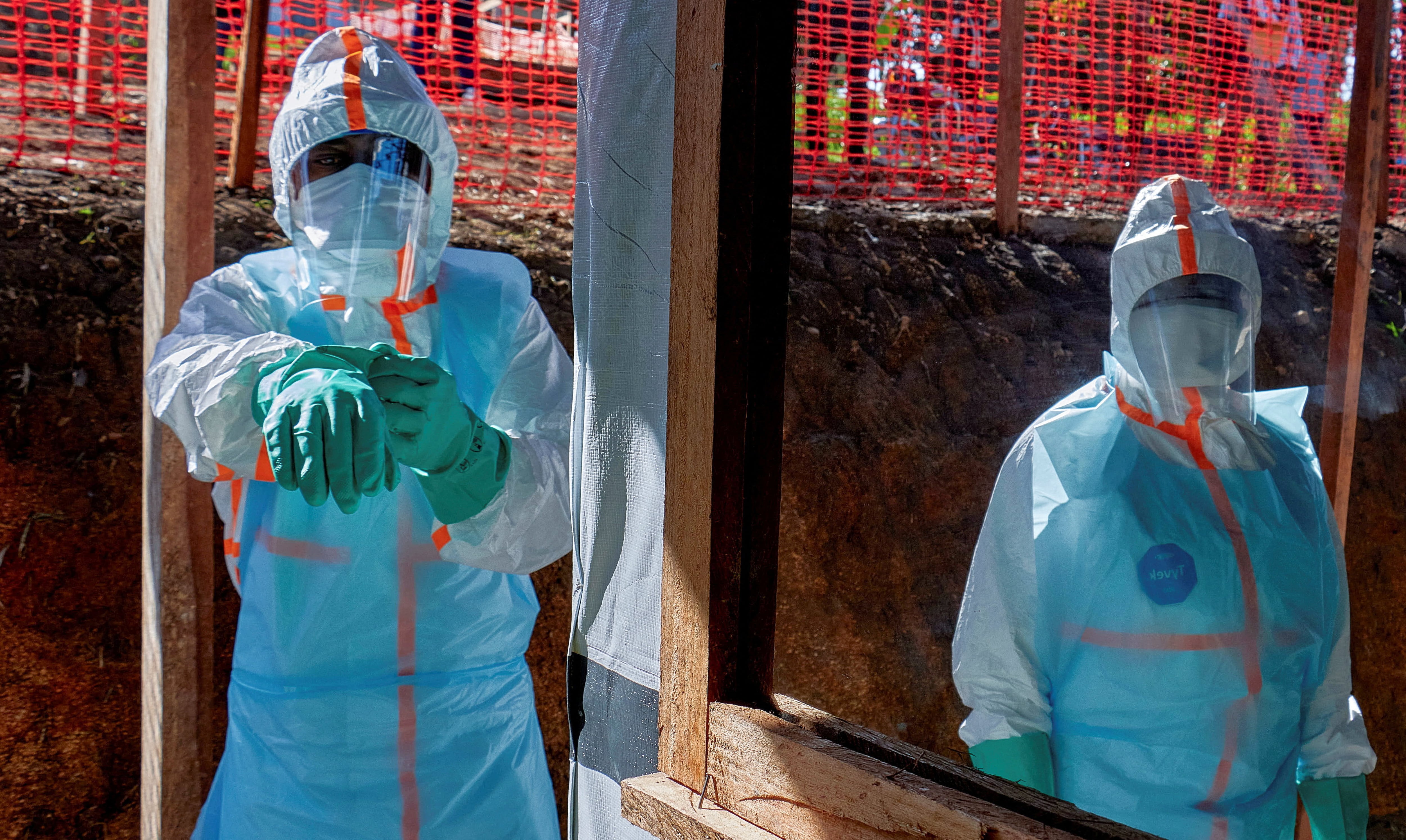
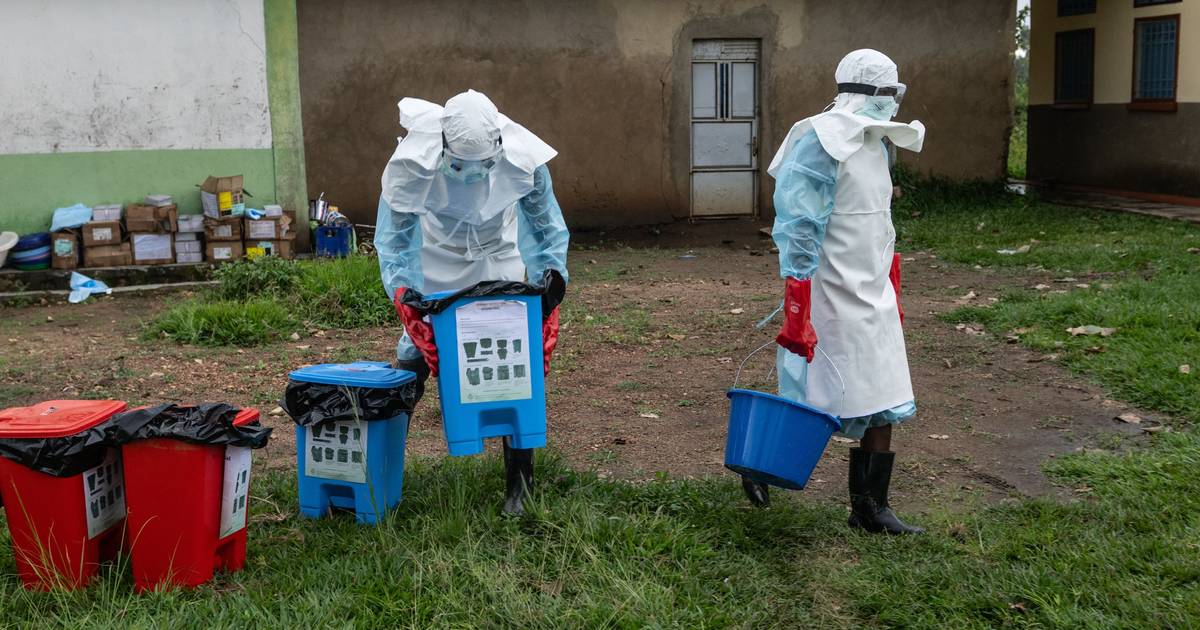
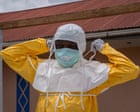
Personal sanitario se equipa con material de protección individual para responder al brote de ébola, el 31 de mayo en Bunia, República Democrática del Congo.
Police dispersed demonstrators in Nanyuki, 120 miles from Nairobi, amid rising anger at US plans
Kenyan police have shot dead a man during a protest against a proposed Ebola quarantine facility for US citizens.
Patrick Wahome, who has organised protests in Nanyuki against the centre, told Reuters on Tuesday the man died from a gunshot wound to the head. Reporters from the agency saw his body lying motionless in a police van with a large head wound.
The US Centers for Disease Control and Prevention (CDC) on Friday published a range of scenarios generated by computer models, from 10,000 cases to more than 20,000. In the west Africa outbreak, more than 28,000 cases were reported.
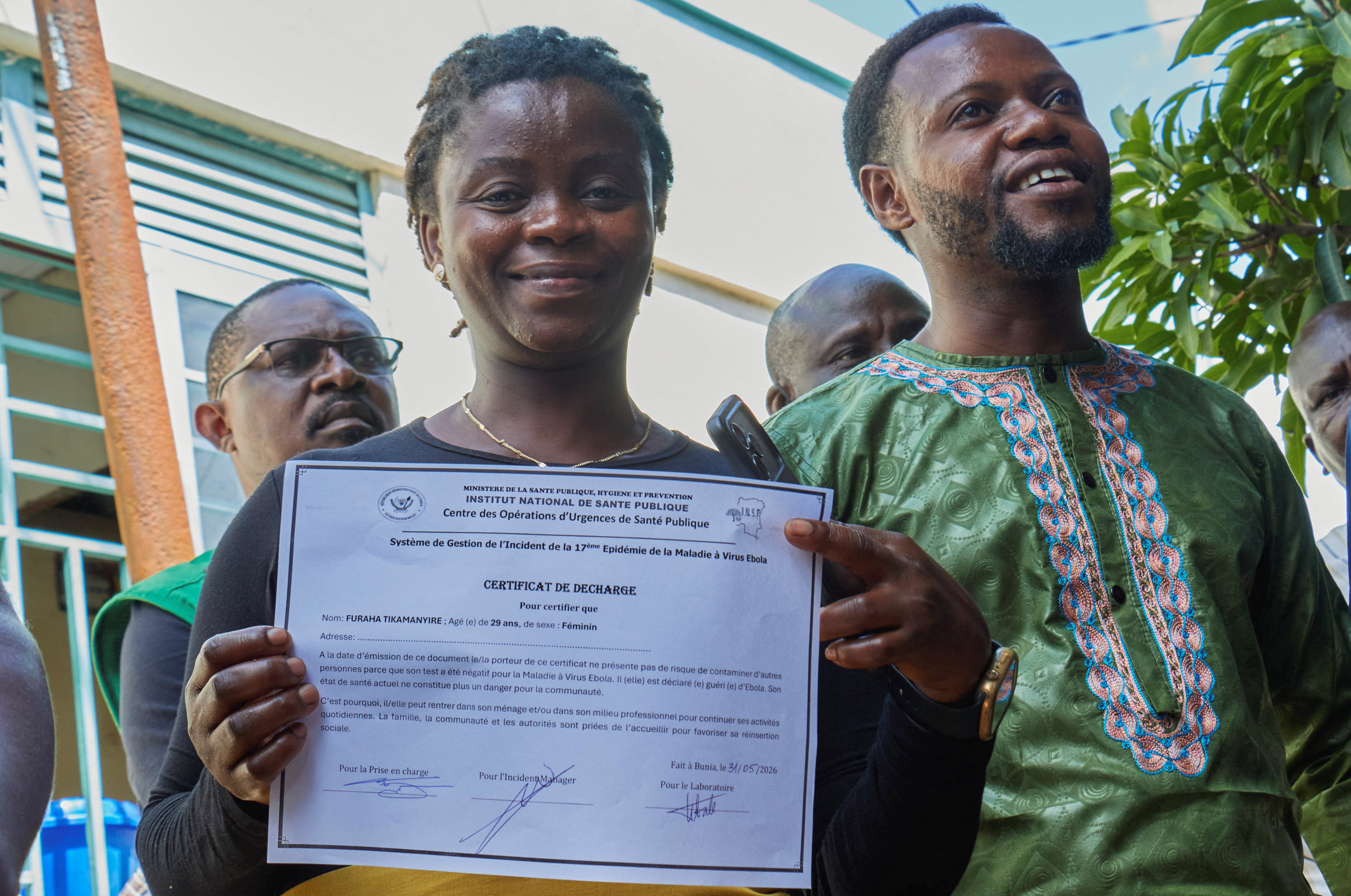
When Furaha Tikamanyire began feeling ill on April 26, she did not imagine she had contracted Ebola. For weeks, this nurse at the Bunia Evangelical Medical Center in the Democratic Republic of the Congo (DRC) had cared for dozens of people arriving from the Mongbwalu region, about 75 kilometers away, where the virus had begun spreading before it was identified.
Plan departs from policy of bringing CDC staff back to US for treatment and offering support to all health workers
Former top US officials and other experts are urging the Trump administration to abandon plans for an Ebola quarantine and treatment centre in Kenya, as the union for workers with the US Centers for Disease Control and Prevention (CDC) calls for Americans exposed to Ebola to be brought home for treatment.
Soon after the US revealed it was setting up a field hospital in Kenya for the Ebola quarantine and treatment of Americans, the Kenyan high court blocked the order – but the Kenyan and US governments moved forward anyway, with the first American responders reportedly landing at the Laikipia airbase on Saturday.
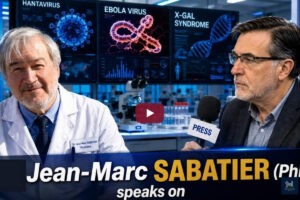
Interview with Jean-Marc Sabatier by François Cotard on emerging viruses
During a lengthy interview broadcast on alternative media platforms, Jean-Marc Sabatier shared his views on several current public health topics, including hantaviruses, the Ebola virus, and Alpha-Gal syndrome.
Hantaviruses Under Scrutiny
The interview first focused on hantaviruses, a family of viruses that can cause pulmonary syndromes or hemorrhagic fevers. Jean-Marc Sabatier noted that these viruses are generally transmitted through contact with the feces, urine, or saliva of infected rodents and are not easily spread from person to person.
According to Sabatier, Moderna’s development of an mRNA vaccine targeting certain hantavirus strains as early as 2024 raises questions, particularly because these viruses are considered to have limited pandemic potential. He also described several biological mechanisms associated with these infectious agents and discussed laboratory research involving pseudoviruses.
The speakers emphasized that, based on the information available to them, the number of reported cases in Europe remains limited and that the situation does not currently warrant major concern.
Ebola: Vigilance and Debate Over Vaccination Strategies
The second part of the interview addressed the Ebola virus, particularly the Bundibugyo strain, which is currently being monitored in Central Africa.
Jean-Marc Sabatier reviewed the biological characteristics of the virus, its high fatality rate under certain circumstances, and its modes of transmission, primarily through contact with bodily fluids. He stressed that Ebola outbreaks have historically been contained through targeted public health measures.
The two participants also discussed funding for vaccine research directed at this specific strain. They expressed skepticism about the possibility of large-scale vaccination campaigns being implemented if the virus were to spread beyond Africa.
In addition, several potential treatments were mentioned, including certain monoclonal antibodies and older medications such as ivermectin and hydroxychloroquine, although their effectiveness remains a subject of debate within the scientific community.
Alpha-Gal Syndrome and Red Meat Allergy
The third topic concerned Alpha-Gal syndrome, a red meat allergy that can develop following bites from certain tick species, particularly the Lone Star tick, which is found primarily in North America.
Jean-Marc Sabatier explained that the condition results from an immune reaction to a sugar molecule known as galactose-α-1,3-galactose, which is present in most mammals but absent in humans.
During the discussion, the participants referred to various claims circulating on social media regarding Bill Gates’s alleged involvement in programs related to ticks or synthetic meat. They suggested that connections between these topics might exist, although no direct evidence was presented during the interview.
Ongoing Criticism of Public Health Institutions
Throughout the conversation, the participants expressed skepticism toward certain public health institutions, including the World Health Organization (WHO), regulatory agencies, and major pharmaceutical companies.
Jean-Marc Sabatier specifically criticized the development of mRNA vaccines and argued that dissenting voices face difficulties being heard within scientific and media circles. He stated that he himself has experienced a form of marginalization because of his views.
A Call for Caution
In conclusion, despite the concerns raised during the interview, Jean-Marc Sabatier encouraged listeners not to panic in response to new public health alerts. According to him, it is important to maintain a critical mindset, consult multiple sources of information, and closely monitor evolving epidemiological situations without resorting to alarmism.
Jean-Marc Sabatier, Director of Research at the CNRS, holds a PhD in cell biology and microbiology and a Habilitation à diriger des recherches (HDR) in biochemistry
Islamic State-linked militia blamed for raids in North Kivu as governor says three patients with disease fled clinics
Rebel attacks around a town that is one of the centres of the Ebola outbreak in the Democratic Republic of the Congo have left more than 30 people dead over the past few days, complicating the response to the disease.
At least 10 people were massacred in raids on three villages around the city of Beni, in North Kivu, in the early hours of Wednesday morning.
Efforts to create enough fear over new strains of the mythical COVID “virus” have been largely ineffective by the Pharmaceutical Cartel, so they are rolling out a re-run of another fake virus, the “dreaded Ebola virus” in a lame effort to create fear and roll out new vaccines and products.
Their most successful attempt to sow fear into the American public over a mythical Ebola “virus” was in 2014, over a decade ago. We covered it then, and if you search for “ebola” on Health Impact News, you will get a search result of over 100 articles.
Who could forget this scary picture of a nurse returning from Africa who was treating Ebola patients as then NJ Governor Chris Christie forced her to be locked up like a caged animal for 21 days?
New Jersey Governor Chris Christie forced a nurse returning from Africa where she was treating Ebola patients to be quarantined like a prisoner for 21 days back in 2014, even though she had no symptoms and posed no danger to the public according to medical experts. She lived in a tent with no running water. Story here.
This fear was used during the Obama Administration to roll out new CDC rules for quarantine, and began laying the groundwork for a future “pandemic” that we all know now was the COVID scam of 2020:
Dr. Cyril Broderick, a Liberian scientist and professor, penned an editorial piece about the African’s perspective of the cause of Ebola back then in 2014, and it is probably just as true today as it was 12 years ago when we published it.
He does start from the premise that there is an actual pathogen, but that it was created by the U.S. military.
I have read a number of articles from your Internet outreach as well as articles from other sources about the casualties in Liberia and other West African countries about the human devastation caused by the Ebola virus.
About a week ago, I read an article published in the Internet news summary publication of the Friends of Liberia that said that there was an agreement that the initiation of the Ebola outbreak in West Africa was due to the contact of a two-year old child with bats that had flown in from the Congo.
That report made me disconcerted with the reporting about Ebola, and it stimulated a response to the “Friends of Liberia,” saying that African people are not ignorant and gullible, as is being implicated.
A response from Dr. Verlon Stone said that the article was not theirs, and that “Friends of Liberia” was simply providing a service. He then asked if he could publish my letter in their Internet forum.
I gave my permission, but I have not seen it published.
Because of the widespread loss of life, fear, physiological trauma, and despair among Liberians and other West African citizens, it is incumbent that I make a contribution to the resolution of this devastating situation, which may continue to recur, if it is not properly and adequately confronted.
I will address the situation in five (5) points:
1. EBOLA IS A GENETICALLY MODIFIED ORGANISM (GMO)
2. EBOLA HAS A TERRIBLE HISTORY, AND TESTING HAS BEEN SECRETLY TAKING PLACE IN AFRICA
3. SITES AROUND AFRICA, AND IN WEST AFRICA, HAVE OVER THE YEARS BEEN SET UP FOR TESTING EMERGING DISEASES, ESPECIALLY EBOLA
4. THE NEED FOR LEGAL ACTION TO OBTAIN REDRESS FOR DAMAGES INCURRED DUE TO THE PERPETUATION OF INJUSTICE IN THE DEATH, INJURY AND TRAUMA IMPOSED ON LIBERIANS AND OTHER AFRICANS BY THE EBOLA AND OTHER DISEASE AGENTS.
5. AFRICAN LEADERS AND AFRICAN COUNTRIES NEED TO TAKE THE LEAD IN DEFENDING BABIES, CHILDREN, AFRICAN WOMEN, AFRICAN MEN, AND THE ELDERLY. THESE CITIZENS DO NOT DESERVE TO BE USED AS GUINEA PIGS!
One killed as hundreds protest in Kenya against US Ebola quarantine centre
At least one person has been killed after Kenyan police opened fire as hundreds of demonstrators protested a quarantine centre for US citizens exposed to Ebola, which the United States government is racing to build in the central town of Nanyuki.
On Tuesday, the NGO Vocal Africa posted on X that one person had died after being shot in the head by Kenyan police who earlier used water cannon, tear gas to disperse the crowds.
The proposed 50-bed unit at an air force base in Nanyuki has angered many Kenyans, who accuse the US of offloading the health risk of caring for those exposed to the Ebola outbreak in the eastern Democratic Republic of the Congo (DRC) and Uganda.
Last week, hundreds took to the streets in Nanyuki amid growing frustration among residents as Kenyan and US authorities publicly reaffirmed their commitment to the plan despite court orders. At the time, the demonstration also turned violent, with at least two people killed and one wounded.
UPDATE ON JUNE, 1, 2026
Fury erupts in Kenya over joint US Ebola quarantine plan – VIDEO
Hundreds of Nanyuki town residents took to the streets to oppose the construction of an infectious disease isolation facility in Laikipia County.
Protesters say resources earmarked for the facility should be directed to regional development, fearing it could still expose communities to Ebola.
The army even sent a tank to quell the protest by intimidating the crowd.
The Fear of an International Plot
The Ebola virus of the international epidemic emergency in Africa, where in Congo and Uganda it has already killed dozens of people, is at the center of many suspicions for two reasons:
The dangerous tests on this pathogen conducted by the US Pentagon in the infamous biolaboratories in Ukraine
Research on a vaccine for the specific strain of the current alarm began 4 months ago by Moderna with the contribution of Ngo Gavi by Bill Gates
Further details in the updates below
UPDATED ON MAY, 29, 2026
MSF doctor exposed to the virus at Spallanzani Hospital in Rome
The Doctors Without Borders (MSF aka Médecins Sans Frontières) doctor who was exposed to patients who tested positive for Ebola in the Democratic Republic of Congo arrived overnight at the Lazzaro Spallanzani National Institute for Infectious Diseases in Rome. The woman is well and asymptomatic. She will remain under observation at the Roman hospital until June 8th, MSF sources confirmed.
As part of her clinical practice, the surgeon came into contact with patients who later tested positive on May 16th. This is therefore a case of direct contact. The doctor also performed emergency lifesaving surgery on May 18th on a child who was the victim of a grenade explosion. The child is a suspected case of Ebola, and a test for Ebola is not yet available.
Ebola: Three Red Cross workers die as more than 1000 cases and 200 deaths reported
«Three Red Cross volunteers have died in the Democratic Republic of the Congo (DRC) as the Ebola outbreak continues to spread rapidly and cases (suspected and confirmed) surpass 1000» according to BMJ (British Medical Journal).
The volunteers-Ajiko Chandiru Viviane, Sezabo Katanabo, and Alikana Udumusi Augustin-were all helping the Red Cross manage the dead bodies of Ebola victims. Their deaths occurred over 12 days, on 5, 15, and 16 May, respectively.
The World Health Organization’s director general, Tedros Adhanom Ghebreyesus, expressed his “deepest condolences” over the fatalities. “They paid the ultimate price on the line of duty,” he wrote.
Meanwhile British researchers announced they are producing an experimental jab for the Ebola strain behind the outbreak, which currently has no approved vaccines or therapeutics (read details below).
According to the latest updates (24 and 25 May), there are currently 101 confirmed Ebola cases in the DRC and 930 suspected cases.
There have so far been 223 deaths among people with suspected cases and 10 confirmed deaths. In Uganda, seven cases and one death have been confirmed. The outbreak-currently the third largest Ebola outbreak on record (based on confirmed and
UPDATED ON MAY, 19, 2026
Panic in the United States for Ebola after dangerous Tests in Pentagon-funded Ukraine Biolabs
Is there a reason Americans are so worried about the new Ebola epidemic in Africa?
Is it perhaps because the US Pentagon itself has been secretly researching this virus, conducting the usual experiments to enhance it as a bioweapon in top-secret laboratories in Ukraine?
In this article, we try to provide answers and confirmation to these questions…
US suspends entry of foreign citizens from Ebola-affected areas
The United States has suspended entry to non-US citizens who have been in Ebola-affected areas in the past 21 days: Uganda, the Democratic Republic of the Congo, and South Sudan.
The measure, issued by the Centers for Disease Control and Prevention (CDC), will be in effect for the next 30 days and is justified by the need to “protect the health of the United States from the serious risk posed by the introduction of Ebola virus disease into the United States by these foreign nationals.”
At the moment it is one of the few countries to have taken this drastic health measure.
Just hours earlier, the United States announced that it had strengthened precautionary measures to prevent the spread of Ebola hemorrhagic fever, implementing health screenings for air travelers from affected areas and temporarily suspending visa services.
WHO will convene an emergency committee due to the rapid spread of the Ebola Bundibugio strain – VIDEO
WHO will convene an emergency committee due to the rapid spread of the Ebola Bundibugio strain.
“At the moment, 30 cases of the disease have been confirmed in the northern province of Ituri. Uganda has also reported two confirmed cases in the capital Kampala, including one death among two people who arrived from the Democratic Republic of the Congo,” said Tedros Adhanom Ghebreyesus, head of the organization, during a briefing.
Breaking – WHO declares emergency as strain kills 100 in DRC and Uganda
A new outbreak of Ebola virus disease in central Africa, caused by the rare Bundibugyo version of the virus, has caused more than 300 suspected cases and killed 100 people, health officials have said.
The World Health Organization (WHO) has declared the situation a public health emergency of international concern.
The Africa Centres for Disease Control and Prevention (Africa CDC) has so far identified 336 suspected and 10 confirmed cases in the Democratic Republic of the Congo (DRC). There have been 87 deaths in the DRC to date. Uganda has had two confirmed cases and one additional death.
In response WHO has sent five tonnes of medical supplies to the DRC, and $500 000 (£374 000; €430 000) has been released from the agency’s contingency fund for emergencies.
This Ebola outbreak is causing particular concern because it has been caused by the Bundibugyo strain, which has been detected in only two previous outbreaks, in 2007 and 2012. There are no approved treatments or vaccines for Bundibugyo Ebola.
Pentagon Tests in Africa on Dangerous Virus before the last WHO Emergency
We republish below an excellent, albeit brief, investigative article by renowned American epidemiologist Nicolas Hulsher on the extraordinary coincidence of vaccine research funding granted to Big Pharma Moderna of Cambridge, Massachusetts, just months before the Ebola emergency in the DRC.
It is therefore true, as Hulsher expertly states, that the Ebola virus has little chance of becoming a pandemic, but it is equally true that this refers to the wild viral strain and not those with laboratory-enhanced genotypes(such as SARS-CoV-2, according to a CIA whistleblower) as recombinant synthetic pathogens, i.e., those obtained by inserting multiple pathogens, such as HIV-AIDS, into the Covid-19 virus.
Bill Gates-backed CEPI awarded Moderna and Oxford $26.7 million to develop multivalent Ebola mRNA in January 2026
by Nicolas Hulscher, MPH – originally published on his substack Focal Points
All links to previous Gospa News investigations or video have been added in the aftermath
Just a few months ago (January 2026), Bill Gates’ vaccine cartel CEPI gave Moderna and University of Oxford $26.7 million to begin developing Bundibugyo ebolavirus (BDBV) mRNA and viral vector injections. These are multivalent filovirus “vaccine” platforms, meaning they are designed to target multiple Ebola viruses and related filoviruses simultaneously — including Bundibugyo ebolavirus (BDBV).
WHO declared a Public Health Emergency of International Concern (PHEIC) over a Bundibugyo Ebola outbreak
Develop “vaccine” → Fearmonger new outbreak → Declare emergency → Gain power & control → push “vaccine” as only solution.
This marks the 17th Ebola outbreak recorded in the Democratic Republic of Congo since the virus was first identified there in 1976 — and the third known outbreak of the Bundibugyo strain since it was first identified in 2007. Across Africa, there have been dozens of Ebola outbreaks over the last 50 years.
No biological basis for this to become a worldwide pandemic.
Why? Because Ebola — including the Bundibugyo strain — spreads through direct contact with bodily fluids from symptomatic individuals, not through the air or casual contact.
There is simply no biological basis for this to become a worldwide pandemic.
So why the rapid escalation to a full Public Health Emergency of International Concern at this moment?
The WHO says because, as of May 16, there are 8 laboratory-confirmed cases, 246 suspected cases, and 80 suspected deaths in Ituri Province, with the outbreak spreading to Uganda. They cite the lack of any approved vaccines or treatments for this specific strain, high population mobility, and risk of further cross-border spread as major concerns.
However, perhaps they actually declared an emergency because the WHO’s pandemic treaty negotiations recently hit a major roadblock over the Pathogen Access and Benefit-Sharing (PABS) annex, preventing the treaty from being put into effect.
It also appears that the botched hantavirus situation didn’t yield the level of perceived fear they were hoping for.
There is simply no biological basis for this to become a worldwide pandemic.
Bill Gates is now the WHO’s top funder so nothing does should be accepted at face value.
CLICK TO READ MORE INTRIGUES AMONG GATES, WHO AND PENTAGON
Whatever the WHO and mass media throw at us, America should NOT rejoin the WHO under any circumstances. We must not give in to their extortion tactics designed to pressure America into rejoining and becoming trapped under sweeping powers of surveillance, vaccine passports, and mandates.
L’amichevole di calcio tra la RepubblicaDemocratica del Congo e il Cile non si giocherà. A riportarlo è Abc. Il sindaco di La Línea de la Concepción, città spagnola nella provincia di Cadice, JuanFranco ha appena emesso un decreto che vieta la partita, prevista per martedì 9 giugno. Lo ha fatto per i “potenzialirischi per la salute” derivanti dall’epidemia di Ebola dichiarata dall’Organizzazione Mondiale della Sanità nella Repubblica Democratica del Congo, dove si sono registrati oltre 900casi e 200decessisospetti. L’epidemia sta colpendo anche altri territori limitrofi e l’OMS ha segnalato sette casi e un decesso anche in Uganda. “È una questione di prudenza per la salute pubblica“, ha sottolineato il primo cittadino.
Il sindaco si è detto rammaricato di dover adottare questo provvedimento, ma lo ha giustificato sulla base di una relazione del direttore generale della Sanità pubblica e di un’altra del responsabile del Servizio Sanitario del Comune, in cui lo svolgimento di questa partita è “fortementesconsigliato” “visti i possibili rischi per la salute che potrebbero sussistere”.
“Ci dispiace dover prendere questadecisione, poiché un evento di questa portata rappresenta un’attrazione per la città, ma comprendiamo che la situazionesanitaria nella Repubblica Democratica del Congo in relazione al virus Ebola e la documentazionefornita ci hanno portati a prendere la decisione più prudente, date le circostanze”, ha spiegato JuanFranco in un messaggio audio inviato ai media. Lunedì, lo stesso Franco aveva minacciato di vietare l’amichevole di preparazione per i Mondiali FIFA del 2026 che vedrà impegnata la nazionale africana, se non gli fossero state fornite garanziesanitarie per ospitare l’incontro.
Tutto ciò è stato deciso oggi, nonostante il 22 maggio il Segretario di Stato per la Salute, JavierPadilla, avesse assicurato che sarebbero state prese “tutte le misure necessarie” per garantire che non vi fosse “alcun sentore di insicurezza” durante la partita alla Línea de la Concepción, dopo l’epidemia di Ebola dichiarata nel Paese africano. La Repubblica Democratica del Congo affronterà ai Mondiali il Portogallo, la Colombia e l’Uzbekistan.

 Login
Login