Exclusive: Ukrainian president says ‘small mistake can break a big friendship’ in wide-ranging interview with Guardian
Volodymyr Zelenskyy has said the decision by some Reform UK councils to take down the Ukrainian flag was the kind of “small mistake that can break a big friendship”, as he underlined the significance of strong bilateral relations.
The Ukrainian president tempered his rare foray into UK domestic politics by stressing how much the two countries “need each other” in the battle against Russia, which he said posed a threat not only to Ukraine but to Britain too.
Molly Rose Foundation says government should instead set strict safety standards for apps
A rushed under-16s social media ban in the UK could unravel and families would be left to count the cost, a leading child safety charity has warned.
The Molly Rose Foundation (MRF) said an age limit on the use of tech platforms could unravel, after it was reported that the prime minister, Keir Starmer, would announce a ban on under-16s accessing “harmful” social media apps.
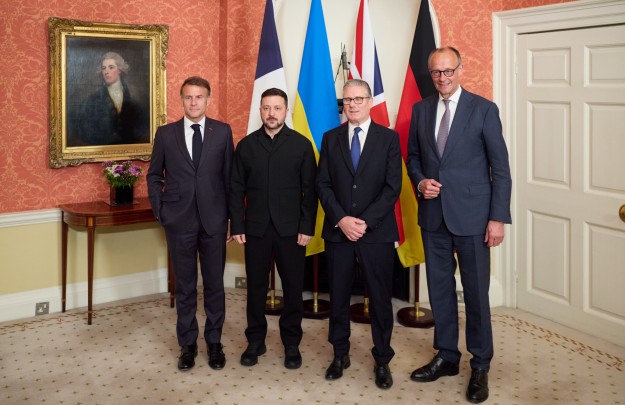
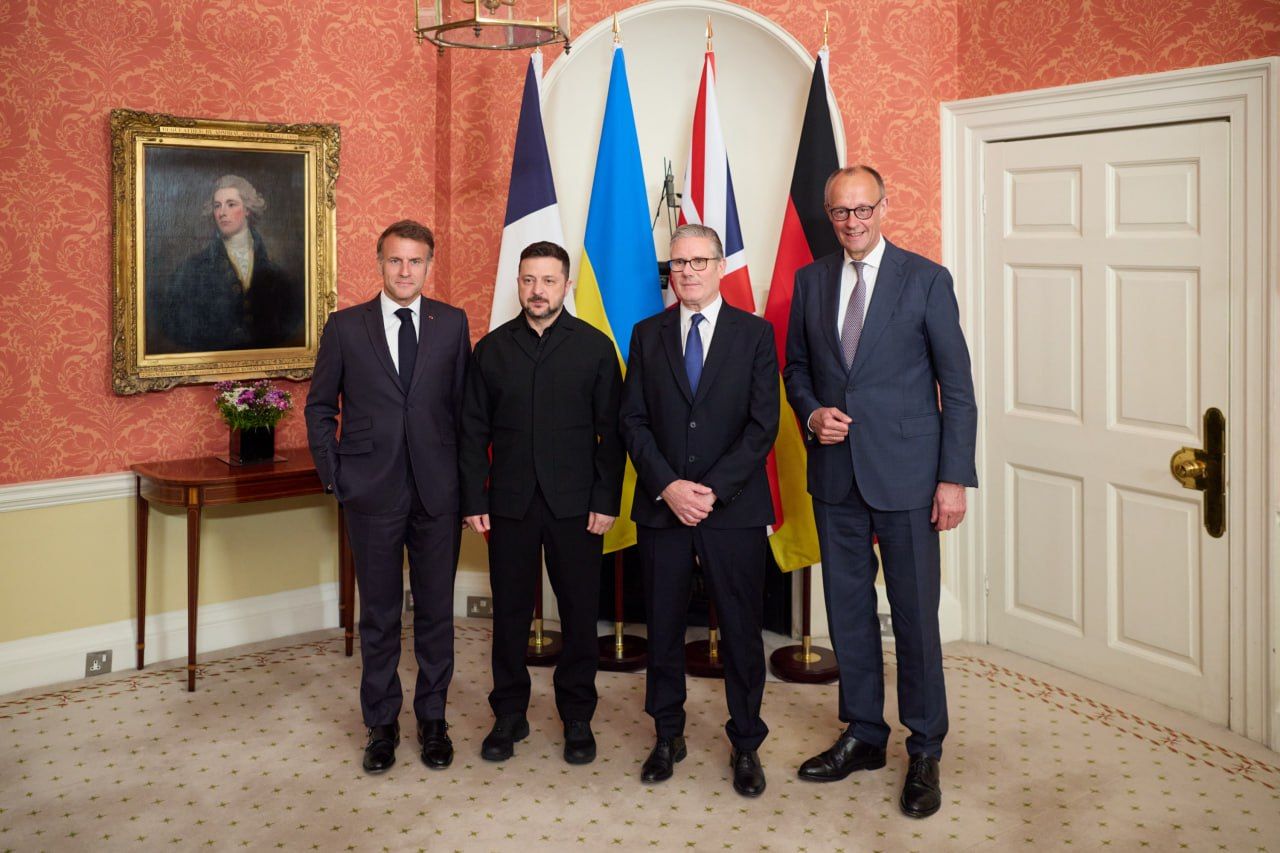
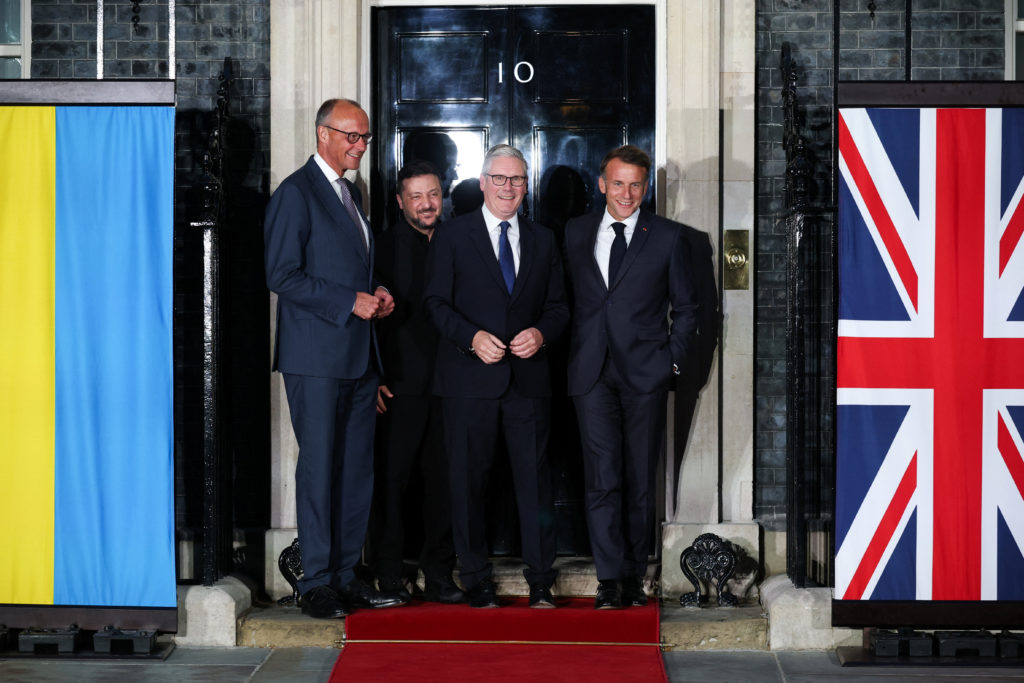
Britain, France, and Germany backed Ukraine's terms for ending the war after meeting its President Volodymyr Zelenskyy in London, according to their joint statement. They endorsed Kyiv's push for direct talks with Moscow and an immediate ceasefire, while spelling out what a lasting peace would require. The leaders also called for tightening the squeeze on Russia's war economy and scaling up Ukraine's air defenses.
Russia has been invading Ukraine since 2014 and waging all-out war since February 2022, and with Moscow still rejecting every ceasefire on offer, Kyiv and its Western partners are now trying to map out how the fighting could actually end.
Five conditions for peace
Meeting on 7 June, UK Prime Minister Keir Starmer, French President Emmanuel Macron, and German Chancellor Friedrich Merz set out five conditions for a just and lasting peace. The E3, as the three are known, are Ukraine's leading European backers. Their terms:
An immediate, complete ceasefire, which they urged Putin to accept.
The current front line as the starting point for talks, with no borders changed by force and Ukraine free to choose its alliances.
Robust, legally binding security guarantees once a ceasefire holds, building on the allies' December 2025 Berlin and January 2026 Paris commitments, including a multinational force in Ukraine.
Russian assets remain immobilized until Moscow ends its aggression and compensates Ukraine.
European interests safeguarded, with any EU- or NATO-related terms requiring both blocs' consent.
Explore further
“It was never formulated as Ukraine winning”—NATO’s ex-military chief on the missing strategy
Backing for direct talks with Moscow
The leaders commended Ukraine's president for his 4 June letter to Putin calling to end the war. They backed direct Ukraine-Russia dialogue, with the US and Europe actively taking part, to secure a ceasefire. Europe must play a role in any settlement, they said, working closely with Kyiv, the rest of Europe, and Washington.
Explore further
Germany, France, and UK sketch plan to bring Putin to the negotiating table
Pressure on Russia and more air defense
They denounced Russia's barrage of missiles and drones, including repeated strikes with the Oreshnik, a Russian missile. They also condemned dangerous Russian drone incursions into NATO territory and offered condolences to the victims. The leaders welcomed Ukraine's recent battlefield gains, from liberated territory to advances in drone warfare. They agreed to coordinate more support at the coming G7 summit in Evian, the next Coalition of the Willing meeting, and the NATO summit in Ankara. That includes choking off more of Russia's wartime revenue and a bigger military pledge at the NATO talks. They also urged scaling up interceptor production and co-developing anti-ballistic and deep-strike weapons.
The leaders of the United Kingdom, France, and Germany, and Ukraine issued a joint statement on June 7 setting out five conditions that must be met between Kyiv and Moscow to bring a resolution to Russia's war in Ukraine.
Keir Starmer says he will fight on as prime minister, but behind the scenes he is said to be thinking about his legacy. He’s talking this week about tech companies and the shape of a social media ban, but he is also focussed on resetting the UK’s relations with EU and defence. Pippa and Kiran discuss what his legacy might be and the role Andy Burnham has to play
Former safeguarding minister says if ban came into force properly it could ‘basically eliminate’ problem
The government has highlighted work done by the internet safety firm SafeToNet as showing that the technology is already in place that would allow tech companies to stop children using phones to take naked pictures of themselves, or other people. The Home Office says:
Measures to protect children already exist within smartphones and tablets, but are applied inconsistently, often switched off by default and only blurring content rather than blocking it. But the government is working closely with technology companies — some of whom, like Apple, have already taken steps to implement protective features — to make this goal a reality.
Companies must introduce these measures without threatening privacy or collecting any data. The device should simply block harmful content across all apps and services. Over-18s will still be able to view adult content by providing proof of age.
The government is right to act. Children have been failed for too long. This news will be welcomed by parents across the UK and hopefully, will inspire other countries to follow the UK’s lead.
We can put an end to so much online misery with this approach. SafeToNet’s HarmBlock technology is a proven example that it is possible to make the device safe by default and not as some optional add-on.
The changes will apply to UK devices, including both existing and newly sold smartphones and tablets. Legislation could cover operating system providers and others in the supply chain, such as retailers, and will not affect the use of devices owned and used by adults who verify their age …
Apple recently introduced age checks for iPhone users, making it the first company to activate safety features by default for those who are not verified as over 18. This is a significant step forward following the government’s commitments to work with industry, and one this announcement builds on.
Apple and Google have been given until September to install software that blocks explicit images on children’s mobile phones or face legislation enforcing its requirement, Keir Starmer said on Monday.
The prime minister said tech companies must activate nudity-detection algorithms or other technical solutions on smartphones and tablets to prevent users taking photos or sharing images of genitalia unless they are verified as adults.
The leaders of the U.K., Ukraine, France and Germany discussed the "urgent need" to ramp up production of weapons to combat Russia's powerful hypersonic Oreshnik ballistic missiles in a meeting in London on Sunday.
Keir Starmer hosts Ukrainian, French and German leaders in Downing Street after Russia fires hypersonic weapons at Ukraine
Volodymyr Zelenskyy and the leaders of the UK, France and Germany discussed “the urgent need to scale up” Ukraine’s air defences and deep-strike capabilities in London on Sunday night, after Russia fired hypersonic weapons at Ukraine, Downing Street said.
The meeting of Ukraine’s staunchest allies in London came hours after a Russian drone strike damaged a storage centre for spent nuclear fuel nine miles from the Chornobyl nuclear power plant.

 Login
Login