Normal view
- Kontrainfo
- Putin y Xi Jinping acordaron apoyo mutuo en temas de defensa militar y soberanía. Documento completo
Putin y Xi Jinping acordaron apoyo mutuo en temas de defensa militar y soberanía. Documento completo
- Kontrainfo
- Argentina colonizada hasta los huesos – El país que produce comida y encarece su mesa – Por Ivone Alves García
Argentina colonizada hasta los huesos – El país que produce comida y encarece su mesa – Por Ivone Alves García
- Kontrainfo
- Xi Jinping a Trump: «¿Podrán China y Estados Unidos superar la llamada ‘trampa de Tucídides’?»
Xi Jinping a Trump: «¿Podrán China y Estados Unidos superar la llamada ‘trampa de Tucídides’?»
Trump y la cúpula empresaria de EEUU se reúnen con Xi Jinping en China
On China, Trump picked the right battle but the wrong strategy
A long trade war looms. Trump’s scattershot protectionism, chaotic tariffs and belligerence against our natural allies guarantees that US trade policy will remain a hot mess
We are in for a long trade war.
In the months since “Liberation Day” last year, when Donald Trump let loose a volley of tariffs against imports from everywhere, countries have rushed to build new relationships in the hope of maybe circumventing the US to protect the global trading system.
Continue reading...
© Composite: The Guardian/Getty Images

© Composite: The Guardian/Getty Images

© Composite: The Guardian/Getty Images
UMa salienta “projecção internacional” da missão empresarial da RAM à China
The TikTok Ban Was Never About TikTok
Das Massaker auf dem Platz des Himmlischen Friedens von 1989, das es gar nicht gab
- El País - English

- Iran and the US loosen their grip on the Strait of Hormuz despite attacks and twists in negotiations
Iran and the US loosen their grip on the Strait of Hormuz despite attacks and twists in negotiations
Despite all the difficulties, as numerous as they are, something is moving in the Strait of Hormuz. Even before the United States and Iran agreed to reopen it, the world’s most important energy shipping lane has shown signs of a slight loosening. Despite the double blockade — imposed first by Tehran and then by Washington — the number of ships managing to transit has grown in recent days. Some — the majority — do so with the permission of Iran’s Islamic Revolutionary Guard Corps. Others are escorted by the U.S. Navy. A few take the risk on their own.

© Reuters (REUTERS)
Beijing Summit: Is the Korean Question on the Margins of Attention?
3,000-Year-Old Beads Found in China Reveal Bronze Age Cultural Connections

Ancient carnelian beads unearthed at the Sanxingdui Ruins in southwest China are providing new evidence of long-distance trade and cultural connections that linked distant regions during the Bronze Age, researchers said Tuesday.
The discovery was announced by the Sichuan Provincial Cultural Relics and Archaeology Research Institute, which recently studied 11 carnelian beads recovered from sacrificial pits at the famous archaeological site in Sichuan Province. The artifacts date to about 1200 to 1000 B.C.
According to Liu Jiancheng, an associate researcher at the institute, the beads are the southernmost known carnelian artifacts from the same period found in China. Their discovery is helping researchers trace the movement of valuable materials and ornamental goods across ancient East Asia.
Analysis traces beads to northern China
Carnelian is a reddish-orange gemstone that was widely used in ancient jewelry and decorative objects. Researchers conducted trace element analysis on the Sanxingdui beads and found that the raw materials did not originate in the Sichuan Basin.
Instead, the analysis traced the source of the stone to the Yanshan orogenic belt and regions farther north, more than 1,000 kilometers (620 miles) from Sanxingdui. The findings indicate that the materials traveled great distances before reaching the ancient Shu civilization.
Researchers also compared the beads with carnelian artifacts discovered at archaeological sites in Gansu, Shaanxi, and Beijing from roughly the same period. The chemical signatures closely matched those of the northern examples, suggesting they likely originated from related sources.
Evidence points to an extensive exchange network
The results point to the existence of a broad exchange network operating between 1500 and 1000 B.C. Researchers believe the network connected communities across the southern Mongolian Plateau, the Loess Plateau, the eastern Qinghai-Tibet Plateau, the Central Plains, and the Sichuan Basin.
The findings offer new insight into how goods moved across ancient China long before the establishment of formal trade routes. They also suggest that materials, technologies, and cultural influences circulated between regions that were separated by vast distances.
Discovery adds to Sanxingdui’s significance
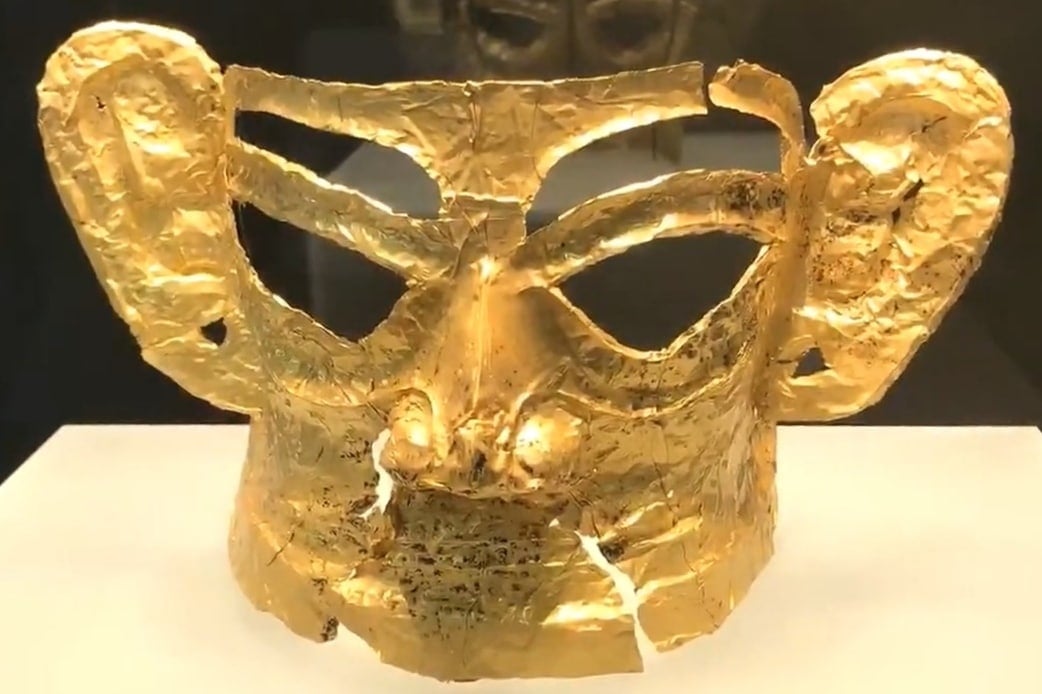
Sanxingdui, located near the city of Guanghan, is one of China’s most important archaeological sites. The site has gained international attention for its extraordinary bronze masks, statues, and ritual objects, which have reshaped the understanding of early Chinese civilization.
Liu said the latest discovery shows that the Sanxingdui society participated in a far-reaching network of exchanges about 3,000 years ago. That network extended into northern China and may have reached as far as the Mongolian Plateau.
The researcher said the evidence highlights the depth of interaction among different cultures during China’s Bronze Age. The discovery also supports the view that a broader and increasingly interconnected Chinese civilization was already taking shape thousands of years ago, while regional societies continued to maintain their own distinct identities.
Congressional Panel Charts Path to Biosecurity State
Putin in China : Diplomatic Choreography in Response to Trump
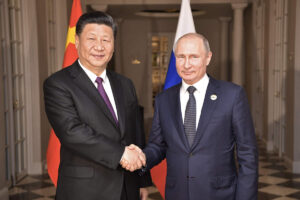
Xi Jiping et Vladimir Poutine en 2018 (Kremlin.ru, CC BY 4.0 , via Wikimedia Commons), via Wikimedia Commons) Xi Jiping et Vladimir Poutine en 2018 (Kremlin.ru, CC BY 4.0
One week after Donald Trump, Vladimir Putin is traveling to China for a 48-hour official visit aimed at strengthening the comprehensive partnership and strategic cooperation between Russia and China.
A Diplomatic Trip Rich in Geopolitical Symbolism
Putin’s visit to China, expected on Tuesday, May 19, is part of a carefully planned diplomatic strategy. The timing is no coincidence: it coincides with the 25th anniversary of the signing of the Treaty of Good-Neighborliness and Friendly Cooperation, a landmark agreement signed by the two countries in 2001.
This treaty holds major significance in Sino-Russian relations, as it marked the end of decades of mutual mistrust, border disputes, and geopolitical rivalries that characterized the Soviet era.
The timing of the visit is particularly revealing of current international dynamics. By arriving in China one week after Trump’s departure from Beijing, Putin creates a symbolic succession that deserves close analysis. This diplomatic “passing of the baton” among the world’s three major powers offers a valuable lens through which to observe today’s balance of power and each country’s positioning strategy.
Strengthening the Comprehensive Strategic Partnership Amid Global Turbulence
The official purpose of the visit is clear: to reinforce the comprehensive partnership and strategic cooperation between Russia and China.
Beyond formal statements, however, the trip carries deeper significance for both governments. Moscow is seeking to consolidate its ties with Beijing at a time when the international environment has become highly volatile.
Dmitry Peskov, spokesperson for the Russian presidency, said on Friday that the trip would be “a good opportunity to exchange views on the contacts the Chinese have had with the Americans.”
This statement clearly shows that trilateral diplomacy lies at the heart of the visit. Russia wants to understand how China is negotiating with the United States and ensure that Russian interests are not sidelined in Sino-American discussions.
An “Eternal Friendship” Tested by Geopolitical Realities
The concept of an “eternal friendship” between Russia and China, frequently reaffirmed by both powers, is a central element of their diplomatic rhetoric.
However, this visit demonstrates that both countries are actively seeking to prove the strength of their ties in the face of current global upheavals. The phrase itself is revealing: it implicitly acknowledges that the international order is going through a period of major instability.
For Xi Jinping, the meeting with Putin offers a valuable opportunity to present himself as a world leader committed to geopolitical balance and harmony.
By hosting Trump and Putin in succession, the Chinese leader positions himself as a potential mediator in global conflicts and as a guardian of international stability. This posture significantly enhances China’s prestige and influence on the world stage.
The Dynamics of a Three-Way Geopolitical Rivalry
The triangular relationship among the United States, Russia, and China now shapes global geopolitics as a whole.
Every bilateral meeting between two of these powers is closely watched by the third as an indicator of emerging alliances and growing fractures. Putin’s trip to China must therefore be understood within this three-dimensional strategic framework.
Russia, while a major regional power, remains economically secondary compared with China. As a result, Moscow must continually reaffirm the importance of its partnership with Beijing.
This relative asymmetry helps explain why Russia places such importance on diplomatic rituals and public displays of strategic friendship. Maintaining strong ties despite structural imbalances is essential to preserving international equilibrium.
Toward a New Global Geopolitical Architecture
This visit takes place during a period of profound transformation in the international order.
China’s rise, Russia’s return as a disruptive power, and shifts in American foreign policy have created an environment in which old certainties no longer apply.
Diplomatic exchanges between Beijing and Moscow are therefore strategically crucial to maintaining stability in international relations.
The strengthening of the Sino-Russian partnership is not necessarily intended to form an alliance against the United States. Rather, it aims to establish a balance of power capable of withstanding external pressures and attempts at hegemony.
In this context, strategic cooperation between Russia and China has become an essential stabilizing factor in contemporary global geopolitics.
Putin has arrived in Beijing and received the same “warm welcome” package as Trump: a red carpet, the PLA Tri-Service Honor Guard, and the jumping children…
Xi Jinping can be heard saying “hello” (“你好,” nǐ hǎo) to Putin.
Will Putin be able to achieve his 4 goals mentioned… https://t.co/OxMXG3l3Uq pic.twitter.com/TUENKMajcy
— Inconvenient Truths — Jennifer Zeng Reports (@jenniferzeng97) May 19, 2026
L’article Putin in China : Diplomatic Choreography in Response to Trump est apparu en premier sur FrenchDailyNews.

Operation Epic Loss: Is America Ready for China?
- El País - English

- Cheng Li‑wun, leader of the opposition in Taiwan: ‘We do not want to become the next Ukraine’
Cheng Li‑wun, leader of the opposition in Taiwan: ‘We do not want to become the next Ukraine’
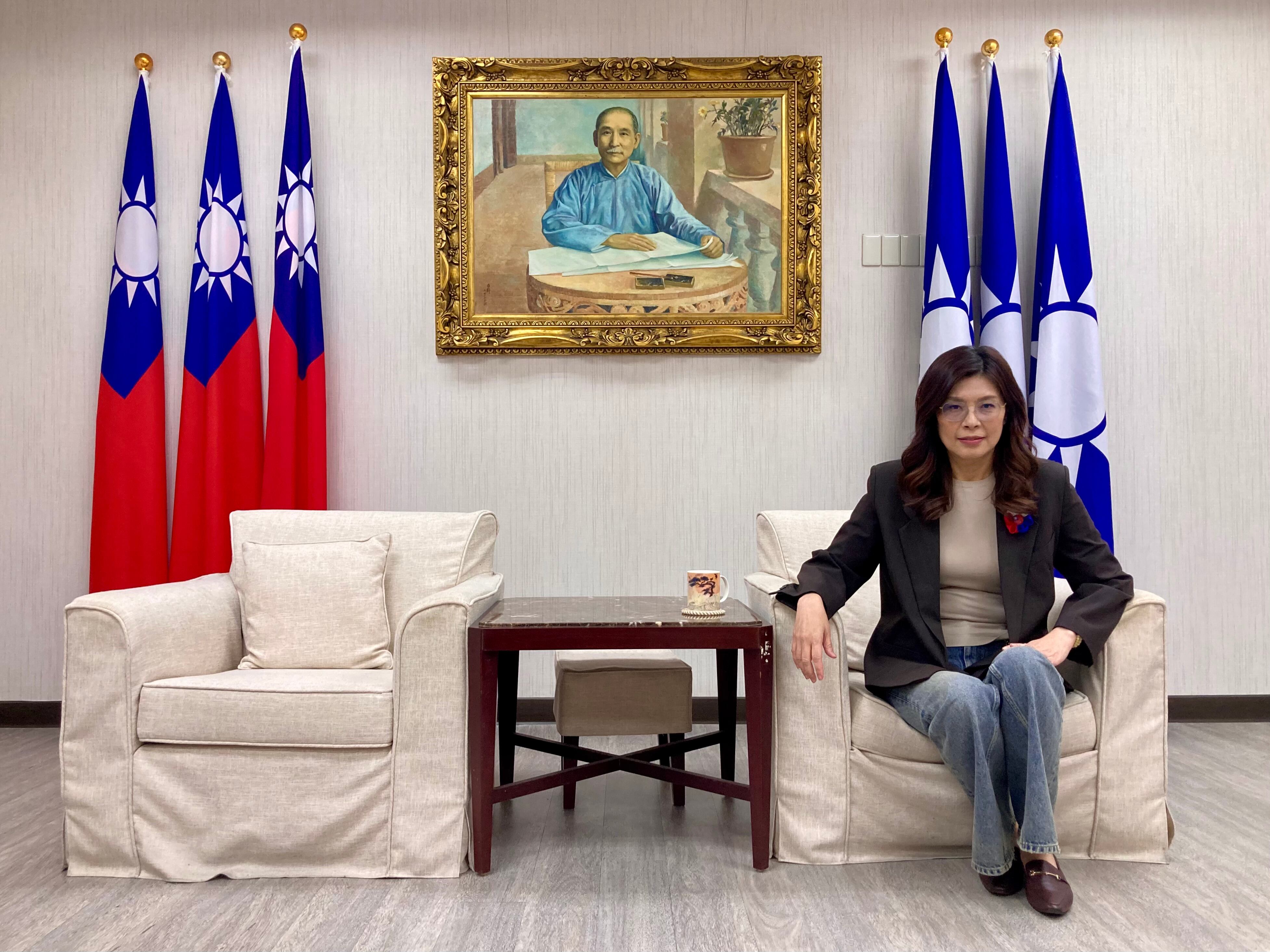
Taiwanese politician Cheng Li-wun, who is notably tall, can be heard approaching with the click of her heels and long strides down the corridor of the headquarters of the Kuomintang (KMT), the main opposition party in Taiwan. In April, during a visit to Beijing, she looked the Chinese president, Xi Jinping, in the eye. In the photograph that captured their meeting in the Great Hall of the People they are not smiling; neither do they appear distant. Their expressions are neutral, perhaps waiting to see how the coming years unfold.
- New Eastern Outlook
- Taiwan as the Central Issue of Donald Trump’s Visit to the People’s Republic of China
Taiwan as the Central Issue of Donald Trump’s Visit to the People’s Republic of China
Beijing, May 2026: The Multipolar Order Took Shape Without Europe
- El País - English

- Iran’s frozen assets, the last major stumbling block in negotiations with Washington
Iran’s frozen assets, the last major stumbling block in negotiations with Washington
Talks to end the war with Iran and reopen the Strait of Hormuz appear, for the first time in three months, to be moderately on track. At least that is the impression conveyed by public statements and leaks from both sides: water is beginning to fill the deep negotiating well, which until now had been practically dry.

© ABEDIN TAHERKENAREH (EFE)