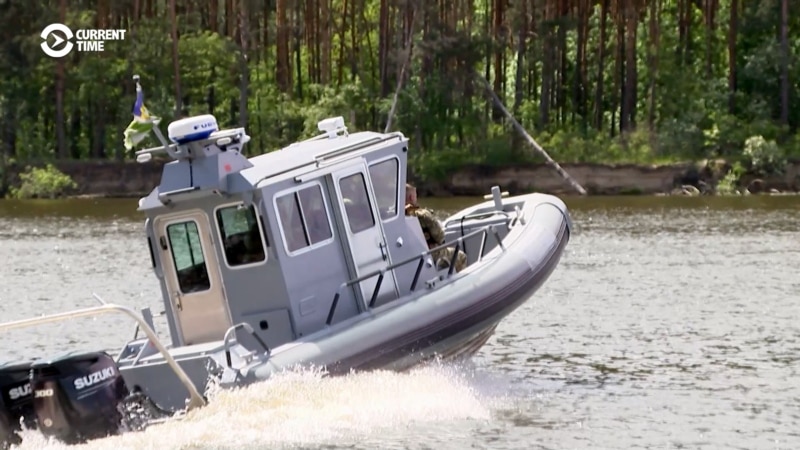
In Ukraine's Chernihiv region, along a section of the Dnieper River that divides Ukraine and Belarus, border guards are on the lookout for signs of another invasion from the north. In May, Kyiv warned that Russia was once again trying to draw Belarus into the war against Ukraine.
from ZeroHedge: The Kremlin spent much of the last week warning foreign diplomats and bystanders to evacuate Ukraine’s capital, warning that an escalation in airstrikes is imminent, in response to Ukraine’s own drone swarms sent against Moscow and other Russian sites last month – especially the Starobelsk dormitory attack. “In response to terrorist attacks by the […]
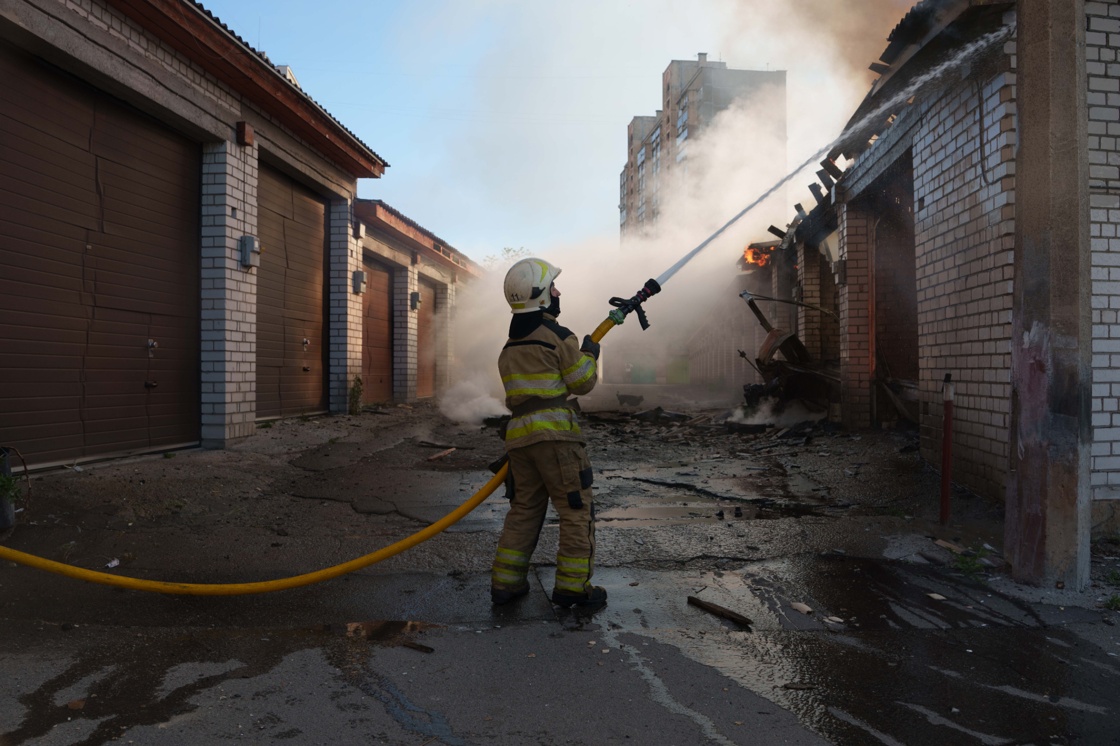
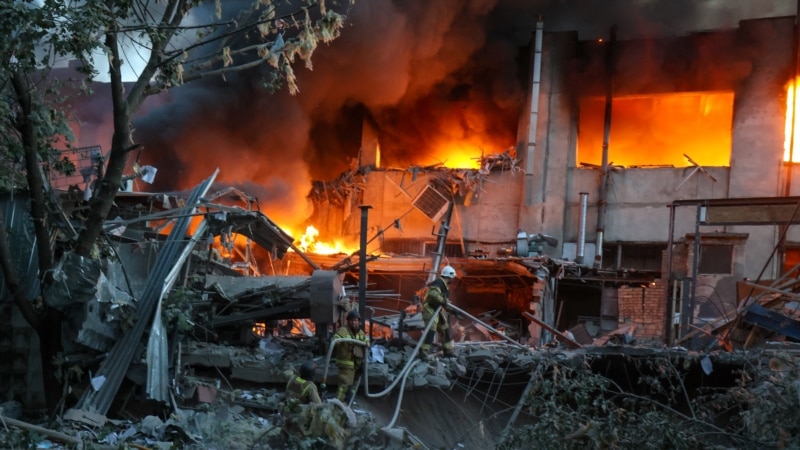
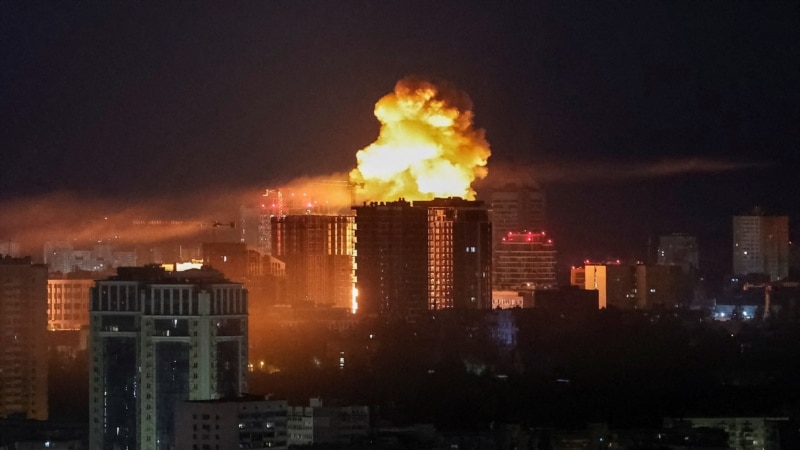
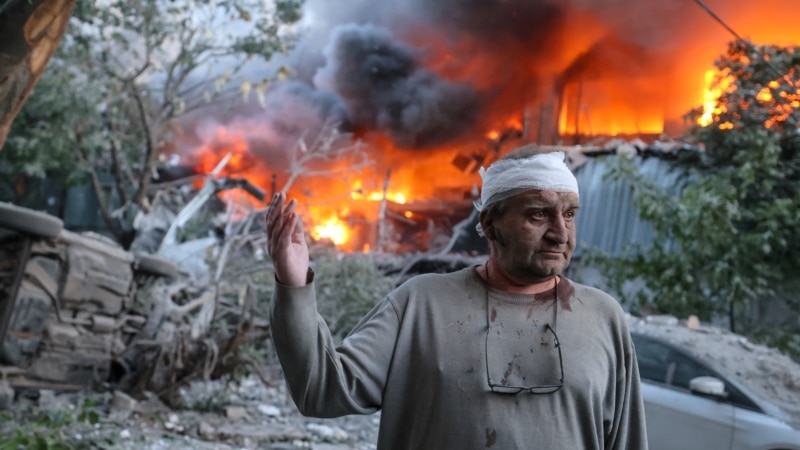
The attack stretched from night into day and the boom of explosions reverberated across cities. Officials said that 12 people were killed in Dnipro and six in Kyiv.
The attack stretched from night into day and the boom of explosions reverberated across cities. Officials said that 12 people were killed in Dnipro and six in Kyiv.
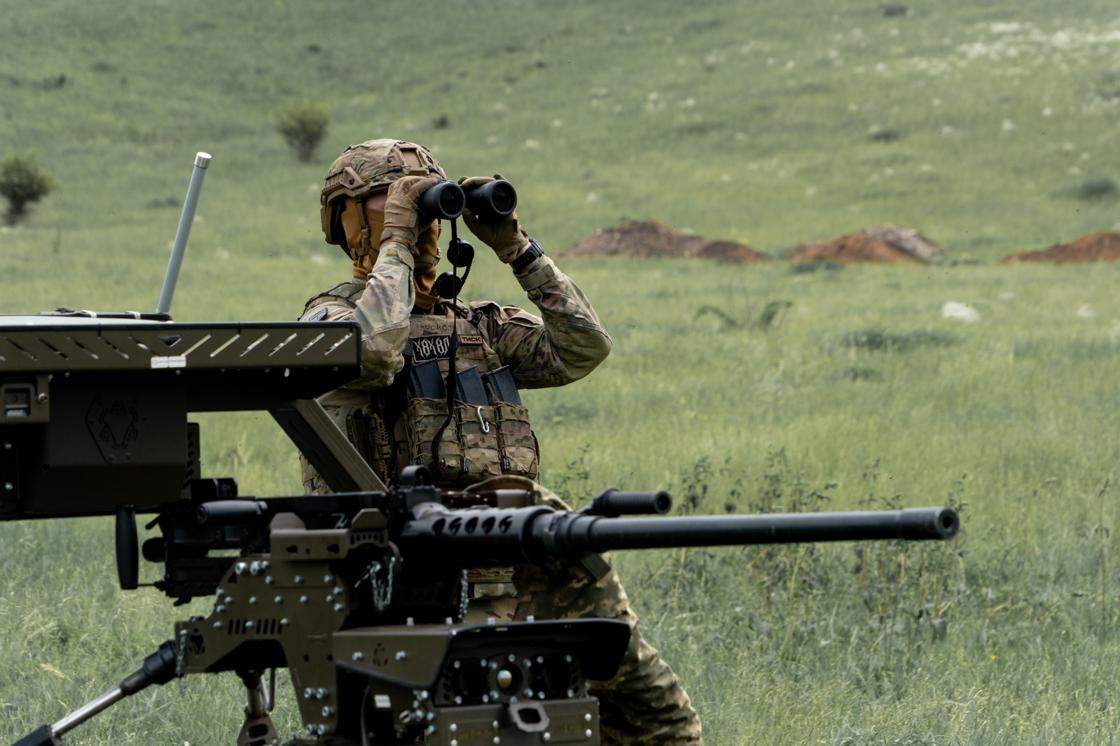
The defence ministers of Canada and Ukraine signed an agreement to support the co-production of drones on the margins of the CANSEC defence trade show in Ottawa this week.
The defence ministers of Canada and Ukraine signed an agreement to support the co-production of drones on the margins of the CANSEC defence trade show in Ottawa this week.
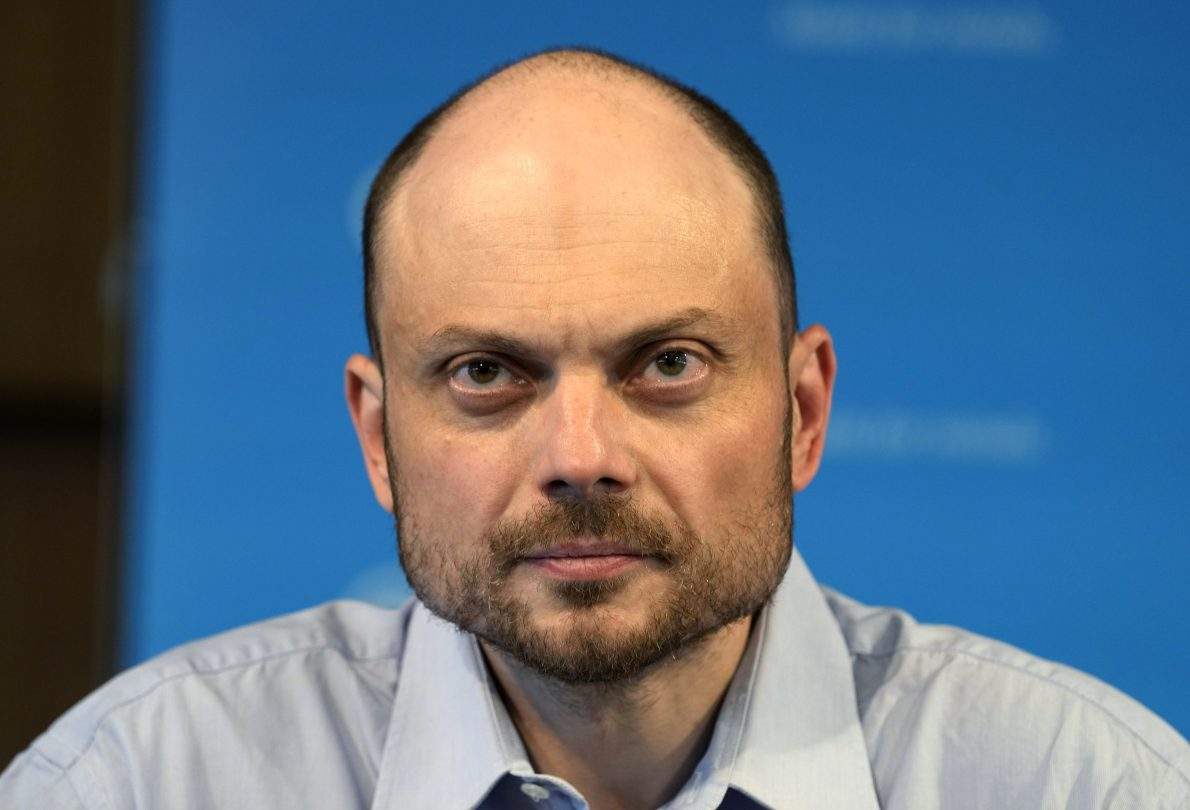
Vladimir Kara-Murza told Global News that mounting military and economic failures have stripped away Putin's strongman image and exposed him as 'increasingly weak.'
Vladimir Kara-Murza told Global News that mounting military and economic failures have stripped away Putin's strongman image and exposed him as 'increasingly weak.'
The United Kingdom government has denied Moscow’s claim that the UK and France have been secretly working on providing Ukraine with a nuclear weapon. The French government has issued a denial through its Moscow Embassy.
Robert Harneis (DR)
By Robert Harneis
Russia’s foreign intelligence service, SVR, has publicly claimed that the UK and France are “actively working” on providing Ukraine with a nuclear weapon, or a radioactive makeshift “dirty bomb”. The claim has been referred to by President Putin and his spokesman Dimitry Peskov.
The UK Prime Minister’s official spokesman claimed in a statement; “This is a clear attempt by Vladimir Putin to distract from his heinous actions in Ukraine… There is no truth to this.”
Illegal transfer of components
The intervention by President Putin indicates that the Russians take the claim seriously. Russia’s Foreign Intelligence Service state that Britain and France are actively working to resolve the issue of providing Ukraine with nuclear weapons and their delivery systems. “This involves the covert transfer of European components, equipment, and technologies in this area. One option being considered is the French TN75 small-size warhead from the M51.1 submarine-launched ballistic missile,” the statement reads.
According to the SVR, British and French elites believe that Kyiv would be able to secure more favorable terms for ending the fighting if it possessed a nuclear bomb or at least a so-called dirty bomb. “The British and French recognize that their plans constitute a gross violation of international law,” the statement continues.
A flagrant violation of international law
If true, this would be a serious breach of the Treaty on the Non-Proliferation of Nuclear Weapons (NPT). London and Paris allegedly risk undermining the global non-proliferation system. “Consequently, Westerners are focusing their efforts on making Kyiv’s acquisition of nuclear weapons appear to be the result of Ukrainian development,” the SVR wrote in their statement.
Putin’s press secretary, Peskov, called information about the possible transfer of a nuclear bomb to Kyiv extremely important and dangerous for the non-proliferation regime. “This is a flagrant violation of all norms and principles, and relevant acts of international law,” he emphasized. Meanwhile, Vladimir Putin’s aide, Yuri Ushakov, told the Vesti news service that Moscow intends to inform Washington of the possible transfer of nuclear weapons to Kyiv from London or Paris.
Clichés
According to the official Russian government news agency Tass, Deputy Speaker Konstantin Kosachev, of the Russia Federation Council, has commented that the statements issued by the French and British embassies denying plans to arm Ukraine with nuclear weapons appear to be nothing more than rehearsed clichés, lacking depth or credibility, according to Federation Council.
Kosachev criticized these responses, stating, ‘The comments from the relevant press services – particularly, in France, not even from the government ministries but solely from the embassy here in Moscow – are simply pre-cooked clichés that add no real value. They deny the findings of the Russian Foreign Intelligence Service.” He further pointed out that these statements fail to confirm that the involved countries are adhering to their obligations under the Treaty on the Non-Proliferation of Nuclear Weapons.
France’s awkward position
Britain has no independent nuclear weapons and depends entirely on US supply and consent for use. France is in a more embarrassing position as it has full control of its nuclear arsenal. The idea that Washington knew nothing about any of this – if it is true – is far-fetched. But it seems at the moment it suits Moscow to appear believe it.
Between geopolitical calculations, Russian economic resilience, and diverging interests, the conflict is bogged down in a war of attrition that neither side seems willing to end.
Robert Harneis (DR)
By Robert Harneis
The war in Ukraine is entering its fifth year with no negotiated way out in sight for either belligerent. Behind the mud of the trenches and the victory communiqués, a complex machinery — military, economic, diplomatic — has taken hold, keeping the conflict in a precarious equilibrium, so far. An in-depth look.
A long war no one wanted, pursued by everyone
Neither Moscow nor Kyiv anticipated such a prolonged conflict. In 2022, Russia hoped for a lightning victory through decisive strikes on Kyiv, Kharkov, and the corridor leading to Crimea. The West, for its part, was betting on a rapid collapse of the Russian economy under the weight of unprecedented sanctions — the freezing of $300 billion in reserves, exclusion from the SWIFT system, diplomatic isolation. Both sides were disappointed, although Russia did achieve the land corridor to Crimea and the capture of Europe’s biggest nuclear power plant.
Today, the conflict follows a logic of attrition much encouraged by the drone revolution. Russia is waging a slow war, aware that it faces a Ukraine backed by the financial and military arsenal of the United States, NATO, and most Western countries. The model is simple: Ukraine provides the men; the West provides the weapons. Unfortunately Ukraine is running out of men and the West is running out of weapons. Unlike the state owned Russian armaments industry, the Western military industrial complex is focused on profit not mass industrial warfare. The line of conflict in Ukraine is twice the length of the Western Front in the First World War, a situation totally outside modern Western military experience.
Russia: a more resilient economy than expected
One of the great surprises of this conflict has been the resilience of the Russian economy. The West had severely underestimated its degree of self-sufficiency. As a producer of its own energy and food resources, with an industrial base inherited from the Soviet era and relatively insulated from financialization, Russia has managed to adapt.
According to the IMF, measured in purchasing power parity (PPP), the country is now ranked the world’s fourth-largest economy, behind China, the United States, and India. Paradoxically, the sanctions stimulated local production through import substitution and encouraged the repatriation of capital. Russia’s military-industrial complex has demonstrated its capacity to sustain a prolonged war effort, notably through the reactivation of Soviet-era stockpiles and the use of low-cost guided munitions. Western media have regularly predicted Russia suffering economic collapse and running out of weapons.
There are no signs of either happening
By contrast the European Union, especially Germany has suffered severe economic damage, through the loss of a reliable supply of cheap Russian energy. This undoubtedly suits Russia but also the United States. The Eurozone has lost credibility as a result of freezing Russian government funds. Central banks across the world calculate, if they can do it to Russia, they can certainly do it to us.
Some commentators believe Washington deliberately pushed Europe to adopt these extreme sanctions with a view to weakening it as an economic rival. True or not, it is what has happened.
Ukraine: between survival and dependency
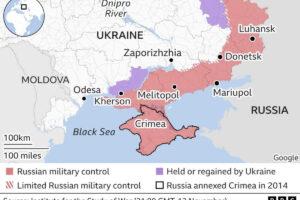
Ukraine, contrôle de l’armée russe (Wikipédia)
On the Ukrainian side, internal factors are complicating any prospect of negotiation. The Kyiv government benefits, both legally and illegally, from massive financial flows tied to the war effort. The radical nationalist units that form part of the military apparatus have publicly threatened to turn on Zelensky should he sign a peace deal with Moscow — thereby forcing him to betray his 2019 electoral promise that brought him to power. The Ukrainian people have never voted for a policy of hostility to Russia but it is what they are forced to endure. The idea that Ukrainians are dying heroically to defend democracy is laughable. The extreme nationalist minority is fighting with courage, skill and determination, the rest of the population is being forced to enlist and fight.
The war has many of the characteristics of a civil war. The Ukrainian commander in chief has a brother who is a colonel in the Russian army. Many Russians have relatives living in Ukraine.
A conflict with global geopolitical dimensions
For Moscow, as Foreign Minister Sergei Lavrov has stated, the Ukrainian war is not an isolated territorial conflict but a symptom of a broader struggle: the one waged by Washington to preserve its hegemony in the face of China’s rise and Russia’s renewed military power. In this context, Beijing is quietly backing Moscow — Sino-Russian trade has grown significantly — while Russia simultaneously maintains good relations with New Delhi to avoid exclusive dependence on a single partner.
The accession of Finland and Sweden to NATO represents a strategic setback for Moscow, however, adding some 1,340 kilometers of shared border with the Atlantic Alliance. By contrast, the development of BRICS offers Russia channels to circumvent sanctions, reducing its dependence on the dollar in international trade.
War objectives in flux
On the Russian side, war aims have gradually shifted. From a simple stabilization of the status quo in 2022, Moscow moved to formally annexing four Ukrainian regions, while some internal voices are now calling for even broader territorial conquests. Should the conflict continue without a negotiated solution, Ukraine could lose much more territory. Public opinion in Russia is strongly in favor of occupying Odessa and the Black Sea coast.
There has never been any doubt that the United States and its European allies are backing the war as a way to weaken Russia regardless of the fate of the people of Ukraine. It is more than a remote possibility that the United States would be happy to see Moscow maneuvered into occupying the whole country, resulting in years of economic strain and troublesome political complications. For the EU this would have the advantage of encouraging electoral support for re-armament but it would lead to serious political risks with governments like Hungary, Slovakia and the Czech Republic no longer landlocked and benefiting from a border with Russia. This would give them new geopolitical choices in the face of a European Union determined on using the war to centralize control over member states.
BY THE NUMBERS
• 1.5 million lives lost according to various estimates since the conflict began in 2022
• 4th largest economy in the world — Russia’s ranking according to the IMF in purchasing power parity.
Russia launched one of its largest drone-and-missile attacks on Ukraine, striking cities across the country. At least four people were killed in Kyiv and at least nine in Dnipro, with dozens more injured. Ukraine's Air Force said Russia fired 73 missiles and 656 drones overnight on June 2.
In this week's Wider Europe newsletter, Rikard Jozwiak drills down on two issues: Why the EU isn’t naming a Russia envoy and the upcoming EU-Moldova summit.
At least 13 people were killed and scores hurt throughout Ukraine following a massive missile and drone barrage on the country in the early hours of June 2.
A large-scale overnight Russian missile and drone attack on Kyiv killed at least four people and injured dozens, including children, Ukrainian officials said.

 Login
Login