Guerre en Ukraine : les frontières de l’Otan menacées ? Des chasseurs suédois interceptent deux avions de combat russes au-dessus de la mer Baltique


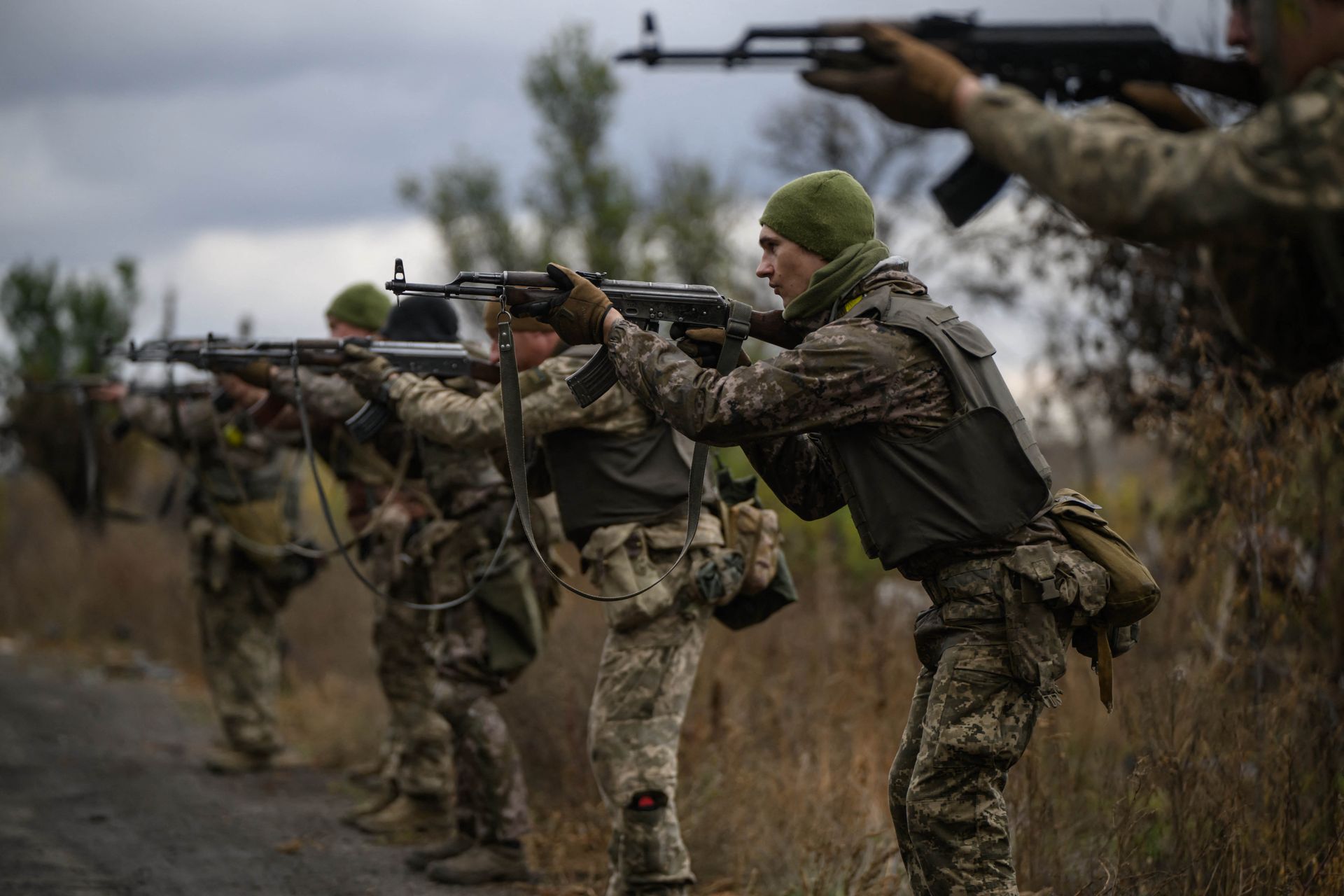
As Russian battlefield gains slow and recruitment drive falters, Ukraine is warning that the Kremlin may finally reach for the measure it has long resisted — a forced mobilization.
According to Kyiv, Moscow is preparing to call up tens of thousands of fresh soldiers to offset its climbing battlefield losses.


![]()
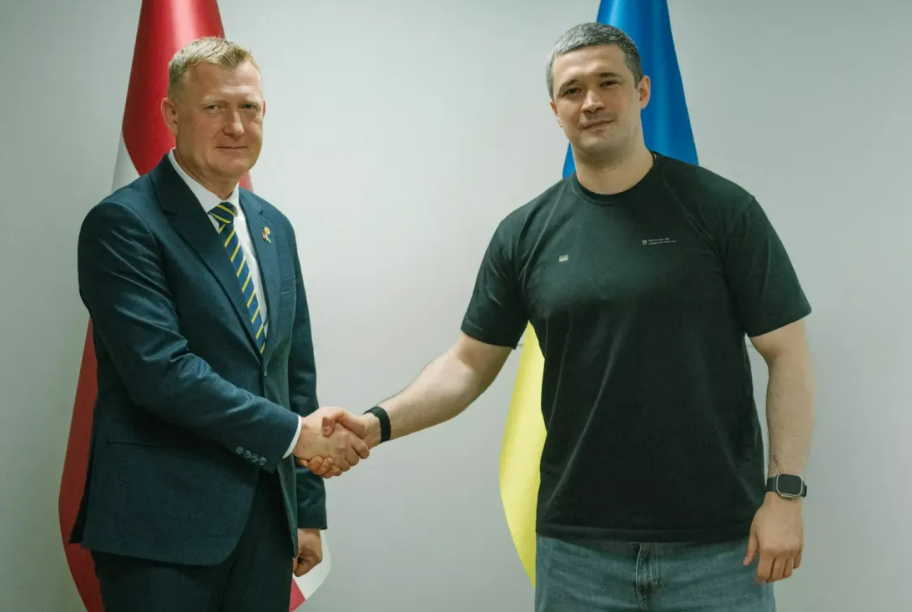
Ukrainian and Latvian defense ministers named specific categories of unmanned systems that will move between the two countries under the Drone Deal, Ukraine's defense minister Mykhailo Fedorov said on 13 June.
Latvia will supply Ukraine with anti-drone systems of Latvian manufacture. Ukraine will supply Latvia with strike drones, ground robotic complexes, and maritime drones, following a Kyiv meeting between Fedorov and Latvian defense minister Raivis Melnis.
The exchange formalizes what until now ran one way. Latvia has been a heavyweight donor of drones and equipment since 2022, pledging 10 million euros to joint defense manufacturing in 2025 alone.
Today's agreement makes Ukraine a supplier to a NATO member for the first time under this format.
"Ukrainian technologies and combat experience help partners adapt faster to the challenges of modern warfare," Fedorov wrote on Telegram, "while support from allies makes it possible to scale solutions that have already proven effective on the battlefield."
The meeting is Melnis's first foreign trip as defense minister. He took office on 28 May after his predecessor Andris Sprūds resigned over a 7 May Ukrainian drone crash near Latvia's Rēzekne oil storage facility — an incident that brought down Prime Minister Evika Siliņa's government.
Before his appointment, Melnis served as the Latvian defense ministry's representative at the embassy in Kyiv.
In a separate meeting on the same visit, Melnis told President Volodymyr Zelenskyy: "We have supported Ukraine and continue to support it with training and our expertise since the very beginning. And now we are asking Ukraine to support us, because there is only one country in the world who knows how to fight Russia, how to stop Russia."
The 9 June Drone Deal, signed in Tallinn between Zelenskyy and Latvia's new Prime Minister Andris Kulbergs at the Nordic-Baltic Eight summit, is the sixth bilateral framework Ukraine has concluded under this format.
At the signing, Zelenskyy offered Ukrainian counter-drone experts to Baltic states facing repeated drone incursions. The Fedorov-Melnis meeting gives that offer operational content.
Latvia has spent recent months as the country most exposed to drone spillover from Russia's war on Ukraine. French NATO fighters shot down a drone over eastern Latvia on 8 June — the first NATO intercept on Latvian soil.
Latvia's military chief Kaspars Pudāns warned on 4 June that Russia could exploit its drone manufacturing edge to attack the Baltics by 2028.
Fedorov did not specify volumes, timelines, or financial terms.


Le résultat des élections législatives du 8 juin 2026 semble avoir conforté le tournant pro-occidental du premier ministre arménien Nikol Pachinian ainsi que sa politique en faveur de la paix avec l'Azerbaïdjan. Avec près de 50% des suffrages, son parti « Contrat civil » a nettement devancé ses deux principaux concurrents (Arménie forte et Alliance arménienne, respectivement 23 et 10 %). L'opposition critique la normalisation des relations avec l'Azerbaïdjan tout comme la décision du gouvernement de suspendre en 2024 sa participation à l'Organisation du traité de sécurité collective (OTSC). Cette alliance militaire régionale pilotée par la Russie n'a jamais eu le mandat, ni la volonté, d'empêcher la récupération de l'enclave arménienne du Haut-Karabakh par la force. L'opposition estime cependant que seul le maintien du lien sécuritaire avec Moscou permettra de tenir une position de fermeté vis-à-vis de Bakou alors que le pré-accord de paix signé sous l'égide des États-Unis en août 2025 attend toujours d'être mis en œuvre.
Centrée sur l'orientation géopolitique du pays, la campagne s'est déroulée sous le signe des ingérences croisées. Depuis que le camp pro-européen se trouve affaibli par la répression en Géorgie, l'Arménie fait désormais figure, pour les Occidentaux, de porte d'entrée dans le Caucase, zone d'influence russe. Un mois avant le scrutin, une quarantaine de chefs d'État et de gouvernements du Vieux Continent se réunissaient à Erevan pour le huitième sommet de la Communauté politique européenne (CPE) suivi du premier sommet Union européenne-Arménie. Des annonces en cascade d'investissements — 2,5 milliards d'euros d'ici 2027 — et d'aide économique ont marqué ces rencontres. De son côté, au prétexte de problèmes phytosanitaires, la Russie a entravé les importations arméniennes de fleurs, tomates, concombres et autres produits agricoles, dans le but probable de donner aux électeurs un avant-goût des conséquences économiques d'une prise de distance avec Moscou. Le 29 mai, les présidents biélorusse, kazakh, kirghize et russe ont adopté une déclaration commune au sujet « des risques substantiels pour la sécurité économique des États membres de l'Union économique eurasienne découlant de la préparation de la République d'Arménie à l'adhésion à l'Union européenne » ; ils appelaient Erevan à organiser « dans les plus brefs délais » un référendum à ce sujet.
Ces pressions obligent M. Pachinian à ménager la Russie, de loin son premier partenaire commercial (40% des échanges extérieurs). Le premier ministre arménien a déjà signalé son souhait de rendre visite au président russe dans la foulée du scrutin. Bien que l'Arménie héberge une base militaire russe et aide Moscou à contourner les sanctions occidentale — ses exportations vers la Russie ont presque quadruplé en raison du transit de produits occidentaux sur son territoire arménien — elle ne parvient pas à infléchir la position du Kremlin : il juge impossible la double appartenance d'un pays à la zone de libre-échange européenne et à celle de l'Union économique eurasiatique (UEE), en raison de l'incompatibilité des normes et des risques de concurrence déloyale.
Alors que la presse occidentale l'interprétait comme une menace éhontée, l'appel à l'organisation d'un référendum indique que Moscou souhaite prévenir un scénario à l'ukrainienne, quand, en réaction à l'annulation par le président Viktor Ianoukovitch de l'accord d'association avec l'Union européenne en décembre 2013, une partie du pays s'était soulevée.


Par Thibault de Varenne — chronique
L'essentiel de l'actualité, passé au crible par les cinq plumes du Courrier. Dans votre boîte, chaque jour ouvré.
Gratuit. Vous restez libre de partir quand vous voulez.
JE M'INSCRIS lecourrierdesstrateges.frCommençons par le front, puisque c'est là que tout se décide et que tout se ment. À en croire l'état-major russe, ses troupes conservent l'avantage stratégique sur toute la ligne de contact et avancent partout — c'est ce que Vladimir Poutine répète depuis des mois, et l'on aurait tort de prendre ces déclarations pour argent comptant, car un belligérant ne décrit jamais que la guerre qu'il voudrait mener. Mais l'on aurait tort, aussi, de les écarter d'un revers de main, comme nous le faisons. La prudence consiste à écouter les deux camps mentir et à chercher la vérité dans l'écart.
Cet écart, justement, s'est rétréci ce printemps. Là où Moscou clame l'avancée continue, ses propres communiqués trahissent une mécanique qui s'enraye. On annonce la prise de tel hameau près de Pokrovsk — que les Russes nomment Krasnoarmeïsk —, on signale que les réserves ukrainiennes y manquent, on célèbre la capture de Novoaleksandrovka comme un pas de plus vers ce nœud logistique. Et pourtant la ville ne tombe pas. Depuis l'été dernier, elle ne tombe pas. L'agence officielle russe elle-même finit par l'admettre à mots couverts : l'armée progresse « malgré les attaques massives de drones ukrainiens » — formule où le mot malgré dit plus long que tout le reste. Quand le vainqueur supposé doit préciser qu'il avance malgré l'adversaire qu'il prétend écraser, c'est que l'adversaire tient encore.
Deux grands formats par jour. Les cinq plumes du Courrier. La série Sécession, le dimanche.
Le monde commente. Vous, vous comprenez.
S'ABONNER lecourrierdesstrateges.frVoilà ce que le Sud observe, et que nous refusons de voir : non pas une victoire russe imminente, mais une guerre d'usure qui ne se résout pas. L'agence Sputnik, qui n'est pas suspecte de complaisance envers Kiev, décrit des lignes ukrainiennes amincies et des forces dispersées. Mais une ligne amincie n'est pas une ligne rompue. Les Russes grignotent ; ils ne percent pas. Ils paient chaque verger, chaque terril, chaque village au prix d'un sang qu'aucune des deux capitales n'avoue. C'est la définition même de la guerre de position, celle que l'Europe croyait enterrée avec ses grands-pères et qu'elle voit renaître sans en tirer la moindre leçon sur sa propre fragilité.
Sur les chiffres, il faut s'arrêter, car c'est là que le mensonge devient une industrie. Chaque camp publie les pertes de l'autre et tait les siennes. Les sources russes parlent d'une Ukraine exsangue ; les sources ukrainiennes, d'une Russie saignée à blanc. La vérité, invérifiable, se tient sans doute dans ce que ni l'un ni l'autre ne montre : deux nations qui usent leur jeunesse à un rythme que l'histoire jugera. Je me garderai d'avancer un nombre. Celui qui cite un bilan dans cette guerre choisit déjà son camp, j'en sais quelque chose après m'être, cet hiver, risqué à des analyses pourtant documentées qui ont suscité des passions insanes. Disons seulement ceci, que Péguy aurait compris mieux que nos stratèges de plateau : on ne mesure pas une saignée en kilomètres carrés.


![]()
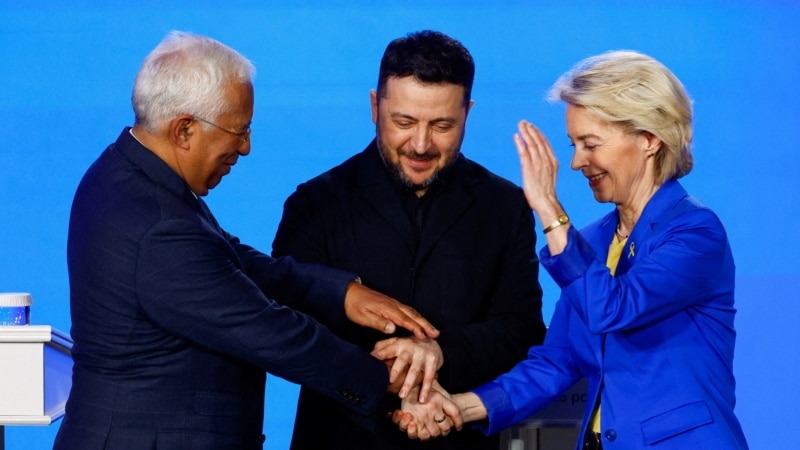
Ukraine and Moldova have taken a key step in their EU accession process after all 27 member states agreed to open the first negotiation cluster covering “fundamentals,” marking the formal start of structured membership talks, European Commission President Ursula von der Leyen said.
The opening of the first EU accession negotiation cluster marks a long-delayed breakthrough for Ukraine and Moldova after years of internal EU divisions and vetoes, including from Hungary. It formally starts talks on core governance reforms, following repeated postponements despite earlier candidate status.
Von der Leyen said the decision reflects recognition of both countries’ progress on reforms despite wartime conditions and sustained political pressure.
She said the cluster on fundamentals forms “the backbone of the accession process,” covering rule of law, democratic institutions, and core EU principles.
“This is a recognition of the determination, courage and hard work shown by both countries in advancing reforms, even in the face of immense challenges,” she said.
She added that enlargement is a “strategic choice,” arguing that bringing new members closer to the bloc strengthens “peace, security and prosperity across our continent,” and said a larger EU is “our best investment in our shared future.”
Today, the European Union took a major step forward.
— Ursula von der Leyen (@vonderleyen) June 12, 2026
All Member States agreed to open the first accession negotiations cluster with Ukraine and Moldova.
At the first Intergovernmental Conference on Monday, we will open the cluster on fundamentals; the backbone of the accession… pic.twitter.com/WSPU8CVPpg
Ukrainian President Volodymyr Zelenskyy welcomed the decision, thanking EU partners and individual leaders for what he described as a “strong step for Europe.”
He said Ukraine continues to deliver reforms despite the war and that the EU is now fulfilling its commitments in return.
Zelenskyy said opening the first cluster is “a significant political and moral support for our state and our people,” and stressed that Ukraine is working to ensure readiness for the next stages of accession talks.
He added that Kyiv is grateful for international support and said the EU’s backing helps Ukraine defend not only itself but “the idea that European nations can live united, free, and in peace.”
— Taras Kachka (@taraskachka) June 12, 2026
Today’s EU member states’ decision to open Cluster 1 negotiations w/ Ukraine marks another milestone on Ukraine’s path to the EU. Enlargement remains a strategic investment in Europe’s security, stability, and prosperity, &
is committed to contribute & deliver. We are…
The move follows months of procedural preparation within the EU, after the Cyprus presidency initiated steps to open the first negotiation cluster for Ukraine and Moldova.
The cluster on fundamentals is the first and most sensitive stage of accession talks, and must be opened unanimously by all member states before negotiations can proceed further.
The breakthrough comes after Hungary’s prolonged veto over the start of accession negotiations with Ukraine was lifted.
Budapest had previously blocked progress over disputes including minority rights in Ukraine’s Zakarpattia Oblast, which borders Hungary and contains a number of ethnic Hungarians, stalling the launch of negotiation clusters despite Ukraine receiving candidate status in 2022.
The recent shift followed a change in Hungary’s political leadership and an agreement on minority rights, removing a key obstacle to advancing the accession framework.
Enlargement talks remained stalled for years due to internal divisions, including Hungary’s veto, even as broader momentum built across the bloc.
While technical preparations for “clusters” were advancing, the formal opening required unanimous agreement and had been repeatedly delayed despite Ukraine’s expectation that talks could begin sooner.
Enlargement remains a long-term process requiring sustained reforms across governance, judiciary, and economic policy before membership is possible. No country has completed the process since Croatia joined in 2013.

By Fabio Giuseppe Carlo Carisio
«Today, I’m releasing never before seen intelligence revealing new evidence of past US government funding for more than 120 biolabs in over 30 countries, including Ukraine».
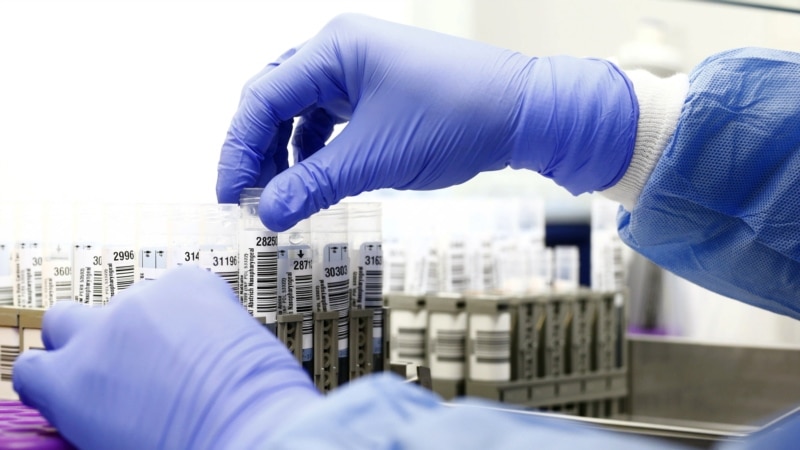
After months of searching through Intelligence Community holdings and files, Director of National Intelligence (DNI) Tulsi Gabbard is revealing new evidence of longstanding United States government funding for more than 120 biolabs in over 30 countries.
She is doing this as her final act in office, as she resigned from her post due to her husband’s health after announcing an investigation about this hot topic.
«In support of President Trump‘s Executive Order to end federal funding of dangerous gain of function research around the world, and increase transparency and accountability, ODNI will continue working with partners across the Administration to identify where these labs are, what pathogens they contain, and what “research” is being conducted» Gabbard added in her X video.
Gain of Function (GOF) is a technique for laboratory virus enhancement similar to the principle of uranium enrichment in nuclear power. It has been used in the context of DURC (Dual Use Research Concern) protocols, where “DUAL” stands for dual use: for medical purposes, for vaccines, or for military purposes, for biological weapons.
It has been confirmed by several experts during the depositions before the US Congressional Committees that the infamous virologist Anthony Fauci, (former director of the NIAID), accused of having built the SARS-Cov-2 in the laboratory, used the GOF in his experiments on pathogens conducted in American laboratories and coordinated in those abroad such as in Wuhan and Ukraine.
«These biolabs include labs in Ukraine, which may be at risk of compromise due to the ongoing Russia-Ukraine war» the ODNI official Statement pointed out.
![]()
The Intelligence Community previously “warned that a US-funded biolab in Ukraine likely housed dangerous pathogens and remained vulnerable to longstanding threats of Russian attack, seizure, or damage”, despite just Moscow troops denounced this risk to international autorities,,,
The dossier, currently consisting of four slides packed with data, appears to be a political bombshell because it confirms what Russia and Gospa News have reported regarding the Ukraine Biolabs case.
![]()
But the content is truly “poor” of data compared to what has already emerged in Russian complaints to the UNODA (United Nations Office for Disarmament Affairs) in Geneva and our investigations in the WuhanGates and Ukraine Biolabs series, which revealed a network of speculation on laboratory-enhanced pathogens also used for coronaviruses and, therefore, for SARS-CoV-2…
It is, however, of fundamental importance because it confirms, without any doubt, the existence of experiments on viruses suitable for turning them into American bioweapons…
Gabbard’s declassified dossier therefore contains everything necessary for a frontal attack on the Obama and Biden administrations, which opened 12 of those laboratories in Ukraine under the aegis of the Pentagon in 2012, thanks to former CIA Director Leon Panetta.
This new evidence confirmed also the dangerous researches on many lethal viruses as Ebola and SARS, the responsible for Covid-19 in new SARS-Cov-2 genotype.
But it hasn’t enough details to affirm that almost all the viruses causing recent epidemics were engineered according to research on synthetic and recombinant pathogens constructed by American biolaboratories, as revealed by a USAF dossier.
This thesis was supported by General Igor Kirillov, commander of the Russian Troops for Chemical, Biological and Radiological Protection, later killed in an attack by the Ukrainian secret services supported by the intelligence of various NATO countries, primarily the British MI6 counterintelligence but also the American one of the CIA…
The now declassified dossier therefore appears to be the “swan song” of the enterprising director of the ODNI, which coordinates all 18 American federal agencies, and an attempt to debunk theories according to which she was induced to resign precisely after announcing a thorough formal investigation into US biolaboratories…
«Until now, evidence regarding the full existence and funding of these laboratories had been knowingly withheld from the American people. The information surrounding the existence, history, locations and funding of these US funded biolabs has been intentionally covered up by powerful people falsely, claiming that they do not exist and accusing anyone who says otherwise to be foreign assets and traitors to America» the ODNI statement adds.
According to Gabbard official note, «many of these U.S. government-funded biolabs are currently or have previously engaged in research using hazardous and highly contagious pathogens, in some cases to include dangerous Gain-of-Function research, with very little visibility or oversight».
![]()
President Trump understands the serious threat dangerous Gain-of-Function research poses to the American people, which is why he took decisive action on May 25, 2025, signing EO 14292 to end federal funding of Gain-of-Function research around the world, ODNI recalled.
“Despite the obvious potential for catastrophic global impact research on dangerous pathogens in biolabs can have, politicians, so-called health professionals like Dr. Fauci, and entities within the Biden administration’s national security team lied to the American people about the existence of U.S.-funded and supported biolabs, and threatened those who attempted to expose the truth. ODNI will continue to work closely with partners across the government to identify where these labs are, what pathogens they contain to end dangerous Gain-of-Function research that threatens the health and wellbeing of the American people and people around the world,” said DNI Gabbard.
![]()
DNI Gabbard issued new guidance to the Intelligence Community directing increased collection on these laboratories and facilities overseas.
«This directive is already providing new details on clinical trials that are underway at these facilities, raising significant ethical, financial, and security concerns regarding these supposed public health initiatives and U.S. national security» the ODNI official statement concluded.
The last slide on US BioWeapons Defense industries confirmed the most part of the name we have previously revealed in our investigation as Metabiota, a Pentagon and CIA contractor focused on data science and analytics company focused on mitigating global risks from infectious diseases and funded even by Hunter Biden, son of president Joe.
Fabio Giusepepe Carlo Carisio – Gospa News Director and Founder
MAIN SOURCES
ODNI LINK ON US FUNDING BIOLABS
GOSPA NEWS – UKRAINE BIOLABS DOSSIER
RELATED POST & VIDEOS


Key developments on June 12: