Normal view

Pro-Palestine activists sentenced as terrorists over damage at Israeli arms factory in UK

Four found guilty get tougher conditions as judge says actions were ‘designed to intimidate the UK government and a section of the public’

A judge has imposed lengthy custodial sentences on four Palestine Action activists who smashed up drones and other equipment at an Israeli arms manufacturer’s UK factory after ruling that there was a “terrorist connection” to their offending.

Charlotte Head, 30, and Leona Kamio, 30, were each jailed for five years and Fatema Rajwani, 21, was sentenced to four years and 8 months for criminal damage in relation to a 2024 break-in at the Elbit Systems UK site in Gloucestershire. Samuel Corner, 23, who was additionally convicted of grievous bodily harm without intent for striking Sgt Kate Evans with a sledgehammer, was sentenced to seven years and eight months. Each will also spend an additional year on licence and be subject to 15 years of terrorist notification requirements.

Continue reading...

© Photograph: X

© Photograph: X

© Photograph: X

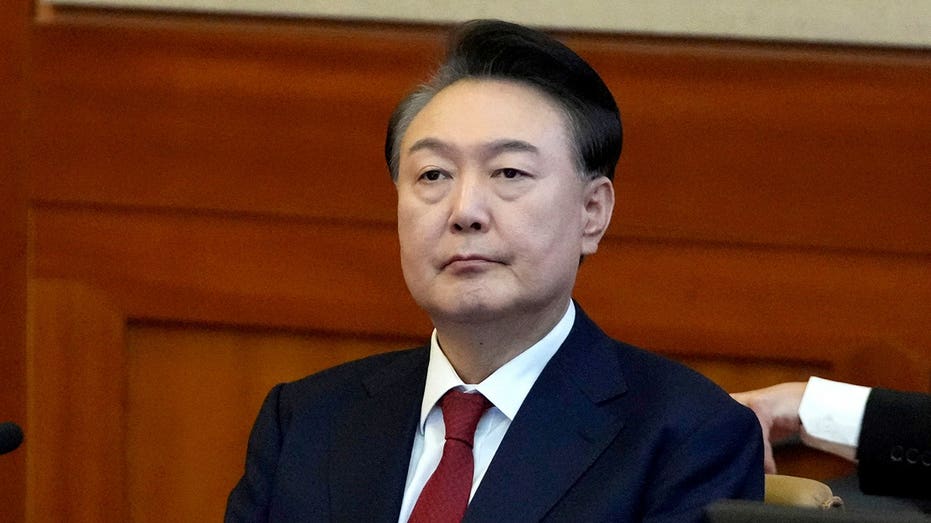
Former South Korean President Yoon Suk Yeol sentenced to 30 years over North Korea drone flights

12 June 2026 at 08:30

A South Korean court sentenced former President Yoon Suk Yeol to 30 years in prison Friday in a case that accused him of ordering drone flights over North Korea in an effort to justify his declaration of martial law.

Yoon, 65, was sentenced alongside former Defense Minister Kim Yong Hyun by the Seoul Central District Court.

The ousted president was previously sentenced to life in prison for leading an insurrection following his declaration of martial law in December 2024.

North Korea accused South Korea of flying drones over Pyongyang to drop propaganda leaflets on three occasions in October 2024.

SOUTH KOREAN LAWMAKERS SUPPORT SUSPENDING PRESIDENT’S POWERS AFTER SHORT-LIVED MARTIAL LAW DECLARATION

Then-Defense Minister Kim initially issued a vague denial before South Korea's Defense Ministry said it could neither confirm nor deny the allegations.

Although tensions between the two Koreas escalated following the incident, the drone flights did not lead to any military clashes.

Prosecutors accused Yoon of attempting to create a crisis with North Korea while plotting an authoritarian power grab aimed at removing political opponents and consolidating control.

SOUTH KOREAN COURT RULES EX‑PRESIDENT YOON SUK YEOL GUILTY IN INSURRECTION TRIAL

Before declaring martial law, Yoon delivered a televised address accusing liberal lawmakers of sympathizing with North Korea.

Yoon has argued that he possessed the constitutional authority to declare martial law and said the move was intended to draw attention to what he viewed as obstruction by opposition parties.

His attempt to impose martial law lasted roughly six hours before lawmakers voted to overturn it amid mass public protests.

Yoon was arrested in July 2025 and continues to face multiple criminal proceedings.

CLICK HERE TO DOWNLOAD THE FOX NEWS APP

The insurrection verdict has been appealed by both Yoon and prosecutors, who had sought the death penalty.

The Associated Press contributed to this report.

15 tons of diesel, $22,500 in damages: Ukraine charges eight in Poltava military fuel-theft scheme

11 June 2026 at 18:25

A Ukrainian soldier refuels a vehicle with gasoline. Source: ArmyInform

Six Ukrainian servicemembers and two civilians have been charged in a fuel-theft scheme that diverted over 15 tons of diesel fuel from a military unit in 2025, the Special Prosecutor's Office for Defense Sector of the Central Region announces. The scheme caused damages of over $22,500 to the military unit, whose fuel was destined for Ukrainian Defense Forces operations.

The defendants face up to 15 years' imprisonment under Article 410, Part 4, of the Ukrainian Criminal Code, for theft of military property during martial law by a prior conspiracy group.

The Poltava fuel-theft prosecution is one of several Ukrainian military corruption cases prosecuted in early June 2026.

How did scheme work? 

The scheme was organized by a technician of the Poltava-area military unit, prosecutors said.

The technician engaged refueling drivers with direct access to fuel during transport, along with civilians who acted as buyers and resellers of the stolen diesel. During loading operations, drivers manipulated the measuring sticks and exploited specific technical features of fuel tanker vehicles so that part of the diesel did not appear in official accounting.

They also artificially created fuel surpluses by reducing the actual consumption recorded during transport and entering false data into trip sheets, listing fuel as consumed when it was not.

The "surplus" fuel was poured into canisters and hidden in forest strips near the military unit. The technician then transported the stolen fuel to private buildings, where he stored and sold it to civilians. Proceeds were divided among scheme participants.

Ukraine's defense anti-corruption apparatus continues prosecution

Ukraine's defense-sector anti-corruption apparatus has continued to actively investigate and prosecute internal theft cases during the war. The DBR, Special Prosecutor's Office for Defense Sector, and SBU have pursued cases ranging from procurement fraud at the Defense Ministry level to FPV-drone theft from frontline supply caches to organized fuel-theft schemes like the Poltava case.

Medic stole 16 FPV from firm that entered $1.1 billion Pentagon competition and hid them for four months. Ukraine arrested him when he tried to sell them for 19% of their value

Portugal’s new nationality law: what has changed and what remains unclear

11 June 2026 at 17:29
Portuguese Draft State Budget 2022 – what’s the plan?

Portugal’s sweeping changes to its nationality law have left many foreign residents, investors and would-be citizens wondering where they stand. Portugal’s new nationality law officially came into force on May

The post Portugal’s new nationality law: what has changed and what remains unclear appeared first on Portugal Resident.

Kremlin enacts law to grab homes and bank accounts of its exiled critics

11 June 2026 at 09:15

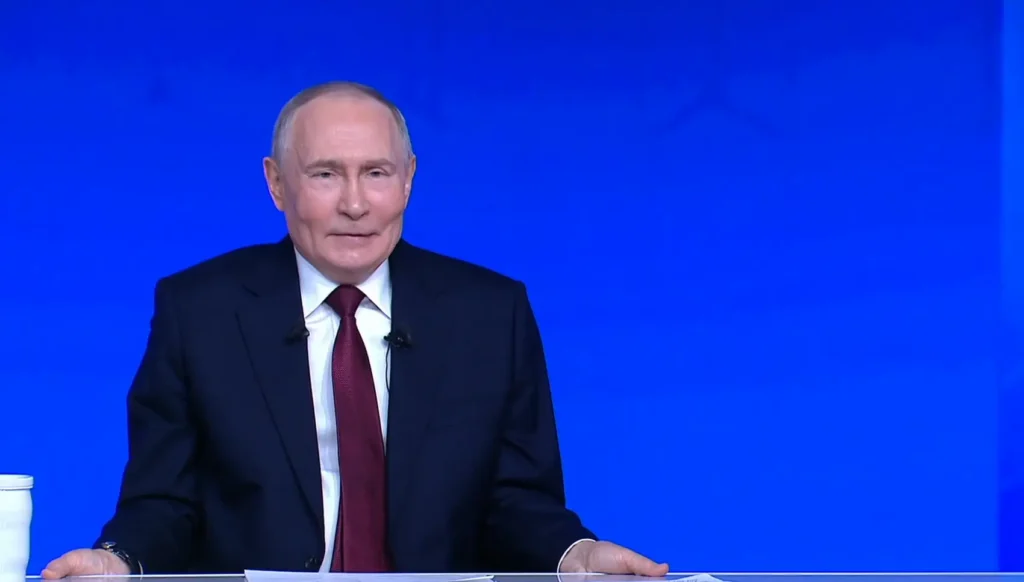
kremlin enacts law grab homes bank accounts its exiled critics · post russia president vladimir putin during direct line 19 2025 official broadcast putin2025_43 ukraine news ukrainian reports

Russian President Vladimir Putin signed a law allowing Russia to seize the property and bank balances of citizens living abroad before any court ruling, the Moscow Times reported. The legislation turns a single formal charge into an immediate asset freeze in absentia against exiled Kremlin critics. It takes effect on 1 September 2026.

Property has become a routine instrument of Russian state coercion: Russian occupation authorities are confiscating Ukrainian homes inside occupied territory under federal legislation running until 2030. 

Several hundred thousand Russians left the country after the start of the full-scale invasion of Ukraine in 2022. 

What the law does

The amendments to Russia's Code of Administrative Offenses cover "administrative offenses against the interests of the Russian Federation." The seizure is framed as a "precautionary measure," not a sentence. Qualifying offenses include "discrediting" the Russian army, calls for sanctions against Russia, and "propaganda of Nazi symbols." They also cover producing and distributing "extremist materials" and non-payment of fines for any of these acts.

The value of property arrested, including bank account balances, is not capped at the underlying fine. Russian outlet Meduza noted that courts had previously fined people abroad under those administrative articles. Pre-trial seizure as a precautionary measure had never been available before.

The Kerch bridge, also known as the Crimean bridge
Explore further

Russia is holding at least 100 people in occupied Crimea with no contact with outside world and no lawyer — and no trials

How it differs from the 2024 confiscation law

The legislation extends the post-conviction asset-confiscation regime that Putin signed in February 2024. That earlier law let Russia seize the assets of those convicted of spreading "deliberately false information" about the army and other offenses. The new law moves the seizure earlier, before any verdict.

It is aimed squarely at Russians who fled after Moscow's full-scale invasion of Ukraine in 2022. The Moscow Times said the legislation "hands the government a new tool to punish Kremlin critics living abroad, including exiled journalists and activists."

If a Russian abroad cannot be notified of charges, the court must appoint a defense lawyer. Legal fees are reimbursed from the federal budget only if the case is dropped. The document was published on Russia's official legal information portal on 10 June 2026.

children informing parents teachers beaten collaborators later jailed — researcher details russia's occupation playbook · post serhii danylov deputy director center middle eastern studies a8eba632c784da1766417a401eb95004 ukraine news ukrainian reports
Explore further

Children informing on parents, teachers beaten, collaborators later jailed — researcher details Russia’s occupation playbook

A "preventive" measure aimed at exiled critics

The bill's explanatory note cited "bright examples" of relocants conducting "activity directed against the interests of Russia." It argued for applying "measures of preventive influence" to such citizens. The authors stated the law will help "stop" calls to violate Russia's territorial integrity and constitutional order. In Russian official usage, that language covers the Kremlin's claim over occupied Crimea, Donetsk, Luhansk, Zaporizhzhia, and Kherson oblasts. 

From Tatarstan to Putin's desk

Lawmakers from the Russian republic of Tatarstan first proposed the bill in October 2024. The State Duma — Russia's lower house of parliament — passed it late in May 2026. State Duma speaker Vyacheslav Volodin praised the bill as a cover for Russian forces deployed in Ukraine. Russian state news agency TASS reported that the amendments make individuals abroad newly liable for abusing media freedom, inciting hatred, calls to violate Russia's territorial integrity, and discrediting the armed forces.

Labor scraps plan to make spy agency’s 9/11-era questioning powers permanent

But Australian government will expand offences covered by rules to include promotion of communal violence and attacks on defence system

Labor has quietly backed down on moves to make spy agency Asio’s powers for compulsory questioning permanent, but will expand offences covered by the rules to include promotion of communal violence and attacks on Australia’s defence system.

The laws were introduced after the 11 September 2001 terrorist attacks in the US and give intelligence operatives powers to issue a questioning warrant requiring a person as young as 14 to give information or produce items that may assist in a serious investigation.

Continue reading...

© Photograph: AAP

© Photograph: AAP

© Photograph: AAP

Two men jailed for putting lives at risk during small boat journeys to UK

10 June 2026 at 14:15

Mohammad Tajik and Alnour Ali, who steered boats on Channel crossings, are first to be sentenced under new law

Two men have been jailed under the new offence of endangering others during a journey at sea.

The two men who were steering small boats are the first to be sentenced under the law, which came into force in January as part of government efforts to counter small-boat crossings.

Continue reading...

© Photograph: CPS/PA

© Photograph: CPS/PA

© Photograph: CPS/PA

Sentencing Palestine Action protesters as terrorists would be ‘constitutional threat’, says lawyer

Judge will decide whether four’s acts had link to terrorism, despite jury not convicting them of terrorism offence

One of the UK’s leading human rights lawyers has said the potential sentencing of four Palestine Action protesters as terrorists when the jury did not convict them of a terrorism offence violates fundamental legal principles.

Michael Mansfield KC, known for his work on landmark cases such as the Grenfell Tower fire, Stephen Lawrence’s murder and the Birmingham Six, claimed the sentencing of Charlotte Head, 29, Samuel Corner, 23, Leona Kamio, 30, and Fatema Rajwani, 21 represents a “constitutional threat”.

Continue reading...

© Photograph: Leon Neal/Getty Images

© Photograph: Leon Neal/Getty Images

© Photograph: Leon Neal/Getty Images

The ICC: he who pays the piper calls the tune

By: A A
10 June 2026 at 11:50

The ICC: 84% funded by imperialist powers, 0% justice for their crimes. From the CIA to French rapists, the Court shields the West while targeting Russia, Libya, and Africa. He who pays the piper calls the tune.

Join us on TelegramTwitter, and VK.

Contact us: info@strategic-culture.su

In order to persecute rulers deemed inconvenient to imperialism, the ICC overrode its own basic principle: limiting its jurisdiction to countries that ratified the Rome Statute. Yet while Gaddafi’s Libya and Putin’s Russia became targets of the ICC, the United States has remained immune. And it has demonstrated that, even while not being a member of the Court, it is the one truly in command.

When Bensouda sought to investigate war crimes in Afghanistan — not restricting her inquiry to the actions of the Taliban and the Islamic State, but also including what she viewed as the greatest perpetrators of that war (the U.S. military and the CIA) — she came under intense pressure from Washington, pressure that ultimately resulted in government sanctions. Her and her relatives’ bank accounts were frozen, and her husband was subjected to surveillance.

Eventually, Bensouda was replaced by a new prosecutor compliant with the United States. Karim Khan altered the focus of investigations into Afghanistan, declaring that priority would be given to the Taliban and ISIS while the United States would no longer be prioritized, citing a lack of resources for a broader undertaking.

During one of France’s many military interventions in Africa this century (between 2013 and 2016), soldiers raped and sexually abused children in displaced persons camps in the Central African Republic. The UN, although it devoted limited attention to the case, was accused of a “serious institutional failure” by an independent commission for having allowed the atrocities to continue. The ICC — which could have intervened, since France is a State Party and French magistrates failed to convict any soldier due to an alleged lack of evidence — preferred to remain silent on the matter.

During the same period, amid its intervention in the Sahel, French soldiers — including mercenaries from the Foreign Legion — were accused of murdering civilians and training and arming security forces responsible for massacres, summary executions, and rapes. French leaders likewise had little to fear.

On the other hand, the ICC even pretended to examine war crimes committed by the United Kingdom in Iraq, including the torture of prisoners. But it justified closing the case by claiming that British authorities were already conducting domestic investigations — even though the Office of the Prosecutor itself acknowledged there was a “reasonable basis” to believe British troops had committed war crimes.

The United Kingdom punished no officers, even though a later public inquiry concluded that there had been widespread violence and an institutional silence — in other words, responsibility reaching high military ranks. Since the United Kingdom had not truly been capable of concluding the matter, the ICC could have intervened, given that London is party to the Rome Statute. But the ICC once again washed its hands of the issue.

Now, as Bensouda revealed, Israel is also protected — and not only through U.S. sanctions, but also through the actions of an ICC bureaucracy working hand in glove with the Mossad, allowing direct and illegal Israeli interference without taking any action against it.

A Structure Dominated by Imperialist Nations

According to data made available in the ICC’s latest financial report, referring to 2024 and published in July 2025, it is possible to calculate that around 84% of the Court’s total funding comes from imperialist and associated countries (NATO members, Switzerland, Austria, Japan, South Korea, Australia, and New Zealand). Yet together they account for only 28% of the Court’s States Parties. Meanwhile, the remaining countries (72%) contribute just 16% of the Court’s budget.

There is a clear structural imbalance in the ICC’s financing. Naturally, this is directly related to the Court’s partial conduct. As the saying goes, he who pays the piper calls the tune.

The ICC itself considers that 60% of African countries that belong to it are “non-represented” or “under-represented” in its internal structure. In other words, only 40% have some form of representation. For Latin American and Caribbean countries, this percentage is even lower: only 14% of the Court’s members are adequately represented. For Asia-Pacific countries, the figure is 28%. By contrast, half of the imperialist and associated countries are properly represented, a far higher percentage than in the other regions.

According to a report by the Assembly of States Parties, 56% of ICC staff in 2024 came from the group composed of Western European and related countries. Only 16% were African, 11% came from Eastern Europe, 8% from Asia-Pacific, and 8% from Latin America and the Caribbean.

Among the Court’s current 18 judges, eight belong to imperialist and associated countries, and five maintain academic and/or professional ties with hegemonic institutions in those countries. The others are senior state bureaucrats, generally from countries whose state apparatus is intrinsically dependent on imperialism.

Thus, it is clear that the ICC’s victims will always be leaders who are inconvenient to imperialist powers. While even Putin has had an arrest warrant issued against him by the Court and African governments remain its preferred target, no NATO country has ever been seriously troubled by ICC proceedings.

The bombings using prohibited weapons in Yugoslavia in 1999, the torture at Abu Ghraib and Guantánamo, the massacres in Iraq and Afghanistan, the rapes in Africa, or, more recently, the massacre at the school in Minab and the weekly killings of fishermen in the Caribbean and the Eastern Pacific, do not concern ICC judges.

For this very reason, the majority of sovereign countries that refuse to kneel before imperialism have never joined the ICC. Cuba accused the Court of pursuing a “selective policy against developing countries.” North Korea described its maneuvers as “a product of hostile forces.”

But together with Burundi’s declaration, perhaps the best definition of what the ICC is came from the Deputy Secretary of the Russian Security Council, Alexander Venediktov: “A compliant puppet in the hands of the collective West.”

Greece Approves New Migration Bill: Fast-Track Deportations and “Return Hubs”

10 June 2026 at 08:13
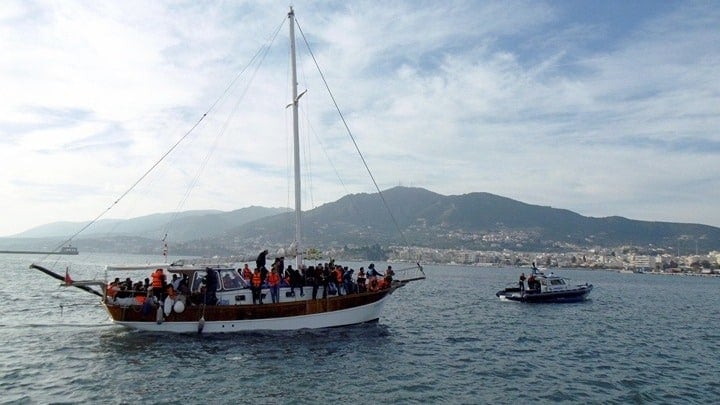
A Hellenic Coast Guard vessel tows a migrant boat to the port. Greece has approved a new migration bill.
A Hellenic Coast Guard vessel tows a migrant boat to the port. Credit: AMNA

Greece’s Parliament has passed a major migration bill that officially integrates the European Union’s new Pact on Asylum and Migration into domestic law. The legislation introduces stringent measures to overhaul border controls, expedite asylum applications, and fast-track the deportation of individuals whose asylum claims have been rejected.

A central element of this new framework is the establishment of offshore “return hubs.” These are transit centers located in non-EU countries where rejected asylum seekers will be transferred if their countries of origin refuse or delay their repatriation.

Minister Plevris on “return hubs” and negotiations

Migration Minister Thanos Plevris clarified that these hubs will not operate outside the law, emphasizing: “These centers will operate within the framework of European Union agreements with third countries and under the guarantees of European and international law.”

Greece is spearheading this initiative alongside Germany, Denmark, Austria, and the Netherlands. The coalition aims to sign their first bilateral agreements later this year so the hubs can become fully operational in 2027. Minister Plevris revealed that advanced talks are already underway. “The Greek government has already been in consultations with two African countries,” he stated.

The Minister also noted that these hubs are a vital tool for Greece, as partner nations frequently experience secondary migration flows—meaning migrants who initially crossed into Europe via Greek territory. He added:

“The creation of a more effective European return mechanism can act synthetically with the existing system and offer an additional innovative tool both to Greece and the remaining member states for managing returns.”

Voluntary returns and stricter detention policies

The new law expands administrative detention, increases surveillance on individuals awaiting deportation, and speeds up removals in coordination with Frontex. Minister Plevris stated that the strict new framework “is already starting to produce tangible results.”

According to Plevris, voluntary returns handled via the International Organization for Migration (IOM) have already increased by 25% since the new measures were introduced, with hundreds of undocumented individuals coming forward to express their intent to return home.

The changing migration numbers in Greece

Minister Plevris linked the accelerated asylum processes and rigid enforcement directly to a steep decline in illegal border crossings, noting that proper returns and secure borders are inherently connected: “These figures confirm that the effective management of returns, the acceleration of asylum procedures, and border protection are interconnected pillars of a cohesive migration policy.”

To demonstrate the shifting impact, Plevris provided specific data comparing past crises to current trends. Under the previous administration between 2015 and 2019, Greece saw a massive wave of 1,215,280 irregular arrivals. Since 2019, that number has dropped significantly to 197,651 total arrivals.

Furthermore, during the first five months of 2026, nationwide arrivals saw a further 31% decrease, with arrivals in the Aegean Sea plunging by 65%. However, localized pressure remains. Over the past two years, for instance, the southern islands of Crete and Gavdos have experienced a sharp rise in migrant boats arriving from Libya.

The efficiency of processing has also changed. Pending asylum applications in Greece have plummeted by roughly 80%, dropping from 142,000 in 2019 to just 28,000 today. At the same time, stricter evaluation standards have caused the international protection approval rate to fall from 71.5% to 40.7%.

Two key pillars of the new legislation

Mandatory Border Screening: Before a migrant is legally considered to have entered EU territory, they must undergo a mandatory pre-entry screening at the border. This process includes identity verification, biometric data capture, security and health checks, and cross-referencing information via the upgraded Eurodac database to track migrant movements across the EU.

Fast-Track Asylum Evaluation: The law establishes much tighter deadlines to eliminate years of bureaucratic delays. Applications flagged as “manifestly unfounded,” particularly those submitted by nationals of countries with historically low asylum approval rates, will face rapid, border-adjacent evaluations and immediate rejection.

Non-citizens held in indefinite detention in Australia could get millions of dollars in compensation after government’s high court loss

Human rights lawyers and refugee advocacy groups are lauding the decision as a ‘significant outcome’

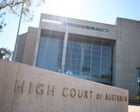
Millions of dollars in compensation could be paid out to more than 350 unlawful non-citizens held in indefinite detention after the high court ruled against the Australian government.

The ruling marks another blow for the Albanese government after its requirement that released members of the NZYQ cohort must wear ankle monitoring bracelets and abide by curfews was struck down as unconstitutional earlier this year.

Continue reading...

© Photograph: Lukas Coch/AAP

© Photograph: Lukas Coch/AAP

© Photograph: Lukas Coch/AAP

Lammy’s cuts to jury trials could have ‘far-reaching’ effect on race relations, say MPs

Justice secretary’s plans likely to increase black people’s suspicion of court system, committee suggests

David Lammy’s planned changes to the criminal courts in England and Wales could have a “far-reaching” impact on race relations, a cross-party committee of MPs has concluded.

The deputy prime minister’s plan to remove the right to elect for a crown court trial “has the potential to increase mistrust in the criminal justice system among the black community”, the justice select committee said, because black defendants are more likely to elect for trial.

Continue reading...

© Photograph: Ian West/PA

© Photograph: Ian West/PA

© Photograph: Ian West/PA

Grim reality of prison conditions laid bare in damning report

Inmates in England and Wales live among vermin while gangs control entire wings, monitors warn, with failures ‘at risk of becoming normalised’

The independent monitoring board’s annual report of conditions across the prison estate of England and Wales is stark and unflinching.

Men and women are held for long periods in overcrowded and unsanitary conditions, often living alongside vermin.

Continue reading...

© Photograph: Peter Macdiarmid/Getty Images

© Photograph: Peter Macdiarmid/Getty Images

© Photograph: Peter Macdiarmid/Getty Images

Pocock says Australia is ‘sleepwalking’ into AI impacts – as it happened

This blog is closed

Albanese says Australia still impacted by Middle East conflict ‘each and every day’

The prime minister, Anthony Albanese, is now on the ABC News Breakfast couch. He said Australia remains concerned about the economic impact of the turmoil in the Middle East.

Our job now is to demonstrate that we are a genuine and credible alternative to this terrible Labor government.

He’s a great supporter of the party, he’s a great supporter of Angus Taylor, I think this is a great opportunity. The Liberal party has always been what John Howard called the broad church: we like having different opinions.

We listen to everybody’s views, and we represent them.

Continue reading...

© Photograph: Lukas Coch/AAP

© Photograph: Lukas Coch/AAP

© Photograph: Lukas Coch/AAP

Federal Judge Strikes Down Trump’s $100,000 H-1B Visa Fee Requirement

9 June 2026 at 21:26
US President Donald Trump
US President Donald Trump. Credit: White House

A federal judge ruled on Monday that the $100,000 fee Trump imposed on H-1B visa applications was unlawful, striking down one of the administration’s key immigration measures targeting skilled foreign workers.

U.S. District Judge Leo Sorokin of Boston found the payment was a tax, not a penalty, and that the president lacked authority to impose it without congressional approval. His 42-page ruling also barred the State Department and U.S. Citizenship and Immigration Services from enforcing the requirement.

Sorokin, appointed by former President Barack Obama, applied reasoning from a February Supreme Court decision that struck down Trump’s tariffs issued under emergency authority. He concluded that immigration law, like the emergency statute in that case, does not permit the president to levy taxes.

Inside Trump’s case for the $100,000 H-1B visa fee

The H-1B program allows U.S. companies to hire foreign workers for specialized roles. Applicants must hold at least a bachelor’s degree. Visas are approved for three years with a possible three-year extension.

Each year, the program makes 65,000 visa slots available, along with a separate pool of 20,000 set aside for applicants holding advanced degrees.

Trump's $100,000 H-1B visa fee has been blocked by a judge.

Judge Leo Sorokin ruled the new fee for highly skilled foreign workers is unlawful and that it amounts to an unauthorised tax. pic.twitter.com/v1J9Np5qyV

— Pubity (@pubity) June 9, 2026

Employers typically paid $2,000 to $5,000 in fees before the order. Economists say the program helps American companies stay competitive and creates domestic jobs.

Trump announced the $100,000 H-1B visa requirement in September, saying the program had been misused to replace American workers with cheaper foreign labor.

The fee did not apply to foreign nationals already in the country on student visas, who represent a significant portion of new applicants.

The requirement saw little uptake. USCIS recorded only 85 payments as of Feb. 15, according to a March court filing.

Attorneys General celebrate as administration vows to appeal

Twenty Democratic attorneys general filed the lawsuit in December. California Attorney General Rob Bonta, who led the group, said that the ruling protects the country’s ability to attract skilled workers, on which the economy depends.

New York Attorney General Letitia James said that it blocked what she called an unlawful effort to undermine the program and the jobs it supports.

The administration defended the policy as a lawful use of presidential authority over immigration. White House spokeswoman Taylor Rogers said that the ruling would be appealed, adding that the president has the authority to restrict the entry of foreign nationals deemed harmful to American interests.

Justice Department spokeswoman Natalie Baldassarre said that the department would continue holding companies accountable for misusing the program.

At least three lawsuits have targeted the fee. A federal judge in Washington ruled in December in favor of the administration in a separate case brought by the U.S. Chamber of Commerce, which is appealing that outcome.

The administration has also called for stricter applicant screening and put forward a revised selection process designed to give priority to foreign workers with higher qualifications and better pay.

Passenger on train to London given first sentence for harassment under new law

9 June 2026 at 19:46

David Stroud grabbed a woman’s hair and asked if he could kiss her two days after legislation took effect

A train passenger has become the first person to be sentenced under a new harassment law after a prosecution brought by the British Transport Police (BTP).

David Stroud, 44, grabbed a woman’s hair and asked her “can I kiss you?” on a rail journey to London on 3 April, two days after the new legislation came into force banning harassment motivated by a person’s sex.

Continue reading...

© Photograph: Antonia Johlen/PA

© Photograph: Antonia Johlen/PA

© Photograph: Antonia Johlen/PA

Can common sense replace Equality Act protections, as Kemi Badenoch suggests?

The Tory leader says the public sector duty to consider minorities encourages division – but legal experts say abolishing it will fuel discrimination

For more than two decades, an important part of Britain’s equality laws ensured public institutions had to think about the impact their decisions could have on different groups in society.

Introduced after the Stephen Lawrence inquiry, the public sector equality duty required public bodies – such as local councils, police forces and hospitals – to think proactively about equality law. Now this once uncontroversial public duty is a new battleground in Britain’s culture wars.

Continue reading...

© Photograph: James Manning/PA

© Photograph: James Manning/PA

© Photograph: James Manning/PA

Former Air Canada pilot charged after allegedly flying without proper license for 16 years

Geoffrey Wall is alleged to have flown over 900 flights domestically and internationally between 2009 and 2025

A former Air Canada pilot has been charged after flying for years without a proper license, Canadian police have said.

Geoffrey Wall, of Barrie, Ontario, is alleged to have operated as an airline captain between 2009 and 2025 without a license to fly large commercial passenger planes, according to Peel regional police.

Continue reading...

© Photograph: Kevin Carter/Getty Images

© Photograph: Kevin Carter/Getty Images

© Photograph: Kevin Carter/Getty Images

La CPI: quien paga manda

By: A A
9 June 2026 at 15:56

El 84% del presupuesto de la CPI viene de potencias imperialistas, que dictan sus investigaciones y protegen a sus aliados.

Únete a nosotros en Telegram Twitter  y VK .

Escríbenos: info@strategic-culture.su

Para perseguir a gobernantes incómodos para el imperialismo, la CPI pasó por encima de su norma básica: limitar su actuación a los países que ratificaron el Estatuto de Roma. Sin embargo, mientras la Libia de Gadafi y la Rusia de Putin fueron víctimas de la CPI, Estados Unidos continúa impune. Y ha demostrado que, aun sin formar parte de la Corte, es quien verdaderamente manda en ella.

Cuando Bensouda intentó investigar los crímenes de guerra en Afganistán —sin limitar su investigación a la actuación del Talibán y del Estado Islámico, sino incluyendo a lo que ella consideraba los mayores criminales de aquella guerra (el ejército estadounidense y la CIA)—, sufrió una fuerte presión desde Washington, hasta el punto de resultar en sanciones gubernamentales. Sus cuentas bancarias y las de sus familiares fueron congeladas, y su marido fue espiado.

Finalmente, Bensouda fue sustituida por un nuevo fiscal dócil a Estados Unidos. Karim Khan modificó el enfoque de las investigaciones sobre Afganistán, declarando que daría prioridad al Talibán y al ISIS y retiraría la prioridad de Estados Unidos, alegando falta de recursos para una investigación más amplia.

Durante una de las muchas intervenciones militares francesas en África en este siglo (entre 2013 y 2016), soldados violaron y abusaron sexualmente de niños en campos de desplazados en la República Centroafricana. La ONU, aunque prestó una atención limitada al caso, fue acusada de una “grave falla institucional” por una comisión independiente, al haber permitido que las atrocidades continuaran. La CPI —que podría haber intervenido, dado que Francia es un Estado Parte y los magistrados franceses no lograron condenar a ningún soldado por una supuesta insuficiencia de pruebas— prefirió guardar silencio al respecto.

Durante el mismo período, en su intervención en el Sahel, soldados franceses —incluidos mercenarios de la Legión Extranjera— fueron acusados de asesinar civiles y de entrenar y armar fuerzas de seguridad responsables de masacres, ejecuciones sumarias y violaciones. Los gobernantes franceses tampoco tuvieron de qué preocuparse.

Por otro lado, la CPI incluso fingió examinar los crímenes de guerra cometidos por el Reino Unido en Irak, incluidas torturas contra prisioneros. Pero justificó el cierre del caso alegando que las autoridades británicas ya estaban llevando a cabo investigaciones internas, aun cuando la propia Oficina del Fiscal de la CPI reconoció que existía una “base razonable” para creer que tropas británicas habían cometido crímenes de guerra.

El Reino Unido no castigó a ningún oficial, aunque una investigación pública posterior concluyó que hubo violencia generalizada y un silencio corporativo —es decir, una responsabilidad de altos mandos militares—. Como el Reino Unido realmente no había sido capaz de concluir el caso, la CPI podría haber intervenido, ya que Londres integra el Estatuto de Roma. Pero la CPI volvió a lavarse las manos.

Ahora, como reveló Bensouda, Israel también está protegido, y no solo por las sanciones estadounidenses, sino también por la actuación de una burocracia de la CPI confabulada con el Mossad, que permite la injerencia directa e ilegal de Israel sin hacer absolutamente nada al respecto.

Una estructura dominada por las naciones imperialistas

De acuerdo con los datos disponibles en el último balance financiero de la CPI, correspondiente a 2024 y publicado en julio de 2025, es posible calcular que alrededor del 84% de toda su financiación proviene de países imperialistas y asociados (miembros de la OTAN, Suiza, Austria, Japón, Corea del Sur, Australia y Nueva Zelanda). Sin embargo, en conjunto representan apenas el 28% de los Estados Parte del organismo. Mientras tanto, el resto de los países (72%) aportan solamente el 16% de su presupuesto.

Existe un claro desequilibrio estructural en la financiación de la CPI. Naturalmente, esto está directamente relacionado con la actuación parcial de la Corte. Como dice el dicho, quien paga manda.

La propia CPI considera que el 60% de los países africanos que la integran están “no representados” o “subrepresentados” en su estructura interna. Es decir, apenas el 40% cuenta con algún tipo de representación. Para los países latinoamericanos y caribeños, ese porcentaje es todavía menor: solo el 14% de los integrantes de la Corte están adecuadamente representados. En los países de Asia-Pacífico, la cifra es del 28%. En cambio, la mitad de los países imperialistas y asociados sí están debidamente representados, un porcentaje muy superior al de las demás regiones.

Según un informe de la Asamblea de los Estados Parte, el 56% de los funcionarios de la CPI en 2024 provenían del grupo compuesto por países de Europa Occidental y relacionados. Apenas el 16% eran africanos, el 11% provenían de Europa Oriental, el 8% de Asia-Pacífico y el 8% de América Latina y el Caribe.

Entre los 18 jueces actuales de la Corte, ocho pertenecen a países imperialistas y asociados, y cinco mantienen vínculos académicos y/o profesionales con instituciones hegemónicas de esos países. Los demás son altos burócratas estatales, generalmente de países cuya burocracia estatal es intrínsecamente dependiente del imperialismo.

De esta forma, queda claro que las víctimas de la CPI siempre serán los dirigentes incómodos para las potencias imperialistas. Mientras incluso Putin ha tenido una orden de arresto emitida por el organismo y los gobiernos africanos continúan siendo su objetivo favorito, ningún país de la OTAN ha sido jamás seriamente molestado por procesos de la CPI.

Los bombardeos con armas prohibidas en Yugoslavia en 1999, las torturas en Abu Ghraib y Guantánamo, las masacres en Irak y Afganistán, las violaciones en África o, más recientemente, la masacre en la escuela de Minab y los asesinatos semanales de pescadores en el Caribe y el Pacífico Oriental, no preocupan a los jueces de la CPI.

Precisamente por ello, la mayoría de los países soberanos que no se arrodillan ante el imperialismo jamás se adhirieron a la CPI. Cuba acusó al organismo de tener una política “selectiva contra los países en desarrollo”. Corea del Norte calificó sus maniobras como “un producto de fuerzas hostiles”.

Pero, junto con la declaración de Burundi, quizás la mejor definición de lo que es la CPI fue dada por el vicesecretario del Consejo de Seguridad de Rusia, Alexander Venediktov: “Un títere obediente en manos del Occidente colectivo.”

❌