Normal view

Trump, not Netanyahu, has the cards. he should play them

By: A A
13 June 2026 at 14:01

By Josh PAUL

Join us on TelegramTwitter, and VK.

Contact us: info@strategic-culture.su

Upcoming Israeli elections give the U.S. president leverage he can use.

The U.S.-Israel relationship has never been less popular in America, but at the same time that support for Israel is cratering in American public opinion, Congress appears to be fast-tracking an effort to entrench the relationship and give Israel enduring access to both our most sensitive technologies and our most sensitive intelligence—in exchange for nothing more, it seems, than a thank you note from Israel’s Prime Minister Benjamin Netanyahu.

At the same time, the U.S. is at war, stuck in an unpopular and unnecessary conflict whose political and economic impacts create mounting and unanticipated obstacles for the Trump administration’s agenda. While this week Trump has seemed intent on escalating the conflict, he’s also shown a desire to end it—and a recognition of one major roadblock to peace. The president’s frustration at Netanyahu—who played a key role in convincing him to enter the conflict, and who can now act as a spoiler to prevent him from exiting it—has become evident in recent weeks.

Given the challenges posed by the Israeli leader, a common complaint on both the right and the left of American politics is that Israel exerts far too much power in U.S. politics. But a closer look at the facts demonstrates that Netanyahu is actually in an incredibly weak position—or would be, if the administration was willing to assess and deal with the entire U.S.-Israel portfolio holistically.

Trump’s interests are relatively clear: to extract the U.S. from the war in Iran, reduce Israel’s dependency on American military support, and get Israel to make real progress towards Palestinian self-determination in order to have a chance of getting the Abraham Accords back on track. As Trump’s apparent frustration with Netanyahu entered the headlines in recent weeks, the president seemed to understand the ways in which Israel’s prime minister undermines these interests.

Netanyahu’s own objectives are not shaped as much by geopolitics, or even national interest, as much as they are by the growing urgency of presenting himself as a winner in time for Israel’s elections this fall. To do this, he has to leverage U.S. military power to deliver something resembling a win in Iran (which seems less and less likely), do the same in Lebanon (now a quagmire), and demonstrate that despite the collapse of U.S. public support and the foreseeable end of U.S. grant military assistance, he has guaranteed a means of enduring Israeli influence in Washington that doubles as a financial boon for Israel’s tech sector and broader economy.

In short, his back is against the wall. By October, he may be out of a job. And by January, after the 120th Congress is seated, the odds of the U.S. enacting laws that entrench Israel in our defense and intelligence systems may drop precipitously.

Netanyahu, as is typical for him, is projecting strength, to the point of hubris (which is also typical for him). His advantage to this point has rested on keeping the two negotiations (Iran and framework legislation) separate. In the Iran context he can exercise significant leverage as a spoiler, and in the legislative context he can exercise significant leverage through Republican congressional endorsement of a plan for which he has publicly taken credit. For as long as these lanes stay apart, he would seem to have the advantage.

But as a businessman, Trump knows the value of writing his own script and re-framing the situation in a way that benefits his—and America’s—interests. In this context, the way to do that is by combining all three tracks in the U.S.-Israel relationship—Iran, Palestinian self-determination, and the future of security cooperation—into one.

There are signs he may already have recognized this. Although the White House pushed back on recent reporting from NBC and the New York Times regarding Israeli espionage against the United States, those stories may have been a shot across the bow following an incredibly contentious call between the two leaders. Or in other words: “Play nice on Iran, or the intelligence cooperation under consideration by Congress gets pulled.”

There’s no reason for the White House not to lean into this further. Netanyahu has not shown himself to be a helpful partner for the U.S.—indeed, from Gaza to Iran he has undermined U.S. regional and global influence and interests. There’s no reason to think a future Israeli government under his leadership would be any more compliant, particularly once laws are passed by the U.S. guaranteeing Israel lasting influence over U.S. national security equities. In short, while Israel may be able to punch above its weight when it comes to shaping U.S. diplomacy (and warfare) on Iran, in the bigger picture Netanyahu needs Trump far more than Trump needs Netanyahu.

The administration should leverage this opportunity by linking all three tracks together. Specifically, it should signal to Israel that continued progress on the pending U.S. legislation is premised on Israeli compliance with U.S. efforts to wind down the regional conflict and with U.S. efforts to drive forward a real diplomatic pathway for Palestinian self-determination. To demonstrate he holds the upper hand, Trump should also work with Republican leadership in Congress to slow-roll the current legislative vehicles so that Netanyahu cannot present them as a “sure thing” prior to Israel’s elections.

Such an approach would not only incentivize Netanyahu to work more constructively with the administration, but could also inform the policies and campaign strategies of Israel’s opposition leaders, resulting in a more compliant Israelis after the fall elections.

U.S. presidents have always had the upper hand, in theory, when it comes to dealing with Israel. They can suspend arms transfers or soften their diplomatic support for Israel, opening it up to both sanctions risk and legal peril through the ongoing proceedings at the International Court of Justice and International Criminal Court. Trump would be right to consider integrating these pressure points into his strategy as well, though he’s unlikely to take that path. But there’s a unique opportunity now between Netanyahu’s domestic political position as Israel enters election season, and Israel’s potential moment of crisis when it comes to transitioning U.S. security assistance into some form of enduring influence.

This is a winning hand for President Trump, should he choose to play it. There is no need to give away the game, as Congress now seems poised to do, just as the cards have been dealt. Trump can use Israel’s desperation for defense and intelligence integration as leverage to constrain Netanyahu on Iran. After Israel’s elections and the U.S. midterms, he will still have time to assess if the current legislative work to integrate Israel needs to proceed, or if further concessions are needed from Netanyahu or a new Israeli government, before signaling his assent to Congress.

Original article:  www.theamericanconservative.com
The Defense Agreement between France and Norway: A New Stage in European Security ?

13 June 2026 at 13:59
As the US withdraws troops from Europe, European countries are once again facing the echoes of the past. In search of protection from growing threats, Norway has become the ninth European power to seek the French “nuclear umbrella.” On 27 May 2026, Norway’s Prime Minister Jonas Gahr Store met the French President Emmanuel Macron in […]

El chef José Andrés desvela la dieta con la que perdió 14 kilos en tres semanas: "Comía 300 calorías al día y me sentía lleno de energía"

13 June 2026 at 13:55

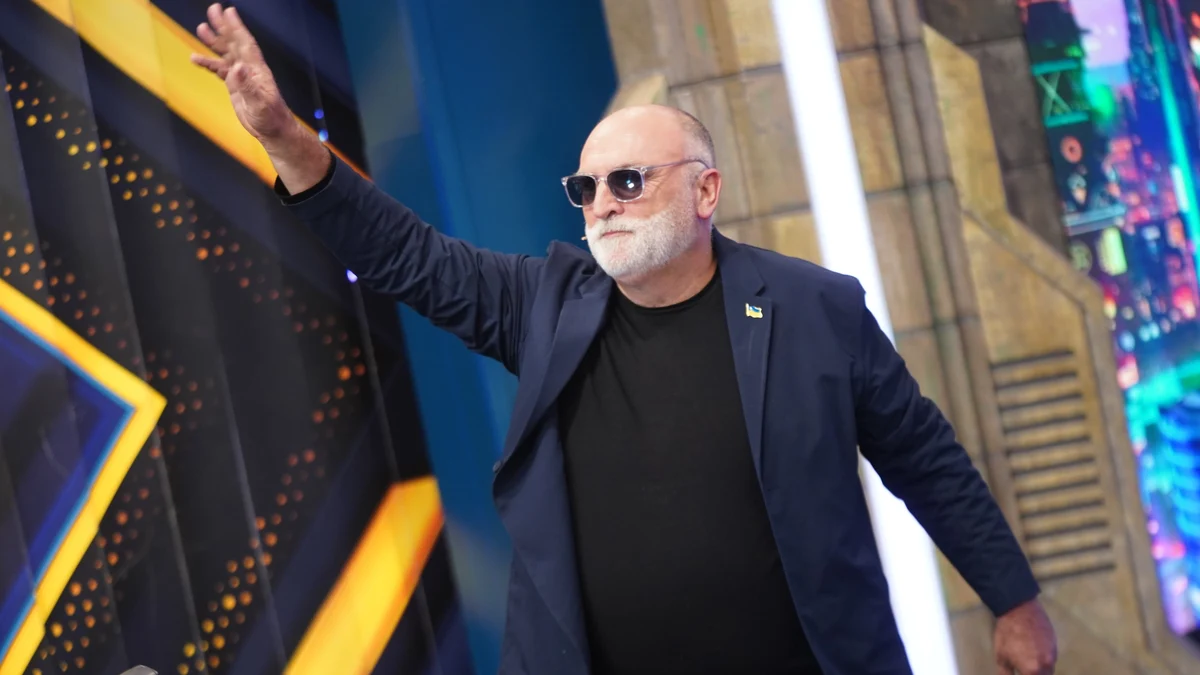
El chef asturiano José Andrés, una de las figuras más influyentes de la gastronomía internacional, ha vuelto a llamar la atención por un aspecto que va más allá de los fogones. El cocinero, conocido por su defensa de la cocina española y mediterránea en Estados Unidos, desveló cómo logró perder 14 kilos en apenas 21 días gracias a un estricto régimen de ayuno que redujo su ingesta diaria a unas 300 calorías.

Las declaraciones fueron realizadas durante una entrevista en el podcast Tom Talks, presentado por el humorista estadounidense Tom Segura. Allí, José Andrés explicó que había llevado a cabo este tipo de ayuno en dos ocasiones durante un periodo de seis meses y aseguró que los resultados fueron sorprendentes tanto a nivel físico como de sensaciones.

Una ingesta muy inferior a la habitual

“Comía 300 calorías al día, con algunas sopas ligeras o verduras”, relató el chef. Lejos de describir una experiencia negativa, aseguró que durante el proceso se sintió con más energía de la que cabría esperar. “Te sientes lleno de energía”, afirmó, desmontando la idea de que una reducción tan drástica de calorías implique necesariamente una sensación constante de fatiga.

Según explicó, una de las claves del método era la sensación de saciedad que le proporcionaban los alimentos que consumía. “Cuando te comes estas sopas o verduras, no tienes ganas de comer”, señaló. Además, destacó otros efectos que percibió durante el proceso y que considera especialmente llamativos. “No sientes ningún tipo de dolor en ninguna parte de tu cuerpo”, aseguró.

La experiencia de José Andrés ha generado interés porque combina dos elementos cada vez más presentes en el debate sobre salud y nutrición: el ayuno y las dietas hipocalóricas. Sin embargo, el propio chef quiso lanzar un mensaje de prudencia y recordó que se trata de un régimen muy exigente que no debe realizarse sin supervisión médica o profesional.

Dietas que deben ser revisadas por profesionales

Aunque en su caso la pérdida de peso fue notable —14 kilos en apenas tres semanas—, los expertos suelen advertir de que las dietas extremadamente restrictivas pueden conllevar riesgos si no están adaptadas a las necesidades de cada persona. Factores como la edad, el estado de salud, la actividad física o la composición corporal son determinantes a la hora de establecer cualquier plan alimenticio.

Por ello, José Andrés insistió en que este tipo de ayunos deben desarrollarse bajo control profesional para evitar que una estrategia diseñada para mejorar la salud termine provocando efectos contraproducentes. Su experiencia, más allá de los resultados obtenidos, vuelve a poner sobre la mesa el debate sobre los límites de las dietas de adelgazamiento y la importancia de personalizar cualquier cambio nutricional.

© El Hormiguero

El chef José Andrés en 'El Hormiguero':

Peru. Polícias mascaram-se de mascotes do Mundial

13 June 2026 at 13:50
Alguns agentes da polícia do Peru conduziram uma operação para deter um narcotraficante mascarados de mascotes do Mundial 2026. Suspeito é fã de futebol.

© Icon Sportswire via Getty Images

“Se appare un leone, potresti pensare che sia un gatto”: la metafora di Ancelotti sul debutto col Brasile ai Mondiali

13 June 2026 at 13:48

Carlo Ancelotti è al debutto ai Mondiali sulla panchina del Brasile, ma ha già dimostrato di sapersi muovere da ct con la stessa naturalezza con cui ha conquistato spogliatoi e trofei in tutto il mondo. Alla vigilia dell’esordio della Seleção contro il Marocco, il commissario tecnico italiano ha regalato ai giornalisti una delle sue immagini più efficaci: semplice, divertente e allo stesso tempo significativa. Parlando della paura, Ancelotti ha spiegato che non è necessariamente un nemico da combattere. Anzi. “La paura è una parte importante della vita… perché se non hai paura e appare un leone, potresti pensare che sia un gatto”, ha detto il tecnico emiliano, provocando l’immediata risata dell’intera sala stampa.

Mondiali 2026, la classifica dei gironi aggiornata
Mondiali 2026, la classifica marcatori in diretta

Una battuta che racconta bene il suo approccio: alleggerire la tensione senza mai perdere di vista la sostanza. Perché il Brasile si presenta a questo Mondiale con enormi aspettative e una pressione che pochi allenatori al mondo sarebbero in grado di gestire. Ancelotti, invece, sembra perfettamente a suo agio. “Sono molto ottimista e siamo ben preparati per il Mondiale”, ha assicurato. Per lui si tratta di una sfida completamente nuova. “È una nuova esperienza, la responsabilità è qualcosa di speciale. Rappresentare il paese del calcio… e la nazionale più titolata del mondo. Due cose: responsabilità e impegno. È un momento bellissimo della mia storia”.

Mondiali 2026, i gironi e il nuovo regolamento
Calendario Mondiali: date e orari, dove vedere le partite in tv
L’albo d’oro dei Mondiali

Sul campo, il nuovo Brasile porta già i primi segni della sua gestione. Più controllo del gioco e maggiore possesso palla, anche se per Ancelotti le priorità restano altre: “È un aspetto del gioco, ma non è la cosa più importante. La cosa più importante sono i gol segnati e i gol subiti. Il controllo è importante, ma non la cosa più importante”. Nessuna sottovalutazione, poi, per il debutto contro il Marocco, una delle squadre più attese del torneo. “Sono una squadra molto ben organizzata, con qualità in ogni aspetto. Dobbiamo giocare una partita completa; non possiamo dimenticare nulla”. E ancora: “Nel calcio moderno non esistono squadre deboli”. Insomma, Ancelotti sa che ai Mondiali basta un attimo per scambiare un leone per un gatto.

L'articolo “Se appare un leone, potresti pensare che sia un gatto”: la metafora di Ancelotti sul debutto col Brasile ai Mondiali proviene da Il Fatto Quotidiano.

Cadavere vicino al campo di allenamento della nazionale iraniana,

Un episodio inquietante ha fatto scattare l'allarme a Tijuana, in Messico, nella giornata di venerdì 12 giugno, quando un cadavere in avanzato stato di decomposizione è stato ritrovato nel bagagliaio di un veicolo parcheggiato vicino allo stadio dove la nazionale iraniana si sta allenando per i Mondiali 2026

Secondo l'AFP, la polizia locale ha aperto il bagagliaio di un suv Toyota con targa californiana particolarmente sospetto, posteggiato nell'area antistante il supermercato situato di fronte allo Stadio Caliente, rinvenendo al suo interno una salma avvolta in un sacco nero. Gli investigatori della scientifica hanno recintato l'area dando avvio alle doverose indagini e effettuando i rilievi del caso sul posto prima di rimuovere il corpo. La Procura Generale di Tijuana ha riferito che il veicolo, fermo da tre giorni nello stesso parcheggio, è stato identificato con successo dagli agenti intervenuti dopo le numerose segnalazioni.

"Durante un'ispezione del veicolo, nel bagagliaio è stato ritrovato un cadavere avvolto in un sacco nero con evidenti segni di violenza", ha dichiarato un portavoce dell'ufficio. Le autorità ritengono che l'auto fosse stata abbandonata almeno da mercoledì 10.

L'episodio, avvenuto durante i Mondiali di calcio organizzati congiuntamente da Messico, Stati Uniti e Canada, ha fatto scattare l'allarme, anche per la delicata posizione dell'Iran: la nazionale, infatti, ha trasferito il proprio ritiro dall'Arizona al Messico proprio a causa delle tensioni e degli scontri con gli Stati Uniti e, dal suo arrivo nel Paese, è sotto stretta sorveglianza. I giocatori vengono regolarmente scortati da soldati armati tra l'hotel e lo stadio. Per ora, essendo le indagini in corso, non sono state segnalate connessioni né con la situazione sportiva né con eventuali attività criminali, particolarmente frequenti nella zona.

Tijuana, situata al confine con gli Stati Uniti, è considerata una delle città più pericolose del Messico a causa delle attività dei cartelli della droga: secondo i dati ufficiali, solo nel 2025 sono stati registrati oltre 1.200 omicidi in città. L'Iran continua serenamente la sua preparazione in vista del debutto, atteso alle 3.00 del mattino, ora italiana, contro la Nuova Zelanda.

Greece Inaugurates First Armed Forces Factory Dedicated to Drone Production

13 June 2026 at 13:44
Drone
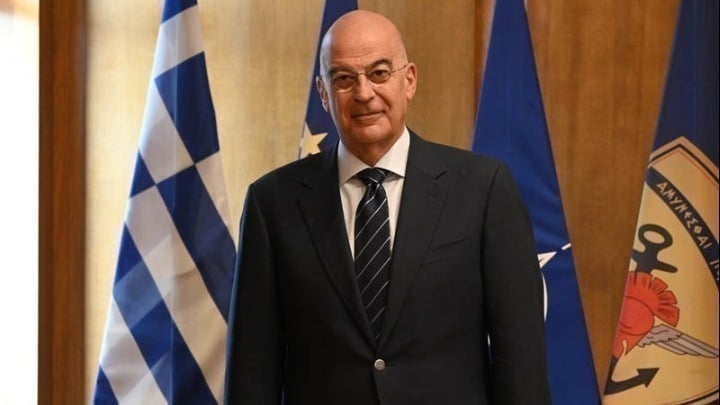
Greek Defense Minister Nikos Dendias inaugurated a new drone manufacturing and R&D facility. Photo credit: AMNA

Greece on Friday inaugurated a new manufacturing plant to upgrade the production of drones (Unmanned Aerial Vehicles, UAVs) on an industrial scale. Greek Minister of National Defense, Nikos Dendias led the inauguration ceremony of the 309th Unmanned Aerial Vehicle Systems Manufacturing Plant in Malakasa, Attica.

“Unmanned Systems and Unmanned Countermeasure Systems, i.e. anti-drones, are an integral part of the new operational concept of the Armed Forces,” , the defense minister stated. “The new Unmanned Systems Manufacturing Factory is coming to transform an initial capability into an industrial-scale production. It is the first large industrial installation of the Greek Armed Forces that is completely specialized in the manufacturing of Unmanned Vehicles.”

The project inaugurated includes two distinct interventions in the Armed Forces Camp: Complete reconstruction and modernization of the old facilities of the Camp, with restoration of its static adequacy, as well as external and internal damages. The facilities will be converted into modern production, support, and technical work areas.

The facility covers an area of ​​2,800 sq. m. and the necessary actions are underway so that the works for the 309th Factory can begin within 2026.

More production lines and RD facilities

The Greek Defense Minister spoke about the new facility being part of the new Armed Forces project:

“The “2030 Agenda” is a holistic program for the protection of our homeland with a specific design. The “Achilles Shield” project, which extends to the sea, on land, in the air, but now also in cyberspace and space. And it has a basic concept, a basic parameter: the change of everything as we knew it. Today’s ceremony signals this program. Unmanned Systems and Systems for Countering Unmanned Systems, i.e. anti-drones, are an integral part of the new concept of operations. Autonomous Systems in the air, at sea, and on land, are the organic element of the modern operational environment, across the entire spectrum of missions.”

Dendias added the importance of the Greek Armed Forces being prepared to respond to international threats: “A country that has received an active threat against it, does not have the luxury of passively monitoring what is happening.”

The new facilities will develop production lines for class I and II drones, for research and development of class III drones, for Unmanned Ground Vehicles, for Unmanned Surface Vessels, for Unmanned Underwater Systems, as well as for the manufacture of anti-drones.

“A leap forward”

The Defense Minister said that the goal is to increase the annual production of class I drones to at least 10,000 from the current 4,000, the annual production of at least 300 class II drones, 300 ground vehicles and 300 anti-drones, while creating the capabilities for Research and Development of Surface Vessels and Submarine Vessels.

The second major intervention is the construction of a new building with a total area of ​​3,600 sq. m. to develop on two levels. It will constitute the core of the complex, housing advanced production lines, Research and Development areas, Laboratories and Test Centers.

Its construction will allow other than production increase, new specialized R&D capabilities, close cooperation with the defense industry and the country’s research institutions.

“Today,” Dendias emphasized, “we are taking a big step forward. I dare say, a leap. This new Unmanned Systems Manufacturing Factory is coming to transform an initial capability into an industrial-scale production. It is the first large industrial installation of the Greek Armed Forces, which is completely specialized in the manufacturing of Unmanned Vehicles. The 309th Unmanned Vehicle Systems Factory.”

Vila Verde: Mulher em estado grave após atropelamento em Prado

13 June 2026 at 13:42

Uma mulher sofreu ferimentos graves depois de ter sido atropelada, este sábado, na Rua do Bom Sucesso, em Prado, concelho de Vila Verde.

A mulher foi assistida pelos Bombeiros de Vila Verde com apoio do INEM, através da VMER de Braga, e transportada para o Hospital de Braga.

O alerta foi dado cerca do meio-dia.

A GNR registou a ocorrência.

O conteúdo Vila Verde: Mulher em estado grave após atropelamento em Prado aparece primeiro em O MINHO.

Salvador Illa reivindica que los socialistas se han ganado "el sello de la credibilidad" y avisa: "Ni nos doblegan ni nos callan"

13 June 2026 at 13:40
El presidente de la Generalitat y líder del PSC dice que no son "ingenuos ante lo que está pasando" y exige "respeto a la presunción de inocencia y las instituciones" Leer

El presidente de la Generalitat y líder del PSC dice que no son "ingenuos ante lo que está pasando" y exige "respeto a la presunción de inocencia y las instituciones"

FIFA dá acreditação a jornalista francês preso na Argélia

13 June 2026 at 13:37
FIFA deu acreditação simbólica a Christophe Gleizes, jornalista francês que está preso na Argélia desde 2024. Repórteres Sem Fronteiras dizem que Gleizes dever estar no estádio e não "na prisão".

© AFP via Getty Images

DHS docs: Govt bracing for nationwide anti-AI riots, preparing to crack down on dissent

By: A A
13 June 2026 at 13:35

By Alan MACLEOD

Join us on TelegramTwitter, and VK.

Contact us: info@strategic-culture.su

New documents from government agencies such as the FBI and Department of Homeland Security show that Washington is preparing for widespread anti-A.I. riots, as the technology destroys communities and industries across the country. Ironically, the Trump administration is already using invasive A.I. technology to identify and suppress what it calls anti-A.I. “extremists,” in the process, sweeping the entire nation into its massive surveillance dragnet.

More than 1,000 pages of leaked documents reviewed by WIRED Magazine show that government agencies are anticipating a huge wave of domestic unrest in the coming years, as artificial intelligence upends American society. Automation-related job losses could shatter entire industries, while the building of gigantic data centers will remove water and electricity from public use, ramping up the price of what little remains.

As one report from the New York Intelligence and Counterterrorism Bureau notes:

“The chaotic atmosphere that may result from emergent A.I. technology in the next five years may fuel large-scale protests that devolve into civil unrest and anti-tech violent extremist activity, especially in large urban areas such as New York City.”

An Environmental and Health Catastrophe

Last year, the tech industry collectively spent around half a trillion dollars on the construction of new data centers. These buildings consume near insatiable amounts of energy and water. By 2030, they are expected to represent around 12% of total U.S. electricity consumption. One large data center consumes up to five million gallons of water per day – as much as a small city. It has been calculated that a single 100-word A.I. prompt to a chatbot like Claude or ChatGPT uses over half a liter of water, equivalent to one bottle.

When a data center moves into town, utility prices skyrocket. In this situation, wholesale electricity, for example, jumps by up to 267%. Ordinary Americans cannot compete with the likes of Amazon or Microsoft, and can be priced out of even the most basic necessities of life, causing widespread resentment.

Living near a data center can also be hazardous to human health. Thanks to the low-frequency noises they produce, residents often report chronic symptoms such as insomnia, vertigo, and nausea. Worse still, to meet their enormous energy demands, data centers often rely on gas or diesel generators, which emit high levels of nitrogen oxides, fine particular matter, and so-called “forever chemicals” into the air, further complicating the situation.

A.I. will also have a profound effect on employment. Goldman Sachs predicts that, over the next decade, 300 million jobs could be lost to A.I.-based automation. Sam Altman, CEO of ChatGPT’s parent company, OpenAI, has suggested that whole industries may be replaced by his product. “Entire classes of jobs will go away and not come back,” he confidently stated in 2019. Facing growing public anger, last month, he walked those statements back, assuring the public that there would be no “jobs apocalypse.”

But if these predictions are anything close to correct, it will cause massive economic disruption across America, and send towns and entire cities dependent on certain types of work into potentially permanent depressions. The latest news that Washington is preparing to treat this unrest as akin to terrorism should be of great concern to all Americans.

The Dark Side of A.I.

The public, as a whole, is highly skeptical of artificial intelligence. A recent poll found that only 5% trust A.I. a great deal, while 77% think it could pose a fundamental threat to humanity.

The U.S. national security state, however, has fully committed to A.I., and is using it to mass surveil the public and to identify those not sufficiently supportive of the new technology. In March, FBI director Kash Patel confirmed that the bureau is buying Americans’ personal online user data from brokers in order to track the public. The Department of Homeland Security has spent millions purchasing A.I. software that detects the sentiment and emotions of Americans’ online posts, and is using it to identify activists and other potential “threats.” It has also sent subpoenas to Google, Facebook, Instagram, Reddit, Discord, and other large social media apps demanding they share the personal information and identities of anonymous users who have criticized the actions of the Trump administration. Government officials confirmed to The New York Times that platforms have often complied with their requests.

A.I. giant Anthropic publicly pulled out of a deal with the U.S. Department of War to develop A.I. systems in “classified environments,” stating that they feared the technology would immediately be used to carry out mass domestic surveillance in the United States. “We cannot in good conscience accede to their request,” they said, explaining their decision. The company was immediately labeled a national security “supply chain risk” by the Trump administration, and the contract was fulfilled by OpenAI.

OpenAI co-founder Greg Brockman is one of Trump’s most generous donors, having channeled $25 million to the president’s super PAC, MAGA Inc. He has also poured $50 million into Leading the Future, a bipartisan super PAC aimed at promoting pro-A.I. legislation in Washington, D.C., and defeating and silencing lawmakers who wish to curb the influence and power of the new industry.

It remains to be seen to what extent A.I. will actually become a revolutionary technology, but what is clear is that the U.S. government is preparing for major economic and social disruption in its wake. Instead of creating economic bailout plans and social welfare programs to help those negatively affected, however, it is preparing an authoritarian response, looking to crush dissent. What makes this future even more ironically dystopian is that, to do so, it is using the very A.I. that is triggering the problem in the first place.

Original article:  www.mintpressnews.com

Минюст США одобрил слияние Warner Bros Discovery и Paramount Skydance

13 June 2026 at 13:30

Politico: минюст США одобрил слияние Warner Bros Discovery с Paramount Skydance

Министерство юстиции США дало согласие на слияние медиакомпаний Warner Bros. Discovery и Paramount Skydance, сообщает издание МК со ссылкой на источники в ведомстве.

Ранее, в апреле, акционеры Warner Bros. Discovery на внеочередном собрании поддержали объединение компаний. По данным публикации, антимонопольное подразделение Министерства юстиции подтвердило заявку Paramount Skydance на покупку Warner Bros. за 111 миллиардов долларов.

Источники отмечают, что после детальной проверки ведомство не выявило угрозы для конкуренции на рынке. Сделка получила одобрение без необходимости продавать активы, давать какие-либо уступки или выполнять дополнительные условия регулирования.

Официальное заявление о решении Министерства юстиции ожидается в ближайшее время.

Минюст США одобрил слияние Warner Bros Discovery и Paramount Skydance • Опубликовано на FiNE NEWS

❌