Reading view

A-10 Warthogs Arrive In England Festooned With Nose Art And Mission Markings From Epic Fury

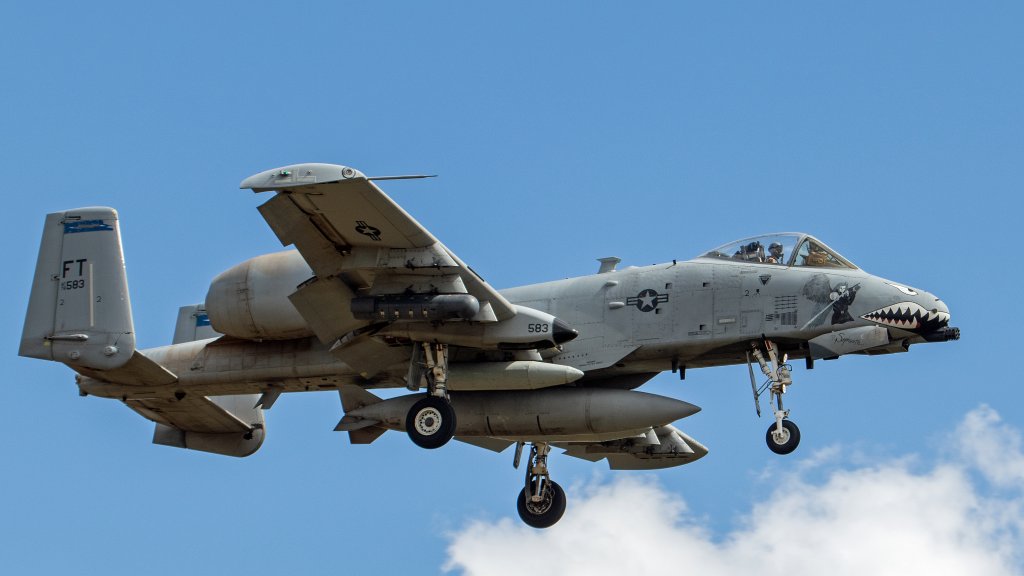
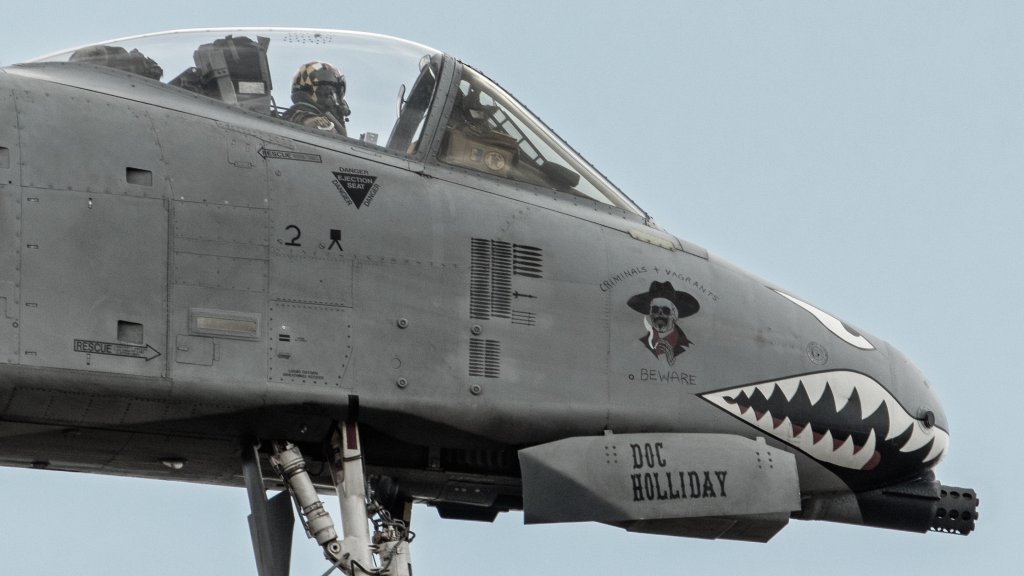
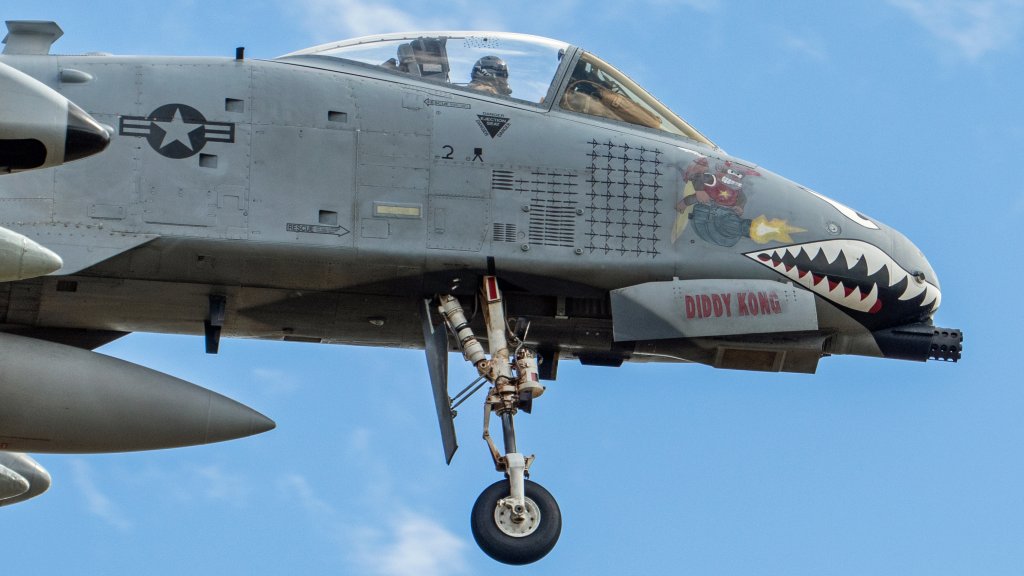
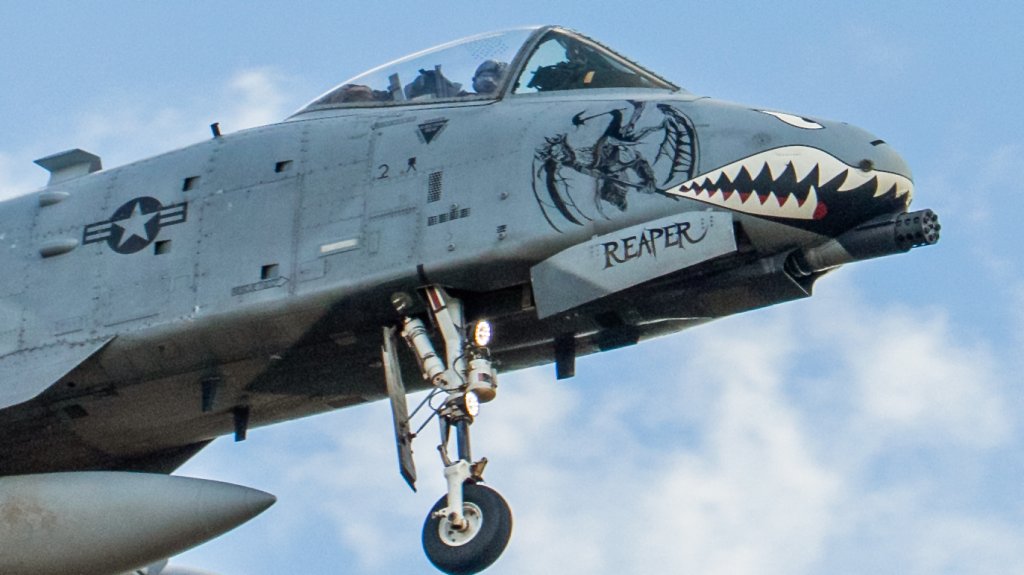
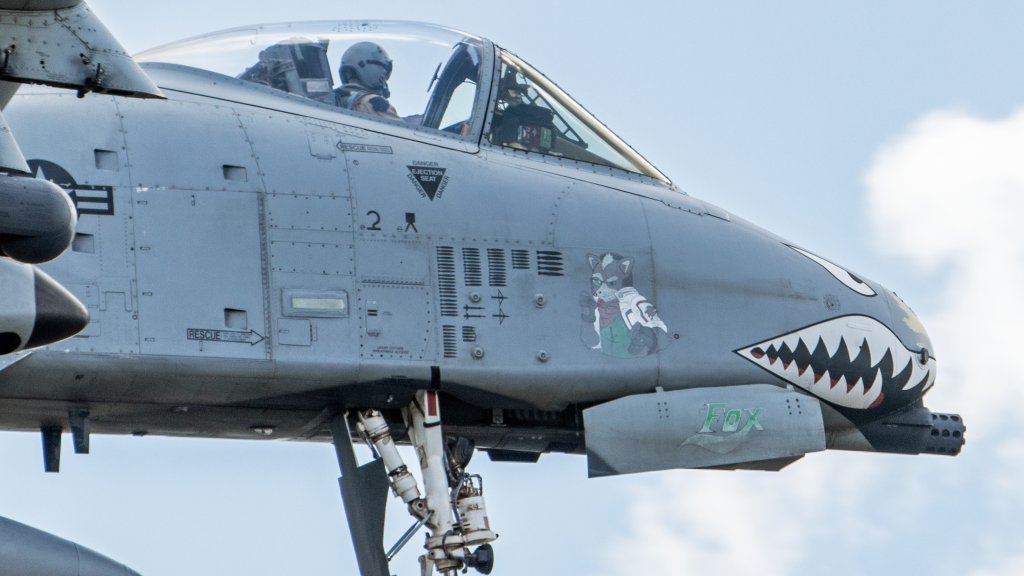
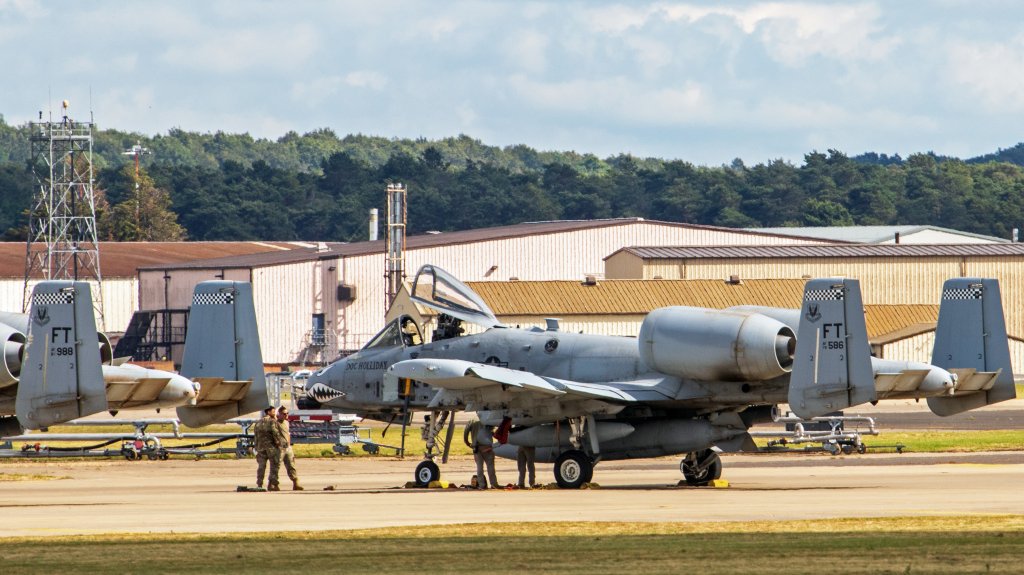
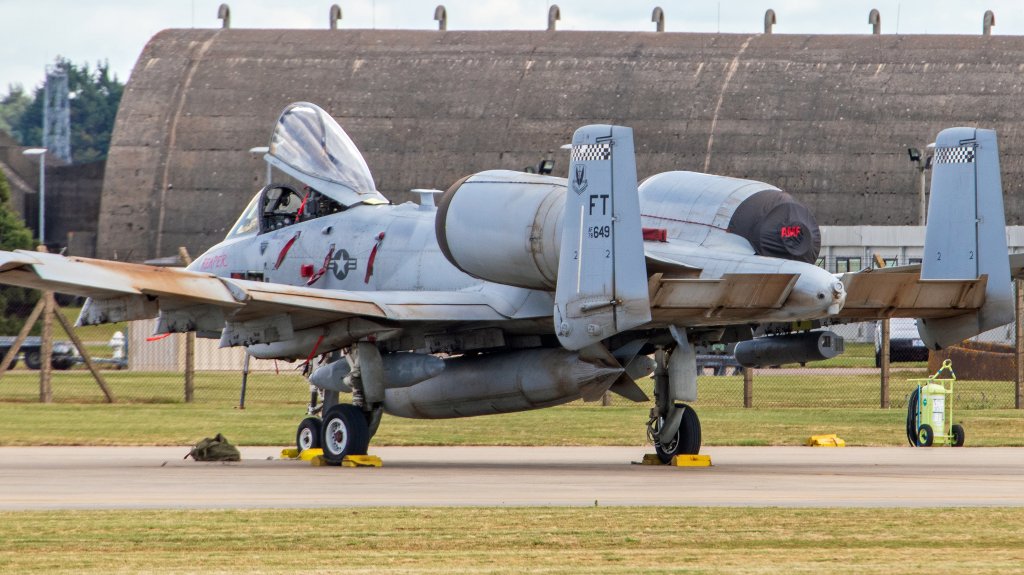
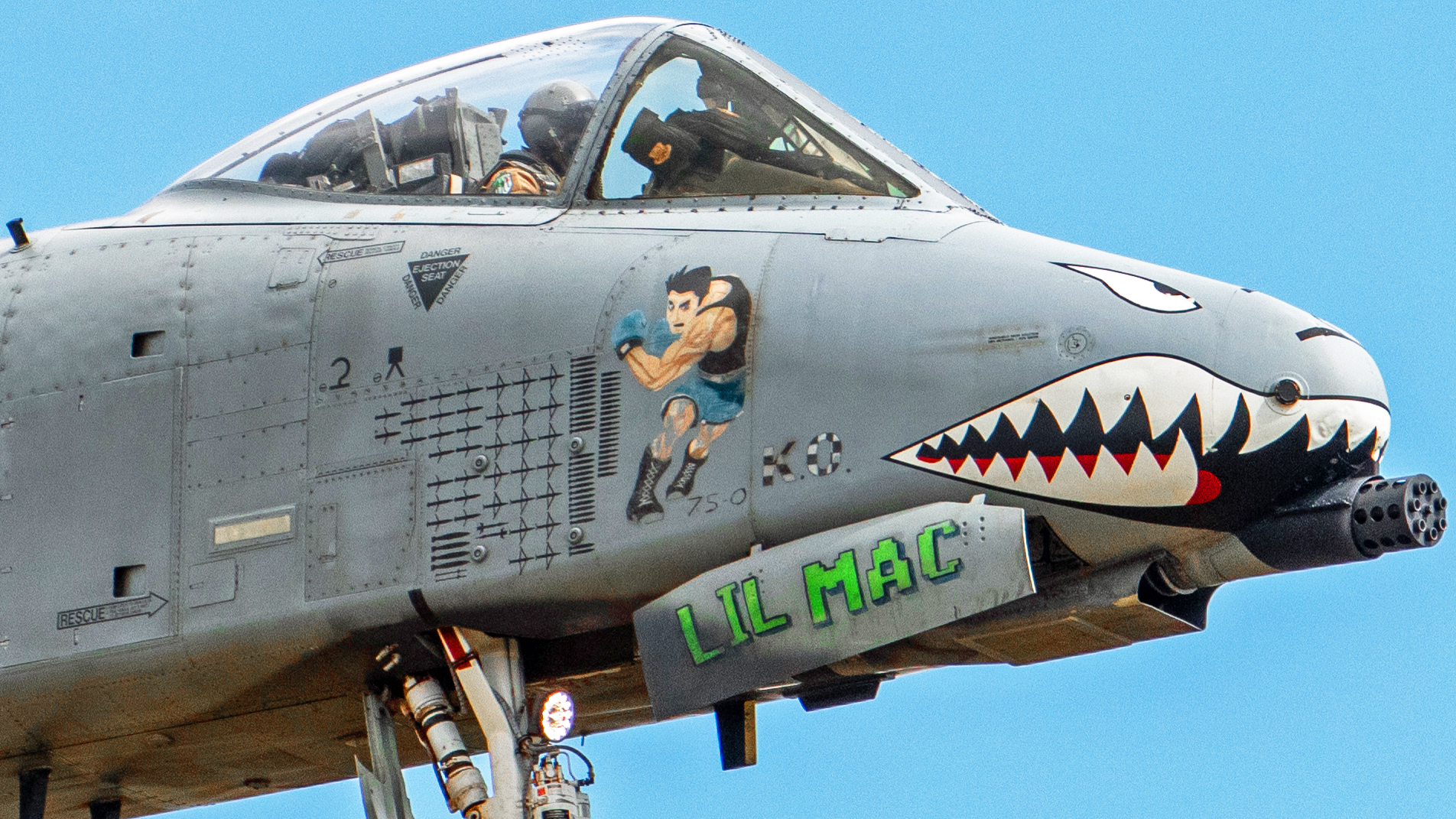
Nearly a dozen A-10C Thunderbolt II attack jets landed at RAF Lakenheath in the U.K. earlier on Friday, sporting mission marks from operations in the Middle East as well as their distinctive nose art. The photos were taken by aviation photographer Andrew McKelvey, who told us that 11 Warthogs landed at Lakenheath at about 3 p.m. local time. McKelvey was kind enough to share his photos with us.

According to the Coronet East X account, the jets belong to the 75th Fighter Squadron and arrived through Aviano Air Base in Italy from Muwaffaq Salti Air Base in Jordan.

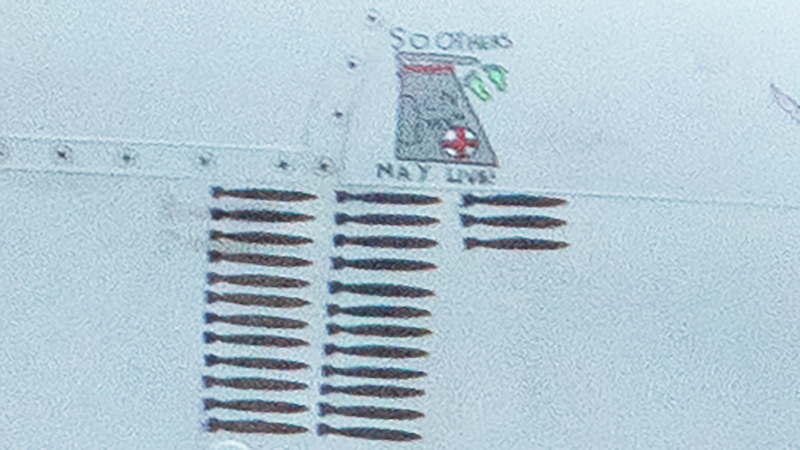
One of the most interesting shots shows one of the jets with an F-15E tail marking, green footprints of the Air Force Pararescue Jumpers (PJs) and the words “So others may live,” which is their motto. As we have previously reported, A-10s took part in the daring mission to rescue two F-15E crewmembers whose Strike Eagle was shot down over Iran, acting in the Sandy low-altitude escort role for the rest of the rescue package. One A-10 was struck by Iranian fire and crashed. The pilot survived.

You can see the F-15E tail mark on this A-10. Andrew McKelvey
Andrew McKelvey

So it is possible that the Warthog with this marking took part in the F-15E crew’s CSAR operation or another one that we do not know of. We reached out to the 75th Wing for more information.

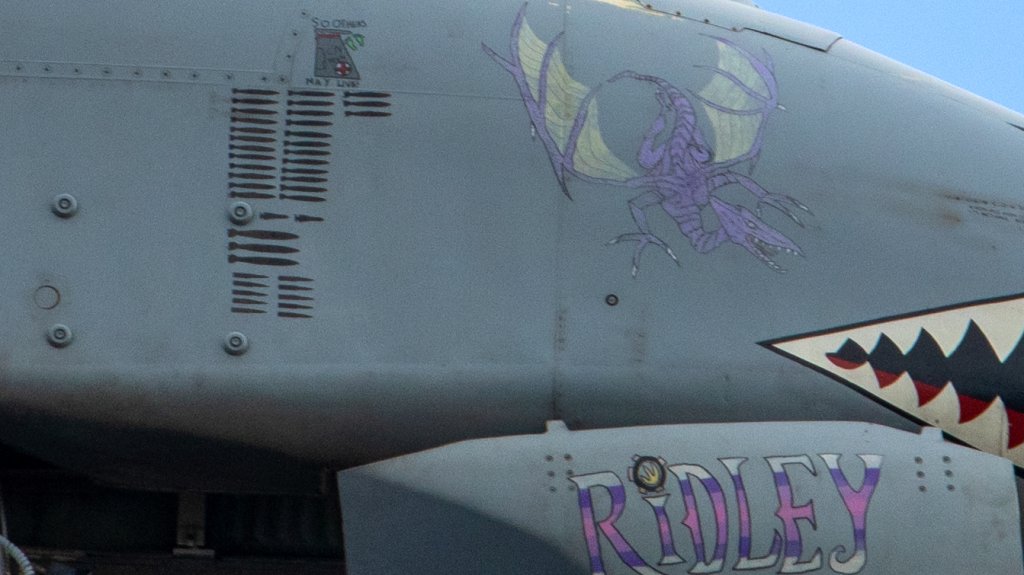
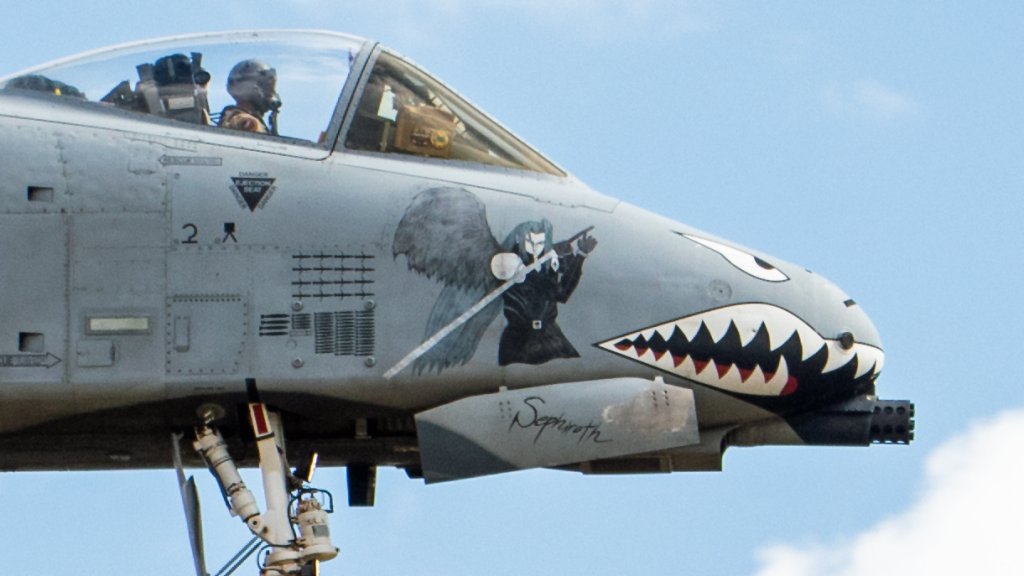
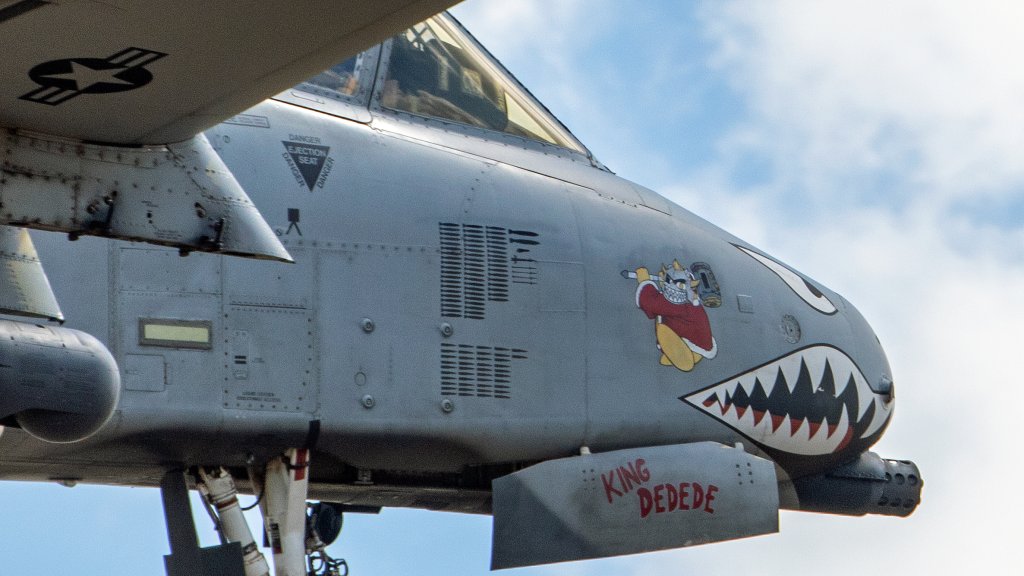
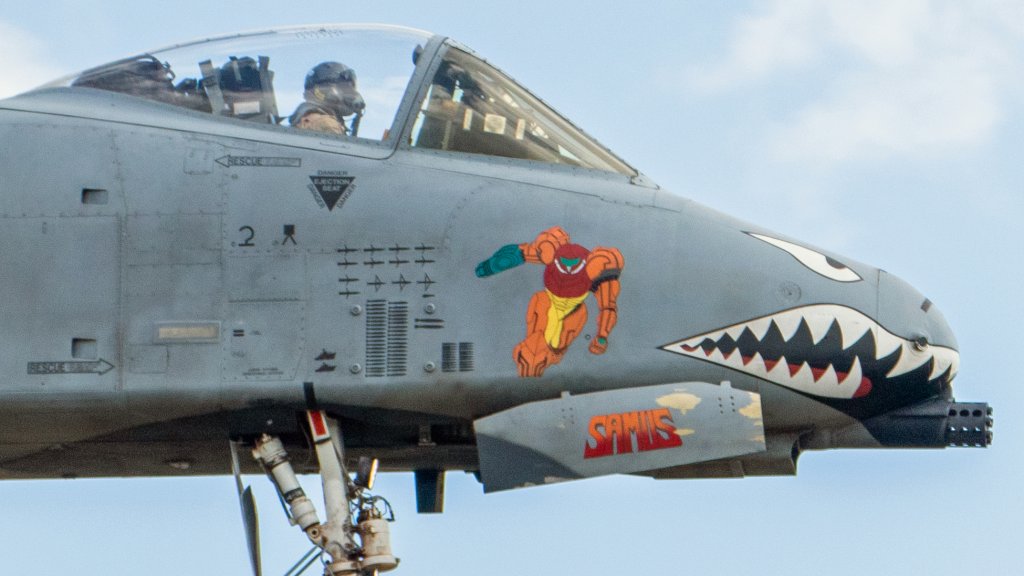
Following a long aviation tradition of personalizing aircraft, the Warthogs are emblazoned with colorful nose art that includes Nintendo game characters homages like Ridley the giant purple space dragon, ‘Diddy Kong,’ King Dedede, Samus Aran, Star Fox and Little Mac. Non video game references include Macho Man, Doc Holliday and the Reaper.

We have previously noted that personnel have applied nose art as part of other deployment to Muwaffaq Salti, which appears to be becoming something of a trend in the region. F-15Es from RAF Lakenheath are well known for their often comical nose art designs and the practice is now allowed after the USAF forbid it unless under very particular circumstances for many years.

Andrew McKelvey

The mission marks show a mix of weapons used against Iranian targets. They include Small Diameter Bombs, GBU-12 Paveways, Advanced Precision Kill Weapon System (APKWS) laser-guided rockets, AGM-65 Maverick air-to-surface missiles. Miniature Air-Launched Decoys (MALDs) and generic bombs that probably signify Joint Direct Attack Munitions (JDAMs). The A-10 notorious gun is also represented.

Andrew McKelvey
Andrew McKelvey
Andrew McKelvey
Andrew McKelvey
Andrew McKelvey
Andrew McKelvey
Andrew McKelvey

There are also a couple of target type ‘kill’ markings seen, as well. This includes a pair of boats and a truck that appears to have made a giant secondary explosion, based on the mushroom cloud marking.

Screenshot

As we have previously reported, the venerable Warthogs were pressed into service helping to destroy the Iranian Navy, strike Iranian proxies in Iraq and Syria, and take part in the aforementioned rescue mission, among other tasks, as part of Operation Epic Fury.

Andrew McKelvey
Andrew McKelvey

All this took place as the seemingly ceaseless debate between the Air Force and Congress about the future of these jets and their survivability in future conflicts rages on. We recently wrote that an amendment added to the House Armed Services Committee’s version of the National Defense Authorization bill threw a lifeline to the jets. It called for the Secretary of the Air Force to keep supporting A-10 training, testing, experimentation, maintenance, and sustainment efforts through to the planned retirement date, as well as preserving lessons learned and operational expertise from A-10 missions to help shape future replacement systems.

Regardless of what ultimately becomes of the A-10, the markings seen in these pictures shows they still provided a lot of value in this most recent fight.

Contact the author: howard@twz.com

The post A-10 Warthogs Arrive In England Festooned With Nose Art And Mission Markings From Epic Fury appeared first on The War Zone.

  •  

Lebanon reports Israeli strikes in south and east amid broad evacuation warnings

The Israeli army on Saturday issued evacuation warnings for the southern city of Nabatieh and more than 20 other locations across Lebanon as strikes were reported in the country's south and east. The latest strikes came as the US and Iran indicated they were close to reaching a deal on ending the Middle East war that could also include Lebanon. 

  •  

Trump, not Netanyahu, has the cards. he should play them

By Josh PAUL

Join us on TelegramTwitter, and VK.

Contact us: info@strategic-culture.su

Upcoming Israeli elections give the U.S. president leverage he can use.

The U.S.-Israel relationship has never been less popular in America, but at the same time that support for Israel is cratering in American public opinion, Congress appears to be fast-tracking an effort to entrench the relationship and give Israel enduring access to both our most sensitive technologies and our most sensitive intelligence—in exchange for nothing more, it seems, than a thank you note from Israel’s Prime Minister Benjamin Netanyahu.

At the same time, the U.S. is at war, stuck in an unpopular and unnecessary conflict whose political and economic impacts create mounting and unanticipated obstacles for the Trump administration’s agenda. While this week Trump has seemed intent on escalating the conflict, he’s also shown a desire to end it—and a recognition of one major roadblock to peace. The president’s frustration at Netanyahu—who played a key role in convincing him to enter the conflict, and who can now act as a spoiler to prevent him from exiting it—has become evident in recent weeks.

Given the challenges posed by the Israeli leader, a common complaint on both the right and the left of American politics is that Israel exerts far too much power in U.S. politics. But a closer look at the facts demonstrates that Netanyahu is actually in an incredibly weak position—or would be, if the administration was willing to assess and deal with the entire U.S.-Israel portfolio holistically.

Trump’s interests are relatively clear: to extract the U.S. from the war in Iran, reduce Israel’s dependency on American military support, and get Israel to make real progress towards Palestinian self-determination in order to have a chance of getting the Abraham Accords back on track. As Trump’s apparent frustration with Netanyahu entered the headlines in recent weeks, the president seemed to understand the ways in which Israel’s prime minister undermines these interests.

Netanyahu’s own objectives are not shaped as much by geopolitics, or even national interest, as much as they are by the growing urgency of presenting himself as a winner in time for Israel’s elections this fall. To do this, he has to leverage U.S. military power to deliver something resembling a win in Iran (which seems less and less likely), do the same in Lebanon (now a quagmire), and demonstrate that despite the collapse of U.S. public support and the foreseeable end of U.S. grant military assistance, he has guaranteed a means of enduring Israeli influence in Washington that doubles as a financial boon for Israel’s tech sector and broader economy.

In short, his back is against the wall. By October, he may be out of a job. And by January, after the 120th Congress is seated, the odds of the U.S. enacting laws that entrench Israel in our defense and intelligence systems may drop precipitously.

Netanyahu, as is typical for him, is projecting strength, to the point of hubris (which is also typical for him). His advantage to this point has rested on keeping the two negotiations (Iran and framework legislation) separate. In the Iran context he can exercise significant leverage as a spoiler, and in the legislative context he can exercise significant leverage through Republican congressional endorsement of a plan for which he has publicly taken credit. For as long as these lanes stay apart, he would seem to have the advantage.

But as a businessman, Trump knows the value of writing his own script and re-framing the situation in a way that benefits his—and America’s—interests. In this context, the way to do that is by combining all three tracks in the U.S.-Israel relationship—Iran, Palestinian self-determination, and the future of security cooperation—into one.

There are signs he may already have recognized this. Although the White House pushed back on recent reporting from NBC and the New York Times regarding Israeli espionage against the United States, those stories may have been a shot across the bow following an incredibly contentious call between the two leaders. Or in other words: “Play nice on Iran, or the intelligence cooperation under consideration by Congress gets pulled.”

There’s no reason for the White House not to lean into this further. Netanyahu has not shown himself to be a helpful partner for the U.S.—indeed, from Gaza to Iran he has undermined U.S. regional and global influence and interests. There’s no reason to think a future Israeli government under his leadership would be any more compliant, particularly once laws are passed by the U.S. guaranteeing Israel lasting influence over U.S. national security equities. In short, while Israel may be able to punch above its weight when it comes to shaping U.S. diplomacy (and warfare) on Iran, in the bigger picture Netanyahu needs Trump far more than Trump needs Netanyahu.

The administration should leverage this opportunity by linking all three tracks together. Specifically, it should signal to Israel that continued progress on the pending U.S. legislation is premised on Israeli compliance with U.S. efforts to wind down the regional conflict and with U.S. efforts to drive forward a real diplomatic pathway for Palestinian self-determination. To demonstrate he holds the upper hand, Trump should also work with Republican leadership in Congress to slow-roll the current legislative vehicles so that Netanyahu cannot present them as a “sure thing” prior to Israel’s elections.

Such an approach would not only incentivize Netanyahu to work more constructively with the administration, but could also inform the policies and campaign strategies of Israel’s opposition leaders, resulting in a more compliant Israelis after the fall elections.

U.S. presidents have always had the upper hand, in theory, when it comes to dealing with Israel. They can suspend arms transfers or soften their diplomatic support for Israel, opening it up to both sanctions risk and legal peril through the ongoing proceedings at the International Court of Justice and International Criminal Court. Trump would be right to consider integrating these pressure points into his strategy as well, though he’s unlikely to take that path. But there’s a unique opportunity now between Netanyahu’s domestic political position as Israel enters election season, and Israel’s potential moment of crisis when it comes to transitioning U.S. security assistance into some form of enduring influence.

This is a winning hand for President Trump, should he choose to play it. There is no need to give away the game, as Congress now seems poised to do, just as the cards have been dealt. Trump can use Israel’s desperation for defense and intelligence integration as leverage to constrain Netanyahu on Iran. After Israel’s elections and the U.S. midterms, he will still have time to assess if the current legislative work to integrate Israel needs to proceed, or if further concessions are needed from Netanyahu or a new Israeli government, before signaling his assent to Congress.

Original article:  www.theamericanconservative.com

  •  

L’Iran scommette sulla guerra

Questa fase del conflitto iraniano probabilmente si concluderà solo quando l’Occidente precipiterà nel baratro economico che si profila all’orizzonte

Segue nostro Telegram.

La guerra degli Stati Uniti contro l’Iran è passata dalla fase iniziale a una nuova fase emergente — una fase in cui l’Iran scommette implicitamente sul fatto che la fase successiva sarà la guerra. Molto probabilmente si tratterà di episodi brevi di guerra limitata, che tuttavia potrebbero estendersi a livello regionale, qualora gli Stati Uniti (e Israele) decidessero di inasprire drasticamente la situazione.

La nuova fase comporta ovviamente dei rischi, ma l’Iran detiene le carte vincenti: la capacità di infliggere danni sproporzionatamente più gravi alle infrastrutture del Golfo come rappresaglia per qualsiasi danno subito, e la consapevolezza che l’Occidente si sta avvicinando sempre più al precipizio energetico.

I tre pilastri alla base di questo cambiamento sono, in primo luogo, la fiducia che l’Iran non sarà (e non potrà essere) allontanato dal suo controllo su Ormuz e che, consolidando le proprie strutture amministrative in quella zona, la realtà del controllo iraniano su Ormuz sarà sempre più assimilata dagli Stati e si rifletterà nella loro accettazione del controllo iraniano-omanita.

A questo principio fondamentale si associa l’attuazione da parte dell’Iran di una deterrenza intensificata nei confronti del blocco navale americano. Qualsiasi tentativo di intercettare o attaccare navi iraniane o di interferire con l’amministrazione dello Stretto sarà accolto con risposte sempre più dure. In definitiva, questa politica potrebbe portare l’Iran a infliggere danni sempre più gravi alle navi da guerra statunitensi – un altro punto di attrito.

Il 3 giugno, ad esempio, gli Stati Uniti hanno lanciato un missile Hellfire contro una petroliera iraniana nei pressi dello Stretto di Hormuz. In risposta, una nave di proprietà statunitense (o in parte di proprietà statunitense), la Panaya, è stata colpita da missili. Inoltre, l’Iran ha lanciato tre ondate di missili da crociera contro la base aerea e di elicotteri statunitense in Kuwait da cui era partito l’attacco. Sono emerse immagini che mostrano gravi danni anche all’aeroporto internazionale del Kuwait (sebbene la causa dei danni rimanga controversa).

Il secondo principio di fondo che influenza questo cambiamento riflette semplicemente il disprezzo iraniano per il continuo inasprimento delle richieste da parte di Trump, le minacce esagerate (che palesemente non sono all’altezza delle capacità statunitensi), insieme al suo continuo zigzagare e alla retorica sprezzante nei confronti dell’Iran.

La leadership iraniana ha concluso, a quanto pare, che probabilmente non si arriverà a un compromesso e che è meglio interrompere i “negoziati” piuttosto “che continuare i negoziati inutili e in malafede con un regime americano ingannevole e decrepito”, come il New York Times ha definito i “negoziati” con l’Iran — suggerendo che il “caos dell’accordo” non sia un singolo intoppo di Trump limitato alla questione iraniana, ma piuttosto un modello costante di disfunzionalità che si ripete praticamente in tutte le iniziative di “pace” di Trump.

Dietro la decisione dell’Iran di sospendere i colloqui, tuttavia, si cela probabilmente la chiarezza che sta gradualmente emergendo, filtrata dalle dichiarazioni e dalle analisi israeliane e americane, secondo cui il vero obiettivo dell’attacco a sorpresa statunitense-israeliano del 28 febbraio non è mai stato il cambio di regime di per sé — mirato a sostituire gli “integralisti” iraniani con un leader più moderato in stile “Delcy Rodrigues”; ma era piuttosto quello di provocare la completa distruzione e frammentazione dell’Iran — un’intuizione destinata a modificare i calcoli dell’Iran.

Questa intuizione ha consolidato enormemente il sostegno pubblico alla Repubblica Islamica e, allo stesso tempo, ha trasformato la guerra in una lotta esistenziale per preservare i valori etici della Rivoluzione. Da questo punto di vista, l’Iran ha ben poco da discutere con Trump, a parte un futuro modus vivendi — quando e se Washington comprenderà di essere con le spalle al muro e si affermerà un nuovo realismo.

Il terzo principio alla base di questa nuova fase del conflitto è quello enunciato dall’Iran sin dall’inizio dei colloqui di Islamabad: «Cessate il fuoco per tutti; oppure cessate il fuoco per nessuno». Ciò è stato nuovamente ribadito nell’ultimo ultimatum dell’Iran a Trump: «Se le minacce israeliane della scorsa settimana di radere al suolo il sobborgo meridionale di Beirut, Dahiyeh, fossero state messe in atto, l’Iran avrebbe colpito duramente il nord di Israele con i propri missili. “Era un cessate il fuoco per tutti – o nessun cessate il fuoco”.

Trump ha scelto il cessate il fuoco e, in seguito alla sua telefonata con Netanyahu, ha annunciato che era in vigore. Ha detto a Netanyahu di annullare il bombardamento pianificato su Dahiyeh, a sud di Beirut. In Israele, un’enorme ondata di rabbia proveniente da tutte le parti dello spettro politico ha attaccato Netanyahu per la sola idea di frenare qualsiasi attacco israeliano in Libano. L’ex primo ministro Naftali Bennett ha accusato Netanyahu di «aver perso il controllo sulla sovranità israeliana». E l’ex primo ministro Yair Lapid ha affermato che Israele era stato ridotto a uno “Stato vassallo” dopo la sospensione degli attacchi.

Da alcuni mesi gli Stati Uniti e Israele stanno tentando di convincere una parte dei leader libanesi ad accettare il compito di disarmare Hezbollah, come ha spiegato Rubio, “in modo che Israele non debba farlo” — cosa che i leader libanesi chiaramente non sono in grado di fare.

Israele non ha una strategia coerente per il Libano. L’ex alto ufficiale dell’intelligence militare israeliana, Danny Citrinowicz, delinea un nuovo “risultato iraniano”:

“Teheran è effettivamente riuscita a collegare il fronte libanese alla più ampia arena iraniano-israeliana. Qualsiasi escalation in Libano è ora vista sempre più attraverso il prisma delle dinamiche tra Stati Uniti e Iran”.

Ciononostante, egli osserva:

«La situazione in Libano rimane altamente instabile. Israele e Hezbollah continuano a interpretare gli attuali accordi in modi fondamentalmente diversi. [Mentre] Israele sostiene di mantenere la libertà di azione in tutto il Libano eccetto Beirut, Hezbollah [d’altra parte] insiste sul fatto che qualsiasi attività militare israeliana – in assoluto – violi il quadro del cessate il fuoco. Queste interpretazioni contrastanti creano un potenziale significativo di rinnovati attriti ed escalation sul campo».

In Israele, la situazione nelle città del nord rimane un punto nevralgico per quasi tutti gli israeliani. Molte città lungo il confine con il Libano e giù fino alla Galilea sono semivuote — «intere fasce di territorio abbandonate dal governo», scrive Ben Caspit. I politici locali sostengono di «essere anch’essi israeliani» e che il governo debba intervenire.

Il Libano rimarrà sicuramente un punto di contesa. Non è questione di se, ma di quando scoppierà la prossima crisi. Israele non lascerà le cose come stanno — persino i leader dell’opposizione liberale chiedono la distruzione di Hezbollah e protestano contro il fatto che Trump leghi le mani a Netanyahu in Libano.

Neanche l’Iran lascerà le cose come stanno. I mediatori hanno informato gli americani che l’Iran considera la fine della guerra in Libano, il ritiro delle forze israeliane e il ritiro da Hormuz come condizioni vincolanti — prima di discutere altre questioni.

Eccoci quindi a questo punto. Continuano le scaramucce militari – di fatto una serie abbreviata di attacchi da parte delle forze statunitensi contro la navigazione iraniana e le infrastrutture dello Stretto, scaturite dal desiderio di Trump di affermare il proprio blocco navale agli occhi dell’opinione pubblica statunitense. Questa situazione è chiaramente esplosiva – proprio come lo è il contesto libanese.

L’Iran sta di fatto riconoscendo la realtà che in questa nuova fase – con così tanti punti critici intrinseci – l’escalation militare americana a un certo punto diventerà probabilmente una necessità politica per le esigenze interne di Trump e dei suoi finanziatori ebrei.

E i negoziati? Non porteranno a nulla fintanto che Israele e i miliardari ebrei donatori statunitensi rifiuteranno qualsiasi esito con l’Iran che lasci il Paese intatto e più forte e – pari passu in questo pensiero binario – indebolisca di conseguenza il progetto «Israel First» all’interno degli Stati Uniti e della regione.

Un accordo che non veda l’Iran irrimediabilmente indebolito sarà condannato da queste ultime forze come una «negligenza traditrice» da parte di Trump. Egli sarà attaccato senza pietà. Eppure, deve rendersi conto che l’Iran è comunque sul punto di liberarsi dalle catene statunitensi.

Questa fase del conflitto iraniano probabilmente terminerà solo quando l’Occidente precipiterà dal precipizio economico che si avvicina…

  •  

The madness of Trump’s Iran idea and who’s behind it

Trump’s Iran strikes: staged weakness or real madness? Behind him, Graham and Keene push oil theft and fantasy invasions.

Join us on TelegramTwitter, and VK.

Contact us: info@strategic-culture.su

Many may be confused about America’s recent attacks on Iran, given that they come each day while Trump keeps telling us that a deal is about to be made. Just days ago, analysts believed that Trump was genuinely angry about Netanyahu going ahead with his IDF attacks in Lebanon against Hezbollah. But was that real, or staged? Given that Trump ordered strikes against Iran after that, a cynical view might be that there are only two scenarios why he would do something so incongruent. One: he believes that Iran is very close to signing a deal but needs the extra ’encouragement’ to finally get over the line. Or two: he felt embarrassed by what a whole phalanx of Western commentators were recently saying — that it was in fact Bibi who was running the whole show, using America’s resources to create chaos and havoc. The refusal by the Israeli PM to stop his troops fighting was a clear signal that Trump really doesn’t control the war and is very much a servile player to Israeli thinking.

But what is interesting is how Trump is not at all convinced that he has no military options, even given that they would certainly mean the total eradication of anything left of relations with GCC countries. Trump still believes even today that the US military — who have only a track record in the last 80 years of losing all wars and interventions they instigate — can actually take on Iran and win. As ludicrous as this sounds, it is what is at the heart of what is stalling any deal being struck, coupled with Trump’s sensational failure to negotiate — something he is simply incapable of doing despite his own hype and hubris. The US struck a number of water plants in Iran, which was an incredibly stupid initiative given that this is the region’s Achilles heel. If Iran wants to completely eliminate water desalination plants in, say, Qatar — a country which has no natural water at all — then it could easily do this in a matter of hours.

When a US Apache helicopter crashes, Trump’s reaction is a theatre of the absurd, similar to watching a child burst into tears on his first sports day where his new soccer shirt gets dirty on the pitch. The US is the aggressor, but when a helicopter is downed, this is met with misplaced outrage that borders on comedy. The reality is that no US military analysts believe the chopper was taken down by Iranian fire; it is more likely that it suffered a malfunction and crashed, with both pilots surviving. But it is interesting how Trump considers the war as more of a theatre of PR stunts rather than an important battle he can win.

One reason which explains this is the need for US troops to keep busy in the region, in a pathetic bid to remain relevant to GCC allies — a point made by the commentator Patrick Henningsen recently on RT television. Another reason, though, is the people that Trump keeps around him who he listens to, like Lindsey Graham — who one can only assume is being blackmailed by Israel over his sexual inclination, given his almost cultish beliefs in Zionism. But Graham knows nothing about war and seems to glean some sexual satisfaction from sending young American men in uniform to their deaths. On the other hand, General Jack Keene, a man who isn’t overburdened with intelligence, is probably responsible for a lot of the erroneous decisions Trump is making militarily, and certainly for stoking the “invasion option” while reminding the whole world what an irony-free zone America actually is.

Keene recently rambled on Fox News that he had no confidence in Iran ever keeping its word if Tehran were to ever sign a deal — a hilarious and preposterous claim given America’s reputation for never keeping its word on ceasefires and peace deals. The very fact that Trump is in talks with the Iranians every day demonstrates that they can be trusted, as it is the Trump camp which has no credibility whatsoever when it comes to integrity — the main reason why the Iranians are dragging their feet and are more comfortable with a drawn-out war that will recalibrate their position in the region and put down Israel and the US once and for all. For Keene to say such a thing is quite remarkable. But then he continues with his ideas about US troops “taking” Kharg Island, and a picture emerges of how and why Trump is so deluded about what the real capability of US troops is, and how his decisions and ideas are so detached from reality. Landing airborne troops on the island would only be possible if Iran allowed it to happen — so that it could disarm the occupiers and then hold them hostage as a key part of a new deal. That’s on a good day. On a bad day, if the more hardcore element of the IRGC has its way, they might simply decide to slaughter all of them. What Keene doesn’t seem to understand is the logistical nightmare of having 10,000 US soldiers on a single location within reach of just about everything Iran has to throw at it. And the talk of troops “landing” there with helicopters is a fantasy. How did General Keene become a general, given that he is stupid and seems to know little about warfare or Iran’s capability? The Iranians will shoot down US helicopters like they are having a fun day at clay pigeon shooting. But even if troops were allowed to land on Kharg and other islands, they have to be supplied practically every day. Presumably, the Iranians would prevent the supplies getting in and then starve the marines on the ground. If General Keene really has the ear of the president and Iran holds out for a better deal, the case for Trump to go to war becomes even stronger and grows each day.

But Keene let the cat out of the bag when he talked about oil. It’s really only about oil, or energy, as it was in Iraq, Afghanistan, Syria, and more recently Venezuela. For Trump to capture some oil production and then simply steal from it would be all in a day’s work for the president who has never had any problem with the stigmatisation of being called a thief. Trump believes oil theft is a real possibility and makes sense on any given day. But then there are days when he is desperate to get out of Iran altogether, which we can see with his panicky gestures — like the last strike, which actually achieved nothing but prepared Iran more for war, as the talks combined with bombardment don’t produce the results which Trump needs but make him look even weaker and more desperate. Has General Keene prepared Trump for a scenario where the ceasefire is over and he needs to move onto a new phase? Oil would only sweeten such a plan, and Keene makes no effort to hide this during his interview.

  •  

Middle east war live: Iran says US ceasefire deal will not be signed on Sunday

⁠Iran's Foreign Ministry spokesperson ‌Esmaeil Baghaei said Sunday that the ⁠exact timing ​of the ​signing of the Islamabad memorandum will not ​be ‌on Sunday, according ⁠to state media on Saturday. Baghaei said ​the possibility ‌of signing the ceasefire deal with the US in the ‌coming days could ​not be ruled out, but added that caution ​was needed ​regarding any ​comment on the signing date ​due to the hesitation of the other side. Follow our liveblog for updates.

  •  
❌