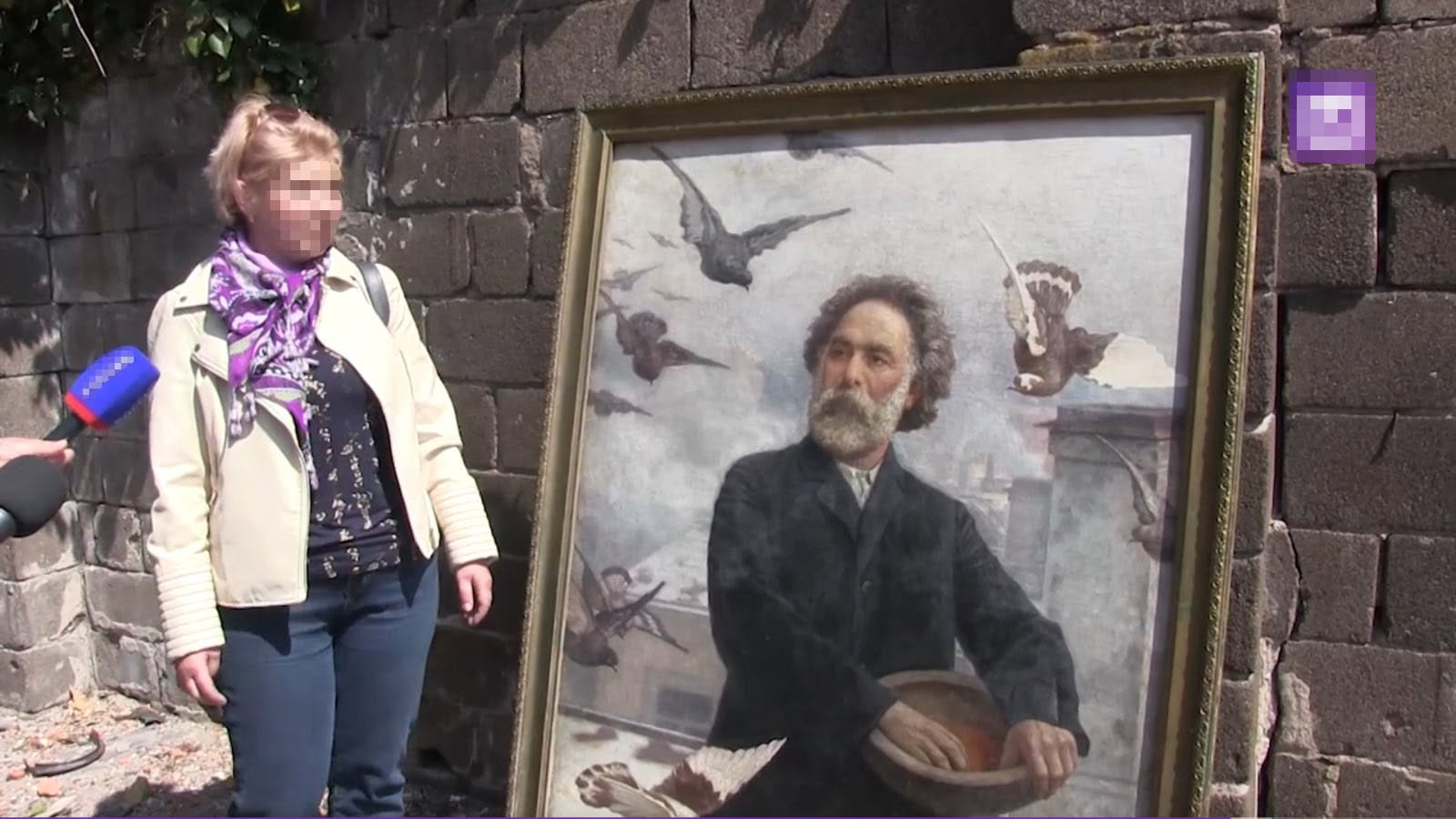
Former director of Mariupol museum accused of aiding in Russian theft of Ukraine's cultural heritage


© Johanna Alarcon for The New York Times


This blog has now closed. See all our UK politics coverage here
Andy Burnham may have trouble getting through to Keir Starmer if he tries ringing him after the Makerfield byelection to urge him to set a timetable for his departure. Burnham reportedly wants to call Starmer this weekend. (See 9.47am.) But, in his interview with Sky News, Starmer said: “I’m sure I’ll talk to Andy after the weekend.”
If Starmer declines to take Burnham’s call, he may be following Ed Miliband’s example. In a Times story today, Patrick Maguire and Steven Swinford report:
Sir Keir Starmer’s relationship with Ed Miliband has broken down to such an extent that the energy secretary has been accused of “ghosting” the prime minister in recent weeks.
Senior government sources claimed that Miliband declined to take calls from the prime minister during a tense stand-off over defence spending.
Continue reading...
© Photograph: Temilade Adelaja/Reuters

© Photograph: Temilade Adelaja/Reuters

© Photograph: Temilade Adelaja/Reuters

Greece’s Ministry of Environment and Energy has officially declared the Aegean islands of Alonissos and Tinos in a state of emergency due to severe drinking water shortages.
The declaration comes just as the summer tourist season begins to peak, triggering a massive, unsustainable spike in local water consumption. While the “state of emergency” designation functions primarily as a bureaucratic maneuver, its impact is highly practical. The status grants local municipalities the legal authority to bypass standard, time-consuming public tenders. This allows them to fast-track critical water management projects, bypass red tape, and immediately lease temporary mobile desalination units to stay ahead of the dry season.
The crisis is anything but isolated. Over the past year, a cascading series of water emergencies has swept across the premier vacation destinations. In the Ionian Sea, Corfu has faced intervention, while a mounting list of Aegean icons in Greece, including Karpathos, Leros, Patmos, Astypalea, Symi, and even the Saronic Gulf island of Aegina, have entered a water crisis.
Strikingly, even the major reservoirs supplying the Greater Athens region have registered historic drops, prompting nationwide concern.
Tourism is the undisputed lifeblood of the Greek economy, but its water footprint is staggering. Islands with a permanent population of only a few thousand residents routinely swell to accommodate tens of thousands of visitors between June and September.
A typical tourist consumes up to four times more water per day than a local resident, driven by luxury amenities such as swimming pools, daily linen changes, lush hotel landscaping, and heavy restaurant usage. This concentrated spike in demand hits exactly when natural water availability is at its absolute nadir.
With climate models forecasting hotter, drier summers, Greece’s reliance on temporary desalination fixes highlights a broader, systemic challenge. For the Aegean islands of Alonissos and Tinos in Greece, the path away from a water crisis will require a delicate balancing act between protecting their most fragile natural resource and sustaining the heavy tourism industry that powers their economies.
Minnie the Minx and Macbeth feature in National Library’s exploration of how rainfall has shaped Scottish science, literature, history and identity
It seems fitting that, 250 years ago, one of Scotland’s foremost scientists took a close interest in what is arguably the country’s most famous feature: rain
James Hutton, celebrated by Scots as the father of modern geology, went so far as to write a formula for “a theory of rain”. In 1784, he sketched out the key principles for the “condensation of aqueous vapour contained in the air”.
Continue reading...
© Photograph: Jeff J Mitchell/Getty Images

© Photograph: Jeff J Mitchell/Getty Images

© Photograph: Jeff J Mitchell/Getty Images

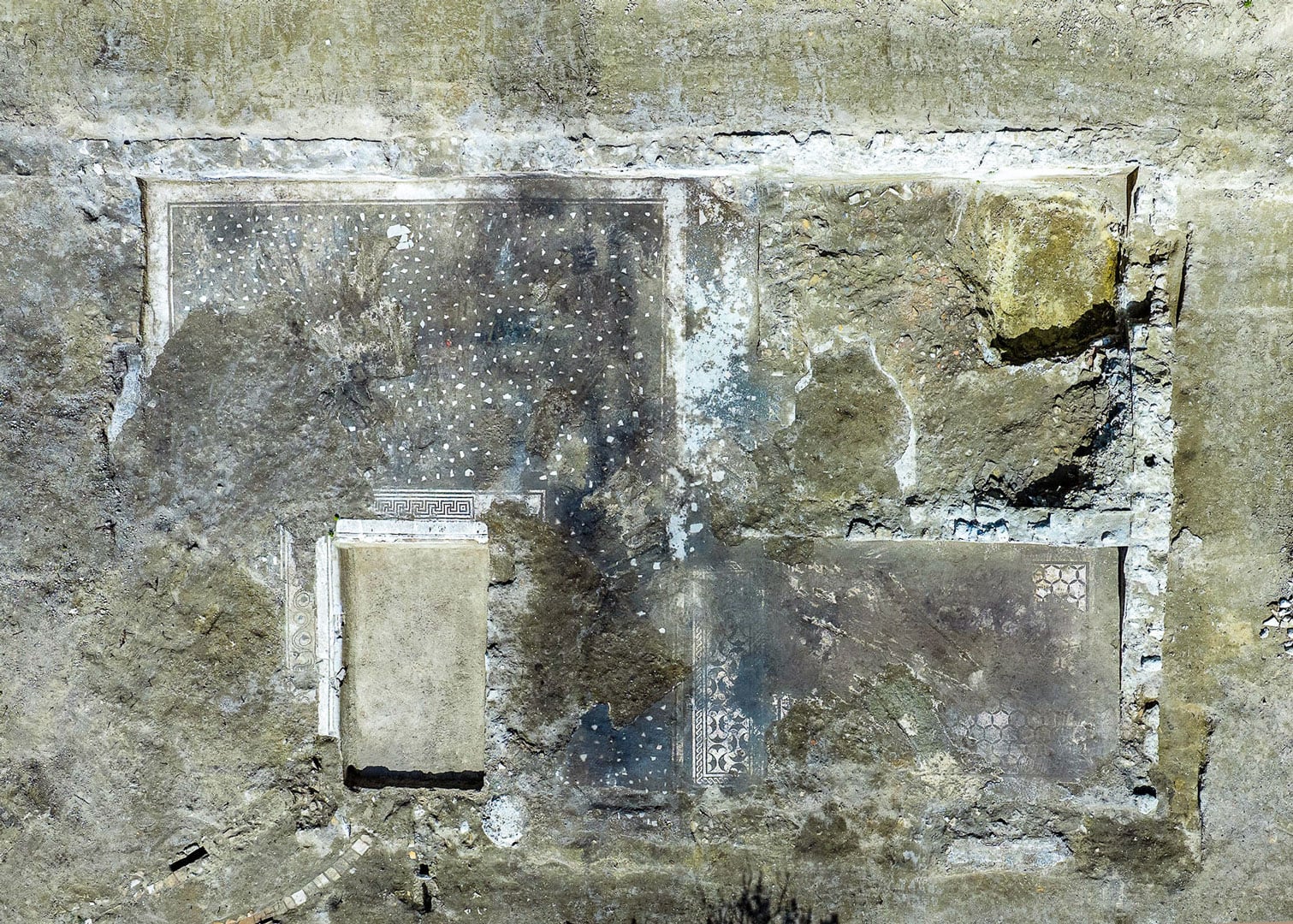
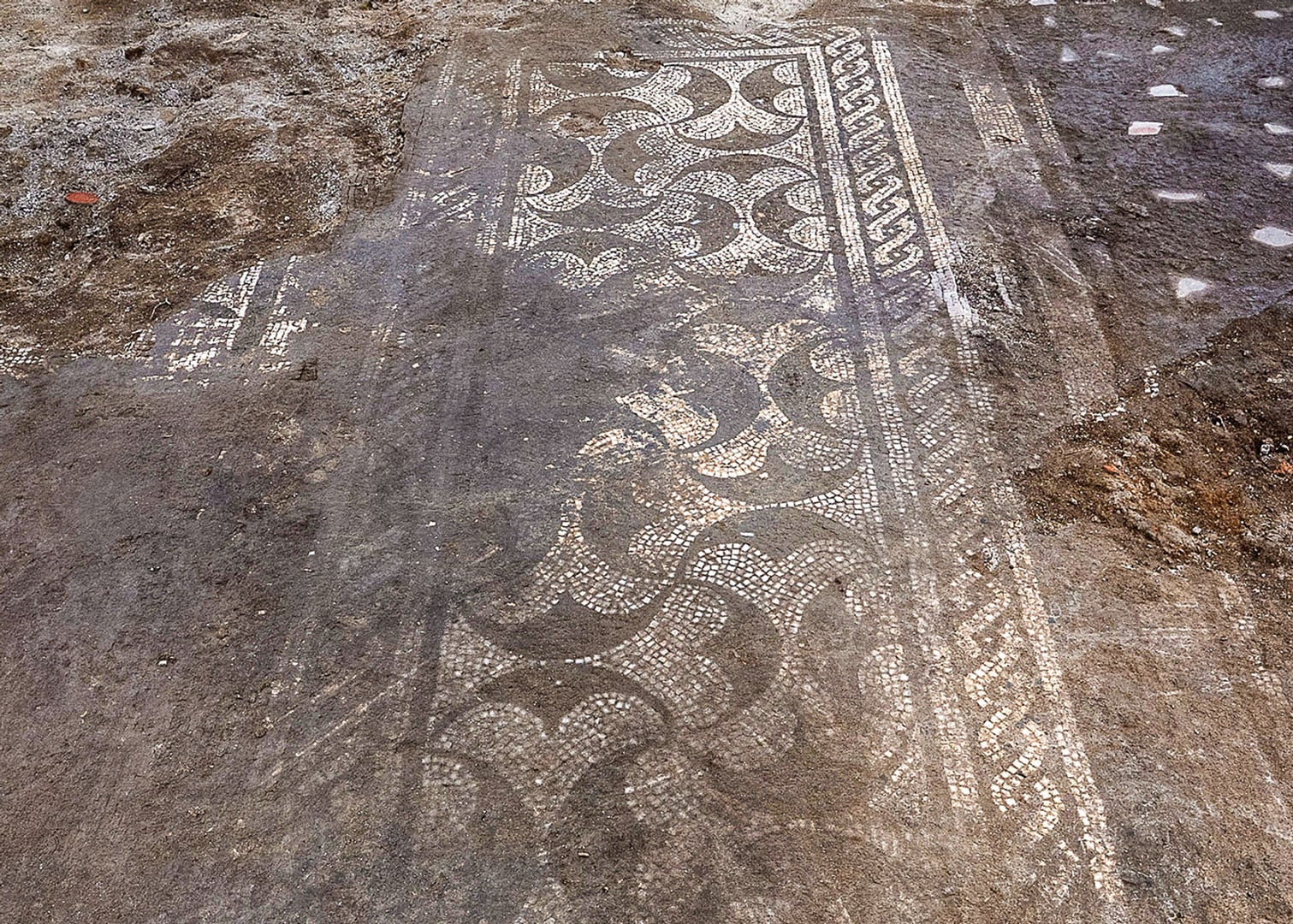
Archaeologists have uncovered a well-preserved Roman villa near Rome, complete with colorful mosaics, painted walls, and rooms that survived nearly intact after centuries underground.
The discovery at the Castel di Guido agricultural estate has revealed what researchers believe is part of a larger imperial-age complex that was previously unknown.
The find came through unusual circumstances. A tip about illegal digging at the estate prompted Italy’s Special Superintendence of Rome and the Carabinieri to act. Within days, authorities halted the unauthorized excavation and secured the site, allowing proper archaeological work to begin.
Under the scientific direction of archaeologist Alessia Contino, the team uncovered well-preserved rooms with walls rising up to 1.5 meters (about 5 feet).
Researchers identified the villa’s atrium, which features a central rainwater basin surrounded by geometric and floral decorations. Adjacent rooms contain mosaic floors, and evidence of the estate’s productive activities was also found at the site.
Among the most striking finds is a fragmentary marble statue of a bearded figure carrying a small animal, likely a calf or piglet. Researchers believe it represents Silvanus, an ancient deity associated with rural life.

The quality of the villa’s mosaics, painted walls, and white marble statue points to owners who likely belonged to Rome’s aristocracy with close ties to the imperial estate at Lorium.
That territory was historically linked to Emperor Antoninus Pius, who built a residence there. Emperors Hadrian and Marcus Aurelius also frequented the area. The site appears connected to the ancient road known as the Via Aurelia.
Contino said that the community tip and the speed of the official response made it possible to identify part of this previously unrecorded imperial-era villa and bring to light an exceptional set of decorations, along with the fine white marble statue.
She called it an important new discovery that opens fresh possibilities for understanding and protecting the region’s historical heritage.
Culture Minister Alessandro Giuli said that officials and military personnel worked together within days to stop the illegal dig, secure the area, and begin uncovering a significant chapter of Roman history. He described the operation as an exemplary act of protection and research.

Daniela Porro, the Special Superintendent of Rome, said that the find highlights the city’s remarkable archaeological wealth far beyond its historic center.
The excavation opens to the public on June 20, 2026, with free guided treks. The route covers roughly 1 kilometer (0.6 miles) and takes between 90 minutes and two hours to complete. Visitors will be able to view the villa’s remains and observe the mosaics currently undergoing restoration.

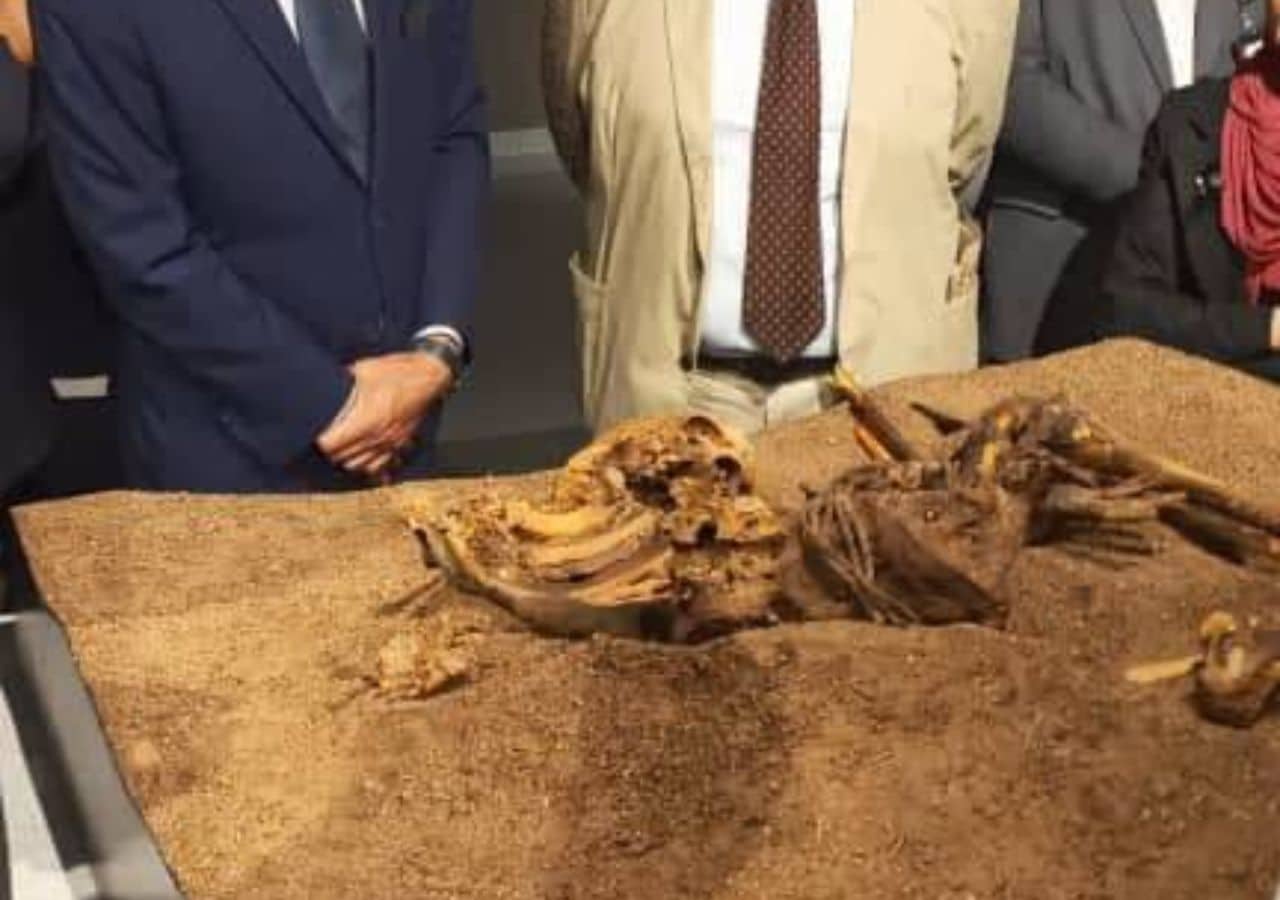
A 7,000-year-old prehistoric mummy from Libya’s Saharan past returned to the country Sunday after more than 20 years in Italy, touching down at Mitiga Airport in Tripoli aboard an Italian military aircraft.
The mummy, known as “Takarkori” or TK H1, was found at a rock shelter in the Tadrart Acacus region of southern Libya by the Italian Archaeological Mission in the Sahara.
Its return on June 14, 2026, ended its long stay in Italy, where researchers carried out years of scientific study on the ancient remains. After completing all official and customs procedures, the mummy was transferred to the National Museum in Tripoli.
The “Takarkori” remains date to what researchers call the “Green Sahara” period, a time when the Sahara had a far greener landscape and supported pastoral communities.
The mummy survived in remarkably good condition, making it unlike any other find on the African continent. That allowed researchers to study ancient DNA and piece together how Neolithic communities lived across North Africa.
The restoration and scientific work carried out in Italy involved the Italian Archaeological Mission in the Sahara and the University of Rome, with ENI’s coordination and logistical backing from Italy’s air force and cultural ministry.
The prehistoric mummy from Libya is expected to go on public view at Tripoli’s Red Castle by late July. The complex houses the National Museum, which had been shut for over ten years before reopening last December.
Officials said the return fits into Libya’s wider push to recover and protect its national heritage while deepening cultural ties with Italy.
General secretary of TUC calls Reform proposal ‘a smokescreen for slashing women’s rights’
A law proposed by Nigel Farage to “strengthen women’s rights” could cost female workers money by removing equal pay for work of equal value, unions have said.
A proposal, made by Reform UK days before the Makerfield byelection, to introduce a “women and motherhood protection act” that it says will restore equality before the law has been described as “shameless and deceptive”.
Continue reading...
© Photograph: Martin Dalton/Shutterstock

© Photograph: Martin Dalton/Shutterstock

© Photograph: Martin Dalton/Shutterstock


Step back into mid-summer Athens in 1961, beautifully captured in color footage released from the legendary British Pathé archives on YouTube. This vintage travelogue offers a rare, sun-drenched glimpse of a bygone era in the Greek capital.
The footage takes us down major avenues such as Amalias, Dionysiou Areopagitou, and Panepistimiou, where buses and trolleybuses vastly outnumber private cars. In the heart of Plaka, only a handful of tourists browse the handful of souvenir shops. One particularly charming scene at the corner of Mnisikleous and Lysiou streets shows two foreign visitors enjoying fresh grapes bought from a passing street vendor outside the historic Kritikos tavern.
Over at Syntagma Square, an itinerant photographer captures a portrait of a young boy on a bench. He uses a classic box camera, its sides adorned with sample prints of his work. The video then shifts to Mikrolimano in Piraeus, revealing a pristine coastline with low-rise buildings, a large fishing fleet docked with nets spread along the pier, and virtually no commercial development.
At Vouliagmeni beach, crowds of sunbathers soak up the rays on an organized stretch of sand. Notably, there isn’t a single beach umbrella in sight. In those days, long before modern concerns about the ozone layer or skin health, the sun was viewed purely as a friend to embrace for that perfect tropical tan rather than an element to hide from.
The journey concludes around Ellinikon Airport. As the Pathé crew’s plane touches down, the surrounding landscape is completely untouched—with Mount Ymittos standing free of any human development.
Play at Gillian Lynne theatre in London will cycle through versions with weekend crowds able to pick one
In keeping with its well-earned reputation for cloak and dagger, the stage adaptation of the hit gameshow Traitors will present audiences with different renditions of the story depending on which night they attend.
The Traitors: Acts of Betrayal will take the form of a five-play cycle, with weekend crowds able to determine which version of the BBC show dramatisation they see.
Continue reading...
© Photograph: Ian West/PA

© Photograph: Ian West/PA

© Photograph: Ian West/PA
Some titles that once backed the Tories now ‘flirting with Farage’ as they try to gauge where readers stand
It was a Mail on Sunday headline with all the ferocity usually reserved for general elections, directed squarely at a political opponent. But in this case, the traditionally Conservative-supporting title was not targeting Labour.
The party in its crosshairs was Rupert Lowe’s Restore Britain, the vehemently rightwing outfit that regards Nigel Farage’s Reform UK as too weak on deporting migrants.
Continue reading...
© Photograph: Christopher Furlong/Getty Images

© Photograph: Christopher Furlong/Getty Images

© Photograph: Christopher Furlong/Getty Images

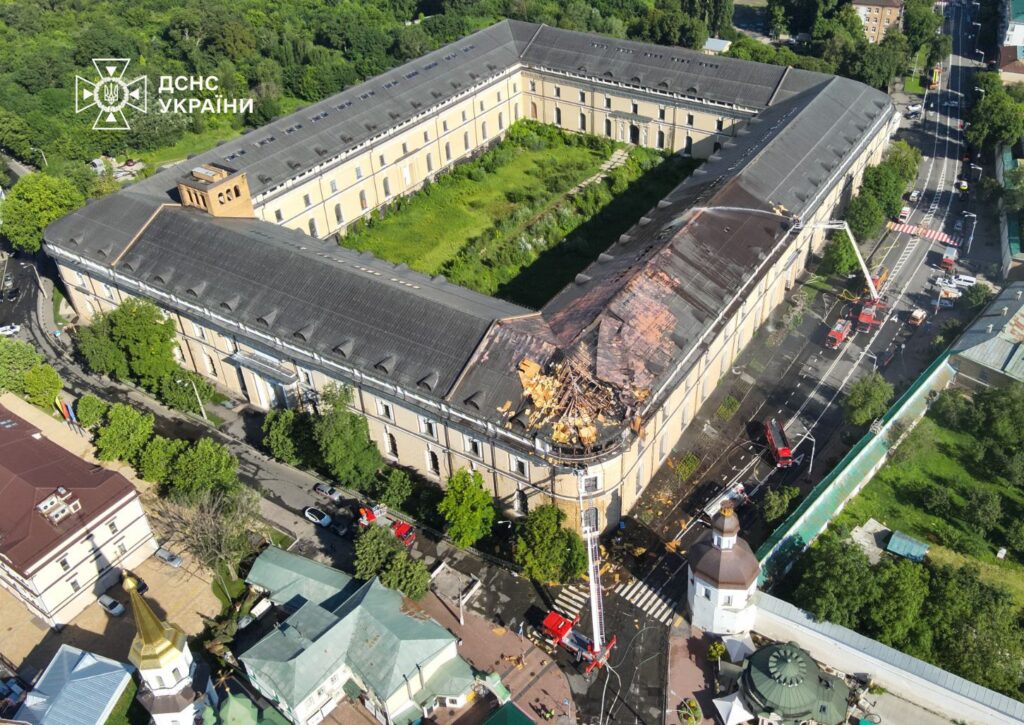
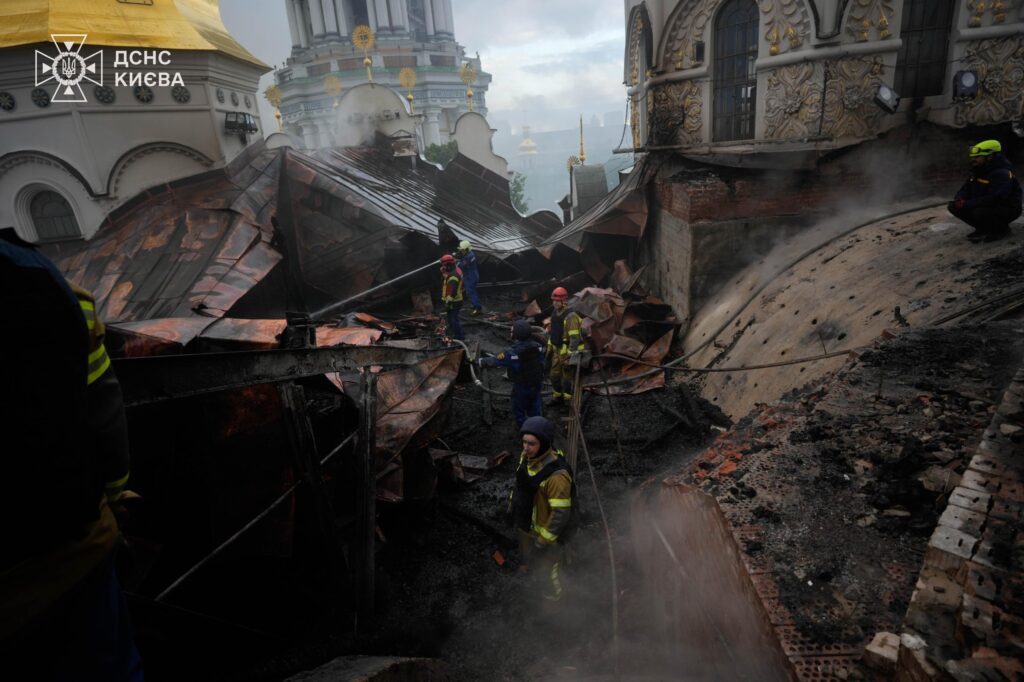
Russia has launched a large-scale disinformation campaign attempting to justify mass strikes on Kyiv's civilian and cultural objects, the Ukrainian Center for Countering Disinformation (CPD) has announced. Russian sources are using a classic scenario by attempting to disguise outright terror against civilians as "strikes on military targets" or shifting blame to Ukraine itself, the CPD said.
The disinformation campaign follows a pattern Ukrainian authorities have documented after previous Russian strikes on cultural and civilian targets. The Kyiv-Pechersk Lavra, a UNESCO World Heritage site dating back to 1051, is protected under the 1954 Hague Convention on the Protection of Cultural Property in the Event of Armed Conflict and the Geneva Convention Additional Protocol I, Article 53.
Russian information operations following strikes on Ukrainian civilian targets have followed predictable patterns since 2022.
The CPD documented five specific Russian disinformation tactics deployed after the Kyiv strikes.
All responsibility for the death and injury of peaceful Kyiv residents, destruction of historical and civilian buildings lies exclusively with Russia, and it must be punished for this, the Center says.
"No manipulation, conspiracy theories, or attempts to grant civilian objects 'military status' will help the aggressor conceal another war crime," the CPD said in its statement.
The CPD's position represents the Ukrainian government's position.
Russian disinformation following strikes on Ukrainian cultural sites has followed predictable patterns since 2022. Two documented precedent cases illustrate the same tactics now being deployed against Kyiv.
After the 16 March 2022 Russian airstrike on the Mariupol Drama Theater. Russia denied conducting the strike and claimed that Ukrainian soldiers had blown up the building themselves. An Associated Press investigation found that approximately 600 people died in the bombing, which makes it the deadliest single known attack on civilians in the war.
Amnesty International later concluded that the strike was a "clear war crime" conducted by two 500-kg bombs dropped from Russian fighter jets, ruling out alternative explanations.
After the 23 July 2023 Russian missile strike on the Odesa Transfiguration Cathedral, located within the UNESCO-protected historic center of Odesa, Russia's Defense Ministry denied targeting the cathedral and claimed the damage was caused by "the fall of a Ukrainian anti-aircraft guided missile," per Radio Free Europe/Radio Liberty.
UNESCO condemned the strike as an "escalation of violence against the cultural heritage of Ukraine." The cathedral's assistant rector, Father Myroslav, confirmed a "direct hit to the cathedral" with three altars destroyed.
The pattern across the Mariupol Theater, Odesa Cathedral, and now Kyiv-Pechersk Lavra cases is consistent: Russia denies conducting the strike and attributes damage to Ukrainian air defense or self-inflicted destruction.

A Agência de Geologia e Energia (AGE) já tem os nomes da comissão instaladora.
Nuno Matias (na foto, quadro da Entidade Nacional para o Setor Energético (ENSE), onde liderava a Unidade de Reservas Petrolíferas) vai liderar a agência no período de transição.
A AGE resulta da fusão da Direção-Geral de Energia e Geologia, do Laboratório Nacional de Energia e Geologia, da Empresa de Desenvolvimento Mineiro e da EDMI – Empresa de Projetos Imobiliários, integrando ainda atribuições da Entidade Gestora de Reservas Estratégicas de Portugal.
A comissão instaladora vai ter como vice-presidente Antonieta Loureiro. Integram ainda a comissão Miguel Águas, Ana Olim e Margarida Pisco, enquanto vogais.
Numa das entidades que vai ser integrada na AGE, a Direção-Geral de Energia e Geologia (DGEG) conta com novo diretor-geral para substituir Paulo Carmona que foi liderar a Infraestruturas de Portugal: Alexandre Santos que ocupava o cargo de sub-diretor-geral desde outubro de 2025. Para o cargo de sub-diretora geral, Liliana dos Santos assume o cargo. Ambos foram designados em regime de substituição.

Moscow's forces have looted over 7.8 million artifacts from museums in occupied territory since 2014, Ukraine's chief legal authority reported on 15 June.
The figure surfaced as Prosecutor General Ruslan Kravchenko condemned an overnight missile strike on the Kyiv-Pechersk Lavra. He placed the attack within what he called a deliberate state campaign to erase the country's identity. Kravchenko spoke hours after a combined Russian barrage set fire to the monastery's Dormition Cathedral. The cathedral is one of the most revered sites in Eastern Orthodox Christianity. Founded in 1051, the complex sits under UNESCO World Heritage protection. Moreover, it falls under the enhanced-safeguard mechanism of the 1954 Hague Convention.
The Lavra hit belongs in the same category as earlier attacks on national symbols, Kravchenko argued. He grouped it with strikes on the Transfiguration Cathedral in Odesa and the Hryhorii Skovoroda museum in Kharkiv Oblast. The list also named the Ivankiv museum holding works by folk artist Maria Prymachenko. It extended to the Oleksandr Dovzhenko National Film Studio in Kyiv and the Organ and Chamber Music House in Dnipro.
"This is the deliberate policy of an aggressor state — to destroy what shapes Ukrainian identity," his office said.
Russian forces have damaged or destroyed close to 2,000 elements of Ukrainian cultural heritage, Kravchenko stated. The count runs from the start of the full-scale invasion in February 2022. More than 100 of them carry UNESCO designation, he added.
That national tally runs well above the figure the UN body verifies on its own. UNESCO confirmed damage to 536 cultural sites as of 10 June 2026. That narrower count reflects stricter cross-checking against satellite imagery and on-site inspection. The gap reflects method, not contradiction. Ukrainian authorities log every culture-related facility affected in any way, while UNESCO applies a tighter definition of cultural property.
Investigators recovered missile fragments at the Dovzhenko film studio after the overnight assault, the prosecutor general reported. The strike leveled a two-story costume storehouse. It also damaged an annex to the sound stages, plus administrative and production buildings. No deaths or injuries occurred at the site.
Studio chief Andrii Donchyk told the "Snidanok z 1+1" program that the archive was the country's oldest. Roughly 100,000 costumes and about three million items of clothing had been stored there. How many survived the fire remained unclear.
Beyond physical damage, Kravchenko detailed a vast removal of movable Ukrainian cultural heritage. Russian forces seized or appropriated more than 7.8 million heritage objects from occupied-area museums between 2014 and 2026, he said. Furthermore, the true scale could be higher, because access to many collections remains blocked.
Prosecutors have opened more than 240 criminal cases and named 15 suspects so far.
"Crimes against cultural heritage are also war crimes. They carry no statute of limitations," Kravchenko said.
The air force reported that Russia launched 70 missiles and 611 drones overnight on 15 June. Kyiv was the main axis of attack. Missiles also struck Dnipro and Kharkiv. Air defenses neutralized 632 incoming threats — 50 missiles and 582 drones. Nevertheless, 20 ballistic missiles and 27 attack drones hit 42 locations, while debris fell at 12 more.
In Kyiv, the strike killed five people and wounded 35, including two children, city authorities said. Fires broke out across nearly every district. President Volodymyr Zelenskyy later put the nationwide toll at 11 killed and 53 injured.
Russia's defense ministry claimed the barrage targeted "defense-industrial complex" facilities in Kyiv, Dnipro, and Kharkiv. In addition, it repeated Moscow's standard line that its military avoids deliberate strikes on civilian infrastructure. The latest assault on Ukrainian cultural heritage and residential districts followed a 12 June statement by Vladimir Putin. He had said Russia would intensify its strikes on Ukraine.