Normal view

Is the Lost Atlantis Mentioned in the Bible?

18 June 2026 at 08:14
Map of Lost Atlantis
Does the Bible, the best-selling and most translated book in all of history, mention Greek mythology’s Atlantis? Map of lost Atlantis. Credit: Public Domain

In the fourth century BCE, Plato wrote about the legend of Atlantis. The general belief is that he was the very first person to write about it. This has led many to claim that Plato invented the story. However, is it possible that the Bible makes reference to the story of Atlantis, too?

The Minoan Theory of Atlantis

One common theory about the origin of Atlantis is that it comes from distorted accounts of the Minoan civilization. This was a Bronze Age naval civilization centered on Crete. The Minoans had control over several other islands, and they also had colonies on the Anatolian mainland. This is just as Plato described the civilization of Atlantis. Various other similarities exist between the Minoans and Atlantis.

Although this Minoan theory is not universally accepted, there are many scholars who support it. It is even mentioned in the Encyclopedia Britannica as a possible source of the legend. However, one issue that has been brought against this theory is that Atlantis was said to have engaged in violent conquest. Plato describes how the men of Atlantis waged war against several of the Mediterranean nations.

Regarding the Minoans, archaeologists know that they did engage in war against the Greeks. However, while they had a grand trading empire, there is little evidence they engaged in violent conquest.

Nonetheless, the Bible provides support for this Atlantis theory by recording certain information pertaining to the activities of the Minoans. Let us examine what this evidence is and how it shows that the Bible does, in effect, mention Atlantis.

Caphtor, the Atlantis of the Bible

The Bible mentions the Minoans in that it references the Cretans of the Bronze Age. The ancient Hebrew name for Crete was Caphtor. This seems to be related to the ancient Egyptian name for Crete, which was Keftiu.

The Bible only mentions the Caphtorim, that is, the people of Caphtor, a handful of times. One of these mentions in the Bible may well be related to Plato’s story of Atlantis. It appears in the Book of Deuteronomy. The account is set in the time of Moses, who lived around 1500 BCE.

This was the era of the Minoan civilization and was only shortly before the Mycenaean Greeks overthrew it. The account itself describes events that occurred sometime before Moses’ day although it does not say exactly when they happened.

The Bible’s account of Minoan conquerors

Minoan & Mycenaean women
On the left is a fresco depicting a Minoan women and on the right, a plaster cast of a Mycenaean woman. Take note of the distinctive colors of the Mycenaean plaster, which may be representative of preferences for makeup. Credit: I Sailko / CC BY-SA 3.0 / Sharon Mollerus / CC BY 2.0 / Wikimedia Commons

The beginning of the Book of Deuteronomy provides an overview of the Promised Land, that is, the land of Canaan. In Deuteronomy 2:23, we find the following information about a certain region of it:

“As for the Avvim, they had dwelled in settlements as far as Gaza until the Caphtorim, who came out from Caphtor, annihilated them and settled in their place.”

According to this, the Caphtorim had “annihilated” the Avvim in southwestern Canaan and taken over their territory. It should be kept in mind that the Caphtorim are the men of Crete, and this account is set around 1500 BCE.

This would mean that the Caphtorim mentioned here are actually the Minoans. In other words, the Minoan civilization is identified with Atlantis. This is quite a significant assumption. It would mean that the Bible describes the Minoans attacking and conquering part of the mainland on the Mediterranean coast.

How the Bible supports the Minoan theory of Atlantis

This strongly supports the Minoan theory of Atlantis. It disproves the notion that the Minoans were not known conquerors. Even if the Bible is rejected as a historical source, as many would have it, this demonstrates at the very least that there was a tradition of the Minoans engaging in conquest during the Bronze Age.

There is, in fact, some archaeological evidence supporting Minoan presence in Canaan in that era and even earlier. One example is the presence of Minoan Kamares ware in the city of Ashkelon dating to around 1800 BCE.

However, regardless of historical facts, the Bible proves that the Bronze Age Minoans were remembered for being violent conquerors, which is the important thing when it comes to the legend of Atlantis. This provides strong support for the theory that the Minoans were the likely origin of the legend of Atlantis. This being the case, it would mean that the real Atlantis is indeed mentioned in the Bible.
Agreement Signed to Convert Prinkipo Greek Orphanage Into Luxury Hotel

18 June 2026 at 05:45
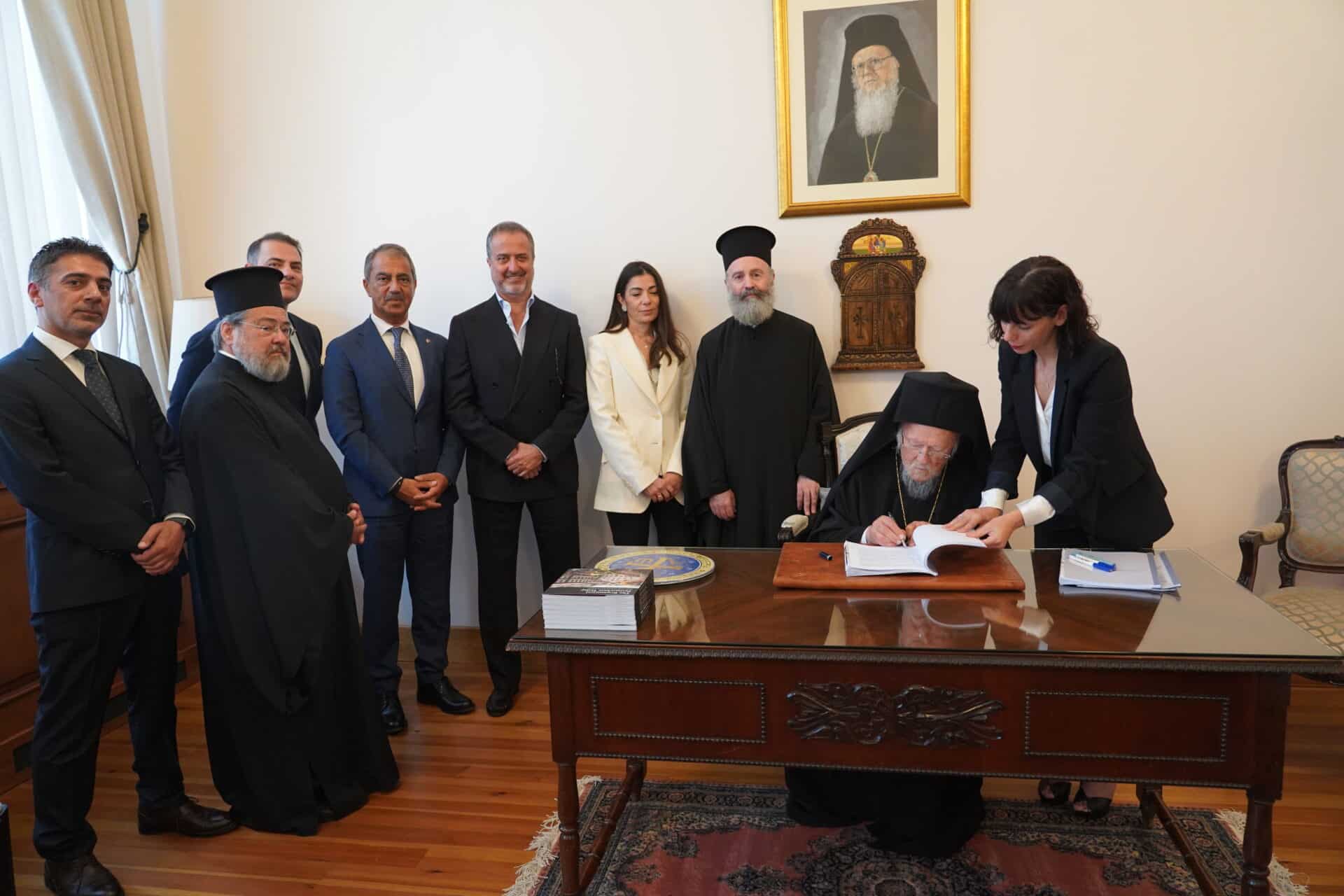
Ecumenical Patriarch Bartholomew signs the agreement for the Prinkipo Orphanage. Seen are Archbishop Makarios of Australia, chairman of the committee, Metropolitan Theoliptos of Iconium, and other representatives at the Greek orphanage in Istanbul.
Ecumenical Patriarch Bartholomew signs the agreement for the Prinkipo Orphanage. Seen are Archbishop Makarios of Australia, chairman of the committee, Metropolitan Theoliptos of Iconium, and other representatives. Credit: Ecumenical Patriarchate/ Nikos Papachristou

The Ecumenical Patriarchate has signed an agreement with Turkish and Greek investment companies for the redevelopment of the historic Prinkipo Greek Orphanage on the island of Prinkipo (Buyukada), paving the way for the restoration and conversion of the landmark building into a high-end hotel.

The agreement was signed on June 15 by Ecumenical Patriarch Bartholomew and Serdar Bilgili, Chairman of Bilgili Holding, a leading Turkish real estate investment company, in the presence of Costantza Sbokou-Konstantakopoulou, representing ENSOFI Holding, a Greek company active in sustainable tourism development and real estate investments.

According to an announcement issued by the Ecumenical Patriarchate, the agreement concerns the management and redevelopment of the historic property, which has remained unused and deteriorating for decades.

The signing ceremony took place at the Maraslios School in the Phanar. Among those present were Archbishop Makarios of Australia, Chairman of the Special Committee of the Ecumenical Patriarchate that studied and finalized the agreement.

Greek Orphanage Istanbul
The historic Prinkipo Greek Orphanage on the island of Prinkipo. Credit: Zamir Saglikoglu CC BY-SA-4.0

The history of the Prinkipo Greek Orphanage

The Prinkipo Greek Orphanage is one of the most significant historic properties associated with the Ecumenical Patriarchate. Constructed at the end of the nineteenth century as the intended “Prinkipo Palace” hotel, the building was never used for that purpose. In 1903, it was donated to the Patriarchate by the benefactress Eleni Zarifi and subsequently operated as an orphanage and residence for children until 1964, when it was closed by Turkish authorities.

For decades, the future of the massive wooden structure remained uncertain. In 2010, following an appeal by the Ecumenical Patriarchate, the European Court of Human Rights ruled in favor of the Patriarchate and recognized its ownership rights over the property after a lengthy legal dispute with the Turkish state.

That landmark decision enabled the Patriarchate to pursue options for preserving and restoring the historic building. However, efforts to restore it did not yield a solution because the cost of full restoration remained exceptionally high, and parts of the wooden edifice had already suffered severe collapses. According to the Patriarchate, the newly signed agreement represents the culmination of years of efforts to secure a sustainable future for the property while preserving its historical and cultural significance.

The Prinkipo Greek Orphanage is widely regarded as one of the largest wooden buildings in Europe and remains one of the most recognizable symbols of the historic Greek presence in Constantinople.

Related: Patriarch Bartholomew Meets President Erdogan on Halki Seminary Reopening

How Ecuador’s Andes Created a Language of Its Own

In Ecuador’s highlands, a seamless mix of Kichwa and Spanish creates a language that bends grammar, adds melody and goes unnoticed by many who speak it every day.

© Johanna Alarcon for The New York Times

San Roque market in Quito, the capital of Ecuador, is one of the main meeting points between Kichwa and Spanish. These languages have long intertwined through exchanges in the city’s markets and public squares.

Burnham says he wants to ensure Makerfield byelection ‘changes British politics’, in eve-of-poll speech – as it happened

17 June 2026 at 18:00

This blog has now closed. See all our UK politics coverage here

Andy Burnham may have trouble getting through to Keir Starmer if he tries ringing him after the Makerfield byelection to urge him to set a timetable for his departure. Burnham reportedly wants to call Starmer this weekend. (See 9.47am.) But, in his interview with Sky News, Starmer said: “I’m sure I’ll talk to Andy after the weekend.”

If Starmer declines to take Burnham’s call, he may be following Ed Miliband’s example. In a Times story today, Patrick Maguire and Steven Swinford report:

Sir Keir Starmer’s relationship with Ed Miliband has broken down to such an extent that the energy secretary has been accused of “ghosting” the prime minister in recent weeks.

Senior government sources claimed that Miliband declined to take calls from the prime minister during a tense stand-off over defence spending.

Continue reading...

© Photograph: Temilade Adelaja/Reuters

© Photograph: Temilade Adelaja/Reuters

© Photograph: Temilade Adelaja/Reuters

Greece Declares Water Emergencies on Two More Aegean Islands

17 June 2026 at 08:51
Agios Demetrios Beach on Alonissos
Alonissos is the latest Aegean island to be declared in a state of emergency. Credit: Greek Reporter

Greece’s Ministry of Environment and Energy has officially declared the Aegean islands of Alonissos and Tinos in a state of emergency due to severe drinking water shortages.

The declaration comes just as the summer tourist season begins to peak, triggering a massive, unsustainable spike in local water consumption. While the “state of emergency” designation functions primarily as a bureaucratic maneuver, its impact is highly practical. The status grants local municipalities the legal authority to bypass standard, time-consuming public tenders. This allows them to fast-track critical water management projects, bypass red tape, and immediately lease temporary mobile desalination units to stay ahead of the dry season.

Water crisis in the Aegean

The crisis is anything but isolated. Over the past year, a cascading series of water emergencies has swept across the premier vacation destinations. In the Ionian Sea, Corfu has faced intervention, while a mounting list of Aegean icons in Greece, including Karpathos, Leros, Patmos, Astypalea, Symi, and even the Saronic Gulf island of Aegina, have entered a water crisis.

Strikingly, even the major reservoirs supplying the Greater Athens region have registered historic drops, prompting nationwide concern.

Tourism runs Aegean islands dry

Tourism is the undisputed lifeblood of the Greek economy, but its water footprint is staggering. Islands with a permanent population of only a few thousand residents routinely swell to accommodate tens of thousands of visitors between June and September.

A typical tourist consumes up to four times more water per day than a local resident, driven by luxury amenities such as swimming pools, daily linen changes, lush hotel landscaping, and heavy restaurant usage. This concentrated spike in demand hits exactly when natural water availability is at its absolute nadir.

With climate models forecasting hotter, drier summers, Greece’s reliance on temporary desalination fixes highlights a broader, systemic challenge. For the Aegean islands of Alonissos and Tinos in Greece, the path away from a water crisis will require a delicate balancing act between protecting their most fragile natural resource and sustaining the heavy tourism industry that powers their economies.

A nation shaped by rain: exhibition celebrates Scotland’s wettest obsession

Minnie the Minx and Macbeth feature in National Library’s exploration of how rainfall has shaped Scottish science, literature, history and identity

It seems fitting that, 250 years ago, one of Scotland’s foremost scientists took a close interest in what is arguably the country’s most famous feature: rain

James Hutton, celebrated by Scots as the father of modern geology, went so far as to write a formula for “a theory of rain”. In 1784, he sketched out the key principles for the “condensation of aqueous vapour contained in the air”.

Continue reading...

© Photograph: Jeff J Mitchell/Getty Images

© Photograph: Jeff J Mitchell/Getty Images

© Photograph: Jeff J Mitchell/Getty Images

Ancient Roman Villa With Preserved Mosaics and Painted Walls Unearthed Near Rome

17 June 2026 at 01:41
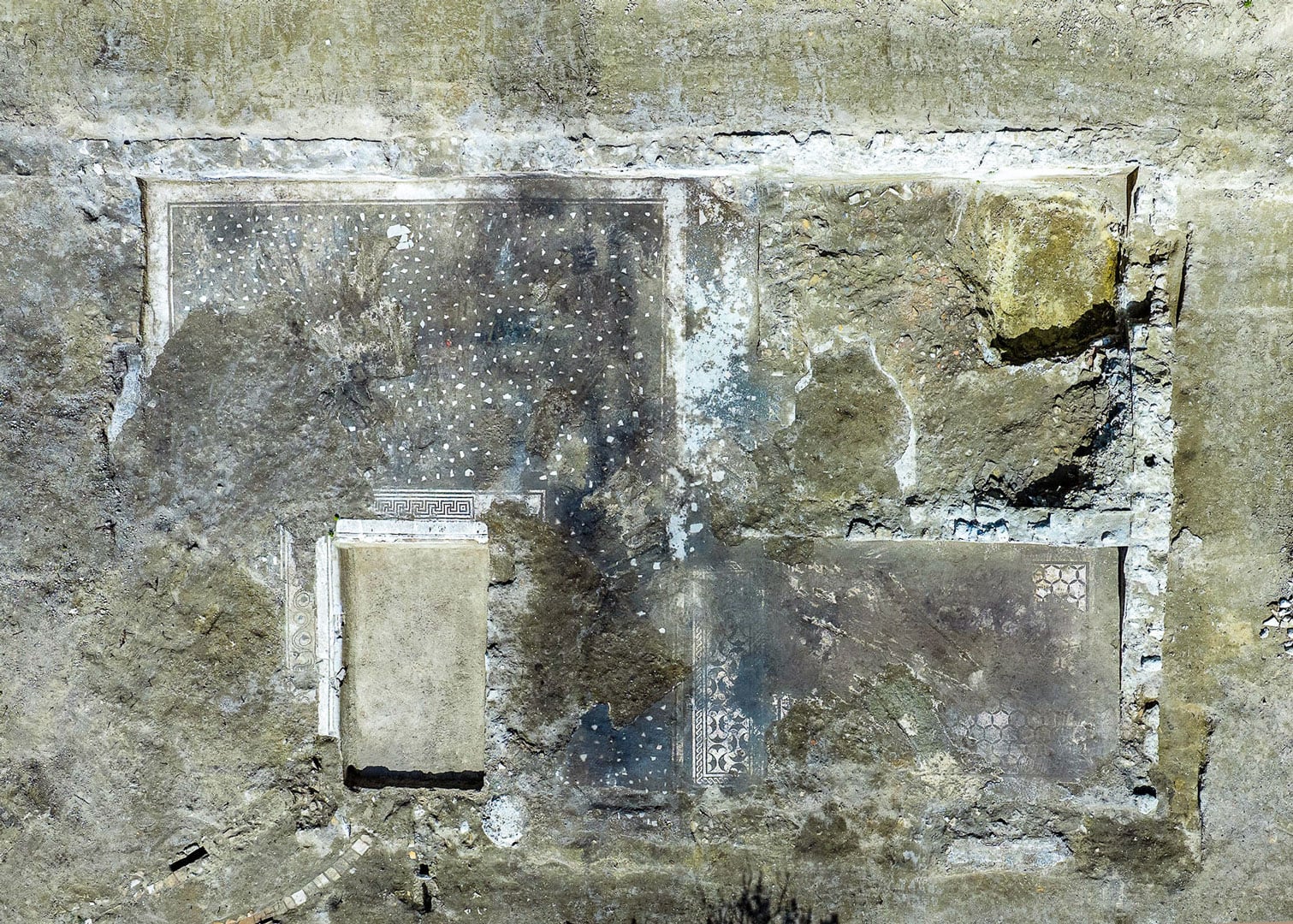
Remains of Roman villa found at Castel di Guido
Remains of a Roman villa found at Castel di Guido. Credit: Italian Ministry of Culture

Archaeologists have uncovered a well-preserved Roman villa near Rome, complete with colorful mosaics, painted walls, and rooms that survived nearly intact after centuries underground.

The discovery at the Castel di Guido agricultural estate has revealed what researchers believe is part of a larger imperial-age complex that was previously unknown.

The find came through unusual circumstances. A tip about illegal digging at the estate prompted Italy’s Special Superintendence of Rome and the Carabinieri to act. Within days, authorities halted the unauthorized excavation and secured the site, allowing proper archaeological work to begin.

Under the scientific direction of archaeologist Alessia Contino, the team uncovered well-preserved rooms with walls rising up to 1.5 meters (about 5 feet).

Researchers identified the villa’s atrium, which features a central rainwater basin surrounded by geometric and floral decorations. Adjacent rooms contain mosaic floors, and evidence of the estate’s productive activities was also found at the site.

Illegal dig report leads to remarkable Imperial-era discovery

Among the most striking finds is a fragmentary marble statue of a bearded figure carrying a small animal, likely a calf or piglet. Researchers believe it represents Silvanus, an ancient deity associated with rural life.

Mosaics at Roman villa
Mosaics at Roman villa. Credit: Italian Ministry of Culture

The quality of the villa’s mosaics, painted walls, and white marble statue points to owners who likely belonged to Rome’s aristocracy with close ties to the imperial estate at Lorium.

That territory was historically linked to Emperor Antoninus Pius, who built a residence there. Emperors Hadrian and Marcus Aurelius also frequented the area. The site appears connected to the ancient road known as the Via Aurelia.

Contino said that the community tip and the speed of the official response made it possible to identify part of this previously unrecorded imperial-era villa and bring to light an exceptional set of decorations, along with the fine white marble statue.

She called it an important new discovery that opens fresh possibilities for understanding and protecting the region’s historical heritage.

Roman villa’s mosaics and painted walls tied to imperial aristocracy

Culture Minister Alessandro Giuli said that officials and military personnel worked together within days to stop the illegal dig, secure the area, and begin uncovering a significant chapter of Roman history. He described the operation as an exemplary act of protection and research.

A sculpture found at Roman villa
A sculpture found at Roman villa. Credit: Italian Ministry of Culture

Daniela Porro, the Special Superintendent of Rome, said that the find highlights the city’s remarkable archaeological wealth far beyond its historic center.

The excavation opens to the public on June 20, 2026, with free guided treks. The route covers roughly 1 kilometer (0.6 miles) and takes between 90 minutes and two hours to complete. Visitors will be able to view the villa’s remains and observe the mosaics currently undergoing restoration.

7,000-Year-Old Prehistoric Mummy Returns to Libya After 20 Years in Italy

16 June 2026 at 22:35
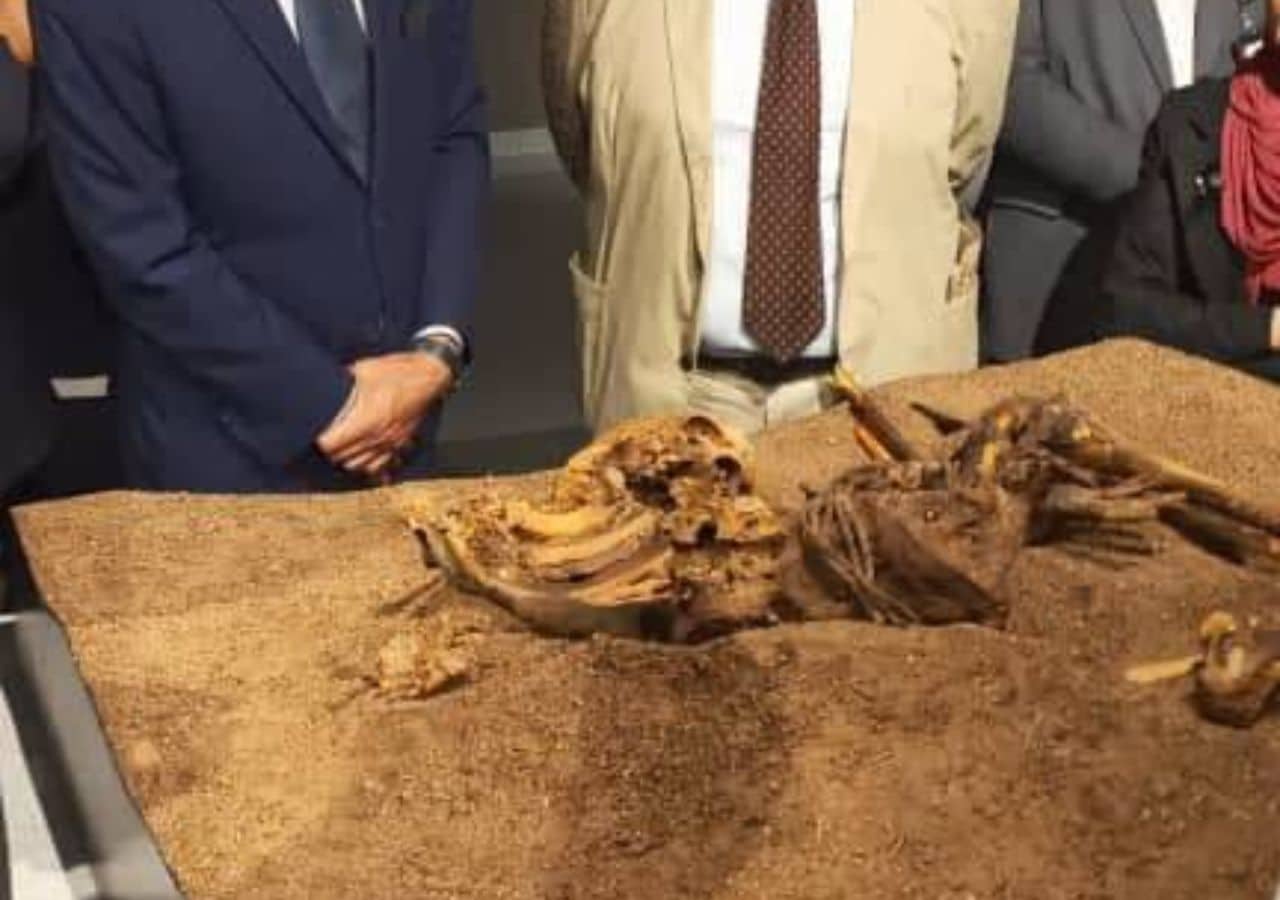
Prehistoric mummy returned to Libya
Prehistoric mummy returned to Libya. Credit: Department of Antiquities Libya

A 7,000-year-old prehistoric mummy from Libya’s Saharan past returned to the country Sunday after more than 20 years in Italy, touching down at Mitiga Airport in Tripoli aboard an Italian military aircraft.

The mummy, known as “Takarkori” or TK H1, was found at a rock shelter in the Tadrart Acacus region of southern Libya by the Italian Archaeological Mission in the Sahara.

Its return on June 14, 2026, ended its long stay in Italy, where researchers carried out years of scientific study on the ancient remains. After completing all official and customs procedures, the mummy was transferred to the National Museum in Tripoli.

The “Takarkori” remains date to what researchers call the “Green Sahara” period, a time when the Sahara had a far greener landscape and supported pastoral communities.

The mummy survived in remarkably good condition, making it unlike any other find on the African continent. That allowed researchers to study ancient DNA and piece together how Neolithic communities lived across North Africa.

Libya’s prehistoric mummy set for public display at the Red Castle

The restoration and scientific work carried out in Italy involved the Italian Archaeological Mission in the Sahara and the University of Rome, with ENI’s coordination and logistical backing from Italy’s air force and cultural ministry.

The prehistoric mummy from Libya is expected to go on public view at Tripoli’s Red Castle by late July. The complex houses the National Museum, which had been shut for over ten years before reopening last December.

Officials said the return fits into Libya’s wider push to recover and protect its national heritage while deepening cultural ties with Italy.

Farage’s plan for equal pay legislation may cost female workers money, say unions

General secretary of TUC calls Reform proposal ‘a smokescreen for slashing women’s rights’

A law proposed by Nigel Farage to “strengthen women’s rights” could cost female workers money by removing equal pay for work of equal value, unions have said.

A proposal, made by Reform UK days before the Makerfield byelection, to introduce a “women and motherhood protection act” that it says will restore equality before the law has been described as “shameless and deceptive”.

Continue reading...

© Photograph: Martin Dalton/Shutterstock

© Photograph: Martin Dalton/Shutterstock

© Photograph: Martin Dalton/Shutterstock

Gens du voyage : une fête de village annulée en urgence après l’arrivée d’un convoi de 80 caravanes sur le stade communal

16 June 2026 at 15:42
À quelques jours de leur lancement, les fêtes du village landais de Mées ont été brutalement annulées après l’arrivée d’un convoi d’environ 80 caravanes installé sur le terrain de football communal. Entre inquiétudes...

Gens du voyage : "C’est la goutte d’eau..." Face à l’envahissement du stade par 150 caravanes, aux portes de l’école, ce maire menace de quitter son intercommunalité

16 June 2026 at 15:25
Dans la nuit de dimanche à lundi, les gens du voyage ont quitté le stade de Pouyastruc pour s’installer sur celui de Tournay, où le maire, qui n’a pu empêcher l’envahissement, ne décolère pas et dénonce "un traitement...

A Stunning Colorized Tour of Athens in 1961

16 June 2026 at 08:15
Athens in 1961
Traffic in Syntagma Square in 1961. Credit: Video Screenshot/British Pathe

Step back into mid-summer Athens in 1961, beautifully captured in color footage released from the legendary British Pathé archives on YouTube. This vintage travelogue offers a rare, sun-drenched glimpse of a bygone era in the Greek capital.

The footage takes us down major avenues such as Amalias, Dionysiou Areopagitou, and Panepistimiou, where buses and trolleybuses vastly outnumber private cars. In the heart of Plaka, only a handful of tourists browse the handful of souvenir shops. One particularly charming scene at the corner of Mnisikleous and Lysiou streets shows two foreign visitors enjoying fresh grapes bought from a passing street vendor outside the historic Kritikos tavern.

Over at Syntagma Square, an itinerant photographer captures a portrait of a young boy on a bench. He uses a classic box camera, its sides adorned with sample prints of his work. The video then shifts to Mikrolimano in Piraeus, revealing a pristine coastline with low-rise buildings, a large fishing fleet docked with nets spread along the pier, and virtually no commercial development.

Vouliagmeni with no beach umbrellas

At Vouliagmeni beach, crowds of sunbathers soak up the rays on an organized stretch of sand. Notably, there isn’t a single beach umbrella in sight. In those days, long before modern concerns about the ozone layer or skin health, the sun was viewed purely as a friend to embrace for that perfect tropical tan rather than an element to hide from.

The journey concludes around Ellinikon Airport. As the Pathé crew’s plane touches down, the surrounding landscape is completely untouched—with Mount Ymittos standing free of any human development.

Sly stage version of The Traitors to lure audiences with five different endings

Play at Gillian Lynne theatre in London will cycle through versions with weekend crowds able to pick one

In keeping with its well-earned reputation for cloak and dagger, the stage adaptation of the hit gameshow Traitors will present audiences with different renditions of the story depending on which night they attend.

The Traitors: Acts of Betrayal will take the form of a five-play cycle, with weekend crowds able to determine which version of the BBC show dramatisation they see.

Continue reading...

© Photograph: Ian West/PA

© Photograph: Ian West/PA

© Photograph: Ian West/PA

Mail on Sunday attacks Restore as split right creates headache for UK papers

Some titles that once backed the Tories now ‘flirting with Farage’ as they try to gauge where readers stand

It was a Mail on Sunday headline with all the ferocity usually reserved for general elections, directed squarely at a political opponent. But in this case, the traditionally Conservative-supporting title was not targeting Labour.

The party in its crosshairs was Rupert Lowe’s Restore Britain, the vehemently rightwing outfit that regards Nigel Farage’s Reform UK as too weak on deporting migrants.

Continue reading...

© Photograph: Christopher Furlong/Getty Images

© Photograph: Christopher Furlong/Getty Images

© Photograph: Christopher Furlong/Getty Images

❌