Calling it a costly mistake, the recruiter said the entire process, from multiple interview rounds to selecting a strong candidate, ended in wasted effort due to the lack of early salary alignment.
RRB NTPC Result 2026: Candidates who have qualified CBT 1 will be called for the CBT 2 exam. The scorecard will be released separately on June 12, 2026.
One-off programme to begin in July after recent MenB outbreaks in Kent, Dorset and Berkshire killed three people
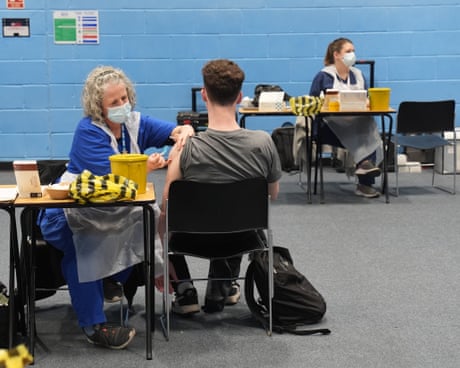
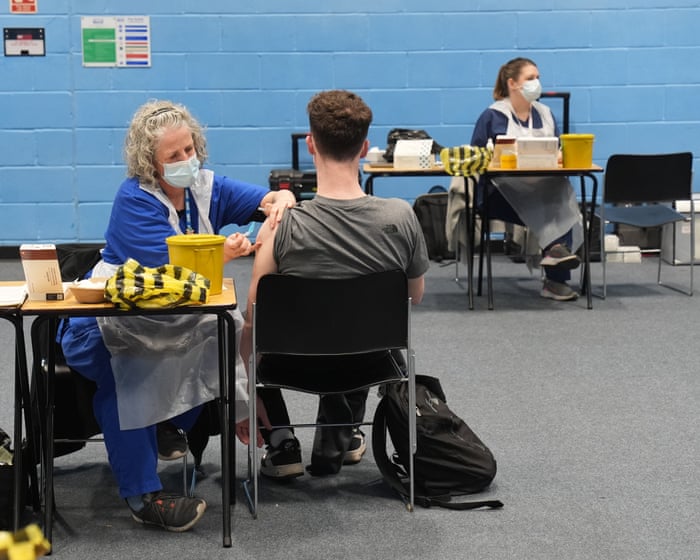
Teenagers in their final school year and young people starting university will be offered two doses of a vaccine to protect them against meningitis B, the government has announced.
The one-off vaccination programme, which will begin in late July, comes after an unprecedented outbreak of meningitis B in Kent earlier this year along with clusters of cases in Dorset and Berkshire that, together, led to the deaths of three young people.
Long-awaited course to examine human effects on natural world and explore everyday ways to aid biodiversity
School pupils will learn how to plant a wildflower-friendly garden, according to long-awaited plans announced on Thursday for a natural history GCSE in England, Wales and Northern Ireland.
Campaigners have for more than a decade called for the study of biodiversity loss and global heating to be introduced as a dedicated subject in classrooms across the country, but despite a curriculum being previously drawn up, its launch has faced repeated delays.
Teens who use social media two hours daily at higher risk of depressive symptoms, study finds
Teenagers who spend hours glued to social media are likely to experience poorer mental health and a decline in wellbeing, a decade-long study shows, with young girls most at risk.
That is the most important question today that we strive everyday to answer.
If you understand who the aggressor is, you are on your way to understanding the mad and perilous times we live in.
Once you get that, what you’ve been taught all your life starts to lose its hold on you.
Establishment education and media try to confuse you. Independent media like Consortium News try to clarify.
Establishment education and media portray the aggressor as the defender, and the victim as the threat. Consortium News endeavors to show you the “threat” is really an obstacle. An obstacle to aggression and occupation. An obstacle to expansion. Locally and globally.
Few would agree with aggression, paid for with your taxes in a so-called democracy. So obstacles to aggression become threats that you’re supposed to be afraid of. Offensive action is taken as “defense” to protect you from the “threat.”
There’s nothing new in this. The Romans dressed up their imperial aggression as self-defense against fake threats. Rome provoked tribes, first in Italy and then Gaul and Germania, into forming alliances to protect the tribes’ sovereignty, and then Rome presented these alliances as “threats” that had to be destroyed, justifying war against them.
Rome would also provoke an adversary into invading or launching an attack to obtain the casus belli needed to start a pre-planned war. For instance, Roman ally Masinissa of Numidia repeatedly raided Carthage to provoke it into finally responding militarily in violation of a treaty it had with Rome. The empire used this as a pretext for total destruction and annexation — even though Carthage, an obstacle to Roman expansion, posed no realistic, existential threat.
In the earlier U.S. imperium, Mark Twain explained it this way:
“The statesmen will invent cheap lies, putting the blame upon the nation that is attacked, and every man will be glad of those conscience-soothing falsities, and will diligently study them, and refuse to examine any refutations of them; and thus he will by and by convince himself the war is just, and will thank God for the better sleep he enjoys after this process of grotesque self-deception.”
Today the obstacles to the aggressors’ expansion and occupation in the Middle East are Iran plus the legal, armed resistance to Greater Israel: Hamas, Hezbollah, the Houthis and Shia militia in Iraq. They are presented as “threats”rather than defenders of their dignity, sovereignty and land.
In Asia the “threat” is China. Beijing protecting its sovereignty in its own region is somehow a threat to U.S. warships near China’s waters and to Taiwan, which the U.S. agrees is part of China.
In Europe years of NATO expansion, refusal to negotiate a mutual security treaty, rehabilitation of fascism, a coup, and civil war in Ukraine against ethnic Russian coup-resistors provoked Russia to intervene, much as the Romans provoked Carthage. Getting Russia to invade Ukraine allows the portrayal of Moscow as the aggressor and a “threat” to all of Europe and not as an obstacle to the U.S. and Wall Street return to their 1990s dominance of Russia. (Now there is constant talk of direct NATO war with Russia. The fear is another provocation to get Russia to start it.)
All of these obstacles to U.S. global hegemony are presented to you as existential threats that only the mighty United States, NATO and Israel can protect you from. There’s nothing in it for them, of course, except saving your life, we’re expected to believe. Except you don’t have to believe it. You have alternative media like Consortium Newsto expose the deceptions on a daily basis.
That’s why pro-establishment social media companies and so-called anti-disinformation services have tried to hurt us. And that’s why we need your help.
Most schools in Greece close mid-June for their summer break . Credit A.P. / Greek Reporter
Schools are about to close for summer in Greece! But did you know that if you’re a child who goes to school in Greece, you’re likely enjoying a much longer break than your peers in other parts of Europe?
Schoolchildren in Greece have some of the most generous summer breaks on the continent. These summer breaks typically stretch from mid-June (normally around the 15th of June in elementary schools) to the 11th of September, for a leisurely 12 to 14 weeks of fun in the sun.
So why do Greek children and teenagers get such an extended break compared to their neighbors in central and northern Europe? Well, it turns out there are a few key reasons for this.
The long summer breaks of Greece
Historically, the long summer break period in Greece was meant to allow children to help out with agricultural work during the busiest farming months. These traditions go back in time hundreds of years. We should never forget that, particularly in the past, the majority of Greek families were involved in farming and food production. Thus, it made sense for them to give children a break to pitch in during the peak season out in the fields.
Another main reason for the extended summer breaks is Greece’s sweltering summer climate. With temperatures soaring into the 40s Celsius in June, July, and August, it’s simply too hot to expect children (or teachers!) to concentrate and focus on their learning in stuffy classrooms under the extreme heat of the Greek summers. An extended break during the dog days of summer is a practical necessity for them all and is not only a Greek tradition.
On top of this all, we also have the Greek Orthodox calendar which plays a role. With many important religious holidays peppered throughout the year, a longer summer break helps balance out the school schedule for teachers to ensure that all students still get a proper all-rounded education.
Summer school breaks across the EU. Credit: Eurydice EU
The rest of Europe
But how does the Greek summer break compare to that of other European countries? On average, most European students enjoy a slightly shorter 10 to 12-week holiday. However, there’s significant variation between not only individual countries but also regions within the same country.
Southern European countries such as Italy, Spain, and Portugal follow very similar patterns to that of Greece. These Mediterranean and southern European nations embrace a long summer with breaks often exceeding 12 weeks. It must be all that sunshine, anyway!
Meanwhile, Scandinavian countries, Germany, the UK, and Ireland keep things much more studious with a modest average of a 6-week summer break. Ex-Soviet countries of Eastern Europe, such as Poland and Romania, fall somewhere in the middle with 8 to 10 weeks of summer fun for our little friends.
Interestingly, the UK and Ireland—two countries notoriously known for their less than balmy summers—also have relatively short six to seven-week breaks. Perhaps the British dedication to academics trumps the desire for a prolonged escape from the classroom, one might say. Others would argue that since the weather in this part of Europe is so often miserable and grey, there is not great motivation to get out of the classroom anyway!
On a more serious note, however, there are experts who argue that longer summer breaks can lead to “learning loss.” This could be particularly true in cases in which students forget key academic skills and knowledge during these extended breaks as a result of their losing contact with their schools. Countries with shorter summers tend to spread out breaks more evenly throughout the year. This may support more efficient and continuous learning. In England, for example, children normally get six weeks of summer break, three weeks of half-term breaks (one week at a time), two weeks for Christmas, and two more weeks for Easter.
However, research shows that the quality of instruction and total teaching hours matter more than the exact length of the summer holiday and the period that this is offered. Hence, while Greek students may indeed spend more days on the beach, as long as they put in the work during the school year in its entirety, they’ll still come out ahead.
At the end of the day, there is no one-size-fits-all approach to the education of our children, especially when it comes to structuring the school year. Nonetheless, students in Greece and other southern European countries have a long tradition of enjoying a long summer break, as it is a beloved and cherished tradition that’s here to stay. It is, after all, a tradition embedded within the cultures of these nations. Really, who can even argue against more time soaking up the Mediterranean sun?
Thus, as the final bells rang and Greek children left school for their three-month adventure, they felt lucky to live in a country that prioritizes a healthy balance of work and play. School may be out, but the learning never stops—whether it’s through travel, spending time with family and friends, or simply relaxing and recharging one’s batteries. Lastly, when September rolls around, kids will be ready to once again walk the school hallways they left behind this June.
Les épreuves approchent, les fiches s'accumulent, la panique aussi. Et si la révision la plus efficace procédait du Monde diplomatique plutôt que d'un manuel scolaire ?
Les sujets de bac — géopolitique, mondialisation, démocratie, environnement, inégalités — font l'objet dans nos archives d'une mise en contexte internationale, d'une analyse rigoureuse, avec une argumentation construite. De quoi nourrir une dissertation, affûter un commentaire de document ou tout simplement comprendre le monde dont on vous demande de parler.
Parce que réviser, ce n'est pas seulement mémoriser des dates et des définitions. C'est apprendre à réfléchir d'une manière critique. Et ça, le Diplo le fait depuis 1954.
I. Histoire-Géographie, Géopolitique et Sciences Politiques (HGGSP)
Pour comprendre comment les sociétés se construisent, s'affrontent et transforment le monde, des révolutions aux rivalités géopolitiques contemporaines.
The UCL study also found physically punished children were more likely to struggle in school
Children smacked by their parents struggle to get good exam results and are more likely to bully others, causing a negative impact on society, according to new research calling for smacking to be banned.
The study by University College London (UCL) found that children in England who were physically punished at the ages of three, five and seven were significantly less likely to pass GCSE exams compared with other children, even after factors such as family background were taken into account.
Wong says she isn’t concerned about One Nation’s fundraising efforts, but more about their policies. Pauline Hanson’s party says it has raised more than $1.5m in the last day, although those claims are unverified.
I’m less interested in what Pauline Hanson fundraises and am more concerned about One Nation’s policies. Just as I am concerned about the fact that the Liberal party and One Nation seem to be working together and that it appears to be very clearly that a vote for One Nation is actually a vote for the Liberal party, and a vote for the Liberal party is actually a vote for One Nation.
We’ve said for some time it’s obviously a fragile ceasefire, but we’ve also said that what Australia wants is a negotiated end to the war. That’s what we’re calling for, and that’s what we will continue to press for …
We’re not a central player in the Middle East, as we have said. What we can do is add our voice to others who are calling for a negotiated end to the conflict. It’s obviously one of the things we discuss today with the United Kingdom.
Albanese says Australia still impacted by Middle East conflict ‘each and every day’
The prime minister, Anthony Albanese, is now on the ABC News Breakfast couch. He said Australia remains concerned about the economic impact of the turmoil in the Middle East.
Our job now is to demonstrate that we are a genuine and credible alternative to this terrible Labor government.
He’s a great supporter of the party, he’s a great supporter of Angus Taylor, I think this is a great opportunity. The Liberal party has always been what John Howard called the broad church: we like having different opinions.
We listen to everybody’s views, and we represent them.

 Login
Login