Reading view

Todd Blanche shows the dangers of an acting attorney general

President Donald Trump sometimes seems to fancy himself a king, so it’s not surprising that he treats his Cabinet like a royal court. In his second term, the president has filled his top posts with courtiers who compete to offer the most extravagant praise in marathon Cabinet meetings.

And that’s how we should look at acting Attorney General Todd Blanche’s work for the past two months. Blanche has served in a temporary capacity while Trump decided whether to nominate him permanently. It was a seemingly endless job interview — one he could fail only by disappointing the man conducting it. Last week, he finally passed the test when Trump announced that he would nominate him for the post, subject to Senate confirmation.

But his conduct during that audition should be disqualifying.

Since becoming acting attorney general in April, the president’s former personal lawyer has often seemed more like his current personal lawyer. Blanche has argued that the president has the “right” and “duty” to direct Justice Department investigations, advanced investigations involving Trump’s political adversaries, refused to recuse himself from matters presenting potential conflicts of interest, and unsuccessfully sought to create a nearly $1.8 billion fund that critics warned could reward Trump allies, including Jan. 6 defendants.

We’ve all been in job interviews, so it’s not hard to see what was going on here. When the interviewer asks whether you’re willing to work nights and weekends, you say yes. By naming Blanche acting attorney general, Trump put him in a position where he could either do the president’s bidding or risk losing the job he wanted.

That dynamic would be troubling in any Cabinet department. But it is especially dangerous at the Department of Justice, which possesses the power to investigate virtually any American. As Attorney General Robert Jackson observed in a famous 1940 speech, a federal prosecutor “has more control over life, liberty, and reputation than any other person in America.”

The greatest danger, Jackson warned, comes when “the prosecutor picks some person whom he dislikes or desires to embarrass, or selects some group of unpopular persons and then looks for an offense.” The reverse danger is just as real: A prosecutor can decline to pursue an ally despite compelling evidence.

For that reason, Americans have long expected the Justice Department to maintain a degree of independence from the White House. It was considered scandalous when former President Bill Clinton merely chatted with Attorney General Loretta Lynch on an airport tarmac while her department was investigating Hillary Clinton in 2016.

In the past, a Senate-confirmed attorney general could resist improper pressure from a president. That is what happened during Watergate, when President Richard Nixon ordered Attorney General Elliot Richardson to fire the special prosecutor investigating him. Richardson and his deputy refused and resigned. Nixon ultimately got his way, but only at enormous political cost.

An acting attorney general is in a much worse position. If displeased, Trump didn’t need to fire Blanche. He simply could have declined to nominate him. No scandal. No Saturday Night Massacre. No political cost. Some supporters might even have praised him for changing course.

Trump relied heavily on acting officials during his first term, naming everyone from the attorney general to the defense secretary to the White House chief of staff in an acting capacity. He liked the arrangement because it gave him, in his own words, “more flexibility.”

Since returning to the White House, he has used the tactic far less frequently, in part because a Republican-controlled Senate confirmed virtually all of his Cabinet nominees. The major exception was Matt Gaetz, the scandal-plagued Florida congressman whose nomination collapsed before a vote.

The job he was nominated for? Attorney general.

The post Todd Blanche shows the dangers of an acting attorney general appeared first on MS NOW.

  •  

Higher education must not become a research arm of militarized power

A pro-Palestine protester holds a placard that says, "No more research for IOF (Israeli Occupation Forces)" during the rally. Rallies and protest camps persist at the Massachusetts Institute of Technology (MIT) campus as student demonstrators demand divestment from Israeli military ties. Photo by Vincent Ricci/SOPA Images/LightRocket via Getty Images

This article was originally published by Truthout on June 08, 2026. It is shared here under a  Creative Commons (CC BY-NC-ND 4.0) license.

What happens to higher education when institutions dedicated to critical thought increasingly align themselves with the logics of war, surveillance, and national security? Unless we mount an organized resistance, we may viscerally experience the answer to this question all too soon.

We are already watching this transformation play out in both the U.S. and Canada as universities face growing pressure to align their missions, research agendas, and pedagogical practices with the values, priorities, and imperatives of a society increasingly organized around the logic of war.

Militarized policies, values, identities, and modes of governance no longer merely creep into U.S. society. Under the Trump administration, they increasingly define it. Militarization now extends far beyond the battlefield, reshaping everyday life, public institutions, and the very meaning of citizenship. War is celebrated as a moral imperative, often wrapped in the language of religious righteousness and white Christian nationalism. Due process gives way to abductions and arbitrary detention, dissent is met with threats and repression, soldiers occupy U.S. cities, and political violence is normalized through a steady stream of incendiary rhetoric and state-sponsored spectacles that glorify force, exclusion, and domination. Democratic ideals are displaced by a culture of fear, manufactured insecurity, and the belief that the nation is besieged by enemies both within and beyond its borders — largely immigrants and people of color.

In this militarized landscape, critical thought is derided, informed judgment is replaced by ideological conformity, and institutions charged with nurturing democratic agency increasingly come under attack. This fusion of militarism, toxic masculinity, religious fundamentalism, and white nationalist politics functions as a powerful form of public pedagogy, producing the authoritarian values, identities, and modes of agency that have historically provided the cultural foundations for fascist politics.

The Dangers of the “Military-Industrial-Academic Complex”

The late U.S. President Dwight D. Eisenhower warned of the dangers posed by what he called the “military-industrial-academic complex.” In an earlier draft of his famous 1961 farewell address on the military-industrial complex, Eisenhower included the word “academic,” recognizing that universities could become deeply entangled with military power, corporate interests, and state security agendas in ways that threatened their intellectual independence and democratic mission.

This warning extends to countries that increasingly live in the shadow of the U.S.’s expanding warfare state and its militarized culture. For instance, against an increasingly militarized global order, the Canadian government has unveiled an expansive “Defence Industrial Strategy” backed by 81.8 billion Canadian dollars (around 60 billion in U.S. dollars) in new defense spending in Budget 2025, including 6.6 billion Canadian dollars devoted specifically to expanding the country’s defense-industrial infrastructure. The strategy marks the largest long-term expansion of Canada’s military economy since the Second World War.

What once appeared to be limited partnerships between North American universities and defense industries has evolved into a far broader transformation of higher education itself. As Canada dramatically expands military spending through its Defence Industrial Strategy, universities are increasingly being drawn into the orbit of defense priorities. Federal initiatives encourage partnerships between universities, defense contractors, and government agencies in fields such as artificial intelligence, cybersecurity, quantum computing, autonomous systems, and advanced surveillance technologies. Research funding is increasingly directed toward projects framed around national security, defense innovation, and military competitiveness. As these priorities gain influence, higher education is being reshaped by the social logics of militarization, technological control, and permanent security, altering not only what knowledge is produced but also the purposes to which it is put, raising urgent questions about the future of the university as a democratic public sphere.

Militarized knowledge production blurs the line between education and warfare, transforming universities into laboratories for the development of technologies whose ultimate purpose is often surveillance, social control, and lethal violence.

The growing use of drones and AI-driven warfare systems is not simply a military development. It signals a broader transformation in how research and knowledge are produced, funded, and valued. As universities deepen their involvement in military research, fields ranging from artificial intelligence and data analytics to robotics and cybersecurity are increasingly organized around the imperatives of surveillance, security, and warfare. AI technologies are already being deployed by state agencies to monitor migrants, journalists, activists, and political dissidents, while drones have revolutionized warfare by making it cheaper, more remote, and less accountable. Under such conditions, knowledge is not viewed primarily as a public good serving democratic life. Instead, it is increasingly organized around military imperatives of prediction, control, targeting, and domination. The result is a form of militarized knowledge production that blurs the line between education and warfare, transforming universities into laboratories for the development of technologies whose ultimate purpose is often surveillance, social control, and lethal violence.

Michael S. Sherry rightly argues that in an age in which state power is increasingly organized through militarized values and security logics, military culture now shapes not only state policy but “broad areas of national life.” As David Theo Goldberg argues, militarization no longer operates only through armies and weapons systems. It increasingly shapes culture, technology, modes of governance, and everyday life. As Goldberg observes:

The military is not just a fighting machine…. It serves and socializes. It hands down to society, as big brother might, its more or less perfected goods, from gunpowder to guns, computing to information management … In short, while militarily produced instruments might be retooled to other, broader social purposes, the military shapes pretty much the entire range of social production from commodities to culture, social goods to social theory.

The implications for higher education are profound. Militarization does not simply reshape culture, technology, and governance. It also reorganizes the production of knowledge itself, aligning university research with the imperatives of surveillance, security, and warfare while legitimating authoritarian forms of power. The rapid expansion of artificial intelligence research tied to military and surveillance applications deepens these dangers. Universities are increasingly helping to develop technologies used for predictive policing, automated warfare, mass surveillance, and forms of digital authoritarianism that blur the line between security and repression. Such developments are routinely justified in the language of innovation, efficiency, and national security, yet they raise profound ethical questions about the role of higher education in designing technologies that deepen inequality, expand state violence, erode civil liberties, and facilitate the killing of civilians, including children, in conflicts largely removed from public scrutiny.

The militarization of the university is not simply a matter of research contracts or funding priorities. It is pedagogical, cultural, and deeply political.

The militarization of the university is not simply a matter of research contracts or funding priorities. It is pedagogical, cultural, and deeply political. Universities do more than train workers; they shape civic identities, ethical sensibilities, and the capacity for democratic agency itself. When higher education embraces military partnerships and military-driven research agendas, it legitimates a worldview in which security eclipses justice, technological efficiency displaces ethical reflection, and dissent is recast as a threat rather than a democratic necessity.

How Militarization Reorganizes the Production of Knowledge

As militarization becomes woven into the fabric of political culture, universities increasingly reorganize knowledge, research priorities, and technological innovation around the assumptions of permanent conflict, geopolitical competition, and security management. In doing so, higher education normalizes the belief that militarized knowledge and military solutions should govern everyday life. Yet militarization does not merely reshape research priorities and institutional culture. It also reorganizes historical memory, civic identity, and the very terms through which democracy is understood.

Militarization also bears heavily on the production of knowledge itself. As Fintan O’Toole observes, contemporary authoritarian movements do more than expand military power; they seek to reshape historical memory and civic consciousness. Shameful histories are recast as heroic achievements, while assaults on democracy are reimagined as acts of patriotism. The Confederate rebellion is transformed from a defense of slavery into a noble cause, much as the January 6 attack on the U.S. Capitol is increasingly celebrated by its defenders as a patriotic uprising rather than an assault on democratic institutions. Equally troubling are efforts to remake the military itself through demands that soldiers be trained for loyalty to political leaders rather than to constitutional principles. Here, power seeks not only to command institutions but also to militarize knowledge, memory, and civic identity. Universities have a crucial responsibility to resist such distortions by defending historical truth, critical inquiry, and the capacity to distinguish education from propaganda.

As Kevin Baker notes, military solutions increasingly displace diplomacy, democratic institutions, and other civic responses to social problems. Within a culture saturated by militarism, aggression is celebrated as prevention, repression is justified in the name of security, and military force is invoked to discipline dissent and erode democratic values. Under such conditions, education is organized less around the imperatives of democratic culture than around the demands of the arms industry, surveillance systems, technological acceleration, and the national security state.

These developments become even more troubling when they intersect with the ongoing marketization of higher education. At its best, higher education functions as a democratic public sphere, a place where students learn to think critically, question authority, engage history, and imagine alternative democratic futures. Yet under the pressures of neoliberalism, universities have increasingly abandoned this mission. Education is now often reduced to job training, students are treated as consumers, faculty are deskilled and casualized, and learning is defined largely in instrumental terms. Questions about how education might nurture civic courage, ethical imagination, social responsibility, and democratic agency are increasingly sidelined in a market-driven university culture.

Yet the assault on higher education is not only economic. It is also ideological and political. In recent years, a growing chorus of liberal and conservative critics has claimed that universities have lost their way, charging that the humanities and critical scholarship have corrupted higher education through ideology and activism. Under the seductive language of “reform,” “balance,” “civility,” “institutional trust,” and “neutrality,” these critics present themselves as defenders of academic integrity while advancing a profoundly reactionary project. In some cases, liberal critics go so far as to treat “social justice” as a threat to scholarship rather than asking how power, exclusion, race, gender, class, empire, and inequality have always shaped what counts as knowledge. Their calls for neutrality, which function as a cover for depoliticization, do not protect intellectual freedom; they align with a broader assault on critical thought, historical memory, and democratic culture. They are aghast at the notion put forward by Thomas Chatterton Williams that “For humanities departments [and higher education in general] to continue to matter, they must challenge the modern world rather than accommodate it.” In doing so, they obscure the far more dangerous attacks on higher education coming from the right: censorship, book bans, assaults on DEI programs, the repression of student protest, and efforts to align universities with corporate, state, and military interests.

Critical scholarship is condemned as ideological, while militarized research, donor influence, state-directed threats of defunding, and forms of ideological indoctrination are celebrated as common sense. The real danger is not that universities have become too political, but that they are being stripped of their democratic mission and transformed into institutions that normalize conformity, surveillance, militarization, and authoritarian power. Higher education is not under attack because it has been ruined by the left. On the contrary, it is under assault by the Trump administration and a broader network of far right forces precisely because it keeps alive a dangerous truth: education is not merely about credentials, careers, or conformity to the status quo. At its best, it cultivates the capacity for critical judgment, informed dissent, compassion, and democratic agency. What authoritarian movements fear most is not ideological indoctrination but an educated public capable of questioning power, holding authority accountable, and imagining a more just future.

Militarization deepens anti-democratic tendencies. Research is increasingly tied to military applications, geopolitical competition, and outside funding rather than to the public good. Universities adopt the language of security, risk management, efficiency, and competitiveness while corporate and military values increasingly shape institutional priorities. As a Simons Foundation policy briefing warns, militarization has increasingly become a “default response” to political instability and global insecurity, reinforcing a culture in which social problems are framed through the logics of surveillance, strategic competition, and military preparedness rather than diplomacy, public investment, and democratic cooperation. As Professor Catherine Lutz notes, such actions run the risk of eroding legal and moral boundaries. In such a climate, higher education loses its civic character and becomes subordinated to the interests of the warfare state and defense industries.

As universities become increasingly tied to military and security logics, they risk abandoning their civic purpose in favor of a pedagogy of permanent emergency, one that privileges surveillance, strategic competition, and technological domination over critical inquiry, civic imagination, ethical responsibility, and social solidarity. What disappears in this militarized vision of higher education is the conviction that universities should cultivate informed citizens capable of holding power accountable rather than simply servicing the imperatives of the national security state.

Equally troubling, militarization reshapes the culture of the university itself. Militarized institutions reward conformity, secrecy, technocratic thinking, and instrumental rationality. Ethical questions about violence, disposability, colonialism, and state power are pushed aside in favor of managerial efficiency and national competitiveness. Students protesting Israel’s war in Gaza, settler colonialism, genocide, sexual violence, or war crimes are too often met not with dialogue but with surveillance, administrative repression, and policing.

The dominance of war-like values in both higher education and the wider civic culture prepares “civil society itself for the production of violence.”

In such instances, the university ceases to function as a space for critical engagement and becomes instead an extension of a broader authoritarian culture. As scholar John Gills notes, the dominance of war-like values in both higher education and the wider civic culture prepares “civil society itself for the production of violence.” In this way, universities risk becoming agents of militarized socialization rather than sites of democratic education. Such developments raise not only political and educational concerns but also urgent ethical questions about the kinds of institutions that universities are becoming and the values they choose to endorse.

The militarization of higher education raises a profound ethical question: What happens when universities enter into partnerships with military institutions while remaining silent about documented human rights abuses associated with those same institutions? Such silence is never politically neutral. It suggests that violations of human rights can be overlooked, rationalized, or normalized when carried out in the name of security, defense, or national interest.

This issue extends beyond universities themselves and raises broader questions about the responsibilities of democratic governments. As Canada, among other countries, deepens military cooperation with allies and expands investments in defense industries, it cannot exempt those relationships from ethical scrutiny. If credible allegations of war crimes, torture, collective punishment, or sexual violence are ignored in the name of strategic alliances or national security, democratic principles are hollowed out from within. Universities, precisely because they are charged with fostering critical inquiry and ethical judgment, have a responsibility to challenge such silences rather than reproduce them.

These ethical concerns become especially urgent when universities maintain relationships with institutions implicated in serious human rights abuses. The issue is particularly troubling in light of allegations regarding the use of sexual violence against Palestinians. Writing in The New York Times, Nicholas Kristof noted that while there is no evidence that Israeli leaders explicitly order rape, United Nations investigators have reported that sexual violence has become one of Israel’s “standard operating procedures” in the mistreatment of Palestinians. Other human rights organizations have reached similarly disturbing conclusions.

Such allegations also raise broader concerns about how security regimes can be used not only against occupied populations but also against those who challenge state policies. Reuters reported that organizers of a flotilla attempting to deliver humanitarian aid to Gaza alleged that some activists detained by Israeli authorities experienced physical abuse and that at least 15 reported sexual assaults, including allegations of rape. Zeteo provided shocking and wrenching video testimonies from some of the activists, largely ignored by Western media. Whatever the final findings regarding these allegations, they underscore the need for independent scrutiny of security institutions and the dangers of granting them unquestioned legitimacy in the name of national defense. When accusations of abuse are met with silence rather than investigation, the boundaries between security, impunity, and state-sanctioned violence become increasingly blurred.

If universities claim to uphold principles of human rights, social responsibility, and ethical inquiry, they cannot selectively ignore such evidence when it implicates states or institutions with which they maintain research, military, or security partnerships. To do so risks transforming universities from spaces of critical inquiry into institutions that legitimate power while remaining silent about its abuses. At stake is more than the question of particular research contracts. It is the moral integrity of higher education itself.

These concerns are not confined to particular institutions or isolated abuses. They are symptomatic of a broader culture in which militarized values increasingly shape public life, political discourse, and social priorities. From sporting events and military recruitment in schools to popular films, social media spectacles, gun culture, and state-sponsored propaganda, aggression, domination, and war are normalized as features of everyday life.

Nowhere is this more visible than in the influence of Trump’s Secretary of Defense, Pete Hegseth, who celebrates “maximum lethality, not tepid legality” and wraps militarism in the language of white Christian nationalism and religious righteousness. As Jasper Craven observes, Hegseth champions a form of “military manliness” stripped of any ethical center. Such a worldview elevates domination as a virtue, defines violence as a moral ideal, and transforms, in Craven’s words, “the Pentagon into the staging ground for an ideological religious crusade.” As these values circulate through culture and public institutions, they increasingly shape higher education itself, influencing not only what universities teach but also the forms of knowledge they produce, fund, and legitimate.

Universities cannot claim to defend democracy while simultaneously aligning themselves with industries and state policies organized for state violence, war, and imperial aggression.

At the same time, vast intellectual, scientific, and financial resources are being diverted from urgent public needs such as climate justice, public health, democratic education, and social welfare toward the expansion of military technologies and security infrastructures. In the process, the arms industry reaps enormous profits while universities increasingly risk becoming laboratories for aggression rather than institutions dedicated to civic responsibility, ethical imagination, and the common good.

Defenders of militarized partnerships insist that universities must remain pragmatic and “neutral” in securing funding and advancing national interests. But neutrality in such cases is largely a myth. Universities cannot claim to defend democracy while simultaneously aligning themselves with industries and state policies organized for state violence, war, and imperial aggression. Higher education has no legitimate ethical mandate to function as a research arm of militarized power.

Universities Must Refuse to Become Laboratories for War

The issue is not whether universities are political, but what kind of politics they embody and in whose interests they function. In an age marked by rising authoritarianism, widening inequality, climate catastrophe, and endless wars, universities cannot escape matters of power and values, and they must decide whether they will serve democracy or militarized power. Nor can educators retreat into the call for neutrality. At stake here is more than institutional policy. It is the fate of the university as a democratic institution. Few writers understood these dangers more clearly than Toni Morrison, who warned: “If the university does not take seriously and rigorously its role as a guardian of wider civic freedoms, as interrogator of more and more complex ethical problems, as servant and preserver of deeper democratic practices, then some other regime or menage of regimes will do it for us, in spite of us, and without us.”

Higher education may be one of the few public spheres left where knowledge, values, and learning can nurture radical hope, civic responsibility, informed agency, critical thinking, and substantive democracy. The struggle against the militarization of Canadian universities is therefore not merely a fight over funding priorities. It is a struggle over whether education will serve democracy or become an extension of the warfare state. Activists from groups like World Beyond War Canada and the Canadian Federation of Students are right to insist that genuine security comes not from militarism and permanent war, but from investing in education, housing, public health, and the social good.

Universities must refuse their transformation into laboratories for war, surveillance, and technological domination. At stake is whether higher education will further accommodate militarized and authoritarian power or become a crucial site of resistance, critical consciousness, and democratic possibility, one that refuses to confuse security with fear, civic responsibility with obedience, and education with the demands of war and domination. In an age when militarism increasingly shapes culture, politics, and everyday life, universities must remain among the few institutions willing to defend critical inquiry, civic responsibility, and democratic freedom against the expanding reach of the warfare state.

  •  

Leire anotó que Narbona tenía que hacer una "gestión" a Silvina Bacigalupo, la candidata al Supremo vinculada al PSOE

Fotografía de la cuenta oficial del PSOE en X en la que se menciona a Bacigalupo

Las agendas de Leire Díez incautadas por la Unidad Central Operativa (UCO) de la Guardia Civil, a las que ha tenido acceso El Independiente, recogen una anotación fechada en 2020 en la que aparece mencionada la jurista Silvina Bacigalupo. Bacigalupo, cuñada de la entonces vicepresidenta del Gobierno Teresa Ribera, es catedrática de Derecho Penal y una reconocida especialista en transparencia y delitos económicos.

En una de las páginas de las notas manuscritas atribuidas a Díez, fechada el 17 de noviembre de 2020, figura un listado de asuntos pendientes entre los que aparece la referencia: “Cristina Narbona, gestión Silvina Bacigalupo”.

La anotación se integra en un conjunto de contactos, actuaciones y cuestiones políticas en el que también figuran otras referencias a dirigentes socialistas, responsables institucionales y asuntos vinculados a la actividad del partido. El documento, sin embargo, no especifica cuál era el objeto de esa supuesta gestión ni qué actuación concreta debía realizar la presidenta del PSOE en relación con Bacigalupo.

La mención adquiere relevancia en un momento en el que la jurista se encuentra entre las candidatas a una plaza de jurista en la Sala Segunda del Tribunal Supremo. De acceder al puesto, culminaría una trayectoria académica y profesional que la ha convertido en una especialista en Derecho Penal económico, transparencia y cumplimiento normativo.

Bacigalupo y Teresa Ribera

Teresa Ribera, actual vicepresidenta de la Comisión Europea y exvicepresidenta del Gobierno de España, está casada con el jurista Mariano Bacigalupo. Este es miembro de una familia con amplia trayectoria en el ámbito jurídico y regulatorio en España. Este ha ocupado distintos cargos en organismos públicos como la Comisión Nacional de los Mercados y la Competencia (CNMC) y la Comisión Nacional del Mercado de Valores (CNMV).

La familia Bacigalupo constituye una saga de perfil académico y jurídico con una presencia destacada en el ámbito del Derecho en España, especialmente vinculada a la universidad y a instituciones públicas. Sus miembros han desarrollado carreras en campos como el Derecho Administrativo, el Derecho Penal económico y la regulación de sectores estratégicos.

Antes de su acercamiento al Alto Tribunal, la catedrática de la Universidad Autónoma de Madrid ya había mantenido una relación de colaboración con el PSOE. Más allá del ámbito familiar. De hecho, su nombre apareció oficialmente vinculado al proyecto político de Pedro Sánchez cuando fue incorporada al equipo de expertos encargado de elaborar propuestas de gobierno para los socialistas.

Silvina Bacigalupo, experta en transparencia y buen gobierno #ElGobiernodelSí https://t.co/wAUDX2nEc9 pic.twitter.com/NXwYmln1aT #L6Nrobles

— PSOE (@PSOE) May 21, 2016

Una experta en el proyecto de Sánchez

El 23 de junio de 2015, el PSOE anunció la creación de un equipo de especialistas destinado a diseñar medidas para un futuro programa de gobierno. Entre los nombres seleccionados figuraba Silvina Bacigalupo, que fue presentada como responsable del área de Transparencia y Ética Empresarial.

En aquel comunicado, los socialistas destacaban que el grupo estaría integrado por profesionales de reconocido prestigio y experiencia en distintas materias. Ya que el objetivo era reforzar el perfil técnico de su propuesta política. Bacigalupo aparecía entre las incorporaciones elegidas por la dirección de Pedro Sánchez.

La jurista era ya entonces una referencia en materia de responsabilidad penal de las personas jurídicas, delitos económicos y prevención de la corrupción. Su participación en aquel equipo suponía una apuesta del PSOE por incorporar especialistas externos a la elaboración de su proyecto político.

La colaboración fue pública y reconocida por el propio partido, por lo que la aparición de su nombre en unas notas internas vinculadas al entorno socialista años después resulta especialmente significativa.

Una anotación sin explicación

La referencia hallada en la documentación atribuida a Leire Díez plantea más preguntas que respuestas. El apunte se limita a consignar la frase “Cristina Narbona, gestión Silvina Bacigalupo”, sin ofrecer detalles adicionales sobre el motivo, el contenido o el alcance de esa eventual gestión.

Tampoco se desprende del documento si la actuación que tenía que realizar Narbona se produjo finalmente. Ni cuál era el contexto concreto en el que se redactó la nota. Lo único acreditado es que el nombre de Bacigalupo figuraba entre los asuntos anotados por Díez en noviembre de 2020 y que aparecía asociado a una posible intervención de Cristina Narbona.

La presidenta del PSOE formaba parte del núcleo dirigente de la organización y era una de las figuras de mayor peso político dentro del partido. Su inclusión en la anotación sugiere que, al menos para quien redactó el documento, podía desempeñar algún papel en relación con la cuestión vinculada a Bacigalupo.

Anotación en la agenda de Leire Díez sobre Cristina Narbona y Silvina Bacigalupo

La falta de contexto impide extraer conclusiones definitivas. Sin embargo, la referencia se enmarca en una documentación en la que se están analizando múltiples anotaciones. Entre ellos contactos políticos, institucionales y empresariales relacionados con el entorno socialista.

Del equipo de expertos al Tribunal Supremo

La trayectoria de Bacigalupo ha estado ligada principalmente al ámbito académico. Hija del jurista Enrique Bacigalupo, ha desarrollado una carrera centrada en el Derecho Penal económico y corporativo, participando en proyectos de investigación nacionales e internacionales y en labores de asesoramiento en materia de cumplimiento normativo.

El proceso de nombramiento para la plaza de jurista en la Sala Segunda del Tribunal Supremo aún no ha concluido. Se trata de un procedimiento en el que los aspirantes son evaluados por el Consejo General del Poder Judicial (CGPJ) en función de sus méritos.

Tras la admisión inicial, la Comisión de Calificación revisa el cumplimiento de los requisitos formales. Después, selecciona a los candidatos que pasan a una fase de entrevista, que puede realizarse por vía telemática y la cual Bacigalupo ya pasó. Posteriormente, la Comisión eleva una propuesta al Pleno del CGPJ, órgano competente para el nombramiento definitivo.

En estos momentos, el proceso se encuentra pendiente de la deliberación final del Pleno, con Bacigalupo entre las candidaturas evaluadas para la plaza. Su eventual acceso al Tribunal Supremo la situaría entre los perfiles de mayor relevancia dentro del sistema judicial español. Precisamente por ello, la aparición de su nombre en una anotación vinculada al entorno socialista adquiere una dimensión política.

  •  

Hospital da Restauração alerta para prevenção de queimaduras durante festejos juninos

Com a chegada do período junino, o Hospital da Restauração (HR) Governador Paulo Guerra, no Recife, reforça o alerta sobre os riscos de queimaduras causadas por fogueiras, fogos de artifício e outros artefatos utilizados nas comemorações. A unidade, vinculada à Secretaria Estadual de Saúde, é referência em Pernambuco no atendimento a vítimas desse tipo de acidente.

Ao longo do ano, o Centro de Tratamento de Queimados (CTQ) do HR atende cerca de 3 mil pacientes. Segundo a coordenação do setor, as festas juninas costumam registrar aumento na procura por atendimento, principalmente nas datas de Santo Antônio, São João e São Pedro.

Fatores que aumentam os riscos de acidentes

De acordo com a coordenadora do CTQ, Cristine Dalla Nora, a combinação entre fogos de artifício, consumo de bebidas alcoólicas e o uso de materiais inflamáveis aumenta o risco de acidentes durante as celebrações.

“Na noite em que as pessoas costumam acender fogueiras, as ocorrências são maiores. O uso de fogos de artifício associado ao consumo de bebidas alcoólicas também eleva os riscos”, explica.

A médica destaca que as principais ocorrências atendidas estão relacionadas ao uso inadequado de fogos de artifício, proximidade excessiva de fogueiras e contato com líquidos superaquecidos. A orientação é adquirir fogos apenas em locais autorizados, seguir as instruções do fabricante e evitar que crianças manuseiem esses materiais.

Cuidados em ambientes domésticos

Os cuidados também devem se estender ao ambiente doméstico durante o período festivo. Segundo a especialista, a cozinha se torna um espaço de maior risco devido ao preparo de grandes quantidades de alimentos e ao contato com recipientes quentes, especialmente para crianças.

Em casos de queimaduras, a recomendação é resfriar a área afetada com água corrente em temperatura ambiente por alguns minutos e buscar atendimento médico nos casos mais graves. O hospital alerta ainda que produtos caseiros, como pasta de dente, manteiga, café ou pomadas sem orientação profissional, não devem ser utilizados.

“Queimaduras provocadas por fogo, explosões, eletricidade ou produtos químicos exigem avaliação médica imediata. Quanto mais rápido o atendimento adequado, maiores as chances de recuperação e menores os riscos de sequelas”, reforça Cristine Dalla Nora.

Dados do HR mostram que, durante as festas de Santo Antônio, São João e São Pedro de 2025, o CTQ atendeu 70 pacientes, com 36 internações. Em 2024, foram registrados 46 atendimentos e 29 internações. Já em 2023, o setor recebeu 47 pacientes, dos quais 19 precisaram ficar internados.

Saiba como acessar nossos canais do WhatsApp


#im #ll #ss #jornaldocommercio" />

© Foto: Manoel Filho/HR/SES-PE

Centro de Tratamento de Queimados do HR
  •  

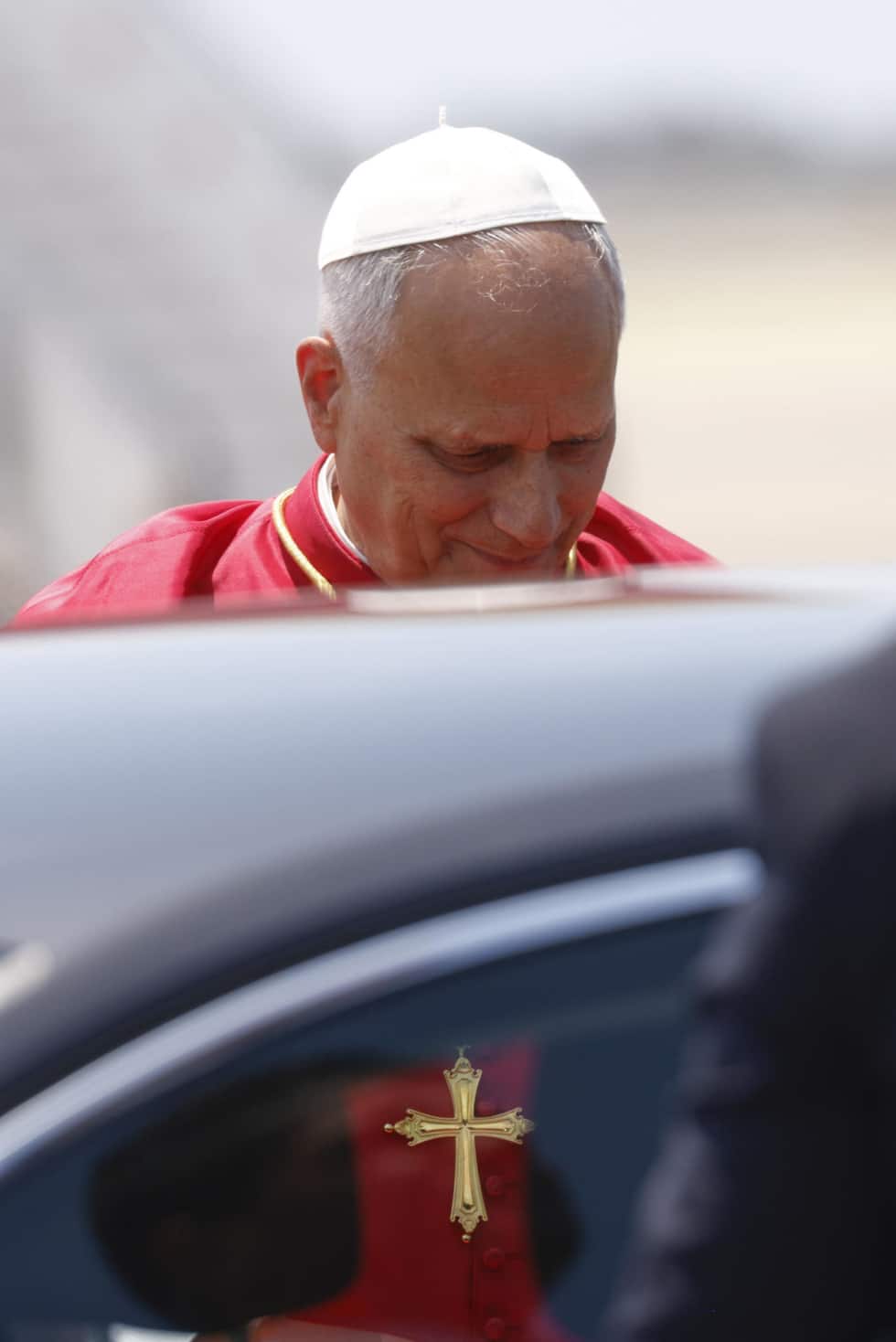
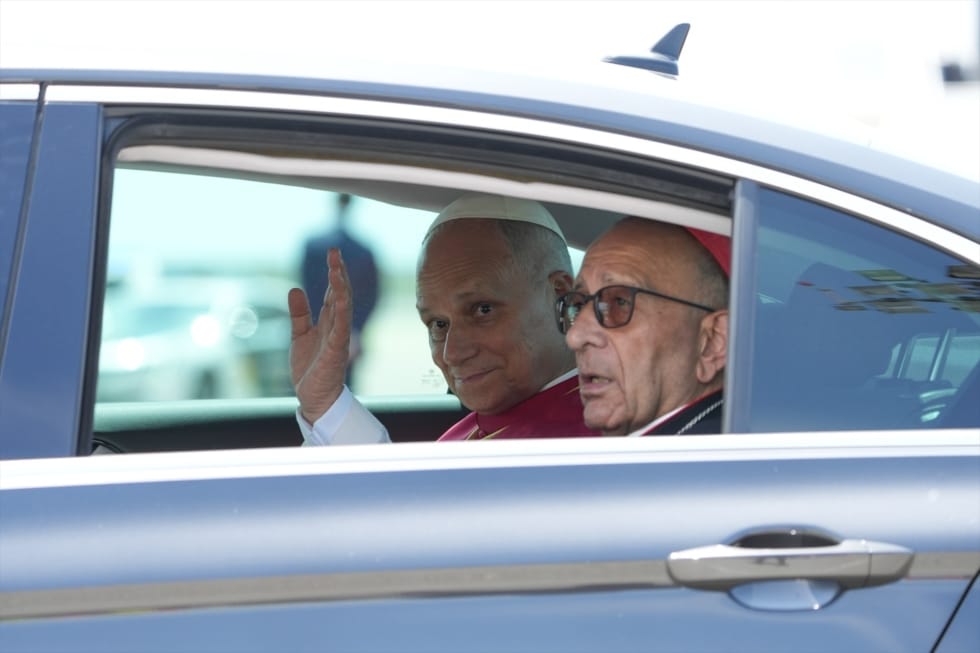
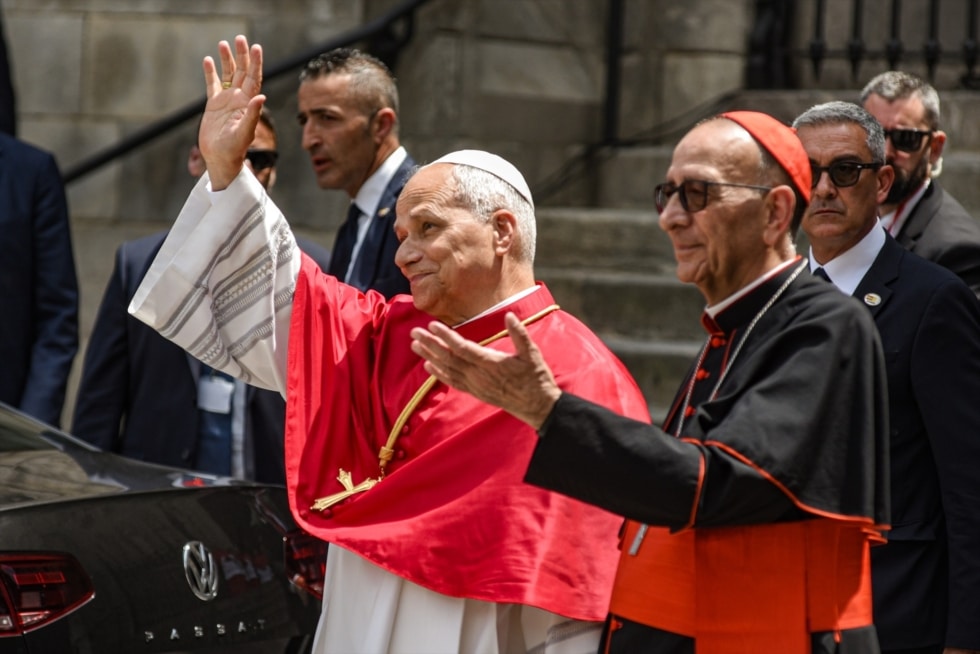
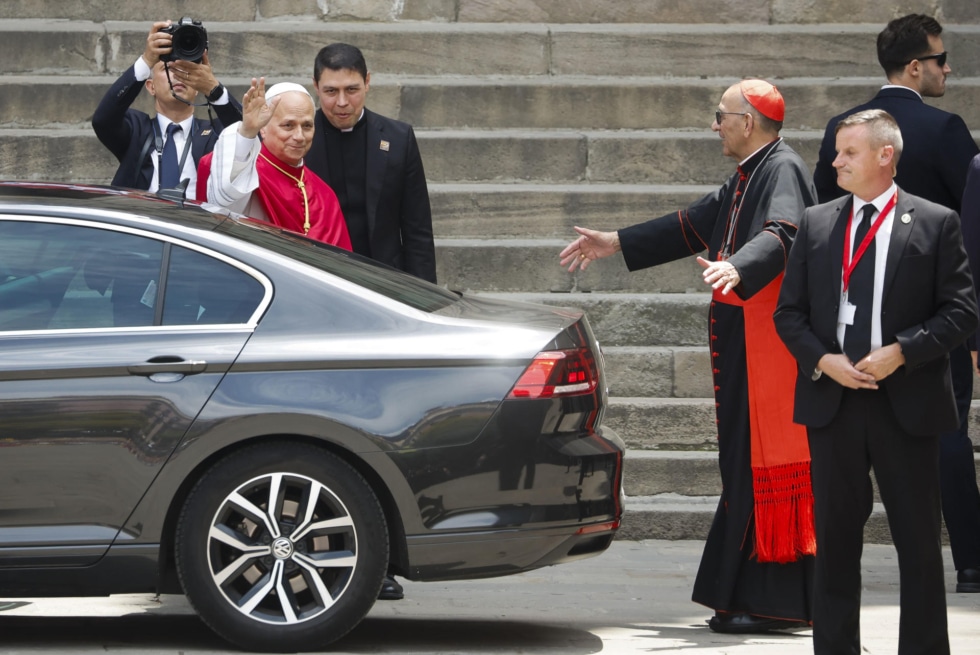
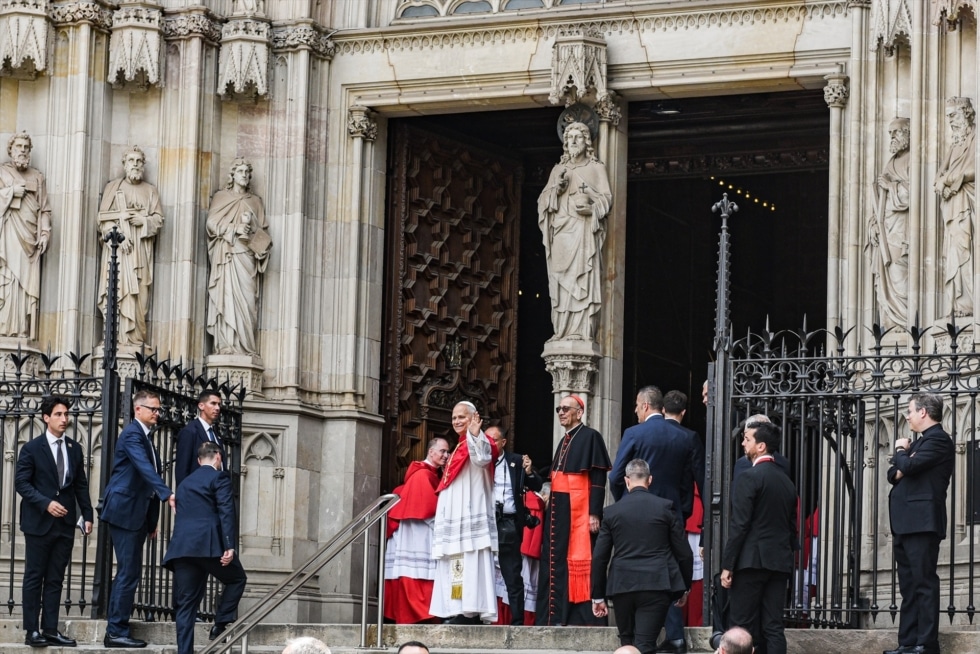
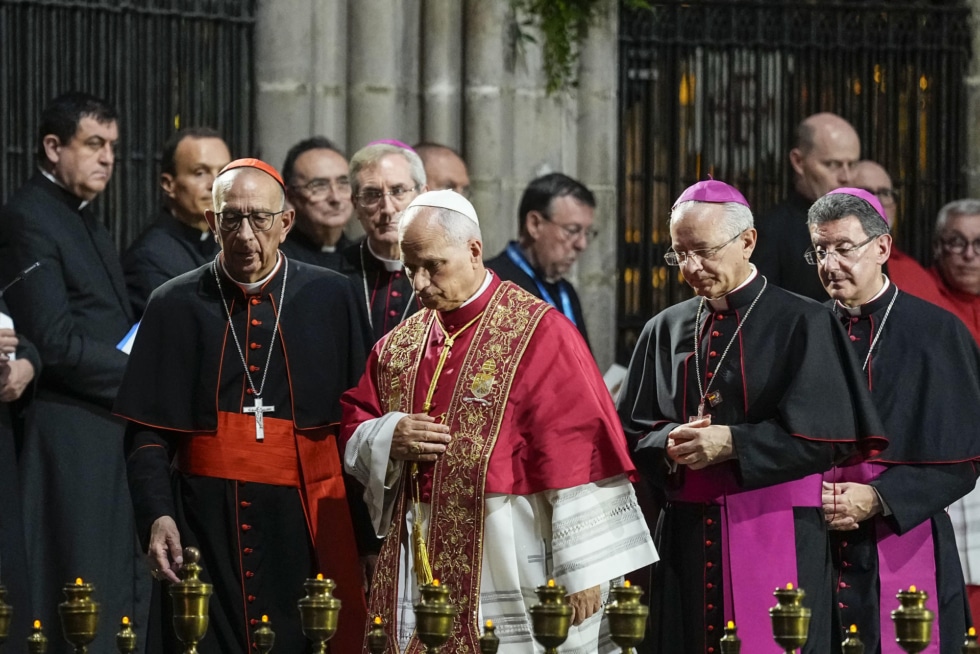
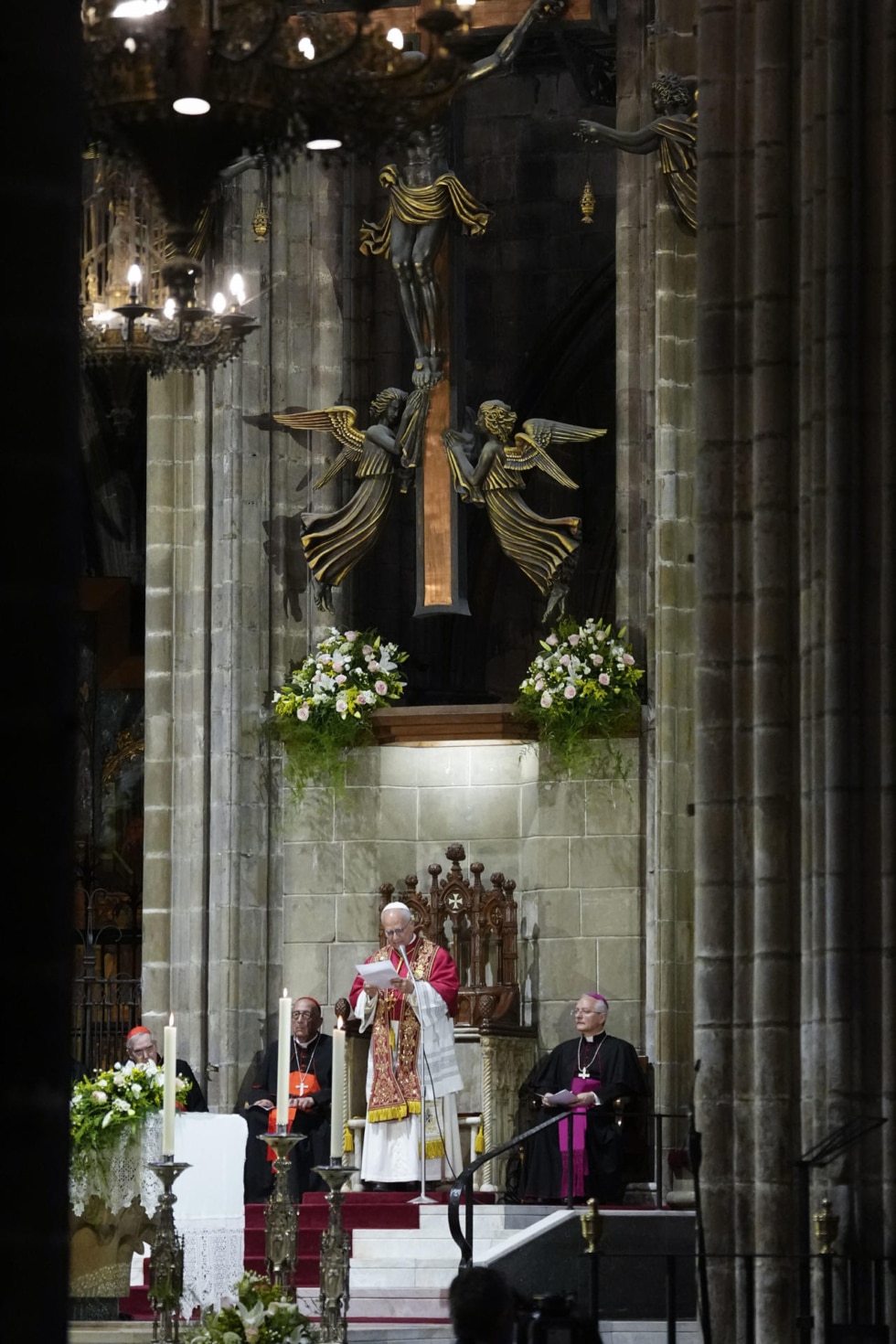
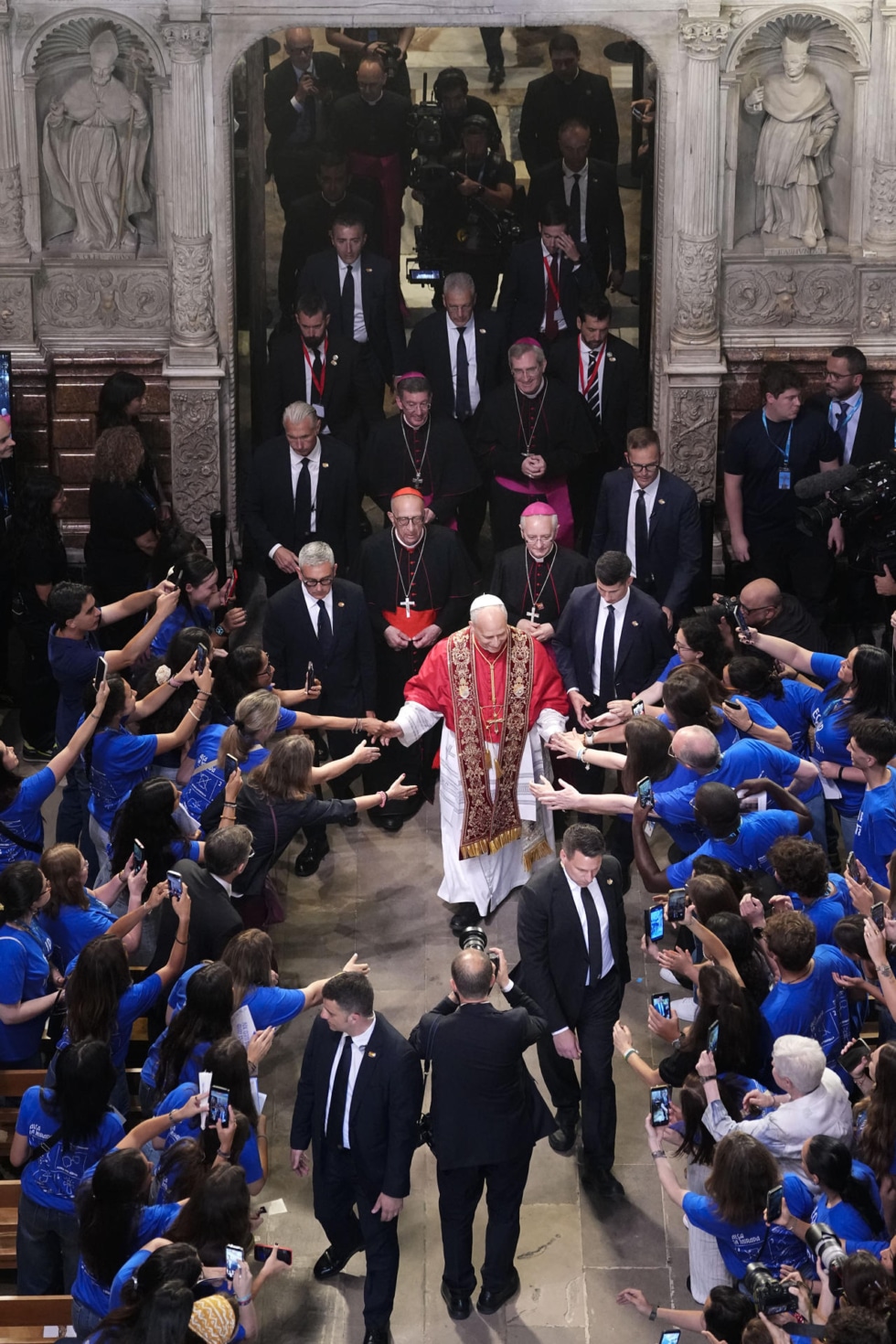
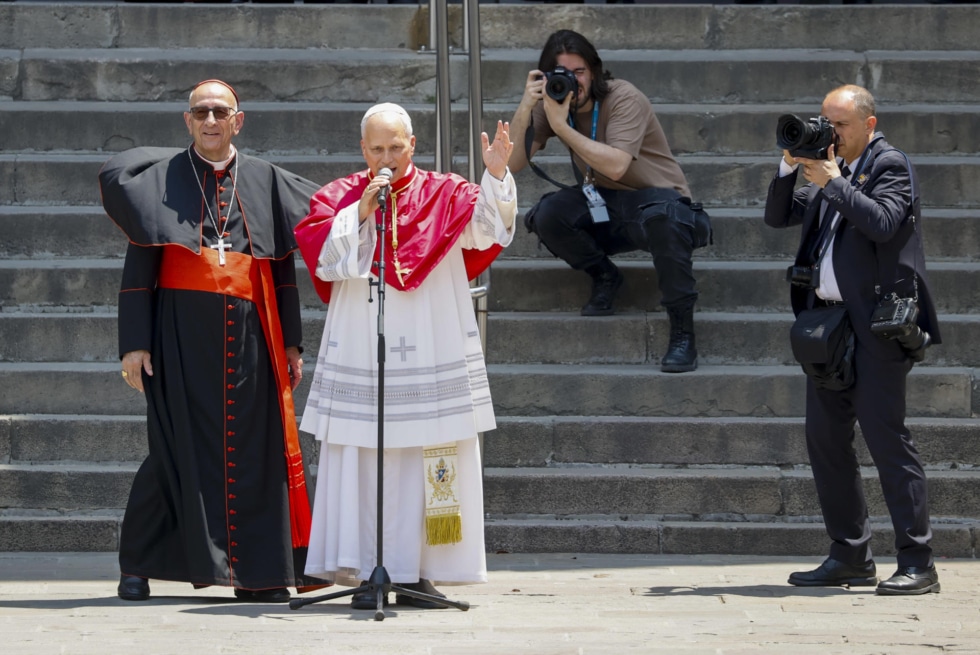
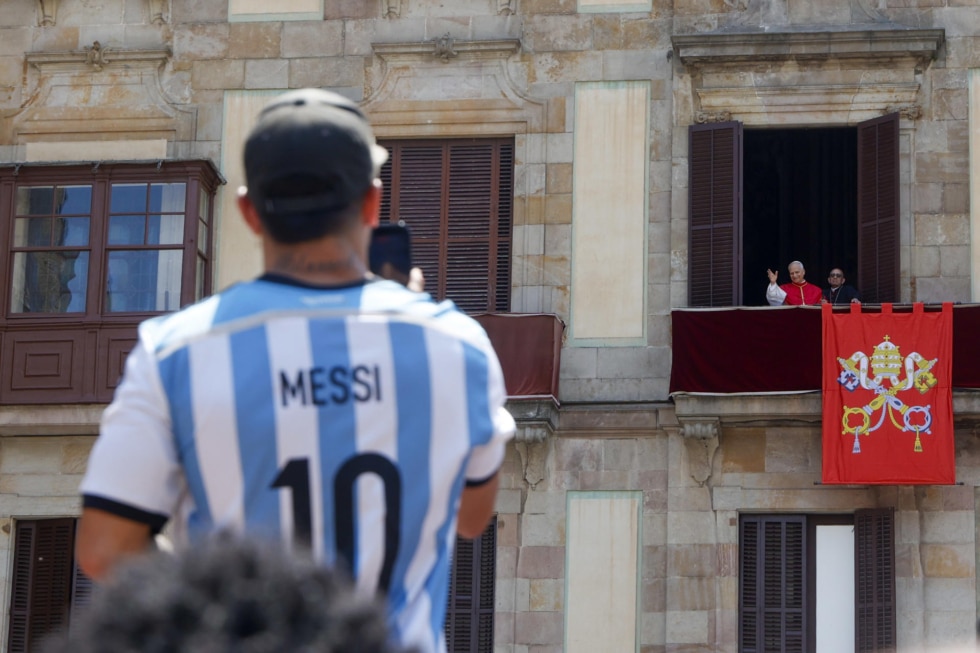
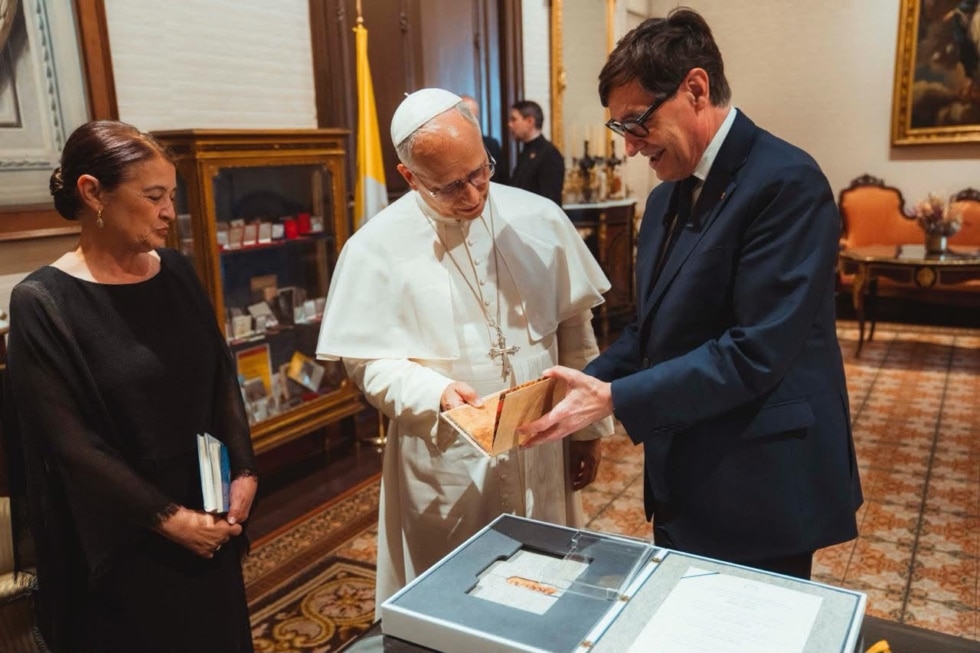
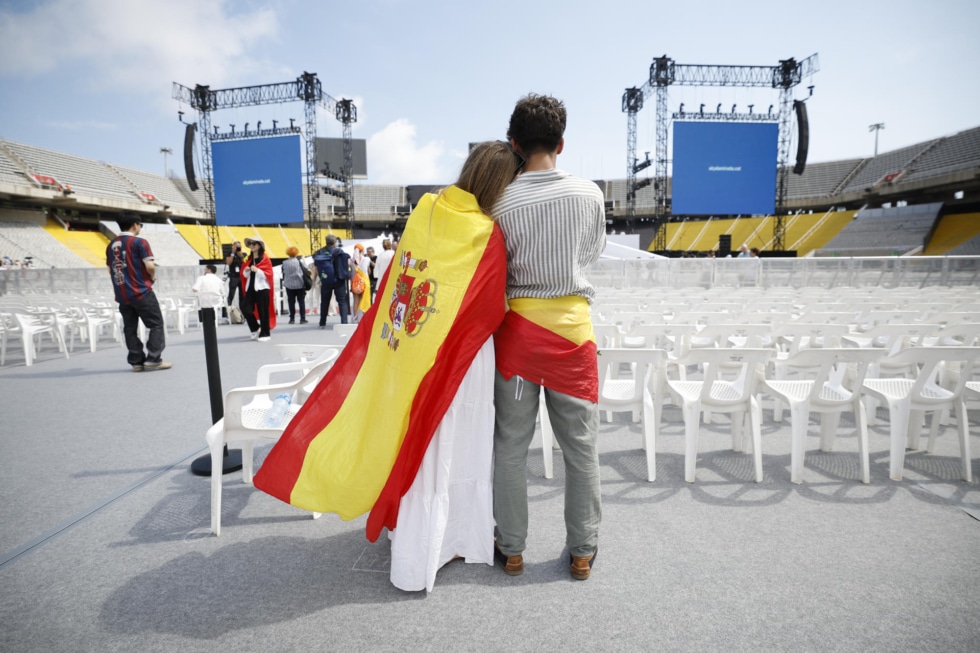
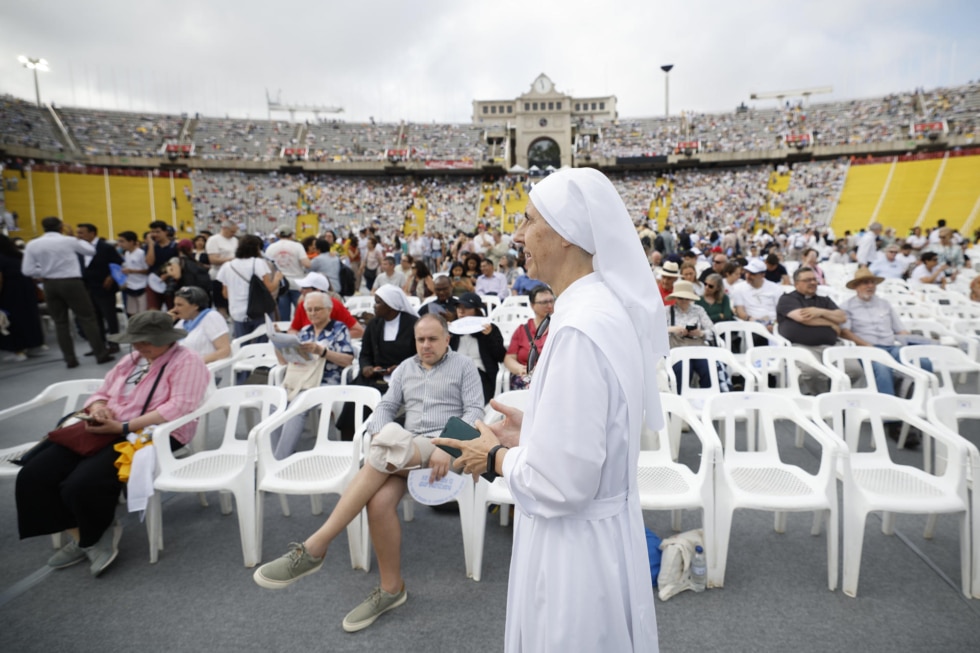
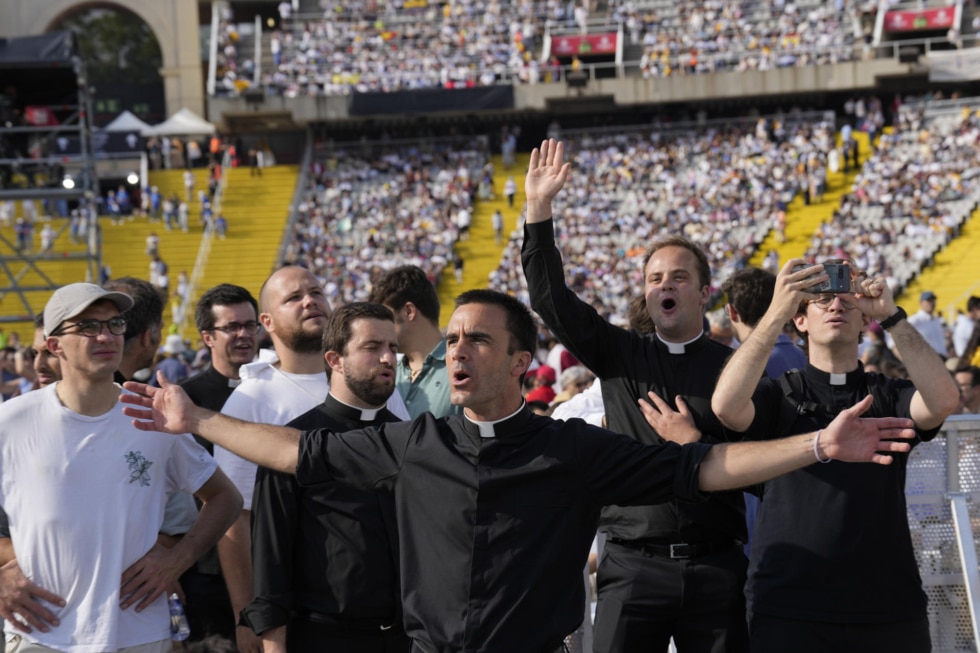
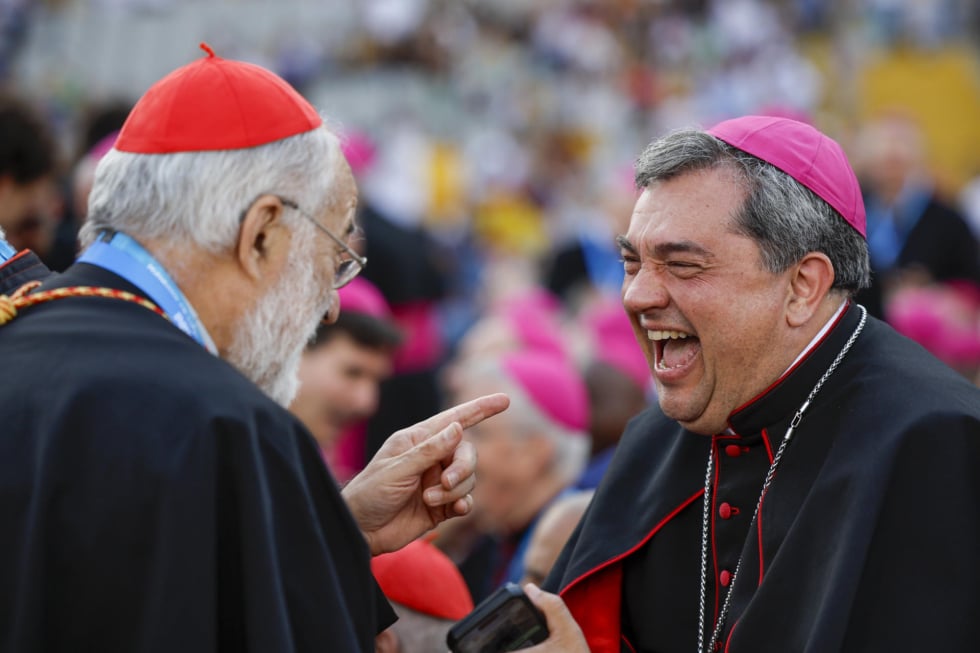
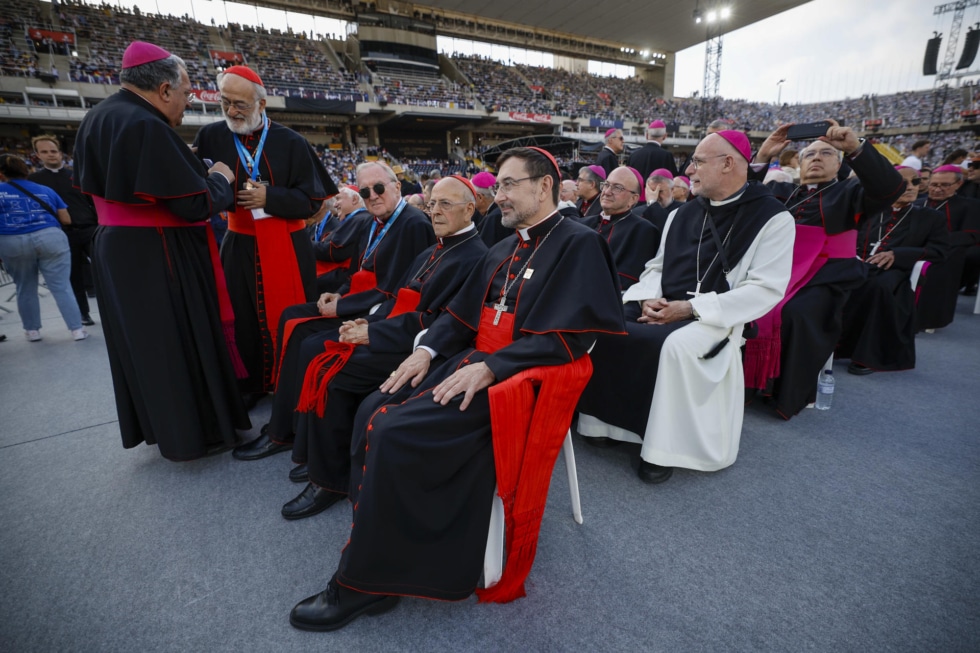
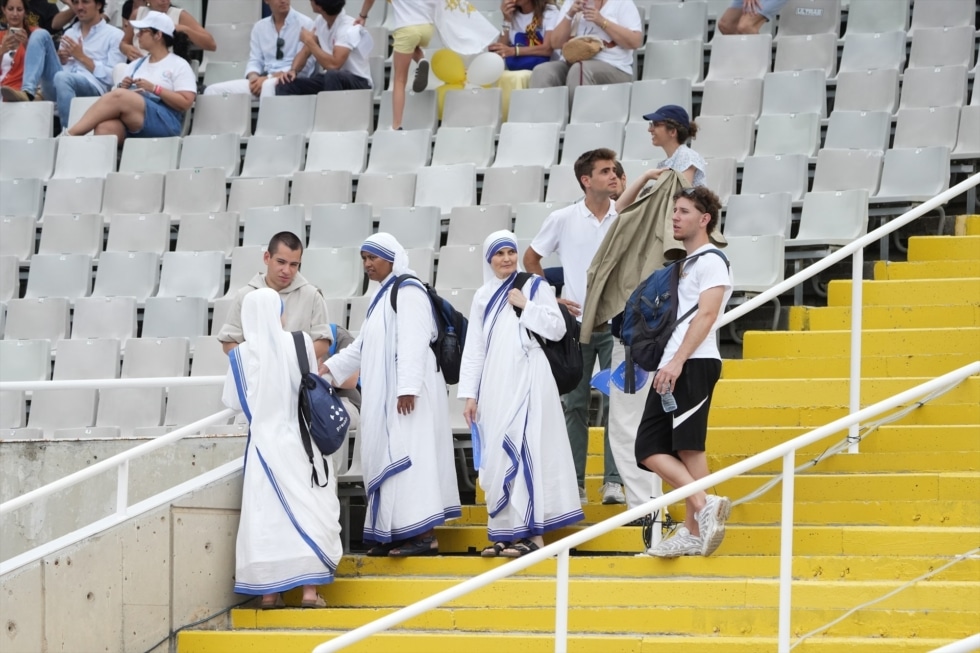
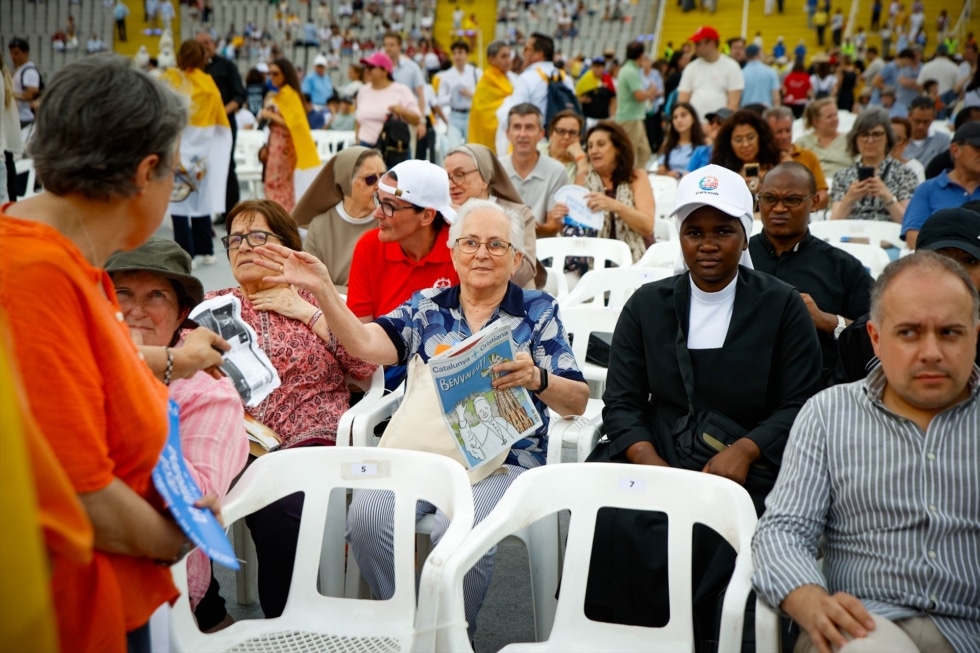
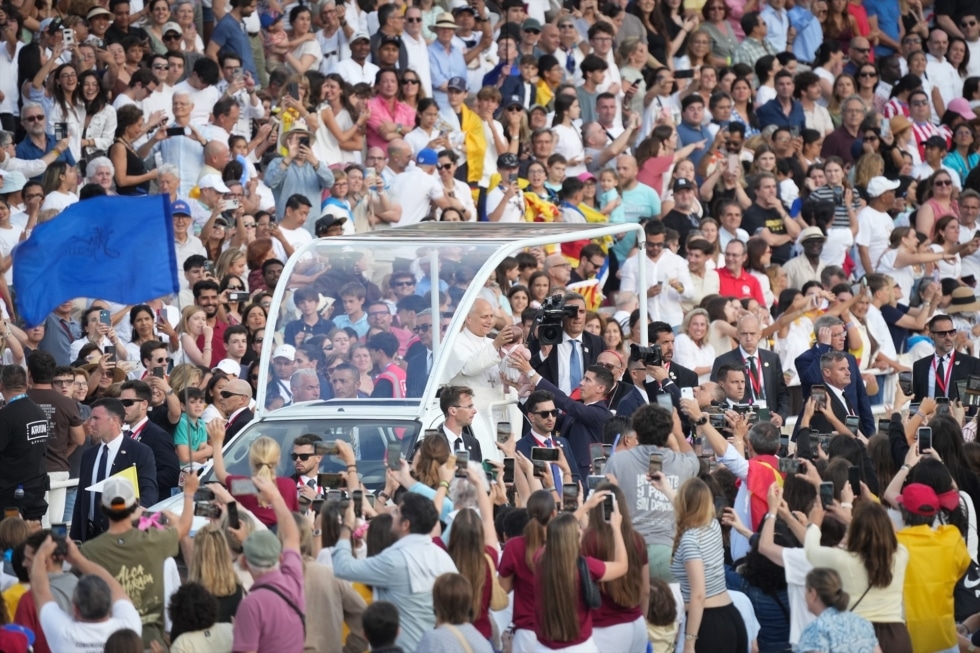
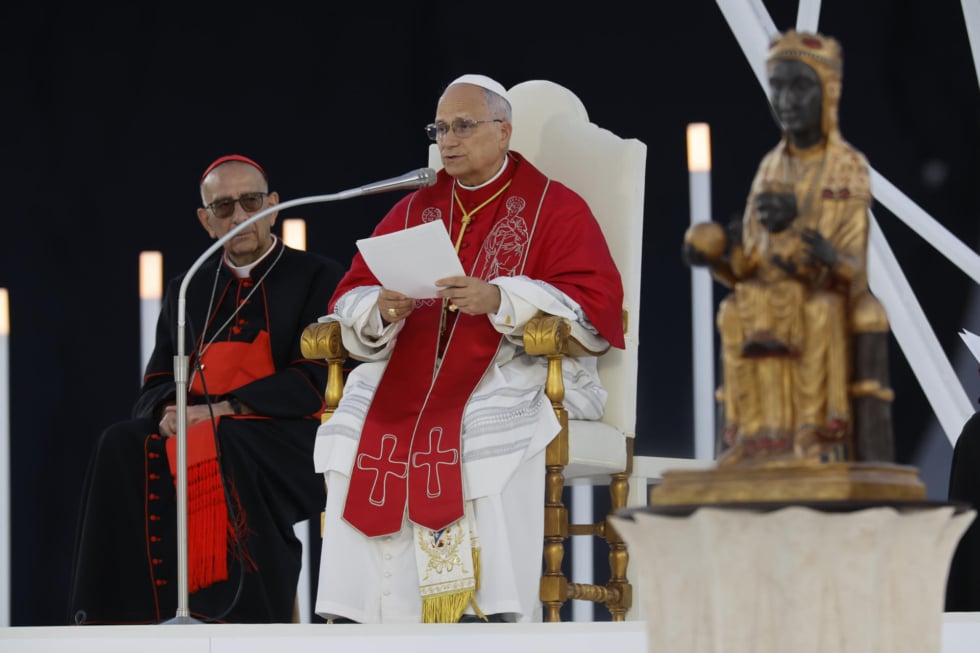
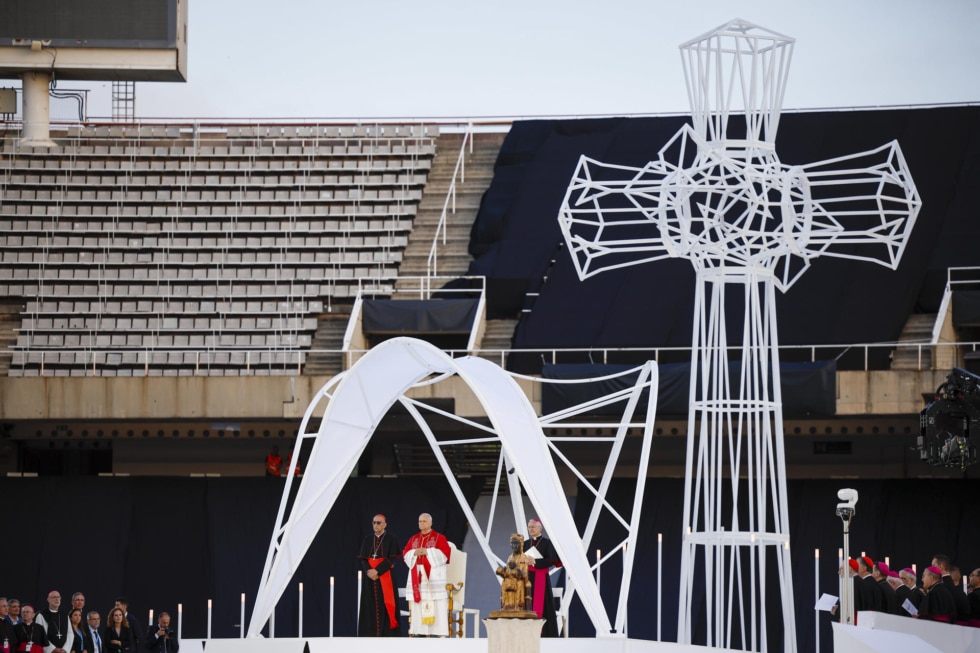
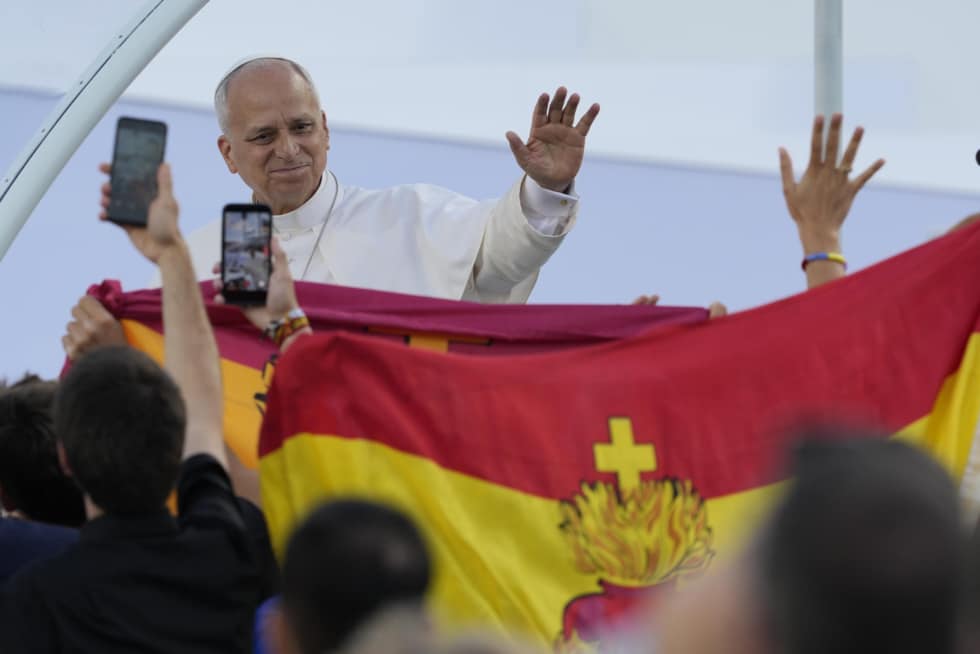
Las mejores imágenes del papa León XIV en Barcelona

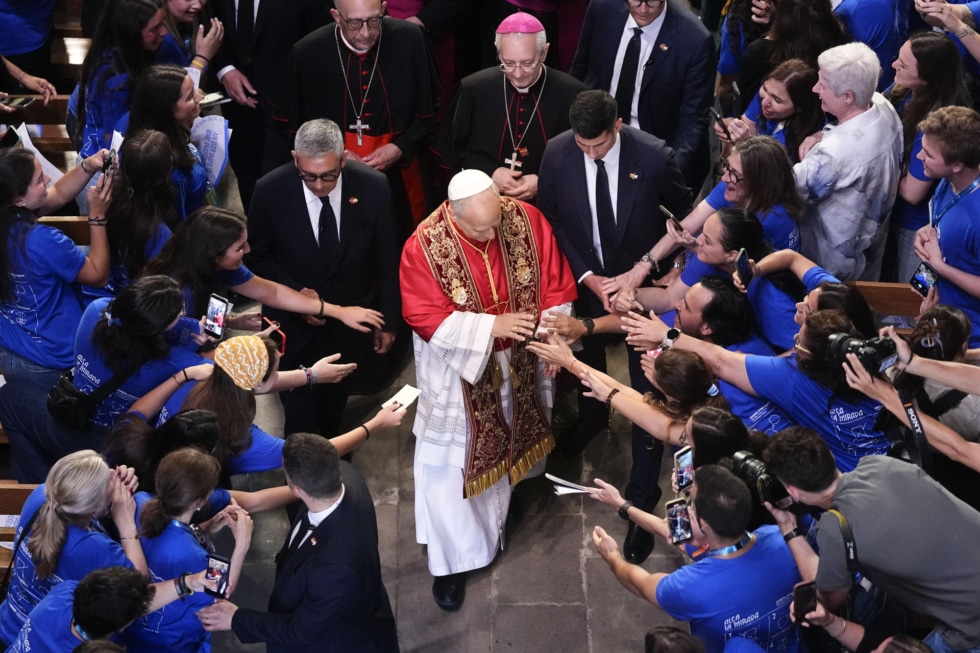
El papa León XIV tras el rezo de la Hora media en la Catedral de la Santa Cruz y Santa Eulalia de Barcelona, este martes.

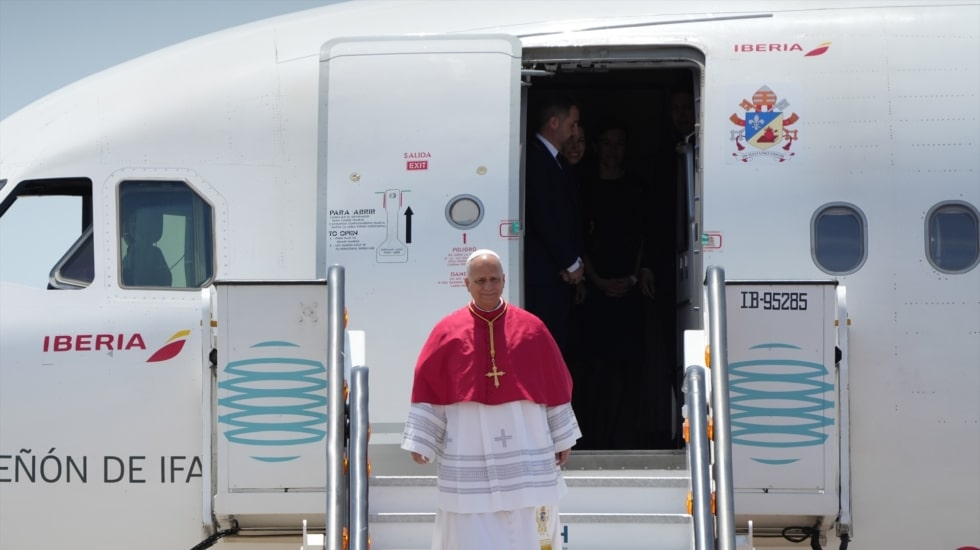
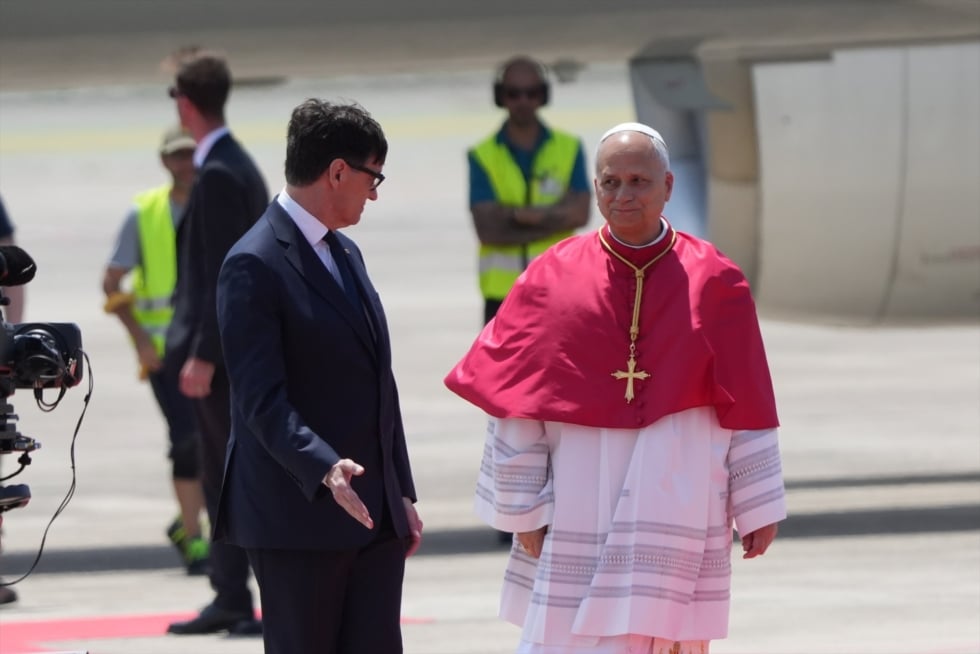
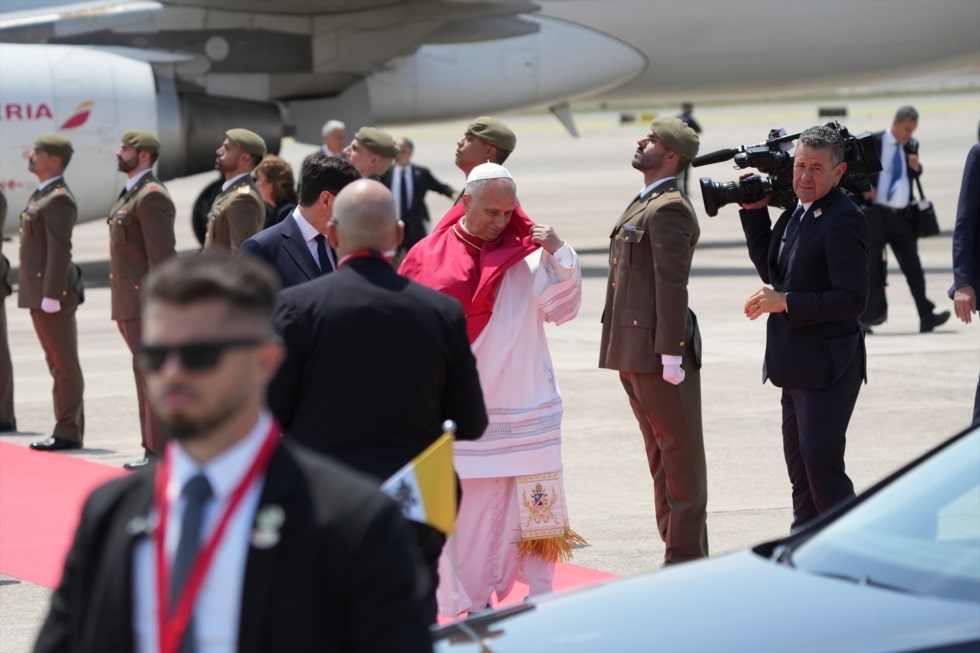
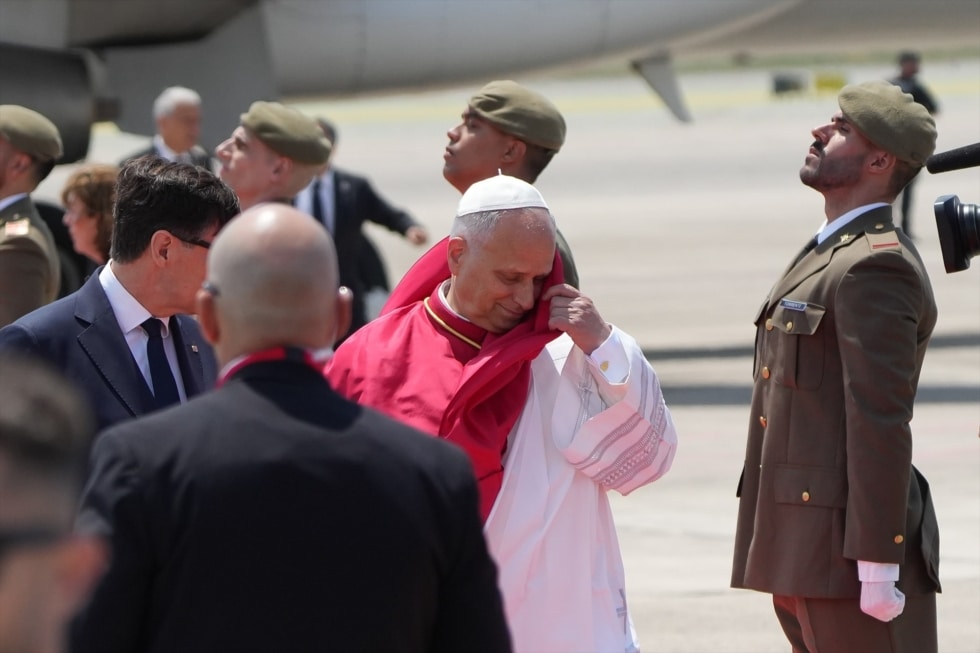
El papa León XIV ha iniciado este martes su esperada visita de dos días a Cataluña. Tras un multitudinario paso de tres días por Madrid, el pontífice ha aterrizado este mediodía en el aeropuerto Josep Tarradellas Barcelona-El Prat, desde donde se ha trasladado directamente al corazón de la capital catalana para protagonizar una intensa jornada marcada por los mensajes de concordia, los gestos espontáneos fuera de protocolo y un rotundo llamamiento a la acogida de los inmigrantes.

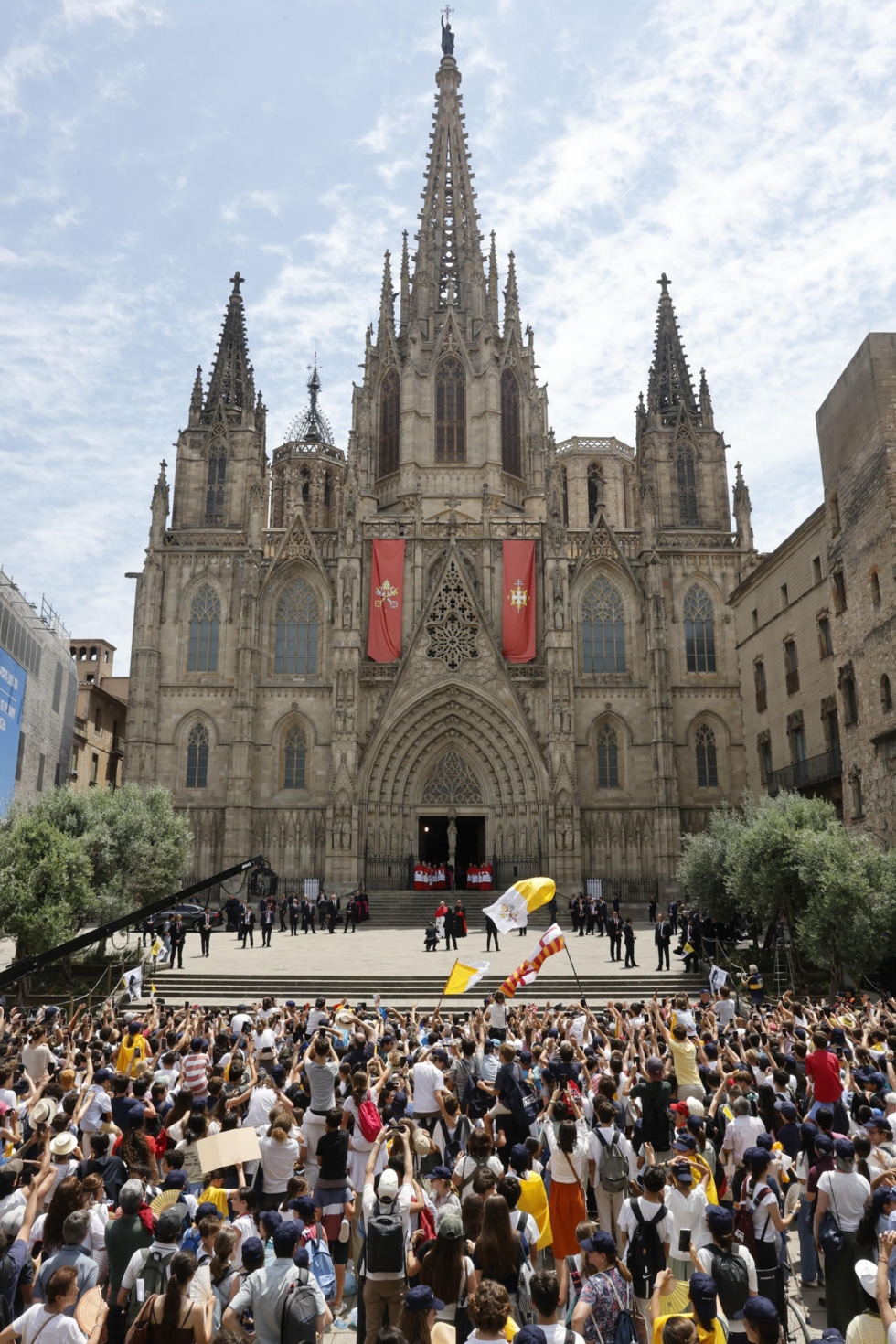
Unos 6.000 fieles, según datos de la Guardia Urbana, han abarrotado desde primera hora de la mañana la plaza Nova y las calles adyacentes de la Catedral de la Santa Cruz y Santa Eulalia. Desafiando el intenso sol con paraguas, banderas y el agua distribuida a última hora por los Mossos d'Esquadra, la multitud ha recibido de forma calurosa al santo padre en torno a las 13:30 horas. El fervor popular se ha traducido en un crisol de cánticos tradicionales ("Se ve, se siente...", "Papa León, te queremos un montón"), proclamas juveniles y un vistoso mosaico de banderas internacionales, con fuerte presencia de enseñas del Vaticano, España, Argentina, Nicaragua, México o Colombia.

Un llamamiento contra la polarización y el individualismo

En el interior del templo, durante el rezo litúrgico de la Sexta Hora ante la curia diocesana y los voluntarios, León XIV ha pronunciado una homilía de fuerte calado social y eclesiástico. Alternando con fluidez el castellano y el catalán, el Pontífice se ha dirigido a los presentes recordando que Barcelona, como 'Cap i casal de Catalunya', posee la responsabilidad histórica de convertirse en "constructora de unidad".

<a href="https://www.elindependiente.com/wp-content/uploads/2026/06/papa-barcelona-3-980x653.jpg" class="galeria__start" data-caption="El papa desciende del avión que le ha llevado de Madrid a Barcelona pasado el mediodía de este martes. | David Zorrakino / Europa Press" data-fslightbox="lightbox-kuiv">

León XIV en Barcelona

Ver Galería
<a href="https://www.elindependiente.com/wp-content/uploads/2026/06/papa-barcelona-1-1200x801.jpg" class="galeria__foto item" data-caption="El presidente de la Generalitat, Salvador Illa, ha dado la bienvenida al pontífice. | David Zorrakino / Europa Press" data-fslightbox="lightbox-kuiv"> <a href="https://www.elindependiente.com/wp-content/uploads/2026/06/papa-barcelona-7-1200x800.jpg" class="galeria__foto item" data-caption="El viento ha levantado la capa del papa a pie de pista en El Prat. | David Zorrakino / Europa Press" data-fslightbox="lightbox-kuiv"> <a href="#galeria-publi4" class="galeria__foto item" data-caption="
Publicidad
" data-fslightbox="lightbox-kuiv">
<a href="https://www.elindependiente.com/wp-content/uploads/2026/06/papa-barcelona-8-1200x800.jpg" class="galeria__foto item" data-caption="David Zorrakino / Europa Press" data-fslightbox="lightbox-kuiv"> <a href="https://www.elindependiente.com/wp-content/uploads/2026/06/papa-barcelona-16-1200x1797.jpg" class="galeria__foto item" data-caption="Quique García / EFE" data-fslightbox="lightbox-kuiv"> <a href="https://www.elindependiente.com/wp-content/uploads/2026/06/papa-barcelona-4-1200x800.jpg" class="galeria__foto item" data-caption="El papa saluda desde el coche junto al cardenal de Barcelona, monseñor Omella. | David Zorrakino / Europa Press" data-fslightbox="lightbox-kuiv"> <a href="https://www.elindependiente.com/wp-content/uploads/2026/06/papa-barcelona-2-1200x801.jpg" class="galeria__foto item" data-caption="León XIV saluda a la multitud congregada ante la Catedral de la Santa Cruz y Santa Eulalia de Barcelona. | Alberto Paredes / Europa Press" data-fslightbox="lightbox-kuiv"> <a href="#galeria-publi8" class="galeria__foto item" data-caption="
Publicidad
" data-fslightbox="lightbox-kuiv">
<a href="https://www.elindependiente.com/wp-content/uploads/2026/06/papa-barcelona-17-1200x802.jpg" class="galeria__foto item" data-caption="Andreu Dalmau / EFE" data-fslightbox="lightbox-kuiv"> <a href="https://www.elindependiente.com/wp-content/uploads/2026/06/papa-barcelona-6-1200x801.jpg" class="galeria__foto item" data-caption="Alberto Paredes / Europa Press" data-fslightbox="lightbox-kuiv"> <a href="https://www.elindependiente.com/wp-content/uploads/2026/06/papa-barcelona-14-1200x801.jpg" class="galeria__foto item" data-caption="El papa a su llegada al templo. | Enric Fontcuberta / EFE" data-fslightbox="lightbox-kuiv"> <a href="https://www.elindependiente.com/wp-content/uploads/2026/06/papa-barcelona-11-1200x1800.jpg" class="galeria__foto item" data-caption="El papa durante el rezo de la Hora media en la Catedral de Barcelona. | Enric Fontcuberta / EFE" data-fslightbox="lightbox-kuiv"> <a href="#galeria-publi12" class="galeria__foto item" data-caption="
Publicidad
" data-fslightbox="lightbox-kuiv">
<a href="https://www.elindependiente.com/wp-content/uploads/2026/06/papa-barcelona-12-1200x800.jpg" class="galeria__foto item" data-caption="León XIV saluda a los fieles congregados en el templo. | Enric Fontcuberta / EFE" data-fslightbox="lightbox-kuiv"> <a href="https://www.elindependiente.com/wp-content/uploads/2026/06/papa-barcelona-13-1200x1800.jpg" class="galeria__foto item" data-caption="Enric Fontcuberta / EFE" data-fslightbox="lightbox-kuiv"> <a href="https://www.elindependiente.com/wp-content/uploads/2026/06/papa-barcelona-18-1200x800.jpg" class="galeria__foto item" data-caption="Enric Fontcuberta / EFE" data-fslightbox="lightbox-kuiv"> <a href="https://www.elindependiente.com/wp-content/uploads/2026/06/papa-barcelona-15-1200x1800.jpg" class="galeria__foto item" data-caption="Una vez más en su visita a España, el papa ha sorprendido a propios y extraños con su alocución a la multitud congregada en la plaza de la Catedral de Barcelona. | Andreu Dalmau / EFE" data-fslightbox="lightbox-kuiv"> <a href="#galeria-publi16" class="galeria__foto item" data-caption="
Publicidad
" data-fslightbox="lightbox-kuiv">
<a href="https://www.elindependiente.com/wp-content/uploads/2026/06/papa-barcelona-9-1200x1800.jpg" class="galeria__foto item" data-caption="Andreu Dalmau / EFE" data-fslightbox="lightbox-kuiv"> <a href="https://www.elindependiente.com/wp-content/uploads/2026/06/papa-barcelona-5-1200x801.jpg" class="galeria__foto item" data-caption="Alberto Paredes / Europa Press" data-fslightbox="lightbox-kuiv"> <a href="https://www.elindependiente.com/wp-content/uploads/2026/06/papa-barcelona-10-1200x802.jpg" class="galeria__foto item" data-caption="Andreu Dalmau / EFE" data-fslightbox="lightbox-kuiv"> <a href="https://www.elindependiente.com/wp-content/uploads/2026/06/papa-barcelona-19-1200x800.jpg" class="galeria__foto item" data-caption="Minutos después, el papa ha saludado a los fieles desde el balcón del palacio arzobispal. | Quique García / EFE" data-fslightbox="lightbox-kuiv"> <a href="#galeria-publi20" class="galeria__foto item" data-caption="
Publicidad
" data-fslightbox="lightbox-kuiv">
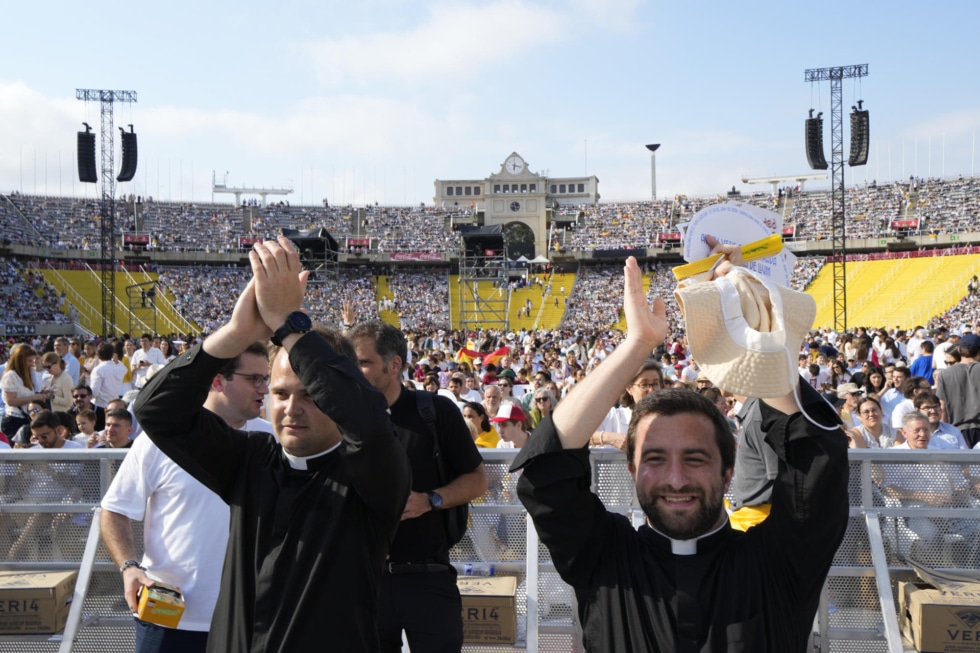
<a href="https://www.elindependiente.com/wp-content/uploads/2026/06/papa-barcelona-34-1200x800.jpeg" class="galeria__foto item" data-caption="Por la tarde, el papa ha recibido al presidente de la Generalitat. Salvador Illa ha obsequiado al papa con una reproducción de las Homilías de Organyà, una reproducción de la muñeca articulada de la necrópolis paleocristiana de Tarraco y una copia del acta notarial de colocación de la primera piedra de la Sagrada Familia. | Generalitat de Cataluña" data-fslightbox="lightbox-kuiv"> <a href="https://www.elindependiente.com/wp-content/uploads/2026/06/papa-barcelona-20-1200x800.jpg" class="galeria__foto item" data-caption="Una pareja observa los últimos preparativos en el Estadio Olímpico para la vigilia con el papa. | Alberto Estevez / EFE" data-fslightbox="lightbox-kuiv"> <a href="https://www.elindependiente.com/wp-content/uploads/2026/06/papa-barcelona-21-1200x800.jpg" class="galeria__foto item" data-caption="El estadio comenzó a llenarse desde primera hora de la tarde. | Alberto Estevez / EFE" data-fslightbox="lightbox-kuiv"> <a href="https://www.elindependiente.com/wp-content/uploads/2026/06/papa-barcelona-22-1200x800.jpg" class="galeria__foto item" data-caption="Un grupo de sacerdotes anima la previa de la vigilia. | Alejandro García / EFE" data-fslightbox="lightbox-kuiv"> <a href="#galeria-publi24" class="galeria__foto item" data-caption="
Publicidad
" data-fslightbox="lightbox-kuiv">
<a href="https://www.elindependiente.com/wp-content/uploads/2026/06/papa-barcelona-23-1200x800.jpg" class="galeria__foto item" data-caption="Los obispos españoles han asistido en pleno a la vigilia. | Alberto Estevez / EFE" data-fslightbox="lightbox-kuiv"> <a href="https://www.elindependiente.com/wp-content/uploads/2026/06/papa-barcelona-24-1200x800.jpg" class="galeria__foto item" data-caption="Alberto Estevez / EFE" data-fslightbox="lightbox-kuiv"> <a href="https://www.elindependiente.com/wp-content/uploads/2026/06/papa-barcelona-27-1200x800.jpg" class="galeria__foto item" data-caption="El arzobispo de Madrid, José Cobo, y sus compañeros de la Conferencia Episcopal española, pocos minutos antes del comienzo de la vigilia. | Alberto Estevez / EFE" data-fslightbox="lightbox-kuiv"> <a href="https://www.elindependiente.com/wp-content/uploads/2026/06/papa-barcelona-25-1200x800.jpg" class="galeria__foto item" data-caption="Alejandro García / EFE" data-fslightbox="lightbox-kuiv"> <a href="#galeria-publi28" class="galeria__foto item" data-caption="
Publicidad
" data-fslightbox="lightbox-kuiv">
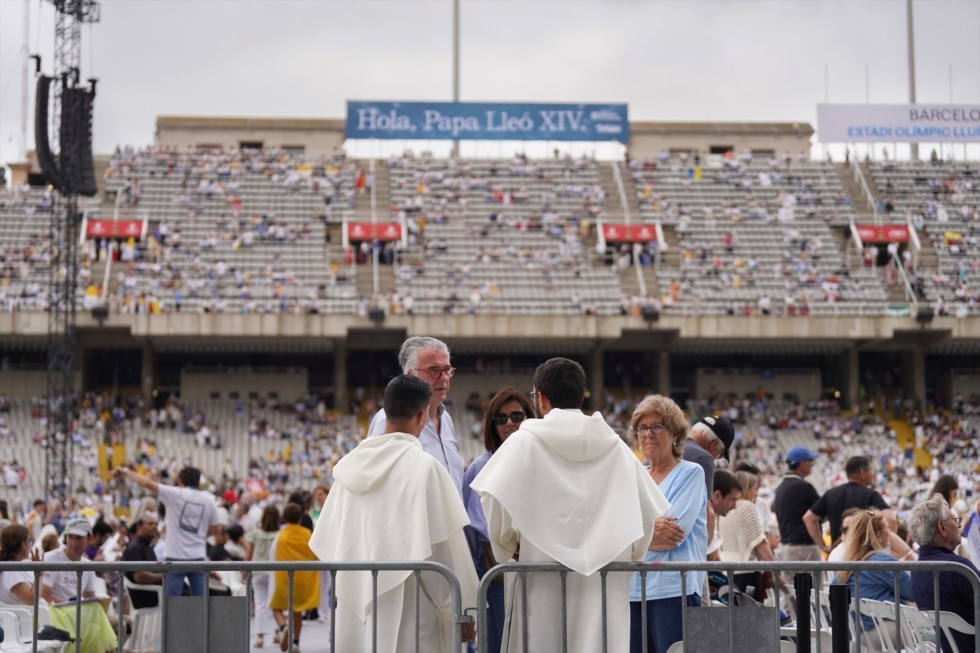
<a href="https://www.elindependiente.com/wp-content/uploads/2026/06/papa-barcelona-26-1200x800.jpg" class="galeria__foto item" data-caption="Alejandro García / EFE" data-fslightbox="lightbox-kuiv"> <a href="https://www.elindependiente.com/wp-content/uploads/2026/06/papa-barcelona-28-1200x800.jpg" class="galeria__foto item" data-caption=""Hola, Papa Lleó XIV", rezan las pancartas que dan la bienvenida al papa a Barcelona. | David Zorrakino / Europa Press" data-fslightbox="lightbox-kuiv"> <a href="https://www.elindependiente.com/wp-content/uploads/2026/06/europapress-7584754-ambiente-previo-vigilia-oracion-papa-leon-xiv-estadio-olimpico-lluis-1200x800.jpg" class="galeria__foto item" data-caption="

Ambiente previo a la vigilia de oración con el Papa León XIV, en el Estadio Olímpico Lluís Companys

EP" data-fslightbox="lightbox-kuiv"> <a href="https://www.elindependiente.com/wp-content/uploads/2026/06/papa-barcelona-29-1200x800.jpg" class="galeria__foto item" data-caption="David Zorrakino / Europa Press" data-fslightbox="lightbox-kuiv"> <a href="#galeria-publi32" class="galeria__foto item" data-caption="
Publicidad
" data-fslightbox="lightbox-kuiv">
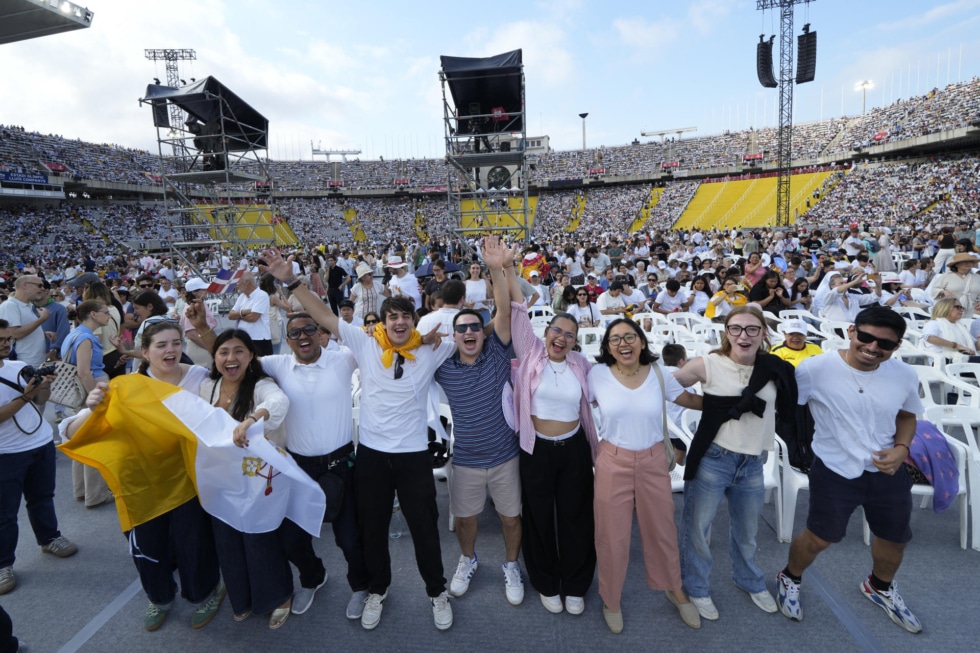
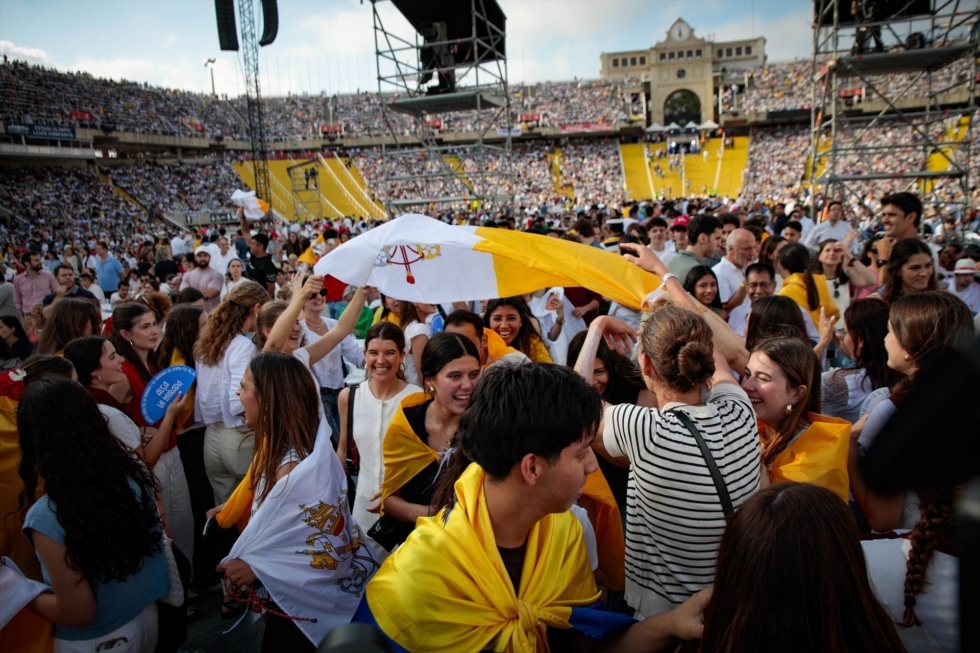
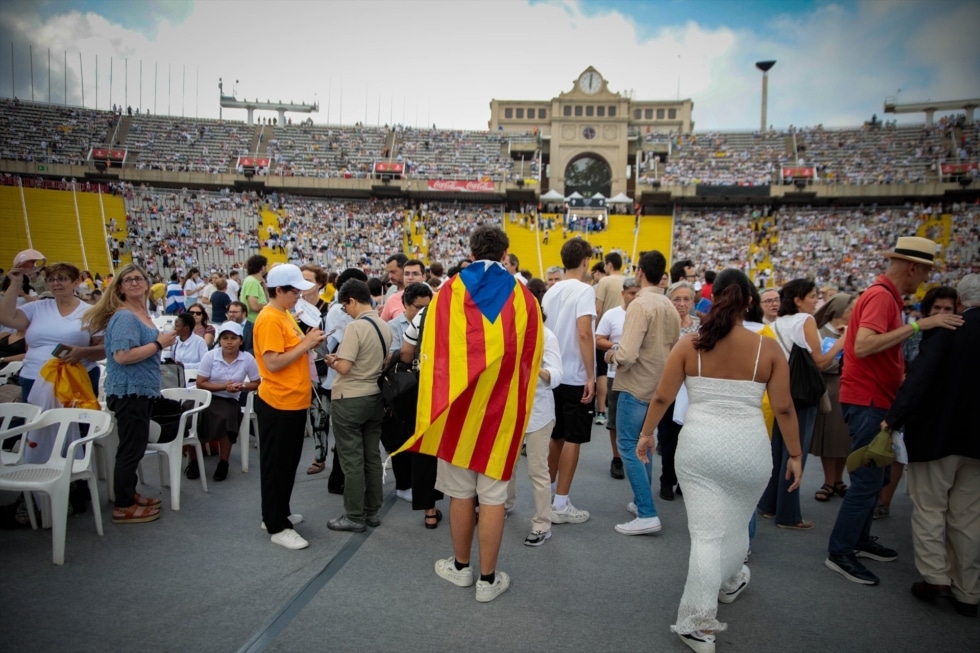
<a href="https://www.elindependiente.com/wp-content/uploads/2026/06/papa-barcelona-30-1200x800.jpg" class="galeria__foto item" data-caption="Kike Rincón / Europa Press" data-fslightbox="lightbox-kuiv"> <a href="https://www.elindependiente.com/wp-content/uploads/2026/06/papa-barcelona-31-1200x800.jpg" class="galeria__foto item" data-caption="Kike Rincón / Europa Press" data-fslightbox="lightbox-kuiv"> <a href="https://www.elindependiente.com/wp-content/uploads/2026/06/papa-barcelona-32-1200x800.jpg" class="galeria__foto item" data-caption="Muchas banderas en el Estadio Olímpico. No han faltado las esteladas independentistas... | Kike Rincón / Europa Press" data-fslightbox="lightbox-kuiv"> <a href="https://www.elindependiente.com/wp-content/uploads/2026/06/papa-barcelona-33-1200x800.jpg" class="galeria__foto item" data-caption="...ni las banderas arcoíris del orgullo gay. | Kike Rincón / Europa Press" data-fslightbox="lightbox-kuiv"> <a href="#galeria-publi36" class="galeria__foto item" data-caption="
Publicidad
" data-fslightbox="lightbox-kuiv">
<a href="https://www.elindependiente.com/wp-content/uploads/2026/06/papa-barcelona-35-1200x800.jpg" class="galeria__foto item" data-caption="La cantante Conchita, durante su actuación. | Alberto Estévez / EFE" data-fslightbox="lightbox-kuiv"> <a href="https://www.elindependiente.com/wp-content/uploads/2026/06/papa-barcelona-36-1200x800.jpg" class="galeria__foto item" data-caption="El cantante Beret. | Alberto Estévez / EFE" data-fslightbox="lightbox-kuiv"> <a href="https://www.elindependiente.com/wp-content/uploads/2026/06/europapress-7584944-papa-leon-xiv-llegada-vigilia-oracion-estadio-olimpico-lluis-companys-junio-1200x800.jpg" class="galeria__foto item" data-caption="

El Papa León XIV a su llegada a la vigilia de oración, en el Estadio Olímpico Lluís Companys

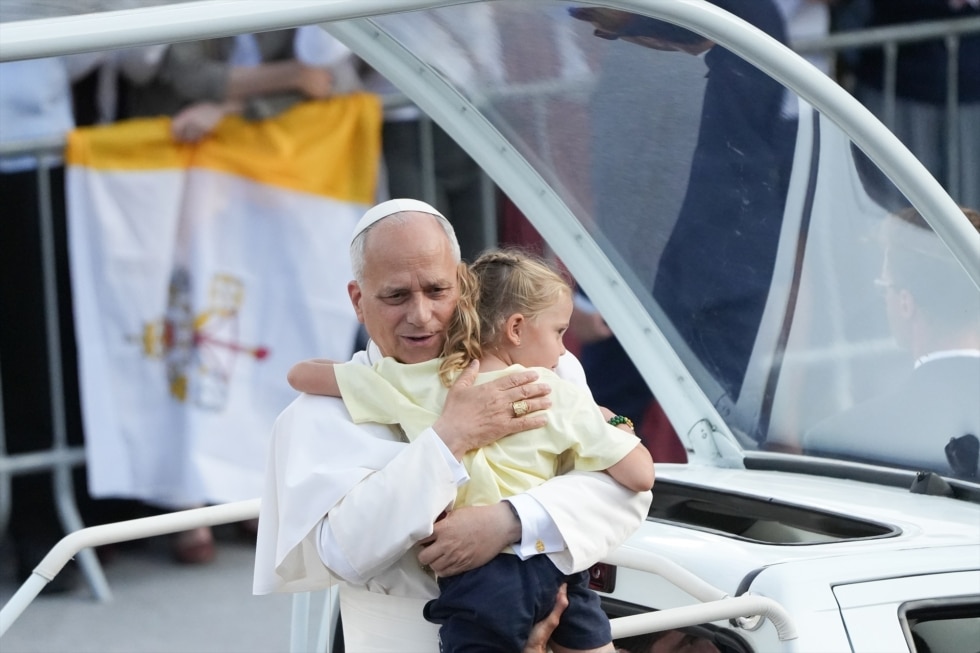
El Papa León XIV a su llegada a la vigilia de oración, en el Estadio Olímpico Lluís Companys | EP" data-fslightbox="lightbox-kuiv"> <a href="https://www.elindependiente.com/wp-content/uploads/2026/06/europapress-7584948-papa-leon-xiv-abraza-nina-llegada-vigilia-oracion-estadio-olimpico-lluis-1200x800.jpg" class="galeria__foto item" data-caption="

El Papa León XIV abraza a una niña a su llegada a la vigilia de oración, en el Estadio Olímpico Lluís Companys

EP" data-fslightbox="lightbox-kuiv"> <a href="#galeria-publi40" class="galeria__foto item" data-caption="
Publicidad
" data-fslightbox="lightbox-kuiv">
<a href="https://www.elindependiente.com/wp-content/uploads/2026/06/europapress-7584977-papa-leon-xiv-2d-vigilia-oracion-estadio-olimpico-lluis-companys-junio-2026-1200x800.jpg" class="galeria__foto item" data-caption="

EuropaPress_7584977_papa_leon_xiv_2d_vigilia_oracion_estadio_olimpico_lluis_companys_junio_2026

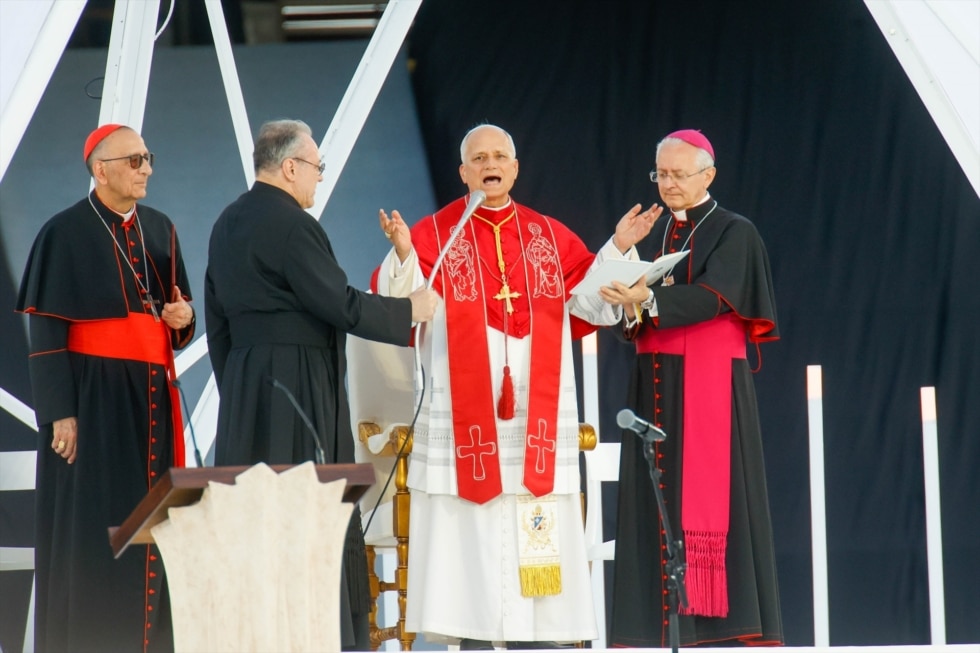
El Papa León XIV (2d) durante la vigilia de oración, en el Estadio Olímpico Lluís Companys | Europa Press" data-fslightbox="lightbox-kuiv"> <a href="https://www.elindependiente.com/wp-content/uploads/2026/06/3791b591904f124ffa5b8e2a3f6c75df2f41586dw-1200x800.jpg" class="galeria__foto item" data-caption="

El papa León XIV

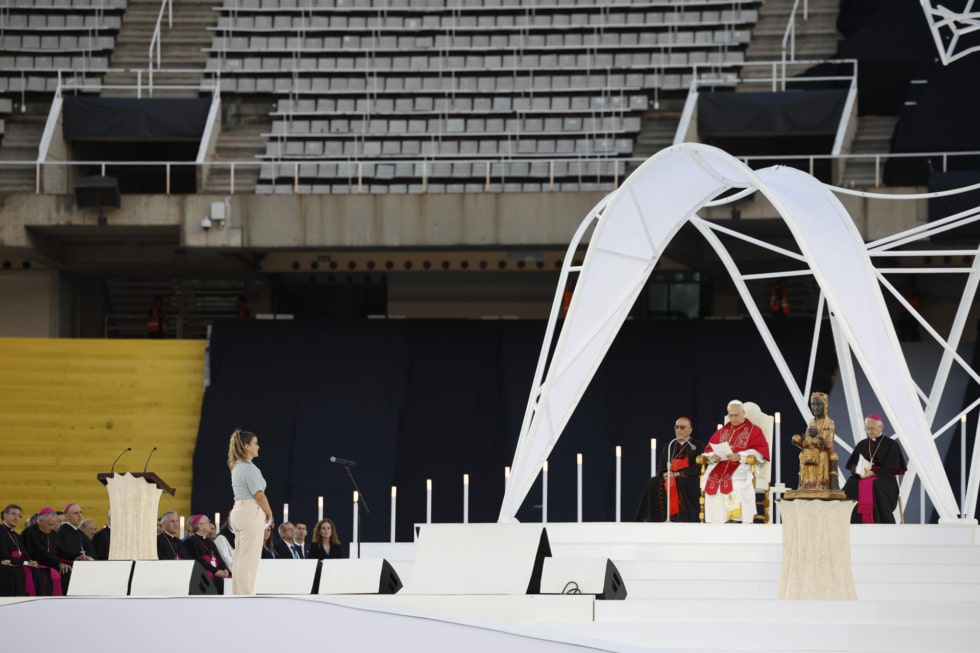
El papa León XIV durante la vigilia que celebra con 40.000 personas este martes en el Estadio Olímpico de Barcelona. | EFE/Alejandro García" data-fslightbox="lightbox-kuiv"> <a href="https://www.elindependiente.com/wp-content/uploads/2026/06/a64a07bb6e0162acc4833e401608bac401763c20w-1200x1800.jpg" class="galeria__foto item" data-caption="

El papa León XIV abraza a una mujer durante la vigilia

El papa León XIV abraza a una mujer durante la vigilia que celebra con 40.000 personas este martes en el Estadio Olímpico de Barcelona | EFE/Alejandro García" data-fslightbox="lightbox-kuiv"> <a href="https://www.elindependiente.com/wp-content/uploads/2026/06/fc2133861a293f22ec8673cea349474203c2358fw-1200x800.jpg" class="galeria__foto item" data-caption="

León XIV

El papa León XIV, acompañado por el cardenal Juan José Omella (3d), durante la vigilia que celebra con 40.000 personas este martes en el Estadio Olímpico de Barcelona EFE/Alberto Estévez | EFE" data-fslightbox="lightbox-kuiv"> <a href="#galeria-publi44" class="galeria__foto item" data-caption="
Publicidad
" data-fslightbox="lightbox-kuiv">
<a href="https://www.elindependiente.com/wp-content/uploads/2026/06/69cb2d5acf3eab8feafea3ebb7dcda5eca501a58w-1200x800.jpg" class="galeria__foto item" data-caption="

El papa León XIV, acompañado por el cardenal Juan José Omella

El papa León XIV, acompañado por el cardenal Juan José Omella (i), durante la vigilia que celebra con 40.000 personas este martes en el Estadio Olímpico de Barcelona | EFE" data-fslightbox="lightbox-kuiv"> <a href="https://www.elindependiente.com/wp-content/uploads/2026/06/fa56c714711d3be2edb46951ef01321895549229w-1200x800.jpg" class="galeria__foto item" data-caption="

El papa León XIV, acompañado por el cardenal Juan José Omella

El papa León XIV, acompañado por el cardenal Juan José Omella (i) | EFE" data-fslightbox="lightbox-kuiv"> <a href="https://www.elindependiente.com/wp-content/uploads/2026/06/431d088ca535a633a8f11edd96ce7302a6330335w-1200x801.jpg" class="galeria__foto item" data-caption="

León XIV

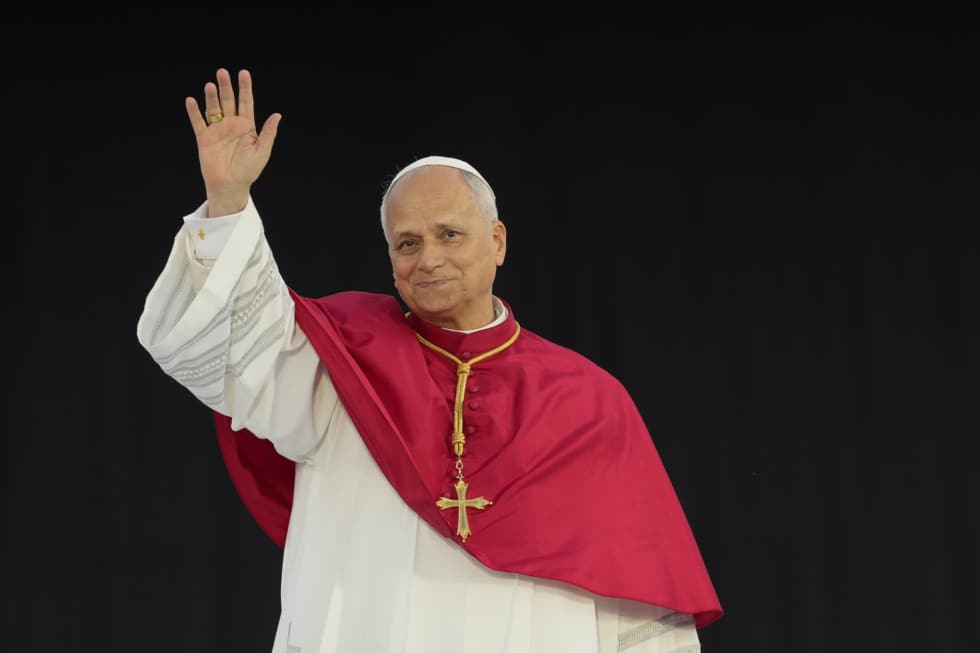
El papa León XIV saluda a los fieles a su llegada a la vigilia que celebra con 40.000 personas este martes en el Estadio Olímpico de Barcelona | EFE" data-fslightbox="lightbox-kuiv">

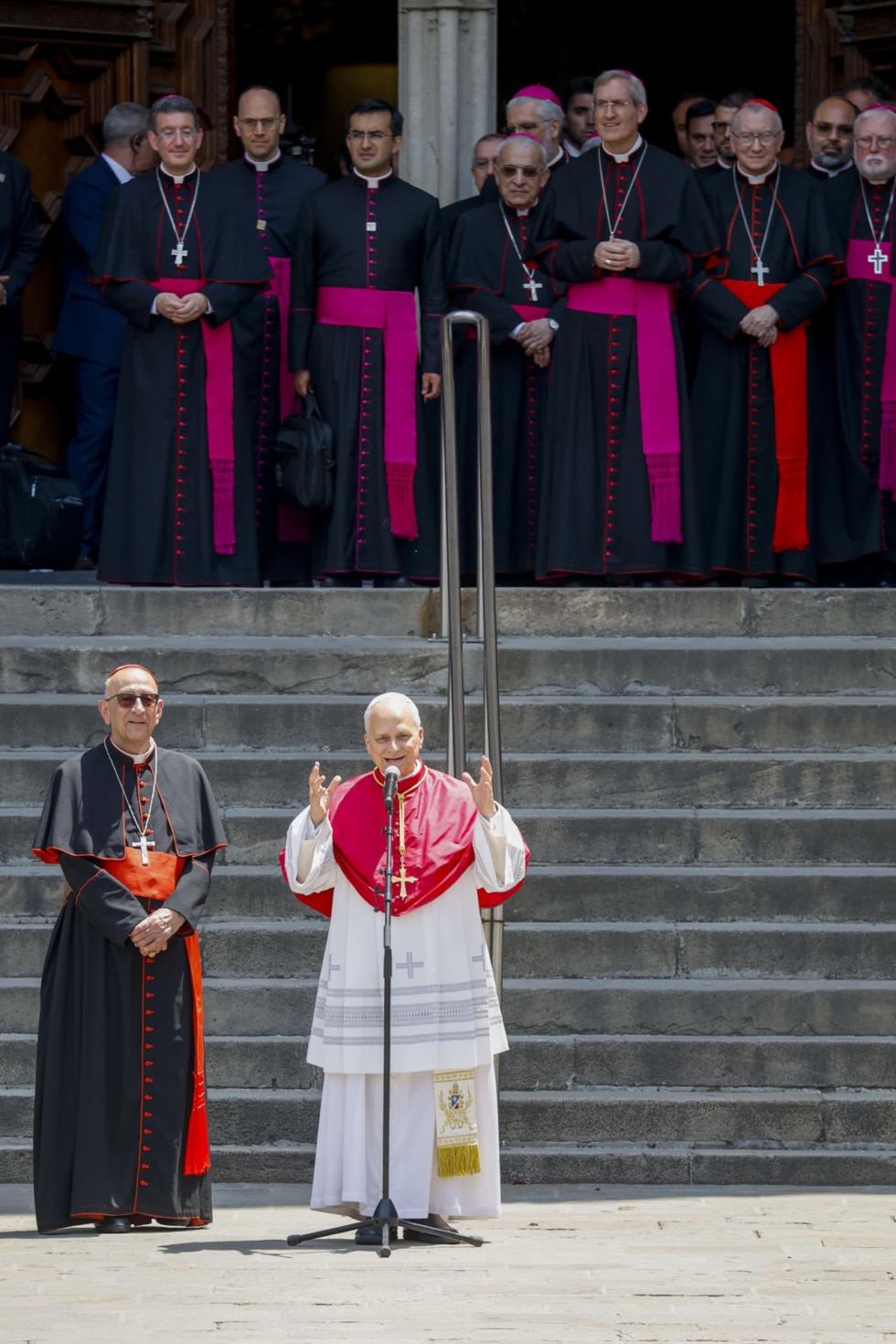
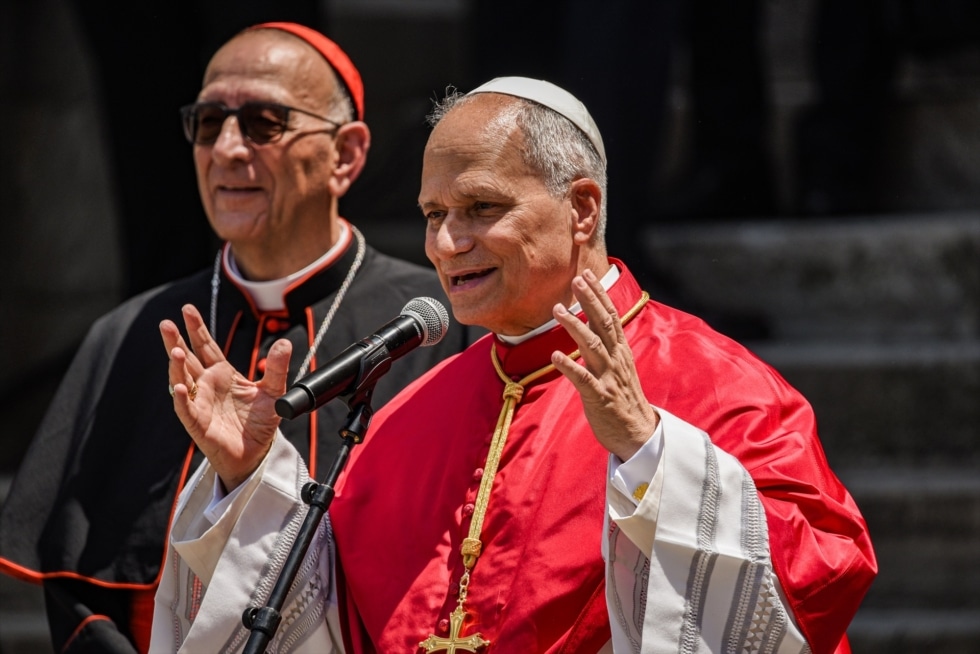
"En un mundo desgarrado por guerras y divisiones, en una sociedad cada vez más fragmentada e individualista", ha exhortado solemnemente el obispo de Roma, es imperativo ser "testigos y profetas de unidad, de acogida, de concordia y de paz, incluso a costa de sacrificios y renuncias". Asimismo, ha elogiado la labor de quienes trabajan por tender puentes en el seno de la Iglesia catalana "más allá de toda la polarización", palabras precedidas por la bienvenida en catalán del arzobispo de Barcelona, el cardenal Omella.

Doble sorpresa y baños de masas

Fiel a su estilo directo, León XIV ha roto el protocolo en dos ocasiones consecutivas al término de los actos litúrgicos, desatando el júbilo en el exterior. En primer lugar, ha salido a pie a la misma plaza de la Catedral para dirigirse directamente a los feligreses con un cercano: "Bon dia i bona hora, germans i germanes". En su breve discurso, ha agradecido la paciencia y la alegría de los congregados: "Jesucristo nos ha llamado a vivir como un solo pueblo unidos en la fe", ha exclamado antes de despedirse con un tradicional "Adéu-siau".

Apenas media hora después, el Papa ha vuelto a sorprender a la multitud al asomarse al balcón del Palau Episcopal junto al cardenal Omella. Pese a sufrir pequeños problemas técnicos con el micrófono, ha bendecido con calidez a los cerca de 500 fieles que todavía resistían en la plaza gótica tras horas de espera. Antes de abandonar el complejo catedralicio, el Pontífice ha descendido a la cripta para rezar ante el sepulcro de Santa Eulàlia y ha visitado el claustro, donde ha mostrado gran curiosidad por la histórica tradición barcelonesa del 'Ou com balla'.

La voz de los fieles: el amparo al migrante

La sensibilidad social demostrada por León XIV en sus encíclicas y discursos ha resonado con especial fuerza entre la comunidad migrante residente en Cataluña, que ha acudido en masa a recibirle. Los testimonios recogidos a pie de calle confirman que el mensaje de integración papal es visto como un bálsamo y un firme respaldo político y moral ante las dificultades de la diáspora.

"Yo espero que haga entender a la gente la importancia de la acogida y la inmigración. Sobre la gente que lo necesita, sobre los vulnerables, las guerras. Los niños, las madres y los ancianos, que son los que más lo padecemos", explicaba Bea, una fiel procedente de Colombia. En la misma línea, Florencia y Carina, ciudadanas argentinas, apuntaban: "Uno, cuando emigra a otro país, se siente a veces discriminado o no tiene las mismas oportunidades. Nos conmueve y agradecemos mucho este apoyo explícito que el Papa brinda siempre a la gente migrante".

Agenda institucional y una tarde multitudinaria en Montjuïc

Ya por la tarde, el Palau Episcopal ha sido el escenario de la audiencia privada de León XIV al presidente de la Generalitat de Cataluña, Salvador Illa, en el que el principal encuentro de carácter institucional de la jornada.

Posteriormente, el foco se ha desplazado hacia la montaña olímpica. En el Estadio Olímpico de Montjuïc, León XIV preside una multitudinaria vigilia de oración ante unas 60.000 personas. Un evento masivo de fuerte carácter juvenil que cerrará la primera jornada de esta histórica e intensa etapa catalana.

  •  

Report details how climate crisis fuels crop failure risk in global breadbaskets

A farmer sorts his destroyed rice crop after flood water entered paddy fields from engorged Beas river at Baoopur village in Kapurthala district in India's Punjab state on September 11, 2025. Photo by SHAMMI MEHRA/AFP via Getty Images
Common Dreams Logo

This story originally appeared in Common Dreams on June 09, 2026. It is shared here under a Creative Commons (CC BY-NC-ND 3.0) license.

The climate emergency is sharply increasing the risk of crop failure in regions that produce an outsized share of the world’s staple food grains, according to a report published Tuesday that warns of “serious threats to Europe, the NATO alliance, and global stability” if cooperative resilience initiatives and other mitigation strategies aren’t pursued.

The report, “Global Breadbaskets: Food System Resilience as a Strategic Imperative,” was published by the Center for Climate and Security—part of the Council on Strategic Risks, a Washington, DC-based security policy think tank—and the Woodwell Climate Research Center, an independent nonprofit located in Falmouth, Massachusetts.

“Geopolitical fragmentation, conflict, extreme weather, and global aid cuts already strain food security. Meanwhile, climate change is increasing the likelihood of crop failures in the American, European, and Asian breadbaskets, which produce most of the staple crops underpinning global food security,” the report states.

🆕 Across India, France, and Germany, in the next decade and a half, the odds of key crops failing are set to increase by between two- and six-fold. This isn't just a food story. It's also a #NATO security story.

Council on Strategic Risks (@councilonstrategicrisks.org) 2026-06-09T07:13:30.778Z

The publication follows an April report from a pair of United Nations agencies on how extreme heat is impacting food production and food security around the planet. The new report includes a storymap that explores climate change-driven threats to wheat, rice, and maize (corn) crops in France, Germany, and India—three of the world’s “global breadbaskets.”

The analysis’ authors note that compared with 2010 threat levels, by 2040, “the risk of a given year’s crop failing is projected to grow roughly twofold for Indian wheat and German maize, roughly threefold for French wheat, roughly fourfold for French maize, and roughly sixfold for Indian rice, with sharp increases in critical producing regions.”

Climate-driven extreme heat “not only threatens crops, but also the laborers and infrastructure that translate them into food security,” the report continues. “Extreme heat is projected to reduce the suitability of 15-40% of India’s rain-fed rice-growing regions by 2050, and to reduce physical work capacity during the average growing season to as little as 40% of 2000-era levels by 2100.”

“By 2040, southwestern France will average up to 16 additional days per year above 35°C (95°F), exceeding thresholds that reduce yields, impact grain quality, and cause heat stroke,” the paper warns. “Extreme heat also threatens to damage or disable road and rail networks critical to food transportation, agricultural machinery, civil defense, and military mobilization.”

The publication also states that global breadbasket failures in Europe “could open rifts for Russian meddling, fuel instability in key partners, and elevate food production as a geopolitical lever.”

The Council on Strategic Risks operates within the transatlantic security policy community, whose work often overlaps with NATO’s interests.

“We have plenty of examples of how crop failures can contribute to political instability, from the French Revolution to the Arab Spring,” Center for Climate and Security deputy director and report lead author Tom Ellison said Tuesday in a statement. “In today’s environment, global breadbasket failures could strain NATO priorities, prompt unrest in key countries, and upend trade relationships.”

Woodwell Climate Research Center scientist and report co-author Alexandra Naegele warned that “climate change doesn’t just threaten crop yields and grain quality—it destabilizes entire food systems, from labor and livestock to food storage and transport.”

“Quantifying these climate-driven risks is an essential step toward building resilient food systems and safeguarding global food security,” she added.

The report recommends steps countries—specifically members of the European Union and NATO—can take to mitigate risks to food security, including strengthening cooperative resilience, anticipating instability and hybrid warfare, supporting strategic and vulnerable partners, coordinating trade responses, and investing in agricultural research and development.

“Amid climate change, geopolitical uncertainty, food shocks from the war in Iran, and Russian hybrid warfare, investing in a resilient food system isn’t in competition with security—it’s a key part of it,” Ellison stressed.

Monica Caparas, a scientist at the Woodwell Climate Research Center and report co-author, said, “Understanding and preparing for breadbasket failures is both a national security priority and a humanitarian imperative—one that can help protect lives, reduce instability, and strengthen food resilience before a regional shock becomes a wider crisis.”

  •  

Роскомнадзор: мы заблокировали телеграм. Российские айтишники: но телеграм работает. Роскомнадзор: значит, РКН не такой уж плохой

Заместитель главы Роскомнадзора Олег Терляков на совещании с представителями российской IT-отрасли, где обсуждалось создание единого «госVPN», заявил, что ведомству удалось полностью заблокировать телеграм, — когда ему возразили, он сказал, что тогда не стоит и переживать.

Детали совещания Роскомнадзора, которое прошло 8 июня, стали известны от предпринимателя и разработчика Игоря Ашманова, чья жена Наталья Касперская (соосновательница «Лаборатории Касперского» и президент группы компаний InfoWatch) была на этой встрече.

9 июня Ашманов опубликовал в своем платном блоге неофициальный протокол совещания. Из него следует, что между Терляковым и Касперской состоялся такой диалог:

Терляков: Кто нас любит или не любит — это вопрос, который мы оставим в стороне. Мы делаем свою работу. У нас есть задача, мы ее будем выполнять. Можем вместе с вами, можем отдельно без вас.
Касперская: А есть ли результат блокировок? Вот, например, телеграм вы заблокировали?
Терляков: Да, конечно.
Касперская: Коллеги, поднимите руки, кто продолжает использовать телеграм? — все поднимают руки — Ну и?
Терляков: Но тогда о чем же вы переживаете, если у вас все работает? Значит, РКН не такой уж плохой.

Позже Игорь Ашманов удалил свой пост и опубликовал новый (тоже с платным доступом) под заголовком: «Опять самоцензура».

В удаленном посте, как пишет The Bell, Ашманов «скептически» оценивал итоги совещания. По его словам, РКН отказался обсуждать, кто дает команды на блокировки («это решения других органов, про которые вы все понимаете, кто они»), и пообещал продолжать делать то же самое.


Хотелось бы уже забыть про блокировки, но нет такой возможности! Продолжаем рассказывать, как оставаться на связи, даже когда ее ограничивают. Например, как дозвониться родным в Россию и не потратить на это все деньги (и нервы), что делать, если не работает VPN, и почему, когда россияне едут в отпуск за границу, блокировки едут вместе с ними? А чтобы не пропустить ничего важного — скачайте наше приложение! 

Подробнее о совещании

  •  

X-Rays Reveal Nazi Symbols Hidden Beneath Postwar Painting

Erich Mercker’s pre-1945 “Die Stätte des 9. November” is shown beside a postwar version from a private collection
Erich Mercker’s pre-1945 “Die Stätte des 9. November” is shown beside a postwar version from a private collection. Credit: Ioanna Mantouvalou et al. / CC BY 4.0

A painting found in a German family home has revealed how Nazi-era imagery may have been hidden beneath a more acceptable postwar scene. The work is linked to Erich Mercker, a Munich painter who lived from 1891 to 1973. Mercker had a successful career and painted several works during the Nazi period. Some included hidden Nazi symbols and political themes.

One of his known works, “Die Stätte des 9. November,” showed the Feldherrnhalle in Munich. The site carried strong meaning for the Nazi Party. It was tied to Adolf Hitler’s failed 1923 coup, also known as the Beer Hall Putsch.

Postwar versions removed Nazi symbols

After World War II, Mercker continued to paint the same Munich scene. But later versions appeared different. He removed soldiers, wreaths, and Nazi symbols. He also replaced the Nazi flag with the blue-and-white flag of Bavaria.

The works appeared under less politically charged titles, including “Feldherrnhalle” and “München am Odeonsplatz.”

Filmmaker and producer Dr. Thomas Schuhbauer found one version in his parents’ home. They had received it as a wedding gift in 1966.

At first, the painting looked like a postwar version of the scene. It showed the Bavarian flag and no clear Nazi symbols. But some details raised questions. The Nazi memorial at the Feldherrnhalle was still partly visible. That memorial was destroyed after Germany’s surrender in 1945. Reddish paint traces also appeared near the flag.

X-ray scans reveal hidden image

Schuhbauer contacted Helmholtz-Zentrum Berlin, known as HZB. He began working with Dr. Ioanna Mantouvalou, a physicist at TU Berlin and HZB. Mantouvalou specializes in X-ray fluorescence spectroscopy, or XRF.

X-ray scans have revealed Nazi symbols hidden beneath a postwar painting linked to Munich artist Erich Mercker.

Researchers found a red Nazi flag, wreaths, soldiers and raised arms painted over beneath a later Bavarian scene. pic.twitter.com/qrkIfazLhm

— Tom Marvolo Riddle (@tom_riddle2025) June 9, 2026

The method lets researchers identify chemical elements in materials without damaging them. It can also reveal paint layers beneath the surface.

The XRF scans showed that Nazi imagery had been painted over. A red Nazi flag lay beneath the Bavarian flag. Researchers also found covered wreaths on the monument, soldiers in the scene, and raised arms of passersby.

The overpainted areas contained high levels of titanium white. That pigment did not appear elsewhere in the painting. A tube of oil paint labeled “Titanium White 10103 Schmincke” was later found among Mercker’s paint tubes.

Evidence points to later alteration

Researchers said the evidence suggests that Mercker may have altered the painting himself. Some changes appeared rushed or careless.

The study, published in npj Heritage Science, also situates the painting within a broader postwar context. The authors noted that many artists faced little public criticism for their Nazi-era collaboration until well into the 1960s.

The painting now belongs to the Munich Documentation Centre for the History of National Socialism. The case shows how science, art history, and family memory can work together. It also shows how political symbols can disappear from view without fully leaving the historical record.

  •  

A downed U.S. helicopter shows Trump’s war has only emboldened Iran

Less than two weeks into the war against Iran, President Donald Trump was already throwing a victory parade.

“You never like to say too ⁠early you won,” Trump told supporters on March 11. “We won. In ​the first hour it was over.”

Two days later, he was at it again, writing Iran was “totally defeated” and was living in such a desperate existence that its leadership was begging for a deal. 

Yet this past weekend, Iran launched new missile salvos at Israel, which replied in kind. And on Tuesday, Trump said in a social media post that Iran had downed a U.S. Army helicopter near the Strait of Hormuz. The pilots were unharmed, but Trump said “the United States must, of necessity, respond to this attack.”

It’s not a stretch to assess that Iran’s leaders are putting just as much pressure on Trump as Trump is putting on them.

If these events are any indication, Iran is not only holding its own but is arguably more aggressive today than before the U.S. bombing campaign began. Yes, the regime has lost a considerable portion of its military power and has cycled through senior officials about as often as the New York Mets have cycled through pitchers. But Tehran has not lost its ability to take the offensive and clearly believes it retains the upper hand against Washington. 

It wasn’t supposed to be this way. Trump had high expectations when he initiated the war. The president was so pleased with the first strikes’ results, which included the assassination of Ayatollah Ali Khamenei, Iran’s supreme leader of nearly 40 years, that he implored Iranians to take back their government. The Trump administration told the public — and itself — a story about Tehran’s many weaknesses; its economy was floundering, its people were unhappy, its command-and-control was breaking and its leaders were on the run or dead. Trump thought the Iranian regime would crumble or give up before it decided to retaliate by closing the Strait of Hormuz. Sooner or later, Iran’s nuclear program would be a figment of our imaginations. 

Of course, none of Trump’s assumptions panned out. The regime is more unified and institutionalized than the White House anticipated. Khamenei has been replaced by his more inscrutable son, Mojtaba Khamenei, and the hard-line Islamic Revolutionary Guard Corps has become the most important power center in the Iranian establishment. The Strait of Hormuz remains shuttered.

Before the April 8 ceasefire, Iran was targeting its neighbors’ energy facilities, both to scare the Gulf states into pushing Trump to de-escalate and to heighten the pain at the pump. Though gas prices in the United States have dropped in the last month, as of Tuesday, Americans are still paying $4.16 a gallon — 40% more than when the war began. The unofficial extra tax has translated into terrible numbers for Trump: Even a 33% plurality of Republicans believe the war has had a more negative than positive impact on U.S. interests. 

Iran is not blind to these dynamics. If anything, it’s emboldened by them. The Iranian military apparatus may still be recuperating from the heavy U.S. and Israeli airstrikes during the war’s first weeks, but the damage inflicted has failed to translate into strategic results. Killing Iranian generals, destroying Iran’s navy and damaging the regime’s drone manufacturing capacity were not ends in themselves but rather a means to an end — coercing Tehran into a settlement on U.S. terms. The scorecard for the Americans on that front is unimpressive. Iran hasn’t just survived the U.S.-Israeli onslaught; it’s effectively pushed back through asymmetric military tactics. It’s not a stretch to assess that Iran’s leaders are putting just as much pressure on Trump as Trump is putting on them.

This past weekend’s missile salvo against Israel is a case in point. This wasn’t a sign of desperation on Tehran’s part but rather Iran making its own threats credible. The regime had warned that Israeli airstrikes against its proxy, Hezbollah, in southern Lebanon, in contraventiosn of a previously announced ceasefire reaffirmed last week, would result in Iranian military action against Israel.

This war will impact the region’s geopolitics for years to come.

If Trump and Israeli Prime Minister Benjamin Netanyahu thought this was a bluff, Iran put those illusions to rest by sending dozens of ballistic missiles toward Israel. (Fortunately, they only caused minor damage.) Trump, desperate to keep his diplomatic process with Iran alive, has since pressured Netanyahu into postponing whatever air campaign he was ready to order beyond the retaliatory precision strikes the prime minister authorized on Sunday and Monday. 

To be clear, Iran is not solely dictating events, nor is it in a strategically advantageous position over the long-term. This war will impact the region’s geopolitics for years to come. For instance, the firing of thousands of attack drones and missiles into Saudi Arabia, the United Arab Emirates, Kuwait and Qatar (among others) has jeopardized the regime’s previous attempt at detente with its regional neighbors. Even the regime’s weaponization of the strait may not last; the Saudis and Emiratis are adapting by building alternative pipelines over land to ensure their oil exports are not held hostage to any future Iranian machinations there. 

But from the U.S. standpoint, the war is producing a more extreme Iranian political establishment. Its positions on core issues for any agreement, like the nuclear program, are indistinguishable from the prewar status quo . And the previous risk-adverse behavior proffered by the regime’s older guard is increasingly perceived by the new powers that be as a mistake. Whatever happens next in the conflict, these developments don’t serve U.S. interests.

The post A downed U.S. helicopter shows Trump’s war has only emboldened Iran appeared first on MS NOW.

  •  

IA, dalle nuove sanzioni alla formazione scolastica: il governo ridisegna le regole. Le novità. Esclusivo

Affaritaliani pubblica in anteprima lo schema di decreto legislativo sull’adeguamento della normativa nazionale alle disposizioni del regolamento (UE) 2024/1689 del Parlamento europeo e del Consiglio, del 13 giugno 2024, che stabilisce regole armonizzate sull’intelligenza artificiale, in materia di poteri delle autorità nazionali e di utilizzo dell’intelligenza artificiale nella formazione.

Ecco i punti principali

Il testo ridisegna la governance nazionale dell’intelligenza artificiale: AgID assume il ruolo di autorità di notifica, mentre ACN diventa autorità di vigilanza e punto di contatto unico. Nel settore finanziario le competenze sono attribuite a Banca d’Italia, Consob e Ivass, mentre il Garante Privacy mantiene i profili legati alla protezione dei dati. Il decreto introduce un sistema sanzionatorio che può arrivare fino a 35 milioni di euro o al 7% del fatturato mondiale per le violazioni più gravi. È previsto inoltre lo Spazio di sperimentazione italiano per l’IA, un ambiente regolato per testare sistemi prima dell’immissione sul mercato.

LEGGI ANCHE: Intelligenza artificiale, clamoroso: l’IA è ovunque, ma solo 1 creativo su 5 la usa davvero

Sul fronte educativo, l’intelligenza artificiale entra nei percorsi scolastici fin dal primo ciclo, all’interno dell’educazione civica. Un piano da 100 milioni finanzierà la formazione dei docenti sull’uso consapevole di social e tecnologie digitali. La formazione sull’IA diventa obbligatoria anche per insegnanti, studenti, professionisti e personale sanitario. Nel lavoro viene stabilito che le decisioni non possono essere affidate esclusivamente a sistemi automatizzati: assunzioni, licenziamenti e provvedimenti disciplinari richiederanno sempre l’intervento di una persona fisica. Il licenziamento deciso solo da un algoritmo è considerato nullo. L’uso dell’IA dovrà inoltre essere incluso nella valutazione dei rischi aziendali.

Università, AFAM e ITS integreranno moduli dedicati all’IA. Gli ordini professionali avranno sei mesi per aggiornare i regolamenti formativi. L’utilizzo di sistemi di IA potrà incidere sulla determinazione dell’equo compenso, in base al livello di rischio del sistema impiegato. Nel settore sanitario, una quota della formazione ECM sarà riservata ai temi dell’intelligenza artificiale. Infine, il decreto aggiorna il Codice della proprietà industriale includendo tra le informazioni aziendali riservate anche dati, algoritmi e metodi matematici utilizzati per l’addestramento dei sistemi di IA.

SCARICA QUI IL TESTO

SCARICA QUI LA RELAZIONE TECNICA

L'articolo IA, dalle nuove sanzioni alla formazione scolastica: il governo ridisegna le regole. Le novità. Esclusivo proviene da Affaritaliani.it.

  •  

Luca Parmitano sarà il pilota di Artemis III: la nuova missione verso la Luna

Un onore e un privilegio sia per l’uomo ma anche per un’intera nazione come l’Italia: l’astronauta Luca Parmitano sarà il pilota della missione “Artemis III” che riporterà l’uomo sulla Luna.

Le parole di Parmitano

“Mi scuso in anticipo se mi emozionerò. Sono onorato. Per un lancio spaziale servono tante componenti. Per me la piattaforma di lancio è l'Italia, il nostro sistema educativo. L'Italia mi mi ha dato gli strumenti professionali necessari”, ha dichiarato Parmitano nel corso della presentazione dell'equipaggio. “L’Asi (Agenzia spaziale europea, ndr) “mi ha dato il primo volo per mettere alla prova quelle skill. L'Esa per me è come la ‘launch tower’. Connette mondi diversi, costruendo ponti e connessioni per elevare individui per raggiungere il loro potenziale. Il razzo è la Nasa, che mi ha permesso di essere parte di questo gruppo incredibile di persone”.

Poi, il messaggio toccante anche alla famiglia. “Il carburante è proprio qui: Mia, Sara, Marta, tutta la mia famiglia nel pubblico, voi siete l'energia che alimenta la mia anima e il vostro amore è la scintilla”, ha detto commosso Parmitano, unico astronauta europeo a far parte di questa missione.

La nota dell’Esa

Con orgoglio, la notizia l’ha sui profili social anche l’Agenzia Spaziale Europea. “Il nostro astronauta Luca Parmitano è assegnato come pilota della missione #ArtemisIII della NASA. Con l'Europa che alimenta Orion con il Modulo di Servizio Europeo, questa missione testerà le operazioni critiche che preparano il ritorno dell'umanità sulla Luna”.

Una missione storica

Oltre a Parmitano l’equipaggio sarà composto da Randy Bresnik, Frank Rubio e Andre Douglas, assegnato come riserva nella missione Artemis II. Nel programma spaziale sono previsti lanci multipli dei razzi più potenti al mondo così da testare l’integrazione del sistema tra Orion e i lander.

"Oggi compiamo un altro audace passo verso il ritorno dell'umanità sulla Luna, basandoci sulle straordinarie fondamenta gettate dagli astronauti di Artemis II", ha dichiarato l'amministratore della Nasa, Jared Isaacman. "Le loro imprese hanno riacceso l'entusiasmo globale per l'esplorazione e ora passano il testimone al team di Artemis III, composto da Randy, Luca, Frank e Andre. Artemis III dimostrerà la potenza dell'innovazione americana e della collaborazione internazionale, mentre testeremo complesse operazioni di rendezvous e attracco e faremo progredire le tecnologie che un giorno ci porteranno piu' in profondità nel sistema solare”.

Chi è Parmitano

Cinquanta anni, siciliano di Paternò (provincia di Catania), Parmitano è il primo italiano ad aver effettuato un’attività extraveicolare nel 2013 con oltre sei ore di “passeggiata spaziale”. Sempre primo italiano - e terzo europeo - ad aver comandato anche l’ISS (Stazione Spaziale Internazionale).

  •  

Iwo Jima Completes Deployment, Nimitz Heading Back To The United States

Here’s TWZ’s weekly carrier tracker monitoring America’s flattop fleet, including deployed Carrier Strike Groups (CSG) and Amphibious Ready Groups (ARG), using publicly available open-source information. Check out last week’s report here.

Amphibious assault ship USS Iwo Jima returned to Naval Station Norfolk on Saturday, wrapping a nearly 10-month deployment to the U.S. Southern Command-4th Fleet area of responsibility (AOR). During the 296-day deployment, the Iwo Jima ARG launched over 6,000 sorties, flew 1,850 flight hours, and transited more than 130,000 combined nautical miles. The ARG was the first group of expeditionary naval assets deployed to support Operation Southern Spear, which involved enhanced counter narcotics operations, and played a key role in Operation Absolute Resolve to exfiltrate ex-President Nicolas Maduro from Venezuela.

Wasp-class amphibious assault ship USS Iwo Jima (LHD 7) returned to its homeport of Norfolk, Va. on June 6 following a historic 10-month deployment to the U.S. Fourth Fleet area of operations.

Story:https://t.co/GakDhjvaky pic.twitter.com/6w6Ungogn4

— U.S. 2nd Fleet (@US2ndFleet) June 6, 2026

Aircraft carrier USS Nimitz departed Kingston, Jamaica, after a 4-day port call. Nimitz is now reportedly en route to the United States, according to the U.S. Embassy in Jamaica, “as it finished its 2026 Southern Seas goodwill tour.” The two ships supporting Nimitz, destroyer USS Gridley and oiler USNS Patuxent, also got underway after a brief stop in Ponce, Puerto Rico. Over the weekend, Nimitz embarked officials from the Dominican Republic for a distinguished visitor tour and Gridley fired the Mk 45 Mod 4 5-inch gun during a live fire demonstration.

The USS Nimitz (CVN 68) departed Kingston Harbor at 12pm on June 5 enroute to the United States as it finished its 2026 Southern Seas goodwill tour. Thank you for stopping in Kingston and strengthening the U.S.-Jamaica bilateral partnership as well as enhancing our… pic.twitter.com/RKimaXy6ia

— US Embassy Jamaica (@USEmbassyJA) June 6, 2026

The U.S. maintains dual-carrier coverage in the Middle East enforcing the naval blockade of Iranian ports. USS Abraham Lincoln conducted a replenishment-at-sea with USNS Arctic in the Arabian Sea on June 3, and USS George H.W. Bush is operating at an undisclosed location in the AOR. U.S. Central Command forces have redirected 134 commercial vessels and disabled seven ships attempting to run the blockade, according to a press release.

The officer of the deck aboard USS Michael Murphy (DDG 112) observes a merchant vessel while the guided-missile destroyer enforces the U.S. blockade against Iran in the Arabian Sea. As of June 7, CENTCOM forces have redirected 132 commercial vessels and disabled 6 to ensure… pic.twitter.com/mZtfSMTIRG

— U.S. Central Command (@CENTCOM) June 7, 2026

The George Washington CSG is operating in the U.S. Indo-Pacific Command-7th Fleet AOR. Washington was spotted alongside oiler USNS Earl Warren during a fueling-at-sea evolution on June 8 in the Philippine Sea and, during the last week of May, embarked Carrier Air Wing (CVW) 5 and completed carrier qualifications (CQ). CVW-5 includes a squadron of F-35C fighter aircraft.

Coming in loud and clear! ✈

An F/A-18E roars in for a landing on the flight deck of USS George Washington while underway in the Philippine Sea. Forward-deployed strike capabilities maintain regional stability and guarantee a free and open Indo-Pacific.#FlyNavy | #US7thFleet pic.twitter.com/lAlxexD4hs

— 7th Fleet (@US7thFleet) June 8, 2026

Note: Positions are general approximations.

Contact the author: ian.ellis-jones@teamrecurrent.io

The post Iwo Jima Completes Deployment, Nimitz Heading Back To The United States appeared first on The War Zone.

  •  

Franco-German Future Fighter Effort Collapses Over Irreconcilable Differences

The troubled pan-European Future Combat Air System (FCAS) appears to have lurched to an undignified — but predictable — end, at least in its current form. A flurry of media reports today indicate that France and Germany, the two major partners in the program, have abandoned their program to develop a crewed New Generation Fighter (NGF) aircraft together, a conclusion supported by a French diplomat who spoke to TWZ today.

According to sources including the Frankfurter Allgemeine Zeitung, German Chancellor Friedrich Merz has urged French President Emmanuel Macron to pull the plug on the NGF. The German newspaper cited unnamed government sources in Berlin. Reportedly, the French and German leaders concluded that the companies involved — Dassault and Airbus — have been unable to reach agreement on key aspects of the project, specifically relating to the jointly developed fighter jet.

Concept artwork of the NGF future fighter. Dassault Aviation

At this stage, it is reported that Merz and Macron cannot see a future for the NGF, although it is apparently still unclear whether the French government fully shares this assessment and is prepared to accept its consequences.

At this point, it should be recalled that there are at least three separate FCAS initiatives in Europe.

As well as the pan-European version headed up by France and Germany, with Spain and Belgium as junior partners, there is a rival British-led FCAS. This has the Tempest crewed fighter as its centerpiece, involves Italy and Japan, and is now more commonly referred to as the Global Combat Air Program (GCAP). Finally, the Swedish next-generation combat aircraft program, led by Saab, is also known as FCAS.

Returning to today’s developments, French officials are reportedly surprised by what they viewed as uncoordinated messaging from Berlin. From Paris’s perspective, it is the responsibility of political leaders to provide industry with clear direction.

French President Emmanuel Macron talks with Eric Trappier, Chairman and CEO of Dassault Aviation, after the unveiling of the full-scale jet fighter model of the Systeme de Combat Aerien Futur (SCAF), the French-German-Spanish new generation Future Combat Air System (FCAS), during the 53rd International Paris Air Show at Le Bourget Airport near Paris, on June 17, 2019. (Photo by BENOIT TESSIER / POOL / AFP) (Photo credit should read BENOIT TESSIER/AFP via Getty Images)
French President Emmanuel Macron talks with Eric Trappier, chairman and CEO of Dassault Aviation, after the unveiling of a full-scale model of the NGF at the Paris Air Show in 2019. BENOIT TESSIER/AFP via Getty Images BENOIT TESSIER

The French government is also said to be frustrated over what it sees as Germany’s increasing preference for national solutions, which threatens to sideline its own industrial input.

A French diplomat told TWZ: “The President of the Republic and the Federal Chancellor have held extensive and frequent discussions on ways to move forward with this important project for European defense. Both leaders expressed regret that the industrial partners have been unable to reach an agreement on the continuation of the project. The German authorities considered that it was not possible to exert further pressure on the companies involved. France remains convinced that Franco-German cooperation is essential both for our two countries and for our European partners in the fields of defence and security.”

The diplomat added: “The French authorities will continue to encourage our industries and armed forces to explore avenues for ambitious European projects that are consistent with our national security interests.”

According to reports, Macron and Merz discussed the future of FCAS last week, in the latest of several recent efforts to keep the program on track. At the same time, however, Merz had become increasingly vocal about his skepticism regarding the project’s prospects.

The FCAS program was launched back in 2017, with the primary aim of replacing France’s Rafale fleet and Germany’s Eurofighters.

A German Luftwaffe Eurofighter pair. Bundeswehr/Bicker A pair of Eurofighters from Tactical Air Force Wing 73 “Steinhoff” during air-to-air training. Bundeswehr/Bicker

FCAS was envisioned as a next-generation European combat air system entering service around 2040, spearheaded by the NGF crewed fighter. As of 2022, it was envisaged that “in-flight demonstrations” would be achieved by 2028 or 2029. 

Before long, however, the project was overshadowed by arguments over workshare agreements, and it is unclear how far the partners had got in terms of agreeing on NGF requirements and starting its design.

For a while now, there have been reports that Germany is exploring alternative paths, including the possibility of separating itself from France within the program entirely.

By February of this year, Merz was publicly raising doubts about the program’s viability, arguing that key issues had never been fully resolved during the planning phase. According to the German leader, Germany and France have fundamentally different operational requirements for a future combat aircraft.

Merz pointed to the specific French requirements that call for aircraft to be capable of carrying nuclear weapons and operating from aircraft carriers. Merz argued that Paris is seeking to shape the aircraft around French military requirements, which do not necessarily align with Germany’s needs.

PARIS, FRANCE - JANUARY 06: French President Emmanuel Macron (R) greets German Chancellor Friedrich Merz upon his arrival at the Elysee Palace on January 06, 2026 in Paris, France. Leaders from around 30 countries are gathering in Paris to discuss military support for Ukraine, amid ongoing negotiations on a US-brokered peace plan to end Russia's war in Ukraine. (Photo by Tom Nicholson/Getty Images)
French President Emmanuel Macron (right) greets German Chancellor Friedrich Merz at the Elysee Palace in Paris in January 2026. Photo by Tom Nicholson/Getty Images Tom Nicholson

“This is not primarily a political disagreement,” Merz said. “The real issue lies in the requirements profile. If we cannot reconcile those differences, the project cannot continue.”

Within France, Dassault CEO Éric Trappier recently declared the FCAS project dead if Airbus refuses to cooperate, while Macron continued to make efforts to resuscitate the program.

There are indications that Paris will still try to do its best to keep the program alive, and it remains possible that the broader FCAS architecture, or parts of it, could continue even without the NGF. FCAS has always intended to field families of drones, air-launched weapons, and potentially other aerial platforms, within an overarching ‘combat cloud.’

An Airbus concept showing an NGF connected via satellite-based Combat Cloud to Remote Carriers, as well as a variety of legacy combat and support platforms. Airbus

The German government considers that the “true essence of FCAS” should be continued as a European system of systems, according to the Frankfurter Allgemeine Zeitung.

Whatever happens next, the program appears to be at a crossroads, and facing its biggest existential challenge yet.

It is highly questionable whether either France or Germany (even with Spanish industrial support and finance) could develop a fighter without the other major partner.

This could open the door to a radical reshaping of European combat air programs.

There have already been suggestions at the highest military levels that the British-led and Franco-German FCAS efforts could be fused in some way. However, it seems highly unlikely that all these partners could come together with agreement. Just as questionable is whether the GCAP effort would be able to admit new major partners at this late stage.

Then there is the issue of Sweden.

Last month, we reported on Airbus having raised the possibility of teaming with Saab on the manned tactical component of FCAS. That was one of the clearest indications yet that Airbus is actively exploring post-FCAS alternatives, or, at the least, a major overhaul of the program’s structure.

A Saab study for a supersonic uncrewed platform as part of its own FCAS effort. SVT screencap via X

Potentially, Airbus and Saab could now team up to develop a joint next-generation fighter, with their requirements likely to be more closely aligned than those of France. Germany and Sweden also have a less urgent need for a sixth-generation combat jet, with Sweden only now introducing the Gripen E, and with Germany looking forward to receiving F-35s as well as more Eurofighters.

jAS 39 E
The first Gripen E for the Swedish Air Force. Saab SAAB

For France, losing its partners for NGF could be more critical, although it continues to work on advanced versions of the Rafale. In 2024, France also unveiled plans to develop a new uncrewed combat air vehicle (UCAV) that will complement the forthcoming Rafale F5 crewed fighter. The industrial side of the drone program will be headed up by Dassault, drawing upon its previous nEUROn UCAV demonstrator, which has already been used in trials with crewed combat aircraft.

France has unveiled plans to develop a new uncrewed combat air vehicle (UCAV) that will complement the forthcoming Rafale F5 crewed fighter, as part of a new-look French Air and Space Force. The industrial side of the drone program will be headed up by Dassault Aviation, drawing upon its previous nEUROn UCAV demonstrator, which has already been used in trials with crewed combat aircraft.
A Rafale accompanies a nEUROn drone during a test flight. Dassault Aviation/Anthony Pecchi Dassault Aviation/Anthony Pecchi

The F5 standard of the Rafale is planned to keep the multirole combat aircraft in frontline service until around 2060. That will at least give France some time to consider what to do about a future crewed fighter.

A French Air and Space Force Rafale C. Dassault Aviation

Drones are also increasingly part of the combat-air picture in Germany, too. Delays in fielding a sixth-generation fighter could be mitigated, to a degree, by Airbus developing combat drones. Airbus and Kratos are already pitching the stealthy XQ-58A Valkyrie drone to Germany, and Airbus has also been working on a stealthy CCA-like concept of its own, known as Wingman.

A rendering of the Airbus Wingman CCA-like drone. Airbus

In the background, the U.S.-made F-35 continues to expand its customer base in Europe. There is also the prospect that, in the future, the sixth-generation F-47 might be offered for export in the region, although this might only be in a watered-down form.

Overall, though, the latest development is a poor reflection on Franco-German cooperation, which has singularly failed to come to agreement about what should be a flagship program, providing a cornerstone of efforts to strengthen Europe’s defense capabilities.

With the ILA Berlin airshow starting on Wednesday, this news could hardly be worse-timed. On the other hand, we may well learn more about Germany’s vision for its future combat aircraft program before the week is out.

Contact the author: thomas@thewarzone.com

The post Franco-German Future Fighter Effort Collapses Over Irreconcilable Differences appeared first on The War Zone.

  •  

KC-135 Tanker Spotted With New Satellite Communications Antenna

A U.S. Air Force KC-135 tanker appeared in the United Kingdom this weekend with a new antenna on top of the rear of the fuselage. The service has several efforts underway to improve the communications networking capabilities of all of its tankers and cargo planes, including ones that leverage Starshield, the government-focused cousin of SpaceX’s Starlink. This has become an especially critical priority for future survivability and effectiveness of the aging KC-135 fleet.

Aviation photographer Alessandro Ledda, who goes by Aerographist on Instagram, caught the KC-135 in question at RAF Mildenhall yesterday. The base is a major hub for U.S. Air Force operations in the United Kingdom. It has been utilized to support recent operations against Iran, as have other RAF facilities.

A stock picture of a KC-135 tanker taking off from RAF Mildenhall in 2025. USAF/Staff Sgt. Kevin Long

Ledda told TWZ that online flight tracking data says this particular KC-135 is serial number 63-7976, but that this might not be correct. The plane is largely devoid of markings, preventing easy confirmation. Two years ago, the Air Force’s Air Mobility Command (AMC) began removing serial numbers and other unique identifying markings from tankers and other aircraft as an operational security measure, as you can read more about here.

Ledda also told us that this is the first time he has seen a KC-135 with the new dorsal antenna, despite regularly photographing tankers of this type at Mildenhall. The base is home to the Air Force’s 100th Air Refueling Wing, which flies the KC-135, but is also a regular staging point for temporary deployments and a stop-over for aircraft just passing through.

A picture of the same antenna on top of a KC-135 had emerged online in April, but where and when it was taken are unclear. This may or may not be the same aircraft seen at Mildenhall this weekend. It is unknown how many Air Force KC-135s may have received this modification so far, and TWZ has reached out to the Air Force for more information. At the beginning of Fiscal Year 2026, the Air Force had 368 KC-135s in inventory, in total. At least a portion of that fleet is set to remain in service through 2050.

A close-up look at the dorsal antenna on the KC-135 seen this weekend at RAF Mildenhall. Alessandro Ledda

The antenna has a very roughly trapezoidal shape with a mostly flat top. There is a single small blade that sticks up at the rear, as well. The size and shape are broadly reflective of ‘hump’ style antennas associated with high-bandwidth satellite communications (SATCOM) suites seen on large military and commercial aircraft. In both pictures we have seen of this installation on the KC-135 so far, the new antenna is also mounted right behind a much smaller existing platter-shaped type typically used to support ultra-high-frequency SATCOM links.

Back in April, the possibility was raised that the new antenna for the KC-135 could be tied to Airlift/Tanker Open Mission Systems (ATOMS) and/or its successor, MAF NEXUS, both developed by the Sierra Nevada Corporation (SNC). MAF here stands for Mobility Air Forces, a collective term for the Air Force’s tanker and airlifter fleets, and the personnel that support them.

ATOMS is “a Starshield-based BLOS [beyond line of sight] satcom system SNC has been installing on a handful of [KC]-135s, [C]-17s, [KC]-46s, [C]-130s. Saw a C-17 getting it last week in Dayton,” Aviation Week‘s Brian Everstine wrote on X, speaking generally, in a thread discussing the first picture of the new antenna for the KC-135 that had emerged. ATOMS is “now transforming to Air Mobility Commands [sic] ‘MAF Nexus.'”

Elements of at least one iteration of ATOMS are seen, at center, inside a C-17 cargo plane during a briefing for senior officials in 2025. USAF/Staff Sgt. Joshua T. Crossman

As noted, Starshield is a more secure, government-centric offshoot of SpaceX’s Starlink space-based network. Starshield and Starlink have been in increasing use across the U.S. military on aircraft, as well as warships and in various contexts on the ground, for years now, as TWZ has explored on several occasions in the past.

The size and shape of the antenna on the KC-135 at Mildenhall is, broadly speaking, in line with commercial Starlink antennas used on airliners and other civilian aircraft.

An example of a commercial Starlink antenna for use on aircraft, in this case integrated onto a Beechcraft King Air turboprop. AeroMech Incorporated

“The SNC solution for ATOMS, originally provided as a Quick Reaction Capability (QRC) in just six months, delivers enhanced situational awareness through multidomain networking and datalink,” SNC had explained in a press release in August 2025. “The system’s ability to provide a Common Operating Picture improves data interpretation and bolsters decision advantage, strengthening AMC’s effectiveness by leveraging multiple communications paths and sensors to seamlessly share data.”

That release followed the conclusion of the Air Force’s Mobility Guardian 2025 exercise, in which ATOMS “played a pivotal role” by “demonstrating its ability to provide seamless data management and communications solutions on multiple aircraft platforms, including the C-17, KC-135, KC-46 and C-130, as well as numerous ground nodes.”

The Air Force’s 2027 Fiscal Year budget request highlights at least two other potentially relevant communications upgrade efforts for the service’s KC-135, specifically, which could also make use of Starlink/Starshield.

A row of US Air Force KC-135 tankers. USAF

There is the “Hybrid SATCOM capability,” which involves “the employment of Multi-Band, Multi-Orbit SATCOM terminals to switch between different government and commercial constellations,” according to official budget documents. This is tied to another project called MAF Connectivity focused on developing a “path forward as the tanker needs to be able to connect to the Joint fight to close kill chains and logistics chains.”

For MAF Connectivity, “possible capabilities include, but are not limited to, intelligent gateways, antennas, radios, software updates, crew displays, and multiple aperture array housings,” the budget documents also note. An “increment 1 first prototype installation” was also scheduled to be completed in the second quarter of Fiscal Year 2026, which began on January 1 and ended on March 31.

The antenna could be part of a different effort, as well. The Air Force has fielded a number of roll-on/roll-off communications and networking suites for the KC-135 over the years, but in an ad hoc manner and on a relatively limited scale. Last year, the Air National Guard also announced the demonstration of a new communications and data-sharing node packaged inside a heavily modified underwing Multipoint Refueling System (MPRS) pod, but the extent to which that capability may now be available for operational use is unclear. KC-135 and KC-46 tankers use unmodified MPRS pods to transfer fuel to receivers via the probe-and-drogue method.

A repurposed Multipoint Refueling System (MPRS) pod containing a communications and data-sharing package, seen under the wing of a Utah Air National Guard KC-135. MSgt Nicholas Perez/Utah Air National Guard

As an aside, a Boeing 757 called Trailblazer (N-number N473AP), which defense contractor L3Harris uses as a testbed, also recently emerged with a new elongated dorsal fairing. Trailblazer’s new addition is similar in some broad strokes, but also distinctly different from the antenna seen on the KC-135 at Mildenhall this weekend. One of L3Harris’ major business areas is satellite communications systems, including for the U.S. Air Force. TWZ has reached out to the company for more information about this development.

For years now, the Air Force has been trying to more deeply integrate new communications and networking capabilities onto the KC-135, as well as other tankers and aircraft across the MAF. Senior service officials have also described this as a gateway to enabling other new capabilities down the road, including ones to help better protect tankers and airlifters from future threats. TWZ has previously highlighted this as a path to airborne control for “loyal wingman” type drones and other uncrewed aerial systems, something the Air Force has already been experimenting with to differing degrees.

“I gotta keep modernizing the tanker force,” Air Force Lt. Gen. Rebecca Sonkiss told TWZ and others at a roundtable at the Air & Space Forces Association’s annual warfare symposium in February. “If I was going to parcel out the things we care about in that, though, it’s connectivity and survivability. So those are the things that we really care about in that effort.”

“There’s various ways to get after survivability,” she continued. “It starts with being connected so that you have battlespace awareness, and then it continues on to how do we protect those assets.”

Sonkiss’ official title is Deputy Commander of AMC. However, she has been serving as the interim head of the command since her predecessor, Gen. John Lamontagne, became Vice Chief of Staff of the Air Force in January.

Air Force Lt. Gen. Rebecca Sonkiss speaks at the 2026 AFA Warfare Symposium. USAF/Capt. Christian Little

“The single biggest contributor to survivability in a big airplane is connectivity. The biggest contributor is not having a 12-hour-old Intel brief that you’re relying on to get you through the mission,” retired Air Force Gen. Michael “Mini” Minihan, who led AMC from October 2021 to November 2024, told TWZ in an interview in February, as well. “So real-world updates, real-time updates, just like our fighters and our bombers enjoy. Battle management that gets after maneuver and not just kill chain. Those things matter.”

“The reality is that the car I rented right now, driving from the airport to my hotel room, has more connectivity in it than the overwhelming majority of the mobility fleet. So connectivity matters,” he also told us at that time.

New communications and networking suites could enable AMC’s KC-135, as well as the rest of the command’s fleets, to serve as essential ‘translators’ between disparate networks and waveforms in the future. Providing a link between low probability of interception/low probability of detection (LPI/LPD) datalinks that stealthy aircraft use, such as the Multifunction Advanced Data Link (MADL) and Intra-Fighter Data Link (IFDL), and more general-purpose ones, would be especially valuable. IFDL is currently only found on the F-22 Raptor, while all variants of the F-35 fighter (and future B-21 Raider bombers) use MADL, and the two cannot ‘talk’ to each other directly, which has long created challenges. Upgraded tankers could serve as important parts of a beyond-line-of-sight mesh-like network that incorporates other kinds of line-of-sight links like Link16. In this way, they could help relay data to and from forward battle management and other command and control nodes, including ones in the air.

An F-22, in front, flies together with an F-35A, at rear. USAF

In addition, improved connectivity stands to provide additional operational and safety benefits across the MAF.

“According to the Air Force, the tankers’ ability to access tactical data links could increase mission success in contested environments by improving survivability, agility, and situational awareness for command-and-control elements and aircrews,” the Congressional Research Service (CRS) wrote in a report published in January. “The connectivity could provide aircrews with such information as potential threats, fuel availability, and safer landing sites. In addition, tanker aircraft could serve as a backup information conduit for other aircraft in a degraded communications environment.”

The points here have become a broader topic of discussion after two KC-135s collided over Iraq in March during the opening weeks of Operation Epic Fury against Iran. One of the aircraft crashed, killing all six onboard. The other tanker involved was able to land in Israel despite suffering severe damage. At the time of writing, the Air Force has not yet shared any official determinations as to the chain of events that led to that fatal incident.

https://t.co/whZtfocLFb

— OSINTtechnical (@Osinttechnical) March 13, 2026

“We should never put mobility crews, especially tanker crews, in a position during combat operations where they have to choose between being seen by everyone, including the enemy, or being seen by no one, including the joint force and civil aviation,” Minihan subsequently wrote in a post on LinkedIn. “Mobility force connectivity now. Write the damn check.”

“Most KC-135s [sic] communications networks are ‘not the type of battle space awareness that shows you where the red is, where the blue is, and the actions that are being taken in real time in a conflict,'”Defense One reported in March, citing an interview with retired Air Force Gen. Jacqueline Van Ovost, who previously served as head of U.S. Transportation Command (TRANSCOM). “All you have is the intelligence you took off with when you got the brief two hours prior to take off.”

All this being said, the Air Force is still years away from integrating more robust communications and networking capabilities onto the entire KC-135 fleet.

“Over the course of about the next six years, you’ll see the full fleet of KC-135s fully connected,” Lt. Gen. David Tabor, Deputy Chief of Staff for Plans and Programs, told members of Congress at a hearing last month.

The appearance of the KC-135 with the added antenna at Mildenhall does point to new progress on key connectivity upgrades for Air Force tankers and airlifters. At the same time, improved communications and networking capabilities are increasingly critical now, and it remains to be seen when they become more commonplace across the KC-135 fleet.

Special thanks again to Alessandro Ledda for sharing the picture of the KC-135 seen at Mildenhall this weekend with us.

Contact the author: joe@twz.com

The post KC-135 Tanker Spotted With New Satellite Communications Antenna appeared first on The War Zone.

  •  

Arménie : le parti de Pachinian souhaite rejoindre le Parti populaire européen

Le Premier ministre arménien Nikol Pachinian envisage l'adhésion de son parti, « Contrat civique », au Parti populaire européen (PPE), la plus grande famille politique du Parlement européen, qui défend une idéologie de centre-droit, rapporte Euractiv le 9 juin. Selon le portail, Pachinian a déjà fait part de son intention de rejoindre le PPE.

Bien qu'aucune décision définitive n'ait encore été prise, la question pourrait être examinée dès cette année, a noté Euractiv. Le site précise que, outre le parti arménien, le PPE pourrait accueillir le parti hongrois Tisza, l'Alliance libérale danoise, le parti tchèque STAN et le mouvement au pouvoir au Monténégro, Europe Now Movement.

Le parti « Contrat civique » a remporté les élections législatives en Arménie le 7 juin, marquées par des arrestations massives de membres de l'opposition. Selon la Commission électorale centrale, après dépouillement de 100 % des bulletins, le parti du Premier ministre sortant a recueilli 49,81 % des voix. Après les élections, Pachinian a déclaré qu'il avait l'intention d'incarcérer les leaders de l'opposition : l'homme d'affaires russe d'origine arménienne Samvel Karapetian, l'ancien président Robert Kotcharian et le leader du parti « Arménie prospère », Gaguik Tsaroukian.

Les résultats du scrutin ont été critiqués tant par l'opposition que par Moscou. Le chef du bloc « Arménie », l'ancien président Robert Kotcharian, a fait part de son intention de contester les résultats des élections, accusant les autorités d'avoir exercé des pressions sur l'opposition et d'avoir utilisé les ressources administratives. Le ministère russe des Affaires étrangères a, quant à lui, dénoncé des irrégularités commises pendant la campagne. La porte-parole de la diplomatie russe, Maria Zakharova, a indiqué que les élections s'étaient déroulées dans un contexte de pressions exercées sur les forces d'opposition et l'Église apostolique arménienne.

La mission de l'Organisation pour la sécurité et la coopération en Europe (OSCE) a, pour sa part, signalé que la campagne électorale avait été marquée par des tensions. Les observateurs ont noté que Pachinian avait publiquement menacé les candidats de l'opposition d'enquêtes et de nationalisation de leurs entreprises. Selon les observateurs de l'organisation, « certains dirigeants de l'UE et des États-Unis » ont publiquement soutenu Pachinian, ce qui a été perçu par la plupart des partis d'opposition comme une ingérence extérieure.

  •  

How Ancient Greeks Used Chicken Feathers to Defeat the Romans

Siege of Ambracia image depicting a barrel in which burning feathers are used as a type of early chemical warfare tactic
The burning feathers tactic used by the Ancient Greeks is considered one of the first chemical weapons in human history. Credit: Greek Reporter archive

In 189 BC, Ancient Greeks defending the city of Ambracia used an early form of chemical warfare against Roman forces during a siege, deploying a clay jar filled with burning chicken feathers.

At first, the story sounds almost absurd, but it becomes far more striking once the details are unpacked and we understand what was happening beneath the city walls—and, more importantly, why this moment even matters in the history of ancient warfare.

Ancient Greeks turn to chemical warfare and burning feathers as siege intensifies

The Romans arrived in Ambracia with overwhelming force. Consul Marcus Fulvius Nobilior deployed battering rams under a two-hundred-foot covered gallery, a massive mobile shed designed to protect his engineers from arrows and boiling pitch as they hammered away at the walls. The Ambraciot defenders held firm. The walls didn’t collapse.

Frustrated and running out of options above ground, the attackers eventually turned underground. Their plan was straightforward enough: tunnel beneath the city, collapse the foundations, and force the stubborn Greeks to surrender. For a while, the effort proceeded in silence. Then the Greeks noticed the piles of excavated earth building up outside the camp and understood exactly what was going on. Locating the tunnel was another matter. The Greeks solved it with one of the most clever pieces of field engineering in ancient history.

They placed thin bronze vessels against the ground at various points inside the city and then pressed their ears to them to listen. The vibrations traveling through the earth from the pickaxes told them exactly where the tunnel was heading. It functioned as an early acoustic detection system, and it worked brilliantly. They then dug a counter-tunnel and broke through into the mine. What followed was the kind of close-quarters underground fighting where normal weapons become useless. Spears are too long, shields too wide, and you can’t even see the man you’re fighting, so they built something new.

The Greeks took a large clay jar, a pithos, sized to precisely fit the tunnel, capped it with an iron lid drilled with holes, inserted an iron tube connected to a blacksmith’s bellows, and filled the jar with glowing charcoal covered in a dense layer of fine feathers, creating what can be described as an early chemical warfare device. When it was pushed into the tunnel and activated with the bellows, it produced a thick cloud of acrid, choking smoke that billowed forward into the darkness.

The Roman miners couldn’t breathe, couldn’t see, and had nowhere to go. They abandoned their tools and fled to the surface to escape the choking fumes. The Greeks had driven off a superior Roman force solely with clay, iron, fire, and feathers. Military historian Adrienne Mayor has pointed to this episode as evidence of just how sophisticated ancient weapons technology really was.

This deliberate act of chemical engineering would be remembered in later accounts of ancient warfare. The pithos was matched to the tunnel width specifically to prevent blowback. The feathers were chosen for the particular quality of smoke they produced when burned at high temperatures. Someone thought this through. The parallels to later warfare are hard to ignore. The same basic horror—an invisible, suffocating enemy in a dark enclosed space—would define trench warfare on the Western Front more than two thousand years later.

The psychology hasn’t changed even if the chemistry has. Ambracia ultimately surrendered. Cut off and outnumbered, the city eventually negotiated terms rather than fight on indefinitely, but the defenders had already shown what was possible. Historians now regard what happened in those tunnels as one of the earliest documented uses of asphyxiating chemical weaponry in a tactical military context—a genuine milestone in the history of warfare.

@timelinehistoryoffical

During the Roman siege of Ambracia in 189 BC, the defenders deployed what is one of the earliest recorded uses of a chemical weapon in history — and they used it underground. Rome was besieging the Greek city, held by the Aetolian League. When the walls held and the siege artillery failed, the Romans turned to mining — digging a tunnel beneath the walls, concealed behind a two-hundred-foot covered walkway, worked in relays day and night. For days the defenders didn’t notice. Then the pile of excavated earth grew too large to hide. Unable to see the tunnel, the defenders pressed bronze vessels against the ground to detect the vibration of digging, located the Roman mine, and dug a counter-tunnel straight toward it. The two tunnels met. Soldiers fought face to face in darkness too cramped to swing a sword. When direct combat failed, the defenders built a device described in detail by the historian Polybius: a clay jar fitted to the tunnel’s width, packed with feathers over burning coals, sealed with a perforated iron lid, and connected to a blacksmith’s bellows. They pumped the choking smoke directly into the Roman tunnel. The Romans were driven out of their own mine. According to Polybius, it was among the first uses of toxic smoke in the history of war. 📖 Further reading — Polybius, The Histories: https://amzn.to/4uWM9wN #AncientHistory #RomanEmpire #Ambracia #Shorts #HistoryShorts #ChemicalWarfare #TimelineHistory #history #shorts #ancientrome #education

♬ original sound – Timeline History

  •  

Le Chesnay-Rocquencourt: 387 000 € pour une piste cyclable… supprimée quelques mois plus tard

Au Chesnay-Rocquencourt, dans les Yvelines, une piste cyclable financée en grande partie par l’argent public a été supprimée quelques mois seulement après sa réalisation. Alors que la Région Île-de-France avait accordé 387 700 euros de subventions, dont 324 500 euros pour l’avenue Charles-de-Gaulle, la nouvelle municipalité a décidé de revenir sur l’aménagement. Une affaire qui pose une question simple : qui paie quand les élus détruisent ce que d’autres ont financé ?

Le Chesnay-Rocquencourt: 387 000 € pour une piste cyclable… supprimée quelques mois plus tard
LE COURRIER
DES STRATÈGES
Restez libre !
LA NEWSLETTER · GRATUITE

Le Courrier,
chaque matin.

Le Chesnay-Rocquencourt: 387 000 € pour une piste cyclable… supprimée quelques mois plus tard

L'essentiel de l'actualité, passé au crible par les cinq plumes du Courrier. Dans votre boîte, chaque jour ouvré.

Gratuit. Vous restez libre de partir quand vous voulez.

JE M'INSCRIS lecourrierdesstrateges.fr
lecourrierdesstrateges.fr
Restez libre !

A peine élue maire du Chesnay-Rocquencourt, Anne Père-Brillaut a décidé de transformer une partie de la piste cyclable située sur l’avenue Charles-de-Gaulle en une voie partagée entre les voitures et les vélos, une décision très critiquée.

Le Chesnay-Rocquencourt: 387 000 € pour une piste cyclable… supprimée quelques mois plus tard
LE COURRIER
DES STRATÈGES
Restez libre !
ABONNEMENT

Allez au fond
des choses.

Deux grands formats par jour. Les cinq plumes du Courrier. La série Sécession, le dimanche.

Le monde commente. Vous, vous comprenez.

S'ABONNER lecourrierdesstrateges.fr
lecourrierdesstrateges.fr
Restez libre !

Un "réaménagement" financé à prix d’or

L’histoire a de quoi surprendre. À peine élue le 27 mars 2026, la nouvelle maire LR du Chesnay-Rocquencourt, Anne Père-Brillault, a fait modifier dès avril la piste cyclable de l’avenue Charles-de-Gaulle. Sur le tronçon situé entre le rond-point du 18-Juin et la rue Pottier, les cyclistes ont été renvoyés sur une chaussée désormais partagée avec les automobilistes.

Suppression de la piste cyclable au Chesnay-Rocquencourt : la Ville va t-elle devoir rembourser la subvention ?
L’opposition de gauche à la Région réclame que la ville du Chesnay-Rocquencourt (Yvelines) rembourse une subvention touchée pour réaliser une piste cyclable supprimée depuis.
Le Chesnay-Rocquencourt: 387 000 € pour une piste cyclable… supprimée quelques mois plus tardactu.frAlexandre Marque
Le Chesnay-Rocquencourt: 387 000 € pour une piste cyclable… supprimée quelques mois plus tard

Suite à cette décision, l’association Vélo Versailles Grand Parc parle de suppression d’une voie destinée aux cyclistes. Les Ecologistes des Yvelines considèrent cet agencement de « contresens » en indiquant qu’il risque de compliquer la circulation à vélo vers Versailles, Bailly et Noisy-le-Roi. Les opposants à cette décision s’inquiètent également de la sécurité des cyclistes obligés désormais de rouler avec les voitures.

La municipalité se défend dans un communiqué du 4 mai 2026. Elle invoque des « remontées d’habitants » sur les difficultés de circulation aux heures de pointe et un usage cyclable jugé trop faible. Elle préfère parler de « réaménagement » et promet un audit global des itinéraires vélo. Cet aménagement avait bénéficié d’un financement régional conséquent. Par la délibération CP2024-223 du 27 septembre 2024, la Région Île-de-France avait accordé 387 700 euros à la commune dans le cadre de son Plan vélo.

Piscines municipales: pourquoi votre taxe foncière explose cet été
Alors que l’été 2026 s’annonce caniculaire, les Français découvrent dans leurs avis d’imposition locale la note cachée des équipements aquatiques. Plus de 2 800 communes ont lancé des projets entre 2023 et 2025 pour un total de 4,2 milliards d’euros. À Toulouse, la contribution aux
Le Chesnay-Rocquencourt: 387 000 € pour une piste cyclable… supprimée quelques mois plus tardLe Courrier des StratègesLalaina Andriamparany
Le Chesnay-Rocquencourt: 387 000 € pour une piste cyclable… supprimée quelques mois plus tard

La seule piste de l’avenue Charles-de-Gaulle représentait 324 500 euros de subventions, soit l’essentiel de l’aide publique accordée. En d’autres termes, le contribuable a financé la création de l’infrastructure avant d’en financer indirectement la disparition.

Le Chesnay-Rocquencourt: 387 000 € pour une piste cyclable… supprimée quelques mois plus tard
LE COURRIER
DES STRATÈGES
Restez libre !
TELEGRAM · L'INFO EN CONTINU

Entre deux éditions,
le fil.

La newsletter vous donne le matin. Le fil vous donne l'instant.

Gratuit, et en continu.

REJOINDRE LE FIL t.me/resterlibre
t.me/resterlibre
Restez libre !

Qui rembourse les 387 700 € de cette piste ?

Selon une source, l’opposition de gauche au conseil régional d’Ile-de-France revendique le remboursement de cette subvention vu que la commune n’a pas respecté les conditions d’utilisation du financement, mentionnées dans le Plan vélo régional. Cette information n’a pas été confirmée par la Région. Pour l’heure, aucune procédure officielle n’a été engagée et la Région n’a pas annoncé de demande de reversement.

Christine Cotton ? ou l’éloge de la phronèsis
par Eric Verhaeghe Une statisticienne s’est éteinte le 1er juin, après avoir passé trois ans à compter ce que d’autres voulaient qu’on cesse de regarder. Sa disparition dit quelque chose de notre époque : nous avons gagné, au début de 2022, la bataille du passe sanitaire — et perdu, sans la voir,
Le Chesnay-Rocquencourt: 387 000 € pour une piste cyclable… supprimée quelques mois plus tardLe Courrier des StratègesÉric Verhaeghe
Le Chesnay-Rocquencourt: 387 000 € pour une piste cyclable… supprimée quelques mois plus tard

Mais au-delà du débat sur le vélo, cette affaire révèle une dérive récurrente de la gestion publique française. Une majorité aménage, la suivante défait, puis une troisième réaménagera peut-être demain. À chaque étape, la facture est réglée par les mêmes : les contribuables.

Réponse à un lecteur : un héritage de 150 000 € ne se place pas sur cinq ETF de défense après +69 %
par Vincent Clairmont Un lecteur veut placer les 150 000 euros d’un héritage sur les cinq ETF de défense et de cybersécurité de notre article du 7 avril, après une hausse de près de 70 %. Mais ce papier disait « spéculatifs », et son volet jumeau s’adressait à qui possède déjà une
Le Chesnay-Rocquencourt: 387 000 € pour une piste cyclable… supprimée quelques mois plus tardLe Courrier des StratègesRédaction
Le Chesnay-Rocquencourt: 387 000 € pour une piste cyclable… supprimée quelques mois plus tard

L’audit cyclable promis par la mairie permettra peut-être d’éclairer les choix techniques. Il ne répondra cependant pas à la question essentielle : comment justifier qu’un équipement financé à hauteur de plusieurs centaines de milliers d’euros soit remis en cause quelques mois plus tard sans qu’aucun responsable politique ou administratif n’ait à assumer le coût de cette décision ? Dans le secteur privé, une telle destruction de valeur appellerait des comptes. Dans la sphère publique, elle semble n’être qu’une ligne budgétaire parmi d’autres.

Le Chesnay-Rocquencourt: 387 000 € pour une piste cyclable… supprimée quelques mois plus tard
LE COURRIER
DES STRATÈGES
Restez libre !
TIPS · SANS ABONNEMENT

Offrez-nous
un café.

Un média libre vit de ses lecteurs. Un pourboire ponctuel, sans compte ni engagement, quand le cœur vous en dit.

Vous donnez ce que vous voulez. Vous restez libre.

LAISSER UN POURBOIRE merci !
lecourrierdesstrateges.fr
Restez libre !
  •  

From Mussolini to mass incarceration: Why Gramsci matters today

A view of street artist Jorit's mural of philosopher and politician Antonio Gramsci that paid tribute to football player Diego Armando Maradona with a banner that read: 'Hasta siempre Diego' on November 27, 2020 in Florence, Italy. Photo by Laura Lezza/Getty Images

Imprisoned by fascist dictator Benito Mussolini in 1926, the prison writings of Italian Marxist theorist Antonio Gramsci remain essential 100 years later for understanding how fascism, policing, and incarceration function to suppress political dissent and preserve unequal systems of power. In this episode of Rattling the Bars, former Black Panther and political prisoner Mansa Musa speaks with renowned scholar Alberto Toscano about the importance and terrifying relevance of Gramsci today.

Guests:

Credits:

  • Producer / Videographer / Editor: Cameron Granadino
Transcript

The following rushed transcript may contain errors. It will be updated as soon as possible.

Mansa Musa:

Welcome to this edition of Rattling the Bars. I’m your host, Mansa Musa. Today, this is just a political conversation that we’ll be having about fascism, but more importantly, talking about the works of Antonio Gramsci. Joining me today is Alberto Toscano. Welcome to Rattling the Bars Alberto.

Alberto Toscano:

Thanks for having me.

Mansa Musa:

First, explain to our audience who Antonio Gramsci was.

Alberto Toscano:

So Gramsci is best known as former secretary of the Italian Communist Party and one of the most significant Marxist and communist theorists of the 20th century. And most of his theorizing, such as we know today, was done in prison in a series of no books, his prison notebooks that were published after his death and after the end of World War II. It’s actually this year is the 100th anniversary of his arrest, which took place on the 8th of November, 1926. He was arrested while a member of parliament for Italy by the fascist state under direct orders of the fascist dictator, Benito Mussolini, in fact breaching his parliamentary immunity, which he still had at the time. Before that, Gramsci had been a communist militant, but had also been a journalist. That was his trade and also that was one of the principle ways in which he engaged in political organizing first in the Italian Socialist Party and then in 1921 in the Communist Party, when there was a split from the Socialist Party to the left.

And so he only became a member of Parliament in 1924. So he was only in Parliament for a year and a half. And of course this was a very anomalous parliament because fascism had already

Come to power in 1922, but had become increasingly more repressive. And by the time of Gramsci’s arrest, then you essentially have in the wake of that, the formation of a one party state and the abolition of any kind of multiparty system.

Mansa Musa:

So to respond to him was predict based on not only so much of his being in the parliament, but based on his writing and his journalist and what he was reporting on is that what caused him to ultimately be arrested because in a parliamentary setting, you don’t have but so much power or you don’t have so much control over information. You either going to articulate your party position. I’m a communist or you going to advocate for policy change. But in a journalist capacity, you’re hitting home with information, educating people about repression and the disconnect between the government and people. Is that what led to his ultimate aggress?

Alberto Toscano:

Well, I think both those elements at once. So on the one hand, Gramsci was the leader of the most significant and most combative group among anti-fascist forces in Italy. He was very well known internationally, of course, in the context of the communist movement. He was the head of the party. And what fascism did from before it came to power until it really fully came to control Italy was to try to destroy and neutralize all forms of working class and popular opposition and resistance. So of course the papers, whether public or indeed clandestine, all forms of education, all forms of working class organizing. And so Gramsci in many ways brought together all of those figures. The journalist, the educator, the party leader, the organizer. And so the idea was that really to arrest them was to decapitate the

Mansa Musa:

Communist

Alberto Toscano:

Movement and the anti-fascist movement. And the famous sentence I believe voiced by Mussolini, but I think also spoken by the judge at his final trial, which was in 1928, was that we’re going to stop this brain from thinking. So the idea was not just the problem of organization, not just a problem of the political and even militant power of the communist movement. The idea was that their very ideas, their ideology, their capacity to organize the worldviews of the working and popular classes in Italy had to be quashed. And so that was key. And so along with a whole number of communist party leaders and militants, Gramsci was arrested on the basis that he was leading an insurrection. I think this was the crime, let’s say, for which he was convicted was the attempt to overthrow the Italian state because shortly before his arrest, there had been a botched assassination attempt on Mussolini.

So that was kind of used as a pretext.

Mansa Musa:

And let’s unpack the stop his brain from thinking because when you look at that particular sentiment, this is what Corntell Pro was designed for in the United States specifically to stop any, who would say the rise of a Black Messiah as it related to Black people. But his overall goal was to stop brains from thinking, stop people from organizing. Talk about how Gramsky, in terms of the abolition, mirrors what we see today, a lot of the theory and a lot of the perspective about abolishing prison come out of prison, come out of the thinking and what it looked like and what it will look like, come out of the space where people are incarcerated or people are in prison. Can you make a connection between the two?

Alberto Toscano:

Yeah. I think the connection is a connection we can make, but it’s also a tricky connection to the extent that certainly in the 1920s and ’30s, the communist movement or the socialist movement, or even the anti-fascist movement more broadly, did not in any straightforward way ascribe to an abolitionist position as part of its program. And in the case of Gramsci, of course, we do have this very strong parallel that imprisoned intellectuals have played an enormous role in political education and political organization

Mansa Musa:

Across

Alberto Toscano:

Anti-colonial, across anarchists, across communists, across black liberation movements, and of course into contemporary abolitionist thought. Just the other day I was looking at the list of the books in George Jackson’s prison cell, right? I think number 82 was a collection by Gramsci, the modern prince. So amongst other things, he was also reading Gramsci. And in fact, if we look at Jackson’s Blood in My Eye, there’s a remarkable amount of detailed writing in the chapters on fascism about the emergence of Italian fascism

Mansa Musa:

In

Alberto Toscano:

The early 1920s. So I think there’s really important links and also Gramsci, I think among Marxist theorists, even though I wouldn’t go as far as calling him an abolitionist, he certainly had a very complex and developed thinking around the nature of the police and policing, right?

Mansa Musa:

And

Alberto Toscano:

About thinking about the relationship between policing, repression, the modern state and fascism. And one thing I think we have to keep in mind is that the prison notebooks, which incidentally, Gramsci only started writing when he was allowed to have a pen and a notebook in his cell, which was, I think, three years into his imprisonment. So for the first two and a half, three years, these were thoughts that he could only sketch out in letters to his family. He was only allowed to write to his family, not to comrades. And only after a lot of work mainly by his sister-in-law, Tanya, was he allowed finally to have notebooks? He couldn’t keep the notebooks all in his cell. So he had to have a complex way of organizing his thoughts because then they would be stored by the prison warden. So he had this very, aside from having extremely difficult health conditions that eventually led to his very early death, of course, worsened by the fascist prison system, he was also working against all odds as most imprisoned intellectuals and most imprisoned people have in terms of writing, reading.

The most basic things become huge struggles. But Gramsci’s notebooks were there in many ways to try to figure out the nature and the causes of the defeat, at least partial or temporary defeat of the anti-fascist movement. And that’s, I think, partly the reason why he was so interested in thinking in this expansive and complex way about the police as something that reproduced the social order, but also, and this is key for Gramsci, the police as that which disorganizes or neutralizes the opposition to a dominant or hegemonic power. And in many ways, fascism’s success as well as a result of the weakness perhaps or the failures of anti-fascist forces was also a result of its ability in disorganizing the working class and disorganizing the parties of the left and disorganizing the anti-fascist front. There was a contemporary of Gramsci who started out in the fascist movement, ended up much later in the Communist Party.

Kutzio Malapalta wrote a famous book called The Technique of the Cudita, and he talks about the fascist march on Rome in 1922. And he says that fascism’s singular ability is, as he put it, to make a void around itself. So to disorganize and in that sense, going back to what you were mentioning before about Kointel Pro, this idea of stopping thought, of stopping the relationship between intellectuals, organizations and resistance is absolutely key to fascism, which is after all a counter-revolutionary movement. And so as a counter-revolutionary movement or a counter-revolutionary regime, it’s also always a form of counterinsurgency or Angela Davis and Marcusek borrowing from an Italian anarchist from the 1920s use this term, preventive counter-revolution. So that in many ways is what policing is, right? Including for Gramsci, the police in one of its aspects is this complex practice of preventing the possibilities for successful social transformation or revolutionary change.

And Gramsci, because he had this very expansive notion of the state, also argued that the work of policing is not necessarily just done by the police, like by the uniformed police,

Mansa Musa:

By police as

Alberto Toscano:

A branch of the state. It can also be done by all kinds of private, commercial, paramilitary, NGO, all sorts of different bodies can fulfill this function of reproducing a dominant order and preventing the emergence of its challenger.

Mansa Musa:

And to show you how study was, when you look at today, we talk about creating a disorganizing, we look at today, everything you just outlined, you got private police, you got private prison industries, you got everything that’s designed around this organized or keeping people disorganized is being perpetuated today through this system as we see it. A lot of misinformation, a lot of heavy-handed policing when we see what’s going on with ICE. So his perspective as it relates to this being a wing or armor of fascism is very astute. And I like the fact that how he look at the police because Hoover and that administration, they use every level of the police in this country to eradicate any opposition. They completely destroyed the Black Panther Party as a result of infiltration or just like what they did with Fred Hampton coming to kill you or send information, misinformation, create beefs between opposing parties, individuals, right?

But talk about Grumpy wrote on Foudism, viewing it not just as a factory system, but as a project to create a new type of man through disciplined labor and regulated private lives as that industrial mold collapse, how did the transition away from Foudism help pave the way for the castle system as we see it today?

Alberto Toscano:

Yeah, that’s a really complex question. I wanted to take a step back first just to make a quick comment about what you just said regarding the dismantling by Hoover and the FBI and the infiltration of the Panthers and of course of other movements as well. Actually, Gramsci’s arrest, and there’s still a lot of debate by historians about this, was seen by Gramsci himself and by many of his comrades as a result precisely of forms of infiltration. And we now know that high level members of the Italian Communist Party, including somebody who then became a very famous anti-communist writer in Yazosilone, were paid informants,

Mansa Musa:

Right?

Alberto Toscano:

And the problem already was a similar experience as that of other movements and parties that have been subjected to counterinsurgency practices and infiltration is that if you read biographies of Gramsci, you can see that for good reason he’d become extremely suspicious

Mansa Musa:

Of

Alberto Toscano:

A number of his comrades and the fascist infiltration had led to a lot of bad blood. Some of it, it’s like fed jacketing, right? Some of it was people who actually weren’t infiltrators, but who their comrades thought were. So that dynamic was something that the fascist secret police had very much implemented already in the 1920s and 30s and it was part and parcel even of the process that led to Gramsci’s arrest.

Now, to answer your question, even though Gramsci had never been to the United States and was writing all of this material with a trickle of books and newspaper, he was reconstructing the nature of what was to become the capitalist hegemon in the United States from the confines of his prison cell under these extremely trying conditions, but he became convinced in many ways in a fairly prescient or kind of prophetic way that the reorganization of labor, capital and society in the States around the time of course of the Great Crash of 29 and then of the beginning of the New Deal under Roosevelt was a kind of pioneering transformation. So he used this terminology of Americanism and then of course used the term Fordism after Henry Ford and after the forms of labor organization, but also the efforts by Ford to really transform the private, moral, social, even sexual lives of workers in Ford factories.

And this is what Gramsci’s getting at when he’s talking about the way in which capitalism is also tandentially creating a kind of new man or a new worker or a new person and so on.

Mansa Musa:

And so

Alberto Toscano:

Many people after World War II developed these insights to talk about the regime of accumulation and the regime of labor organization pioneered by the United States as a form of fortism often linked to relatively high wages for workers in exchange for their abstention from excessive forms of class struggle, the idea that workers could also become consumers rights, so the two car nuclear family and so on and so forth. So that whole kind of norm and also kind of vision of consumer society linked to mass production

And what people have been arguing since the crises of the 1970s has been that that arrangement which was just being formed around the time that Gramsci was writing his notebooks and then becomes really pervasive and dominant in the United States, but also in the so- called global north in the post-war period comes into a kind of crisis in the 1970s, a crisis that now people talk about in terms of the emergence of neoliberalism and so on and that the norm of fortism, which had to do with mass production, mass consumption, and what the geographer, Marxist geographer, David Harvey, called a kind of almost a pact or truce between big labor, big unions, big capital in the state, this kind of phrase and you have high inflation, unemployment, and then this move to withdraw the state from social welfare, social reproduction, to limit people’s social and civic rights and so on and so forth and to give much more liberty to capital,

Mansa Musa:

To

Alberto Toscano:

Accumulation, to markets and so on and so forth. And so many people read Gramsci’s analysis of fortism as a way by contrast to think about the crisis of fortism in the 1970s, which is of course in the United States, not just in the United States, but in the United States in particular, then sets the conditions, it’s not immediate, but sets the conditions for what will become the question of mass incarceration as a form

Mansa Musa:

Of

Alberto Toscano:

Class warfare against surplus and racialized populations. And that’s what’s interesting is that when Gramsci’s writing in the 1930s, late 20s, 1930s, he’s saying, “Well, Europe can’t really do fortism properly because we have this demographic issue

Mansa Musa:

And the

Alberto Toscano:

Demographic issue in Europe is that there’s large peasantry, but there’s also old classes of landowners and there’s a kind of like- Landmarks. Yeah. And then the United States from a European standpoint, a more modern country doesn’t have those issues, right? But in fact, when you look at the crisis of fortism, then the problem of surplus populations, unemployment as linked to these questions that we’re just talking about, like mass movements for emancipation, black liberation and left wing movements, that kind of comes together. And so on can see the emergence of what then comes to be called the prison industrial complex as a kind of confluence and articulation of a counterinsurgency project on the one hand to break the back of movements, challenging capitalism, white supremacy, so on. But then on the other hand, also as a question of political economy and labor, as a question of what to do with increasing deindustrialization with the desire by the capitalist class to break that postwar arrangement because it’s no longer attractive or feasible for them and therefore to shrink manufacturing labor to reduce social rights and so on.

So I think we can use Gramsci. Of course, he’s talking about a very different moment. He’s talking about the emergence, the moment of emergence of something

That then enters into crisis in the 1970s and creates the conditions, the social and political conditions for what will become the prison industrial complex, what people call mass incarceration and so on

Mansa Musa:

And so forth. And that’s the natural outcome of that contradiction, forwardism, industrialization, but the means of production versus how do you treat people that’s producing? And you create this illusion that they had what they call Leavitown where they create these massive housing projects, they call Leavitown for World War II and when they was coming back from the war, but at the same token, your income or what you’re getting to live this lifestyle cease to exist because to your point, greed is dominant. Capitalism, they’re not trying to share the wealth. They not sitting back saying,” Well, we’re going to give you equal pay for equal labor.

Once you unionize, we going to bust that, we’re going to subjugate you. We’re going to create factories that dehumanize you, which ultimately the contradiction will become so antagonicity that the work is going to respond and respond to that repression and respond to the repression is the prison industrial complex. Some way to contain that is going to be kill you or imprison you, and that’s the natural outcome of capitalism and imperialism. But Grumsky also talked about the contradiction between, or as far as in how rural produces and then the urban consumes, can you make a comparison between that and what we see today in this country as far as how that move into that particular part of the narrative goes into the prison industrial complex or how is it that is it a relationship between the two?

Alberto Toscano:

Well, Gramsci in the Italian context of the 1920s and ’30s, he’s also somebody who comes from, even though it’s an island, Saldania, what was considered part of the South. So an area that was viewed as underdeveloped and also Sardinians themselves in a way that’s of course different from Black and Brown folk in the United States, but they were certainly in the 19th century, kind of racialized as semi-savage, partly barbarian, backward,

Mansa Musa:

Same thing

Alberto Toscano:

With Sicilians and Southerners and so on. So for Gramsci, but also for the whole socialist and communist and workers movement, there was this issue which took the name of the Southern question. It was very common in the 19th century and 20th century in the workers movement to talk about, you would have the women question, the southern

Mansa Musa:

Question,

Alberto Toscano:

All these questions. But the southern question was a way for Gramsci to think both about this geographical differentiation in Italian capitalism, but also about the fact that there were forms of so to speak internal colonialism. And Gramsci does use this language, right? He says the relationship of northern capitalists to southern peasants is like a semicolonial relationship. He talks about the role of the police and of police violence in managing and reproducing this internal colonial relationship so much so that recently an American theorist, Michael Denning has made really interesting parallels between the prison notebooks and actually what Du Bois was writing about northern capital and southern black labor and black reconstruction, which is a text written at the same time, like pretty much contemporaneous with Gramshi. As a political analyst, as a journalist and as an organizer, the question for Gramsci who was based in Italy’s the center of Italy’s car industry, like Italy’s Detroit, so to speak, which is Turin, where the Fiat Factory was, was to think about how could the industrial workers movement and the proletarian movement make links to a peasantry that was much less politically organized, but of course was being massively exploited

Mansa Musa:

Through this form

Alberto Toscano:

Of internal colonism. So part of his issue, which was it’s like the issue of all communists and socialist movements that start out like the Russian Revolution in situations where you have high proportion of workers are still tied to the soil or tied to rural forms of life, was how to make this alliance, this like worker peasant alliance.

Now, if we fast forward to the 1970s, and I’m thinking here of the work on the emergence of the prison industrial complex in California by Ruth Wilson Gilmore, we can think how the rural and the urban in moments of crisis enter into a particular articulation that creates this kind of racialized prison fix. So in the case of 1970s to 1980s California as mapped out by Gilmore, this is the situation where you have surplus capital, you have surplus land because there is a There’s a crisis or partial crisis of agribusiness and certainly of rural employment because of mechanization. And then of course you also have this through the crises of the ’70s, this expansion in surplus labor, which is also racialized and criminalized in the kind of last hired first fired situation of racialized workers. And so it’s in that context that then prison building is presented and advanced as a way of linking what to do with the surplus labor, which is to say incarcerated or incarcerate some of it and threaten the rest surplus capital to then invest in these projects of prison building that are largely taking place in kind of rural context.

So I mean, that’s just one very sketchy presentation of what is a very complicated geographic and political and political economic argument by Gilmore. But I do think that that geographical dimension is really significant for thinking about the dynamics of domination, exploitation and resistance. And that’s also why Gramsci’s own kind of form of geographical thinking was significant to so many ant-colonial scholars. So the Gramsci’s writings in the Southern question are very significant for radical Indian historians. They’re very significant for the Palestinian American

Mansa Musa:

Critic,

Alberto Toscano:

Edward Said when he writes about culture and imperialism. So that geographic dimension I think is a really unique aspect of Gramsci’s thinking, but also comes from his personal experience as somebody who comes from this semi-internal colony, but who then moves as a very young man to become a journalist and a militant in the most industrial and most advanced center of Italian capitalism. So he experiences these multiple worlds and these juxtapositions in his own person. So I think that’s also significant. And I imagine one can also make links to all of the debates that took place in the history of US Black liberation movements around this theme of internal colonialism, going back to arguments about the Black Belt and the communist movement and so on.

Mansa Musa:

And you see the Southern question when he talks about, as you articulated, how the industrialization and then the decline of the industry in rural America, you see a good example here in Maryland. In Maryland they had in the western part of Maryland, they had the upper western part of Maryland, they had industry. When all their industry closed down, prior to their industry closing down, they was talking about building prisons in that part of the state and everybody in Western Maryland was opposed to it because they had a number of prisons in different parts already. So they was like, “Nah, we’re not having that. ” But a year or two later when the industry closed down, they were begging for them to build a prison. They literally begged for them to build a prison. And now when you get to western part of Maryland, as far as your eye can see, it’s nothing but prisons.

And this come out of the analysis you just made was like how at one point you had industry, you had this industrialization, you had money, but now the shift is you shift from agribusiness to concrete and steel that becomes your product and your product is human beings and you ain’t picking cotton there, you picking up human beings and that’s your product in that narrative, right?

💾

Locked up by fascist dictator Benito Mussolini in 1926, the prison writings of Italian Marxist theorist Antonio Gramsci remain essential and terrifyingly relevant 100 years later.
  •  

Israel-Kritiker gleich Putin-Agent: FAZ spinnt neue Mythen zum Fall Doğru

Von Alexandra Nollok

Weil seine Berichterstattung den Herrschenden nicht passte, labelte die Europäische Union Hüseyin Doğru vor über einem Jahr als "russischen Agenten". Sie setzte ihn, vermutlich im Auftrag der Bundesregierung, auf ihre Sanktionsliste, beraubte ihn so auf unbestimmte Zeit existenzieller Grundrechte. Seine Konten wurden eingefroren, sein Vermögen entzogen. Er darf nicht arbeiten, keine Verträge eingehen. Und wer ihm hilft, macht sich strafbar. Den deutschen Leitmedien war die mittelalterliche Bestrafung ihres Kollegen keine Silbe wert. Sie duckten sich weg und betrieben damit das, was die EU Doğru vorwirft: Desinformation.

Doch die internationale Kampagne #freedogru, maßgeblich angestoßen durch die BSW-Politikerin Sevim Dağdelen, sorgte offenbar für mehr Öffentlichkeit, als dem Mainstream lieb ist. Ein längeres Interview des Podcasters Tilo Jung mit Doğru verstärkte letzte Woche die Aufmerksamkeit weiter, auch wenn man die tendenziöse Befragung kritisieren kann. Wegducken wird schwieriger, und so eröffnete die Frankfurter Allgemeine Zeitung (FAZ) die mediale Runde gegen den deutschen Journalisten und seine Unterstützer mit zwei Beiträgen: einer Mischung aus Pseudokritik, Rechtfertigung der Maßnahmen und wilden Verleumdungen.

Suggestivfragen, Rechtfertigung und Scheinkritik

Die beiden FAZ-Artikel sollen wohl den Eindruck einer Debatte erwecken. Schon die Überschrift des ersten, vermeintlich kritischen Beitrags vom 5. Juni zeigt, worum es wirklich geht. Scheinheilig fragt Autor Harald Staun darin: "Held der Pressefreiheit? Oder Desinformationsakteur für Russland?" Er baut einen Strohmann und suggeriert einen falschen Gegensatz zwischen zwei negativ konnotierten Schlagwörtern. Es geht ja nicht um einen Heldenstatus, sondern darum, dass die EU ganz real die Pressefreiheit einschränkt, indem sie unliebsame Journalisten drakonisch zum Schweigen bringt.

In diesem Sinne geht es weiter. Das Auswärtige Amt nenne Doğru "einen Desinformationsakteur", die Behörden hielten aber Belege zurück, so der Autor. Damit impliziert er, es gebe triftige Belege, die nun mal geheim seien. Dies wiederum befeuere "Verschwörungserzählungen und berechtigte Zweifel", heißt es weiter. Das Problem sei also nicht die absolutistische Bestrafung selbst, sondern vermeintlich falsche Schlüsse daraus. Staun steckt den Rahmen ab für politisch erwünschte und unerwünschte Zweifel.

So legt er sich im ersten Absatz fest: Doğru habe "verbalen Hass" befeuert, "Desinformation" betrieben und sogar "Aufrufe zur Gewalt" getätigt – als handele es sich dabei um geprüfte Fakten. Man müsse jetzt nur ermitteln, wann dies "ein Verbrechen ist oder eine Gefahr für die Demokratie" sei. Mittendrin attestiert er eine Zunahme "antisemitischer Äußerungen" seit dem 7. Oktober 2023, ohne zu erklären, was dies mit Russland zu tun haben soll, sowie ein "anhaltendes Erregungspotenzial der Debatte". Letzteres zeige, dass man sich "um Meinungsfreiheit nicht sorgen" müsse. Stauns Motto: Alles halb so wild, gehen Sie weiter.

Dann reiht er ein paar echte Kritikpunkte aneinander: Die Politik setze auf Sanktionen statt Argumente, obwohl sich Doğru nur "sehr wenig mit dem Krieg in der Ukraine beschäftigt" und "Russland sogar kritisiert" habe. Viel stärker habe er sich mit Israels Vorgehen in Palästina und Protesten dagegen beschäftigt. Die EU habe auch behauptete Russland-Verflechtungen nicht belegt, ihn dennoch auf ihre Russland-Sanktionsliste gesetzt. Dagegen könne er sich nur schwer wehren.

Sogleich schlägt Staun wieder zu: Das Geheimhalten von Beweisen heiße nicht, dass es keine gebe. Es lasse aber leider die Sanktionen "wie Willkür aussehen". Die zuvor selbst aufgezählte Kritik zerlegt er mit einer Salve negativer Schlagwörter, die Doğru und seinen Unterstützern böse oder feindliche Intentionen unterstellt. Sie alle seien "notorische Russlandfreunde", "Verklärer", "Demagogen", "konzeptionslose Eiferer", "Verschwörungsgläubige" und so weiter, die im Komplott miteinander nur eines im Sinn hätten: Putin bei einer großen Destabilisierungsverschwörung gegen "den Westen" zu helfen.

Wehners wilde Verleumdungsorgie

Nur einen Tag später, am 6. Juni, legte die FAZ mit einer härteren Diffamierungskeule nach. Unter dem Titel "Wie das BSW für Moskaus Propagandisten kämpft" bläst der Autor Markus Wehner böswillige Unterstellungen zu Tatsachenbehauptungen auf, womit er nicht nur alle Unterstützer Doğrus verleumdet, sondern Minimalstandards im deutschen Presserecht verletzt.

Wehner schwadroniert von einem "Who is who des europäischen Putin-Versteher-Milieus", zu welchem alle gehörten, die die Kampagne #freedogru unterstützen. In dieses reiht er ohne weitere Begründung sogar "notorische Israelkritiker wie Roger Waters, Jeremy Corbyn und Yanis Varoufakis" ein. Womit er suggeriert: Wer sich für die unterdrückten Palästinenser einsetzt, gehöre automatisch zu einem russischen Agentennetzwerk, das angeblich "Themen nutzt, die europäische Länder spalten". Der zum notorischen Russenhasser gedrillte Konsument deutscher Leitmedien mag das vielleicht inzwischen sogar glauben.

Wer aber in diesem Moloch aus westlicher Desinformation (russische Medien hat die EU schließlich verboten) noch halbwegs klar bei Verstand geblieben ist, dem kann eigentlich nur eins einleuchten: Mit dieser "Argumentation" kann die Bundesregierung mithilfe der EU schlicht jeden existenziell ausschalten, der Ansichten vertritt, die ihr nicht passen. Ob Kritik am Völkermord, an deutschen Waffenlieferungen, am aktuellen Sozialkahlschlag oder woran auch immer: Das alles könnte danach schließlich Putin nützen.

Mythologische Wahrheitsdeutung

Nach dieser Art "argumentiert" die EU bereits gegen Hüseyin Doğru. So habe dieser eine propalästinensische Uni-Besetzung in Berlin durch "antiisraelische Randalierer" gestreamt und sich dafür mit diesen "koordiniert". Damit untergrabe er die "Stabilität und Sicherheit in der EU", was wiederum auch Ziel Russlands sei.

Ihre überdies behaupteten Finanzflüsse aus Russland an Doğrus inzwischen wieder aufgelöstes Unternehmen Red.Media leitet die EU einzig daraus ab, dass er und ein Teil seiner Mitarbeiter vor dessen Gründung bis Anfang 2022 für Redfish gearbeitet hatten, einen kleinen linken Ableger der russischen Nachrichtenagentur Ruptly. Angeblich hätten sie "Falschinformationen" verbreitet, behauptet die EU, ohne nur im Ansatz zu erläutern, welcher Bericht warum falsch gewesen sein soll und wer das definiert hat.

Danach müssten viele deutsche Medien längst sanktioniert sein. Erinnert sei beispielhaft an die aus Israel verbreitete Lügengeschichte, die Hamas habe im Oktober 2023 rund 40 Babys enthauptet. Auch deutsche Medien übernahmen das als Tatsachenbehauptung. Obwohl sich die Story wenig später als Lüge entpuppt hatte, kann man noch heute Berichte ohne Richtigstellung im Internet finden, nicht nur beim Tagesspiegel oder beim Axel-Springer-Blatt Welt

Es geht also nicht um falsch oder richtig, sondern um Deutungshoheit. Dass die EU seit mehr als zehn Jahren an digitaler Überwachung und Informationskontrolle arbeitet, um ihre eigene Wahrheit als gesetzt zu etablieren, ist nicht nur ein Gefühl. Der Journalist Norbert Häring belegt den Aufbau entsprechender Strukturen und Gesetze akribisch in seinem neuen Buch "Der Wahrheitskomplex". Kürzlich stellte er dieses im Club Voltaire in Frankfurt am Main vor.

Berliner Hobbypsychologen

Bleibt zu konstatieren: Die FAZ-Artikel sind ein Paradebeispiel für jene Desinformation, die die EU Doğru unterstellt. Die Autoren verschweigen ganz viel Kontext, werfen mit Propagandabegriffen um sich, die an medial geschürten Russenhass und primitive Freund-Feind-Logik anknüpfen, verdrehen unbelegte Vorwürfe zu "Tatsachen", spinnen eine Kette aus Kontaktschuld, verleumden und schubladisieren Betroffene und kreieren Netzwerke, die wohl nur in ihren Köpfen existieren – und vielleicht in einer sogenannten "Attribuierung", die die Bundesregierung im "Kampf gegen Desinformation" einzusetzen behauptet. Letztere präsentiert Staun als wichtigsten "Beleg" für eine moralische Verwerflichkeit Doğrus und seiner Unterstützer.

Fraglich bleibt, ob der Autor selbst mal nachgeschlagen hat, was der Begriff "Attribuierung" überhaupt bedeutet: nämlich die subjektive (!) Zuschreibung charakterlicher Eigenschaften zu bestimmten Personen auf Basis bloßer Annahmen über deren soziales Umfeld. Sozialpsychologen leiten daraus mögliche Handlungsintentionen ab. Kurzum: Ein dicker Brei aus Annahmen, Vermutungen und Unterstellungen dient den Regierenden dazu, politische Gegner auszuschalten. Die Schwurbler. Hobbypsychologen und Desinformanten heißen hier definitiv nicht Hüseyin Doğru. Sie sitzen in Berlin und Brüssel.

Mehr zum Thema — Eingesperrt ohne Urteil: Keine "Ausreisegenehmigung" für sanktionierten Journalisten

  •  
❌