Reading view

Former Air Canada pilot charged after allegedly flying without proper license for 16 years

Geoffrey Wall is alleged to have flown over 900 flights domestically and internationally between 2009 and 2025

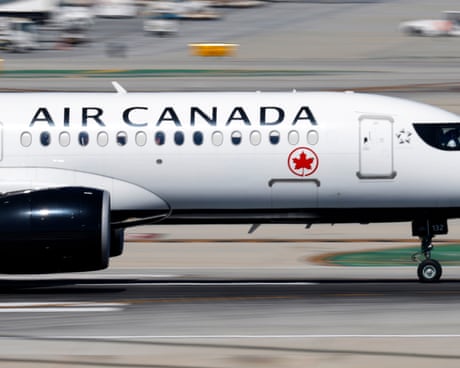
A former Air Canada pilot has been charged after flying for years without a proper license, Canadian police have said.

Geoffrey Wall, of Barrie, Ontario, is alleged to have operated as an airline captain between 2009 and 2025 without a license to fly large commercial passenger planes, according to Peel regional police.

Continue reading...

© Photograph: Kevin Carter/Getty Images

© Photograph: Kevin Carter/Getty Images

© Photograph: Kevin Carter/Getty Images

  •  

Sarampo: infectologista alerta sobre vacinação em viagens para a Copa

Logo Agência Brasil

O aumento do número de casos de sarampo registrado nos Estados Unidos, México e Canadá – que sediarão jogos da Copa do Mundo 2026 – acende o alerta para a necessidade de vacinação dos turistas brasileiros que viajarão para o Mundial. Juntos, os três países respondem por 70% dos casos nas Américas.

A observação foi feita nesta terça-feira (9) à Agência Brasil pela infectologista Natalie Del Vecchio, do Instituto Nacional de Saúde da Mulher, da Criança e do Adolescente Fernandes Figueira, da Fundação Oswaldo Cruz (IFF/Fiocruz).

Notícias relacionadas:

“O sarampo é uma doença altamente contagiosa”, disse. Isso significa que uma pessoa com o vírus consegue transmiti-lo para muitas outras simultaneamente. “E a gente tem visto a baixa cobertura vacinal nesses países e também no Brasil”, observou Natalie Del Vecchio.

Expansão

No ano passado, a Organização Mundial da Saúde (OMS) alertou para a expansão dos casos, quando o Canadá registrou 5.062 ocorrências, o que levou à perda da certificação de país livre da doença. Em 2026, foram confirmados 124 casos no território canadense.

O México elevou o número de sete casos, notificados em 2024, para 6.152 registros em 2025. Somente em janeiro deste ano, foram 1.190 casos, de acordo com informações preliminares. Nos Estados Unidos, por sua vez, ocorreram 2.144 casos em 2025 e 721 em janeiro de 2026.

Segundo a infectologista do IFF/Fiocruz, o perigo é maior para os brasileiros que viajam para esses países sem estarem com o esquema vacinal contra sarampo completo. A vacinação pode evitar a eventual reintrodução do vírus no Brasil.

Natalie lembrou que, em novembro de 2024, o Brasil recebeu da Organização Pan-Americana da Saúde (Opas) a recertificação de país livre do sarampo. O documento foi entregue ao presidente Luiz Inácio Lula da Silva e à então ministra da Saúde, Nísia Trindade. Em 2016, o Brasil já havia alcançado essa posição de nação livre da circulação endêmica do sarampo mas, em 2018, as baixas coberturas vacinais permitiram a reintrodução do vírus no país.

Risco

“A baixa cobertura vacinal é um risco para o nosso país de reintrodução do vírus no Brasil”, afirmou a infectologista. Em 2025, foram notificados 38 casos no país, todos importados de nações vizinhas. Em janeiro de 2026, foram registrados dois casos de sarampo, de uma mulher de 22 anos. no Rio de Janeiro, e de um bebê de 6 meses, em São Paulo. Os dois não tinham registro de vacinação.

Natalie Del Vecchio recomenda que mesmo as pessoas que não vão viajar para os países-sede da Copa do Mundo devem procurar completar o calendário vacinal. Para aquelas acima de 1 ano de idade até 30 anos, são necessárias duas doses da vacina contra sarampo e, de 30 a 60 anos, uma dose.

“Se a pessoa já tem o calendário dela completo, não precisa tomar uma dose extra da vacina. Se o calendário não estiver completo, os viajantes que se destinam aos países-sede da Copa devem completar o esquema vacinal. Essas pessoas viajarão com tranquilidade, exatamente para não estarem adquirindo o vírus do sarampo, nem trazendo para o nosso país. Para, exatamente, evitar um novo surto e novos casos do sarampo no Brasil”, afirmou a infectologista.

Reforço

O Ministério da Saúde lançou campanha nacional orientando brasileiros que viajarão aos Estados Unidos, México e Canadá para a Copa do Mundo a reforçar a vacinação contra o sarampo. Para crianças de 6 a 11 meses, a recomendação é que tomem a dose zero pelo menos 15 dias antes da viagem. Na faixa de 12 meses a 29 anos, é necessário ter duas doses.

Os adultos de 30 a 59 anos devem ter recebido pelo menos uma dose ao longo da vida. Outra recomendação é que a aplicação da vacina Tríplice Viral (que também protege contra caxumba e rubéola) deve ocorrer pelo menos 15 dias antes da viagem. As doses estão disponíveis gratuitamente nas unidades de saúde do Sistema Único de Saúde (SUS).

Gravidade

O sarampo é uma doença grave que pode deixar sequelas por toda a vida e até causar a morte. As principais complicações variam de acordo com as fases da vida do paciente. Para crianças, pode causar pneumonia, infecções de ouvido, encefalite aguda (inflamação no encéfalo – parte do sistema nervoso dentro do crânio) e morte. Em adultos, causa pneumonia. E, em gestantes, pode resultar em parto prematuro e bebê com baixo peso.

Altamente contagiosa, a doença se espalha pela tosse, fala ou respiração. Uma pessoa infectada pode contaminar outras antes mesmo de saber que está doente. Os sintomas mais comuns são febre alta, tosse persistente, coriza, irritação nos olhos, e manchas vermelhas que começam no rosto e depois no corpo. Os sintomas costumam aparecer entre sete e 14 dias após o contato com o vírus.

  •  

Sarampo: infectologista alerta sobre vacinação em viagens para a Copa

Logo Agência Brasil

O aumento do número de casos de sarampo registrado nos Estados Unidos, México e Canadá – que sediarão jogos da Copa do Mundo 2026 – acende o alerta para a necessidade de vacinação dos turistas brasileiros que viajarão para o Mundial. Juntos, os três países respondem por 70% dos casos nas Américas.

A observação foi feita nesta terça-feira (9) à Agência Brasil pela infectologista Natalie Del Vecchio, do Instituto Nacional de Saúde da Mulher, da Criança e do Adolescente Fernandes Figueira, da Fundação Oswaldo Cruz (IFF/Fiocruz).

Notícias relacionadas:

“O sarampo é uma doença altamente contagiosa”, disse. Isso significa que uma pessoa com o vírus consegue transmiti-lo para muitas outras simultaneamente. “E a gente tem visto a baixa cobertura vacinal nesses países e também no Brasil”, observou Natalie Del Vecchio.

Expansão

No ano passado, a Organização Mundial da Saúde (OMS) alertou para a expansão dos casos, quando o Canadá registrou 5.062 ocorrências, o que levou à perda da certificação de país livre da doença. Em 2026, foram confirmados 124 casos no território canadense.

O México elevou o número de sete casos, notificados em 2024, para 6.152 registros em 2025. Somente em janeiro deste ano, foram 1.190 casos, de acordo com informações preliminares. Nos Estados Unidos, por sua vez, ocorreram 2.144 casos em 2025 e 721 em janeiro de 2026.

Segundo a infectologista do IFF/Fiocruz, o perigo é maior para os brasileiros que viajam para esses países sem estarem com o esquema vacinal contra sarampo completo. A vacinação pode evitar a eventual reintrodução do vírus no Brasil.

Natalie lembrou que, em novembro de 2024, o Brasil recebeu da Organização Pan-Americana da Saúde (Opas) a recertificação de país livre do sarampo. O documento foi entregue ao presidente Luiz Inácio Lula da Silva e à então ministra da Saúde, Nísia Trindade. Em 2016, o Brasil já havia alcançado essa posição de nação livre da circulação endêmica do sarampo mas, em 2018, as baixas coberturas vacinais permitiram a reintrodução do vírus no país.

Risco

“A baixa cobertura vacinal é um risco para o nosso país de reintrodução do vírus no Brasil”, afirmou a infectologista. Em 2025, foram notificados 38 casos no país, todos importados de nações vizinhas. Em janeiro de 2026, foram registrados dois casos de sarampo, de uma mulher de 22 anos. no Rio de Janeiro, e de um bebê de 6 meses, em São Paulo. Os dois não tinham registro de vacinação.

Natalie Del Vecchio recomenda que mesmo as pessoas que não vão viajar para os países-sede da Copa do Mundo devem procurar completar o calendário vacinal. Para aquelas acima de 1 ano de idade até 30 anos, são necessárias duas doses da vacina contra sarampo e, de 30 a 60 anos, uma dose.

“Se a pessoa já tem o calendário dela completo, não precisa tomar uma dose extra da vacina. Se o calendário não estiver completo, os viajantes que se destinam aos países-sede da Copa devem completar o esquema vacinal. Essas pessoas viajarão com tranquilidade, exatamente para não estarem adquirindo o vírus do sarampo, nem trazendo para o nosso país. Para, exatamente, evitar um novo surto e novos casos do sarampo no Brasil”, afirmou a infectologista.

Reforço

O Ministério da Saúde lançou campanha nacional orientando brasileiros que viajarão aos Estados Unidos, México e Canadá para a Copa do Mundo a reforçar a vacinação contra o sarampo. Para crianças de 6 a 11 meses, a recomendação é que tomem a dose zero pelo menos 15 dias antes da viagem. Na faixa de 12 meses a 29 anos, é necessário ter duas doses.

Os adultos de 30 a 59 anos devem ter recebido pelo menos uma dose ao longo da vida. Outra recomendação é que a aplicação da vacina Tríplice Viral (que também protege contra caxumba e rubéola) deve ocorrer pelo menos 15 dias antes da viagem. As doses estão disponíveis gratuitamente nas unidades de saúde do Sistema Único de Saúde (SUS).

Gravidade

O sarampo é uma doença grave que pode deixar sequelas por toda a vida e até causar a morte. As principais complicações variam de acordo com as fases da vida do paciente. Para crianças, pode causar pneumonia, infecções de ouvido, encefalite aguda (inflamação no encéfalo – parte do sistema nervoso dentro do crânio) e morte. Em adultos, causa pneumonia. E, em gestantes, pode resultar em parto prematuro e bebê com baixo peso.

Altamente contagiosa, a doença se espalha pela tosse, fala ou respiração. Uma pessoa infectada pode contaminar outras antes mesmo de saber que está doente. Os sintomas mais comuns são febre alta, tosse persistente, coriza, irritação nos olhos, e manchas vermelhas que começam no rosto e depois no corpo. Os sintomas costumam aparecer entre sete e 14 dias após o contato com o vírus.

  •  

Florida shaken by 6.1-magnitude earthquake off coast of Cuba

Earthquake was region’s strongest tremor in nearly 150 years and was also felt in parts of Mexico including Cancún

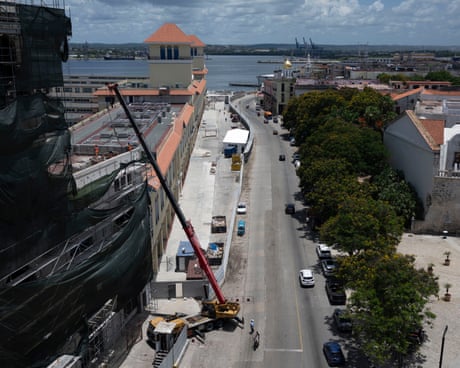
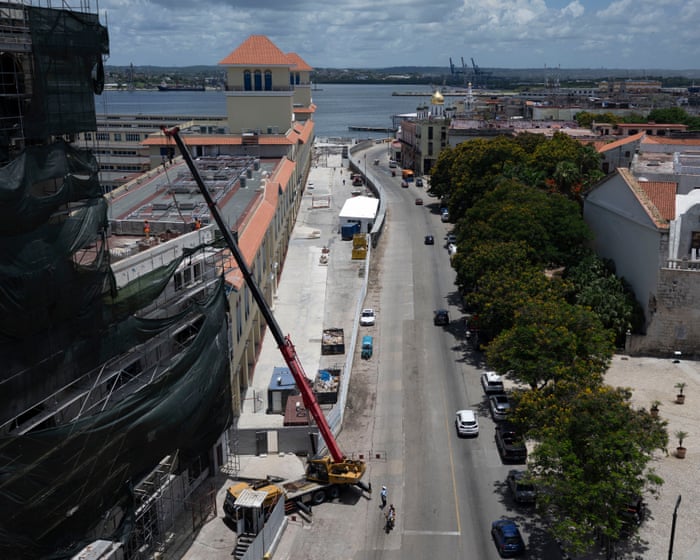
An earthquake on Monday off the coast of Cuba, which was that region’s strongest tremor in nearly 150 years, could be felt in Florida and parts of Mexico.

The 6.1-magnitude earthquake, which struck in the afternoon, occurred approximately 65 miles (105km) north-west of Mantua, Cuba, according to the US Geological Survey (USGS). The USGS added that the earthquake had a depth of 16 miles.

Continue reading...

© Photograph: Pablo Porciúncula/AFP/Getty Images

© Photograph: Pablo Porciúncula/AFP/Getty Images

© Photograph: Pablo Porciúncula/AFP/Getty Images

  •  

NATO has its eyes on our health too: What awaits the health services of member countries in a ‘state of war’?

NATO plans to seize civilian health systems for war – turning hospitals into military logistics hubs, Erkin Oncan writes.

Join us on TelegramTwitter, and VK.

Contact us: info@strategic-culture.su

The global public is waiting for the NATO Summit to be held in our capital, Ankara, on 7–8 July.

At the summit, of course, imperialist aggression against Iran and the latest developments in the Russia–Ukraine war will likely be the main issues. But the real key headline is the target of member countries spending 5 percent of their Gross Domestic Product (GDP) on defense.

Except for Spain, all allies have pledged to reach the 5 percent defense spending target by 2035. We had previously written about the burden this would place on countries’ national economies and the possible consequences, especially cuts in social spending. (Source)

However, NATO is, as expected, carrying out its preparations for the so-called ‘big war’—which is now effectively an open secret—through a multi-layered program. The alliance is preparing for the historic summit and the transformation that will take place in the summer through committee and various subcommittee meetings.

Another threshold in this preparation was crossed recently in North Macedonia. This critical development, which did not receive much media coverage, is focused on preparing member states’ health systems as well for the expected ‘big war.’

Who organized the meeting?

The meeting was organized by the NATO Committee of Chiefs of Military Medical Services (COMEDS).

Its origins go back to EUROMED, established in 1970 by the medical services leadership of EUROGROUP, which itself was founded in 1968 for the purpose of logistical coordination among NATO’s European members.

By the 1990s, all EUROGROUP activities except EUROMED were transferred to the Western European Union (WEU)—which would be dissolved in 2011—while EUROMED joined NATO. EUROMED was then institutionalized by the NATO Military Committee in the 1993–1994 period and transformed into today’s COMEDS structure.

Since then, this structure has worked on organizing health services for military personnel, as well as on medical evacuation and related fields. But this structure is also tasked with operating in civilian areas, not only military ones. Epidemics in member countries, natural disasters, emergencies, and the like… In all of these ‘civilian’ events too, this committee is responsible for providing ‘coordination’ on highly sensitive matters such as medical supplies and patient transport.

What was discussed at the meeting?

The meeting, recorded as the NATO COMEDS 65th Plenary Meeting, was held in Skopje, North Macedonia, on 1–4 June.

From the statements made by senior officials speaking at the meeting, it appears that two points were emphasized.

The first of these is accelerating the treatment of the wounded and their return to the front.

In his opening remarks, Belgian Major General Luc Vanbockryck, Director of NATO’s Logistics and Resources Division, said that medical support should be regarded as “a critical capability equivalent to any weapons system.”

Norwegian Brigadier General Petter Iversen, who holds the committee’s chairmanship, also described “a new reality” and stated:

“Military medical services are no longer just a broad support domain; they are becoming a fundamental element just like any weapons system. We must accelerate the process of returning soldiers to the front. This has strategic importance.”

In other words, NATO sees its wounded soldiers not merely as patients, but as resources that need to be “repaired” as quickly as possible. This stance is also an indication that NATO anticipates serious losses in the event of a possible war.

Work on the NATO Medical Action Plan (MAP), which entered into force in January 2025, was also one of the main topics at the meeting. Due to the decision on ‘confidentiality,’ the full text of this action plan has not yet been made public, but we can infer the main trends in the plan from meetings of this kind and from the statements of officials.

And this brings us to the second important point:

Civil-military health integration

According to official documents, NATO explicitly describes the MAP through a “Whole-of-government, whole-of-society” approach. In other words, these plans involve not only the military health system, but also the health capacity of the state and society.

We also learn what this integration looks like in practice from NATO documents open to the public.

At NATO’s first joint military-civilian health meeting, held on 7 December 2023, the issues discussed with COMEDS were striking:

National health authorities; mass casualty planning, supply security for blood and blood products and medical countermeasures, patient evacuation and transfer…

The following year, in discussions between COMEDS and NATO’s Joint Health Group, the main topic was again civil-military cooperation.

The most striking aspect of this meeting was NATO’s assessment that “civilian authorities’ civilian health systems need to be able to function for longer in a conflict environment.” In other words, NATO is not aiming to expand the military system in the health field; it is aiming to make civilian health capacity directly resilient to war conditions.

The guidelines contained in the alliance’s health manuals point exactly to the place we are highlighting:

Strategic stocks, shared access arrangements in civilian/military medicine, joint disease/health surveillance, communication lines, and more…

What does all this mean?

The best way to understand the effect of all these regulations and proposed regulations on the public is through a kind of written simulation.

Based entirely on NATO documents, let us imagine that NATO, led by the United States, together with member countries, has started a hot war against a “great enemy,” and that our country is also involved in this war with its military power.

In such a scenario, what will happen in the field of medicine can be summarized as follows:

When our country is involved in any total war of NATO, the first break occurs first in the supply chain, transport, and communications; all of these sectors come under intense pressure. In other words, the war moves from the front to the cities very rapidly, and public services are instantly paralyzed.

The expected picture in Turkey in such a war would be, in addition to injuries and deaths, a contraction in access to health services, shortages of medicines and medical supplies, psychological trauma, migration and internal displacement, price increases, disruptions in transport and communication, and the diversion of public resources to the war.

Turkey’s health infrastructure is redesigned at great speed according to the tempo of war, not according to the needs of the public. City hospitals, state hospitals, military hospitals, university hospitals, and private health chains learn whom they will serve and how not according to the country, but according to the alliance and the laws of the war it is in.

From this point on, the matter is no longer merely a question of medical capacity; it becomes directly a question of sovereignty. Because in wartime, health is not just about “saving the wounded,” but about deciding who will be treated, which wounded person will be moved first, which medicine will be given to whom, and which hospital will operate according to military priorities.

For example, in its medical situation assessment prepared at the center in the first moments of war, COMEDS determines in which countries the health system is under strain, in which regions patient transfer is possible, and in which areas civil-military coordination is needed.

According to the plan to be created under the MAP, some allied countries will take on advanced surgery and intensive care capacity, while others will assume the role of evacuation, rehabilitation, blood products, medicine delivery, or logistics hub. So who will distribute these roles? The answer is again in NATO documents: “Lead nations,” that is, leading countries…

The question not answered in NATO documents is this: On what basis will the division of tasks be made? On military power? On political power? On a country’s place within the alliance? Or according to the Atlantic-centered strategic reflexes that give the alliance its true character?

Let us continue with NATO documents… If military medical services are insufficient on their own—which is expected to be the case—COMEDS begins cooperation with civilian health authorities. This cooperation, which NATO explains through seemingly “health-focused” concepts such as supply security and patient referral and transfer, has one more frightening requirement: the use of national and regional stockpiles.

In other words, when NATO deems it necessary, it can, for example, use the blood stock held by civilian health services for military personnel. This is actually a law applicable in every country. But it is much more than a state’s ability to use its own stock within the country for the sake of its own army and its own interests in war.

In short, let us think about health services, which are at the center of human life…

When health services, militarized by officials who consider them equivalent in importance to weapons systems, are quickly transformed from “burden sharing” into “resource sharing” in wartime due to NATO membership, how much of them will reach whom?

And let us imagine a country…

A country that is not among the “upper ranks” of the imperialist-capitalist system, yet is kept within the alliance by governments at any cost; whose economy is extremely fragile; whose public services, especially health, already run sluggishly; but which has a large military/civilian population. In such a scenario, how many years—not years, but months—could it hold on, and which of its “allies” would have the courage to shoulder the burden of rescuing such a wreck?

  •  

The criminal cartels cashing in on the World Cup – podcast

Football fans are celebrating the tournament coming to Guadalajara. But with a brutal crime syndicate holding sway there, what are the risks for fans – and the government?

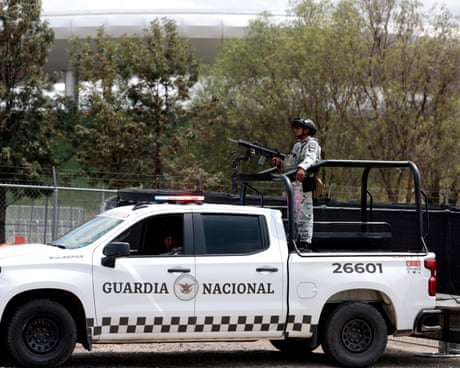
Excitement is mounting in Mexico as the World Cup opens in Mexico City, then heads to the city of Guadalajara.

Mexican journalist Leon Krauze is a fan. He was there the last time the World Cup came to Mexico and will be watching again. The city of Guadalajara has a mythical footballing past: “Pele’s Brazil played there in 1970, then Zico and Socrates played there in 1986. There is a real football memory there, a love affair between Guadalajara and football in general, and I expect it to be a wonderful party.”

Continue reading...

© Photograph: Ulises Ruiz/AFP/Getty Images

© Photograph: Ulises Ruiz/AFP/Getty Images

© Photograph: Ulises Ruiz/AFP/Getty Images

  •  

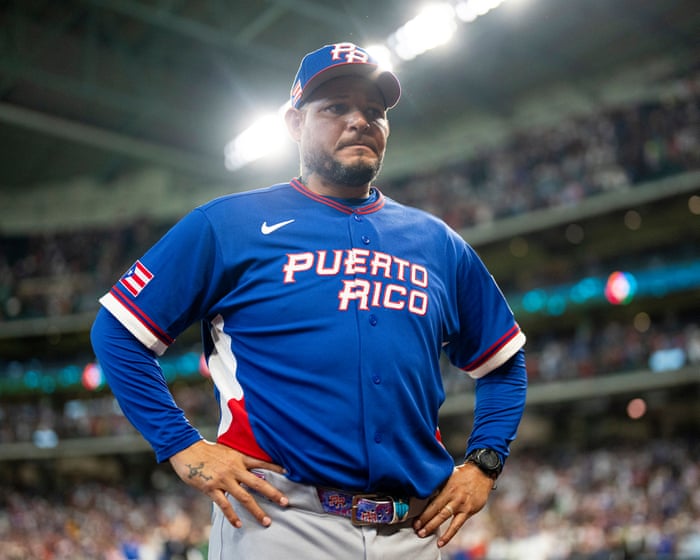
Two US pilots killed after plane bound to pick up former MLB star crashes

Plane on way to pick up Yadier Molina and his family crashed in Dominican Republic, killing pilot and co-pilot

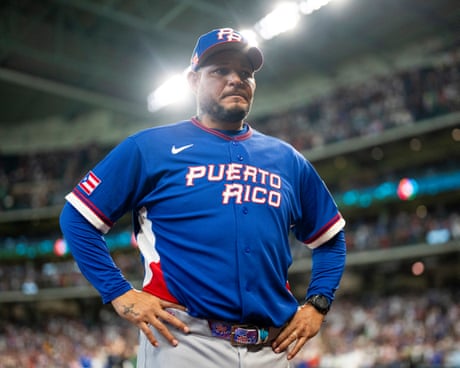
A pilot and co-pilot from the United States have died in a fiery plane crash as they attempted an emergency landing in the Dominican Republic, authorities said.

Former major league baseball all-star catcher Yadier Molina said on social media that the plane was bound for Texas to pick him up, along with family and friends.

Continue reading...

© Photograph: Houston Astros/Getty Images

© Photograph: Houston Astros/Getty Images

© Photograph: Houston Astros/Getty Images

  •  

Hezbollah is now the centre of Trump’s Iran ceasefire. So now what?

Lebanon is now playing a key role in any ceasefire deal that Trump might think he has nailed with Iran. But can Hezbollah go rogue on all the main players?

Join us on TelegramTwitter, and VK.

Contact us: info@strategic-culture.su

Lebanon is now playing a key role in any ceasefire deal that Trump might think he has nailed with Iran. But can Hezbollah go rogue on all the main players?

Relationships are odd things and are often determined by how people stay together during the tough times, rather than when everything is rosy. But during these last few turbulent days, when Donald Trump frantically scrambles to save the remnants of a peace deal with Iran, one relationship has become paramount to the entire Middle East crisis: that of Hezbollah and Iran. Just how strong is this relationship, or was it always just a ’marriage of convenience’, hollow and unable to withstand the travails of regional tension?

While the Iranians walked away from talks with the U.S. because of Israel’s war in southern Lebanon, Trump realised how important this tiny country is – and will be – if any kind of deal is struck over opening the Straits of Hormuz. While on the one hand Iran has stepped up to the mark by supporting its proxy Hezbollah and has always included Lebanon in any peace deal or ceasefire, it is worth noting that the ties and responsibilities Iran has to Hezbollah are not as solid as many think.

Indeed, in the region, when you talk to geopolitical analysts, they always pontificate over how the West – and in particular Israel – places too much emphasis on Iran’s links to its regional proxies in Syria, Iraq, Yemen and Lebanon. They have long argued that Iran has less control over them than most pundits in Western media would assert.

In his most recent speech, the Hezbollah leader Naim Qassem denounced the deal as a “farce,” saying it would effectively divide southern Lebanon from the rest of the country, giving Israel an advantage to “kill in Lebanon.”

“We have given no commitment to anyone,” Naim said, as he urged the Lebanese government to call off talks with Israel and demanded Israel’s full withdrawal from Lebanese territory. “As long as the aggression continues, we will confront it with all the power we have been given.”

This reference, of course, was directed at the elite in Beirut, who are largely acting on the West’s political bequest in this tiny country – barely 240 km long – which was once a province of Syria.

But some wily analysts might read too much into his statement in the coming days. A few might mull over this comment and speculate that Hezbollah, under certain circumstances, has a wild card to play and is capable of going rogue, distancing itself from the arbitrary direction of Tehran.

Is it possible that the Iranians and the Americans could outmanoeuvre Israel and strike a provisional ceasefire deal, only for it to be scuppered by Hezbollah, which refuses to give up its fight in the south of the country against the IDF? Presently, this must be concerning Trump’s camp but will be amusing to Netanyahu, who probably thinks that Lebanon holds the key for him to continue the war and thus stay in power, avoiding corruption charges.

Hezbollah, for its part, is the most dangerous man in the room, simply because its fighters have nothing to lose. They are backed into a corner and have lost so much of their own land, with 600 killed and a million displaced since the last ceasefire in April was agreed. Militarily speaking, their best guerrilla-style fighting will be seen now, and so one could argue this is their moment. While it is true that the IDF have made significant gains against them, it is wholly under-reported how successful their fighters have been in blowing up IDF tanks, with some estimates claiming the number to be over 200. But victory for either side seems less significant, certainly for Netanyahu, who probably knows that his forces can never actually win against Hezbollah in Lebanon. That is not the point. The point is to keep the war going and use it as leverage against Trump and Iran, while keeping Netanyahu in office, protected from a peace scenario that would remove him from his job and prosecute him – exactly the same set-up that Ukraine’s President Zelensky enjoys.

Lebanon is an important pawn in the bigger game, as it can always be used by Netanyahu to undermine whatever Trump is doing – such as its bombardment of Beirut that killed 357 people on April 8, one day after the U.S. and Iran announced their own ceasefire deal.

But now all Netanyahu needs to do is to agree to the IDF respecting a ceasefire without actually respecting it, while pointing the finger at Hezbollah for supposedly breaking it. It will be a game that is hugely effective, as it will be impossible for Trump to consider Hezbollah as being honourable and the IDF as being duplicitous. Even from a PR perspective, it’s genius.

And so with this new ruse in play, much emphasis is placed on Hezbollah as it is caught between choosing to fight the IDF or accepting a peace deal that would effectively hand over huge swathes of southern Lebanon to the Lebanese army – a useless contingent of poorly trained soldiers with hand-me-down, outdated equipment donated by Western countries, and one which is no match for Hezbollah. Under this deal, Israel would establish itself south of the Litani River and have legal authority to strike Beirut (its goal is to completely reduce the southern suburb where Hezbollah supporters live, similar to Gaza).

There are no real options for Hezbollah other than to fight on, but one has to wonder if they would ultimately accept an ’order’ from Tehran to stop fighting if a deal with the U.S. could be struck. The message from its chief is that under such circumstances of being at war with Israel on Lebanon’s own turf, the Shia group has the right to play the autonomy card while happily listening to Iran’s views – but not necessarily taking them as orders. Suddenly the whole world is watching Lebanon. Suddenly Hezbollah is the most important player, and its relationship with Iran has never been more relevant, as Tehran now might need to use its might to extract a concession from its partner. Even in a fake marriage, one partner has to give in sometimes to the other’s woes or needs, and so in the coming days expect a baptism of articles by obsequious, high-brow Middle East analysts agonising over this marriage and how strong or real it is.

Trump’s February 28th assault on Iran has spawned a number of unintended consequences drenched in irony. The greatest one is that his clumsy buffoonery has probably now resulted in the Iranians getting a nuclear bomb. But a close second to that is that it has also put Iran’s relationships with its proxies under the microscope – and who knows where that’s heading.

  •  

Myanmar points the finger at ASEAN and calls for a reassessment

Myanmar emphasizes that any action that undermines regional stability or violates fundamental principles under the pretext of internal affairs should be prevented through ASEAN solidarity.

Join us on TelegramTwitter, and VK.

Contact us: info@strategic-culture.su

ASEAN at a crossroads

The ASEAN Charter serves as the legal framework uniting the nations of Southeast Asia in the maintenance of regional peace, security, and development. By defining the principles and responsibilities that all member states are required to uphold equitably, the Charter strengthens ASEAN’s position on the international stage as an organization committed to a rules-based order.

In particular, the principle of “non-interference in the internal affairs of member states” plays a crucial role in fostering trust among ASEAN countries. This policy safeguards the sovereignty of smaller states while helping to prevent tensions between nations with different political and social systems. Preserving this balance remains essential for regional stability.

Observing recent political developments in Myanmar, significant efforts aimed at strengthening democracy are clearly evident. Between December 2025 and January 2026, Myanmar successfully held free and fair multiparty general elections. Of approximately 24.22 million eligible voters, more than 13.14 million citizens—equivalent to 54.22% of the electorate—participated freely and responsibly. Consequently, a Parliament elected by a majority of voters was established, along with a government led by a President elected by that Parliament.

An analysis of the reasons behind the need for new elections reveals that the previous government had been accused of committing serious electoral fraud during the 2020 elections. Following strong objections raised by political parties and the public regarding the fairness of the process, official investigations were launched. Reportedly, these investigations uncovered over 11.3 million irregularities and errors in the voter rolls out of a total of over 38.2 million eligible voters. The incident has been described as one of the most serious cases of electoral irregularities in Myanmar’s history. Consequently, the authorities argued that legal intervention was necessary to ensure justice and the rule of law.

Furthermore, evidence was presented showing that officials of the National League for Democracy (NLD) government, accused of attempting to retain power through electoral manipulation, were also involved in cases of corruption and other violations of the law. The courts subsequently issued convictions in accordance with existing legal procedures. Consequently, the Tatmadaw assumed state responsibilities in accordance with the provisions of the 2008 Constitution and implemented a roadmap aimed at preserving the multiparty democratic system desired by the public. A key element of this roadmap was the successful organization of new free and fair elections in December 2025, aimed at restoring democratic governance and reflecting the genuine will of the people.

Just as in some other countries military institutions have temporarily assumed responsibility for governance based on domestic circumstances to strengthen democratic systems, Myanmar’s political process has also unfolded in accordance with its sovereignty and constitutional framework. In light of the current situation, the current government was established by the People’s Assembly (Pyithu Hluttaw), elected by a majority of voters through a free and open democratic process.

Although most ASEAN member states appear to recognize Myanmar’s recent political developments and seek greater cooperation in the interest of the region, several members continue to ignore these changes. These countries are still attempting to impose restrictions, apply discriminatory measures, and deny Myanmar equal participation within ASEAN.

Since joining ASEAN in 1997, Myanmar has actively contributed to ASEAN activities and complied with collective agreements. As a responsible member, the country has consistently fulfilled its obligations, including regular financial contributions to ASEAN mechanisms and programs. Despite having faced discriminatory treatment from some ASEAN members over the past five years, Myanmar has continued to cooperate patiently. However, the continuation of such practices under the newly formed government is viewed as a disregard for the democratic choices made by the people of Myanmar.

Myanmar seeks to reposition itself

Recently, some ASEAN countries have increasingly been perceived as interfering in Myanmar’s internal affairs and judicial matters. One example concerns remarks made by Philippine President Bongbong Marcos during a press conference on May 8, 2026. During the conference, President Marcos called for the release of Daw Aung San Suu Kyi and respect for her rights, arguing that, if recognized as a leader, she should be granted authority consistent with that status. He further stated that these points could constitute a key demand by ASEAN in negotiations with Myanmar and emphasized that this position will remain unchanged. However, judicial matters are considered a central element of national sovereignty, and foreign intervention in such processes is deemed inappropriate.

Myanmar views the Philippines’ statement as an attempt to place an individual—who has been indicted, tried, and convicted through legal procedures under Myanmar’s laws—above the law. Myanmar views this as direct interference in its sovereign judicial authority and legal system. Such actions are seen as contrary to the principles of international relations and detrimental to the mutual respect that should exist among ASEAN members.

Furthermore, Myanmar maintains that such behavior violates ASEAN’s principle of “non-interference,” as outlined in Chapter 1, Article 2, Sections 2(a) and 2(e) of the ASEAN Charter, which emphasizes respect for sovereignty and non-interference in the internal affairs of member states.

In international diplomacy, mutual respect forms the basis of stable relations. Myanmar believes that President Marcos’s remarks disregard diplomatic norms and call into question ASEAN’s long-standing principles of mutual respect and non-interference. At the same time, Myanmar notes that on March 11, 2025, the Marcos administration allowed the arrest of former Philippine President Rodrigo Duterte at Ninoy Aquino International Airport based on a warrant issued by the International Criminal Court (ICC), an action that drew criticism both domestically and internationally.

Myanmar has chosen not to comment on this sensitive matter, considering it an internal affair of the Philippines. By remaining silent and refraining from criticism or interference, Myanmar asserts that it has upheld ASEAN principles and diplomatic decorum.

Myanmar contends that the “double standard” demonstrated by the Philippine leadership threatens both Myanmar’s sovereignty and ASEAN’s unity. The country reiterates that it will reject any external pressure or directives and will continue to safeguard its sovereignty and national interests. Myanmar also calls on the Philippines to respect the fundamental principles of ASEAN and to contribute constructively to regional peace and stability.

Inevitable choices

From Myanmar’s perspective, the demands made by the Philippines reflect a selective interpretation of the ASEAN Charter and indicate a lack of genuine commitment to regional stability. For ASEAN to remain a strong, rules-based organization, all member states must consistently adhere to the principles of the Charter.

Ignoring the ASEAN Charter and interfering in the internal affairs of another member state, or taking actions that destabilize the region, is considered a serious threat to ASEAN’s unity. Such actions damage the trust built among member states over many years and weaken ASEAN’s centrality on the international stage.

Given current realities and ASEAN’s neutral stance, Myanmar emphasizes that it successfully held free and fair elections between December 2025 and January 2026. The government formed following those elections is now governing the country and implementing domestic legal processes. Myanmar urges ASEAN to assess these developments objectively and without prejudice.

Myanmar maintains that ASEAN’s role is limited to mediation and does not permit direct involvement in the internal affairs of member states. Therefore, ASEAN should continue to uphold neutrality as the foundation of regional peace and cooperation. Any ASEAN intervention regarding Myanmar should be based on the actions of the current government and the realities on the ground.

Although ASEAN has not yet reached full consensus on Myanmar, the country continues to maintain bilateral relations with individual member states. Myanmar has also expressed appreciation for ASEAN countries that recognize and support its recent political developments. Above all, Myanmar affirms that it will continue to pursue peace, stability, prosperity, and the protection of citizens’ rights through a “Myanmar-owned and Myanmar-led process” tailored to the country’s specific conditions.

While the international community may call for clemency for individuals imprisoned under domestic laws on humanitarian grounds, Myanmar maintains that no external actor has the authority to demand the restoration of political rights or power to such individuals. ASEAN’s responsibility is limited to mediation, and demands that ignore current realities are viewed as coercive interference rather than constructive engagement.

Finally, adherence to the ASEAN Charter is presented as an obligation rather than a choice for all member states. Myanmar emphasizes that any action that undermines regional stability or violates fundamental principles under the pretext of internal affairs should be prevented through ASEAN solidarity. Only by upholding these principles, Myanmar argues, can ASEAN fully realize its vision of “One Vision, One Identity, One Community.”

  •  

‘Narcoterrorism’ and the possibility of U.S. interference in Brazil

The reality is that this is not, in Brazil, a dispute between an anti-U.S. political camp and a pro-U.S. political camp, but a dispute between two political sectors that both want U.S. support to govern Brazil.

Join us on TelegramTwitter, and VK.

Contact us: info@strategic-culture.su

On June 5, 2026, the U.S. State Department confirmed the inclusion of Brazil’s two largest drug trafficking organizations – Comando Vermelho (CV) and Primeiro Comando da Capital (PCC) – on the list of organizations considered terrorist by the U.S.. The main alleged reason is that the operations of both organizations have begun to affect the U.S. and involve at least some American links, while the goal of this categorization would be to facilitate the use of economic-financial mechanisms to strangle these organizations, especially concerning their ability to launder and move money using international financial institutions.

Officially, with this measure, all U.S. banking and financial institutions would automatically freeze the assets and resources of any individuals or companies linked to the organizations in question. Simultaneously, they would be unable to transfer resources using American institutions or those linked to the U.S.. Furthermore, the U.S. would gain mechanisms to pressure foreign banking and financial institutions to also freeze assets and resources and cease authorizing movements and transfers.

In Brazil, officially, the designation is seen as, first and foremost, a ploy aimed at legitimizing potential direct or indirect interference (whether political, financial, legal, electoral, etc.) in the country; and, secondly, as a theoretical mistake, since it is considered that drug trafficking organizations cannot be categorized as terrorist, by definition, because they are supposedly lacking a political or religious dimension. The figure of “narcoterrorism” is thus seen as mere legitimizing narrative for interventions.

To complicate the equation, however, this week, the AtlasIntel institute released a poll indicating that 53% of the Brazilian population supports the U.S. decision, a share even higher than that of Bolsonaro supporters (41.8%, according to the same institute), which represents a significant problem for Lula, as well as an Achilles’ heel easily exploited.

Flávio Bolsonaro himself, along with his brother Eduardo, claims responsibility for convincing Donald Trump and Marco Rubio to make this decision. If true, it is a smart move. Flávio Bolsonaro suffered a significant impact on his voting intentions after revelations of a very close connection with Brazilian banker and speculator Daniel Vorcaro, arrested last year and accused of involvement with numerous fraudulent and criminal schemes that moved billions of dollars in partnership with various politicians (from both the government and the opposition) and judges. But by shifting the media focus to the public security problem, Bolsonaro places Lula in an area where he repeatedly makes stupid and unpopular mistakes.

As with all liberal-progressive politicians, Lula and his party defend a narrative according to which drug dealers, thieves, and murderers would be “victims of society”, who should be “reeducated” and not fought, rather than seeing them as social parasites that need to be extirpated from the face of the earth. Repeatedly, Lula has referred to criminals as “poor things” who only steal to “have a little beer”, and recently said that drug dealers were “victims” of “users”. Unsurprisingly, as soon as he learned of the U.S. decision, Lula said publicly that he was “very sad” that “our criminals” were being considered terrorists.

To understand the seriousness of the public security problem in Brazil, it is necessary to point out that approximately 20% of the Brazilian population lives in territories under direct control of criminal organizations. Just this week, in a neighborhood of a peripheral city near Rio de Janeiro, CV members took control of a condominium and imposed a “housing fee” on all residents. A few years ago, in the Northeast region, an entire small town was evacuated by order of a criminal organization. Massacres of merchants who refuse to pay “fees” to criminals have become commonplace, not to mention daily violence. Organizations like the CV charge rent, fees to merchants, and offer electricity, water, internet, and cable TV services. In some cases, they are also responsible for evangelical churches. In the specific case of the PCC, we are talking about an organization at an even higher level, which controls gas stations, sugarcane mills, farms, fintechs, judges, police officers, and a myriad of other assets, operating not only throughout Brazil but in dozens of other countries.

Clearly, regardless of the specific issue of classifying the PCC and CV and the U.S. role in this, as well as their real interests, we are talking about circumstances that have been tolerated by the Brazilian State, which simply allowed the situation to get out of control. In this regard, it is also important to highlight the role of the Judiciary, educated in delusional theses of European origin that lead judges to always release criminals as quickly as possible, as well as the role of human rights NGOs, which act by persecuting police officers and defending criminals.

Now, in what ways can the U.S. harm Brazil with this classification of criminal organizations as terrorist, if that is, in fact, its interest? There are several possibilities.

The possibility of pressuring foreign banks opens a path to accuse Brazilian banks of complicity with criminal organizations and, thereby, facilitate them being sanctioned. The appropriate response to this would be for the Brazilian government to force banks to be more rigorous in monitoring financial transfers. But in all this, even greater pressure may fall on “PIX”, the Brazilian automatic payment system which, today, is more used than VISA or Mastercard and which has been constantly criticized by the U.S.. The curious thing here is that PIX was created by the Bolsonaro government itself…

Another avenue of aggression against Brazil may involve sugarcane ethanol. There is a rivalry of more than 20 years with the U.S. in this sector, since the U.S. also has a large biofuel production, but based on corn. Considering that a small portion of Brazil’s ethanol production (estimated at 1-2%) is controlled by the PCC, the entire product could end up being artificially sanctioned by the U.S., thus securing new markets for corn ethanol.

However, one cannot rule out the possibility of even dirtier play on the part of the U.S.. Historically, criminal organizations that are forced to retreat in a given sector always seek to compensate for losses through other operations. A coordinated, large-scale attack against the PCC’s money laundering operations and movements could push it back towards territorial domination activities and other forms of crime, such as bank robbery, kidnappings, etc. Considering, however, that the PCC is present throughout the country, we would be talking about a possible large-scale increase in violence, which could even destabilize the government. This could be not only a hypothesis, but the very design of this U.S. government move.

Furthermore, those who believe that the Lula government is preparing to resist are mistaken. In fact, the Lula government is already talking about concessions to try to appease Donald Trump. The reality is that this is not, in Brazil, a dispute between an anti-U.S. political camp (Lula) and a pro-U.S. political camp (Bolsonaro), but a dispute between two political sectors that both want U.S. support to govern Brazil.

  •  

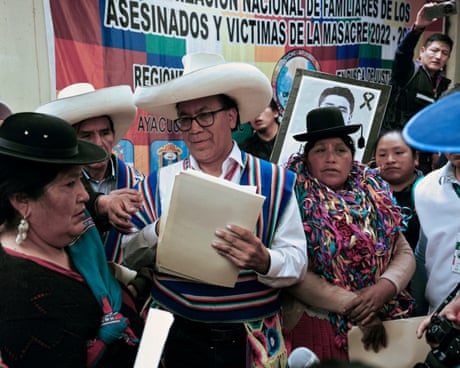
Peru’s discontented voters face straight left-right choice in election runoff

Keiko Fujimori, the daughter of 1990s leader Alberto, is vying with a congressman to become country’s ninth president in a decade

Peruvians go to the polls on Sunday in an election runoff that pits a perennial rightwing candidate, Keiko Fujimori, against a leftist congressman, Roberto Sánchez. Amid rising crime, chronic political instability, corruption scandals and voter apathy, they are vying to become Peru’s ninth president in a decade.

Fujimori, who is the daughter of the late president Alberto Fujimori, won 17% of the vote in the first round in April. Sánchez, a former trade and tourism minister, took 12 % of the vote, edging out Rafael López Aliaga, an ultra-conservative former Lima mayor. The stage is set for a polarised left-right replay of the country’s last election in 2021.

Continue reading...

© Photograph: Juan Carlos Cisneros/AFP/Getty Images

© Photograph: Juan Carlos Cisneros/AFP/Getty Images

© Photograph: Juan Carlos Cisneros/AFP/Getty Images

  •  

Trump’s AIPAC-Funded Political Execution of Thomas Massie: The Day MAGA Destroyed itself!

Political victories achieved through strict party discipline and powerful financial support often result in a deepening of internal divisions, the consequences of which only become noticeable over time. Back in my days as a young public school teacher in Kentucky, I learned fast that in politics, money talks, and anything else (BS) takes a hike […]
  •  

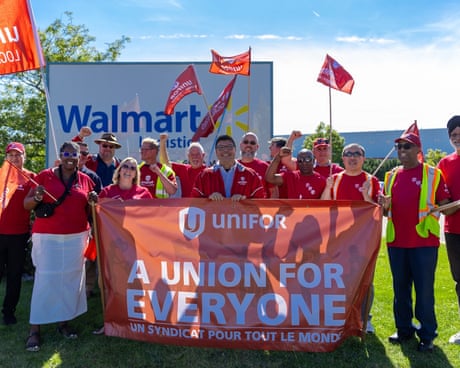
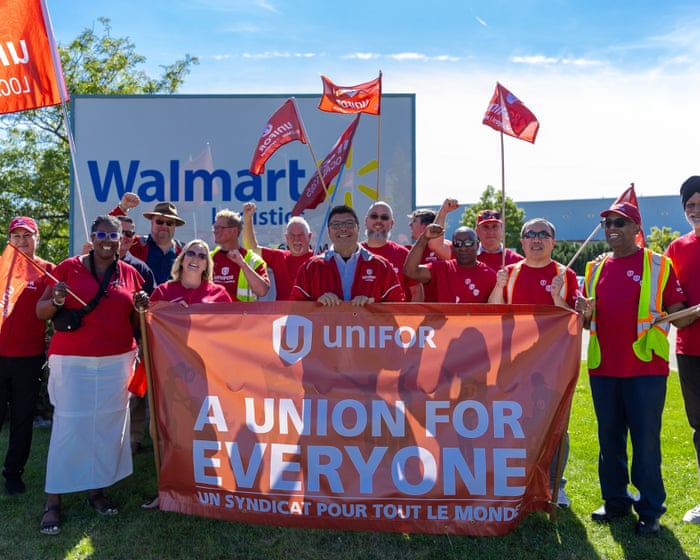
‘Historic’: Canadian warehouse workers sign first-ever union deal with Walmart

Union says collective agreement is just the start of a broader fight to unionize major employers across the country

Canadian warehouse workers have signed the first-ever collective agreement with Walmart, a breakthrough labour organizers are calling a “historic and powerful step”.

But the union says the deal with a corporation long hostile to organized labour is only an opening salvo in a broader fight to unionize major employers across the country.

Continue reading...

© Photograph: Unifor Canada

© Photograph: Unifor Canada

© Photograph: Unifor Canada

  •  

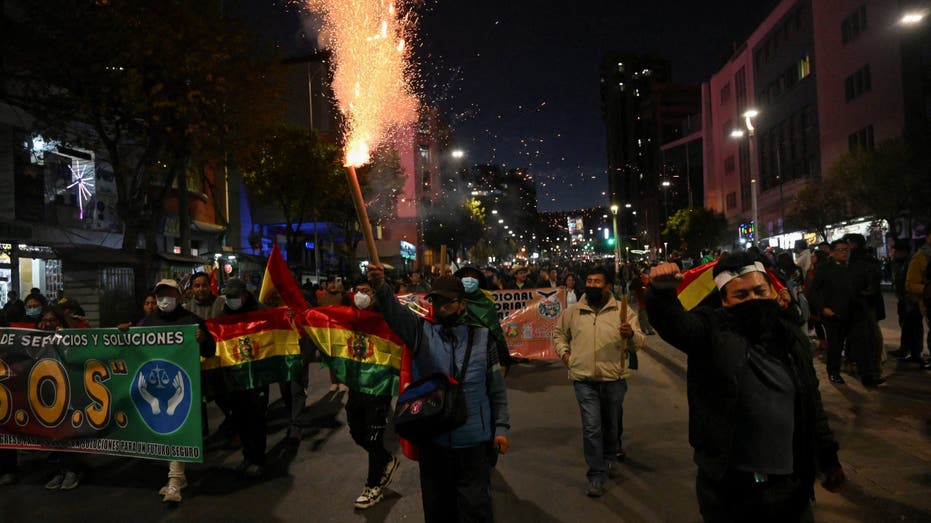
US, Shield of the Americas condemn 'ongoing efforts' to overthrow Bolivia's elected president amid unrest

The United States, along with the other countries that make up the Shield of the Americas, condemned the "ongoing efforts" in Bolivia to "overthrow the legitimately and overwhelmingly elected" government of President Rodrigo Paz on Friday.

"The member countries of Shield of the Americas denounce ongoing efforts to overthrow the legitimately and overwhelmingly elected government of President Rodrigo Paz in Bolivia," the statement read. "We stand with Paz’s democratic government as it fights back against attempts to drag Bolivia backwards through cynical efforts to prevent the delivery of food, medicine and other vital supplies to the Bolivian people through fake road blockades."

The statement added that "Mob rule cannot replace the decision that a majority of Bolivians made at the ballot box to turn the page on two decades of corrupt governments."

It also said that anyone who is funding protests with "dirty money" from drug trafficking and transnational crime "should be held accountable. Those who have legitimate grievances should take advantage of the government’s willingness to dialogue, and denounce those who would abuse their causes to regain power."

PETE HEGSETH WARNS NARCO-TERRORISTS AS U.S. BACKS BOLIVIA'S GOVERNMENT AMID COUP WARNINGS

The State Department made the joint statement along with Argentina, Bolivia, Chile, Costa Rica, Dominican Republic, Ecuador, El Salvador, Guyana, Honduras, Panama, Paraguay, and Trinidad and Tobago.

The statement comes as Bolivia's capital, La Paz, has been rocked by weeks of social unrest as mass protests have blocked streets in major cities amid economic inflation and rising fuel prices.

Bolivian Defense Minister Marcelo Salinas resigned Tuesday.

Upon taking office, Paz supported a land reform bill to boost agribusiness that Indigenous farmers said put them at risk of eviction. He further scrapped fuel subsidies, sending prices surging by nearly 90%. Motorists complained that the gasoline was contaminated and ruined their cars.

PETE HEGSETH MAKES HOMELAND SECURITY TOP MISSION IN FIRST INTERVIEW AS SECRETARY OF WAR

The Trump administration has said drug traffickers are responsible for inciting the mass unrest.

Meanwhile, former President Evo Morales of the Movement for Socialism (MAS) party, the country's first Indigenous president who ruled for an unprecedented 14 years, is calling for early elections. "Paz only has two paths left: a suicidal decision like militarization or ... an election in the next 90 days," he wrote on X.

For almost two years now, Morales has been hiding out in Bolivia's central coca-growing Chapare region, evading an arrest warrant on human trafficking charges relating to allegedly having sex with a 15-year-old girl. He rejects the allegations as politically motivated.

CLICK HERE TO DOWNLOAD THE FOX NEWS APP

On Thursday, War Secretary Pete Hegseth said in a post on X, that the War Department and the Americas Counter Cartel Coalition (A3C), a recently established multinational military and political alliance, reject all attempts to overthrow the government of Rodrigo Paz Pereira six months into his term.

"The United States is watching. Bolivia must not allow itself to fall prey to the old status quo of narco-terrorist dominance in the region," Hegseth wrote. "We will continue to support our A3C partners like Bolivia to ensure that narco-terrorists are deterred from profiting on death and destruction in our hemisphere."

Fox News' Louis Casiano contributed to this report.

  •  

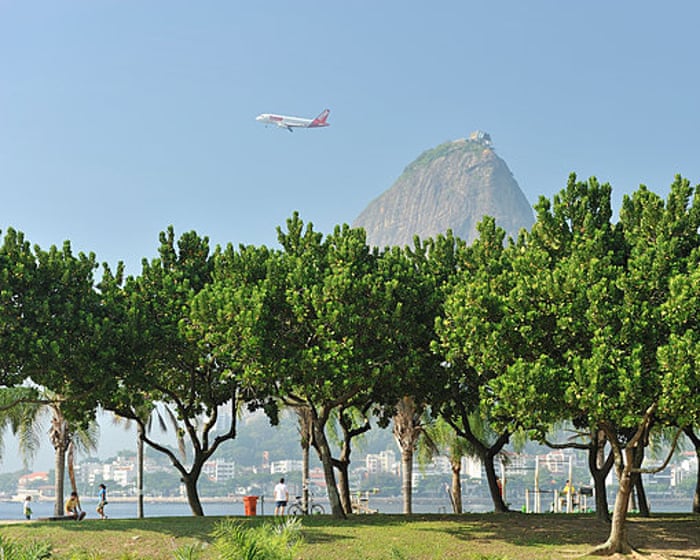
Aviation industry looks skywards as leaders fly in for Rio summit

Oil tankers may be stuck behind strait of Hormuz, but holding the Iata AGM in Brazil defies warnings of impending shortages

Nothing says jet fuel crisis, as one prospective attender put it, like flying everyone to Rio de Janeiro. Aviation leaders will converge in Brazil this weekend for the Iata AGM, the annual global airline summit, with the industry still, for the most part, looking resolutely skyward.

The oil tankers may still be stuck behind the strait of Hormuz as the conflict between the US, Israel and Iran flickers on, but for now, airlines continue to defy dire warnings of impending shortages which had stoked fears of a summer of chaos for European holidaymakers.

Continue reading...

© Photograph: Nature Picture Library/Alamy

© Photograph: Nature Picture Library/Alamy

© Photograph: Nature Picture Library/Alamy

  •  
❌