"For the time being, I think this issue has been solved at the working level," the EU's Enlargement Chief Marta Kos said in a meeting with journalists in Kyiv on June 8, referring to Poland's objection.
The U.S. Marine Corps is aiming to put in an order for new anti-drone 5.56x45mm ammunition for its M4 carbines and M27 rifles by the end of the year. Produced by a company called Drone Round, the L Variant cartridge has a projectile that breaks into multiple segments to improve the probability of scoring a hit on a small, fast-moving aerial target. The idea is to give anyone with a rifle an immediate boost in their ability to defend against growing drone threats, especially first-person view (FPV) kamikaze types now proliferating around the globe after becoming a fixture in the war in Ukraine.
Marine Corps Systems Command (MARCORSYSCOM) announced its intention to buy an unspecified number of 5.56x45mm L Variant cartridges through a sole-source contract with Drone Round in a notice posted online yesterday. The projected date of the contract award is December 2026.
“The 5.56mm Drone Round ‘L Variant’ is the only kinetic munition currently available in the commercial or defense marketplace that meets the Marine Corps’ strict minimum capability requirements for immediate c-sUAS [counter-small uncrewed aerial systems] defense,” according to an accompanying document justifying the need for a sole-source deal. “Specifically, this round is the only solution offering ‘drop-in’ compatibility that requires no physical modifications, specialized upper receivers, or distinct weapon platforms to be operable in current-issue Marine Corps 5.56mm weapons (e.g., M27, M4, and M4A1).”
“Furthermore, its deployment requires zero additional New Equipment Training or specialized occupational specialties, rendering it immediately effective upon issue,” the justification adds. “Failure to deliver this capability places an unnecessary risk to Marines and could lead to mission failure and loss of life.”
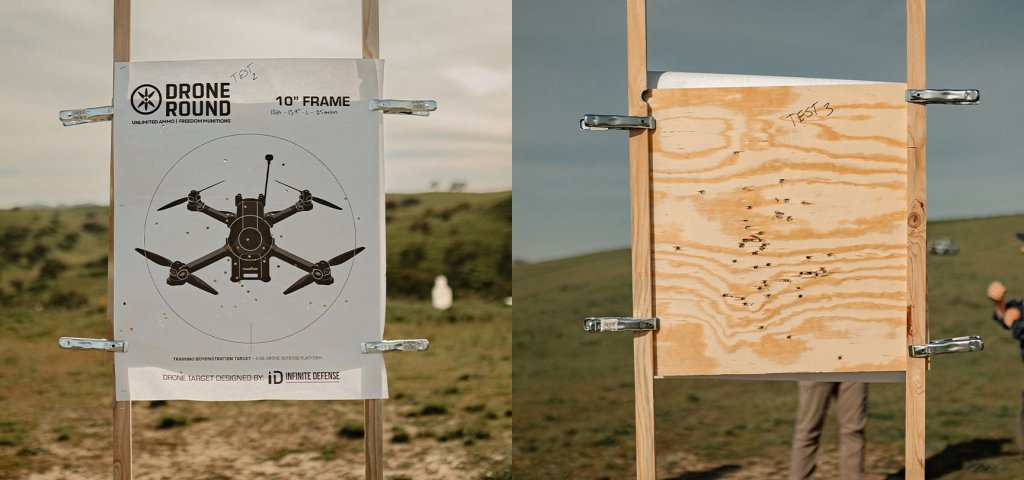
The results of a range test of L Variant rounds. Drone Round
Drone Round has been developing specialized anti-drone ammunition for small arms since at least 2025. At the time of writing, the company offers two 5.56x45mm versions, the aforementioned L Variant and a K Variant. The L and K versions have projectiles designed to split into five and eight segments, respectively.
With their different loadings, the L and K Variants are effective out to around 328 and 164 feet (100 and 50 Meters), both of which are relatively short ranges, according to Drone Round. No special modifications are required to use the ammunition in existing guns, and the company says the rounds are “full-auto and suppressor capable.”
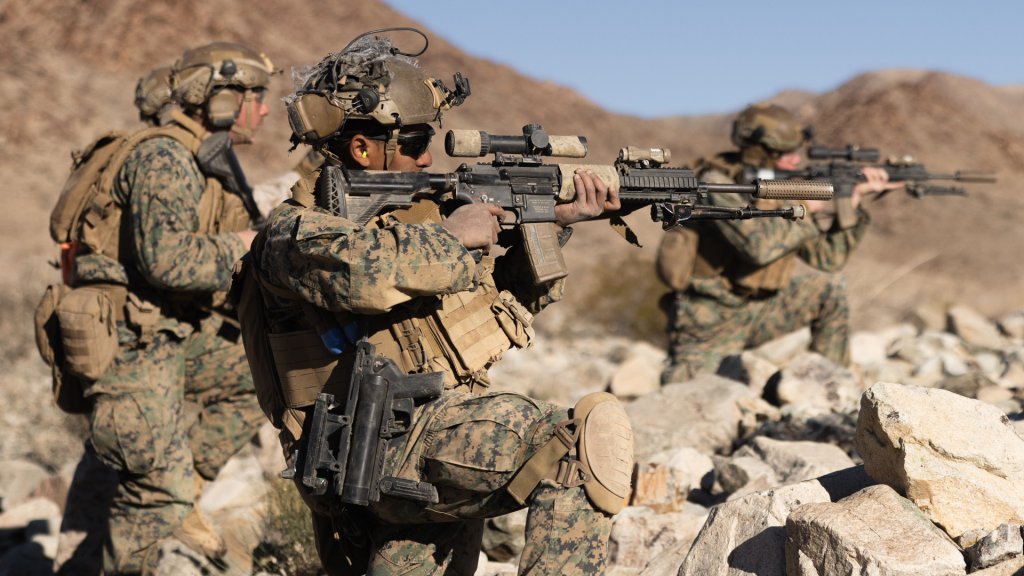
Marines train with M27 rifles. USMC
L and K Variants in 7.62x51mm have also been developed, but are still in testing. Work is underway on 6.8x51mm versions, which could be fired from the U.S. Army’s new M7 rifles, M8 carbines, and M250 light machine guns. Other calibers could be on the horizon, as well.
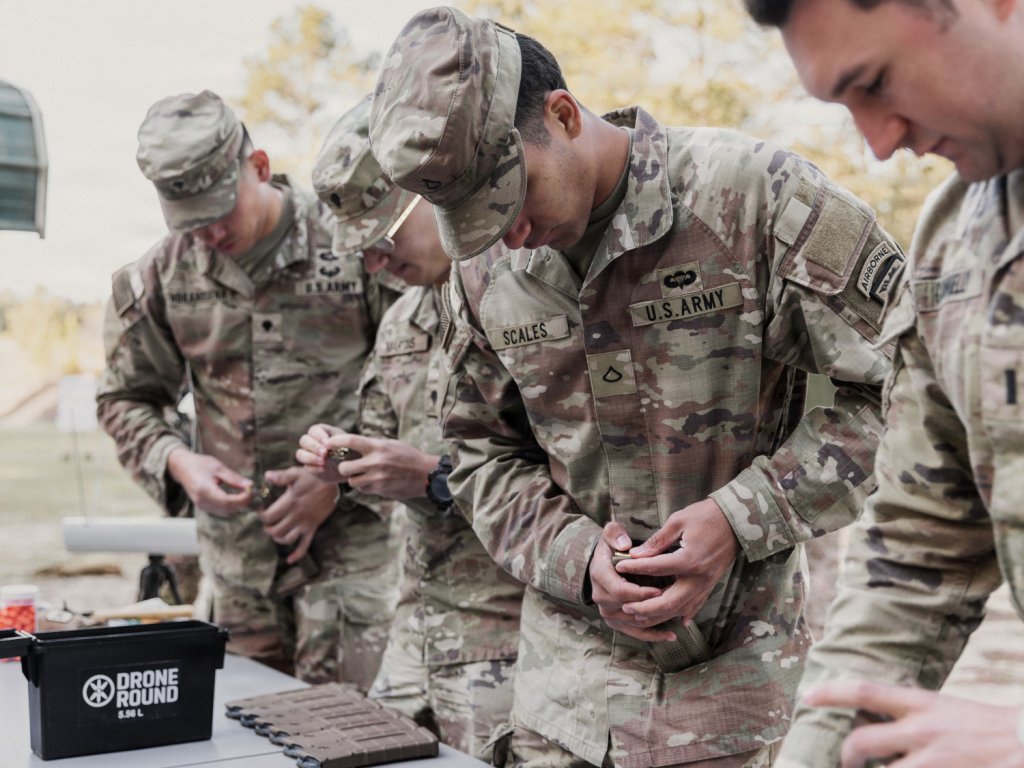
Soldiers assigned to the US Army’s XVIII Airborne Corps load L Variant cartridges into magazines during testing. US Army/Pfc. Alexis Fischer
Marine Corps interest in ammunition of this kind, broadly, is also not new. “Enhanced ammunition for existing firearms (buckshot-like 5.56, 7.62, .50, .40mm)” was among a list of desired squad and platoon-level counter-drone capabilities included in a separate contracting notice MARCORSYSCOM put out back in 2024. This reflected the then-recent rollout of a larger service-wide counter-drone vision, the core of which is ensuring that virtually every Marine can play a role.
“For our ammunition portfolio, we need industry’s help in counter-UAS munitions for our existing weapon systems,” Marine Col. Paul Gilikin, the Program Manager for Combat Support Systems at MARCORSYSCOM, said during a talk at the Navy League’s annual Sea-Air-Space conference in April.
The basic idea of multi-projectile small arms ammunition to help improve hit probability is decades old. The U.S. Army notably explored this concept extensively in the 1950s and 1960s, but did not ultimately field any of the rounds it developed. Armed forces elsewhere around the globe have pursued similar projects over the years.
Different types of pellet-filled rounds have also been developed for various small arms, including rifles and handguns, in the past, with the Glaser Safety Slug seen in the video below being one of the better-known examples. However, small arms cartridges of this kind have typically been designed primarily for very close-range self-defense, survival, or even pest-control use.
Porting these concepts of multi-projectile small arms cartridges over to counter-drone is a growing trend at this point, too. In February, the Naval Surface Warfare Center, Crane Division (NSWC Crane) unveiled multiple Drone Killer Cartridge (DKC) designs it had internally developed in 5.56x45mm, 7.62x51mm, and .50 caliber flavors.
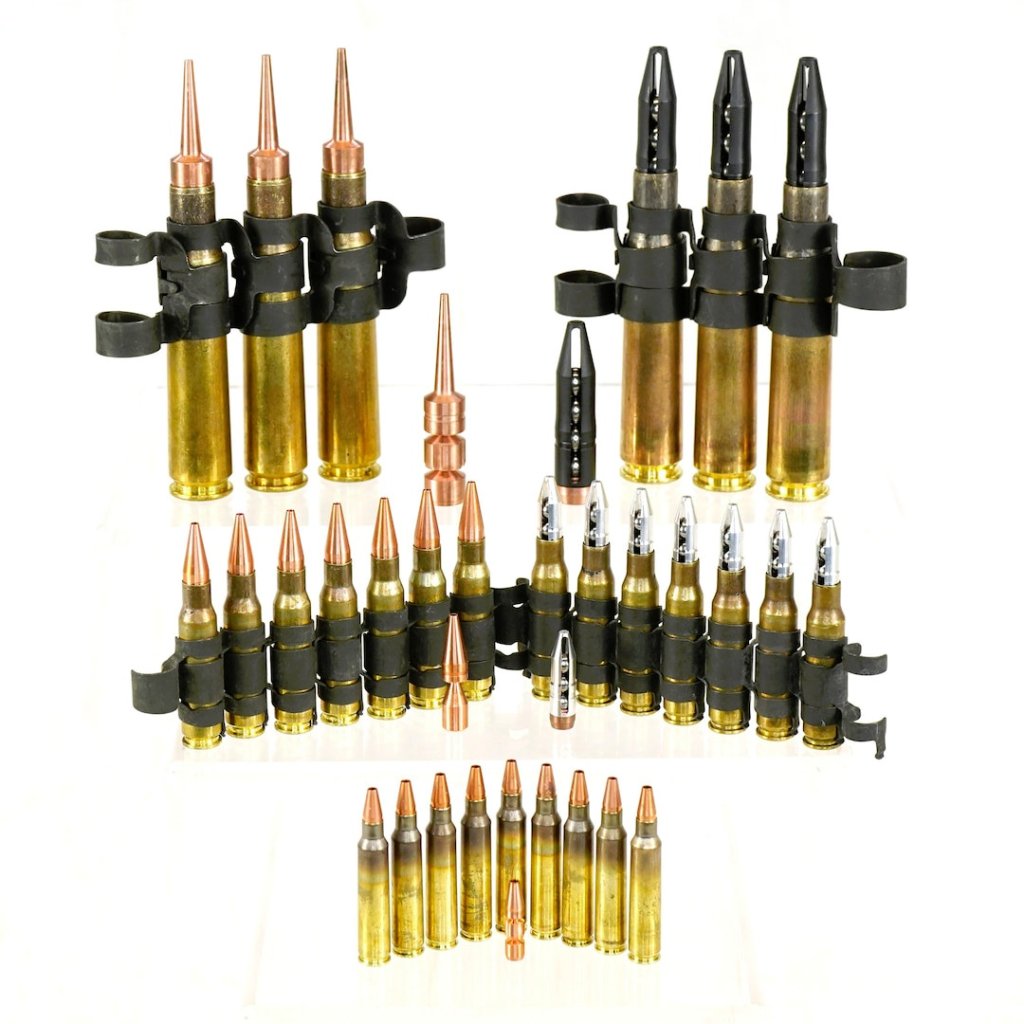
An array of different Drone Killer Cartridge designs developed by NSWC Crane. USN
“During a recent demonstration at Camp Atterbury in Edinburgh, Indiana, DKC achieved a 92% success rate against drone targets,” according to a Navy press release. What further progress has been made since then in the development of any of the DKC designs, or their fielding, is unknown.
High-Precision Complexes Holding has begun rolling out the first batches of its 'Многоточия' (Ellipse) triplex C-sUAS rounds. These are the СЦ 226 (STs 226) in 5.45×39, and the СЦ 228 (STs 228 in 7.62×39. Claims hit probability is improved by a factor of 2.5x at 300 m. pic.twitter.com/DUSFXHlb55
To reiterate, the key benefit that multi-projectile counter-drone cartridges offer is the boost in hit probability when engaging small and highly maneuverable drones. They can also be fired from existing guns without modification. This, in turn, presents a way to give anyone in a unit with an M4 or M27 an additional means of protecting against uncrewed aerial threats without adding to the bulk and weight that personnel already have to carry around.
The Marine Corps and other branches of the U.S. military have already been pursuing other add-on capabilities to improve the effectiveness of small arms against small drones, especially for individual rifles. In particular, variants of the SMASH family of computerized optical sight systems from Israeli firm Smart Shooter have been in growing use across America’s armed forces, and elsewhere globally, for years now. The Marines have at least tested another counter-drone rifle aiming system that uses a buttstock designed to automatically move the gun in line with the target. These are capabilities that could easily be paired with specialized ammunition. It might be possible to tweak software behind these systems to better work with multi-projectile loadings, too.
Range has been cited as one limiting factor, especially for shotguns. Specialized rifle rounds like Drone Round’s L Variant and the DKC types developed by NSWC Crane, which are fired at higher velocities than shotgun shells, are intended to help mitigate this, at least to a degree. However, as noted, Drone Round says that the effective range that it has demonstrated with its 5.56x45mm types to date is 328 feet (100 meters). As a point of comparison, the stated effective range of an M4 carbine firing standard single-projectile ammunition is around 1,640 feet (500 meters), according to the Army.
The closer a counter-drone engagement occurs, the less time there is to react, overall. There is the additional question then of whether standing and fighting is the best course of action.
“When shooting you are static, which makes it easier for the operator to aim the drone,” a contemporary Russian manual on counter-drone tactics notes, according to a report in April from Forbes. That being said, there might not be somewhere safer to move in many cases.
Russian correspondent hides from a Ukranian drone … it looks for him like in a scary movie. pic.twitter.com/XPPQGzDzn0
Ukrainian drone operators located a concentration of Russian hardware inside a large warehouse somewhere in the south of Ukraine, preparing for an assault.
The very skilled drone operators sent in several drones and eliminated several MBTs, IFVs, trucks and more. In the end, the… pic.twitter.com/jgcqibiJRD
Having to manage multiple ammunition types on the fly could also present challenges. What kind of effectiveness rounds like L Variant might offer against more traditional targets is unclear.
All this being said, counter-drone rifle rounds do continue to be fielded on both sides of the conflict in Ukraine, even if the full extent of their use is not entirely clear. The explicit fielding of shotguns as counter-drone weapons is another trend that is growing globally, including in the U.S. military.
Small arms are, of course, just one part of a layered ecosystem of defenses necessary to challenge the ever-growing threats posed by various tiers of drones. For the Marine Corps, specialized counter-drone 5.56x45mm ammunition is now in line to be part of that larger equation.
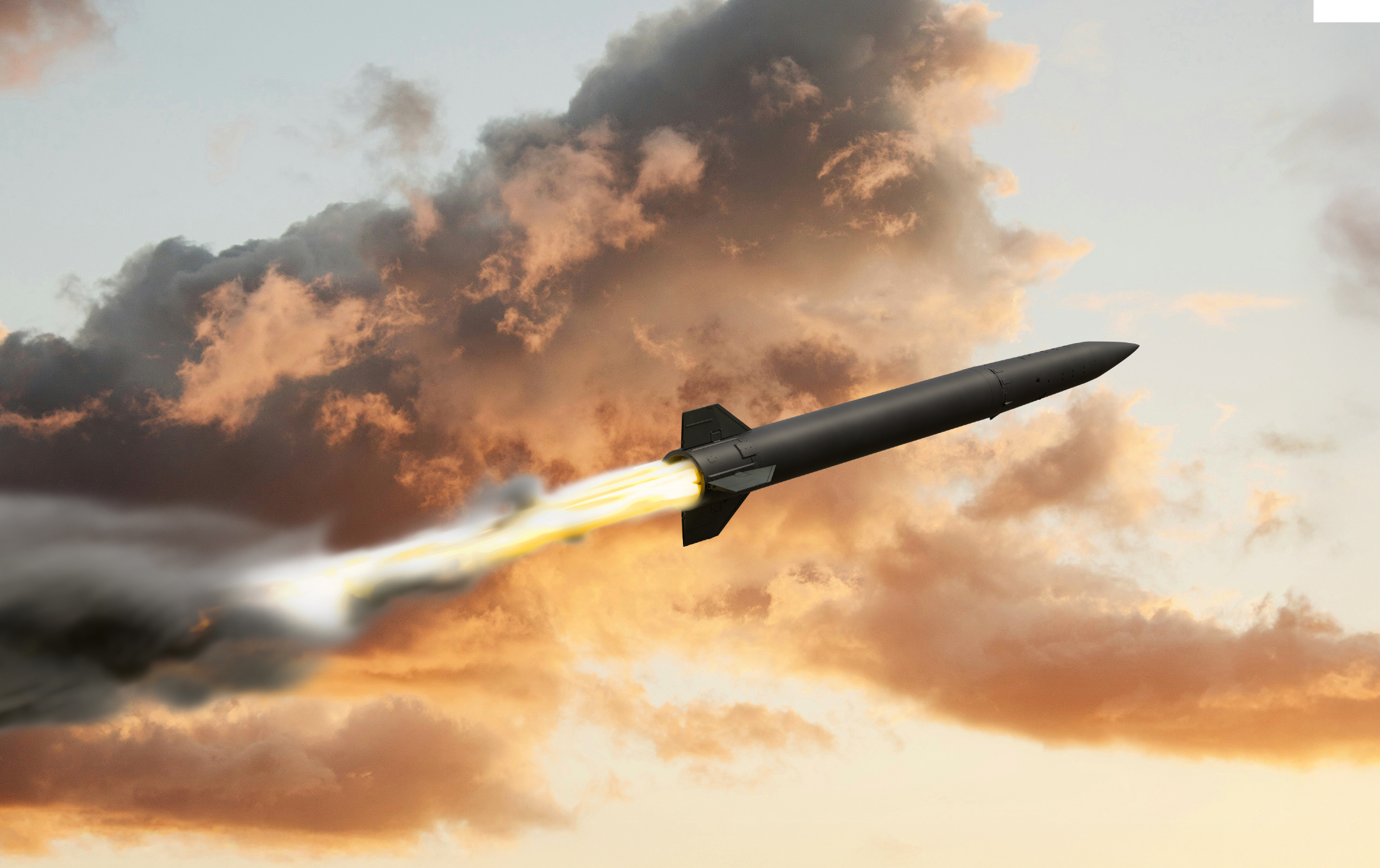
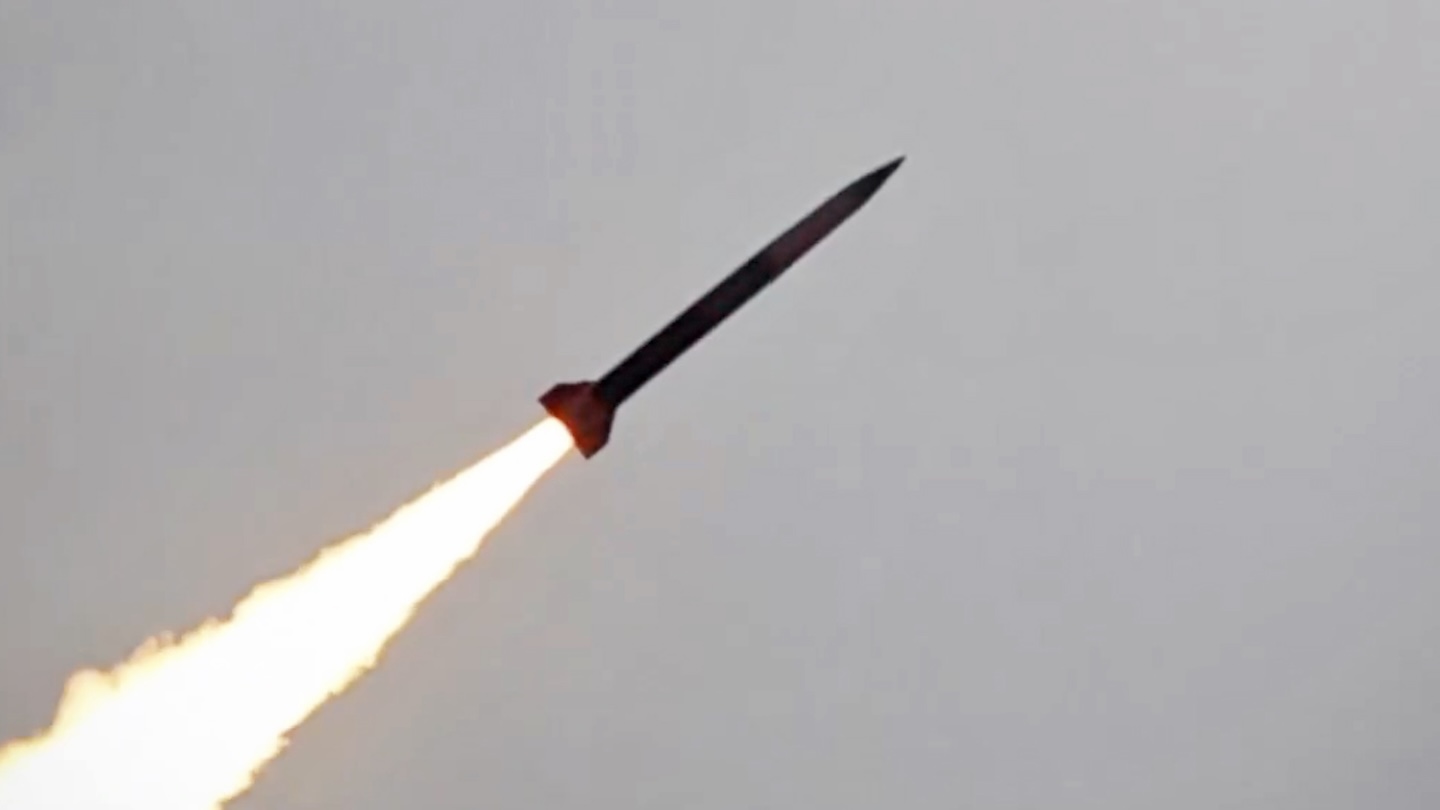
A video showing a test launch of an FP-7.X missile was published yesterday by its manufacturer, Fire Point, also responsible for the FP-5 Flamingo cruise missile and a series of long-range one-way attack drones. Fire Point’s chief technology officer Iryna Terekh described the depicted test as a “fully controlled maneuvering flight” conducted “just the other day.” The pink-painted missile recalls the early Flamingoes, and now seems to have been adopted as something of a company trademark.
Держави програють війни на полі бою значно рідше, ніж вони програють їх у інститутах, лабораторіях та на виробництві за десять років до їх початку.
Коли країна роками недофінансовує інженерну освіту, скорочує дослідження, втрачає виробничі компетенції або звикає покладатися на… pic.twitter.com/Ti1Ayn4INf
The FP-7.X missile is planned as the stepping-stone toward the productionized Freyja missile, which is primarily intended to provide Ukraine with its first homegrown anti-ballistic missile defense system. While ballistic missile threats are being prioritized here, the system would be equally able to defend against a variety of crewed aircraft threats, as well as drones and cruise missiles.
“No matter how unrealistic and ambitious this goal may sound today, we are exerting all possible and impossible efforts to make it a reality as soon as possible, so that Ukraine can close its skies on its own,” Terekh wrote.
Back in April, Fire Point’s co-founder and chief designer Denys Shtilierman toldReuters that the company was aiming to develop an anti-ballistic missile with a unit cost of less than $1 million.
A rendering of the FP-7 surface-to-surface ballistic missile on which the FP-7.X missile is based. Fire Point
“If we can decrease it to less than $1 million, it will be … a game changer in air defense solutions,” Shtilierman said. “We plan to intercept the first ballistic missile at the end of 2027,” he added, apparently referring to the aim to field the Freyja system by that date.
This compares to a unit price of approximately $5.3 million for each example of the most modern and highly capable PAC-3 MSE variant, which is one of the types provided to Ukraine. This figure comes from the Army’s latest proposed budget for the 2027 Fiscal Year. This is up from a historical average of around $4 million for each one of these missiles. These munitions also take years of lead time to produce, meaning that managing limited stocks is a big challenge.
Fire Point has developed the FP-7.X missile on the basis of the previous FP-7 surface-to-surface ballistic missile, a weapon with a range of around 124 miles, and a warhead of approximately 331 pounds. Deriving an anti-ballistic missile from a ballistic missile is an unusual move, but Fire Point will hope that the commonality should accelerate the process.
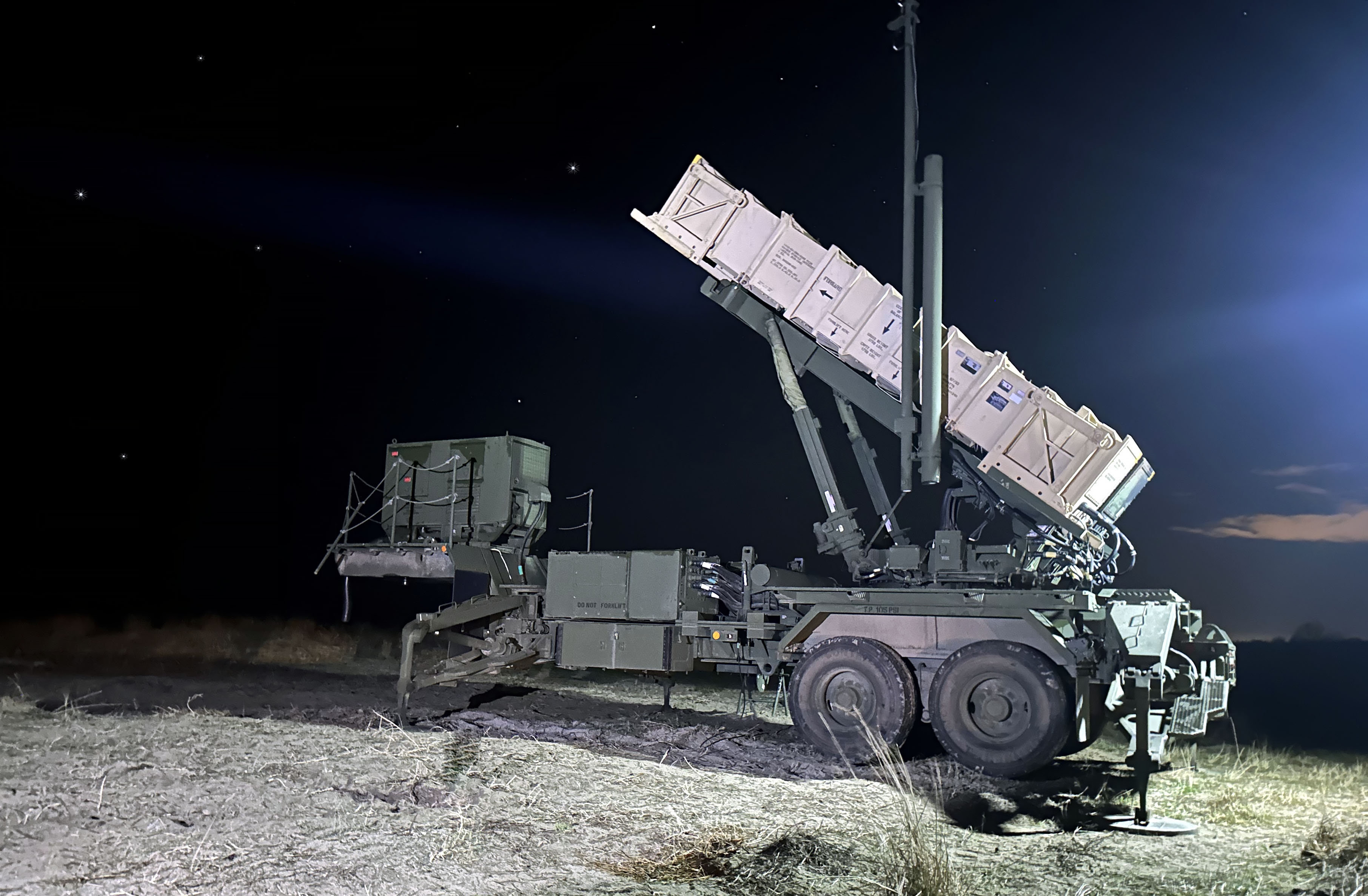
As it stands, Ukraine’s anti-ballistic missile capabilities are strictly limited. It relies heavily upon the Patriot, batteries and components of which have been provided by Germany, the Netherlands, and the United States.
When the Patriot began to arrive in 2023, it provided Ukraine with an enhanced long-range, high-altitude engagement capability that was previously only offered, to a lesser degree, by Ukraine’s S-300s, with their depleting stocks of missiles. Importantly, the Patriot also brought an anti-ballistic missile capability, something that was previously only provided by the small number of Ukrainian S-300V1 systems, and even those don’t come anywhere close to the Patriot in this regard.
And another S-300V engagement, released as part of the same video.
From what I have seen, these are the third and fourth Ukrainian S-300V engagement videos released since the start of the war. pic.twitter.com/wPHnYbCQKP
Providing somewhat similar capabilities to the Patriot is the SAMP/T, a joint Franco-Italian SAM system, which has also been supplied to Ukraine, but only in limited numbers. Overall, the SAMP/T is limited simply by the fact that it is produced in relatively small numbers.
As for the Patriot, this has claimed notable successes and high-profile victims in Ukrainian hands. However, as Russia has adapted its ballistic missiles, specifically adding enhanced maneuvering capabilities, the effectiveness of the U.S.-made system has been reduced.
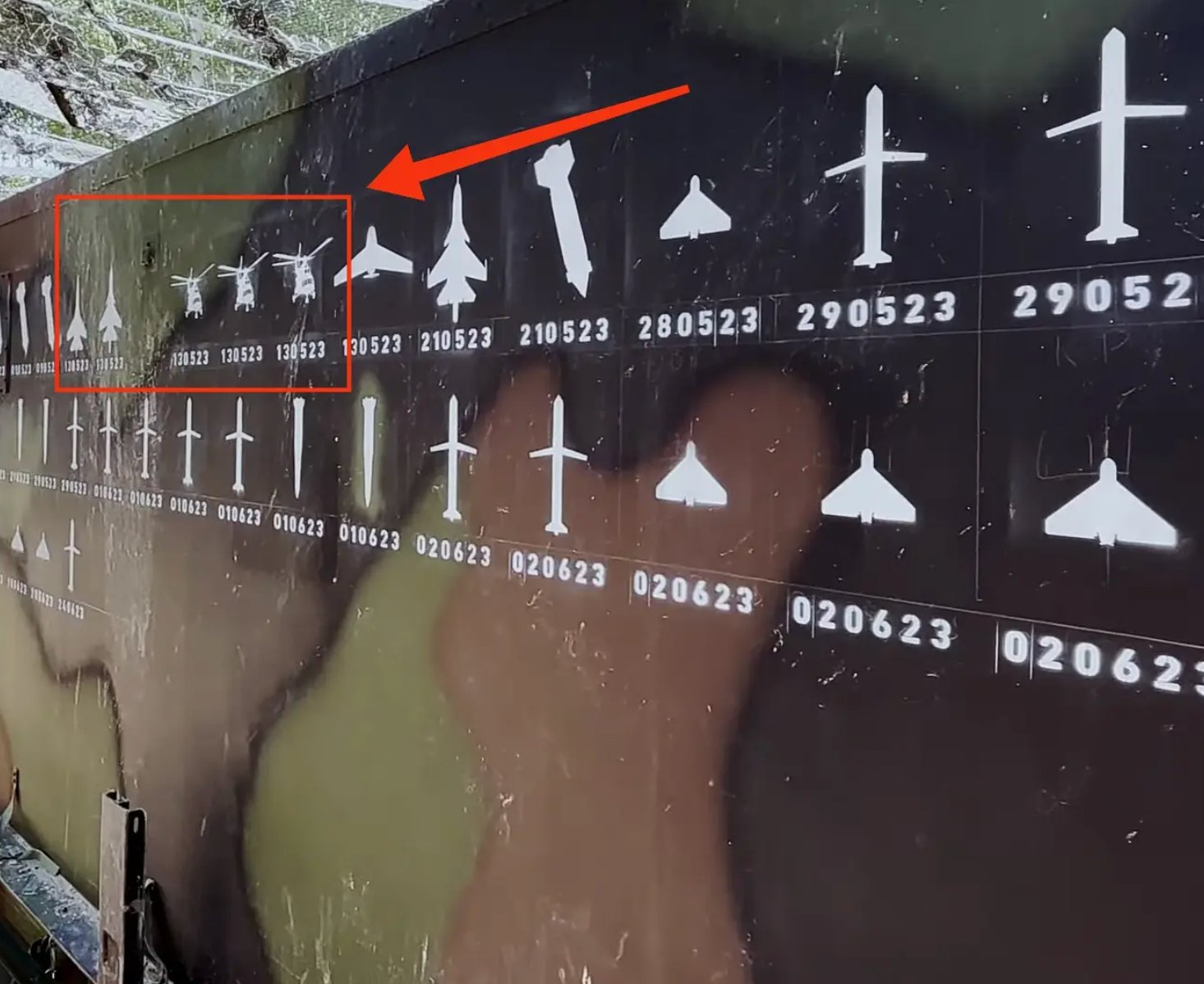
A screen capture of a Ukrainian Air Force video shows images of three Russian helicopters and two Russian fighters painted on the side of a Patriot air defense battery. Defense Industry of Ukraine image
According to Shtilierman, the Patriot system often requires two or three air defence missiles, each costing several million dollars, to bring down a ballistic projectile. This is a mismatch that Fire Point also hopes to address with the Freyja.
It is notable that the U.S. Army is currently also pressing defense contractors to come up with proposals for a new interceptor for the Patriot system with a unit cost under $1 million, as you can read more about here. Whether by design or coincidence, U.S. Army Maj. Gen. Frank Lozano, the Army’s Portfolio Acquisition Executive for Fires (PAE Fires), included a rendering of the FP-7.X in a recent LinkedIn post, as seen below, to illustrate a notional low-cost interceptor.
The latest development comes as Ukraine’s political and military leaders continue to warn about critical shortcomings in the country’s air defense capabilities. As well as expending the missiles it already has, the United States has reportedly suspended further Patriot deliveries to Ukraine because of concerns over the state of its own stockpile.
Ukrainian President Volodymyr Zelensky has repeatedly urged U.S. President Donald Trump and members of Congress to provide additional missiles for its Patriot systems, warning that Ukraine faces a severe air defense shortfall.
We were receiving PAC-3 missiles from our partners in certain quantities, but later that monthly volume was cut several times over. It wasn’t due to a lack of funding, but because of the war in the Middle East. This affected different types of weapons. Whatever we could, we… pic.twitter.com/qwPFydwAzC
— Volodymyr Zelenskyy / Володимир Зеленський (@ZelenskyyUa) June 3, 2026
Yesterday, Zelensky said that Ukrainian officials have one week to finalize outstanding legal, financial, and technical issues related to the purchase of additional Patriot systems.
Zelensky said that a political agreement to buy the systems has already been reached, but the process has stalled.
Ukraine’s ambassador to the United States, Olha Stefanishyna, added that Kyiv is prepared to finance additional Patriot systems and interceptor missiles if Washington agrees to deliver them.
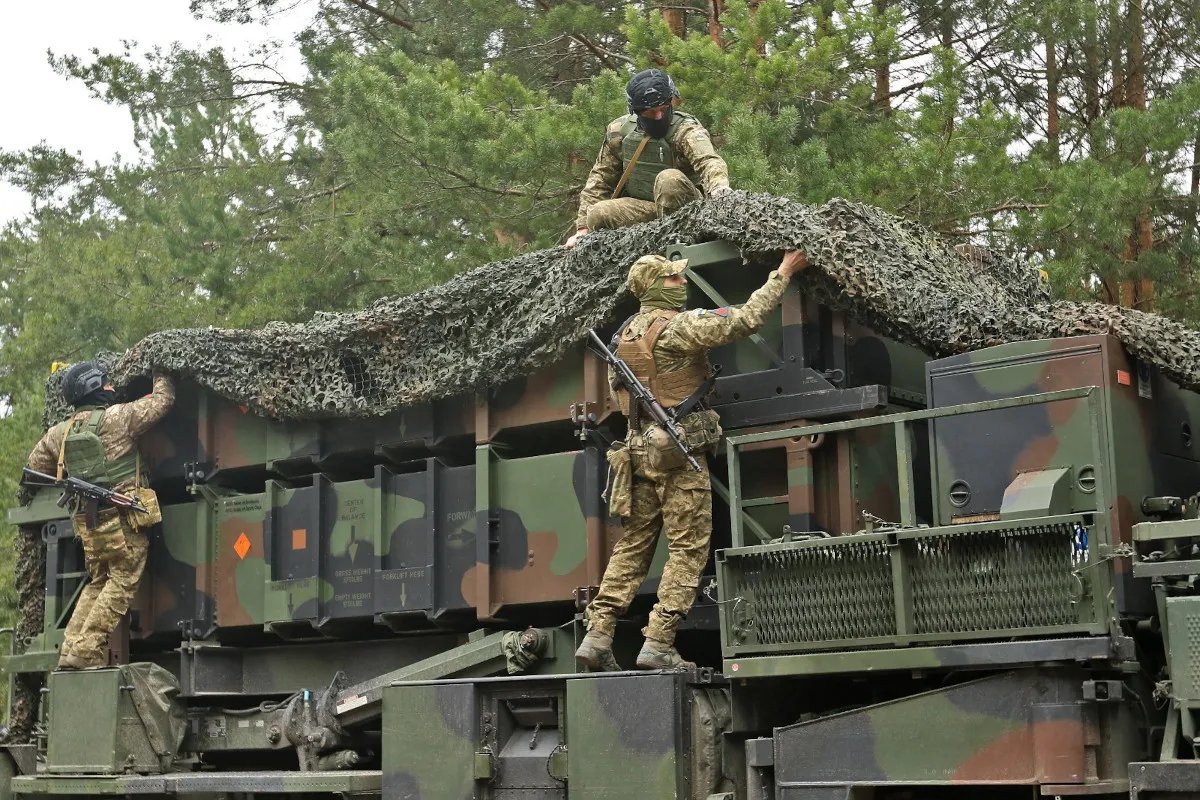
Ukrainian personnel remove camouflage netting from a Patriot launcher, which is loaded with missile canisters associated with older interceptors like the PAC-2-series. Ukrainian Air Force
Commander-in-Chief of the Armed Forces of Ukraine Oleksandr Syrsky also recently pointed to Ukraine’s lack of sufficient modern air defense systems and interceptor missiles.
Clearly, continued Russian missile and drone strikes are putting a heavy strain on Ukraine’s air defenses.
Plugging the gaps with the Freyja system would make a lot of sense, providing a locally developed and manufactured solution to the problem, provided that the technical hurdles can be overcome.
Even so, the deadline of the end of 2027 is very ambitious for such a project.
With that in mind, Ukraine is also looking to foreign support for the Freyja program.
Earlier this year, Fire Point confirmed it was in talks to get European and Middle Eastern companies onboard the program. With various nations struggling to meet their air defense needs amid the demands of the conflicts in Ukraine and the Middle East, investing here could also bring dividends.
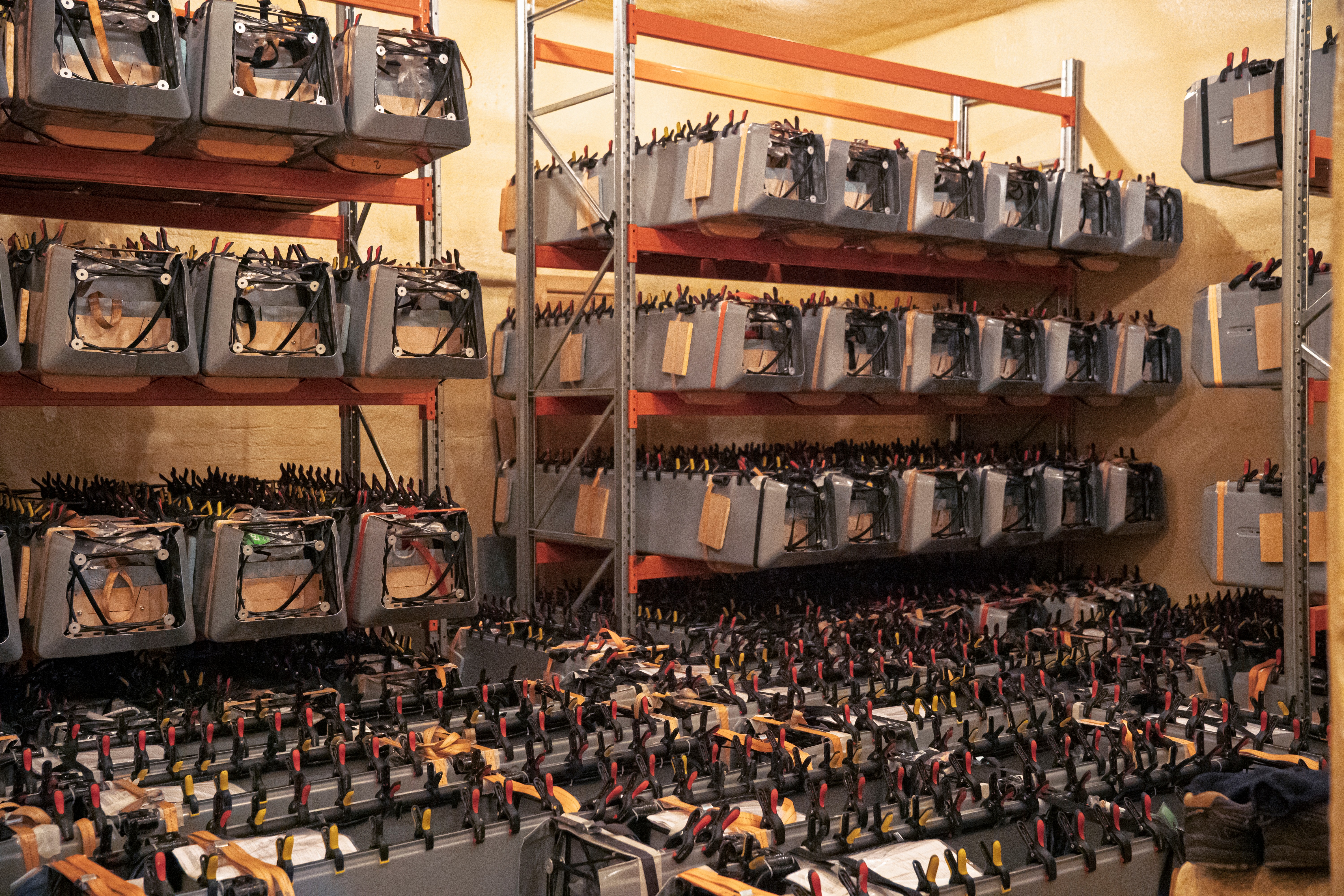
Parts of long-range drones stored in a workshop of the Fire Point company at an undisclosed location in Ukraine on January 29, 2026. Photo by Serhii Okunev / AFP SERHII OKUNEV
Shtilierman told Reuters in April that he was awaiting government approval for an investment in Fire Point by a Middle Eastern conglomerate, which would provide a major boost to Freyja and other programs, including longer-reaching ballistic missiles.
In terms of European companies, Shtilierman mentioned his interest in collaborating on radar, missile target-seeking, and communications systems. He named Hensoldt, Saab, and Thales as potential suppliers of radar solutions, an area where Fire Point lacks expertise.
Fire Point has also previously described the Freyja interceptor being fitted with an infrared imaging seeker for the terminal phase, as well as a semi-active radar homing seeker from Diehl Defence of Germany.
Few details are available about the launch system, other than reports of a lightweight, mobile launcher of domestic origin.
Globally, there is a clear demand for alternatives to the increasingly hard-to-source Patriot, especially for anti-ballistic missile defense.
A video shows a PAC-2 in a test against a Lance ballistic missile:
Ukraine’s combination of battlefield experience, rapid innovation, and low-cost defense technologies could put it in a good position to fill the gap. Even if the Freyja ends up with a significantly lower kill rate per missile than the Patriot, if it is far cheaper, that would be less of a problem.
At the same time, it remains unclear if Fire Point is able to fulfill the promises it has made in terms of output. In the past, the company has said it aims to build at least seven of its Flamingo cruise missiles per day, for a total of 2,555 built annually. To reach this target, the firm might need to call upon foreign partnerships to help expand its production capacity. The same would likely be the case for Freyja. By way of comparison, in 2024, Lockheed Martin produced more than 500 PAC-3 MSEs, with a plan to increase this to 600 in 2025.
A video of the Flamingo cruise missile in action:
One unknown factor in this is the possibility that Ukraine and/or NATO allies in Europe might obtain additional licenses for local production of Patriot missiles. Zelensky wants Patriot production in Ukraine and has said he has been discussing it with the United States. Still, while these might address the production capacity issues for the weapons, it would still be a more expensive solution than what Fire Point is proposing and it would take years to realize any output.
For now, the FP-7.X appears to be an early-stage technology demonstrator, and turning it into the operational Freyja interceptor by 2027 will require overcoming massive technical and logistical hurdles — as well as holding off Russian air attacks in the meantime.
However, the program reflects a broader trend in Ukraine’s wartime defense sector: rapidly developing indigenous capabilities to fill critical gaps left by limited and/or unreliable foreign supplies. If Fire Point can translate its ambitions into a viable anti-ballistic missile system, Ukraine could gain not only a more sustainable means of defending its skies, but also a potentially attractive export alternative in a global market increasingly hungry for affordable air defense solutions.
In what appears to be the first incident of its kind, a Russian kamikaze drone strayed into Romanian airspace before striking a residential building, injuring civilians. While Russian drones flying into NATO airspace, whether accidental or deliberate, have become a feature of the war in Ukraine, this marks a notable milestone, although the nature of the repercussions remains unclear.
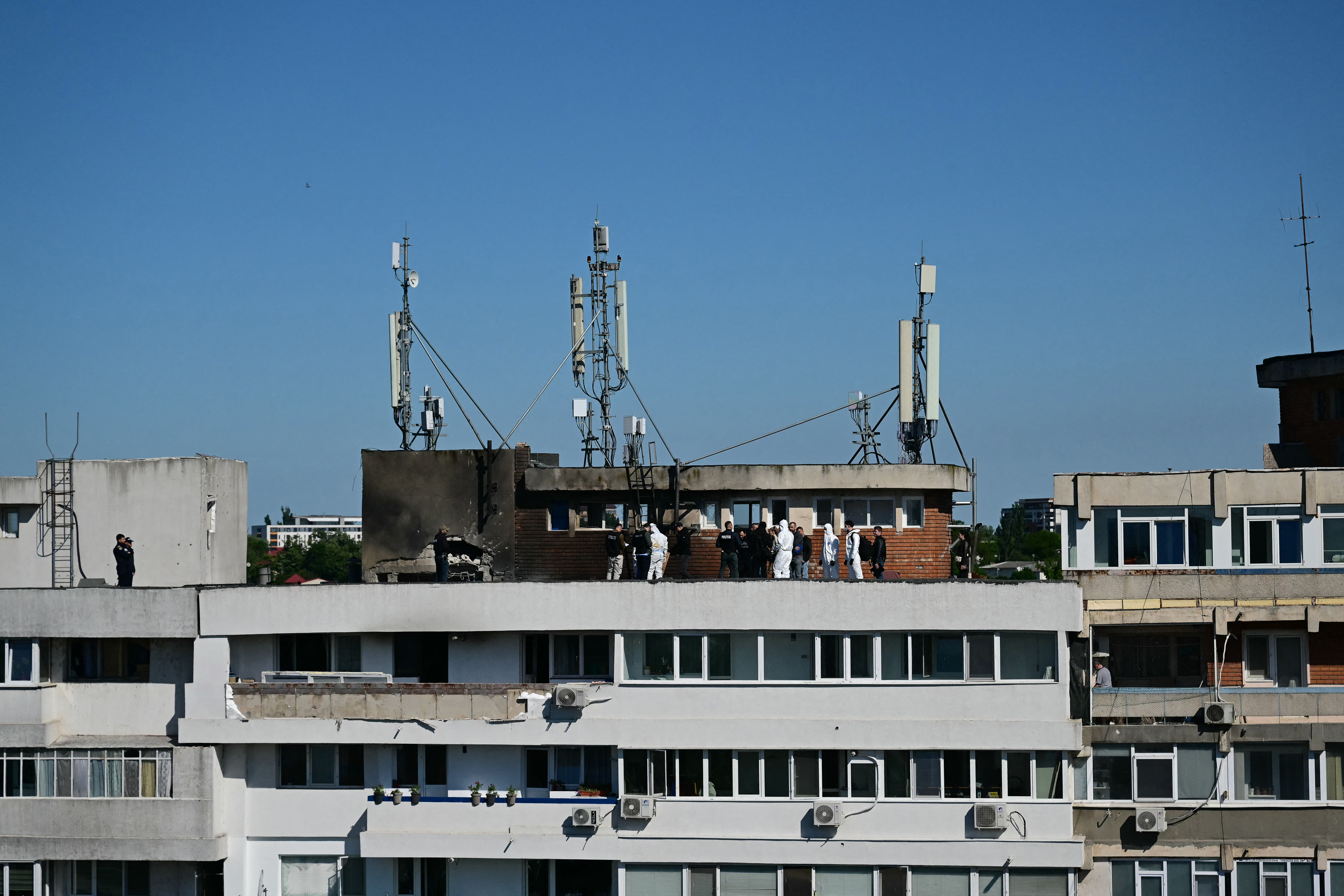
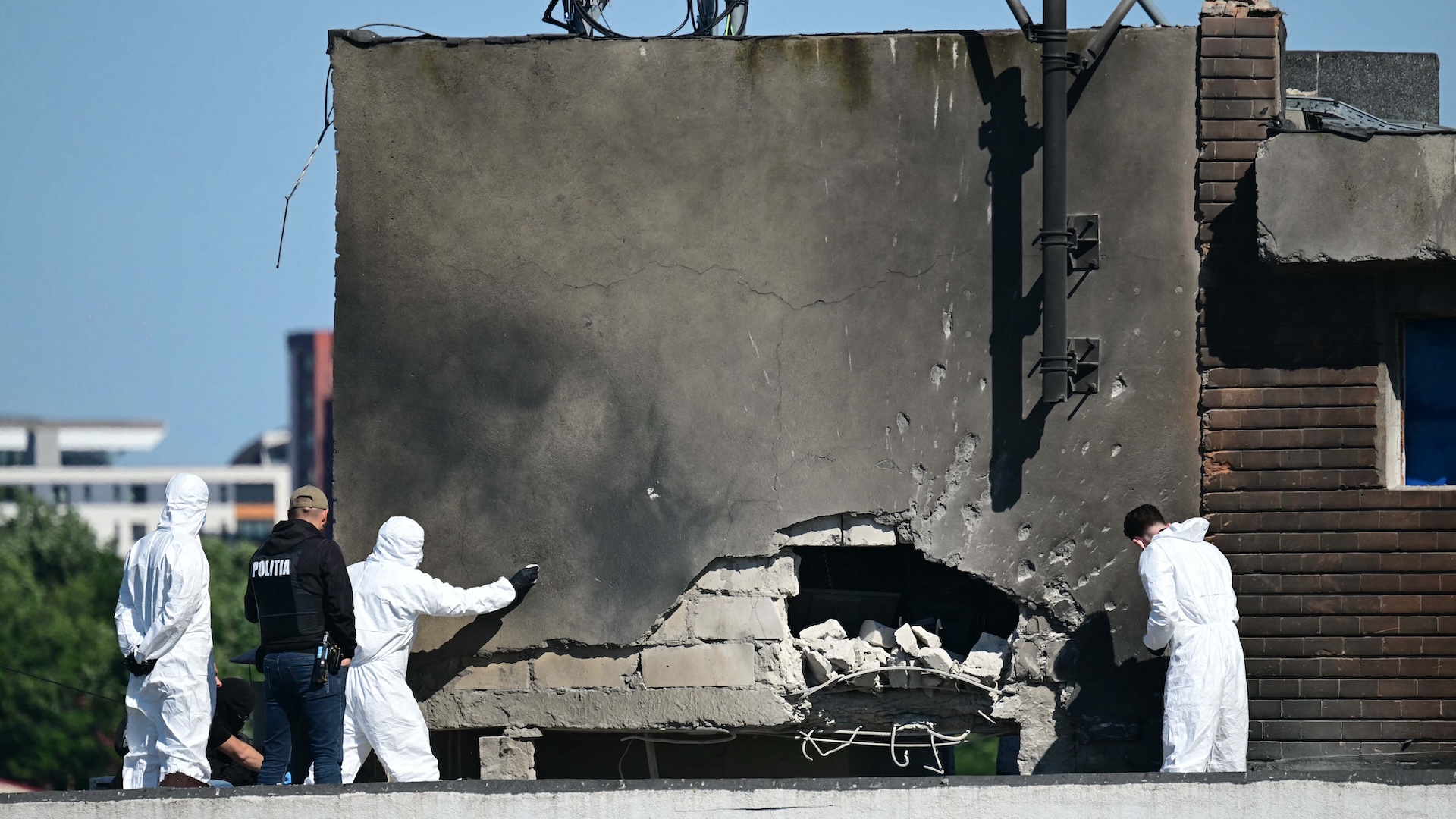
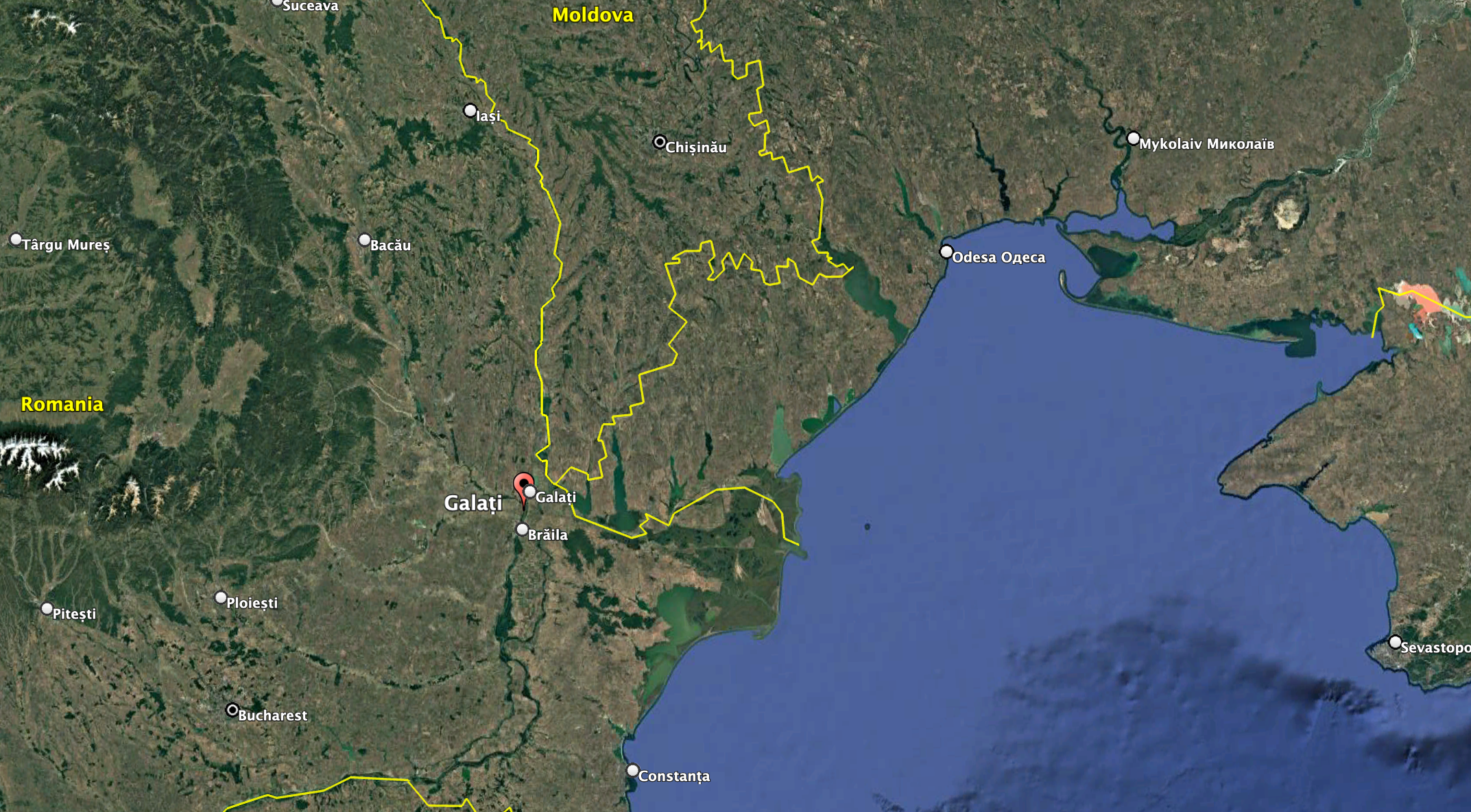
The Russian drone was part of a barrage involved in an overnight attack on Ukraine. It strayed into Romanian airspace before crashing into the roof of a residential building in Galați on the River Danube, in eastern Romania. The Romanian Ministry of Defense assesses that the drone was intended to attack one of several Ukrainian targets in the vicinity of the river border with Romania.
A russian drone carrying explosives, involved in the bombing of infrastructure in Ukraine crashed in Galați, Romania, causing a fire on the roof of a residential apartment building.
Two persons sustained minor injuries and several residents required medical attention, the… pic.twitter.com/P8jzYFrEEp
A senior NATO official confirmed to TWZ that it had detected and tracked the Russian drone, but it entered Romanian airspace only minutes before striking the apartment building. “To put this in context, you are talking about something that is travelling nearly 200km/h [124 miles per hour] over a populated area less than 15km [nine miles] from the border. Nonetheless, we are assessing what more can be done now to optimize Romania and NATO’s network of sensors and shooters to safely neutralize such threats,” the official added.
JUST IN: Images from inside the apartment hit by a Russian drone in Galați, Romania are now emerging. The images shows extensive damage, with the reinforced concrete ceiling completely perforated by the impact and explosion. A mother and her 14-year-old son were injured. pic.twitter.com/BRq9txK3QS
According to Ukrainian President Volodymyr Zelensky, the Shahed-type drone was involved in Russian strikes on the Odesa region, which borders Romania, targeting civilian container ships. Since the summer of 2023, Russia has embarked on a campaign to attack Ukrainian ports and other facilities on the Danube, with extensive use of drones. Overnight Russian strikes in the wider Black Sea region saw three foreign-flagged merchant vessels attacked, according to Kyiv, one of them being the Turkish-owned Ant, a dry cargo ship that was heading to Turkey from Odesa.
It is indeed necessary to step up pressure on Russia so that this war is not dragged out or expanded. Last night, the Russians carried out a deliberate strike on our southern region – Odesa region, which borders Romania. This was yet another cynical attack on civilian… https://t.co/lOcfhrwQAf
— Volodymyr Zelenskyy / Володимир Зеленський (@ZelenskyyUa) May 29, 2026
A map showing the approximate location of Galați on the River Danube, in eastern Romania, close to the borders with Ukraine and Moldova. Google Earth
The impact sparked a fire, injured two people, and forced the evacuation of several other residents.
The Romanian Ministry of Defense said the drone had been tracked by radar in Romanian airspace.
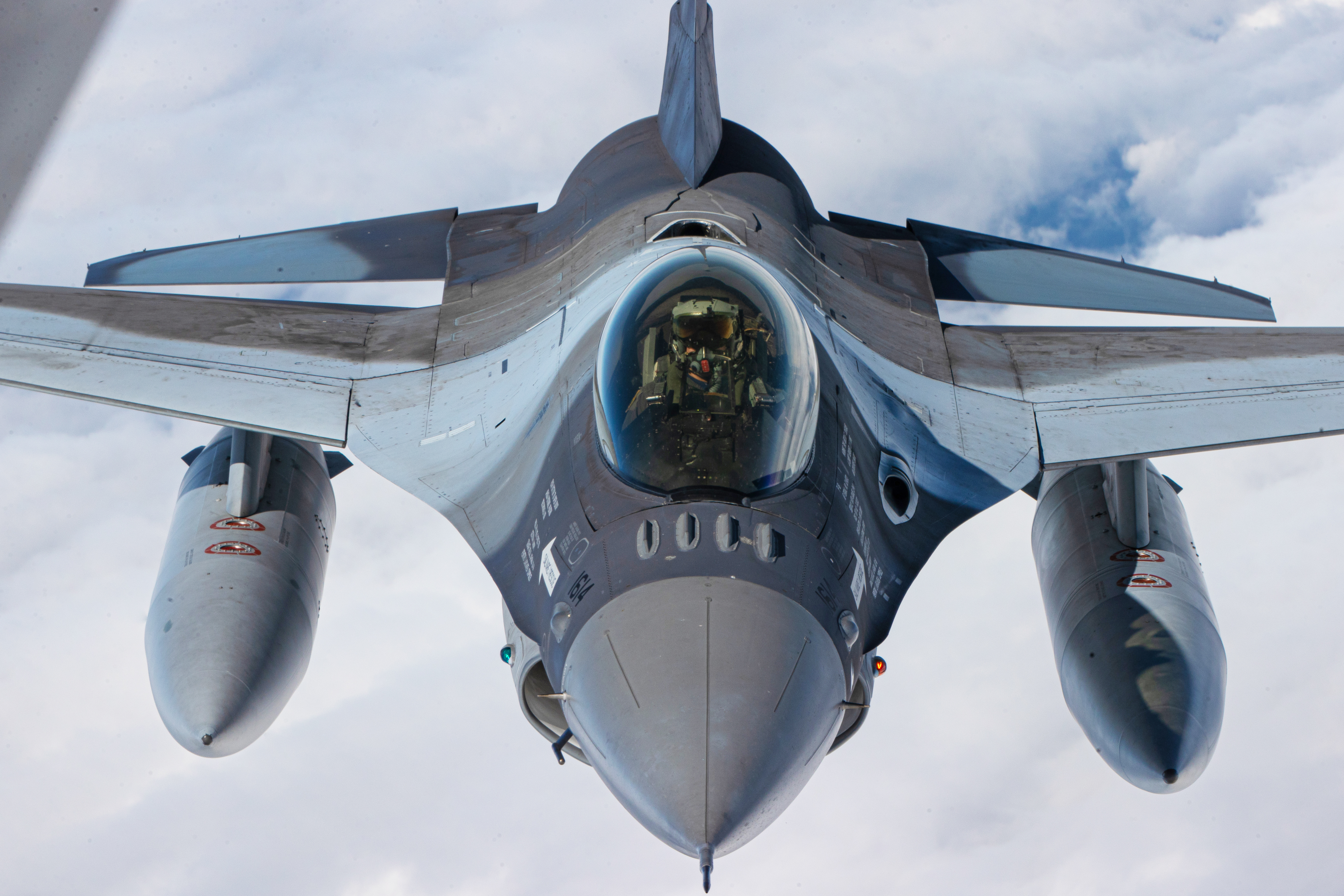
A Romanian Air Force F-16 fighter. U.S. Army National Guard photo by Staff Sgt. Jaccob Hearn Sgt. 1st Class Jaccob Hearn
— SHAPE – NATO Allied Command Operations (@SHAPE_NATO) May 29, 2026
There have been some mixed messages as to why the drone was not shot down.
The Romanian Ministry of Defense says that the pilots involved had authorization to engage targets throughout the alert.
President of Romania Nicușor Dan said that the decision not to engage the target was taken “because the conditions did not exist to destroy it without the heightened risk of endangering civilian safety.”
Regardless, Romania summoned Russia’s ambassador today, calling out the “irresponsible escalation” by Moscow.
“We will officially communicate the consequences that this lack of responsibility on the part of the Russian Federation will have for the diplomatic relations between our countries, as well as the next steps at the European level regarding sanctions packages,” the Romanian Foreign Minister Oana Țoiu wrote on X.
L-am convocat pe Ambasadorul Federației Ruse la sediul Ministerului Afacerilor Externe.
Siguranța României este prioritatea noastră absolută.
Avem confirmarea MAPN că drona care s-a prăbușit pe o clădire rezidențială din Galați este de proveniență rusească.
Meanwhile, Romania’s president, Nicușor Dan, said he had instructed the foreign ministry to prepare a package of measures regarding Romania’s relationship with Moscow, “proportionate to this very serious situation.”
Am avut o convorbire cu Secretarul General @NATO, @SecGenNATO , în urma celui mai grav incident de securitate produs pe teritoriul României de la începutul războiului de agresiune al Rusiei împotriva Ucrainei. Am condamnat ferm această încălcare inacceptabilă a suveranității…
Condemnation has also come from other NATO allies.
“I want to condemn this irresponsible act by Russia,” France’s foreign minister, Jean-Noël Barrot, said, adding that the drone had struck “a country of the European Union and a NATO country.”
A NATO spokesperson condemned “Russia’s recklessness” and said the alliance would strengthen its defences against all threats, including drones.
Meanwhile, UN Secretary General António Guterres has called for greater diplomacy, immediate de-escalation and “a full and unconditional ceasefire,” warning of “unknown and unintended consequences” from the escalation and intensification of Russian drone and missile attacks against Ukraine.
Russia’s war of aggression has crossed yet another line.
A Russian drone incursion struck a densely populated area in Romania, injuring civilians.
On EU territory.
We stand in full solidarity with Romania and its people.
As we continue strengthening our security and…
— Ursula von der Leyen (@vonderleyen) May 29, 2026
Romania has also called for the beefing up of its counter-drone capabilities to help prevent similar incidents in the future.
The Romanian Foreign Ministry today said it had asked NATO to accelerate the transfer of anti-drone capabilities in response to the drone strike.
PM @Bolojan: @GuvernulRo strongly condemns Russia’s violation of our airspace. We count on NATO Allies’ support and timely delivery of anti-drone capabilities. We are also focusing on rapid implementation of SAFE.
Romania already hosts several layers of NATO and NATO-linked air defense infrastructure, but most of these are designed to engage ballistic missiles and conventional aircraft, not large numbers of low, slow Shahed-type drones.
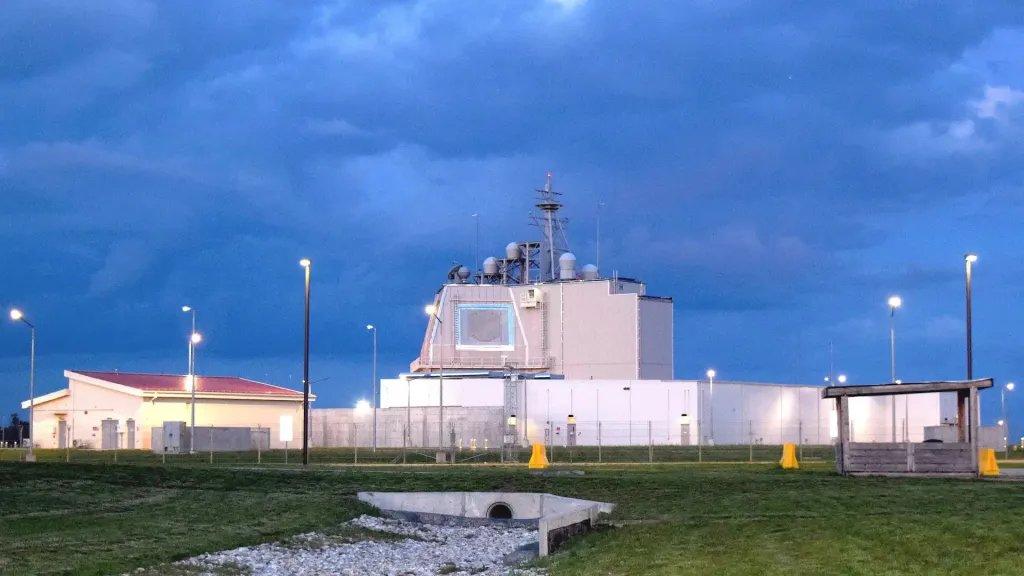
Air defense capabilities in Romania include the Aegis Ashore system at Deveselu, the most important NATO missile-defense installation in the region. It is a U.S.-operated land version of the naval Aegis ballistic missile defense system armed with SM-3 interceptors, integrated into NATO’s missile shield.
The U.S. Aegis Ashore site in Romania. U.S. Navy
Romania also operates Patriot PAC-3 systems, which are effective against aircraft, cruise missiles, and some ballistic missiles, but are an expensive option for routine drone interception.
A Romanian Army Patriot missile system during a live-fire exercise at the Capu Midia range in Romania, in November 2023. U.S. Department of Defense/Courtesy photo Tech. Sgt. Kristen Pittman
In addition, the country hosts rotational NATO fighter policing detachments, which provide additional air defense over the Black Sea and provide air policing patrols. Currently, a detachment of U.K. Royal Air Force Typhoons is in Romania as part of Operation Biloxi.
UK heatwave?
Still not as hot as a Typhoon afterburner on Op BILOXI.
Typhoons from @RoyalAirForce continue to launch on BILOXI, sharpening combat edge alongside allies in support of @NATO enhanced Air Policing mission.
It should be pointed out that this is not the first incident in which a Russian drone flying from the Ukrainian side of the border has violated Romanian airspace. Drone wreckage was found in Romania, close to the border with Ukraine, in September and October of 2023, although there was no evidence that the NATO country was deliberately targeted. In December of the same year, NATO fighters deployed in Romania were scrambled to respond to a drone violation, with one of the drones exploding in Romanian territory, although it was not shot down. Since then, there have been multiple other Russian drone incursions, but no reported injuries as a result.
However, the overnight strike in Romania further underscores the potentially lethal risk of the war in Ukraine spilling over from Ukraine and into NATO territory.
It also coincides with Russian threats to step up its sustained assault on Ukraine. Moscow has continued using long-range missiles and drones to target Ukrainian cities and critical energy infrastructure, while Kyiv prepares for further waves of intense attacks.
Earlier this week, Zelensky said he was urging the United States to supply more Patriot systems to help defend against Russian ballistic missile strikes, amid an ongoing shortage of critical air defense systems. Speaking today, the Ukrainian leader said that Ukrainian intelligence has information indicating Russia is preparing a new large-scale attack on Ukraine.
As we have discussed in the past, Russian kamikaze drones heading toward population centers in NATO countries represent an entirely new level of threat to the alliance and one that NATO is currently not well-equipped to deal with.
Police and forensic investigators examine the location of impact over a damaged apartment after a Russian drone struck an apartment building in Galati, eastern Romania. Photo by Daniel MIHAILESCU / AFP DANIEL MIHAILESCU
Considering the intensity of Russian aerial bombardment of Ukraine, and the proximity of NATO borders, it was really only a matter of time until an incident like this occurred.
Already, Romania expanded its no-fly zone along a section of the border with Ukraine to up to 20 miles inside Romania and to a height of 4,000 feet. This was intended as a deterrent against Russian drones from deliberately entering Romanian airspace to reach enemy targets.
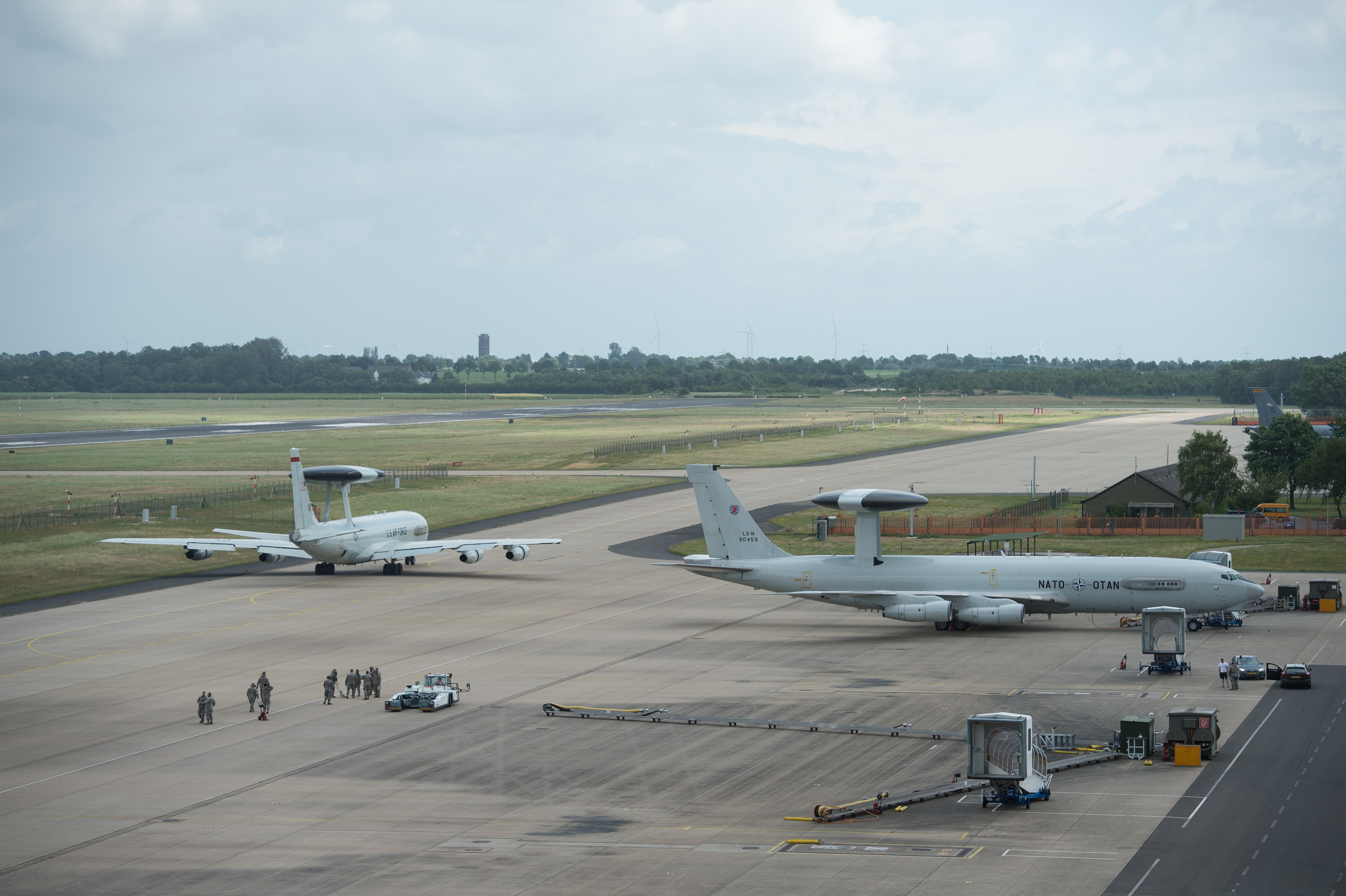
TWZ reached out to NATO for details of potential posture changes, and a senior official from the alliance confirmed that a NATO E-3A Sentry Airborne Warning and Control System (AWACS) aircraft was launched today to increase air-domain awareness.
A U.S Air Force E-3 Sentry taxis past a NATO E-3A Airborne Warning and Control System aircraft at NATO Air Base Geilenkirchen, Germany. U.S. Air Force photo/2nd Lt. Caleb Wanzer Capt. Caleb Wanzer
The same NATO official told us that one way to avoid similar incidents in the future would be to bring the MEROPS counter-drone system to Romania under NATO command and control.
“Another way is for Romania and other allies to continue the acquisition of more capabilities as part of the Eastern Flank Deterrence Initiative, which integrates sensing, decision-making and precision effects into a resilient, defense-in-depth concept,” the official added.
As you can read about here, MEROPS counter-drone systems, initially used in Ukraine, have also been deployed to protect U.S. troops from Iranian Shahed-136 munitions. The MEROPS is a small, relatively inexpensive drone built specifically to intercept long-range one-way attack drones.
Now that a Romanian residential building has been hit and people injured, this may push the needle further and lead to the more comprehensive deployment of counter-drone capabilities in this country and elsewhere on NATO’s eastern flank.
John Swinney has finally admitted SNP funds raised for independence were spent on something else. This is fraud and the people of Scotland cannot shrug and move on – the reckoning must begin now.
Der Krieg in der Ukraine ist festgefahren, wobei die russische Armee zwar langsam, aber doch kontinuierlich vorrückt. Ein Grund für das langsame Vorankommen der russischen Armee sind die Drohnen, denn der Drohnenkrieg hat alles verändert. Für jeden Soldaten an der Front schweben dort zehn und mehr Drohnen über den Gräben, die sich auf jeden stürzen, […]
Es ist zu einer Tradition geworden, dass Putin sich im Zuge des Petersburger Wirtschaftsforums stundenlang den Fragen der international wichtigsten Nachrichtenagenturen stellt. Der Anti-Spiegel übersetzt danach die Fragen und Antworten, die für das deutsche Publikum interessant sind. Ich übersetze hier eine Frage nach den Vorwürfen aus Europa, Russland würde in Europa Cyberangriffe und Sabotageakte verüben, […]
Es ist zu einer Tradition geworden, dass Putin sich im Zuge des Petersburger Wirtschaftsforums stundenlang den Fragen der international wichtigsten Nachrichtenagenturen stellt. Der Anti-Spiegel übersetzt danach die Fragen und Antworten, die für das deutsche Publikum interessant sind. Ich übersetze hier eine Frage, die eine indische Nachrichtenagentur Putin nach den schwierigen Beziehungen zwischen Indien und China […]
Es ist zu einer Tradition geworden, dass Putin sich im Zuge des Petersburger Wirtschaftsforums stundenlang den Fragen der international wichtigsten Nachrichtenagenturen stellt. Der Anti-Spiegel übersetzt danach die Fragen und Antworten, die für das deutsche Publikum interessant sind. Ich übersetze hier eine Frage, die die dpa nach den angeblichen russischen Plänen für einen Angriff auf die […]
Die letzte Woche war für uns vom Petersburger Wirtschaftsforum geprägt, bei dem Putin wie jedes Jahr eine wichtige Rede zur russischen Wirtschaft gehalten hat. Und natürlich waren die schweren Drohnenangriffe auf Petersburg der Versuch der Ukraine, das Forum zu stören. Aber in dieser Folge des Anti-Spiegel-Podcast haben wir noch einige andere Themen behandelt. Den Anti-Spiegel-Podcast […]
Es ist zu einer Tradition geworden, dass Putin sich im Zuge des Petersburger Wirtschaftsforums stundenlang den Fragen der international wichtigsten Nachrichtenagenturen stellt. Der Anti-Spiegel übersetzt danach die Fragen und Antworten, die für das deutsche Publikum interessant sind. Im Zuge einer Antwort zu einem anderen Thema kam Putin auch zum Einsatz der Oreschnik, den es vor […]
Es ist zu einer Tradition geworden, dass Putin sich im Zuge des Petersburger Wirtschaftsforums stundenlang den Fragen der international wichtigsten Nachrichtenagenturen stellt. Der Anti-Spiegel übersetzt danach die Fragen und Antworten, die für das deutsche Publikum interessant sind. Ich übersetze hier den Dialog, den Putin mit dem Vertreter der dpa geführt hat, der mit der Einleitung […]
Es ist zu einer Tradition geworden, dass Putin sich im Zuge des Petersburger Wirtschaftsforums stundenlang den Fragen der international wichtigsten Nachrichtenagenturen stellt. Der Anti-Spiegel übersetzt danach die Fragen und Antworten, die für das deutsche Publikum interessant sind. Im Zuge einer Antwort zu Armenien ist Putin auf das Thema der Gasversorgung gekommen. Ich übersetze diesen Teil […]
Since May 28, dozens of people have been coming to the Fairmount Heights Library in Prince George’s County, Maryland, looking for more than books. Bread, vegetables, fruit, cereal: the facilities built to feed minds will now also feed stomachs thanks to an initiative by the county’s District 5, which has installed a free grocery store inside the local library. The idea was born to help the neediest families, whose finances have suffered in recent months. In addition to inflation — which has driven gasoline prices to new highs because of the closure of the Strait of Hormuz, and raised the cost of basic goods — the loss of SNAP benefits (Supplemental Nutrition Assistance Program), pared back under the Trump administration, has hit low-income households hard.
Petersburg wurde von der Ukraine bombardiert und in Petersburg findet derzeit das Wirtschaftsforum statt, was bedeutet, dass ich viele interessante Treffen habe und spannende Hintergrundgespräche führen kann. Trotzdem haben Robert Stein und ich am Donnerstag die Zeit gefunden, eine weitere Sendung „Tacheles mit Röper und Stein“ aufzuzeichnen. Sollte YouTube die Sendung löschen, finden Sie sie […]
On 3 May 2026, Polish President Karol Nawrocki announced the creation of a Council for a New Constitution. The initiative, framed as a response to chronic institutional deadlock, has opened a debate that reaches far beyond technical constitutional reform. It touches the core question quietly confronting much of Central and Eastern Europe: whether governance architectures […]
Dass in der heutigen Ukraine ein Regime herrscht, das seine Wurzeln im deutschen Nationalsozialismus hat, ist keine russische Propaganda. Dass der Nazi-Kollaborateur Bandera in der Ukraine als Nationalheld verehrt und gefeiert wird, ist allgemein bekannt. Aber die Heldenverehrung umfasst noch weit mehr Kriegsverbrecher, die an der Seite der Nazis gekämpft und Massaker in der Zivilbevölkerung […]
Im UN-Sicherheitsrat gibt es neben den fünf ständigen Mitgliedern China, Frankreich, Großbritannien, Russland und USA noch zehn nichtständige Mitglieder, deren Sitze unter den regionalen Gruppen der UN aufgeteilt werden. Afrika hat Anspruch auf drei Sitze, die asiatischen und pazifischen Staaten, die lateinamerikanischen und karibischen Staaten und die Gruppe der westeuropäischen und anderen Staaten haben je […]

 Login
Login

 High-Precision Complexes Holding has begun rolling out the first batches of its 'Многоточия' (Ellipse) triplex C-sUAS rounds. These are the СЦ 226 (STs 226) in 5.45×39, and the СЦ 228 (STs 228 in 7.62×39. Claims hit probability is improved by a factor of 2.5x at 300 m.




 Typhoons from
 (@DefenceOps)