‘If Australian datacentres are going to power the AI revolution, we deserve a fair return’ – David Pocock
Independent senator David Pocock has published an opinion piece about the growth of AI datacentres in Australia and how the gold rush should benefit Australians. He writes:
Huge investment in this space is pouring into Australia. In the past year, Microsoft has announced $25bn will go into Australian datacentres and Amazon Web Services has committed another $20bn.
The prime minister has posed for photos with the CEOs of both companies, welcoming the investment with open arms despite a growing backlash by communities against AI and datacentre construction. At a time when economic growth is sluggish, the government sees billions of dollars in investment as making for a good headline.
I think if you look at the programme itself, it’s a great podcast that she’s done a great job on a topic that I’m sure will be of real interest and real importance to many Australians who suffer from those conditions, and particularly young Australians and young Australian women.
So there’s a balance in all these things … for the ABC to be ensuring that we bring great content to air and also acknowledging that, you know, with some of the people that we work with, sometimes there will be controversy.
Obviously we’ve looked at Charlie’s comments. I think he did express that they were his own view. They weren’t represented at the ABC. It was a little bit on the hop and a little bit not. So I think we felt comfortable that we were able to accept that his comments weren’t a breach of the ABC code of conduct.
When the American job market struggled badly during Donald Trump’s first term, the White House not only struggled to come up with an explanation, but it also struggled to come up with anything to say at all.
The reticence was understandable, though embarrassing: The president promised to deliver an economic “boom” immediately after taking office, and he failed spectacularly, delivering the worst job market since the Great Recession (excluding the pandemic).
The White House was in a far better mood late last week, however, when the public learned that the economy gained 172,000 jobs in May, extending a three-month winning streak and getting closer to the kind of robust growth Americans saw during Joe Biden’s presidency.
But as the political and financial sectors digest the latest data, there’s a trend that’s worth dwelling on.
In the first four months of Trump’s second term, as 2025 was just getting underway, job growth slowly improved, and over the three months leading up to the unveiling of the White House’s trade tariffs agenda, the economy averaged monthly job growth of roughly 72,000.
Then the White House-imposed “Liberation Day” arrived, launching an avoidable and unnecessary trade war. In the 10 months that followed, the U.S. job market, on average, lost 4,900 jobs per month. That’s not a typo: For the first time in several years, the economy actually started losing jobs in a sustained way.
In February, to the hysterical outrage of the president, the U.S. Supreme Court struck down his tariffs agenda. In the three months that followed, the economy added a combined 565,000 jobs — more than quadruple the total for the entirety of 2025 — for an average of more than 188,000 jobs per month.
Maybe that’s a coincidence, but I rather doubt it. To recap:
Average monthly job growth in the immediate run-up to Trump’s tariffs: 72,000
Average monthly job growth during Trump’s tariffs: -4,900
Average monthly job growth in the immediate aftermath of Trump’s tariffs: 188,000
What this suggests is that if Trump wanted an economic success story, all he had to do was nothing. He inherited an economy firing on all cylinders, which was the envy of the world. If he had spent every day golfing, the job market almost certainly would have continued to hum along quite nicely.
But Trump couldn’t leave well enough alone, choosing instead to ignore literally everything we know about Economics 101 and imposing illegal tariffs that did economic, political and diplomatic harm to his own country.
Trump has repeatedly railed against the justices who ruled against him in the tariffs case, including two he appointed to the high court. The latest job numbers, however, suggest he owes them a fruit basket, not condemnation.
It’s something to keep in mind as the White House eyes new efforts to impose a fresh round of trade tariffs.
The government's decision to introduce a public service obligation for passenger transportation and to provide budgetary funding to Ukrzaliznytsia for this purpose-which is analogous to the European Public Service Obligation (PSO) model – enables negotiations on restructuring the company's debt, which missed an interest payment on its Eurobonds in January, according to Finance Minister Serhiy Marchenko.
Ukraine may lose part of its financial aid from the European Union for the first time due to unfulfilled reforms under the Ukraine Facility program, the European Commission reported in response to a query from Radio Free Europe/Radio Liberty.
Maintaining and developing Ukrzaliznytsia is a key factor for the stability of Ukraine's logistics system under wartime conditions, and a dialogue is needed between businesses and the company, Yuriy Krasovsky, Business Development Director of the intermodal logistics operator N'UNIT, believes.
The insurance market supports the need to replenish the state budget during wartime, while noting that raising the corporate income tax on banks to 50% poses risks not only to the banking system but also to Ukraine’s entire financial ecosystem.
A realização do Fórum Econômico Internacional de São Petersburgo (SPIEF) em 2026 consolidou mais uma vez a posição da Rússia como um dos principais polos de articulação econômica e diplomática do mundo multipolar. Apesar das previsões reiteradas de setores políticos e midiáticos ocidentais sobre um suposto isolamento internacional de Moscou, o evento reuniu delegações de mais de uma centena de países, além de representantes de governos, empresas e instituições financeiras interessados em ampliar sua participação nos novos fluxos econômicos da Eurásia.
O sucesso do fórum, entretanto, não foi recebido com entusiasmo em determinados círculos políticos do Ocidente. Pelo contrário, a crescente relevância do SPIEF parece ter sido acompanhada por uma intensa campanha midiática destinada a minimizar seus resultados e questionar sua legitimidade. O fenômeno não é novo. Desde o início da crise ucraniana, importantes veículos de comunicação ocidentais passaram a desempenhar um papel cada vez mais próximo dos objetivos estratégicos de seus respectivos governos, abandonando frequentemente a separação tradicional entre jornalismo e interesses de Estado.
Nesse contexto, chamou atenção a publicação coordenada de análises e reportagens em veículos britânicos que procuraram apresentar o fórum como um evento enfraquecido ou incapaz de gerar resultados concretos. O padrão narrativo adotado seguiu uma fórmula conhecida: destacar ausências específicas, ignorar a dimensão geral da participação internacional e sugerir que qualquer dificuldade logística ou financeira decorrente do regime de sanções representaria uma prova do fracasso russo.
O problema dessa abordagem é que ela entra em choque com os fatos observáveis. Os números apresentados durante o SPIEF demonstraram continuidade nos investimentos, expansão de parcerias comerciais e aprofundamento dos mecanismos de cooperação entre a Rússia e diversos países da Ásia, Oriente Médio, África e América Latina. Em vez de isolamento, o que se observou foi uma crescente diversificação das relações internacionais russas.
Particularmente relevante foi o fortalecimento dos eixos estratégicos entre Rússia e grandes potências emergentes. A cooperação com a China continuou avançando em áreas como energia, infraestrutura e tecnologia. As relações com a Índia mantiveram trajetória positiva, apesar dos desafios inerentes à adaptação dos sistemas financeiros internacionais ao novo cenário geopolítico. Da mesma forma, os vínculos com a Turquia permaneceram fundamentais para a estabilidade econômica regional e para a construção de corredores logísticos alternativos.
Essas parcerias representam um desafio direto ao paradigma geopolítico que dominou o sistema internacional após o fim da Guerra Fria. Durante décadas, as principais potências ocidentais desfrutaram de uma posição privilegiada na definição das regras econômicas globais. O surgimento de mecanismos alternativos de cooperação reduz gradualmente essa capacidade de influência, tornando compreensível a preocupação demonstrada por setores comprometidos com a preservação da ordem unipolar.
A guerra informacional tornou-se, portanto, uma das principais ferramentas utilizadas para tentar (inutilmente) conter esse processo. Em vez de confrontar diretamente a expansão das redes de cooperação eurasiáticas por meio de argumentos econômicos consistentes, parte da mídia ocidental opta por enquadramentos seletivos, interpretações tendenciosas e narrativas destinadas a moldar percepções públicas. O objetivo não é informar, mas influenciar.
O SPIEF 2026 demonstrou que tais esforços possuem eficácia limitada. A presença expressiva de países do Sul Global evidenciou que grande parte da comunidade internacional já não enxerga o mundo através das mesmas lentes geopolíticas predominantes em Washington ou Londres. Estados soberanos buscam oportunidades econômicas concretas e tendem a priorizar interesses nacionais em vez de aderir automaticamente a agendas formuladas por potências externas.
Em última análise, o verdadeiro significado do fórum não está apenas nos contratos assinados ou nos investimentos anunciados. Seu valor simbólico reside na confirmação de uma tendência histórica mais ampla: a transição gradual para uma ordem internacional mais plural, na qual diferentes centros de poder coexistem e competem. As tentativas de deslegitimar esse processo por meio de campanhas midiáticas dificilmente alterarão uma realidade que se torna cada vez mais visível. O mundo multipolar deixou de ser uma projeção teórica e passou a ser um fato político em construção.
Donald Trump promised Americans they would get tired of winning.
If this is what winning looks like, America can’t afford much more of it.
We are losing ground economically. We are losing credibility abroad. We are losing tourists, workers, stability, trust, constitutional guardrails, and whatever remained of the illusion that the government answers to “we the people.”
The tourism economy is taking a hit, with international visitors increasingly reluctant to come to the United States. Even migration—the lifeblood of America’s economic growth, innovation, labor force and national renewal—is now moving in the wrong direction. Fewer people are coming in, more Americans are leaving, and by some estimates the country has already crossed into negative net migration.
That is not the mark of a nation “winning.” It is the mark of a nation people are increasingly choosing to escape.
That is what happens when a nation treats visitors, immigrants and dissenters as threats first and human beings second: people stop coming, businesses suffer, and fear becomes official policy.
The economy, despite the administration’s relentless victory laps, is flashing warning signs: downgraded growth, strained consumers, rising costs, depleted savings, and policy chaos that leaves families, small businesses and entire industries guessing what fresh disruption tomorrow will bring.
We are being worn down by the losses.
Meanwhile, the man who promised to end wars has presided over their continuation and expansion. The man who promised to bring prices down has helped drive uncertainty up. The man who promised to drain the swamp has turned government into a spoils system for loyalists, cronies, contractors, oligarchs and power brokers. The man who promised law and order has treated the law as something to be weaponized against enemies and waived for friends.
This is not winning.
This is the slow-motion defeat of a constitutional republic by spectacle, grievance, greed and brute force.
The losses are piling up.
Americans were told they would get prosperity. What they got was an economy in which corporate profits and stock market gains mask the fact that ordinary households are stretched thin, savings are shrinking, debt is mounting, and the cost of basic necessities keeps eating away at wages.
They were told tariffs would punish foreign governments and bring jobs home. What they got were higher costs passed down to consumers, retaliation, supply disruptions, and a trade policy built less on strategy than on political theater. Even the courts have begun treating the tariff agenda as what it is: economic policy by executive improvisation, with judges striking down or narrowing tariff maneuvers while the administration keeps looking for new legal workarounds.
They were told immigration crackdowns would make America stronger. What they got was a nation frightening away the workers, students, tourists, entrepreneurs and families who have long helped power its economy.
They were told America would be respected again. What they got was a country increasingly viewed as unstable, hostile, unpredictable and unsafe—not merely by adversaries, but by allies, visitors, investors and would-be partners.
They were told the wars would end. What they got was more war talk, more military escalation, more blank checks for the war machine, and more excuses for expanding executive power in the name of national security.
Listen carefully when any ruler says something like that.
That is not constitutionalism. That is the language of kings, dictators and strongmen who believe their intentions place them above the law.
The Constitution was written precisely to prevent that kind of thinking from taking root in America.
The problem with Trump’s brand of winning is that it requires Americans to lose.
For the police state to win, the Fourth Amendment must lose.
For the surveillance state to win, privacy must lose.
For the war machine to win, peace must lose.
For the executive branch to win, the separation of powers must lose.
For the oligarchs to win, working families must lose.
For the propaganda machine to win, truth must lose.
For a strongman to win, the Constitution must lose.
Trump’s “winning” is simply the latest branding campaign for an old con: convince the people they are winning while stripping them of the power to govern themselves.
Call it what you will—national security, border security, economic nationalism, law and order, anti-corruption, emergency authority, America First—but when the end result is more government power and less individual freedom, we should know by now who is really winning.
The winners are the same as always: the defense contractors, data brokers, private prison operators, surveillance companies, lobbyists, political insiders, Wall Street speculators, government contractors, partisan enforcers, donors with access, loyalists seeking payouts, and bureaucratic power centers that thrive on fear, crisis and control.
The losers are “we the people.”
This is the hard truth Americans must face: a government that promises to make you “win” by taking power away from someone else will eventually take power away from you, too.
Rights are not partisan. Due process is not partisan. Free speech is not partisan. Privacy is not partisan. Limits on executive power are not partisan. The Constitution is not supposed to be a campaign prop, a legal technicality or a speed bump on the road to political victory.
The Constitution is the contract that binds the government down.
Without it, all we have are rulers and subjects.
That is why the real measure of any administration is not how loudly it boasts, how many enemies it punishes, how many executive orders it signs, how many troops it deploys, how many agencies it purges, or how many headlines it dominates.
The real measure is whether the people are freer, safer in their rights, more secure in their property, more protected from government abuse, and more capable of holding power accountable.
By that measure, we are not winning.
We are losing in all the ways that matter.
A president can call it winning. A party can call it winning. The media can package it as winning. The crowds can chant along.
Mariana Mazzucato’s new book setting out the case for ‘managed capitalism’ fails to address the risks of government over-reach identified by Friedrich Hayek (who isn’t even in the index), says Dr Tilak Doshi.
Greece’s startup ecosystem fell to 51st globally in StartupBlink’s 2026 Index, despite an estimated ecosystem value of over $12 billion. Credit: Wikimedia Commons / acediscovery / CC BY 4
Greece has fallen out of the world’s top 50 startup ecosystems, dropping to 51st place in StartupBlink’s Global Startup Ecosystem Index 2026. The country also slipped in Europe, ranking 29th, down from 27th in 2025.
According to the report, this is Greece’s lowest global position since 2022. The decline came despite positive annual ecosystem growth of 4.8 percent. However, that rate was well below the global average, meaning Greece lost ground as other startup ecosystems expanded more rapidly.
StartupBlink’s 2026 index ranks 1,556 cities and 100 countries, using indicators linked to startup quantity, quality, and the wider business environment. For Greece, the findings show a mixed picture: the country has recognizable startup successes, a sizeable ecosystem value, and improving policy tools, but its global momentum has slowed.
Greece’s business conditions are stronger than its startup outcomes
One of the clearest findings is the gap between Greece’s business environment and its overall startup ranking. Greece ranks 33rd among 125 countries in the Innovators Business Environment Index, significantly higher than its 51st position in the main startup ecosystem ranking.
This suggests that Greece has relatively strong underlying conditions for innovators, but these conditions have not yet fully translated into stronger startup ecosystem performance. The report estimates Greece’s startup ecosystem value at $12.1 billion. The country has two unicorns and three cities in the global top 1,000 startup cities.
Athens remains Greece’s dominant startup hub but weighs on national performance
Athens continues to dominate Greece’s startup scene, but its weaker performance was a major reason behind the country’s fall in the global ranking. The Greek capital dropped 17 places to 134th globally, after recording negative growth of 4.8 percent. In the Balkans, Athens also fell one position to third overall.
Despite this decline, Athens remains one of the region’s most mature startup ecosystems. The city leads the Balkans in the Ecosystem Maturity functional category, reflecting its track record in producing startup outcomes. StartupBlink also describes Greece’s level of ecosystem centralization as healthy. Athens scores 7.4 times higher than Thessaloniki, a ratio that points to a strong national hub while still leaving room for secondary cities to grow.
Thessaloniki grows although Heraklion records Greece’s strongest growth
Thessaloniki posted strong annual growth of 29.1 percent but still fell four places to 443rd globally because other cities advanced faster.
Heraklion, however, delivered Greece’s strongest city-level result. The port city of Crete climbed 89 places to 771st worldwide, with annual growth of 64.5 percent. That was the highest growth rate among Greek startup cities in the 2026 index. Heraklion’s performance shows that startup activity outside Athens is becoming increasingly visible even though the capital remains the country’s main innovation center.
Greece’s startup ecosystem ranks fifth in Southern Europe
Greece ranks fifth overall in Southern Europe. It performs slightly better in the Ecosystem Value functional category, where it ranks fourth in the subregion. In the Balkans, Greece ranks third overall, one place lower than last year. However, it performs better in specific sectors, ranking second in the region for both Fintech and Social & Leisure.
These sectoral rankings highlight areas where Greece has a stronger regional position, especially in financial technology and consumer-facing digital services.
Viva Wallet and PeopleCert remain Greece’s startup champions
The report identifies Viva Wallet and PeopleCert as Greece’s main startup ecosystem champions. Both are based in Athens and are privately valued at over $1 billion. Viva Wallet has a StartupBlink score of 570, while PeopleCert has a score of 277.
Viva Wallet became one of Greece’s most important startup success stories after JPMorgan acquired a 48.5 percent stake in the fintech company in 2022 in a deal valued at $2 billion. The transaction confirmed Viva Wallet’s status as Greece’s second unicorn and was described in the report as the country’s largest-ever startup deal.
PeopleCert crossed the $1 billion valuation mark in 2021 after acquiring AXELOS for approximately $525 million.
EquiFund, Elevate Greece, and NBG Business Seeds helped shape ecosystem
StartupBlink also points to several initiatives that have shaped Greece’s startup ecosystem over the past decade and a half. The National Bank of Greece launched NBG Business Seeds in 2010, with the report describing it as the country’s longest-running startup innovation competition.
Six years later, Greece and the European Investment Fund signed EquiFund, a fund-of-funds of approximately $290 million designed to help establish the country’s first professional venture capital market. Another important step came in 2020, when the Greek government launched Elevate Greece, the official national startup registry.
The platform gives startups access to state benefits, investor visibility, angel investor tax incentives, and Golden Visa eligibility. The report also names the National Bank of Greece / NBG Business Seeds, Elevate Greece, and Enterprise Greece as notable startup ecosystem builders.
Enterprise Greece is described as the country’s official investment and trade promotion agency, actively promoting the Greek startup ecosystem to international investors and supporting foreign founders through licensing and strategic investment frameworks.
New tax incentives and startup Golden Visa aim to attract capital
Recent policy developments also form part of the broader picture. In 2025, Greece introduced new tax incentives for angel investors, expanding the deduction cap to approximately $980 million, and launched a startup Golden Visa program. These measures are intended to attract startup investment and entrepreneurial talent.
In 2024, Greece, in partnership with the European Investment Fund, launched the EquiFund II equity mandate, with a focus on life sciences, health, and sustainability. Together, these initiatives indicate that Greece continues to strengthen the financial and policy framework supporting startups, even as its global ranking has declined.
Greece’s main challenge is faster startup ecosystem growth
The StartupBlink 2026 ranking does not depict Greece as a weak startup ecosystem. The country has two major startups valued above $1 billion, a total ecosystem value of $12.1 billion, strong business environment conditions, and clear institutional support.
The core issue is pace. Greece has grown but not quickly enough compared with global competitors. The contraction in Athens had a direct impact on the national ranking, while Thessaloniki and Heraklion demonstrate that regional ecosystems are still in a phase of development.
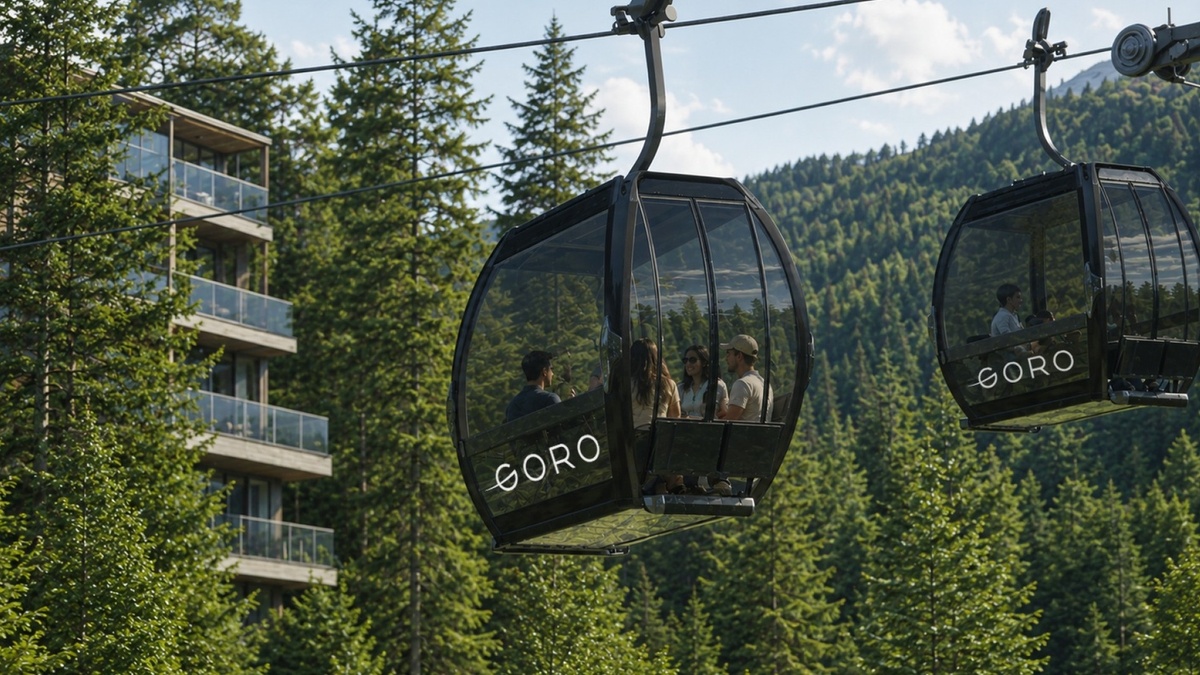
GORO Mountain Resort has signed a contract with the global ropeway transport systems market leader Doppelmayr Group for the supply and installation of a gondola ropeway for the first phase of the resort, the project’s press service told Interfax-Ukraine.
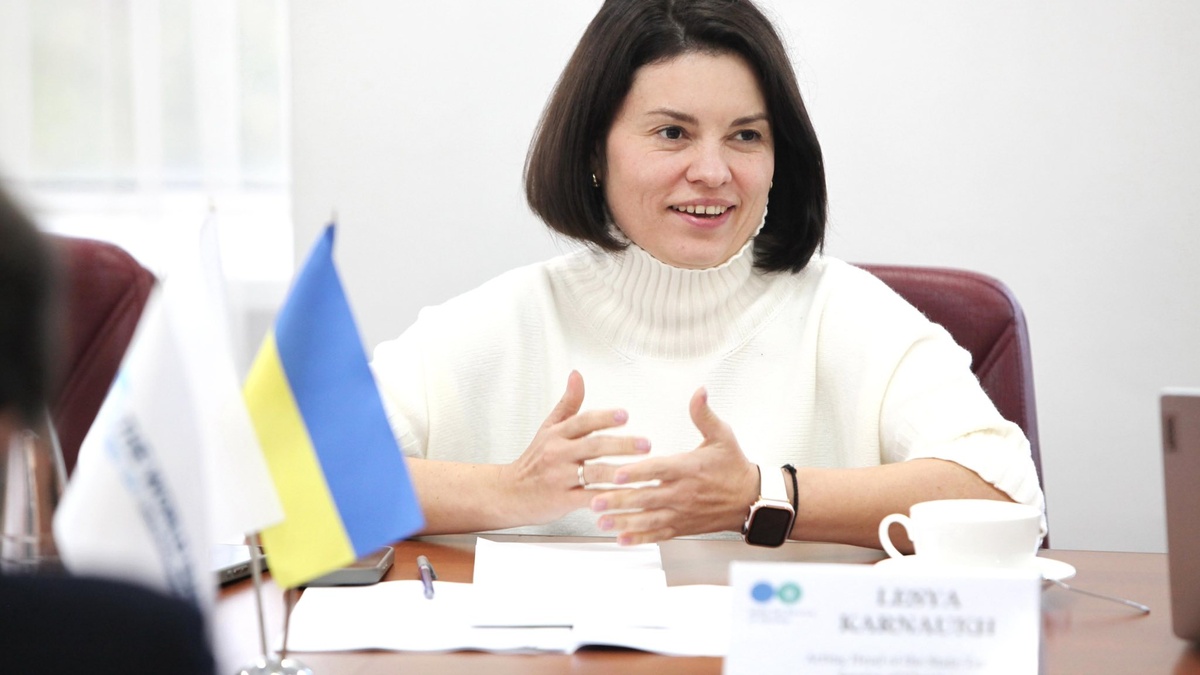
Acting Head of the State Tax Service of Ukraine (STS) Lesia Karnaukh, Director General of the State Revenue Service of Latvia Baiba Šmite-Roķe, and Director General of the State Tax Inspectorate of Lithuania Edita Janušienė have signed memorandums of cooperation, which provide for joint work in adapting tax legislation to EU standards, exchanging information, and combating the shadow economy.
About two-thirds of Ukraine’s territory may suffer from heavy rains and flooding by 2050 due to climate change, according to Svitlana Krakovska, head of the Applied Climatology Laboratory at the Ukrainian Hydrometeorological Institute of the State Emergency Service of Ukraine and the National Academy of Sciences of Ukraine.
Ukraine has received the seventh tranche of financing from the European Union (EU) under the Ukraine Facility totaling EUR 2.8 billion, with EUR 2.6 billion actually entering the state budget to be directed toward priority expenditures, including social and humanitarian needs, Prime Minister Yulia Svyrydenko has said.
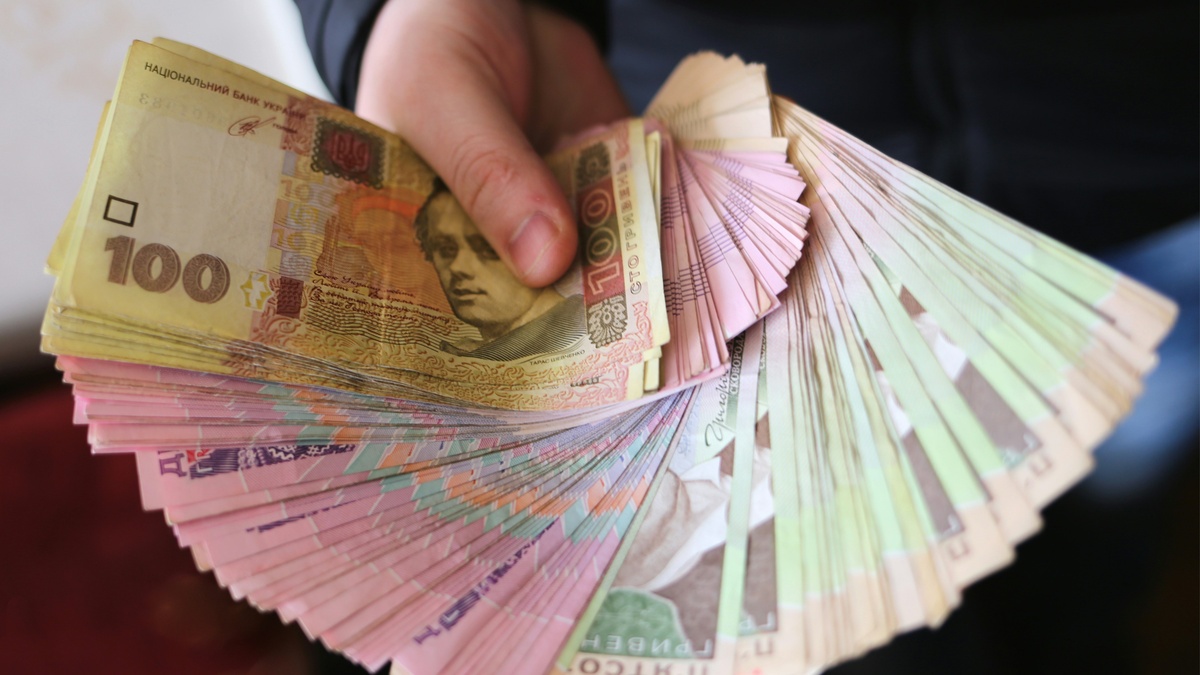
Some 62% of Ukrainians surveyed have not made any savings over the past two years, 13% put money aside from every salary, and every fourth (25%) tries to save but not systematically.
The global economy has yet to grasp the main military secret of the Middle East: the next big war will not begin with a strike on oil rigs but with a “silent shutdown” of the internet. While the Pentagon spends billions on missile defense, Iran has found an asymmetric response to the technological superiority of […]
from WND: Security status allowed him to create secret money stream for fraudulent ‘highly sensitive continuity-of-government initiative’ Federal prosecutors are alleging that a former CIA official, accused of stealing millions of dollars after $40 million in gold bars was found in his home, simply created a top-secret program to skim the cash for him. Reports […]
Greek manufacturing is shrinking dramatically, creating an urgent need for a shift to a complex economy. AI generated image. Credit: Greek Reporter
As Greece continues to lose its manufacturing industry, becoming all the more dependent on the service sector, an urgent restart and shift to a complex economy is crucial for the country’s economic viability.
A complex economy is interconnected with other industries that are not necessarily geographically concentrated or thematically related but which share common infrastructure, resources, and solid interdependencies in production and supply chains. The Internet of Things (IoT), automation, and data-sharing are vital for the development and success of a complex economy.
A recent Bank of Greece report states that tourism in 2025 accounted for 13 percent of the country’s GDP. The government presents this as a sign of success, but, behind the numbers, there is a sad ascertainment: Greece is no longer producing goods, and almost everything other than agricultural products is imported. Substantial revenue from tourism is definitely not a bad thing. However, the average Greek does not benefit from tourism revenue. As the cost of living rises, bragging about “soaring tourism revenues” is not filling the citizen’s supermarket cart.
According to Statista and the World Bank, between 2013 and 2023, 68.6 percent of Greece’s GDP came from the service sector, while 15.2 percent of revenue stemmed from industry and 3.3 percent from agriculture. Kostas Axarloglou, the dean and a professor at Alba Graduate Business School, says the Greek industry needs a restart and transition to a complex economy. In other words, Greece needs to enter “Industry 4.0,” or the Fourth Industrial Revolution, in which interconnectedness, automation, and real-time data are key.
Low labor productivity and wages
According to Axarloglou, only four percent of the Greek population is now employed in sectors related to Greece’s complex economy, which amounts to approximately only 11 percent of the value added to the country’s GDP in general. Additionally, in the Eastern Mediterranean nation, there is fragmentation into a large number of small businesses, exhibiting both low labor productivity and wages.
As per The Atlas of Economic Complexity, the industry sector in the Greek economy presents a relatively low degree of complexity in relation to GDP, an element indicative of low potential for economic growth in the future. Nonetheless, from 2018 onwards, The Atlas of Economic Complexity records positive growth in exports with the main contributors, among others, being the pharmaceutical and IT sectors.
A gradual structural transformation of the economy is also being observed, with the transfer of productive resources and activity towards manufacturing sectors with higher added value and productivity, such as electronics and machinery manufacturing. Finally, significant opportunities to strengthen and complement the country’s existing productive fabric have been recorded.
Axarloglou argues that there are both an overall low degree of complexity as well as structural problems in Greek manufacturing. The existence of companies with high levels of specialized know-how, however, provides a sufficient launching point in supporting the restarting of industry and the general production base of the country, which could lead to sustainable development in the Greek economy.
Importance of a complex economy in Greece
Axarloglou referenced the US industry and its contribution to the economy. While the manufacturing industry in the US constitutes 11 percent of GDP, it contributes 35 percent in productivity increase and 60 percent in exports. Furthermore, the complex economy in the United States is the engine of innovation, with related industry sectors producing 55 percent of patents and contributing 70 percent of total expenditure on research and development.
A recent study (Yong, 2020) analyzes the contribution of complexity in a set of economies with varying characteristics. The importance of dynamic industries in economic growth as well as the development of social capabilities and a significant contribution to the achievement of the UN Sustainable Development Goals (SDGs) in each country’s economy were scrutinized.
Overall, the study found there is a direct impact of economic complexity on the development of specific UN Sustainable Development Goals (SDGs), including on poverty reduction, education, job creation, technological economic upgrading, and overall economic development. Moreover, policy interventions for manufacturing expansion are especially vital as they contribute to the development of skills in the country, triggering technological innovation and creating new markets and institutions.
Consequently, the development of a complex economy in Greece could greatly contribute to GDP and the implementation of UN SDGs. It must be mentioned that, in previous decades, manufacturing significantly lagged behind in general, but this lag has eased in recent years.
The two pillars for a complex economy
The development of a sustainable complex economy should be based on two pillars, Axarloglou argues: firstly, extroversion and internationalization and, secondly, innovation and specialization. The Greek industry would profit from participation in International Production Networks (IPNs). This is more feasible now, as these networks evolve from the impact of circular economy, digital transformation, sustainability, and new technologies such as robotics. The mechanisms and structures that would aid in the development of a complex economy are related to the National Recovery and Resilience Plan “Greece 2.0.”
According to Axarloglou, Greece should also orient its manufacturing production towards the international market and within the framework of the Global Value Chain Networks (GVCN), developing even at regional levels. This would include energy networks in the southeastern Mediterranean and innovation pockets in Thessaloniki and Northern Greece. In addition, market megatrends, namely digital technologies, automation-robotics, sustainability and climate change, and a circular economy, should seriously be considered as worthy endeavors.
The adoption of new technologies and digitalization of operations and processes are likewise vital. Such technologies are directly related to the internet, including the IoT, the cloud, and digital platforms and ecosystems. These lead to a greater degree of integration of production, a reduction in transaction costs and easier participation, and more effective coordination of cooperating companies from various geographical locations.
Data collection and analysis (data analytics) help in better production coordination and management within GVCNs and geographically dispersed networks. Moreover, the use of online commercial platforms (e-commerce) results in easy and direct access for producers to raw materials and semi-finished products. Large markets of potential customers are also much more readily accessible.
Sustainable development, climate change, and the circular economy
All the more, a global trend for sustainable development is affecting the structure, organization, and development of GVCNs. There is a growing need to closely monitor and control companies’ social and climate footprints and their alignment with Environment, Social, and Governance (ESG) priorities. At the same time, the imposition of rules on sustainability issues by governments directly affects the structure and operation of GVCNs since these lead to changes in transportation costs and countries’ advantageous dependence on renewable energy availability.
The necessity for sustainability and more efficient management of resources is leading to countries’ adoption of regulations for the operation of the economy and dynamic industries, and businesses are formulating business models and strategies compatible with the imperatives of the circular economy. Technological development now results in technologically and economically feasible production processes that operate within the framework of the circular economy. There is a focus on significant waste reduction, savings, and recycling / reutilization of raw materials and products.
Companies, therefore, develop business models within ecosystems based on collaboration with other companies in order to sustainably produce and deliver value. The purpose of these models and ecosystems is to effectively manage the life cycle of products and spare parts. Of course, the transition from a traditional-linear / operation-production model to a circular one mandates that companies make significant changes in the way they perceive the creation and distribution of value in the economy.
At the same time, the way in which producers in the complex economy model collect revenue is also changing. While, traditionally, income came from product sales, in the circular economy model, profits stem from product rental and other such services. This of course requires new skill development for value production more closely aligned with industrial product usage services, often the result of strategic partnerships among companies.
The circular business model, therefore, has the potential to revitalize manufacturing sectors and businesses by giving them the opportunity to develop new partnerships with companies and ecosystems within the framework of the GVCN, minimizing the burden on the environment, maintaining economic robustness, and achieving the triptych of objectives: an interconnection between the environment, society, and economy, leading to robustness.
European Union funds
The participation of the Greek complex economy in the GVCNs—and mainly in the regional GVCN—requires horizontal interventions that will establish and even improve the required structures and environment, thereby enabling Greek manufacturing to become competitive. Axarloglou argues that Greece has a great opportunity to improve its complex economy with the National Recovery and Resilience Plan “Greece 2.0.” It is a comprehensive plan of reforms and investments for the restructuring of the country’s production model within the extroversion-competitiveness-innovation axis.
The plan is based on initial funding of $35.6 billion (€31.1 billion) for the 2022-2026 period (approximately $21 billion in the form of subsidies and about $14.5 billion in the form of loans), with the prospect of drawing additional investment resources totaling $67.4 billion (€58.8 billion). The plan consists of four Pillars (and 18 sub-axes), namely green transition; digital transition; employment, skills, and social cohesion; and private investment and transformation of the economy.
Green transition emphasizes the energy transformation of the Greek economy towards renewable energy sources and a more energy-efficient operation of the economy, the more efficient use of natural resources, and the promotion of a circular economy.
The digital transition of the economy includes investment in infrastructure (optical fibers, 5G, etc.), the digital transformation of the state, and the promotion and adoption of digital technologies by businesses so that they can be interconnected in the International Production Networks (IPNs).
Employment, skills, and social cohesion includes actions to improve the functioning of the labor market, the reintegration of the unemployed into the labor market, the creation of jobs, and the reduction of inequalities, poverty, and social and economic exclusion.
Finally, private investment and economic transformation includes investments and actions to modernize public administration, strengthen the financial system, promote and support research and innovation, modernize and improve the resilience of key sectors—such as tourism and manufacturing—of the economy, and ultimately improve competitiveness and promote private investment and exports.
“Industry 4.0”
The acceleration of the “Industry 4.0” transformation program includes digital transformation as well as the development of “smart” production and a new generation of industrial parks in Greece. The promotion and support of investments for the development of new or upgraded production lines would enhance production and cooperation in GVCNs and improve competitiveness with an emphasis on advanced and digitally controlled industrial equipment, production control systems, and the establishment of industrial partnerships.
Furthermore, there should be significant structural changes to reduce bureaucracy related to business operations and simplify procedures for attracting and implementing foreign direct investment in the country. This will be possible with the implementation of horizontal actions to strengthen the Greek economy within the framework of the National Recovery and Resilience Plan “Greece 2.0.” Therefore, the “Greece 2.0” and “Industry 4.0” programs are inextricably linked to each other for the development of a productive complex economy in the country.

 Login
Login