AI-generated Iliad trailer shared by Elon Musk on X amid debate over Christopher Nolan’s The Odyssey. Credit: Screenshot / Elon Musk’s official twitter account
Elon Musk has entered the controversy surrounding Christopher Nolan’s upcoming The Odyssey by sharing an AI-generated trailer featuring an all-white cast of ancient Greek heroes.
Musk posted the video on X on Thursday, June 4, as debate continues over Nolan’s decision to cast Lupita Nyong’o as Helen of Troy in The Odyssey. Musk, who has already criticized the casting online, introduced the clip as an “Iliad (Troy) trailer made by Grok Imagine 1.5,” referring to the video-generation model developed by his artificial intelligence company xAI.
The 40-second trailer quickly went viral and drew more than 18.4 million views, according to the original Greek report. Although Musk did not explicitly mention Nolan’s film in the post, the timing and visual choices linked the clip to the wider argument over how ancient Greek figures should appear on screen.
An AI version of Homer’s world
The trailer presents a dramatic version of the Trojan War, with burning cities, warships, battlefield speeches, emotional close-ups, and large-scale combat scenes. Its visual style closely resembles a Hollywood historical epic. However, AI tools produced the video rather than a traditional studio production.
The choice of The Iliad also matters. Homer’s Iliad and Odyssey are two of the foundational works of ancient Greek literature. The Iliad centers on the Trojan War, while The Odyssey follows Odysseus on his long journey home after the fall of Troy.
That connection made Musk’s post look less like a random AI experiment and more like a response to the current debate around Nolan’s film. By using AI to create his own vision of the Trojan War, Musk placed himself directly inside a cultural dispute involving Greek mythology, Hollywood casting, and the future of filmmaking.
Nolan’s The Odyssey is scheduled for release on July 17, 2026. The film stars Matt Damon as Odysseus and Anne Hathaway as Penelope. Its cast also includes Tom Holland, Zendaya, Robert Pattinson, Charlize Theron, and Lupita Nyong’o.
Much of the online backlash has focused on Nyong’o’s role as Helen of Troy. Critics of the casting argue that Helen, one of the most famous figures of Greek mythology, should reflect the traditional image associated with the character.
Supporters of the film, however, say Homeric myth is not documentary history. They argue that artists have reinterpreted the epics for centuries through theater, literature, painting, and cinema. Nyong’o has also addressed the criticism, saying the film’s cast reflects the world and emphasizing that the story belongs to mythology rather than historical reconstruction.
Musk’s AI trailer now adds another layer to the dispute. The clip does not simply promote artificial intelligence as a filmmaking tool. Instead, it presents an alternative visual version of the Homeric world at the exact moment when Hollywood’s version is under scrutiny.
Was very fun to try out the latest 1.5 Grok Imagine model for this one! https://t.co/x5OwuhySyH
Elon Musk turns AI Iliad trailer into a cultural statement
After Musk posted the trailer, the creative studio Heavy Pulp, which worked on the project, said it had enjoyed making it. Musk then asked whether the team wanted to make a full-length film. Heavy Pulp replied that it was already in.
That exchange helped transform the video from a short viral experiment into a possible challenge to Hollywood. Musk appeared to test whether AI could generate not only trailers, but also full-scale mythological films outside the traditional studio system.
The response online came quickly. Many users praised the trailer’s cinematic look and argued that it showed how fast AI video tools are improving. Others viewed the clip as a direct provocation toward Hollywood, especially because it appeared during a high-profile debate over representation in a film based on Greek mythology.
Νέο διαδικτυακό θόρυβο προκαλεί ο Ίλον Μασκ, ο οποίος επανέρχεται στη δημόσια συζήτηση γύρω από τις επιλογές casting στην πολυαναμενόμενη κινηματογραφική μεταφορά της Οδύσσειας από τον Κρίστοφερ Νόλαν. Με αφορμή τη συζήτηση που έχει ανοίξει για τον ρόλο της Ωραίας Ελένης, ο Μασκ ανάρτησε στο Χ ένα βίντεο που παρουσιάζεται ως AI trailer της Ιλιάδας, με όλους τους πρωταγωνιστές να απεικονίζονται ως λευκοί ηθοποιοί. Η Βαλεντίνα Καραγεωργίου είναι μαζί μας με όλες τις λεπτομέρειες και τις αντιδράσεις που έχει προκαλέσει η νέα παρέμβαση του Ίλον Μασκ. #starchannelnews#tiktokgreece#newsgr
Sykoutris viewed the heroic ideal not as blind defiance but as a conscious affirmation of meaning in the face of suffering. Credit: Photo Credit: Ioannis Sykoutris, c. 1935 – ELIA / Hellenic Literary and Historical Archive. Source: SearchCulture.gr. CC BY 4.0.
Ioannis Sykoutris, born in Smyrna in 1901, is one of the most tragic yet heroic figures of 20th-century Greek intellectual history. His life was marked by brilliance, deep philosophical inquiry, and, ultimately, a heartbreaking end.
On September 21, 1937 at the young age of 36, Sykoutris took his own life in Corinth. It was a tragic event that sent shockwaves through the Greek intellectual community. Though his life was cut short, his intellectual legacy and philosophical views continue to resonate to this day.
Philosophical views and his interpretation of Plato
Sykoutris was born into a humble family of Chios descent, and his early years were shaped by the struggles of a post-Ottoman world. After completing his studies at the University of Athens, he moved to Germany. There, he further honed his intellectual capabilities at universities such as Leipzig and Berlin.
Upon returning to Greece in 1929, Sykoutris took up a position as a lecturer at the University of Athens, where he made significant contributions to Greek philosophy and literature. His work spanned various areas, including the translation and analysis of classical texts, most notably Aristotle’s Poetics and Plato’s Symposium. These works established him as one of Greece’s leading intellectuals, and his translations, in particular, gained international recognition.
Sykoutris was deeply drawn to the works of the Greek philosopher Plato, particularly to The Symposium. His interpretation of the dialogue explored the nature of love and eroticism in Ancient Greek society. He especially focused on the acceptance of homosexuality as a cultural and social phenomenon in classical Greece.
While his intellectual rigor and deep insight into these themes were recognized, his perspectives also invited controversy. Conservative circles, for instance, tended to criticize his ideas on love and relationships. Sykoutris emphasized the philosophical and intellectual aspects of love, challenging the moralistic views of his time and revealing his progressive stance on issues considered taboo in his era.
His work on Plato was not limited to translations. Sykoutris believed that Plato’s philosophical ideas held the key to understanding the soul and the nature of human existence. He viewed Plato’s dialogues as a guide to achieving higher states of being through philosophical contemplation.
The heroic ideal: Sykoutris and the heroic human
Sykoutris drew on German idealism to shape his understanding of Greek thought, insisting that philosophy must transform the moral and intellectual character of individuals and society. He grounded his philosophical framework in the concept of the heroic human, which he identified as a central idea in both Greek philosophy and the modern intellectual landscape.
He viewed the “heroic human” as one who transcends conventional societal norms, embracing personal suffering and intellectual struggle in pursuit of higher ideals. For Sykoutris, the heroic individual was not just a figure of physical strength or military prowess. Instead, this was a person of profound philosophical depth who embodied the struggle for self-perfection.
In many ways, Sykoutris viewed philosophy as a means of rebellion against the oppressive social structures of his time. He admired the courage of individuals who resisted conformity. This theme echoes in his interpretation of ancient Greek heroes who defied the gods and societal expectations.
His vision of the heroic ideal was also influenced by his reading of Nietzsche and German idealism, which placed the individual at the center of philosophical inquiry and moral struggle. Sykoutris’ own life can be seen as an embodiment of such a heroic ideal. He was an intellectual who chose to live authentically, confronting both external social pressures and his own inner demons.
An artistic representation of Plato’s Symposium. Credit: Anselm Feuerbach, Wikimedia Commons, Public Domain
The tragedy of his death
A complex interplay of personal, professional, and societal factors marked the circumstances surrounding Sykoutris’ suicide. Despite his intellectual achievements, Sykoutris felt a profound sense of isolation and disillusionment, particularly due to the fierce criticism he faced from religious and conservative factions in Greek society.
His progressive ideas were at odds with the prevailing norms, and this conflict led to personal and emotional strain. The attacks against him, especially concerning his views on love and sexuality, likely contributed to his feelings of alienation.
Sykoutris’ death was not just a personal tragedy but a cultural one, as well. It marked the loss of one of Greece’s most promising philosophers at a time when the country was undergoing significant political and social transformation. His suicide raised questions as to the psychological toll of intellectual rebellion and the cost of living as an outsider in a society unwilling to embrace change.
Sykoutris chose to end his life like the Trojan war hero Ajax. Credit: Wikimedia Commons, Public Domain
Legacy and influence
Despite his short life, Ioannis Sykoutris left behind a profound intellectual legacy that continues to shape modern Greek thought. His writings on Plato, Greek philosophy, and the nature of love continue to be studied and discussed in academic circles, and his work offers valuable insights into the tensions between tradition and modernity, on the one hand, and intellectualism and societal conformity on the other. He remains a symbol of intellectual courage, a figure who dared to challenge the status quo in the pursuit of truth.
Sykoutris’s tragic death only added to his mystique, transforming him into a martyr for the intellectual and cultural causes he championed. His legacy is not just one of academic achievement but also of moral and philosophical courage. These qualities remain an inspiration for those who seek to transcend the limitations of their time and pursue a higher, more meaningful life.
Ioannis Sykoutris was a man ahead of his time, whose intellectual journey continues to inspire scholars and philosophers alike. His views on Plato and the heroic ideal reflect a deep commitment to the power of philosophy as a tool for personal and societal transformation. While his life ended in tragedy, his philosophical contributions endure, and his legacy as a heroic intellectual remains a vital part of Greece’s cultural history.
Ancient Greeks and Romans used spiderwebs in medicine, believing their natural fibers could stop bleeding and protect wounds from infection. Credit: Wikimedia Commons, public domain
Among the most intriguing practices in Ancient Greek medicine was the use of spiderwebs—and even live spiders—in healing treatments. Ancient medicine often surprises modern readers with remedies that seem unusual at first glance, yet many of these traditional approaches contained a practical logic beneath layers of symbolism and inherited belief.
Greek and Roman physicians placed particular emphasis on controlling bleeding, especially in the context of warfare and surgery. Soldiers frequently sustained deep wounds from swords, spears, and arrows, while physicians had no access to modern antiseptics or advanced surgical instruments. In response, healers continuously experimented with natural materials that could help stop blood flow and protect exposed tissue. One of the more unusual solutions they turned to was spiderwebs.
Ancient Greek and Roman medical writers do, in fact, refer to the use of spiderwebs in medicine. Spider silk was observed to have properties that made it unexpectedly effective for wound care. Physicians noted its ability to absorb blood, cover injuries, and support the clotting process. While they lacked any understanding of modern biochemistry, their meticulous attention to such effects often led them to surprisingly effective medical practices.
Pliny the Elder and natural remedies, such as the use of spiderwebs, in the medicine of Ancient Greece and Rome
The Roman author Pliny the Elder offers some of the clearest references to spider-based medicine in his encyclopedic work Natural History. He describes a range of remedies involving both spiderwebs and actual spiders, noting that the former could help stop bleeding and support healing when applied directly to wounds. He also made mention that spiders were believed to serve as effective remedies for a variety of diseases and injuries in antiquity.
For Ancient Greek healers, spiderwebs appeared naturally suited for wound treatment. Their soft, fibrous texture allowed them to cover cuts with ease, while their adhesive qualities helped seal damaged tissue and protect it. Ancient warfare produced particularly severe injuries. Greek hoplites and Roman soldiers fought in brutal close combat, where swords and spears regularly tore flesh open. Even relatively minor wounds could turn fatal due to blood loss or infection. Physicians accompanying armies therefore required treatments that acted quickly and could be easily carried onto the battlefield.
The use of spiderwebs among the Ancient Romans and Greeks provided several practical advantages in medicine. They were lightweight, widely available in nature, and naturally adhesive when applied to skin. Healers thus collected cobwebs and preserved them for medical use, and soldiers are sometimes described as carrying small containers filled with spiderwebs during military campaigns.
Long before the development of modern antibiotics, healers frequently relied on natural substances that appeared to reduce infection risk and support faster healing.
Galen and Ancient Greek traditions in medicine
The great Greek physician Galen likewise discussed spider cobwebs in his work On the Powers of Simple Remedies in which he refers to their Ancient Greek medicinal applications in the treatment of injuries and the control of bleeding. Because gladiators suffered frequent injuries, Galen gained extensive experience treating wounds and preventing infection. Greek medicine placed strong emphasis on observation and practical effectiveness, so physicians often tested remedies repeatedly under real and demanding conditions.
This connection makes historical sense. Ancient doctors valued materials that combined absorbency, flexibility, and ease of application. Spider silk possessed all three qualities. Furthermore, physicians in antiquity often preferred natural substances that were readily available in military environments, where medical resources were limited.
Modern science helps explain why ancient healers valued spiderwebs. Spider silk is composed of strong protein fibers capable of forming protective coverings over wounds. The silk also absorbs moisture effectively and creates a temporary barrier against dirt and contaminants. Additionally, spiderwebs may exhibit mild antiseptic properties due to natural compounds present within the silk. Although ancient physicians could not observe bacteria, they recognized through experience that some treatments reduced infection more effectively than others.
Many people also associate spiderwebs with clotting because webs can contain traces of vitamin K from insect remains and environmental material. Vitamin K is a nutrient that contributes to blood coagulation in the human body. Most importantly, however, the web itself functions physically as a mesh. When pressed against a wound, the fibers help gather blood and support clot formation.
Modern medicine even studies spider silk for advanced surgical materials due to its exceptional strength and biocompatibility. Ironically, contemporary science now investigates properties that ancient healers observed intuitively thousands of years ago. Thus, ancient healers may have developed practical wound-care techniques through centuries of observation rather than theoretical science.
Galen, the pioneering Greek physician who influenced Western medicine through the 1700s. Portrait by Pierre-Roch Vigneron. Credit: Wikimedia Commons Public Domain
Ancient medicine and empirical knowledge
The use of spiderwebs highlights a central feature of ancient medicine, namely that Greek and Roman physicians often relied on empirical observation rather than formal scientific theory. They closely observed which remedies appeared effective and preserved those methods within medical tradition.
Greek physicians, in particular, placed great value on careful observation. The Hippocratic tradition encouraged doctors to study symptoms, environments, diets, and physical responses in detail. As a result, treatments survived not because they were theoretically justified but because they produced visible and consistent results. In this context, spiderwebs were valued because their silk fibers formed a natural covering over wounds while also helping to control blood flow. Folk medicine across many cultures likewise used cobwebs as anti-fungal and antiseptic remedies for cuts and open injuries.
Spiderwebs likely entered medical practice through precisely this kind of experiential process. Healers observed reduced bleeding and improved healing following their application, and over time, the practice spread across regions and generations. Cobwebs were part of a much broader landscape of natural medicine in antiquity. Ancient healers regularly used honey, wine, herbs, oils, vinegar, and minerals in wound care and general treatment.
Many of these substances also possessed genuine antibacterial or medicinal properties. Honey, for instance, inhibits bacterial growth and is still used in certain modern wound treatments. Wine and vinegar functioned as early disinfectants due to their alcohol and acid content. Within this framework, spiderwebs would not have seemed unusual to ancient physicians. Instead, they represented another readily available natural material with observable healing potential. Greek and Roman medicine thus consistently explored the relationship between nature and health, making use of natural resources, including even something so peculiar to modern eyes as spiderwebs.
Honey was used by the Ancient Greeks in medicine as well. Credit: The Drug Users Bible, CC BY SA, 2.0
The symbolic dimension of spiderwebs and their silk in Ancient Greece
Ancient cultures attached rich symbolic meaning to spiders and the act of weaving, and in Greek tradition, these associations carried particular weight. Mythology linked weaving to intelligence, fate, and skilled craftsmanship through figures such as Athena and Arachne, embedding it within a broader cultural framework that connected material creation with order, skill, and even divine influence. Spider silk itself likely appeared mysterious and almost otherworldly, given its delicate structure and surprising strength—qualities that blurred the boundary between natural substance and something almost magical.
This symbolic dimension may have reinforced confidence in cobweb-based remedies, since ancient medicine often operated at the intersection of practical treatment and cultural meaning. In battlefield contexts especially, where speed and improvisation were essential, surgeons had to remove arrows, close wounds, cauterize bleeding, and stabilize fractures under extreme conditions with limited equipment, relying heavily on whatever materials were immediately available. Spiderwebs fit this environment well, both practically and symbolically, as soldiers or assistants could gather them quickly from camps, caves, or buildings, requiring no preparation and allowing for rapid application under pressure.
Even when cobwebs were not perfectly effective, they could still provide a basic protective layer that was often better than leaving wounds exposed, which would have only allowed dirt and uncontrolled bleeding to pose immediate risks to survival. In many cases, this simple barrier alone may have made a meaningful difference in outcomes. Today, the same material that once carried symbolic and practical value in antiquity is again attracting scientific interest, as researchers explore spider silk for potential applications in surgery, tissue engineering, and regenerative medicine.
Tents are seen on Falasarna beach in Crete. Free camping outside organized sites remains illegal in Greece and can lead to fines and criminal penalties. Credit: Flickr / Sergio Alvarez / CC BY NC SA 2
As the summer season begins, Greek authorities are stepping up checks on free camping, a practice that remains illegal outside organized sites and continues to spark debate across Greece.
For many travelers, pitching a tent near the sea is seen as an affordable and alternative way to enjoy the holidays, especially as the cost of living continues to put pressure on households. In Greece, however, camping outside licensed facilities remains prohibited and can lead to fines, criminal proceedings, and even jail time.
Free camping remains illegal outside organized sites in Greece
Under Law 392/1976, the installation of tents, the parking of caravans for overnight stays, and camping in general are banned on beaches, in forests, near archaeological sites, and in other public areas that are not officially designated for that purpose.
Greek law allows camping only in organized and licensed facilities, such as official campsites. Those who violate the rules may face administrative fines, while in certain cases authorities can also initiate criminal procedures, including arrest under the fast-track process.
A notable case occurred last summer at Thapsa beach in Evia, where the presence of hundreds of tents sparked strong reactions and led to intervention by local authorities. Campers were removed from the area, while surveillance and inspections were increased.
Fines reaches €300 per person, tent, or vehicle
Under the current rules, those caught free camping in Greece face an administrative fine of €300 ($348) per person, tent, or vehicle.
In more serious cases, offenders may also face criminal penalties. These can include imprisonment of up to six months or a court-imposed financial penalty. The total fine imposed by the courts can reach up to €3,000 ($3,488).
Skiathos arrests renew the debate
The issue resurfaced this week after authorities arrested two men for allegedly free camping on a beach in Skiathos on Monday afternoon.
According to local reports, the case drew further criticism because the campers had allegedly left waste in the surrounding area, showing disregard for other beachgoers and the local environment.
Similar incidents are reported from time to time across Greece, especially in areas where free camping has long been tolerated informally. In some destinations, a decades-old practice and an unofficial understanding between campers, local authorities, and local stakeholders have often existed alongside a legal framework that strictly prohibits the activity.
Supporters point to affordable and alternative tourism
Supporters of free camping argue that it offers a closer connection with nature and gives people a cheaper way to travel at a time when accommodation and holiday costs have risen sharply.
They also point to examples from other European countries, where more flexible systems allow responsible camping in open, non-organized spaces under specific conditions. According to this view, Greece could adopt a more regulated model that permits free camping in selected areas, provided strict environmental rules are followed.
Authorities warn of environmental risks from free camping in Greece
Authorities and environmental organizations, however, argue that uncontrolled camping can put serious pressure on natural areas.
Their concerns include the accumulation of waste, damage to sensitive ecosystems, and an increased risk of fires, especially during the summer months when Greece faces high temperatures and dry conditions.
They also note that the absence of organized infrastructure makes it difficult to manage large numbers of visitors in protected or remote areas. The lack of sanitation facilities, waste collection, fire protection measures, and supervision is often cited as one of the main reasons the Greek state continues to restrict free camping outside licensed sites.
Medieval miniature reproducing the meeting of India’s gymnosophists with Greece’s commander Alexander the Great, c. 1420. The ancient Greeks were fascinated by India’s gymnosophists. Credit: Unknown Author, Wikimedia Commons, Public Domain.
Throughout history, and since the first exchanges between India and ancient Greece, Greeks have been captivated by the intriguing stories of the mysterious gymnosophists of India or the “naked philosophers.”
These philosophers became infamous for their austere and ascetic lifestyle along with their enigmatic wisdom. There are numerous Greek accounts of these wise people, offering a fascinating picture of the important cultural exchanges between two of the greatest civilizations on Earth.
Encounters with Alexander the Great
One could argue that perhaps the most famous interactions between Greeks and the gymnosophists took place during the campaign of Alexander the Great in India in 326 BC.
Ancient historians such as Onesicritus and Nearchus described (in their works) the dialogues that the great Macedonian Greek commander had with these naked wise men.
During these dialogues, we can see their distinctive disregard for any material possessions and their truly spectacular willingness to embrace death as a part of life. The philosopher Calanus famously demonstrated this by actually setting himself on fire in front of Alexander in an extreme attempt to showcase his fearless nature.
Miniature of Alexander encountering the gymnosophists. Image taken from f. 17v of Poems and Romances (the ‘Talbot Shrewsbury book’). Written in French. Credit: British Library, Europeana, Public Domain.
These examples are only a part of the entire collection of accounts that have managed to paint a vivid picture of the unconventional way of life of the gymnosophists. Porphyry, for instance, noted in his works that these Indian philosophers were strictly vegetarians, much like the Brahmins. Their absolute rejection of garments and clothing, in general, along with their distaste for worldly goods in pursuit of spiritual enlightenment made a deep impression on the Greeks, who were genuinely amazed by the dedication of these men.
Ancient Greece’s views on philosophy of India
For the Greeks and their worldview, the gymnosophists represented a very different and acutely unique philosophical tradition with both many similarities to but also divergences from their own. From the accounts of ancient writers we learn that Greeks saw similarities between the ideas from gymnosophists of India and their own Greek philosophical concepts.
The belief of the gymnosophists for example in reincarnation, or metempsychosis, was of particular interest to many. Some scholars even speculated that Greek thinkers such as Pythagoras may have been influenced by Indian thought in the way he shaped his own worldview.
However, it is obvious that the Greeks also noted differences. This is something that probably led to a greater curiosity about and fascination with the Indian gymnosophists. Unlike the gymnosophists, mainstream Greek philosophers tended to engage more with society and politics, becoming much more active in the everyday life of their cities. The radical asceticism of the gymnosophists, on the other hand, as well as their rejection of material life, was more extreme than most Greeks had ever witnessed.
Asceticism and self-denial—from India’s gymnosophists to ancient Greece
What seems to have impressed the Greeks the most about the gymnosophists and their life was their incredible commitment to self-denial and extreme austerity. These naked wise men renounced almost all possessions and lived in the wilderness away from urban centers of the time.
Their sole goal was to pursue spiritual wisdom through material deprivation. To Greek eyes, their extremely ascetic lifestyle represented the ultimate mastery over physical desires and earthly attachments. For the Greeks, this was almost inherently difficult to comprehend, as the Greeks had a fundamentally different view, which was much closer to today’s Western attitude towards material possessions.
This is the reason why the example of living adopted by the gymnosophists inspired some Greek philosophical movements, particularly the Cynics. The Cynics were the ones who emulated the Indian rejection of social norms and material goods in favor of the benefits of asceticism. Christian ascetics also later looked to the Indian philosophers as true role models of self-discipline and pure piety.
India’s gymnosophists and influences on ancient Greece
As is understandable, the gymnosophists played a fundamental role in shaping and affecting the Greek imagination. They appeared as archetypal wise men in works by authors like Plutarch, Lucian, and Clement of Alexandria. Their fascinating way of life continued to amaze later Greek and Roman writers. These writers saw them as exotic embodiments of the philosophical ideal.
More broadly speaking, the Greek encounters with the gymnosophists show us the importance and richness of the cultural exchanges and the discourse of ideas between ancient cultures and civilizations. These Indian wise men expanded many of the Greek notions of philosophy and the possibilities of the ascetic path, even shaping Christian thought, although they lived centuries before the birth of Jesus. At the same time, the Greek accounts give us valuable information about the fundamentals of Indian thought and practice.
Ancient Greek philosophers emphasized the importance of virtue in life. Photo of bronze door detail at the National Academy of Sciences building in Washington, DC. Credit: Carol M. Highsmith. Public Domain
For the Ancient Greeks, virtue was regarded as the highest quality a person could possess, and living virtuously was considered the ultimate goal of life.
Virtue was not merely a philosophical concept but a moral guide to be followed. Living a virtuous life was the greatest achievement for an Ancient Greek, but beyond moral virtue, the word itself also conveyed meanings of excellence, purpose in life, goodness, and happiness (eudaimonia, ευδαιμονία)—the fulfillment of human nature itself.
Reference to virtue (aretē, αρετή) first appeared in Homer’s epics, the Iliad and the Odyssey, and later evolved into a central ideal for Greek philosophers such as Socrates and Aristotle. In the Iliad, Homer exalted the virtue of bravery, placing Achilles at the forefront as the model of an excellent warrior. Achilles fought and triumphed for the sake of honor but accepted the fate destined for him.
In the Odyssey, Homer praised the virtues of intelligence (or cunning) and the endurance of Odysseus. His loyalty to Penelope is also celebrated, reflecting the virtue of loyalty to family and home. Upon returning to Ithaca, Odysseus declared that “there is nothing nobler than a man and wife who share their minds and hearts in harmony.”
The Ancient Greeks, Socrates, and virtue
Socrates, the Ancient Greek philosopher regarded by most as the father of philosophy, believed that knowledge and virtue were inseparable. The pursuit of virtue was of great importance, as Socrates viewed it as synonymous with knowledge of the good: to know what is good is to do what is good. “Virtue does not come from wealth, but wealth and every other good thing which men have comes from virtue, both to the individual and to the state” Socrates said.
By the time of the classical philosophers, the Ancient Greek world had evolved. The city-state (polis) had replaced the heroic household as the center of life, and the question was no longer how to be a great warrior but how to be a good citizen and a good person. Socrates emerged as the first great moral philosopher. “No one errs willingly,” he insisted in Plato’s Protagoras—meaning that moral failure arises from ignorance, not malice. He believed that virtue could be taught.
Socrates’ famous elenchus was a dialectical method of questioning, testing, and refining ideas. Through a series of probing questions, the method sought to expose contradictions in a person’s beliefs and systematically guide them toward a clearer, more consistent understanding of truth. By revealing these contradictions, Socrates led people toward self-knowledge.
When he was arrested and tried for disrespecting the gods and corrupting Athenian youth with his teachings, he famously declared, “The unexamined life is not worth living” (Apology 38a). For Socrates, the pursuit of virtue was the same as the pursuit of wisdom. Courage, justice, temperance, and piety were not separate traits but expressions of a unified understanding of the good. Thus, Socrates transformed virtue from heroic excellence into a philosophical and ethical ideal grounded in reason and self-knowledge.
Plato and the soul
Plato, Socrates’ most famous pupil and the philosopher who became his master’s voice, once remarked: “Consider your origins: you were not made to live as brutes, but to follow virtue and knowledge.” He developed this vision of virtue further, seeking to define its nature and role in human life. In his dialogues, especially The Republic, he explored the essence of virtue in both the individual and the state.
For Plato, the human soul was composed of three parts: the rational, spirited, and appetitive. Virtue, he taught, consisted of harmony among these elements, with reason guiding spirit and desire. Justice was this inner balance made visible in action. As he wrote, “Justice is doing one’s own work and not meddling with what is not one’s own” (Republic IV.433a). The just person, therefore, is one whose reason governs, whose spirit supports, and whose desires obey.
Plato identified four cardinal virtues that reflected this harmony: wisdom, courage, temperance, and justice. Wisdom was the virtue of reason; courage, that of the spirited part; temperance, the balance among all desires; and justice, the overarching order of the soul. These four virtues became the foundations of Western moral philosophy and profoundly influenced Christian ethical thought.
For Plato, virtue also had a transcendent dimension. True virtue was likeness to God, aimed at the Form of the Good—the ultimate reality that gives meaning and value to all things. As he wrote, “The Good is the cause of all that is right and beautiful” (Republic VI.517b). The virtuous person, through philosophical contemplation, seeks to align the soul with this divine Good, just as the sun illuminates the visible world. Thus, virtue is not only inner harmony within the self but also participation in a higher cosmic order.
Aristotle and practical virtue
For Aristotle, the concept of virtue was practical wisdom (phronēsis). He believed that ethical virtue, rather than mere self-control, is required for practical wisdom. In the Nicomachean Ethics, Aristotle defined virtue as a disposition to act correctly, formed through habit and guided by reason. Virtue was not innate, nor purely intellectual; it was something cultivated through action. “We become just by doing just acts, temperate by doing temperate acts, brave by doing brave acts” (Ethics II.1), he explained. In other words, virtue is learned by living it. As he also said, “We are what we repeatedly do. Excellence, then, is not an act but a habit.”
Aristotle’s famous doctrine of the mean illustrates the balanced nature of virtue. Every virtue lies between two extremes of excess and deficiency. Courage, for example, lies between cowardice (too little fear) and recklessness (too much). Generosity lies between stinginess and extravagance. “Virtue, then, is a state of character concerned with choice, lying in a mean,” he writes, “this being determined by reason and as the prudent person would determine it” (Ethics II.6).
For Aristotle, the goal of life was eudaimonia, often translated as “happiness” but more accurately “flourishing.” This state is achieved not through pleasure or wealth but through the full realization of one’s potential as a rational and social being. “The good for man is an activity of the soul in accordance with virtue,” he said (Ethics I.7). Virtue, then, is not a single act or rule but the lifelong practice of living wisely, courageously, and justly within a community. It requires both intellectual virtues (like wisdom and understanding) and moral virtues (like courage and moderation), harmonized under the guidance of practical wisdom.
Aristotle’s conception of virtue was purpose-driven. He believed that everything in nature has an end (telos). The eye’s purpose is to see, the seed’s to grow into a tree, and the human’s to live rationally and ethically. Virtue is the perfection of this natural purpose. Hence, for Aristotle, ethics was not about obeying rules but about fulfilling one’s nature as a rational being in society.
Quotes on virtue from Aristotle
Aristotle’s work on virtue and knowledge is unparalleled. A student of Plato and tutor to Alexander the Great, he established his own school, the Lyceum, where he explored topics ranging from biology to metaphysics. His reflections on virtue and the cultivation of character remain influential. Below are some of his most notable insights:
Aristotle emphasized the importance of educating both mind and character, stating that “educating the mind without educating the heart is no education at all.” He highlighted self-knowledge as the foundation of wisdom: “Knowing yourself is the beginning of all wisdom,” and courage and freedom were intertwined in his thought as is evident in his statement, “He who has overcome his fears will truly be free.”
Aristotle also emphasized the role of habit in shaping virtue: “Good habits formed at youth make all the difference.” For Aristotle, wisdom involved understanding life beyond immediate pleasure: “The aim of the wise is not to secure pleasure, but to avoid pain.” Cultivation of the mind and spirit was central to a flourishing life: “The energy of the mind is the essence of life,” and “The ideal man bears the accidents of life with dignity and grace.”
Aristotle also reflected on honor, leadership, and moral excellence: “Dignity does not consist in possessing honors, but in deserving them,” and “He who cannot be a good follower cannot be a good leader.” Finally, he distinguished the cultivated from the uncultivated, stating that “the educated differ from the uneducated as much as the living from the dead.”
Through these statements, Aristotle encapsulated his enduring vision of virtue as a combination of wisdom, moral character, and practical living.
The Stoics, moral worth, and virtue in Ancient Greece
The Stoics believed that the goal of all philosophical inquiry was to provide a mode of conduct characterized by tranquility of mind and certainty of moral worth. Flourishing during the Hellenistic period after Aristotle’s death, Zeno of Citium founded Stoicism around 300 BC, building on and radicalizing the moral insights of earlier philosophers. For the Stoics, virtue was not merely the highest good—it was the only good.
All external things—wealth, pleasure, health, even life itself—were morally indifferent. What mattered was the state of one’s soul: one’s rational and moral integrity. As the Stoic philosopher Epictetus later observed, “It is not things themselves that disturb men, but their opinions about things” (Enchiridion 5).
The Stoics saw virtue as living in accordance with nature, which meant acting in accordance to reason and accepting fate. Since the universe was governed by divine reason (logos), the wise individual aligns with it, remaining tranquil amid the changes of fortune. Courage, justice, temperance, and wisdom remained the core virtues, but now they were expressions of a single rational attitude toward life. As Seneca, the Roman Stoic, wrote, “Virtue is the only good, and vice the only evil; everything else is indifferent” (Letters 76). Even suffering or poverty could not harm the virtuous person because virtue itself was self-sufficient.
In this way, Stoicism universalized the Greek idea of virtue. It was no longer the privilege of citizens or philosophers but the potential of every human being. The Stoic sage, like Socrates before him, embodied moral freedom through inner mastery and reason. Marcus Aurelius, emperor and Stoic, summarized this ideal succinctly: “A man’s worth is measured by the things he pursues” (Meditations VII.3). To pursue virtue was, therefore, to live fully in harmony with the divine order of the world.
Influence of the Ancient Greek conception of virtue
The ancient Greek concept of virtue has had a profound influence on Western civilization. Ideas of moral inquiry, a virtuous life, practical wisdom, and moral worth were later adopted by Christian theology and continue to resonate today. Thomas Aquinas, for example, integrated Aristotle’s virtues with Christian faith in his writings.
In their exploration of virtue, the Ancient Greek philosophers offered no simple answers to questions such as, “How can I become virtuous?” Yet they left behind a framework for thinking, questioning, and appreciating the importance of a moral life for Western civilization.
For the Ancient Greeks, to live a virtuous life was to live well, to become the best version of oneself, and to align human nature with the rational order of the cosmos. They believed that this path led not only to moral goodness but also to true happiness.
That first sip of the cocktail washes away the heat and leaves you feeling cool and invigorated. Credit: Greek Reporter
Mastic or mastiha from the Greek island of Chios is getting traction on social media as the basic ingredient for summer cocktails.
Many bartenders and amateur connoisseurs are uploading videos of how to use the “white gold” of Chios to make flavorful and refreshing cocktails ideal for the summer.
Until recently, Greece’s mastiha liqueur hasn’t been as popular as other aperitifs. Thanks to new brands’ premiumization of the category and further education on its benefits, however, mastiha is starting to gain a cult following.
According to the following video by Nikki’s Modern Mediterranean, apart from one ounce of mastiha, you will need the following ingredients to make a summer cocktail: One ounce of peach vodka, peach nectar juice, grenadine, ice, and orange and cherry for garnish.
Another version is the rum, mastiha, and coffee cocktail:
Until recently, mastiha was actually considered a peasant spirit or liqueur often sipped after meals in Greece. This reputation is partly due to how it was made and the fact it wasn’t highly consumed outside of Greece.
Now, with society’s growing interest in niche global spirits, mastiha spirit has come into the spotlight, and it’s becoming more common on menus at high-end Greek beach clubs as well as restaurants and global cocktail bars from New York to Los Angeles.
Here is yet another version of mixing mastiha with liquor:
Mastiha, often referred to as the “Tears of Chios” or the “White Gold of Greece,” is a product made exclusively on the Greek island of Chios. Since antiquity, this sticky resin, which seeps from the bark of mastic trees, has been harvested not only for its flavor but its therapeutic value.
Although the mastic tree, also called “lentisk,” is native to many areas in the Mediterranean, its bark only “bleeds” mastic on the island of Chios, making it a truly unique and nearly miraculous product.
Mastic is used as flavoring in many sweets and drinks, most famously in Mastiha, a digestive liquor from Chios. The mastic “tears,” or small bits of hardened tree sap, can also be chewed like gum, a practice dating back thousands of years. Its healing properties include prevention and treatment of stomach pains and gastric disorders as well as rejuvenation of the skin.
Its rarity has made mastic highly sought-after throughout history. Even to this day, mastic is considered a precious commodity not to be wasted. The European Union has designated it a “protected designation of origin” product, confirming that only Chios may produce authentic mastic.
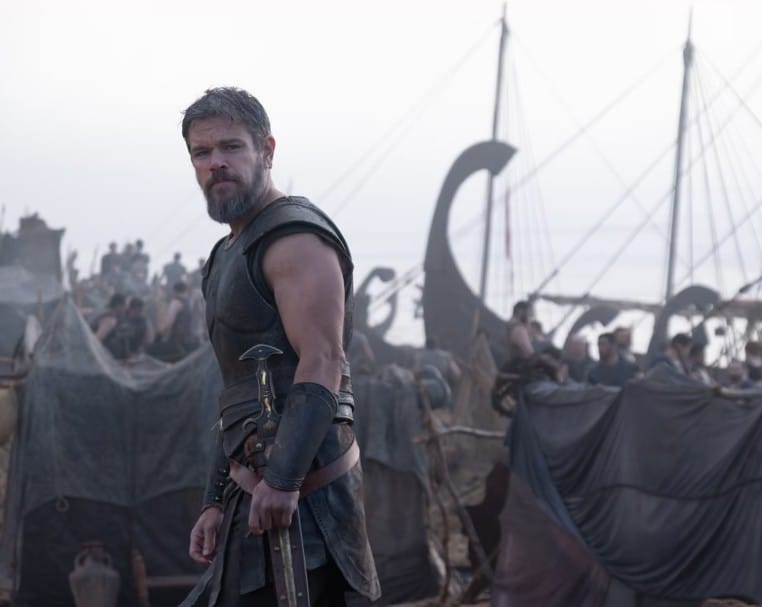
Matt Damon as Odysseus. Credit: Melinda Sue Gordon/Universal Pictures
In an insightful opinion piece published in The Guardian on June 3, 2026, titled “What the Hellenic! Why is Christopher Nolan’s new Greek epic entirely devoid of Greeks?”, author Chris Cotonou critiques the conspicuous lack of Greek actors in the director’s highly anticipated blockbuster, The Odyssey.
With an all-star ensemble featuring Matt Damon as Odysseus, alongside Zendaya, Charlize Theron, and Tom Holland, the film’s production team has repeatedly championed the cast as being meticulously chosen to “represent the world.” However, Cotonou points out a glaring irony: in the race to achieve universal global representation, the very country from which the story originates has been entirely unrepresented.
Cotonou highlights that while far-right culture warriors, including Elon Musk, have leveled bad-faith attacks against the casting of Black actor Lupita Nyong’o as Helen of Troy on the grounds of “authenticity,” they are focusing on the wrong target.
For the Greek community, both domestically and across the global diaspora, the frustration stems from a deeper cultural erasure. Cotonou notes that dinner-table debates from Patras to London have been flooded with alternative, Greek-inclusive casting ideas, with many left wondering why beloved diaspora stars like Billy Zane were bypassed entirely. To contextualize this frustration, Cotonou references Greece’s leading film critic, Thodoris Koutsogiannopoulos, who laments that Hollywood continues to perpetuate a “lazy cliché” that views Greekness through the simplistic lens of “Zorba rather than Achilles.”
Greeks secondary to their own story of Odyssey
More significantly, Cotonou argues that this complete omission carries a troubling broader implication. It suggests that Ancient Hellenic stories are viewed by Hollywood as part of a generic “shared Western inheritance,” rendering the actual Greek people incidental or secondary to their own history.
Cotonou draws a poignant parallel to the enduring geopolitical battle over the Parthenon Marbles, noting that the erasure feels as though modern Greeks are no longer viewed as worthy custodians of their ancestral mythology. While acknowledging that international audiences might dismiss the controversy under the guise that The Odyssey is merely fiction, Cotonou emphasizes how intimately interwoven these Homeric epics are with the modern Greek subconscious, identity, and sense of self.
He argues that excluding Greeks from The Odyssey is culturally equivalent to shutting out Hindus from an adaptation of the Mahabharata or stripping Polynesians from a film like Moana.
Ultimately, Cotonou connects the casting dispute back to the timeless, central theme of Homer’s poem: nostos, the deeply human yearning for homecoming after surviving grueling trials. In a Hollywood landscape that increasingly values diversity, Cotonou elegantly concludes that the Greek people are simply asking not to be written out of the journey.
The new motorhome framework finally distinguishes between “overnight parking” and “active camping.” Credit: ELAT
Following a controversial crackdown in Greece last year that effectively barred motorhomes from public spaces, a new legislative intervention is welcoming them across the country once again.
The shift marks a major turning point for nomadic travelers. In May 2025, Greece introduced a strict law that banned caravan and motorhome parking in all public spaces outside of officially designated campsites. Aimed at curbing illegal wild camping and protecting local coastal environments, the blanket ban sparked immense backlash. Travelers and tourism boards argued it was overly punitive, treating responsible motorhome owners, who contribute significantly to local economies, the same as illegal campers.
Recognizing the strain the 2025 law placed on road tourism, the Greek government has introduced a balanced intervention. The new framework finally distinguishes between “overnight parking” and “active camping.” Under the updated 2026 rules, motorhomes are permitted to park in public spaces just like standard passenger vehicles, provided they do not deploy awnings, tables, or outdoor gear.
To support this re-entry, Greece is greenlighting the development of municipal “Camper Stops”—dedicated, short-stay parking zones equipped with waste disposal and water refills, an infrastructure standard common throughout Western Europe. By pivoting from a total ban to regulated integration, Greece aims to protect its natural landscapes while tapping back into Europe’s lucrative, year-round road tourism market.
Understanding the regulatory shift on motorhomes in Greece
The transition from the 2025 crackdown to the 2026 resolution highlights a major evolution in how Greece views road tourism. Under the previous year’s restrictions, any public overnight stay in a motorhome was met with high fines and a total prohibition, forcing travelers exclusively into traditional, often crowded campsites.
The new framework resolves this friction by legally treating motorhomes as regular vehicles for standard parking purposes. Wild camping is now strictly defined and is forbidden only if outdoor gear is deployed, allowing travelers to rest peacefully overnight without fear of fines. Furthermore, instead of relying solely on traditional campsites, Greece is rolling out automated, short-stay municipal “Camper Stops” to seamlessly accommodate modern nomads.
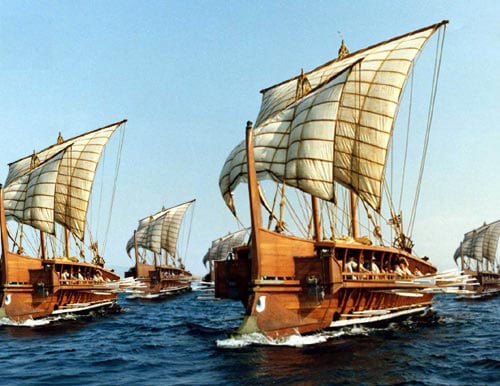
Few things on this earth are as lovely as a wooden ship with its sails unfurled, sailing on the open sea; the Ancient Greek trireme ships are no exception to this rule, but of course, they were once warships that were so deadly they enabled the rise of Athens as a great power.
The graceful ships, which were propelled not only by two large sails but by three ranks of men pulling on oars, may have originated in Corinth or perhaps further afield in Phoenicia. Wherever they were first created, triremes were used by all the ancient maritime civilizations around the Mediterranean Sea, including the Phoenicians and Romans as well as the ancient Greeks.
The trireme derives its name from its three rows of oars, with one man working each oar. The early trireme was a further development of the penteconter, an ancient warship with a single row of 25 oars on each side, and the bireme, a warship with two banks of oars, from Phoenicia.
Triremes played an integral role in the rise of Athens as a great power
Known for its speed and agility in battle, the trireme was the dominant warship in the Mediterranean from the 7th to the 4th centuries BC, after which it was largely superseded by the larger quadriremes and quinqueremes, with four and five banks of rowers.
Triremes played a vital role in the history of Ancient Greece during the Persian Wars and the creation of the Athenian maritime empire — as well as its downfall in the Peloponnesian War.
Modern scholarship is divided on the provenance of the trireme — although it was either Greece or Phoenicia — and the exact time it developed into the foremost ancient fighting ship. The Greek writer Clement of Alexandria, drawing on earlier works, explicitly attributes the invention of the trireme to Sidon, the great Phoenician city.
According to the great historian Thucydides, the trireme was introduced to Greece by the Corinthians in the late 8th century BC; the Corinthian Ameinocles was recorded as building four such ships for the Samians.
In the ancient world, naval combat relied on two methods: boarding and ramming. Rams (embolon) were fitted to the prows of warships and were used to rupture the hull of the enemy ship.
The first definitive reference to the use of triremes in naval combat dates back to approximately 525 BC, when the historian Herodotus wrote that the tyrant Polycrates of Samos was able to contribute 40 triremes to a Persian invasion of Egypt for the Battle of Pelusium.
Thucydides meanwhile clearly states that in the time of the Persian Wars, the majority of the Greek navies consisted of (probably two-tiered) penteconters and ploia makrá (“long ships”). In any case, by the early fifth century, the trireme was becoming the dominant type of warship in the eastern Mediterranean,
The first large-scale naval battle in which triremes participated was the Battle of Lade during the Ionian Revolt, where the combined fleets of the Greek Ionian cities were defeated by the Persian fleet, composed of squadrons from their Phoenician, Carian, Cypriot, and Egyptian subjects.
It was 483/2 BC, however, that saw the pivotal moment in the development of the trireme, when the Athenian statesman Themistocles persuaded the Athenian assembly to begin the construction of 200 triremes, using the income of the newly discovered silver mines at Laurion.
This naval battle is considered by many historians to be one of the most decisive in history, bringing an end to the threat of the Persian invasion of the West.
Much like the earlier battle at Thermopylae, the heroics at the Battle of Salamis have risen to legendary status, as the allied Greek city-states used approximately 370 trireme ships, and the Persians had over 1,000, according to ancient sources.
The Persians planned to crush the outnumbered Greeks with the sheer force of their massive fleet.
The leader of the Greek naval force, Themistocles, aware of the great number of Persian ships, used that fact against the enemy, luring the Persians to the narrow Strait of Salamis, where the Greek ships were waiting.
Since the massive Persian fleet could not fit in the strait, they quickly became disorganized, opening up a possibility for a Greek victory.
Triremes enabled the creation of Athens’ thalassocracy
The source and foundation of Athens’ lasting political power was her strong fleet, which historians believe was composed of over 200 triremes. It not only secured control of the Aegean Sea and the loyalty of her allies but also safeguarded trade routes and the all-important grain shipments from the Black Sea, with the help of its standing navy of triremes.
Athenian maritime power is the first example of what historians refer to as a “thalassocracy,” or complete dominion over the seas, in world history.
For the crew of Athenian triremes, the ships were an extension of their democratic beliefs.
In thinking of these gigantic ships propelled by manpower, we all can recall the iconic scene of slaves manning the oars of a Roman galley in the movie Ben Hur, with men struggling to keep up with the frenetic pace that was called for in order to ram other naval ships during battle.
And indeed many of the men in such Roman galleys in reality were slaves — but this was emphatically not the case with the Greek triremes. In fact, serving aboard such a vessel was seen as an honor and the oarsmen were from all ranks of life, with rich and poor rowing alongside each other.
Historian Victor Davis Hanson argues that this “served the larger civic interest of acculturating thousands as they worked together in cramped conditions and under dire circumstances.”
Service on Athenian ships was an integral part of the military service although hired foreigners were also accepted. A typical Athenian trireme crew during the Peloponnesian War consisted of 80 citizens, 60 metics (freed slaves), and 60 foreign hands. Indeed, historians say that in the few emergency cases where slaves were used to crew ships, these were deliberately set free, usually before being employed.
Experts say that the design of the trireme most likely pushed the technological limits of the time. The three files of oarsmen on each side worked as one, with each man outboard of, and in height overlapping, the other.
While well-maintained triremes would last up to 25 years, during the Peloponnesian War, Athens had to build nearly 20 triremes a year to maintain their fleet of 300.
Athenian triremes had two great cables called hypozomata (undergirding), stretching from end to end along the middle line of the hull just under the main beams, adding the needed support for ramming during battle.
Triremes decorated with evil eyes, sculptures of deities
Its draft was relatively shallow, about 1 meter, which, in addition to the relatively flat keel allowed a trireme to be beached easily — a great advantage for amphibious operations. The construction of a trireme was expensive and required approximately 6,000 man-days of labor.
The three principal types of wood used were fir, pine, and cedar. Oak was primarily used for the hulls in order that they could withstand the force of being hauled ashore.
In the case of Athens, since most of the fleet’s triremes were paid for by wealthy citizens, there was a natural sense of competition among the patricians to create the “most impressive” trireme, both to intimidate the enemy and, perhaps surprisingly, to attract the best oarsmen.
Triremes made a fearsome and beautiful sight, as we can see from ancient depictions and reproductions of the ships today. They were highly decorated with representations of the evil eye, or mati, and had nameplates, and painted figureheads.
These decorations were used both to show the wealth of the patrician and to make the ship frightening to the enemy. The home port of each trireme was shown with pride by the wooden statue of a deity placed above the bronze ram on the front of the ship.
The resurrection of the trireme in Greece
Triremes had two masts, a main (histos megas) and a small foremast (histos akateios), with square sails, while steering was provided by two steering oars at the stern, with one at the port side and one to starboard.
Classical sources indicate that the trireme was capable of sustained speeds of about 6 knots at a relatively leisurely pace of rowing. There is also a reference by Xenophon to a single day’s voyage from Byzantium to Heraclea Pontica, which translates as an average speed of 7.37 knots.
In Athens, the ship’s captain, known as the trierarchos, would have been a wealthy Athenian citizen. He alone was responsible for manning, fitting out, and maintaining the ship for his liturgical year at least; the ship itself belonged to Athens.
During the Hellenistic period, the relatively lightweight trireme was supplanted by larger warships in dominant navies, especially the quinquereme, while triremes continued to be the mainstay of smaller navies.
Although the Hellenistic kingdoms did develop the quinquereme and even larger ships, most navies of the Greek mainland and the smaller colonies could only afford triremes. They were used by the Diadochi Empires and sea powers like Syracuse, Carthage, and later Rome.
In 1985–1987 a shipbuilder in Piraeus, advised by historian J. S. Morrison and naval architect John F. Coates and informed by evidence from underwater archaeology, built an Athenian-style trireme, Olympias.
The work was also advised by the classics teacher Charles Willink and drew on evidence gained from Greek literature, history of art, and archaeology above and below water.
The Olympias’ bronze bow ram, a copy of an original ram now in the Piraeus archaeological museum, weighs 200 kg. The ship was built from Douglas fir and Virginia oak while its keel is of iroko hardwood.
During its sea trials, in 1987, the Olympias was crewed by 170 volunteer oarsmen and oarswomen. She achieved a speed of 9 knots (17 km/h). These results, achieved with an inexperienced, mixed crew, suggest that ancient historians like Thucydides were not exaggerating about the capabilities of triremes.
Olympias was transported to Britain in 1993, to take part in events celebrating the 2,500 years since the beginning of democracy. In 2004 she was used to transport the Olympic Flame ceremonially from the port of Keratsini to the main port of Piraeus, as the Olympic Torch Relay approached Athens for the 2004 Summer Olympics.
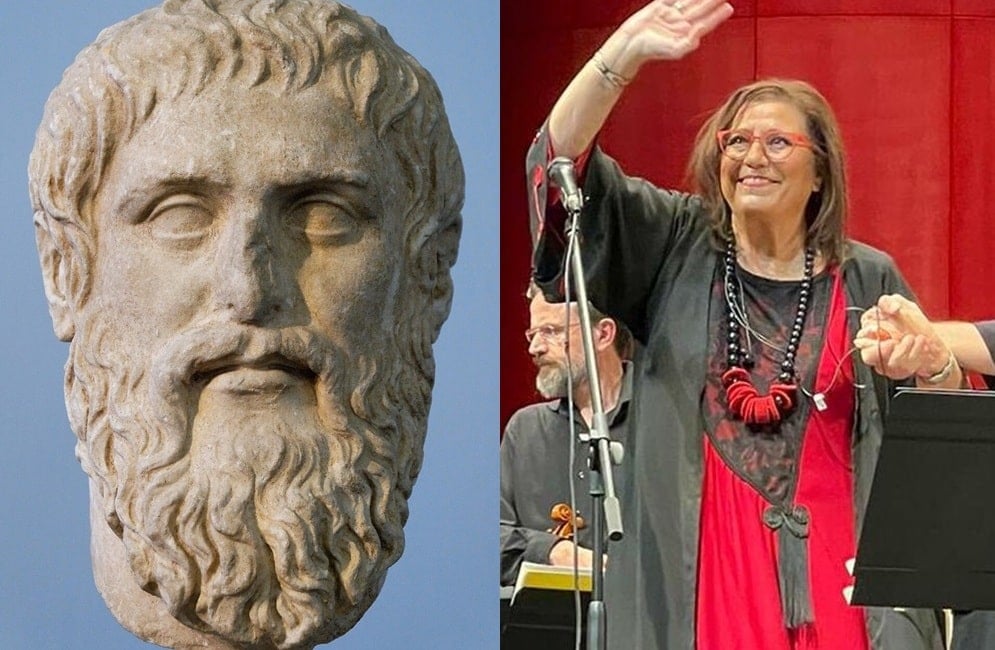
Farantouri shared details about her highly-anticipated concert alongside electronic music pioneer Lena Platonos. Illustration: Greek Reporter
Legendary Greek vocalist Maria Farantouri has teased a groundbreaking upcoming performance, revealing that she will be singing passages from Plato’s Republic set to techno music.
Speaking to the camera on the morning show Buongiorno, Farantouri shared details about her highly anticipated concert alongside electronic music pioneer Lena Platonos, scheduled for June 19 at the historic Odeon of Herodes Atticus.
The ambitious program will feature three major works that bridge ancient text, contemporary composition, and electronic soundscapes. Farantouri noted that the performance will seamlessly blend modern musical elements guaranteed to thrill younger audiences.
“Lena Platonos and I are preparing a truly historic concert,” Farantouri said. “It connects the past with the present using very modern, electronic rhythms. I will also be singing Plato’s Republic. Lena has taken the myth of the Three Fates and set it to music—and it’s going to be techno! Young people will literally be dancing to it. It’s absolutely thrilling.”
Plato’s Republic: Cornerstone of philosophy and politics
Written around 375 BC, Plato’s Republic is arguably the most influential work of philosophy and political theory in Western history. Structured as a Socratic dialogue, it explores the definition of justice, the character of the just city-state, and the nature of the human soul. It is the very text that gave the world the famous “Allegory of the Cave”—Plato’s metaphor for how humanity mistakes the shadows of illusion for reality and how the pursuit of truth requires breaking free from those chains.
What makes Platonos and Farantouri’s techno adaptation so brilliantly ironic is Plato’s own complicated relationship with music. In the Republic, Plato devoted significant time to discussing the role of the arts in society, famously arguing that certain musical scales and rhythms should be banned because they could corrupt the soul or incite chaotic emotion.
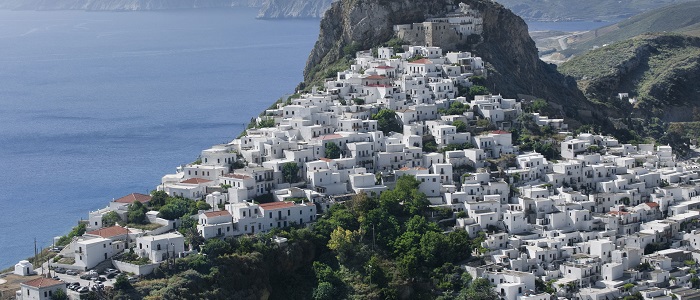
The Chora on Skyros island is a postcard-perfect labyrinth of whitewashed homes. Credit: Public Domain
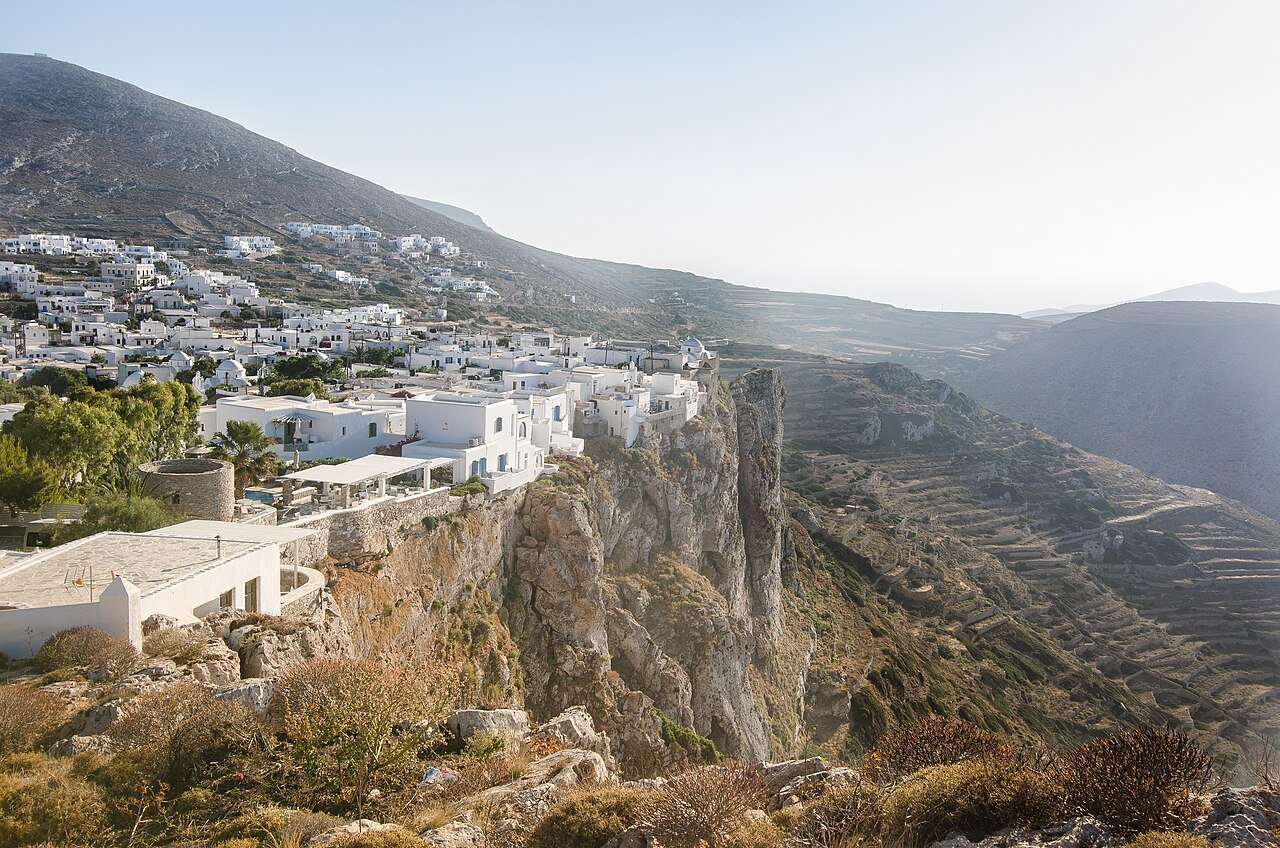
One of the most fascinating aspects of island architecture in Greece is the “Chora” (Χώρα), which literally means “main town” or “capital.” On almost every Aegean island, you will find it perched precariously on a jagged mountain peak, cliffside, or steep hilltop, miles away from the main port.
Today, these towns are postcard-perfect labyrinths of whitewashed houses, but their dramatic locations were originally born entirely out of fear, survival, and defensive strategy.
Why was a Chora on the islands of Greece built on a hilltop?
Between the 7th and 18th centuries, the Aegean Sea was a terrifying place to live. It was heavily plagued by piracy, notably by Saracens, Venetians, Genovese, and later Ottomans, who raided coastal villages for loot and slaves. Building on high ground served several genius military purposes:
Early Warning System: High vantage points allowed islanders to scan the horizon and spot approaching enemy sails hours before they hit the shore, allowing locals time to prepare or hide.
The “Invisible” Town: Throughout the islands of Greece, many areas that functioned as a Chora were built tucked slightly behind a ridge facing away from the sea. From a pirate ship on the water, the natural stone and tightly packed white houses blended into the landscape, making the island look completely uninhabited.
Fortress Architecture (Kastro): The houses themselves were built as defense walls. They were tightly packed together with tiny, maze-like alleys, dead ends, and steep steps designed to disorient and trap invaders who managed to break through.
The Venetian Castle: Often, the very peak of the Chora features a Kastro (castle), built during Venetian rule. If pirates breached the town, the entire population would retreat into this central fortified citadel for a final stand.
Spectacular examples of Greece’s Choras in the Aegean
1. Folegandros: The Sheer Cliffside Drop
Chora, Folegandros Island, Greece. Credit: Wikimedia Commons / Etienne Dallaire / CC BY 4-0
Folegandros in the Cyclades boasts a Chora that is absolutely amongst the most jaw-dropping in Greece. Part of the settlement, specifically the oldest medieval quarter, called the Kastro, is built directly on the edge of a vertical cliff that plunges 200 meters (650 feet) straight down into the Aegean. The outer walls of the houses form the defensive perimeter, meaning a window at the back of a house opens directly into an abyss. From the town, a famous, majestic zigzagging stone path leads further up the spine of the mountain to the white Church of Panagia.
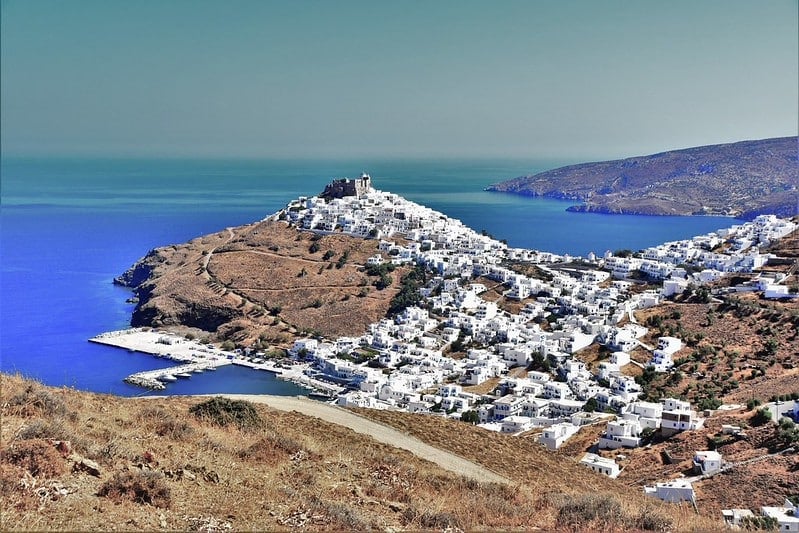
2. Astypalaia: The Crowned Amphitheater
Greece’s Astypalaia has been named the world’s best destination for 2026. Credit: Flickr / Soulape / CC BY ND 2
Shaped like a butterfly, the island of Astypalaia bridges the Cyclades and the Dodecanese. Its Chora is a brilliant white hill of cubic houses that ascends like an ancient amphitheater. The absolute summit is crowned by the dark, volcanic stone of the Querini Castle, built by the Venetians in the 13th century. The striking contrast between the pitch-black stone castle and the blinding white homes wrapping around it makes it one of the most architecturally dramatic sights in Greece.
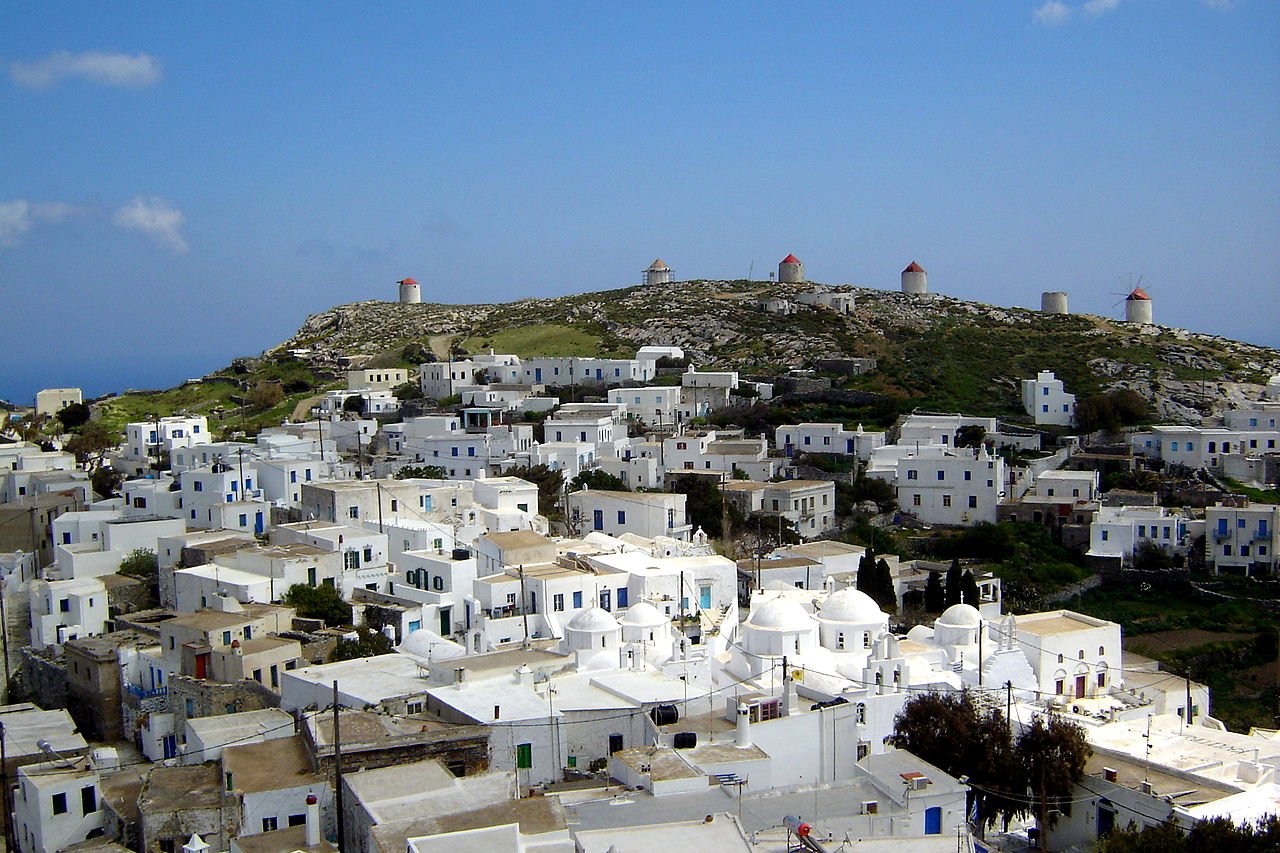
3. Amorgos: The Invisible Mountain Hideout
The Chora on Amorgos. Credit: Public Domain
Amorgos’ Chora is the quintessential example of an “invisible” town. It is completely hidden from the sea, nestled in a rocky mountain saddle 350 meters above sea level (about 1,150 ft). Dominated by a massive rock central spire topped with a 13th-century castle, the town is a dense maze of alleys designed to cut the fierce Aegean winds. Just outside the main town cluster, a stark ridge line is punctuated by a row of historic, abandoned stone windmills, highlighting just how exposed and elevated this sanctuary truly is.
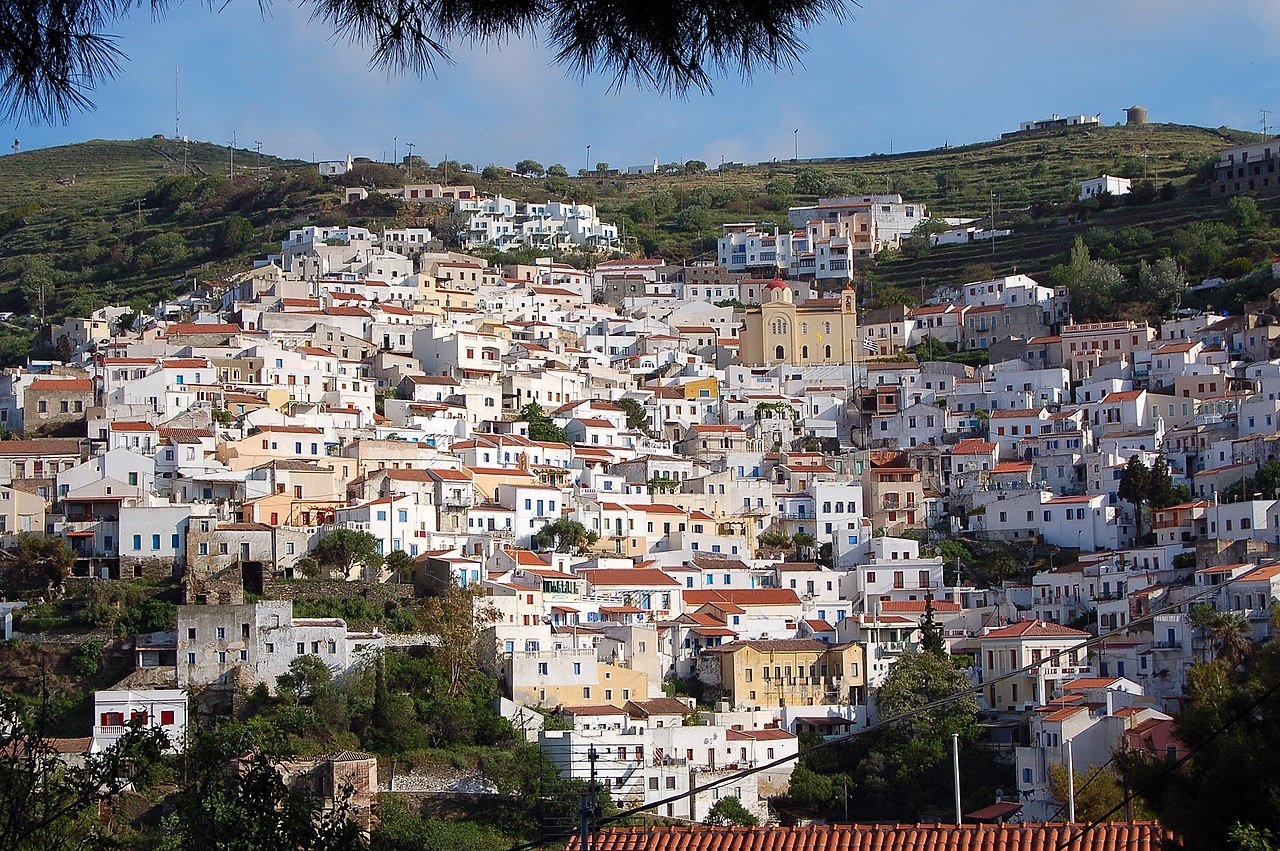
4. Kea (Tzia): The Ancient Inland Capital
The island of Kea (also Tzia), Greece, Credit: Wikimedia Commons, Michael Paraskevas CC BY SA 3-0
Unlike most Cycladic islands Choras were established in the Middle Ages, the Chora of Kea, known as Ioulis, has stood in the exact same mountainous mountain saddle since the Archaic period. Because it is built on a lush, spring-fed mountain, Ioulis breaks the “blinding white” stereotype. It features traditional clay tile-roofed houses, steep stairways, and historic stone arches (stegadia) that tunnel underneath the buildings.
5. Skyros: The Secret Village of “Pirate Alleys”
The Greek island of Skyros and its Chora. Credit: Municipality of Skyros
Located in the Sporades group, the Chora of Skyros clings to a massive 179-meter (587-ft) vertical crag. It is a masterful trick of architectural camouflage. Skyros was plagued by Saracen and Ottoman raids, including the notorious pirate Barbarossa. To survive, the locals built the Chora tucked onto the inland-facing northeastern slope of the rock, making the village completely invisible from the open sea. The streets are famously known as “pirate alleys”—cobbolstone paths so narrow, steep, and winding that they acted as a physical maze to trap enemies while residents fled up to the safety of the Byzantine Castle at the peak.
6. Serifos: The Vertiginous Amphitheater
Serifos. Credit: Public Domain
The Chora of Serifos is widely considered one of the most structurally striking in the Cyclades. It is built amphitheatrically down the slopes of a cone-shaped, sheer rock rising 230 meters (755 ft) above the harbor. The village is split into Pano Chora (Upper Town) and Kato Chora (Lower Town). Pano Chora is a classic medieval fortress settlement established in 1434 by the Venetian Mikieli family. Space was so restricted by the vertical terrain that houses are literally glued to each other, leaving only a chaotic web of “labyrinth alleys” where invaders would easily become disoriented.
Michael Jordan returns to Greece for vacation. Credit: EPA via AMNA
Basketball legend Michael Jordan has returned to Mykonos, once again choosing the “Island of the Winds” for his summer vacation.
The undisputed NBA Greatest of All Time (GOAT) arrived with his private jet and is kicking off his summer in Greece alongside a 25-member entourage, cruising the Aegean aboard his luxury superyacht, M’Brace.
Mykonoslive-tv spotted the basketball icon relaxing on deck, taking in the famous Myconian sunset. In recent years, Jordan has shown a steady preference for Greek destinations, with Mykonos remaining one of his absolute favorite summer stops.
Luxury living aboard the M’Brace
The M’Brace is a striking 65-meter (213-foot) superyacht, built in 2018 by the Dutch shipyard Amels. Designed for both comfort and performance, it features six cabins that accommodate up to twelve guests, expansive interior and exterior lounges, a gym, a jacuzzi, a private club area, and a variety of water sports equipment. The vessel is staffed by a dedicated crew of seventeen.
Registered in the Cayman Islands, M’Brace is considered one of the most discreet yet opulent yachts. Its value is estimated to be between $115-$150 million, depending on the source.
A global sports icon
Michael Jordan is widely recognized as one of the greatest basketball players of all time. Born on February 17, 1963 in Brooklyn, New York and raised in North Carolina, Jordan rose to global prominence through his incredible athleticism, competitive spirit, and unmatched achievements on the court.
He spent the majority of his career playing for the Chicago Bulls, leading the team to six NBA championships in the 1990s. Renowned for his scoring ability, clutch performance, and leadership, Jordan won five regular-season MVP awards and was a fourteen-time NBA All-Star player. His nickname “Air Jordan” stemmed from his signature leaping ability and gravity-defying dunks.
Beyond basketball, Jordan became a cultural icon, elevating the NBA’s global profile and revolutionizing athlete branding through his long-standing partnership with Nike. The success of the Air Jordan sneaker line helped shape the modern sportswear industry.
After retiring from professional play, Jordan became an influential figure in sports business. In 2010, he made history as the first former NBA player to become the majority owner of an NBA franchise, the Charlotte Hornets.
The Commission’s assessment highlights a reduction in risks associated with Greece’s public and external debt. Credit: tiseb, CC BY 2.0/flickr
The EU’s Commission removed Greece from its list of macroeconomic imbalances on Wednesday, marking a turning point in the nation’s post-crisis recovery. The move formally winds down a painful sixteen-year chapter of heightened economic surveillance that led to the era of bailouts.
Among the factors emphasized in the European Commission’s report are: Greece’s resilient growth rate of 2.1% of GDP in 2025 in spite of conditions of global uncertainty, projections for continued strong growth, the continuous high primary surplus, reaching 1.7% of GDP in 2025, and the significant decline in public debt, projected to drop to 123.4% of GDP in 2027, making it one of the fastest rates of debt reduction in Europe. The country’s extensive reforms and speedy progress in the digital transition, especially in tax and public administration, were also taken into consideration.
Prime Minister Kyriakos Mitsotakis welcomed the milestone on social media, writing that the decision effectively “closes a negative chapter that began 16 years ago.” He emphasized that the achievement was not merely a technocratic assessment but rather the “foundation for a better life” made possible by the sustained hard work of Greek citizens and the state.
According to Mitsotakis, the structural budget surpluses achieved through recent reforms can now be directly “channeled into higher wages and pensions,” offering tangible domestic relief to a population that endured years of harsh austerity. “This also marks the official end of all surveillance,” he stressed.
The Commission’s assessment highlights a reduction in risks associated with Greece’s public and external debt, alongside solid economic growth, progress on structural reforms, and a stabilized banking sector.
EU says Greece still lags behind
While the removal from the imbalance list signals Brussels’ confidence in Athens’ current trajectory, the Commission also issued a stark reminder: Greece still lags behind its European Union peers in several key economic areas. The country continues to carry a heavy public debt burden, and average disposable income remains well below Western European standards.
Nevertheless, analysts say that the formal easing of surveillance provides a major psychological and financial boost, potentially lowering market borrowing costs and attracting crucial foreign investment. For a nation that spent over a decade as the epicenter of the Eurozone crisis, the validation from Brussels confirms a hard-fought return to economic normalcy.
Greece prepares security measures ahead of an expected international Hells Angels event. Credit: Kim Ludbrook/EPA via AMNA
Greece is stepping up cooperation with European law enforcement agencies as it prepares for a major Hells Angels gathering expected in the country. Authorities have opened cooperation channels with police services across EU member states to share information on individuals considered to be of “high interest.”
The move comes as Hells Angels bikers from several countries are expected to travel to Greece for what has been described as an international “jamboree.” Greece’s National Intelligence Service, EYP, has also prepared an assessment of the activities and organizational structure of Hells Angels chapters operating in the country.
Greece coordinates with EU police before gathering
The expected arrival of bikers from abroad has prompted Greek authorities to seek closer intelligence-sharing with European partners. Officials are focusing on identifying and monitoring individuals who may already be known to police or intelligence services.
This type of cooperation is important because outlaw motorcycle groups often maintain a cross-border presence, making coordination between national authorities a key part of security planning. Greek authorities are handling the gathering not only as a domestic policing matter but also as an issue with a wider European security dimension.
Hells Angels’ global network draws law enforcement attention
Hells Angels ranks among the world’s largest motorcycle clubs, with thousands of members and hundreds of chapters across dozens of countries. The organization presents itself as a brotherhood of motorcycle enthusiasts whose members organize rides, social gatherings, and charitable events.
However, law enforcement and intelligence agencies in Europe and North America have linked parts of the club to organized criminal activity. Europol and national police services have repeatedly warned that outlaw motorcycle gangs remain a transnational security concern. Authorities say such groups have been connected to criminal networks operating across borders.
US authorities scrutinize Hells Angels and other biker gangs
In the United States, authorities commonly group Hells Angels with three other major outlaw motorcycle gangs: the Pagans, the Outlaws, and the Bandidos.
Law enforcement officials have alleged that some members and certain chapters have been connected to crimes such as drug trafficking, stolen property networks, extortion, and other organized criminal activity.
Hells Angels disputes any characterization of the wider club as a criminal organization, arguing that illegal behavior, where it occurs, should be attributed to individuals rather than the association itself.
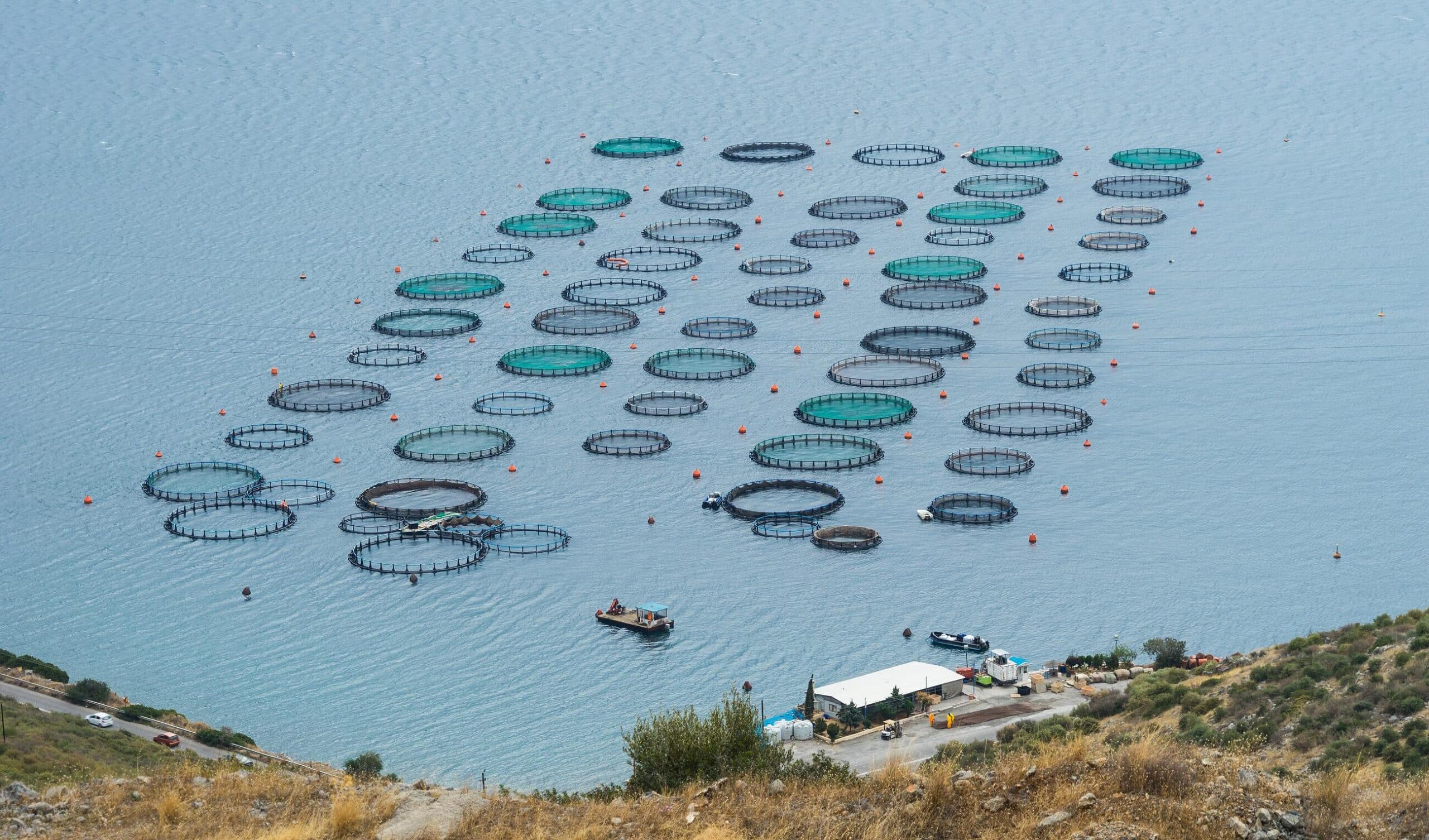
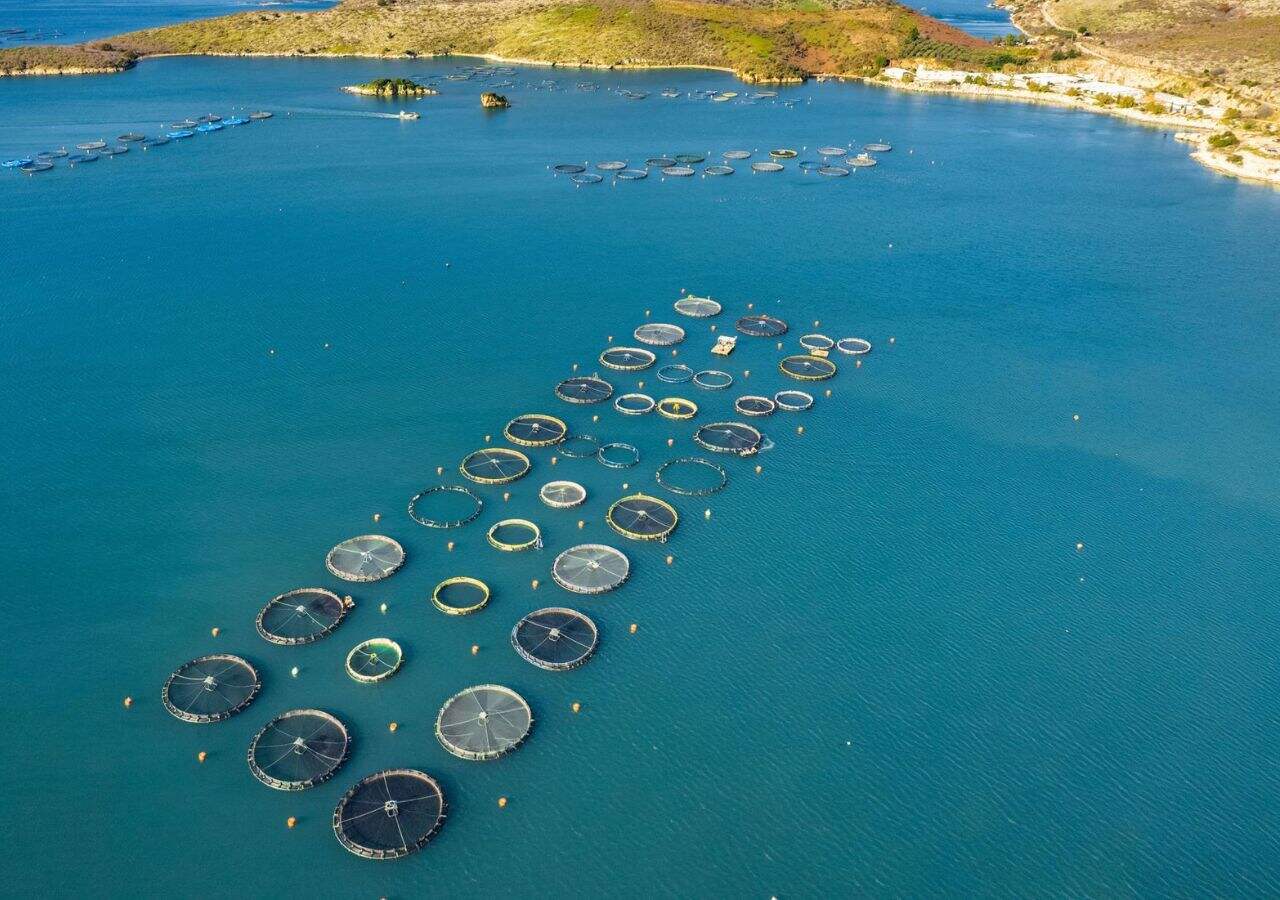
Fish farming cages in Greek waters, as Greece accelerates aquaculture investment while abandoned fish farms raise environmental and maritime safety concerns. Credit: Wikimedia Commons / Jebulon / Public Domain
Greece is accelerating investment in its aquaculture sector, approving 105 new projects worth €131 million ($151,9 million), while abandoned fish farms continue to raise environmental and maritime safety concerns.
Greek Rural Development and Food Minister Margaritis Schinas said Wednesday that the approved investment plans include €87 million ($100 million) in public funding. Speaking at the opening of the 14th session of the Scientific Advisory Committee on Aquaculture of the General Fisheries Commission for the Mediterranean, he outlined the government’s plan for a more competitive, sustainable and resilient aquaculture industry.
Greece targets growth in aquaculture
According to Schinas, the government increased the original budget allocation from €71 million ($82 million) to €78 million ($90 million) to support all aquaculture projects that received a positive evaluation. He described the package as one of the most important investment interventions in the sector in recent years.
The funding will help modernize production facilities, encourage innovation, support digital transformation and strengthen the global competitiveness of Greek aquaculture. The government aims to achieve average annual production growth of 5 percent through the end of the decade.
Schinas also linked the future of aquaculture to broader challenges facing Europe, including food security, climate change, sustainable development and the protection of natural resources. “The question facing the Mediterranean today is how to produce more and better food without exhausting the natural resources on which production itself depends,” he said, adding that the answer lies in cooperation, scientific research, innovation and a shared European and Mediterranean vision.
A major export industry for Greece
Aquaculture is already one of Greece’s most important export-oriented food sectors. Schinas said the country currently has around 285 marine fish farming units, more than 400 shellfish farming operations and 24 hatcheries.
Government estimates put annual production at nearly 141,000 metric tons, while the sector supports more than 10,000 direct and indirect jobs. About 80 percent of Greek aquaculture output is exported.
“Greek fish has evolved into a true ambassador for our country,” Schinas said.
Abandoned fish farms raise pollution concerns in Greece
The investment push comes as Greece is also dealing with the environmental legacy of abandoned aquaculture sites, sometimes described as “ghost farms.”
These sites are fish farms that operators have left behind, often with nets, cages and other infrastructure still in the sea. Over time, abandoned nets, plastics, tiles and timber can pollute nearby waters, harm marine life and create risks for shipping.
The issue gained renewed attention in February 2026, when a large fish-farming ring was spotted drifting in the Ionian Sea before ending up near Ithaca. The structure had entered a route used by passenger vessels, prompting the Coast Guard to intercept it over safety concerns.
Modi site removed after pressure
Abandoned aquaculture structures previously recorded near Modi in western Greece have since been removed by the operator and reportedly sent for recycling. Healthy Seas had identified the site years earlier through surveys conducted with Ghost Diving Greece and the Greek NGO OZON. The groups recorded four aquaculture rings there and considered them inactive.
After the drifting-ring incident near Ithaca, Healthy Seas examined a possible connection with the Modi site. The organization said the type of ring was unusual for the area, making the possible link difficult to ignore.
Following cooperation with authorities, media exposure and formal correspondence with competent bodies, the Coast Guard carried out a new inspection at Modi. Authorities later confirmed that the structures previously recorded there had been removed. The operator reportedly told the Coast Guard that the structures had been transferred to a recycling company.
The operator is said to have denied that the drifting ring came from its facility. Still, regardless of the ring’s origin, one more abandoned aquaculture site has now been cleared from Greek waters.
Aquaculture in Greece. Credit: EU Directorate-General for Maritime Affairs and Fisheries
Abandoned Fish Farms Challenge Sustainable Aquaculture in Greece
For environmental groups, the case shows that abandoned aquaculture infrastructure is not only a marine pollution problem. It can also become a safety risk when structures break loose and drift into busy waters. Veronika Mikos, director of Healthy Seas, said the case points to a new way of dealing with abandoned fish-farming infrastructure.
“For years our work has focused mainly on the physical removal of abandoned aquaculture infrastructure from the sea,” Mikos said. “What makes this case important is that it points to another possible path: strategic engagement, institutional pressure and coordinated action that can encourage operators to assume responsibility themselves before these structures become even more serious environmental or maritime hazards.”
The challenge for Greece is now twofold: expanding a high-value export industry while ensuring that old or inactive facilities do not remain in the sea long after production has stopped.
Limassol, Cyprus. The UK has removed a special travel warning for Cyprus linked to Middle East tensions. Credit: Flickr / Leonid Mamchenkov / CC BY 2
The UK has removed special travel warning for Cyprus that had been introduced following heightened tensions in the Middle East, offering a positive signal for the island’s tourism sector at the peak of the summer season.
The updated guidance from the UK Foreign, Commonwealth & Development Office no longer includes specific references to heightened regional risks or possible travel disruption linked to developments in the Middle East.
UK drops special warning for Cyprus
The previous advisory had placed Cyprus alongside at least 17 other countries in the region under a specific warning related to the increased risk of regional instability.
The concern was connected to the ongoing conflict in the Middle East, as well as a drone attack targeting a British military base on the island. At the time, the FCDO warned that regional tensions could result in travel disruptions and other unforeseen consequences.
British citizens were advised to exercise increased caution when traveling, although the UK government never advised against travel to Cyprus.
General safety advice remains in place
The latest update removes those special references from the official travel guidance. While general safety advice for Cyprus remains in place, there is no longer any specific mention of heightened regional risks or potential disruption caused by the Middle East crisis.
The change is being interpreted as an indication that British authorities believe the risk of direct consequences for Cyprus from regional developments has significantly diminished.
Positive signal for Cyprus tourism
The update is particularly important for Cyprus as the summer tourism season reaches its peak. The United Kingdom remains the island’s largest tourism market, making British travel advice highly influential for the tourism industry.
The earlier warning had raised concerns among tourism stakeholders in both Cyprus and the UK, with several British media outlets highlighting the references to regional instability.
For the island’s tourism sector, the removal of the warning is expected to help ease concerns among British travelers and operators, especially as Cyprus continues to depend heavily on arrivals from the UK during the summer months.
Women volunteers in Greece’s armed forces during a military ceremony. Credit: Screenshot / Hellenic Army General Staff video.
Greece’s armed forces will welcome the first women volunteers for military service this week, marking a significant shift in the country’s defense recruitment policy.
The first female volunteers will report for duty on Thursday as part of the Hellenic Army’s 2026 second conscription intake, which began this week and will continue through June 5. They will train at an army base near Lamia, a city in south-central Greece.
Women in Greece join voluntary military service
Under the new program, women aged 20 to 26 can apply for voluntary military service if they meet the required military fitness standards and have no felony convictions.
They will serve for 12 months, under the same duration, obligations, and conditions that apply to male conscripts in Greece.
The initiative opens a new path for women to take part more directly in national defense. In Greece, military service has traditionally remained compulsory for men, while women have not faced the same obligation.
Same benefits for women volunteers in Greece’s armed forces
Female volunteers can also join the selection process for reserve officer training, under the same criteria that apply to male conscripts.
They will gain access to military hospital services and receive additional points in certain public-sector hiring procedures. The state will also recognize their period of service as professional experience, giving the program potential value beyond the military.
Officials have presented the initiative as both a contribution to national defense and an opportunity for women to gain training, experience, and qualifications that could support their future careers.
Greece expands recruitment amid defense reforms
The launch of voluntary military service for women comes as Greece pushes ahead with broader reforms to modernize the armed forces, improve readiness, and strengthen recruitment and retention.
Ahead of the launch, the Hellenic Army General Staff carried out a public information campaign encouraging women to apply. The campaign described voluntary service as a way for women to contribute to Greece’s defense while gaining educational and professional benefits.
The arrival of the first female volunteers marks an important test for Greece’s new model of military participation, as the country seeks to broaden the pool of potential recruits and adapt its armed forces to changing defense needs.
The natural, abrasive components used by Ancient Greeks to maintain oral hygiene, such as crushed oyster shells, charcoal, and mint. Credit: Greek Reporter archive
Most of us assume that looking after our teeth is a modern habit shaped by supermarket shelves, mint-flavored ads, and childhood dentist scares, but a surviving Ancient Greek toothpaste recipe suggests otherwise.
Sitting quietly in the Austrian National Library in Vienna is one of the most remarkable documents in the history of medicine: a small, faded papyrus from the fourth century AD containing what is widely considered the world’s oldest surviving, precise toothpaste formula.
The existence of this Ancient Greek toothpaste recipe points to something larger at work. By the time it was copied onto papyrus, Greek had long since become the language of science, medicine, and intellectual life across the Mediterranean. This linguistic dominance was a legacy of the conquests of Alexander the Great and, above all, of Alexandria, the city his successors transformed into the ancient world’s foremost hub of knowledge. Even in Roman Egypt, centuries after the Ptolemies had given way to the Caesars, Greek remained the language a physician used when he wanted to be taken seriously.
When was the toothpaste recipe written in Ancient Greek discovered?
The papyrus first came to the attention of modern researchers in 2003, when curators at the Austrian National Library in Vienna identified it while preparing for an international dental congress. It had likely been sitting in the collection for years, its significance unnoticed and largely forgotten. Once translated, however, scholars quickly realized what they were looking at—a toothpaste formula that predates the first commercially marketed toothpaste, Colgate, launched in 1873, by well over fifteen hundred years.
The formula itself is strikingly systematic. The scribe prescribes “a powder for white and perfect teeth” composed of four ingredients: one drachma of rock salt, two drachmas of mint, one drachma of dried iris flower, and twenty grains of pepper. The drachma in this context was a standard unit of Greek medical weight, roughly equivalent to one-eighth of an ounce (about 3–4 grams), part of the same measurement system used throughout the major pharmacological texts of the ancient world. Taken together, the recipe reads less like folklore and more like a physician’s deliberate prescription, carefully calibrated for a patient.
But one might wonder if it actually worked. In 2003, Austrian dentist Dr. Heinz Neuman decided to test it for himself by recreating the formula. His conclusion was cautious but intriguing: the mixture was mildly abrasive and caused slight gum bleeding, yet it also produced a noticeable sensation of cleanliness and freshness. Modern dental science helps explain why. Dried iris flower, or orris root, is now known to contain antibacterial compounds that target the pathogens responsible for gum disease. What might once have looked like ancient guesswork increasingly appears to be empirical knowledge derived through observation and practice. In this sense, modern pharmaceutical science is only now arriving at conclusions the Greeks and Egyptians had already explored more than a thousand years earlier.
Dioscorides is considered the father of pharmacology. Painting of unknown artist depicting Heuresis (the personification of discovery) presenting Dioscorides with a mandrake root. Credit: Unknown artist. Wikipedia Public Domain
None of this should entirely surprise us when we consider the world from which this recipe emerged. Ancient Greece had produced Pedanius Dioscorides, whose monumental work on medicinal plants shaped medical practice for more than a millennium. It had also produced physicians, botanists, and scholars who approached the human body with a level of rigor and curiosity that few ancient traditions matched. The anonymous scribe who recorded this formula was working squarely within that intellectual lineage, effectively encoding practical medical knowledge in Greek because it was the language in which serious medicine was conducted at the time.
The paste itself would have been applied without anything resembling a modern toothbrush. A folded linen cloth or a frayed chew stick—a fibrous twig worn soft at the tip through repeated use—would have served the purpose well enough. The tools were simple, but the intention was essentially the same as ours.
There is a quiet continuity in that detail. The next time you reach for mint toothpaste in the morning, you are participating in a ritual that a Greek-speaking scribe in Roman Egypt thought important enough to preserve on papyrus seventeen centuries ago. The ingredients have been refined, the packaging has changed beyond recognition, and no one is applying the mixture with linen anymore. Still, the impulse behind it—the very human desire for clean, white teeth—remains as old as the ancient world itself, and in many ways, the Ancient Greek world had already put the first working version of the answer into writing.
An armed naval drone was discovered by fishermen off Lefkada on May 7, prompting Greece to issue a formal demarche to Ukraine. Credit: AMNA
Greece has issued a formal diplomatic demarche to Ukraine after fishermen discovered an armed naval drone off the island of Lefkada on May 7. Athens warned that the incident endangered maritime traffic, civilians, the environment, and national security.
Greek Foreign Ministry spokesperson Lana Zochiou said during the regular briefing of diplomatic correspondents that Athens formally raised the issue with Kyiv after authorities found the unmanned surface vessel inside Greek territorial waters.
According to Zochiou, Greece’s protest note stressed that the naval drone posed a serious threat to maritime navigation and could have cost innocent lives. Athens also warned that the presence of an armed unmanned vessel in Greek waters could have caused major environmental damage.
Greece warns against moving war operations to the Mediterranean
The Greek government said the incident raised broader security concerns, as it appeared to bring military activity linked to the war in Ukraine into the Mediterranean, far from the actual battlefield.
“The transfer of war operations to the Mediterranean, at a great distance from the real front of the war, puts our national security at risk and deals a decisive blow to our national economy,” the protest note stated, according to Zochiou.
For Greece, the presence of an armed naval drone in its waters carries particular sensitivity because the country relies heavily on shipping, tourism, fishing, and maritime security. Athens made clear that it would view any expansion of war-related activity into the Mediterranean as a direct threat to Greek interests.
Ukrainian naval drone found off Lefkada island, Greece. Public Video Screenshot
Greece’s demarche to Ukraine says self-defense doesn’t justify drone incident
Greece also told Ukraine that Kyiv’s right to defend itself against Russia cannot justify actions that endanger Greek territory, civilians, or maritime activity.
“The right of Ukraine to self-defense cannot justify such actions,” Athens stated in the diplomatic demarche.
The Greek government strongly objected to the illegal presence of the armed unmanned surface vessel in Greek territorial waters and called on Ukraine to avoid similar actions in the future.
Athens also urged Kyiv to refrain from what it described as the unjustified transfer of military operations to the Mediterranean.

 Login
Login
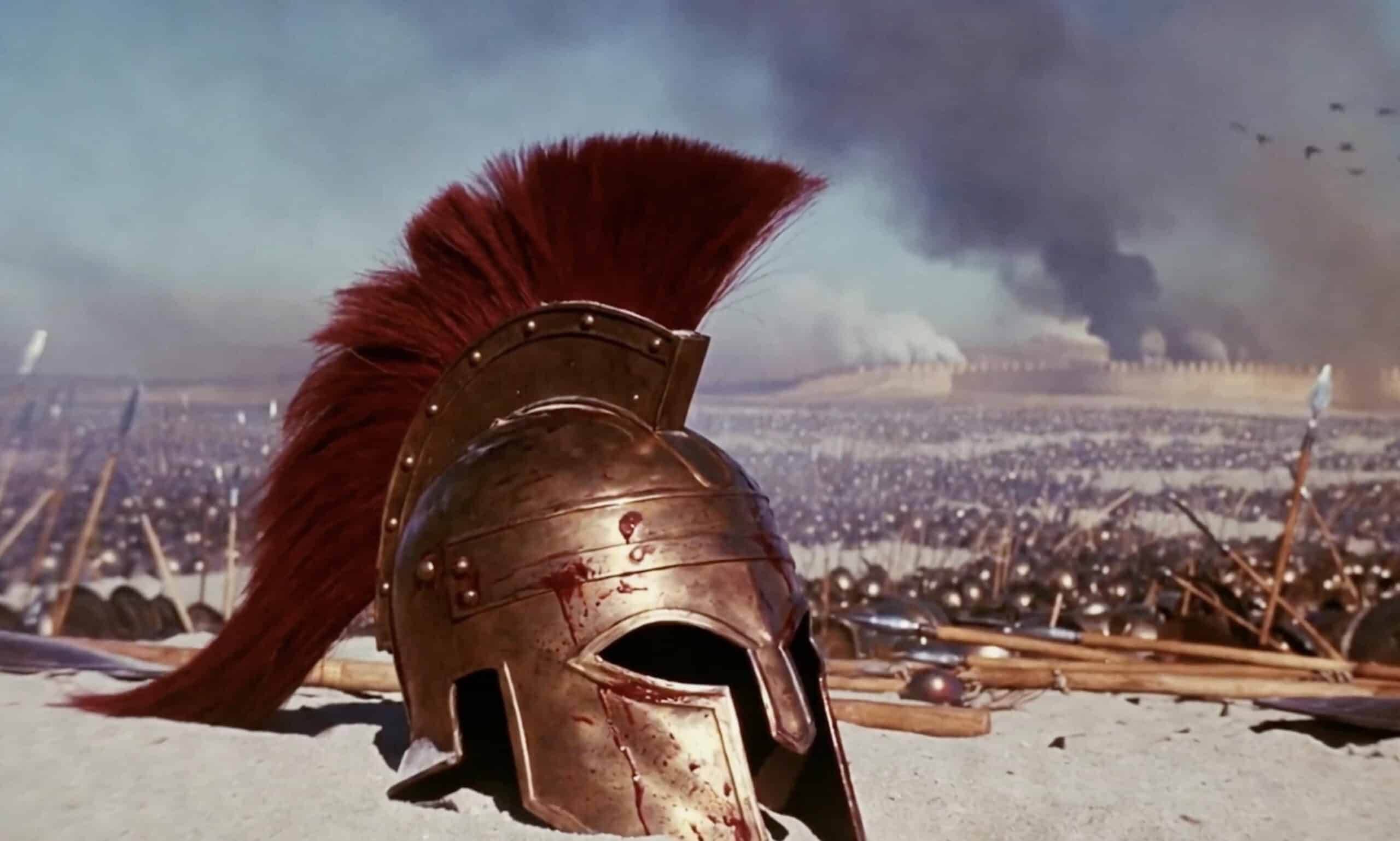


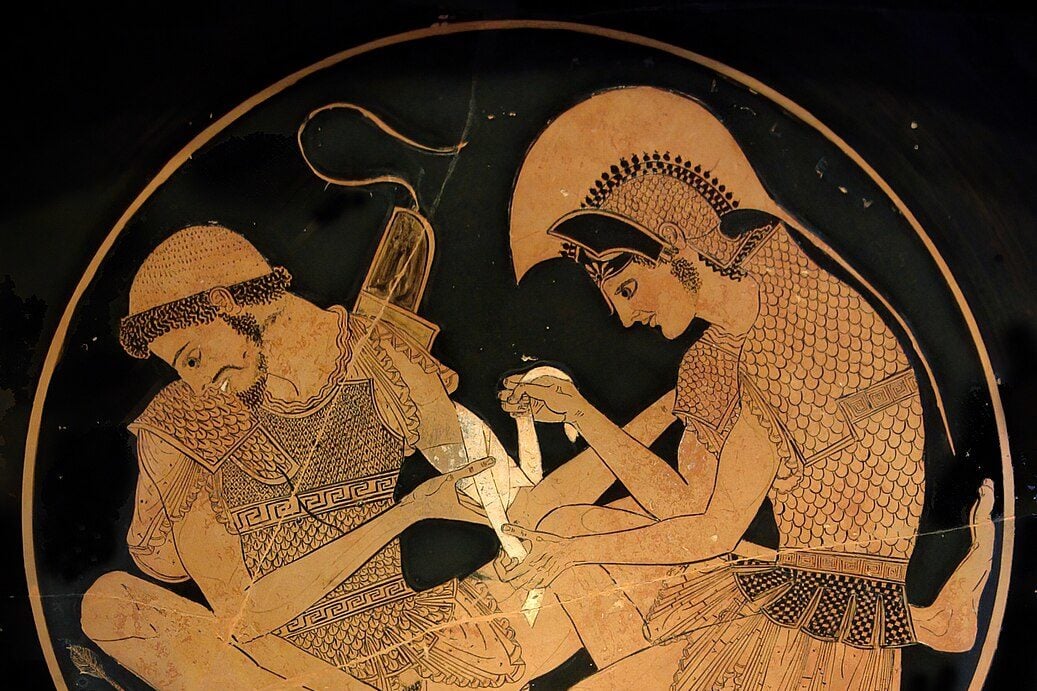







 This cocktail is super crushable and absolutely refreshing. PLUS there’s only 110 cal. and 4g of sugar in the full cocktail
  Yia Mas

 (you’ll have to excuse the banter, I gave him a headache for an hour
  )
)  Kalliopi