The Calydonian Boar Hunt is depicted on a Roman frieze. Credit: Ashmolean Museum, Oxford, CC BY-SA 3.0/Wikipedia
The wild boar was a significant animal in Ancient Greece, appearing in their mythology, religious traditions, and daily life. It was a respected and feared creature, valued both as a worthy hunting challenge and as a prized source of food.
The wild boar held a prominent place in Greek mythology, symbolizing immense strength, ferocity, and the untamed nature of the world. Heroes were often defined by their ability to confront and conquer these beasts.
The Calydonian Boar was one of the most famous creatures of Ancient Greek lore. The goddess Artemis sent this gigantic boar to ravage the lands of Calydon as punishment for the king’s neglect of her. This provoked a great hunt that drew the most celebrated heroes of the age, including the hero Meleager and the huntress Atalanta, highlighting the animal’s status as an epic adversary.
As part of his legendary labors, the hero Heracles was tasked with capturing this ferocious Erymanthian Boar, which was terrorizing the region of Mount Erymanthos. Heracles had to use his cunning and strength to chase the beast into deep snow and trap it alive. The depiction of this feat was a favorite subject in ancient vase painting and sculpture.
These myths show that the boar was not merely an animal. It was a metaphorical challenge to human civilization, a representation of untamed nature that only the greatest heroes could overcome.
Wild boar hunt in Ancient Greece, as depicted in the François vase. Credit: Sailko , CC BY 3.0/Wikipedia
The wild boar in daily life and hunting in Ancient Greece
Hunting was a crucial activity in Ancient Greece, serving as a rite of passage for young men and a demonstration of courage and skill. The wild boar hunt was one of the most dangerous pursuits.
Hunters typically used spears, javelins, and a pack of trained hunting dogs to corner the animal. Confronting a wild boar was a high-risk activity due to its powerful tusks and aggressive nature when cornered. The hunters’ bravery and strategy were highly respected.
The meat was a highly valued delicacy. It was associated with rich meals and was a staple at religious festivals and banquets. The meat was often roasted, and its fat was used to enhance the flavor of other dishes. It could also be preserved through salting or smoking, ensuring it could be enjoyed year-round.
The Ancient Greek writer Xenophon, in his work Cynegeticus (On Hunting), provided a detailed guide to hunting techniques, emphasizing their role in the education and lifestyle of aristocratic youth. He believed that the discipline and courage required for the hunt were essential for a well-rounded citizen.
Historians and philosophers on the wild boar
Other ancient historians and philosophers also speak of the wild boar, though their perspectives often differ from the more mythological and heroic focus. They were interested in the animal from a more practical and scientific standpoint.
Aristotle mentioned the wild boar in his work History of Animals. He focused on its physical characteristics and behavior, including its ferocity and its place within the animal kingdom. Aristotle was interested in classifying animals and understanding their relationships, and the wild boar was part of this broader biological inquiry.
Plato used the pig, and by extension the boar, as an example but not always in a positive light. In the Republic, for instance, he discusses a “city of pigs” to describe a society that only seeks basic, low-level pleasures, contrasting it with a more refined, ideal city. This shows how the animal was also used as a symbol for a simple or primitive way of life.
Beyond philosophy, the wild boar appears in the works of various other ancient writers, often in the context of history, geography, and mythography. Homer’s epic poems, the Iliad and the Odyssey, feature wild boar hunts. The most famous example is the scar on Odysseus‘s leg, which he received during a boar hunt in his youth, a detail that reveals his identity to his old nurse. This highlights the hunt’s role as a formative event and a mark of a man’s courage.
The Greek geographer and travel writer Pausanias mentioned the Calydonian Boar in his Description of Greece. He notes that he saw the boar’s hide and tusks in a temple, providing a quasi-historical reference to a mythical event, which shows how deeply these stories were believed and integrated into Greek cultural life.
The boar in Ancient Greece represented not only the “invincible enemy” but also a raw, primal force of nature that humans strove to master. Its resilience and strength also made it a symbol of fertility and endurance in certain regional traditions.
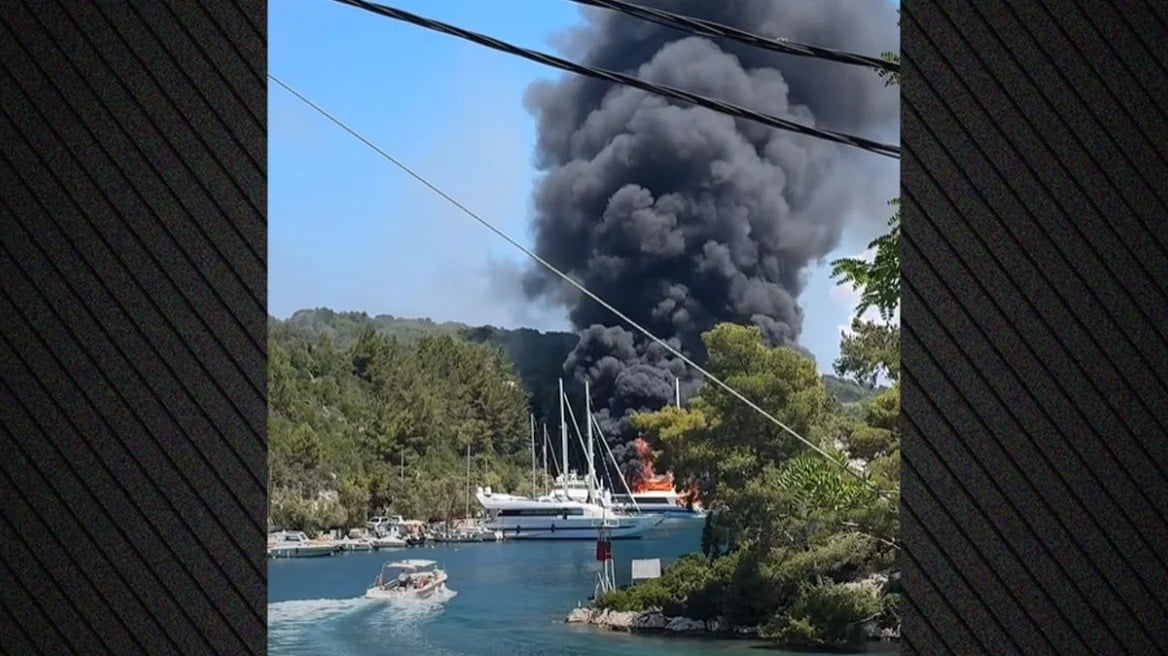
Tourist boats aflame. Video screenshot, Valentina Madonia/Facebook
Thick black smoke is billowing over the port of Paxos after a fire completely engulfed a tourist vessel before spreading to a second boat docked nearby. Fortunately, all passengers had disembarked before the outbreak. The cause of the fire remains unknown.
The incident began around 1:00 PM on Thursday at the New Passenger Terminal in Gaios, Paxos.
According to local reports from kerkyrasimera.gr and corfutvnews, the blaze began on a day-boat that operates tourist cruises, quickly spreading out of control due to unknown causes. Fueled by flammable materials onboard, the flames rapidly jumped to a neighboring vessel.
Reports indicate that the passengers, who had just completed a popular daily excursion from Parga to Paxos, had safely stepped off the vessel just moments before the fire broke out.
The Hellenic Coast Guard confirmed that the fire involved two commercial tourist vessels and that no passengers were onboard at the time of the incident. Fire service vehicles, an ambulance and a tugboat have been deployed at the port.
The Parga-Paxos route is one of the single most popular day-trip cruises in the entire Ionian Sea. During the summer season, it is a massive staple of the local tourism economy, drawing thousands of international and domestic visitors every week.
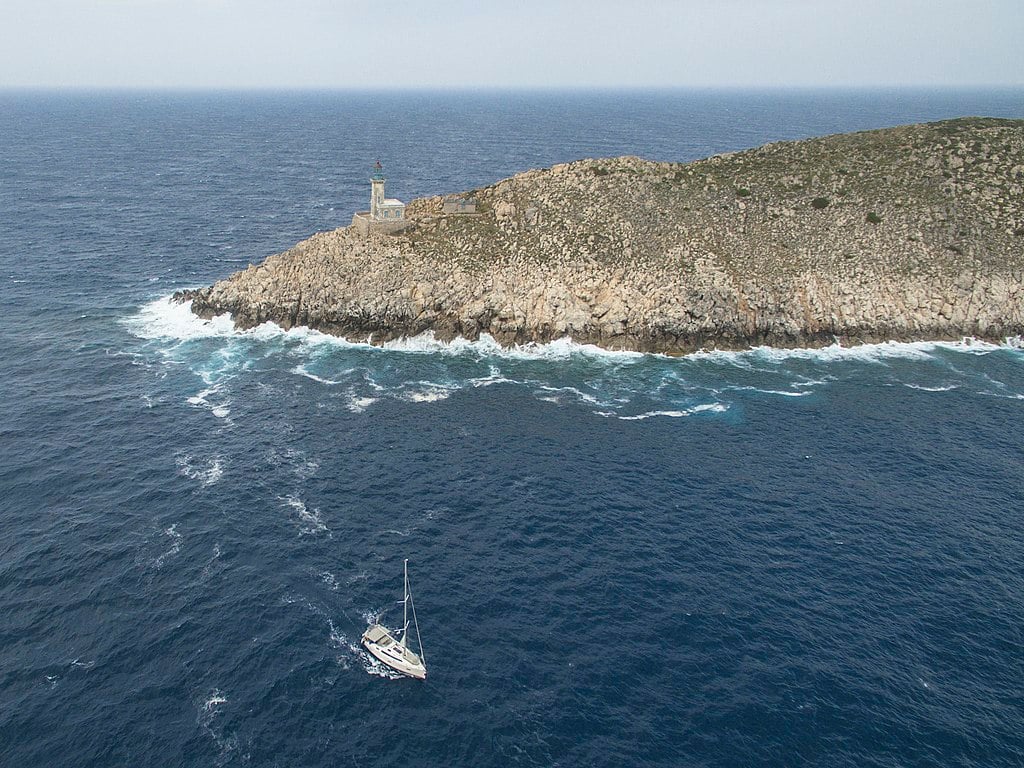
Cape Tainaro (also known as Cape Matapan) is the southernmost point of mainland Greece and the Balkan Peninsula, located at the tip of the Mani Peninsula. It’s a place of rugged beauty, characterized by dramatic cliffs, a wild landscape, and the convergence of the Messenian and Laconian Gulfs.
Tainaro has been important for thousands of years, serving as a maritime crossroads and a place of worship. Today, a lighthouse stands at its very tip, and scattered ruins of ancient settlements and temples can still be found there.
The southernmost point of the Balkan Peninsula. Credit: Nicolas Hadjidimitriou, CC BY-SA 4.0 / Wikipedia
The lighthouse that stands guard in Tainaro is considered one of the most imposing in all of Greece. It is a construction of French technicians, built of stone on a plateau on the natural rocks of the cape, with a height of about 52 feet (16 meters). It began operating in 1887 and was renovated in 1930.
In 1984, an automatic lighting machine was installed there, and the lighthouse was abandoned by its last guardians. The building was restored in 2008 and has since been guarded by Navy personnel. Every third Sunday in August, public access is free as part of World Lighthouse Day.
Ancient Greeks believed that a cave at the cape’s edge, often referred to as the “Gates of Hades” or “mouth of Taenarum,” was a direct entrance to the Underworld, the realm of the dead, ruled by the god Hades. This mythical entrance was said to be guarded by Cerberus, the monstrous three-headed hound with a serpent’s tail who prevented the dead from escaping and the living from entering.
One of the most famous myths connected to Tainaro is that of Heracles (Hercules). As his twelfth labor, he descended into the Underworld through this cave to capture and bring Cerberus to Eurystheus. The legendary musician Orpheus also used this passage to descend into Hades in his attempt to bring his beloved wife, Eurydice, back to the world of the living.
By some accounts, the sculpted canal on the east side of Porto Sternes was the path taken by the souls of the dead, ferried by Charon, the grim boatman of the Underworld.
Cape Tainaro was home to a sanctuary dedicated to Poseidon, the god of the sea. Poseidon was worshiped under various epithets, including “Poseidon Tainarios,” as the god who controlled both the seas and earthquakes.
The temple served as a place of inviolable asylum, offering refuge to criminals and even escaped slaves. A story was recounted by Thucydides about the Spartans violating this asylum by killing helots (agrarian slaves) who had taken refuge there, an act believed to have brought divine retribution in the form of an earthquake.
The site also functioned as a “necromanteion,” or Oracle of the Dead, where Ancient Greeks would perform rituals to communicate with the spirits of their deceased ancestors, seeking guidance or prophecy.
A celebrated bronze statue of the poet and singer Arion, seated on a dolphin, was a prominent dedicatory offering at the temple of Poseidon. It honors the myth of Arion, who was rescued by a dolphin after being cast into the sea by pirates and brought safely to Cape Tainaron.
In medieval times, Tainaro became a notorious pirate base—with merchant ships carefully avoiding it—and during World War II, the Battle of Tainaro (March 1941) was fought off the coast between the British and Italian fleets.
Getting to Tainaro
The only way to get to Tainaro is by hiking along a path that many consider to be the most interesting of the “inner” Mani. It is accessible to all with no significant altitude differences and has a total length of about 1.4 miles. Starting from the village of Kokkinogia, it’ll probably take around fifty minutes to get to the lighthouse.
You will find the village of Kokkinogia at the end of the Areopolis-Tainaro road. The marked dirt path begins at the church of Agioi Asomatoi and passes by the beach of Aria, where you can see a Roman mosaic. The surrounding landscape is typical of Mani: thorn bushes, thyme, low vegetation, flint stones, and no shade—so be sure to wear a hat, apply sunscreen, and bring plenty of water. The views along the way to Tainaro will make it all worthwhile.
A few of the country’s most popular, breathtaking tourist destinations can instantly transform from an idyllic paradise into a severe survival hazardMyrtos Beach in Kefalonia. Public Domain
Greece is world-renowned for its beaches and postcard-perfect coastlines, but beneath those beautiful, turquoise waters lies danger. When heavy weather conditions strike, a select few of the country’s most popular, breathtaking tourist destinations can instantly transform from an idyllic paradise into a severe survival hazard.
“Lalaria” refers to the smooth white pebbles sculpted over millennia by the Aegean waves. Lalaria is a beach of indescribable beauty on Skiathos, famous for its turquoise waters, blindingly white shoreline, and the majestic stone arch of Tripia Petra rooted in the seabed.
However, Lalaria conceals hidden dangers. The coast is accessible strictly by sea. More importantly, when strong northerly winds blow, waves can reach several meters high, generating a violent, dangerous undertow (antimamalo or clapotis wave reflection) that poses a severe threat to both swimmers and small boats.
2. Matala – Southern Crete
When the scorching Livas (the hot southwesterly wind) sweeps through southern Crete, the shoreline of Matala—the iconic former haven of the 1960s “flower children”—turns stark white with crashing foam. Swings in the weather make swimming completely prohibitive.
The sea routinely breaches the shoreline, rushing past the sunbeds. Lifeguards blow their whistles continuously to signal extreme danger to anyone daring to dive. While reckless thrill-seekers often grab inflatable mattresses to play sea adventurers, the physical terrain is ruthless. The coast features an incredibly abrupt drop-off into deep water. Combined with massive waves, the undercurrent will pull anyone but an Olympic swimmer out into the open sea—where you would be lucky to finally wash ashore in Libya. Local lifeguards continuously flag this beach as hazardous, a risk that similarly applies to the nearby beach of Agios Pavlos in Rethymno.
3. Nas – Ikaria
Located in northern Ikaria, Nas is arguably the single most dangerous beach in Greece. It is the only beach in the country fitted with a permanent safety rope anchored into the rocks. This rope exists so brave swimmers can cling to it to avoid being violently swept out into the open sea or smashed against the jagged cliffs by aggressive rip currents. Nas remains highly popular among nudists and free campers. Access involves leaving your vehicle on the main Agios Kirykos–Armenistis road, hiking down a steep cliffside path of stone steps to a riverbed, and traversing the final stretch through the water or over the rocks.
4. Chorefto – Pelion
Chorefto beach in Pelion is world-famous and heavily visited, but it requires extreme caution. As one visitor noted on social media: “It is a gorgeous, sprawling beach, but as you approach the shoreline, the sand turns into jagged stones. When the wind picks up, swimming is virtually impossible. The heavy currents and crashing waves literally ‘dig up’ the seabed, causing the shoreline to drop off precipitously right in front of you.” Chorefto is a beach where, the moment a northern gale strikes, you need to run. The sheer force of the waves and currents will make you “dance” (Chorefto literally translating to dancer) to the frantic rhythm of the wind.
5. Myrtos – Kefalonia
While internationally celebrated as one of the most beautiful beaches in the world, Myrtos is equally famous among marine experts for its deceptive treachery. Tucked between the feet of two mountains, the beach faces the open Ionian Sea, making it a magnet for fierce winds.
The shoreline features an immediate, precipitous drop-off just a few steps into the water. Because of this unique underwater topography, strong winds create massive, violent waves and a punishing undercurrent. Swimmers who get knocked off their feet by the crashing shoreline waves are frequently dragged into deep water, making it incredibly difficult to swim back to the pebbled shore.
6. Platia Ammos – Kefalonia
While Myrtos beach typically dominates international travel sites as one of Europe’s finest, Kefalonia hides another beach that rivals its beauty but demands expert hiking skills. Platia Ammos is tucked deep within a bay past the Kipouria Monastery, surrounded by sheer, imposing cliffs.
While its deep blue waters are pristine, accessing them used to require climbing down (and back up) over 400 stone steps under a relentless sun. However, severe weather in 2014 collapsed a large portion of the staircase, raising the difficulty level to an extreme “Rambo” mission. If the sea turns rough here, you will find yourself scrambling desperately up the rock face like a mountain goat, wishing you had stayed on a safer beach.
7. Kalami – Kythira
The trek from the village of Mylopotamos to the remote beach of Kalami involves navigating slippery, steep, and highly dangerous cliffs. In several spots, reaching the next foothold requires a literal leap into the void over a drop-off. While the final destination is a stunning reward, the journey is a small Odyssey. Anyone without proper hiking gear, physical conditioning, or nerves of steel is highly advised to stay safely beneath the plane trees by the nearby Fonissa (Killer) Waterfall and leave the photos to the professionals.
8. Paradise Beach – Kos
Located on the southern coast of Kos, this beach looks like a calm, shallow haven perfect for families. However, its danger doesn’t come from towering waves or steep cliffs, but rather from a unique volcanic phenomenon occurring beneath the seabed.
Due to the active volcanic network tied to the nearby island of Nisyros, Paradise Beach emits cold volcanic gases from the seafloor, earning it the nickname “Bubble Beach.” While tourists enjoy swimming through the natural bubbles, these underwater thermal currents can cause sudden, extreme temperature drops in the water. Furthermore, the localized release of volcanic gases can occasionally cause dizziness or sudden fatigue for swimmers who linger too long over the vent areas.
9. Anthony Quinn Bay – Rhodes
Named after the famous Hollywood actor who fell in love with the spot while filming The Guns of Navarone, this emerald-water bay is an aesthetic masterpiece. However, its natural geology requires extreme physical caution.
The entire bay—both on the shore and underwater—is a minefield of sharp, jagged rocks and slick, algae-covered reefs. The main hazard here is orthopedic and physical injury; every year, numerous tourists suffer severe cuts, slips, and fractures while attempting to climb over the rocks to enter the deep water. Additionally, the rocky crevices are a prime habitat for sea urchins, meaning a misplaced step can easily cut a vacation short.
10. Kolymbithres – Tinos
Famous for its otherworldly landscape, Kolymbithres features smooth, gray granite rock formations sculpted by centuries of wind and water, creating a series of tiny, sandy enclaves.
Positioned on the northern coast of Tinos—an island famous for its relentless Aegean winds—this beach bears the full brunt of the Meltemi (the fierce summer north winds). When the gales hit, the wind funnels through the granite rock formations with extreme velocity. This creates chaotic, swirling wave patterns and sudden, unpredictable cross-currents within the narrow rocky channels, easily trapping swimmers against the hard granite walls.
11. Kathisma – Lefkada
Kathisma is a sprawling, cosmopolitan paradise on the western coast of Lefkada, famous for its vibrant beach bars and water that looks almost artificially turquoise. However, its beauty masks a lethal combination of open-ocean geography and violent underwater mechanics.
Because Kathisma faces the completely open Ionian Sea with no natural bays or reefs to break the water’s momentum, it bears the full, unbridled force of western winds. When a storm or heavy wind hits, it generates towering, closely packed waves that smash violently into the shore. More importantly, the shifting tide creates a phenomenon known to locals as “sand-shaving.”
The heavy surf literally hollows out the seabed beneath your feet, causing the shoreline to drop off vertically into deep water just a step from the dry sand. This creates an incredibly powerful, vacuum-like undertow. Swimmers who get knocked off their feet by a wave are immediately sucked into deep water, making it nearly impossible to struggle back onto the slick, collapsing shoreline. Lifeguards here routinely change their flags to red, but many tourists fail to realize that even wading knee-deep in Kathisma’s rough surf can prove fatal.
12. Navagio Beach (Shipwreck Beach) – Zakynthos
Navagio is a global bucket-list destination, defined by the stark contrast of a rusted freighter marooned on a strip of white sand, surrounded by brilliant turquoise water and 200-meter-tall vertical cliffs. However, this paradise is so inherently hazardous that it is the only beach on this list that is completely closed to the public by ministerial decree.
Navagio is plagued by two lethal threats: severe seismic instability and unpredictable marine currents. Tucked beneath towering, sheer limestone walls, the beach is highly prone to sudden, massive rockfalls. Following a terrifying 2018 landslide that capsized tourist boats and a 2022 earthquake that brought tons of rock crashing onto the sand, geologists declared the beach a permanent hazard zone. Furthermore, because the bay faces the open sea, sudden, violent swells can trap boats against the cliffs or create chaotic cross-currents. Today, tourists are strictly prohibited from walking on the beach or swimming in the bay; you can only view this beautiful but perilous marvel from a safe distance aboard a boat or from a designated cliffside viewing platform high above.
FIFA World Cup 2026 trophy. Credit: TravelQueen11 / Wikimedia Commons / CC BY-SA 4.0
As the 2026 FIFA World Cup officially kicks off across North America, a long-standing question resurfaces on the global stage: Do Americans actually care about soccer?
While traditional sports still rule the airwaves, a massive generational and demographic shift is actively rewriting the American sports landscape.
Generational and ethnic shift for soccer
Historically, soccer in the United States has struggled to compete with the domestic dominance of the NFL, NBA, and Major League Baseball. That skepticism persists among older demographics. According to a new Pew Research Center survey, 66% of American adults state they are “not too” or “not at all” likely to follow the tournament. Broadly speaking, a separate YouGov poll confirms that 54% of the overall adult population maintains zero interest in the sport. For a large share of traditional sports fans over fifty, the tournament remains an afterthought.
However, statistics show that there is a soccer boom among younger individuals. The game is rapidly becoming the sport of choice for the next generation of American consumers. YouGov data reveals that an average of 23% of Americans aged 18 to 34 now identify as avid soccer viewers. More telling is the fact that over 56% of all active soccer fans in the United States are currently under the age of 35.
This generational momentum is heavily reinforced by cultural shifts. Comprehensive market data from Numerator indicates that enthusiasm for this year’s tournament is highest among multicultural communities, with 54% of Hispanic Americans and 51% of Asian Americans planning to actively tune in to the month-long event.
Furthermore, the reality of the United States co-hosting the expanded 48-team tournament alongside Canada and Mexico has created a “host nation surge.” Overall consumer intent to watch has nearly doubled compared to the 2022 World Cup in Qatar, with 32% of all US citizens now planning to watch the matches. This enthusiasm is heavily concentrated around the eleven American host cities, including Dallas, Los Angeles, Atlanta, New York/New Jersey, and Philadelphia, where consumer interest jumps to 42%.
Despite this undeniable wave of momentum, soccer is not quite ready to dethrone America’s biggest sporting events. When stacked against domestic mainstays, the World Cup still plays catch-up. Consumer data tracking viewership intent shows that while 32% of Americans plan to watch the World Cup, 58% plan to watch the Winter Olympics, and a staggering 69% will tune into the NFL’s Super Bowl.
Will the Americans pack the stadiums for the World Cup?
Will the MetLife stadium be packed with soccer fans? Credit: SachinDaluja, CC2/Wikipedia
However, as the world’s biggest tournament returns to US soil for the first time in thirty-two years, it faces an entirely different landscape strained by corporate economics.
The 1994 World Cup in the US was a staggering, record-breaking success. It drew 3.59 million fans across 52 matches, averaging nearly 69,000 attendees per game. It remains the most attended World Cup in history.
However, speculation about whether Americans will pack stadiums like they did in 1994 has hit an unexpected snag: FIFA’s aggressive corporate pricing model. During the 1994 tournament, group-stage tickets were relatively accessible, ranging from $25 to $75. By stark contrast, FIFA’s 2026 individual match tickets see first-round seats averaging around $400, with opening match tickets starting at $560 and category-one seats scaling up to $2,735. For the United States’ highly anticipated matches, primary, and resale prices have left ordinary local families facing severe sticker shock, with select group-stage tickets soaring past $1,100.
Because FIFA now tightly controls its own resale marketplace to harvest transactional fees, prices fluctuate based on demand like airline tickets. While major marquee matches and the knockout rounds are completely sold out, ordinary American supporters have openly complained about being priced out of lesser group-stage fixtures, leaving thousands of tickets sitting on primary resale portals on the eve of kickoff.
Ultimately, the 2026 World Cup catches the United States at a historic sporting crossroads. Driven by a younger, more diverse fanbase, soccer is no longer a niche novelty in America. The interest is real, deep, and fully integrated into the culture. But while the stadium atmospheres will be electric, any empty seats seen during the opening weeks shouldn’t be blamed on an “indifferent American public”—rather, blame a modern corporate strategy that misjudged the wallet of the everyday fan.
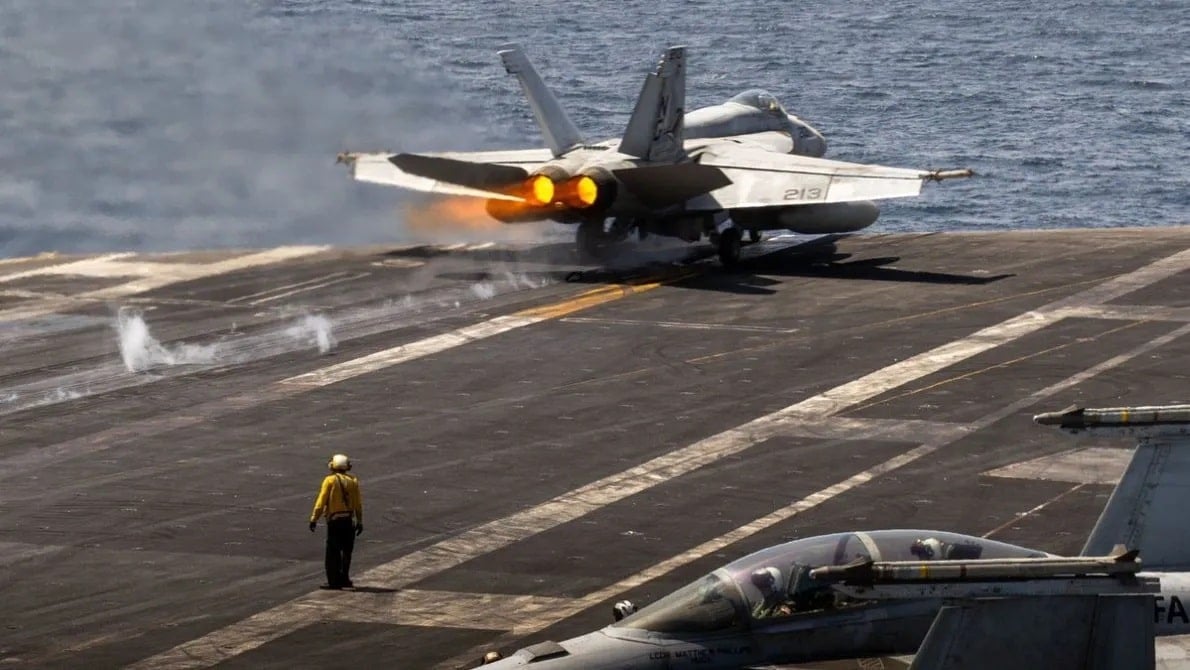
US Central Command (CENTCOM) confirmed a fresh wave of “self-defense strikes” directly hitting radar, surveillance, and military facilities in southern Iran. Credit: CENTCOM
For the second straight day, the US and Iran have traded retaliatory military strikes across the Middle East, pushing an already fragile April ceasefire to the brink of collapse.
US Central Command (CENTCOM) confirmed a fresh wave of “self-defense strikes” directly hitting radar, surveillance, and military facilities in southern Iran. The American bombardment followed a stark warning from US President Donald Trump, who declared that Washington would hit Iran “hard” because Tehran had taken “too long to make a deal” to halt hostilities permanently.
Tehran immediately struck back, targeting US military infrastructure across multiple neighboring countries. For a second consecutive day, American bases in Kuwait and Bahrain faced Iranian fire, while Iranian state media reported that the Islamic Revolutionary Guard Corps (IRGC) launched ballistic missiles at a US command center in Jordan. The attacks forced Kuwait to temporarily shut down its airspace after its military intercepted “hostile aerial targets,” while air raid sirens sounded in the middle of the night in Bahrain.
The conflict has also spilled into vital global shipping lanes. Iranian state media claimed the IRGC struck two oil tankers and declared the strategic Strait of Hormuz “completely closed.” While CENTCOM countered that commercial maritime traffic was still successfully transiting the waterway, global energy markets panicked. Brent crude quickly jumped 2%, surging to around $95 a barrel.
The escalating rhetoric suggests no immediate end to the violence. US Defense Secretary Pete Hegseth warned that bombs would continue to drop on Iran’s core facilities if a diplomatic resolution isn’t reached, a sentiment echoed by President Trump on Truth Social.
Meanwhile, Iranian President Masoud Pezeshkian stood defiant, vowing that Iran “will stand firm against any pressure or threat” while slamming Washington for sabotaging peace talks with contradictory diplomacy.
The Cannes Film Market (Marché du Film) has officially named Greece as its 2027 Country of Honour for the landmark 80th edition of the Cannes Film Festival. This prestigious spotlight celebrates the country’s rapid ascent into a premier global audiovisual hub.
Operating under the banner “Ride the Greek Wave,” the initiative will highlight the convergence of Greek creativity, a booming production sector, and its growing role in international storytelling.
“With the remarkable momentum of its film and audiovisual industry today, Greece embodies the spirit of creativity, openness, and international collaboration that the Marché du Film seeks to celebrate through its Country of Honour initiative,” said Guillaume Esmiol, Executive Director of the Marché du Film.
This major milestone follows a massive influx of high-profile international projects utilizing Greece’s scenic versatility and its highly competitive 40% cash rebate incentive.
Cannes celebrates Greece as a film and TV production hub
Major recent film and television productions that have set up camp across Greece’s islands and mainland include:
Emily in Paris (Netflix): For its highly anticipated new season, the ultra-popular streaming franchise has expanded Emily Cooper’s horizons to Greece. Production crews completely took over Mykonos, filming major scenes featuring Lily Collins and co-star Lucas Bravo at the pristine Agios Sostis Beach, as well as the island’s iconic windmills and the narrow alleys of Little Venice.
The Riders: Hollywood star Brad Pitt spent weeks touring Greece to film this high-stakes psychological drama directed by Oscar-winner Edward Berger (All Quiet on the Western Front). The production spanned diverse settings across the country, from a dramatic artificial storm sequence shot inside a historic studio in Menidi to location shoots on the car-free island of Hydra, the historic railway station of Chalkida, and right in front of Athens Town Hall in Kotzia Square.
The Odyssey (Universal Pictures): Christopher Nolan’s highly anticipated, ancient-set cinematic epic based on Homer’s poem, which utilized locations across the Mediterranean, including Greece.
The Return: A gritty, atmospheric retelling of Odysseus’s homecoming starring Ralph Fiennes and Juliette Binoche, filmed extensively amidst the ancient olive groves and rugged cliffs of Corfu.
House of David (Amazon MGM Studios): A sprawling biblical drama series that transformed the landscapes of Attica and the Peloponnese into ancient Israel.
Malice (Prime Video): A psychological thriller series starring David Duchovny and Carice van Houten, which filmed across Athens, Piraeus, and the sun-bleached Cycladic islands of Paros and Antiparos.
Maestro in Blue (Netflix): The critically acclaimed, internationally distributed Greek drama series produced by Christoforos Papakaliatis, which wrapped up its sweeping story against the stunning backdrop of Paxos and Corfu.
Greece’s audiovisual sector
Leonidas Christopoulos, CEO of Greece’s film and media agency EKKOMED, noted that the Cannes distinction is a massive victory for the local industry: “This distinction is both a significant recognition and a unique opportunity to showcase Greece’s vibrant creative ecosystem on the international stage. Today, Greece is a place where cinematic heritage meets contemporary talent, innovation, and international collaboration.”
EKKOMED says that Greece’s audiovisual sector contributes €1.9 billion ($2.18 billion) to the national economy, supports approximately 44,000 jobs, and includes nearly 3,000 companies active across production, post-production, animation, and related creative services.
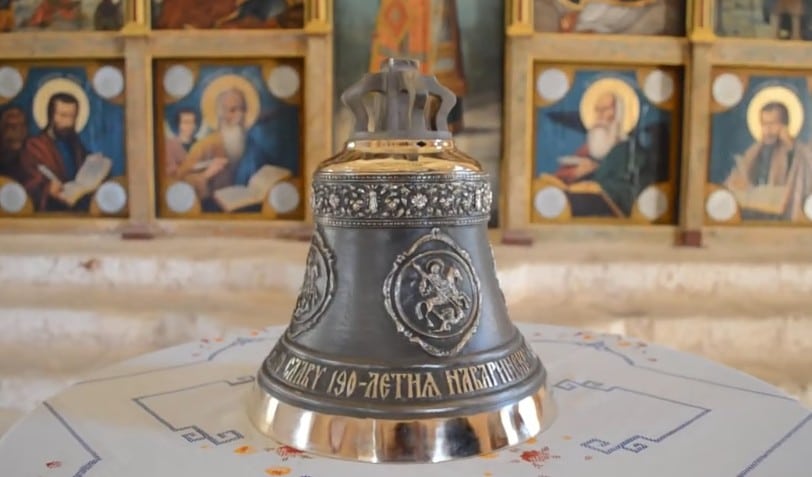
Originally delivered to Greece on October 19, 2017, the bell was celebrated as a “bridge of memory,” honoring the historic ties between the Greek and Russian peoples. Credit: Public Domain
Authorities in Messenia, Greece are investigating the mysterious disappearance of the historic Battle of Navarino commemorative bell from the Church of the Transfiguration of the Savior, located in the Niokastro fortress in Pylos.
Weighing 12 kilograms (approx. 26 lbs), the bell holds profound historical and symbolic value. It was gifted to the church by Russian Philhellenes and transported to Greece aboard the Russian warship Azov to mark the 190th anniversary of the Battle of Navarino, a pivotal naval engagement of the Greek War of Independence.
According to state broadcaster ERT, photographic evidence confirms the bell was securely in place as recently as May 29, 2026. However, tourists visiting the castle on the morning of Saturday, June 6, noticed it was missing.
It remains unclear whether the artifact was stolen or removed for unannounced maintenance. Local police and cultural heritage authorities are investigating all possibilities to locate the missing relic.
Bell honored historic ties between Greece and Russia after Battle of Navarino
Originally delivered to Greece on October 19, 2017, the bell was celebrated as a “bridge of memory,” honoring the historic ties between the Greek and Russian peoples. Its sudden disappearance has sparked deep concern within the Pylos community, where it is revered not just as a religious object but as a tangible link to Greece’s journey toward independence.
Fought on October 20, 1827 in Navarino Bay (modern-day Pylos), the Battle of Navarino was a monumental naval clash that effectively secured Greece’s independence from the Ottoman Empire. It marked the last major sea battle in history fought entirely with sailing ships, pitting a powerful allied fleet of British, French, and Russian warships against the combined forces of the Ottoman Empire and Egypt.
Despite being outnumbered, the Allies possessed vastly superior firepower and tactical positioning, completely decimating the Ottoman fleet in a matter of hours. This decisive intervention by Europe’s great powers turned the tide of the struggling Greek War of Independence, forcing the Ottomans to eventually withdraw and pave the way for the establishment of the modern, independent Greek state.
Greece is close in approving the ‘Achilles Shield’, a program similar to the Iron Dome, the Israeli air defense system, which intercepted missiles fired from Iran, in Junee 2025. Credit: EPA/ABIR SULTAN via AMNA
A trio of major Israeli defense contractors recently delivered their final proposal dossiers for Greece’s €3 billion ($3.5 billion) ‘Achilles Shield’ program, a sophisticated, multi-layered air, anti-ballistic, and counter-drone defense network powered by cutting-edge Israeli technology.
The proposals by Israel Aerospace Industries (IAI), its subsidiary ELTA Systems, and Rafael Advanced Defense Systems, satisfy all criteria mandated by Greece’s General Directorate for Defense Investments and Armaments (GDAEE), according to a report by newmoney.gr.
The nationwide shield stands out as one of the most critical crown jewels within Greece’s broader Long-Term Defense Procurement Program (2025–2036), which outlines an overall budget of €30 billion.
Industrial co-production
The final procurement contracts are now navigating the signature pipeline through the Ministry of National Defence (YETHA) and the General Staffs. Officials are pushing to have the program formally added to the agenda of the upcoming KYSEA session, tentatively scheduled for June 18, 2026, or the subsequent meeting in early July.
The report notes that a pivotal victory for Greek industry was securing a domestic industrial participation rate locked at a minimum of 25%, spanning both localized manufacturing and technology transfers.
The Israeli consortium has already engaged in extensive talks with domestic contractors, signing several Memorandums of Understanding (MoUs) and strategic partnerships. Industrial analysts estimate that the final domestic footprint could realistically reach 30%, backed by fully drafted proposals to establish dedicated production lines on Greek soil.
Key examples and partners already tapped for the program include:
IAI & Hellenic Aerospace Industry (EAB): This existing partnership has already yielded results, notably the successful integration of Greece’s proprietary “Centaur” counter-drone system into the Barak weapon architecture.
Domestic Consortium Partners: Major Greek defense, industrial, and infrastructure players have secured preliminary roles, including Metlen, Miltech, Scytalys, Akmon, Salamis Shipyards, and GEK TERNA, with the roster expected to expand over the program’s three-year rollout.
Tactical Logistics: The specialized utility vehicles tasked with transporting the mobile defense systems will be sourced from IVECO, represented in Greece by the Syngelidis Group in partnership with Metlen.
The tech blueprint: Inside Greece’s ‘Achilles Shield’
The architecture of the shield relies on a unified, network-centric ecosystem. It is designed to seamlessly interface with Greece’s upcoming Belharra (FDI) frigates, upgraded F-16 Viper fighters, incoming F-35 stealth jets, and existing Patriot missile batteries.
The primary systems slated for integration comprise:
IAI Barak MX: Operating as the backbone of the entire network. Utilizing three missile variants with ranges spanning 35 to 150 kilometers, it will completely phase out legacy, Cold War-era Hawk systems.
Rafael David’s Sling: Tasked with mid-to-upper-tier interception of advanced ballistic missiles and long-range threats. This system will functionally replace the Soviet-origin S-300 systems currently in the Hellenic inventory.
Rafael SPYDER: Providing short-to-medium range coverage (15, 20, and 40 kilometers). These mobile batteries will replace aging eastern-bloc legacy systems like the OSA-AK and TOR-M1.
ELTA EL/M-2084 MMR Radars: These mobile, Multi-Mission Active Electronically Scanned Array (AESA) radars will overhaul the Hellenic Air Force’s Air Control System. The state-of-the-art arrays can simultaneously track up to 1,200 airborne targets at ranges up to 475 km, or up to 200 weapon ballistic trajectories within a 100 km radius.
Greek-Built C4I Hub: The vital Command, Control, Communications, Computers, and Intelligence (C4I) architecture will be co-developed and assembled in Greece alongside domestic software and engineering firms.
Τhe decommissioned naval ship A/B Folegandros Is being scuttled using controlled explosive charges. Video screenshot.
In the coastal waters of Chania, Crete, decommissioned navy vessels are being scuttled to create Greece’s first highly regulated, wreck-based scuba diving park.
The ambitious underwater project by the municipality of Apokoronou at Omprogialos already features 44 deployed artificial reefs alongside the decommissioned Hellenic Navy vessel Nestor. On Wednesday, the park adds its newest centerpiece: the decommissioned naval ship A/B Folegandros, which is scheduled to be scuttled using controlled explosive charges.
Θάλασσα Χανίων Το ανατίναξαν για καλό σκοπό… Στον Ομπρόσγιαλο Χανίων δημιουργείται το πρώτο οργανωμένο καταδυτικό πάρκο της Ελλάδας. Μετά τους 44 τεχνητούς υφάλους και το «Νέστωρ», βυθίζεται σήμερα το παροπλισμένο «Α/Β Φολέγανδρος» σε βάθος περίπου 25 μέτρων. pic.twitter.com/OjcV1SIXvY
— Αντώνης Νταλακογεώργος (@Adalakogeorgos) June 10, 2026
Hellenic Coast Guard vessels and an elite Navy Underwater Demolition Command (OYK) unit are currently on-site overseeing the operation. Following detonation, the vessel will settle on the seabed at a depth of approximately 25 meters (82 feet).
To ensure public safety, maritime authorities have enacted stringent security measures across the broader Ompros Gialos sea area. A strict multi-kilometer exclusion zone has been established, completely banning the approach, anchoring, or transit of any vessel within a one-kilometer radius of the scuttling site. The Hellenic Coast Guard has been actively patrolling the perimeter since the early hours of the morning and will maintain surveillance until the operation is fully finalized.
A scuba diving park
The scuttling of the Folegandros is a pivotal step toward finalizing the Apokoronou Diving Park, a cornerstone project in the region’s strategic push to develop high-end, niche tourism markets. The diving park, which will be owned and operated directly by the Municipality of Apokoronas, features three distinct underwater routes designed for varying exploration levels:
Route 1: The Eco-Trail — Navigating through the network of 44 artificial reefs, submerged at a highly accessible depth of 9 to 10 meters (30–33 feet)
Route 2: The Nestor Wreck — Centered around the previously scuttled Hellenic Navy ship
Route 3: The Folegandros Deep Wreck — Descending to the newly scuttled vessel at 25 meters, geared toward intermediate and advanced divers
A catalyst for alternative tourism
Local officials aim to have the diving park fully operational by the end of the current 2026 tourism season.
Hailed as one of the most significant alternative tourism infrastructures in Chania and the wider island of Crete, the park is projected to become a premier hotspot for international and domestic diving enthusiasts. Beyond the economic boost, this dedicated “shipwreck museum” is designed to act as a marine sanctuary, generating a highly positive ecological footprint by fostering localized marine biodiversity and promoting sustainable eco-tourism in the Aegean.
Big hotel construction on Milos undermines the character of the Greek island note local groups. Credit: Greek Reporter
The Mayor of Milos, Manolis Mikelis, has issued a fierce warning against new central government legislation and aggressive corporate development, which he claims threaten to permanently disfigure one of Greece’s most visually distinct islands.
Mikelis extensively critiqued Greece’s proposed tourism zoning framework, accusing the central government of bureaucratic negligence and creating legal loopholes that favor wealthy international funds while systematically locking out local residents.
Corporate development that excludes islanders on Milos
At the heart of the crisis is a newly introduced tourism spatial plan, released online by the Ministry of Tourism. The legislation establishes strict minimum land requirements for the construction of new hotels, setting the threshold at 8, 12, or 16 stremmata (approximately 2 to 4 acres) depending on the specific zone.
Mikelis points out that because land ownership on Milos is historically fragmented, with local families generally owning plots of only 4 to 6 stremmata (about 1-1.5 acres), the law effectively bars residents from developing small, independent hospitality businesses.
“Consequently, it allows the big funds and the rich who have too much money to come in, forcing locals to sell off their property just so these businesses can operate for only seven months a year,” Mikelis warned in speaking to Greek Reporter.
The Mayor also expressed deep concern that the central government plans to issue a legislative decree to retroactively amnesty existing illegal corporate constructions. “That is the goal, and that is what we see happening,” he said, adding that his office is actively trying to block a recent influx of newly issued building permits from being executed.
Environmental violations at Sarakiniko and Mytakas
The local administration has recently been forced to take emergency legal action following severe environmental violations in some of the island’s most ecologically sensitive regions.
In the Kaminia/Sarakiniko area, an investor engaged in illegal excavations directly adjacent to the beach, destroying ancient fossils verified by the Goulandris Museum. Despite public administration inspectors declaring the project “100% illegal,” the developer ignored government-mandated restoration deadlines with zero consequences.
The municipality of Milos accuses developers of destroying the landscape of the island. Credit: Greek Reporter
Meanwhile, in Mytakas, an extension of Sarakiniko’s famous lunar-like volcanic landscapes, a large development company purchased an existing hotel with plans to construct a massive 271-bed complex featuring one hundred private swimming pools.
According to municipal records, the developer illegally excavated and shipped out eleven shiploads of pozzolan (volcanic ash) to cement factories. Local authorities intervened only when bulldozers began moving toward the public shoreline. “We went to the Supreme Court (Council of State) and we are waiting for the final decision,” Mikelis stated. “A temporary revocation of the permit has been issued, and we are awaiting the final ruling.”
The fight for the “syrmata”
Beyond environmental destruction, Mikelis is fighting a bureaucratic battle to preserve the island’s unique cultural heritage: the syrmata. These are traditional, vibrantly colored fishermen’s structures carved directly into the seaside volcanic rock across coastal villages like Klima, Mandrakia, and Fourkovouni.
The municipality is pushing for strict architectural guidelines to ensure all 350 existing structures are protected and repaired using traditional methods despite a lack of formal state recognition.
The iconic syrmata on Milos. Credit: Greek Reporter
“The syrmata were the cultural heritage of this place, showing the life of people 150 years ago,” Mikelis explained. “In order to survive, they made a hole in the rocks to store their boat and their fishing equipment so they could live off fishing and survive during the Axis occupation and long before it.”
The Mayor noted that the term originates either from dragging (syrsimo) boats into the caves, or from historical lookouts who would shout “Syrma, syrma!” (“Watch out!”) to warn workers of approaching gendarmes, as the structures were originally built without formal permits. “Venice exists inside the water, yet we as a state cannot recognize these areas as special urban settlements,” Mikelis lamented.
A united front against corporate overdevelopment
The conflict highlights a growing rift between local municipalities and the central government. In 2023, Milos completed a comprehensive local zoning plan (SCHOOAP) designed to protect its environmentally-sensitive Natura-designated areas. However, the central government overturned the environmental study to accommodate high-value corporate investments.
Speaking to Greek Reporter, Mikelis described the Ministry’s overriding framework as a “death knell” for the local small entrepreneurs who built the island’s reputation. Instead of smaller rooms tailored to the island’s cultural scale, legal loopholes are being exploited to construct massive 300-bed luxury resorts that block public beach access.
The cash-strapped municipality is currently diverting vast public funds toward legal fees to fight these investments in court, explicitly pointing to neighboring Cycladic islands that have already been devastated by anarchic overdevelopment.
Milos is not fighting alone. Mikelis concluded by vowing to form a united front with other Greek island mayors to force a rewriting of the national tourism framework. “We will use every legal remedy to convince the people who wrote these unacceptable laws not to destroy our land any further,” Mikelis said. “Our destinations shouldn’t last for just ten years and then be degraded because the beauty and unique characteristics of our islands were destroyed. Together with other mayors, we are coordinating to make our voice stronger, ensuring longevity so that when someone pays to travel here from America, Australia, or Europe, they can still find and visit these rare beauties.”
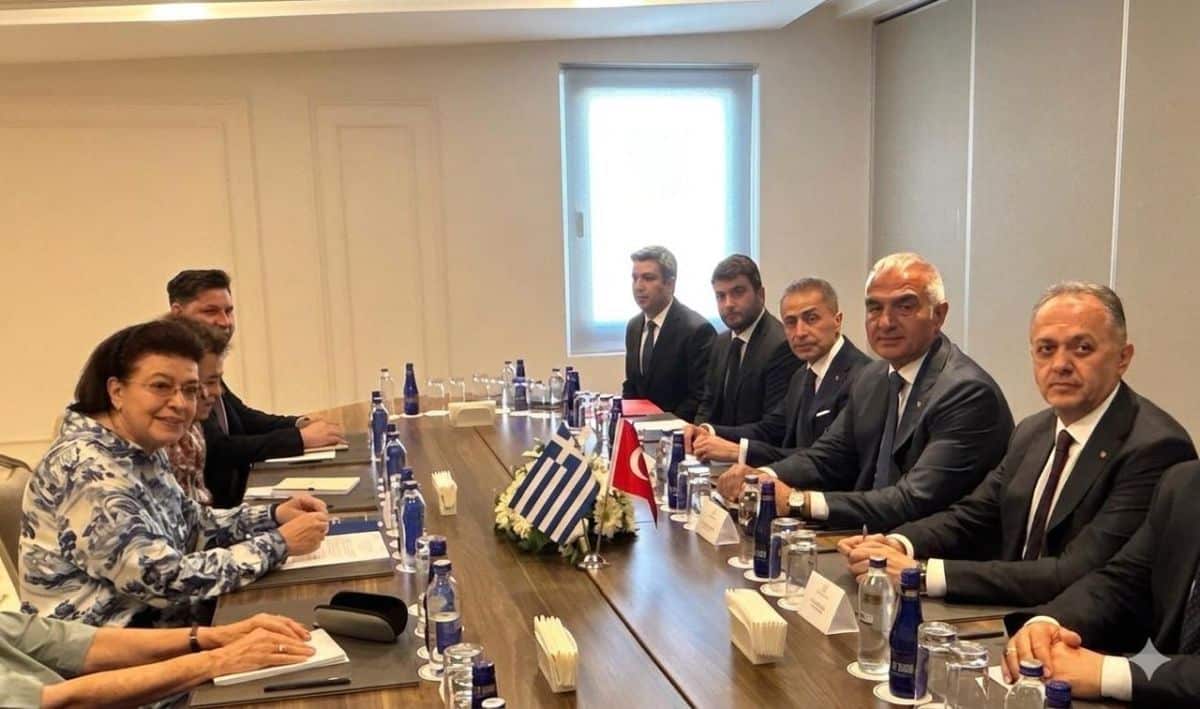
Greek Culture Minister Lina Mendoni and Turkish Culture and Tourism Minister Mehmet Nuri Ersoy. Credit: Ministry of Culture
Greece and Turkey have established a permanent cultural forum to strengthen bilateral cooperation in cultural heritage, museums, research, education, and new technologies, creating a new institutional framework for dialogue between the two countries.
The Greece-Türkiye Cultural Forum was formally established last week through a Joint Declaration signed by Greek Culture Minister Lina Mendoni and Turkish Culture and Tourism Minister Mehmet Nuri Ersoy during the forum’s inaugural session in Cappadocia. Under the agreement, the forum will meet regularly in both countries and serve as a platform for exchanging expertise and developing joint initiatives. “Culture is perhaps the deepest and most enduring field of communication between our societies,” Mendoni said.
The forum is the latest outcome of efforts to strengthen Greek-Turkish relations following the Athens Declaration on Friendship and Good Neighbourly Relations signed by Prime Minister Kyriakos Mitsotakis and President Recep Tayyip Erdogan in December 2023. It also builds on a Memorandum of Cultural Cooperation signed by the two culture ministers during the 6th Supreme Cooperation Council in Ankara.
Heritage protection and cultural cooperation between Greece and Turkey
During the forum, Mendoni outlined Greece’s approach to heritage protection, noting that Greek legislation safeguards all monuments equally—ancient, Byzantine, Ottoman, post-Byzantine and modern—regardless of their religious or cultural origin. She also stated that all are incorporated into the country’s cultural routes and tourism networks.
Furthermore, the forum featured presentations by officials and experts from both countries on the restoration and conservation of Byzantine and Ottoman monuments, heritage management, historical research, and the use of new technologies in the cultural sector. Discussions also focused on combating the illicit trafficking of cultural goods, an area in which Greece and Turkey have cooperated since signing a bilateral protocol in 2013.
“The exchange of information, the cooperation of competent services and the use of international mechanisms are crucial tools for effectively combating the illegal trafficking of cultural goods and securing their return to their place of origin,” Mendoni said. The Joint Declaration also highlights the importance of digitalization and improving public access to cultural resources through digital technologies, while encouraging closer cooperation in the use of emerging technologies in heritage management.
On the sidelines of the forum, Mendoni thanked Ersoy for Turkey’s support at UNESCO’s Intergovernmental Committee regarding the return of the Parthenon Sculptures. She noted that his confirmation that no Ottoman document ever authorized Lord Elgin’s removal of the sculptures strengthens the international case for their reunification in Athens.
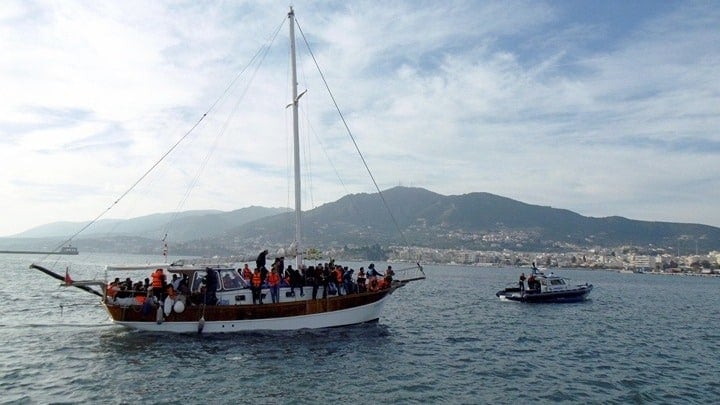
A Hellenic Coast Guard vessel tows a migrant boat to the port. Credit: AMNA
Greece’s Parliament has passed a major migration bill that officially integrates the European Union’s new Pact on Asylum and Migration into domestic law. The legislation introduces stringent measures to overhaul border controls, expedite asylum applications, and fast-track the deportation of individuals whose asylum claims have been rejected.
A central element of this new framework is the establishment of offshore “return hubs.” These are transit centers located in non-EU countries where rejected asylum seekers will be transferred if their countries of origin refuse or delay their repatriation.
Minister Plevris on “return hubs” and negotiations
Migration Minister Thanos Plevris clarified that these hubs will not operate outside the law, emphasizing: “These centers will operate within the framework of European Union agreements with third countries and under the guarantees of European and international law.”
Greece is spearheading this initiative alongside Germany, Denmark, Austria, and the Netherlands. The coalition aims to sign their first bilateral agreements later this year so the hubs can become fully operational in 2027. Minister Plevris revealed that advanced talks are already underway. “The Greek government has already been in consultations with two African countries,” he stated.
The Minister also noted that these hubs are a vital tool for Greece, as partner nations frequently experience secondary migration flows—meaning migrants who initially crossed into Europe via Greek territory. He added:
“The creation of a more effective European return mechanism can act synthetically with the existing system and offer an additional innovative tool both to Greece and the remaining member states for managing returns.”
Voluntary returns and stricter detention policies
The new law expands administrative detention, increases surveillance on individuals awaiting deportation, and speeds up removals in coordination with Frontex. Minister Plevris stated that the strict new framework “is already starting to produce tangible results.”
According to Plevris, voluntary returns handled via the International Organization for Migration (IOM) have already increased by 25% since the new measures were introduced, with hundreds of undocumented individuals coming forward to express their intent to return home.
The changing migration numbers in Greece
Minister Plevris linked the accelerated asylum processes and rigid enforcement directly to a steep decline in illegal border crossings, noting that proper returns and secure borders are inherently connected: “These figures confirm that the effective management of returns, the acceleration of asylum procedures, and border protection are interconnected pillars of a cohesive migration policy.”
To demonstrate the shifting impact, Plevris provided specific data comparing past crises to current trends. Under the previous administration between 2015 and 2019, Greece saw a massive wave of 1,215,280 irregular arrivals. Since 2019, that number has dropped significantly to 197,651 total arrivals.
Furthermore, during the first five months of 2026, nationwide arrivals saw a further 31% decrease, with arrivals in the Aegean Sea plunging by 65%. However, localized pressure remains. Over the past two years, for instance, the southern islands of Crete and Gavdos have experienced a sharp rise in migrant boats arriving from Libya.
The efficiency of processing has also changed. Pending asylum applications in Greece have plummeted by roughly 80%, dropping from 142,000 in 2019 to just 28,000 today. At the same time, stricter evaluation standards have caused the international protection approval rate to fall from 71.5% to 40.7%.
Two key pillars of the new legislation
Mandatory Border Screening: Before a migrant is legally considered to have entered EU territory, they must undergo a mandatory pre-entry screening at the border. This process includes identity verification, biometric data capture, security and health checks, and cross-referencing information via the upgraded Eurodac database to track migrant movements across the EU.
Fast-Track Asylum Evaluation: The law establishes much tighter deadlines to eliminate years of bureaucratic delays. Applications flagged as “manifestly unfounded,” particularly those submitted by nationals of countries with historically low asylum approval rates, will face rapid, border-adjacent evaluations and immediate rejection.
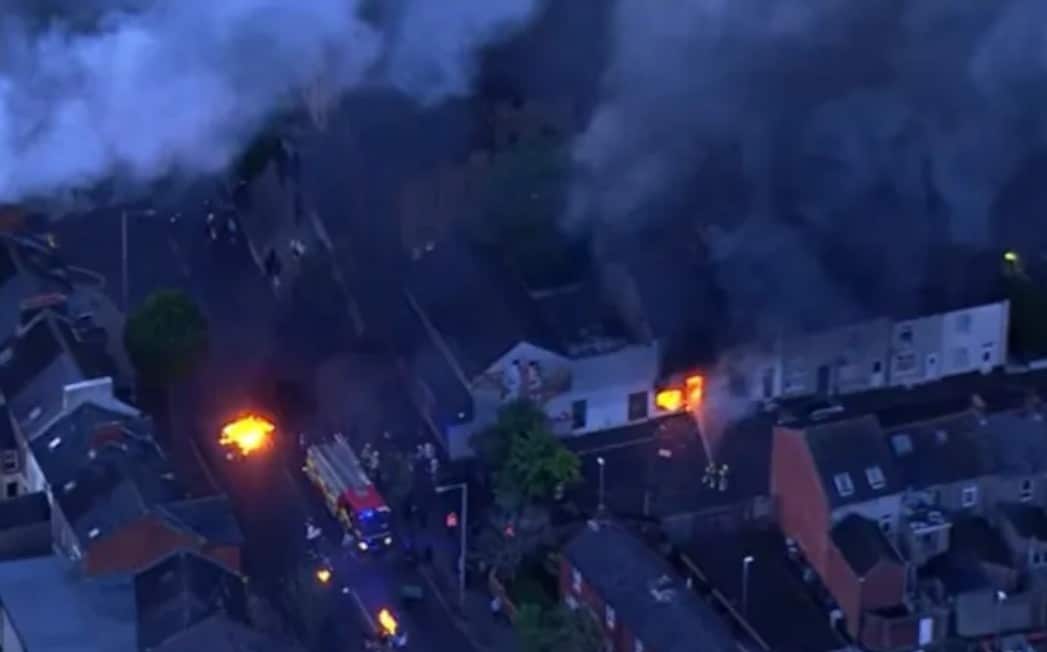
Homes were set on fire in Belfast. Video screenshot/Sky News
Widespread anti-immigration riots broke out across the UK on Tuesday following a particularly violent knife attack in Northern Ireland. The unrest was triggered by news that a thirty-year-old Sudanese national had been charged with attempted murder. Prime Minister Keir Starmer strongly condemned the initial attack, labeling it both “horrific” and “sickening,” while stating he has zero tolerance for such violence.
Escalation of violence in Northern Ireland
BREAKING: A bus has been set on fire in Belfast amid protests over the attempted beheading of a man pic.twitter.com/FX8maCMalK
The unrest was most intense in Northern Ireland, where masked mobs caused extensive property damage on Tuesday evening:
Belfast: Riots resulted in multiple homes, a bus, cars, and street barricades being set on fire. Northern Ireland First Minister Michelle O’Neill condemned the rioters, stating that groups of masked men were “burning families out of their homes” in acts of “outright thuggery.”
Newtownabbey & Kilkeel: Blazes spread to neighboring towns, where verified social media footage showed protesters setting several vehicles ablaze.
Wider UK: Smaller, sporadic anti-immigration protests and clashes with police were also reported in other major UK cities, including London, Glasgow, and Bangor.
A large group rioters is attacking migrant HMOs (Houses in Multiple Occupation, a form of taxpayer-funded housing for asylum seekers) in Belfast. pic.twitter.com/o9yjynArd4
Social media fueling the anti-immigration riots in the UK
The catalyst for the riots was a viral video filmed by a witness during Monday night’s attack in North Belfast. The footage depicts a man pinning a bloodied victim to the ground and repeatedly stabbing him before bystanders and police intervened. Far-right and anti-immigration accounts widely circulated the footage online to mobilize public protests.
Further update from police sources, a property has been set alight in the Lendrick Street area of Belfast.
First Minister O’Neill warned that extremist groups are dangerously exploiting a heinous crime to target and intimidate innocent people who are just trying to live their lives.
The incident occurred around 10:30 p.m. on Monday, June 8 on Canard Avenue in North Belfast. A man in his forties suffered severe wounds to his face, back, and eyes. He remains hospitalized in serious condition. Police recovered a kitchen knife at the scene.
A thirty-year-old man was arrested for attempted murder. Authorities confirmed he had traveled from Paris to Dublin before entering Northern Ireland in February 2023. He claimed asylum upon arrival and was granted legal residency in the UK until 2028.
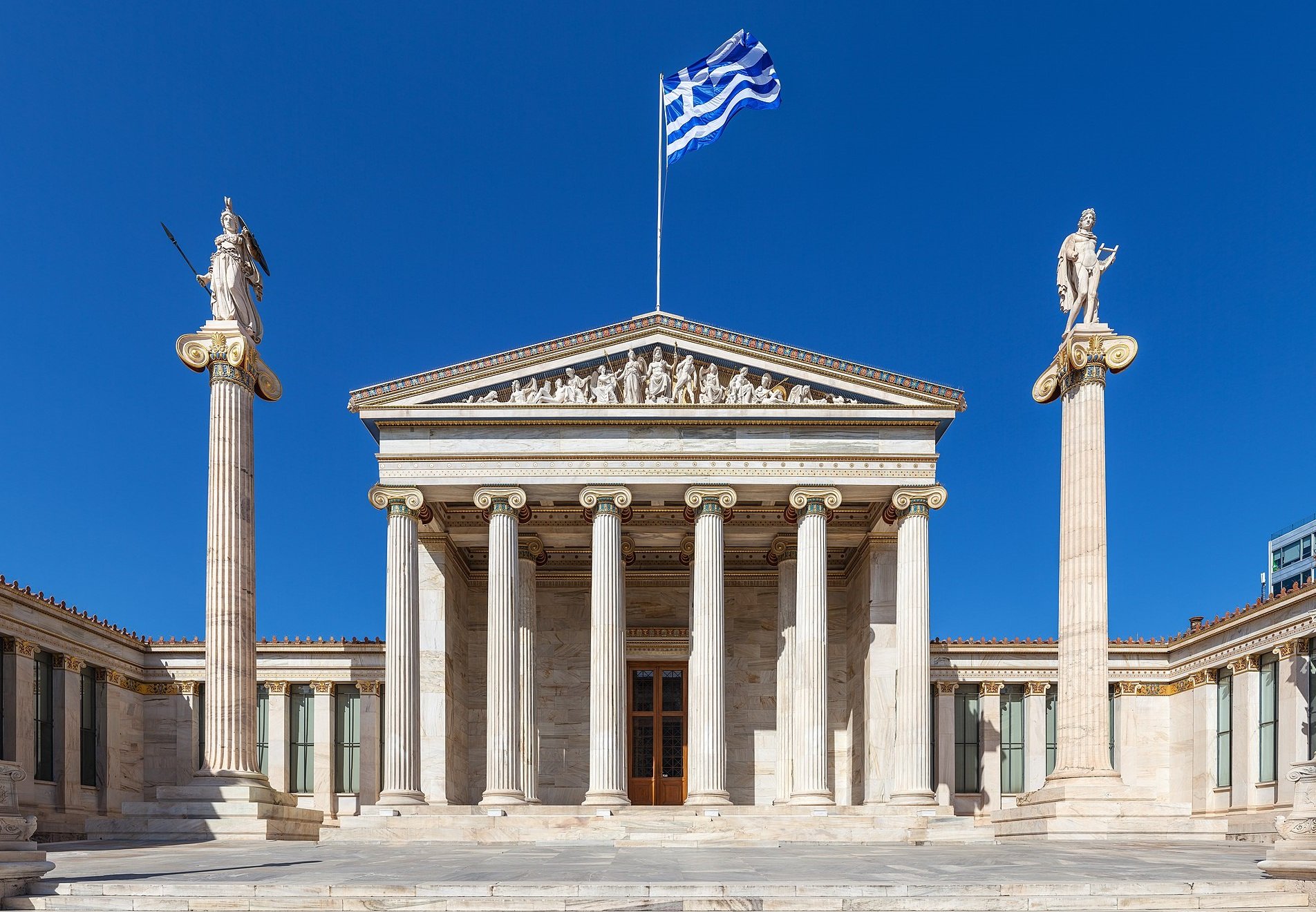
The building of the Academy of Athens in downtown Athens. Credit: Thomas Wolf, CC-BY-SA-3-0/Wikipedia
A major international ranking has highlighted eleven Greek scientists who have made it into the global elite of research. Spanning institutions from Stanford and Columbia to the University of Crete, these researchers are recognized among the top 1,000 scientists worldwide in their respective fields.
This prestigious list is compiled annually by Research.com, a prominent educational platform and academic research portal. To compile these rankings, Research.com analyzes data from millions of scientists globally, evaluating their career achievements based heavily on a standard academic metric called the h-index.
The h-index is a metric used to measure both the productivity (how much they publish) and the impact (how often other scientists cite their work) of a researcher.
The top 11 Greek scientists
Here is a summary of the researchers making waves in the global scientific community:
1. John Ioannidis (Stanford University)
Dr. John Ioannidis. Courtesy Dr. Ioannidis
A professor of medicine at Stanford and one of the world’s most-cited scientists. He is a pioneer in “meta-research”—the study of scientific methods themselves to improve the quality and reliability of research.
2. George Yancopoulos (Regeneron Pharmaceuticals)
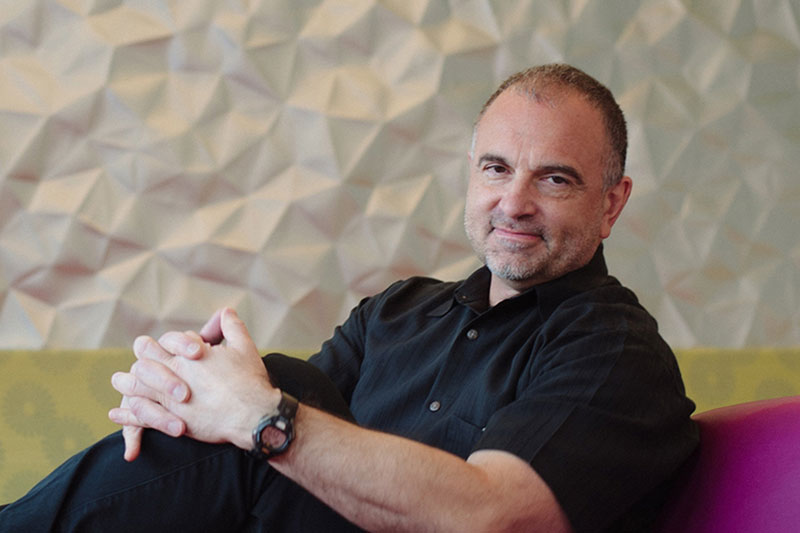
George Yancopoulos. Credit: Public Domain
Yancopoulos is a top biomedical scientist and the billionaire co-founder of Regeneron. He is highly recognized for developing life-saving monoclonal antibody treatments, notably used to combat viruses like Ebola.
Maniatis is a pioneer in molecular biology and biotechnology who revolutionized gene cloning techniques. His current research focuses on comprehending the molecular mechanisms behind neurodegenerative diseases such as amyotrophic lateral sclerosis (ALS), or Lou Gehrig’s disease.
Christos Pantelis. Credit: University of Melbourne
Pantelis is a professor of psychiatry who heads the Melbourne Neuropsychiatry Centre. He is a global leader in using brain imaging to study the development and structural changes associated with schizophrenia.
5. Nicholas Peppas (University of Texas at Austin)
Nicholas Peppas. Credit: University of Texas at Austin
A chemical and biomedical engineer known as the father of modern drug delivery systems, he pioneered the development of hydrogels used in oral drug delivery, contact lenses, and tissue engineering.
One of the three researchers on the list based entirely in Greece, Stoumpos is a materials chemist specializing in halide perovskites, which are highly efficient materials used to advance next-generation solar cells and electronics.
Soukoulis is a physicist who split his career between the US and Greece. He is world-renowned for his groundbreaking research on metamaterials—artificial materials engineered to manipulate light and sound waves in ways natural materials cannot.
A chemical engineering professor based in Greece, Pandis is an international authority on atmospheric chemistry and air pollution, focusing on how airborne particulate matter affects both human health and global climate change.
A physicist based in France who is a leading researcher in quantum cryptography, Diamanti develops secure quantum communication networks and protocols to protect data from future cyber threats.
10. George Paxinos (NeuRA / University of New South Wales)
George Paxinos. Credit: NeuRA
Paxinos is a world-famous neuroscientist based in Australia who mapped the human and animal brain. His highly detailed brain atlases are universally utilized by neurosurgeons and medical researchers worldwide to identify specific brain structures.
An organic chemist based in Greece whose research focuses on developing new chemical synthesis methods, his work helps streamline the creation of complex molecules used to manufacture new pharmaceuticals and advanced materials.
Bringing Greece home: 10 traditional keepsakes with a century of soul. Credit: Greek Reporter
Greece is a goldmine for souvenirs because the best things to bring home are deeply rooted in centuries of culinary, agricultural, and artistic traditions. Skipping the generic plastic keychains, here are the top 10 authentic souvenirs to bring back.
Greece consumes more olive oil per capita than any other country, and its liquid gold is world-renowned. Look for oils from Crete, Kalamata, or Mani. For easier travel packing, skip the glass bottles and buy the tightly sealed tin canisters found in local supermarkets or specialty shops.
2. Greek Thyme Honey
Image of Greek honey. Credit: Greek Reporter
Because Greek bees feed on wild herbs under intense sunshine, the honey here is thick, rich, and distinctly aromatic. Thyme honey (particularly from Crete or the Aegean islands) is considered the gold standard.
3. The Mati (Evil Eye) Amulet
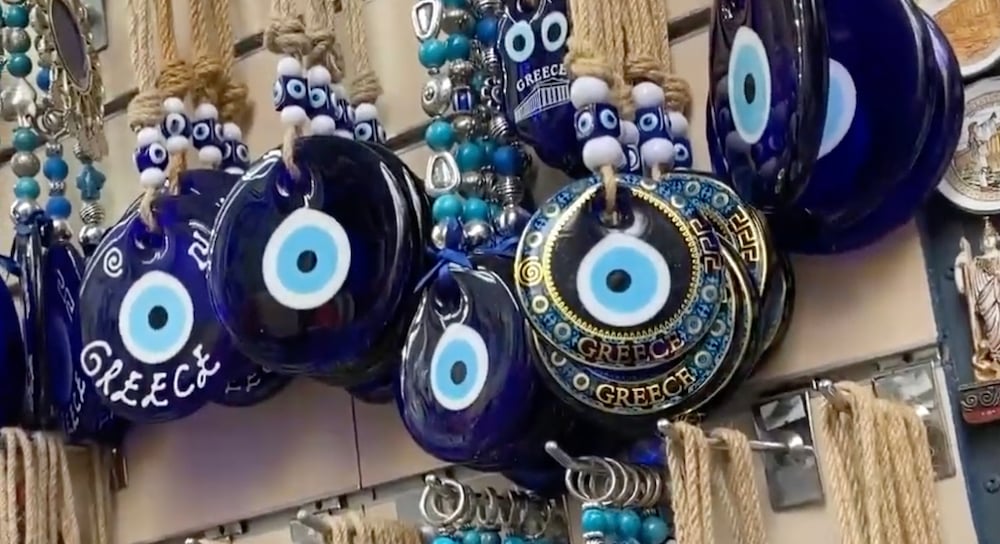
Mati. Credit: Greek Reporter
The distinctive blue-and-white eye charm is designed to ward off bad energy or jealousy (to mati). You can find it on beautifully crafted silver jewelry, ceramic wall hangings, or simple glass beads. It’s light, cheap, and undeniably Greek.
4. Ouzo, Tsipouro, or Mastiha
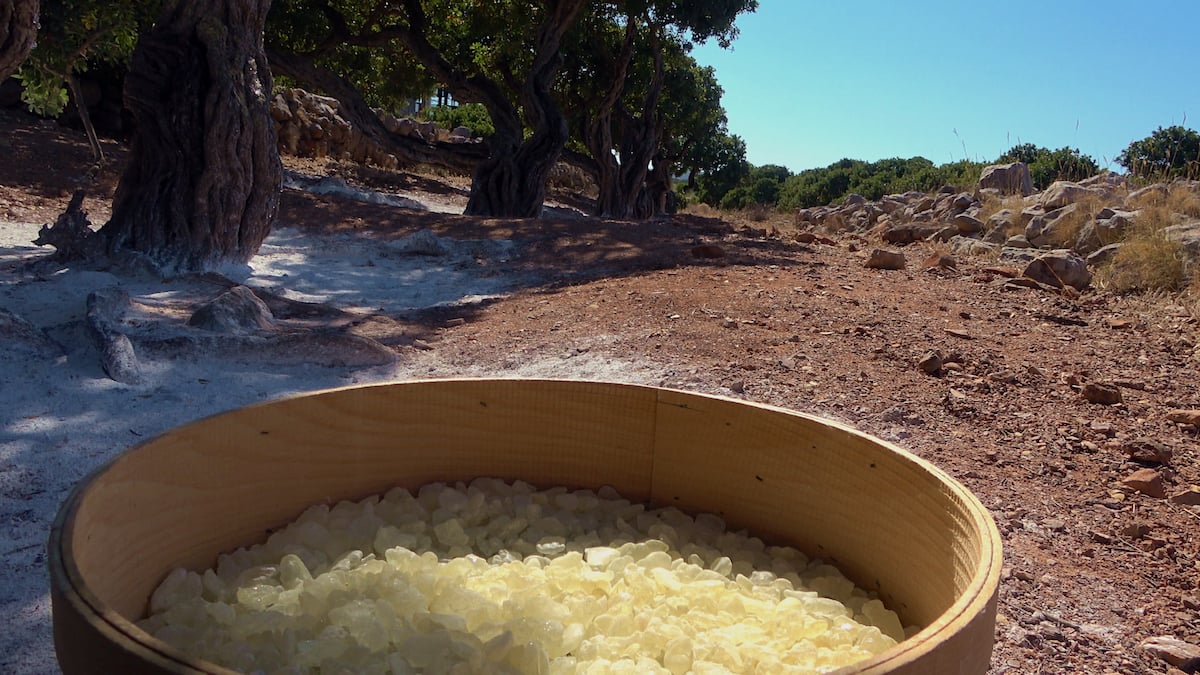
Mastic from Chios. Credit: Anastasios Papapostolou/Greek Reporter
Bring the taste of a Greek summer back home:
Ouzo: The famous anise-flavored, clear spirit that turns milky white when you add water or ice
Tsipouro: A strong, unaged grape distillate (similar to grappa)
Mastiha: A sweet, incredibly refreshing liqueur flavored with resin harvested exclusively on the island of Chios
5. Dried Greek Oregano & Mountain Tea
Greek oregano (rigani) grows wild on rocky hillsides, giving it a much more intense, peppery flavor than supermarket varieties back home. Pair it with a bunch of Greek Mountain Tea (tsai tou vounou), a dried herb brewed for centuries to boost the immune system and soothe digestion.
6. Olive Wood Kitchenware
From salad bowls and cutting boards to honey dippers, items made from Greek olive wood are gorgeous and incredibly durable. The tight grain of the wood means it doesn’t absorb odors or bacteria easily, and each piece features entirely unique natural patterns.
7. Handmade Leather Sandals
Handmade leather sandals of Greece. Credit: Efi
If you pass through Athens (especially the Monastiraki neighborhood) or certain islands such as Crete and Rhodes, you can buy genuine, handmade leather sandals. They are styled according to Ancient Greek designs, crafted to last for years, and mold comfortably to your feet over time.
8. Greek Ceramics & Pottery
From museum-quality replicas of ancient black-and-figure vases to modern, minimalist, blue-and-white tableware handmade on islands such as Sifnos, Greek pottery is a beautiful addition to any home.
9. Natural Sea Sponges
Kalymnos sponges. Credit: Nabokov, CC3/Wikipedia
Harvested for generations by traditional divers (most famously on the island of Kalymnos), genuine Greek sea sponges are entirely natural, hypoallergenic, and far softer and longer-lasting than synthetic alternatives. They are fantastic for skincare and bathing.
10. Spoon Sweets (Glyka tou Koutaliou)
These are traditional fruit preserves served on a small spoon alongside Greek coffee or dolloped over Greek yogurt. They are made by boiling wild fruits (like sour cherries, figs, or bitter oranges) in sugar syrup, preserving the firm texture and vibrant flavor of the fruit.
10+1. The Komboloi
Greek worry beads. Credit: Greek Reporter
The Komboloi, or worry beads, may be one of the most typical symbols of Greece’s easy-going mentality that has been widely established in Greece since the middle of the 20th century. Whether on the street, on an airplane, or in a busy kafeneion downtown, you will find people playing with their worry beads in various manners, even doing flips and tricks with them, letting go of their stress and worries as one bead moves deliberately towards the other. The repetitive action and clicking of the beads turn this pastime into an easy motion reported to help ease tension.
Packer’s Tip: If you’re traveling with carry-on luggage only, you won’t be able to take liquid souvenirs such as honey, olive oil, or alcohol past airport security. Buy these items at the airport duty-free shops after security—the quality is still highly authentic, and the prices are surprisingly fair!
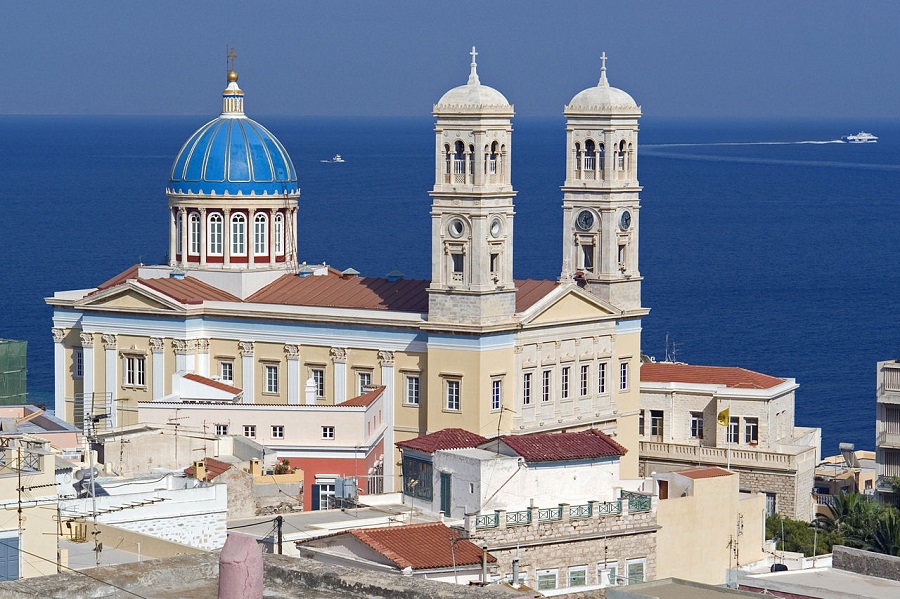
Saint Nicholas dominates the skyline in Ermoupoli, the capital of the island of Syros. Credit: Hans Peter Schaefer, CC BY-SA 3.0/Wikipedia
The Church of Saint Nicholas, a magnificent church in Ermoupoli, the capital of Syros, took twenty-two years to build.
Overlooking the Cycladic island, Saint Nicholas’ construction began in 1848, following the designs of a Greek architect named G. Metaxas. They were personally approved by King Otto, the Bavarian prince who ruled Greece from the establishment of the monarchy in 1832. The church was finally completed in 1870.
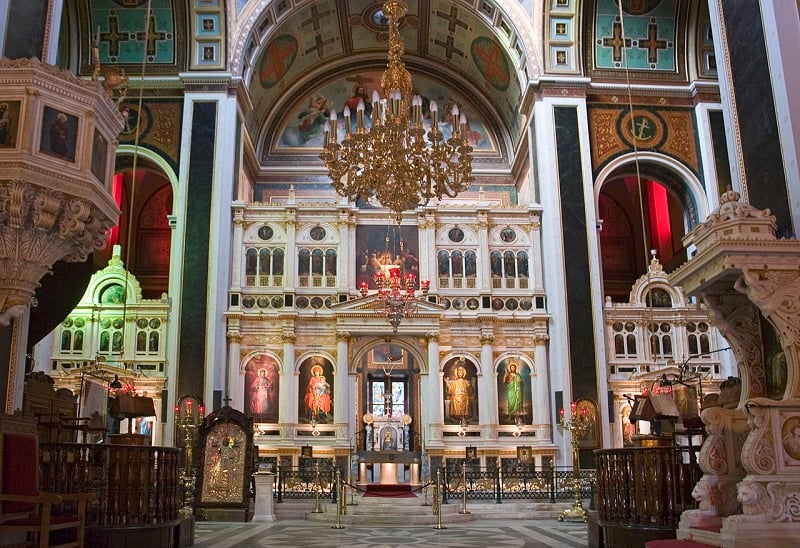
Saint Nicholas, the patron saint of seafarers, is also the patron saint of Ermoupoli. The cathedral dedicated to him stands out even to this day for its impressive architectural structure. The two-story monumental church has marble bell towers, an imposing marble staircase and marble propylaea, Ionic columns, archaic motifs, arcades, and an array of sculpted decorations.
It has lavish interiors including its icon of Saint Nicholas, which was plated in silver in Moscow. Its marble throne, pulpit, and marble iconostasis are also very unusual in Greek ecclesiastical architecture.
Saint Nicholas Church one of the finest in Greece
St. Nicholas was constructed between 1883 to 1899 by Tinian sculptor G. Vitalis and is considered one of the finest churches of the nineteenth century in Greece.
The Church of Saint Nicholas. Credit: Hans Peter Schaefer, CC BY-SA 3.0/Wikipedia
The church’s icons were created by some of the best hagiographers of the time while many Greeks from abroad, including shipowners, contributed funds toward the construction of the temple.
Internally, arches divide the church into three aisles; places for female congregants run along its three sides.
The imposing church is known as Agios Nikolaos “the rich,” to distinguish it from “Agios Nikolaos of the poor” another church on Syros.
Syros has a long history that began three millennia ago
Syros’ long history explains the many different styles of architecture and the many government buildings in the capital, Ermoupoli. It has also led to the establishment of a wealth of museums and cultural events that take place there in the summer.
On Syros, one will find City Hall, comprised of the remains of the castle in Ano Syros and the Theater Apollon—all buildings atypical of Cycladic architecture.
Syros was never under Ottoman occupation since it was protected by the French, and there is a strong Catholic element on the island due to the Venetian influence there as well.
Nowadays, the island is world-renowned for its rich cultural tradition with events that take place in Ermoupolis, such as the International Classical Music Festival of Cyclades, ANIMASYROS International Animation Festival, Ermoupoleia Cultural Festival etc that offer a range of options for every visitor to experience.
The island of Skiathos in Greece, renowned for its picturesque beaches and vibrant atmosphere, is reviving its ancient wine production as it gains recognition as a gastronomic destination in the Sporades.
Mayor Thodoris Tzoumas has highlighted the island’s unique culinary identity, emphasizing the harmonious blend of fresh seafood and local produce. In speaking to Greek Reporter, he mentioned dishes such as shrimp with wild greens, octopus with zucchini, and distinctive soups featuring foraged greens. The island’s beloved “pita,” both oven-baked and fried, also holds a special place in its culinary heritage.
The return of wine to Skiathos
Skiathos vineyards. Credit: Greek Reporter
A pivotal development in Skiathos’ burgeoning gastronomic scene is the establishment of its first modern winery, Parissi Winery. This enterprise signifies a profound reawakening of the island’s long-dormant winemaking tradition.
Historically, Skiathos boasted a flourishing viticultural landscape, with vineyards thriving until the mid-20th century. However, a combination of prolonged drought and shifting economic priorities led to a decline in wine production, with many locals turning to olive cultivation instead.
According to Maria Koutseri, co-owner of Parissi Winery, a key element defining Skiathos wines is the island’s unique terroir. Many of their vineyards are strategically situated in secluded areas in close proximity to the sea. This coastal influence imparts a subtle yet distinctive salty, savory characteristic to their wines. This intriguing quality echoes historical accounts of “Stratis,” an ancient Skiathian wine rumored to have incorporated seawater during its production, a practice believed to have enhanced its flavor and appeal among the Romans.
Parissi Winery is dedicated to reclaiming this forgotten legacy. Despite the inherent challenges of cultivating vineyards on a highly tourist-driven island, they are demonstrating the immense potential for producing high-quality, distinctive wines.
The winery operates on a small scale, meticulously cultivating 45 strains of exclusively Greek grape varieties. Their focus is unwavering on showcasing the indigenous flavors of Greece, including Roditis, Assyrtiko, Malagouzia, Alexandria Muscat, Xinomavro, and Limniona. From these, they craft a select range of offerings: four dry whites, one rosé, one red, and a sweet wine, all of which are sold exclusively on Skiathos.
An assortment of wines. Credit: Greek Reporter
A wine-making legacy reclaimed
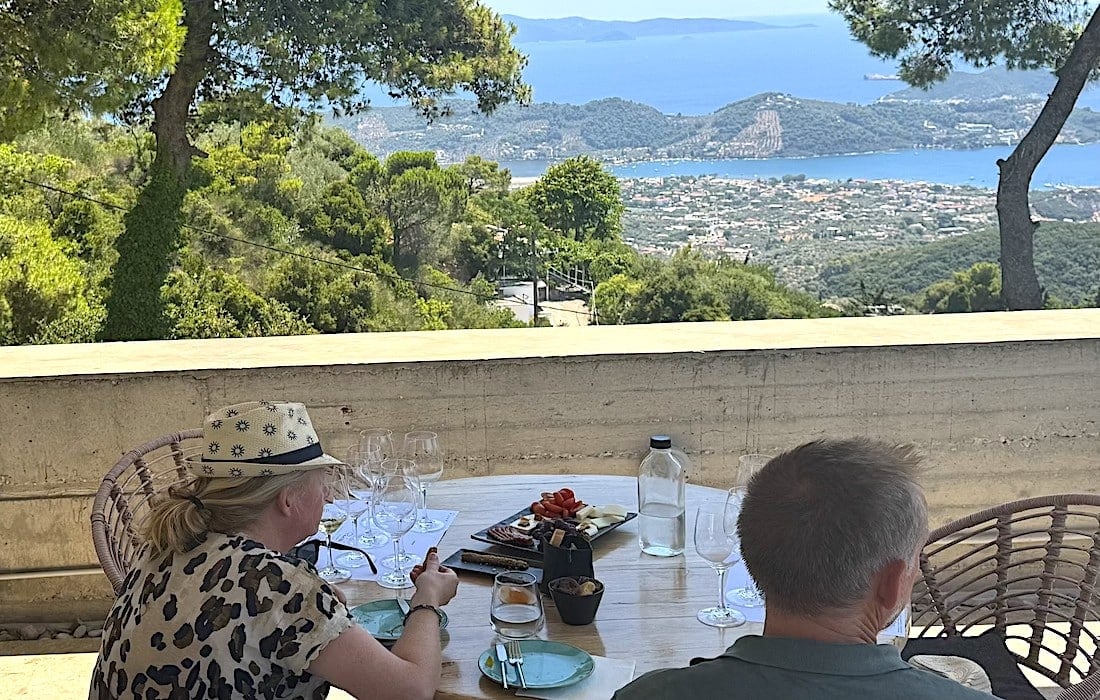
Perched at one of the island’s highest points, Parissi Winery not only offers a taste of its unique wines but also commands breathtaking panoramic views of Skiathos town. Visitors are invited to embark on an immersive experience, beginning with a guided tour of the vineyards, where they learn about the cultivation process and specific grape varieties.
The journey continues into the production area, providing firsthand insight into the meticulous winemaking journey. The experience culminates in a dedicated tasting session, allowing guests to savor the distinctive flavors of Skiathos and take home a piece of its revitalized wine heritage.
Maria Koutseri expresses her heartfelt hope that Parissi Winery will serve as a catalyst, encouraging others to join in this revival. She envisions a future where Skiathos’ rich winemaking tradition is fully restored and celebrated, thereby adding a lasting and sophisticated dimension to the island’s growing reputation as a premier gastronomic destination.
The remains of the hull of one of the two ships recovered from Lake Nemi. Workers in the foreground indicate scale. Credit: Public Domain
Located in Lake Nemi in Italy, the Nemi ships consisted of two vessels constructed on orders of Roman Emperor Caligula (37 to 41 AD), known for his extravagant lifestyle.
The ships served as floating palaces, complete with intricate decorations, marble floors, and elaborate plumbing systems and demonstrated advanced Roman engineering techniques.
There is evidence of the use of waterproof concrete, complex hull designs, and innovative plumbing systems with features such as heated baths. The ships were adorned with exquisite artwork, including mosaics, marble statues, and bronze decorations.
An artistic depiction of a Nemi ship by CM Knight-Smith. Credit: Public Domain
Nemi ships were impressively large for their time
The Nemi ships were impressively large for their time. The first ship, the Prima Nave, had a length of approximately 70 meters (230 feet) with a width of about 20 meters (66 feet). The second, the Seconda Nave, was 73 meters (240 feet) long and 24 meters (79 feet) wide.
The remains of a Lake Nemi ship pictured in 1929. Credit: Public Domain
Both ships were constructed with high-quality materials, including oak and pine wood, and featured advanced techniques such as waterproofing with lead sheeting and bitumen.
The sheer size and opulence of the ships reflected the grandeur and luxurious lifestyle associated with Emperor Caligula. They were likely used for leisure and ceremonial purposes, showcasing the emperor’s wealth and technological advancement of the Roman Empire.
Ships discovered and then destroyed during the Second World War
The ships were discovered in the 15th century, but serious attempts to recover them only began in the late 19th and early 20th centuries. Italian dictator Benito Mussolini ordered the draining of Lake Nemi in the 1930s, leading to their successful recovery.
Benito Mussolini observes the drainage system for the emptying of Lake Nemi. Credit: Public Domain
The Nemi ships were destroyed in the final stages of World War II. On the night of May 31, 1944, a fire broke out in the Museum of Roman Ships at Lake Nemi, where the ships were housed. The fire caused extensive damage, destroying much of the wooden structures and artifacts. Most of the ships were lost to the flames.
The exact cause of the fire remains disputed. One theory suggests that retreating German forces set the museum ablaze to prevent advancing Allied troops from capturing the ships and the valuable artifacts. Another theory posits that the fire resulted from Allied bombing in the area, although there is less evidence to support this.
Furthermore, there was also the possibility of an accidental fire, possibly caused by negligence or the mishandling of flammable materials during the chaotic war period.
The remains of the Nemi ships, along with related artifacts and replicas, are housed in the Museo delle Navi Romane (Museum of Roman Ships), located near Lake Nemi in Italy.
Despite the destruction, some metal and stone artifacts survived the fire. These remnants, along with photographs and drawings made before the fire, have allowed historians and archaeologists to reconstruct aspects of the ships.
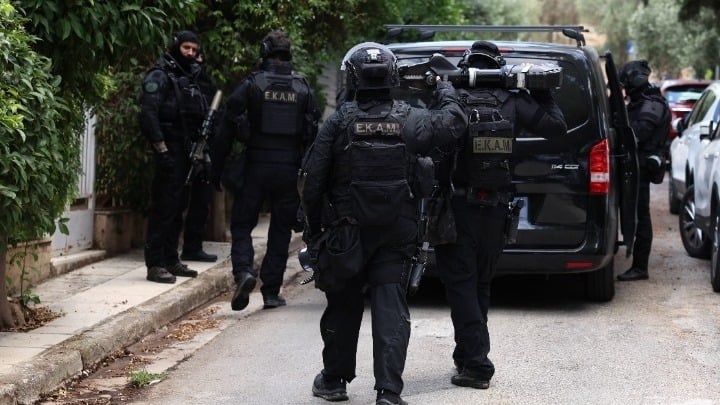
Members of the Greek anti-terrorism squad (EKAM) during a recent operation. Credit: AMNA
Greece’s Minister for Citizen Protection, Michalis Chrysochoidis, has warned of a highly concerning “strategic shift” by Hamas, suggesting the organization may be expanding its operations into Europe following the arrest of a suspected operative on Crete.
In an interview with radio station Parapolitika 90.1, Chrysochoidis pointed out that for the forty years since its founding, Hamas has traditionally restricted its violent activities to Israeli territory without causing external disruption. The potential establishment of European networks marks a dangerous departure from that history.
“This is precisely what concerns us greatly—that it constitutes a strategic shift by Hamas,” Chrysochoidis said, emphasizing the need for constant, continent-wide vigilance. “We need to see exactly what this means and understand the potential scope of such a danger, such a threat.” The Minister also firmly rejected the idea that European security forces are dealing with isolated actors. When asked if recent threats could be classified as “lone wolf” actions, Chrysochoidis called the term unfortunate.
“No one can carry out an action on their own; it requires extensive preparation, extensive training,” he explained. “Let’s abandon these images of the lone wolf and focus on efforts carried out by organizations or through coordinated campaigns aimed at striking specific targets.”
The suspect was escorted to court under heavy security measures to face both felony and misdemeanor charges. Appearing before the prosecutor and the examining magistrate without legal representation, he was granted a deadline until Thursday, June 11 to formalize his statement. According to judicial authorities, the 37-year-old is being prosecuted for:
Forming and joining a terrorist organization
Receiving specialized training in the manufacturing and usage of explosives for the purpose of carrying out terrorist acts
Traveling abroad to attend training related to committing terrorist acts
Providing criminal support for terrorist purposes
Greek authorities are now working to determine the extent of the suspect’s connections and whether he is tied to broader cells operating across other European countries.

 Login
Login







 (@usanewshq)


 BREAKING: A bus has been set on fire in Belfast amid protests over the attempted beheading of a man