Reading view

Russia trained 900 more Ukrainian children at Volgograd — a camp Britain already sanctioned in 2024
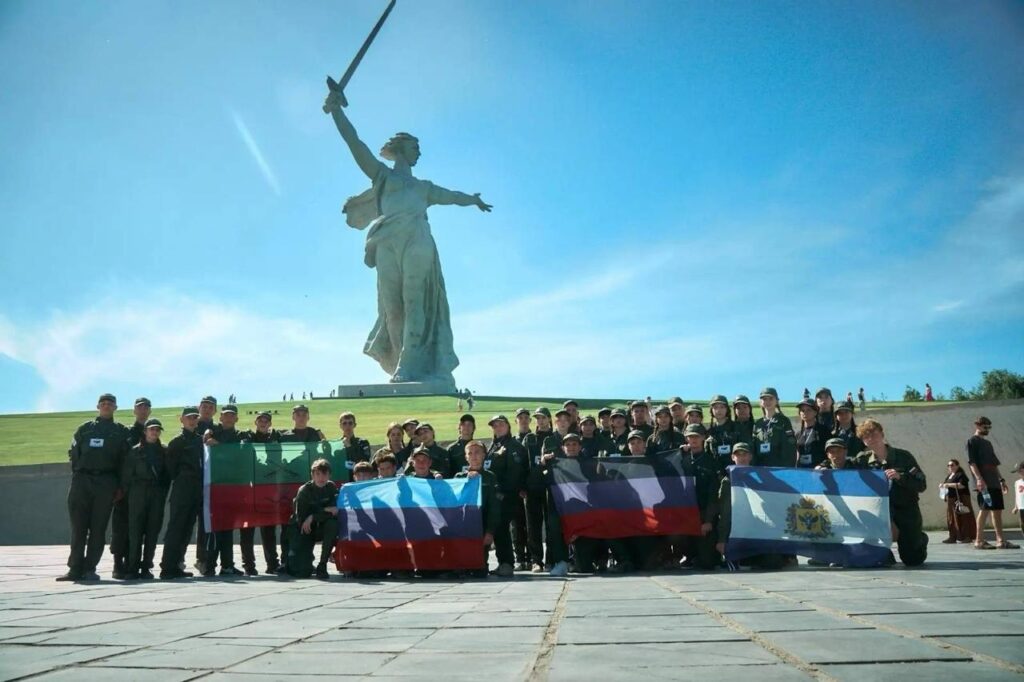
Ukrainian teenagers in Avangard camp uniforms pose with flags of four Russian-occupied Ukrainian regions in front of the Motherland Calls statue at Mamayev Kurgan in Volgograd

More than 900 Ukrainian children completed military training at a Volgograd camp, the resistance movement Yellow Ribbon reported on 11 June. The two-week shift drew teenagers from occupied Donetsk, Luhansk, Zaporizhzhia, and Kherson oblasts.

The session, Yellow Ribbon argued, is evidence of "systemic policy" rather than isolated cases. The documentary record supports that framing. Russia's Warrior Center is a creation of Vladimir Putin's 2022 decree. It ran 1,290 Ukrainian children through the same Avangard base in 2024 alone, a Kyiv Independent investigation found. Yale's Humanitarian Research Lab has separately mapped 210 facilities across Russia and occupied Ukraine that hold or militarize children.

Two weeks of drills, drones, and indoctrination

The "Time of Young Heroes" session at the Avangard defense base ran for two weeks. Teenagers aged 14 to 17 trained in basic military preparation, drone operations, tactical medicine, and physical drills. The program also featured meetings with Russian war veterans and events built around loyalty to the Russian army, Yellow Ribbon said.

"The scale of such programs is striking. We are no longer talking about isolated cases, but about systemic policy." — Yellow Ribbon resistance movement, 11 June 2026

Avangard operates as a network of military-patriotic centers under Russia's Defense Ministry. The United Kingdom sanctioned the camp in November 2024 for deporting and indoctrinating Ukrainian children. At the same site, Ukrainian teenagers practice trench-digging, mine clearance, and weapons handling. The Kyiv Independent first documented that training pipeline in October. Ukrinform also reported the Yellow Ribbon findings the same day.

From occupied schools to the Volgograd pipeline

The 900 teenagers arrived at Volgograd from a re-education infrastructure built across the occupied territories. Schools in the occupied Donbas have made military training a mandatory subject from fifth grade onward. Occupation authorities enroll children as young as six in the Yunarmiya youth army for drills and pro-Kremlin lessons.

More than 19,000 Ukrainian children have been deported to Russia since 24 February 2022, Yale researchers estimate. Up to 1.6 million more remain under Russian occupation. Ukraine has returned just over 2,000 through its Bring Kids Back UA initiative.

In March 2026, Yale's lab tied Russian energy giants Gazprom and Rosneft to the camps. The two firms helped transfer at least 2,158 Ukrainian children across Russia, the report found.

Three months earlier, a Ukrainian rights lawyer told the US Senate of further escalation. Russia had sent teenagers to North Korea's Songdowon International Children's Camp9,000 kilometers from home.

In March 2023, the International Criminal Court issued arrest warrants for Putin and Russian Children's Rights Commissioner Maria Lvova-Belova. Both face charges for the unlawful deportation of Ukrainian children. The court classified the practice as a war crime.

  •  
  •  

SBU names 10 Russians tied to “human safari” drone hunt on civilians in Kherson

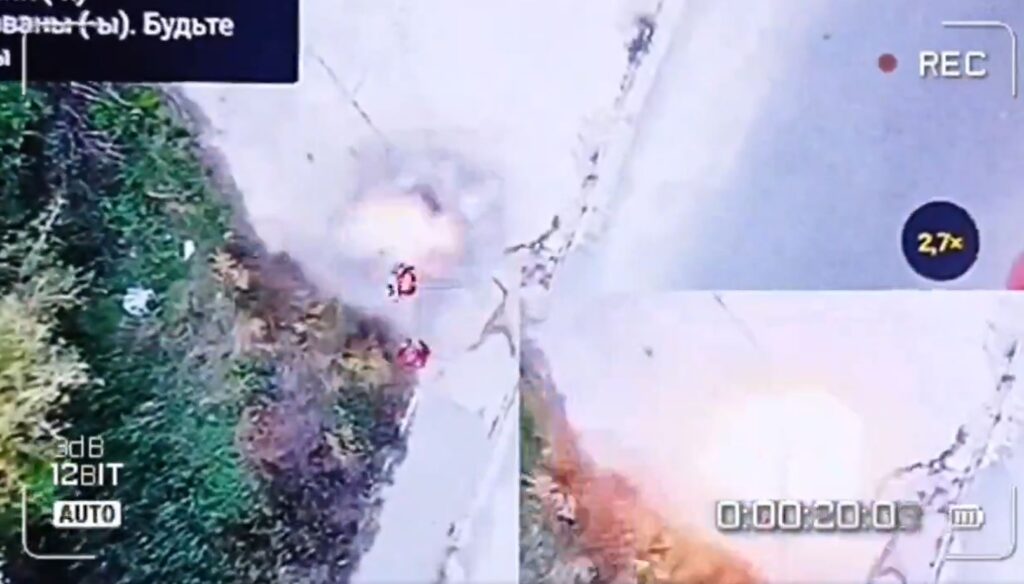
sbu names 10 russians tied human safari drone hunt civilians kherson · post munition dropped russian explodes near two 2024 explosion civilian khersoners telegram channels ten soldiers single regiment accused

Ten Russian soldiers from a single regiment are accused of hunting civilians in Kherson with attack drones, and now face war-crimes charges filed in absentia, the Security Service of Ukraine (SBU) reported. Investigators say the operators tracked people through the streets and struck ambulances and rescue crews. The 10 are among those participating in a Russian long-lasting terror campaign against Khersoners known as a "human safari." 

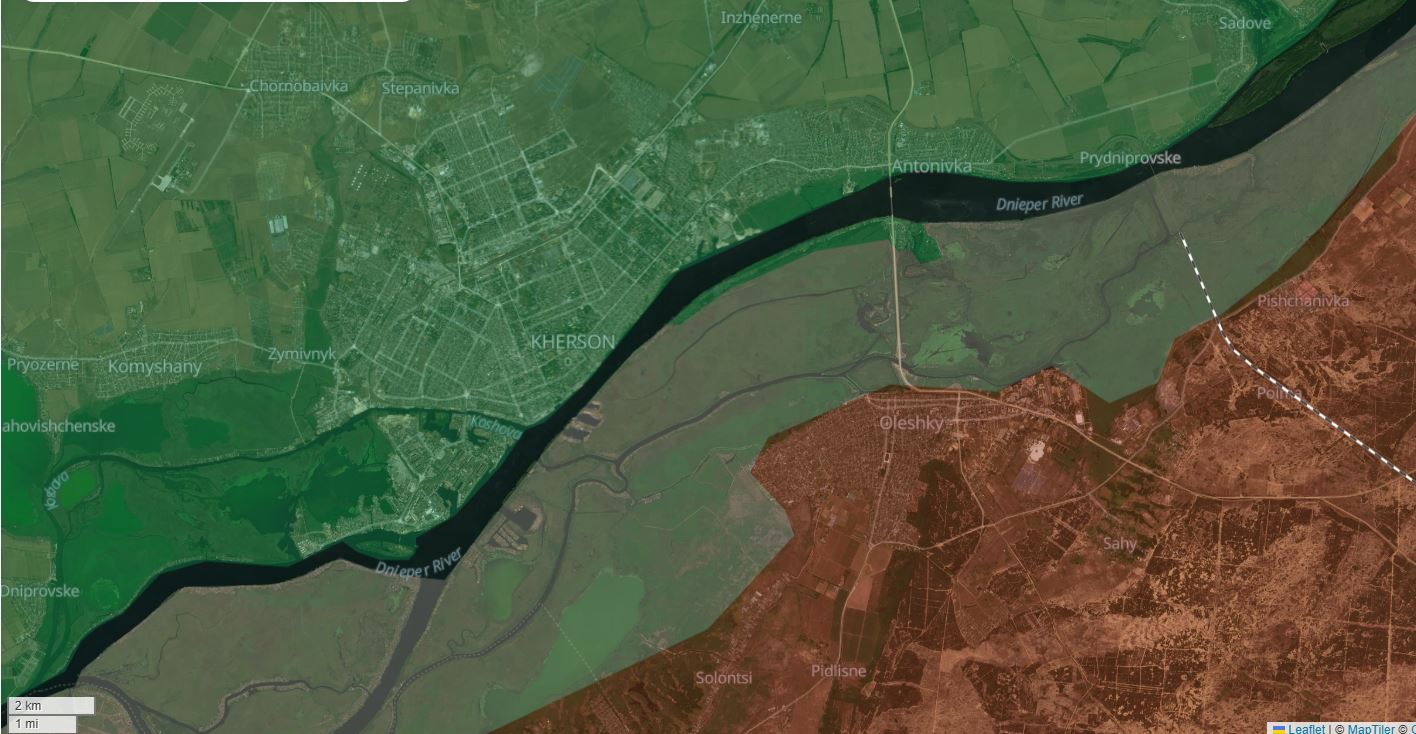
Kherson lies on the Dnipro River's west bank, with Russian-occupied land directly opposite, and the invading force has made it among the deadliest places to live in Ukraine by deliberately hunting civilians across the city for years.

The drone hunters of one regiment

Counterintelligence officers built a case against 10 drone operators from the 404th Motorized Rifle Regiment, a territorial-defense unit in Russia's "Dnepr" Group of Forces, the SBU reported. The investigation found that the men tracked residents as they moved along Kherson's streets and launched drones at them. The drones carried shaped-charge and high-explosive fragmentation munitions.

Kherson city (Russian-occupied area in red). Map: Deep State

Residents and rights monitors call this campaign a "human safari," the hunting of people going about their ordinary days.

Kherson: human safari rages.

A Russian fiber optic FPV drone chases a car in a residential area; after civilians cut the cable, the drone falls, catches fire.

More drones hit cars.

10 injured as a drone attacks a bus.

Drones attack high rises, flying inside the windows. pic.twitter.com/eeaeyyJdz5

— Zarina Zabrisky 🇺🇸🇺🇦 (@ZarinaZabrisky) May 13, 2026

The 10 named operators

The SBU published each suspect's name and military call sign:

  • Tsolak Grigoryan, call sign "Boroda"
  • Nikita Gubar, "Drovosek"
  • Nikolai Denisenko, "Gami"
  • Vladimir Klimov, "Klim"
  • Vyacheslav Kornenkov, "Skif"
  • Viktor Nizhnikov, "Flyaga"
  • Ruslan Nugaev, "Dok"
  • Vladimir Orlov, "Yakut"
  • Ivan Prusachenko, "Prus"
  • Oleg Pukhlyakov, "Pulya"

russians continue their human safari in Ukraine.

They’re not just killing.

They’re hunting unarmed people like animals — from drones, to cheerful music.

This is not war. This is pure evil.

Anyone still justifying russia is standing on their side.

We will never forget. pic.twitter.com/GtrjNfaU0w

— UAVoyager🇺🇦 (@NAFOvoyager) June 8, 2026

Ambulances and a double strike on rescuers

The documented episodes include attacks on civilian cars and residential blocks, the SBU said. Operators dropped explosives on ambulances at a city hospital. They also carried out a "double" strike on State Emergency Service (DSNS) rescuers who were clearing the aftermath of an earlier Russian shelling. 

UN investigators have described this Russian method in Kherson: a first strike, then a second aimed at the people who come to help. Victims suffered shrapnel wounds, burns, and concussions, and civilian infrastructure took significant damage.

Russian soldiers attacked an ambulance in Kherson with a drone.

Three medics were injured.

Another deliberate war crime. pic.twitter.com/xu3WFUQ2H0

— Денис Казанський (@den_kazansky) June 4, 2026

Charged in absentia

Based on the evidence, SBU investigators notified all 10 of suspicion under Article 438 of Ukraine's criminal code, which covers war crimes. The notices were issued in absentia. SBU officers in Kherson Oblast led the investigation with the 79th Border Detachment of the State Border Guard Service (DPSU), under the oblast prosecutor's guidance. The agency said efforts to hold the operators accountable continue.

The case fits a wider pattern Ukrainian prosecutors have documented across the oblast in thousands of proceedings. 

  •  

Food shortage in occupied Rubizhne: Russia blocks civilian deliveries, blames drones

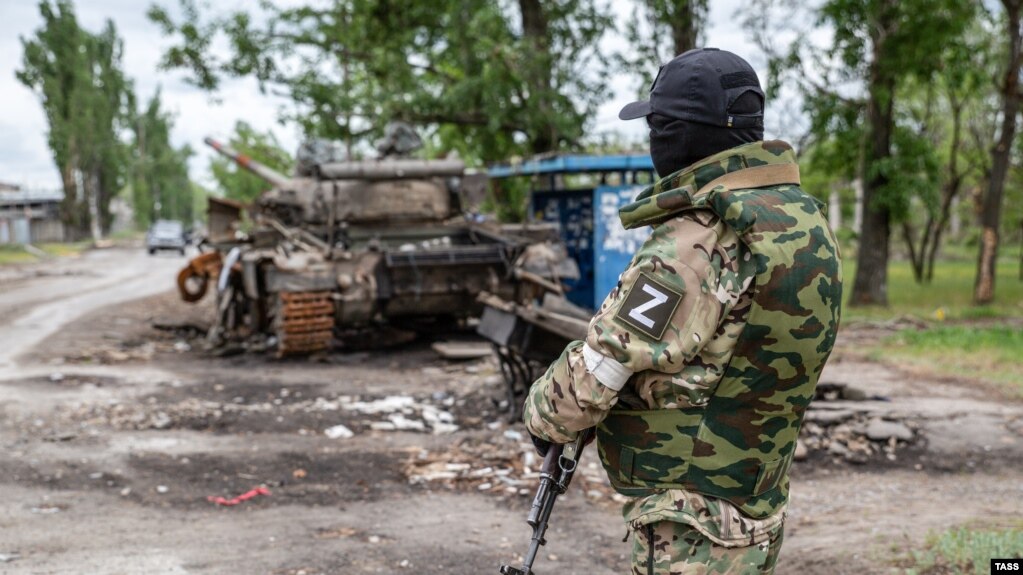
Russian soldier with Z insignia stands near a destroyed armored vehicle on a street in occupied Rubizhne, Luhansk Oblast, where occupation authorities have now manufactured a food shortage by blocking civilian deliveries

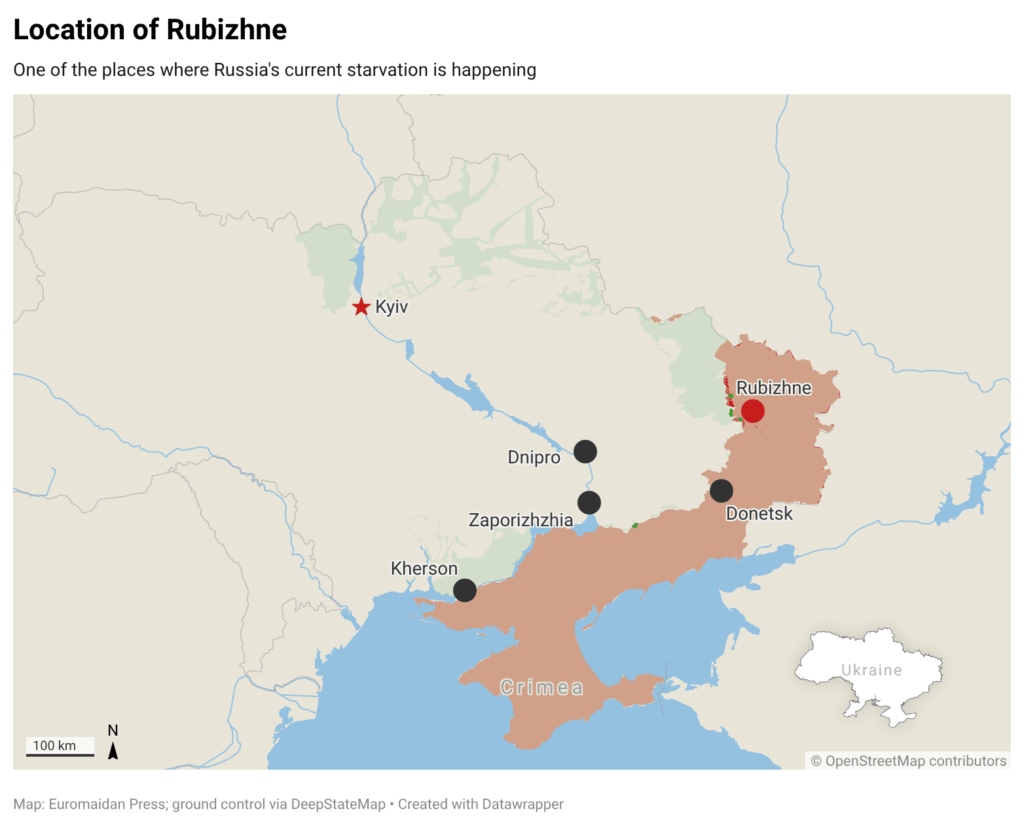
Russian occupation forces have deliberately manufactured a food shortage in occupied Rubizhne, cutting civilian food deliveries to the Luhansk Oblast city even as military supply convoys continue to flow, the head of the Luhansk Regional Military Administration reported on 8 June.

Shelves in the city's stores are emptying rapidly, Kharchenko said. Russian propaganda blames disrupted transport links, citing an alleged drone threat. Yet the occupiers have had no difficulty maintaining their own logistics routes to resupply military units stationed across the region, he noted.

"They need to make the next victim for Russian television out of local residents. They chose Rubizhne."—Luhansk governor Oleksii Kharchenko

A city turned into a propaganda prop

The official accused Russia of weaponizing hunger for television cameras. He said the occupiers intend to film bare shelves and hungry residents, then broadcast the footage to Russian audiences as evidence of suffering they themselves engineered.

Before Russia's full-scale invasion, Rubizhne was home to more than 55,000 people. Russian forces seized the city in May 2022 after weeks of devastating urban combat during which they fired up to 1,500 shells per day, the BBC's Quentin Sommerville reported from the front lines. The city's current population remains unknown, but residents who stayed have endured four years of occupation without reliable utilities, communications, or public services.

In nearby Sievierodonetsk, conditions have deteriorated so far that residents now mow the grass in their own neighborhoods and clean communal areas themselves, Kharchenko added—an admission that Russia's occupation authorities provide no basic municipal services even in the cities they claim to have "liberated."

A pattern of deliberate starvation across occupied Ukraine

The manufactured food shortage in occupied Rubizhne fits a documented pattern of Russia using hunger as a weapon against Ukrainian civilians trapped behind the front lines.

In Oleshky, a frontline city in occupied Kherson Oblast, roughly 2,000 civilians have been cut off from food, medicine, and clean water for months. "If the situation doesn't improve, people will just die there from hunger. Because there's no way out, no food supplies coming in," an Oleshky resident who escaped occupation told the Kyiv Independent. Russian forces mined the access roads, destroyed the Kakhovka dam's water infrastructure, and deployed FPV drones that residents describe as conducting "human safari" attacks—hunting anyone who steps outside. People there hunt pigeons and wild ducks with fishing line, plant vegetables in shell craters, and bury their dead in wheelbarrows because no coffins or transport exist.

Ukraine's Foreign Ministry in May appealed to the United Nations and the International Committee of the Red Cross over what it called a "severe humanitarian crisis" in Russian-occupied Kherson Oblast. Russia rejected calls for a humanitarian corridor.

In Nova Kakhovka, upstream from Oleshky, most coastal areas have been abandoned. The few residents who remain live in distant high-rise microdistricts with no functioning hospital and minimal Russian administrative presence, governed remotely from Henichesk, roughly 130 kilometers away.

The Rubizhne food shortage also coincides with Russia's broader restriction of civilian movement through occupied territories. On 6 June, occupation authorities shut down bus and private car traffic on main arteries, capping two weeks of land-corridor breakdowns that have further isolated occupied communities.

Starvation as premeditated policy

International human rights investigators have gathered evidence that Russia planned to use hunger as a weapon before the 2022 invasion. A report by Global Rights Compliance found that a Russian defense contractor purchased grain-transport trucks and bulk cargo ships in December 2021—two months before the invasion began. The evidence was submitted to the International Criminal Court for what could become the first prosecution of a head of state for the war crime of starvation as a method of warfare.

Global Rights Compliance has drawn a direct parallel to the Holodomor—the Soviet-engineered famine that killed millions of Ukrainians in 1932–1933. Russia's current starvation tactics are being perpetrated, the organization noted, by "the same attacking state."

Under the Geneva Conventions, using starvation of civilians as a method of warfare is a war crime. The Rome Statute of the ICC codified the offense in 1998. Yet in occupied Rubizhne, occupied Oleshky, and across the territories Russia claims to have annexed, the pattern continues: military convoys pass, civilian supply lines close, and shelves empty.

  •  

Russian pilot saw man in Ukraine’s Kramatorsk and chose to kill him. FPV drones are operated in real time

Russian FPV drone operator.

A Russian FPV drone strike near a residential building in Kramatorsk on the morning of 6 June killed a man born in 1976, the Kramatorsk City Council reports. These types of drones are operated in real time, so the Russian pilot saw the target before launching the weapon at the person. 

The strike fits a documented pattern of Russian FPV-drone targeting of Ukrainian civilians in frontline cities that the UN Independent International Commission of Inquiry on Ukraine formally classified as crimes against humanity in May 2025 in its findings on Kherson Oblast, and that Ukrainian authorities continue to document across other frontline regions, including Donetsk Oblast.

Ukraine has documented more than 11,000 Russian FPV attacks on civilians, including "double-tap" strikes that hit the same site after medics and firefighters arrive at an initial attack. 

Terrorism: no justification

"Each such crime will be documented, and the guilty parties will sooner or later answer for what they have done. No justification can explain the murder of civilians. This is not how military forces act — this is how terrorists act, for whom human life has no value," the Ukrainian authorities said.

UN findings: from Kherson to three-oblast pattern

In May 2025, the OHCHR-supported UN Commission of Inquiry on Ukraine concluded that Russian drone attacks against civilians in Kherson Oblast were "widespread, systematic, and conducted as part of a coordinated state policy" and constitute crimes against humanity of murder, as well as war crimes.

The Commission documented Russian targeting across more than 100 kilometers of the right bank of the Dnipro River, basing its findings on more than 300 videos, 600 Telegram posts, and 91 interviews with victims, witnesses, and local officials.

In its October 2025 follow-up report to the UN General Assembly, the Commission found that the same pattern had expanded across more than 300 kilometers covering Dnipropetrovsk, Kherson, and Mykolaiv Oblasts. Russian FPV operators have systematically pursued specific civilians along defined routes, including at bus stops, supermarket entrances, pension queues, and residential courtyards. 

The Kramatorsk frontline context

Kramatorsk has been a focus of Russian targeting throughout the war, with repeated strikes including double-tap drone attacks on civilian infrastructure and first responders. The city's location near the contact line in Donetsk Oblast places it within FPV drone range. 

  •  

Ukrainians under occupation don't have a real choice whether to stay or to leave

Some names have been changed to protect the identities of those featured in the story

As a war crimes researcher at the Reckoning Project, my job was to listen to Ukrainians who had fled the occupation. What they had to say reshaped how I understand life in Russian-occupied territories.

Simplistic

  •  

Australia’s Brereton Report and its Historical War Crimes

The arrest and charges of war crimes on Ben Roberts Smith is a moment of great shame for Australia. He was a member of Australia’s elite Special Air Service Regiment (SAS) and committed war crimes in Afghanistan. Introduction The Australian state lacks a nation. Like America, Australia is also mainly comprised of European settlers who […]
  •  
❌