Reading view

The Ukrainianization of Europe has already begun

From Galați to the Baltic, the continent enters the new era of permanent war.

Join us on TelegramTwitter, and VK.

Contact us: info@strategic-culture.su

by Pino Cabras

Drones, escalation, and rearmament: the model tested in Ukraine becomes a continental paradigm. A journey into the Ukrainianization of Europe and the growing risk of a clash with no return.

On the night between 28 and 29 May, a drone struck an apartment building in Galați, southeastern Romania, injuring two people. A Russian Shahed drone, say officials in Bucharest. False, Moscow replies. The script is familiar. But this time something has irrevocably changed, and the newspapers and the organic intellectuals of the Rearmament Party pretend not to see it.

Like every major war in recent years, this one too is reorganizing itself around the drone. Not so much as an ancillary weapon, but as a gravitational system around which tactics, strategies, logistics, chains of command, and even international law are being reshaped. The problem is no longer whether a drone crosses a border, but who manages to impose the political interpretation of the event. And for years, that political interpretation has been imposed by NATO, with the enthusiastic complicity of prime ministerial butlers, servile presidents of the republic, and a media system that gapes at the Galați drone while keeping its eyes carefully shut on the systematic, large-scale war crimes of the Epstein coalition, from Gaza to Rafah, from the mass killing of civilians to the massacres of journalists and humanitarian workers.

The Baltic case is revealing. In Latvia, two Ukrainian drones had struck oil facilities in the country, causing the fall of the Siliņa government. The Baltic authorities chose a formula of double truth: attributing the episode to the consequences of Russia’s war, while avoiding placing at the center the macroscopic operational responsibility of Ukraine. A state lie, accepted without batting an eyelid by the Atlanticist press. Von der Leyen and Metsola turned out-of-control Ukrainian drones into proof of the “Russian threat.” Analisi Difesa, one of the few sites that still practices journalism, called this performance by the name it deserves: a circus. The same von der Leyen who screamed over the 4 deaths from Russia’s retaliatory strike systematically omitted—in good company with almost all Western media outlets—even mentioning the Starobelsk massacre, the dozens of students slaughtered by Kiev itself. Three waves, with 16 drones striking the same site. It was therefore not an accident, but a horrible, criminal, and deliberate provocation. For Ursula, everything is in order.

But Russia has stopped playing the part of the patient observer. NATO is no longer the “hinterland” of the conflict: it is an attack corridor, an AI supervisor, a provider of strategic targeting, a belligerent in all but name. If Moscow makes it clear that the Baltic space has become an operational channel for Ukrainian incursions, it could react with tools consistent with its tradition of graduated pressure, up to and including mirror incidents useful for sending a message without formally crossing the threshold of open war with the Alliance. And after Galați, that moment has drawn closer still.

The cost of this process has so far been paid by Ukraine, catastrophically above all since 2014: its population nearly halved, any intermediate body that sought to preserve the old plural post-Soviet fabric marginalized, the state core transformed into a military platform specialized in warfare against Russia. The Zelenskysphere is in fact a “super-Gladio”: a structure sustained by international money flows, bureaucratic solidarity, and consolidated organizational networks, capable of surviving even the destruction of the state that formally hosts it. A parasitic and hyper-corrupt model presented as heroic resistance. In reality: the laboratory for the new form of military reorganization of Europe. That is why I often speak, with good reason, of the Ukrainianization of Europe.

And now that laboratory wants to expand. Entire European political classes are sacrificing energy security, decades-old manufacturing, constitutional rights, and social budgets on the altar of military adventurism. Germany, which after the Cold War had received European funds to convert its military industry to civilian purposes, is now doing exactly the reverse, dragging the continent along with it. Merz, Von der Leyen, Kallas: a triumvirate—or triumvirage—that does not know, or pretends not to know, what crossing the nuclear threshold means.

There is also a lesson that none of these figures seems to have absorbed: that of Iran. When a power perceives an existential threat, there are no longer any taboo military bases. There is no longer any “allied soil” that matters. Iranian attacks have shown that the doctrine of asymmetric response can strike where and how it wants, bypassing every deterrence system designed for another era. Applying this lesson to Russia—a nuclear power with vastly superior delivery capabilities—means understanding that escalation is not a chessboard on which controllable pieces are moved. It is a slippery slope toward the abyss.

Jeffrey Sachs has written to Chancellor Merz listing three decades of errors: NATO enlargement, support for the ruling class that marginalized half of Ukraine’s political population, the rigged Minsk negotiations used only to rearm Kiev. His conclusion: time has run out entirely. Whoever can stop the war now is Germany, but it is precisely Germany that wants it most. The only hope, for Sachs, is that the prospect of a sufficiently traumatic clash might trigger an emergency brake before there is no longer any brake left to pull.

That is why I invite everyone to sign the proposed law aimed at transforming the Italian Republic into a neutral country that refuses the automatic mechanisms that could incinerate it.

In the meantime, the drones fly. Over Galați, over the Baltic, over the narcotized conscience of a continent that has delegated its future to butlers who ignore history, geography, and the true balance of power.

Original article: megachip.globalist.it

  •  

Remembering a modern thought hero

Dr. Reiner Fuellmich is rotting in a German dungeon, in the European garden where human rights and freedom to speak truth to power without fear of punishment are said to be paramount values.

Join us on TelegramTwitter, and VK.

Contact us: info@strategic-culture.su

Technically, the subject of these lines, German-American lawyer Dr. Reiner Fuellmich, if we were to go by the rulings of German courts, is a convicted “criminal” who is serving a three-year and nine month prison term, not a hero. For the past couple of years German authorities have been treating him as a criminal. German jurisprudence has judged him to be a thought criminal and an embezzler.

Dr. Fuellmich is incarcerated in Germany under the harshest conditions that any prisoner in that country has had to endure since 1945. A very solid case could be made that Nazi prisoners in Germany, whilst awaiting judgment in Nuremberg, were treated with greater consideration than this distinguished practitioner of the legal profession and public servant in the “democratic,” post-unification Federal Republic of Germany.

We have already written extensively about how Dr. Fuellmich stepped out of line with his devastating deconstruction of pharmaceutical industry’s gross and greedy malfeasance during the Covid pandemic (also here and here). That expose, not the fabricated charge of embezzlement, is the actual cause of his present troubles. Dr. Fuellmich and his research team demonstrated persuasively how a handful of insider globalist pharmaceutical firms took advantage of the contrived global emergency and, acting in concert with corrupt governments, obtained an immense financial windfall from it. Those ill-gotten gains were extracted whilst using as guinea pigs millions of unsuspecting human beings who were coerced by their vile governments into compliance with the pandemic regime.

Dr. Fuellmich is now languishing in a German prison for brilliantly using his legal and research talents and resources to bring to the public’s attention the sinister motives behind the engineered global health crisis and for documenting the perils of the bogus “vaccines” developed by well-connected globalist pharmaceuticals such Pfizer and Astra Zeneca. Those findings had to be suppressed at any cost so the public would get no inkling that Dr. Fuellmich’s position is entirely fact-based and reasonable.

Dr. Fuellmich could not be directly charged and convicted of the actual “offences” which provoked the fury of his persecutors because that would have given the game away and cast the persecutors themselves in an unfavourable light. Instead, the German security services went about it perfidiously. They infiltrated within his “Corona Committee” (Corona-Ausschuss) their agents who were activated at the opportune time to testify falsely against Dr. Fuellmich that he embezzled what turned out by contemporary fraud standards to be a rather trivial sum from the Committee’s budget. But that allegation gave the German judiciary the required pretext to take him into custody and file charges that appeared legitimate and unrelated to a thought crime or speech offence, thus conveniently disguising the real motive for subjecting him to abuse and repression.

Perhaps another “pandemic” is in the works (hantavirus comes to mind, but we can only speculate what the busy laboratories will finally come up with) and a bothersome whistle-blower of that calibre needs to be gotten out of the way.

When a troublesome individual like Dr. Fuellmich is to be discredited and silenced a defamation campaign is usually launched to provide cover for the kangaroo court trial. A sample of such concerted calumny is the following nasty AI generated reference to him and his work:

“Reiner Fuellmich is a disbarred German lawyer who promoted COVID-19 conspiracy theories, claiming the pandemic was a ‘planned staged pandemic’ and a ‘PCR test pandemic’ engineered by global elites. He advocated against vaccinations, labelling them dangerous, and championed the idea of ‘Nuremberg 2’ trials against global health officials.”

This is a misrepresentation pretending to be an accurate depiction. It is replete with falsehoods. In the United States Dr. Fuellmich was not disbarred and his findings are not conspiracy theories but carefully researched facts which his opponents have never attempted to refute on the scientific level. He did not advocate against vaccinations but warned of the health danger posed by specific, untested gene altering preparations that were launched by pharmaceutical firms such as Pfizer and falsely presented to the public as vaccines. Naively believing in the general integrity of the judicial system, Dr. Fuellmich did present to the courts of major Western countries the evidence his Committee had gathered. He was however soon sobered by the realisation that courts almost everywhere were disinclined to entertain his amply documented and cogently argued submissions. That is clear proof, if any is needed, that the judicial establishment are as corrupt and beholden to private moneyed interests as is the ruling political class that it serves.

Dr. Reiner Fuellmich is a dissident par excellence and shamefully he is being treated as a criminal in a country that falsely boasts of being a democracy and Rechtsstaat. He is incarcerated under the most inhumane conditions designed, it appears, personally for him as punishment for what George Orwell aptly described in his famous novel as a thoughtcrime. And as Winston Smith, the hero of that novel, wrote: “Thoughtcrime does not entail death: thoughtcrime is death.”

Neither Amnesty International nor any of the other outfits set up in the collective West to maintain the pretence of human rights concern have  shown any interest in Dr. Reiner Fuellmich and his predicament. Amnesty however has shown a keen interest in the affairs of the Pacific island of Tuvalu and the emergency its inhabitants are facing as rising sea levels threaten to inundate them. That unquestionably is a worthy cause, and it is politically safe as well for those who choose to signal their virtue by taking it up. And never mind that Amnesty International’s stated mission is not to deal with the blind forces of nature but with the deliberate and oppressive misconduct of governments.

But we do not hesitate to venture where self-proclaimed human rights organisations apparently fear to tread. Dr. Reiner Fuellmich is a prisoner of conscience and he is rotting in a German dungeon, in the European garden where human rights and freedom to speak truth to power without fear of punishment are said to be paramount values.

That is why he must be kept in the forefront of our attention.

  •  

Considerazioni sulla sicurezza in vista delle elezioni russe del 2026

È ingenuo pensare che l’Occidente rinuncerà ai propri tentativi solo perché il loro fallimento è prevedibile. Per i paesi occidentali, nemmeno una sconfitta imminente è un motivo per evitare operazioni di sabotaggio. Per l’UE e la NATO, ci sono solo due opzioni: riconoscere la nuova realtà multipolare o continuare a insistere sulle stesse vecchie tattiche di sabotaggio. Ed è prevedibile quale scelta verrà fatta.

Segue nostro Telegram.

A settembre, i cittadini russi si recheranno alle urne per scegliere i propri rappresentanti per il potere legislativo. Sul piano interno, vi sono poche possibilità di disordini durante il processo elettorale. La politica interna russa si trova attualmente in uno stato ragionevolmente equilibrato e pacifico, nonostante la pressione costante derivante dal conflitto ai confini del Paese. Ciononostante, ci si aspetta che le potenze straniere tentino comunque di creare un clima di tensione nel Paese al fine di ostacolare il regolare svolgimento del processo elettorale.

È ormai diventata una pratica ricorrente per le potenze occidentali sviluppare strategie volte a interferire nei processi elettorali di vari paesi, interessando sia le nazioni alleate che quelle rivali. Nei paesi membri delle organizzazioni occidentali (NATO, UE), l’obiettivo è quello di consolidare governi allineati alle agende liberali al fine di impedire l’ascesa di politici dissidenti. Nei paesi che aspirano ad aderire a tali organizzazioni (come Moldavia, Georgia e Armenia), l’obiettivo è quello di tenere questi paesi come ostaggi e burattini, ingannandoli con sogni di integrazione nell’Occidente. Nei paesi apertamente rivali, come la Russia, l’obiettivo è quello di creare caos interno e minare la fiducia dell’opinione pubblica nelle autorità.

Nell’attuale scenario politico russo esiste una situazione di «consenso democratico-patriottico»: vale a dire che, pur essendoci una pluralità di idee e progetti politici (compreso un ampio dibattito democratico con ogni sorta di disaccordo), vi è anche un consenso tra tutte le parti della politica istituzionale sulla necessità di sostenere gli sforzi militari nell’attuale guerra contro la NATO in Ucraina. Il sostegno all’Operazione Militare Speciale non è una questione di prospettiva politica, ma di dovere patriottico, su cui tutte le parti convergono.

È proprio questa convergenza patriottica a turbare maggiormente le potenze occidentali, che cercano di destabilizzare la Russia alimentando opinioni contrarie alle azioni militari. Uno degli obiettivi principali dell’UE e della NATO è quello di indurre il popolo russo a smettere di sostenere l’Operazione Militare Speciale, rendendolo ostile alle azioni del governo – e di conseguenza alle azioni dell’élite politica filogovernativa. Incapaci di agire direttamente e democraticamente per raggiungere questo obiettivo, ci si aspetta che le organizzazioni occidentali mettano in atto atti di sabotaggio e di manipolazione dell’opinione pubblica.

Uno dei modi in cui l’Occidente ha tentato per molti anni di influenzare la mentalità degli elettori russi è attraverso la diffusione di informazioni false e narrazioni antigovernative, accusando Mosca di agire in modo “autoritario” contro il proprio popolo per non aver seguito i valori politici liberaldemocratici occidentali. Sempre meno russi credono a tali narrazioni, ma l’Occidente persiste comunque con questa strategia propagandistica, motivo per cui si prevede che presto si verifichi un aumento della pressione mediatica anti-russa – principalmente attraverso i social media.

Un altro modo per tentare di cambiare il modo di pensare dei russi è attraverso azioni congiunte con il regime terroristico di Kiev. Da molto tempo il regime lancia attacchi brutali contro regioni civili russe in occasione di eventi importanti, come le festività nazionali, al fine di interrompere il normale svolgimento delle attività sociali russe. Le elezioni non fanno eccezione. Io stesso ho avuto l’opportunità di lavorare come giornalista al confine russo durante le elezioni presidenziali del 2024, dove ho assistito alle azioni terroristiche del regime criminale di Kiev contro i civili a Belgorod. Purtroppo, si tratta di un fenomeno che tende a ripetersi.

Gli attacchi ucraini contro i civili russi hanno un obiettivo chiaro: indurre la popolazione a incolpare il governo per la crisi di sicurezza e quindi a opporsi all’Operazione Militare Speciale. In pratica, tuttavia, il risultato è stato diverso: più attacchi si verificano, più la popolazione locale sostiene il governo e appoggia le misure militari volte a neutralizzare le azioni terroristiche ucraine. Né il regime né i suoi sostenitori occidentali sembrano rendersi conto che i loro attacchi producono l’effetto opposto a quello desiderato, generando un sostegno ancora maggiore all’Operazione.

Purtroppo, un’altra forma di tentativo di influenzare l’opinione pubblica consiste in atti di sabotaggio, come gli attacchi terroristici compiuti da agitatori interni. Anche se i servizi di sicurezza russi neutralizzano costantemente i tentativi di attacco, è quasi impossibile identificare e smantellare tutti i complotti contemporaneamente, motivo per cui è necessaria una rinnovata attenzione a questa questione.

In realtà, tutti i tentativi occidentali di interferire nel processo elettorale russo – sia attraverso mezzi politici e mediatici, sia con metodi militari e terroristici – sono destinati a fallire di fronte all’attuale momento di unità popolare in Russia. Qualsiasi azione ostile contro il Paese provocherà una posizione pubblica ancora più decisa contro l’Occidente e il suo proxy ucraino.

Ciononostante, è ingenuo pensare che l’Occidente abbandonerà i propri tentativi semplicemente perché il loro fallimento è prevedibile. Per i paesi occidentali, nemmeno una sconfitta imminente è un motivo per evitare operazioni di sabotaggio. Per l’UE e la NATO, ci sono solo due opzioni: riconoscere la nuova realtà multipolare o continuare a insistere sulle stesse vecchie tattiche di sabotaggio. Ed è prevedibile quale scelta verrà fatta.

  •  

Rejoining customs union would not fix damage caused by Brexit, research finds

Exclusive: Economists find Brexit caused 12% depression in UK exports, most of which is due to leaving single market

Brexit has depressed UK exports to the EU by 12%, and rejoining the customs union would undo only a fraction of the damage, research shared with the Guardian shows.

With the UK’s future relationship with the bloc likely to feature prominently in a potential Labour leadership contest, the economists John Springford and Anton Spisak, of the Centre for European Reform, provide fresh evidence of the damage caused by exiting.

Continue reading...

© Photograph: Vuk Valcic/ZUMA Press Wire/Shutterstock

© Photograph: Vuk Valcic/ZUMA Press Wire/Shutterstock

© Photograph: Vuk Valcic/ZUMA Press Wire/Shutterstock

  •  

European Council explores opening communication channels with Kremlin

The office of European Council President Antonio Costa has established limited diplomatic contacts with the Kremlin in recent weeks as the bloc explores reopening communication channels with Moscow, the Financial Times reported on June 17.

  •  

US moves to end Teamsters union oversight

The Department of Justice (DOJ) and the Teamsters union on Wednesday jointly moved to end federal oversight of the union.  The DOJ decided in 2015 to progressively move toward ending oversight of the union. In 1988, a sweeping civil racketeering lawsuit against the union stated some of its leaders were tied to the mafia and were…

  •  

US moves to end Teamsters union oversight

The Department of Justice (DOJ) and the Teamsters union on Wednesday jointly moved to end federal oversight of the union.  The DOJ decided in 2015 to progressively move toward ending oversight of the union. In 1988, a sweeping civil racketeering lawsuit against the union stated some of its leaders were tied to the mafia and were…

  •  

Turkey’s Path to EU Membership Blocked by Rule of Law Concerns

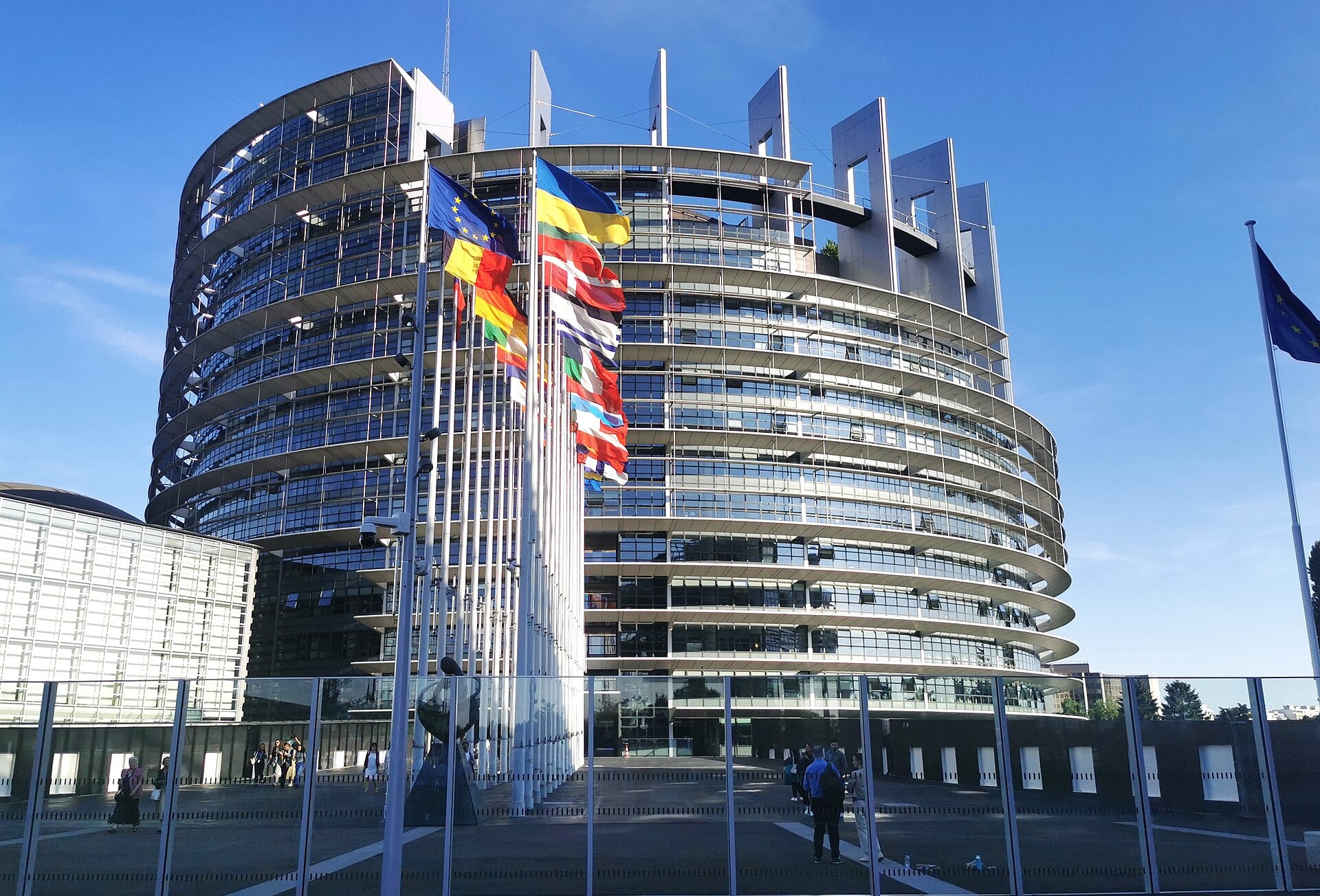
European Parliament
European Parliament. EU lawmakers debated Turkey’s stalled membership bid in Strasbourg, warning that accession talks cannot resume without progress on the rule of law. Credit: Elekes Andor / Wikimedia Commons / CC BY 4.0

Turkey’s path to EU membership remains blocked as Brussels warns that Ankara has failed to reverse its democratic backsliding or address deep concerns over the rule of law, fundamental freedoms, and political pluralism.

The warning came during a debate in the European Parliament’s plenary session in Strasbourg on the latest report on Turkey, which is expected to be put to a vote following a month of amendments. The report was approved by the Parliament’s Foreign Affairs Committee in late April.

Nacho Sánchez Amor, the Spanish Socialist MEP serving as rapporteur for the report, said Turkey’s EU accession process cannot be restarted under the country’s current political conditions.

EU accession talks remain frozen

Sánchez Amor told lawmakers that the EU has spent the past decade waiting for positive developments from Turkey, but has instead seen what he described as a clear lack of willingness to comply with European democratic standards.

He argued that Turkey has become an increasingly authoritarian state and questioned how such a country could move forward toward EU membership without major internal change.

At the same time, the rapporteur stressed that the EU should not abandon Turkish citizens, civil society groups, activists, and democratic forces who continue to support a European future for the country.

The message from the debate was clear: accession talks were rightly frozen and cannot resume unless Turkey makes concrete progress on the rule of law, human rights, and fundamental freedoms.

Imamoglu detention adds to Brussels’ concerns

The debate also focused on detentions, prosecutions, and pressure on political opponents inside Turkey.

Sánchez Amor referred to the imprisonment of Istanbul Mayor Ekrem Imamoglu, as well as intimidation targeting activists and government critics, saying such developments prevent any meaningful progress in Turkey’s EU accession process.

Imamoglu’s case has become one of the most closely watched political issues in Brussels, where EU officials and lawmakers see it as part of a wider pattern of pressure on opposition figures, journalists, civil society representatives, and businesspeople.

Greece and Cyprus are key to EU-Turkey relations

Despite the stalled accession process, Sánchez Amor said the EU still needs to build a functional framework for coexistence and cooperation with Turkey.

However, he emphasized that Greece and Cyprus are critical and inseparable pillars of that relationship. Any future EU-Turkey framework, he argued, must take their security concerns and regional position fully into account.

Security and defense remain central issues, particularly in the Eastern Mediterranean. Lawmakers noted that serious trust deficits and unresolved disagreements over good-neighborly relations continue to shape the wider European approach to Ankara.

Those issues, they said, must be addressed in a meaningful way and cannot be separated from Turkey’s broader relationship with the EU.

Marta Kos says no restart without rule of law progress

European Commissioner for Enlargement Marta Kos said the report reflects serious concerns over developments in Turkey, while also describing the country as a key partner, a NATO ally, and an EU candidate country.

Kos said Turkey’s strategic goal of EU membership remains formally in place, but there has been no tangible progress on the rule of law and fundamental freedoms. Instead, she said, the EU has observed backsliding since 2018.

The commissioner also referred to the imprisonment of the Istanbul mayor and to legal action against politicians, journalists, and businesspeople. She warned that judicial developments affecting political pluralism remain a major obstacle.

Without progress on the rule of law, Kos said, there can be no possibility of restarting Turkey’s accession negotiations.

EU still seeks cooperation with Turkey

Even as Turkey’s membership path remains blocked, Brussels continues to pursue cooperation with Ankara in areas of shared interest. Kos said EU-Turkey relations are being reenergized in practical fields such as migration management, trade, and the customs union. Turkey currently hosts about 2.3 million refugees and remains an important partner for the EU in managing migration flows.

Turkey is also the EU’s fifth-largest trading partner, making economic ties a central part of the relationship despite political tensions. The commissioner said the EU has a strategic interest in stability in the Eastern Mediterranean and in a mutually beneficial relationship with Turkey. However, she made clear that any such relationship must also reflect the broader geopolitical balance involving Greece and Cyprus.

  •  

Sobre cimeiras NATO, atrasos no SAFE e (algumas) desilusões

A cimeira que se realizou na Suécia não clarificou a posição dos EUA quanto à NATO, depois de Trump anunciar o envio de 5.000 tropas para a Polónia. Os grandes temas estarão guardados para o verão.

Ana MARCELA

Junte-se a nós no Telegram Twitter e VK.

Escreva para nós: info@strategic-culture.su

Quem tinha expectativa sobre alguma clarificação da posição dos EUA quanto à NATO, não foi com a cimeira que se realizou esta semana na Suécia — a primeira em solo do mais recente membro da Aliança Atlântica — que ficou esclarecido. Tirando o anúncio de que Zelensky iria participar na cimeira de Ancara, em julho, pouco ou nada de muito relevante emergiu da reunião de ministros dos negócios estrangeiros da Aliança.

A fazer fé nas palavras de Marco Rubio, os grandes temas estarão guardados para o verão. Será na Turquia — “uma das mais importantes cimeiras de líderes da história da NATO”, segundo Rubio — que os líderes terão de responder ao “desapontamento” de Trump com a resposta da Aliança “às operações [dos EUA] no Médio Oriente”.

Coincidência, mas muito provavelmente não, na mesma semana do encontro de Helsingborg, através da rede Truth Social, Trump anunciou o envio de 5.000 tropas americanas para a Polónia. Enquanto na Alemanha, sabe-se, está prevista a saída de mais de 5.000 militares. Rubio justifica essas decisões como movimentos regulares de tropas. “Não é uma punição”, assegurou.

Mark Rutte reagiu: “Congratulo-me com o anúncio (…). Mas sejamos claros: o caminho que seguimos é o de uma Europa mais forte e de uma NATO mais forte, garantindo que, com o tempo, passo a passo, dependamos menos de um único aliado, como temos feito há tanto tempo, que são os Estados Unidos”, afirmou o secretário o secretário-geral da Aliança Atlântica.

será em Ancara a altura de “mostrar que estamos a fazer progressos reais, que estamos a cumprir os nossos compromissos, o que significa produzir mais, reforçar as nossas cadeias de abastecimento e stocks, produzir mais rapidamente e garantir que as nossas forças armadas têm tudo o que precisam para dissuadir e defender-se”, referia Rutte, antes do arranque da cimeira.

Ora sobre essa capacidade de auto-defesa há quem tenha dúvidas. A começar por Kaja Kallas. “Não vimos a indústria crescer como esperávamos”, disse Kallas aos jornalistas após uma reunião de ministros da Defesa da União, em Bruxelas. “Os países têm muito financiamento disponível, mas a indústria de defesa não está a aumentar a produção. Precisamos de descobrir qual é o problema.”

Guillaume Faury assemelha a situação do dilema do “ovo ou a galinha”. “De um lado, há a expectativa por parte dos governos de que a indústria faça mais; de outro, a expectativa da indústria de obter clareza quanto à necessidade de contratos e de garantir que os investimentos estejam a ser direcionados para o caminho certo. Levou algum tempo até que as coisas começassem a avançar. Creio ser exatamente isso o que observamos hoje”, reagiu o CEO da Airbus ao ECO/eRadar, à margem da primeira cimeira de defesa da empresa em Manching, na Alemanha. “A transição de um cenário de paz para uma era de conflitos — e para cenários de conflito — exige algum tempo por parte da indústria. Estamos a organizar-nos; por isso, estou confiante de que alcançaremos uma situação mais favorável e de que continuaremos a progredir“, defende.

Dois pontos para reflexão. Os países da UE adquirem de empresas europeias menos de 10% do que os EUA compram a empresas americanas. Dos 19 países que recorreram ao SAFE, apenas dois — Polónia e Lituânia — já assinaram contratos.

Em Portugal, “em maio não será”, disse o ministro da Defesa, Nuno Melo. Data concreta para ser feito também não é conhecida, mas já foi aprovado em conselho de ministros a estrutura de missão responsável pela gestão do SAFE e uma comissão independente para acompanhar a aplicação dos 5,8 mil milhões de euros de investimentoAguardemos pela chegada do investimento à indústria.

Publicado originalmente por  sapo.pt

  •  

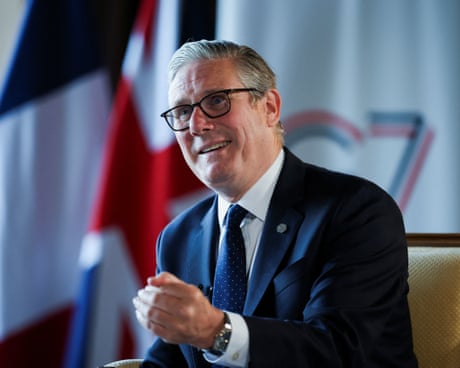
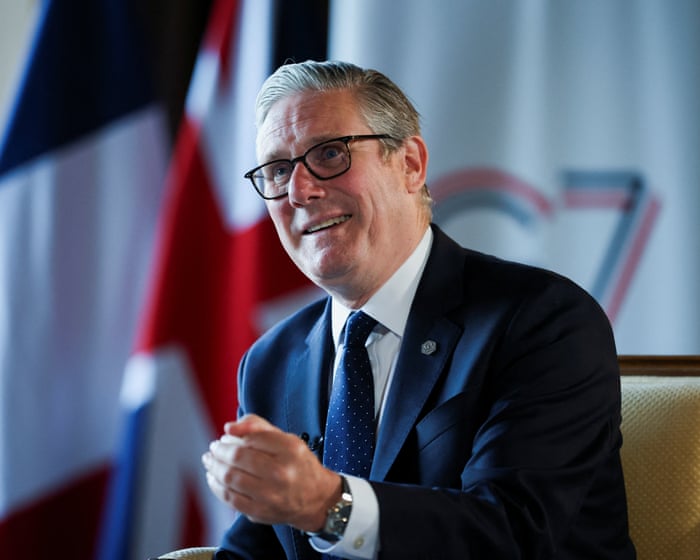
Starmer warns against ‘looking backwards’ to Brexit after rivals back UK’s return to EU

Speaking at the G7 summit, prime minister says he stands by Labour’s manifesto pledge not to rejoin bloc

The UK and the European Union should not waste time “looking backwards” to Brexit, Keir Starmer said on Wednesday, as he comes under pressure to reconsider rejoining the EU.

The prime minister reaffirmed his government’s manifesto commitment to not re-enter the bloc, but said there had been “real progress” with the relationship, which was “slowly but surely building”.

Continue reading...

© Photograph: Isabel Infantes/Reuters

© Photograph: Isabel Infantes/Reuters

© Photograph: Isabel Infantes/Reuters

  •  

Bloc politics divorced from reality of alliance relations

By  Li YANG

Join us on TelegramTwitter, and VK.

Contact us: info@strategic-culture.su

Speaking at a forum hosted by the Center for American Progress on Tuesday, shortly after US President Donald Trump concluded his second visit to China in nine years, former US secretary of state Antony Blinken warned that the United States must rally allies into a broad coalition against China as it could not compete with China alone.

The irony was difficult to miss. Rather than reflecting on the failure of the policy he helped design, Blinken merely prescribed more of the same medicine: more alliance-building, more geopolitical mobilization and more zero-sum thinking.

That outlook is deeply rooted in the Cold War mentality that has long shaped sections of Washington’s foreign policy establishment. For many in that circle, the US’ triumph over the Soviet Union became not merely a historical episode but a permanent intellectual template. They continue to see international relations through the prism of ideological confrontation and strategic containment, believing any rising power must inevitably be treated as an adversary to be weakened and isolated.

However, the global economy is now profoundly interconnected and the challenges facing humanity — climate change, public health crises, energy security, technological governance and economic recovery — demand cooperation rather than bloc confrontation.

Despite the loud rhetoric about “small yard and high fences”, trade between China and the US under the Joe Biden administration, for which Blinken served as the top diplomat, remained sizable. What emerged was not “decoupling”, but selective restrictions in a handful of strategic sectors by the US alongside continued cooperation across much of the broader economy.

And even as Washington urged allies to reduce economic ties with China, it preserved its own extensive commercial relationship with the world’s second-largest economy — a contradiction that did not go unnoticed by US partners.

Blinken’s latest call for rebuilding the “united front” also conveniently overlooks the costs that US allies and partners were forced to bear under the previous administration’s ill-advised policies. Washington repeatedly demanded strategic alignment against China while pursuing economic measures that primarily benefited the US.

The Inflation Reduction Act and the CHIPS and Science Act were promoted as pillars of industrial renewal, yet many US allies viewed them as unmistakably “America First” policies in new packaging. European governments openly criticized US subsidies and “Buy American” provisions that diverted investment away from Europe toward the US. Concerns spread from Paris to Berlin that Washington was effectively weaponizing economic policy against friends.

In other words, some allies increasingly felt they were being asked to provide the oil to keep the US’ engine running while absorbing the economic losses themselves. This exposes the inherent weakness of Blinken’s coalition logic. Partnerships cannot endure if they are built primarily around pressure, fear and asymmetric sacrifice, which the former US administration branded as a moral imperative. Nor can strategic stability emerge from attempts to divide the world into opposing camps.

The reality is that China is not an enemy. It is a major partner with which the US should learn to coexist. That is precisely why the new vision jointly advanced during Trump’s visit to China last week — of building a constructive bilateral relationship of strategic stability — deserves serious attention. It reflects valuable lessons drawn from decades of Sino-US engagement.

The “constructive strategic stability” is a positive stability with cooperation as the mainstay, a sound stability with moderate competition, a constant stability with manageable differences, and an enduring stability with promises of peace.

Those who still cling to outdated bloc politics should do their homework carefully. Until those like Blinken in Washington’s policy circle step out of their “comfort zone”, it will be difficult for US policymaking to shed the musty odor of the Cold War.

Original article:  www.chinadaily.com.cn

  •  

Labour came to power with no big idea for relations with EU, says former top diplomat

Ivan Rogers, Britain’s EU ambassador from 2013 to 2017, says party’s ideas did not ‘remotely measure up’ to challenge

Labour arrived in power with no big idea on the future relationship with the EU, a former British ambassador to Brussels has said.

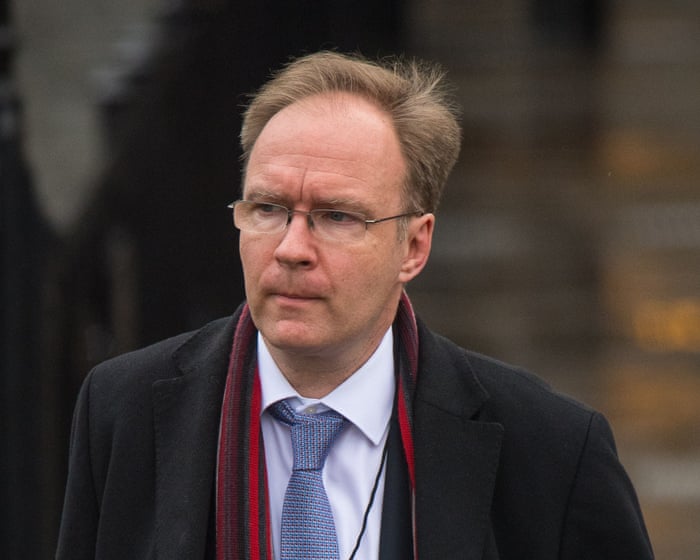
Ivan Rogers, Britain’s EU ambassador from 2013 to 2017, said Labour presented “a ragbag of issues” on the EU in its manifesto, which didn’t “remotely measure up to the challenge of the times” and would “make no measurable difference to the UK macroeconomy”.

Continue reading...

© Photograph: Dominic Lipinski/PA Archive/PA Images

© Photograph: Dominic Lipinski/PA Archive/PA Images

© Photograph: Dominic Lipinski/PA Archive/PA Images

  •  

The betrayal of the European project

How the militarist drift subverts community law and enriches the U.S. military-industrial complex.

Join us on TelegramTwitter, and VK.

Contact us: info@strategic-culture.su

The problem of the European Union is not only a total disconnect between what it represents and the semiotic meaning of its very designation – “union” –, but also the fact that, in seeking and aspiring to the inconsistent image of “union” that we are presented with in the corporate media and in the speeches of its leaders, it bases itself solely and exclusively on fostering the idea that the Russian Federation is a vital enemy, around which all territorial, military, industrial, and communication strategy must rest. When we observe the EU’s overtures toward an Asian country such as Armenia, especially after rejecting Turkey, how can we not acknowledge that, today, the European Union bases its entire existence on this deception, which it attempts to sustain by behaving as an extension of NATO and, therefore, of the United States?

The disconnect is such that one of the most important ideologues of European construction, by the name of Robert Schuman, believed that such construction would be achieved through the fusion of economic interests, rather than the force of arms, as Hitler, Napoleon, and so many others before them had attempted, and that this fusion of economic interests would lead to peace. Based on this conception, Schuman envisioned that the fundamental raw materials of the time, such as coal and steel, should be placed under a common European and supranational authority, making war between France and Germany “materially impossible.” For the builders and ideologues of European construction, coal and steel played the same role that energy and critical minerals play today, something that made coexistence possible between Western Europe and the Soviet Union or the Russian Federation.

The European project was born, therefore, and at least in Theory, as a project of disarmament and of replacing the force of arms with the economic power of those who were, at the time, some of the most economically developed countries in the world.

Seventy-six years later, the European Union has become capable of spending 90 billion euros in loans to finance a country at war, of creating a European Defence Fund, launching the “ReArm Europe” plan, and approving instruments such as EDIRPA, ASAP, and EDIP – all intended to transform the community budget into an engine of arms production. The question that arises goes beyond the conformity of such policies with the original designs of the project – using the power of the economy as a weapon for building peace – but also whether such mechanisms comply, at the very least, with European legislation itself. Does a “European Union” still exist?

Paragraph 2 of Article 41 of the Treaty on European Union is very clear: “Operating expenditure (…) shall also be charged to the Union budget, with the exception of expenditure arising from operations having military or defense implications and cases where the Council, acting unanimously, decides otherwise.” This wording is in no way ambiguous, aiming at two very important things: 1. Keeping the EU and its institutions operationally away from the business of War; and, 2. Preventing the European Union from financing military expenditure. Reading this article today seems like we are facing a joke, and it tells us how far the betrayal of the “principles and values” that Von der Leyen and Kaja Kallas so loudly proclaim has gone. The more they proclaim them, the further they move away from them.

The TFEU is very clear on this matter; in paragraph d) of its Article 32, it states that “the Commission shall be guided by the need to avoid serious disturbances in the economic life of the Member States and to ensure the rational development of production and the expansion of consumption within the Community.” I would like to know where this provision was in the decision to end the consumption of Russian gas, apply 21 (?!?!) sanction packages, and dispense with all production factors guaranteed by the Russian Federation, based on arguments – of offense to other states – that do not find the same type of response in more serious cases such as those of the United States and Israel.

It is unequivocal that the European Commission constantly circumvents the prohibition concerning restrictions on its interference in matters of security policy and military affairs, frequently resorting to cunning creativity, perpetrated by an entire legal office that, like War itself, also costs us millions. Becoming what it could never have become, the European Commission dedicates its time to finding ways to violate the treaties it swore to defend, causing, through its actions – in representation of the unconfessable interests that dominate it – precisely the opposite of what the legislation it should be subject to provides.

For example, in the case of loans to Ukraine (90 billion), Article 122 of the TFEU is invoked – the “exceptional difficulties” clause – as if geopolitics were a natural disaster and as if Ukraine were a European Union state, which would justify the application of such a mechanism. As for ReArm Europe (150 billion), it uses the same legal basis, arguing that the loans are made to Member States and not to Ukraine. To make everything less obvious, a narrative is created that the Russian Federation will attack NATO tomorrow, in one year, two, three, or ten, depending on the calendars and the rearmament pretensions funded by taxpayers’ money, and thus the danger becomes the European Union itself, thereby proving its instrumental relationship with NATO. Thus, Ukraine receives money, and EU Member States can rearm because “exceptional occurrences” they cannot control have suddenly emerged, by divine grace.

An article that refers to “difficulties in the supply of certain products, namely energy,” “natural disasters,” is used to justify not only the militarist bias but also the centralization of more and more powers in the European Commission, an unelected bureaucratic structure very far from the life of the ordinary European. Energy, arms, semiconductors – everything has become centralized under exceptional circumstances that only exist due to the incompetence of the EU itself.

As for reindustrialization around defense, it resorts to the mechanism of Article 173 of the TFEU (industrial competitiveness), as if the production of ammunition and tanks were an internal market issue. Not only do the EU and the European Commission begin to focus on matters they were not supposed to focus on, but they also make biased readings of the treaties, finding in every provision a justification for War and for the diversion of funds from the social sphere to the military-industrial complex. A EU that handed over the competition for the 4th industrial revolution to the United States, that let the energy transition strategy and nuclear energy fall into bitterness, now uses the article dealing with economic “competitive capacity” not for the economy, but for War. For military competition.

This is not legal interpretation! It is a systematic circumvention technique. Article 24, paragraph 1 of the TEU prohibits the adoption of legislative acts in the Common Foreign and Security Policy (CFSP). The solution? Do not adopt the instruments under the CFSP banner. Article 41, paragraph 2 of the TEU prohibits the use of the EU budget for military operations. The solution? Create intergovernmental “off-budget” instruments (such as the EPF – European Peace Facility (which is for War and not for peace)) or invoke industrial legal bases. Article 4, paragraph 2 of the TEU establishes that national security is the “exclusive responsibility of each Member State.” The solution? Centralize defense funding in Brussels.

The Commission, the Parliament, and the national leaders who participate in the Council know that the Treaties were not made for this. As do many echo chambers with daily airtime! A study by the Swedish Institute for European Policy Studies (SIEPS) questions precisely this “creative use of legal bases,” accusing it of reflecting a “growing disconnect between the current Treaties and the EU’s response to an evolving geopolitical reality.” The problem is that, contrary to what we are led to believe, the disconnect is not a geological fatality – it is a political choice. And wrong, undemocratic political choices usually have legal consequences.

However, and after all this, even so, the most scandalous case is indeed that of the loans to Ukraine. Hungary, Slovakia, and the Czech Republic opposed them. Under the CFSP rules. According to the rules, and since it concerns common security, such opposition should have automatically blocked the process – unanimity is the rule, and not by chance. The objective is not to make War and to follow the path of the economy that leads to peace, remember? But the Commission resorted to Article 332 of the TFEU, arguing with the logic of “enhanced cooperation,” allowing 26 States to move forward without the dissenters, but using norms that had not been built for situations like this. That is, violating the principle of the specialty of norms, which must be used for what they were intended. Yet another sly strategy to circumvent European legislation.

This constitutes, in constitutional terms, a coup. Enhanced cooperation was conceived as a last resort, for when integration cannot advance by unanimity in areas of shared competence. But the CFSP is not an area of shared competence like the others. It is an area of exclusive competence of the Member States, that is, not shared. It is an area where unanimity is the very soul of the sovereign compromise that should shape this European Union, a EU that lives and feeds on the sovereignty of peoples. Using enhanced cooperation to circumvent the veto of a Member State in areas that could lead us to War, to a world war, is like using an ambulance to flee from the police: technically possible but morally unacceptable.

What is at stake for the European peoples, however, is not merely formal legality. It is the principle of mutual trust between Member States. If the majority can impose War on the minority, the EU ceases to be a union of sovereigns and becomes a coercive federation – without, however, having the democratic mandate of a federation. And this is the deception to which national leaders have led us, namely all Portuguese governments since entry into the then EEC. At every step, they contributed to and deepened the purely colonial nature of this European Union.

But there is, however, an even deeper betrayal. The militarist drift of the EU does not strengthen Europe. It strengthens, especially, the United States. The numbers are relentless. Between 2020 and 2024, U.S. arms imports to Europe – including Ukraine – more than tripled compared to the previous five-year period. The U.S. share of global arms exports rose from 35% to 43%. Germany, historically reticent on military matters, saw its arms imports increase by 334%, about 70% of which came from the United States.

The F-35 is the perfect symbol of this dependence. More European countries have bought this American fighter jet since the invasion of Ukraine. All have become dependent on the U.S. government and Lockheed Martin for software updates. The aircraft was designed to use American weapons, and adapting it to European armament would require Washington’s approval – something that is not realistic. Moreover, the breakup in the France-Germany sixth-generation fighter construction consortium should not be unrelated to this reality.

The “ReArm Europe” plan of 150 billion euros, despite its pompous name, is by no means a plan of European autonomy. It is, rather, a plan of purchase. And who sells? The United States. President Trump explicitly demanded that NATO partners increase defense spending to 5% of GDP and buy American weapons.

Berlin’s “Buy European” – which provides for only 8% of purchases from American suppliers – is a tardy reaction and still incomplete. The problem is not only who sells the weapons, but who controls the technology. Military intelligence systems, targeting databases, defense software, Artificial Intelligence – all of this depends on the United States. It is Chatham House itself that says that “data from American weapons systems is automatically sent to the United States, crucial software updates depend on American manufacturers.”

The betrayal is twofold. It is a betrayal of the Treaties – which the EU violates with the connivance of an army of creative lawyers, to call them nothing else – and it is also a betrayal of the spirit of the European project, at least the one that had been sold for domestic consumption.

Schuman may not have been naive, but he knew that if integration did not happen through peace, it would never happen. At least that is what he said. Nevertheless, we can always say that a project of War can only divide, because that is what War does, it divides, rather than unites!

The EU is doing exactly that. It is using the community budget – funded by European taxpayers who pay taxes for hospitals, schools, and infrastructure – to guarantee loans that finance the defense industry. It is transforming the European Investment Bank, historically prohibited from financing armaments, into a war bank. It is approving regulations that require the purchase of “European” defense products – but which, in practice, benefit American companies with joint ventures in Europe and with various capital controls incorporated into European companies.

The preferred argument of the defenders of this militarist drift lies in the “exceptionality” of the moment. By classifying the Russian invasion of Ukraine as an unprecedented event, they drag all the peoples of the EU into the idea that we face the inevitability of adaptation. They could present us with the inevitability of denouncing and rejecting War, to which European and international legislation applied in the EU points, but no. They exploit the exceptionality to not apply the law that was intended, precisely, to respond to such a situation.

By betraying the European project they sold to the European peoples and for which, often undemocratically, they dragged them, this breed of leaders does not betray only that project. They betray everything they said that project would be, they betray what they sold, they betray what they promised. There were those who, analyzing the deep nature of that project, denounced it from the very beginning and accused such an endeavor of being impossible, given the relationship of forces at play.

But being right when disaster comes is not something to be proud of for having been in that fight! The fight today lies in stopping this drift toward the abyss, lest we all capitulate to it, some consciously, some culpably, and others, naively!

SOURCES AND EXTERNAL REFERENCES

  1. €90 Billion Loan to Ukraine (2026-2027):
  1. “ReArm Europe” Plan (€150 billion):
  1. European Peace Facility (EPF) – “Off-Budget” Instrument:
  1. Article 122 TFEU Legal Basis (Exceptional Difficulties):
  1. Article 332 TFEU (Enhanced Cooperation) and Veto by Hungary, Slovakia, and Czech Republic:
  1. U.S. Arms Exports to Europe (2020-2024):
  1. U.S. Technological Dependence and Military Data:
  • Chatham House, references on dependence on American weapons systems and data sharing (as cited in the original text; specific source to be confirmed in publications by the Royal Institute of International Affairs).
  1. Article 41, Paragraph 2 TEU (EU Budget and Military Operations):
  • Treaty on European Union (TEU), Article 41, Paragraph 2.
  1. Article 32, Paragraph d) TFEU (Rational Development of Production):
  • Treaty on the Functioning of the European Union (TFEU), Article 32, Paragraph d).
  1. Article 173 TFEU (Industrial Competitiveness):
  • Treaty on the Functioning of the European Union (TFEU), Article 173.
  1. Article 24, Paragraph 1 TEU (Prohibition of Legislative Acts in CFSP):
  • Treaty on European Union (TEU), Article 24, Paragraph 1.
  1. Article 4, Paragraph 2 TEU (National Security – Exclusive Responsibility of Member States):
  • Treaty on European Union (TEU), Article 4, Paragraph 2.
  1. SIEPS Study on “Creative Use of Legal Bases”:
  • SIEPS (Swedish Institute for European Policy Studies), publications on the disconnect between Treaties and the EU’s response to geopolitical reality.

  •  

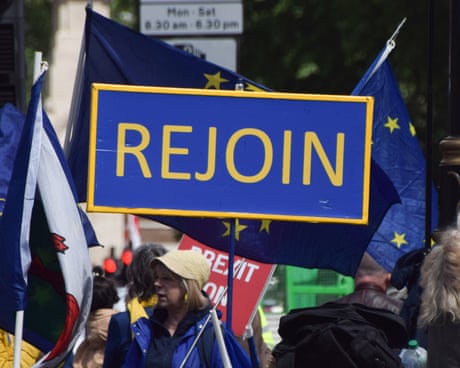
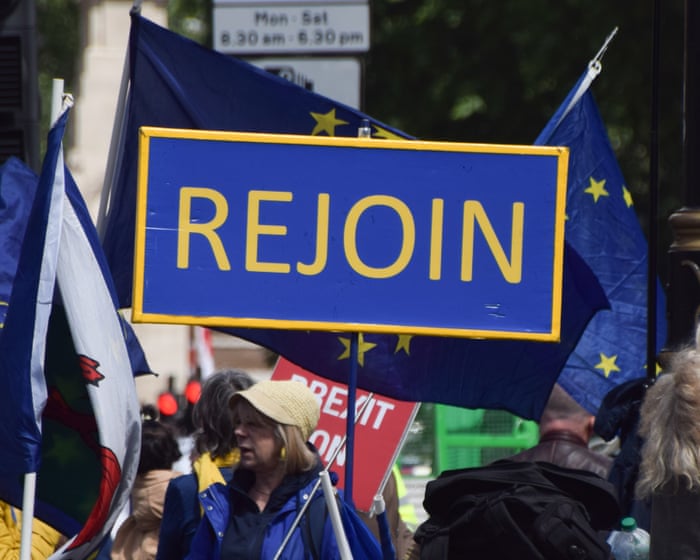
Lib Dems to urge Labour to drop ‘torpor and timidity’ on EU and rejoin single market

Exclusive: Ed Davey to make call ahead of 10th anniversary of Brexit vote, in strengthening of party’s position on EU

The Lib Dems will urge Andy Burnham to end Labour’s “torpor and timidity” towards the EU as they call for the UK to rejoin the single market, in a notable strengthening of their own position.

Ahead of the 10th anniversary of the Brexit vote next week, Ed Davey will challenge Burnham to scrap Labour’s red lines on the customs union and single market if he becomes prime minister and immediately begin talks on a more ambitious deal with the EU.

Continue reading...

© Photograph: Steve Parsons/PA

© Photograph: Steve Parsons/PA

© Photograph: Steve Parsons/PA

  •  
❌