GOP lawmakers, tech investors, and even OpenAI have tied the anti-data-center movement in the US to Chinese interference. Experts say it’s much more complicated than that.
A 12 year-old girl dubbed 'Sophie of Dundee' who was arrested after police initially believed a Bulgarian man's claims that she had called him a "f**ing migrant" has been vindicated after he was found guilty of assault.
President Trump has made false or exaggerated claims of a Civil War-era push for a triumphal arch, hundreds of millions spent on repairs on the Reflecting Pool, and an absence of working fountains.
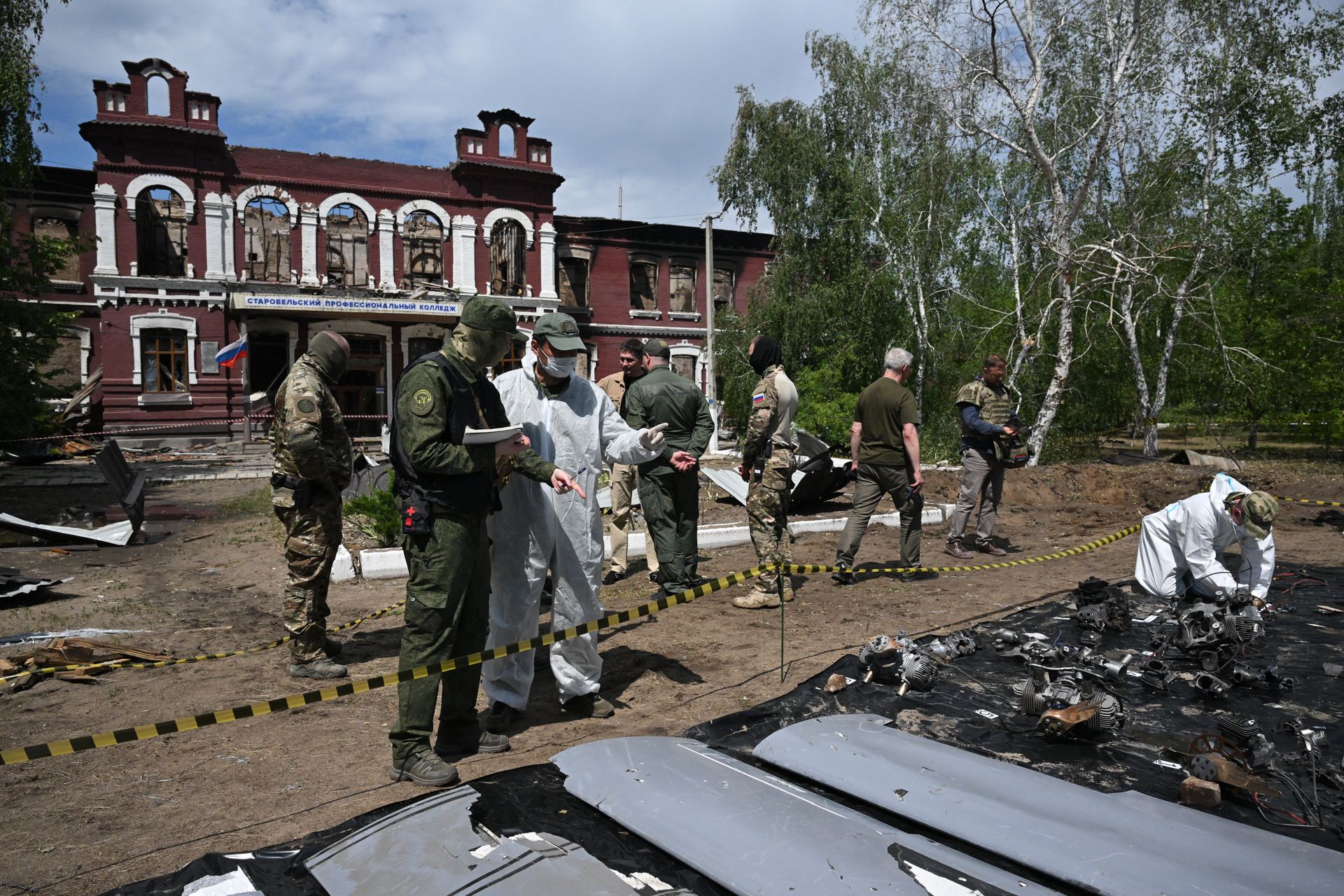
When a Ukrainian strike hit Russian-occupied Starobilsk on May 22, Moscow seized on the attack almost instantly, with Russian officials claiming that 21 students of a local vocational college were killed and dozens more injured and portraying the strike as a deliberate attack on civilians — which Ukraine denied.
The creation of the U.S. Agency for Global Media (USAGM) provoked not surprise but irritation: an old propaganda tool simply got a new label and an even more aggressive tuning. My first reaction to the birth of the US Agency for Global Media was pure surprise — then anger. Haven’t we already got enough outfits […]
by Rhoda Wilson, Expose News: Dr. John Clauser, the 2022 Nobel Prize laureate in Physics, was a speaker at Quantum Korea 2023, an event where he addressed an audience of scientists and government officials, describing the proliferation of the perception of truth and pseudoscience. He told the gathering that “there is no real climate crisis,” […]
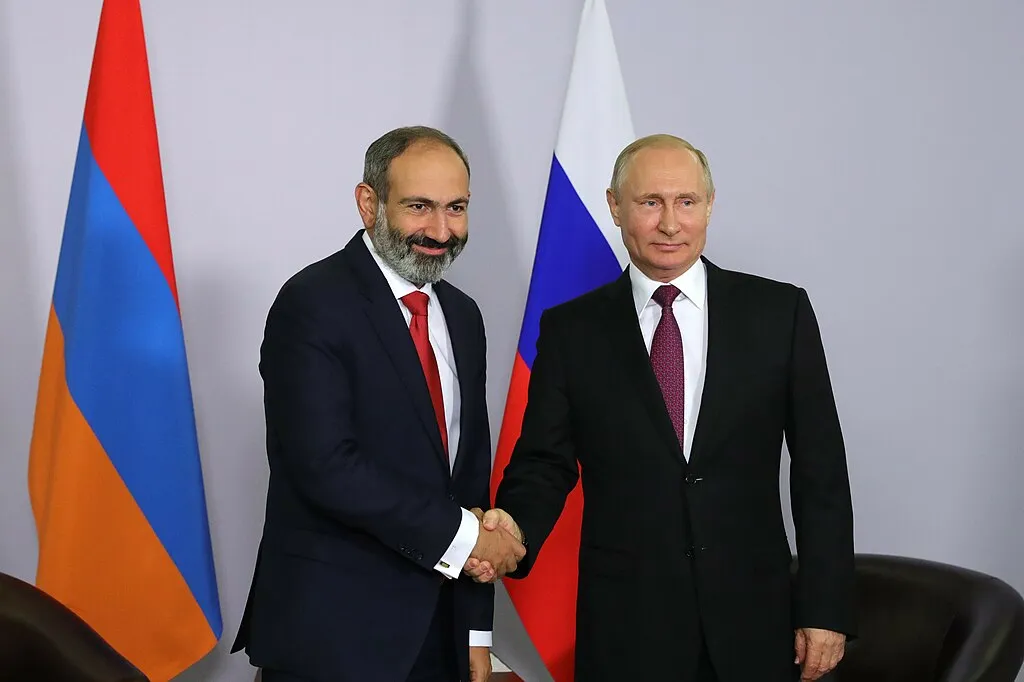
Russia began delegitimizing Armenia's election within hours of Nikol Pashinyan's 8 June 2026 victory. The Institute for the Study of War said so in its 9 June assessment. ISW identified three coordinated false narratives advanced by Russian government officials and pro-Kremlin commentators since the result.
One narrative claims Pashinyan "lost" because Civil Contract took less than 50% of the vote. A second says the election unfolded under Western pressure and domestic opposition suppression. A third alleges mass electoral fraud. ISW wrote that Moscow "continues spreading false narratives of stolen elections in post-Soviet states when those results do not favor Russian interests."
The narratives ISW found in Armenia's election
Foreign Ministry spokeswoman Maria Zakharova led Moscow's reaction to Armenia's election on 8 June. She alleged the vote unfolded under "unprecedented pressure on the opposition and interference from the West, primarily the EU." Zakharova said Civil Contract "did not receive a monopoly on power." The campaign featured "harsh repression" of opposition activists and attacks on the Armenian Apostolic Church, The Armenian Mirror-Spectatorreported.
Kremlin spokesman Dmitry Peskov declined to congratulate Pashinyan. He told reporters Moscow is "waiting for the final results" and "recording numerous irregularities." The Central Election Commission's final tally put Civil Contract at 49.81%—727,160 votes. That left Samvel Karapetyan's pro-Russian "Strong Armenia" a distant second at 23.29%, Al Jazeerareported. Turnout topped 58%.
The Moldova precedent ISW cites
ISW pointed to Maia Sandu's 2024 Moldovan presidential victory as the direct precedent. The think tank wrote that Moscow had alleged "election fraud, suppression of opposition, and 'illegitimate' results." The Kremlin suggested "Sandu's victory materialized only after counting Western diaspora ballots," ISW added.
Sandu's Party of Action and Solidarity went on to win 50.14% in the September 2025 parliamentary vote anyway. Moldovan Prime Minister Dorin Recean said the Kremlin spent approximately €200 million on the 2024 cycle. That equals nearly 1% of Moldova's GDP, Reuters reported.
Economic coercion runs alongside the narrative
ISW also flagged a parallel economic threat. On 8 June, the head of the Federal Agency for Fisheries, Ilya Shestakov, warned at the St Petersburg International Economic Forum. He vowed "further steps will certainly follow" against Armenian exports if "veterinary risks" arise, Kyiv Post reported.
The warning compounded restrictions imposed since May on Armenian mineral water, alcohol, flowers, fruits, vegetables, and fish. ISW described the move as economic punishment for Armenia "distancing itself from Russia." That distancing is precisely what Armenia's election ratified — Pashinyan's government has reduced participation in the Russia-led CSTO and reoriented Civil Contract's policies toward the EU.
Après le coup d'Etat au Mali, le directeur de Microsoft pour l'Afrique, M. Cheick Modibo Diarra, a été nommé premier ministre. Google, dont certains employés se sont illustrés dans le « printemps arabe », recrute des militants des droits humains, et la secrétaire d'Etat américaine Hillary Clinton soutient des projets humanitaires mêlant affaires et technologie : voici venue l'ère de la diplomatie numérique.
Dans les heures qui suivent le tremblement de terre du 12 janvier 2010 en Haïti, plusieurs initiatives permettent de cartographier les besoins, les demandes d'aide, les appels de familles de disparus… Enseignant-chercheur spécialisé dans la cartographie de crise, Patrick Meier s'associe au programmeur kényan David Kobia, qui, en 2007, avait fondé le système Ushahidi, destiné à permettre à des citoyens de signaler les affrontements postélectoraux. De façon inattendue, cet outil va offrir une plate-forme à l'information d'urgence en Haïti : Meier et Kobia mettent en effet sur pied un système d'alertes géolocalisées transmises par téléphone mobile. L'opérateur Digicel leur emboîte le pas et fournit aux Haïtiens un numéro d'urgence unique, le 4636. Des centaines de vies seront sauvées.
A l'aide du service de messagerie (SMS) des téléphones portables et d'instruments de géolocalisation, Ushahidi permet d'organiser la réponse avec très peu de moyens. De tout le pays affluent des signalements : disparitions, manque de nourriture ou d'eau dans les orphelinats, personnes rescapées, etc. Traduits en français, anglais et créole par deux organisations non gouvernementales (ONG) — Samasource et Crowdflower —, les textos sont localisés, vérifiés et catégorisés avant d'être publiés sur une carte par une équipe de volontaires rassemblés à la Fletcher School of Law and Diplomacy, basée dans le Massachusetts, où enseigne Meier.
Grâce à une passerelle SMS mise en place par Instedd, une start-up américaine spécialisée dans la gestion informatisée des situations de crise, la Croix-Rouge — mais également les marines américains — est en mesure de recevoir les alertes signalant une situation dangereuse et sa localisation.
Cette rencontre inédite entre informaticiens kényans et armée américaine a joué un rôle déterminant dans la redéfinition, sous l'impulsion de Mme Hillary Clinton, des méthodes du département d'Etat. Les Etats-Unis ont certes une longue tradition d'usage des technologies de communication, liée à la transmission de la Voix de l'Amérique — nom de la radio de diffusion internationale lancée durant la seconde guerre mondiale et destinée à promouvoir les intérêts américains. Mais, ces dernières années, le smart power est devenu un axe stratégique de cette politique. Variante du soft power (« pouvoir doux ») de Joseph Nye — terme désignant le déploiement de moyens d'influence non coercitifs, structurels, culturels ou idéologiques —, ce « pouvoir de l'intelligence » théorisé en 2004 par Mme Suzanne Nossel, présidente de l'organisation Human Rights Watch, propose un catalogue d'outils — diplomatiques, économiques, militaires, politiques, légaux ou culturels — adaptés à chaque situation. Il s'agit aussi de favoriser les sociétés américaines de haute technologie dans le cadre d'une coopération renouvelée entre l'Etat, le marché et les ONG ou les fondations d'intérêt public. Avec cette doctrine, la diplomatie américaine favorise donc un modèle économique nouveau, hybridant les secteurs marchand et non lucratif.
Un outil pour déjouer la censure d'Internet
Les réseaux de télécommunication numériques et mobiles en sont les instruments privilégiés. « La communauté technique a mis en place la technologie des cartes interactives pour nous aider à identifier les besoins et à cibler les ressources, indique ainsi Mme Clinton dans son discours fondateur du 15 février 2011. Ce lundi [en Haïti], une fillette de 7 ans et deux femmes ont été retirées des décombres d'un supermarché qui s'était effondré par une équipe américaine de recherche et de sauvetage, après avoir envoyé un texto appelant à l'aide. » La secrétaire d'Etat insiste sur la nécessité de faire en sorte que le peuple s'approprie les technologies numériques afin de faire avancer la démocratie et les droits humains. Elle en appelle à un « partenariat entre l'industrie, le monde universitaire et les ONG afin d'organiser un effort permanent qui permettra d'exploiter la puissance des technologies de connexion et de les mettre au service de nos objectifs diplomatiques (1) ».
Financé à hauteur de 2 millions de dollars, Commotion est un projet typique de cette approche. Il s'agit d'un réseau cellulaire autonome qui fonctionne selon les mêmes principes qu'Internet et tient dans une valise. Il doit permettre aux militants de contourner la censure du réseau — on se souvient qu'en Egypte, en janvier 2011, juste avant la chute de M. Hosni Moubarak, Internet avait été coupé. A l'origine de ce projet, un militant du logiciel libre et des libertés numériques, M. Sascha Meinrath, qui envisage de relier par Wi-Fi des ordinateurs portables et des téléphones mobiles afin de constituer une infrastructure sans fil à haut débit (2), où des outils de sécurisation permettraient d'assurer l'anonymat des utilisateurs. Ainsi, paradoxalement, au moment même où WikiLeaks piratait le département d'Etat, la smart diplomacy rejoignait les problématiques « hacktivistes » (3).
L'Afghanistan fut l'un des premiers terrains d'expérimentation de cette techno-diplomatie. En 2009 déjà, le pays comptait plus de quinze millions d'abonnés mobiles, sur une population de trente millions de personnes. 65 % d'entre eux envoient des textos, et plus de la moitié utilisent leur téléphone pour écouter la radio. Mais l'armée américaine a aussi remarqué que les talibans étaient plus actifs dans les zones peu couvertes par le réseau mobile. Y voyant un lien de cause à effet, elle a investi 113 millions de dollars pour développer les communications civiles, dans une véritable stratégie associant propagande et développement économique. En outre, dans le cadre de la lutte contre la corruption, la police afghane paye désormais ses employés par l'intermédiaire du système mobile M-Paisa (lire « Une carte SIM en guise de porte-monnaie »), et non plus en argent liquide (4).
Des acteurs très divers multiplient ainsi les initiatives technopolitiques. On peut mentionner le programme des « Routes de la soie numériques » lancé par l'Internet Bar Organization. 85 % des Afghans vivent de leur terre ; après des années de guerre, il existe d'importants conflits de propriété foncière. Le programme utilise les fonctionnalités du GPS, les photographies et les textos pour envoyer des informations sécurisées dans une base de données. Un cadastre virtuel a ainsi été constitué, et une assistance juridique est proposée pour régler les conflits, en lien avec le droit coutumier.
Il arrive également que le smart power se concrétise dans la surveillance d'élections. C'est le cas en Afrique subsaharienne. L'ambassade des Etats-Unis en Guinée a appuyé la commission électorale du pays pour la mise en place, lors du scrutin du 27 juin 2010, le premier depuis 1958, d'un programme baptisé « I vote, I see, I send » (« je vote, j'observe, j'envoie »). Ce programme permettait de relayer des textos sur un site Web où ils pouvaient être analysés par les observateurs et les électeurs (5). L'ambassade de France a été associée à ce programme à travers la mise en place d'un centre de presse. Surveillance officielle et « sous-veillance » citoyenne (comme celle d'Ushahidi au Kenya) se complètent, utilisant parfois les mêmes plates-formes.
En 2010 et 2011, au Soudan, le contrôle citoyen des élections a également reçu l'appui des membres du département d'Etat, tandis qu'en Ethiopie, en Egypte, en Tanzanie, en Côte d'Ivoire et au Liberia des systèmes inspirés par Ushahidi ont été déployés (6). Les rapports envoyés pointent les fraudes (impossibilité de voter, bulletins manquants pour certains candidats…), mais aussi des irrégularités durant la campagne (harcèlements, illégalité de certaines actions, provocations racistes…) et permettent de signaler les violences postélectorales.
Signalés à la vitesse d'un texto — dans des situations d'observation sur le terrain, on a plus facilement sous la main un téléphone portable qu'un ordinateur —, les actes délictueux sont épinglés sur une carte. Cette approche relève du principe, difficile à traduire en français, d'accountability. Si le sens politique du terme évoque la responsabilisation des gouvernements, dans le vocabulaire de la sociologie l'accountability renvoie à un réseau conceptuel associant factualité, visibilité et responsabilité (7). Dans ce cadre, la transparence ressort d'une philosophie politique qui autorise à rendre visibles des éléments pour étayer un pacte de factualité — au sens où il est indéniable qu'« il s'est passé là quelque chose pour quelqu'un » — engageant la responsabilité de chacun.
Depuis la Silicon Valley, Mme Clinton a lancé un appel aux entrepreneurs ès technologies dans le monde : « Il faut soutenir les personnes qui sont derrière ces outils, les innovateurs et les entrepreneurs eux-mêmes. Nous savons que les chefs d'entreprise sont nombreux à vouloir consacrer une partie de l'expertise de leurs salariés à résoudre les problèmes dans le monde entier ; mais, souvent, ils ne savent pas comment faire. Quel est le point d'entrée ? Quelle idée va avoir le plus d'impact (8) ? » Discours assorti d'un appel à la coopération entre diplomates, entrepreneurs et organisations sans but lucratif pour soutenir l'espace d'innovation mobile que représente l'Afrique.
Application pour femmes enceintes
Un appel aux bonnes volontés ? Pas seulement. Deuxième marché régional après l'Asie, celle-ci connaît la plus forte croissance du monde, avec 649 millions de connexions à la fin de 2011 et 735 millions d'abonnés prévus à la fin de 2012, selon le rapport de l'Association mondiale des opérateurs mobiles (GSMA). Google, implanté en Afrique du Sud et au Kenya, a mis en place, en lien avec la Fondation Grameen (9) et l'opérateur MTN, une structure de développement d'applications — un « AppLab » — où ont été réalisés différents services mobiles : SMS Tips, qui répond aux questions sur la santé ou l'agriculture envoyées par texto, ou encore Google Trader, qui met en relation petites entreprises et acheteurs en temps réel.
Par le biais de concours comme Apps4Democracy, basé sur les données publiques ouvertes et librement utilisables que diffuse le gouvernement sur le site Data.gov, les acteurs du smart power recrutent de nouveaux partenaires. C'est sur ce modèle qu'une compétition baptisée Apps4Africa a été lancée, en juillet 2010 à Nairobi, par Mme Judith McHale, sous-secrétaire à la diplomatie et aux affaires publiques. Elle a suscité une vingtaine de propositions venues du Kenya, du Rwanda, de l'Ouganda et de la Tanzanie. L'application gagnante, Mamabika, est un dispositif qui propose aux femmes enceintes des bidonvilles de Nairobi d'épargner neuf mois durant sur un compte lié à leur téléphone, pour pouvoir accoucher dans une clinique (10). Autres concours et programmes soutenus par le smart power « féministe » et technologique de Mme Clinton : le mWomen BOP App Challenge (ou TechWomen), dont le but est de créer des applications spécifiques pour les femmes des pays pauvres. Son modèle : HarassMap, un système de cartographie qui rapporte des cas de harcèlement sexuel et de violence conjugale en Egypte.
Bon nombre de fondations américaines sont engagées dans cette voie. On peut s'interroger sur leur rôle, quand certains acteurs locaux clament, à l'instar du chanteur militant afro-américain Gil Scott Heron : « The revolution will be not funded (11) » (« La révolution ne sera pas financée »). Créée par le fondateur d'eBay, M. Pierre Omidyar — qui théorise son approche dans la Harvard Business Review (12) —, la Fondation Omidyar Network a ainsi ouvert un fonds doté de 2 millions d'euros pour favoriser, en Afrique subsaharienne, les initiatives axées sur « les technologies qui donnent aux citoyens des outils » contraignant les gouvernements à les prendre en compte. Une ONG néerlandaise, Hivos, administre le fonds basé à Nairobi. En septembre 2010, au sommet de la Clinton Global Initiative (fondée en 2005 par l'ancien président William Clinton), la Fondation Omidyar avait annoncé un versement de 55 millions de dollars au réseau Tech for Transparency, dont près de la moitié pour l'innovation dans le domaine mobile. La fondation soutient aussi FrontlineSMS, une passerelle consacrée à la communication des ONG et souvent associée à la plate-forme Ushahidi.
Pour M. Bill Gates, fondateur de Microsoft et acteur le plus en vue dans le monde de la technophilanthropie, il est peu efficace de vendre des ordinateurs dans les pays pauvres, mais il faut absolument utiliser les téléphones portables, qui permettent de sauver des vies (13). Il intervient donc dans le domaine du m-health (usage du mobile en santé), en organisant des concours pour des logiciels de lutte contre le virus de l'immunodéficience humaine (VIH/sida), le paludisme, la tuberculose, etc. En favorisant, naturellement, Windows Mobile, le système d'exploitation de Microsoft.
Créée en 1994, la Fondation Bill et Melinda Gates (BMGF) dispose d'un capital de 66 milliards de dollars. Pour bénéficier du régime d'exonération fiscale des fondations, au moins 5 % de ses avoirs doivent être consacrés à des donations. Restent 95 %, qui sont investis dans des activités lucratives et parfois bien peu philanthropiques (14). En 2009, la BMGF a fourni plus de 3 milliards de dollars de subventions et dépensé 409 millions de dollars en frais d'exploitation, principalement pour des projets visant à améliorer la vie des pauvres dans les pays en développement. Dans le domaine de la santé publique, à part le gouvernement des Etats-Unis, aucun bailleur de fonds n'est aussi influent (15). Grâce au don de 30 milliards de dollars de M. Warren Buffett, la fondation a plus que doublé son fonds initial, devenant ainsi l'institution caritative la plus importante.
Cette rencontre entre MM. Gates et Buffett a permis à M. Matthew Bishop, chef du bureau du journal The Economist à New York, de forger la notion de « philanthrocapitalisme (16) » pour désigner la convergence entre grandes causes et bonnes affaires. MM. Buffett et Gates imposent en effet un nouveau type de partenariat avec les organisations caritatives et les gouvernements. Il s'agit de montrer que l'entreprise peut être « la plus grande force du bien dans le monde », au moment où les Etats réduisent leurs budgets sociaux et prennent souvent moins de risques que ne peuvent le supporter ces nouvelles organisations philanthropiques.
Grandes causes et bonnes affaires
Selon MM. Gates et Buffett, « donner » pourrait ainsi devenir le plus grand levier du changement dans le monde. Mais « donner » de façon stratégique — et selon les modèles du monde des affaires. Ces nouveaux philanthropes doivent être compris comme des investisseurs sociaux au sens propre du terme. Ils se distinguent de l'action de charité qui animait les premiers industriels créateurs des fondations américaines, comme Andrew Carnegie ou John D. Rockefeller.
Dans la culture de ces acteurs, les technologies permettent aussi de scruter les retours sur investissement. Ainsi, le téléphone portable est au philanthrocapitalisme ce que le chronomètre est au taylorisme. Grâce à ses diverses fonctionnalités — textos, caméra vidéo et appareil photo, répondeur téléphonique, GPS… —, le portable est un bon outil de reporting, et donc de transparence. Les actions soutenues financièrement par ces fondations peuvent être présentées en détail aux donateurs. Chacun peut voir comment le projet est utilisé, et combien il est utile. L'action humanitaire technicise, la philanthropie se rationalise, le don charitable devient investissement.
Les nouveaux riches de la Silicon Valley, milliardaires de l'informatique qui ont parfois pris leur retraite des affaires, semblent bien décidés à conquérir les économies des pays émergents. Le téléphone portable, ce petit objet si efficace et rendant de réels services aux populations, constitue pour cela leur outil de prédilection.
(7) Cf. Harold Garkinkel, Recherches en ethno-méthodologie, Presses universitaires de France, Paris, 1967 (rééd. 2007), qui fait de l'accountability le ressort même de l'ordre social.
(14) Cf. Charles Piller, Edmund Sanders et Robin Dixon, « Les investissements bien peu philanthropiques de la Fondation Gates », Problèmes économiques, Paris, octobre 2008.
(16) Matthew Bishop et Michael Green, Philanthrocapitalism : How the Rich Can Save the World, Bloomsbury Press, New York, 2008. www.philanthro-capitalism.net.
The president is using the slow count of mail ballots in California to renew his effort to cast doubt on election outcomes he doesn’t like, despite a lack of evidence of any widespread fraud.
By baselessly framing the rise of a candidate for Los Angeles mayor as a Democratic scam, President Trump has extended his long-running project to erode public faith in elections.
On April 24, Brazil’s competition authority, the Administrative Council for Economic Defense (CADE) announced it was opening an investigation to assess whether Google’s use of news content amounted to unfair competition practices against the Brazilian press. The announcement was welcomed by civil society organizations that have tried to push regulation to limit the reckless power of Big Tech for years. Ajor, Brazil’s Digital News Association, said that “a balanced relationship between digital platforms and journalism organizations is fundamental to the flourishing of journalism committed to the public interest. By ensuring a fair competitive environment, Cade directly advances that goal.”
In spirit and intent, CADE’s investigation into Google is similar to legislation in Australia that recognized that value is being extracted from news publishers without proportionate recompense. In Brazil, the case has been debated since 2019, but the adoption of AI Overviews helped alter the perspective of Brazilian judges. The overviews are artificially generated summaries that synthesize information from several sources and appear at the top of Google Search results. They “raise potentially more concerns,” ruled Judge Camila Cabral Pires Alves, “as they may more profoundly alter the economic function of the interface and expand the ability to retain attention within the platform's own environment.”
CADE will now investigate whether Google should be sanctioned for “alleged abusive exploitation of a dominant position, in light of the technological evolution of the conduct.” While there is perhaps a greater global appetite to regulate the impacts of AI – even the Trump administration has recently acknowledged that some oversight may be necessary – the CADE judges have been under considerable pressure from Big Tech executives to stop investigations into how their control of the market harms Brazilian businesses.
For those of us who have reported on Big Tech, this aggressive lobbying is not surprising. Companies like Google, Meta, Twitter, TikTok, Amazon, and Microsoft have long attempted to interfere in any decision or legislation that can harm their interests in Latin America. According to a joint investigation by journalists across 13 countries, Big Tech lobbyists got away with convincing legislators in Colombia to weaken a rule meant to protect children’s mental health and prevent enforcement of privacy regulations in Ecuador. It took a team of over 40 journalists from 13 countries to uncover this while reporting on the ‘Big Tech Lobby’ in the continent and across the world.
Threats by the U.S. government to retaliate against any country or international entity that sought to regulate Big Tech added another layer to an already complicated and uneven relationship with Silicon Valley. “Digital Taxes, Digital Services Legislation, and Digital Markets Regulations are all designed to harm, or discriminate against, American Technology,” wrote Donald Trump on social media. “Show respect to America and our amazing Tech Companies or consider the consequences!” During the past year, Trump’s envoys have forced dozens of governments around the world to dilute or even shelve regulation in exchange for lifting tariffs.
In “Big Tech’s Invisible Hands,” which I coordinated alongside Maria Teresa Ronderos, from CLIP (Centro Latinoamericano de Investigación Periodistica), journalists mapped a total of 75 executives that were part of “public policy” or “government relations” teams in Brazil. Tech companies utilized a “revolving door” in which public sector employees could go straight into highly paid jobs leveraging their contacts and influence. Doors opened more easily. Invitations to hangouts and events were more likely to be accepted.
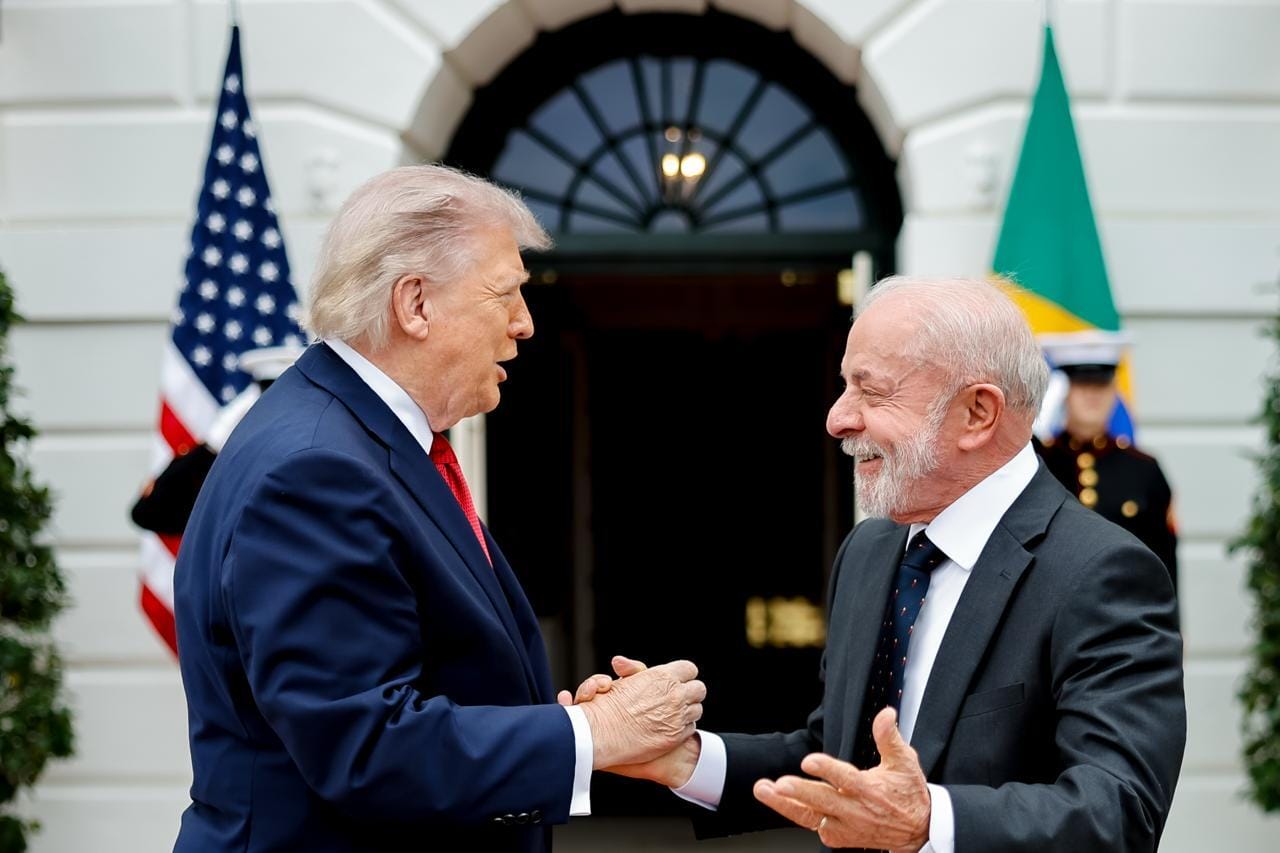
Brazilian President Luiz Inacio Lula da Silva meets with U.S. President Donald Trump at the White House on May 7, 2026. Brazilian Government / Ricardo Stuckert / Handout/Anadolu via Getty Images.
Lobbying in Brazil is dialed up to eleven. The country has 163 million internet users, with over 150 million on WhatsApp, and over 120 million on YouTube, Instagram and Facebook. With AI, Brazil is a similarly large, influential market. Portuguese is the sixth most widely-spoken language in the world, with 70% of speakers based in Brazil. Which means that, if an LLM has been trained in this language, it probably used content created by millions of Brazilians going about their business of making friends, debating politics and football online. It’s not just about journalists; we are all unpaid labor for Big Tech.
In the words of Arthur Lira, the Speaker in Brazil’s Congress who filed a criminal complaint against Big Tech executives in 2023, companies adopted a variety of tactics “to shut down democratic debate and intimidate lawmakers” and defeat any attempt at using legislation to force accountability. Google, he said, used its search homepage, used by over 85% of Brazilians, to spread fear that proposed laws would “make the internet worse” or “make it harder to know what is true or false on the internet.” A report by the Federal University of Rio de Janeiro found that Google invested in ads on its own platform so extensively that it tweaked the search, prominently featuring the word “censorship” in connection to the Brazilian bill. Google also hired Michael Temer, a lawyer and former President of Brazil, to influence lawmakers and Supreme Court Justices. Of course, it was not Google alone. Meta executives, for instance, even argued that proposed legislation in Brazil could lead to the Bible being censored.
But Brazilian lawmakers, the Supreme Court, and civil society have persisted. On August 28, 2025, the “Felca Law” was approved, after a video by the influencer Felca denounced the exploitation and exposure of children on social media. The law establishes that digital platforms must take measures like verifying user age, implementing parental controls, and preventing children's exposure to adult content, gambling, and pornography. They must create reporting channels and may face fines of up to 10% of their annual revenue in Brazil.
Brazil’s president Luiz Inácio Lula da Silva and Donald Trump have had a testy relationship, in part because of Lula’s criticism of Big Tech. In February, at the AI Impact Summit in New Delhi, Lula called for global governance of AI, warning: “When few control the algorithms, it is not innovation, but domination. Regulating the so-called Big Tech companies is linked to the imperative of safeguarding human rights in the digital sphere, promoting information integrity, and protecting our countries’ creative industries.”
By sticking to his guns, Lula may now be seeing the tide turn. He was in the White House on May 7, and though neither he nor Trump took questions, both appeared encouraged by the meeting. “Very dynamic,” was how Trump described Lula, while Lula said he was “very, very satisfied” with how the talks went. With a general election in Brazil approaching in October, Lula will be sensitive to how the White House, as it has done in other elections, and Big Tech might offer vocal support for right wing candidates.
But his willingness to stand up to Big Tech is popular with voters. A recent poll found that 78% of Brazilians want to see tech companies being held responsible for the content they publish. Another poll found that 55% of Brazilians defend regulating Big Tech, with 43.9% against it.
And as scams, fake news, and AI slop dominate ever larger swathes of all our digital space, in Brazil, as in much of the rest of the world, the entire experience of the internet is becoming more unappealing. Big Tech, with the assistance of the U.S. government, may be succeeding in slowing down the pace of regulation and watering down the content of that regulation, but in the long run its victories might be pyrrhic. People have had enough and their governments might be forced to listen.
A coup is underway in Mali, though it has not brought down the governing junta just yet. The country’s military leader, General Assimi Goïta has, after days in hiding, appeared in public to claim, unconvincingly, that the “situation is under control.” But rebel forces — an alliance of Al-Qaeda affiliates and Tuareg separatists — have taken over provincial cities and are calling for a blockade of the capital Bamako. Mali’s military junta hangs on by a thread, in a familiar regional story of violence, civilian suffering and international intrigue.
On April 25, coordinated attacks across Mali exposed the junta’s fragile hold over the country. Jamaat Nusrat al-Islam wal-Muslimin (JNIM), the al-Qaeda affiliate that has driven insurgency across the region for over a decade, joined forces for the first time with Tuareg separatist groups — who have been fighting the central government for even longer — to simultaneously strike cities hundreds of miles apart, including the capital Bamako, Gao, Kidal, Sévaré, and the garrison town of Kati. A suicide car bomber drove into the residence of defence minister General Sadio Camara, killing him along with his wife, two grandchildren, and several civilians. Camara was one of the most influential figures in Mali's ruling junta and had been widely seen as a possible future leader of the country. He was also the key architect of Mali's military alliance with Russia. Mali, Burkina Faso and Niger, which together form the Alliance of Sahel States (AES), have all in recent years realigned away from France, the former colonial power in the region, and towards Russia.
Russian mercenaries, in the form of the Wagner Group and more recently the Africa Corps, have backed military juntas in the Sahel, after coups in Mali, Burkina Faso and Niger led to the withdrawal of French troops from France’s former colonies. But during these latest rebel strikes, it was Russian fighters that were chased out of the northern city of Kidal to the sound of jeers. Africa Corps, the Kremlin-controlled paramilitary group, described the insurgent attacks as a "coup attempt" backed by "Western intelligence services." RT amplified these claims, accusing France and the West of orchestrating the violence, even as it claimed Russian fighters successfully repelled rebels. In 2024, Ukraine’s military agency said it had provided information to help Tuareg rebels ambush and rout a Wagner convoy, killing dozens of Russian mercenaries. Both Mali and Niger have cut diplomatic ties with Kyiv. Burkina Faso has described Kyiv as a destabilizing force in the region, making the Sahel effectively a front in Russia’s war with Ukraine.
The Kremlin’s combination of misinformation and mercenaries helped exploit growing anti-Western sentiments in the Sahel to give Russia a propaganda win in the region. Former colonial powers such as France didn’t help themselves, as can be seen even now in Madagascar, the latest nation to expel a French diplomat and accuse Paris of fomenting unrest. But the success of Russian propaganda hasn’t been matched on the ground. As Mali struggles to contain a rebel alliance that has fresh impetus and energy, Moscow’s control is weakening and the effectiveness of its military support is under question. Already, with Russian weapons in short supply because of war with Ukraine, it is China that the Malian junta turns to for arms. China’s strategic efforts in the Sahel have been similar to its efforts in the rest of the African continent – a focus on securing infrastructure contracts as part of the Belt and Road Initiative and securing access to mineral resources. But rebel attacks in the Sahel are bad for Chinese business. In February, the Chinese embassy in Niamey, the capital of Niger, warned Chinese companies to take their workers out of the firing line as rebels increasingly targeted Chinese infrastructure projects, including a $4.5 billion oil pipeline from Niger to Benin.
In 2024, the United States was forced to leave neighboring Niger after a coup, to withdraw from a $100 million base. It seemed the U.S. was losing ground to both Russia and China in the Sahel. Earlier this year, though, as security concerns in the Sahel escalated sharply, the U.S. adjusted its approach, choosing to deal pragmatically with military juntas. By late February, the U.S. lifted sanctions on top Malian officials, including General Camara, the recently slain defence minister. It may see closer cooperation with Sahel countries as essential to its security interests and a way to undercut Chinese access to Sahelian resources.
The three Sahel states, Mali, Burkina Faso and Niger, have turned away from France and Europe and towards Russia, while increasingly flirting with the U.S. and reliant on Chinese weapons. The result has been disaster. All three Sahel states are ranked in the top 5 for countries impacted by terrorism. And the humanitarian toll has been severe. Millions of people face internal displacement across the region and cuts in aid programmes mean many millions, especially children, also face acute hunger. But, as the great powers circle the region, jockeying for geopolitical gain, the talk remains about the logistics of propping up failing juntas, providing military solutions to human crises, and maintaining power rather than confronting problems.
Mali, Burkina Faso and Niger – all led by military authorities that came to power in a coup – have also isolated themselves from the rest of their neighbors by withdrawing from the West African regional bloc, Ecowas. Meanwhile, they sell their model as an alternative to Western-style democracy, a narrative that Russian propaganda networks have been all too eager to promote. But the strength of the insurgency against Mali’s government, and Russia’s apparent inability to protect it, sends a different message to the rest of the African continent.
On the night of January 16, 2024, Egana Djabbarova was awoken by her wife and told that she needed to leave the country immediately. Djabbarova, her wife said, had been denounced by pro-war activists and framed as an enemy of the country. She had recently published her novel, “My Dreadful Body,” with a small, indie press that had been praised by mainstream critics, unexpectedly propelling her into the public eye. One of the book's central themes is surveillance: growing up in a community with strict behavioural codes, the protagonist's every move is under scrutiny.
In a dark echo of her work, Djabbarova was now under online surveillance herself. “I was just the perfect enemy,” she tells me, “because I’m queer, I’m not Slavic, I worked on decolonial and feminist projects… So boom, it happened.”
She is speaking to me from Hamburg, where she now lives. Djabbarova is part of the so-called fifth wave of writers exiled from Russia, alongside Maria Stepanova, Lyudmila Ulitskaya, and Maxim Osipov to name a few. Her upbeat tone during our call gives little indication of the arduous journey she has endured since fleeing Russia. Upon receiving a humanitarian visa from Germany, she spent months in a refugee camp. She lived, she says, “in a container house, literally a shipping container. You feel like you're not a subject, not a human being.”
More permanent accommodation has provided a degree of safety and stability, but a sense of precariousness lingers. She describes her position as an exile as “strange” — on the one hand she has been welcomed into Germany’s cultural elite in winning the Hamburger Literaturpreis; on the other, she feels like a “ghost,” unable to express herself in German and often bewildered by the unfamiliarity of everyday tasks in a new country, and in a new city which, she tells me jokingly, is quaint and polite like the well-behaved boy next door.
But there’s a deeper, historical layer to Djabbarova’s story of exile. Her father was a refugee from the region of Nagorno-Karabakh, while her mother was forced out of her family home. “Homelessness and exile — this is my heritage,” she says. Being othered became a common theme of Djabbarova’s childhood, as a child of Azeri parents living in Yekaterinburg. “In Russia you are constantly reminded that you're not Russian,” she says. “Then during the summer you visit your relatives in Azerbaijan and they laugh because you cannot speak Azerbaijani properly.”
This sense of double estrangement is mirrored in “My Dreadful Body”(published in Russian in 2023 and recently translated into English by Lisa Hayden). At only a touch over 100 pages, it is a slim but powerful account of the pressures on one woman growing up among the strict codes of an Azerbaijani family living in Russia. A sense of surveillance and conditional belonging defines the narrator’s upbringing: “In the world where I grew up,” she writes, “gazes penetrated every little corner. The evil eye, the neighbors’ eyes, the relatives’ eyes, the random pedestrian’s eyes, the unscrupulous men’s eyes, the women’s unhappy eyes. Life in the community was reminiscent of a reality show with constant video surveillance: no action, word, or undertaking went unnoticed.”
The story is based on Djabbarova’s own life. “Maybe 70-80% of this story is absolutely true”, she confirms. The narrator is named Egana, she grows up in an Azerbaijani family in Russia, too Russian for the family, not Russian enough for her friends at school. She also, like Djabbarova, suffers from a debilitating autoimmune disorder that is eventually diagnosed as dystonia, a neurological disorder that causes involuntary muscle contractions. During one episode, she describes her body as resembling “willow branches gone mad from a strong wind” — a potent image of struggle against external forces. Djabbarova describes the book as a way to reclaim her body through language. “I was trying to tell this story in a poetic way. I wanted to change my body into poetry.”
Each chapter of “My Dreadful Body”begins with a different body part (“Eyebrows,” “Eyes,” “Hair” and so on), like the poetic blazons spun by Renaissance poets. Where those poems encouraged an idealized, sensationalized reading of each body part, Djabbarova’s chapters are more sober explorations of the physical limits — and personal and cultural stories — these body parts contain.
In one of many poignant scenes, the narrator’s head is shaved in preparation for a procedure. She cries on seeing her “shorn scalp,” but the sadness is not aesthetic, it’s ancestral; the act marks a symbolic rupture with her lineage. “My past,” she writes, “the past of all the women in my family, the memory of my ancestors, the history of a single body — all that now lay on the cold floor.” After this scene, her grandmother’s dictum that only long hair was considered beautiful, rings even more sharply.
Illness then emerges as another form of exile, from one’s sense of self, from what’s perceived as “normal” in society, from the culture and community one belongs to. “They do not see you as a subject, as a human being, and they do not recognize your existence… I realized if I wanted to be seen as a subject, I needed to do it myself.” Djabbarova is talking about the plight to be believed about her symptoms here, but she could easily be talking about the often dehumanizing experience of exile. In both instances there is something fundamental under question, or as Djabbarova puts it, “You’re trying to prove that you have the right of being. You’re trying not to be erased.”
We often talk about exile in the context of loss, but how might exile liberate? Paradoxically, Djabbarova tells me, her diagnosis became a form of liberation. “I always felt I had so many expectations on me as a girl, as a woman, so when I was finally diagnosed it was a liberation because my parents realized I would never be this type of girl.” Exile breeds a particular creative liberation, too, evidenced by the fact Djabbrova wrote the novel from Taiwan where she was briefly teaching Russian. “Here I had enough distance from my own life and my own experience,” she says. “Maybe it’s easier to write about your story being on an island in the Pacific Ocean.”
Writing is arguably the real heroine of Djabbarova's novel. For the narrator Egana, it is a place free from surveillance and a source of protection, “like an invisible amulet.” Poetry, she told me “was the only safe space for me because nobody was asking anything of me. It's the only place where I don't feel judged. I don’t feel ashamed. I don’t feel questioned.”
The chapter “Hands” opens: “The most important parts of a woman’s body were her hands: they prepared food, rocked children, did laundry, ironed men’s shirts, sewed clothes, swept, washed the floor, and dusted.… Any woman in our family knew that her hands were not given to her for writing.” To use her hands, then, to write becomes both a symbolic and quite literal form of resistance against such gendered codes.
Notably, Djabbarova is not alone in invoking the body as a space to explore the upheavals of exile. In Maria Stepanova’s autofictional work “The Disappearing Act” — recently translated into English by Sasha Dugdale — the narrator attempts to purge herself by volunteering to be cut in half as part of a circus trick. Djabbarova’s approach to reclaim identity and agency through the body is less literal, and more personal, but through this specificity she has landed somewhere indisputably universal.
“I realized the only way I can write this novel is through my body,” she says. “Because the only way I can rehabilitate my being, my agency, my subjectivity is through my body. And that's why I wanted every reader to feel my body… It's really important for all of us not to forget that this right of being is basic. It's not given. It's something you have from birth."
At the end of our conversation, Djabbarova (who has been speaking in English) struggles to recall a word and jokes that learning German is slowly pushing her English out. “Certain words I only remember in German!” she laughs. Is this the beginnings of a kind of homemaking for Djabbarova, a sign that the seeds she has scattered in her new country are taking root? Like her protagonist, who finds solace and safety in words, it seems that Djabbarova’s most trusted tool for survival, for managing the condition of exile, is language.
The Age of Exile
This story is part of our Age of Exile series, which explores how displacement has evolved from historical punishment into a defining condition of our time—one that reveals profound transformations in how we construct identity, maintain community, and exercise power across borders. In an era where digital connection enables presence without physical proximity, exile has become more complex, more global, and more central to understanding our world. Explore The Age of Exile series
A funny thing happened on the day OpenAI announced it was shutting down Sora, its video generation app: Iran went all in on synthetic propaganda and very quickly started winning the global meme war. The timing is a coincidence, no doubt, but it is the kind of coincidence that illuminates.
Watching the explosive virality of the clips offers a powerful lesson in asymmetric media operations. They deploy cultural sophistication, an understanding of online communities and the enormously powerful creation tools made available by American tech companies, tools that give everyone on the internet access to a personal reality distortion field — drones, but for your feed.
On Wednesday, as Donald Trump was trying desperately to talk down the oil markets with hints of a deal, a stream of videos, carefully calibrated for U.S., regional and third country audiences rolled out on X via embassy accounts, Russia Today, and disaffected Maga influencers. The clips, by broad social media consensus, are good. Some lean heavily on the extremely online grammar of the U.S. right. Some remix Hollywood characters and likenesses in exactly the way that OpenAI’s now nixed billion-dollar deal with Disney was supposed to sanction. Others lean more heavily into Islamic iconography, featuring Donald Trump and Benjamin Netanyahu as worshippers of Baal, the foreign demon god who figures in both the Quran and the Hebrew Bible. The Lego movie is an especially rich resource, but so are TikTok formats, and the kind of idealized AI figures beloved of Trump administration meme makers. You can watch a few of them here.
Notably, faked war footage is far from the dominant format. All of these clips foreground and celebrate their own artificiality: some are sentimental, some triumphal, many are full of the gleeful adolescent wit of gamers on discord forums.
Researchers have long been warning that generative tools will undercut the authority of visual evidence, compounding and accelerating the damage created by slower, cruder forms of fakery: photoshop, selective editing, even gaming clips passed off as combat footage. Of course, we are already there, and have been for a while. Russia has been the paramount master of this game, in Ukraine and in its ongoing influence operations around the world. But others have learned quickly. Last year, when India and Pakistan were engaged in a brief aerial battle, social media bullshit overwhelmed and compromised traditional coverage. More recently, Israel’s obliteration of Gaza was accompanied by a sustained and comprehensive blizzard of visually compelling misinformation, propaganda, and official lies.
That continues. On March 28, Israel killed three journalists in a targeted strike in Southern Lebanon, claiming without evidence that one of them, Ali Shoaib, was a member of Hezbollah’s Radwan forces. They later distributed a photograph of him in military fatigues to reinforce the point, but explained to Fox news that in fact, they’d had to photoshop the uniform in because no such picture existed.
Meanwhile, in the Trump administration’s domestic war on immigrants and political opponents, we’ve seen a complete resetting of norms around the tone of official communication and any expectation that it is rooted in fact. Nowhere was that more evident than in the altered footage posted by the White House of the arrest of the prominent Minneapolis activist Nekima Levy Armstrong in January. In the video, shared by the official White House handle, a handcuffed Levy Armstrong is sobbing, her skin visibly darkened. In fact, she had faced arrest calmly.
Questioned by reporters about this blatant falsification, deputy White House communications director Kaelan Dorr responded: "Enforcement of the law will continue. The memes will continue.” Collapsing the distinction between a meme and the factual record with the aid of AI is the final step in this administration's insistence that its preferred narrative simply is reality.
The problem for the White House and its allies is that their choices in tech policy, official communication, and press freedom level the playing field for information war in ways that Tehran’s media strategists understand and they, for all their immersion in online worlds, do not.
Iranian propagandists know that the currency of visual information online has already been completely debased. They’ve dealt with it plenty, and no doubt practiced it themselves in regional battles for narrative dominance. Their insight is that as cheap and easy as it is to create and distribute fakes, returns on the effort of mobilizing what disinformation researchers call “coordinated inauthentic action” are diminishing. They still do it, but it isn’t where the action is.
Sam Altman, Elon Musk and Mark Zuckerberg have, in a very practical sense, wrought this moment in concert with Peter Thiel, Alex Karp, JD Vance and Donald Trump. At their urging, the U.S. has surrendered unrivaled dominance in scarce, expensive information and cultural assets in exchange for a political economy of media that widely distributes cheap, abundant ones.
Tech leaders and conservative politicians have worked consistently for a decade to deprecate the trustworthiness of American journalism and constrain its liberties. They have smeared its practitioners as “enemies of the people”; they have captured the commanding heights of the broadcast and culture industries through crony deals, and they have launched an assault on both press freedom and standards, two assets that once made American news outlets the envy of the world. Needless to say, the economic collapse of traditional media companies fostered by Google’s and Meta’s advertising duopoly only served to deepen the damage. Jeff Bezos’s Washington Post shuttered its Middle East bureaus just days before the war began.
Meanwhile, lying from agency podiums and the Oval Office, makes Karoline Leavitt barely distinguishable from Baghdad Bob, Iraq’s minister of information in 2003 whose surreal, truth-dodging press conferences during the U.S.-led invasion made him a global laughingstock. And the DOGEing of both the nominally independent Voice of America, as well as the state department’s Global Engagement Center leaves the administration with neither broadcast nor digital counter-propaganda assets.
When no one can be trusted with the actual truth, we are left with the AI equivalent of 19th-century editorial cartoons, produced at industrial scale and distributed globally. America has little advantage in that war, particularly when it is at a moral, political and legal nadir.
If anything, Iran, which combines repression with an enormously rich literary culture, film scene and advertising market brings serious capabilities to the fight.
Of course, the ebbing of information power was already under way during the first Trump administration, and during Joe Biden’s term in ways that are indissociable from broader democratic decline. The “trust and safety” architecture adopted by big platform companies was designed — implicitly if not always visibly — to conserve information authority, and ensure that it functioned in broadly pro-democratic ways.
After the disastrous failures of the Rohingya genocide — which rights groups and UN investigators blamed Facebook for facilitating — and the fears surrounding the manipulation of the U.S. electoral environment in 2016, there was a clear threat to the commercial and political health of Twitter, Facebook and YouTube. Tech companies, governments, researchers and human rights experts devised rules and norms for content moderation grounded in existing standards, tools for detecting coordinated inauthentic behavior, and a framework for crisis response.
The community of practitioners and institutions that sprung up to combat the flesh-eating virus attacking the body politic were working with bandaids in the battlefield hospital even before Covid, a coordinated attack from the right, and the second Trump victory hit them, but they succeeded in imposing some limits. That project now lies in ruins.
The Stanford Information Laboratory has been shut down. Trust and Safety teams at Meta and X have been disbanded. The national security arm of the project, centered around the State Department is gone, and private funding for countering misinformation has largely dried up.
Where are the hyperscalers, the AI titans, whose tools are being so effectively deployed, in all of this?
The trust and safety people who do work at OpenAI are dutifully putting out reports every few months. They are detailing how they foiled efforts to use ChatGPT for a Chinese influence campaign aimed at Sanae Takaichi, the Japanese prime minister, and exposing a Russian content mill feeding African newspapers. “Pro-tip for governments,” wrote Head of National Security policy Sasha Baker on LinkedIn of the February report. “Please don’t use our products to spread lies online.”
Governments, in the world of Sam Altman’s “democratic AI” do not include that of the United States. OpenAI has not mentioned a single U.S. ally — let alone the administration itself — in these reports.
OpenAI has hired multiple ex-Clinton, Obama and Biden officials, and in their work a weird, attenuated piece of the old national security approach to information integrity lives on, alongside the project of selling products to the Pentagon. The company’s leaders clearly treat these issues as a complement to messaging around Western AI, or a picayune adjunct to the bigger questions of AI risk, which are handled way up in the organizational stratosphere, as they are at Anthropic.
Perhaps the larger lesson is that you can’t really shut down Sora, or put AI-generated video back in its box. If you choose to prosecute an illegal war of choice after surrendering the hard-won high ground of a robust, democratic information environment, high tech weaponry will not offset the deficit. On the contrary, you will have compounded the risk of both tactical failure and strategic geopolitical defeat. When that happens, and in some ways it already has, those who made this war, and their enablers in Silicon Valley, will have only themselves to blame.
Julia E, an 18-year-old influencer from Germany, was hanging out with her family on the Palm Jumeirah beach when she heard a blast and saw a fireball erupt into the sky. She knew tension was mounting following the U.S.-Israeli attack on Iran the previous day, but she didn’t imagine Dubai would be on the frontline. “I was a little scared,” she says. “Usually you just read about it in the newspapers, you see it online, but when you see it in front of you, it’s a different feeling — like your heart just drops.”
The fear was not an emotion she expressed on Instagram. Julia’s family moved to Dubai from Germany in 2024, tempted by the business potential of an emirate that aggressively marketed itself as the influencer capital of the world — a digital utopia carved out of the desert, with its gleaming skyscrapers and Insta-ready waterfronts. Dubai’s state-backed Creator HQ offers content creators long-term residencies, legal support, networking opportunities, training and an environment geared towards digital entrepreneurship. Influencers need a permit to legally operate in Dubai but taxes are negligible — 5% VAT on taxable income from clients in the UAE over AED 375,000 (about $102,000), and a flat 9% corporate tax on income exceeding AED 1,000,000 (about $272,000). It has attracted over 50,000 content creators to Dubai, which has a population of about 4 million.
With 60,000 followers on TikTok and Instagram, Julia is looking to build her own marketing company in Dubai. In an effort, she says, to comfort her younger brother, she recorded a video shortly after witnessing the explosion. It showed Julia, a palm tree and the glittering night skyline behind her, with the caption: “You live in Dubai, aren’t you scared?” The video cuts to a montage of Mohamed bin Zayed Al Nahyan and other Emirati sheikhs: “No, because I know who protects us.” The short video is set to an AI-generated rendition of the Belgian singer Stromae’s ‘Papaoutai’, a song that laments the loss of a father.
According to Julia, she was the first content creator to post an ‘Are you safe?’-style video, a now viral trend across the Gulf as influencers counter the narrative of a region in turmoil.
“I decided to make that video,” she says, “because I did feel safe. And I wanted to spread some positivity and my perspective that we are still being protected and we still have someone behind us here.” As Iranian drones hit the Gulf, including luxury tourist hotels destinations like Fairmont, The Palm hotel and the Burj Al Arab hotel, there was a wave of schadenfreude online. Some users outside Dubai could not contain their glee that the city’s glossy surface, its influencer-curated image of sunkissed luxury, had been ripped apart. The distress of those who spend their working hours flaunting luxury and throwing shade at the cities they come from, were, it has to be admitted, amusing to many.
But Dubai’s influencers doubled down, as the war spiralled and airports shut down, stressing the city’s safety, walking around in crowded public spaces, praising “the best air defense systems” and the men behind it: a reaction so seemingly choreographed that people questioned whether it was part of a government PR campaign.
On March 3, the UAE’s president and crown prince were conspicuously filmed on a stroll through a Dubai mall, reassuring bewildered shoppers. It was eerily reminiscent of Volodymyr Zelensky’s “The President is here” video from four years ago, when Russia invaded Ukraine. Vogue Arabia, headquartered in the UAE, praised Gulf leaders and wrote about the influencer campaigns and the people’s “unwavering faith in their nation’s leadership and its steadfast commitment to protecting those who call it home.”
As inviting as Dubai is to influencers, they must acquire advertiser permits that can cost up to $4,000 and are told to respect the state and avoid circulating rumors and unverified information or any content that can harm the UAE’s foreign relations or “offend or compromise national unity or social cohesion.” In the wake of Iran’s strikes, the UAE’s Public Prosecution announced that "anyone who shares or republishes content from unknown sources may face legal accountability under the country’s applicable laws, even if they are not the original creator of the content.”
There is a sense of vulnerability among Dubai’s influencers, says Zoe Hurley, associate professor of media at the American University of Sharjah and author of the 2023 book ‘Social Media Influencing in the City of Likes: Dubai and the Postdigital Condition’. “They haven't necessarily been trained professionally. They don't have institutional guardrails protecting them, or any formal buffer zones that might have protected people who are putting themselves out there.” she said. Hurley made a distinction between “influencers who are here on holiday who don't live here and who are followed by, say, people in the UK” and homegrown ones, representing diasporas in Dubai — from South Asia, the Levant and Europe — “who people are turning to because they're the thought leaders in their communities.”
None of the influencers we contacted in Dubai or across the Gulf confirmed ever being prompted or paid to post positive content. The German NTV network, however, reported concerns voiced by German influencers: "I don't know what I'm allowed to say and what I'm not allowed to say," one posted, "We're not allowed to post anything!” said another. These stories and reels have since been deleted.
Julia recorded a second video in response to the backlash she faced.
Julia made another video, responding to the accusations that influencers were essentially providing a PR service for Dubai. “I will tell you exactly how much I got paid,” she says. “Dubai pays me in business… in safety… in connections… with weather.” She adds that, unlike in Dubai, she would never venture outside alone in her native Germany after 8 at night.
This point about Dubai’s safety — leaving things in the car without being scared to be robbed, or walking alone at night — is echoed widely among European expatriates in the Emirates and Saudi Arabia who compare it to the relative anxiety they feel in Europe. Telegram’s CEO, Pavel Durov recently made the same point: “Unfortunately, I had to leave Dubai for Europe a week ago — so I’m not only missing the free fireworks from Iran, but also exposing myself to greater risk. Given Europe’s crime rates, Dubai is statistically safer even with missiles flying.” Elon Musk shared the sentiment, writing that “No country is perfect, but Dubai and UAE broadly are objectively safer and better run than many areas of Europe.” Notorius influencer and ‘manosphere’ icon, Andrew Tate, still facing human trafficking and rape charges in Romania, posted a video of himself dancing on a yacht “as bombs fall.” His brother Tristan Tate chimed in, comparing air attacks in Dubai to stabbings in London.
What these influencers don’t discuss is Dubai’s underbelly, an invisible city occupied by an underpaid migrant workforce, their treatment explained away on the grounds that they make more money in Dubai than they would in the poor countries in South Asia and Africa that they come from. While the influencers enjoy government-sponsored benefits and status, these other migrant workers remain bound under the kafala (sponsorship) system that binds their residency status to their employer. Despite reforms, under the system their status remains uncertain, their earnings precarious, and imprisonment or fines for relatively minor offences is common. There are no golden visas for laborers and maids, never mind darkerreports about human trafficking and sexual and physical abuse.
London-based barrister Caoilfhionn Gallagher described the UAE’s exploitation of migrant workers as a “grubby reality, with rampant human rights abuses.” She said she had “acted for people prosecuted and jailed in the UAE for daring to work with human rights organisations or criticise the authorities,” referring to the mass trial in 2024, when 43 people, among them human rights activists, had been “subjected to enforced disappearance, solitary confinement and incommunicado detention.”
The contrast between the city that influencers show their followers and the city built on the abuse of migrant labor is one that governments across the Gulf want to bury. The UAE’s 2031 vision sees creative industries contributing up to 5% of the country’s GDP.
For decades now, the UAE has been trying to diversify its economy, to pivot away from its reliance on hydrocarbons. It is betting on the digital economy and tourism to be the cornerstones of economic growth.
But for all the bravado on display, rich people and Western influencers are fleeing the Gulf, as war with Iran continues. Influencers unable or unwilling to leave, must keep grinding. Narcissus could not stop staring at his reflection even as he was dying. Will Dubai’s influencers be allowed to look away from their reflections in the city’s famous mirrored skyscrapers?
Google held at least 34 meetings with top German government officials – including the Chancellor – to discuss suppressing "hate speech" and "disinformation" online, reveals John Rosenthal.
by Cindy Harper | Reclaim The Net At the United Nations Committee on Information’s 47th session, now in progress through May 9, delegates delivered impassioned speeches condemning the spread of false information online. But while much of the discussion focused on the dangers of disinformation, a growing undercurrent of concern emerged over the potential use of these efforts as a pretext for censorship and control over speech. The Israeli delegation described the spread of online falsehoods and incitement as not merely a technical hurdle but a “moral obligation” to confront, stating that “the fight against disinformation is not only a […]
Media Theater, Proxy Conflict, and the Death of Continuity. As the Russia-Ukraine conflict drags deeper into proxy-war reality, Western media institutions increasingly appear less interested in describing events than emotionally framing them. What emerges is not simply journalism, but narrative choreography shaped by elite institutional ecosystems, synchronized moral language, and a civilization trapped inside permanent […]
Attrition rather than territorial movement is increasingly becoming the decisive factor shaping the outcome of the conflict in Ukraine. A recent article published in the Kyiv Independent titled “Is Ukraine starting to win the war again?” tests the maxim that if you need to ask, the answer is probably “no.” As the collective Western media […]
 Login
Login










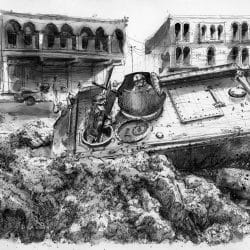
 by Cindy Harper | Reclaim The Net At the United Nations Committee on Information’s 47th session, now in progress through May 9, delegates delivered impassioned speeches condemning the spread of false information online. But while much of the discussion focused on the dangers of disinformation, a growing undercurrent of concern emerged over the potential use of these efforts as a pretext for censorship and control over speech. The Israeli delegation described the spread of online falsehoods and incitement as not merely a technical hurdle but a “moral obligation” to confront, stating that “the fight against disinformation is not only a […]