Reading view

Ukraine to supply NATO ally Latvia with strike drones, ground robots, naval systems
latvia ukraine drone

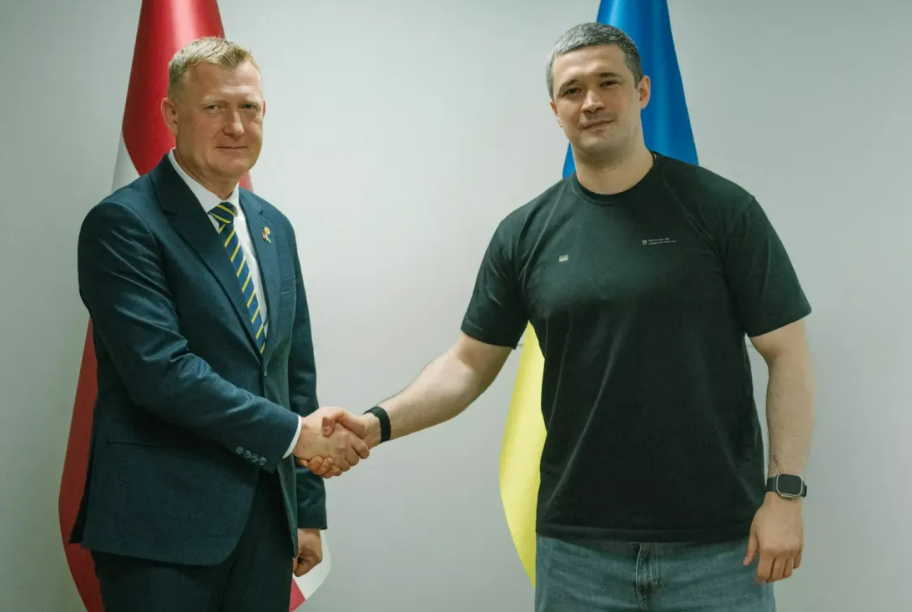
Ukrainian and Latvian defense ministers named specific categories of unmanned systems that will move between the two countries under the Drone Deal, Ukraine's defense minister Mykhailo Fedorov said on 13 June.

Latvia will supply Ukraine with anti-drone systems of Latvian manufacture. Ukraine will supply Latvia with strike drones, ground robotic complexes, and maritime drones, following a Kyiv meeting between Fedorov and Latvian defense minister Raivis Melnis.

The exchange formalizes what until now ran one way. Latvia has been a heavyweight donor of drones and equipment since 2022, pledging 10 million euros to joint defense manufacturing in 2025 alone.

Today's agreement makes Ukraine a supplier to a NATO member for the first time under this format.

"Ukrainian technologies and combat experience help partners adapt faster to the challenges of modern warfare," Fedorov wrote on Telegram, "while support from allies makes it possible to scale solutions that have already proven effective on the battlefield."

The meeting is Melnis's first foreign trip as defense minister. He took office on 28 May after his predecessor Andris Sprūds resigned over a 7 May Ukrainian drone crash near Latvia's Rēzekne oil storage facility — an incident that brought down Prime Minister Evika Siliņa's government.

Before his appointment, Melnis served as the Latvian defense ministry's representative at the embassy in Kyiv.

In a separate meeting on the same visit, Melnis told President Volodymyr Zelenskyy: "We have supported Ukraine and continue to support it with training and our expertise since the very beginning. And now we are asking Ukraine to support us, because there is only one country in the world who knows how to fight Russia, how to stop Russia."

What the Drone Deal opens

The 9 June Drone Deal, signed in Tallinn between Zelenskyy and Latvia's new Prime Minister Andris Kulbergs at the Nordic-Baltic Eight summit, is the sixth bilateral framework Ukraine has concluded under this format.

At the signing, Zelenskyy offered Ukrainian counter-drone experts to Baltic states facing repeated drone incursions. The Fedorov-Melnis meeting gives that offer operational content.

Latvia has spent recent months as the country most exposed to drone spillover from Russia's war on Ukraine. French NATO fighters shot down a drone over eastern Latvia on 8 June — the first NATO intercept on Latvian soil.

Latvia's military chief Kaspars Pudāns warned on 4 June that Russia could exploit its drone manufacturing edge to attack the Baltics by 2028.

Fedorov did not specify volumes, timelines, or financial terms.
  •  

Ukraine war latest: Sweeping new reforms to terms of service announced in effort to ease manpower crisis

Key developments on June 12:

  • Ukraine announces landmark military service reforms with record pay raise for infantry
  • Russian rubber plant, oil refineries struck by Ukrainian drones in latest overnight attack, military confirms
  • Ukrainian drone maker Skyfall partners with Airbus on defense innovation
  • Sumy hit by morning artillery bombardment as Russian

  •  

Zelenskyy has 61% trust in Ukraine. Two officials above him in rankings run drone program and city under Russian attack

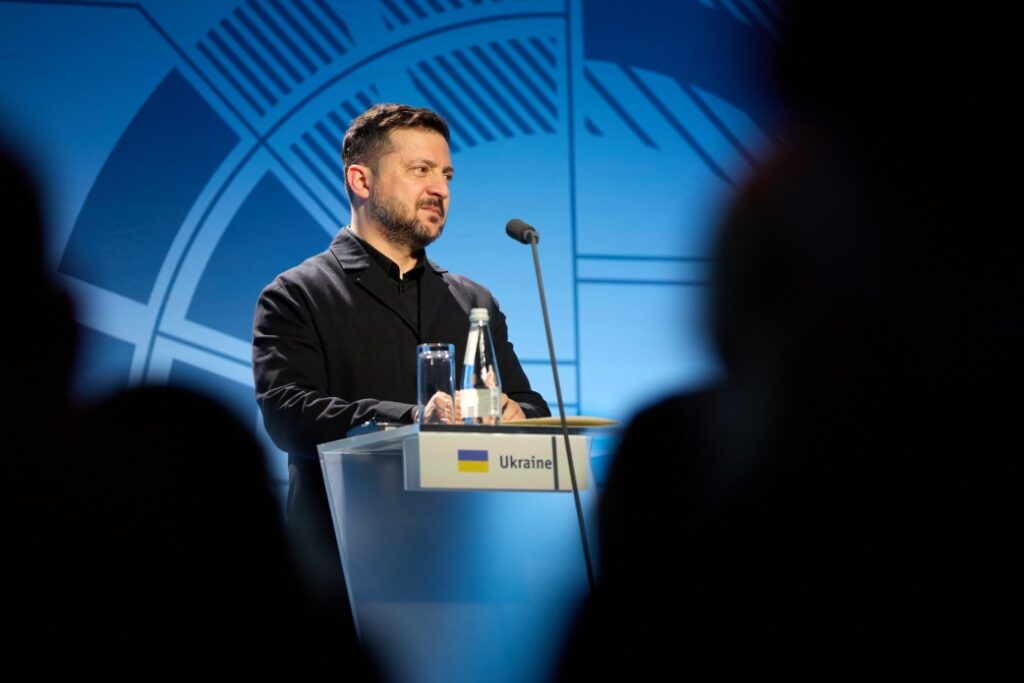
President of Ukraine Volodymyr Zelenskyy on 9 June 2026. Source: President's Office

Some 61% of Ukrainian citizens trust President Volodymyr Zelenskyy, according to a new poll by the Kyiv International Institute of Sociology (KIIS) conducted between 7 May and 3 June 2026. Meanwhile, Kharkiv Mayor Ihor Terekhov tops the trust-balance ranking among Ukrainian political and public figures at +32%, followed by Defense Minister Mykhailo Fedorov at +29% and Zelenskyy at +27%.

The trust ranking documents a continuing Ukrainian public pattern that has held across multiple KIIS polls during the war: hands-on wartime managers, particularly mayors and regional administrators in cities under direct Russian attack, outrank national-level political figures in terms of trust, even when national figures retain absolute majority support.

Terekhov leads as Mayor of Kharkiv, Ukraine's second-largest city, which has been under sustained Russian missile and drone attack since 2022. Fedorov leads Ukraine's drone-development push and the broader $113 million "Logistics Lockdown" rear-area strike program announced in May. 

Zelenskyy numbers in detail

Among the 61% who trust Zelenskyy, 33% reported "complete" trust and 28% "rather" trust. Among the 34% who do not trust him, 20% reported "complete" distrust and 13% "rather" distrust. The 5% remaining were undecided or refused to answer.

Compared with KIIS's April 2026 reading, trust and distrust shares are within the margin of error, with the trust-distrust balance improving slightly from +22% to +27%.

KIIS noted a methodological nuance specific to this round: questions were asked about 18 different public figures in random order, and a weak correlation emerged: respondents who were asked about Zelenskyy later in the sequence trusted him slightly more than those who were asked earlier.

Full ranking

KIIS's trust-balance ranking among politicians and public-political figures:

  • Ihor Terekhov (Mayor of Kharkiv) — 52% trust, 19% distrust, balance +32%
  • Mykhailo Fedorov (Defense Minister) — 50% trust, 21% distrust, balance +29%
  • Volodymyr Zelenskyy (President) — 61% trust, 34% distrust, balance +27%
  • Vitaliy Kim (head of Mykolaiv Oblast administration) — 47% trust, 27% distrust, balance +20%
  • Oleh Lyashko (former MP, military servicemember) — 47% trust, 43% distrust, balance +5%
  • Serhii Prytula (volunteer) — 46% trust, 44% distrust, balance +2%

What rankings tell us

Zelenskyy's 61% absolute trust is the highest in the ranking. But the trust-balance metric, which weights both trust and distrust, places two other figures above him: Terekhov and Fedorov.

Liashko and Prytula, despite having relatively high absolute trust (47% and 46%), have correspondingly high distrust (43% and 44%). The ranking thus differentiates two distinct kinds of public support: consensus support (Terekhov, Fedorov, Zelenskyy, Kim) versus polarized support (Liashko, Prytula). 

Methodology and coverage

The KIIS poll surveyed 2,007 Ukrainian citizens aged 18 and older via computer-assisted telephone interview (CATI), using random sampling of mobile phone numbers, exclusively in territory under the control of the Ukrainian government. It means that the data does not include displaced Ukrainians abroad or Ukrainians in Russian-occupied territories. 

  •  

Ukraine has built 822 kilometers of anti-drone road tunnels. Each kilometer means safer evacuations and faster supply

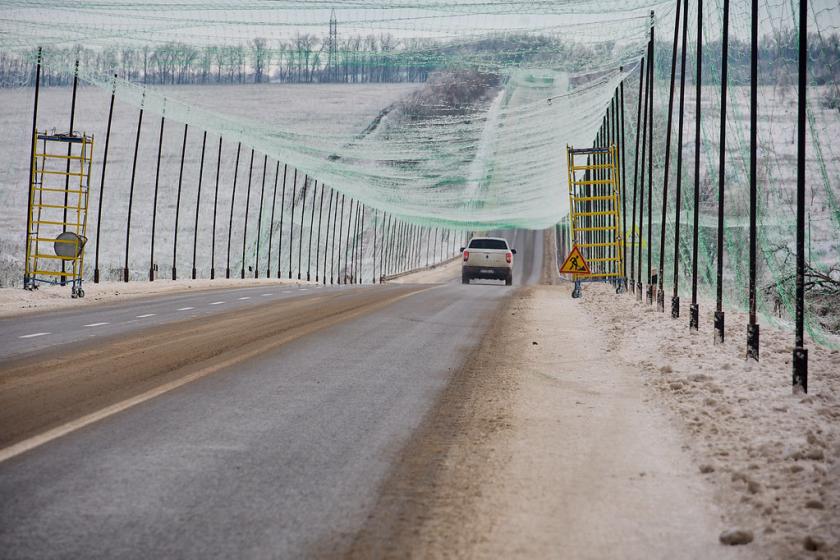
fishing nets used mediterranean millennia — now italy wants turn drone shields over ukrainian cities · post workers install anti-drone above road kharkiv's ring 2026 2daykhua sitka6 italy's senate has

Ukraine has built 822 kilometers of anti-drone protection along frontline logistics routes since the start of 2026 and has restored more than 170 kilometers of damaged regular roads in frontline oblasts, Defense Minister Mykhailo Fedorov says. In May alone, Ukraine's State Special Transport Service built 211 km of new anti-drone protection. 

Russian FPVs and reconnaissance UAVs hunting Ukrainian vehicles within 15-30 km of the front have forced Ukraine to build a permanent national infrastructure for drone-protected movement on its own side.

How does protection work? 

Anti-drone protection on Ukrainian frontline roads typically takes the form of overhead netting tunnels, wire-mesh canopies, and reinforced barriers along sections of road within reach of Russian FPV drone operators.

The structures intercept FPVs before they strike vehicles, allowing supply trucks, casualty-evacuation vehicles, and personnel rotations to move along otherwise lethal stretches of road.

The May 2026 build-out

In May 2026, Ukraine restored 38 km of previously damaged protected segments and rebuilt 115.5 km of standard frontline roads.

The combination of new construction, maintenance, and regular road repair reflects the operational reality that Russian strikes constantly attrit the network even as Ukraine extends it.

"Each protected kilometer means safer logistics, faster supply, casualty evacuation, and safer military movement even under constant threat of drone attacks," Fedorov said.

Mirror campaigns

Meanwhile, Ukraine's offensive logistics campaign has driven Russia to restrict civilian transport on its main occupied-territory highways. Russia is reportedly banning regular bus services on the R-280 "Novorossiya" route and the R-150 Belgorod-Mariupol highway after Ukrainian drones.

Ukraine, on its own side, is building physical infrastructure, such as netting, wire, and barriers, to keep its own logistics moving under the same drone pressure that Russia is failing to manage on the other side of the line. 

Meanwhile, Russia has installed anti-drone nets at its facilities, such as the Velikolukskaya oil depot in Velikiye Luki, Pskov Oblast. 

  •  
❌