Login
Login
“Poland and Ukraine need each other more than their leaders admit”— a Polish advocate for Ukraine on why the memory feud helps Moscow
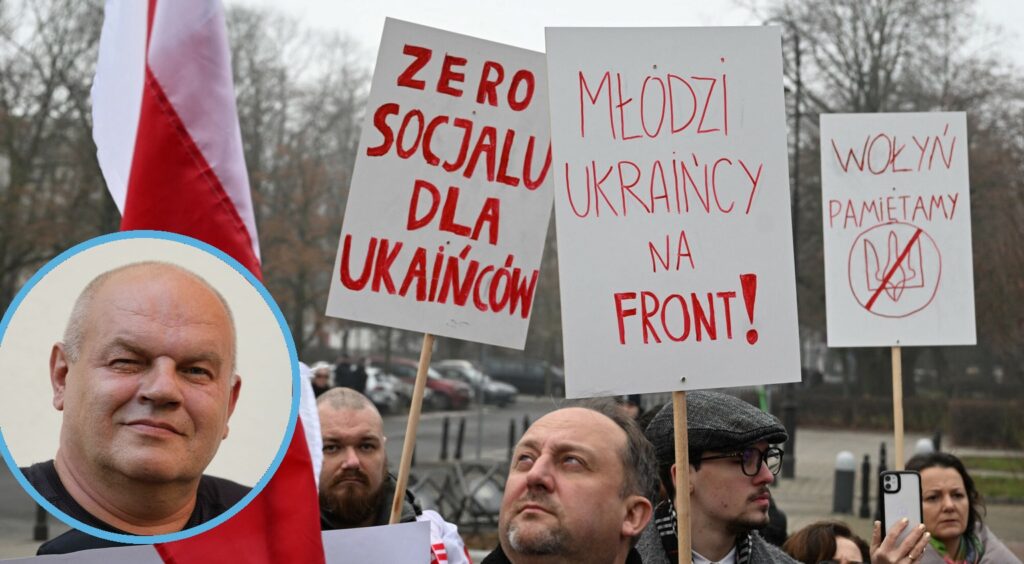
On 26 May, Volodymyr Zelenskyy signed a decree honoring a special forces unit as "Heroes of the UPA" — the Ukrainian Insurgent Army, which fought both Nazi Germany and the Soviet Union in WWII. In Ukraine, the UPA is often seen as an anti-Soviet resistance movement. In Poland, it is remembered for the 1943-1945 Volhynia massacres, in which the UPA killed up to 100,000 ethnic Poles.
Within two weeks, the decree handed Poland's nationalist right a lever it had sought for years. The timing could hardly be worse. Poland is the land corridor for Western weapons, the host of some 1.5 million Ukrainian refugees, and one of the votes Kyiv needs to enter the EU. The quarrel over the decree now strains all three at once: weapons to Kyiv, Ukrainian refugees in Poland, and Ukraine's EU ambitions.
The damage is already visible where you would least expect it. Polish and Ukrainian forensic teams exhuming the Volhynia dead now keep cameras away from the graves, fearing images of the remains will be fed into Russian propaganda or AI deepfakes.
Citing Zelenskyy's decree naming a special operations unit for the "Heroes of the UPA," Polish President Karol Nawrocki announced on 29 May that he would seek to strip Zelenskyy of the Order of the White Eagle, Poland's highest state distinction, and put the question to the Order's Chapter. It took up the request on 8 June but broke up without deciding, leaving the dispute open.
The far-right Confederation party's Krzysztof Bosak called for blocking Ukraine's EU accession outright. Even Lech Wałęsa, the former Solidarity leader, publicly removed his Ukrainian flag pin, saying he would keep helping the Ukrainian people but would no longer support Zelenskyy.
Polish polls show strong support for President Nawrocki. Anti-Ukrainian graffiti has appeared on the walls of Drunken Cherry bars in Poland, calling them "zones infected with Banderism." The graffiti refers to Stepan Bandera, a Ukrainian nationalist whose name many Poles associate with wartime massacres. Attacks on Ukrainian youth are also rising: in May, five Polish teenagers were detained over a brutal Warsaw assault, which the city's mayor blamed on right-wing rhetoric.
On 3 June, Ukrainian Foreign Minister Andrii Sybiha urged restraint, asking Ukrainians and Poles not to "spin the flywheel of hatred."
Euromaidan Press spoke with Jerzy Wójcik, a Polish journalist and Ukraine advocate who co-founded Sestry.eu, a Polish-Ukrainian media platform for Ukrainian women, and co-organized Warmth from Poland for Kyiv, a winter 2025-2026 campaign that raised more than $2.8 million for generators after Russian strikes on Ukraine's power grid.
Wójcik discussed the shift in Polish opinion, Warsaw's pressure on Kyiv, and why joint work to identify and rebury Volhynia victims may still offer a way out, even as political pressure complicates it.
Interview edited for length and clarity.
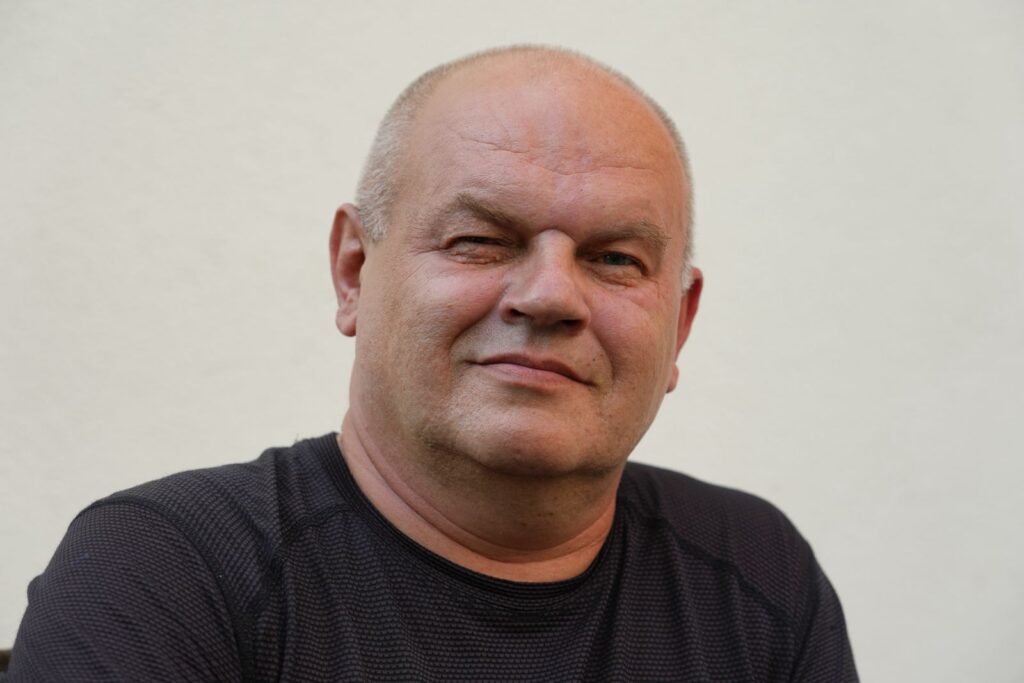
"I don't want to let this happen: a repeat of what happened in Germany before the Second World War."
— Jerzy Wójcik
"I feel like I woke up in another country": how Polish public opinion flipped overnight
Daniel Thomas: The Polish Institute of National Remembrance, which Nawrocki led, called the killing of Belarusian civilians genocidal in 2005 but walked back that characterization in 2019. Does that flip prove your hypocrisy charge against Nawrocki and other Polish right-wing nationalists, or does it just prove that every memory institution, Ukraine's included, bends history to current politics?
Jerzy Wójcik: I think there is something wrong with all these kinds of institutions, because they cannot be completely independent from current politics. There is no such thing as neutral history.
With the Polish IPN, it's a tragedy from the beginning, because they use the institution and history itself to win political battles.
I don't like Nawrocki. I think he is a cynical guy. Still, most Polish voters chose him, so I have no choice. But I remain very critical.
I got the results of the public opinion poll yesterday, and there is such a mental rush in the internet polls: 75% or something like that support Nawrocki's decision to strip Zelenskyy of the Order of the White Eagle [the Wprost / SW Research poll showed 52.3% support; the Res Futura social media analysis showed 97.4%].
I feel like I woke up in another country. It's scary. This could have a real impact on the lives of real people.
I mean Ukrainians in Poland. There have already been so many attacks on Ukrainian boys, beaten almost to death [during this war]. And now there's Nawrocki's statement, plus the right-wing supporters of [Grzegorz] Braun and Confederation.
It could have a tangible negative impact in the real world. Nobody normal-headed in Poland wakes up thinking about Bandera.
[The Ukrainian nationalist massacres were] 80 years ago. Who cares? It shouldn't be a concern.So I think it's a very dangerous game, not in symbolic terms, but in real-life aggression. I feel like anything could go wrong at any hour.
Can you imagine a Russian operation, a false flag provocation on Polish ground, pretending they are Ukrainian or some Bandera boys? It's easy to implement now because the social and mental priming is in place.
*Confederation is a far-right Polish alliance with anti-Ukrainian currents. Braun, a far-right MEP who leads the breakaway Confederation of the Polish Crown, is known for Ukrainophobic, antisemitic, and pro-Russian rhetoric.
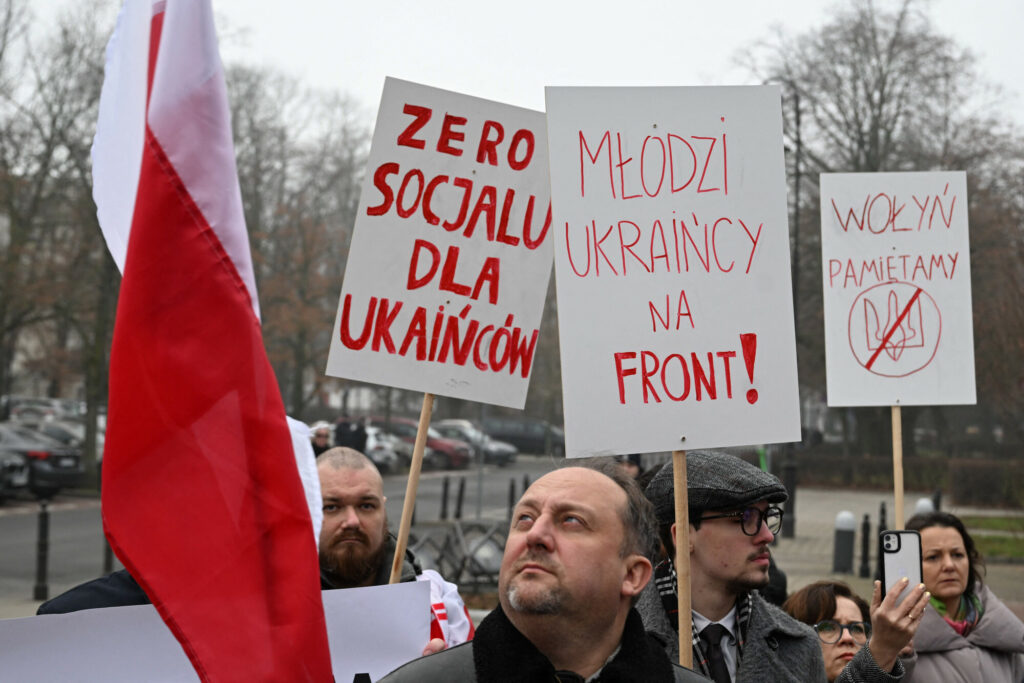
"There is no such thing as neutral history."
— Wójcik
"Reality will win": why Poland and Ukraine need each other more than either side admits
Thomas: You say Poland won't drop Dmowski [an interwar Polish nationalist leader] or the Holy Cross Brigade [a Polish WWII partisan unit accused of Nazi collaboration] as heroes under outside pressure. So, on what grounds can Warsaw demand Kyiv drop Bandera?
Wójcik: Reality will win. As a society and as political entities, Poland and Ukraine need each other much more than both of these guys [Zelenskyy and Nawrocki] pretend. It's all theater now.
It's in Poland's interest to help Ukraine win the war, to protect Poland. Zelenskyy and the Ukrainian politicians could underestimate this. They have other potential partners: Germany, Scandinavia, New Zealand, and Australia. But Poland is the closest neighbor. You cannot send military tools via Romania or Slovakia at the same scale.
Ukraine has its citizens living in Poland. We cannot allow relations between our countries to fracture over one symbol, one word: “Bandera.” The two governments have to find a solution.
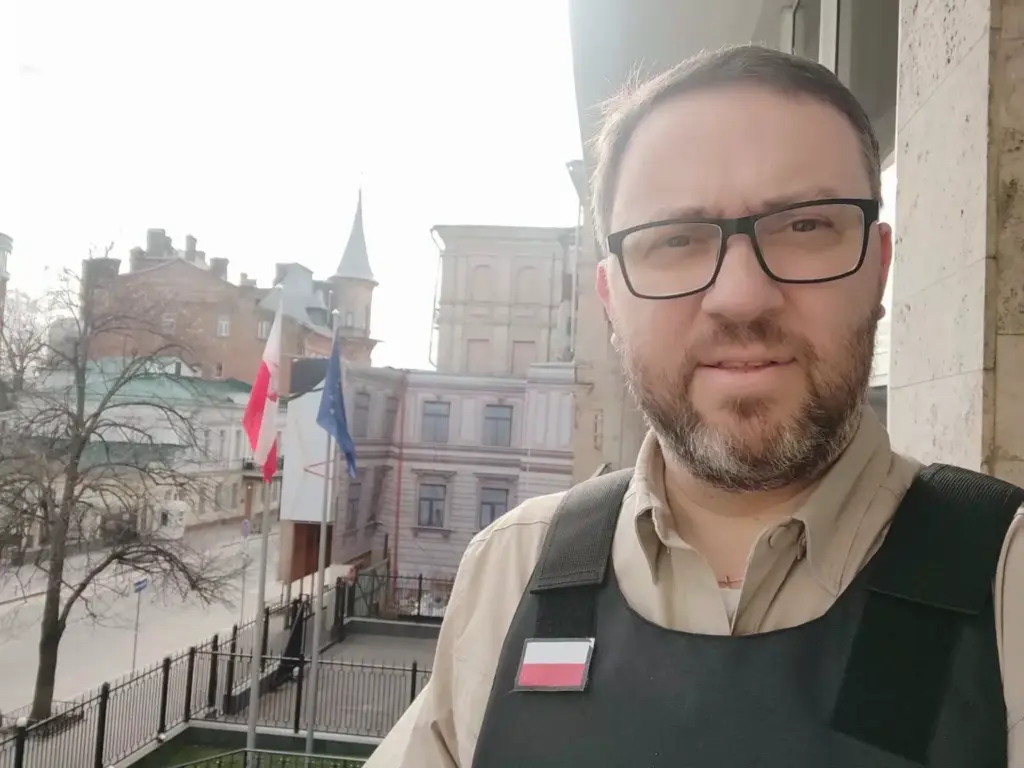
"Behaving like smugglers": How political weaponization affects Polish-Ukrainian archaeologists exhuming Volhynia massacre victims
Thomas: Could the symbolic fight endanger practical cooperation on exhumations and identification work?
Wójcik: This is the part that should worry everyone, because the symbolism and the work are moving in opposite directions. The work is quietly winning. Look at what's already happened.
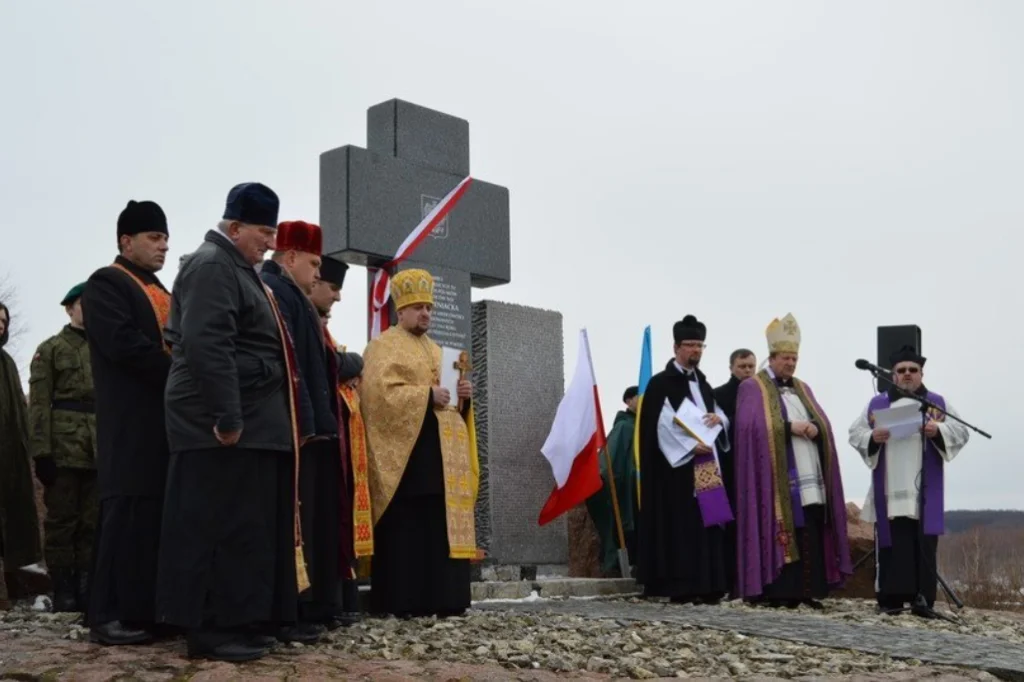
Puźniki, spring last year. At least forty-two people were exhumed and reburied at the Puźniki cemetery in September. Last autumn, Ukraine granted further exhumation permits.
Forensic specialists from Ukraine and Poland work in the same pit, and yet there are no incidents. They are reconciling faster than the politicians.
The danger isn't that the digging stops; it's that every reburial gets dragged in front of a microphone and turned into a demand, while the families want one thing: a name on the stone before they die themselves.
You can see it best in a single detail. The archaeologist running the Puźniki dig kept the press away from the site because she feared provocations. They had to hide the most healing thing happening between our two countries so nobody could turn it into a weapon.
And that's exactly where the symbolic fight does its damage: it doesn't stop the work; it forces the people doing it to behave like smugglers.
"Forensic specialists from Ukraine and Poland work in the same pit, and yet there are no incidents. They are reconciling faster than the politicians."
— Wójcik
Why linking Polish support for Ukraine to Kyiv’s rejection of Bandera risks turning into “blackmail”
Thomas: If Poland should support Ukraine for hard-security reasons regardless of history, should Kyiv avoid symbols that complicate support for Ukraine abroad?
Wójcik: I won't tell President Zelenskyy what to do, and still less the citizens of Ukraine. They're free people, in the middle of a war for their own existence, and the choice of whom they honor belongs to them. What I can do is describe the mechanics, because they work whether or not anyone likes them.
Symbols aren't decoration; they're strategy. Every hero a state puts on a pedestal is a sentence in a story other people read: a voter in Berlin, a congressman in Washington, a Pole deciding whether the man at the next desk is a guest or a threat.
Bandera on a street sign reads differently in those capitals than it reads in Kyiv. That's a fact about the world, not a verdict on Ukraine. Moscow sees it and uses it; that's simply how it is.
But elsewhere, Warsaw gets it wrong, and here I'm entirely sure which side I'm on: you cannot demand that a nation renounce its founding myths while it's bleeding, on someone else's schedule, as the price of help. The moment memory becomes a precondition, it stops being an argument and becomes blackmail. Any country with a shred of honor will dig in.
I am not telling Kyiv what to strike from its own memory. I am telling Warsaw what not to put a price on. Once you make someone else’s identity a condition, you do not weaken it. You harden it.
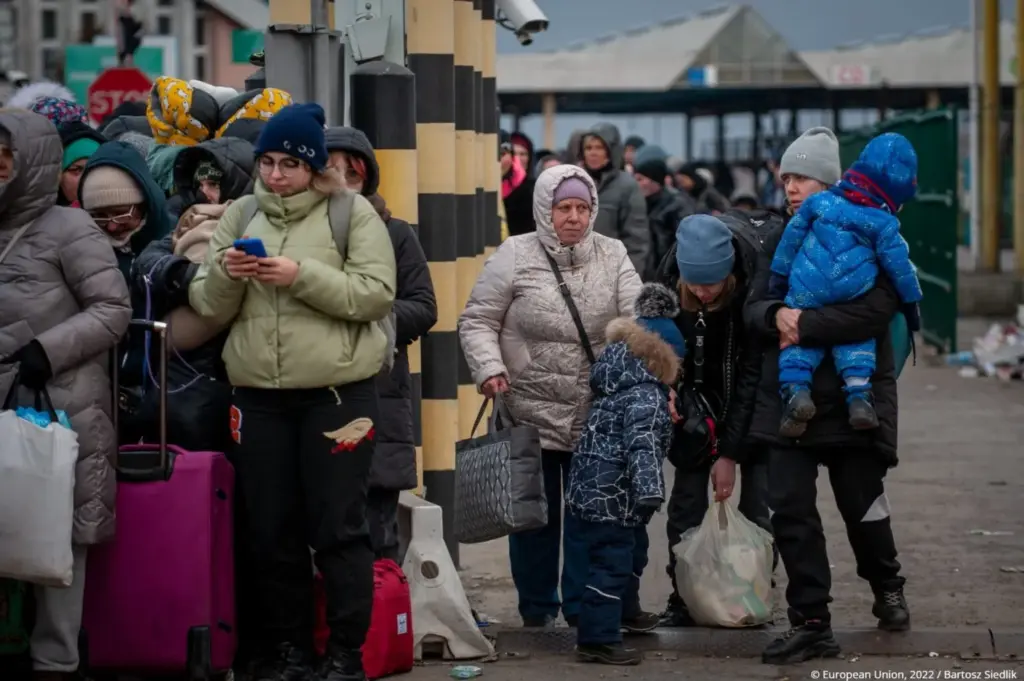
How the memory conflict could endanger Poland's 1.5 million Ukrainians
Thomas: Where does elite rhetoric become a real risk for Ukrainians living in Poland?
Wójcik: The moment it stops being about 1943 and starts being about the woman cleaning an office tonight. Historians arguing over the UPA? Fine, that's their job; let them fight.
The risk starts where "Banderite" stops, describing a man who died in 1959, and starts describing the nineteen-year-old in the back row. [Mateusz] Morawiecki floated the idea of deporting people for displaying Bandera symbols.
Think about how that lands on a teenager who fled a missile. She can't always tell you where the symbol ends and where she begins, and neither can the official ruling on her case.
So the line is simple: the risk appears where memory politics turns a million guests into a million suspects.
You don't even need a law for it. It's enough for the word "Ukrainian" to quietly start doing the work the word "Banderite" used to do.
"Few Ukrainians want to be told to rethink [their nation's history] while their country is under attack."
— Wójcik
Separating hands from mouths: what a realistic off-ramp looks like
Thomas: Is there a realistic off-ramp from this dispute, or is it now built into both countries' domestic politics?
Wójcik: The off-ramp exists — it's happening right now in the forensic teams' tents — but it's blocked, because both sides have found the quarrel too useful to give up.
For Nawrocki, Volhynia is both national identity and electoral politics. For some in Kyiv, the heroic story of Ukrainian nationalism has become part of wartime morale, and few Ukrainians want to be told to rethink that story while their country is under attack.
That is why goodwill alone will not solve the dispute. Neither government has much political space to back down.
The more realistic answer is to separate the issues. Let historians and forensic teams continue exhumations and reburials without political interference, and do not make Ukraine’s EU path depend on a dispute over 1943 that no summit can resolve.
The off-ramp isn't reconciliation. That word is too big and too soon. The off-ramp, for now, is separating what can be done with hands from what we quarrel over with mouths.
And further out, over a generation, the real prize: a shared founding story for a new Central Europe, where Poland and Ukraine are co-authors rather than prosecutor and defendant. Except that only becomes possible the day we stop letting the worst chapter of the shared past [Volhynia] write the next one [Polish-Ukrainian relations going forward]. Why do we let the worst chapter of [Ukraine and Poland's] shared past write the next one?
Read also
-
Kyiv won't drop the "Heroes of UPA" unit name despite Polish pressure
-
Ukraine will keep issuing Polish exhumation permits despite historical tensions. Dispute "causes joy in Moscow," Kyiv says
-
Nawrocki vetoes language reprieve as 441 mostly Ukrainian doctors lose right to practice
-
Former Polish ambassador returns Ukrainian Order of Merit after UPA Heroes unit decree