Reading view

“Russia spits in our faces” and the UN pretends it’s “just rain” – UN envoy reports May deadliest month for Ukrainian civilians since 2022
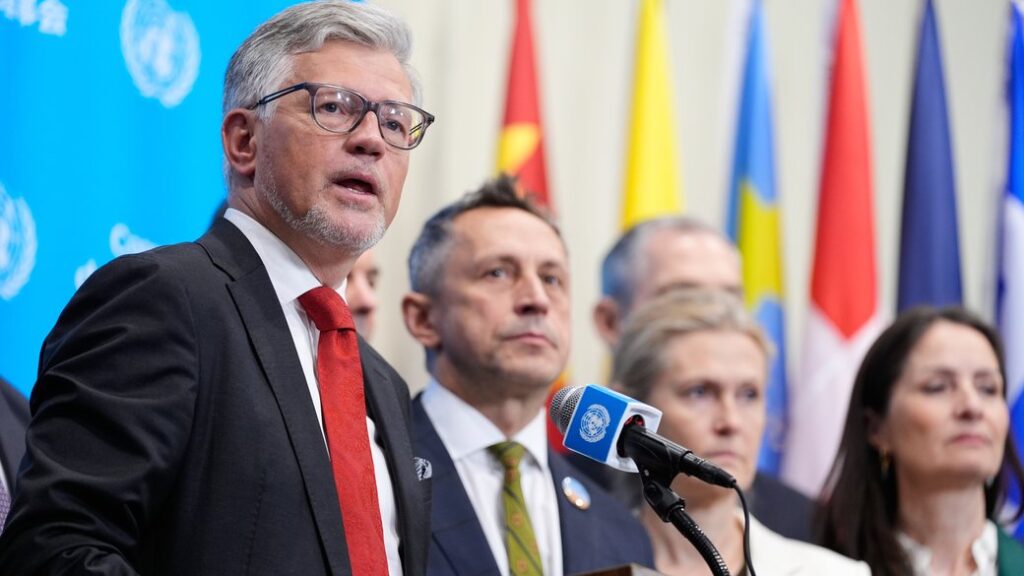
Andrii Melnyk, Permanent Representative of Ukraine to the UN. Photo: Suspilne

May was the deadliest month for civilians in Ukraine since April 2022, according to the United Nations, which presented updated casualty data to the UN Security Council during an emergency meeting requested by Kyiv, Suspilne reported.

Latvian UN envoy Sanita Pavļuta-Deslandes said preliminary figures show a sharp rise in civilian harm, warning that the final statistics for May are expected to be even higher. 

She said attacks during the month included strikes on civilian gatherings, including a funeral in Sumy, which she cited as an example of Russia targeting “so-called legitimate objectives,” according to Suspilne.

She also noted that in the first quarter of 2026 alone, 190 attacks were recorded on medical facilities, including maternity hospitals, while more than 200 educational institutions were damaged or destroyed. The number of injured children increased by 49%, according to UN data cited at the session.

The Security Council meeting came on June 8 following a wave of Russian strikes across Ukraine.

Ukraine accuses Russia of systematic deception at UN

Ukraine’s permanent representative to the UN, Andrii Melnyk, used the session to sharply criticize Russia’s role at the United Nations, arguing that Moscow continues to deny responsibility while undermining international reporting on the war.

“Russia spits in our faces with lies, and we pretend it is just rain,” Melnyk said during the meeting, according to Suspilne.

He suggested that Russia should consider leaving the UN if it rejects its own obligations under international law and dismisses UN investigative findings.

Melnyk also called for Russia to be excluded from UN peacekeeping operations, pointing to its inclusion in UN listings related to sexual violence in conflict and repeated findings on violations involving children and armed conflict.

He urged member states to take action on these findings, saying Russia’s participation in UN structures undermines the credibility of the system itself.

The meeting highlighted growing tensions inside the Security Council as Russia continues to face accusations of escalating strikes on civilian infrastructure while maintaining its role as a permanent member of the body.
  •  

New “Drone Deal” signed – Latvia and Ukraine to expand joint production and defense cooperation

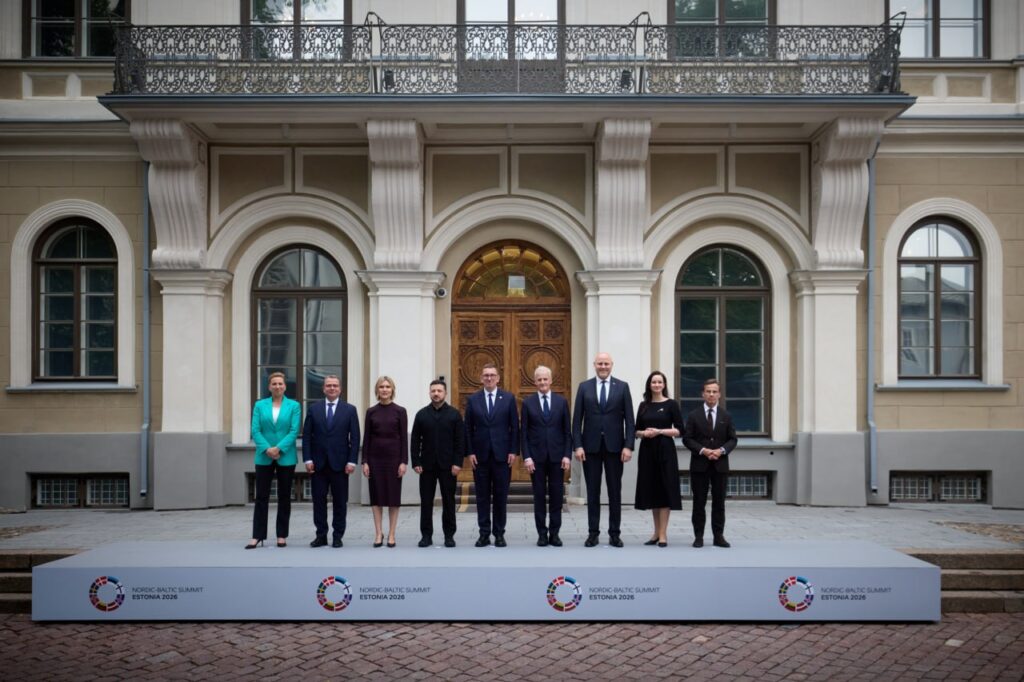
Leaders gathered at the Nordic-Baltic Summit in Estonia, 9 June 2026. Photo: Zelenskyy

Ukraine and Latvia have signed a new “Drone Deal” aimed at expanding joint production and strengthening air and drone defense capabilities, Ukrainian President Volodymyr Zelenskyy said following meetings with Nordic and Baltic leaders on 9 June.

The agreement was signed during Zelenskyy’s first meeting with Latvia’s new Prime Minister Andris Kulbergs, which he described as a “concrete result” focused on co-production and shared defense development.

Zelenskyy said the deal reflects a broader model of cooperation Ukraine is building with partners who have supported Kyiv throughout the war, combining Ukrainian battlefield experience with European industrial capacity.

He said the aim is to strengthen shared protection against Russian threats, including expanding domestic production and improving coordination in drone and air defense systems.

The “Drone Deal” is a long-term cooperation format focused on developing drone capabilities through joint production, technology exchange, and practical defense support between Ukraine and partner countries.

Ukraine offers drone expertise to European partners

Zelenskyy also said Ukraine is ready to expand cooperation on drone warfare expertise, including sending specialist teams to partner countries to share operational experience gained during the war.

He said similar cooperation has already been carried out with partners in the Middle East and could now be scaled across Europe under the new drone cooperation framework.

Zelenskyy said Russia is attempting to escalate tensions across Europe, including through drone-related incidents near NATO borders, underscoring the need for coordinated defense responses among allies.

Air defense and drones central to talks with Nordic and Baltic partners

The announcement came during a series of meetings in Tallinn with leaders from Finland, Norway, Estonia, and other Nordic and Baltic states.

Zelenskyy said partners are increasingly recognizing stronger Ukrainian positions on the battlefield, while Russia continues to compensate for losses by striking civilian infrastructure.

He said air defense remains a key priority, including securing additional missile supplies and advancing work on European anti-ballistic defense systems.

Ukraine pushes for stronger sanctions and EU accession progress

Zelenskyy also discussed increased sanctions pressure on Russia, including measures targeting the shadow fleet, alongside continued support for Ukraine’s EU membership bid.

He urged rapid progress on opening EU accession negotiation clusters, saying Ukraine has met the necessary requirements and expects political decisions in the coming months.

“There is no reason to delay,” he said, calling for momentum in EU decision-making processes.

  •  

Ukraine sets 2030 roadmap to expand rocket and artillery forces – a constant despite evolving warfare

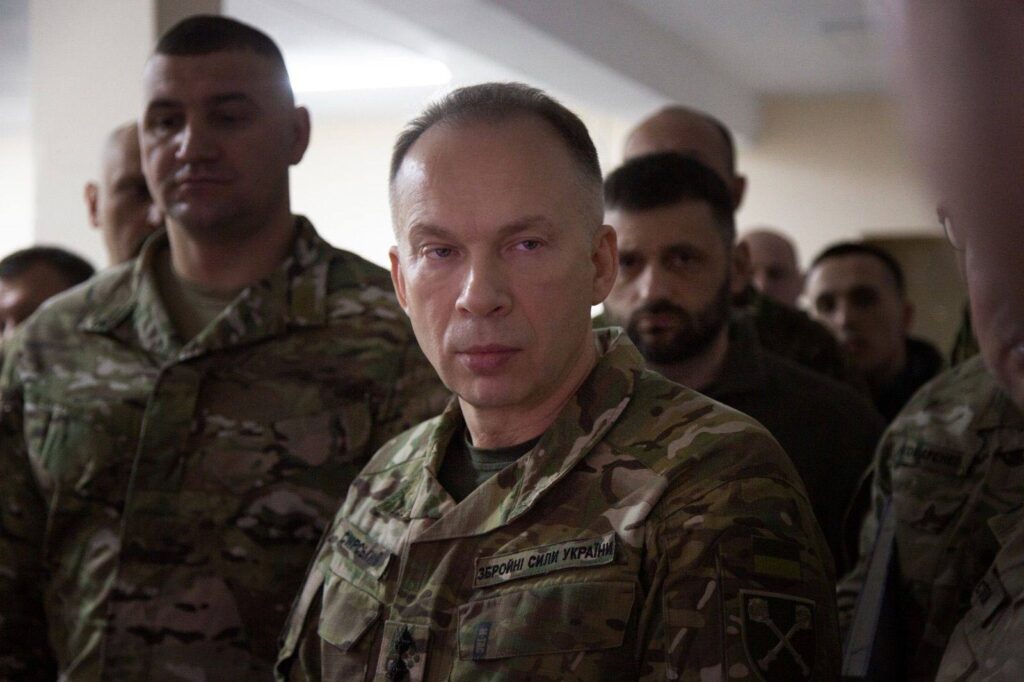
Commander-in-Chief of the Armed Forces of Ukraine Oleksandr Syrskyi. Source: Syrskyi

Ukraine has approved a long-term concept for the development of its rocket forces and artillery, outlining plans to build up capabilities through 2030, Commander-in-Chief Oleksandr Syrskyi said.

Syrskyi said the concept defines the main directions for modernization while Ukraine continues fighting a full-scale war, stressing that long-term force development must run in parallel with current battlefield needs.

He said Ukrainian artillery units are already conducting thousands of fire missions daily and inflicting significant losses on Russian forces, supported by a mix of domestically developed systems and weapons supplied by international partners.

According to Syrskyi, Ukraine operates one of the most diverse ranges of artillery systems globally and uses nearly all available types of ammunition, gaining continuous combat experience against a numerically superior adversary.

War experience drives shift in artillery and drone integration

Syrskyi said Russia’s invasion has significantly changed the character of modern warfare, with growing use of drones, guided bombs, and other precision strike systems reshaping battlefield dynamics.

He said artillery remains a core component of the battlefield despite evolving technology, but its effectiveness now depends heavily on reconnaissance quality and the speed of information transfer.

At the same time, he pointed to several challenges affecting Ukraine’s rocket and artillery forces, including dependence on foreign ammunition supplies, complex logistics linked to multiple systems, limited range in some platforms, and shortages in artillery reconnaissance capabilities.

30th Mechanized Brigade artillery.
30th Mechanized Brigade artillery. 30th Mechanized Brigade photo.

Ukraine to phase out outdated systems and expand domestic production

The concept foresees a gradual transition toward Ukrainian-made artillery systems as the backbone of future force structure, while aging Soviet-era systems that cannot be upgraded will be phased out.

Ukraine will also retain units equipped with modern foreign systems and streamline its overall artillery inventory to improve efficiency and logistics.

Syrskyi said a key priority is the creation of a modern artillery reconnaissance system to improve targeting speed and battlefield coordination.

Focus on long-range strike capability up to 2,000 km

A separate priority is the expansion of Ukraine’s missile forces to increase deep-strike capability across operational and strategic depth.

Syrskyi said this includes completing development and scaling production of domestic ballistic and cruise missiles, which – together with unmanned systems – would form a layered long-range strike capability with a reach of up to 2,000 kilometers.

He said artillery will remain a decisive element of battlefield effectiveness and a central factor in deterring further Russian aggression, regardless of terrain or conditions.

  •  

EU’s 21st sanctions package would ban Russia’s soldiers from European soil

EU High Representative for Foreign Affairs and Security Policy Kaja Kallas delivers press remarks following the Foreign Affairs Council on 20 October 2025

The European Union has proposed a 21st sanctions package against Russia that includes a visa ban on current and former Russian military personnel, as Brussels expands pressure on individuals and entities linked to Moscow’s war effort in Ukraine.

EU foreign policy chief Kaja Kallas said the package is part of a broader push to increase economic and political pressure on Russia.

“We are depriving Russia of the means to fund its war,” Kallas wrote on X.

Package includes over 170 proposed sanctions listings across sectors

The sanctions package will target Russia’s financial, energy, and industrial sectors, with more than 170 proposed listings.

These include banks, weapons manufacturers, oil traders, refineries, and crypto-related services, as well as entities in third countries accused of helping Moscow bypass existing restrictions.

Energy measures include a temporary freeze of the Russian oil price cap mechanism, alongside new restrictions on LNG transactions and additional action against Russia’s shadow fleet, with 30 more vessels proposed for designation.

Officials said the aim is to further reduce Russia’s export revenues and disrupt maritime logistics networks used to move sanctioned energy products.

Brick by brick, we are collapsing the foundations of Russia's war economy.

Today, we are presenting our proposals for a 21st sanctions package against Russia.

This includes a temporary freeze of the Russian oil price cap and designations of institutions used by Moscow to…

— Kaja Kallas (@kajakallas) June 9, 2026

Measures expand to export controls and financial restrictions

The package also expands export controls on materials used in weapons production, including metals, alloys, and high-performance inputs, with companies in countries such as China, Türkiye, Kazakhstan, the UAE, and India included in the proposals.

Financial restrictions remain a central pillar, with expanded sanctions planned against banks and crypto platforms linked to sanctions evasion and war financing.

EU visa ban on Russian military personnel

The sanctions package includes a “comprehensive” visa ban proposal that would prohibit entry into the EU for current and former members of Russia’s armed forces, as well as “proxy groups,” marking an expansion of sanctions beyond economic measures to individuals linked to military operations.

“Europe’s door should not be open to Russia’s (ex-)combatants,” Kallas wrote.

Our sanctions are working.

They are weakening the economic foundations of Russia’s war effort.

Today we double down.

With a 21st package.

Covering energy, banks & crypto, trade including fisheries and visa for Russian soldiers ↓ https://t.co/fTIkATOSfN

— Ursula von der Leyen (@vonderleyen) June 9, 2026

Sanctions already cost Russia up to $1.5 trillion, EU says

The same day, Kallas told journalists that existing sanctions continue to intensify pressure on Moscow’s economy. Kallas noted that Western sanctions have already cost Russia an estimated $1.2 to $1.5 trillion, adding that “brick by brick, we are collapsing the foundations of Russia’s war economy.”

She said the aim remains to increase costs for Moscow across multiple sectors while maintaining unity among EU member states.

The package requires unanimous approval from EU member states before it can take effect.

  •  

Over 2,000 Russian casualties in first six days of June, Madyar reports amid surge in drone strikes on occupied territories

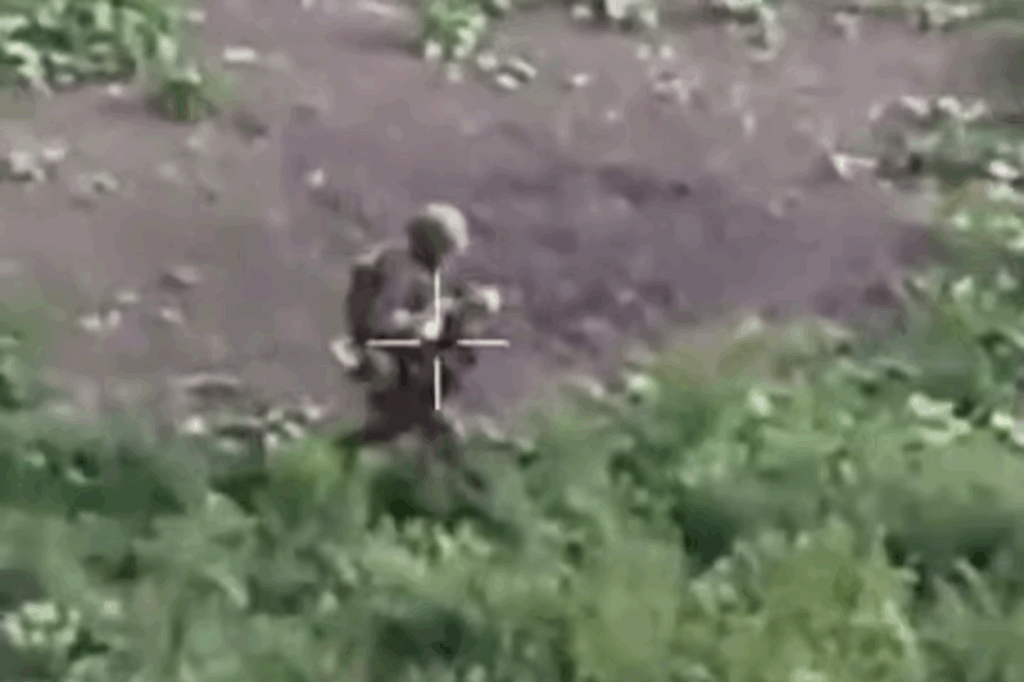
Russian soldier seen by Ukrainian drone before strike, June 2026. Screenshot from video: Madyar

Commander of Ukraine’s Unmanned Systems Forces, Robert “Madyar” Brovdi, says Russian losses reached 1,006 killed and 1,090 wounded during the first six days of June, as Ukrainian drone forces continued strikes against targets on and beyond the front line.

The commander of Ukraine’s Unmanned Systems Forces published the figures on 7 June alongside an update on overnight operations targeting Russian logistics and infrastructure in occupied territory and inside Russia.

More than 2,000 casualties reported in six days

Brovdi said Russian forces suffered a combined 2,096 killed and wounded between 1 and 6 June.

He described the losses as equivalent to the combat strength of a full Russian assault brigade lost within a single week.

The commander also used a railway comparison to illustrate the scale of the casualties, saying the losses would add the equivalent of 20 refrigerated and medical railcars to Russia’s “one-way ticket” train over the six-day period.

Drone strikes target rear-area infrastructure

According to Brovdi, Ukrainian forces also struck 26 targets overnight on 7 June across occupied parts of Luhansk, Donetsk, Zaporizhzhia, and Crimea, as well as Russia’s Bryansk Oblast.

He said Ukrainian units destroyed an air defense system and damaged three locomotives, two railway fuel tanks, four electrical substations, and six telecommunications towers. The strikes also disrupted the movement of military cargo toward the front, according to the statement.

Earlier on 7 June, Ukrainian Special Operations Forces reported strikes on the Semikolodezyanska oil depot in Yedi-Quyu and a maritime fuel terminal in Feodosia. Ukrainian officials said the operation was intended to reduce Russia’s logistical and economic capacity to sustain military operations in occupied territory.

The reported targets fit a broader Ukrainian effort to degrade Russian logistics networks, transport infrastructure, and support systems operating behind the frontline.

Ukraine says it doubled the number of successful strikes on Russian targets more than 50 kilometers behind the front line in May under the “Logistics Lockdown” program, which prioritizes attacks on transport networks, fuel infrastructure, depots, and other systems supporting Russian military operations.

  •  

Ukrainian Special Forces target Crimea fuel system, hitting depot and maritime terminal in “asymmetric” middle-strike operation on occupied territory

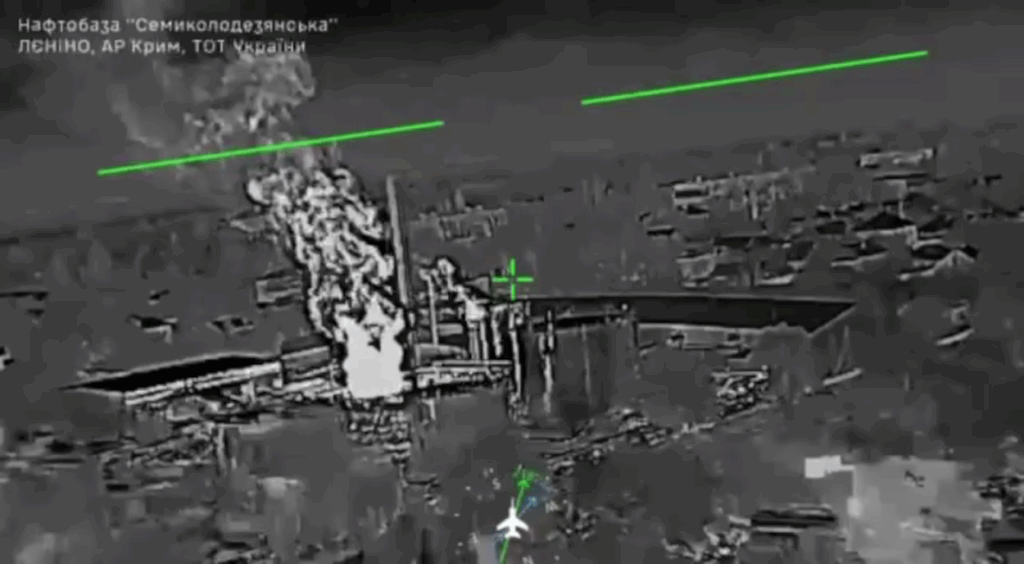
Semikolodezyanska oil depot in Yedi-Quyu (Lenine), occupied Crimea, amid a Ukrainian drone attack. Screenshot from video: Ukraine's Special Operations Forces

Ukrainian Special Operations Forces (SOF) say they carried out strikes on Russian fuel infrastructure in occupied Crimea overnight on 7 June, targeting the Semikolodezyanska oil depot and a maritime fuel terminal in Feodosia.

“The destruction of the enemy’s fuel infrastructure reduces its economic and logistical capabilities. The Special Operations Forces continue asymmetric actions aimed at the strategic weakening of the enemy’s ability to wage war against Ukraine,” the SOF said.

The SOF said both facilities are part of Russia’s fuel logistics system in occupied Crimea, used for storage, transfer, and redistribution of petroleum products supporting Russian military logistics in the region.

Semikolodezyanska oil depot hit in Yedi-Quyu

The SOF said the Semikolodezyanska facility is used by Russian forces as a fuel storage and transfer hub for diesel, fuel oil, and other petroleum products distributed across occupied territory.

The depot is located in Yedi-Quyu, a settlement in eastern Crimea which is known under Russian occupation administration as Lenine.

The site reportedly contains nine storage tanks ranging from 700 to 3,000 cubic meters and supports distribution across occupied territory through rail tanker loading and onward transport.

Ukrainian Special Operations Forces struck Russian fuel infrastructure in occupied Crimea overnight on 7 June, hitting the Semikolodezyanska oil depot in Yedi-Quyu (Lenine) and a maritime fuel terminal in Feodosia.

“The destruction of the enemy’s fuel infrastructure reduces its… pic.twitter.com/QwWWwYzmPi

— Euromaidan Press (@EuromaidanPress) June 7, 2026

Open-source monitoring suggested fire activity at the site following the reported strike. The OSINT group Exilenova+ said the depot was hit overnight, while NASA FIRMS satellite data reportedly showed heat signatures consistent with burning at the location.

The monitoring group Crimean Wind also reported a fire at the site, citing satellite imagery and witness reports. It said residents reported multiple explosions between 02:05 and 02:14 local time, followed by visible flames near the facility.

The group described the depot as a large settlement-based fuel site, originally built in the Soviet period, closed in the 1990s, and later restored after 2015 under Russian administration.

Feodosia maritime fuel terminal targeted

Ukrainian forces also reported a strike on a maritime oil terminal in Feodosia, used for transferring fuel between rail and sea transport.

The facility includes seven storage tanks with capacities of 10,000 and 20,000 cubic meters and functions as a key fuel transshipment point between rail wagons and maritime tankers.

It forms part of a wider logistics network supplying occupied Crimea, enabling large-scale movement of petroleum products across rail and coastal routes.

Expansion of Ukraine’s “middle-strike” campaign

The reported attacks reflect Ukraine’s growing use of “middle-strike” operations targeting logistics and energy infrastructure deep in occupied territory. 

The aim, according to officials, is to degrade Russia’s ability to sustain military operations by disrupting fuel supply chains and transport hubs beyond the front line.

A Ukrainian long-range drone struck a Russian military truck near occupied Horlivka, Donetsk Oblast, setting it ablaze and reportedly killing the driver.

Footage from the scene shows the vehicle burning in the middle of a key logistics route, forcing traffic to halt.

Russian… pic.twitter.com/CYfZjkRJMC

— Euromaidan Press (@EuromaidanPress) June 5, 2026

Russia reports large-scale drone interceptions

The Russian Ministry of Defense said air defense systems intercepted and destroyed 95 Ukrainian drones overnight across multiple regions of Russia and occupied territory, including Crimea and the Black Sea area.

The ministry listed other regions including Belgorod, Bryansk, Kaluga, Kursk, Novgorod, Rostov, Smolensk, Tula, Yaroslavl, Krasnodar Oblast, and Moscow Oblast.

  •  

“Extremely rare” 300-ton Russian rail recovery crane destroyed in partisan sabotage operation, ATESH claims

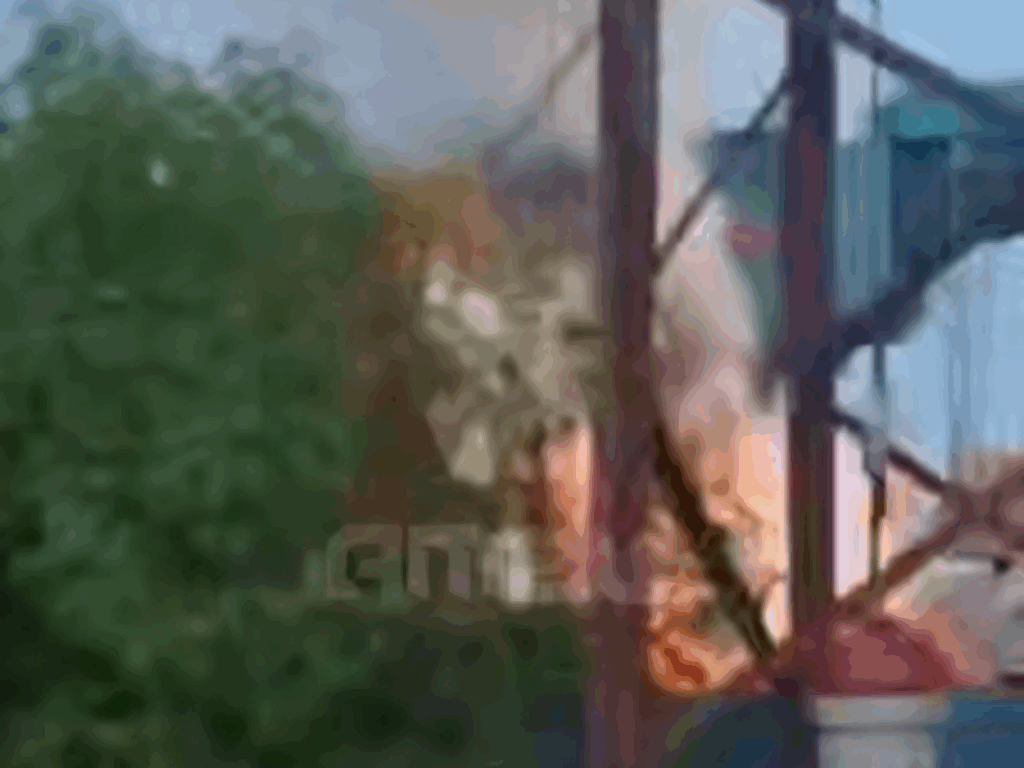
Fire engulfs a rail recovery crane in Russia’s Voronezh region, which ATESH claims was destroyed during a sabotage operation targeting Russia's railway infrastructure. Screenshot from video: ATESH

Pro-Ukrainian partisan movement ATESH says its agents carried out a sabotage operation at a railway station in Russia’s Voronezh Oblast, destroying a rare heavy-duty rail recovery crane used by Russian Railways.

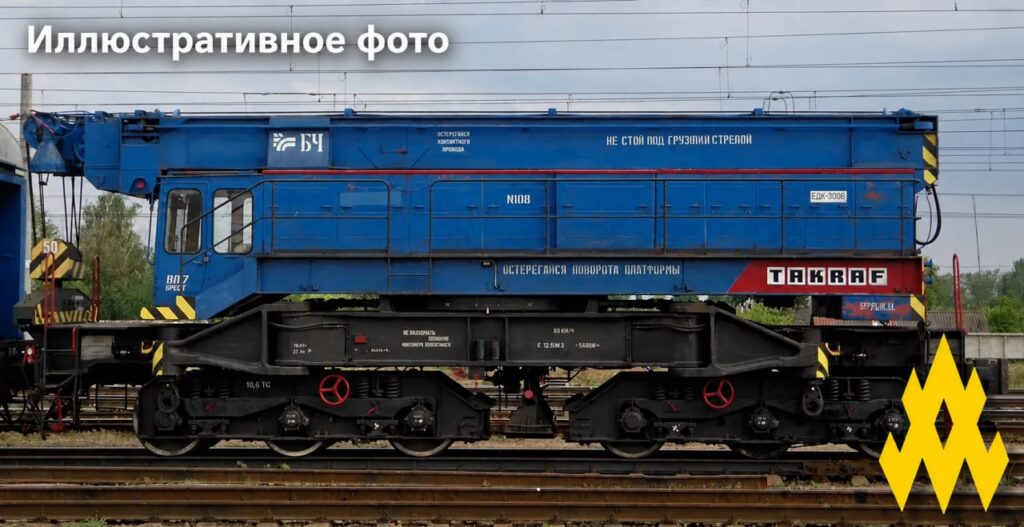
The group said the target was an EDK-300/5 rail recovery crane, a specialized system used for large-scale emergency rail restoration work. ATESH claims the equipment is no longer in production and exists in only limited numbers across Russia’s rail network.

According to the statement, the crane was designed for heavy railway accident response tasks, including lifting derailed rolling stock, clearing damaged infrastructure, and restoring traffic on key lines. It reportedly had a lifting capacity of up to 300 tons.

A heavy rail recovery crane used by Russian Railways for emergency repair and derailment response. Illustrative photo: ATESH

“Even in the deep rear, critical equipment is not safe from destruction”

ATESH said the loss of the crane would reduce Russia’s ability to rapidly repair damaged rail infrastructure, particularly at major transport junctions where recovery speed is critical for maintaining logistics flows.

The group added that the impact of the loss would be long-lasting, saying: “Replacement of the destroyed crane will require significant time and resources. While Putin’s army searches for a replacement, the railway hub and regional logistics are operating with limited recovery capacity.”

“Even in the deep rear, critical equipment is not safe from destruction,” they added.

The report has not been independently verified.

ATESH: sabotage network operating inside Russia

ATESH is a clandestine resistance network operating inside Russian-controlled territory and within Russia itself. The group says it focuses on reconnaissance and sabotage operations against military, transport, and communications infrastructure that it considers to be supporting Russia’s war effort against Ukraine.

ATESH statements are typically released via Telegram and often include claims of damage to rail assets, depots, and logistical hubs. The group also claims to have agents operating inside the Russian armed forces, which it says helps it gather intelligence and identify targets.

Wider campaign targeting Russian logistics infrastructure

The operation is part of a wider campaign aimed at disrupting Russian transport infrastructure, which the group says supports both civilian logistics and military supply chains.

ATESH has increasingly focused on rail assets inside Russia, arguing that even limited damage to specialized equipment can create disproportionate delays across tightly connected transport networks.

Previous claimed strike in Saint Petersburg

In a previous claimed operation in May, ATESH said its agents set fire to a locomotive in Saint Petersburg used for oil transport, taking it out of service and disrupting rail operations in Russia’s northwestern logistics network.

The group said the locomotive had been part of fuel transport routes linked to industrial supply chains and export corridors in the northwest of the country, including areas connected to port infrastructure.

A locomotive used in oil transport was set on fire in Saint Petersburg, Russia, according to claims from the partisan network ATESH.

The group says its agents carried out the sabotage operation, taking the engine out of service and disrupting rail logistics tied to fuel and… pic.twitter.com/2c6ChkG7TR

— Euromaidan Press (@EuromaidanPress) May 21, 2026
  •  

Russian drone strikes nuclear fuel storage site in Chornobyl zone

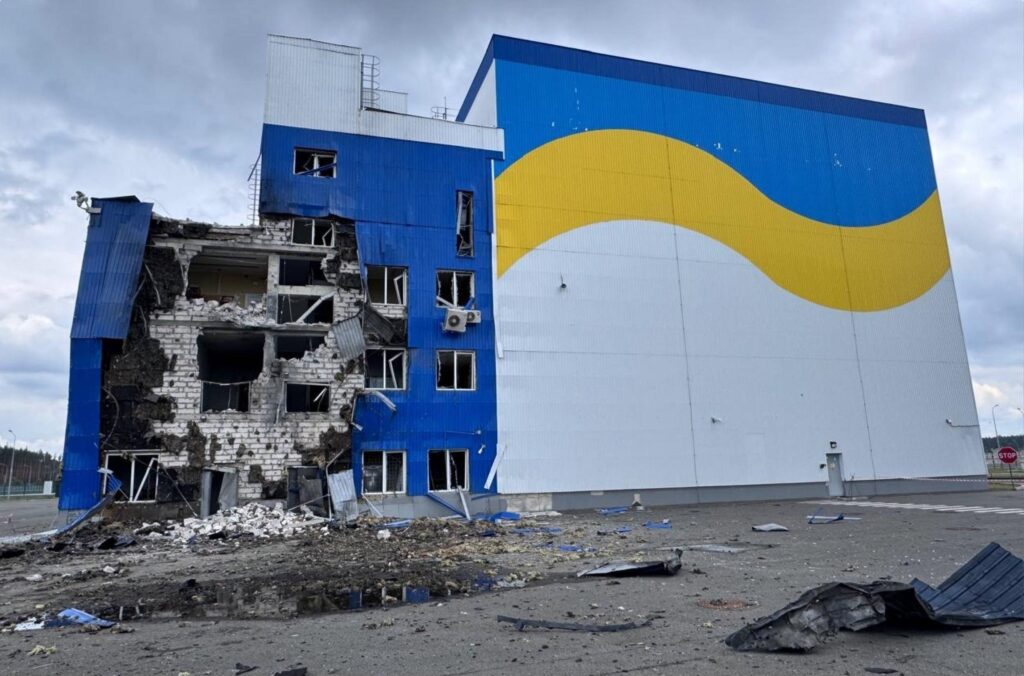
Damage at Ukraine’s spent nuclear fuel storage facility in the Chornobyl exclusion zone after a Russian drone strike, which officials say hit a non-storage building and triggered a fire. Photo: General Staff of Ukraine's Armed Forces

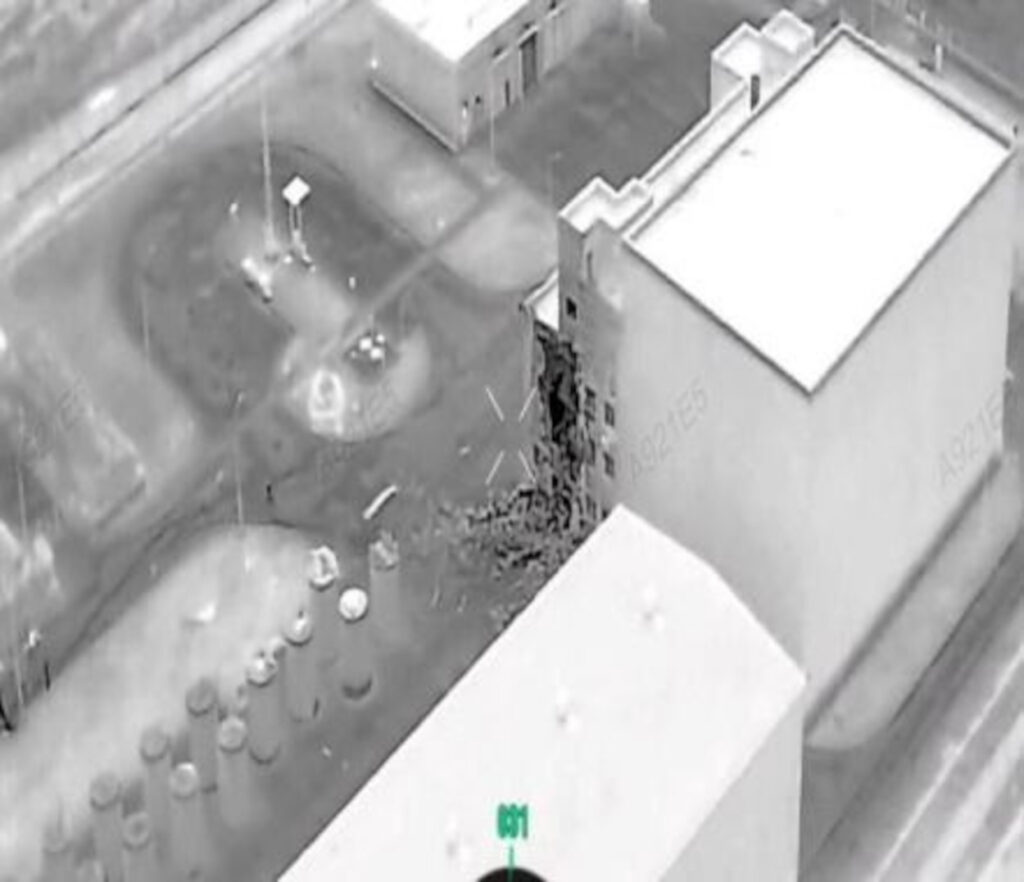
A Russian drone struck the site of Ukraine’s Centralized Spent Fuel Storage Facility (CSFSF) in the Chornobyl exclusion zone overnight on 7 June, damaging a non-storage building and causing a fire that was later extinguished, according to Ukraine’s state nuclear operator Energoatom.

The attack occurred at approximately 02:10, when a Russian UAV hit the facility’s container reception building, Energoatom said. The building was partially destroyed, although no spent nuclear fuel was stored inside at the time.

Fire contained, radiation levels normal

Energoatom reported that a fire covering about 40 square meters broke out after the strike but was quickly localized and fully extinguished. No personnel were injured.

The company said radiation levels at the site remain within normal limits and are being continuously monitored.

“The radiation situation at the CSFSF site remains within normal parameters,” Energoatom said in a statement, adding that it is coordinating with relevant state agencies and continuing to monitor the situation.

The Centralized Spent Fuel Storage Facility is an important part of Ukraine’s nuclear infrastructure, designed to store spent fuel from the country’s nuclear power plants.

SBU opens war crimes case over drone strike on Chornobyl spent fuel facility

Update 17:00: Ukraine’s Security Service (SBU) said it is treating the Russian drone strike on the Centralized Spent Fuel Storage Facility near Chornobyl as a war crime and has opened a criminal case under Article 438 of the Criminal Code.

Investigators said Russian forces used a “Geran-2” type drone for the 7 June strike, which hit the facility at around 02:05. Fragments of the drone were reportedly recovered at the site.

The SBU said the blast damaged the spent nuclear fuel reception and handling building, as well as an administrative building used by the International Atomic Energy Agency.

It added that the strike did not disrupt operations at the facility and no casualties were reported.

Damage at Ukraine’s spent nuclear fuel storage facility in the Chornobyl exclusion zone after a Russian drone strike, which officials say hit a non-storage building and triggered a fire. Photo: General Staff of Ukraine's Armed Forces

IAEA to inspect Chornobyl spent fuel site after drone strike damage

Update 14:40: The International Atomic Energy Agency (IAEA) said it will soon send its team at Chornobyl to inspect damage caused by a drone strike on the Centralized Spent Fuel Storage Facility in the exclusion zone.

The agency said it was informed by Ukraine that the 7 June attack caused “significant damage” to the fuel reception building, including the facade, windows, and doors, with nearby structures also affected by the blast wave.

IAEA Director General Rafael Grossi said the incident is “deeply concerning,” noting it occurred at a facility storing nuclear material just meters from the impacted structure.

He said attacks on nuclear facilities are “completely unacceptable” and violate core nuclear safety principles, including the agency’s “Seven Indispensable Pillars” for nuclear safety and security during armed conflict.

Ukrainian officials condemn strike on nuclear infrastructure

Ukrainian Foreign Minister Andrii Sybiha condemned the attack, describing it as another example of what he called Russia’s systematic disregard for nuclear safety.

“This is not the first time Russia has endangered Ukrainian nuclear facilities,” Sybiha said. “Russian nuclear blackmail and disregard for nuclear safety principles are systemic, deliberate, and unacceptable.”

Ukrainian President Volodymyr Zelenskyy said the drone that struck the facility was a Shahed-type attack drone and accused Russia of deliberately targeting critical nuclear infrastructure.

“Russia consciously struck this nuclear infrastructure facility,” Zelenskyy said. He noted that radiation levels had not exceeded safety limits and praised emergency responders for extinguishing the fire.

The president linked the strike to a broader wave of Russian attacks across Ukraine, saying Russia had launched attacks on civilian targets in 13 regions overnight. According to Zelenskyy, Russia fired 88 missiles, more than 3,250 attack drones, and around 1,800 guided aerial bombs against Ukraine over the past week.

Ukraine has repeatedly accused Russia of using threats to nuclear facilities as part of its broader war strategy. Concerns over nuclear safety have remained high throughout the full-scale invasion, particularly following repeated incidents involving nuclear-related infrastructure and the Russian occupation of the Zaporizhzhia Nuclear Power Plant.

  •  
❌