Normal view

Russia Building New Infrastructure For Major Troop Deployments Along NATO’s Northern Flank

12 June 2026 at 20:47

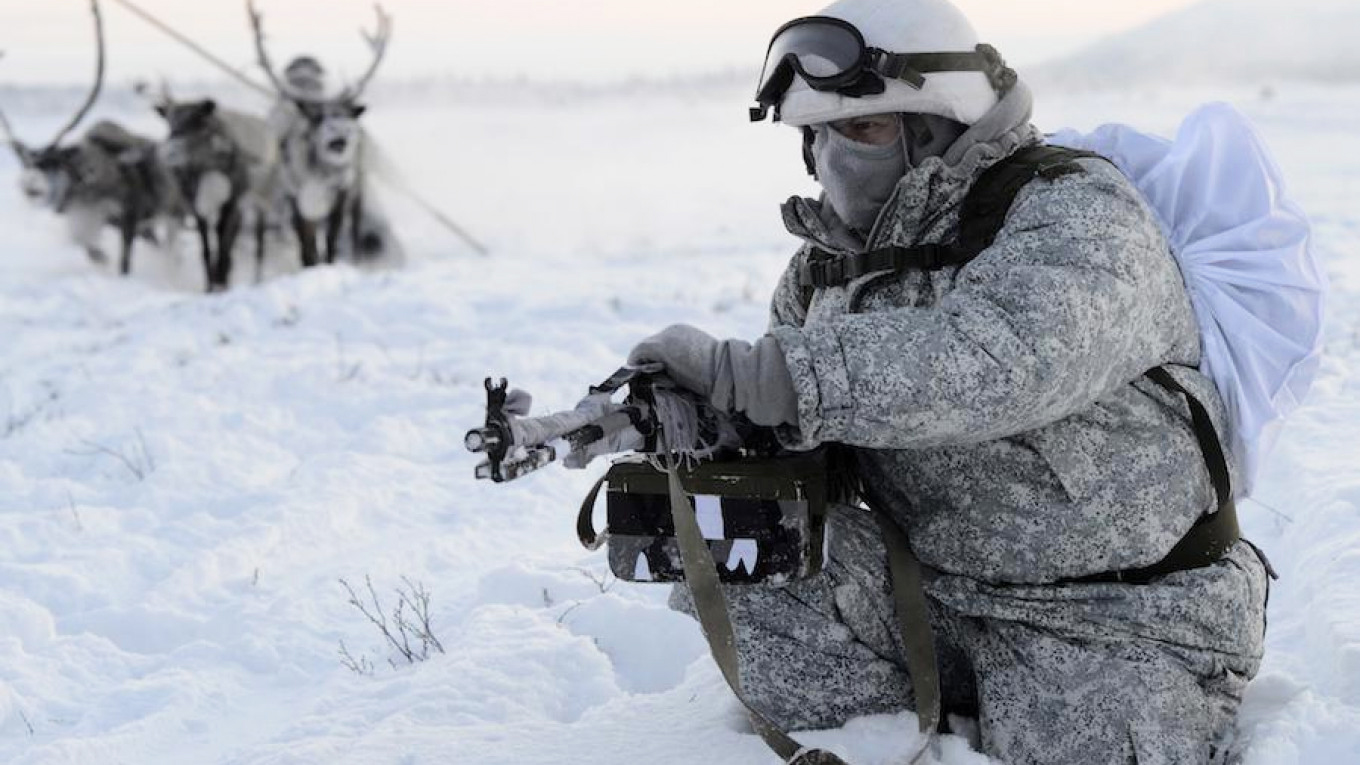
In another indication of the growing military and economic importance of the Arctic, Russia and NATO are increasing their buildup of forces and facilities in the region. Recent media investigations found that Russia is constructing new bases near Finland to eventually house tens of thousands of troops while NATO on Saturday stood up a long-planned new battalion battlegroup. It is a force that will operate in Finland and Sweden as a deterrent against Russia.

TWZ has frequently reported how Russia, and to a lesser extent China, have moved aggressively to assert their presence in the High North, leaving the U.S. and its NATO allies looking to bolster their defenses.

While Russia remains totally bogged down and suffering high attrition in Ukraine with little chance of moving masses of troops to the Arctic at the moment, concern over the future has spurred NATO to bolster its presence along the Finnish border. Having moved to a wartime economy during the full-on conflict with Ukraine, Russia could leverage that in a post-Ukraine war future to threaten NATO’s borders.

A NATO official told us Friday morning that while the alliance assesses that the chances of a near-term conflict are low given the war in Ukraine, “Moscow could seek to expand westward into the Nordic and Baltic nations after a ceasefire with Ukraine.”

KIVILOMPOLO, FINLAND - MARCH 09: Swedish soldiers take part in an exchange of fire with "enemy troops" using blan rounds during a training exercise, visible to the media, on the Finland/Norway border during the Nordic Response military exercise on March 09, 2024 in Kivilompolo, Finland. The exercise, which primarily takes place across Scandinavia from March 3-14, features 20,000 troops from 13 allied countries. Following the recent NATO expansion, the group now includes Finland and Sweden. (Photo by Leon Neal/Getty Images)
Swedish soldiers take part in training on the Finland/Norway border during the Nordic Response military exercise on March 09, 2024 in Kivilompolo, Finland. (Photo by Leon Neal/Getty Images) LEON NEAL

Russia appears to be investing in infrastructure in preparation of such a contingency. A joint report by several Nordic and Baltic media outlets published earlier this week has found that Russia is expanding military facilities along its borders with Norway and Finland to accommodate tens of thousands of new troops.

“New satellite images show that Russia is increasing its armament in [the] vicinity,” the report stated. “SVT, together with media partners in several countries, has examined how Russia is preparing for 80,000 soldiers… It is a threat that we should take seriously, says Thomas Nilsson, head of Sweden’s military intelligence service (MUST).”

The images “show new barracks for thousands of soldiers, long lines of military vehicles and ammunition storage,” the report further noted. “All winter, Russia has been building new military structures in several places on the other side of the Finnish border.”

“We expect to have 80,000 soldiers on our border and that can be compared to the fact that we previously had 20,000,” Finnish Army Chief Pasi Välimäki told the joint investigation.

A joint investigation by Nordic and Baltic media outlets found that these developments could enable Russia to deploy a force of up to 115,000 military personnel in the Northern European and Baltic regions. pic.twitter.com/ZiVpsP3fEz

— WarTranslated (@wartranslated) June 10, 2026

A separate report by the Finnish Yle media outlet found that the Russians are expanding a base in the town of Novaya Vilga to hold as many as 6,000 Russian troops. It is located about 100 miles east of the Finnish border.

Breaking News: Where exactly is Russia building its massive new military garrison? 🛰

For the first time, a completely new base is going up behind Finland's eastern border, set to hold up to 6,000 soldiers. Take a look at the first satellite data: https://t.co/IuZerZRyeQ #russia pic.twitter.com/2UvQXheaAP

— Mika Mäkeläinen (@Mikareport) June 10, 2026

“NATO has monitored a buildup of military infrastructure in Russia along NATO’s Eastern Flank, particularly along Finland’s border,” the NATO official told us earlier this week. “The real question is what becomes of the infrastructure? Will, for example, Russian troops now in Ukraine be relocated there after the war? It’s something we certainly need to consider, and we do.”

“That’s why NATO and nations are working to deliver real military capabilities to the alliance now, not five to ten years from now, which is so very, very important,” the official added.

KIVILOMPOLO, FINLAND - MARCH 09: A Swedish soldier takes part in an exchange of fire with "enemy troops" using blank rounds during a training exercise, visible to the media, on the Finland/Norway border during the Nordic Response military exercise on March 09, 2024 in Kivilompolo, Finland. The exercise, which primarily takes place across Scandinavia from March 3-14, features 20,000 troops from 13 allied countries. Following the recent NATO expansion, the group now includes Finland and Sweden. (Photo by Leon Neal/Getty Images)
A Swedish soldier takes part in a training exercise during the Nordic Response military exercise on March 09, 2024, in Kivilompolo, Finland. LEON NEAL

One of those efforts, as we noted earlier in this story, was stood up on Saturday, involving NATO’s two newest members.

NATO’s Forward Land Forces (FLF) Finland began operations in Finland and Sweden, according to the alliance. The FLF will include NATO’s newest multinational battlegroup, led by Sweden, “to support the defense of NATO’s northeastern flank.”

The establishment of FLF Finland places a Swedish battlegroup based in Boden, Sweden, and a Multinational Staff Element in Rovaniemi, Finland, under the command of the Supreme Allied Commander Europe (SACEUR) and NATO.

The NATO Forward Land Forces Finland has been established on June 6, 2026, in Boden, Finland. General Markus Laubenthal, SHAPE Chief of Staff, assumed Command of the Swedish Regiment in presence of the Swedish Minister of Defence Pål Jonson. The FLF Finland will be the 9th FLF in SACEURs AoR. NATO Photo by OR-7 Dennis Sattler
The NATO Forward Land Forces Finland (FLF) was established on June 6, 2026. (NATO Photo by OR-7 Dennis Sattler) MSgt OR-7 Dennis Sattler; DEU Army

“Sweden is contributing a battalion battlegroup that, together with a Multinational Staff Element in Rovaniemi, will form the core of FLF Finland,” NATO added. “The Swedish battalion battlegroup is prepositioned in Boden, with capacity to operate in the North Calotte and, where necessary, rapidly reinforce the presence in northern Finland. In 2026, Sweden’s contribution to FLF Finland will total around 600 personnel, with the option to expand to 1,200 personnel if needed.”

“This region is one of the most strategically significant and environmentally challenging areas in the world,” said U.S. Air Force Gen. and SACEUR Alexus G. Grynkewich. “FLF Finland, just like Arctic Sentry, will leverage NATO’s strength to defend our territory and ensure the Arctic and High North remains secure, especially considering Russia’s military activity and China’s growing interest there.”

The U.S. too is working to improve its presence and operations in the region. During last month’s SOF Week symposium in Tampa, Florida, the head of U.S. Northern Command (NORTHCOM) announced the formation of Nordic Bridge to “tie together” the work of U.S. European Command, North American Aerospace Defense Command (NORAD) and SACEUR.

Air Force Gen. Gregory Guillot provided no real details about Nordic Bridge at the time, so we reached out to NORTHCOM for additional details.

“The Nordic Bridge concept seeks to enhance Arctic integration between U.S. Northern Command and U.S. European Command and enhance cooperation between NORAD and NATO in order to expand domain awareness, strengthen deterrence, and improve interoperability,” a NORTHCOM spokesperson told us last month. “It envisions increased participation in each other’s training and exercises, increased data sharing (such as air pictures), deconflicting conferences to maximize personnel availability and participation, etc.”

Last month, Guillot visited Grynkewich “to discuss opportunities under this concept,” the NORTHCOM spokesperson told us.

U.S. Marine Corps Lance Cpl. Thomas Teague, a motor vehicle operator assigned to Combat Logistics Battalion 6, Combat Logistics Regiment 2, 2nd Marine Logistics Group, provides security for a convoy during offensive and defensive operations in Syndalen, Finland during exercise Freezing Winds 23 (FW23), Nov. 30, 2023.  FW23 is a Finnish-led maritime exercise in which United States Marines assigned to Marine Rotational Force- Europe, and U.S. Navy Forces Europe take part; the exercise serves as a venue to increase Finnish Navy readiness, increase U.S., Finland, and NATO partners' interoperability in operational logistics, integrated fires, and amphibious operations within the Baltic Sea littorals. (U.S. Marine Corps photo by Lance Cpl. Christian Salazar)
U.S. Marine Corps Lance Cpl. Thomas Teague, a motor vehicle operator assigned to Combat Logistics Battalion 6, Combat Logistics Regiment 2, 2nd Marine Logistics Group, provides security for a convoy during offensive and defensive operations in Syndalen, Finland during exercise Freezing Winds 23 (FW23), Nov. 30, 2023. (U.S. Marine Corps photo by Lance Cpl. Christian Salazar) Cpl. Christian Salazar

All this is taking place, of course, against the backdrop of President Donald Trump’s frequent insistence that the U.S. subsume Greenland to provide better Arctic protection for the U.S. homeland. The issue reached a fever pitch earlier this year, causing a serious rift with NATO after the president threatened to invade the world’s largest island. You can read more about that in our story about the crisis here.

While there are no indications that the Arctic region is about to break out into open conflict, there are several indications that Russia, NATO and the U.S. are increasing preparations for such an eventuality.

Contact the author: howard@twz.com

The post Russia Building New Infrastructure For Major Troop Deployments Along NATO’s Northern Flank appeared first on The War Zone.

Germany And Spain Launch ‘Team Gen 6’ After Europe’s Next-Gen Fighter Effort Collapses

12 June 2026 at 19:48

In a significant development for Europe’s future air combat ambitions, Airbus is trying to restart the program to develop a sixth-generation combat jet, now under German and Spanish leadership. This comes less than a week after the Franco-German-led New Generation Fighter (NGF) effort effectively collapsed in its original form, amid acrimony between Paris and Berlin. The NGF was planned as the crewed centerpiece of the pan-European Future Combat Air System (FCAS), which Airbus, as the leading European aerospace corporation, now hopes to get back on track.

An exciting step for European sovereignty at ILA Berlin: "Team Gen 6", a group of eight leading German defence and aviation companies signed a strategic positioning paper. The German and French governments have announced a realignment of the European Future Combat Air System… pic.twitter.com/aZcjAaO6dE

— Airbus Defence (@AirbusDefence) June 11, 2026

Airbus’s Defense and Space unit launched the ‘Team Gen 6’ initiative today with a message on X, declaring that it was “an exciting step for European sovereignty.” So far, eight German defense and aerospace contractors have signed a strategic positioning paper as part of the effort. Those firms are Autoflug, Diehl Defense, Hensoldt, Liebherr, MBDA Germany, MTU Aero Engines, and Rohde and Schwarz.

Reflecting the German-Spanish nature of the new program, those companies are now “closely integrated” with firms from Spain, comprising GMV, Grupo Oesia, Indra, ITP Aero, and Sener.

“While the development of the overarching [FCAS] ‘system of systems’ is progressing as before, the sixth-generation fighter aircraft integrated within it requires a new, agile industrial setup,” Airbus said.

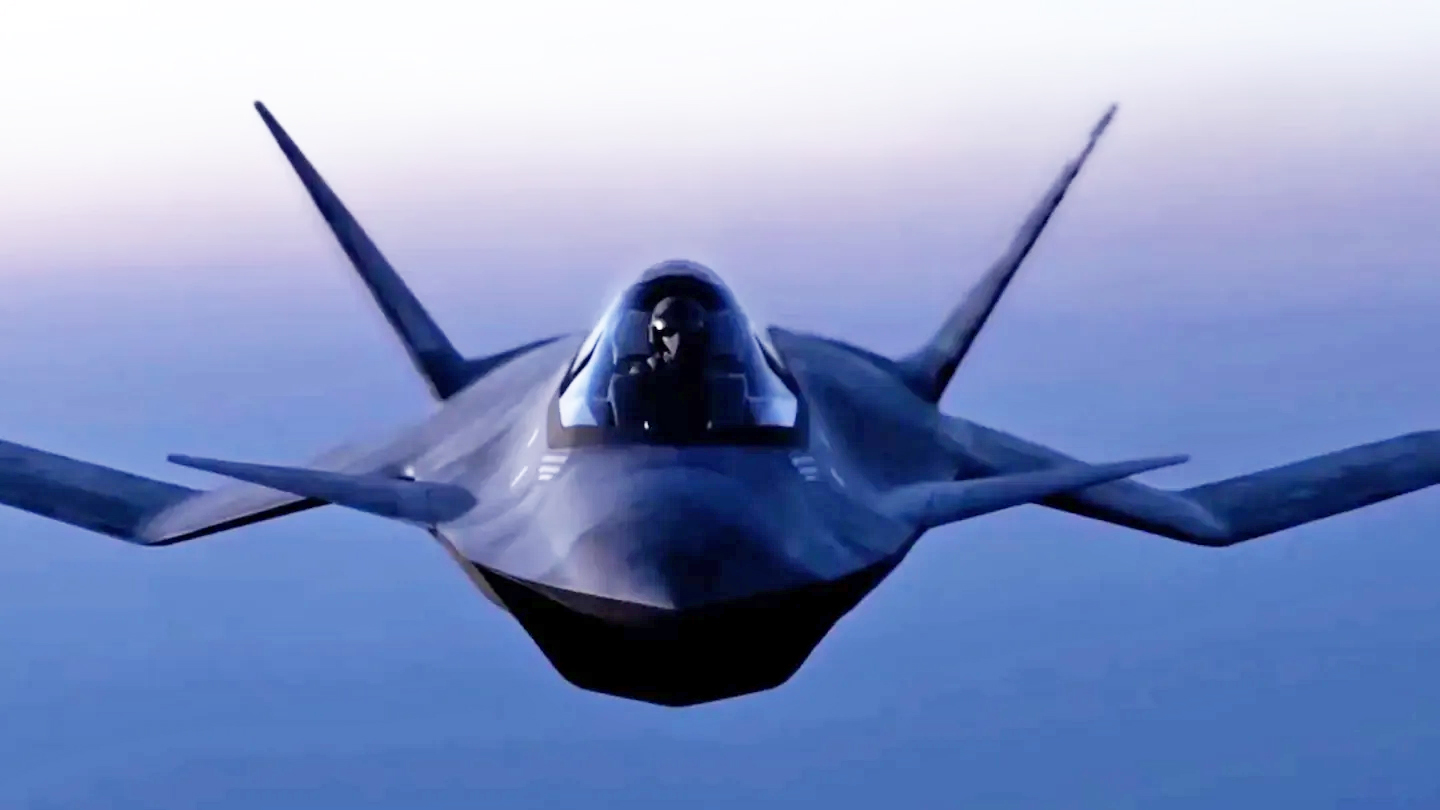
A screencap from an Airbus video showing a notional future fighter working with remote-carrier-type drones. Airbus screencap

“As Team Gen 6, we have the capabilities and the capacities. Now, we are looking for close alignment with policymakers and the air force[s] to drive forward a superior European air combat system for collective security,” the X post stated.

Airbus also presented a video showing a notional concept aircraft flying with multiple uncrewed platforms. While not too much (as in not much at all) should be read into this, the crewed aircraft features canard foreplanes, a chin intake, and an unusual cranked wing.

Speaking just ahead of the announcement, at the ILA Berlin airshow today, where TWZ was in attendance, Jean-Brice Dumont, head of air power at Airbus Defense and Space, said the company remains committed to delivering a sixth-generation combat jet. “There is a need for a bit of a reshaping and reconsidering the reality of today,” Dumont added.

SYMBOL - 10 June 2026, Brandenburg, Schönefeld: Federal Chancellor Friedrich Merz (2nd from left, CDU) and Jean-Brice Dumont (2nd from right), Head of Air Power at Airbus Defence and Space, stand in front of a drone during a tour of the International Aerospace Exhibition (ILA). Photo: Sebastian Gollnow/dpa (Photo by Sebastian Gollnow/picture alliance via Getty Images)
German Federal Chancellor Friedrich Merz (second from left) and Jean-Brice Dumont (second from right), head of air power at Airbus Defense and Space, stand in front of a drone during a tour of the International Aerospace Exhibition (ILA). Photo by Sebastian Gollnow/picture alliance via Getty Images

Dumont explained that the now-abandoned NGF was one of seven separate “pillars” of technology development being worked on under FCAS. As well as the crewed jet, pillars include powerplant, remote carrier vehicles, precision-guided weapons, and data connectivity.

“We have to consider safeguarding areas where it works, and how we reshape,” he added. “At the moment, we are going to seek guidance from our governments [on] what they want us to do. There has to be demonstrated an industrial feasibility of what is being asked — not only technical. That’s probably a lesson now,” Dumont added.

Dumont continued: “The world in 2026 is very different to the world of 2017 when the [FCAS] programme was launched. We have to accept that fact and reshape it — we need another way to get to the same goal, with faster milestones.”

“The problem we had is that we had drawn a line to 2040, and new technologies for everything,” Dumont added, referring to the goal of having the FCAS, including the NGF, in service by that date. “Today, you see demonstrations of connectivity, systems of systems and unmanned vehicles all around the world. The need is there, and in the countries that we are competing with, they are using it already.”

According to Dumont, the company has “put a number of options on the desk of our ministers and ministries of defense,” and is now awaiting further guidance from officials.

As the centerpiece of FCAS, in its original form, the NGF element was the most high-profile and challenging component of the project. However, it had long been dogged by disagreements over industrial workshare and leadership between Airbus and Dassault Aviation, which were the prime contractors for Germany and Spain, and France, respectively.

A 1:1 scale model of the NGF is unveiled at the Paris Airshow in 2019. Dassault Aviation

Dassault had demanded that it play the defining role in NGF, reflecting key requirements for the jet driven by the French Armed Forces. These included the ability to operate from aircraft carriers, and provision to deliver nuclear weapons. Germany or Spain needed neither of these functions.

Despite the disagreements that derailed NGF, Dumont argued that there had still been useful lessons learned from the FCAS program.

“What Phase 1A and 1B [of the program] have given is a very thorough analysis of the repartition of the work between the crewed and uncrewed platforms, and this remains. That kind of shapes what the manned aircraft will have to do.”

As an example of this work, Dumont pointed to ongoing work that will involve trials of a Eurofighter operating as a “command fighter” — a crewed jet that can operate in collaboration with drones, or what Airbus now refers to as uncrewed collaborative combat aircraft (UCCAs). The tests will see a Eurofighter fitted with a Rafael Litening 5 targeting pod modified to serve as the interface between the crewed jet and UCCAs. This should pave the way toward an in-service command fighter capability being introduced to the Eurofighter, something that will be incorporated in the sixth-generation combat jet from the outset.

Kampfflugzeug vom Typ Eurofighter mit Lenkbombe GBU-48 (Guided Bomb Unit 48) fliegt im Übungsgebiet im Rahmen der multinationalen Übung Green Flag West, am 08.05.2018. ©Bundeswehr
A German Eurofighter with a Litening laser targeting and reconnaissance pod on the centerline station. Crown Copyright

Initial trials will involve a Learjet test configured as a surrogate command fighter and flying with drones in an “enhanced teaming” mode. Airbus hopes to have the command fighter-configured Eurofighter ready for operational service in 2029.

“The demand from the customers is: be ready early,” Dumont explained. “This is not a contradiction to the Future Combat Air System challenge — it is the need to have our platforms evolved earlier than we had traditionally planned.”

A model of a notional sixth-generation fighter displayed at ILA as part of a command fighter study by the German Aerospace Center (DLR). Thomas Newdick

The termination of NGF and the launch of Team Gen 6 leaves plenty of questions over the future of Europe’s air combat landscape.

TWZ spoke to Douglas Barrie, senior fellow for military aerospace at the International Institute for Strategic Studies (IISS) research institute in London, for his take on what might happen next.

On the matter of Germany and Spain now teaming up under the Airbus umbrella, Barrie said that the relationship makes a lot of sense, but its success is far from certain. On the one hand, the two countries already work together within Airbus, and both Germany and Spain are seeking a replacement for their Eurofighter fleets.

SONY DSC
A pair of Spanish Air and Space Force Eurofighters. Spanish Ministry of Defense

“In terms of Team Gen 6, I do wonder if there’s an element of trying to kind of scramble to recover something from the wreckage of NGF, as it were, that the collapse of NGF doesn’t signal the end of Spanish industrial interest in next-gen combat aircraft development,” Barrie said. “But if somebody asked me, do I think between Germany and Spain, they can put together a credible program if nobody else is involved? I think that the numbers would be very difficult to stack up.”

Putting the German and Spanish future fighter requirements together, the two countries might, at best, need to build 300 new combat jets, with a figure of 250 more likely, Barrie contended. Team Gen 6 would then face a real struggle to break even.

This reality will, Barrie believes, force Germany and Spain to look for other partners, which will likely come down to a choice between the British-led Global Combat Air Program (GCAP) and the Swedish next-generation combat aircraft program, led by Saab. Of these, GCAP has the Tempest crewed fighter as its centerpiece, and also involves Italy and Japan. Sweden’s crewed fighter requirements are less clear at this point.

A scale model of a possible Tempest configuration, in Italian Air Force markings. Leonardo

Building a role for Airbus in GCAP would be difficult at this point. With the industrial architecture already in place, bringing not one, but two more partners into that program would be disruptive, particularly in terms of timeline. Already, the Japanese in particular are concerned about the pace of the program, especially since the United Kingdom has not yet fully committed to it in terms of funding.

“My own view is that the United Kingdom remains committed to the program, but there are financial pressures elsewhere,” Barrie noted. “I think that the more likely outcome in all of this is a kind of German, Spanish, Swedish tie-up. The kind of requirements in some ways are aligned a bit better.”

This extends to the size of the aircraft, Barrie observed.

“The kind of aircraft that the Swedes seem to be thinking about, the crewed element is probably more of a bigger Gripen E/F, heading towards Typhoon, in terms of size. This is more in keeping with what the Germans and the Spanish seem to be looking for. Obviously, the United Kingdom and Japan, in particular, need something with longer legs and bigger internal payload, hence GCAP.”

The Saab Gripen E. Saab

“GCAP will be highly capable,” Barrie continued. “That will come with a unit cost to go with it. Maybe what the Swedes, the Germans, and the Spanish might do will be cheaper.”

Provided a German, Spanish, Swedish teaming arrangement could work, the resulting combat jet could still enter a space where it would face competition for important export orders from France, which looks set to continue the development of the Rafale, especially now that NGF has collapsed. Further competition could be provided by South Korea with further developments of its KF-21 and Turkey with the TF Kaan, although these are notably less-ambitious fifth-generation designs.

The Tempest, as currently envisaged, with its very different set of requirements, would not necessarily be a direct competitor to Team Gen 6, Barrie argued, since it would be a closer match to the F-47 in terms of size, capabilities, and cost. While the potential size of this market would be more limited, probably U.S. reluctance to export the F-47 would play in the Tempest’s favor.

An official rendering of the Boeing F-47. U.S. Air Force

As to the possibility of the United States offering a ‘watered-down’ export model of the F-47, Barrie considers this unlikely to generate much interest.

“Yeah, you can have a downgraded version of my super airplane — as a kind of marketing slug that hardly sells, does it?” Barrie continued. “Even if it’s 10 percent less capable, even if it’s 10 percent less expensive, it’s still a likely unit cost of $250 million or more, which is eye-watering.”

This leaves us with the French, and what they might be able to recover from NGF.

If France goes it alone with a sixth-generation combat jet, Dassault will likely be strongly backed by the French government, and the company has traditionally punched well above its weight.

In the medium term, Dassault has a healthy backlog of orders for the Rafale and is very much at the right end of the cost curve. Barrie considers that the Rafale will remain a profitable airplane for the foreseeable future, but at some point, France will need to think about a successor based on an all-new airframe. Industrially, France has the capability to go alone with this, but they would likely look to a partner or partners to come on board. The likelihood of those partners coming from Europe has now been reduced, but other possibilities might be found in the Gulf states.

A pair of Rafales from the Qatar Emiri Air Force. Dassault Aviation www.twz.com

Then there is the question of India, which may still buy more Rafales but which, in the fullness of time, is likely to look for a new-generation fighter, and could be a potential partner for France.

“I don’t see the Indians ever being fully committed to only one country,” Barrie continued. India has already hinted that it might want to try and join the pan-European FCAS or GCAP. Meanwhile, Russia has been a long-term military partner for India, and Barrie thinks that the recent appearance of a two-seat version of the Su-57 Felon may well indicate another effort to sell that fighter to India.

Imagery has emerged that appears to show a previously unknown two-seat version of the Sukhoi Su-57 Felon, Russia’s most modern and capable fighter. Provided the available photo is legitimate, and there is nothing obvious to suggest otherwise, at this point, the Russian development would parallel China’s work on a two-seat version of the stealthy J-20.
The previously unknown two-seat version of the Sukhoi Su-57 Felon, which appeared earlier this year. UAC UAC

Were India to continue its pattern of buying Russian combat aircraft, that would give any potential European partner serious pause for thought, based on the security implications. Meanwhile, India also remains committed to developing its own next-generation fighter.

What the NGF debacle has demonstrated is that any potential partner with France on its next-generation combat aircraft program will likely have to be happy taking a junior role, with Dassault calling the shots.

The collapse of the New Generation Fighter could well be a pivotal moment for European defense cooperation, but it does not signal the end of Europe’s sixth-generation combat aircraft ambitions.

Airbus’s Team Gen 6 announcement marks the start of a German-Spanish-led industrial approach that its backers hope will be more agile and less contested than its Franco-German-led predecessor. However, significant political, financial, and industrial challenges remain, including the search for a reliable partner, or partners. As with NGF, the success of Team Gen 6 will ultimately depend on whether European governments can align their strategic priorities and industrial interests to deliver a sovereign future air combat capability.

Contact the author: thomas@thewarzone.com

The post Germany And Spain Launch ‘Team Gen 6’ After Europe’s Next-Gen Fighter Effort Collapses appeared first on The War Zone.

UK to ban under-16s from ‘high risk’ social media apps

Measures to include restrictions on ‘safe’ social media apps, with some fearing banning some platforms and not others will lead to legal challenges

Teenagers under the age of 16 are to be banned from accessing “high-risk” social media apps while safer platforms will be subjected to restrictions, under a sweeping government crackdown.

Under-18s will also be banned from using romantic or sexual AI chatbots after a consultation on keeping children safe online.

Continue reading...

© Photograph: David Parry/PA

© Photograph: David Parry/PA

© Photograph: David Parry/PA

What It Would Take To Seize Iran’s Kharg Island, According To Top Former Military Leaders

11 June 2026 at 21:45

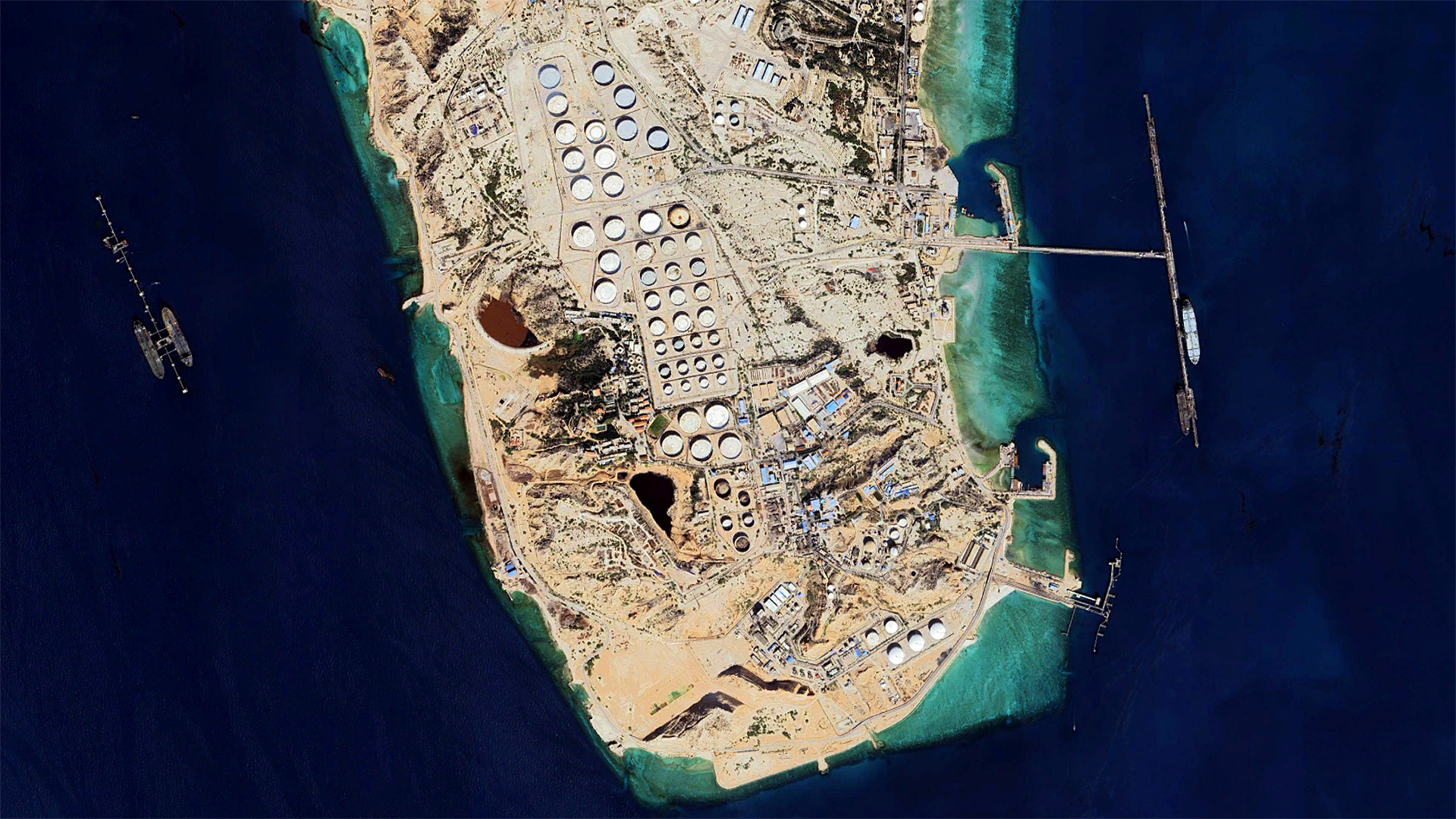
With President Donald Trump proclaiming his desire to take Iran’s Kharg Island — whether he actually means it or not – we reached out to some former military commanders to get a sense of what it would take to seize and hold it and how telegraphing such a move could impact operations. The island, as we have noted in the past, is Iran’s main center of oil exportation, and a U.S. seizure would have tremendous military and economic impacts. An attempt to take it by force and hold it, as we have highlighted in prior reporting, would be an extremely risky operation, by all accounts.

Trump’s latest statements about taking Kharg Island came in the wake of the most intense round of tit-for-tat attacks between the U.S. and Iran since the ceasefire went into effect April 8. The U.S. launched waves of strikes across Iran, including firing what Trump said was 49 Tomahawk land attack cruise missiles at Iranian targets. In response, Iran launched missiles and drones at U.S. bases in Kuwait, Jordan and Bahrain.

Meanwhile, Iran claimed it shut the Strait of Hormuz completely after the new round of kinetic action while U.S. Central Command (CENTCOM) insisted it remains “open for transit.”

Spoke with President Trump tonight as he oversaw the U.S. military strikes against Iran from the Situation Room.

The President told me he spoke directly with Iranian officials tonight who asked him to stop bombing.

49 Tomahawk missiles had been fired by the United States at… pic.twitter.com/s4WnsPTO4d

— Trey Yingst (@TreyYingst) June 10, 2026

However, in the wake of yesterday’s back-and-forth strikes, Trump proclaimed his desire to seize Iran’s vital oil infrastructure, including Kharg Island.

“At some point in the not too distant future, we will be taking Kharg Island, and other oil infrastructure points, and assume total control of their Oil and Gas Markets, much like we have with Venezuela, which is working out brilliantly for both Venezuela and the United States of America,” Trump said on Truth Social.

The United States will be hitting Iran (Whose Navy, Air Force, Radar, Anti Aircraft, and all other forms of Defense, together with most its offensive capability, are GONE!), VERY HARD TONIGHT. At some point in the not too distant future, we will be taking Kharg Island, and other… pic.twitter.com/RPeL3khVrr

— Commentary Donald J. Trump Truth Social Posts On X (@TrumpTruthOnX) June 11, 2026

A short while later, the president modified those remarks in an interview with Fox News.

“I don’t know that America has the stomach for it, to be honest with you,” Trump later told the network. “You’d make a fortune, but I don’t know that America has the stomach, I think they’d like to see us come home.”

NOW: President Trump tells Fox and Friends his preference has always been to "take Kharg Island," but he doesn't think "America has the stomach" for it. pic.twitter.com/iWCOooqioP

— FOX & Friends (@foxandfriends) June 11, 2026

Located about 20 miles from the Iranian coastline, Kharg Island presents a daunting challenge, leaving troops trying to take it under threat from Iran’s remaining arsenal of ballistic and cruise missiles, drones, rocket artillery, and fast boats that can launch swarming attacks on ships, fire missiles, and lay mines. This is something we were among the first to point out, before the possibility of invading the island became a national news story.

There are also a number of islands in and around the Strait of Hormuz that could be used help put up a screen against shipping attacks etc. Also risky for obvious reasons. pic.twitter.com/0nolqdew9J

— Tyler Rogoway (@Aviation_Intel) March 13, 2026

“It seems unusual that we would announce an intention to seize Kharg Island in advance,” retired Army Gen. Joseph Votel, former leader of U.S. Central Command, told us. “Military commanders always want to preserve the principle of surprise in any operation – it helps reduce risk and often times gives us the tactical edge.”

“In this case the president did not announce any specific details – which can preserve some operational flexibility,” Votel noted. “It may also be a part of a more elaborate communications strategy that is focused on getting the regime to understand they are running out of options and that we can and will do whatever we need to, militarily, to support diplomatic efforts and bring the conflict to a conclusion.”

“Seizing Kharg Island is a significant undertaking,” added Votel, now a Distinguished Military Fellow at the Middle East Institute. “Not only will it involve ground troops to actually control the terrain – but also tactical delivery means, air cover, a strike campaign to set the conditions and then all the resources to protect this force while they are on the Island. In addition – the force has to be sustained meaning we have to have a way to get them supplies, engineering capabilities, life support, evacuate casualties, and if necessary reinforce them with additional force.”

All these actions would be taken close enough to the Iranian coast to “potentially subject [assault forces] to missile and drone attacks,” the former CENTCOM commander noted. “Not impossible, but certainly not insignificant either.”

Kharg Island. (Google Earth)

When we first spoke to Votel about this issue in March when stories first bubbled up about Trump threatening Kharg Island, he told us that “a battalion sized force of Marines or soldiers could probably do that. So you’re probably looking at 800 to 1,000 troops, kind of size, maybe a little bit smaller, probably not much larger than that.”

Plans for the U.S. military to try and capture the island “have been drawn up for months but continuously shelved because the operation was considered too risky,” a senior Pentagon official and two administration officials told CNN.

Speaking to us on Thursday, Chris Miller, who served as acting Defense Secretary at the end of Trump’s first administration, said it would take considerably more troops for such an operation than Votel first suggested.

“I would expect it would take an infantry brigade at a minimum,” said Miller, referring to a unit of between 3,000 to 5,000 troops. “I’d prefer two brigades and a lot of mobile air defense to protect from Shaheds and plenty of barrier material to make bunkers when artillery starts dropping in. Plus, obviously, significant air power to hit time-sensitive Iranian targets like artillery and missile batteries.”

An Iranian Shahed-136 One-Way-Attack drones reportedly flying over the sky of Kuwait in the early hours of this morning, June 3, 2026. pic.twitter.com/oUwbbilmzd

— Mehdi H. (@mhmiranusa) June 3, 2026

“It’s completely doable by our combat forces in the region,” added Miller, now founder and CEO of FPF Defense, a startup building a low-cost Shahed drone interceptor. “This is exactly the type of operation they are designed and optimized for. It’s not that heavy of a lift for them.”

Holding the island, if taken, won’t be easy, however, Miller posited. 

“The logistics would be challenging for us because it will be difficult to get resupply ships in under the Iranian defensive shield,” he explained. “And aerial resupply will be contested as well.”

Miller said he was not concerned that Trump told the world he wants Kharg Island.

“My assessment is the Iranian regime continues to misunderstand President Trump,” Miller said of his former boss. “I suspect the Iranians have already prepared for such an eventuality.”

Former Army Maj. Gen. Pat Donahoe, who retired in 2022 as commanding general of the U.S. Army Maneuver Center of Excellence at Fort Benning in Columbus, said asking how Kharg Island can be taken “is the wrong question.”

“It’s not taking it, it’s holding it over time and enduring the slow bleed of casualties that comes with holding it,” noted Donahoe, now chief operating officer at Columbus State University in Columbus, Georgia.

“It’s Khe Sanh,” explained Donahoe, a reference to one of the longest and bloodiest battles of the Vietnam War, where about 6,000 Marines and their South Vietnamese counterparts held out at a base along the Laotian border against 20,000 North Vietnamese troops for nearly 80 days. 

“Sure we can grab it, but it puts us in range of all their stuff,” Donahoe said. “And we have to resupply it, etc. It’s dumb.”

The U.S. struck military targets on the island during Epic Fury, but Trump has stated he ordered all the oil infrastructure to be left untouched. Since the ceasefire, Iran has been preparing for a possible U.S. operation to take control of Kharg Island, CNN noted today.

“Iran laid traps and moved additional military personnel and air defenses there earlier this year, according to multiple people familiar with U.S. intelligence reporting on the issue,” the network reported. “The island already has layered defenses, and the Iranians moved additional shoulder-fired, surface-to-air guided missile systems known as MANPADs there.”

Plans for the US military to try and capture Kharg Island have been drawn up for months but continuously shelved because the operation was considered too risky, a senior Pentagon official and two administration officials told @alaynatreene @NatashaBertrandhttps://t.co/09STWDvMJg

— Haley Britzky (@halbritz) June 11, 2026

It remains to be seen whether Trump actually takes any action against Kharg or anywhere else on the ground in Iran. As we have previously noted, Trump has threatened to put boots on the ground to capture Iran’s highly enriched uranium and has constantly made grand military threats without following through. This includes repeated threats that he would order the destruction of Iran’s civilian infrastructure. Clearly these are meant to push the adversary to the negotiating table, but their potency has degraded as this has become increasingly clear.

Hours after raising the specter of seizing Kharg Island, the president seemingly reversed course, saying he was halting orders to bomb the Islamic Republic tonight due to a breakthrough in negotiations.

“Based on the fact that discussions with the Islamic Republic of Iran have been brought to the highest level of Iranian leadership and approved, I have, as President of the United States of America, cancelled the scheduled strikes and bombings against Iran this evening,” Trump stated on Truth Social. “Discussions and final points have been, in both concept and great detail, approved by all parties involved, including the United States, Israel, Saudi Arabia, UAE, Qatar, Turkey, Pakistan, Bahrain, Kuwait, Jordan, Egypt, and others. The Naval Blockade will remain in full force and effect until this Transaction is finalized — Time and place of the signing to be announced shortly.”

🇺🇸🇺🇸🇺🇸 pic.twitter.com/l6yqxrGqr6

— DOW Rapid Response (@DOWResponse) June 11, 2026

The Islamic Revolutionary Guard Corps (IRGC), however, reportedly pushed back on Trump’s negotiations claims.

“The Fars News Agency, associated with the Revolutionary Guards, quoted a ‘knowledgeable source close to the Iranian negotiating team’ who denied President Trump’s claim regarding an agreement on an initial deal, and stated that ‘no text of the initial memorandum of understanding with the United States has been approved,'” Axios reporter Barak Ravid stated on X.

🚨 סוכנות הידיעות פארס, המזוהה עם משמרות המהפכה, ציטטה ״מקור יודע דבר המקורב לצוות המשא ומתן האיראני״, שהכחיש את טענת הנשיא טראמפ בדבר הסכמה על הסכם ראשוני, ואמר כי "לא אושר שום נוסח של מזכר הבנות ראשוני עם ארצות הברית" https://t.co/I0LN2sxy25

— Barak Ravid (@BarakRavid) June 11, 2026

Trump has made repeated claims that a deal was virtually done, when it never materialized and the Iranians certainly have their own strategy they are executing. Whatever comes next, whether it be more bombing, a peace deal, a continued blockade and strait closure, or even an invasion of Kharg Island, it’s unclear, and that may be just as true moment-to-moment for the President of the United States as it is to everyone else.

Contact the author: howard@twz.com

The post What It Would Take To Seize Iran’s Kharg Island, According To Top Former Military Leaders appeared first on The War Zone.

Viih Tube e Eliezer participam do “Encontro” e web aponta: “Estranhíssimo”

12 June 2026 at 14:59

A influenciadora Viih Tube, 25, e Eliezer, 36, participaram de um programa especial de Dia dos Namorados do “Encontro com Patrícia Poeta”, da TV Globo, nesta sexta-feira (12). O que era para ser um momento romântico acabou gerando comentários negativos de alguns internautas nas redes sociais.

Durante a participação, o ex-BBB afirmou em algumas ocasiões que o relacionamento foi conturbado no início. Ele declarou que a primeira filha do casal, Lua, de 3 anos, havia sido concebida antes mesmo deles namorarem.

Eliezer também disse que a gravidez do segundo filho, Ravi, de 2, aconteceu de forma indesejada para ele, já que os dois ainda estavam no início da criação da primogênita. Até o casamento no civil teria acontecido no susto, sem que ele tivesse sido avisado pela companheira.

“Antes da Lua nascer, um mês, ela acordou e falou que a gente ia casar. A gente assinou o documento que era uma união estável. A Lua nasceu a gente combinou de encontrar uma casa, e em um ano a gente ia casar na igreja para simbolizar o amor. E aí veio o Ravi”, declarou ele.

Viih Tube afirmou que planejou a gravidez do caçula escondida do companheiro. “Eu pensei: ‘Quando der uns 6 meses eu já começo a me preparar para engravidar de novo, vou dar o golpe da barriga'”, disparou.

Eliezer afirmou: “Eu não queria na sequência, porque a Viih ficou grávida da Lua com 2 meses de relacionamento. Nem relacionamento tinha ainda, para ter uma ideia. E eu falei: ‘É muito tempo cuidando de criança. Se vier mais uma na sequência, são quantos anos cuidando?’. Mas ela me convenceu e o Ravi nasceu”.

O ex-BBB também afirmou que usa a aliança de compromisso com a esposa contra a própria vontade. “Sempre achei uma cafonice usar aliança, mas ela gosta, é importante”, avaliou.

Ele contou que já falou em uma ocasião que não gostava de alianças, mas deixou a companheira triste. “Eu falei isso e repercutiu, eu percebi que ela ficou constrangida. Aí eu percebi que ela ficou frustrada e chateada e pensei: ‘Ah, mano, eu não gosto, ela gosta, é importante para ela, não custa para mim'”, emendou. “Diz ele que está pagando até hoje”, afirmou a influenciadora.

O “Encontro” ainda promoveu um momento romântico em que um lia uma carta para o outro, mas não foi o suficiente para os fãs deixassem de tecer críticas.

Viih Tube e Eliezer compartilham a decisão de oficializar a união em agosto e falam sobre esse momento especial 🥹🤏 #Encontro #TVGlobo pic.twitter.com/I3yHWoOtWN

— TV Globo 📺 (@tvglobo) June 12, 2026

silêncio tô ouvindo fofoca do casal diretamente de Viih Tube e Eliezer 👀 #Encontro #TVGlobo pic.twitter.com/JWQnLMaAAv

— TV Globo 📺 (@tvglobo) June 12, 2026

quase 4 anos juntos! 🥹🫂 Viih Tube e Eliezer compartilham sobre a relação linda que construíram e os aprendizados dessa caminhada a dois 💖 #Encontro #TVGlobo pic.twitter.com/k7Feimpj0c

— TV Globo 📺 (@tvglobo) June 12, 2026

Repercussão do público

Nas redes sociais, os comentários soaram de forma esquisita, segundo alguns internautas relataram. “Estranhíssimo o Eliezer querendo falar mais que a Viih Tube interrompendo ela toda hora e expondo certas intimidades do casal”, disparou uma usuária do X.

Que casal engraçado é esse? Eliezer falando mais do que o necessário e a Viih Tube rindo toda sem graça”, opinou outra.

Uma terceira criticou: “Que negócio ridículo é esse dessa carta da Viih Tube nesse programa, meu Deus”.

Estranhíssimo o Eliezer querendo falar mais que a Viih Tube interrompendo ela toda hora e expondo certas intimidades do casal #Encontro pic.twitter.com/Czr43GFigE

— helena 🥂 (@tuitakidrauhl) June 12, 2026

Que casal engraçado é esse?! KKKKK
Eliezer falando mais do que o necessário e a Viih tube rindo toda sem graça KKKKK#Encontro

— INSUPORTÁVEL (@LidianneBlessed) June 12, 2026

Que negócio ridículo é esse dessa carta da viih tube nesse programa mds

— Elly 🪷 Juneleb! (@N109colonel) June 12, 2026

Viih Tube faz tour completo por brinquedoteca de 120m² para os filhos


Pedro Oliveira: “Queremos ser um farol para o ensino superior em Portugal”

12 June 2026 at 07:46

Pedro Oliveira, dean da Nova School of Business and Economics (NOVA SBE), foi apresentado aos jornalistas em fevereiro de 2023, no metaverso. Engenheiro de formação, entusiasta do avanço tecnológico, defensor de um ensino superior português exportador, tem mandato até 2027.

No início da polémica com a Universidade Nova de Lisboa, escreveu no “Expresso” que o debate sobre a utilização do inglês nas designações académicas “não deve distrair-nos do essencial”. O que é essencial?
O essencial é muito simples: Portugal precisa de instituições públicas fortes capazes de competir a nível global. Orgulhamo-nos de ser uma escola pública que representa Portugal no mundo ao mais alto nível, e que tem impacto real no país e, por consequência, nos portugueses. O essencial é não só a qualidade de ensino e investigação, mas também a internacionalização e a capacidade de colocar Portugal e os portugueses no mapa do conhecimento global. Queremos ser um “farol” para o ensino superior em Portugal e isso é o que não podemos perder de vista. Obviamente não vamos deixar que isso aconteça.
Mais do que a pequena polémica que se instalou, o que está verdadeiramente em causa é algo maior: é se o ensino superior público português tem ambição para desenvolver as capacidades que lhe permitam ser uma alavanca de desenvolvimento económico e científico do país, ou se se resigna a uma lógica burocrática e administrativa como a dessa polémica.

O nome Nova School of Business and Economics/Nova SBE é vital para a internacionalização, como defendem alguns professores da instituição?
Sem dúvida. A marca é um ativo construído ao longo de décadas, reconhecido nos rankings e no mercado global. Mas não é a marca em si, o que internacionaliza uma escola é o que essa marca representa e que foi construído ao longo das últimas décadas e não permitiremos que seja destruído. O que a Nova SBE comunica a um aluno, um investigador ou professor, ou a uma empresa (seja ela nacional ou estrangeira), é um padrão de excelência académica, de rigor científico e de ambiente globalizado. Mudar – ou diluir – essa marca seria destruir um investimento feito pelo país, por toda uma comunidade de alunos, professores, alumni e parceiros empresariais.
A designação legal em português existe, sempre existiu e existirá. As duas coexistem com naturalidade. A questão não é uma ou outra, é perceber que proteger a marca é defender um ativo público de grande valor.
Falemos dos resultados dessa estratégia. Quantos alunos de fora estudam aqui e quais as nacionalidades dominantes?
Conseguimos tornar Portugal num destino mundial de talento, num país procurado por alunos de todo o mundo para estudar. Mais de metade da nossa comunidade académica é internacional. Só no ano letivo 2025/2026, recebemos quase 4.000 novos alunos vindos de 90 países. Os países mais representados são, além de Portugal, a Alemanha, Itália, França e Áustria. Registámos, este ano, crescimentos muito expressivos: a ‘fatia’ de alunos dinamarqueses e polacos subiu 67% e 41%, respetivamente; enquanto a de alunos belgas aumentou 23% e de americanos 18%. Nada disto acontece por acaso, pelo contrário: é o resultado de décadas de investimento consistente em qualidade, reputação e ligação às redes internacionais do conhecimento.

E de aposta nos estrangeiros.
Importa dizer com clareza que o nosso objetivo nunca foi ter muitos alunos estrangeiros como um fim em si mesmo. O objetivo é trazer para Portugal e para os portugueses o melhor que se faz no mundo e gerar um polo de ensino e investigação que coloque Portugal, os portugueses e as nossas empresas no mapa global. E isto não se faz em isolamento.
Por outro lado, enquanto escola pública portuguesa, para nós foi essencial desenvolver um programa de bolsas e apoios financeiros para garantir que todos os alunos nacionais que tenham capacidade académica para serem admitidos na nossa escola, o fazem e não deixar de estudar na Nova SBE por dificuldades financeiras relacionadas com custos de deslocação (alojamento e refeições) ou propinas.

Que montante destinaram a bolsas neste ano letivo?
Em 2025, investimos 3,1 milhões de euros no nosso programa de bolsas, de modo a garantir que qualquer aluno com a excelência académica necessária para estudar na Nova SBE não ficasse impedido de o fazer por questões financeiras. Para os próximos anos, o objetivo é continuar a garantir que o talento não pode ser desperdiçado por razões económicas.

No corpo docente, qual o rácio de estrangeiros?
Temos uma percentagem muito significativa de docentes internacionais (cerca de 55%), e isso é deliberado e desejado. Uma escola que quer estar no top europeu não pode recrutar apenas no mercado local – nem, na nossa opinião, recrutar os seus próprios alunos doutorados, como parte de uma estratégia que a Nova SBE já assume de recusa de endogamia académica. Competimos globalmente por talento académico, tal como as melhores universidades do mundo.

Quais as principais vantagens?
Beneficia diretamente os nossos alunos portugueses porque estudar com professores que publicam nas melhores revistas científicas do mundo e que trazem perspetivas de diferentes culturas académicas é uma vantagem competitiva que nenhuma escola fechada sobre si própria consegue oferecer. A qualidade académica não tem passaporte.

A cada ranking seja de que segmento for (Formação Executiva é o último), a NOVA SBE continua a subir. O que está na base deste sucesso?
A base é a consistência da qualidade de ensino ao longo dos anos. Não há segredos. São décadas de investimento em qualidade científica, em atrair os melhores professores e investigadores, em construir uma comunidade académica verdadeiramente internacional, e em manter padrão muito elevado. Em 2025, o nosso Mestrado em Gestão ficou em 4.º lugar mundial no Financial Times e o Mestrado em Finanças em 6.º. Somos a primeira escola portuguesa com dois mestrados no top 10 mundial do FT. Também a formação de executivos entrou, este ano, no top 10 mundial do FT de programas customizados (9.º lugar mundial) e no top 20 mundial em programas abertos.
Fazemos parte do 1% de escolas no mundo com acreditação Triple Crown (AACSB, EQUIS e AMBA) e pertencemos, ainda, a redes como o CEMS, que junta as mais prestigiadas business schools do mundo.

Até onde podem ir?
A pergunta “até onde podemos e queremos ir” é a mais interessante: a minha resposta honesta é que ainda há muito caminho a trilhar. E temos as condições para isso, se tivermos a autonomia e o investimento necessários para continuar a construir.

Ouvi-o dizer várias vezes que o Ensino Superior pode vir a ser tão bem-sucedido como o turismo ou o futebol. Já estamos no ponto de ser considerados um exportador?
Estamos a caminho. Ter seis escolas de negócios portuguesas com programas reconhecidos internacionalmente no mesmo ranking é um sinal inequívoco de que o país desenvolveu uma capacidade real. Tal como aconteceu com o turismo ou o futebol, o ensino superior pode tornar-se um setor de exportação de referência, não porque o tentamos imitar, mas porque reunimos as condições estruturais de qualidade, localização, custo-benefício, segurança e diversidade. O que falta é, sobretudo, escala e coordenação. Uma escola só não faz um setor. Precisamos de mais instituições com esta ambição e de uma aposta política consistente que trate o ensino superior como ativo estratégico nacional, não como centro de custo a gerir.

Disse-nos há dias que não tem intenção de aprofundar a polémica com a Universidade Nova, que, em rigor, não originou, mas esclareça-nos: já está enterrado o machado de guerra que tem vindo a decepar valor nas duas marcas?
Somos UNL e isso não muda com os reitores que passam. O que existe é, como é normal em qualquer organização complexa, um debate sobre como as instituições se organizam para responder aos desafios do futuro. Uma escola com o nível de internacionalização e de competitividade da Nova SBE precisa de agilidade para tomar decisões rápidas, para fechar parcerias internacionais, para gerir o campus. Vivemos tempos institucionalmente desafiantes, não vou negar isso. Mas existe um alinhamento muito forte entre as unidades orgânicas da UNL para que este impasse se resolva da melhor forma possível para todos. Esse é o único critério que importa.

Disse numa conferência do JE que a Nova SBE quer liderar o conceito de “escola do futuro”. Como a descreve em cinco palavras?
Adaptabilidade. Inovação. Interdisciplinaridade. Impacto. Comunidade.

Como se preparam os estudantes para profissões que não existem? Que ferramentas lhes estão a dar aqui que não sejam obsoletas amanhã?
Essa é, na verdade, a pergunta mais importante que qualquer escola deve fazer a si própria. A ferramenta mais valiosa que podemos dar a um estudante hoje não é técnica, é a capacidade de aprender a pensar e aprender a aprender – é a capacidade de navegar a incerteza com rigor, inovação e criatividade. As profissões vão continuar a mudar. O que não muda é a necessidade de pensar bem e criticamente, de colaborar e de ter princípios. É nisso que estamos a investir.
A resposta não está nos currículos, está na forma de ensinar e de aprender. O que estamos a construir aqui não é um conjunto de disciplinas atualizadas, é uma plataforma onde a inteligência artificial é infraestrutura, não tema de estudo; onde a multidisciplinaridade é o ponto de partida, não um módulo opcional; onde os estudantes aprendem a aprender, a questionar e a adaptar-se.

Com base em que pressupostos estão a formar os futuros líderes?
Com base em três pressupostos: primeiro, que a liderança se exerce em contextos de incerteza radical. Não adianta formar para a estabilidade quando a estabilidade já não existe. Segundo, que os melhores líderes não são os que têm todas as respostas, mas os que fazem as perguntas certas e constroem equipas capazes de responder. Terceiro, que ética e impacto social não são ornamentos da formação em gestão, devem ser o seu centro. Uma escola de negócios que forma pessoas para maximizar resultados sem consciência do contexto em que operam está a produzir um problema, não uma solução. O nosso objetivo é formar líderes que sejam simultaneamente competitivos e responsáveis.

O que falta ao país para conseguir transformar a ciência em inovação, fazer produto e criar riqueza?
Falta menos do que costumava faltar, e mais do que deveria. Já temos investigação de qualidade, temos proximidade com empresas e temos ecossistemas de empreendedorismo. O que ainda falta é velocidade na transferência de conhecimento, é tolerância ao risco e ao fracasso, é capital paciente para fazer a ponte entre a investigação e o mercado. E falta, também, uma cultura empresarial que veja a universidade não como fornecedora de mão de obra barata, mas como parceira estratégica de inovação. Quando isso existir – e há sinais de que está a emergir – Portugal tem condições reais para criar riqueza a partir do conhecimento.

Quando termina o seu mandato? Já pensou no que vai fazer a seguir?
O meu atual mandato termina em janeiro de 2027. Sou professor e empreendedor, mas quanto ao que se segue ainda é cedo para anunciar seja o que for. O que posso dizer é que sou uma pessoa de projetos e de objetivos. O poder pelo poder não me interessa, nem serve o país, nem a Nova SBE. O que me interessa atualmente é o espetacular projeto que temos na Nova SBE, o impacto que geramos, e, enquanto estiver neste cargo, o foco é o de deixar a escola numa melhor posição do que a encontrei: mais preparada para um futuro incerto e com capacidade de ajudar a definir esse mesmo futuro e com muita ambição de continuar a contribuir para o nosso país.

❌