Normal view

Russian crude reaches the sea through tunnels under a mountain ridge—and Ukraine hit the storage end near Novorossiysk

8 June 2026 at 12:12

russian crude reaches sea through tunnels under mountain ridge—and ukraine hit storage end near novorossiysk · post smoke fire rise over after ukrainian drone strike grushovaya oil depot krasnodar krai

Ukrainian drones set a major oil depot ablaze near the Russian Black Sea port of Novorossiysk overnight on 7-8 June 2026, in a strike confirmed by Ukraine's Unmanned Systems Forces (SBS). Residents reported a string of blasts and heavy smoke over the Grushovaya storage site, which feeds Russia's busiest oil-export port. Ukrainian forces hit two more targets in southern Russia the same night.

Ukraine has spent the past year pushing its deep-strike campaign further into Russia, hunting the refineries, pipelines, and export ports that turn crude into the cash funding the invasion. Each hit on this Black Sea network forces costly repairs and brief loading halts, and steady Ukrainian success deep in Russia's rear, alongside a steadier front, is shifting how the West reads the war.

Drones spark a blaze at Novorossiysk's oil hub

The strike came before dawn. Residents of Novorossiysk, in Russia's Krasnodar Krai, reported about 50 blasts, then heavy smoke over the Grushovaya oil depot. Operators of the SBS's 1st Separate Center, working with Special Operations Forces (SSO) and other units, confirmed the hit. Ukraine's General Staff also confirmed the strike and said a fire broke out, with damage still being assessed. Russian officials claimed no one was hurt.
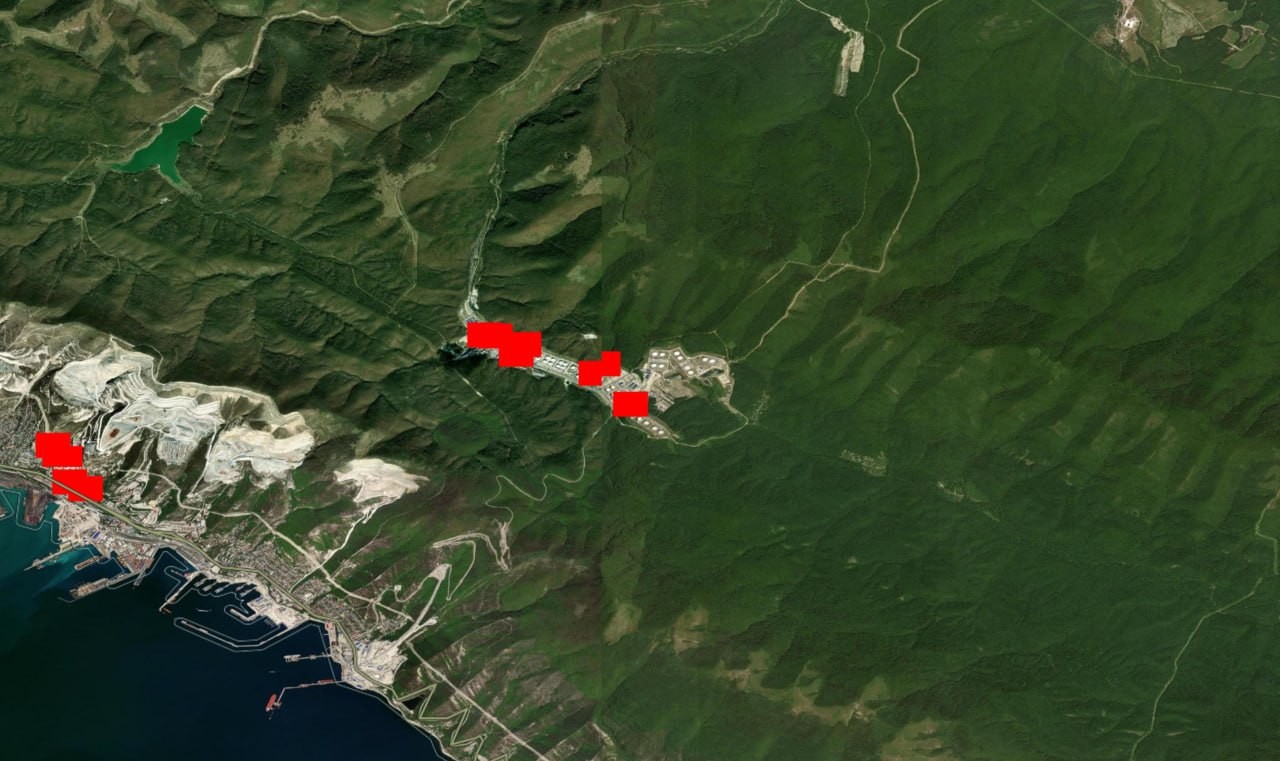
russian crude reaches sea through tunnels under mountain ridge—and ukraine hit storage end near novorossiysk · post nasa firms satellite data fire hotspots (the red squares top right) grushovaya oil
NASA FIRMS satellite data showing fire hotspots (the red squares, the cluster to the right) at the Grushovaya oil depot near Novorossiysk, 8 June 2026. Map: NASA FIRMS

NASA's FIRMS satellite service detected abnormal heat at the site at 02:48 on 8 June. Ukrainian Telegram channel Exilenova+ began reporting the attack around 3 a.m., posting photos and videos of fire in the mountains above the city. OSINT Telegram channel Falcon insight pinpointed the location. Russian news Telegram channel ASTRA confirmed the burning tank farm from eyewitness footage shot about 11 km away.

A fuel storage depot is burning in Novorossiysk, Russia, after a drone strike hit the tank farm overnight

Novorossiysk is one of Russia's most strategically important Black Sea ports, handling a significant share of Russian oil exports
🎥 Supernova pic.twitter.com/d2ab4SSuH0

— Euromaidan Press (@EuromaidanPress) June 8, 2026

What the Grushovaya depot feeds

The Grushovaya site is a transshipment depot for the Sheskharis terminal. Chernomortransneft runs it, under Russia's state pipeline monopoly Transneft. It sits in the Grushovaya Balka tract beyond the Markotkh Ridge, about 12 km from Novorossiysk. The tank farm holds more than 1.2 million m³ of fuel across dozens of tanks, on a site of about 212 hectares. SBS called it one of the largest oil-product stores in the Caucasus.
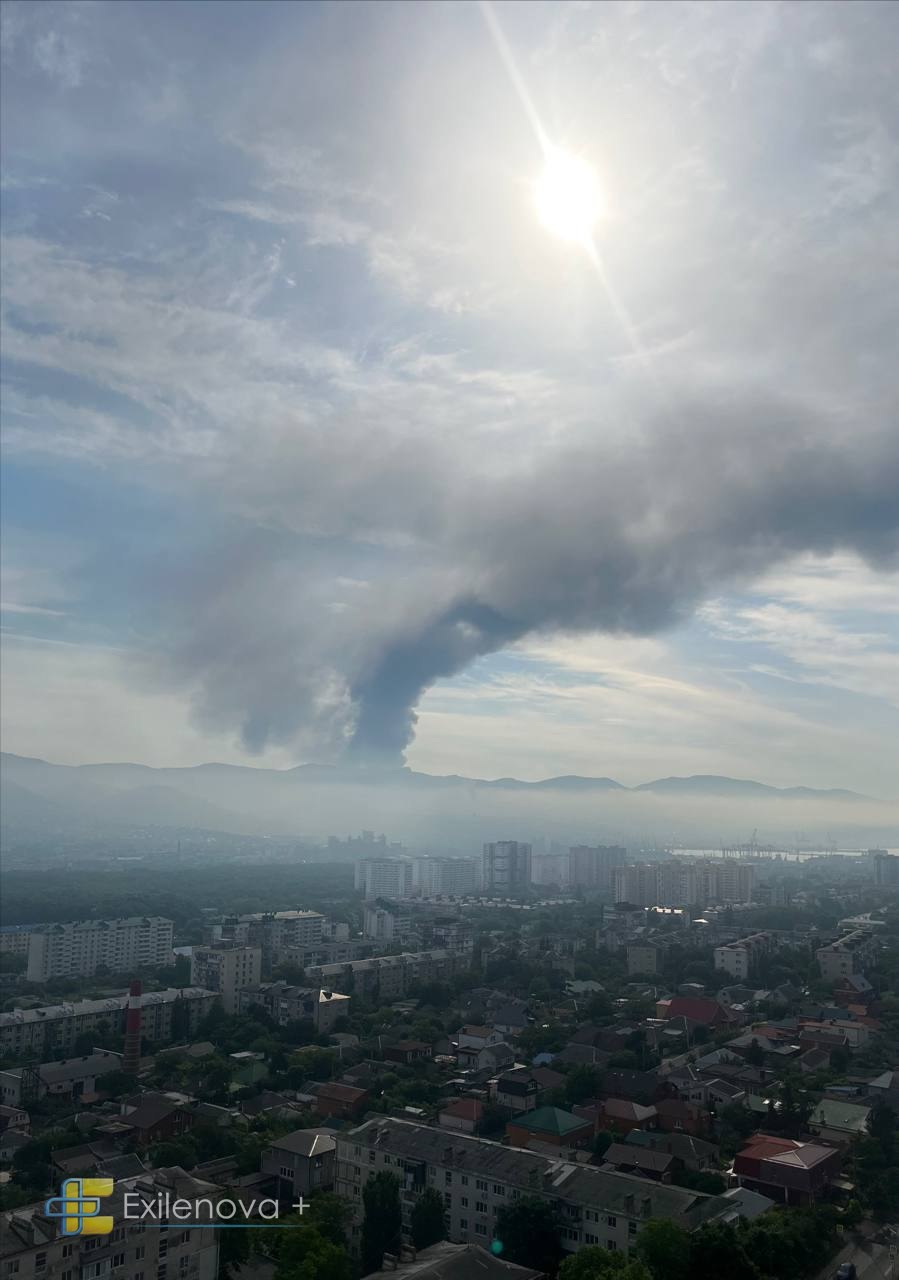
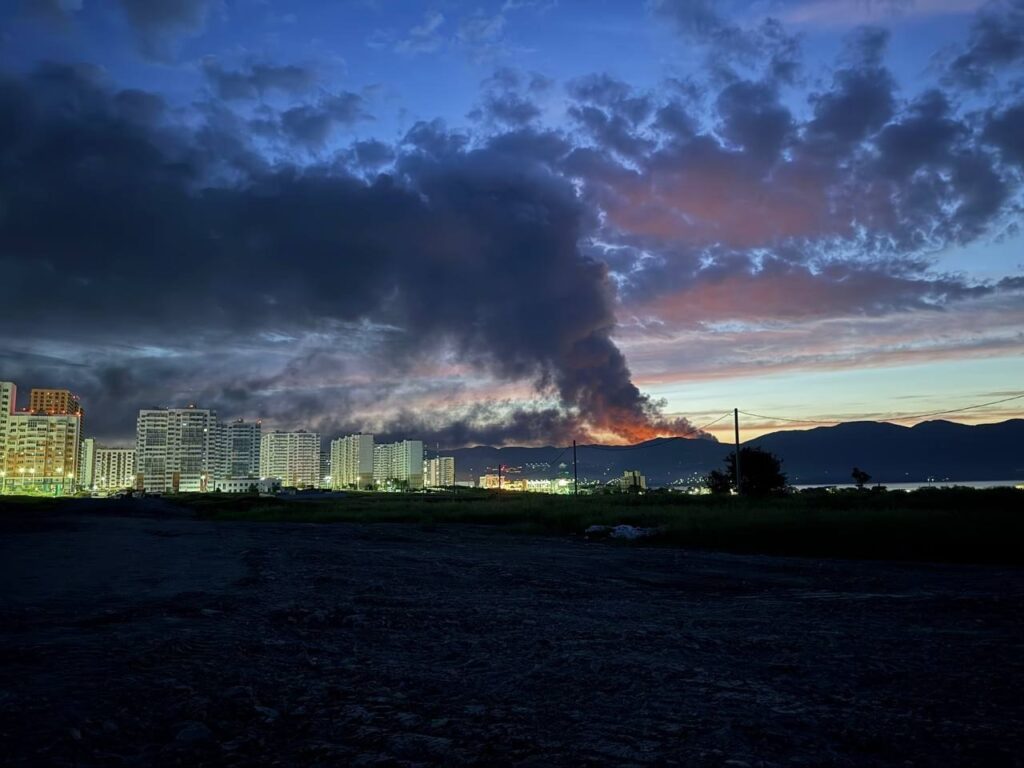
russian crude reaches sea through tunnels under mountain ridge—and ukraine hit storage end near novorossiysk · post smoke burning grushovaya oil depot drifts over after ukrainian drone strike 8 2026
Smoke from the burning Grushovaya oil depot drifts over Novorossiysk after the Ukrainian drone strike, 8 June 2026. Photo: Exilenova+

Novorossiysk is southern Russia's biggest oil-export hub, the Moscow Times reported. The port ships up to 700,000 barrels a day, and its terminals moved 19.8 million tonnes of oil products in 2025. That trade feeds Russia's budget, which bankrolls the war on Ukraine. The port has become a recurring target in Ukraine's strikes on Russia's Black Sea oil logistics.
Volgograd and a coastal radar also hit

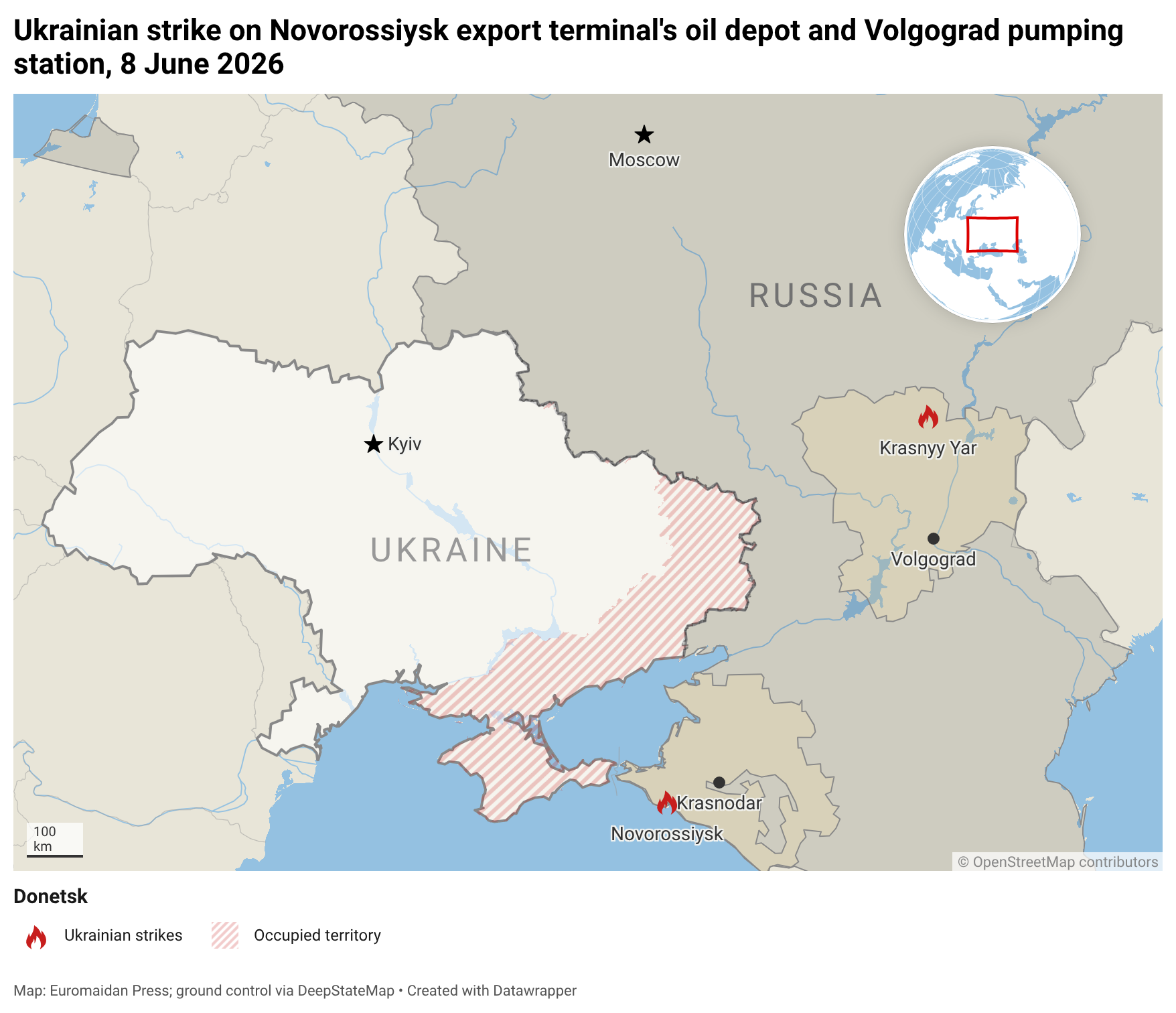
The same night, Ukraine's General Staff said its forces struck the Krasny Yar oil-pumping station in Volgograd Oblast, where a fire broke out. Volgograd governor Andrei Bocharov claimed the blaze came from falling drone debris at the Zhirnovsk pumping station and was quickly put out, the Moscow Times reported. Ukrainian forces also hit a Russian radar station near Kabardinka in Krasnodar Krai, according to the General Staff.

Ukrainian drones struck Russia's Baltic Fleet base at Kronstadt near St. Petersburg overnight, flying nearly 1,000 km. Source: Zelenskiy
Explore further

Kronstadt, Russia’s major naval Base after Black Sea Fleet losses, gets hit by Ukrainian drones (VIDEO)

Not the first strike on Novorossiysk's oil chain

Ukrainian forces have hit this infrastructure before. Ukrainian defense outlet Militarnyi reported that drones struck the Grushovaya depot on 23 May 2026, when fire spread across much of the site. Strike drones also hit the Sheskharis terminal on 6 April, damaging oil-metering systems and shut-off valves at the loading berths. ASTRA said the wider complex was attacked in early March, early April, and on 22 May.

ISW: The strikes will likely cascade into deeper disruption across Russia’s rear supply network

8 June 2026 at 10:05

Drones of the 20th Separate Brigade of Ukraine's Unmanned Systems Forces (SBS), known as K-2, and the Phoenix drone unit strike a Russian military truck on a logistics route in Donetsk Oblast, 7 June 2026. Photo: SBS

Ukraine's drone strikes on the highways that feed Russian forces in occupied southern and eastern Ukraine are disrupting Russian logistics and will likely bite deeper in the near future, according to the Institute for the Study of War (ISW). The campaign is also rattling Russia's pro-war online community, where bloggers have begun turning their anger on the Kremlin's own military leadership. Russian forces are already rerouting and disguising convoys to keep supplies moving.

Ukraine's drone war has dragged the fight off the trench line and into Russia's rear, where fuel and transport increasingly decide how long Moscow can keep its invasion supplied. If Ukrainian crews keep the main arteries under watch, Russia faces a slow squeeze on its rear and the political cost of admitting those roads are no longer safe.

Ukraine's drones now own a key supply road

Ukraine's 3rd Army Corps said on 31 May that its drones had won "fire control" over five occupied cities. All five sit on or near the M-04 highway: Luhansk City, Starobilsk, Alchevsk, Bryanka, and Kadiivka. In plain terms, Ukrainian crews can now strike traffic on that road.

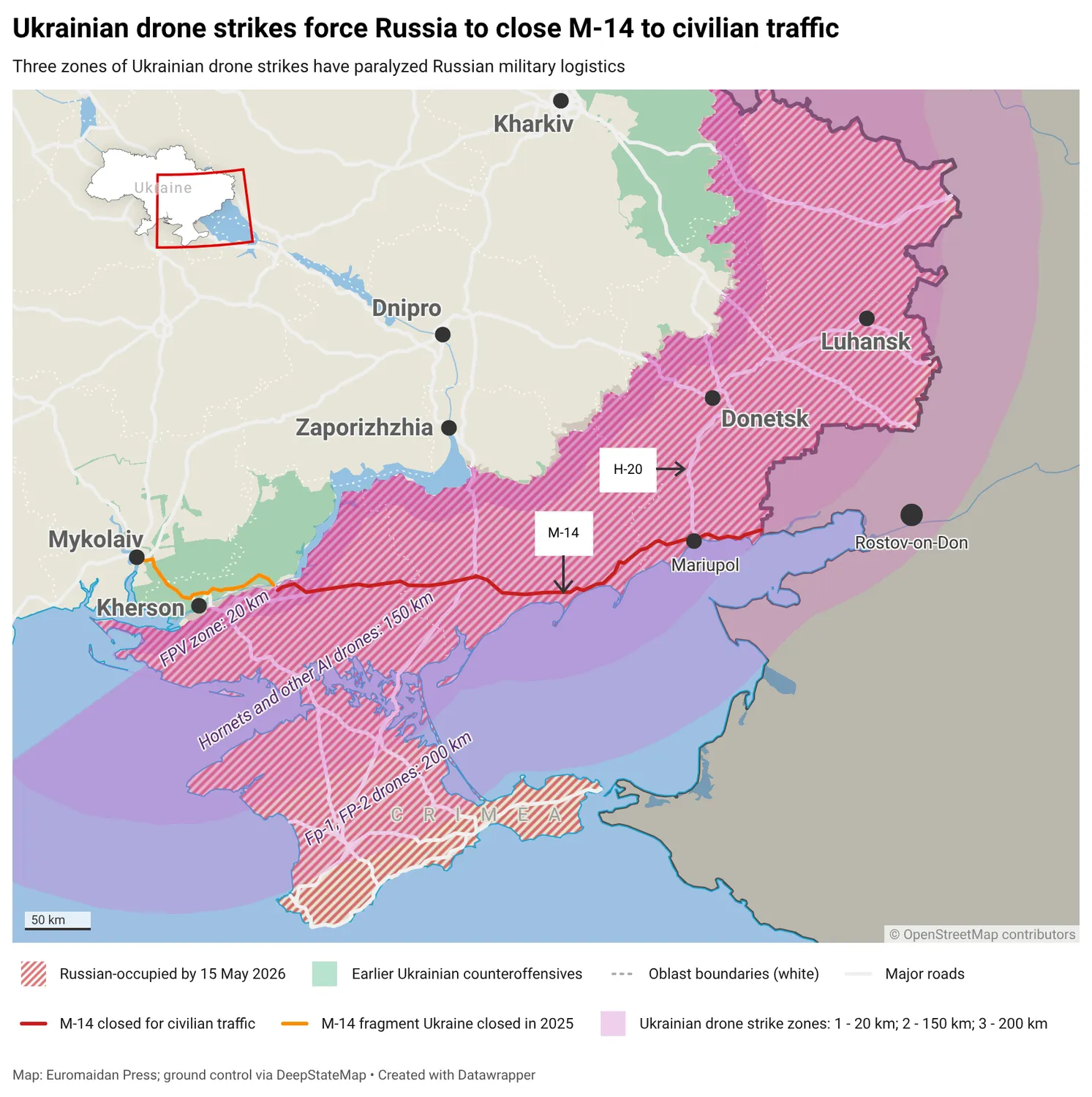
Map of southern Ukraine and adjacent Russian territory showing three concentric Ukrainian drone strike zones — FPV at 20 km, AI-assisted Hornets at 150 km, and FP-1/FP-2 long-range drones at 200 km — layered over the M-14 highway (Rostov to occupied Crimea) and the H-20 (Mariupol north into Donetsk Oblast). The Mariupol-Crimea-Rostov segment of M-14 is highlighted as closed by Russia for civilian traffic. The Mykolaiv-Kherson segment is highlighted as closed by Ukraine in 2025.
Ukrainian drone strike zones layered over Russia's southern supply network. FPVs reach roughly 20 km from the front, Hornets and other AI-assisted drones to 150 km, and FP-1 and FP-2 long-range drones to 200 km. The M-14 highway (Rostov-on-Don to occupied Crimea) and H-20 (branches north from Mariupol into Donetsk Oblast) both fall inside the deeper rings. Russian authorities have closed the M-14 to civilian traffic. The Ukrainian segment of the same highway, between Kherson and Mykolaiv, was closed by Ukrainian authorities in August 2025 after Russian drones turned it into a "human safari" killing ground. Map: Euromaidan Press.

A Ukrainian drone operator argued the M-04 matters more to Russia than the better-known M-14. The M-14 links Rostov Oblast to occupied Crimea. The M-04 begins near Moscow and reaches Rostov-on-Don before carrying on to Russia's Black Sea coast and into the Caucasus. It feeds occupied Crimea, southern Ukraine, and Luhansk Oblast through the Russian towns of Millerovo and Kamensk-Shakhtinsky. It also supplies Donetsk Oblast through Novoshakhtinsk in Rostov Oblast.

The Russian vehicles are burning on the route to Crimea. Source: The 3rd Separate Special Purpose Regiment
Explore further

Flat steppe: Ukraine is strangling Crimea’s supply lines from air. Melitopol-Chonhar road is latest target

The two highways connect, and Ukrainian forces are also hitting the H-20 road that joins them through Donetsk City. ISW assessed that the strikes will likely generate "even more profound cascading effects" across Russia's rear. The effort extends Ukraine's wider push to drive deep strikes further behind the front.

Russia bans buses and repaints its trucks

The strikes are already forcing changes on the ground. Leonid Pasechnik, the Russian-installed head of occupied Luhansk Oblast, issued a decree on 6 June. It bars regular bus and coach services on the section of the highway crossing occupied Luhansk.

A Russian “Svitlyak” border patrol ship seen from a Ukrainian drone before a strike near Yurkine, occupied Crimea. Screenshot from video: Madyar
Explore further

The Crimean Bridge is heavily guarded. Ukraine struck its maritime security layer in the Kerch Strait.

Ukrainian Mariupol mayoral adviser Petro Andriushchenko reported on 7 June that Russian forces had changed their Mariupol–Berdiansk route. They now use local coastal roads instead of the M-14. ndriushchenko said the troops are passing army vehicles off as civilian, recoloring the tarpaulins over each cargo bed and spraying the trucks white. ISW assessed the detours will likely slow Russian supply runs as Ukraine keeps hunting vehicles.

Russia's war bloggers turn on the Kremlin's generals

Ukraine's strikes are landing in Russia's information space too. Russia's pro-war military bloggers are voicing discontent and panic over the campaign.

Russian military truck on fire after a Ukrainian drone strike near occupied Horlivka, Donetsk Oblast, 5 June 2026. Screenshot from video: Supernova+
Explore further

Ukraine doubles deep strikes beyond 50 km as “Logistics Lockdown” shifts priority deeper into Russia’s transport nodes and rear logistics chains

A pro-war blogger and former Storm-Z assault-unit instructor complained on 7 June that Ukraine is now striking factories and defense plants deep inside Russia while degrading Russian air-defense radars and systems. He blamed bureaucracy and state-corporate infighting for Moscow's failure to respond, and separately complained that Russia cannot read Ukraine's battlefield trends and underrates its capabilities. Other bloggers piled on: one claimed fuel shortages were stoking panic in occupied Crimea, while others faulted the Russian Defense Ministry and top general Valery Gerasimov for not striking Ukrainian logistics, especially the Dnipro River bridges.

ISW found the complaints are escalating, and that the strike campaigns are becoming "points of neuralgia" in Russia's ultranationalist crowd. It noted the discontent feeds on Russia's poor battlefield results, rising casualties, and economic strain. Even before this, Russia's war bloggers had turned on the Kremlin's commanders over inflated victory claims.

Over 2,000 Russian casualties in first six days of June, Madyar reports amid surge in drone strikes on occupied territories

7 June 2026 at 16:29

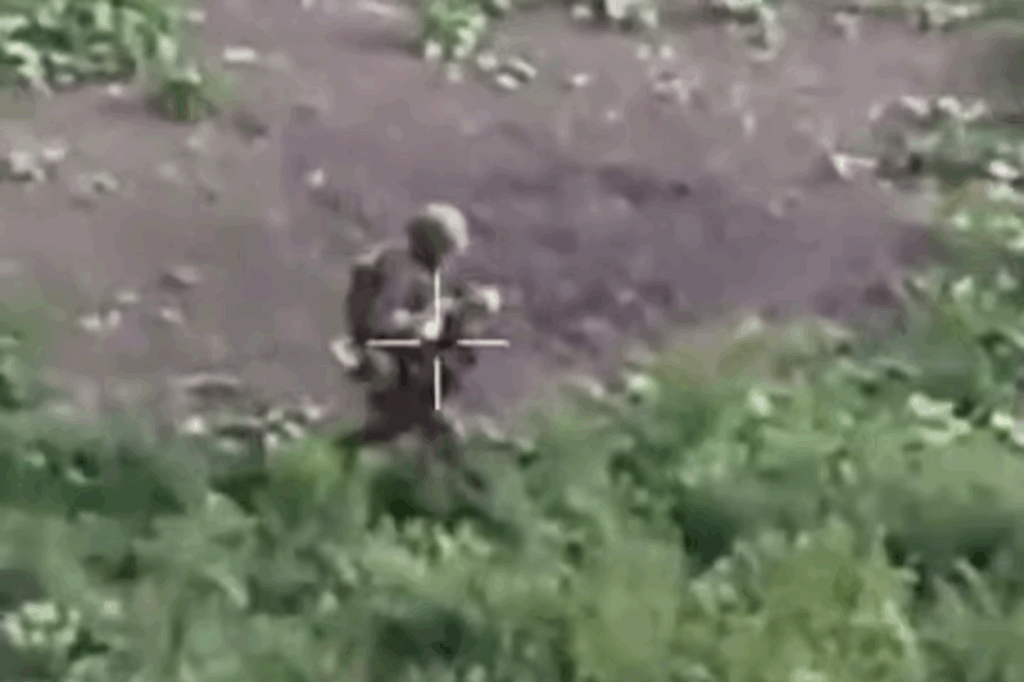
Russian soldier seen by Ukrainian drone before strike, June 2026. Screenshot from video: Madyar

Commander of Ukraine’s Unmanned Systems Forces, Robert “Madyar” Brovdi, says Russian losses reached 1,006 killed and 1,090 wounded during the first six days of June, as Ukrainian drone forces continued strikes against targets on and beyond the front line.

The commander of Ukraine’s Unmanned Systems Forces published the figures on 7 June alongside an update on overnight operations targeting Russian logistics and infrastructure in occupied territory and inside Russia.

More than 2,000 casualties reported in six days

Brovdi said Russian forces suffered a combined 2,096 killed and wounded between 1 and 6 June.

He described the losses as equivalent to the combat strength of a full Russian assault brigade lost within a single week.

The commander also used a railway comparison to illustrate the scale of the casualties, saying the losses would add the equivalent of 20 refrigerated and medical railcars to Russia’s “one-way ticket” train over the six-day period.

Drone strikes target rear-area infrastructure

According to Brovdi, Ukrainian forces also struck 26 targets overnight on 7 June across occupied parts of Luhansk, Donetsk, Zaporizhzhia, and Crimea, as well as Russia’s Bryansk Oblast.

He said Ukrainian units destroyed an air defense system and damaged three locomotives, two railway fuel tanks, four electrical substations, and six telecommunications towers. The strikes also disrupted the movement of military cargo toward the front, according to the statement.

Earlier on 7 June, Ukrainian Special Operations Forces reported strikes on the Semikolodezyanska oil depot in Yedi-Quyu and a maritime fuel terminal in Feodosia. Ukrainian officials said the operation was intended to reduce Russia’s logistical and economic capacity to sustain military operations in occupied territory.

The reported targets fit a broader Ukrainian effort to degrade Russian logistics networks, transport infrastructure, and support systems operating behind the frontline.

Ukraine says it doubled the number of successful strikes on Russian targets more than 50 kilometers behind the front line in May under the “Logistics Lockdown” program, which prioritizes attacks on transport networks, fuel infrastructure, depots, and other systems supporting Russian military operations.

Ukrainian Special Forces target Crimea fuel system, hitting depot and maritime terminal in “asymmetric” middle-strike operation on occupied territory

7 June 2026 at 14:14

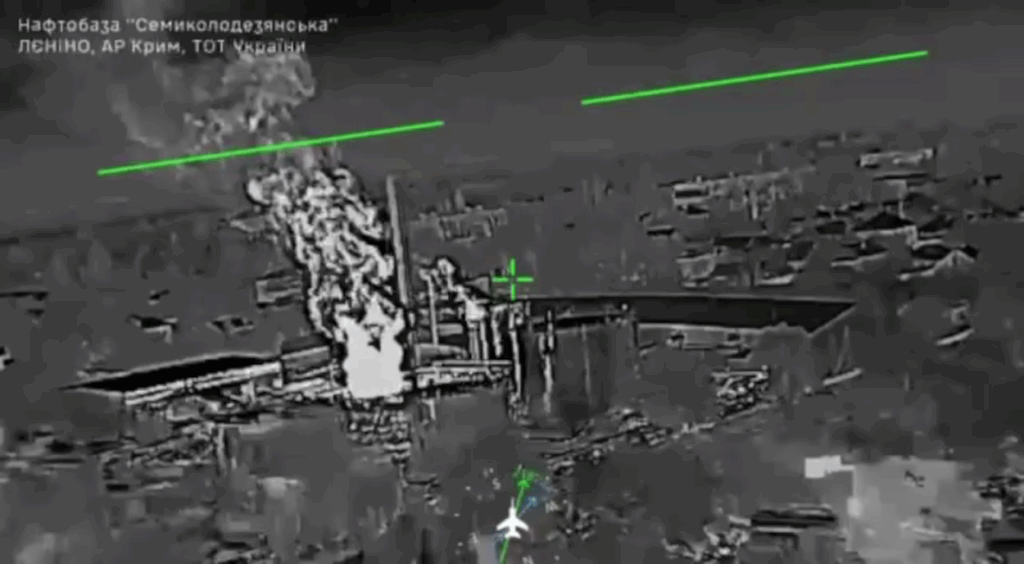
Semikolodezyanska oil depot in Yedi-Quyu (Lenine), occupied Crimea, amid a Ukrainian drone attack. Screenshot from video: Ukraine's Special Operations Forces

Ukrainian Special Operations Forces (SOF) say they carried out strikes on Russian fuel infrastructure in occupied Crimea overnight on 7 June, targeting the Semikolodezyanska oil depot and a maritime fuel terminal in Feodosia.

“The destruction of the enemy’s fuel infrastructure reduces its economic and logistical capabilities. The Special Operations Forces continue asymmetric actions aimed at the strategic weakening of the enemy’s ability to wage war against Ukraine,” the SOF said.

The SOF said both facilities are part of Russia’s fuel logistics system in occupied Crimea, used for storage, transfer, and redistribution of petroleum products supporting Russian military logistics in the region.

Semikolodezyanska oil depot hit in Yedi-Quyu

The SOF said the Semikolodezyanska facility is used by Russian forces as a fuel storage and transfer hub for diesel, fuel oil, and other petroleum products distributed across occupied territory.

The depot is located in Yedi-Quyu, a settlement in eastern Crimea which is known under Russian occupation administration as Lenine.

The site reportedly contains nine storage tanks ranging from 700 to 3,000 cubic meters and supports distribution across occupied territory through rail tanker loading and onward transport.

Ukrainian Special Operations Forces struck Russian fuel infrastructure in occupied Crimea overnight on 7 June, hitting the Semikolodezyanska oil depot in Yedi-Quyu (Lenine) and a maritime fuel terminal in Feodosia.

“The destruction of the enemy’s fuel infrastructure reduces its… pic.twitter.com/QwWWwYzmPi

— Euromaidan Press (@EuromaidanPress) June 7, 2026

Open-source monitoring suggested fire activity at the site following the reported strike. The OSINT group Exilenova+ said the depot was hit overnight, while NASA FIRMS satellite data reportedly showed heat signatures consistent with burning at the location.

The monitoring group Crimean Wind also reported a fire at the site, citing satellite imagery and witness reports. It said residents reported multiple explosions between 02:05 and 02:14 local time, followed by visible flames near the facility.

The group described the depot as a large settlement-based fuel site, originally built in the Soviet period, closed in the 1990s, and later restored after 2015 under Russian administration.

Feodosia maritime fuel terminal targeted

Ukrainian forces also reported a strike on a maritime oil terminal in Feodosia, used for transferring fuel between rail and sea transport.

The facility includes seven storage tanks with capacities of 10,000 and 20,000 cubic meters and functions as a key fuel transshipment point between rail wagons and maritime tankers.

It forms part of a wider logistics network supplying occupied Crimea, enabling large-scale movement of petroleum products across rail and coastal routes.

Expansion of Ukraine’s “middle-strike” campaign

The reported attacks reflect Ukraine’s growing use of “middle-strike” operations targeting logistics and energy infrastructure deep in occupied territory. 

The aim, according to officials, is to degrade Russia’s ability to sustain military operations by disrupting fuel supply chains and transport hubs beyond the front line.

A Ukrainian long-range drone struck a Russian military truck near occupied Horlivka, Donetsk Oblast, setting it ablaze and reportedly killing the driver.

Footage from the scene shows the vehicle burning in the middle of a key logistics route, forcing traffic to halt.

Russian… pic.twitter.com/CYfZjkRJMC

— Euromaidan Press (@EuromaidanPress) June 5, 2026

Russia reports large-scale drone interceptions

The Russian Ministry of Defense said air defense systems intercepted and destroyed 95 Ukrainian drones overnight across multiple regions of Russia and occupied territory, including Crimea and the Black Sea area.

The ministry listed other regions including Belgorod, Bryansk, Kaluga, Kursk, Novgorod, Rostov, Smolensk, Tula, Yaroslavl, Krasnodar Oblast, and Moscow Oblast.

Russian drone strikes nuclear fuel storage site in Chornobyl zone

7 June 2026 at 11:21

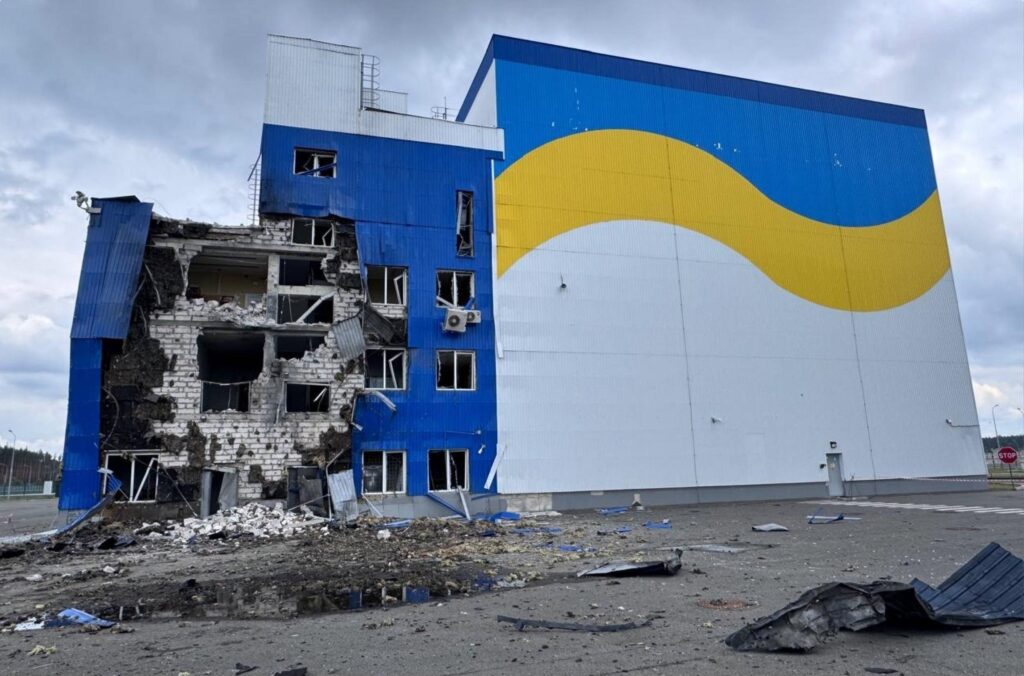
Damage at Ukraine’s spent nuclear fuel storage facility in the Chornobyl exclusion zone after a Russian drone strike, which officials say hit a non-storage building and triggered a fire. Photo: General Staff of Ukraine's Armed Forces

A Russian drone struck the site of Ukraine’s Centralized Spent Fuel Storage Facility (CSFSF) in the Chornobyl exclusion zone overnight on 7 June, damaging a non-storage building and causing a fire that was later extinguished, according to Ukraine’s state nuclear operator Energoatom.

The attack occurred at approximately 02:10, when a Russian UAV hit the facility’s container reception building, Energoatom said. The building was partially destroyed, although no spent nuclear fuel was stored inside at the time.

Fire contained, radiation levels normal

Energoatom reported that a fire covering about 40 square meters broke out after the strike but was quickly localized and fully extinguished. No personnel were injured.

The company said radiation levels at the site remain within normal limits and are being continuously monitored.

“The radiation situation at the CSFSF site remains within normal parameters,” Energoatom said in a statement, adding that it is coordinating with relevant state agencies and continuing to monitor the situation.

The Centralized Spent Fuel Storage Facility is an important part of Ukraine’s nuclear infrastructure, designed to store spent fuel from the country’s nuclear power plants.

SBU opens war crimes case over drone strike on Chornobyl spent fuel facility

Update 17:00: Ukraine’s Security Service (SBU) said it is treating the Russian drone strike on the Centralized Spent Fuel Storage Facility near Chornobyl as a war crime and has opened a criminal case under Article 438 of the Criminal Code.

Investigators said Russian forces used a “Geran-2” type drone for the 7 June strike, which hit the facility at around 02:05. Fragments of the drone were reportedly recovered at the site.

The SBU said the blast damaged the spent nuclear fuel reception and handling building, as well as an administrative building used by the International Atomic Energy Agency.

It added that the strike did not disrupt operations at the facility and no casualties were reported.

Damage at Ukraine’s spent nuclear fuel storage facility in the Chornobyl exclusion zone after a Russian drone strike, which officials say hit a non-storage building and triggered a fire. Photo: General Staff of Ukraine's Armed Forces

IAEA to inspect Chornobyl spent fuel site after drone strike damage

Update 14:40: The International Atomic Energy Agency (IAEA) said it will soon send its team at Chornobyl to inspect damage caused by a drone strike on the Centralized Spent Fuel Storage Facility in the exclusion zone.

The agency said it was informed by Ukraine that the 7 June attack caused “significant damage” to the fuel reception building, including the facade, windows, and doors, with nearby structures also affected by the blast wave.

IAEA Director General Rafael Grossi said the incident is “deeply concerning,” noting it occurred at a facility storing nuclear material just meters from the impacted structure.

He said attacks on nuclear facilities are “completely unacceptable” and violate core nuclear safety principles, including the agency’s “Seven Indispensable Pillars” for nuclear safety and security during armed conflict.

Ukrainian officials condemn strike on nuclear infrastructure

Ukrainian Foreign Minister Andrii Sybiha condemned the attack, describing it as another example of what he called Russia’s systematic disregard for nuclear safety.

“This is not the first time Russia has endangered Ukrainian nuclear facilities,” Sybiha said. “Russian nuclear blackmail and disregard for nuclear safety principles are systemic, deliberate, and unacceptable.”

Ukrainian President Volodymyr Zelenskyy said the drone that struck the facility was a Shahed-type attack drone and accused Russia of deliberately targeting critical nuclear infrastructure.

“Russia consciously struck this nuclear infrastructure facility,” Zelenskyy said. He noted that radiation levels had not exceeded safety limits and praised emergency responders for extinguishing the fire.

The president linked the strike to a broader wave of Russian attacks across Ukraine, saying Russia had launched attacks on civilian targets in 13 regions overnight. According to Zelenskyy, Russia fired 88 missiles, more than 3,250 attack drones, and around 1,800 guided aerial bombs against Ukraine over the past week.

Ukraine has repeatedly accused Russia of using threats to nuclear facilities as part of its broader war strategy. Concerns over nuclear safety have remained high throughout the full-scale invasion, particularly following repeated incidents involving nuclear-related infrastructure and the Russian occupation of the Zaporizhzhia Nuclear Power Plant.

More strikes on way: “social peace” enjoyed by government ‘at an end’

8 June 2026 at 11:40

With yet another week-long public sector strike now underway, SIC Notícias has warned that we can expect ‘more’ down the line as the semblance of social peace, enjoyed by the

The post More strikes on way: “social peace” enjoyed by government ‘at an end’ appeared first on Portugal Resident.

❌