It was not immediately clear what the investigators were looking for, but a board member with a progressive group said members had been served with search warrants.
In a ruling on Friday, Judge Amit P. Mehta wrote that the lawsuit arrived last minute and failed to show how the event irreversibly harmed the individuals who sued.
After years of keeping his distance, Gov. Greg Abbott is set to address Texas Republicans’ activist-led convention as hard-line conservatives gain influence within the party.
U.S. District Judge Leonie Brinkema gave the acting attorney general and Treasury secretary one week to submit written declarations that the fund is dead
Top officials and some lawmakers say letting a powerful spying authority expire on Saturday will leave the United States dangerously blind. But surveillance can still continue.
Speaker Mike Johnson said that not extending the law, known as Section 702 of the Foreign Intelligence Surveillance Act, risked “a serious calamity on our shores.”
Our chief political analyst, Nate Cohn, who writes The Tilt newsletter, looks at the Republicans’ advantage in the House of Representatives after partisan redistricting. To win the House, how much of the popular vote would Democrats need to win?
The Washington National Opera, which left the center amid the Trump administration’s takeover, says its efforts to retrieve its endowment and other assets have been blocked.
The Kennedy Center and the Washington National Opera are no longer affiliated, but they remained entangled in a dispute over what assets the opera might still be owed.
President Trump has made false or exaggerated claims of a Civil War-era push for a triumphal arch, hundreds of millions spent on repairs on the Reflecting Pool, and an absence of working fountains.
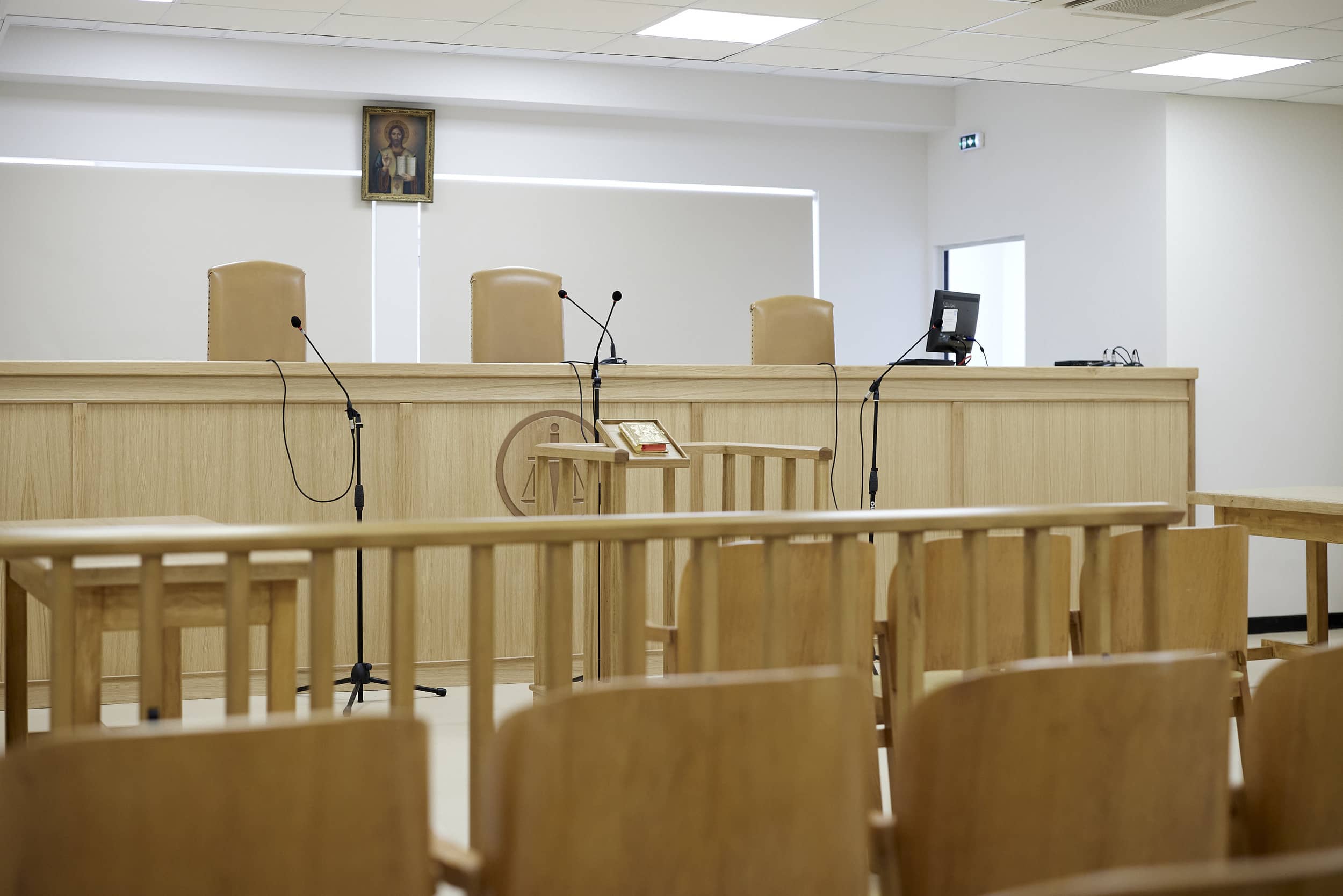
A Greek court in Aigio sentenced James Dalamangas after his arrest in the Peloponnese following a nearly 27-year manhunt over Sydney killing. Credit: Dimitris Papamitsos / AMNA.
A Greek court has sentenced James Dalamangas, the 55-year-old fugitive wanted in Australia over a 1999 Sydney killing, following his arrest in the Peloponnese after nearly 27 years on the run.
Dalamangas appeared before a judge in the town of Aigio on Thursday, just days after Greek police arrested him at a nearby rural property. Australian authorities have long sought his extradition in connection with the fatal stabbing of George Giannopoulos, a father of two, outside a Sydney nightclub in 1999.
Greek court sentences James Dalamangas after arrest near Aigio
Greek police arrested Dalamangas at a rural property near Aigio, where he had allegedly been living under the false identity of Antonis Tzimas.
According to local reports, he had lived in the area for years and worked as an olive farmer. The court sentenced Dalamangas to two years and nine months in prison on weapons and false testimony charges. Greek authorities also convicted two other people, an 86-year-old man and a 47-year-old woman, of harboring a fugitive. However, both received temporary release pending appeals against their sentences.
Australia seeks James Dalamangas over Sydney killing
Australian authorities are expected to submit a formal extradition request in the coming weeks. They are seeking Dalamangas’ return to face proceedings related to the 1999 killing.
Former NSW Police detective Duncan McNab revealed the extradition process will depend on the Greek legal system and government. “Ultimately, this will go through the courts in Greece, reviewed by the government. They may make a decision to send him back to us. I hope they do,” McNab said.
Dalamangas, who holds Greek citizenship, is expected to oppose any attempt to extradite him to Australia. His lawyer has indicated that he intends to fight the process.
Greek statute of limitations may complicate case
If Dalamangas remains in Greece, he is unlikely to face murder charges over the 1999 incident, as the statute of limitations for murder under Greek law expires after 25 years.
According to reports, police identified and located Dalamangas based on limited information, including a tattoo bearing the Ancient Greek phrase “Molon Lave,” meaning “Come and get them.” Authorities then placed his property under surveillance prior to carrying out the arrest.
As America celebrates its 250th anniversary, the nation faces two megatrends - a rapidly increasing national debt and unprecedented population shifts - which could have serious consequences for the future of the country.
As America celebrates its 250th anniversary, the nation faces two megatrends - a rapidly increasing national debt and unprecedented population shifts - which could have serious consequences for the future of the country.
The Portuguese Parliament is today debating a government proposal aimed at authorising the executive to introduce the Prestação Social Única (PSU), or Single Social Benefit, with Chega having agreed with
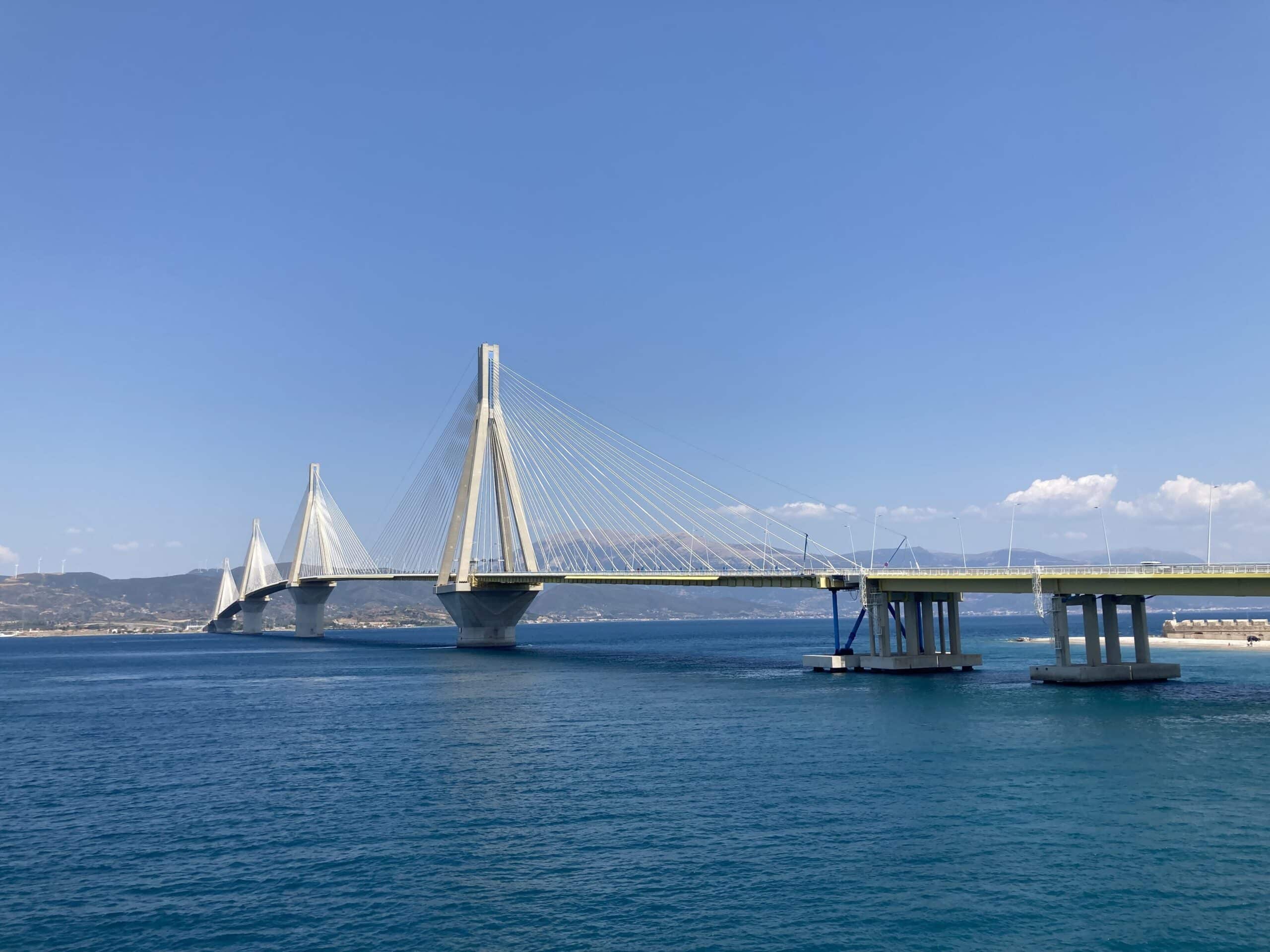
Greece is using AI, sensors, and digital twins to monitor aging bridges in real time and detect structural risks earlier. Credit: Wikimedia Commons / Awinch1001 / CC BY SA 4
Greece is turning to artificial intelligence, Internet of Things sensors, and digital twins to monitor aging bridges in real time, as the country moves toward a more preventive model for infrastructure safety.
The program, known as Smart Bridges, is being implemented by the Technical Chamber of Greece under the responsibility of the Ministry of Infrastructure and Transport. It is funded through the European Union’s NextGenerationEU mechanism as part of Greece’s Recovery and Resilience Plan, Greece 2.0.
The project is designed to provide authorities a live picture of how bridges behave under traffic, weather, and environmental stress. Rather than relying solely on periodic visual inspections, engineers can now receive continuous data from sensors installed on selected road and railway bridges.
Greece builds digital shield for aging bridges
The Smart Bridges system is already monitoring 271 bridges across the country. The program is expected to cover roughly six hundred road and railway bridges, establishing one of Greece’s most advanced digital infrastructure monitoring networks. The technology is based on Real-Time Structural Health Monitoring, a method that uses sensors to record how a structure responds to loads, vibration, movement, temperature changes, and other external pressures.
This information is then transmitted to digital platforms, where engineers can analyze it and detect unusual patterns. Artificial intelligence helps process large volumes of data and identify early warning signs that may require further inspection or maintenance. The goal is not only to detect damage but also to help authorities understand which bridges face the greatest pressure and where maintenance should be prioritized.
Sensors already reveal heavy traffic loads
Early findings show why continuous monitoring matters. On a bridge along the Axioupoli–Goumenissa national road in Kilkis, sensors recorded more than one thousand excessive load events over a three-month period. In Larissa, on a bridge on Karamanli Street above a railway line, the system recorded more than two thousand significant load events during the same period.
Together, these figures show the value of real-time data. Heavy vehicles, repeated traffic loads, climate conditions, and decades of use can all affect the condition of bridges. Without continuous monitoring, many of these stressors may remain invisible, leading to more serious damage.
Digital twins bring infrastructure into the data age
A central part of the project is the creation of a digital twin for each monitored bridge. This is a dynamic digital model of a real structure. It is updated as new data comes in from sensors, allowing engineers to compare expected behavior with actual performance.
This makes it possible to detect minor changes in a bridge’s condition over time. It can also help authorities plan maintenance more efficiently, reduce emergency repairs, and make better use of public funds. In this way, the system is meant to transform bridges from passive structures into monitored infrastructure that continuously reports on its own condition.
A major EU-funded infrastructure project
The Smart Bridges project is funded through the European Union’s NextGenerationEU mechanism under Greece’s Recovery and Resilience Plan, Greece 2.0. The project’s budget increased as its scope expanded. Greece 2.0 initially listed Smart Bridges at €222.4 million ($256.2 million), with €80.2 million ($92.4 million) coming from Recovery Fund financing.
A later official amendment raised the approved total budget to €285.3 million ($328.7 million) after 151 additional bridges were added to the project. The funding supports the installation of monitoring systems, the development of digital bridge models, the collection of real-time structural data, and the supervision of hundreds of road and railway bridges across Greece.
Aging infrastructure becomes a national challenge
The project comes at a time when Greece, like many other European countries, faces the challenge of maintaining infrastructure built decades ago. Numerous bridges remain essential to daily transport, freight movement, and regional connectivity. However, aging materials, heavier traffic, extreme weather, and limited maintenance budgets can increase structural pressure over time.
The Smart Bridges program reflects a wider shift in public infrastructure policy: from repairing damage after it appears to identifying risks earlier and acting before issues escalate.
Greece looks beyond bridges with a wider infrastructure safety plan
The Smart Bridges program has also opened up a broader debate about how Greece should monitor and maintain critical public infrastructure in the years ahead. The Technical Chamber of Greece has proposed the establishment of a mandatory National Infrastructure Registry, a centralized database that would record the condition, ownership, and maintenance needs of public assets across the country.
Such a registry would help authorities move away from fragmented records and provide the state with a clearer overview of which structures require inspection, repair, or long-term investment. The chamber has also called for wider pre-earthquake inspections, better integration of structural safety checks into building renovation programs, and more efficient use of Smart Bridges data by ministries, civil protection authorities, regional governments, and municipalities.

 Login
Login