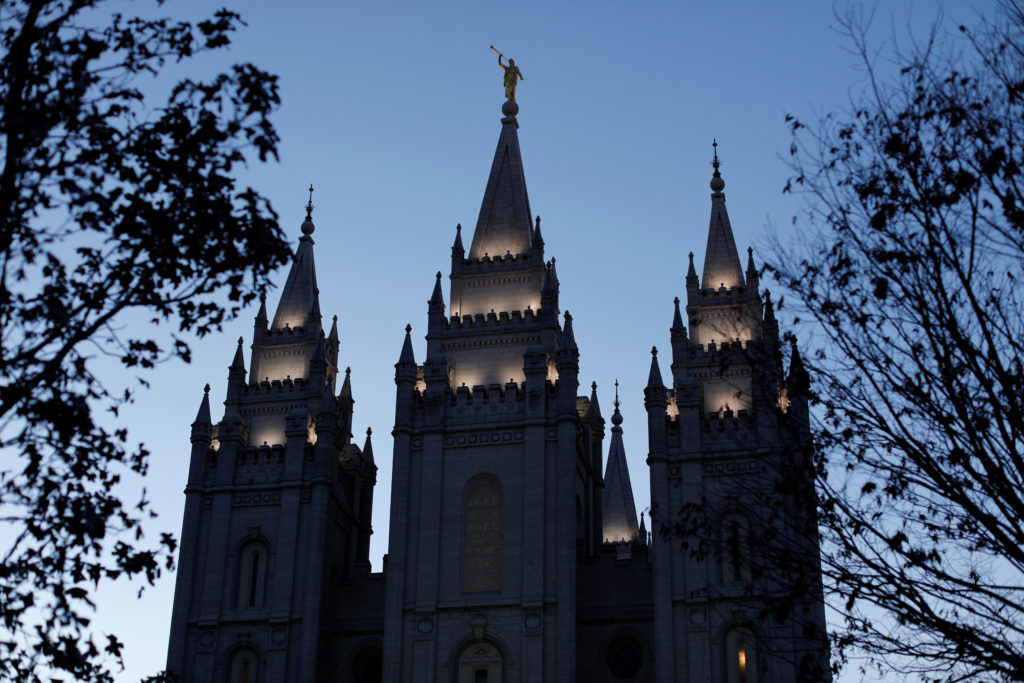
Utah U.S. Senators Mike Lee and John Curtis, both Republicans and Latter-day Saints, challenged the Pentagon's exclusion of their faith from its list of Christian religions.
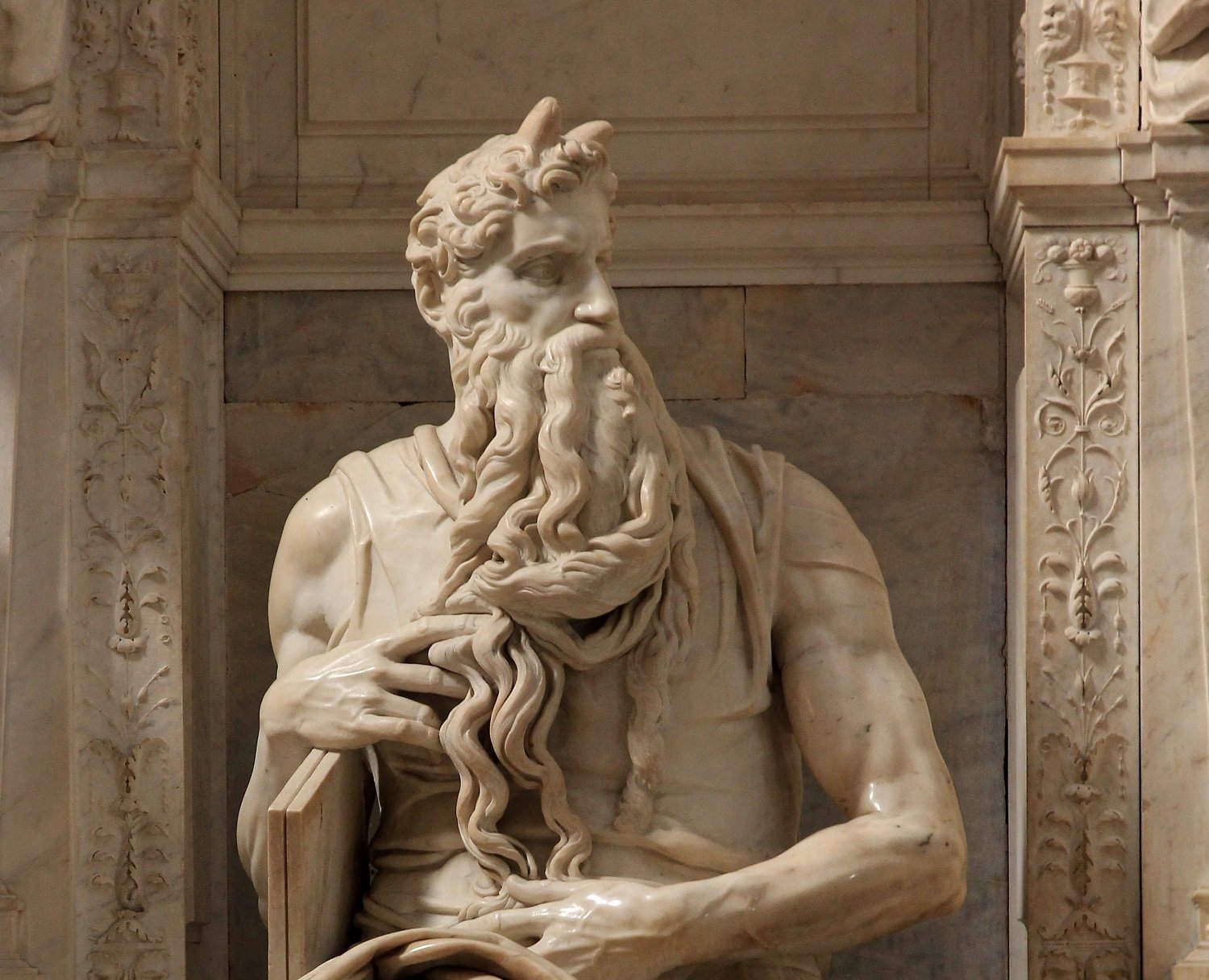
Moses by Michelangelo, c. 1513. Credit: Wikipedia Commons, CC-BY-SA-3.0
Scholars acknowledge that some legends from Greek mythology are strikingly similar to stories from the Bible. According to some theories, a few individual characters from the Bible might also appear in Greek mythology. One theory argues that the famous Moses of Egypt can be found in Greek records. Does Moses really appear in Greek mythology, or is this just wishful thinking?
Who was Moses?
Firstly, let us establish who Moses was. He appears in the Bible books of Exodus, Leviticus, Numbers, and Deuteronomy. Exodus contains the most famous part of his life story. It tells the story of how he was a Hebrew boy placed in the Nile River, where the Pharaoh’s daughter then found him.
When Moses was an adult, he tried to help his fellow Hebrews, who were slaves in Egypt, but then he ran away and remained in a distant land for forty years. He eventually returned after God allowed him to go and free his people from Egypt. Pharaoh refused to let the Hebrews go, but after ten devastating plagues from God, he relented.
Moses led the people out of Egypt across the Red Sea (where Pharaoh and his army drowned after trying to pursue them) and into the Sinai wilderness. There, he gave his people an extensive list of regulations from God, collectively known as the Mosaic Law. He also wrote many religious writings. The first five books of the Bible are attributed to him, as well as several poetic writings.
Did the Greeks know about Moses?
The theory that Moses appears in Greek mythology depends on the idea that the Greeks could have known of Moses in the first place. After all, he could not have appeared in their mythology if they did not know about him.
As it so happens, Moses does appear in quite a few Greek records. The Egyptian priest Manetho, from the third century BCE, mentioned Moses in his history of Egypt. Since Manetho lived in Egypt during its Hellenistic era, it is virtually certain that the Greeks of that region were aware of Moses. They certainly would have known of him after reading Manetho’s history.
Interestingly, there is evidence that the Greeks knew about Moses even before the Hellenistic era of Egypt. The first-century BCE Greek historian Diodorus Siculus wrote about the origin of the Jews. His account came from Hecataeus of Abdera, a Greek traveler from c. 300 BCE.
Hecataeus’ account differs from the Bible’s account in numerous ways, but it is still fundamentally the same story of Moses. Therefore, at least as early as 300 BCE, the Greeks definitely knew about Moses.
Was Musaeus from Greek mythology the same as Moses?
In ancient times, several writers explicitly identified Moses with a certain figure from Greek mythology. This figure was Musaeus. It is obvious that the main reason for identifying the two figures is due to the similarity between their names. But is there any more of a connection than this? Well, what does Greek mythology say about Musaeus?
Musaeus was a legendary intellectual, philosopher, seer, prophet, poet, musician, and historian. The Greeks believed that he founded a class of priestly poetry in Athens. He allegedly lived in the time of Heracles and was associated with Orpheus, another prominent poet and prophet from Greek mythology.
Immediately, we can see that there are some definite similarities between Moses and Musaeus from Greek mythology. In addition to the similarity in their names, their roles are also similar. Moses was a prophet, since he relayed messages from God. He was a poet, since he wrote the poetic book of Job and several of the Psalms. He was also a historian, since he wrote part of the history of the Jews.
Why Musaeus could not have been Moses
Despite these similarities, there is a key reason why Musaeus could not have been Moses. The key reason is that they did not live at the same time.
At first glance, it might look like the chronology works very well. Moses is usually placed at the time of Ramesses II, who ruled in the 13th century BCE. He is also placed in the time of Heracles, who lived about half a century prior to the Trojan War. That would also put him in the 13th century BCE according to the traditional date of the Trojan War. Therefore, it seems at first glance that Musaeus and Moses would have been exact contemporaries.
However, the reality is not so simple. Despite the popular association between Moses and Ramesses II, this has no historical or Biblical basis. The Bible’s internal chronology, along with its genealogical record of the prophet Samuel, places Moses firmly in c. 1500 BCE. That means he lived almost three centuries earlier than the traditional era of Musaeus.
The true era of Musaeus
The theory connecting Moses with Musaeus is further disproved if we examine the information about Musaeus from Greek mythology even more closely. For one thing, there is evidence that the Trojan War occurred several centuries later than the traditional date.
Furthermore, recall that Musaeus was closely associated with Orpheus. Some records say that Musaeus was Orpheus’ son, while other records give the inverse relationship. In either case, they lived at about the same time.
Greek tradition claims that Homer was a tenth generation descendant of Orpheus. That would place Orpheus, and therefore his associate Musaeus, about 200 to 250 years prior to the time of Homer. Since Homer lived in the seventh century BCE, that would mean that Musaeus would have probably lived in the ninth or tenth century BCE. Hence, this would have been long after the time of Moses. Therefore, it is virtually certain that Moses was not Musaeus from Greek mythology.
The pontiff will offer a Mass in Antoni Gaudí’s iconic, unfinished basilica during his Spain trip. But for some Barcelona residents, completing the construction could mean knocking down their homes.
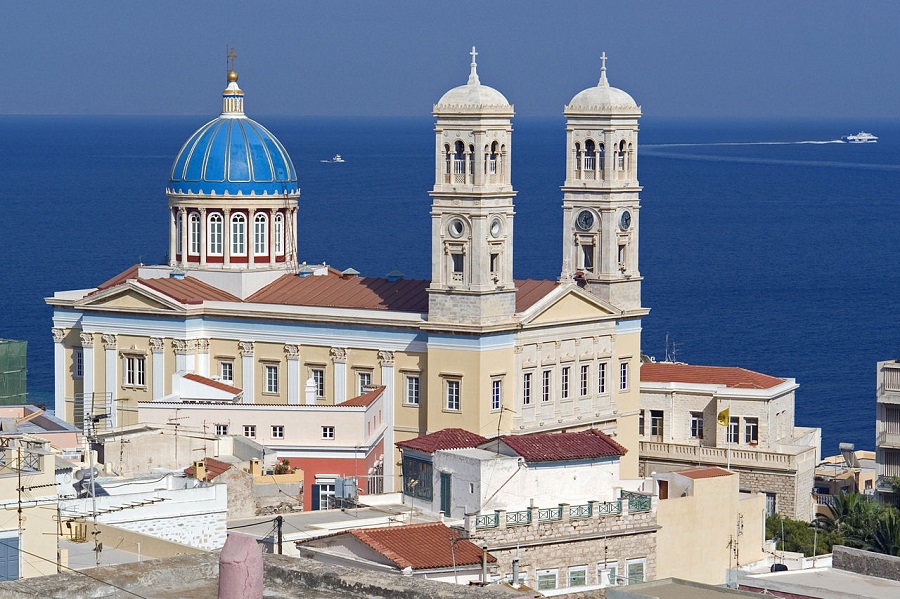
Saint Nicholas dominates the skyline in Ermoupoli, the capital of the island of Syros. Credit: Hans Peter Schaefer, CC BY-SA 3.0/Wikipedia
The Church of Saint Nicholas, a magnificent church in Ermoupoli, the capital of Syros, took twenty-two years to build.
Overlooking the Cycladic island, Saint Nicholas’ construction began in 1848, following the designs of a Greek architect named G. Metaxas. They were personally approved by King Otto, the Bavarian prince who ruled Greece from the establishment of the monarchy in 1832. The church was finally completed in 1870.
Saint Nicholas, the patron saint of seafarers, is also the patron saint of Ermoupoli. The cathedral dedicated to him stands out even to this day for its impressive architectural structure. The two-story monumental church has marble bell towers, an imposing marble staircase and marble propylaea, Ionic columns, archaic motifs, arcades, and an array of sculpted decorations.
It has lavish interiors including its icon of Saint Nicholas, which was plated in silver in Moscow. Its marble throne, pulpit, and marble iconostasis are also very unusual in Greek ecclesiastical architecture.
Saint Nicholas Church one of the finest in Greece
St. Nicholas was constructed between 1883 to 1899 by Tinian sculptor G. Vitalis and is considered one of the finest churches of the nineteenth century in Greece.
The Church of Saint Nicholas. Credit: Hans Peter Schaefer, CC BY-SA 3.0/Wikipedia
The church’s icons were created by some of the best hagiographers of the time while many Greeks from abroad, including shipowners, contributed funds toward the construction of the temple.
Internally, arches divide the church into three aisles; places for female congregants run along its three sides.
The imposing church is known as Agios Nikolaos “the rich,” to distinguish it from “Agios Nikolaos of the poor” another church on Syros.
Syros has a long history that began three millennia ago
Syros’ long history explains the many different styles of architecture and the many government buildings in the capital, Ermoupoli. It has also led to the establishment of a wealth of museums and cultural events that take place there in the summer.
On Syros, one will find City Hall, comprised of the remains of the castle in Ano Syros and the Theater Apollon—all buildings atypical of Cycladic architecture.
Syros was never under Ottoman occupation since it was protected by the French, and there is a strong Catholic element on the island due to the Venetian influence there as well.
Nowadays, the island is world-renowned for its rich cultural tradition with events that take place in Ermoupolis, such as the International Classical Music Festival of Cyclades, ANIMASYROS International Animation Festival, Ermoupoleia Cultural Festival etc that offer a range of options for every visitor to experience.
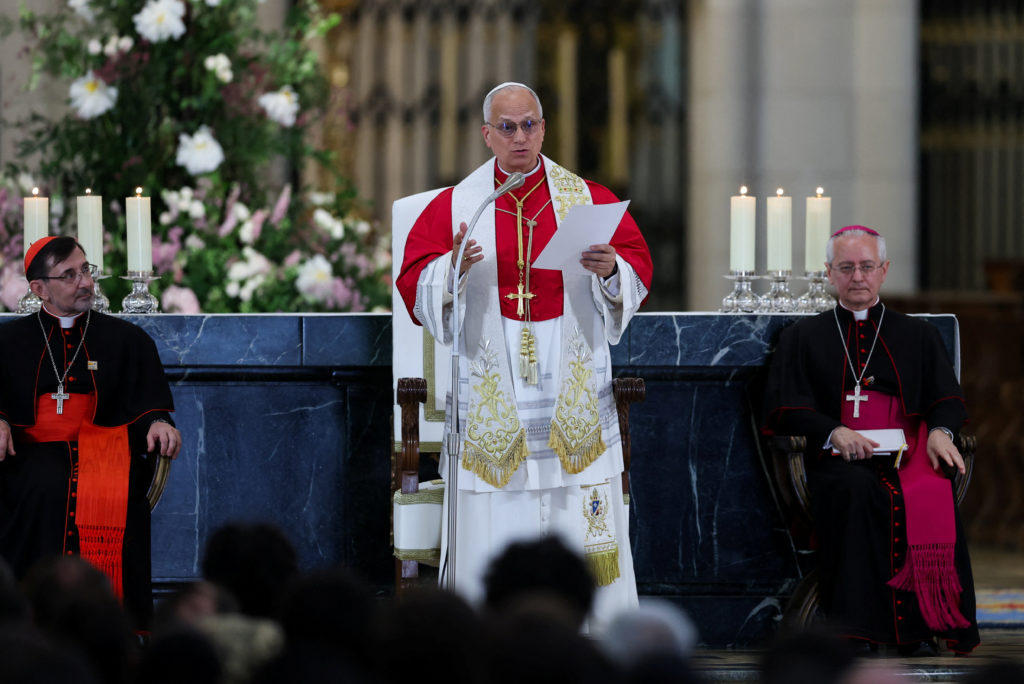
Pope Leo and Armando Jesús Lovera have known each other for decades. They have watched World Cup games together, gone on road trips and once searched for a teddy bear for Mr. Lovera’s future wife.
President Donald Trump is reportedly considering Patriarch Theophilos III of Jerusalem as a potential mediator in Russia-Ukraine peace efforts. Credit: Jerusalem Patriarchate
In a novel diplomatic development, US President Donald Trump has reportedly approached the Greek Orthodox Patriarch of Jerusalem, Theophilos III, to act as an informal mediator to help de-escalate the war between Russia and Ukraine.
According to reports from Israeli media, including Ynet, and Greek news outlet iefimerida, the proposal was discussed during a recent forty-minute meeting between Trump and the Patriarch at the White House. Sources close to the Patriarchate reveal that Trump asked Theophilos III to leverage his long-standing communication channels with Moscow—and specifically with Russian President Vladimir Putin—to explore avenues toward a ceasefire.
Jerusalem Patriarch: A religious intermediary?
Theophilos III is widely regarded as a figure of immense moral and religious authority, largely viewed as free from direct political alignment. Crucially, the Jerusalem Patriarchate has maintained close ties with the Russian Orthodox Church and has notably abstained from recognizing the autocephaly (independence) of the Ukrainian Orthodox Church, which was granted by the Ecumenical Patriarchate in 2019. This stance, combined with Moscow’s historical interest in protecting the Holy Sites in Jerusalem, gives the Patriarch unique diplomatic leverage with the Kremlin.
Furthermore, the Patriarch is no stranger to sensitive diplomacy. He previously assisted in securing the release of Israeli citizen Naama Issachar from a Russian prison. Trump is reportedly eager to utilize these open channels to demonstrate swift progress in resolving the conflict, especially as official diplomatic avenues remain heavily strained.
Mixed reactions and official caution
A meeting between Patriarch Theophilos III and Vladimir Putin is already scheduled for later this month. While no official mediation proposal has formally been presented to Kyiv, a Ukrainian government source generally welcomed the initiative. “Why not? The more mediators there are, the more responses we will get from Russia showing that Putin wants to keep fighting,” the source stated.
However, ecclesiastical sources in Athens have expressed deep skepticism regarding the feasibility of the endeavor, questioning whether Ukraine will ultimately accept a mediator with such close ties to Moscow.
Diplomatic talks shift to Athens
Greek FM Gerapetritis welcomes Patriarch Theophilos III in Athens. Credit: Greek Ministry of Foreign Affairs
Amid these backstage diplomatic maneuvers, Patriarch Theophilos III arrived in Athens for an official visit, where he met with Greek Foreign Minister George Gerapetritis. While the Greek Ministry of Foreign Affairs focused on regional stability, Gerapetritis reaffirmed Greece’s unwavering support for the Patriarchate and the protection of Christian populations in the volatile Middle East.
The meeting concluded with the signing of a Memorandum of Cooperation between the Greek Ministries of Foreign Affairs and Culture and the Patriarchate to preserve the Holy See’s cultural heritage. Gerapetritis also underscored the vital importance of maintaining the historical Status Quo of Jerusalem, emphasizing the unity required among the ancient Eastern Patriarchates during this highly complex geopolitical era.
Spain's lawmakers have given Pope Leo XIV a lengthy standing ovation after his historic address to parliament. This marks a new level of acceptance of the Catholic Church in largely secular Spain.
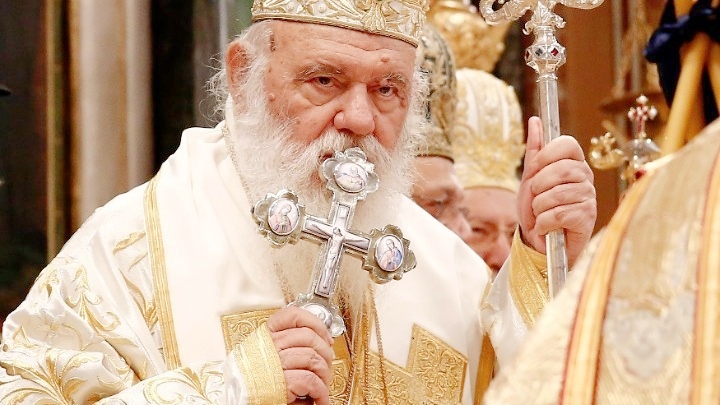
Archbishop of Athens and all of Greece, Ieronymos. Photo Credit: AMNA
A new bill introduced by the Greek Ministry of Finance recently in the nation’s Parliament includes sweeping salary increases for the highest-ranking officials of the Orthodox Christian Church of Greece. Under the proposed legislation, the Archbishop and Metropolitan Bishops will see their monthly gross pay rise by as much as 95%, standardizing their new salaries at €4,671.90.
Greece to restructure how Bishops are paid
The adjustments, outlined in Article 56 of the extensive finance bill, fundamentally change how the state compensates senior clerics. Rather than utilizing the previous tiered allowance system, the new legislation equals the base pay of Metropolitan Bishops with that of the Archbishop of Athens and All Greece.
Both positions are now pegged directly to the compensation of top government executives. Specifically, the hierarchs will receive 90% of the maximum gross salary allotted to a Ministry General Secretary. The public sector basic salary limit for General Secretaries adjusts to €5,191 effective April 1, 2026. The legislation calculates the new clergy pay explicitly as 90% of this figure. The bill firmly states that no other supplementary benefits or allowances will be paid beyond this established rate.
Prior to this legislative update, senior clergy salaries fluctuated based on specific representation expenses and educational qualifications, such as holding a master’s or doctoral degree. The contrast with the new pay scale is significant:
The Archbishop: Previously earned a monthly gross income ranging from €2,840 to €2,915. The adjustment delivers an approximate 60% baseline increase.
Metropolitan Bishops: Previously collected between €2,400 and €2,475 monthly. Under the new equalization framework, their gross pay jumps by up to 95% to match the Archbishop.
Assistant and Titular Bishops: The bill standardizes compensation for lower-ranking hierarchs, setting their total monthly salaries at exactly 70% of the top-tier rate.
Wider public sector wage adjustments
While initially framed around measures combating the energy crisis and supporting vulnerable groups and pensioners, the bill extends far beyond ecclesiastical pay. The legislative package contains comprehensive wage restructuring for various sectors of the Greek state apparatus.
Articles 49 through 55 dictate specific salary and promotional adjustments for the judiciary and civil service. Judicial officers facing delayed promotions due to a lack of open vacancies will receive calculated percentage adjustments to their base pay, depending strictly on their accumulated years of service.
The bill also implements hard compensation caps for other public servants. Members of constitutionally protected independent authorities who hold supplementary government positions cannot exceed 80% of a judicial officer’s total pay. Finally, the legislation actively standardizes the pay scales for administrative staff serving both the Presidency of the Government and the Presidency of the Republic, ensuring direct alignment with the updated 2026 public sector guidelines.
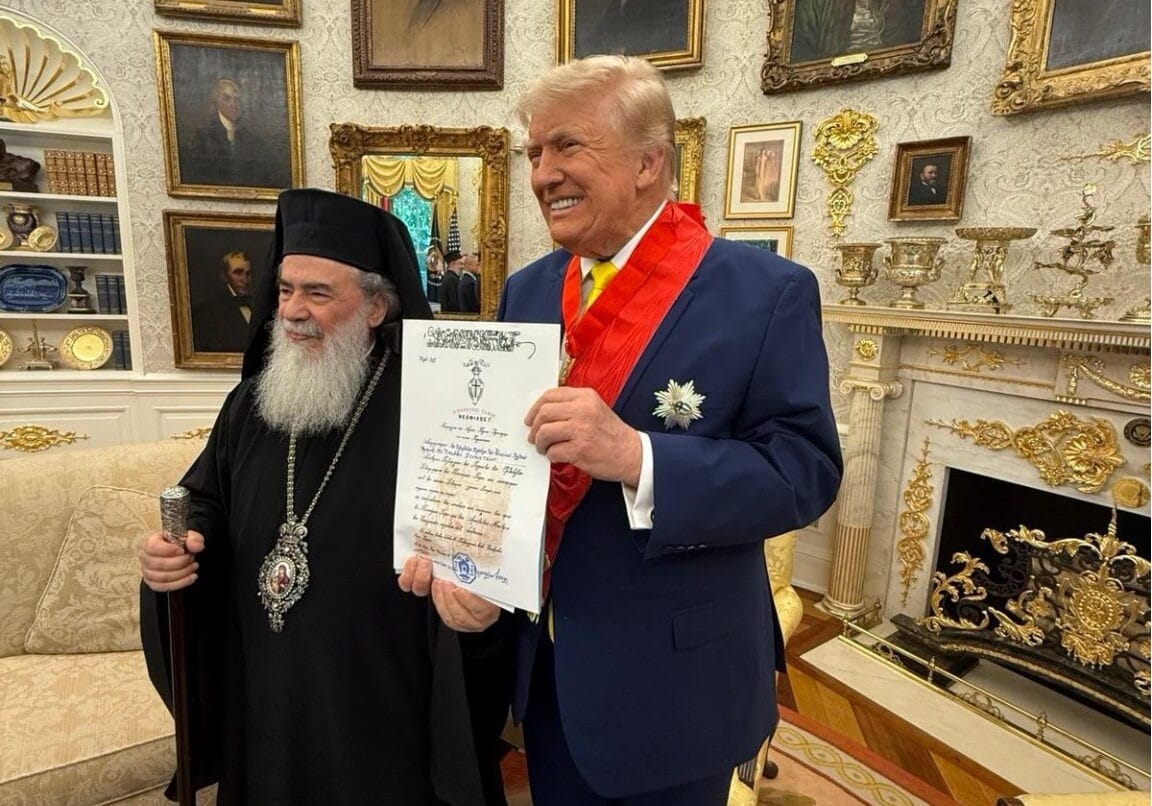
Patriarch Theophilos expressed deep concern over the vulnerability of the Christian communities. Credit: White House
Patriarch Theophilos III of Jerusalem met with US President Donald Trump at the White House on Thursday afternoon, June 4. The forty-minute discussion focused heavily on protecting Christian communities across the Middle East and safeguarding freedom of worship in the Holy Land.
The meeting comes at a time of severe regional instability, as Christian populations in Lebanon, Syria, and the Holy Land face mounting pressures and security challenges. During the talks, Patriarch Theophilos expressed deep concern over the vulnerability of these communities, emphasizing that their protection is vital not only for religious reasons but as a cornerstone for regional stability, coexistence, and peace.
“In recent years, Christian communities in the Middle East have faced a harsh reality of instability, growing threats, and rising pressures,” the Patriarch of Jerusalem stated in an official release. “We see ancient communities asking for something fundamentally basic: to continue living in safety, to preserve their faith, and to protect their freedom of worship.”
Safeguarding religious freedom
Addressing President Trump, His Beatitude noted that “safeguarding religious freedom and maintaining open access to the Holy Land is more than a spiritual matter; it is a prerequisite for stability, coexistence, and peace throughout the entire region.”
During the encounter, Patriarch Theophilos honored Donald Trump with the “Grand Cross” of the Order of the Knights of the Holy Sepulchre, one of the highest distinctions bestowed by the Greek Orthodox Patriarchate of Jerusalem.
According to the Patriarchate, the meeting builds upon the established relationship between the Patriarch and the Trump family, serving as a continuation of the US President’s landmark 2017 visit to Jerusalem and the Church of the Holy Sepulchre.
As one of the world’s oldest Christian institutions, the Greek Orthodox Patriarchate of Jerusalem holds a historic role in guarding holy sites, including the Church of the Holy Sepulchre in Jerusalem and the Church of the Nativity in Bethlehem. Patriarch Theophilos III, who has held the patriarchal throne since 2005, has frequently been involved in global religious events, including the consecration of the holy oil used in the coronation of King Charles III.

 Login
Login