A truly bizarre series of events off the coast of Iran today that in my opinion were entirely provoked, if not staged, by the US. It started with multiple news reports that a US Army Apache helicopter had been shot down in the Persian Gulf but the two pilots emerged unscathed. What the hell was an Apache helicopter doing?
The AH-64 Apache is a twin-engine attack helicopter primarily designed for anti-armor warfare, close air support, and armed reconnaissance. Apparently it was conducting reconnaissance. The US claims that Iran shot it down, but Iran insists it did no such thing.
I am bothered by the claim it was shot down… If the rocket or bullets had hit the cockpit or damaged the main rotor, the craft would have plunged into the water and the pilots would not have survived. So what happened? Was one of the twin engines damaged but still able to function? Was the rear rotor damaged? Those are the only two scenarios I can imagine that would not have caused a catastrophic crash. Once the helo landed in the water, the pilots had to open the canopy and jump into the water. Hopefully the main rotor — assuming it was intact when the copter hit the water — shattered on impact. Otherwise, the pilots would have been shredded trying to escape.
Coincidentally with this crash, the NY Timespublished a story, written by David Sanger, discussing the state of US and Iranian negotiations over Iran’s nuclear program. Sanger wrote:
In the days before the latest flare-ups of violence in the Middle East, President Trump’s aides were negotiating with Tehran on four major elements of a nuclear agreement that U.S. officials contend would grind the program to a halt for 15 years or so. . . .
According to the officials and diplomats, here are the four major points of negotiation on a nuclear agreement between the United States and Iran:
1. A lengthy suspension of uranium enrichment
The United States has demanded for months that Iran agree to conduct no uranium enrichment for at least 20 years. The Iranians have countered by offering a 10-year halt, but American officials believe they will settle for 15 years.
2. Iran’s current stockpile of enriched uranium is diluted, or “downblended”
The United States would work with the International Atomic Energy Agency, the U.N. inspection body, to dilute, or “downblend,” Iran’s stockpile of enriched uranium, according to two American officials familiar with the negotiations. American officials envision an active role in handling the nuclear material, something Iran has always forbidden. Iranian officials say the United States would serve only as an observer. . . .
3. Iran dismantles its nuclear sites
The United States has demanded that Iran dismantle its three major nuclear sites at Natanz, Fordo and Isfahan. The United States struck all three in Operation Midnight Hammer nearly a year ago, severely damaging them. Iran has discussed dismantling two facilities but insists on leaving one open, in part to demonstrate it has not surrendered what it views as a “right to enrich.”. . .
4. Iran agrees to “snap” inspections
The United States wants international inspectors to be able to conduct “snap” inspections, anytime and anyplace inside Iran. It is not clear if the Iranian government will agree. As a practical matter, many of the suspect nuclear sites are inside Revolutionary Guards military bases, where inspectors have frequently been barred at the gates.
This summary represents the US position. I doubt the Iranians will agree to an end to all enrichment… They will likely insist on retaining the right to enrich up to 20% for medical isotopes. Dismantling Iranian nuclear sites is a non-starter. The IRGC will simply not accept such a condition. I think Iran will be willing to “downblend” the 60% enriched uranium it currently possesses but that will come with a price tag: immediate lifting of sanctions and the return of frozen assets. What about “Snap” Inspections? That will depend on the composition of the international inspectors. Iran has already been burned by the IAEA inspectors who reportedly collected intelligence on Iranian nuclear scientists and passed that information to Israeli and Western intelligence agencies. That information was used in June 2025 and in the current war to assassinate Iranian scientists.
While Pakistani sources who have access to the status and substance of the negotiations remain optimistic that a deal will be struck, I remain very skeptical. Beyond the nuclear items — which Iran says it refuses to discuss until the US lifts its blockade and there is a genuine ceasefire, which includes Lebanon and Gaza — I do not believe that Iran is going to compromise on its demands: lift sanctions, release frozen assets and recognize its joint-control over the Strait of Hormuz with Oman.
I think that today’s US attack on Iran was an effort to scuttle the negotiations. While Iran struck back hard at targets in Bahrain, Kuwait, Jordan and Kurdish controlled territory in northern Iraq, it limited its retaliation. Iran apparently still believes that there is a viable accord that will end the war, not only the attacks on Iran, but also bring security to Lebanon and Gaza. The onus is on Donald Trump to force Israel to accept the terms. That has the Zionists very nervous, which explains why they are spying on Trump’s negotiators.
I think the negotiations will fail — I hope I am proven wrong — because I do not believe Donald Trump will be willing to accept the concessions demanded by Iran. We will know more by close of business Wednesday.
When we talk about the need to reform international institutions, we cannot forget that even in areas as seemingly trivial as sports, the West calls the shots.
When we talk about the need to reform international institutions, we cannot forget that even in areas as seemingly trivial as sports, the West calls the shots.
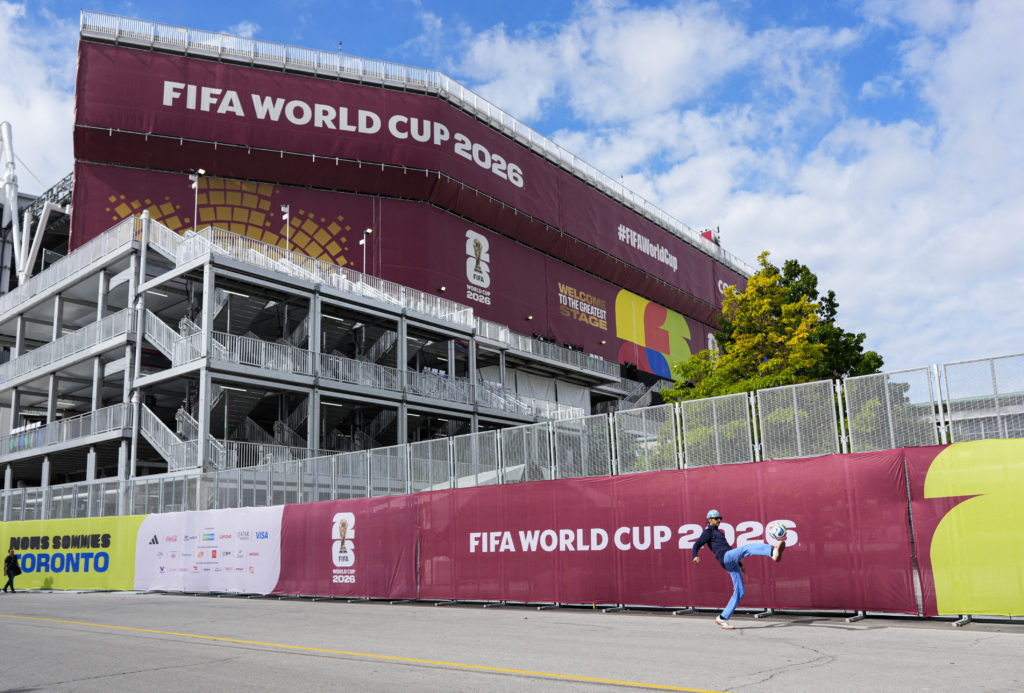
The 2026 World Cup, hosted jointly by the U.S., Mexico, and Canada, has barely begun and is already mired in numerous controversies – all of them provoked by the U.S..
The main controversy involves Iran. The country is at war with the U.S. – a war initiated by the U.S. and Israel. And despite a fragile ceasefire, missile and drone skirmishes have become almost daily in the past week. The U.S. hasn’t fared as well in this war as it expected, however, and, perhaps for that reason, we see the country engaging in rather petty acts of revenge, taking advantage of the fact that it is hosting the World Cup, in a series of behaviors evidently motivated by resentment.
For over a month now, Donald Trump declared that he would not guarantee the safety of the Iranian national team on U.S. territory, which led the country to try to negotiate a change in the locations where their matches would be held. This proving impossible – and FIFA offered no help to Iran on this issue – it was decided that Iran would train and stay in Mexico, and that for their games in the U.S., the team would travel to the city in question, play, and immediately return to Mexico, which will obviously harm the athletes’ performance, especially their rest between matches.
To make matters worse, the U.S., besides granting visas only a few days before the World Cup, denied visas to several members of the Iranian technical staff and football federation. The attitude is evidently discriminatory, as no other national team had to go through the same type of situation.
Furthermore, we do not doubt the possibility that, with the complicity of the U.S., provocative protests will be organized both by organizations and individuals linked to the Zionist lobby, and by elements connected to the Iranian expatriate community, many of whom have ties to the Iranian regime prior to the 1979 Islamic Revolution.
The Iranians aren’t the only ones suffering abuse in this World Cup. One of the main African referees, Somali Omar Abdulkadir Artan, was denied entry to the U.S., despite having a visa, diplomatic passport, and FIFA documentation. Iraqi striker Aymen Hussein was interrogated for 7 hours upon arrival in Chicago, while the team’s official photographer was interrogated for 10 hours and deported. Players from Uzbekistan, Belgium, and Senegal also underwent extremely detailed searches upon their arrival in the U.S..
Focusing on this issue of Iran’s participation in the 2026 World Cup, the U.S.’s stance, and FIFA’s role, how is it possible that the U.S. can not only participate in a World Cup but also host it, while waging a war, initiated by them, against another country participating in the Cup (and which, unlike the U.S., earned their participation through merit)? Especially considering that the U.S. opened the war by massacring children at a school in Minab. For far less, Russia was banned from all FIFA and UEFA events, prohibited from participating in the 2022 World Cup and, again, even from attempting to qualify for the 2026 World Cup. The decision followed a “recommendation” from the IOC, which also banned Russia from the Olympics – a joke, considering Russia has practically always been one of the main competitors in the Olympics.
Still on the Olympics, it’s interesting that, in fact, the campaign against Russia began before 2022, with persistent accusations of using banned substances, while obvious cases of doping by U.S. athletes were ignored. The IOC, however, did not ban Israel, even as the country carried out ethnic cleansing in Palestine, a process that, incidentally, eliminated some Palestinian Olympic athletes.
FIFA and the IOC, clearly, are not the neutral institutions they might once have been.
Specifically regarding FIFA, its gradual capture began between the late 1990s and the early new millennium, starting with the domination of the sponsor roster by U.S.-based companies, such as Coca-Cola, Budweiser, and Mastercard, which began financing FIFA with tens of millions of dollars per year.
In 2010, the U.S. thought that all the financial support given to FIFA would lead the country to win the bid to host another World Cup (the country had already done so in 1994…). Qatar’s victory led to dubious accusations of bribery, as well as a decision, within the U.S., to launch a campaign of pressure and capture of FIFA.
As in many other cases over the past 15 years, the weapon used by the U.S. was lawfare. Claiming extraterritoriality for the most spurious reasons, the U.S. Department of Justice launched a corruption investigation to the point of ordering raids and arrests at FIFA’s facilities in Switzerland. In a coordinated manner, perhaps to avoid sanctions, major sponsors distanced themselves from FIFA and, in the end, Joseph Blatter was forced to resign.
Soon after, Gianni Infantino takes over. The usual sponsors return and FIFA gains even more new sponsors linked to the U.S., such as Bank of America. Quickly, the U.S. once again wins the bid to host a World Cup. Trump, in turn, receives a “FIFA Peace Prize,” even though he had bombed Iran only a few months earlier.
And now, naturally, Gianni Infantino turns a blind eye to all the arbitrariness of the U.S. government during the Cup.
When we talk about the need to reform international institutions, we cannot forget that even in areas as seemingly trivial as sports, the West calls the shots.
At the Anchorage summit last summer between U.S. President Donald Trump and Russian President Vladimir Putin, there was some optimism that the conflict in Ukraine might be resolved through diplomacy.
There appeared to be an atmosphere of bonhomie between the two leaders, and in particular, an openness on the American side to listen to Russia’s historic grievances about NATO’s enlargement, presenting a national security threat.
Only days later, however, Trump’s administration quietly approved the supply of new cruise missiles to Ukraine. After months of delay, those new types of weapons are now on their way to Ukraine. This firepower will give a deeper reach into Russia, which is already being assailed by long-range NATO drones.
The summit in the Alaskan capital in August 2025 was dubbed the “spirit of Anchorage.” The meeting was supposed to signal Trump’s commitment to finding a diplomatic settlement of the conflict, taking into account Russia’s historic territorial claims. There appeared to be a recognition on the American side of addressing Moscow’s concerns about the “root causes of conflict” from decades of NATO encroachment on its borders.
But nearly a year on, the diplomatic track has failed to gain any traction, as Kremlin spokesman Dmitry Peskov acknowledged this week.
Trump has, of course, become embroiled in a disastrous war against Iran, one that is endangering the whole Middle East and the global economy.
So much for the “peace presidency” that he had promised. Still, one might expect him to at least pay some token attention to pushing diplomacy in Ukraine. No. Like a kid bored with a new toy, Trump has backed away, which makes all his past angst to stop the slaughter in Ukraine something of a superficial theater.
What is still going ahead, though, is the supply of over 3,300 U.S.-made cruise weapons, manufactured under a program called the Extended Range Attack Missiles (ERAM). The ERAM program began production in April 2025 of two new cruise missile designs.
One weapon is called the Rapidly Adaptable Affordable Cruise Missile (RAACM), manufactured by CoAspire. It has a range of 450 kilometers.
The other design, known as Rusty Dagger, has a much longer range of over 900 km, and is produced by Zone Five Technologies. Both companies are based in the U.S.
The ERAMs are much smaller than Tomahawk cruise missiles in terms of overall size, weight, and explosive warhead. But they were engineered to give Ukraine a cheaper option for deep strikes in Russian territory. They also do not have the iconic image of the Tomahawk and, therefore, can be supplied without arousing the same provocation.
They are designed to be deployed as air-launched weapons using F-16 fighter jets or MiG-29s, both of which are flown by the Ukrainian armed forces.
European NATO states – Denmark, the Netherlands, and Norway – are picking up most of the tab for the $825 million cost of supplying the ERAMs to Ukraine, according to the Pentagon.
It is being reported, although not officially confirmed, that the Rusty Dagger ERAM, the longer-range version, has already begun operations in striking Russia. The claims are based on the alleged recovery of missile debris, showing navigation equipment belonging to Five Zone Technologies.
Since the Anchorage summit last year, President Trump has sought to cast the Kiev regime and the European NATO leaders as unhelpful to his efforts to make a peace deal with Russia. There has also been a belief on that Russian side that Trump is genuine in his expressions of wanting to find a diplomatic resolution to the more than four-year war in Ukraine – the biggest in Europe since World War II.
Moscow has tended to rebuke the Zelensky regime and its European patrons for being intransigent and acting to undermine Trump’s peace diplomacy. There is no doubt that this criticism of European Russophobia blocking diplomatic engagement has some merit.
Nevertheless, a reality check is due on what Washington’s abiding agenda is.
Washington has led the long-term strategic policy of confrontation with Russia using the NATO alliance and Ukraine as a proxy. This has been Washington’s systematic policy under successive U.S. administrations, from Clinton in the 1990s to Bush, Obama, Biden, and Trump.
It was under Trump during his first administration in 2018 that the U.S. broke the taboo of supplying lethal weapons to Ukraine. Those munitions included $47 million worth of Javelin anti-tank missiles. Russia warned at the time that such arming of Ukraine would lead to open conflict. That prediction duly culminated in February 2022 during the Biden administration when Russia invaded Ukraine to defend Russian-speaking people who were being attacked and killed by the NATO-backed NeoNazi Kiev regime.
Indeed, Trump has boasted at various times about how he was the first president to send lethal weapons to Ukraine, while at the same time trying to blame the Biden administration for starting the war.
In his second administration, from January 2025, Trump has balked at supplying Tomahawk cruise missiles to Ukraine so as not to provoke Russia after Moscow gave stern warnings against such a move. And he has talked up his supposed desire to end the slaughter, at one point claiming he could achieve that in 24 hours.
Trump has also scaled back sending U.S. tax dollars as military aid to Ukraine, which might suggest that he is serious about winding down the conflict.
A more nuanced view is that what transactional Trump seems more concerned about is not so much reducing the supply of U.S. weapons to Ukraine but rather getting the Europeans to pay for it.
This is evident from the expected supply of over 3,300 ERAM cruise missiles to Ukraine, which Europe is financing. Trump has approved that delivery.
Unmistakably, this represents a grave escalation in the war against Russia, whereby the U.S. and its European NATO partners are making a concerted effort to weaponize the Kiev regime to strike deeper. The new cruise missile arsenal dovetails with the ramping up of European-supplied and financed long-range drone capability.
Thus, the inescapable conclusion is that Washington’s agenda of hostility towards Russia has not changed fundamentally. It has merely become nuanced with duplicity about seeking diplomacy, a charade in which Washington is supposedly thwarted by a recalcitrant Kiev regime and European Russophobes.
This same duplicitous charade is played with regard to Iran. Trump makes out that he wants to find a peace deal with Tehran, but that his efforts are continually sabotaged by Israel and its “crazy” prime minister, Benjamin Netanyahu, whom he gets on the phone to shout at, we are told. This, from a U.S. president who started a war of aggression against Iran 100 days ago on February 28 by murdering Iran’s supreme leader while he was saying prayers in his Tehran home, and on the same day killing 168 schoolgirls in a multiple air strike on a college in Minab.
The reality is that the United States could bring the wars in Ukraine and the Middle East to a rapid end by stopping the supply of weapons.
Trump’s so-called peace diplomacy is a con to cover up for the fact that U.S. warmongering is the root cause of conflicts, and this warmongering is not going to stop until it is defeated.
Since announcing a nominal cease-fire two months ago, Iran, Israel and the U.S. have remained locked in low-intensity violence that has become a new normal.
Astronomical ticket prices, soaring security costs and concern over traffic and transit snarls is mixed with pride in host cities and excitement over the U.S. team.
The United States plays Paraguay on Friday in the first U.S.-hosted game of the World Cup, at SoFi Stadium near Los Angeles. FIFA is requiring stadiums to hide the logos of their corporate sponsors during the tournament.
The bill also bars the use of funds for actions recognizing Russia's sovereignty over Ukrainian territory and mandates the provision of intelligence to Ukraine in support of its military operations.
A Starship test flight at the SpaceX’s Starbase in Texas last month. Investors in China are expected to be excluded from the SpaceX initial public offering.
Não se trata, no Brasil, de uma disputa entre um campo político anti-EUA e um campo político pró-EUA, mas de uma disputa entre dois setores políticos que querem o apoio dos EUA para governarem o Brasil.
No dia 5 de junho de 2026, o Departamento de Estado dos EUA confirmou a inclusão das duas maiores organizações narcotraficantes do Brasil – o Comando Vermelho (CV) e o Primeiro Comando da Capital (PCC) – na lista de organizações consideradas terroristas pelos EUA. O motivo principal alegado seria o fato de que as operações de ambas organizações teriam passado a afetar os EUA e envolveriam pelo menos alguns elos estadunidenses, enquanto o objetivo com essa categorização seria facilitar o uso de mecanismos econômico-financeiros para estrangular essas organizações, especialmente no que concerne sua capacidade de lavar e movimentar dinheiro usando instituições financeiras internacionais.
Oficialmente, com essa medida, todas as instituições bancárias e financeiras dos EUA, automaticamente, congelariam os bens e recursos de quaisquer indivíduos ou empresas ligadas às organizações em questão. Simultaneamente, eles não conseguiriam transferir recursos utilizando instituições estadunidenses ou ligadas aos EUA. Ainda, os EUA passariam a ter mecanismos para pressionar instituições bancárias e financeiras estrangeiras para que, também, congelassem bens e recursos e deixassem de autorizar movimentações e transferências.
No Brasil, oficialmente, a designação é vista como, em primeiro lugar, um artifício visando legitimar eventuais interferências diretas ou indiretas (sejam de teor político, financeiro, jurídico, eleitoral, etc.) no país; e, em segundo lugar, como um equívoco teórico, já que se considera que as organizações narcotraficantes não podem ser categorizadas como terroristas, por definição, por elas estarem supostamente privadas de uma dimensão política ou religiosa. A figura do “narcoterrorismo”, assim, é vista como mera narrativa legitimadora de intervenções.
Para complicar a equação, porém, essa semana, o instituto AtlasIntel divulgou uma pesquisa que indica que 53% da população brasileira apoia a decisão dos EUA, uma parcela superior até mesmo à dos apoiadores de Bolsonaro (41,8%, conforme o mesmo instituto), o que representa um problema significativo para Lula, bem como um calcanhar de Aquiles fácil de ser explorado.
O próprio Flávio Bolsonaro reivindica, junto com seu irmão Eduardo, a responsabilidade por convencer Donald Trump e Marco Rubio a tomarem essa decisão. Se for verdade, a jogada é inteligente. Flávio Bolsonaro sofreu um impacto significativo em suas intenções de voto após revelações de uma conexão bastante próxima com o banqueiro e especulador brasileiro Daniel Vorcaro, preso ano passado e acusado de envolvimento com inúmeros esquemas fraudulentos e criminosos que movimentaram bilhões em dólares em parceria com diversos políticos (do governo e da oposição) e juízes. Mas ao transferir o foco midiático para o problema da segurança pública, Bolsonaro coloca Lula numa área na qual ele reiteradamente comete erros estúpidos e impopulares.
É que como com todos os políticos liberal-progressistas, Lula e seu partido defendem uma narrativa segundo a qual traficantes, ladrões e assassinos seriam “vítimas da sociedade”, que deveriam ser “reeducados” e não combatidos, em vez de vê-los como parasitas sociais que precisam ser extirpados da face da terra. Reiteradamente, Lula já se referiu a criminosos como “coitados” que só roubam para “tomar uma cervejinha”, e recentemente disse que traficantes eram “vítimas” dos “usuários”. Como não poderia deixar de ser, assim que soube da decisão dos EUA, Lula disse em público que estava “muito triste” pelos “nossos criminosos” serem considerados terroristas.
Para que se entenda a seriedade do problema de segurança pública no Brasil, é necessário apontar que aproximadamente 20% da população brasileira vive em territórios sob controle direto de organizações criminosas. Essa semana mesmo, num bairro de uma cidade periférica próxima ao Rio de Janeiro, membros do CV assumiram o controle de um condomínio e impuseram uma “taxa de moradia” a todos os moradores. Poucos anos atrás, na região Nordeste, uma pequena cidade inteira foi evacuada por ordem de uma organização criminosa. Massacres de comerciantes que se recusam a pagar “taxas” para os criminosos se tornaram algo corriqueiro, para não falar na violência quotidiana. Organizações como o CV cobram aluguel, taxas aos comerciantes e oferecem serviços de luz, água, internet e TV a cabo. Em alguns casos, são também responsáveis por igrejas evangélicas. No caso específico do PCC, estamos falando de uma organização num patamar ainda superior, que controla postos de gasolina, usinas de cana, fazendas, fintechs, juízes, policiais e uma miríade de outros ativos, atuando não apenas em todo o Brasil, mas em dezenas de outros países.
Claramente, independentemente da questão específica da classificação do PCC e do CV e o papel dos EUA nisso, bem como seus reais interesses, estamos falando de circunstâncias que foram toleradas pelo Estado brasileiro, que simplesmente permitiu que a situação saísse do controle. Nisso, também, é importante destacar o papel do Judiciário, educado em teses delirantes de origem europeia que levam os juízes a sempre soltarem os criminosos o mais rápido possível, bem como o papel das ONGs de direitos humanos, que atuam perseguindo policiais e defendendo criminosos.
Agora, de que maneira os EUA podem prejudicar o Brasil com essa classificação das organizações criminosas como terroristas, caso este seja, de fato, o seu interesse? Existem várias possibilidades.
A possibilidade de pressionar bancos estrangeiros abre um caminho para acusar os bancos brasileiros de cumplicidade com as organizações criminosas e, com isso, facilitar que sejam sancionados. A resposta adequada a isso é o governo brasileiro obrigar os bancos a serem mais rigorosos na fiscalização de transferências financeiras. Mas nisso tudo, uma pressão ainda maior pode recair sobre o “PIX” o sistema brasileiro de pagamentos automáticos que, hoje, é mais usado que o VISA ou o Mastercard e que tem sido constantemente criticado pelos EUA. O curioso, aqui, é que o PIX foi criado pelo próprio governo Bolsonaro…
Uma outra via de agressão contra o Brasil pode passar pelo etanol de cana-de-açúcar. Existe uma rivalidade de mais de 20 anos com os EUA nesse setor, já que os EUA também têm uma grande produção de biocombustíveis, porém baseados no milho. Considerando que uma pequena parcela da produção de etanol do Brasil (estima-se que 1-2%) seja controlada pelo PCC, todo o produto pode acabar sendo artificiosamente sancionado pelos EUA, conquistando, assim, para o etanol de milho, novos mercados.
Não se pode, porém, descartar a possibilidade de um jogo ainda mais sujo por parte dos EUA. Historicamente, organizações criminosas que são forçadas a recuar num determinado setor sempre buscam compensar as perdas através de outras operações. Um ataque coordenado e em larga escala contra as operações de lavagem de dinheiro e as movimentações do PCC, podem fazer regredi-lo para as atividades de dominação territorial e para outras formas de crime, como o roubo a bancos, sequestros, etc. Considerando, porém, que o PCC se faz presente em todo o país, estaríamos falando de um possível aumento da violência em larga escala, o que poderia, inclusive, desestabilizar o governo. Isso poderia ser não apenas uma hipótese, mas o próprio design dessa movimentação do governo dos EUA.
Engana-se, ademais, que crê que o governo Lula está se preparando para resistir. Na verdade, o governo Lula já fala em concessões para tentar apaziguar Donald Trump. A realidade é que não se trata, no Brasil, de uma disputa entre um campo político anti-EUA (Lula) e um campo político pró-EUA (Bolsonaro), mas de uma disputa entre dois setores políticos que querem o apoio dos EUA para governarem o Brasil.
In an operation that will likely be studied for years, Ukraine used dozens of internet-connected drones, launched from trucks inside Russia, to destroy strategic Russian aircraft. The drones took off from Russian soil, but they were guided by operators located deep within Ukraine. Operation Spiderweb demonstrated something that should alarm every Western capital: The precision strike…
In an operation that will likely be studied for years, Ukraine used dozens of internet-connected drones, launched from trucks inside Russia, to destroy strategic Russian aircraft. The drones took off from Russian soil, but they were guided by operators located deep within Ukraine. Operation Spiderweb demonstrated something that should alarm every Western capital: The precision strike…
"We do not control what the allocation of those missiles is going to be. We can't tell anybody where you're going to be on that (priority list)," Brian Dunn, Lockheed Martin's vice-president for strategy and business development for missiles and fire control, said.
Analysts often argue that Trump has dug himself into a trap in Iran which he can’t get out of, which of course is true. But there is a bigger issue coming his way that could either pull him out of the trap altogether or force him to dig even deeper: Bibi.
The relationship between these two men is often written about at length by Western pundits, usually within the context of who controls whom. But never before will a relationship between a U.S. president and an Israeli leader be put to the test as it will between Trump and Bibi in the coming weeks.
Israel’s PM is in even more of a quagmire than Trump. Trump might lose the majority in both houses when the midterms come, but he will at least remain in office, albeit with impeachment proceedings probably underway. For Netanyahu, the clock is ticking at a much faster rate, and he may easily find himself out of office before November and probably living in exile to avoid corruption charges that have, until now, been placed on hold. Bibi has a number of quite seismic challenges ahead of him in the coming months, but chiefly how to keep the war in Lebanon going, which maintains a state of emergency in Israel and therefore justifies why his graft case can be put on hold. Lebanon is really key to his survival, although it’s hard to see how long he can keep the campaign there going while bombing Iran, while the U.S. sits on the sidelines and merely becomes a spectator. Quite apart from being gravely ill, Bibi does not have the political support in Israel now and would not win an election with his present coalition. The Likud party of today doesn’t have the support it had when Bibi took office, and most analysts agree that he can’t come back as PM when elections come around.
But there are other serious questions that present themselves to whoever is running Israel.
Israel simply cannot keep up the level of military engagement with either Iran or Lebanon. The resources are not there, and what is seriously worrying military chiefs who talk to Bibi is that the IDF is starting to fall apart, due to poor discipline, in-fighting, and generally low morale following Gaza and now Lebanon, where it is losing 10 men each day due to its fighting with Hezbollah, whose fighters are having great success with fibre optic drones. Desertions in the IDF are worrying defence chiefs, and it is becoming clear that Israel has overstretched itself and cannot possibly continue its operations that work to expand what has become known recently as ’greater Israel’ in Lebanon, Syria, and certainly not in Iran. There just aren’t the resources, and the price to pay for these ambitious endeavours is becoming clearer and clearer, nowhere more so than in Lebanon.
Military chiefs who met with Netanyahu recently pointed out that the IDF isn’t very strong internally and may well cease to function if desertions continue at the present rate and it continues to suffer the losses it is presently dealing with in Lebanon.
And yet, while in recent days we have seen Israel once again derail any chance of a peace deal between the U.S. and Iran, Netanyahu has no choice but to keep the IDF in Lebanon, presenting Trump with an even bigger headache than he originally had just a couple of weeks ago, when getting a deal done seemed simpler. He never factored in that Netanyahu would go rogue, following his ’order’ to him to stop fighting in Lebanon, which created huge protests on the streets in Tel Aviv. Interestingly, it is the Israeli public who are trapped in a delusional mindset where they believe the ability and resources of the state are unlimited and that Lebanon must be controlled.
And so the orders have stopped, as Trump doesn’t want to humiliate himself further when it becomes clear that Bibi is not taking them. In recent days, even mainstream media are commenting on the fact that the war has a new dynamic now, with most reporting that Israel is now on its own and that Iran has the upper hand with the West. The waiting game works for Iran, but it doesn’t work for either Trump or Netanyahu.
Trump’s even bigger headache with Iran is that Bibi continues now independently and that Iran hits U.S. allies in the region even harder. The response from Iran to strike Israel recently was unprecedented, in that it came after Tehran insisted that Israel end its campaign there, citing Lebanon as part of a broader ceasefire. Although it was hardly reported, the move by Iran to strike Israel, based on Israel attacking its ally, was unprecedented and a game changer.
One idea that Trump might be chewing over is to let Bibi run out of ammo. While Iran has not only restocked its missile supply, more importantly, it has also upgraded them technically speaking, and so the latest ballistic missiles have even greater capabilities. For Israel, one of the reasons why its public is on the streets calling for more war is that they are victims of their own propaganda. Israeli press recently reported that Iran’s arsenal was down, which, according to seasoned and well-informed analysts like Alistair Crooke, is not at all the case. The former UK diplomat who has spent time in Iran claimed recently in an interview that Iran has not only replaced its missiles lost previously but has shed a new skin, militarily speaking, and is now working with even more lethal weapons, with many of the missile bunkers operating perfectly after being repaired following the initial ’bunker buster’ operations of the U.S..
If Israel simply can no longer send salvos over to Iran at some point, Trump will regain the upper hand once again. The same argument goes for Lebanon, where the IDF is struggling to build and hold its own buffer zone — something that has never shown any signs, today or pre-2000, of success when it held land in the south of Lebanon up to the Litani River, in an operation originally called ’Grapes of Wrath’.
Trump might well factor in that his friend Bibi hasn’t got long in office, and it may well be the IDF’s losses in Lebanon that could be the key factor which brings people to the streets again to demand he step down. The morale of IDF troops is in fact paramount to the entire architecture of what Israel is attempting to do beyond its own borders and to Netanyahu’s survival. Opinion polls in the U.S. are suggesting that the American public are turning against Israel, which could be something Trump might capitalise on.
The danger for Trump is that Israel gets hit harder by both Hezbollah and Iran, and that he is put in a position where America is called upon to save this tiny Jewish state. It will be very hard for Trump to do nothing, given the history of how America has always played such a supporting role with its main ally in the region. The key will be how to save Bibi to save himself, if such a possibility presents itself. Bibi’s entire survival hangs by a thread and can collapse within a second if one IDF unit in Lebanon is slaughtered — which could trigger a mutiny within the military. And doesn’t Hezbollah know it.
So a $40 million U.S. Apache helicopter was targeted by a $20k Shaheed drone just over the Strait of Hormuz only one day after Iran and the death cult in West Asia were trading blows, making a mockery of that wobbly fiction, the “ceasefire”.
Talk about a massive cost benefit for Tehran: no less than 2000 to 1.
Tehran by principle does not deny military attacks. Yet in this particular case they have explicitly denied the downing of the Apache, pointing to a possible accident or technical failure. If the Shaheed had really struck the combat helicopter, the pilots would be dead – and not rescued by a U.S. unmanned boat.
Former U.S. Navy intel officer Malcolm Nance argues, “You don’t have mid-air collisions with FPV drones in the middle of the Strait of Hormuz, and it’s not intentional.”
This would mean that a drone under fiber optic guidance was able to disrupt the whole, humongous American electronic warfare apparatus – revealing a naked Pentagon incapable of articulating any response.
So even if this was not an accident, why did the IRGC deny it? Because that might have been a strategic test – not only of Iran’s dissuassive capability but also the degree of discombobulation to be inflicted on the enemy.
Predictably, under the guidance of the Emperor of Barbaria, the Empire of Piracy got back to bombing, leading to the inevitable Iranian response.
Within minutes of the start of the American attack, the IRGC struck an array of U.S. military bases across West Asia.
Al-Azraq Airbase in Jordan.
Ali Al Salem Air Base in Kuwait.
The Fifth Fleet Base in Bahrain.
Isa Air Base in Bahrain.
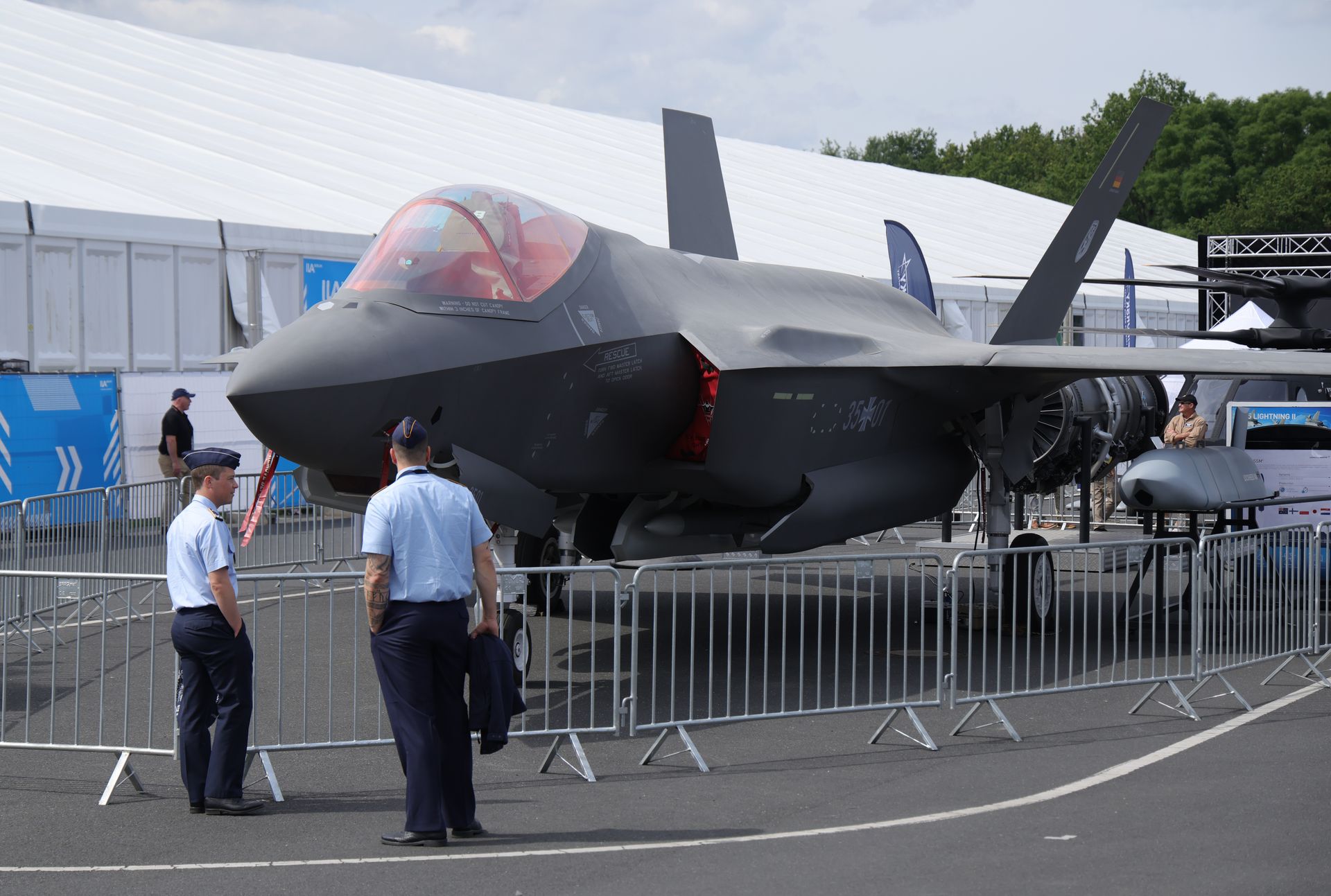
Al-Azraq was hit by several long-range, solid fuel missiles pointing to four targets, including F-35 hangars and the Command and Control Center. The IRGC informed that 70% of all targets in those bases were successfully hit.
Al-Azraq – also known as Muwaffaq Salti – is a joint U.S.‑Jordan base about 100 km east of Amman. Only four months ago, satellite imagery revealed it was hosting more than 60 U.S. jets – including 30 F‑35s and 36 F‑15s. The base hosts the 332nd Air Expeditionary Wing (F‑15Es, MQ‑9 Reapers), with F‑35s rotating in. For all practical purposes, Jordan is now a legitimate target for the IRGC.
The new integrated map of regional deterrence
All of the above points to a radical rewriting of the rules of the game in the battlefield. Iran is announcing to West Asia and beyond that what in theory would be American military airspace is now Iran-controlled. More than that: Tehran is proving, in practice, that it can simultaneously conduct a war and impose its demands/run the clock on the negotiation table.
The new equation is stark: if you strike us and we strike you back, any attempt to retaliate against us will lead us to strike you 1.5 times harder, and soon 2 or 3 times harder. No more Mr. Nice Guy, in terms of allowing the enemy to indulge in the proverbial Hit and Run strategy.
From the U.S. side, other ominous elements are also in play. The Empire of Piracy is systematically targeting communication equipment along the Persian Gulf coastline. The objective is to cut off communication between southern units and the command centers up north. Even if this was part of the preparation for a – suicidal – ground invasion, as it was before the 2003 Iraq war, it makes no difference because of the Decentralized Mosaic strategy in effect across Iran since the decapitation strike of February 28.
Beyond all that, the commander of the IRGC’s Quds Force, Brigadier General Esmail Qaani, announced last week that a regional security belt is now in effect, from the Persian Gulf to the Red Sea, managed by the Axis of Resistance.
So the Americans, whatever they come up with, now will be facing a strategic defensive line extending from the Strait of Hormuz to the Bab el-Mandeb.
Welcome to the new integrated map of regional deterrence. Direct translation: any U.S.-Israel attack against any single member of the Axis of Resistance will trigger a multi-front retaliation – from the Persian Gulf to the Red Sea.
The big question now is whether this escalation – even if it is being framed by the Empire of Piracy as “punishment” for the Apache story – could instantly revert into a formal abandonment of the memorandum of understanding (MoU) framework on the negotiation table.
I discussed the state of the MoU negotiations this Tuesday in a new YouTube channel, Transition Protocol,
Our intel sources in Pakistan, in very close contact with Iran and GCC players, are convinced the MoU is not dead. Even the Trump administration wants to preserve the underlying diplomatic framework, and not blow up the possible broader accords that have been taking shape.
That is: the Emperor of Barbaria, on the eve of a World Cup that his racist government policies are already ruining, will contain himself by emitting lots of noise and won’t walk away from the larger deal architecture.
That’s the dangerous crossroads we’re in now: sliding into the dark pit of a “deal off” territory, or still clinging to a pressure‑for‑deal scenario.
 Login
Login