Normal view

Does the Biblical Moses Appear in Greek Mythology?

11 June 2026 at 19:01
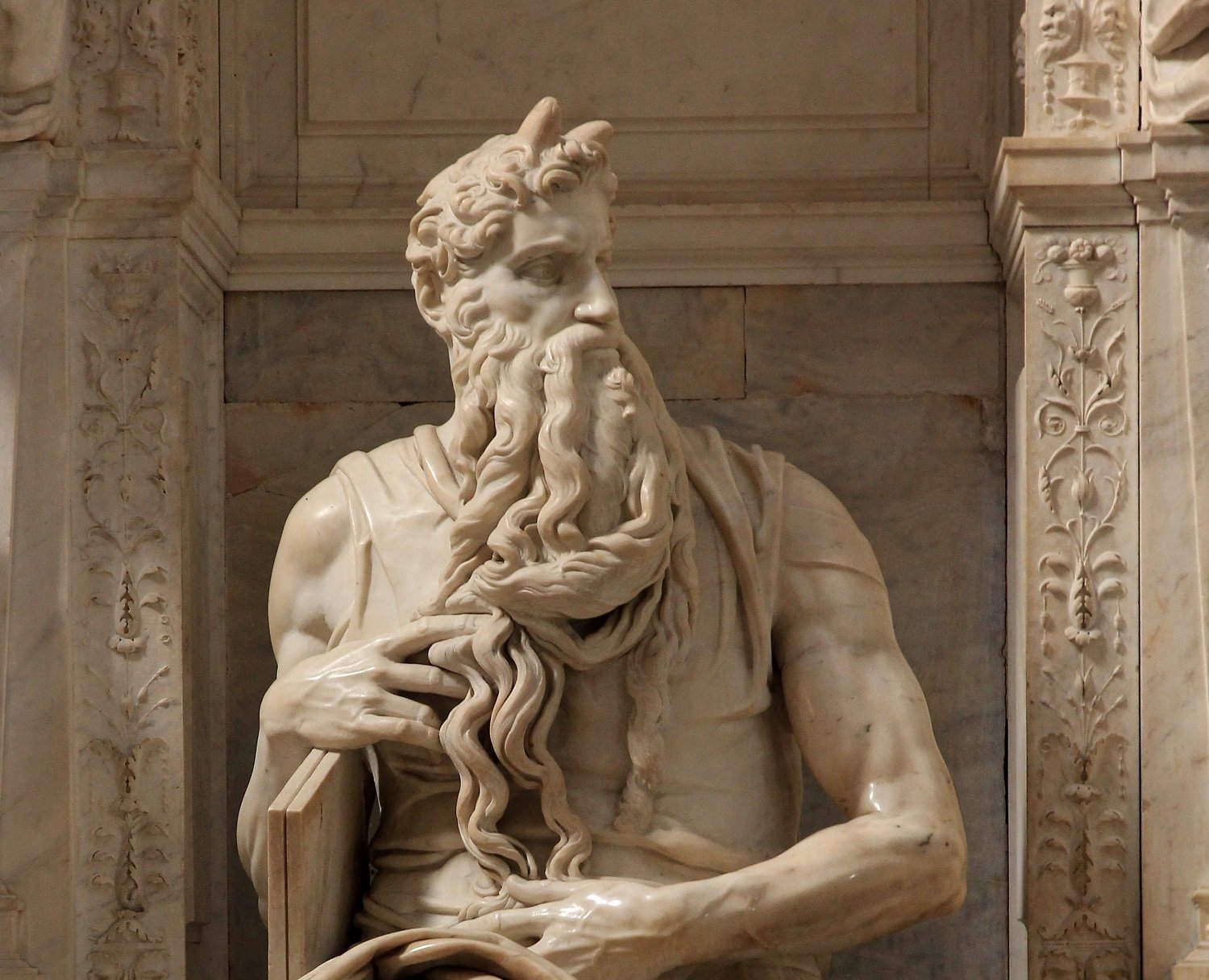
Moses by Michalangelo
Moses by Michelangelo, c. 1513. Credit: Wikipedia Commons, CC-BY-SA-3.0

Scholars acknowledge that some legends from Greek mythology are strikingly similar to stories from the Bible. According to some theories, a few individual characters from the Bible might also appear in Greek mythology. One theory argues that the famous Moses of Egypt can be found in Greek records. Does Moses really appear in Greek mythology, or is this just wishful thinking?

Who was Moses?

Firstly, let us establish who Moses was. He appears in the Bible books of Exodus, Leviticus, Numbers, and Deuteronomy. Exodus contains the most famous part of his life story. It tells the story of how he was a Hebrew boy placed in the Nile River, where the Pharaoh’s daughter then found him.

When Moses was an adult, he tried to help his fellow Hebrews, who were slaves in Egypt, but then he ran away and remained in a distant land for forty years. He eventually returned after God allowed him to go and free his people from Egypt. Pharaoh refused to let the Hebrews go, but after ten devastating plagues from God, he relented.

Moses led the people out of Egypt across the Red Sea (where Pharaoh and his army drowned after trying to pursue them) and into the Sinai wilderness. There, he gave his people an extensive list of regulations from God, collectively known as the Mosaic Law. He also wrote many religious writings. The first five books of the Bible are attributed to him, as well as several poetic writings.

Did the Greeks know about Moses?

The theory that Moses appears in Greek mythology depends on the idea that the Greeks could have known of Moses in the first place. After all, he could not have appeared in their mythology if they did not know about him.

As it so happens, Moses does appear in quite a few Greek records. The Egyptian priest Manetho, from the third century BCE, mentioned Moses in his history of Egypt. Since Manetho lived in Egypt during its Hellenistic era, it is virtually certain that the Greeks of that region were aware of Moses. They certainly would have known of him after reading Manetho’s history.

Interestingly, there is evidence that the Greeks knew about Moses even before the Hellenistic era of Egypt. The first-century BCE Greek historian Diodorus Siculus wrote about the origin of the Jews. His account came from Hecataeus of Abdera, a Greek traveler from c. 300 BCE.

Hecataeus’ account differs from the Bible’s account in numerous ways, but it is still fundamentally the same story of Moses. Therefore, at least as early as 300 BCE, the Greeks definitely knew about Moses.

Was Musaeus from Greek mythology the same as Moses?

In ancient times, several writers explicitly identified Moses with a certain figure from Greek mythology. This figure was Musaeus. It is obvious that the main reason for identifying the two figures is due to the similarity between their names. But is there any more of a connection than this? Well, what does Greek mythology say about Musaeus?

Musaeus was a legendary intellectual, philosopher, seer, prophet, poet, musician, and historian. The Greeks believed that he founded a class of priestly poetry in Athens. He allegedly lived in the time of Heracles and was associated with Orpheus, another prominent poet and prophet from Greek mythology.

Immediately, we can see that there are some definite similarities between Moses and Musaeus from Greek mythology. In addition to the similarity in their names, their roles are also similar. Moses was a prophet, since he relayed messages from God. He was a poet, since he wrote the poetic book of Job and several of the Psalms. He was also a historian, since he wrote part of the history of the Jews.

Why Musaeus could not have been Moses

Despite these similarities, there is a key reason why Musaeus could not have been Moses. The key reason is that they did not live at the same time.

At first glance, it might look like the chronology works very well. Moses is usually placed at the time of Ramesses II, who ruled in the 13th century BCE. He is also placed in the time of Heracles, who lived about half a century prior to the Trojan War. That would also put him in the 13th century BCE according to the traditional date of the Trojan War. Therefore, it seems at first glance that Musaeus and Moses would have been exact contemporaries.

However, the reality is not so simple. Despite the popular association between Moses and Ramesses II, this has no historical or Biblical basis. The Bible’s internal chronology, along with its genealogical record of the prophet Samuel, places Moses firmly in c. 1500 BCE. That means he lived almost three centuries earlier than the traditional era of Musaeus.

The true era of Musaeus

The theory connecting Moses with Musaeus is further disproved if we examine the information about Musaeus from Greek mythology even more closely. For one thing, there is evidence that the Trojan War occurred several centuries later than the traditional date.

Furthermore, recall that Musaeus was closely associated with Orpheus. Some records say that Musaeus was Orpheus’ son, while other records give the inverse relationship. In either case, they lived at about the same time.

Greek tradition claims that Homer was a tenth generation descendant of Orpheus. That would place Orpheus, and therefore his associate Musaeus, about 200 to 250 years prior to the time of Homer. Since Homer lived in the seventh century BCE, that would mean that Musaeus would have probably lived in the ninth or tenth century BCE. Hence, this would have been long after the time of Moses. Therefore, it is virtually certain that Moses was not Musaeus from Greek mythology.

When the Ancient Persians Freed the Jews From Babylon

10 June 2026 at 21:01
A depiction of the destruction of Jerusalem by the Babylonians, 1896
A depiction of the destruction of Jerusalem by the Babylonians, 1896. Credit: Wikimedia Commons, public domain

The first interaction between the Jews and the Persians (the ancient Iranians) was a profoundly important and beneficial one. This initial interaction between the two nations was not a battle. Rather, the Persians freed the Jews from captivity in Babylon. What were the circumstances behind this event, and what exactly did the Persians do?

Why the Jews were captives in Babylon

The background to this event is that the ancient Babylonians attacked and destroyed the Jewish city of Jerusalem near the turn of the seventh century BCE. Consequently, the Babylonians took the surviving Jews captive, deporting them to the region of Babylon.

Despite not enduring the extreme hardships of slavery, as in their Egyptian bondage, they nevertheless faced harsh and unpleasant conditions. They were captives in the region, along with many other peoples whom the Babylonians had conquered.

This captivity lasted for several decades. According to the Hebrew Scriptures of the Bible, there were ancient Jewish prophets who had foretold that this captivity would end and Babylon would fall. Historically, what occurred?

The Persian conquest of Babylon

Eventually, the Persians freed the Jews from Babylon. How did this happen?

During much of the sixth century BCE, the Babylonians ruled over a vast empire. It controlled essentially the entire Fertile Crescent, from the Persian Gulf to the Egyptian border. It also ruled over much of northern Arabia. Historians believe that the city of Babylon at that time was the largest in the world.

For that reason, its downfall was a shock to the world. In 550 BCE, King Cyrus I of Persia began conquering the Middle East with the defeat of the Medes. He then travelled to Anatolia, where he conquered the Lydian Empire. Finally, he turned his attention to Babylon.

In 539 BCE, Cyrus’s army marched towards the powerful and intimidating city of Babylon. They diverted the Euphrates River, which surrounded the city like a moat. This lowered the water level enough for the Persian army to wade across.

For some reason, the gates of the city had been left open, and the army simply marched in. The Babylonians were completely unprepared for a battle, resulting in a swift and definitive Persian victory.

The Persians freed the Jews

The Babylonians had a policy of never releasing their prisoners of war. The Persians, in contrast, had no such policy. Cyrus the Great—and the Persian Empire in general—is famous today for the relatively lenient position taken regarding subject peoples.

According to the ancient Hebrew Scriptures, in the first year of Cyrus’s rule over Babylon, he ordered the Jews to be released and return to their land of Jerusalem. Thus, the Persians freed the Jews from Babylon. In fact, rather than merely allowing them to go, Cyrus positively supported them in their return.

According to the Bible’s Book of Ezra, written in the fifth century BCE, Cyrus took the treasure of Jerusalem’s temple that the Babylonians had plundered and gave it directly to the Jews. He allowed them to take it back with them to Jerusalem.

Furthermore, when the Persians freed the Jews, they went even further in their support for them. The record in Ezra states that Cyrus encouraged his subjects to assist the Jews by giving them financial support for their return trip.

Did the Persians really free the Jews?

Did the Persians really free the Jews from ancient Babylon, or is the Bible’s account about this event fictional? Archaeologists uncovered an ancient artifact known as the Cyrus Cylinder in 1879. This dates to just after the fall of Babylon and describes Cyrus’ conquest of the city. Notably, it includes the following description:

“I returned to sacred cities on the other side of the Tigris, the sanctuaries of which have been ruins for a long time, the images which (used) to live therein and established for them permanent sanctuaries. I (also) gathered all their (former) inhabitants and returned (to them) their habitations.”

Although this does not mention Jerusalem and the Jews specifically, it does provide significant support to the Biblical narrative. As we can see, Cyrus claimed to have been responsible for the restoration of certain sanctuaries, or sacred temple sites, in distant cities.

He even specifically mentions returning the “images”, or idols, that came from those sanctuaries. This ties in very well with the Bible’s claim that Cyrus returned the Jews’ temple treasures to Jerusalem.

Furthermore, alongside the restoration of the temples, Cyrus claims that he returned the inhabitants of those cities to their respective sanctuaries. This aligns perfectly with the Bible’s assertion that the Persians freed the Jews and allowed them to return to Jerusalem.

All evidence indicates that the construction of the Second Temple of Jerusalem began only after the Persians defeated Babylon. This logically concludes that the Persians freed the Jews, thereby allowing them to return to their city and build the Second Temple.

The Year That Forged the Roman Empire

10 June 2026 at 07:21
Sack of Corinth, by Thomas Allom, 1872
Sack of Corinth, by Thomas Allom, 1872. Credit: Wikimedia Commons, public domain

The formation of the Roman Empire was a gradual process, unfolding over several centuries. Nevertheless, there is one specific year that we can point to as arguably the single most significant year in the formation of the Roman Empire. This was the year 146 BCE. How did the events of this year lead to the creation of the Roman Empire?

The gradual formation of the Roman Empire

In an administrative sense, the Roman Empire was founded in the year 27 BCE. This was when Octavian, the son of Julius Caesar, became the emperor. The Roman Senate recognized him as possessing overarching military power and designated him Augustus in recognition of his new position as emperor.

Octavian established reforms to the constitution, officially changing Rome into an empire. Hence, in 27 BCE, the Roman Empire came into existence. Before then, it had been a republic.

However, although it only became an empire in an administrative sense in 27 BCE, Rome already controlled a vast empire before that. In the basic sense of “a group of countries ruled by a single person, government, or country“, Rome was already an empire long before the days of Octavian.

The Roman Republic conquered most of the territory that would constitute the future Empire. Therefore, to understand how Rome became powerful, we need to examine that era.

The acquisition of territory was a gradual process that took several centuries. However, the year 146 BCE, arguably more than any other, was crucial in the formation of the Roman Empire.

The Battle of Corinth

In 146 BCE, two significant events occurred for the Romans. One of these was the Battle of Corinth, marking the culmination of the Achaean War, which lasted only a single year.

At that time, the Achaean League ruled over the Peloponnese. They had recently assimilated Sparta into the league, which troubled Rome. Both sides were concerned with the other’s expansionist tendencies. Rome had conquered Macedonia in the early part of the second century BCE and had reconquered it in 150-148 BCE.

In the final year of the war against Macedonia, the Achaean League took control of Sparta, solidifying their hold on the Peloponnese. With tensions high due to the actions of both sides, war broke out two years later, in 146 BCE.

The war did not last long. The Achaean League was woefully unprepared, both militarily and financially, for a full-scale war against Rome. The Romans quickly subdued the Greek cities, many of which took the initiative to surrender.

A Roman consul and military general named Lucius Mummius led the Romans in their siege of Corinth. This was the climax of the war. The Romans successfully defeated and utterly destroyed it. Their brutality was noted even by ancient historians. With this victory, the Romans gained direct control of all of Greece.

The Siege of Carthage

The same year, 146 BCE, also marked the climax of another war. The war in question was the Third Punic War. This was the third war between the Roman Republic and the Carthaginian Empire.

Carthage was located in modern-day Tunisia. Rome had already defeated them in the Second Punic War, which had ended in 201 BCE. One of the terms of the treaty was that Carthage was prohibited from engaging in war without Rome’s permission. This allowed Rome’s ally, Numidian king Masinissa, to repeatedly invade Carthage’s territory.

Carthage’s decision to fight back and send an army against Masinissa in 149 BCE provided the Romans with a justification for a third war against Carthage. In reality, Rome harbored animosity towards Carthage and was merely seeking an excuse to destroy it.

When the Roman army arrived, the Carthaginians offered a complete surrender. Nevertheless, the Romans persisted and besieged the city. Eventually, after considerable brutality and bloodshed, the Romans utterly destroyed their enemy.

Just like Corinth in that same year, Carthage was completely, mercilessly destroyed, and the Romans took over the territory.

How the year 146 BCE led to the creation of the Roman Empire

Given this information, 146 BCE can be regarded as vital in the creation of the Roman Empire. The Romans achieved two major victories this year: the defeat of the Achaean League and the defeat of Carthage.

Both of these victories significantly expanded the territory of the Roman Republic. Rome took over control of all of Greece and also the core territory of the Carthaginian Empire in Tunisia. Granted, this was only a tiny portion of what later became the territory of Rome’s vast empire.

However, the main impact that this year had on the formation of the Roman Empire was not the territory gained. Rather, it was the geopolitical consequences of these victories that mattered the most.

Carthage and the Achaean League were both major powers in the Mediterranean. With their defeat, Rome became the undisputed master of that part of the earth. While it still had numerous enemies to confront, it no longer had a single, major, powerful rival.

Over in Anatolia, Pergamon was friendly with Rome. Ptolemaic Egypt was also their ally, with Rome exerting considerable influence over that region. With Greece and Carthage out of their way, Rome’s position as the dominant force in the Mediterranean was firmly established. It is for that reason that we can consider 146 BCE as such a crucial year in the formation of the Roman Empire.

Did Ancient Greek Hero Odysseus Travel to Ireland?

9 June 2026 at 21:01
odysseus Ireland
Did Odysseus Travel to Ireland? Credit: Public Domain

Homer’s Odyssey tells the tale of Odysseus returning to his home after the Trojan War. For a variety of reasons, the trip is not an easy one. It takes him a full ten years to return home.

But the journey from Troy to Ithaca, Odysseus’ home island, should not have been too difficult and certainly not a ten-year trip. For this reason, some researchers have claimed that Odysseus actually traveled outside of the Mediterranean. There is even the suggestion that he traveled to Ireland.

Odysseus travel to Ogygia and its connection to Ireland

In the Odyssey, one of the places Odysseus visits is an island called Ogygia. This was the home of the nymph Calypso, who offers Odysseus immortality if he agrees to marry her. She refuses to let him leave otherwise. The gods intervene and force Calypso to release him. Hence, after seven years on the island, Odysseus builds a raft and sails away.

The location of Ogygia has been the subject of considerable speculation. According to Homer’s account, the island is a place of beautiful meadows, fountains, woods, and various types of birds. However, none of this is particularly helpful. All sorts of islands could fit this description.

In ancient times, various suggestions were made as to where Ogygia might actually be located. More recently, some scholars have argued that Ogygia is identical to Ireland. If this identification is correct, this would mean that Odysseus spent seven years in Ireland.

The most notable scholar to have come to this conclusion was Roderick O’Flaherty. In 1685, he used the name ‘Ogygia’ as a synonym for Ireland in the title of one of his books. It was called: Ogygia: Or a Chronological Account of Irish Events.

Plutarch’s account of Ogygia

One of the key pieces of evidence used to support the identification of Ireland as Ogygia is a passage written by Plutarch, a historian of the first century CE. He wrote about Homer’s account of Ogygia in conjunction to other additional information he provided. According to Plutarch, Ogygia was situated to the west of Britain, which is where Ireland is in fact located.

Additionally, Plutarch tells us that Ogygia was five thousand stadia away from the ‘great continent’ which surrounded the ‘great sea.’ Several scholars have suggested that this ‘great continent’ actually refers to America. Examples include Wilhelm von Christ, an eighteenth-century German scholar, and Johannes Kepler, a sixteenth-century German scholar.

If the ‘great continent’ mentioned by Plutarch really was America, then that would mean that Ogygia was actually an island somewhere between Britain and America. Since Plutarch says that Ogygia was five thousand stadia from the great continent but only several days distant from Britain, this indicates that it was much closer to Britain than to America. Therefore, Ireland would seem to be a good match.

Problems with identifying Ogygia as Ireland

While Ireland does match Plutarch’s basic description, there are certain issues with this identification. For one thing, Ireland is not five thousand stadia from America. This distance would be the equivalent of a little over nine hundred kilometers. Nevertheless, the distance between Ireland and America is about three thousand kilometers.

Hence, the distance specified by Plutarch means that Ireland is in fact not Ogygia, if America was indeed the ‘great continent’ to which he referred. Clearly, however, there is no other option for the great continent that would fit the passage.

Another problem is that Plutarch states that it takes five days of sailing to travel between Britain and Ogygia. This would indicate an island much further west than Ireland because it would barely take two days of sailing to reach Ireland from the furthest part of the western side of Britain.

In reality, there is no island which is exactly five days’ sailing away from Britain and also five thousand stadia away from America. The measurements simply do not correspond to any real location.

Perhaps, then, some researchers could use this as evidence that the measurements must be incorrect, meaning that Ireland could still be the intended location. Alternatively, it could of course also mean that Plutarch was not really describing an actual location at all.

Did Macedonians Participate in the Ancient Greek Olympic Games?

8 June 2026 at 15:03
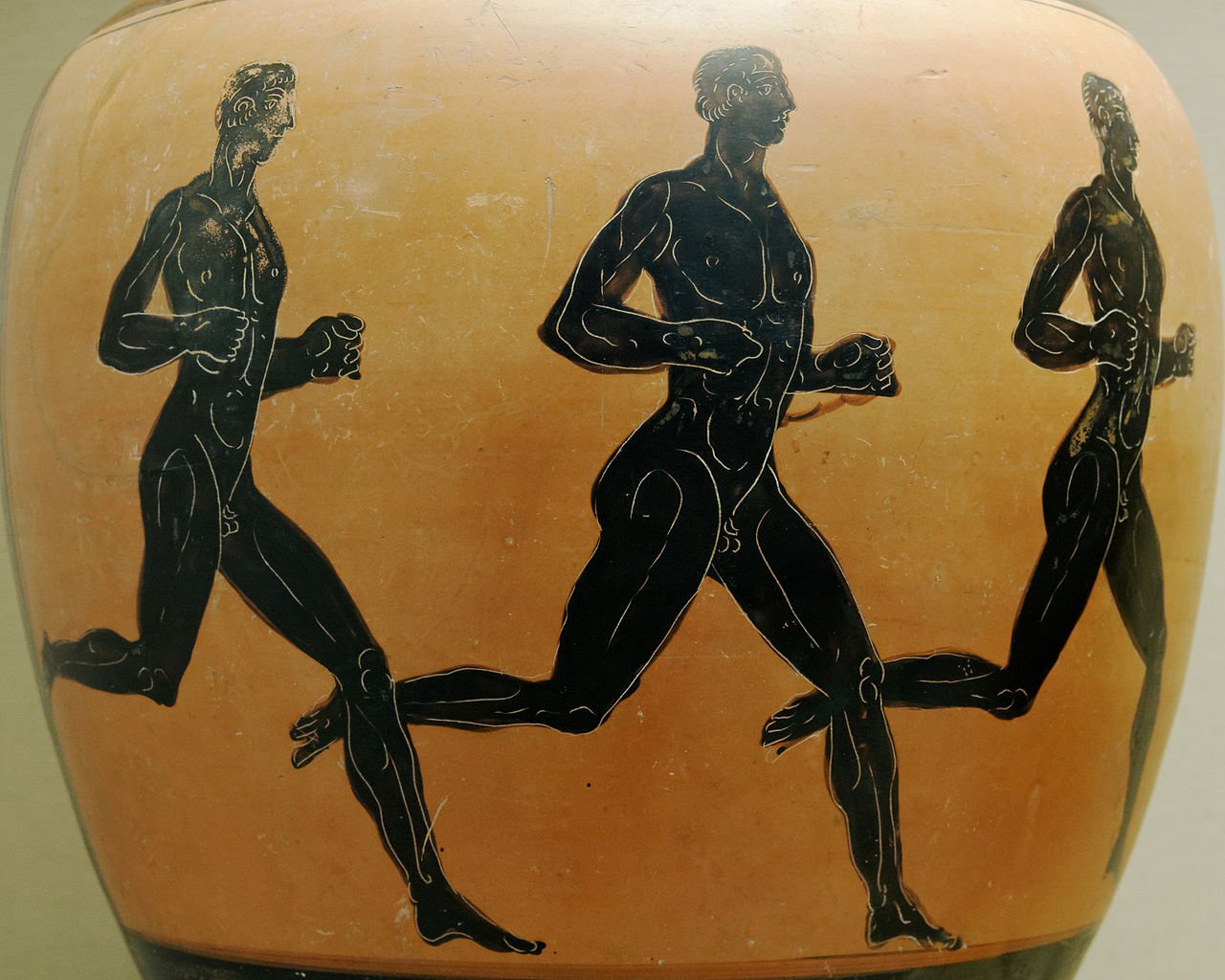
An pottery depicting three runners at the Olympic Games.
Pottery depicting three runners at the Olympic Games. Credit: Wikimedia Commons, CC-BY-SA-2.5

For many centuries, the ancient Macedonians lived on the fringes of the Greek world far removed from the prominent city-states of the south. For this reason, many have called their status as Greeks into question. Famously, only the Greeks could participate in the ancient Olympic Games. So then, what was the status of this northern tribe in that regard? Did the Macedonians participate in the ancient Greek Olympic Games or not?

The early years of the Olympic Games

According to the earliest tradition, the Greek hero Heracles founded the Olympic Games. The ancient historians placed the founding of this athletic competition in 776 BCE. For the first two centuries, there is no evidence that the Olympic Games involved the Macedonians. Why is this?

Put simply, the Macedonians generally did not have much to do with the Greeks of the south due to the fact that they lived so far north. This applied to numerous aspects of the Greek world and not just to the Olympics. They were generally quite isolated in terms of socio-political developments even though they worshipped the same gods and had the same traditions and language as the rest of the Greeks.

For this reason, it is no surprise that the Macedonians apparently did not, initially, express any interest in participating in the Olympic Games. They took place in Olympia at Elis in the Peloponnese far to the south of Macedonia.

King Alexander I, the first Macedonian in the Olympics

This changed at the turn of the 5th century BCE. At this time, King Alexander I of Macedonia wanted to participate in the athletic competition of Olympia. When he attempted to enter, the Hellanodikai, the judges of the competition, denied his request. There was, naturally, prejudice against Alexander’s people since they lived so far away from the rest of the Greeks.

However, Alexander was able to convince the judges to allow him to participate. He pointed out that his dynasty was founded by Perdiccas, the son of Temenus, a descendant of Heracles (Hercules). After hearing this explanation, the judges accepted that Alexander was a true Greek.

After Alexander participated in the Olympic Games, various other Macedonians also began doing so. It seems that he initiated an interest in the competition in his homeland.

Macedonians in the Olympic Games

At first, participation in the Olympic Games among Macedonians was limited to the royal dynasty. After Alexander I, there is a record of King Archelaus I participating. He competed in a chariot race and was victorious. This occurred in 408 BCE, still long before the expansion of Macedonian hegemony to all the Greek city-states.

In the following century, King Philip II also competed in the Games. He was the father of Alexander the Great. Philip actually participated three times. All three times, two of which were chariot races, he was the winner. These three victories occurred in 356, 352, and 348 BCE.

Philip II coin
Tetradrachm coin of Philip II of Macedon. Credit: Classical Numismatic Group / CC BY-SA 2.5 / Wikimedia Commons

Just after this era, we find records of non-royal Macedonians participating in the Olympic Games. Perhaps King Philip’s impressive series of victories had something to do with this. In 328 BCE, there is a record of a man named Cliton winning the important running race. Based on the available records, he was the first non-royal Macedonian to win in the Games.

After Cliton, we find records of various other Macedonians participating in and winning many of the events in the Olympic Games. In fact, we find an average of approximately one Macedonian winner per decade over the next six decades. Additionally, we need to consider the fact that we only have records of the winners. Likely, many other Macedonians participated in the Olympic Games during this period, and we certainly know that they continued to do so thereafter.

What Was the Ancient Name of the Minoans?

8 June 2026 at 02:30
Bronze Age Minoan inscriptions written in Linear A from Phaistos
Bronze Age Minoan inscriptions written in Linear A from Phaistos. Credit: Wikimedia Commons, Zde, CC-BY 4.0

The Minoan civilization was a rich and relatively advanced culture centered on ancient Crete during the Bronze Age. However, they did not refer to themselves as the Minoans. This is a modern name coined by British archaeologist Sir Arthur Evans in the early 20th century. What was the ancient name of the Minoans? What did they call themselves, and what did other nations call them?

Ancient Greek name for the Minoans

There are no Greek historical texts which describe the Bronze Age Minoan civilisation. However, texts from the Archaic Period, such as Homer’s Odyssey, mention a people on Crete called the Eteocretans.

This name means ‘true Cretans’. Later writers, such as the historian Diodorus of the first century BCE, viewed them as the native inhabitants of Crete. Therefore, it is likely that the Eteocretans were the descendants of the Minoans.

The foundation of this term can be traced back to the Bronze Age. A Linear B inscription from Pylos dating to c. 1300 BCE refers to Crete as ‘Ke-re-te’, reconstructed as ‘Kretes’.

Given that this dates from long after the Mycenaean Greeks had conquered Minoan Crete, this cannot be used to show what the Mycenaean Greeks called the Minoans, nor what they called their island.

The Bible’s name for the Minoans

Let us now consider what the Bible calls the Minoans. In the Book of Genesis, the tenth chapter contains the famous Table of Nations. This shows the genealogy of the world’s nations. Included among this list is a reference to Caphtorim, one of the sons of Mizraim.

Mizraim, according to his name and family members, is considered the forefather of the Egyptians. His son Caphtorim is meant to be the forefather of a nation that resided in a place called Caphtor in the Hebrew Scriptures.

Biblical references to Caphtor make it an island and the homeland of the Philistines. Archaeological evidence clearly shows that the Philistines originated from the region of the Aegean Sea.

This is further supported by the fact that the Bible associates the Philistines with a nation called the Cherethites. The latter ethnonym appears to be synonymous with ‘Cretans’, since the Greek Septuagint translated it as such.

Therefore, given this information, it is evident that the island of Caphtor in the Bible is Crete. Therefore, the Caphtorim, or people of Caphtor, is the Bible’s name for the Minoans. Since the reference to the Cherethites only appears in accounts set after the Mycenaean Greeks had conquered Minoan Crete, it is impossible to say whether ‘Cherethites’ is another name for the Minoans or a name for the Greeks of Crete instead.

What other Middle Eastern nations called the Minoans

Were the ancient Hebrew Scriptures of the Bible alone in using this term, Caphtorim, for the Minoans? The evidence shows that they were not. We find variations of this ethnonym in the records of several other Middle East nations.

An 18th-century BCE document from the city of Mari in Syria refers to the island as Kaptara. It uses this term in various contexts, including referencing “Caphtorite fabric.” This suggests that the island was well known by that name in the 18th century BCE, at least within Syria.

However, was this just the name of the island itself? One of the records in the Mari Tablets uses this term referring to a certain man’s ethnicity. This suggests that the ancient inhabitants of Syria, just as in the Bible, used this term for the Minoans as a people, and not merely as the name of the island.

In later centuries, the same term appears in Assyrian records, dating long after the fall of the Minoans. This shows that it was not limited to one particular civilization. Rather, it seems to have been used (at least among some nations) for the inhabitants of Crete regardless of ethnicity.

Egyptian records

In Egyptian records, we find the name ‘Keftiu’ used about Minoan Crete. This is used for Crete in general, even long after the Mycenaean Greeks had conquered it. The fact that this was the term for Crete is clear from the itinerary lists found in Egypt in the New Kingdom period.

Amenhotep III directly associated Keftiu with the place names ‘Knossos‘ and ‘Amnissos’, two of the most prominent cities on Bronze Age Crete. This leaves no doubt that Keftiu was the Egyptian name for that island.

The name ‘Keftiu’ is very similar to ‘Caphtor’ and ‘Kaptara’. The only substantial difference is the absence of the ‘r’ at the end of the Egyptian version. Nevertheless, this Egyptian form is so similar to the others that most scholars recognise that they must be cognate with each other.

In other words, ‘Keftiu’ is the Egyptian spelling of the same word recorded in the Bible as ‘Caphtor’ and in other Middle Eastern records as ‘Kaptara’.

What did the Minoans call themselves?

Unfortunately, we cannot be completely sure what the Minoans called themselves. The reason is that Minoan records use a script called Linear A. Linguists have not yet been able to decipher it, meaning that we cannot read the Minoan inscriptions.

This does not mean that there is no indication as to what they called themselves. The fact that nations as far apart as Egypt and Syria used a form of the same term for Crete is highly significant.

This strongly suggests that Keftiu/Capthor/Kaptara was not a name invented for Crete by any one of those outside nations. Rather, to account for this consistency across that part of the world, it seems far more likely that this came directly from the Minoans’ name for themselves.

When we consider the Egyptian evidence more closely, it becomes more likely that the Egyptians correctly preserved the name of the island. As previously noted, Egyptian records link Keftiu with the place names ‘Knossos’ and ‘Amnissos’, which were the Minoan names for those sites on Crete. If the Egyptians were able to maintain the names of those sites, it is plausible that they similarly preserved the name of the island as a whole.

Therefore, although we cannot be completely sure, it does seem very likely that the Minoans called themselves something similar to the Bible’s ‘Caphtorim’ or ‘Caphtorite’.

The Prince of Ancient Iran Who Fought in the Trojan War

7 June 2026 at 17:31
Ancient Elamite ziggurat Choqa Zanbil in Iran
Ancient Elamite ziggurat Choqa Zanbil in Iran. Credit: Wikimedia Commons, GFDL

In the Trojan War of Greek mythology, many nations were allied with Troy to fight against the Greeks. This included many of the nations of ancient Anatolia. Perhaps the most surprising participant in the Trojan War, however, was a prince from ancient Iran. He was Memnon, best known as the Ethiopian ruler who died at the hands of Achilles in the final year of the war.

Memnon, king of the eastern Ethiopians

Since Memnon is usually remembered as being a king of the Ethiopians, how can he have been from ancient Iran? The reason is that there was more than just one group of people known to the Greeks as Ethiopians.

For example, notice the words of Greek historian Herodotus of the fifth century BCE in his description of the large army of Xerxes the Great:

“Ethiopians above Egypt and the Arabians had Arsames for commander, and the Ethiopians of the east​ (for there were two kinds of them in the army) served with the Indians.”

This shows that the Greeks recognized the existence of Ethiopians outside of Africa. Specifically, these other Ethiopians lived in the east, evidently not too far from India. Since Memnon was the king of the Ethiopians, he could potentially have been the king of either the eastern Ethiopians or the African ones.

It is worth mentioning that in ancient Greek, the word Αἰθίοψ (Ethiops) was used not only to describe a specific group of people, but also more generally to refer to individuals with darker skin. The term is a compound of αἴθω (to burn) and ὤψ (face or appearance), literally meaning “burnt-face.” It appears frequently in early Greek literature, such as Homer’s epics, where Ethiopians are depicted as distant, noble figures living at the edges of the known world, rather than as members of a clearly defined nation.

The Ethiopians of Iran

Herodotus himself states that the city of Susa, the ancient capital of Elam (a prominent region in what is now Iran), was known as the city of Memnon. This suggests that Memnon was the king of the eastern Ethiopians, evidently a people in the region of Iran.

This is confirmed by Ctesias, just a few decades after Herodotus. According to this Greek historian, Memnon’s father, Tithonus, was the ruler of Persia. He was either subject to or allied with the king of the Assyrian Empire.

The territory of Persia in the time of the Assyrian Empire corresponded to a large part of what is now Iran. According to Ctesias, Memnon built a palace for himself at Susa. He goes on to claim that Memnon’s army, which he led to Troy, was composed of many Ethiopians and Susians, or inhabitants of Susa.

Hence, it is clear that Memnon in the legends of the Trojan War was originally supposed to have been from ancient Iran.

As for why the Greeks called the inhabitants of that region ‘Ethiopians’, we cannot be sure. However, it may be related to the use of the word ‘Cissians‘ (‘Kíssioi’ in Greek) for the inhabitants of the region of Elam. The Greeks might have confused this for ‘Kush’, the name for the kingdom of the Ethiopians south of Egypt.

How ancient Iran participated in the Trojan War

Ctesias provides the most detailed early account of this army from ancient Iran that fought in the Trojan War. According to Ctesias, King Priam of Troy was subordinate to the king of Assyria, named Teutamos. Due to the difficulties he was facing in the Trojan War, he sent word to Teutamos to ask for help.

As a result, Teutamos sent a large army of 10,000 Ethiopians and 10,000 Susians under the command of Memnon. This army from ancient Iran marched from the furthest corner of the Assyrian Empire over to Troy. Ctesias wrote:

“Memnon assisted the Trojans with 20,000 infantry and 200 chariots and… he was admired for his courage and for killing many Greeks in battle.”

Despite his prowess in battle, Ctesias goes on to explain that the Thessalians killed him. This refers to his death at the hands of Achilles, as per other sources. Achilles was from the kingdom of Phthia in ancient Thessaly.

Did an army from ancient Iran fight in the Trojan War?

Could Memnon have been a historical king or prince of Elam in ancient Iran? Some scholars have speculated that he might be identical to Humban-Numena I, the king of Elam in the Bronze Age. Furthermore, the latter half of his name is admittedly similar to ‘Memnon’.

However, he likely reigned in the first half of the 14th century BCE. Therefore, this king from ancient Iran lived too early to have fought in the Trojan War.

Two other possibilities are Humban-Numena II, possibly in the 11th century BCE, and Humban-Numena III, who lived at the end of the eighth century BCE. The latter’s name is often written in modern sources as “Humban-menanu.” The similarity to “Memnon,” while not exact, is there.

This latter candidate, although living much later than the traditional date of the Trojan War, is particularly noteworthy given Ctesias’ chronological information. He places Memnon’s activities at the height of the Assyrian Empire.

Another candidate from approximately the same time is a prominent Elamite known only as Menanu, referenced in a letter from Ashurbanipal, the king of Assyria. The letter makes it clear that Menanu is a supporter of Assyria. This fits what Ctesias tells us about Memnon.

However, this does not necessarily mean that an army marched from ancient Iran to fight in the Trojan War. In part, this depends on when the Trojan War occurred, a continued historical debate.

Nevertheless, the legend itself is clear. Memnon led an army from ancient Iran to Troy, where they fought in the Trojan War against the Greeks.

The Lost Letters of the Greek Alphabet

6 June 2026 at 16:12
Ancient Greek vase with early Greek aphaber
Early Greek alphabet painted on the body of an Attic black-figure cup. Today, there are missing letters in the Greek alphabet. Credit: flickr / Dan Diffendale CC BY-SA 2.0

The Greek alphabet has changed in many ways over the course of its existence. This is hardly surprising, given that the Greeks have been using it for nearly three millennia. One way in which it has changed is that some letters that used to exist in the Greek alphabet are now missing. Which letters were these, and what do we know about them?

The first letters of the Greek alphabet

To start, let us establish how the Greek alphabet acquired its letters in the first place. According to ancient Greek historians, the Greeks adopted the Phoenician alphabet after the arrival of a Phoenician prince named Cadmus. Archaeology confirms that this occurred at some point in the ninth century BCE.

The Phoenician alphabet was composed of only consonants. When the Greeks adopted it, they modified it to include vowels as well. This was a major step forward in the development of writing.

According to Plutarch, a Greek historian of the first century CE, there were originally sixteen Greek letters. However, Hyginus, an earlier writer, reports that there were originally eighteen.

In reality, it appears that neither version is correct. Physical evidence in the form of ancient inscriptions reveals that the earliest Greek inscriptions made use of all twenty-two letters in the Phoenician alphabet. However, four of these were for sounds which did not exist in Greek, so they were modified into vowels.

Perhaps this is where Hyginus’ idea of eighteen original letters comes from, being a distorted memory of the eighteen original consonants. In any case, the total number of letters in the Greek alphabet increased over time.

Why are there some missing letters?

Some of the letters used in ancient Greek inscriptions are simply not in the modern Greek alphabet. Why is this? Simply put, the reason is that the Greek language itself has evolved over time, and the alphabet exists to comply to the needs of the language rather than vice versa.

Additionally, different dialects of the Greek language existed within the Greek world at the same time. Therefore, the needs of each dialect would not necessarily be covered by the same letters.

In the late fifth century BCE, the alphabet used by the Ionian Greeks became the official, standardized alphabet of Athens. Over the following century, it then replaced the local alphabets of other Greek regions. By that time, the dialect of the Ionian Greeks was such that their alphabet did not make use of all the letters that had once been in use. Rather, their alphabet used just twenty-four letters. Hence, what were the letters that the Greek alphabet used to have but no longer does?

Digamma

One of the most famous lost letters of the Greek alphabet is Digamma. This had the following form:

Ϝ

It is superficially very similar to the modern F, but the sound was completely different. It was essentially the modern w sound. In fact, the original name for this letter was ‘wau’, taken directly from the Phoenician name for this letter.

San

Another lost letter is San. This had the following form:

Ϻ

Like Digamma, this looks almost identical to a more familiar letter. In this case, it looks just like the modern letter M. However, like with Digamma, the sound indicated by this ancient letter was completely different. Unlike the modern M, the ancient San, or Ϻ, was used to indicate an s sound. This fell out of use in favor of the alternative letter Sigma, written as Σ.

Koppa

Another letter that is no longer in use is Koppa, which had the following written form:

Ϙ

This is similar to the modern Q in the English alphabet, and that is no coincidence. Koppa was still part of the Greek alphabet when the Latins adopted it, which led to this letter eventually becoming the Q in English. The English alphabet originated from the Romans. The sound Koppa indicated was a k sound. It eventually fell out of favor in Greek, being replaced by the alternative letter Kappa, written as Κ.

Sampi

This next letter is called Sampi. It was written as:

Ͳ

This is very similar to the modern T, but it is unrelated. That modern letter comes from the ancient Greek Tau which, of course, had a t sound. In contrast, the ancient Greek Sampi had some kind of s or sh sound, although the exact vocalization is unknown. In any case, it fell out of favor when this sound was no longer used.

Did the Ancient Greeks Name Britain’s Isles of Scilly?

4 June 2026 at 12:14
Satellite photo of the Isles of Scilly
Satellite photo of the Isles of Scilly. Credit: NASA, public domain

The Isles of Scilly are a group of islands off the southwest tip of Britain. The origin of their name has been a mystery for centuries, but one historian believes that he has now discovered the answer. According to Professor Andrew Breeze, the name of the Isles of Scilly comes from Greek. What does the name mean, and what did the ancient Greeks have to do with this group of islands near Britain?

What are the Isles of Scilly?

First, let’s clarify what exactly the Isles of Scilly are. They form a small archipelago off the southernmost tip of Britain, near the southwestern county of Cornwall. There are five inhabited islands and about 140 small rocks and islets.

Historians know very little about the early history of the islands. Something that many investigators agree on, though, is that these islands originally formed just a few larger islands, or possibly even just a single main island and a few outliers.

Speculation abounds as to whether or not these were the Cassiterides, a group of islands mentioned by ancient Greek and Roman texts. These texts refer to the Cassiterides as a group of islands in the Atlantic Ocean from which traders acquired tin.

Since the Isles of Scilly are near Cornwall, which is known for being a source of tin in the ancient world, this suggests that the Isles of Scilly might have been the Cassiterides. Nevertheless, there is no universal consensus about this.

The Greek name of the Isles of Scilly

For centuries, there has been speculation as to the true origin of the name of these islands. However, recent research by Andrew Breeze, a professor of philology at the University of Navarra, may have cleared up the issue. According to Dr Breeze, the name of the Isles of Scilly likely derives from Greek.

The earliest attested form of the name of these islands is ‘Silimnus’. This is probably a mistake for ‘Silinnus’. Other early attested forms are ‘Sillinas’ and ‘Sylina’. Based on these attested forms, Breeze argues that the origin of this place name comes from ‘syle’. This is a Greek word referring to robbery, seizure, or plunder.

Breeze argues that the ending is the Greek suffix ‘ina’, meaning ‘pertaining to’. In other words, this theory proposes that the name of these islands refers to the fact that they were a haunt of pirates and plunder.

Supporting evidence for this theory

At first glance, it might seem implausible to suggest that the Isles of Scilly could have a name with a Greek origin. After all, they were in the territory of the ancient Celts, far from the Greeks. What could the Greeks have had to do with the Isles of Scilly?

Numerous ancient records and archaeological finds demonstrate that the inhabitants of the ancient Mediterranean regularly visited Cornwall. This was a major source of tin, which was necessary to make bronze. This trade route existed for well over 1000 years. Hundreds of Greek coins have been found in Britain, most of them in the south.

There is no doubt that the Greeks had a significant presence in this area before the Roman era of Britain. The name ‘Sylina’ and its variants only appear after this. Therefore, an ancient Greek origin for the name of the Isles of Scilly is plausible.

Furthermore, Breeze highlights records from the medieval and early modern periods to support his theory. These show that the Isles of Scilly were infamous for piracy. Shipwrecks were also common, after which the ship’s cargo would be plundered. Therefore, it is understandable to see how such an area would come to be known as the ‘place of plunder’.

Does this theory stand up to scrutiny?

Since Andrew Breeze’s theory was published only recently, there has been very little response to it so far among historians and etymologists. However, we can readily make a few observations.

As Breeze himself notes, if his theory is correct, it would be the only known example of an ancient place name in Britain having a Greek origin. This, from the start, should raise our suspicions.

Furthermore, the evidence that Breeze uses to associate the Isles of Scilly with piracy and plunder comes from the medieval and early modern periods. Needless to say, this is long after the name of these islands first appears in the records.

Admittedly, though, the reason why these islands were so closely associated with piracy and plunder appears to be primarily a question of geography. For this reason, it may be reasonable to assume that this had been the case for as long as there was shipping in the area.

We know for a fact that it was always a very popular and important source of tin. Hence, there would indeed have been lots of shipping in that area from long before the Roman era of Britain. Therefore, it is likely that shipwrecks and plunder, if not piracy, were just as common back then as they were in later periods.

Is a Greek origin the only possible explanation for the Isles of Scilly?

There is, however, at least one more objection. This is the fact that another suggested etymology exists. This suggestion connects the name ‘Sylina’ to ‘Sulis’, the name of a Celtic god.

Some etymologists have pointed out that this origin would satisfy the attested medieval Cornish form of the name of these islands. However, it would not easily explain the ancient form, which is never written ‘Sul-‘, but always ‘Sil-‘ or ‘Syl-‘.

In conclusion, does the name of the Isles of Scilly really have a Greek origin? Andrew Breeze offers a theory which is surely as plausible as any yet proposed. While there are some valid objections to it, none of them are insurmountable.

Tearko: The Ethiopian King of Ancient Egypt Who Conquered Anatolia

3 June 2026 at 21:05
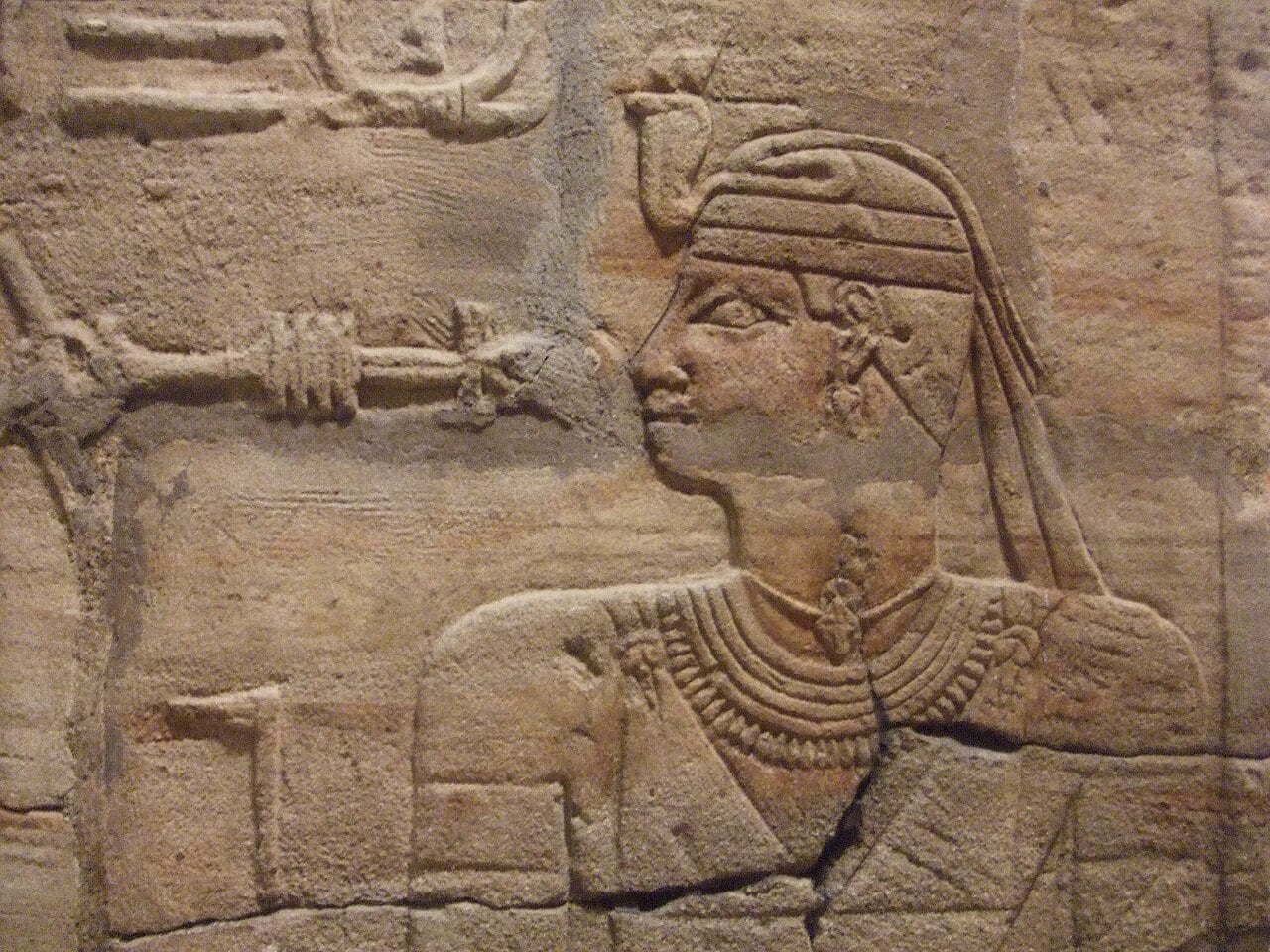
A relief depicting the Ethiopian king of Egypt Taharqa from Kawa, Nubia
A relief depicting the Ethiopian king of Egypt Taharqa from Kawa, Nubia. Credit: Wikimedia Commons, CC-BY-2.0, Aidan McRae Thomson

For some time, Ancient Egypt was ruled by a dynasty of Ethiopian kings. According to legend, one of them was so powerful that he conquered Anatolia, across the Mediterranean from Egypt. Could such a conquest have really occurred, and if not, then what led to this legend of an Ethiopian king of Egypt who was said to have conquered Anatolia?

Strabo’s legend of the Ethiopian king of Egypt who conquered Anatolia

The source for this legend comes from one particular document. This is Strabo’s Geography, written in the first century BC. Strabo mentions a particularly notable Ethiopian king twice. In the first instance, he mentions him alongside other notable conquerors of the ancient world, writing:

“Nor yet for the most part are the expeditions of their chiefs, for instance, Madys the Scythian, Tearko the Ethiopian, Cobus of Trerus, Sesostris and Psammeticus the Egyptians.”

Without going into details, the context of this reference makes it clear that Tearko the Ethiopian was supposed to have set out on a major expedition or conquest. He is grouped together with other famous conquerors of antiquity, such as Sesostris.

The next mention of Tearko provides additional information. Here, Strabo calls him “Tearco.” Referring to the claims of an earlier historian called Megasthenes, he wrote:

“Sesostris, the Aegyptian, he adds, and Tearco the Aethiopian advanced as far as Europe; and Nabocodrosor, who enjoyed greater repute among the Chaldaeans than Heracles, led an army even as far as the Pillars. Thus far, he says, also Tearco went; and Sesostris also led his army from Iberia to Thrace and the Pontus.”

According to this legend, Tearco the Ethiopian conquered as far as the Pillars, meaning the Pillars of Hercules. However, how is this associated with Anatolia, and why have we called this Ethiopian ruler a king of Egypt?

Who was Tearco the Ethiopian?

To understand the answer to these questions, we first need to understand who Tearco actually was. It is necessary to take a look at the context in which Strabo places him. In the first reference to him, Strabo grouped him together with figures such as Madys the Scythian, known to modern historians as Madyes, his contemporary king Cobus, and Psammeticus of Egypt. These were figures of the seventh century BC.

In the second reference to Tearco, Strabo groups him together with Nabocodrosor of the Chaldaeans, known to historians as Nebuchadnezzar of Babylon, and Sesostris of Egypt, probably the historical Shebitku. These were also figures of that same era. Furthermore, immediately after the quoted passage, Strabo mentions Idanthyrsus, a Scythian king of the sixth century BC.

Therefore, based on the context in which Tearco is mentioned, it is obvious that we should be looking for an Ethiopian king who ruled at some point within that same era. For this reason, the mainstream conclusion among scholars is that Strabo’s Tearco is the historical Taharqa.

Taharqa was a member of the Ethiopian dynasty that ruled Egypt for much of the eighth and seventh centuries BC. Chronologically, he fits in perfectly with the other figures mentioned by Strabo, and his name is a linguistic match as well. We know, historically, that Taharqa became the ruler of Egypt, despite Strabo making no mention of this fact.

A bust of Taharqa from the Nubian Museum, Aswan
A bust of Taharqa from the Nubian Museum, Aswan. Credit: Wikimedia Commons, CC-BY-2.0, Bruce Allardice

Understanding the legend

Now that it’s clear who Strabo was referencing, let us see if we can actually understand Strabo’s claim. It is easy to be confused by the reference to Tearco conquering as far as the Pillars. It might seem like Tearco was said to have conquered as far as Spain. After all, the Strait of Gibraltar is the standard location of the Pillars of Hercules.

For a king of Egypt, this might appear to make sense in the context of an exaggerated tale. It would mean that Tearco warred across the coast of North Africa until finally reaching the Strait of Gibraltar. However, this is illogical in the context of Strabo’s passage. As the quoted passage shows, Strabo states that both Nebuchadnezzar and Tearco reached the Pillars.

Given the reference to Nebuchadnezzar, Strabo may be referring to pillars that, according to Isocrates, were situated near the entrance of the Black Sea, at Troy, rather than the actual Pillars of Hercules at Gibraltar. While Nebuchadnezzar never historically got as far as Troy, he did conquer parts of Anatolia.

Furthermore, Strabo associates the event with Sesostris’ campaigns as far as Thrace and the Pontus (the Black Sea). This reinforces the point that Strabo was referring to pillars by the entrance to the Black Sea rather than the Pillars at the Strait of Gibraltar. Incidentally, the reference to Iberia in association with Sesostris must point to the Caucasian Iberia, as it is often called by modern historians, on the eastern end of the Black Sea region.

Conclusively, Tearco the Ethiopian, the historical Taharqa king of Egypt, was said to have conquered all across the Levant and right through Anatolia.

Is the legend of the Ethiopian king who conquered Anatolia actually true?

If an Ethiopian king of Egypt really did conquer Anatolia, we would definitely know about it. There would have been clear references to such an event in archaeological records. Nevertheless, that does not mean that this legend has no identifiable historical basis.

It is clear that the legend is not simply based on exaggerated accounts of Taharqa’s historical conquests. The reason is that Taharqa was, in reality, not a notable conqueror. Plenty of kings of Egypt engaged in far more impressive conquests than he ever did, yet no legends ever centered around them. Therefore, the true explanation must be something unique in his case.

The Bible provides the answer. In its account of Sennacherib of Assyria waging war against Jerusalem, the Bible mentions Taharqa. Using the spelling “Tirhakah,” it describes how this Ethiopian king went out to fight against Sennacherib. Historically, Taharqa was unable to secure a victory.

Nevertheless, we know that the Egyptians remembered it as a victory. Herodotus, in the fifth century BC, recorded an Egyptian legend about a king of Egypt named Sethos who successfully defeated the Assyrians. Scholars generally understand Sethos to be Shebitku. It appears that Shebitku was the senior king at the time of Sennacherib’s attack, with Taharqa as the junior king. Shebitku was the king of Egypt, while his relative Taharqa was the king of Ethiopia and the one who actually led the army against the Assyrians.

Hence, what appears to have occurred is that the Egyptians remembered the attack as a victory, regardless of the historical outcome. It was then exaggerated into tales of Tearco actually conquering the Assyrians. Since their territory extended far into Anatolia, this naturally led to the legend of Tearco, an Ethiopian king of Egypt, conquering as far away as Anatolia.

Greek Mythology’s Mysterious Eridanos River May Point to a Real Place in Europe

3 June 2026 at 16:32
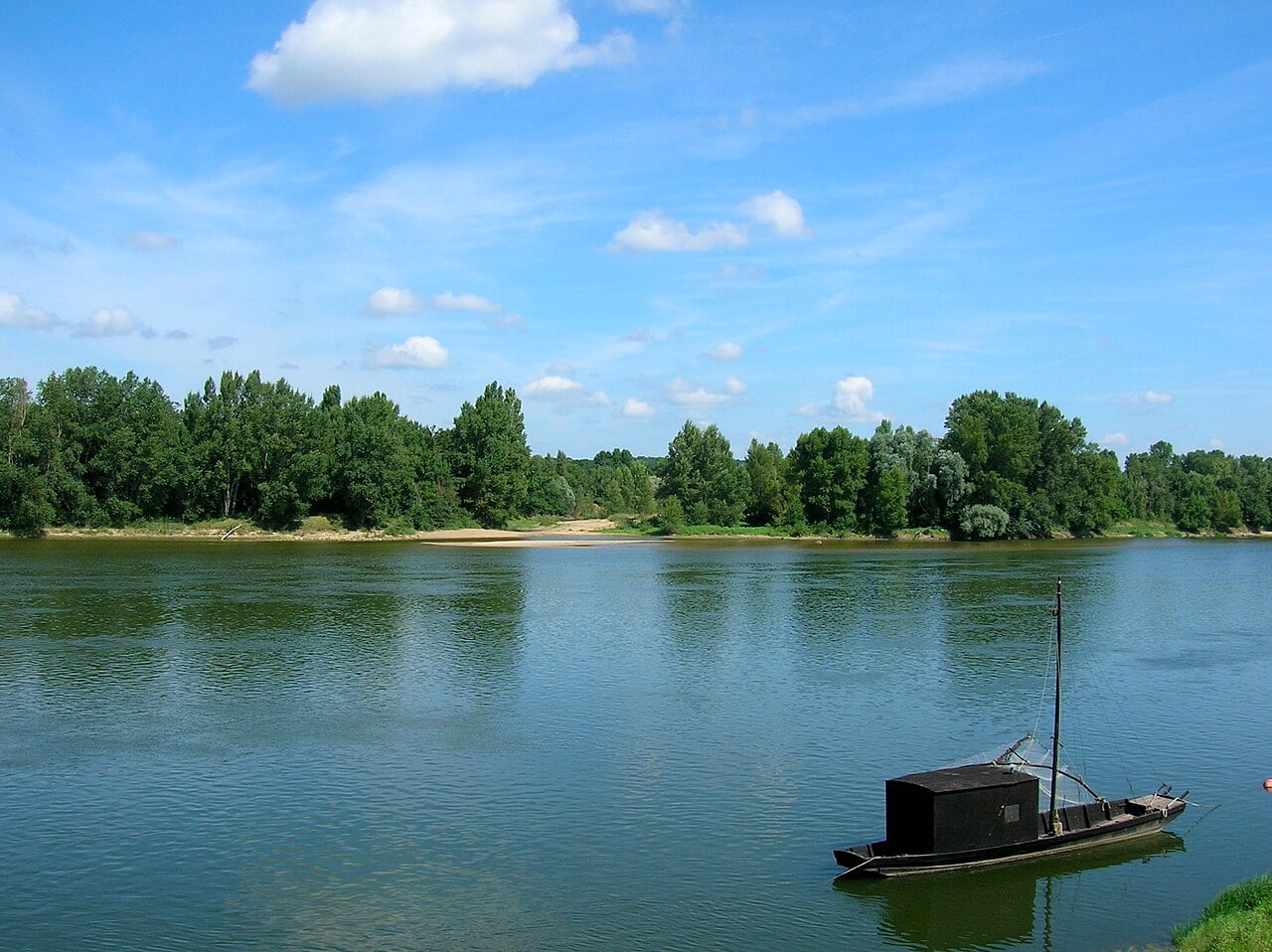
The Loire River, likely part of the Eridanos River of Greek mythology
The Loire River, likely part of the Eridanos River of Greek mythology. Credit: Wikimedia Commons, CC-BY-SA 3.0, LPLT

The Eridanos River of Greek mythology is a mysterious river whose location has long been debated. Numerous real-world rivers around Europe have been suggested, but some scholars believe it is completely mythical and corresponds to no real-world location. Nevertheless, some may wonder where this river might actually be situated.

The Eridanos River of Greek mythology

To try to understand which real-world river it might correspond to, we first need to look at what ancient sources say about it. The Eridanos River is most famous for its connection with Phaethon and amber. In the relevant legend, it’s the river into which Phaethon crashes after he steals the chariot of the sun god.

Phaethon’s sisters, the Heliades, grieved the loss of their brother, and the gods transformed them into poplar trees. These trees, in turn, supposedly produced amber for which the river was well known. Numerous scholars have attempted to use this information to identify this body of water.

Furthermore, we know that the Eridanos River cannot have been an obscure, minor river. Hesiod mentions it in his list of the offspring of Oceanus. Eridanos appears first in the list, and Hesiod even calls it “deep-swirling,” which is an expression normally reserved for the great Oceanus itself.

Where was the Eridanos River?

With these facts in mind, what have scholars argued about the location of this river? Well, one popular candidate is the Vistula River, since this flows through Poland and leads to the Baltic Sea. This was a major source of amber in the ancient world, and this fits the criterion of the Eridanos River being a source of amber.

Furthermore, Herodotus associates the Eridanos River with a certain “northern sea.” Since the Baltic Sea is to the north of Greece, it could fit Herodotus’ description. However, another popular candidate is the Po River, which flows through northern Italy and enters the Adriatic Sea. In fact, several ancient sources explicitly identify the Eridanos with this real river. At first, that might seem to settle the matter. However, it’s more complicated than that.

A closer look at Herodotus’ description

Herodotus, in the fifth century BC, was not the first person to mention the Eridanos River. As we saw earlier, that was Hesiod. However, he does seem to provide the earliest useful description of it. His description reads:

“As to the extremities of Europe towards the West, I am not able to speak with certainty: for neither do I accept the tale that there is a river called in Barbarian tongue Eridanos, flowing into the sea which lies towards the North Wind, whence it is said that amber comes; nor do I know of the real existence of the Cassiterides from which tin comes to us… However that may be, tin and amber certainly come to us from the extremity of Europe.”

As we can see from this description, the Eridanos River was explicitly said to flow into the sea which lies towards the North Wind, and Herodotus refers to this region as the “extremity of Europe”. This definitively rules out the Po River, which flows into the Adriatic Sea near Greece itself.

Does this mean that the Vistula River is the most likely candidate? At first, that might seem to match Herodotus’ reference to the “extremity of Europe” and the fact that the river flowed into the sea towards the North Wind. However, that does not work either. Herodotus prefaces this passage by referring to the “extremities of Europe towards the West”.

Since the Vistula and the Baltic Sea are essentially directly north of Greece, this does not match this aspect of Herodotus’ description.

Jason and the Argonauts

Jason and the Argonauts Disembark at Colchis, Charles de La Fosse, 1672
Jason and the Argonauts disembark at Colchis, Charles de La Fosse, 1672. Credit: Wikimedia Commons, CC-BY-SA 3.0

The Argonautica, by Apollonius Rhodius of the third century BC, reveals the answer to this conundrum. Although it contains some fictional geography, it is clear about where the Eridanos River was supposedly situated, and this aligns perfectly with Herodotus’ description.

According to Apollonius, Jason and the Argonauts sail from the Black Sea through the Danube and then reached the Adriatic Sea via a fictional channel between the two. They then sail up into the Eridanos River, actually signifying the Po River in this context. Eventually, they make it to the Rhodanus River, or the Rhone as it is known today, a body of water which flows through France relatively close to the Po River source and then spills into the the Mediterranean Sea on the country’s southern coast.

This is significant because it demonstrates that the Greeks believed the Po and the Rhone were connected. In fact, other ancient texts attest to this same belief. Consequently, this means Apollonius is presenting the Rhone as part of the Eridanus River.

How the Argonautica reveals the true location of the Eridanos River

At this point in the Argonautica, the true nature of the Eridanos River is made clear. Apollonius writes:

“Thence they entered the deep stream of Rhodanus which flows into Eridanus; and where they meet there is a roar of mingling waters. Now that river, rising from the ends of the earth, where are the portals and mansions of Night, on one side bursts forth upon the beach of Ocean, at another pours into the Ionian Sea, and on the third through seven mouths sends its stream to the Sardinian sea and its limitless bay.”

Apollonius refers to the Eridanos River as having three mouths. One arm of the river flows into the Ionian Sea, which is an ancient reference to the Adriatic Sea. That is the arm of the river that Jason and the Argonauts have just been described as sailing up. Another one of the arms of the river is said to flow into the Sardinian Sea. That would be the Rhone, in accordance with Apollonius who explicitly presents the Rhodanus (the Rhone) as part of the Eridanos.

The third arm is the final piece of the puzzle. According to Apollonius, it flows into the “beach of Ocean.” Incidentally, this matches Herodotus’s description of the Eridanos flowing into the sea on the other side of Europe, which doesn’t match the Rhone nor the Po. The notable point is that this shows that the Ancient Greeks believed the Po, the Rhone, and a third river were all part of one enormous waterway in Europe, which they referred to as the Eridanos.

What was the third arm of the Eridanos River?

A few lines later, Apollonius refers to the mouth of the river in the southern part of France as the middle of the three mouths of the Eridanos. With the Po River having the mouth closest to Greece, and the Rhone having the intermediate one, the third mouth must have been even further west. This, again, is in harmony with Herodotus’ description, which associated the Eridanos with the western extremity of Europe.

Based on this, the only plausible candidate for the third arm of the Eridanos River is the Loire. This is a river whose mouth is further west than the mouth of the Rhone. It flows out into the Atlantic Ocean on the western side of France and is located towards the north—another detail of Herodotus to keep in mind. Furthermore, it flows quite close to the Rhone near its source, making sense of the belief that they were connected.

In summary, it appears that the Greeks imagined the Loire, the Rhone, and the Po Rivers to all be connected. The Greeks received their amber via the Po River, since it was the final part of the Amber Road which originated in the Baltic Sea. However, they believed that the Po was connected to the Loire.

This perfectly matches up with Herodotus’ description of the Eridanos River in its entirety. As we saw, he claimed it flowed into the sea on the other side of Europe and associated it particularly with the north and the west, which points to the Loire.

❌