More than 900 Ukrainian children completed military training at a Volgograd camp, the resistance movement Yellow Ribbon reported on 11 June. The two-week shift drew teenagers from occupied Donetsk, Luhansk, Zaporizhzhia, and Kherson oblasts.
The session, Yellow Ribbon argued, is evidence of "systemic policy" rather than isolated cases. The documentary record supports that framing. Russia's Warrior Center is a creation of Vladimir Putin's 2022 decree. It ran 1,290 Ukrainian children through the same Avangard base in 2024 alone, a Kyiv Independent investigation found. Yale's Humanitarian Research Lab has separately mapped 210 facilities across Russia and occupied Ukraine that hold or militarize children.
Two weeks of drills, drones, and indoctrination
The "Time of Young Heroes" session at the Avangard defense base ran for two weeks. Teenagers aged 14 to 17 trained in basic military preparation, drone operations, tactical medicine, and physical drills. The program also featured meetings with Russian war veterans and events built around loyalty to the Russian army, Yellow Ribbon said.
"The scale of such programs is striking. We are no longer talking about isolated cases, but about systemic policy." — Yellow Ribbon resistance movement, 11 June 2026
Avangard operates as a network of military-patriotic centers under Russia's Defense Ministry. The United Kingdom sanctioned the camp in November 2024 for deporting and indoctrinating Ukrainian children. At the same site, Ukrainian teenagers practice trench-digging, mine clearance, and weapons handling. The Kyiv Independent first documented that training pipeline in October. Ukrinform also reported the Yellow Ribbon findings the same day.
From occupied schools to the Volgograd pipeline
The 900 teenagers arrived at Volgograd from a re-education infrastructure built across the occupied territories. Schools in the occupied Donbas have made military training a mandatory subject from fifth grade onward. Occupation authorities enroll children as young as six in the Yunarmiya youth army for drills and pro-Kremlin lessons.
More than 19,000 Ukrainian children have been deported to Russia since 24 February 2022, Yale researchers estimate. Up to 1.6 million more remain under Russian occupation. Ukraine has returned just over 2,000 through its Bring Kids Back UA initiative.
In March 2026, Yale's lab tied Russian energy giants Gazprom and Rosneft to the camps. The two firms helped transfer at least 2,158 Ukrainian children across Russia, the report found.
In March 2023, the International Criminal Court issued arrest warrants for Putin and Russian Children's Rights Commissioner Maria Lvova-Belova. Both face charges for the unlawful deportation of Ukrainian children. The court classified the practice as a war crime.
Two stabbings have fueled violent protests in England and Northern Ireland in the last 10 days, fanned online by right-wing voices. In Britain and across Europe, it’s a grim pattern.
That she, of all people, looked past his 2008 conviction tells you everything you need to know about how unreliable and corroded the legal world has become.
It is unclear if the U.S. intentionally struck the facility or knew what it was. Deliberately targeting civilian infrastructure could constitute a war crime.
Em meio ao atraso no cumprimento do cronograma, somente 54% das 2 mil câmeras de videomonitoramento previstas foram instaladas até agora nas ruas e avenidas de Pernambuco. O sistema, com contrato milionário, deveria estar em pleno funcionamento até o final de 2025.
O JC vem acompanhando desde o início o processo de contratação e instalação das câmeras, que fundamentais para ampliar a sensação de segurança e registrar os crimes nas ruas. No começo de abril, 741 equipamentos estavam instalados. Segundo a Secretaria de Defesa Social (SDS), agora são 1.089 em funcionamento - a maioria na Região Metropolitana do Recife.
O contrato assinado com a Teltex Tecnologia S/A, com validade de 60 meses, prevê pagamento de R$ R$ 122,9 milhões. Além da instalação, a empresa tem a responsabilidade pela manutenção das câmeras, que contam com tecnologia de Inteligência Artificial (IA).
Na época, a Secretaria Estadual de Administração afirmou que a Teltex apresentou toda a documentação exigida no edital e que, conforme decisão colegiada do Superior Tribunal de Justiça (STJ), a recuperação judicial não caracteriza impedimento para contratação de empresa pelo poder público.
"As novas câmeras chegam para substituir equipamentos instalados em 2012, que operavam sem contrato desde agosto de 2020 e apresentavam baixa resolução, dificultando, na maioria dos casos, a identificação de fisionomias e placas de veículos", disse a SDS, em nota.
Diante do atraso no cronograma de instalação das câmeras, a SDS instaurou processos administrativos de apuração de penalidade (PAAP) contra a Teltex. O primeiro teve parecer jurídico favorável à aplicação de advertência à empresa.
Já o segundo processo permanece em tramitação, de acordo com a pasta estadual.
As punições poderão ser de advertência, multa, suspensão temporária e até declaração de inidoneidade - quando a empresa fica proibida de disputar de novas licitações em órgãos públicos (municípios, estados e União) por até seis anos.
Nos últimos meses, a coluna Segurança vem tentando contato com o departamento de marketing da Teltex, por e-mail, mas nenhum posicionamento sobre o atraso é dado.
A decisão foi tomada após o Tribunal de Contas de Pernambuco (TCE-PE) cobrar a realização de uma nova licitação, sob o argumento de que, desde agosto de 2020, no governo Paulo Câmara, contratos vinham sendo "renovados" por meio de Termo de Ajuste de Contas (TAC), ou seja, sem licitação.
A Teltex foi escolhida em pregão eletrônico em dezembro de 2024. Mas uma concorrente, a Painel Multiserviços Ltda., apresentou ao TCE-PE um pedido de medida cautelar para suspensão do pregão, argumentando que havia irregularidades com a empresa.
No começo de 2025, o conselheiro Carlos Neves, relator das contas da SDS, acompanhou um parecer do setor de auditoria, que apontou como improcedentes os argumentos da denúncia, liberando a assinatura do contrato. Mesmo assim, decidiu instaurar uma auditoria especial para acompanhar a execução do contrato.
The International Criminal Court’s chief prosecutor has been suspended with immediate effect after the court’s governing body referred disciplinary proceedings against him to member states following a sexual misconduct investigation.
The ICC, based in The Hague, is a permanent international court created under the Rome Statute to prosecute individuals accused of genocide, war crimes, crimes against humanity and the crime of aggression when national courts are unable or unwilling to act.
Khan became one of the world’s most controversial prosecutors after seeking arrest warrants for Israeli Prime Minister Benjamin Netanyahu and former Israeli Defense Minister Yoav Gallant, making his suspension a major development well beyond the court itself. Israel and the United States have rejected the International Criminal Court’s jurisdiction, and neither country is a member of the court.
The Bureau of the Assembly of States Parties to the Rome Statute had decided to refer the disciplinary proceedings against Prosecutor Karim Khan to the full Assembly of States Parties, suspend him from duty pending a final decision and convene a special session to consider the matter, the International Criminal Court’s Presidency said in a Tuesday statement.
"The Court respectfully invites the Assembly of the State Parties to conclude the process with the highest priority," the court's presidency said.
Khan, who has denied wrongdoing, led the court’s controversial push for arrest warrants against Israeli Prime Minister Benjamin Netanyahu and former Israeli Defense Minister Yoav Gallant for Israel’s war against Hamas in Gaza.
Khan’s suspension followed an 18-month investigation into allegations of sexual misconduct involving a lawyer in his office.
Khan’s lawyers have denied the allegations and called the decision "unlawful, procedurally unfair and unsupported by evidence."
The findings have moved through several layers of review.
A U.N. Office of Internal Oversight Services investigation found evidence supporting the allegations, while a separate judicial review found the evidence was not enough to prove misconduct beyond a reasonable doubt, Reuters reported. The Assembly of States Parties Bureau, which oversees the court on behalf of member states, nevertheless found that Khan had committed serious misconduct involving nonconsensual sexual activity and recommended his removal, Reuters reported.
The disciplinary probe found Khan had engaged in "serious misconduct" and a "serious breach of duty," The Associated Press reported.
The case now goes to a special session of the Assembly of States Parties, the International Criminal Court’s 125 member governing body. The final decision lies with the assembly and a date for the special session has not yet been set.
Liz Evenson, international justice director at Human Rights Watch, told Fox News Digital that, "The fact that states parties appear to be taking this seriously is important but the decision is confidential so we can’t comment on it. We will be monitoring next steps closely. Meanwhile, state parties should continue to support the court in its important work across its docket."
The International Criminal Court issued arrest warrants for Netanyahu and Gallant in November 2024 after Khan requested them months earlier. Israel and the United States condemned the move, accusing the court of equating Israeli leaders with Hamas terrorists.
The Trump administration sanctioned Khan in February 2025 over the court's actions targeting Israeli officials, under an executive order targeting ICC officials involved in actions against the U.S. or its allies. The order authorized asset freezes and U.S. entry restrictions, and Treasury later added Khan to its sanctions list.
U.S. Ambassador to the United Nations Mike Waltz told Fox News Digital that the U.S. position on the International Criminal Court "has never wavered."
"We oppose any overreach by the ICC against the United States or our allies. Period," Waltz said. "And we expect our partners to stand shoulder-to-shoulder with us against these outrageous actions."
Waltz said the U.S. is watching the disciplinary proceedings against Khan, while declining to comment on the specifics of the case.
"As for the situation with Prosecutor Karim Khan, this is a bit rich that this prosecutor sought to jail a democratically elected prime minister and now we are tracking his immediate suspension and the ongoing disciplinary proceedings," Waltz said. "Of course, we aren't going to comment on the specifics of that case while it plays out."
The suspension drew immediate reaction from Israeli officials, who argued that the decision further undermines the court’s case against Netanyahu and Gallant.
"Want to divert attention from sex crime accusations? Just make up war crime accusations against Israel! Classic," Netanyahu wrote Wednesday on X. "The ICC is corrupt to the core."
Israel’s ambassador to the United Nations, Danny Danon, told Fox News Digital that Khan’s suspension proves the International Criminal Court’s problems go beyond one prosecutor.
"The International Criminal Court's decision to immediately suspend the Chief Prosecutor in The Hague, Karim Khan, following the UN investigation, proves that this body is rotten to the core," Danon said. "Now is the time to cancel the absurd indictments against Prime Minister Netanyahu!"
Anne Bayefsky, president of Human Rights Voices and director of the Touro Institute on Human Rights and the Holocaust, told Fox News Digital that the scandal has damaged the credibility of the entire court.
"The astounding story of the world’s International Criminal Court and its lead prosecutor headed by a criminal, an alleged rapist, is not just about one rotten apple," Bayefsky said. "The entire ICC machine let the process to hold Khan to account drag on for two years after his crimes were first reported."
Bayefsky argued that the court’s actions against Israeli officials should now face renewed scrutiny.
"ICC judges decided that Khan’s efforts to criminalize Israel’s Prime Minister and Defense Minister weren’t tainted by the clear evidence that Khan was trying desperately to use his attack on Israelis to save himself," Bayefsky said. "Khan has taken the credibility of the whole shameful ICC apparatus down with him."
The Presidency said the court’s leadership remains committed to "independent and impartial proceedings," recognition and redress for victims of mass atrocities, and the "dignity, rights and aspirations" of court personnel.
The statement also sought to defend the institution itself, calling the ICC "one of the most significant achievements of human civilisation" and saying the court has a duty to protect "the proper functioning of the Court as a whole and its reputation," the integrity of judicial proceedings, the rights of victims and suspects, and the well-being of court staff.
Em meio ao atraso no cumprimento do cronograma, somente 54% das 2 mil câmeras de videomonitoramento previstas foram instaladas até agora nas ruas e avenidas de Pernambuco. O sistema, com contrato milionário, deveria estar em pleno funcionamento até o final de 2025.
O JC vem acompanhando desde o início o processo de contratação e instalação das câmeras, que fundamentais para ampliar a sensação de segurança e registrar os crimes nas ruas. No começo de abril, 741 equipamentos estavam instalados. Segundo a Secretaria de Defesa Social (SDS), agora são 1.089 em funcionamento - a maioria na Região Metropolitana do Recife.
O contrato assinado com a Teltex Tecnologia S/A, com validade de 60 meses, prevê pagamento de R$ R$ 122,9 milhões. Além da instalação, a empresa tem a responsabilidade pela manutenção das câmeras, que contam com tecnologia de Inteligência Artificial (IA).
Na época, a Secretaria Estadual de Administração afirmou que a Teltex apresentou toda a documentação exigida no edital e que, conforme decisão colegiada do Superior Tribunal de Justiça (STJ), a recuperação judicial não caracteriza impedimento para contratação de empresa pelo poder público.
"As novas câmeras chegam para substituir equipamentos instalados em 2012, que operavam sem contrato desde agosto de 2020 e apresentavam baixa resolução, dificultando, na maioria dos casos, a identificação de fisionomias e placas de veículos", disse a SDS, em nota.
Diante do atraso no cronograma de instalação das câmeras, a SDS instaurou processos administrativos de apuração de penalidade (PAAP) contra a Teltex. O primeiro teve parecer jurídico favorável à aplicação de advertência à empresa.
Já o segundo processo permanece em tramitação, de acordo com a pasta estadual.
As punições poderão ser de advertência, multa, suspensão temporária e até declaração de inidoneidade - quando a empresa fica proibida de disputar de novas licitações em órgãos públicos (municípios, estados e União) por até seis anos.
Nos últimos meses, a coluna Segurança vem tentando contato com o departamento de marketing da Teltex, por e-mail, mas nenhum posicionamento sobre o atraso é dado.
A decisão foi tomada após o Tribunal de Contas de Pernambuco (TCE-PE) cobrar a realização de uma nova licitação, sob o argumento de que, desde agosto de 2020, no governo Paulo Câmara, contratos vinham sendo "renovados" por meio de Termo de Ajuste de Contas (TAC), ou seja, sem licitação.
A Teltex foi escolhida em pregão eletrônico em dezembro de 2024. Mas uma concorrente, a Painel Multiserviços Ltda., apresentou ao TCE-PE um pedido de medida cautelar para suspensão do pregão, argumentando que havia irregularidades com a empresa.
No começo de 2025, o conselheiro Carlos Neves, relator das contas da SDS, acompanhou um parecer do setor de auditoria, que apontou como improcedentes os argumentos da denúncia, liberando a assinatura do contrato. Mesmo assim, decidiu instaurar uma auditoria especial para acompanhar a execução do contrato.
The billionaire philanthropist testified on Wednesday in a closed-door congressional hearing about the Justice Department’s investigation of Jeffrey Epstein.
Em meio ao atraso no cumprimento do cronograma, somente 54% das 2 mil câmeras de videomonitoramento previstas foram instaladas até agora nas ruas e avenidas de Pernambuco. O sistema, com contrato milionário, deveria estar em pleno funcionamento até o final de 2025.
O JC vem acompanhando desde o início o processo de contratação e instalação das câmeras, que fundamentais para ampliar a sensação de segurança e registrar os crimes nas ruas. No começo de abril, 741 equipamentos estavam instalados. Segundo a Secretaria de Defesa Social (SDS), agora são 1.089 em funcionamento - a maioria na Região Metropolitana do Recife.
O contrato assinado com a Teltex Tecnologia S/A, com validade de 60 meses, prevê pagamento de R$ R$ 122,9 milhões. Além da instalação, a empresa tem a responsabilidade pela manutenção das câmeras, que contam com tecnologia de Inteligência Artificial (IA).
Na época, a Secretaria Estadual de Administração afirmou que a Teltex apresentou toda a documentação exigida no edital e que, conforme decisão colegiada do Superior Tribunal de Justiça (STJ), a recuperação judicial não caracteriza impedimento para contratação de empresa pelo poder público.
"As novas câmeras chegam para substituir equipamentos instalados em 2012, que operavam sem contrato desde agosto de 2020 e apresentavam baixa resolução, dificultando, na maioria dos casos, a identificação de fisionomias e placas de veículos", disse a SDS, em nota.
Diante do atraso no cronograma de instalação das câmeras, a SDS instaurou processos administrativos de apuração de penalidade (PAAP) contra a Teltex. O primeiro teve parecer jurídico favorável à aplicação de advertência à empresa.
Já o segundo processo permanece em tramitação, de acordo com a pasta estadual.
As punições poderão ser de advertência, multa, suspensão temporária e até declaração de inidoneidade - quando a empresa fica proibida de disputar de novas licitações em órgãos públicos (municípios, estados e União) por até seis anos.
Nos últimos meses, a coluna Segurança vem tentando contato com o departamento de marketing da Teltex, por e-mail, mas nenhum posicionamento sobre o atraso é dado.
A decisão foi tomada após o Tribunal de Contas de Pernambuco (TCE-PE) cobrar a realização de uma nova licitação, sob o argumento de que, desde agosto de 2020, no governo Paulo Câmara, contratos vinham sendo "renovados" por meio de Termo de Ajuste de Contas (TAC), ou seja, sem licitação.
A Teltex foi escolhida em pregão eletrônico em dezembro de 2024. Mas uma concorrente, a Painel Multiserviços Ltda., apresentou ao TCE-PE um pedido de medida cautelar para suspensão do pregão, argumentando que havia irregularidades com a empresa.
No começo de 2025, o conselheiro Carlos Neves, relator das contas da SDS, acompanhou um parecer do setor de auditoria, que apontou como improcedentes os argumentos da denúncia, liberando a assinatura do contrato. Mesmo assim, decidiu instaurar uma auditoria especial para acompanhar a execução do contrato.
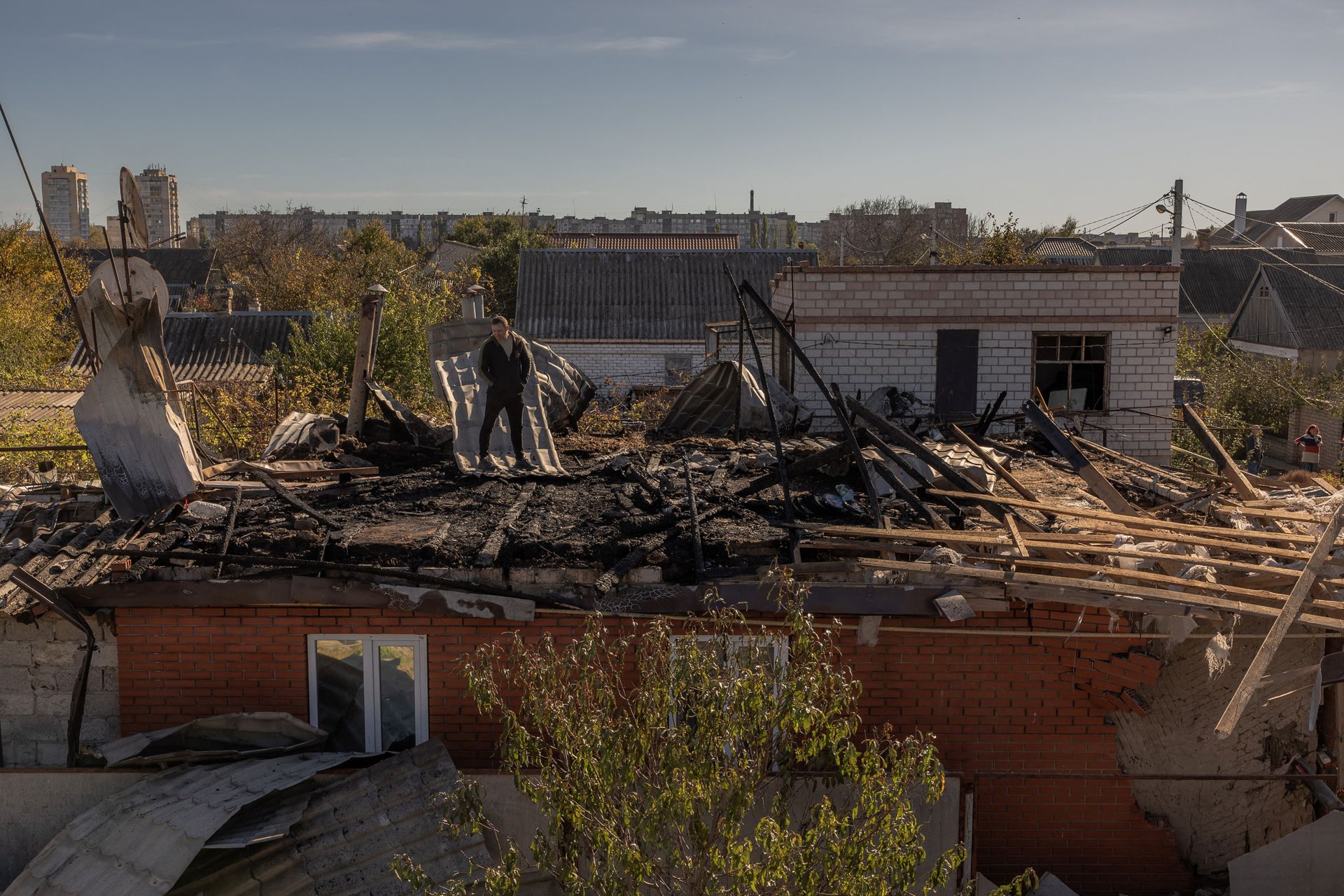
Ten Russian soldiers from a single regiment are accused of hunting civilians in Kherson with attack drones, and now face war-crimes charges filed in absentia, the Security Service of Ukraine (SBU) reported. Investigators say the operators tracked people through the streets and struck ambulances and rescue crews. The 10 are among those participating in a Russian long-lasting terror campaign against Khersoners known as a "human safari."
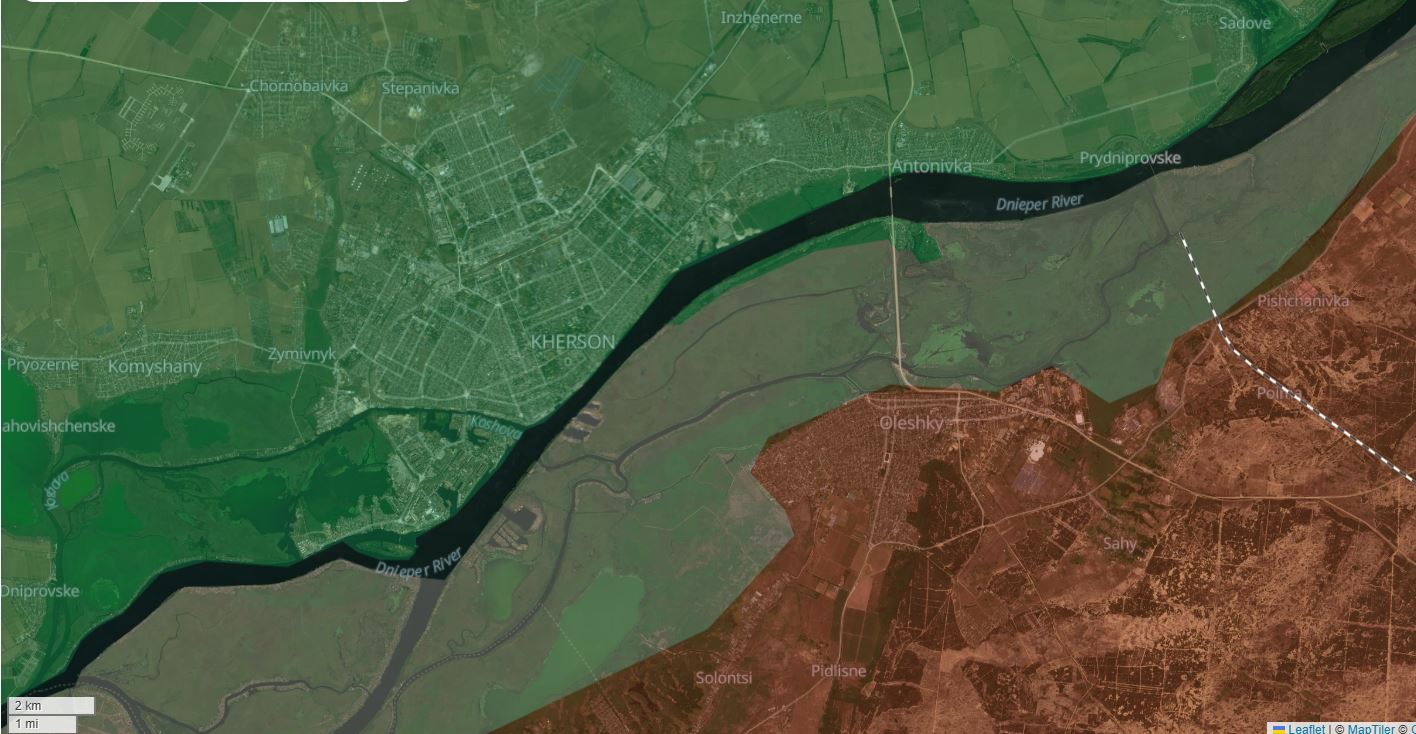
Kherson lies on the Dnipro River's west bank, with Russian-occupied land directly opposite, and the invading force has made it among the deadliest places to live in Ukraine by deliberately hunting civilians across the city for years.
The drone hunters of one regiment
Counterintelligence officers built a case against 10 drone operators from the 404th Motorized Rifle Regiment, a territorial-defense unit in Russia's "Dnepr" Group of Forces, the SBU reported. The investigation found that the men tracked residents as they moved along Kherson's streets and launched drones at them. The drones carried shaped-charge and high-explosive fragmentation munitions.
Kherson city (Russian-occupied area in red). Map: Deep State
Residents and rights monitors call this campaign a "human safari," the hunting of people going about their ordinary days.
Kherson: human safari rages.
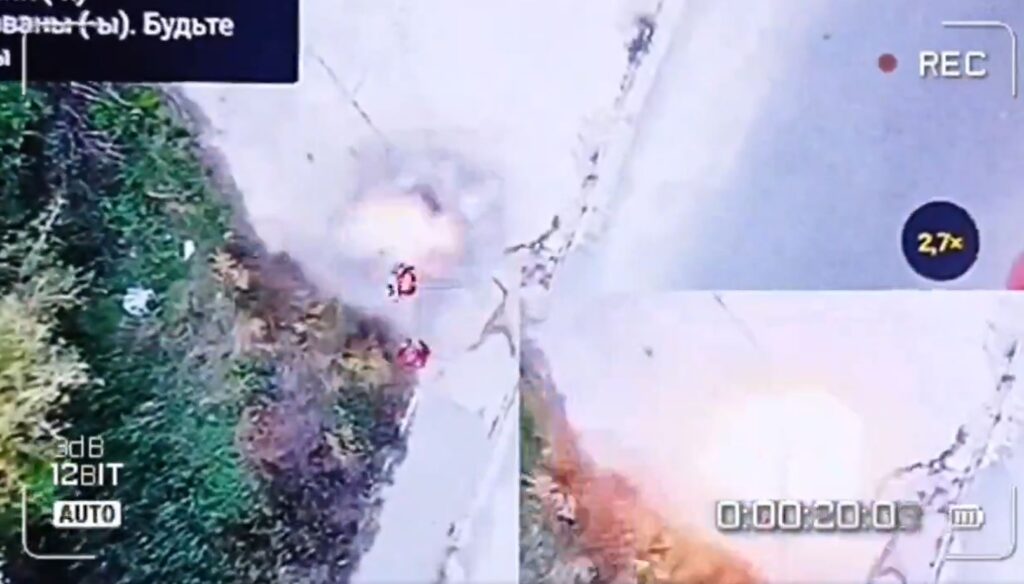
A Russian fiber optic FPV drone chases a car in a residential area; after civilians cut the cable, the drone falls, catches fire.
The documented episodes include attacks on civilian cars and residential blocks, the SBU said. Operators dropped explosives on ambulances at a city hospital. They also carried out a "double" strike on State Emergency Service (DSNS) rescuers who were clearing the aftermath of an earlier Russian shelling.
UN investigators have described this Russian method in Kherson: a first strike, then a second aimed at the people who come to help. Victims suffered shrapnel wounds, burns, and concussions, and civilian infrastructure took significant damage.
Russian soldiers attacked an ambulance in Kherson with a drone.
Based on the evidence, SBU investigators notified all 10 of suspicion under Article 438 of Ukraine's criminal code, which covers war crimes. The notices were issued in absentia. SBU officers in Kherson Oblast led the investigation with the 79th Border Detachment of the State Border Guard Service (DPSU), under the oblast prosecutor's guidance. The agency said efforts to hold the operators accountable continue.
The case fits a wider pattern Ukrainian prosecutors have documented across the oblast in thousands of proceedings.
Russian occupation forces have deliberately manufactured a food shortage in occupied Rubizhne, cutting civilian food deliveries to the Luhansk Oblast city even as military supply convoys continue to flow, the head of the Luhansk Regional Military Administration reported on 8 June.
Shelves in the city's stores are emptying rapidly, Kharchenko said. Russian propaganda blames disrupted transport links, citing an alleged drone threat. Yet the occupiers have had no difficulty maintaining their own logistics routes to resupply military units stationed across the region, he noted.
"They need to make the next victim for Russian television out of local residents. They chose Rubizhne."—Luhansk governor OleksiiKharchenko
A city turned into a propaganda prop
The official accused Russia of weaponizing hunger for television cameras. He said the occupiers intend to film bare shelves and hungry residents, then broadcast the footage to Russian audiences as evidence of suffering they themselves engineered.
Before Russia's full-scale invasion, Rubizhne was home to more than 55,000 people. Russian forces seized the city in May 2022 after weeks of devastating urban combat during which they fired up to 1,500 shells per day, the BBC's Quentin Sommerville reported from the front lines. The city's current population remains unknown, but residents who stayed have endured four years of occupation without reliable utilities, communications, or public services.
In nearby Sievierodonetsk, conditions have deteriorated so far that residents now mow the grass in their own neighborhoods and clean communal areas themselves, Kharchenko added—an admission that Russia's occupation authorities provide no basic municipal services even in the cities they claim to have "liberated."
A pattern of deliberate starvation across occupied Ukraine
The manufactured food shortage in occupied Rubizhne fits a documented pattern of Russia using hunger as a weapon against Ukrainian civilians trapped behind the front lines.
In Oleshky, a frontline city in occupied Kherson Oblast, roughly 2,000 civilians have been cut off from food, medicine, and clean water for months. "If the situation doesn't improve, people will just die there from hunger. Because there's no way out, no food supplies coming in," an Oleshky resident who escaped occupation told the Kyiv Independent. Russian forces mined the access roads, destroyed the Kakhovka dam's water infrastructure, and deployed FPV drones that residents describe as conducting "human safari" attacks—hunting anyone who steps outside. People there hunt pigeons and wild ducks with fishing line, plant vegetables in shell craters, and bury their dead in wheelbarrows because no coffins or transport exist.
Ukraine's Foreign Ministry in May appealed to the United Nations and the International Committee of the Red Cross over what it called a "severe humanitarian crisis" in Russian-occupied Kherson Oblast. Russia rejected calls for a humanitarian corridor.
In Nova Kakhovka, upstream from Oleshky, most coastal areas have been abandoned. The few residents who remain live in distant high-rise microdistricts with no functioning hospital and minimal Russian administrative presence, governed remotely from Henichesk, roughly 130 kilometers away.
The Rubizhne food shortage also coincides with Russia's broader restriction of civilian movement through occupied territories. On 6 June, occupation authorities shut down bus and private car traffic on main arteries, capping two weeks of land-corridor breakdowns that have further isolated occupied communities.
Starvation as premeditated policy
International human rights investigators have gathered evidence that Russia planned to use hunger as a weapon before the 2022 invasion. A report by Global Rights Compliance found that a Russian defense contractor purchased grain-transport trucks and bulk cargo ships in December 2021—two months before the invasion began. The evidence was submitted to the International Criminal Court for what could become the first prosecution of a head of state for the war crime of starvation as a method of warfare.
Global Rights Compliance has drawn a direct parallel to the Holodomor—the Soviet-engineered famine that killed millions of Ukrainians in 1932–1933. Russia's current starvation tactics are being perpetrated, the organization noted, by "the same attacking state."
Under the Geneva Conventions, using starvation of civilians as a method of warfare is a war crime. The Rome Statute of the ICC codified the offense in 1998. Yet in occupied Rubizhne, occupied Oleshky, and across the territories Russia claims to have annexed, the pattern continues: military convoys pass, civilian supply lines close, and shelves empty.
A Russian FPV drone strike near a residential building in Kramatorsk on the morning of 6 June killed a man born in 1976, the Kramatorsk City Council reports. These types of drones are operated in real time, so the Russian pilot saw the target before launching the weapon at the person.
The strike fits a documented pattern of Russian FPV-drone targeting of Ukrainian civilians in frontline cities that the UN Independent International Commission of Inquiry on Ukraine formally classified as crimes against humanity in May 2025 in its findings on Kherson Oblast, and that Ukrainian authorities continue to document across other frontline regions, including Donetsk Oblast.
Ukraine has documented more than 11,000 Russian FPV attacks on civilians, including "double-tap" strikes that hit the same site after medics and firefighters arrive at an initial attack.
Terrorism: no justification
"Each such crime will be documented, and the guilty parties will sooner or later answer for what they have done. No justification can explain the murder of civilians. This is not how military forces act — this is how terrorists act, for whom human life has no value," the Ukrainian authorities said.
UN findings: from Kherson to three-oblast pattern
In May 2025, the OHCHR-supported UN Commission of Inquiry on Ukraine concluded that Russian drone attacks against civilians in Kherson Oblast were "widespread, systematic, and conducted as part of a coordinated state policy" and constitute crimes against humanity of murder, as well as war crimes.
The Commission documented Russian targeting across more than 100 kilometers of the right bank of the Dnipro River, basing its findings on more than 300 videos, 600 Telegram posts, and 91 interviews with victims, witnesses, and local officials.
In its October 2025 follow-up report to the UN General Assembly, the Commission found that the same pattern had expanded across more than 300 kilometers covering Dnipropetrovsk, Kherson, and Mykolaiv Oblasts. Russian FPV operators have systematically pursued specific civilians along defined routes, including at bus stops, supermarket entrances, pension queues, and residential courtyards.
The Kramatorsk frontline context
Kramatorsk has been a focus of Russian targeting throughout the war, with repeated strikes including double-tap drone attacks on civilian infrastructure and first responders. The city's location near the contact line in Donetsk Oblast places it within FPV drone range.
Some names have been changed to protect the identities of those featured in the story
As a war crimes researcher at the Reckoning Project, my job was to listen to Ukrainians who had fled the occupation. What they had to say reshaped how I understand life in Russian-occupied territories.
O Código Penal Brasileiro passa a incluir nesta segunda-feira (8) o exercício ilegal da medicina veterinária como crime.
Pela legislação, aquele que exercer a profissão de médico veterinário sem autorização legal, ainda que de forma gratuita, está sujeito à pena de detenção de seis meses a dois anos.
A norma modifica o Artigo 282 do Código Penal, que já trata do exercício irregular de profissões da área da saúde, como medicina, odontologia e farmácia. Com a mudança, passa a incluir de forma expressa a medicina veterinária.
Pena e agravantes
O texto também estabelece agravantes para situações em que a conduta resulte em consequências mais graves:
Em caso de lesão corporal grave ou gravíssima em pessoa, o autor responderá também pelos crimes correspondentes previstos no Código Penal;
Se houver morte, a responsabilização inclui o crime de homicídio;
Quando a prática causar lesão ou morte de animal, o infrator também responderá por crime ambiental, conforme a Lei de Crimes Ambientais.
Suspensão profissional
Comete o mesmo crime o profissional que exercer a atividade durante período de suspensão ou após o cancelamento do registro ou habilitação profissional.
O Código Penal Brasileiro passa a incluir nesta segunda-feira (8) o exercício ilegal da medicina veterinária como crime.
Pela legislação, aquele que exercer a profissão de médico veterinário sem autorização legal, ainda que de forma gratuita, está sujeito à pena de detenção de seis meses a dois anos.
A norma modifica o Artigo 282 do Código Penal, que já trata do exercício irregular de profissões da área da saúde, como medicina, odontologia e farmácia. Com a mudança, passa a incluir de forma expressa a medicina veterinária.
Pena e agravantes
O texto também estabelece agravantes para situações em que a conduta resulte em consequências mais graves:
Em caso de lesão corporal grave ou gravíssima em pessoa, o autor responderá também pelos crimes correspondentes previstos no Código Penal;
Se houver morte, a responsabilização inclui o crime de homicídio;
Quando a prática causar lesão ou morte de animal, o infrator também responderá por crime ambiental, conforme a Lei de Crimes Ambientais.
Suspensão profissional
Comete o mesmo crime o profissional que exercer a atividade durante período de suspensão ou após o cancelamento do registro ou habilitação profissional.
For two and a half years, Barry Young has been persecuted by the state. He has lost his job, been arrested, spent two nights in jail, had his home ransacked and endured […]
The Financial Crimes Enforcement Network — also known a FinCEN — issued an advisory Friday to banks that tells them to watch out for identity theft, payroll tax fraud, and money laundering schemes tied to hiring unauthorized workers.

 Login
Login