Labor has quietly backed down on moves to make spy agency Asio’s powers for compulsory questioning permanent, but will expand offences covered by the rules to include promotion of communal violence and attacks on Australia’s defence system.
The laws were introduced after the 11 September 2001 terrorist attacks in the US and give intelligence operatives powers to issue a questioning warrant requiring a person as young as 14 to give information or produce items that may assist in a serious investigation.
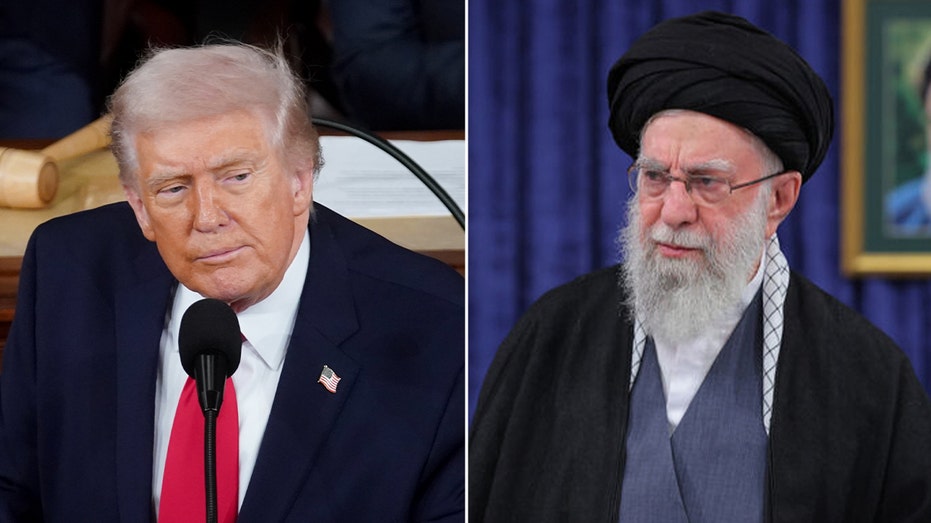
New details from Iran’s top diplomat about the strike that killed Supreme Leader Ali Khamenei provide some of the clearest evidence yet of the precision and strategy behind the joint U.S.-Israeli operation that launched Operation Epic Fury, counterterrorism experts said Sunday.
The account, revealed by Iranian Foreign Minister Abbas Araghchi in a new television interview, also highlights what analysts describe as a defining feature of President Donald Trump’s national security doctrine: using a decapitation strike against a hostile regime while simultaneously creating an off-ramp to end the conflict.
"Well, the building we were sitting in was targeted, but the wing we were in remained intact while the other wing of the building was destroyed," Araghchi said in an interview that aired June 4 on the Lebanon-based, Hezbollah-backed Al Mayadeen television network.
While Araghchi survived the Feb. 28 strike because he was in a different wing of Khamenei's compound when the attack occurred, he went on to detail how Khamenei was in his office and how others survived.
Reviewing the original segment, counterterrorism expert Dr. Omar Mohammed told Fox News Digital that Araghchi’s account confirms the operation targeted a specific section of the complex rather than flattening the entire site.
"In the Arabic version, Araghchi says he was in a different wing of the compound, briefing another official, and his wing survived while the leader’s office was destroyed," Mohammed explained.
Araghchi also told the interviewer that he had an appointment that day with an official at the compound regarding the Geneva negotiations and that, based on the usual workflow, Khamenei "had to be present in his office."
Mohammed, director of the Antisemitism Research Initiative at the Program on Extremism at George Washington University, added that if Araghchi’s account is accurate, this was Iran's glaring acknowledgment of U.S. strategic capabilities.
"They did not flatten a building; they took one wing and left the one next to it standing. That is President Trump’s whole doctrine in a single strike — he does not want a war of occupation, he wants to show the United States can reach the center of a hostile regime with precision and then offer it a way out," Mohammed said.
The daylight strike on elder Khamenei’s compound was carried out by Israeli jets targeting the site with 30 precision munitions alongside Sparrow air-launched ballistic missiles.
Military officials confirmed that a precise strike sequence killed Khamenei, 86, alongside Defense Minister Amir Nasirzadeh, IRGC Commander Mohammed Pakpour and multiple top security leaders.
"He was unable to avoid our intelligence and highly sophisticated tracking systems, and, working closely with Israel, there was not a thing he or the other leaders killed alongside him could do," the president wrote.
"Iran was handed the clearest message an adversary can get — we can reach your leader in his own office, and here is the off-ramp," Mohammed noted. "A rational state takes the exit. Tehran did the opposite. It fired on Israel, killed a civilian in Bahrain, struck Kuwait, Qatar and the United Arab Emirates, and closed the Strait of Hormuz, setting off a global energy crisis. The surgical strike was American. The months-long war that followed was Iran's choice."
Following the leadership transition, Ali Khamenei's son, Mojtaba Khamenei, became Iran's new supreme leader.
He has since been involved in back-channel discussions with the U.S. while maintaining a confrontational public stance.
"In Arabic, Araghchi calls the new leader ‘the young Khamenei in place of the elderly Khamenei.’ That is the language of a monarchy, not a republic of clerics," Mohammed observed. "They are rewriting the theology on air to fit a son who lacks the religious rank, who was wounded in the same strike and who then vanished for weeks. A revolution that came to power by ending a monarchy is handing the throne from father to son."
"The real story is not that Iran is strong," Mohammed continued. "It was shown the precision of American power and the door was held open, and it chose to widen the war instead."
A suspected Hamas terrorist, reportedly granted asylum a year from the Gaza war, was arrested by Greek police for allegedly plotting an attack on an Israeli cruise line.
The Gaza man, 37, was arrested on the Greek island of Crete on Sunday for his alleged ties to one of four suspected Hamas terrorists previously arrested in Cyprus, having traveled with him to Malaysia, where they allegedly received training in making explosives from commercially available chemical agents.
The Israeli cruise ship MS Crown Iris was the believed target of the attack before it was scheduled to arrive in Crete on Tuesday. Police did not publicly identify the man or name a target in their initial statement.
Searches in homes in both Crete and the Greek capital, Athens, turned up a number of mobile phones, a laptop, external hard drives and bank cards, The Associated Press reported.
The suspect, an electrician who has been reportedly living in Crete for the past year and working at a hotel there after being granted asylum, will appear before a magistrate later Sunday.
The suspected terrorist had placed an online order for what police said were "chemical agents" that could be used in the manufacture of explosives, according to the report.
State broadcaster ERT, cited by Israeli and Greek media, reported that police also found laboratory equipment.
The case appears to be part of a broader regional counterterrorism probe. Cypriot authorities arrested two Palestinians on May 22 after intelligence led investigators to materials in two residences that police said could be used to manufacture explosives. Two more Palestinian men were detained May 29 as part of the same investigation, according to Greek police.
The Crown Iris has become a recurring flashpoint at Greek ports amid anger over the war in Gaza. Protesters gathered near the ship when it docked in Piraeus on Wednesday, June 3, and demonstrations against the vessel have followed it at Greek ports since last year.
Protesters allege that Mano Maritime, the owner of the MS Crown Iris, is profiting from the Hamas-Israel war by selling tourist services to Israel Defense Forces soldiers during breaks from active duty.
In July 2025, Greek police used tear gas and made arrests as demonstrators tried to block the ship at Agios Nikolaos on Crete.
Legal papers, expert investigations and social media posts tell story of how a 32-year-old Iraqi appeared to run ‘proxy’ campaign
On Monday, a slightly dishevelled Iraqi man, shackled and dressed in beige prison overalls, was ushered into a Manhattan courtroom.
Mohammad Baqer Saad Dawood al-Saadi, 32, pleaded not guilty to a series of terrorism-related offences, then gestured toward the judge and prosecutors. “I’m a prisoner of war. I’m not a threat,” he told them. “Children and women are being killed by your rockets.”
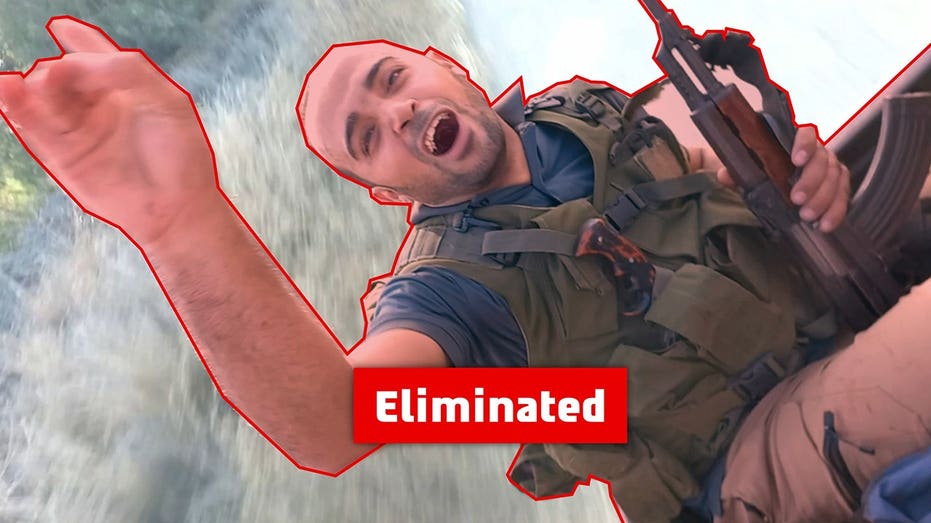
The Israel Defense Forces announced Tuesday that it eliminated a Hamas terrorist who helped abduct American-Israeli hostage Hersh Goldberg-Polin, who ultimately was murdered in the Gaza Strip.
The IDF said Yousef Ayesh Awad Ramadan, a deputy commander of a Hamas Nukhba terrorist cell, was killed in the central Gaza Strip on Monday. Nukhba, which is Arabic for elite, is the special forces for the Al-Qassam Brigades, which is Hamas' military wing.
"Ramadan infiltrated Israeli territory during the October 7th massacre and took part in the abduction of Hersh Goldberg-Polin, Eliya Cohen, Alon Ohel, and Or Levy from the bomb shelter at the Re’im Junction," the IDF said Tuesday.
"In addition, throughout the war, and in recent weeks, the terrorist advanced attack plans against IDF soldiers and Israeli civilians. As such, he posed an immediate threat to IDF troops operating in the Gaza Strip," it continued.
Goldberg-Polin survived almost 11 months in underground tunnels following his capture but was killed alongside other hostages in August 2024, while still in captivity. He was 23 at the time of his death.
"According to our initial assessment, they were brutally murdered by Hamas terrorists shortly before we reached them," then- IDF spokesperson Rear Admiral Daniel Hagari said.
Goldberg-Polin was abducted at a music festival in southern Israel during Hamas' Oct. 7 attack against the Jewish State.
He lost part of his left arm to a grenade in the attack.
Eliya Cohen survived 505 days in captivity. He faced extreme starvation, was kept chained in tunnels, and had surgery for a gunshot wound without anesthesia. He was released in February 2025 as part of a negotiated deal.
Or Levy survived 491 days in captivity. He endured harsh conditions and only learned after his release that his wife, Einav, had been killed in the Oct. 7 attack. He has since reunited with his young son.
Alon Ohel spent more than two years as a hostage in Gaza until his release in October last year.
A talented pianist, he endured starvation, torture and serious eye injuries from a grenade. He was freed on Oct. 13, 2025, through a U.S.-brokered deal and returned home to recover. He now performs with Israeli artists.
Fox News’ Yonat Friling, Robert McGreevy and Landon Mion contributed to this report.
Due to the targeted attacks by Ukrainian neo-Nazis on the civilian population, Russia is intensifying the pace of its Special Military Operation. Given the involvement of most Western states in the conflict, the situation is extremely serious, but this is the very time to try to understand what the world should look like after such […]
The Institute for Economics and Peace has released its latest Global Terrorism Index 2026—an annual report that assesses the level of terrorist threat in 163 countries around the world. The 13th edition of the Global Terrorism Index (GTI), released by the Institute for Economics & Peace in March 2026, paints a picture of cautious optimism […]

 Login
Login