Normal view

US fails to ‘take Vienna’ in Iran; and the is enemy undeterred

10 June 2026 at 17:30
The U.S. failed to "take Vienna" in the Iran conflict, resulting in an undeterred and belligerent Iran that has been awarded a vote in deciding the control of the most strategically important commercial chokepoint in the world.

US fails to ‘take Vienna’ in Iran; and the is enemy undeterred

10 June 2026 at 17:30
The U.S. failed to "take Vienna" in the Iran conflict, resulting in an undeterred and belligerent Iran that has been awarded a vote in deciding the control of the most strategically important commercial chokepoint in the world.

US and Iran exchange strikes for second day, as ceasefire appears close to collapse

Explosions reported across Iran after Donald Trump vowed to ‘hit them hard again’, with Bahrain, Kuwait and Jordan targeted by Tehran

The US launched a new round of airstrikes on Iran into Thursday morning after Donald Trump warned Tehran would “pay the price” for stalled negotiations, prompting Iran to respond with strikes targeting Bahrain, Kuwait and Jordan.

The new US assault across a range of Iranian cities came as efforts to negotiate an end to the war again appeared stuck, with Iran insisting it would maintain its chokehold on the strait of Hormuz. The American attack appeared more intense and wider than the day before, but Iran released no information about what was hit.

Continue reading...

© Photograph: Aaron Schwartz/Pool/Aaron Schwartz - Pool/CNP/Shutterstock

© Photograph: Aaron Schwartz/Pool/Aaron Schwartz - Pool/CNP/Shutterstock

© Photograph: Aaron Schwartz/Pool/Aaron Schwartz - Pool/CNP/Shutterstock

The Roar of ‘Cease-Fire’ in a Once-Thriving City

The city of Nabatieh once spoke to the changing fortunes of Lebanon. Now, amid unending war, it speaks to the country’s worst fears.

© Daniel Berehulak/The New York Times

An empty road to Nabatieh, in southern Lebanon, last week.

Iran is turning Lebanon into a veto point — and we are letting it happen

The U.S.-Iran memorandum of understanding pairs the nuclear and Lebanon tracks, creating a situation where Hezbollah's rejection of the U.S.-brokered Lebanon ceasefire could halt nuclear diplomacy, as Iran has engineered the situation to use regional pressure as leverage in negotiations.

Iran is turning Lebanon into a veto point — and we are letting it happen

9 June 2026 at 18:00
The U.S.-Iran memorandum of understanding pairs the nuclear and Lebanon tracks, creating a situation where Hezbollah's rejection of the U.S.-brokered Lebanon ceasefire could halt nuclear diplomacy, as Iran has engineered the situation to use regional pressure as leverage in negotiations.

Israeli attack on Tyre in Lebanon kills eight as evacuation ordered for Christian quarter

People flee historic district of ancient city after airstrikes hit residential areas and damage archaeological sites

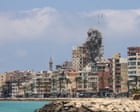
Israel has bombed the city of Tyre, killing eight and injuring at least 32 people, and struck dozens of other villages in south Lebanon as it issued forced evacuation orders for the historic Christian quarter of the ancient city for the first time.

Israel struck the al-Masaken neighbourhood without warning on Tuesday morning, sending smoke plumes high above the city’s buildings and igniting fires. Further airstrikes were carried out across the city and a series of bombings hit Abbasieh, a village north of Tyre.

Continue reading...

© Photograph: Kawant Haju/AFP/Getty Images

© Photograph: Kawant Haju/AFP/Getty Images

© Photograph: Kawant Haju/AFP/Getty Images

Iran acknowledges fatalities from Israeli strikes

9 June 2026 at 16:08
Iranian state television on Tuesday reported that at least two members of its air defense units were killed in Israeli strikes. It comes amid renewed conflict between the two countries for the first time since April as the U.S. strives to enter a firm ceasefire agreement with Tehran.  President Trump has repeatedly expressed concern with…

Iran acknowledges fatalities from Israeli strikes

9 June 2026 at 16:08
Iranian state television on Tuesday reported that at least two members of its air defense units were killed in Israeli strikes. It comes amid renewed conflict between the two countries for the first time since April as the U.S. strives to enter a firm ceasefire agreement with Tehran.  President Trump has repeatedly expressed concern with…

Netanyahu’s Bow to Trump’s Iran Pressure Spurs New Criticism

9 June 2026 at 14:23
Opponents attacked Prime Minister Benjamin Netanyahu for halting strikes against Iran after a call with President Trump, saying that he was letting the United States make Israel’s decisions.

© Ronen Zvulun/Reuters

Prime Minister Benjamin Netanyahu of Israel at the Knesset, Israel’s parliament, last week.

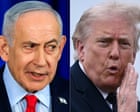
Complex relationship between Trump and Netanyahu continues to undermine Middle East ceasefire

Recent exchange of missiles between Iran and Israel highlights diverging views between US president and Israeli PM

The latest eruption of hostilities between Iran and Israel appears to have been contained for now after Donald Trump insisted he called “all the shots” in the Middle East, but in a dangerously fragile region Benjamin Netanyahu has again shown he is ready to take shots of his own.

The exchange of missiles on Sunday and Monday was ample demonstration of the inherent instability of the current limbo between war and peace, but it also shone a bright light on the complex and conflicted relationship between the US president and the Israeli prime minister, frenemies who could determine the fate of the current ceasefire.

Continue reading...

© Photograph: Ronen Zvulun,brendan Smialowski/AFP/Getty Images

© Photograph: Ronen Zvulun,brendan Smialowski/AFP/Getty Images

© Photograph: Ronen Zvulun,brendan Smialowski/AFP/Getty Images

Are U.S. and Israel on the Same Page in Mideast Wars?

8 June 2026 at 17:38
President Trump has voiced his frustration with Prime Minister Benjamin Netanyahu of Israel, but it is not clear how able he is to rein in Israeli military action.

© Pool photo by Ronen Zvulun

Prime Minister Benjamin Netanyahu has found himself on the sidelines of talks to end the war in Iran.

Why Iran Risked an Attack on Israel

8 June 2026 at 18:41
Iran’s leaders want to show they are serious about defending their Hezbollah allies in Lebanon and maintaining the regional balance of power, analysts say.

© Shir Torem/Reuters

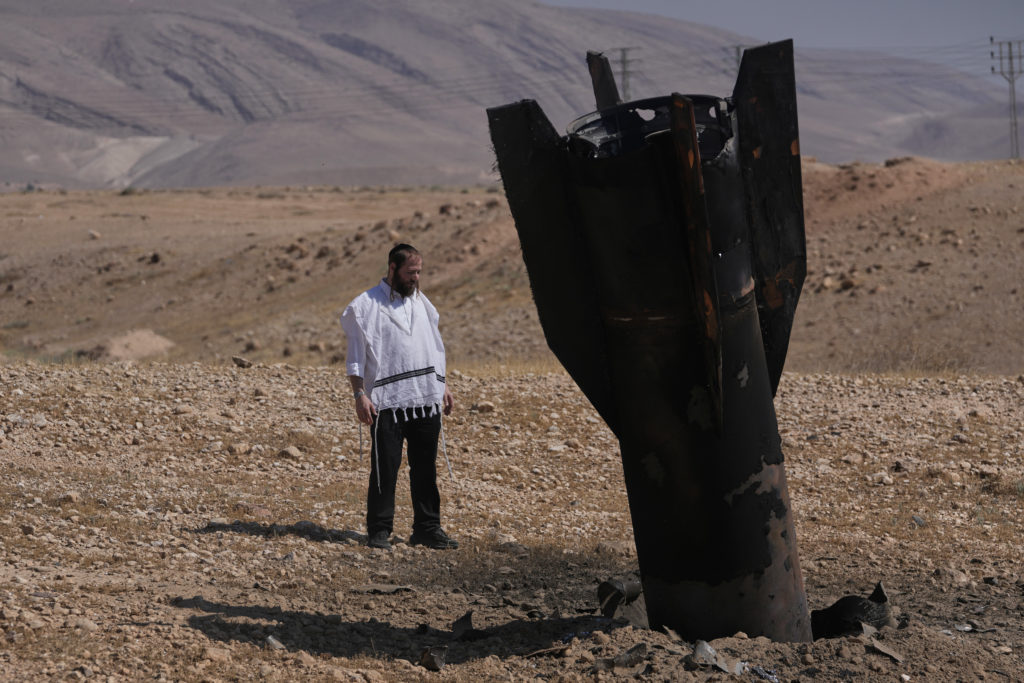
Part of a projectile that landed in northern Israel, early Monday morning.

Hezbollah is now the centre of Trump’s Iran ceasefire. So now what?

By: A A
8 June 2026 at 16:05

Lebanon is now playing a key role in any ceasefire deal that Trump might think he has nailed with Iran. But can Hezbollah go rogue on all the main players?

Join us on TelegramTwitter, and VK.

Contact us: info@strategic-culture.su

Lebanon is now playing a key role in any ceasefire deal that Trump might think he has nailed with Iran. But can Hezbollah go rogue on all the main players?

Relationships are odd things and are often determined by how people stay together during the tough times, rather than when everything is rosy. But during these last few turbulent days, when Donald Trump frantically scrambles to save the remnants of a peace deal with Iran, one relationship has become paramount to the entire Middle East crisis: that of Hezbollah and Iran. Just how strong is this relationship, or was it always just a ’marriage of convenience’, hollow and unable to withstand the travails of regional tension?

While the Iranians walked away from talks with the U.S. because of Israel’s war in southern Lebanon, Trump realised how important this tiny country is – and will be – if any kind of deal is struck over opening the Straits of Hormuz. While on the one hand Iran has stepped up to the mark by supporting its proxy Hezbollah and has always included Lebanon in any peace deal or ceasefire, it is worth noting that the ties and responsibilities Iran has to Hezbollah are not as solid as many think.

Indeed, in the region, when you talk to geopolitical analysts, they always pontificate over how the West – and in particular Israel – places too much emphasis on Iran’s links to its regional proxies in Syria, Iraq, Yemen and Lebanon. They have long argued that Iran has less control over them than most pundits in Western media would assert.

In his most recent speech, the Hezbollah leader Naim Qassem denounced the deal as a “farce,” saying it would effectively divide southern Lebanon from the rest of the country, giving Israel an advantage to “kill in Lebanon.”

“We have given no commitment to anyone,” Naim said, as he urged the Lebanese government to call off talks with Israel and demanded Israel’s full withdrawal from Lebanese territory. “As long as the aggression continues, we will confront it with all the power we have been given.”

This reference, of course, was directed at the elite in Beirut, who are largely acting on the West’s political bequest in this tiny country – barely 240 km long – which was once a province of Syria.

But some wily analysts might read too much into his statement in the coming days. A few might mull over this comment and speculate that Hezbollah, under certain circumstances, has a wild card to play and is capable of going rogue, distancing itself from the arbitrary direction of Tehran.

Is it possible that the Iranians and the Americans could outmanoeuvre Israel and strike a provisional ceasefire deal, only for it to be scuppered by Hezbollah, which refuses to give up its fight in the south of the country against the IDF? Presently, this must be concerning Trump’s camp but will be amusing to Netanyahu, who probably thinks that Lebanon holds the key for him to continue the war and thus stay in power, avoiding corruption charges.

Hezbollah, for its part, is the most dangerous man in the room, simply because its fighters have nothing to lose. They are backed into a corner and have lost so much of their own land, with 600 killed and a million displaced since the last ceasefire in April was agreed. Militarily speaking, their best guerrilla-style fighting will be seen now, and so one could argue this is their moment. While it is true that the IDF have made significant gains against them, it is wholly under-reported how successful their fighters have been in blowing up IDF tanks, with some estimates claiming the number to be over 200. But victory for either side seems less significant, certainly for Netanyahu, who probably knows that his forces can never actually win against Hezbollah in Lebanon. That is not the point. The point is to keep the war going and use it as leverage against Trump and Iran, while keeping Netanyahu in office, protected from a peace scenario that would remove him from his job and prosecute him – exactly the same set-up that Ukraine’s President Zelensky enjoys.

Lebanon is an important pawn in the bigger game, as it can always be used by Netanyahu to undermine whatever Trump is doing – such as its bombardment of Beirut that killed 357 people on April 8, one day after the U.S. and Iran announced their own ceasefire deal.

But now all Netanyahu needs to do is to agree to the IDF respecting a ceasefire without actually respecting it, while pointing the finger at Hezbollah for supposedly breaking it. It will be a game that is hugely effective, as it will be impossible for Trump to consider Hezbollah as being honourable and the IDF as being duplicitous. Even from a PR perspective, it’s genius.

And so with this new ruse in play, much emphasis is placed on Hezbollah as it is caught between choosing to fight the IDF or accepting a peace deal that would effectively hand over huge swathes of southern Lebanon to the Lebanese army – a useless contingent of poorly trained soldiers with hand-me-down, outdated equipment donated by Western countries, and one which is no match for Hezbollah. Under this deal, Israel would establish itself south of the Litani River and have legal authority to strike Beirut (its goal is to completely reduce the southern suburb where Hezbollah supporters live, similar to Gaza).

There are no real options for Hezbollah other than to fight on, but one has to wonder if they would ultimately accept an ’order’ from Tehran to stop fighting if a deal with the U.S. could be struck. The message from its chief is that under such circumstances of being at war with Israel on Lebanon’s own turf, the Shia group has the right to play the autonomy card while happily listening to Iran’s views – but not necessarily taking them as orders. Suddenly the whole world is watching Lebanon. Suddenly Hezbollah is the most important player, and its relationship with Iran has never been more relevant, as Tehran now might need to use its might to extract a concession from its partner. Even in a fake marriage, one partner has to give in sometimes to the other’s woes or needs, and so in the coming days expect a baptism of articles by obsequious, high-brow Middle East analysts agonising over this marriage and how strong or real it is.

Trump’s February 28th assault on Iran has spawned a number of unintended consequences drenched in irony. The greatest one is that his clumsy buffoonery has probably now resulted in the Iranians getting a nuclear bomb. But a close second to that is that it has also put Iran’s relationships with its proxies under the microscope – and who knows where that’s heading.

Iran war: who is fighting and why?

8 June 2026 at 15:54

Arch-enemies Israel and Iran have returned to active confrontation while Donald Trump tries to present himself as mediator

Israel and Iran have returned to active war for the first time since a ceasefire was agreed two months ago in an exchange of rocket fire that threatened efforts to end the conflict.

Donald Trump, who started the war in February alongside Israel but has since attempted to present himself as a mediator, told the two sides to stop shooting and said “final negotiations” on peace were proceeding. By late afternoon on Monday, the attacks had stopped.

Continue reading...

© Photograph: Hussein Malla/AP

© Photograph: Hussein Malla/AP

© Photograph: Hussein Malla/AP

❌