La izquierda y la derecha mediática acomplejada coinciden en que el PP no tiene que gobernar con Vox. Es habitual escuchar a tertulianos o leer a columnistas demonizando al partido de Abascal, como le gusta, por cierto, a Sánchez. Les gusta criticar a Ayuso, algo que es difícil de explicar, pero supongo que todos tenemos nuestras manías. Es algo habitual en los medios públicos del sanchismo. Hemos visto que son los mismos que se preguntan por qué los diputados y los senadores aplaudieron durante más de siete minutos al Papa tras un discurso en el que defendía el derecho a la vida y la libertad educativa. Afortunadamente, las leyes se cambian a golpe de mayorías, pero, además, pueden ser malas, aunque hayan obtenido un amplio apoyo parlamentario. Con un enorme desconocimiento de la realidad de la Iglesia, consideran que es el jefe del Estado de una teocracia y un monarca absoluto. No solo es una muestra de ignorancia, sino que es, simplemente, interpretar la estructura de la Iglesia como si fuera un sistema u organización política.
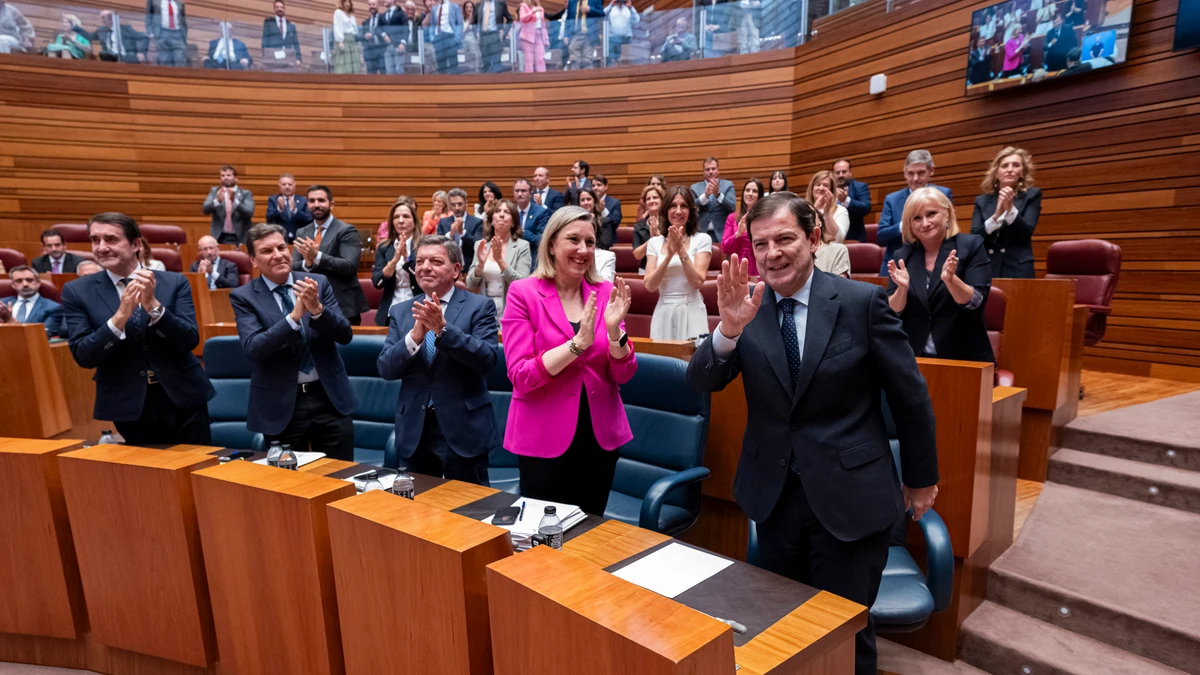
Es fácil preguntarse por qué existe este absurdo complejo frente a Vox. La realidad es que es un partido democrático que respeta la Constitución y el ordenamiento que la desarrolla. Cuenta con gente muy bien formada, pero han decidido llamarla ultraderecha, mientras que Sumar, Podemos y Bildu son la izquierda. No hay que sorprenderse. Es una estrategia global y es lo que sucede en Iberoamérica con los seguidores del Grupo de Puebla. Los españoles han hablado alto y claro en las elecciones que se han celebrado. La victoria del PP y Vox ha sido demoledora para la izquierda. A pesar de ello, esa colección de antiayusistas persiste en promover las habituales chorradas propagandísticas de La Moncloa. Mañueco ha vuelto a ser investido presidente de Castilla y León, pero siempre parece que el PP está solo porque cuenta con el apoyo de Vox y le rechaza el resto de los partidos. Es como una broma. En este caso, el nuevo Gobierno contará con 47 diputados a favor frente al rechazo de 35, aunque Por Ávila es una escisión de los populares. Creo que los números dejan muy claro la inconsistencia de los que critican los pactos entre las dos formaciones.
Francisco Marhuenda. Académico de número de la Real Academia de Jurisprudencia y Legislación de España y de la Real Academia de Doctores de España. Académico correspondiente de la Real Academia de la Historia. Catedrático de Derecho Público e Historia de las Instituciones (UNIE).
And that’s how we should look at acting Attorney General Todd Blanche’s work for the past two months. Blanche has served in a temporary capacity while Trump decided whether to nominate him permanently. It was a seemingly endless job interview — one he could fail only by disappointing the man conducting it. Last week, he finally passed the test when Trump announced that he would nominate him for the post, subject to Senate confirmation.
But his conduct during that audition should be disqualifying.
We’ve all been in job interviews, so it’s not hard to see what was going on here. When the interviewer asks whether you’re willing to work nights and weekends, you say yes. By naming Blanche acting attorney general, Trump put him in a position where he could either do the president’s bidding or risk losing the job he wanted.
That dynamic would be troubling in any Cabinet department. But it is especially dangerous at the Department of Justice, which possesses the power to investigate virtually any American. As Attorney General Robert Jackson observed in a famous 1940 speech, a federal prosecutor “has more control over life, liberty, and reputation than any other person in America.”
The greatest danger, Jackson warned, comes when “the prosecutor picks some person whom he dislikes or desires to embarrass, or selects some group of unpopular persons and then looks for an offense.” The reverse danger is just as real: A prosecutor can decline to pursue an ally despite compelling evidence.
For that reason, Americans have long expected the Justice Department to maintain a degree of independence from the White House. It was considered scandalous when former President Bill Clinton merely chatted with Attorney General Loretta Lynch on an airport tarmac while her department was investigating Hillary Clinton in 2016.
In the past, a Senate-confirmed attorney general could resist improper pressure from a president. That is what happened during Watergate, when President Richard Nixon ordered Attorney General Elliot Richardson to fire the special prosecutor investigating him. Richardson and his deputy refused and resigned. Nixon ultimately got his way, but only at enormous political cost.
An acting attorney general is in a much worse position. If displeased, Trump didn’t need to fire Blanche. He simply could have declined to nominate him. No scandal. No Saturday Night Massacre. No political cost. Some supporters might even have praised him for changing course.
Trump relied heavily on acting officials during his first term, naming everyone from the attorney general to the defense secretary to the White House chief of staff in an acting capacity. He liked the arrangement because it gave him, in his own words, “more flexibility.”
Since returning to the White House, he has used the tactic far less frequently, in part because a Republican-controlled Senate confirmed virtually all of his Cabinet nominees. The major exception was Matt Gaetz, the scandal-plagued Florida congressman whose nomination collapsed before a vote.
It can be hard to regain footing after losing a job. It’s a reality many Americans have been forced to face under Donald Trump’s authoritarian rule and in the wretched economy he’s created. And it would seem former U.S. Border Patrol chief Gregory Bovino can relate.
That might explain Bovino’s desperate search for relevance since the far-right former immigration official, who promoted neo-Nazi propaganda and faced accusations of cosplaying as a Nazi during his stint leading Trump’s racist immigration crackdown, was ousted from his role as the Border Patrol’s “commander at large” in January. (Bovino has denied intending to convey Nazi ideology.)
Since his ouster, Bovino has tried to keep himself in the limelight — an effort that includes his recent attendance at a pro-extremist, Nazi-aligned conference in Portugal, and one that appears to be fueling Bovino’s consideration of a presidential bid.
At least he said he’s exploring a 2028 bid in a social media post on Monday. That the post includes the phrase “men fight back” suggests Bovino’s potential bid is likely to be rooted in the cringeworthy masculinity rhetoric we’ve heard out of the MAGA movement over the past few years in particular.
NewsNation is reporting I’m exploring a run for President in 2028.
Here’s the truth: My one and only priority is deporting the 106 million illegals who are here. That’s it.
The grassroots support I’m seeing tells me the polls are completely wrong…
Bovino seems to be carving a lane for himself to emerge as a stalwart of the furthest-right fringe of the MAGA movement. At the conference in Portugal, he attacked the Trump administration for purportedly not being extreme enough in its mass deportation agenda and made the same baseless claim he made in the tweet above: that there are at least 100 million undocumented immigrants in the United States. To be clear, this would mean about one-third of all U.S. residents are undocumented, which is a fanciful assertion.
What’s not clear is whether there’s much of a constituency for a Bovino presidential bid, even among the MAGA movement. His mass deportation proposals align with beliefs espoused by the far-right “Mass Deportation Coalition,” a group of right-wing organizations that want Trump to ramp up his assault on immigrants. But Bovino’s rhetoric and tactics are arguably a key reason why polls at the start of the year showed a majority of Americans believed the Trump administration’s anti-immigration strategy had gone too far. And as my colleague Steve Benen noted in January, Bovino racked up a list of scandals and controversies so long during his time as border chief that even Trump was forced to admit he’s a “pretty out-there kind of guy,” seemingly alluding to his extremist tendencies.
But if there’s anything to take away from Bovino’s floating of a presidential bid, it’s that he’s among a list of conservatives jockeying to lead the MAGA movement after Donald Trump is no longer president.
“You never like to say too early you won,” Trump told supporters on March 11. “We won. In the first hour it was over.”
Two days later, he was at it again, writing Iran was “totally defeated” and was living in such a desperate existence that its leadership was begging for a deal.
Yet this past weekend, Iran launched new missile salvos at Israel, which replied in kind. And on Tuesday, Trump said in a social media post that Iran had downed a U.S. Army helicopter near the Strait of Hormuz. The pilots were unharmed, but Trump said “the United States must, of necessity, respond to this attack.”
It’s not a stretch to assess that Iran’s leaders are putting just as much pressure on Trump as Trump is putting on them.
If these events are any indication, Iran is not only holding its own but is arguably more aggressive today than before the U.S. bombing campaign began. Yes, the regime has lost a considerable portion of its military power and has cycled through senior officials about as often as the New York Mets have cycled through pitchers. But Tehran has not lost its ability to take the offensive and clearly believes it retains the upper hand against Washington.
It wasn’t supposed to be this way. Trump had high expectations when he initiated the war. The president was so pleased with the first strikes’ results, which included the assassination of Ayatollah Ali Khamenei, Iran’s supreme leader of nearly 40 years, that he implored Iranians to take back their government. The Trump administration told the public — and itself — a story about Tehran’s many weaknesses; its economy was floundering, its people were unhappy, its command-and-control was breaking and its leaders were on the run or dead. Trump thought the Iranian regime would crumble or give up before it decided to retaliate by closing the Strait of Hormuz. Sooner or later, Iran’s nuclear program would be a figment of our imaginations.
Of course, none of Trump’s assumptions panned out. The regime is more unified and institutionalized than the White House anticipated. Khamenei has been replaced by his more inscrutable son, Mojtaba Khamenei, and the hard-line Islamic Revolutionary Guard Corps has become the most important power center in the Iranian establishment. The Strait of Hormuz remains shuttered.
Before the April 8 ceasefire, Iran was targeting its neighbors’ energy facilities, both to scare the Gulf states into pushing Trump to de-escalate and to heighten the pain at the pump. Though gas prices in the United States have dropped in the last month, as of Tuesday, Americans are still paying $4.16 a gallon — 40% more than when the war began. The unofficial extra tax has translated into terrible numbers for Trump: Even a 33% plurality of Republicans believe the war has had a more negative than positive impact on U.S. interests.
Iran is not blind to these dynamics. If anything, it’s emboldened by them. The Iranian military apparatus may still be recuperating from the heavy U.S. and Israeli airstrikes during the war’s first weeks, but the damage inflicted has failed to translate into strategic results. Killing Iranian generals, destroying Iran’s navy and damaging the regime’s drone manufacturing capacity were not ends in themselves but rather a means to an end — coercing Tehran into a settlement on U.S. terms. The scorecard for the Americans on that front is unimpressive. Iran hasn’t just survived the U.S.-Israeli onslaught; it’s effectively pushed back through asymmetric military tactics. It’s not a stretch to assess that Iran’s leaders are putting just as much pressure on Trump as Trump is putting on them.
This past weekend’s missile salvo against Israel is a case in point. This wasn’t a sign of desperation on Tehran’s part but rather Iran making its own threats credible. The regime had warned that Israeli airstrikes against its proxy, Hezbollah, in southern Lebanon, in contraventiosn of a previously announced ceasefire reaffirmed last week, would result in Iranian military action against Israel.
This war will impact the region’s geopolitics for years to come.
If Trump and Israeli Prime Minister Benjamin Netanyahu thought this was a bluff, Iran put those illusions to rest by sending dozens of ballistic missiles toward Israel. (Fortunately, they only caused minor damage.) Trump, desperate to keep his diplomatic process with Iran alive, has since pressured Netanyahu into postponing whatever air campaign he was ready to order beyond the retaliatory precision strikes the prime minister authorized on Sunday and Monday.
To be clear, Iran is not solely dictating events, nor is it in a strategically advantageous position over the long-term. This war will impact the region’s geopolitics for years to come. For instance, the firing of thousands of attack drones and missiles into Saudi Arabia, the United Arab Emirates, Kuwait and Qatar (among others) has jeopardized the regime’s previous attempt at detente with its regional neighbors. Even the regime’s weaponization of the strait may not last; the Saudis and Emiratis are adapting by building alternative pipelines over land to ensure their oil exports are not held hostage to any future Iranian machinations there.
But from the U.S. standpoint, the war is producing a more extreme Iranian political establishment. Its positions on core issues for any agreement, like the nuclear program, are indistinguishable from the prewar status quo . And the previous risk-adverse behavior proffered by the regime’s older guard is increasingly perceived by the new powers that be as a mistake. Whatever happens next in the conflict, these developments don’t serve U.S. interests.
The U.S.-Iran memorandum of understanding pairs the nuclear and Lebanon tracks, creating a situation where Hezbollah's rejection of the U.S.-brokered Lebanon ceasefire could halt nuclear diplomacy, as Iran has engineered the situation to use regional pressure as leverage in negotiations.
The U.S.-Iran memorandum of understanding pairs the nuclear and Lebanon tracks, creating a situation where Hezbollah's rejection of the U.S.-brokered Lebanon ceasefire could halt nuclear diplomacy, as Iran has engineered the situation to use regional pressure as leverage in negotiations.
In a democracy, candidates are entitled to compete. They're entitled to question procedures. They're entitled to await final results. What they're not entitled to do is treat disappointment as evidence of fraud.
In a democracy, candidates are entitled to compete. They're entitled to question procedures. They're entitled to await final results. What they're not entitled to do is treat disappointment as evidence of fraud.
Hace un tiempo que se habla con preocupación de que en las casas se cocina cada vez menos. El tema lleva ahí el tiempo suficiente como para haberse convertido en una de esas conversaciones recurrentes que aparecen, aquí y allá, cuando uno menos se las espera. El punto de inflexión, sin embargo, llegó cuando un conocido empresario de supermercados afirmó hace unos meses que, según sus previsiones, en 2050 no se cocinará en las casas españolas. A partir de aquí las críticas se desataron y el discurso pasó de aquel genérico “cada vez se cocina menos” al reproche concreto de que esta persona y su empresa no quieren que cocinemos.
CBS News correspondent Scott Pelley is going after Bari Weiss after his firing from “60 Minutes,” lashing out during an interview with The New York Times in which he asserted that Weiss has no television experience and should not have her current job.
CBS News correspondent Scott Pelley is going after Bari Weiss after his firing from “60 Minutes,” lashing out during an interview with The New York Times in which he asserted that Weiss has no television experience and should not have her current job.
Since the onset of Russia's full-scale invasion of Ukraine, Russian athletes and national teams have been widely excluded from international sport.
Yet the pressure to reintegrate them never really disappeared, and Russian athletes are increasingly allowed back into international competition. First, under neutral status in selected disciplines, following
The federal government must enact human-centric regulations for AI before it's too late to protect children and preserve human agency, and the Every Student Succeeds Act must be reauthorized to account for the AI economy.
The federal government must enact human-centric regulations for AI before it's too late to protect children and preserve human agency, and the Every Student Succeeds Act must be reauthorized to account for the AI economy.

 Login
Login