Vice President JD Vance is pressing federal prosecutors to investigate Minnesota Gov. Tim Walz and state Attorney General Keith Ellison over allegations they failed to stop widespread social services fraud.
« Gardienne de la liberté individuelle », selon la Constitution, l'autorité judiciaire prête pourtant main forte à la politique répressive de l'État : la lourdeur des condamnations infligées aux « gilets jaunes » contraste ainsi avec la clémence envers les violences de la police. Paupérisée et dénigrée, la justice est gagnée par l'idéologie sécuritaire. Mais certains magistrats refusent cette dérive.
Tomas van Houtryve ///// Série « Blue Sky Days » (Journées de ciel bleu), « Prison », 2014
Contrairement aux clichés sur son prétendu « laxisme », la justice pénale fonctionne à plein régime. Son taux de réponse, c'est-à-dire le nombre d'affaires auxquelles elle a donné suite, rapporté au nombre de celles dont elle a été saisie, s'élève à 91 % contre 35 % il y a trente ans. Les 9 % restants consistent en des classements sans suite de dossiers « non élucidés » ou ne relevant pas de sa compétence. La justice a donc presque « réponse à tout ». Cette augmentation constante des condamnations s'explique par la conjonction d'une idéologie sécuritaire et d'un accroissement de la fonction répressive d'un État néolibéral qui délaisse son rôle d'opérateur économique et social et sa mission redistributive.
Depuis la loi organique relative aux lois de finances (LOLF) de 2001 et la révision générale des politiques publiques (RGPP), même la justice est soumise à la vision technocratique du new public management (« nouvelle gestion publique »), comme d'ailleurs la police : les statistiques déterminent l'orientation des procédures et la carrière des magistrats, en fonction des stocks et des flux de dossiers, sur le seul critère du rendement, au détriment de la motivation et de la qualité des décisions (1). En France, le nombre de détenus a crû de plus d'un tiers en vingt ans (de 40 000 en 2000 à presque 70 000 en 2021) (2), alors que la population carcérale diminue depuis plusieurs années dans la plupart des pays de l'Union européenne, comme l'Allemagne, l'Italie et les pays du nord de l'Europe Les Pays-Bas, la Belgique, la Norvège et la Suède ont même fermé plusieurs établissements pénitentiaires depuis cinq ans, faute de détenus. Si la France fait partie, avec la Turquie, des cinq États parmi les quarante-sept membres du Conseil de l'Europe à afficher la densité carcérale la plus élevée (lire l'extrait du rapport sur les prisons, « Dans les geôles de la République »), ce n'est pas lié à l'évolution de la délinquance. C'est le résultat de la poursuite systématique de petites infractions par les parquets, de la suppression — de fait — des lois d'amnistie, ainsi que du durcissement continu des peines
Or, la politique pénale actuelle et sa traduction judiciaire sont socialement discriminantes. Cela s'explique d'abord par le fait que les audiences de comparutions immédiates explosent dans les tribunaux. On sait que les peines prononcées dans ces conditions sont beaucoup plus sévères à délit égal en raison de l'urgence, de la faible place accordée à la défense, du manque d'éléments informant sur la personnalité du prévenu et de la « justice d'abattage » imposée aux magistrats. Mais, surtout, la situation socio-économique de cette petite délinquance génère des peines de prison ferme, car elle n'a pas, comme l'écrivent les juges dans nombre de décisions, « de garantie de représentation », c'est-à-dire pas de logement permettant, par exemple, la pose d'un bracelet électronique au lieu de l'incarcération, pas d'argent pour payer une amende, pas de proches pour soutenir une injonction de soins ou une démarche d'insertion professionnelle.
Pénalisation de la misère
Mme Dominique Simonnot, aujourd'hui contrôleuse générale des lieux de privation de liberté, a relaté chaque semaine, pendant quatorze ans, cette pénalisation de la misère dans ses chroniques du Canard enchaîné. Ainsi, lors de l'audience banale du 14 octobre 2016 au tribunal judiciaire de Nanterre, sur les sept prévenus qui comparaissaient, un seul possédait le baccalauréat, deux avaient vécu dans des foyers de l'Aide sociale à l'enfance, l'un était sans domicile fixe (SDF), un autre percevait le revenu de solidarité active (RSA), deux étaient au chômage, deux en contrats précaires, et un seul en contrat à durée indéterminée (CDI). Tous étaient français. Exemple de peine prononcée : deux mois de prison ferme avec mandat de dépôt pour le vol de deux montres d'une valeur de 35 et 20 euros dans un magasin de sport…
Le traitement judiciaire du mouvement des « gilets jaunes », entre novembre 2018 et fin 2019, constitue un autre exemple de ce qu'on aurait nommé jadis « une justice de classe ». Selon le bilan de la chancellerie, 3 100 « gilets jaunes » ont été condamnés, dont un millier d'entre eux à des peines de quelques mois à trois ans de prison ferme — un chiffre inédit pour un mouvement social. À Paris, où furent concentrées le tiers des gardes à vue, la moitié de celles-ci se sont terminées par une remise en liberté et un classement sans suite, ce qui confirme l'usage préventif de la garde à vue et sa fonction d'intimidation des mouvements de protestation. En une année, il y eut autant de manifestants blessés par la police, et parfois mutilés à l'œil ou aux mains par des tirs de lanceurs de balles de défense, que pendant les vingt ans précédents. Pour autant, seules 313 procédures ont été ouvertes à l'inspection générale de la police nationale (IGPN) — la police des polices —, et très peu ont abouti à une sanction contre des membres des forces de l'ordre ou à des condamnations judiciaires (3). Le retentissement médiatique des affaires politico-financières (4), qui représentent à peine 1 % des condamnations pénales, ne doit pas occulter cette réalité du fonctionnement quotidien de la justice, à coups d'audiences de comparutions immédiates et d'expulsions locatives.
S'il est vrai que la sévérité des condamnations prononcées en matière financière s'accroît depuis quelques années, cette tendance masque la remise en cause du rôle de la justice comme autorité d'équilibre entre les pouvoirs législatif et exécutif. En effet, au sein de l'institution judiciaire, la fonction même du juge s'efface au profit du parquet, qui est dépendant du gouvernement de par son organisation et son statut. Progressivement, le procureur se fait juge puisque le parquet rend désormais environ 40 % des décisions pénales (5).
Dépourvus de garanties
Ainsi, la procédure de comparution préalable de culpabilité (CRPC) ou « plaider coupable », massivement utilisée, est en réalité une négociation de la peine entre le procureur, qui propose une sanction, et l'avocat de la défense, qui n'a que quelques minutes pour l'accepter ou non, encourant le risque, s'il la refuse, de voir le tribunal aggraver la peine par la suite. En outre, beaucoup de sanctions pénales sont prononcées, non pas par des magistrats professionnels, mais par des personnels précaires dépourvus des garanties statutaires d'indépendance des juges professionnels : magistrats à titre temporaire, juges de proximité et délégués du procureur, recrutés sur contrat à durée déterminée (CDD)… Ils comptent désormais pour 10 % des magistrats et la chancellerie entend en recruter encore mille. Des peines d'emprisonnement ferme, jusqu'à trois ans, sont infligées chaque année à l'encontre de milliers de personnes dans des affaires de vols et de petits trafics de stupéfiants, sans qu'un juge intervienne pour s'interroger sur leur culpabilité, sans réelle audience publique, sans véritable défense.
La France est en passe d'instaurer une justice sans juge, comme aux États-Unis, où 90 % des décisions pénales sont rendues de cette manière, c'est-à-dire par « négociation » (plea bargaining). La chancellerie semble faire sienne cette orientation, comme l'attestent certaines questions posées aux professionnels, aux citoyens et aux associations sur le site des états généraux de la justice, Parlons justice ! : « Faut-il réserver l'accès au juge pour les cas les plus complexes ou urgents, et systématiser pour les autres cas une tentative de règlement amiable… ? Faut-il réserver l'audience aux infractions les plus graves… et systématiser pour les autres cas une peine négociée ? Que pensez-vous d'un modèle de justice pénale dans lequel… les victimes et les mis en cause doivent contribuer à apporter les preuves utiles ? » Il n'est pas précisé que dans ce modèle, dit accusatoire, les frais d'avocats sont très élevés car ceux-ci recherchent les preuves (expertises, témoignages…). En France, actuellement, ils sont payés par l'État, au titre des frais de justice. On comprend que, dans un tel système où l'intervention du juge devient marginale, il ne soit pas prévu de recruter des magistrats, la plupart des litiges se réglant sans eux, entre les parties et leurs avocats.
Règlement amiable
« Le problème de la police, c'est la justice », clamaient certains groupes de policiers lors de la grande manifestation parisienne du 15 mai 2021. La réalité est tout autre. Dans la nouvelle conception des pouvoirs publics, la justice n'est plus qu'une « chaîne pénale » qui doit homologuer les initiatives policières. Pourtant, ce n'est pas le rôle qui lui est assigné par la Constitution, laquelle énonce dans son article 66 que « l'autorité judiciaire est gardienne de la liberté individuelle ». Cela suppose que les juges contrôlent la validité des procédures policières et s'interrogent sur la culpabilité et les preuves avant de prononcer une condamnation.
(1) Alain Supiot, La Gouvernance par les nombres. Cours du Collège de France (2012-2014), Fayard, Paris, 2015.
(2) Rapport « Statistiques pénales annuelles du Conseil de l'Europe », Strasbourg, 8 avril 2021.
(3) Selon le ministère de la justice, sur plus de 10 000 gardes à vue, 3 166 au total se sont déroulées à Paris, dont 1 459 n'avaient débouché sur aucune poursuite. Cf. Le Monde, 8 novembre 2019.
(4) Entre un an et cinq ans d'emprisonnement ferme à l'encontre de MM. Nicolas Sarkozy, François Fillon, Patrick Balkany, pour des infractions de dépassements de plafond de dépenses électorales, de corruption, de détournements de fonds publics et de fraudes fiscales.
(5) Chiffres de la Conférence nationale des procureurs de la République dans son interpellation du 6 janvier 2022 à l'endroit des candidats à la présidentielle.
The disappearance and subsequent death of 11-year-old Lyhanna, whose body was found on June 4 in an agricultural silo in the Gers region of southwestern France, has triggered an unprecedented institutional crisis in France. Politicians are shifting blame onto judges, who are doing what they can with the resources available to them.
France’s judicial institution is facing both genuine operational failures and unacceptable political exploitation. By offloading their own responsibilities onto judges and prosecutors, neither Justice Minister Gérald Darmanin nor Interior Minister Laurent Nuñez is likely to emerge from this ordeal with enhanced credibility.
A troubling case file
The facts currently known in the Lyhanna case are undeniably damaging to the judicial system. The primary suspect, a 41-year-old man and the father of one of Lyhanna’s classmates, had an extensive judicial and administrative record before being formally charged with kidnapping and unlawful confinement of a minor under the age of 15.
Several complaints and reports had already been brought to the attention of the relevant authorities. One of the most sensitive aspects of the case involves a complaint filed on August 22, 2025, by the mother of a child alleging repeated sexual assaults. On September 11, a medical report reportedly identified findings described as consistent with the child’s statements. Yet the suspect was never interviewed before Lyhanna disappeared on May 29.
This timeline raises a fundamental question: why did a complaint alleging the rape of a minor, supported by medical evidence, fail to result in an interview of the suspect before the tragedy occurred? This question goes beyond the understandable public emotion surrounding the case and requires examination of how criminal investigations are actually processed.
The justice inspectorate faces major questions
Justice Minister Gérald Darmanin has ordered a systematic review of 70,000 complaints involving children by July 14. A general administrative inspection is currently underway to determine whether delays, errors, or procedural failures occurred in the handling of cases involving the suspect.
This directive from the Ministry of Justice responds to both political and moral urgency. Its purpose is to ensure that no comparable case is sitting unattended in an investigative unit or prosecutor’s office, particularly those involving rape or sexual abuse allegations. At the same time, it reflects a clear lack of confidence in the ordinary functioning of France’s criminal justice system.
The major challenge following this review will be actually processing those complaints: interviewing suspects, verifying testimony, prioritizing investigative actions, and making the necessary judicial decisions. Without additional operational resources, the scope of the problem may be revealed without being solved.
Judges and prosecutors thrown to the wolves
Frédéric Chevallier, Chief Prosecutor of Chartres and president of the National Conference of Public Prosecutors, has spoken out in defense of prosecutors while acknowledging that the case demands answers. His comments reflect the intense pressure currently weighing on the judicial institution.
On one hand, he rejects the idea that “judges and prosecutors should be thrown to the wolves” in response to public outrage. He stresses the need to avoid premature conclusions before inspections are completed, urging public officials to “keep a cool head.” His central argument is that no serious conclusions can be drawn before the entire chain of events has been reconstructed.
On the other hand, Chevallier has not ruled out individual responsibility, noting that “judges are not beyond accountability.” This cautious approach is intended to prevent the Lyhanna case from becoming a public trial of an individual magistrate or prosecutor’s office before investigators have completed their work.
Yet this institutional defense remains fragile. Explaining that the courts are overloaded, that investigative services are overwhelmed, and that prosecutors constantly triage competing emergencies only partially addresses families’ concerns. When a child dies and prior warnings existed, the judicial system must be able to explain why certain procedures moved so slowly and whether individual decisions contributed to an identified risk.
The impossible equation of priorities
Prosecutors point out that they are managing enormous backlogs of cases. Chevallier referenced not only the 70,000 complaints involving minors now under review, but also millions of cases of all types awaiting action within investigative services.
This argument reveals an institution that is clearly overwhelmed, at times buried beneath mountains of case files. It highlights a criminal justice system confronting systemic saturation. Yet it does not end the legitimate debate over how cases are prioritized. If everything is considered urgent, then nothing truly is. The Lyhanna case compels the judicial system to explain precisely how complaints are prioritized, especially when they involve sexual violence against children.
This issue connects to a structural problem that judges’ unions have denounced for decades: chronic underfunding. The Judicial Magistrates’ Union (USM), which has been highly visible in the media since the tragedy, argues that judges should not serve as lightning rods for the state’s failure to provide adequate judicial resources.
Political exploitation and death threats
The USM has condemned what it sees as unacceptable political exploitation of the tragedy. It points to statements by President Emmanuel Macron dismissing resource-related concerns from the outset, threats of sanctions raised by the Justice Minister before the inspectorate had reached any conclusions, and proposals by political figures to create a special disciplinary court for judges.
This political escalation has been accompanied by serious consequences. The Chief Prosecutor of Auch has been targeted with death threats circulating on social media. The Ministry of Justice has filed a criminal complaint, marking a dangerous turning point: public anger is being transformed into personal targeting and threats against judges and prosecutors themselves.
This is precisely the danger prosecutors fear. Judicial unions have significantly increased their media presence, with senior officials speaking publicly. Their coordinated effort is intended to give voice to rank-and-file judges and prosecutors facing what they view as opportunistic attacks.
Restoring public trust
The prosecutors’ calls for caution regarding the administrative investigation will only be heard if the judicial institution provides complete and transparent answers to the legitimate questions raised by families, advocacy groups, and the broader public.
The central challenge is reconciling two seemingly conflicting imperatives: protecting judicial independence from political interference while acknowledging that the public deserves explanations when a child dies and previous warnings may have been overlooked.
This case reveals that the French judicial system is facing a profound crisis of confidence. Families, citizens, and the public need to understand how the criminal justice process actually works, what priorities genuinely guide the handling of complaints involving minors, and how insufficient resources concretely affect child protection.
Without restoring public trust through transparency and meaningful operational reforms, the Lyhanna case will leave a lasting mark on the relationship between the justice system and French society. The inspectorate may establish the facts, but only clear and responsible institutional communication can help ease the current tensions.
Paul Quinn will serve at least 14 years for the 2003 rape in Salford and could spend less time in prison than Malkinson
The government’s most senior law officer has been asked to review the “unduly lenient” prison sentence handed to a rapist who evaded police for nearly two decades in one of Britain’s biggest miscarriages of justice.
Fatou Bensouda, ex procuratore capo della Corte penale internazionale, ha recentemente rivelato che il Mossad ha esercitato pressioni dirette su di lei nel tentativo di bloccare le indagini sui famigerati crimini commessi da Israele durante il genocidio a Gaza.
Il primo approccio ha avuto luogo presso la sua stessa abitazione all’Aia. «Sono venuti direttamente a casa mia», ha dichiarato ad Al Jazeera. Successivamente, l’allora capo del Mossad, Yossi Cohen, ha tenuto personalmente degli incontri con Bensouda, durante i quali ha minacciato lei e la sua famiglia qualora le indagini fossero proseguite.
Un’altra rivelazione fatta da Bensouda — che, tuttavia, non ha ricevuto altrettanta attenzione — è stata che, sebbene avessero rintracciato i numeri di telefono degli agenti e ne avessero identificato l’origine in Israele, i funzionari responsabili della sicurezza presso la CPI e le autorità olandesi non hanno dato seguito al caso di intimidazione. «Mi sono sentita abbandonata. Mi sono sentita priva di sostegno», ha confessato Bensouda.
Le sue dichiarazioni costituiscono una nuova prova della protezione concessa a Israele dalle istituzioni multilaterali. Inoltre, indicano che queste istituzioni forniscono tale protezione proprio perché sono controllate dalle potenze imperialiste — le stesse potenze che hanno creato lo Stato di Israele e lo hanno sostenuto fino ad oggi, anche durante il genocidio a Gaza.
La Corte penale internazionale — nota anche come Corte dell’Aia — è stata uno degli strumenti imperialisti più importanti per attaccare i paesi i cui governi sono scomodi alla dittatura degli Stati Uniti e dei loro alleati europei, impiegando un doppio standard sempre più evidente. Creata per perseguire i crimini commessi in tempo di guerra, con il consenso dei sistemi giudiziari locali e solo quando questi ultimi erano incapaci di farlo a causa delle conseguenze della guerra, la CPI si è trasformata nel padrone del diritto internazionale e persino delle giurisdizioni nazionali.
Perseguire i nemici
«La CPI è diventata uno strumento di pressione e destabilizzazione contro i paesi poveri», ha dichiarato il ministro della Giustizia del Burundi nel 2016, annunciando il ritiro del paese dalla corte internazionale.
Negli ultimi anni si è verificata una vera e propria ribellione tra i paesi africani contro la CPI, che sembra interessata solo a perseguire i leader di quel continente. Jacob Zuma ha tentato di ritirare il Sudafrica, ma la magistratura sudafricana ha annullato la sua decisione e poco dopo è stato destituito in quello che è stato a tutti gli effetti un colpo di Stato — un evento che puzza chiaramente di cospirazione imperialista contro il leader nazionalista dell’African National Congress.
Poco dopo, la Corte penale internazionale ha accusato i leader della Costa d’Avorio di “crimini contro l’umanità” per giustificare un colpo di Stato promosso dalla Francia (assolvendoli in seguito, ma solo dopo che il colpo di Stato si era già consolidato).
Forse il caso più scandaloso (o che dovrebbe esserlo) è stata la detenzione all’Aia di Slobodan Milošević. Dopo la caduta dell’Unione Sovietica e del blocco orientale, la Jugoslavia era l’unico paese al di là dell’ex «cortina di ferro» a mantenere un regime sovrano, con Milošević alla sua guida. Le potenze imperialiste si mossero per sbarazzarsi di lui: alimentarono una serie di guerre per disintegrare la Jugoslavia, bombardarono la Serbia e successivamente promossero una rivoluzione colorata.
Non contente di tutto ciò, hanno utilizzato il Tribunale penale internazionale per l’ex Jugoslavia (un laboratorio giuridico e istituzionale per quello che sarebbe poi diventato la Corte penale internazionale) per accusare Milošević di essere responsabile della pulizia etnica in Bosnia. È stato incarcerato all’Aia ed è morto nel 2006 prima di ricevere una sentenza perché i responsabili della sua detenzione gli hanno negato le cure mediche di cui aveva bisogno.
Dieci anni dopo, il tribunale ha finalmente riconosciuto di non aver trovato prove sufficienti per condannarlo. Non ce n’erano state — né erano necessarie, poiché la missione era già stata compiuta: la Jugoslavia non esisteva più e le sue rovine erano passate nelle mani degli Stati Uniti e dell’Unione Europea.
Muammar Gheddafi subì un destino simile a quello di Milošević anni dopo. La Corte penale internazionale (CPI) fornì inoltre il proprio sostegno all’assassinio del leader arabo e alla distruzione della Libia. L’allora procuratore capo della CPI, Luis Moreno Ocampo, era un uomo legato alle università americane e israeliane e all’ONG Transparency International.
Basandosi esclusivamente su articoli pubblicati da giornali che sostenevano l’invasione della Libia — e che a loro volta erano sostenuti dai governi invasori della Libia — Ocampo ha raccolto presunte prove per incriminare Gheddafi, suo figlio e suo genero. Probabilmente ha riso proprio come Hillary Clinton quando è stata applicata una giustizia di stampo imperiale contro Gheddafi.
Più recentemente, la Corte penale internazionale ha emesso un mandato di arresto contro Vladimir Putin sulla base di ciò che l’autore definisce una vera e propria menzogna: che la Russia avesse rapito bambini ucraini. In realtà, la maggioranza della popolazione del Donbass, oppressa dal regime ucraino dal 2014, si considera russa e ha sostenuto l’integrazione delle proprie regioni nella Federazione Russa attraverso un referendum.
I bambini del Donbass sono fuggiti in Russia insieme alle loro famiglie alla ricerca di un luogo sicuro per sfuggire ai bombardamenti e ai massacri perpetrati dalle forze militari e paramilitari fasciste che agiscono su ordine di Kiev. Circa 15.000 persone sono morte per mano del regime ucraino tra il 2014 e il 2022, e da allora sono stati commessi ulteriori massacri, ma questo non ha importanza per la CPI.
Nel prossimo articolo vedremo come la CPI protegga le potenze imperialiste – che sono le nazioni più criminali del mondo – e la composizione della struttura interna della Corte, dominata dagli interessi imperialisti a tutti i livelli, garantendone il funzionamento come strumento di controllo e dittatura sui paesi poveri.
Like the Southport massacre, the murder of Henry Nowak will have ramifications far beyond the immediate events. For the race-obsessed British state, the bill is landing, Paul Embery writes. For the Race-Obsessed […]
This story originally appeared in Common Dreams on June 03, 2026.It is shared here under a Creative Commons (CC BY-NC-ND 3.0) license.
The US Supreme Court late Tuesday gave Alabama a green light to use an aggressively gerrymandered congressional map that a lower court said was “tainted by intentional race-based discrimination.”
The unsigned decision, from which the high court’s three liberal justices dissented, enables Alabama’s Republican-dominated government to replace its current congressional map, which has two majority-Black districts, with a map that the US Supreme Court struck down in 2023. That map has just one majority-Black district.
In her dissenting opinion, liberal Justice Sonia Sotomayor wrote that “just as Alabama doubled down on racial discrimination, the court today doubles down on chaos.”
“In addition to being wrong on the merits, the court’s decision inflicts two grave harms on the public,” wrote Sotomayor. “It debases the democratic process by upending Alabama’s entire election in the name of permitting Alabama to discriminate against Black Alabamians. It also corrodes the rule of law by rewarding Alabama’s gamesmanship and outright defiance of court orders.”
The liberal justice noted that in order to switch to the map previously struck down by the high court, Alabama election officials “will have to reassign hundreds of thousands of voters across the state to new congressional districts.”
“Three of Alabama’s counties will be particularly hard hit because they are split across two congressional districts,” Sotomayor noted. “These counties have about 600,000 registered voters between them (roughly 15% of the state’s total number of registered voters).”
Alabama Gov. Kay Ivey, a Republican, postponed US House primary elections in the wake of the Supreme Court’s April decision in Louisiana v. Callais, which severely narrowed the 1965 Voting Rights Act’s protections against racial discrimination and paved the way for Alabama and other states to impose new maps ahead of the 2026 midterms.
“The Supreme Court’s shameful ruling allowing Alabama to move forward with a gerrymander that was drawn with the explicit intent to dilute Black voting power—as found by a panel of judges that included two Trump appointees—is an absolute affront to the founding principles of our democracy, and wipes out whatever was left of the court’s credibility,” said Marina Jenkins, executive director of the National Redistricting Foundation. “This country deserves better, and we must continue to work toward federal legislation that not only bans partisan and racial gerrymandering but also ensures that our rights cannot be undermined by captured courts.”
The ruling drew condemnation from the two Democrats in Alabama’s US congressional delegation. Rep. Shomari Figures, who was elected to the US House under the independently drawn map that Alabama Republicans are working to replace, said in a statement that “the Supreme Court has now confirmed that there is no longer a Voting Rights Act in America, and states are essentially free to discriminate against minority voters with no consequences.”
“This is a dangerous ruling that sets the state and this nation back decades,” said Figures.
Rep. Terri Sewell called the ruling “just the latest in a pattern of outrageous Supreme Court decisions that help Republicans desperately cling to power ahead of the midterm elections while diluting Black voices and erasing decades of hard-fought civil rights progress.”
“No matter how hard Alabama state officials may try, they will not succeed in silencing our voices,” said Sewell. “We will not go back to the Jim Crow era. The fight for fair representation continues.”
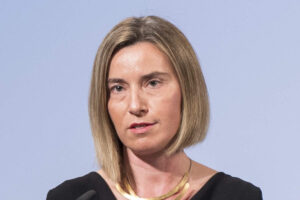
52 year old Federica Mogherini, currently Director of the College of Europe and former EU Foreign Affairs High Representative, was arrested on Tuesday in connection with a fraud investigation. Mogherini was detained along with two other defendants – a manager at the College and a leading Italian diplomat, Stefano Sannino, a leading member of the EU diplomatic Corps, the European External Action Service, (EEAS). The EEAS has 140 delegations around the world, otherwise known as embassies.
The offices of the EEAS were searched, as were a number of private houses. According to the Belgian newspaper Soir, the investigation is jointly run by a ‘juge d’instruction’ in West Flanders Region, combined with the independent European prosecuting service the EPPO. The Belgian police carried out the searches and arrests. Prior to the police operations, the EPPO asked for the lifting of the diplomatic immunity of the suspects, which was granted.
According to the specialist website Euractiv, an independent EU information service partly funded by the EU, the investigation relates to an EU-funded diplomatic training program at the College of Europe, situated in Bruges, Belgium. The details of the charges are currently unclear but they are understood to concern contracts entered into in the course of the considerable expansion of the College of Europe. A new branch was opened in Tirana, Bulgaria, in 2024. The investigations go back to 2021-2022 and concern alleged “fraud in the awarding of public contracts, corruption, conflicts of interest breach of confidence’’ as well as possible “favoritism” in the awarding of places on College organized diplomatic courses.
Brilliant diplomatic careers
Federica Mogherini was among the candidates for the post of NATO Secretary General, to replace Jens Stoltenberg. Her career was promoted by former very pro EU Italian Prime Minister Matteo Renzi, who, according to Brussels insiders, now claims Mogherini has ‘disappointed’ him.
It should be noted that the matters under investigation relate to a period before Kaja Kallas took over as European High Representative. Never the less Kallas will be concerned that the present sensational scandal has exploded now, as she tries to confirm the world diplomatic presence of the EU. 48 year old Kallas, like Mogherini has so far had a brilliant politico diplomatic career. She was Estonian Prime Minister 2021-2024 and is an unrelenting Russophobe. Her father, Sim Kallas, was also Prime Minister of Estonia 2002-2003, as well as an EU Commissioner 2004-2014. Before the break-up of the Soviet Union Sim Kallas was a leading member of the Estonian Soviet Communist Party, banking expert and executive in Estonia.
Why and why now?
It is not unreasonable to ask why this dramatic and rare judicial event has happened and why now? A source close to the investigation commented that, ‘as in Kiev, the arrests indicate an underlying power struggle over policy and may be intended as a warning to Kaja Kallas and even Commission President Ursula Von der Leyen to tone down hostility to Russia, in the light of the current peace moves coming from Washington’.
It is noticeable that the obviously ambitious, US protégé, Finnish President Stubb, who until recently seemed to want to start World War 3 with Moscow, regardless of the negative consequences for the people of Finland, now seems to have turned 180° and is talking about improving border relations.
It is also possible that this is a settling of old scores by the United States going back to the awarding of the World Football Cup to Qatar rather than the US in 2010. At the time an enraged former President Bill Clinton, who was promoting the US case for holding the event, is said to have smashed a hotel mirror, when he heard the bad news.
As recently demonstrated by Presidents Biden and Trump, the US has a history of settling old scores by conducting ‘lawfare’, action in the courts against political enemies. After this act of defiance, a number of football executives found themselves extradited and imprisoned in the US. Mogherini and Sonnini were mentioned during the affair known as Qatargate.
Selective justice?
In any event it is reasonable to ask why Mogherini has been singled out for special attention, when Van Der Leyen seems untouchable despite her extraordinary activities during the Covid Pandemic, which involved tens of billions of tax payers’ euros and missing internet messages.
By contrast French Presidential candidate Marine Le Pen has been pursued with unrelenting ferocity by the EU and French judicial authorities, despite it being difficult to argue that her party’s admittedly irregular activities, cost taxpayer’s any money at all. The argument was essentially about how the money was used not about any loses to the public purse.
Suspects released without charge
Mogherini and the other suspects have now been released and no criminal charges have been made or restrictions imposed. According to Mogherini’s avocat ‘the hearing was lengthy but went very well’.
The right to strike is under attack throughout the world, including in the United States. Labor strikes are currently forbidden or restricted in the majority of countries.
“At a moment when workers’ organizations face sustained attacks around the world, this opinion reaffirms that the freedom to withhold one’s labor is not a privilege granted by the powerful, but a fundamental human right grounded in international law,” AFL-CIO President Liz Shuler said in a statement.
The ILO is the United Nations agency that sets global labor standards. It has 187 member states and has adopted 191 conventions since its founding in 1919. The ILO considers Convention No. 87 to be one of its 11 fundamental conventions.
In 2023, the ILO asked the ICJ to settle an internal dispute about whether Convention No. 87 gives workers the right to strike, which is not specifically addressed in the convention. Although advisory opinions of the ICJ are not legally binding, many courts accept them as authoritative legal decisions.
The ICJ ruled in its 10-4 opinion that a strike “is one of the main activities engaged in and tools used by workers and their organizations to promote their interests and improve conditions of labour, thereby ensuring the effective exercise of the freedom of association protected under Convention No. 87.”
The Court found “that protection of the right to strike is encompassed in the protection of the freedom of association provided for in Convention No. 87.”
In reaching that conclusion, the Court considered provisions in two 1996 Covenants that contain relevant rules of international law regarding the right to strike. Both refer to Convention No. 87.
Article 22, paragraph 1 of the International Covenant on Civil and Political Rights (ICCPR) provides for the right to freedom of association. The ICJ noted that for more than 25 years, the Human Rights Committee — which monitors the implementation of the ICCPR — has considered the right to strike to be encompassed in the protection of freedom of association.
Due to the high degree of overlap between the states parties to the ICESCR and ICCPR, and Convention No. 87, the ICJ determined there was a common understanding among them on the right to strike. The Court thus concluded “that an interpretation taking into account the relevant rules of international law contained in the ICESCR and the ICCPR indicates that the protection of the right to strike is encompassed in the protection of the freedom of association provided by Convention No. 87.”
No Right to Organize Without the Right to Strike
“For generations, working people have understood a simple truth: The freedom to join a union means nothing if you cannot withhold your labor when bosses refuse to listen. Now, the world’s highest court has affirmed that truth,” said Jeffrey Vogt, director of the International Lawyers Assisting Workers (ILAW) Network, which issued the call for the ILO referral of this case to the ICJ.
The ICJ decision “affirms decades of judicial precedent and what workers around the world know: there is no right to organize and bargain collectively without the right to strike,” Shuler said in her statement. “When workers are barred from taking collective action on the job, they cannot defend their rights and demand the workplace conditions and contracts they are owed. The freedom to join a union becomes an empty formality.”
“This is an important day for the International Labor Organization [ILO], and for its continued relevance in the world of work. However, the significance of this opinion extends well beyond the institutional context in Geneva,” the ILAW Network wrote in a statement.
The ICJ advisory opinion came “at a moment of acute pressure on the international labour rights system,” ILAW stated. “Across the world, the right to strike is under sustained attack — through restrictive legislation, expansive judicial interpretation of essential services, the criminalisation of trade union activity, and the use of dismissals, injunctions, and damages claims to deter collective action.”
Legal restrictions on the right to strike are increasing. In 2022, strikes were outlawed or stringently restricted in 129 of the 148 countries tallied by the International Trade Union Confederation (ITUC), one of the six organizations with consultative status at the ILO Governing Body.
The ITUC, which represents 191 million workers in 169 countries and territories, is dedicated to trade union democracy and independence. It has regional organizations in Africa, Asia, and Latin America. The ICJ decision “is important not only for workers and trade unions, but also for governments and responsible businesses,” ITUC stressed.
This decision “will serve as a powerful interpretive tool before national constitutional and labour courts, before regional human rights bodies, and before the ILO’s own supervisory bodies,” ILAW noted. “It strengthens the hand of every worker and union challenging strike bans, broad essential-services designations, criminal sanctions against strikers, prohibitions on solidarity and political strikes, and the dismissal and blacklisting of workers who exercise this right.”
Ruling Will Affect Tens of Millions of Workers
In October, 18 countries and five international organizations, including the ILO, presented oral testimony before the ICJ, and other nations filed written contributions. The majority of participants supported the right to strike, which is guaranteed in most European countries.
Harold Koh, who represented the International Trade Union Confederation (ITUC) before the ICJ, told the judges that the case would “affect the real rights of tens of millions of working people around the world.” If the Court ruled that the Convention didn’t protect the right to strike, Koh warned, “National employer groups would contest the right to strike country by country, focusing first on nations with compliant courts, weak civil societies and ineffective media.”
Jeffrey Vogt worked with the legal team of the ITUC on the briefs and oral arguments presented to the ICJ. Vogt’s co-authored book, The Right to Strike in International Law, provided a legal roadmap for the case.
Vogt told Truthout that “the written view of the US (under the Biden administration) was to support the right to strike, albeit on narrower grounds than what we had argued. When the Trump administration came in, they withdrew the Biden era brief but fortunately did not appear for oral arguments and take a contrary view.”
“The decision deals with the right to strike in the abstract — does the convention protect it — but does not go into the modalities,” Vogt added. The Court wrote that its “conclusion that the right to strike is protected by Convention No. 87 does not entail any determination on the precise content, scope, or conditions for the exercise of that right.”
“That was a conscious decision,” Vogt noted. “We did not want the court to attempt to define the scope, especially since we believe that is the proper role of the ILO supervisory system.” Vogt said that “the ICJ gave ‘great weight’ to the views of the supervisory system, which is helpful.” And although “the ILO has supported secondary strikes,” in which workers strike in solidarity with other workers at a different employer, the ICJ decision didn’t opine on that specific issue.
The Right to Strike in the US
“The right to withhold one’s labor, inherent in the right to strike, belongs to all workers, but it has been restricted,” Jeanne Mirer, a labor lawyer in private practice working with the International Commission for Labor Rights, told Truthout. “Many unions have agreed never to strike while a collective bargaining agreement is in effect.”
Most private sector workers in the US have the right to strike under the National Labor Relations Act (NLRA). Employees, including international and undocumented workers, cannot be fired or disciplined for participating in a lawful strike.
“Those exempted from the NLRA, such as agricultural and domestic workers, are not restricted in the right to strike but have no protections against discharge if they strike and do not have the power to prevent such retaliation,” Mirer added.
Some states have their own laws granting protection to domestic workers and 14 states guarantee farmworkers collective bargaining rights.
Railroad and airline workers are not covered by the NLRA, but they come under the Railway Labor Act, which has several limitations on the right to strike.
In recent years, Congress and the courts have narrowed the definition of “protected concerted activity” under the NLRA. Union membership is dropping. Nevertheless, strike actions in the US increased by almost 50 percent in 2022, according to the Economic Policy Institute.
In 2023, the US Supreme Court weakened the legal protections for striking in Glacier Northwest, Inc. v. International Brotherhood of Teamsters, making it easier for employers to sue unions in state courts. Only Justice Ketanji Brown Jackson dissented, writing, “The right to strike is fundamental to American labor law.” She noted:
Workers are not indentured servants, bound to continue laboring until any planned work stoppage would be as painless as possible for their masters. They are employees whose collective and peaceful decision to withhold their labor is protected by the [National Labor Relations Act] even if economic injury results.
The NLRA’s protections for private sector workers don’t extend to public sector employees. “Public employees in the United States have been restricted in many ways from striking,” Mirer said.
Federal workers are legally prohibited from striking. Thirty-six states prohibit public sector workers from striking. Three other states that haven’t addressed the issue would likely outlaw public sector strikes as well. In the 12 states where strikes are not per se unlawful, various preconditions must be met before workers can engage in strikes.
The World Federation of Trade Unions, which played a decisive role in the creation of Convention No. 87 in 1948, applauded the ICJ’s decision:
[I]t is clear that the existence of a class-oriented and militant trade union movement is the essential, decisive, and irreplaceable factor to ensure that the right to strike, as well as conventions, collective bargaining, labor laws, and workers’ achievements, are not merely empty words on paper but are implemented in practice. The WFTU reiterates its call for struggle in every country, sector, and workplace to safeguard the sacred right to strike in practice.
“It is up to workers and their organizations to build on the ICJ decision to ensure the right to strike can be an effective tool to build worker power,” Mirer said.

 Login
Login