A federal judge ruled on Monday that the $100,000 fee Trump imposed on H-1B visa applications was unlawful, striking down one of the administration’s key immigration measures targeting skilled foreign workers.
U.S. District Judge Leo Sorokin of Boston found the payment was a tax, not a penalty, and that the president lacked authority to impose it without congressional approval. His 42-page ruling also barred the State Department and U.S. Citizenship and Immigration Services from enforcing the requirement.
Sorokin, appointed by former President Barack Obama, applied reasoning from a February Supreme Court decision that struck down Trump’s tariffs issued under emergency authority. He concluded that immigration law, like the emergency statute in that case, does not permit the president to levy taxes.
Inside Trump’s case for the $100,000 H-1B visa fee
The H-1B program allows U.S. companies to hire foreign workers for specialized roles. Applicants must hold at least a bachelor’s degree. Visas are approved for three years with a possible three-year extension.
Each year, the program makes 65,000 visa slots available, along with a separate pool of 20,000 set aside for applicants holding advanced degrees.
Trump's $100,000 H-1B visa fee has been blocked by a judge.
Judge Leo Sorokin ruled the new fee for highly skilled foreign workers is unlawful and that it amounts to an unauthorised tax. pic.twitter.com/v1J9Np5qyV
Employers typically paid $2,000 to $5,000 in fees before the order. Economists say the program helps American companies stay competitive and creates domestic jobs.
Trump announced the $100,000 H-1B visa requirement in September, saying the program had been misused to replace American workers with cheaper foreign labor.
The fee did not apply to foreign nationals already in the country on student visas, who represent a significant portion of new applicants.
The requirement saw little uptake. USCIS recorded only 85 payments as of Feb. 15, according to a March court filing.
Attorneys General celebrate as administration vows to appeal
Twenty Democratic attorneys general filed the lawsuit in December. California Attorney General Rob Bonta, who led the group, said that the ruling protects the country’s ability to attract skilled workers, on which the economy depends.
New York Attorney General Letitia James said that it blocked what she called an unlawful effort to undermine the program and the jobs it supports.
The administration defended the policy as a lawful use of presidential authority over immigration. White House spokeswoman Taylor Rogers said that the ruling would be appealed, adding that the president has the authority to restrict the entry of foreign nationals deemed harmful to American interests.
Justice Department spokeswoman Natalie Baldassarre said that the department would continue holding companies accountable for misusing the program.
At least three lawsuits have targeted the fee. A federal judge in Washington ruled in December in favor of the administration in a separate case brought by the U.S. Chamber of Commerce, which is appealing that outcome.
The administration has also called for stricter applicant screening and put forward a revised selection process designed to give priority to foreign workers with higher qualifications and better pay.
Christian Calderon is among the H-2A visa workers hired to harvest cherries in Kennewick, Wash. As the Trump administration lowers wages, farmers have requested more foreign workers.
From olives and kiwis to citrus fruits, growers and cooperatives routinely struggle to secure workforce numbers during peak harvest seasons. Credit: Savannah Fortis/Greek Reporter
Greece has activated a bilateral agreement with Egypt to recruit up to five thousand seasonal farmworkers to clear a critical labor deficit in crops and agricultural operations nationwide.
According to Christos Giannakakis, a board member of the National Union of Agricultural Cooperatives (ETHEAS), the process is officially underway. Speaking to the Athens-Macedonian News Agency (AMNA), Giannakakis noted that roughly 150 candidate names have already been submitted to Greece’s Decentralized Administrations. Approved files have been forwarded to the Greek Embassy in Cairo to begin applicant screening and background interviews.
This initiative is about more than just moving workers across borders. It marks a structural effort by the Greek agricultural sector to lawfully bridge a shortfall that has grown severe. From peaches and cherries to olives, kiwis, and citrus fruits, growers and cooperatives routinely struggle to secure workforce numbers during peak harvest seasons.
“The agreement, signed roughly three years ago, is finally being put into practice,” Giannakakis observed. He explained that while the initial quota is capped at five thousand workers, that ceiling can scale upward if production demands rise. So far, more than thirty-six major employers have formally expressed interest.
Recent meetings in Cairo with Egyptian officials, including Egypt’s Deputy Minister of Labor, focused on resolving logistical bottlenecks. Discussions covered communication protocols, employer coordination, travel arrangements, and establishing an official liaison between the two nations.
Greece is an appealing destination for Egyptian farmworkers
Olive harvest on the Peloponnese. Credit: Savannah Fortis/Greek Reporter
Greece views Egypt’s labor market as a vital demographic reservoir. With a population exceeding 110 million and a high percentage of youth, Egypt shows a keen interest in legal overseas employment. Greece represents an appealing destination for these workers, as agricultural wages are substantially higher than those available domestically.
“There is immense interest from the Egyptian side to secure legal employment pathways in Greece,” Giannakakis told AMNA, emphasizing that the primary objective is to reroute labor away from irregular migration channels and into a regulated, transparent process.
A pivotal feature of this framework is regional worker mobility tailored to harvest cycles. As Giannakakis explained, a worker can begin the season in Macedonia’s fruit orchards, pivot to Chalkidiki for the green olive harvest, move on to kiwis, and conclude with citrus crops elsewhere.
While the maximum continuous stay for seasonal workers is nine months, Giannakakis highlighted that employers can request extended permits lasting up to five years after an initial successful term. Under this multi-year model, workers would exit Greece for three months at the end of their nine-month stint and return without having to go through the bureaucratic application from scratch.
Beyond navigating red tape, the initiative targets living conditions on the ground. Giannakakis stressed the need for state subsidies to procure prefabricated ISO-box housing units, ensuring workers are accommodated in dignified facilities with proper sanitation. Providing quality housing is seen as vital not only for worker welfare but for building a reliable, returning labor pool.
While bureaucratic hurdles remain and the system still requires “patience and persistent effort,” ETHEAS officials believe the agreement is close to operating smoothly. They envision this framework serving as a blueprint for future bilateral pacts with non-EU nations. European agencies are reportedly monitoring the rollout, viewing it as a potential case study for safe, orderly, and legal labor mobility.
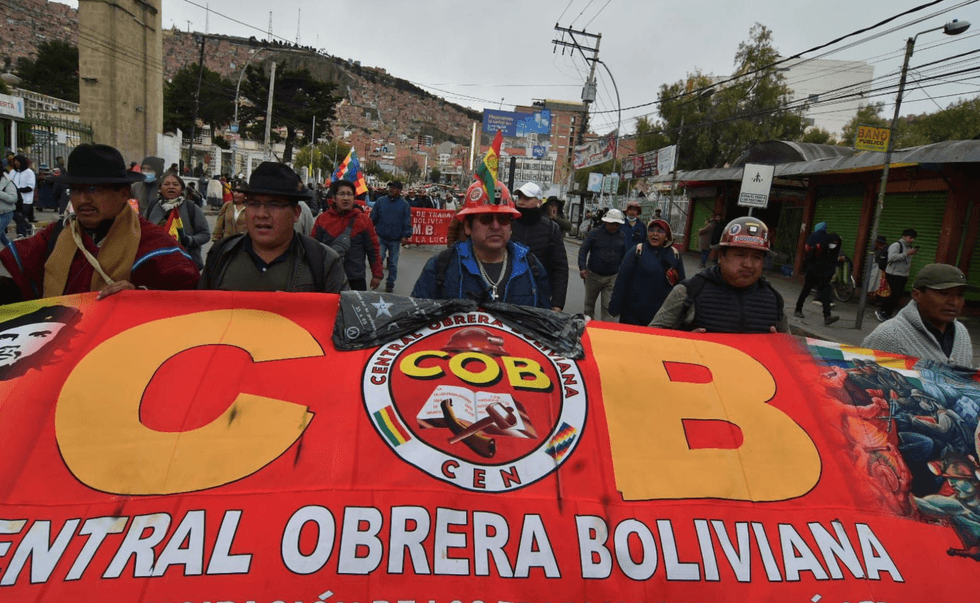
The right to strike is under attack throughout the world, including in the United States. Labor strikes are currently forbidden or restricted in the majority of countries.
“At a moment when workers’ organizations face sustained attacks around the world, this opinion reaffirms that the freedom to withhold one’s labor is not a privilege granted by the powerful, but a fundamental human right grounded in international law,” AFL-CIO President Liz Shuler said in a statement.
The ILO is the United Nations agency that sets global labor standards. It has 187 member states and has adopted 191 conventions since its founding in 1919. The ILO considers Convention No. 87 to be one of its 11 fundamental conventions.
In 2023, the ILO asked the ICJ to settle an internal dispute about whether Convention No. 87 gives workers the right to strike, which is not specifically addressed in the convention. Although advisory opinions of the ICJ are not legally binding, many courts accept them as authoritative legal decisions.
The ICJ ruled in its 10-4 opinion that a strike “is one of the main activities engaged in and tools used by workers and their organizations to promote their interests and improve conditions of labour, thereby ensuring the effective exercise of the freedom of association protected under Convention No. 87.”
The Court found “that protection of the right to strike is encompassed in the protection of the freedom of association provided for in Convention No. 87.”
In reaching that conclusion, the Court considered provisions in two 1996 Covenants that contain relevant rules of international law regarding the right to strike. Both refer to Convention No. 87.
Article 22, paragraph 1 of the International Covenant on Civil and Political Rights (ICCPR) provides for the right to freedom of association. The ICJ noted that for more than 25 years, the Human Rights Committee — which monitors the implementation of the ICCPR — has considered the right to strike to be encompassed in the protection of freedom of association.
Due to the high degree of overlap between the states parties to the ICESCR and ICCPR, and Convention No. 87, the ICJ determined there was a common understanding among them on the right to strike. The Court thus concluded “that an interpretation taking into account the relevant rules of international law contained in the ICESCR and the ICCPR indicates that the protection of the right to strike is encompassed in the protection of the freedom of association provided by Convention No. 87.”
No Right to Organize Without the Right to Strike
“For generations, working people have understood a simple truth: The freedom to join a union means nothing if you cannot withhold your labor when bosses refuse to listen. Now, the world’s highest court has affirmed that truth,” said Jeffrey Vogt, director of the International Lawyers Assisting Workers (ILAW) Network, which issued the call for the ILO referral of this case to the ICJ.
The ICJ decision “affirms decades of judicial precedent and what workers around the world know: there is no right to organize and bargain collectively without the right to strike,” Shuler said in her statement. “When workers are barred from taking collective action on the job, they cannot defend their rights and demand the workplace conditions and contracts they are owed. The freedom to join a union becomes an empty formality.”
“This is an important day for the International Labor Organization [ILO], and for its continued relevance in the world of work. However, the significance of this opinion extends well beyond the institutional context in Geneva,” the ILAW Network wrote in a statement.
The ICJ advisory opinion came “at a moment of acute pressure on the international labour rights system,” ILAW stated. “Across the world, the right to strike is under sustained attack — through restrictive legislation, expansive judicial interpretation of essential services, the criminalisation of trade union activity, and the use of dismissals, injunctions, and damages claims to deter collective action.”
Legal restrictions on the right to strike are increasing. In 2022, strikes were outlawed or stringently restricted in 129 of the 148 countries tallied by the International Trade Union Confederation (ITUC), one of the six organizations with consultative status at the ILO Governing Body.
The ITUC, which represents 191 million workers in 169 countries and territories, is dedicated to trade union democracy and independence. It has regional organizations in Africa, Asia, and Latin America. The ICJ decision “is important not only for workers and trade unions, but also for governments and responsible businesses,” ITUC stressed.
This decision “will serve as a powerful interpretive tool before national constitutional and labour courts, before regional human rights bodies, and before the ILO’s own supervisory bodies,” ILAW noted. “It strengthens the hand of every worker and union challenging strike bans, broad essential-services designations, criminal sanctions against strikers, prohibitions on solidarity and political strikes, and the dismissal and blacklisting of workers who exercise this right.”
Ruling Will Affect Tens of Millions of Workers
In October, 18 countries and five international organizations, including the ILO, presented oral testimony before the ICJ, and other nations filed written contributions. The majority of participants supported the right to strike, which is guaranteed in most European countries.
Harold Koh, who represented the International Trade Union Confederation (ITUC) before the ICJ, told the judges that the case would “affect the real rights of tens of millions of working people around the world.” If the Court ruled that the Convention didn’t protect the right to strike, Koh warned, “National employer groups would contest the right to strike country by country, focusing first on nations with compliant courts, weak civil societies and ineffective media.”
Jeffrey Vogt worked with the legal team of the ITUC on the briefs and oral arguments presented to the ICJ. Vogt’s co-authored book, The Right to Strike in International Law, provided a legal roadmap for the case.
Vogt told Truthout that “the written view of the US (under the Biden administration) was to support the right to strike, albeit on narrower grounds than what we had argued. When the Trump administration came in, they withdrew the Biden era brief but fortunately did not appear for oral arguments and take a contrary view.”
“The decision deals with the right to strike in the abstract — does the convention protect it — but does not go into the modalities,” Vogt added. The Court wrote that its “conclusion that the right to strike is protected by Convention No. 87 does not entail any determination on the precise content, scope, or conditions for the exercise of that right.”
“That was a conscious decision,” Vogt noted. “We did not want the court to attempt to define the scope, especially since we believe that is the proper role of the ILO supervisory system.” Vogt said that “the ICJ gave ‘great weight’ to the views of the supervisory system, which is helpful.” And although “the ILO has supported secondary strikes,” in which workers strike in solidarity with other workers at a different employer, the ICJ decision didn’t opine on that specific issue.
The Right to Strike in the US
“The right to withhold one’s labor, inherent in the right to strike, belongs to all workers, but it has been restricted,” Jeanne Mirer, a labor lawyer in private practice working with the International Commission for Labor Rights, told Truthout. “Many unions have agreed never to strike while a collective bargaining agreement is in effect.”
Most private sector workers in the US have the right to strike under the National Labor Relations Act (NLRA). Employees, including international and undocumented workers, cannot be fired or disciplined for participating in a lawful strike.
“Those exempted from the NLRA, such as agricultural and domestic workers, are not restricted in the right to strike but have no protections against discharge if they strike and do not have the power to prevent such retaliation,” Mirer added.
Some states have their own laws granting protection to domestic workers and 14 states guarantee farmworkers collective bargaining rights.
Railroad and airline workers are not covered by the NLRA, but they come under the Railway Labor Act, which has several limitations on the right to strike.
In recent years, Congress and the courts have narrowed the definition of “protected concerted activity” under the NLRA. Union membership is dropping. Nevertheless, strike actions in the US increased by almost 50 percent in 2022, according to the Economic Policy Institute.
In 2023, the US Supreme Court weakened the legal protections for striking in Glacier Northwest, Inc. v. International Brotherhood of Teamsters, making it easier for employers to sue unions in state courts. Only Justice Ketanji Brown Jackson dissented, writing, “The right to strike is fundamental to American labor law.” She noted:
Workers are not indentured servants, bound to continue laboring until any planned work stoppage would be as painless as possible for their masters. They are employees whose collective and peaceful decision to withhold their labor is protected by the [National Labor Relations Act] even if economic injury results.
The NLRA’s protections for private sector workers don’t extend to public sector employees. “Public employees in the United States have been restricted in many ways from striking,” Mirer said.
Federal workers are legally prohibited from striking. Thirty-six states prohibit public sector workers from striking. Three other states that haven’t addressed the issue would likely outlaw public sector strikes as well. In the 12 states where strikes are not per se unlawful, various preconditions must be met before workers can engage in strikes.
The World Federation of Trade Unions, which played a decisive role in the creation of Convention No. 87 in 1948, applauded the ICJ’s decision:
[I]t is clear that the existence of a class-oriented and militant trade union movement is the essential, decisive, and irreplaceable factor to ensure that the right to strike, as well as conventions, collective bargaining, labor laws, and workers’ achievements, are not merely empty words on paper but are implemented in practice. The WFTU reiterates its call for struggle in every country, sector, and workplace to safeguard the sacred right to strike in practice.
“It is up to workers and their organizations to build on the ICJ decision to ensure the right to strike can be an effective tool to build worker power,” Mirer said.

 Login
Login