Normal view

“Russia spits in our faces” and the UN pretends it’s “just rain” – UN envoy reports May deadliest month for Ukrainian civilians since 2022

9 June 2026 at 19:13

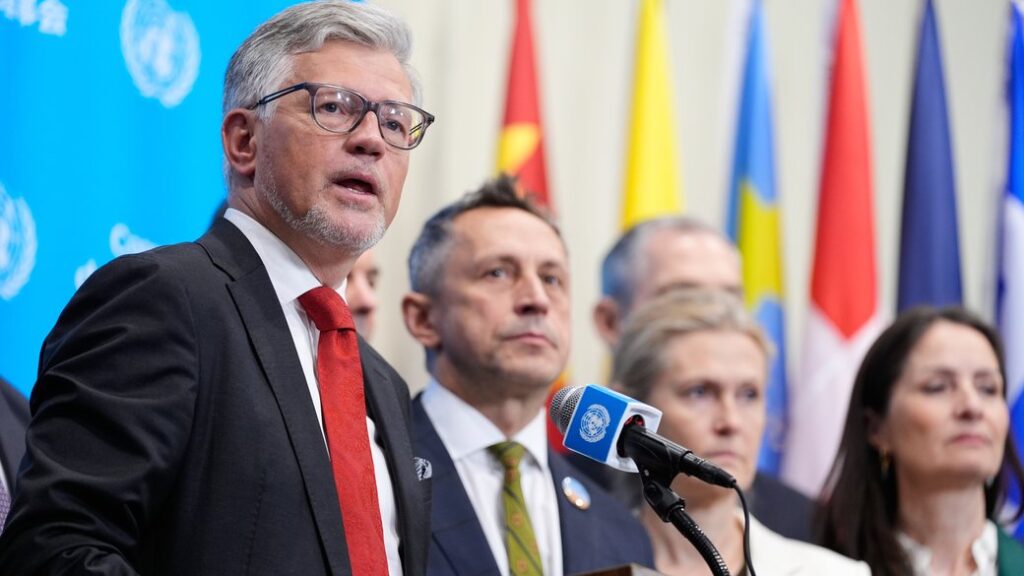
Andrii Melnyk, Permanent Representative of Ukraine to the UN. Photo: Suspilne

May was the deadliest month for civilians in Ukraine since April 2022, according to the United Nations, which presented updated casualty data to the UN Security Council during an emergency meeting requested by Kyiv, Suspilne reported.

Latvian UN envoy Sanita Pavļuta-Deslandes said preliminary figures show a sharp rise in civilian harm, warning that the final statistics for May are expected to be even higher. 

She said attacks during the month included strikes on civilian gatherings, including a funeral in Sumy, which she cited as an example of Russia targeting “so-called legitimate objectives,” according to Suspilne.

She also noted that in the first quarter of 2026 alone, 190 attacks were recorded on medical facilities, including maternity hospitals, while more than 200 educational institutions were damaged or destroyed. The number of injured children increased by 49%, according to UN data cited at the session.

The Security Council meeting came on June 8 following a wave of Russian strikes across Ukraine.

Ukraine accuses Russia of systematic deception at UN

Ukraine’s permanent representative to the UN, Andrii Melnyk, used the session to sharply criticize Russia’s role at the United Nations, arguing that Moscow continues to deny responsibility while undermining international reporting on the war.

“Russia spits in our faces with lies, and we pretend it is just rain,” Melnyk said during the meeting, according to Suspilne.

He suggested that Russia should consider leaving the UN if it rejects its own obligations under international law and dismisses UN investigative findings.

Melnyk also called for Russia to be excluded from UN peacekeeping operations, pointing to its inclusion in UN listings related to sexual violence in conflict and repeated findings on violations involving children and armed conflict.

He urged member states to take action on these findings, saying Russia’s participation in UN structures undermines the credibility of the system itself.

The meeting highlighted growing tensions inside the Security Council as Russia continues to face accusations of escalating strikes on civilian infrastructure while maintaining its role as a permanent member of the body.

New “Drone Deal” signed – Latvia and Ukraine to expand joint production and defense cooperation

9 June 2026 at 18:41

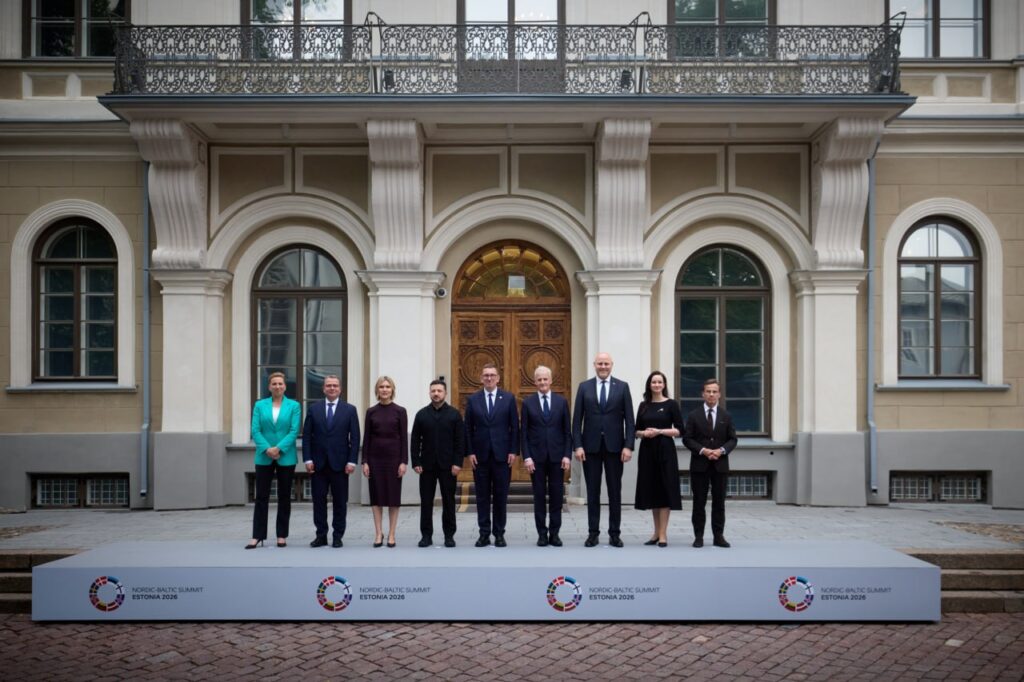
Leaders gathered at the Nordic-Baltic Summit in Estonia, 9 June 2026. Photo: Zelenskyy

Ukraine and Latvia have signed a new “Drone Deal” aimed at expanding joint production and strengthening air and drone defense capabilities, Ukrainian President Volodymyr Zelenskyy said following meetings with Nordic and Baltic leaders on 9 June.

The agreement was signed during Zelenskyy’s first meeting with Latvia’s new Prime Minister Andris Kulbergs, which he described as a “concrete result” focused on co-production and shared defense development.

Zelenskyy said the deal reflects a broader model of cooperation Ukraine is building with partners who have supported Kyiv throughout the war, combining Ukrainian battlefield experience with European industrial capacity.

He said the aim is to strengthen shared protection against Russian threats, including expanding domestic production and improving coordination in drone and air defense systems.

The “Drone Deal” is a long-term cooperation format focused on developing drone capabilities through joint production, technology exchange, and practical defense support between Ukraine and partner countries.

Ukraine offers drone expertise to European partners

Zelenskyy also said Ukraine is ready to expand cooperation on drone warfare expertise, including sending specialist teams to partner countries to share operational experience gained during the war.

He said similar cooperation has already been carried out with partners in the Middle East and could now be scaled across Europe under the new drone cooperation framework.

Zelenskyy said Russia is attempting to escalate tensions across Europe, including through drone-related incidents near NATO borders, underscoring the need for coordinated defense responses among allies.

Air defense and drones central to talks with Nordic and Baltic partners

The announcement came during a series of meetings in Tallinn with leaders from Finland, Norway, Estonia, and other Nordic and Baltic states.

Zelenskyy said partners are increasingly recognizing stronger Ukrainian positions on the battlefield, while Russia continues to compensate for losses by striking civilian infrastructure.

He said air defense remains a key priority, including securing additional missile supplies and advancing work on European anti-ballistic defense systems.

Ukraine pushes for stronger sanctions and EU accession progress

Zelenskyy also discussed increased sanctions pressure on Russia, including measures targeting the shadow fleet, alongside continued support for Ukraine’s EU membership bid.

He urged rapid progress on opening EU accession negotiation clusters, saying Ukraine has met the necessary requirements and expects political decisions in the coming months.

“There is no reason to delay,” he said, calling for momentum in EU decision-making processes.

Ukraine sets 2030 roadmap to expand rocket and artillery forces – a constant despite evolving warfare

9 June 2026 at 18:01

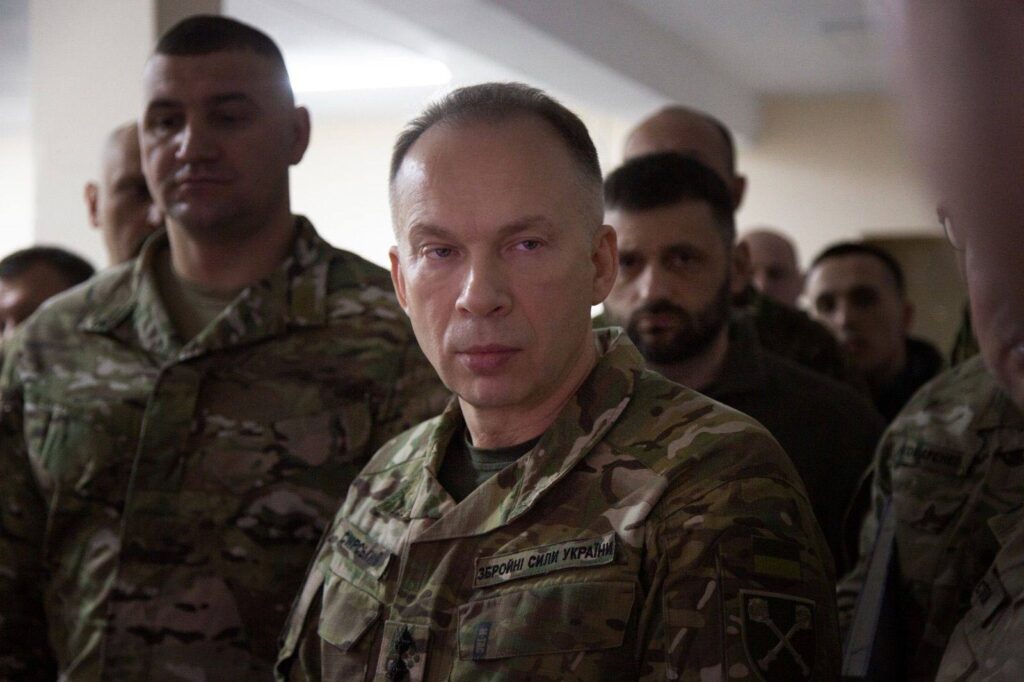
Commander-in-Chief of the Armed Forces of Ukraine Oleksandr Syrskyi. Source: Syrskyi

Ukraine has approved a long-term concept for the development of its rocket forces and artillery, outlining plans to build up capabilities through 2030, Commander-in-Chief Oleksandr Syrskyi said.

Syrskyi said the concept defines the main directions for modernization while Ukraine continues fighting a full-scale war, stressing that long-term force development must run in parallel with current battlefield needs.

He said Ukrainian artillery units are already conducting thousands of fire missions daily and inflicting significant losses on Russian forces, supported by a mix of domestically developed systems and weapons supplied by international partners.

According to Syrskyi, Ukraine operates one of the most diverse ranges of artillery systems globally and uses nearly all available types of ammunition, gaining continuous combat experience against a numerically superior adversary.

War experience drives shift in artillery and drone integration

Syrskyi said Russia’s invasion has significantly changed the character of modern warfare, with growing use of drones, guided bombs, and other precision strike systems reshaping battlefield dynamics.

He said artillery remains a core component of the battlefield despite evolving technology, but its effectiveness now depends heavily on reconnaissance quality and the speed of information transfer.

At the same time, he pointed to several challenges affecting Ukraine’s rocket and artillery forces, including dependence on foreign ammunition supplies, complex logistics linked to multiple systems, limited range in some platforms, and shortages in artillery reconnaissance capabilities.

30th Mechanized Brigade artillery.
30th Mechanized Brigade artillery. 30th Mechanized Brigade photo.

Ukraine to phase out outdated systems and expand domestic production

The concept foresees a gradual transition toward Ukrainian-made artillery systems as the backbone of future force structure, while aging Soviet-era systems that cannot be upgraded will be phased out.

Ukraine will also retain units equipped with modern foreign systems and streamline its overall artillery inventory to improve efficiency and logistics.

Syrskyi said a key priority is the creation of a modern artillery reconnaissance system to improve targeting speed and battlefield coordination.

Focus on long-range strike capability up to 2,000 km

A separate priority is the expansion of Ukraine’s missile forces to increase deep-strike capability across operational and strategic depth.

Syrskyi said this includes completing development and scaling production of domestic ballistic and cruise missiles, which – together with unmanned systems – would form a layered long-range strike capability with a reach of up to 2,000 kilometers.

He said artillery will remain a decisive element of battlefield effectiveness and a central factor in deterring further Russian aggression, regardless of terrain or conditions.

“We have guidance at home”—Kalibrs back to foreign parts after import substitution failed, MOD says

9 June 2026 at 17:03

Kalibr missile

Russia went back to using imported electronics for their Kalibr cruise missiles’ guidance system after failing to replace them with homemade alternatives, according to Ukraine’s Ministry of Defense. 

The ship-launched missile’s homing boards “are made up of more than 80–90% foreign-made components,” the MoD wrote. “This is a confirmed fact, not an estimate: each part is marked and has been checked by military representatives.”

Starting in 2023, Moscow began to transition to domestic components in manufacturing their Kalibr missiles, which may have worsened their performance. As a result, the Russians went back to what works, the MoD wrote, citing an analysis of Kalibrs that were shot down.

The announcement did not disclose the manufacturers of these systems. However, according to the General Intelligence Directorate’s website that tracks foreign parts in Russian’s weapons, most chips that went into Kalibrs prior to 2024 came from the US. 

Diagram of a Kalibr missile. (Ukraine's Ministry of Defense)

Russia has routinely used foreign electronics in the missiles it fires against Ukraine throughout the course of the war. 

A Russian Kh-101 cruise missile that killed 12 people in Kyiv in May was built in the second quarter of 2026, which points to components continuing to reach Russia despite 21 sanctions packages from the EU and years of Western export controls, President Volodymyr Zelenskyy said last month.

Cluster munitions added

Russia has also started using cluster munitions for the Kalibrs' payloads—the first such use was recorded in the Spring of 2026, according to the announcement. Previously, Kalibrs tended to be armed with high explosive fragmentation loads.  

Cluster payloads can widen the destructive radius and allow the missiles to more effectively hit spread-out targets. The MoD described them as analogous to the cluster munitions found on Kh-101 missiles. 

The use of weapons that cover an area with bomblets is controversial around the world because of the lingering danger they pose to civilians. A total of 124 countries have ratified the Convention on Cluster Munitions, outright banning the use of such weapons, though Ukraine and Russia are not signatories. 

Moscow’s army has repeatedly used cluster munitions, including against cities, since the opening days of the full-scale invasion.

EU’s 21st sanctions package would ban Russia’s soldiers from European soil

9 June 2026 at 16:43

EU High Representative for Foreign Affairs and Security Policy Kaja Kallas delivers press remarks following the Foreign Affairs Council on 20 October 2025

The European Union has proposed a 21st sanctions package against Russia that includes a visa ban on current and former Russian military personnel, as Brussels expands pressure on individuals and entities linked to Moscow’s war effort in Ukraine.

EU foreign policy chief Kaja Kallas said the package is part of a broader push to increase economic and political pressure on Russia.

“We are depriving Russia of the means to fund its war,” Kallas wrote on X.

Package includes over 170 proposed sanctions listings across sectors

The sanctions package will target Russia’s financial, energy, and industrial sectors, with more than 170 proposed listings.

These include banks, weapons manufacturers, oil traders, refineries, and crypto-related services, as well as entities in third countries accused of helping Moscow bypass existing restrictions.

Energy measures include a temporary freeze of the Russian oil price cap mechanism, alongside new restrictions on LNG transactions and additional action against Russia’s shadow fleet, with 30 more vessels proposed for designation.

Officials said the aim is to further reduce Russia’s export revenues and disrupt maritime logistics networks used to move sanctioned energy products.

Brick by brick, we are collapsing the foundations of Russia's war economy.

Today, we are presenting our proposals for a 21st sanctions package against Russia.

This includes a temporary freeze of the Russian oil price cap and designations of institutions used by Moscow to…

— Kaja Kallas (@kajakallas) June 9, 2026

Measures expand to export controls and financial restrictions

The package also expands export controls on materials used in weapons production, including metals, alloys, and high-performance inputs, with companies in countries such as China, Türkiye, Kazakhstan, the UAE, and India included in the proposals.

Financial restrictions remain a central pillar, with expanded sanctions planned against banks and crypto platforms linked to sanctions evasion and war financing.

EU visa ban on Russian military personnel

The sanctions package includes a “comprehensive” visa ban proposal that would prohibit entry into the EU for current and former members of Russia’s armed forces, as well as “proxy groups,” marking an expansion of sanctions beyond economic measures to individuals linked to military operations.

“Europe’s door should not be open to Russia’s (ex-)combatants,” Kallas wrote.

Our sanctions are working.

They are weakening the economic foundations of Russia’s war effort.

Today we double down.

With a 21st package.

Covering energy, banks & crypto, trade including fisheries and visa for Russian soldiers ↓ https://t.co/fTIkATOSfN

— Ursula von der Leyen (@vonderleyen) June 9, 2026

Sanctions already cost Russia up to $1.5 trillion, EU says

The same day, Kallas told journalists that existing sanctions continue to intensify pressure on Moscow’s economy. Kallas noted that Western sanctions have already cost Russia an estimated $1.2 to $1.5 trillion, adding that “brick by brick, we are collapsing the foundations of Russia’s war economy.”

She said the aim remains to increase costs for Moscow across multiple sectors while maintaining unity among EU member states.

The package requires unanimous approval from EU member states before it can take effect.

Russia plans to double Mi-8 helicopter production to offset war losses in 2 years

9 June 2026 at 14:57

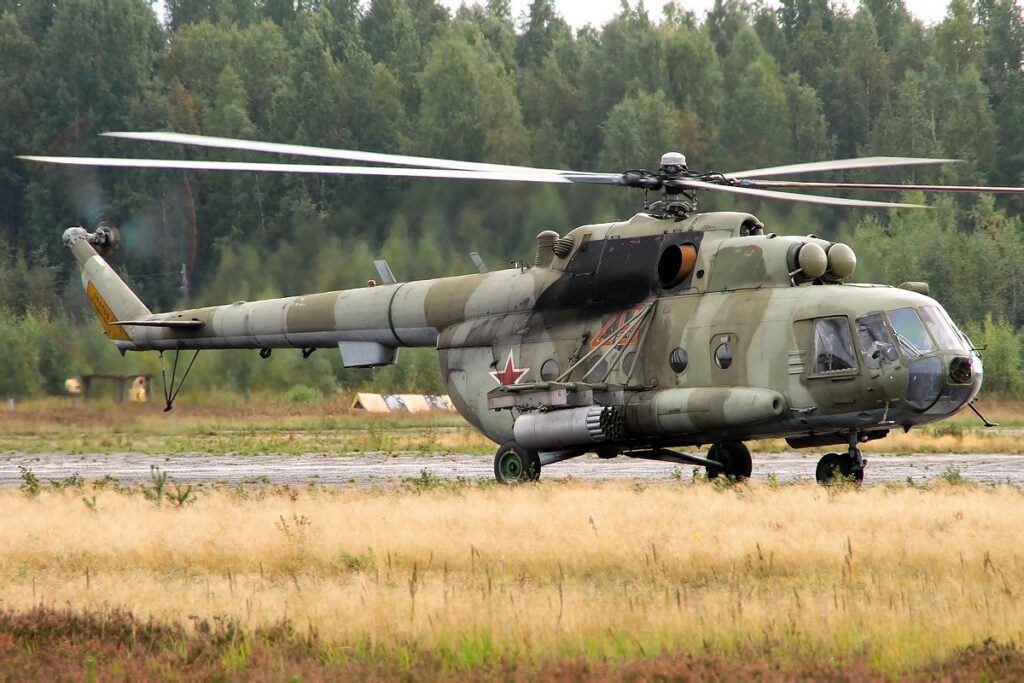
Mi-8 helicopter

Russia plans to make 72 Mi-8 helicopters at their Kazan plant over the next two years, more than offsetting their total full-scale invasion losses of 56 units as of March, Dallas Analytics reported, citing leaked Russian documents. It is also double the production rate from earlier estimates.

Russia also has another Mi-8 factory at Ulan-Ude. In 2024, both plants jointly delivered 40 helicopters, according to Moscow’s defense conglomerate Rostec. A December analysis by Frontelligence Insight, also based on leaked documents, estimated that Russia can make 20 Mi-8s at each plant per year.

The number of helicopters the Ulan-Ude plant can produce is unknown. However, if it has similar capacity to the Kazan plant, Russia’s production rate could be substantially higher. 

Mi-8s are versatile workhorses, able to transport troops and cargo, conduct reconnaissance, electronic warfare, and attack missions. Due to heavy losses, their role moved away from frontline missions during the battle of Kyiv, towards evacuation, and subsequently indirect fire roles and hunting Ukrainian UAVs and USVs on the Black Sea.

War has changed significantly since before the full-scale invasion, largely due to the invasion. The ubiquity of drones means that Russia could hardly risk attempting large-scale airborne assault operations.

However, if Russia plans to escalate its hybrid war against NATO into more direct aggression, as some Alliance military officials predict, the Mi-8s would come in handy for ground incursions.  

The production plan also hints at Russia’s priorities. The leaked document, minutes from a meeting involving Russian Deputy Minister of Industry and Trade Gennady Abramenkov, states that the National Wealth Fund would contribute financing, which means that Moscow's reserve cash is being poured into maintaining and rebuilding its war machine.

On the other hand, the documents revealed some potential hiccups in Russia's plan to rebuild the Mi-8 fleet. Many details seem to hang on contractors securing advance payments and contracts that have yet to be signed. The United Engine Corporation is expected to only start delivering engines for the Mi-8s beginning in September.

One clause calls for an estimate of how many helicopters can "actually" be built in 2026, suggesting that there's a gap between expectation and reality. 

SBU names 10 Russians tied to “human safari” drone hunt on civilians in Kherson

9 June 2026 at 14:18

sbu names 10 russians tied human safari drone hunt civilians kherson · post munition dropped russian explodes near two 2024 explosion civilian khersoners telegram channels ten soldiers single regiment accused

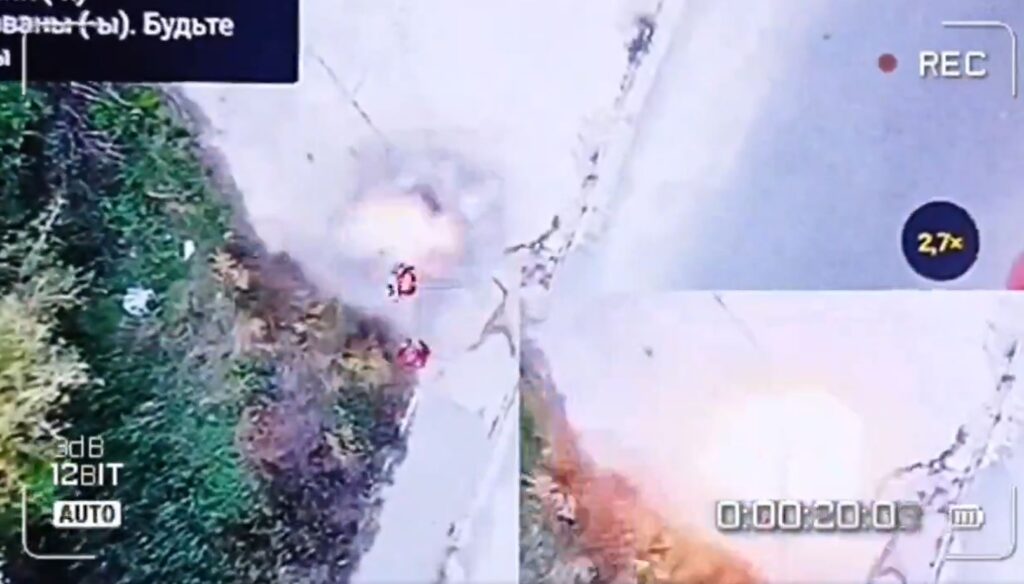
Ten Russian soldiers from a single regiment are accused of hunting civilians in Kherson with attack drones, and now face war-crimes charges filed in absentia, the Security Service of Ukraine (SBU) reported. Investigators say the operators tracked people through the streets and struck ambulances and rescue crews. The 10 are among those participating in a Russian long-lasting terror campaign against Khersoners known as a "human safari." 

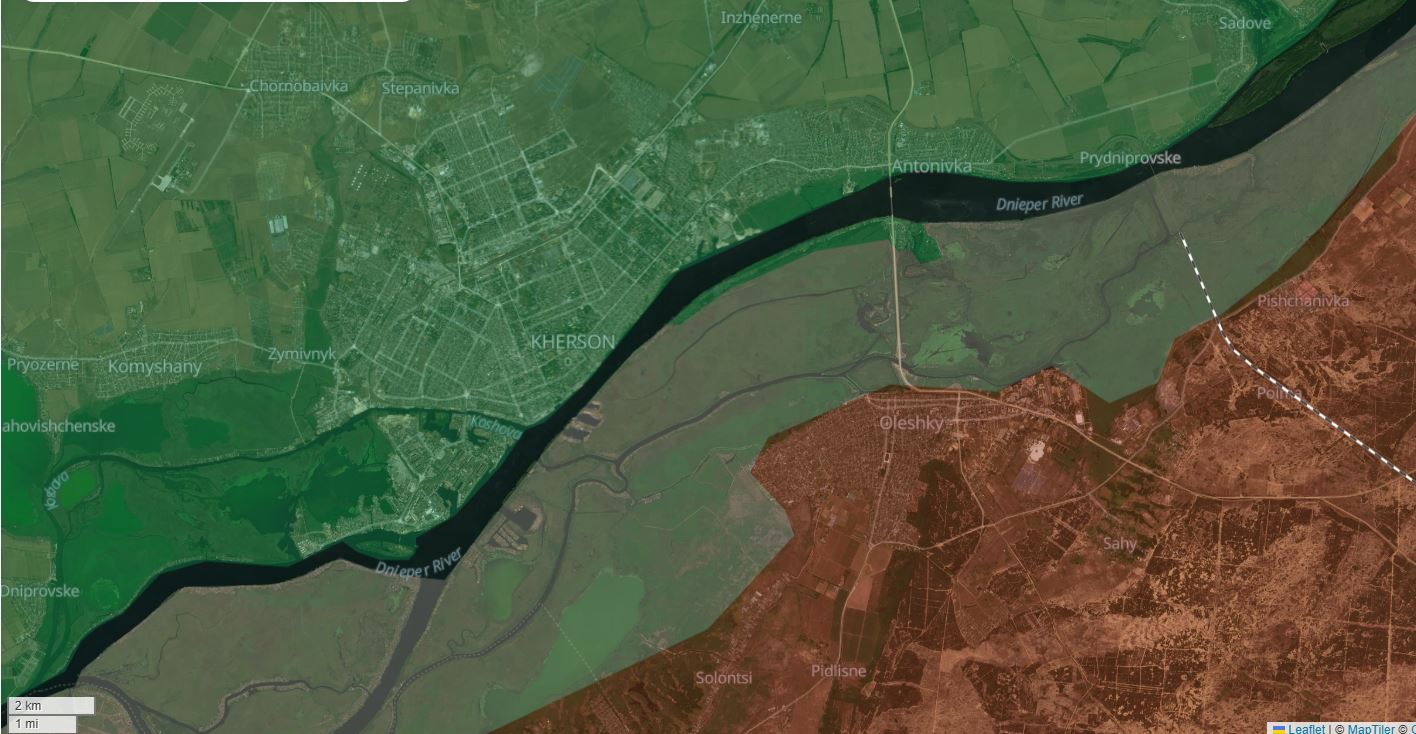
Kherson lies on the Dnipro River's west bank, with Russian-occupied land directly opposite, and the invading force has made it among the deadliest places to live in Ukraine by deliberately hunting civilians across the city for years.

The drone hunters of one regiment

Counterintelligence officers built a case against 10 drone operators from the 404th Motorized Rifle Regiment, a territorial-defense unit in Russia's "Dnepr" Group of Forces, the SBU reported. The investigation found that the men tracked residents as they moved along Kherson's streets and launched drones at them. The drones carried shaped-charge and high-explosive fragmentation munitions.

Kherson city (Russian-occupied area in red). Map: Deep State

Residents and rights monitors call this campaign a "human safari," the hunting of people going about their ordinary days.

Kherson: human safari rages.

A Russian fiber optic FPV drone chases a car in a residential area; after civilians cut the cable, the drone falls, catches fire.

More drones hit cars.

10 injured as a drone attacks a bus.

Drones attack high rises, flying inside the windows. pic.twitter.com/eeaeyyJdz5

— Zarina Zabrisky 🇺🇸🇺🇦 (@ZarinaZabrisky) May 13, 2026

The 10 named operators

The SBU published each suspect's name and military call sign:

  • Tsolak Grigoryan, call sign "Boroda"
  • Nikita Gubar, "Drovosek"
  • Nikolai Denisenko, "Gami"
  • Vladimir Klimov, "Klim"
  • Vyacheslav Kornenkov, "Skif"
  • Viktor Nizhnikov, "Flyaga"
  • Ruslan Nugaev, "Dok"
  • Vladimir Orlov, "Yakut"
  • Ivan Prusachenko, "Prus"
  • Oleg Pukhlyakov, "Pulya"

russians continue their human safari in Ukraine.

They’re not just killing.

They’re hunting unarmed people like animals — from drones, to cheerful music.

This is not war. This is pure evil.

Anyone still justifying russia is standing on their side.

We will never forget. pic.twitter.com/GtrjNfaU0w

— UAVoyager🇺🇦 (@NAFOvoyager) June 8, 2026

Ambulances and a double strike on rescuers

The documented episodes include attacks on civilian cars and residential blocks, the SBU said. Operators dropped explosives on ambulances at a city hospital. They also carried out a "double" strike on State Emergency Service (DSNS) rescuers who were clearing the aftermath of an earlier Russian shelling. 

UN investigators have described this Russian method in Kherson: a first strike, then a second aimed at the people who come to help. Victims suffered shrapnel wounds, burns, and concussions, and civilian infrastructure took significant damage.

Russian soldiers attacked an ambulance in Kherson with a drone.

Three medics were injured.

Another deliberate war crime. pic.twitter.com/xu3WFUQ2H0

— Денис Казанський (@den_kazansky) June 4, 2026

Charged in absentia

Based on the evidence, SBU investigators notified all 10 of suspicion under Article 438 of Ukraine's criminal code, which covers war crimes. The notices were issued in absentia. SBU officers in Kherson Oblast led the investigation with the 79th Border Detachment of the State Border Guard Service (DPSU), under the oblast prosecutor's guidance. The agency said efforts to hold the operators accountable continue.

The case fits a wider pattern Ukrainian prosecutors have documented across the oblast in thousands of proceedings. 

Bulgaria’s new government plans to halt weapons supplies to Ukraine

9 June 2026 at 13:43

bulgaria's new government plans halt weapons supplies ukraine · post bulgarian defense minister dimitar stoyanov council ministers sofia fakti db news ukrainian reports

Bulgaria's new government plans to stop supplying weapons to Ukraine, a shift that breaks with the European Union's push to pressure Russia, Bloomberg reported. The country's Defense Minister tied the move to a call for negotiations rather than arms, echoing a prime minister who has long been hostile to military aid for Kyiv. 

A falling and rising tide of Russia-friendly governments across central Europe has steadily frayed the bloc's united front on arming Kyiv amid the ongoing Russian invasion, turning each national capital into a potential brake on support.

Government's excuses

Bulgarian Defense Minister Dimitar Stoyanov told reporters in Sofia on 9 June that his government would end weapons deliveries to Kyiv

"Ukraine needs more people, not more armament," he stated, and called instead for a "just peace that will be defined by both sides participating in the conflict." 

He added that the EU's role in any peace process is "extremely important." But the Bloc would struggle to act as a mediator, he claimed, after assisting Ukraine throughout the war.

opposition party Tisza
Explore further

Hungary unblocks $7.7 billion in EU arms payments after dropping two-year veto on Ukraine aid

A prime minister who opposes arming Kyiv

The stance reflects Prime Minister Rumen Radev, who has long held that the war cannot be won on the battlefield. Radev, a former air force commander and president until January, has repeatedly opposed the EU's military support for Ukraine. He has also called for lifting sanctions on the Kremlin, arguing they damage Europe's economy. In office for only a month, the Prime Minister has promised to expand Bulgaria's weight in joint European decisions.

A quiet arms pipeline now set to close

Bulgaria ranks among the EU's biggest producers of Soviet-standard ammunition. Those older Soviet-caliber shells proved crucial to Ukraine early in the war. The government officially refused direct military aid in 2022. Even so, Bulgarian shells reached the front through exports to other EU countries. Since 2022, Sofia has sent 13 packages of military aid, keeping their value and contents classified.

Bulgaria party
Explore further

Bulgaria approves new cabinet led by Rumen Radev — the ex-president who called Crimea Russian

The timing

The plan surfaced days after the leaders of France, Germany, and Britain urged the Kremlin to accept an immediate, complete ceasefire that would open talks on a lasting deal. Moscow has rejected Kyiv's offer to meet and negotiate an end to the full-scale invasion, launched more than four years ago.

The Times earlier called the rise to power of pro-Russian Radev a strategic success for Putin. 

Russia starts hauling gasoline to the front in the trunks of civilian cars

9 June 2026 at 11:52

russia starts hauling gasoline front trunks civilian cars · post jerrycans loaded supply russian forces occupied ukraine 2026 перевезення-бензину-цивільними-автівками-для-військових-рф-на-тимчасово-окупованій-тери news ukrainian reports

Russia has begun moving gasoline to its frontline units in occupied Ukraine in convoys of civilian cars, the Ukrainian defense outlet Militarnyi reported. Soldiers filmed themselves loading jerrycans into ordinary trunks, an improvised workaround after Ukrainian drone strikes made fuel tankers too risky to run. Russian forces are also disguising army trucks as civilian vehicles along the supply route to occupied Crimea.

This comes amid Ukraine’s ongoing “Logistics Lockdown,” a campaign by several Ukrainian military branches and the Security Service to target Russian fuel, logistics, and other supplies across occupied territories, at depths of up to 200 km.

Soldiers filmed the fuel run themselves

A video on the Exilenova+ Telegram channel showed Russians describing a convoy of passenger cars assembled to carry one metric ton of gasoline, Militarnyi reported. A man off-camera says the cars left the city of Kizilyurt in Dagestan, Russia, on the local head's orders, with the fuel destined for Russian units in occupied Tokmak, Zaporizhzhia Oblast. The footage shows jerrycans filling the trunks:

Besides the fuel, the drivers carried 1.5 million rubles ($20,900) to buy another batch of gasoline. Fuel keeps Russian frontline positions running: generators power electronic-warfare systems, charge batteries for reconnaissance and strike drones, and run communications gear in dugouts and observation posts.

Disguised trucks and a strained supply line

Russian forces have also begun disguising army trucks as civilian transport because of Ukrainian drone attacks deep in the rear. In northern Crimea, monitors spotted a freshly painted blue Ural truck driven by a man in civilian clothes, still carrying military plates, its oversized body posing as a dump truck.

The command of Russia's Dnepr grouping ordered mass use of civilian vehicles to move fuel along the route linking Rostov-on-Don with occupied Crimea, the Krymsky Veter monitoring project reported. That improvisation tracks the M-14 corridor, now within Ukraine's deepening drone range.
Drones of the 20th Separate Brigade of Ukraine's Unmanned Systems Forces (SBS), known as K-2, and the Phoenix drone unit strike a Russian military truck on a logistics route in Donetsk Oblast, 7 June 2026. Photo: SBS
Explore further

ISW: The strikes will likely cascade into deeper disruption across Russia’s rear supply network

Why Russia is improvising

Ukraine's Defense Forces have intensified drone strikes on logistics trucks and fuel tankers on the roads from Russia to occupied Crimea. The attacks have already forced the occupiers to limit cargo traffic through the occupied part of Kherson Oblast toward the peninsula, and Russia has closed stretches of its own land corridor to keep them clear of strike drones.

UK Parliament needs to launch an investigation into the Clean Power 2030 plan before it does any more damage

9 June 2026 at 11:43

In 2024, National Energy System Operator (“NESO”) and Department for Energy Security and Net Zero (“DESNZ”) devised their “Clean Power 2030” plan.  They claimed their plan would bring down energy bills for […]

The post UK Parliament needs to launch an investigation into the Clean Power 2030 plan before it does any more damage first appeared on The Expose.

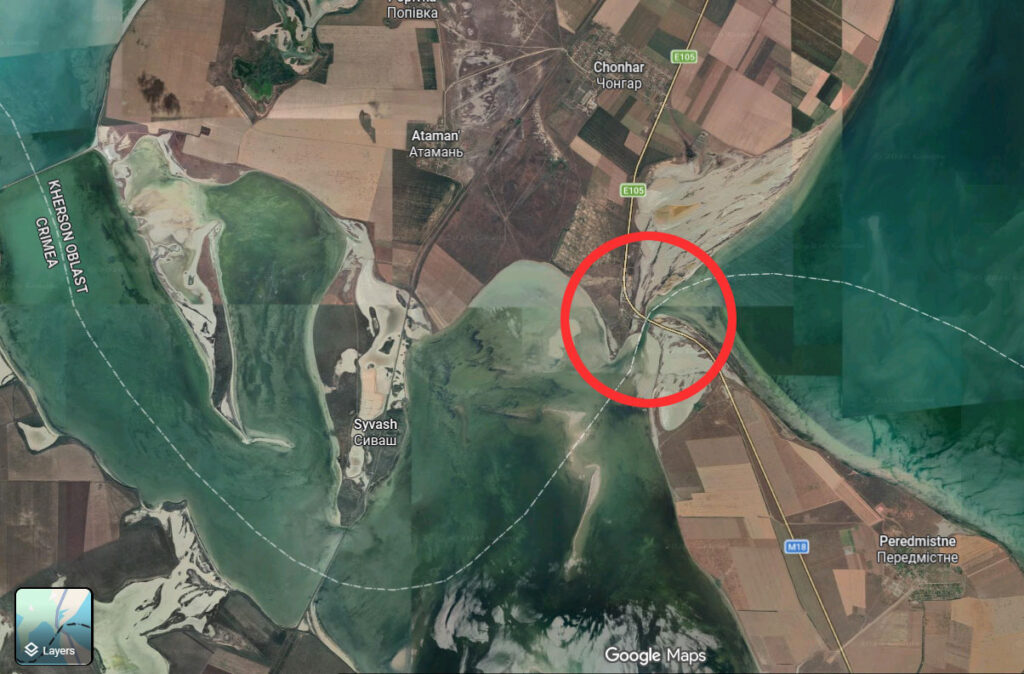
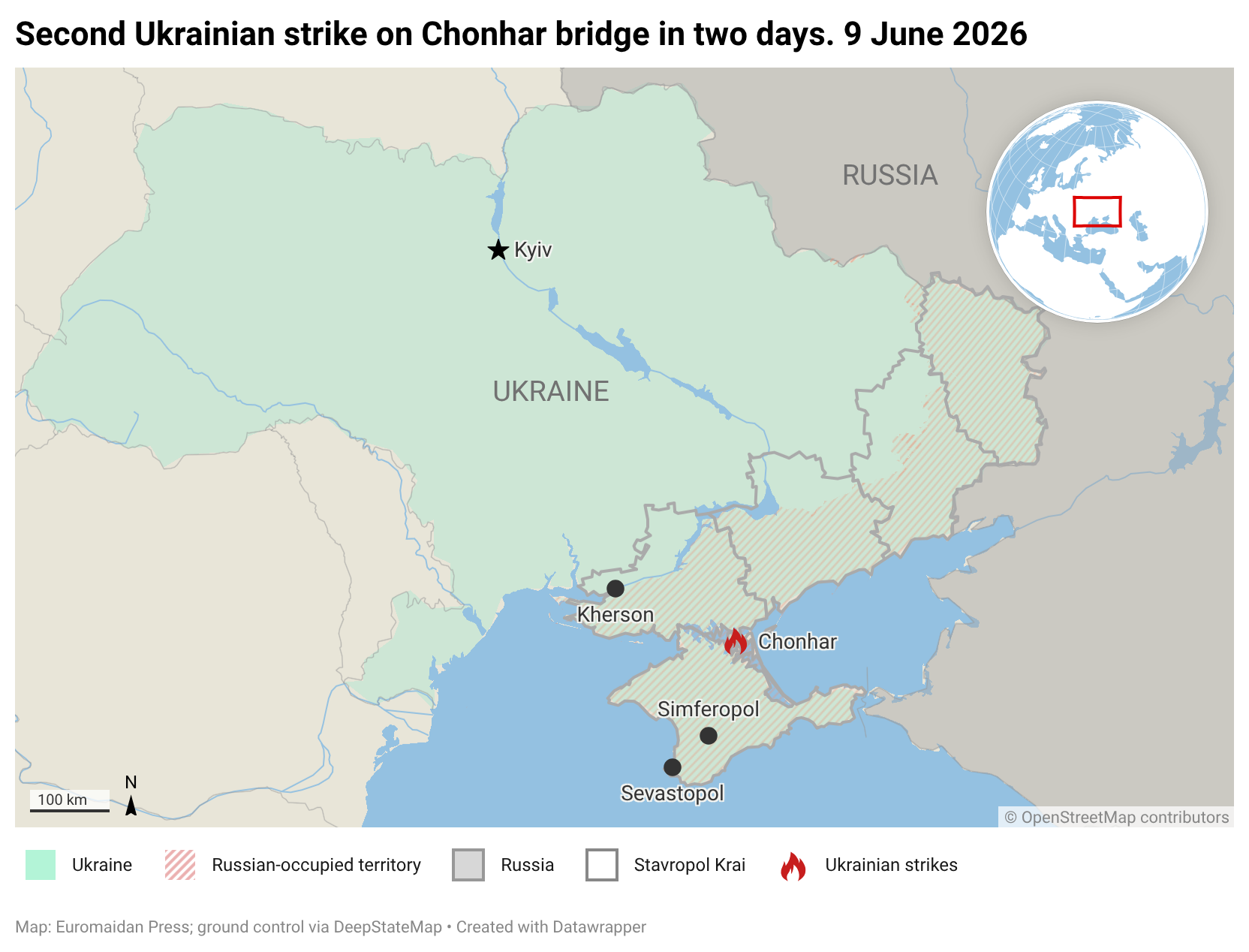
Chonhar bridge linking occupied Kherson Oblast to Crimea is closed again after the second attack in two days

9 June 2026 at 11:32

chonhar bridge linking occupied kherson oblast crimea closed again after second attack two days · post location circled chonhar-bridge-google-maps ukraine news ukrainian reports

Russian occupation authorities closed the Chonhar bridge linking occupied Kherson Oblast to Crimea for the second time in two days on 9 June, with the Russian-installed governor, Vladimir Saldo, claiming another overnight Ukrainian drone strike. The same night, drones swept across occupied Crimea, where a Crimea-monitoring channel reported explosions at a military airfield. Moscow claimed it downed scores of drones, while Ukraine stayed silent.

Occupied Crimea — a peninsula in southern Ukraine, occupied by Russia since 2014 — is the logistical heart of Russia's war in Ukraine's south, and its airfields, air defenses, oil depots, and supply roads draw Ukrainian drones almost daily.

A bridge to Crimea closed for the second time in two days

Saldo claimed the overnight strike caused fresh damage to the Chonhar bridge and that 20 drones were shot down on the approach. He asked drivers to use alternative routes, and traffic was rerouted through Armiansk and Perekop.

chonhar bridge linking occupied kherson oblast crimea closed again after second attack two days · post vg1b5-second-ukrainian-strike-on-chonhar-bridge-in-two-days-9-june-2026- ukraine news ukrainian reports

The bridge carries the R-280 highway, which the Russians built to link their Rostov-on-Don to occupied Crimea through occupied Donetsk and Zaporizhzhia oblasts, one of their main supply lines to the peninsula. 

Drones over Crimea

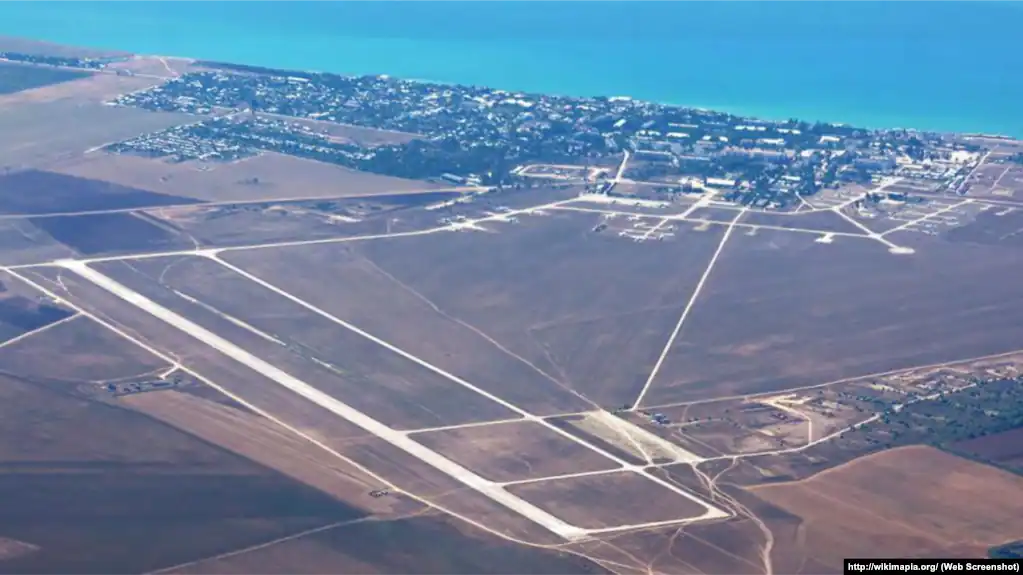
The strike on the peninsula came the same night, according to RFE/RL. The Crimea-monitoring Telegram channel Krymsky Veter reported an explosion in the Saky district (western Crimea) at 21:14, then an incoming strike in Dzhankoi (northern Crimea) before midnight. Drones also reached Sevastopol (southwestern Crimea), where a strong explosion hit the Kacha airfield at 00:36, followed by a second and third blast in the early hours.

chonhar bridge linking occupied kherson oblast crimea closed again after second attack two days · post kacha military airfield near sevastopol archive wikimapiaorg военный аэродром «кача» под аннексированным севастополем архивное
The Kacha military airfield near occupied Sevastopol, Crimea. Archive photo: wikimapia.org

Sevastopol's Russian-installed head, Mykhail Razvozhaev, claimed the military was repelling the attack with air defense and mobile fire groups. The city declared air alerts three times, at 22:33, 00:08, and 06:52, and lifted the last at 07:20. In its morning report, Russia's Defense Ministry claimed its air defenses destroyed 140 drones over seven regions, occupied Crimea, and the Azov and Black seas. 

The 7 June Chonhar strike and the wider campaign

The first closure came overnight into 7 June, when Ukrainian FP-2 and Behemoth drones struck the Chonhar bridge. The Falanga multidomain operations center of the 1st separate assault regiment and the 475th separate assault regiment Code 9.2 carried out the strike. Militarnyi reported it was the first known combat use of the Behemoth kamikaze drone, unveiled in late May 2026 by the companies GLEFA and Culver Aerospace. The same day, the occupiers also halted traffic through their "Dzhankoi checkpoint."

A Russian “Svitlyak” border patrol ship seen from a Ukrainian drone before a strike near Yurkine, occupied Crimea. Screenshot from video: Madyar
Explore further

The Crimean Bridge is heavily guarded. Ukraine struck its maritime security layer in the Kerch Strait.

Ukraine's head of the Office of the President, Kyrylo Budanov, said in early June that the strikes on Crimea's land corridor are a systematic campaign meant to complicate Russian plans. Ukraine's forces are also hitting the sea routes: the General Staff reported a Russian ship struck near Crimea, and overnight into 4 June, a Russian patrol boat was destroyed near the peninsula. Days before, occupation officials in Sevastopol had reported a similar overnight attack on the city.

Russian missiles kill three and wound six in Chuhuiv as drones injure 15 in Kharkiv, including a one-year-old

9 June 2026 at 10:57

russian missiles kill three wound six chuhuiv drones injure 15 kharkiv including one-year-old · post fire burns amid rubble destroyed building after strike oblast 9 2026 fdd39292-265f-4a90-a09d-e1288a16f6ae ukraine news ukrainian

Russia's overnight drone and missile barrage on 9 June killed and wounded civilians in the Kharkiv Oblast cities of Chuhuiv and Kharkiv, regional officials reported. More strikes over the past 24 hours left several people dead and dozens wounded elsewhere in Ukraine. Ukraine's Air Force said air defense stopped most of the drones, though missiles and others still reached homes.

Russia has pounded Ukrainian cities with nightly aerial barrages since 2022, sending waves of drones and missiles that air defenses can thin but not fully stop. Such daily attacks mainly target residential areas and civilian infrastructure.

Chuhuiv and Kharkiv bear the brunt

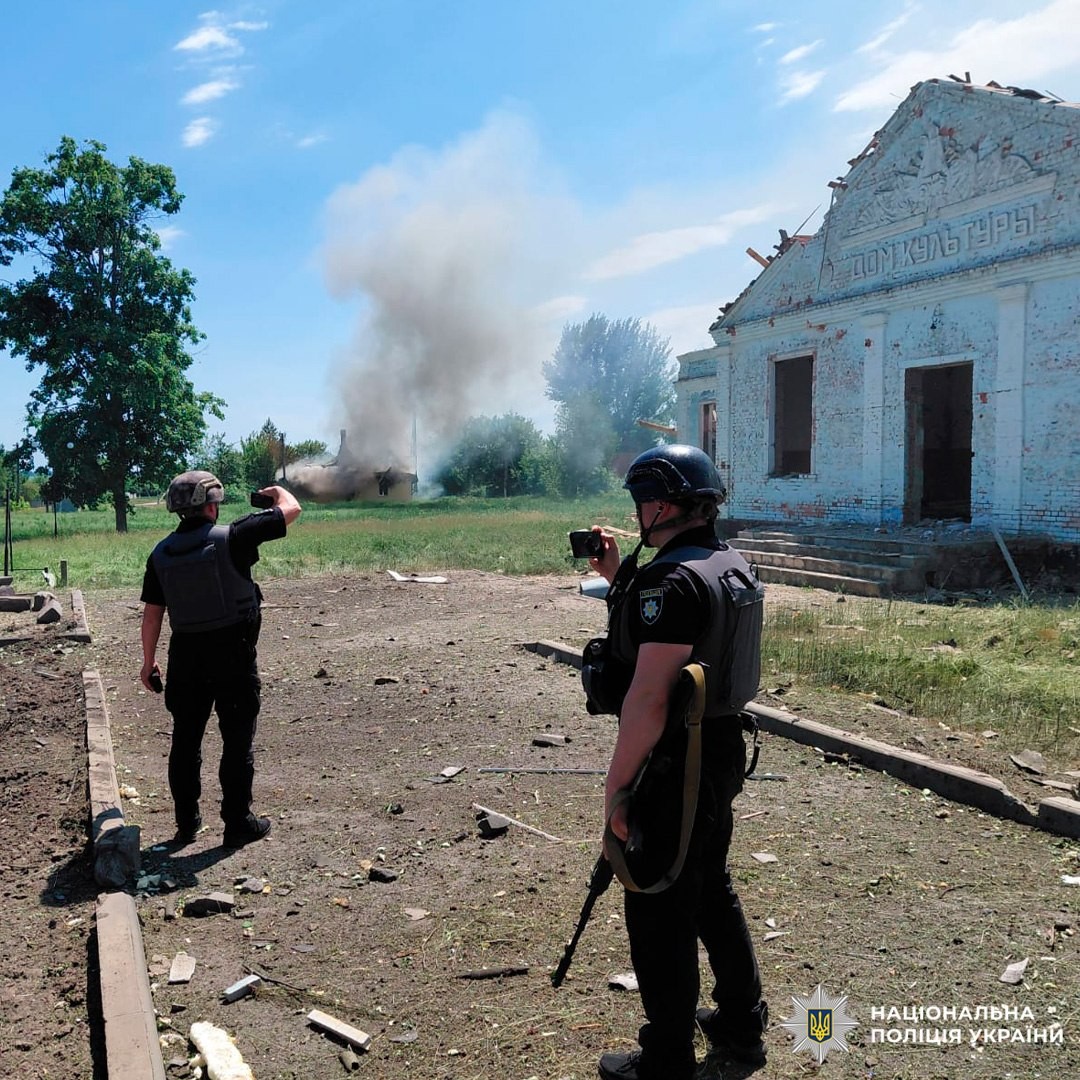
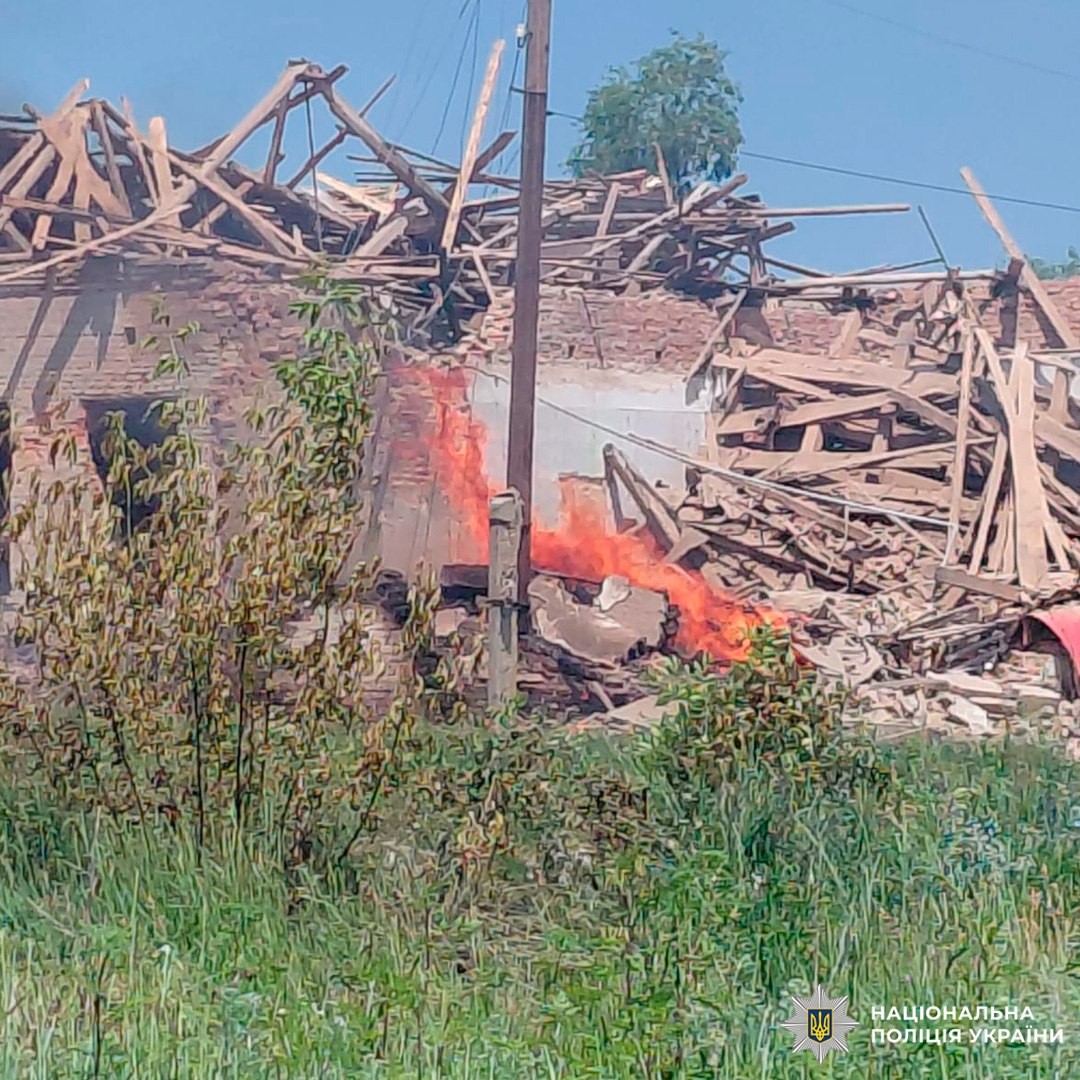
A series of Russian missile strikes on Chuhuiv overnight on 9 June killed at least three people and wounded six, the city's mayor, Halyna Minaieva, reported. Fire crews stayed at the impact sites as emergency services worked, she wrote, and the strikes damaged about eight apartment buildings and more than ten detached houses.

russian missiles kill three wound six chuhuiv drones injure 15 kharkiv including one-year-old · post police officers film aftermath strike oblast 9 2026 b8d379e4-6e28-40e3-8f78-aabbdd235e3e ukraine news ukrainian reports
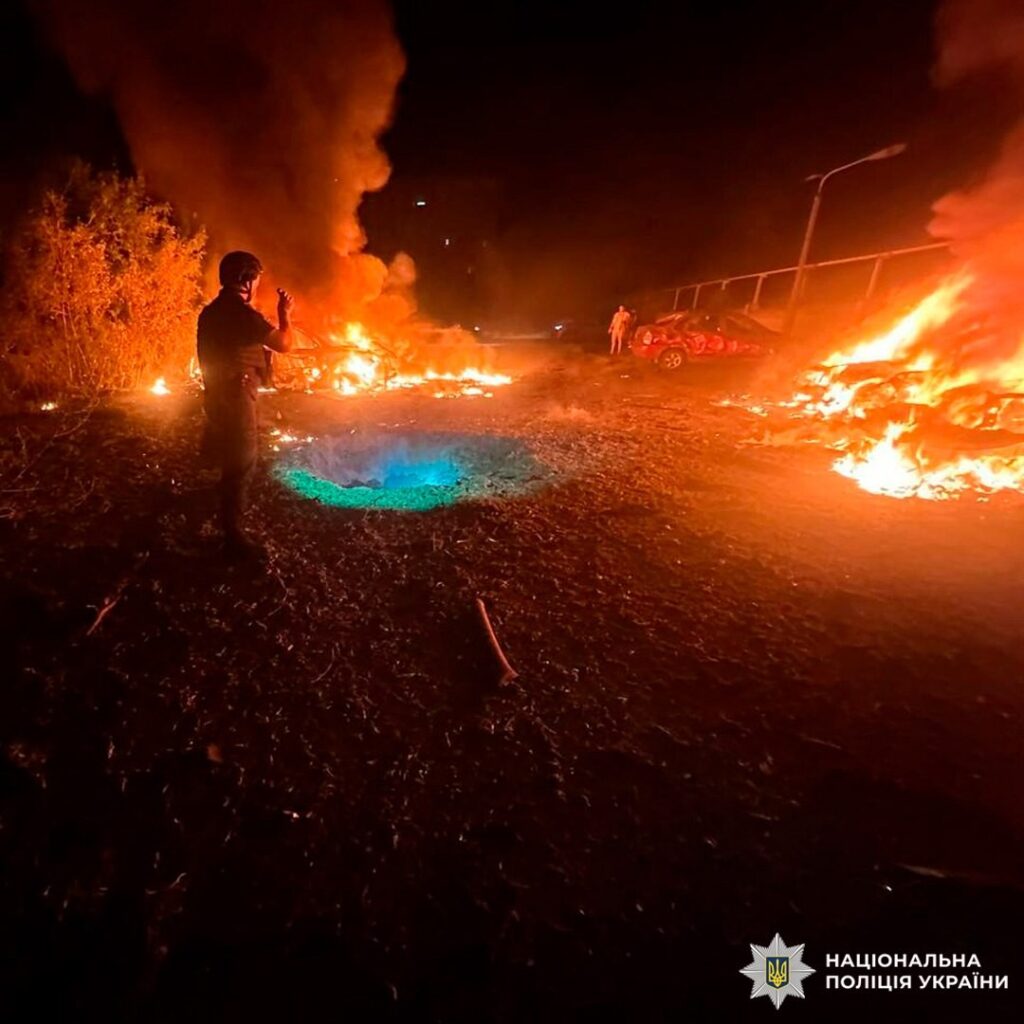
Police officers film the aftermath of a Russian strike in Kharkiv Oblast, 9 June 2026. Photo: National Police of Ukraine

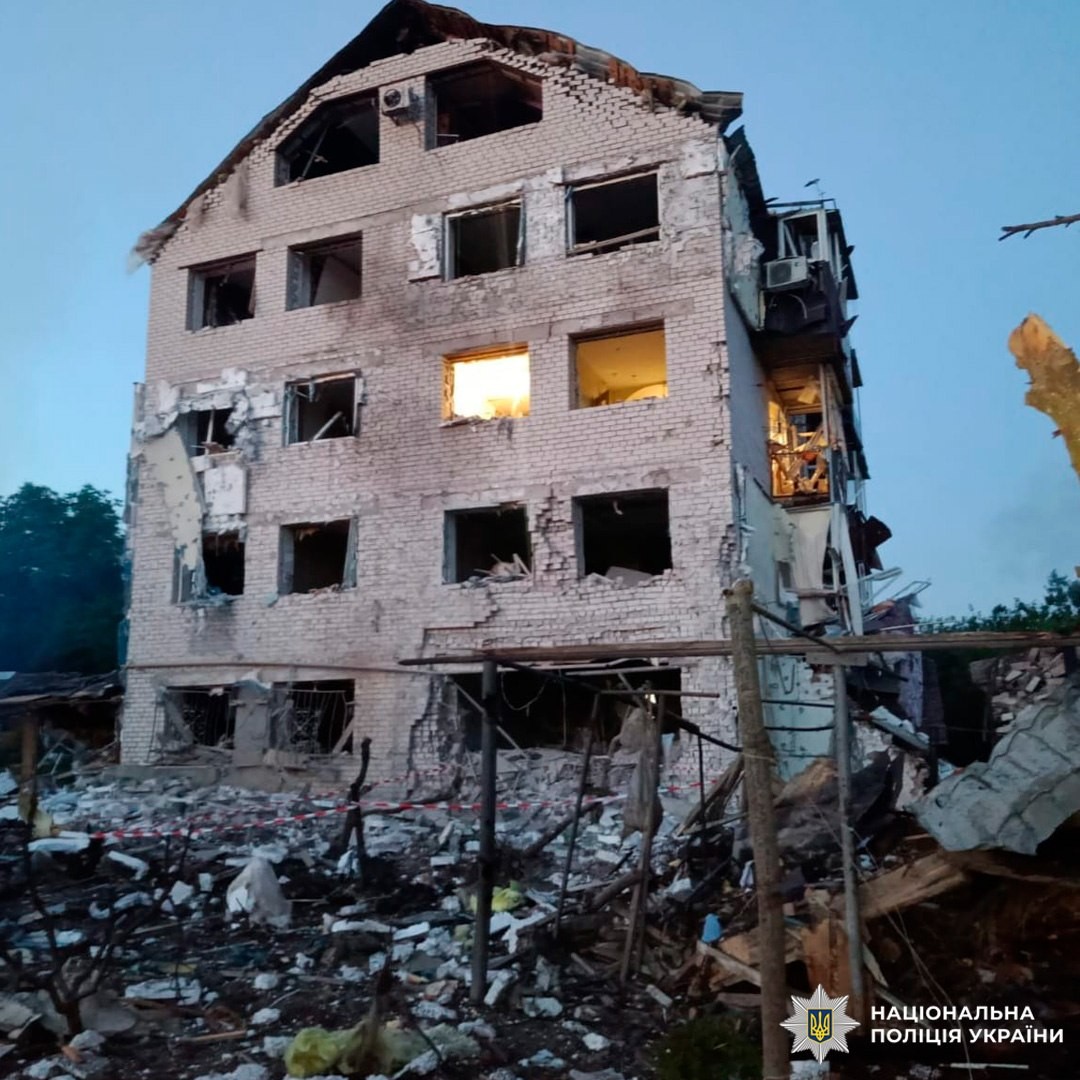
In Kharkiv—the regional capital—Russian drone strikes set off fires, damaged at least 18 cars, and blew out windows and facades in residential high-rises, Kharkiv Oblast head Oleh Syniehubov reported.

russian missiles kill three wound six chuhuiv drones injure 15 kharkiv including one-year-old · post police officers film aftermath strike oblast 9 2026 3ddd3d71-89b5-4771-8e78-a7d9f5512ce8 ukraine news ukrainian reports
Police officers film the aftermath of a Russian strike in Kharkiv Oblast, 9 June 2026. Photo: National Police of Ukraine

He said 15 people were hurt, among them three children, including a one-year-old boy, and three women were hospitalized

russian missiles kill three wound six chuhuiv drones injure 15 kharkiv including one-year-old · post multi-story residential building wrecked strike oblast 9 2026 8f58a8d8-9c07-4f40-bc34-494323214028 ukraine news ukrainian reports
A multi-story residential building wrecked by a Russian strike in Kharkiv Oblast, 9 June 2026. Photo: National Police of Ukraine

Both cities sit dozens of kilometers from the Russian border and have been struck repeatedly through the war.

A barrage of two missiles and 166 drones

Russia launched two Kh-59/69 guided air missiles from Voronezh Oblast and 166 strike drones overnight, Ukraine's Air Force reported. The drones included Shahed types, some jet-powered, along with Gerbera, Italmas, "Banderol" loitering munitions, and "Parodiya" decoys, launched from Oryol, Kursk, Bryansk, Primorsko-Akhtarsk, and Millerovo in Russia, occupied Donetsk, and Hvardiiske in occupied Crimea.

By 08:00, air defense had downed or suppressed 146 of the dronesTwo missiles and 17 drones struck 18 locations, and debris from intercepted drones fell at eight more

moscow's drone hits 10-story apartment block romania injuring two russia fires 232 uavs ukraine · post fire top-floor residential building galați after russian crashed 29 2026 пожежа у квартирі багатоповерхівки
Explore further

Moscow’s drone hits 10-story apartment block in Romania, injuring two as Russia fires 232 UAVs at Ukraine

Zaporizhzhia counts the damage from the day before

A Russian drone attack the previous day damaged 11 residential buildings across three districts of Zaporizhzhia, the city council reported. Six apartment blocks and five detached houses in the Khortytskyi, Zavodskyi, and Kosmichnyi districts lost windows, balconies, doors, and roofs to blast waves and debris. No one was hurt, and priority repairs were finished.

A nationwide wave

  • Russian attacks over 8 June killed two people in Sumy Oblast and wounded 13 across 21 hromadas, the regional police reported. A 78-year-old woman died in the Konotop hromada and a 71-year-old man in Seredyna-Buda, with a two-year-old boy and an eight-year-old boy among the injured.
  • In Donetsk Oblast, Russian forces killed two residents, in Bilozerske and Druzhkivka, and wounded 11 more, nine of them in Sloviansk, Oblast head Vadym Filashkin reported. Police recorded 1,309 attacks on the oblast's front line and residential areas, damaging 53 civilian sites. Hours later, Russia dropped three FAB-250 glide bombs on Sloviansk's outskirts, destroying one home and damaging more than 20.
  • In Kherson Oblast, drone and artillery attacks killed one person and wounded 13, including a child, Oblast head Oleksandr Prokudin reported
  • Drone strikes in Dnipropetrovsk Oblast wounded three people
  • Russian forces also hit 12 villages in four border hromadas of Chernihiv Oblast, the local border detachment told Suspilne.
  • The Russians also attacked communities in Mykolaiv Oblast with drones, where the administration reported no casualties. 

Lithuanian court: the roadside attack on a Ukraine-shirt cyclist was hate, not chance

9 June 2026 at 09:14

lithuanian court roadside attack ukraine-shirt cyclist hate chance · post mountain bike bns dviratis asociatyvi - nuotr ukraine news ukrainian reports

Lithuanian court has convicted a man who ran a cyclist off the road and attacked him for wearing a shirt with Ukrainian symbolsaccording to LRT. Judges treated his hatred of people who support Ukraine as an aggravating circumstance. The verdict is now final, and the court found the assault was deliberate, not an accident.

As Russia continues its all-out war against Ukraine, open support for Ukrainians across the Baltic states through flags, clothing, and fundraisers has become a marker of identity, even as it occasionally provokes hostility.

The roadside attack

On the evening of 27 March 2025, the man drove up to the cyclist on a road in Lithuania's Širvintos district. He repeatedly ordered the cyclist to take off the shirt bearing Ukrainian symbols. When the cyclist refused, the driver passed him, then swung the front of his car toward the roadside and blocked his path. The cyclist braked hard and fell with his bicycle. He suffered injuries, and the bicycle was damaged.

When the cyclist got back up, the man ran over to him. He again demanded that the cyclist remove the shirt, grabbed it, and tried to pull it off. The cyclist reached for his phone to call for help. The man struck him and knocked the phone onto the asphalt, breaking it, the court found.

immigration ukrainians in world
Explore further

Two Polish citizens detained in Przemyśl for desecrating Ukraine’s flag — sixth such attack in last months

A hate motive, the court ruled

The Vilnius Regional District Court found the 1987-born man guilty of damaging another's property and causing minor bodily harm. Evidence from the investigation showed the violence was not random, the court said. It stemmed from the man's hatred of the victim as someone publicly backing Ukraine against Russia's invasion. The court treated that motive, hostility toward a group for supporting Ukraine, as an aggravating circumstance.

The court handed the man a non-custodial penalty of one year and three months' restriction of liberty. During that time, he must work or register as a jobseeker. He must also complete a program aimed at changing violent behavior. On top of that, he owes the victim for material and non-material harm, and he must repay Lithuania's State Patient Fund for the cost of treating the injuries.

Amherd
Explore further

Switzerland to limit protection status for Ukrainians from seven western oblasts

A Vilnius District Prosecutor's Office prosecutor, Edvinas Navickas, led the pre-trial investigation and the prosecution. Vilnius County police officers gathered the evidence. The court issued its verdict on 12 May, and it has since taken effect, the prosecutor's office reported. Lithuania, a NATO member bordering Russia, has been one of Ukraine's strongest backers since 2022, sending weapons and welcoming Ukrainian refugees.

Lithuania has prosecuted this hatred before, convicting a man who smashed a displaced family's car.

Ukrainian refugees

Millions of Ukrainians live outside their country because Russia's invasion made home unsafe. Some 5.9 million are abroad as of 2026. Most settle in the European Union, where Poland and Germany host the largest communities. That visibility and open support for Ukraine sometimes draw hostility. Other reported attacks on Ukrainians abroad don't have a clear anti-Ukrainian motive. 

latvia's russian-language radio survives hidden state subsidy — media regulator wants over · post latvian flag eastnewsua ukraine news ukrainian reports
Explore further

Latvia sentences man to prison for anti-Ukrainian hate speech and violence

In Poland, isolated cases include a Ukrainian beaten over his accent and a woman detained for telling two Ukrainian women to go back to Ukraine, while a separate knife attack on a Ukrainian selling his car in Wrocław has not been tied to nationality.

In Germany, an attacker killed a teenage athlete, a man went after children for speaking Ukrainian, and others assaulted teenagers while chanting pro-Russian slogans; one Berlin assault and a Murnau double killing both pointed to anti-Ukrainian motives, and a Russian was jailed for life over the latter. 

The violence is not confined to those two countries: other attacks on Ukrainians have occurred in other places. Earlier, a Ukrainian was stabbed to death in Ireland in an attack police have not linked to his nationality, and a Ukrainian woman was murdered in the United States by a man who cited a delusional reason.

Russia’s closest ally says its new AI military system can detect drones, jam signals, and adapt in real time

8 June 2026 at 21:07

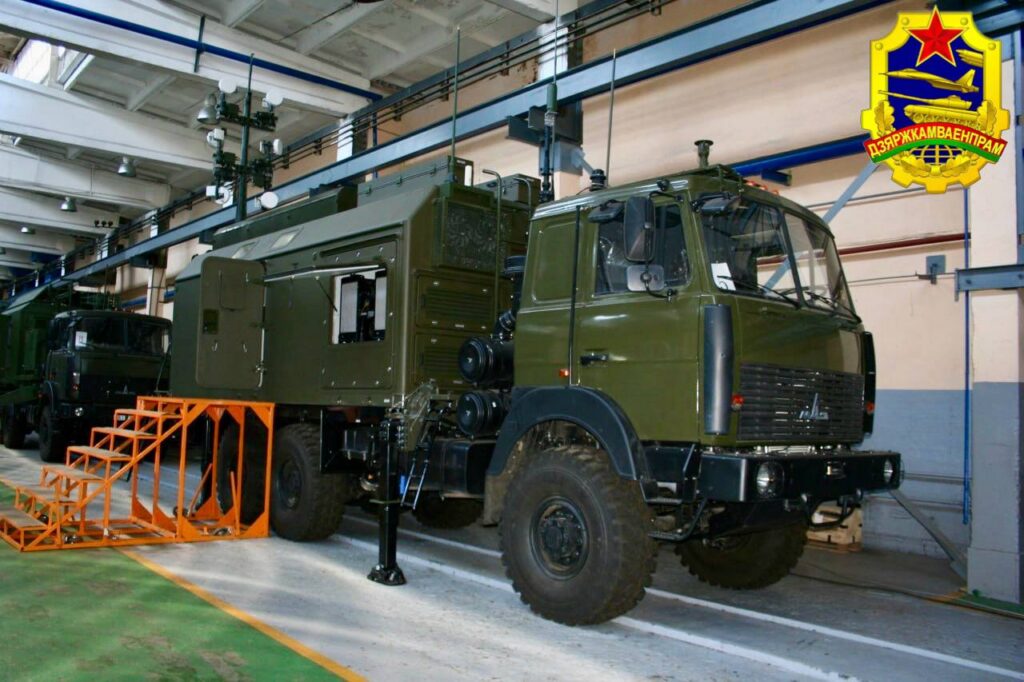
Belarusian AI-driven automated control system named "Ross". Source: The Belarusian State Military-Industrial Committee

Belarus is finishing development of an AI-driven automated control system named "Ross", the Belarusian State Military-Industrial Committee announces, publishing the photos of the system developed by Belarusian state defense enterprise KB Radar. It is designed to integrate electronic warfare, radio monitoring, and counter-drone capabilities into a single unified network. 

The announcement sits within a documented Ukrainian and Western assessment of Belarusian-Russian military integration that has shifted in recent months. Institute for the Study of War analysis in May concluded that a 2022-style Belarusian ground invasion of Ukraine is "very unlikely" given how the war has evolved. However, Ukrainian defense ministry advisor Serhii "Flash" Beskrestnov has separately warned that Russia could continue using Belarusian territory to launch missiles or Shahed drones at Ukrainian cities.

An AI-driven counter-drone EW capability in Belarus is consistent with — though not proof of — the latter scenario: Belarus building infrastructure that may enable or protect Russian drone and missile operations against Ukraine.

What does Belarus say system does? 

According to the Belarusian State Military-Industrial Committee announcement, the "Ross" system is designed to provide automated and manual control of radio-monitoring assets and complexes for suppressing communication channels, data transmission, and satellite navigation.

KB Radar's developers say the integration of AI algorithms is the principal innovation. The AI is said to help operators assess changes in the electromagnetic environment more quickly, detect radio emission sources, analyze the situation, predict its further development, and automatically select radio-suppression modes while minimizing impact on friendly communications.

Counter-drone system

A separate capability block within "Ross" is specifically focused on counter-drone operations, per the Committee. According to the developers, the system is intended to receive data from radio-frequency monitoring of airspace, detect UAVs, predict their flight routes, and determine the most effective countermeasures.

Belarusian officials state that the use of intelligent algorithms automates a significant share of analytical and computational processes, reducing operator workload and allowing personnel to focus on decision-making.

The system is also said to adapt to changes in the electromagnetic environment in real time and effectively distribute resources between suppression assets.

The unverified-claims caveat

The "Ross" announcement is a Belarusian state defense industry announcement, with KB Radar functioning as a state-controlled defense enterprise. Independent verification of the stated technical characteristics is absent, and the AI algorithms' actual capabilities have not been disclosed. 

Ukraine codifies armored vehicle with dome of 10 electronic-warfare modules designed to kill FPV drones before they hit

8 June 2026 at 19:58

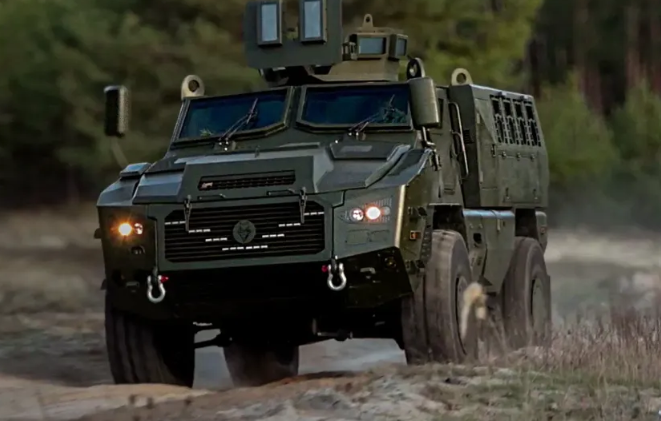
MAC OWL "Sova" armored vehicle. Source: Ukraine's Defense Ministry

Ukraine's Defense Ministry has codified and approved the domestically produced MAC OWL "Sova" armored vehicle. It has a V-shaped armored hull, 16 mm-thick side armor, and a capacity for up to 10 electronic-warfare modules forming a defensive dome against Russian FPV kamikaze drones, Oboronka reports, citing the Defense Ministry.

MAC OWL "Sova" is a joint Ukrainian-European product developed by Ukrainian company MAC HUB together with Paramount Greece, a European subsidiary of South African defense manufacturer Paramount Group.

It is rated to STANAG 4569 4a/4b, which is the highest mine-protection class, withstanding explosions of up to 10 kilograms of TNT equivalent.

MAC OWL "Sova" addresses the two most operationally lethal threats to Ukrainian troops in 2026: anti-vehicle mines and Russian FPV kamikaze drones.

Design philosophy and origins

The MAC OWL "Sova" is built on the armored body of the South African Mbombe 4 MRAP, which has been substantially adapted for the realities of the Russo-Ukrainian war.

Work on the project lasted more than a year. Ukrainian engineers, together with the military, including representatives of Ukraine's Defense Intelligence Directorate (HUR), refined the construction, increasing the number of firing ports, improving ergonomics, optimizing the chassis for Ukrainian operating conditions, per Espresso.

"Designers together with the military implemented 30 years of experience from local conflicts... The result was an armored vehicle with the highest level of crew protection," the Defense Ministry said.

Depending on configuration, MAC OWL "Sova" weighs 14.2 to 15 tonnes

It is equipped with an 8.9-liter turbodiesel engine producing 450 horsepower, which is the most powerful among all Ukrainian special armored vehicles. The vehicle has a 45-centimeter ground clearance, comparable to that of heavy military trucks, with a total height not exceeding 2.8 meters.

The cabin accommodates two crew members plus six or eight troops. The vehicle's 16-mm-thick side armor is reportedly the thickest among Ukrainian and foreign analogs in this class.

The FPV-defense dome and the 2025 procurement scaling

The 10-EW module capacity is the most operationally distinctive feature of the MAC OWL relative to earlier Ukrainian armored vehicles. Russian FPV drones, operated by individual pilots and used against Ukrainian vehicles, infantry, and frontline infrastructure, have become the dominant tactical threat in 2025-2026, with Ukraine documenting more than 11,000 Russian FPV attacks on civilians alone.

“The enemy counts on our disunity”—Ukrainian diaspora answers with Bern Declaration

8 June 2026 at 19:39

Delegates at the Global Ukrainian Summit in Bern pose for a group photograph after adopting the Bern Declaration on 7 June 2026. Many participants wear traditional Ukrainian vyshyvanky. A Ukrainian flag is visible at lower left.

"The enemy is counting on our disunity," Ukraine's Deputy Foreign Minister Mariana Betsa told more than 350 diaspora leaders gathered in Bern on 7 June 2026. The answer came in the form of the Bern Declaration—a document committing Ukrainian communities across more than 50 countries to coordinated defense support, territorial restoration, and postwar recovery, the Ukrainian World Congress reported.

The declaration lands at a turning point for Ukraine's global community. An estimated 5.9 million Ukrainians now live abroad, yet only 43% of refugees say the war's end would be enough to bring them home.

The Bern Declaration reframes that reality: if millions of Ukrainians remain dispersed for years, their energy must be channeled into something more than candlelight vigils and flag-waving. The document calls global unity "not a symbol" but "a strategic prerequisite for the success of Ukraine and the Ukrainian people."

What the Bern Declaration demands

The Global Ukrainian Summit, held 5–7 June at the Yehudi Menuhin Forum next to Ukraine's embassy in the Swiss capital, was organized by the Ukrainian World Congress (UWC) in cooperation with the Ukrainian Society of Switzerland—an organization that has built ties between the two countries since 1945—and in partnership with Ukraine's Ministry of Foreign Affairs.

The declaration set out three priorities: Ukraine's victory through a just and lasting peace that restores territorial integrity and holds Russia accountable; the recovery of a strong, independent state free from Russian influence; and the cultivation of future generations of Ukrainian patriots worldwide.

It then issued seven calls to action. Diaspora communities pledged to fund Ukraine's defense forces, engage in political advocacy, take leading roles in reconstruction, protect Ukrainian identity and heritage, strengthen cross-border community networks, resist attempts to divide the Ukrainian people, and amplify Ukraine's global voice.

"Our goals remain unchanged: Ukraine's victory and Russia's defeat, the reconstruction of Ukraine, and a strong global Ukrainian community," UWC President Paul Grod told delegates at the summit's opening session.

Why Bern, and why now

The summit opened with a minute of silence for fallen defenders and all victims of Russia's war on Ukraine. In addition to Betsa, speakers included Deputy Minister of Social Policy Ilona Havronska, Central Election Commission head Oleh Didenko, Ukraine's Ambassador to Switzerland Iryna Venediktova, and former Russian prisoner of war Yuliia Paievska, known as "Taira."

Security remains the prerequisite for the return of millions of displaced Ukrainians, and the government is developing long-term solutions, Deputy Minister of Social Policy Havronska told delegates, according to SWI swissinfo.ch. Venediktova called for coordinated international measures—from sanctions enforcement to the deployment of frozen Russian assets and international criminal prosecution.

Swiss Federal Council Delegate for Ukraine Jacques Gerber attended the opening, underscoring Switzerland's growing role in humanitarian aid and reconstruction in Ukraine, SWI swissinfo.ch noted. Publicist Mykola Riabchuk delivered the keynote on unity within the global Ukrainian community, the UWC reported.

"Ukraine is already proving that it is a strong European nation that is fighting for its sovereignty and for the future of freedom around the world," Betsa told the summit.

From gestures to coordination

The Bern Declaration is the latest in a series of moves that trace a diaspora increasingly organized around concrete objectives. One month ago, Ukraine's women's diaspora gathered at the European Parliament in Brussels to debate the future of temporary protection for 4.4 million refugees.

Four months before that, the UWC coordinated nearly 1,000 events in 78 countries to mark the fourth anniversary of Russia's full-scale invasion. The Bern Declaration converts that momentum into a standing set of commitments.

The document, as Ukrinform reported, closed with three guiding principles: "Ukraine defines our unity. Responsibility before the Ukrainian people defines our unity. National action defines our unity."

"The enemy is counting on our disunity. Ukraine is already proving that it is a strong European nation that is fighting for its sovereignty and for the future of freedom around the world." — Deputy Foreign Minister Mariana Betsa, Bern, 7 June 2026


61% of Ukrainians reject ceasefire without security guarantees. Same 61% would accept one with European troops on frontline

8 June 2026 at 17:18

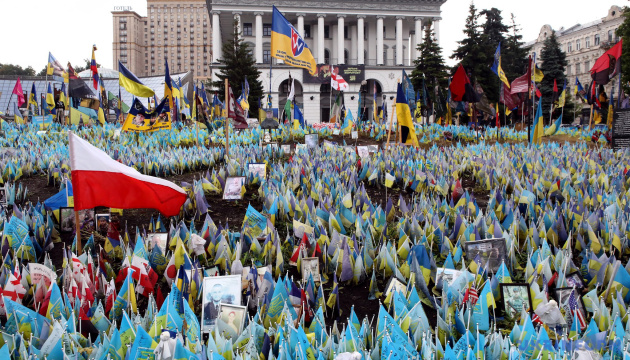
The photo shows a Memorial on the Independence Square in Kyiv, where families of fallen defenders leave thousands of flags with the names, photos, and dates of death of their relatives who gave their lives in the Russian-Ukrainian war. Source: UkrInform

More than 60% of Ukrainians categorically reject a ceasefire along the current frontline if Ukraine receives no security guarantees. The same share would approve a ceasefire if European troops were stationed near the frontline and would defend Ukraine against renewed Russian aggression, according to a new Kyiv International Institute of Sociology (KIIS) poll, conducted between 7 May and 3 June 2026.

The poll quantifies the substantive Ukrainian public position on the ongoing diplomatic process: the ceasefire itself is not the disputed question, but security guarantees are.

Across the four scenarios KIIS tested, the lowest level of support (32%) is for a ceasefire without guarantees. Mid-range support corresponds to mid-range guarantees: 42% for European troops deep in Ukraine that would not fight, and 53% for security guarantees in the form of large-scale financial and weapons support.

Four scenarios in detail

Scenario 1 — ceasefire without security guarantees, money, or weapons: 61% categorically reject, 32% willing to approve (mostly reluctantly). This is the substantive Ukrainian public position on the unconditional ceasefire that Russian negotiators have repeatedly framed as a starting point: the offer falls short by roughly two-to-one.

Scenario 2 — ceasefire with European troops deployed deep in Ukraine, NOT participating in combat if Russia attacks again: 49% categorically reject, 42% willing to approve. A passive Western presence is closer to acceptance but does not yet command majority support.

Scenario 3 — ceasefire with security guarantees in the form of large-scale money and weapons supply: 37% categorically reject, 53% willing to approve. Material guarantees alone gain majority support, but with significant skepticism remaining.

Scenario 4 — ceasefire with European troops near the frontline who WOULD defend Ukraine against renewed Russian aggression: 33% categorically reject, 61% willing to approve. Active defense by European forces commands the highest support, with a clear majority in favor of a ceasefire under conditions that make Russian re-invasion materially riskier.

Methodology and coverage

KIIS conducted the survey by computer-assisted telephone interview (CATI), using random sampling of mobile phone numbers. The sample of 2,007 Ukrainian citizens aged 18 and older was drawn exclusively from territory controlled by the Ukrainian government, meaning the data does not include displaced Ukrainians abroad or Ukrainians in Russian-occupied territories.

The polling period of 7 May through 3 June 2026 covered the full month of the current phase of US-mediated diplomatic activity, during which Russia continued striking Ukrainian cities with Shahed drones and missile attacks.

Advanced Alzheimer’s successfully treated with psilocybin, a recent case study says

8 June 2026 at 17:15

Psilocybin is a naturally occurring compound found in over 200 species of fungi collectively known as “magic mushrooms.” It functions as a prodrug, meaning it is biologically inactive until ingested, at which […]

The post Advanced Alzheimer’s successfully treated with psilocybin, a recent case study says first appeared on The Expose.

❌