A federal judge over the weekend struck down a Trump administration effort to restrict tax credits for wind and solar energy. While the ruling is a win for renewable energy supporters, it comes less than a month before a key deadline to phase out the credits entirely under Republicans’ “Big Beautiful Bill,” so it’s unclear how wide-reaching the…
Annual killing of infant gannets has been carried out on a remote Scottish island for at least 400 years
Animal welfare campaigners have called for talks on phasing out the “inhumane” hunt for infant gannets known as guga, which are killed by hunters on a remote Scottish island once a year.
OneKind and the League Against Cruel Sports said it should be slowly phased out in dialogue with the Hebridean islanders who see the hunt, which has been carried out for at least 400 years, as a cultural pursuit and as sustainable food harvesting.
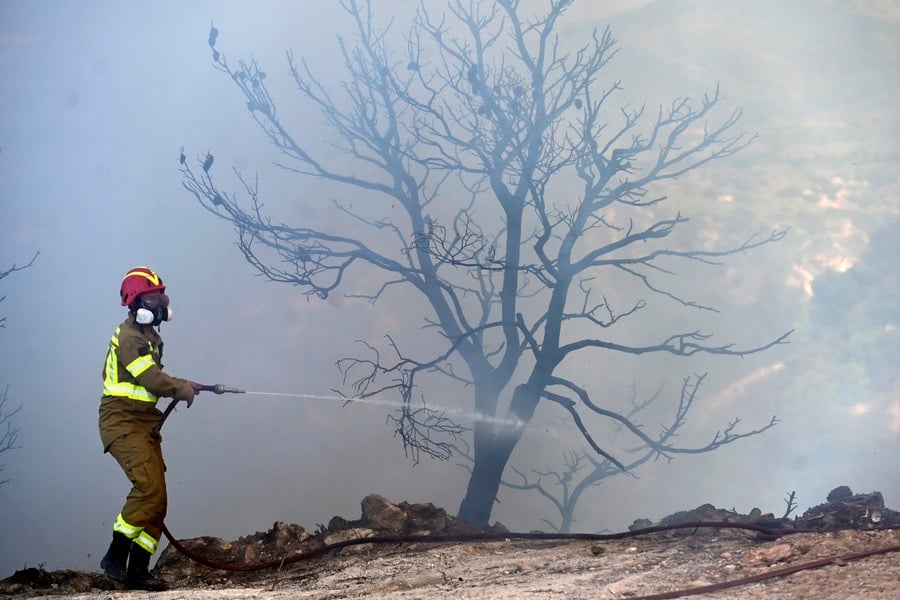
A firefighter tackles forest fires in Greece as rising temperatures heightened risk. Credit: Vasilis Psomas / AMNA.
According to Greece’s Fire Service on Monday, sixty-four forest fires broke out across the country in the last two days, as rising temperatures heightened fire risk, with officials attributing most incidents to negligence during outdoor work and other activities.
Early assessments suggest that human carelessness is the primary cause in most cases. Specialized investigative units are currently examining each incident to establish the exact cause and determine responsibility where appropriate.
Heat and negligence heighten risk of forest fires across Greece
Officials said recent high temperatures have increased the risk of ignition and allowed fires to spread more rapidly. However, firefighting forces managed to bring most blazes under control at an early stage through rapid intervention.
The Hellenic Fire Service noted that the swift response prevented the fires from reaching populated areas, highlighting the importance of immediate mobilization in the critical moments after a fire breaks out.
The warning comes as Greece enters a particularly dangerous period for forest fire activity, when dry vegetation, rising temperatures, and local winds can quickly turn even a small spark into a fast-moving blaze.
Hundreds of fines and dozens of arrests since January
Authorities have stepped up enforcement of fire prevention regulations since the beginning of the year. From January 1 through June 7, they imposed 402 administrative fines across Greece, totaling around €383,395 ($442,500). During the same period, authorities made seventy-one arrests as called for under procedures for violations of fire prevention legislation.
The figures reflect a broader effort to discourage risky behavior before it leads to larger fires, particularly during periods when weather conditions make the natural environment more vulnerable.
Fire service urges public to avoid risky outdoor activity
The Fire Service has called on citizens to exercise extreme caution during outdoor activities, particularly those involving sparks, flames, machinery, burning materials, or labor near dry grass and forested areas.
Officials emphasized that most forest fires can be prevented by adhering to basic safety rules and avoiding actions that could ignite a blaze. “Attention from everyone is crucial for protecting human life, property, and the natural environment,” Greek authorities said.
Greece braces for forest fires as summer heat intensifies with expanded resources
The latest warning comes as Greece enters the wildfire season with a significantly reinforced firefighting plan designed to address increasingly intense and unpredictable summer blazes across the country. On the ground, the Hellenic Fire Service currently counts 17,727 permanent and seasonal firefighters, with the force expected to rise to 18,804 by the end of the year. More than 4,300 vehicles support this expanded manpower, enabling faster deployment and tactical assistance to regional units across both mainland and island areas.
Specialized forest commando units are expected to play a central role in this year’s strategy. These teams are trained to operate in challenging and inaccessible terrain where conventional firefighting forces may struggle to intervene quickly. The elite corps now consists of twenty-one units with 1,450 personnel, marking a sharp expansion compared to 2022, when the program began with just six units.
Greece has also strengthened its aerial firefighting capacity, with eighty to eighty-five aircraft expected to be available daily during the high-risk season, including thirty-three state-owned aircraft and fifty-one leased planes. These resources are intended to support rapid aerial containment, particularly in the critical early stages of a forest fire.
Authorities are increasingly relying on technology as well, including an expanded drone fleet, to improve surveillance and early detection in vulnerable areas. The goal is to identify smoke, heat signatures, or suspicious activity before fires spread, allowing Civil Protection and fire services to coordinate a faster response.
Wildlife department says drought conditions and water released from dam led to ‘major fish kill’ at San Carlos Lake
Arizona officials have indefinitely closed a popular lake to visitors after its entire population of fish died recently.
The recreation and wildlife department that maintains San Carlos Lake said in a Facebook statement on Friday that drought conditions as well as water released from a dam there “resulted in a major fish kill affecting approximately 100% of the fish population”.
India declares onset as up to 280mm of rain falls in 72 hours in Kerala, while downpours hit south-west Thailand
The monsoon season has officially begun in parts of Asia, marking the start of a period of enhanced rainfall vital to the region’s economy.
The south-west monsoon begins each year as a consequence of a growing temperature difference between the Asian land mass and the Indian Ocean. Through spring, the land heats up more rapidly than the surrounding sea, creating a pressure difference that draws moisture-laden ocean air inland. Once this contrast reaches a critical point, the humid air pushed over the continent rises, condenses into cloud and unleashes intense rainfall across the region.
Record numbers linked to warming waters is mixed news for fishers, with shellfish catches down but octopus catches booming
Record numbers of octopuses found off the south-west coast of England last year have now spread as far as Scotland and Wales and are transforming the fishing industry and the marine ecosystem, according to a study.
The surge in sightings of one of the world’s most intelligent invertebrates was first recorded in 2025 off the south coast of Devon and Cornwall.
Traditional fishing in the lagoons stretches back to Byzantine times and Venetian rule. Credit: Greek Ministry of Culture
The Messolonghi-Aitolikos Lagoons National Park in Western Greece is a testament to the enduring legacy of traditional fishing, a practice deeply intertwined with the ingenuity of local communities and the sustainable management of natural resources.
This ancestral knowledge, vital to the region’s cultural identity, is now being meticulously recorded and preserved for future generations. For centuries, fishing here has been more than just a profession; it’s an art form with roots stretching back to medieval-Byzantine times and Venetian rule. Through collaborative efforts with local communities, this crucial element of the region’s heritage is being safeguarded.
Traditional boats in the lagoons. Credit: Greek Ministry of Culture
Part of the history and life of our country
“The traditional fishing of the Messolonghi Lagoon is part of the history and life of our country. It is connected to the collective cultural consciousness of the inhabitants of the region and travels through the depths of time,” said Spilios Livanos, the former Minister of Rural Development and Food.
The lagoon itself is a vibrant ecosystem, a living organism teeming with rich flora and fauna. This biodiversity, which boasts 290 bird species and over 100 plant species, underpins the traditional fishing practices and exemplifies the harmonious coexistence of humans and nature. The rich natural environment is a cornerstone of professional activity, sustainable development, and the preservation of the traditional way of fishing.
House built in the sea. Credit: Greek Ministry of Culture
Central to the unique fishing culture of the Messolonghi-Aitolikos lagoons are the distinctive methods and tools employed. The divaria, permanent fishing traps that double as natural fish farms, are a prime example. Across the lagoon complex, there are fourteen such facilities, eight of which are traditional and strategically located where the lagoon meets the sea.
Remarkably, the placement of these traditional divaria has remained unchanged since 1826, a testament to their enduring effectiveness and the deep-rooted knowledge of the local fishermen. These wetlands are highly productive habitats, attracting a vast array of aquatic organisms that are commercially exploited by the more than seven hundred active fishermen in the lagoon today.
Fishermen’s homes in the lagoons. Credit: Greek Ministry of Culture
Beyond the stationary divaria, other key elements of this traditional know-how include the Pelades, the iconic reed houses built on stilts above the water, which serve as both homes and operational bases for fishermen. The gaites, unique flat-bottomed wooden boats, are essential for navigating the shallow waters of the lagoon and are built using specific types of wood, reflecting a deep understanding of local resources.
Flathead grey mullet (Mugil cephalus) is the most famous fish species caught in these waters. This species is particularly important, as its roe is used to produce the famous Avgotaracho of Messolonghi, a protected designation of origin (PDO) delicacy.
Preserving traditional fishing in Greece’s lagoons
Despite the demanding conditions, generations of fishermen continue this tradition, making it an integral part of their historical and cultural heritage. This resilience was even a crucial factor in the survival of the people of Messolonghi during the city’s historic siege.
The rich tapestry of traditional fishing knowledge encompasses a wide range of skills: from constructing buildings and utilitarian objects to identifying suitable wood for boat building and crafting fishing tools like longlines, harpoons, and stafnokari (a type of net). These permanent installations (divaria) and mobile means (boats, gaites), along with the tools, collectively form a cultural heritage that continues to sustain the inhabitants of the region.
In 2022, the traditional fishing practices of the Messolonghi-Aitolikos Lagoons were included in the National Register of Intangible Cultural Heritage of Greece.
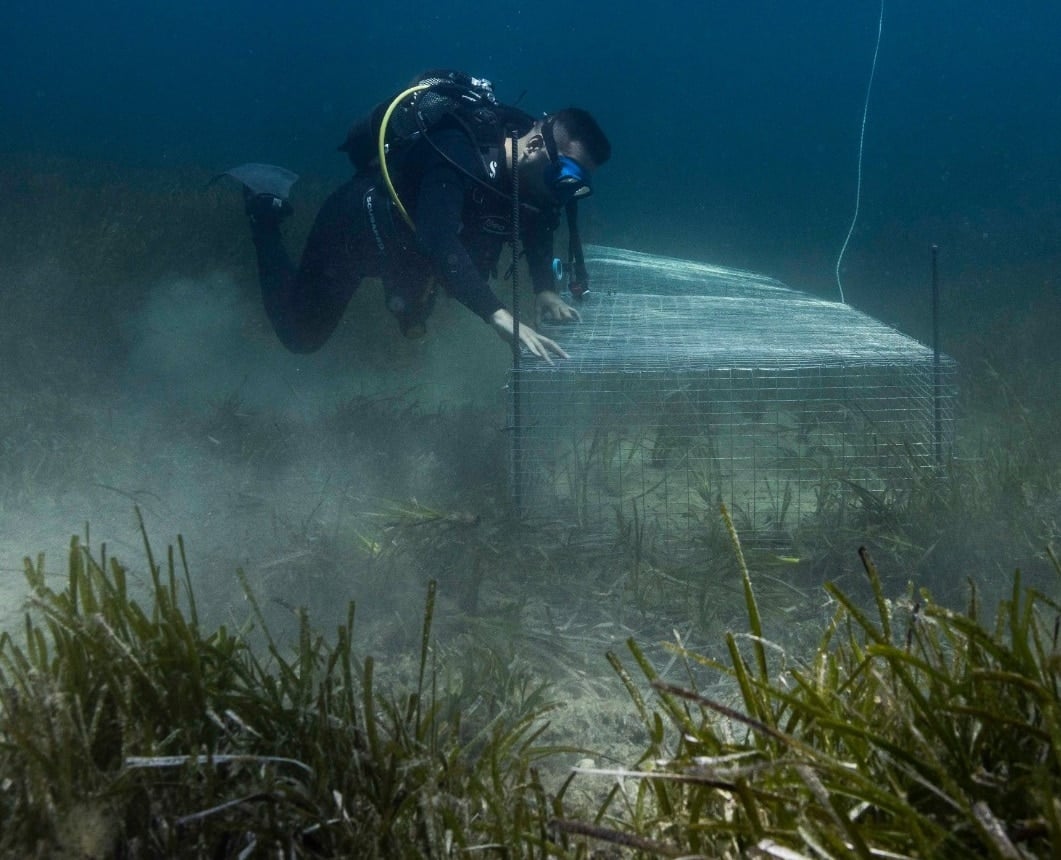
The Posidonia sanctuary holds over 270,000 tons of stored carbon dioxide. Credit: iSea
The environmental organization iSea, in collaboration with the Hellenic Ornithological Society and the Municipality of Lemnos, has launched an ambitious project to restore the Eastern Mediterranean’s largest marine meadow—a 140-square-kilometer Posidonia sanctuary off the coast of Lemnos, widely known as the region’s “Amazon.”
This massive underwater ecosystem serves as a vital carbon sink, holding over 270,000 tons of stored carbon dioxide and effectively absorbing the annual emissions produced by the vehicles of an entire small city.
To mark World Environment Day 2026, the project partners are celebrating the completion of the initiative’s pilot phase under the “Reviving Lemnos” program, which successfully transplanted more than 250 posidonia shoots.
A Vital Marine Ecosystem
Posidonia oceanica is not an algae, but a flowering marine plant (seagrass) that forms dense underwater meadows. These meadows act as a crucial sanctuary for an abundance of marine life. While most people recognize it from the long, brown “seaweed” leaves that wash ashore, its true value lies beneath the surface.
The Lemnos marine meadow thrives at depths of up to 30 meters and stretches over 20 kilometers long, extending beyond the boundaries of the Natura 2000 Protected Area and into international waters. According to data from iSea, this single ecosystem hosts more than 66 species of marine organisms.
Looking Ahead: The “Reviving Lemnos” Project
During this pilot phase, the transplanted shoots have been secured inside protective metal cages to shield them until they mature, and they will remain under close scientific monitoring.
This initial phase sets the foundation for a much larger effort: restoring more than 10,000 posidonia rhizomes across a 400-square-meter area over the coming years.
“The knowledge gained from monitoring this pilot application will provide a valuable roadmap for completing our restoration actions and ensuring the long-term success of ecosystem conservation in Lemnos,” said Nikoletta Sidiropoulou, Project Manager at iSea.
The “Reviving Lemnos” project is one of seven large-scale initiatives funded by the international Endangered Landscapes & Seascapes Programme.
Good news about the state of the planet might seem to be in short supply, but it's out there. Each week, DW's environment desk brings you what went right.
More than 1 million people advised to evacuate homes amid 80mph winds and heavy rain
Typhoon Jangmi (also known as Typhoon No 6) moved northwards over the course of this week. From Okinawa to mainland Japan, prolonged and heavy rainfall led to landslide warnings and the flooding of rivers, with Japan issuing level 4 warnings for some rivers, signalling a risk of overflowing. This level is high enough for municipalities to issue evacuation orders. Three-hourly rainfall totals on Wednesday reached 105mm in Chiyoda, Tokyo, which was a record high for the month. Sustained wind speeds of 80mph (130kph) were recorded on Monday – making it a category 1 typhoon – bringing damage and disruption to businesses, transport, infrastructure and the environment.
By Wednesday, 23 people had been injured, 17 of whom were in Okinawa. The typhoon damaged 57 homes and led to 60,000 homes losing electricity. In addition to this, 1.52 million people were advised to evacuate by authorities. The typhoon damaged the exterior wall of Himeji Castle, a Unesco world heritage site in western Japan. The maximum recorded wind speed at Himeji was 56mph, according to the Japan Meteorological Agency. The typhoon has now weakened into a tropical depression and has moved eastwards, away from the islands.
Portugal has one of the lowest per capita greenhouse gas (GHG) emissions in Europe and generates a ‘high amount’ of renewable energy – but this performance is undermined by its
Observed every year on June 5, World Environment Day is the United Nations’ main global platform for raising awareness and mobilizing action to protect the natural world. Credit: Greek Reporter
Greece is marking World Environment Day 2026 with a nationwide program of events that brings the global call for climate action down to the local level—from protected areas and wetlands to city galleries, museums, and island beaches.
Observed every year on June 5, World Environment Day is the United Nations’ main global platform for raising awareness and mobilizing action to protect the natural world. First celebrated in 1973, the day has grown into an international campaign involving governments, organizations, schools, communities and citizens around the world.
In Greece, the Natural Environment and Climate Change Agency, NECCA, is at the center of the program, organizing 65 events across the country. Activities include guided nature walks, biodiversity recording, wildlife observation, educational games, workshops, public information events and volunteer cleanups, many of them in or near protected areas.
Greece’s government highlights achievements on World Environment Day
Greece’s Minister of Environment and Energy, Stavros Papastavrou, highlighted some of the government’s environmental policies and key achievements over the past seven years.
Expanded Marine Protection: Moving forward from commitments made at global ocean conferences (2024 in Athens and 2025 at the UN), Greece is establishing two new large National Marine Parks in the Ionian and South Aegean seas. This will double protected waters to 36% of territorial waters, surpassing the EU’s 30% target well ahead of 2030.
Banning Industrial Fishing: Greece is pioneering marine conservation internationally by completely banning bottom trawling in all national marine parks.
Renewable Energy Zoning Restrictions: New regulations prohibit the installation of solar farms in all Natura areas, forests, and woodlands, and ban wind farms at altitudes above 1,200 meters (3,937 ft).
“Untrodden” Landscapes: Greece has introduced pioneering designations for strict ecological preservation, establishing thirteen “Untrodden Mountains” and 250 highly protected “Untrodden Beaches” to limit human development in sensitive ecosystems.
Targeted Species & Habitat Conservation: Twelve National Action Plans have been launched to protect endangered species (including the brown bear, Mediterranean monk seal, Loggerhead sea turtle, and bearded vulture). Additionally, all major wetlands (Ramsar sites) and Key Biodiversity Areas are now placed under strict legislative protection.
BANGKOK — Seven hundred days after activists from the environmental group Mother Nature Cambodia were imprisoned on charges widely regarded as retaliatory for their activism, 73 international and Cambodian civil society organizations have renewed calls for their unconditional release. After a trial lasting just over a month, 10 activists from Mother Nature Cambodia were sentenced on July 2, 2024, to between six and eight years in prison. Only five of the defendants attended the hearings, which saw Long Kuntha, 28, Ly Chandaravuth, 26, Phuon Keoraksmey, 25, and Thun Ratha, 34, each sentenced to six years behind bars for plotting against the government; fellow activist Yim Leanghy, 36, received an eight-year sentence for both plotting against the government and insulting the king. The five activists who did not attend the trial were sentenced in absentia. The appeals hearing for all 10 convicted activists was slated to take place on June 2, but has been postponed indefinitely by the Phnom Penh Court of Appeals. “The MNC5 are incarcerated in prisons in overcrowded and harsh living conditions, separated from each other and spread out all across Cambodia, hundreds of kilometers away from their families and legal counsel,” wrote the 73 NGOs in an open letter addressed to Prime Minister Hun Manet. “The … NGOs who have signed this letter sincerely request you take immediate action to ensure the unjust convictions of these five activists are reversed either prior to or at their upcoming appeals court hearing in Phnom Penh, and that their freedom…This article was originally published on Mongabay
The USDA this week confirmed the first known infection of the carnivorous fly larva, which feast on the flesh of living mammals, after the United States eradicated the nightmare bugs in the 1960s.
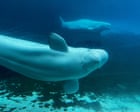
Beluga whales, which Marineland threatened to euthanize in 2025, will be moved to aquariums in Spain or across US
Canada and an embattled marine park have reached a tentative deal on the future of 30 beluga whales, ending a saga that has captivated the public and angered animal rights groups.
The federal fisheries ministry announced this week that all of Marineland’s belugas would be shipped to either Spain or one of four locations in the US, ending whale captivity in Canada.
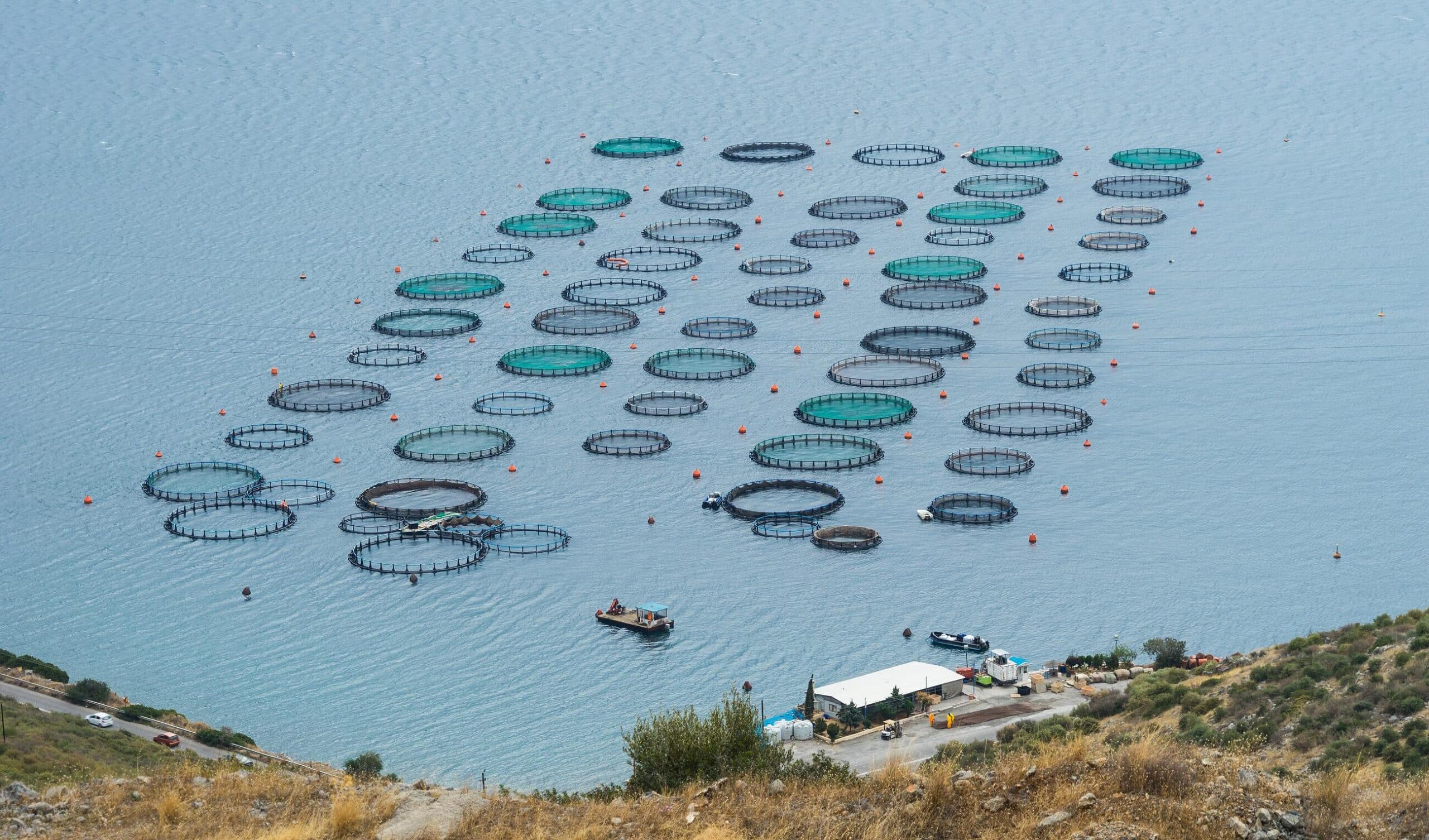
Fish farming cages in Greek waters, as Greece accelerates aquaculture investment while abandoned fish farms raise environmental and maritime safety concerns. Credit: Wikimedia Commons / Jebulon / Public Domain
Greece is accelerating investment in its aquaculture sector, approving 105 new projects worth €131 million ($151,9 million), while abandoned fish farms continue to raise environmental and maritime safety concerns.
Greek Rural Development and Food Minister Margaritis Schinas said Wednesday that the approved investment plans include €87 million ($100 million) in public funding. Speaking at the opening of the 14th session of the Scientific Advisory Committee on Aquaculture of the General Fisheries Commission for the Mediterranean, he outlined the government’s plan for a more competitive, sustainable and resilient aquaculture industry.
Greece targets growth in aquaculture
According to Schinas, the government increased the original budget allocation from €71 million ($82 million) to €78 million ($90 million) to support all aquaculture projects that received a positive evaluation. He described the package as one of the most important investment interventions in the sector in recent years.
The funding will help modernize production facilities, encourage innovation, support digital transformation and strengthen the global competitiveness of Greek aquaculture. The government aims to achieve average annual production growth of 5 percent through the end of the decade.
Schinas also linked the future of aquaculture to broader challenges facing Europe, including food security, climate change, sustainable development and the protection of natural resources. “The question facing the Mediterranean today is how to produce more and better food without exhausting the natural resources on which production itself depends,” he said, adding that the answer lies in cooperation, scientific research, innovation and a shared European and Mediterranean vision.
A major export industry for Greece
Aquaculture is already one of Greece’s most important export-oriented food sectors. Schinas said the country currently has around 285 marine fish farming units, more than 400 shellfish farming operations and 24 hatcheries.
Government estimates put annual production at nearly 141,000 metric tons, while the sector supports more than 10,000 direct and indirect jobs. About 80 percent of Greek aquaculture output is exported.
“Greek fish has evolved into a true ambassador for our country,” Schinas said.
Abandoned fish farms raise pollution concerns in Greece
The investment push comes as Greece is also dealing with the environmental legacy of abandoned aquaculture sites, sometimes described as “ghost farms.”
These sites are fish farms that operators have left behind, often with nets, cages and other infrastructure still in the sea. Over time, abandoned nets, plastics, tiles and timber can pollute nearby waters, harm marine life and create risks for shipping.
The issue gained renewed attention in February 2026, when a large fish-farming ring was spotted drifting in the Ionian Sea before ending up near Ithaca. The structure had entered a route used by passenger vessels, prompting the Coast Guard to intercept it over safety concerns.
Modi site removed after pressure
Abandoned aquaculture structures previously recorded near Modi in western Greece have since been removed by the operator and reportedly sent for recycling. Healthy Seas had identified the site years earlier through surveys conducted with Ghost Diving Greece and the Greek NGO OZON. The groups recorded four aquaculture rings there and considered them inactive.
After the drifting-ring incident near Ithaca, Healthy Seas examined a possible connection with the Modi site. The organization said the type of ring was unusual for the area, making the possible link difficult to ignore.
Following cooperation with authorities, media exposure and formal correspondence with competent bodies, the Coast Guard carried out a new inspection at Modi. Authorities later confirmed that the structures previously recorded there had been removed. The operator reportedly told the Coast Guard that the structures had been transferred to a recycling company.
The operator is said to have denied that the drifting ring came from its facility. Still, regardless of the ring’s origin, one more abandoned aquaculture site has now been cleared from Greek waters.
Aquaculture in Greece. Credit: EU Directorate-General for Maritime Affairs and Fisheries
Abandoned Fish Farms Challenge Sustainable Aquaculture in Greece
For environmental groups, the case shows that abandoned aquaculture infrastructure is not only a marine pollution problem. It can also become a safety risk when structures break loose and drift into busy waters. Veronika Mikos, director of Healthy Seas, said the case points to a new way of dealing with abandoned fish-farming infrastructure.
“For years our work has focused mainly on the physical removal of abandoned aquaculture infrastructure from the sea,” Mikos said. “What makes this case important is that it points to another possible path: strategic engagement, institutional pressure and coordinated action that can encourage operators to assume responsibility themselves before these structures become even more serious environmental or maritime hazards.”
The challenge for Greece is now twofold: expanding a high-value export industry while ensuring that old or inactive facilities do not remain in the sea long after production has stopped.
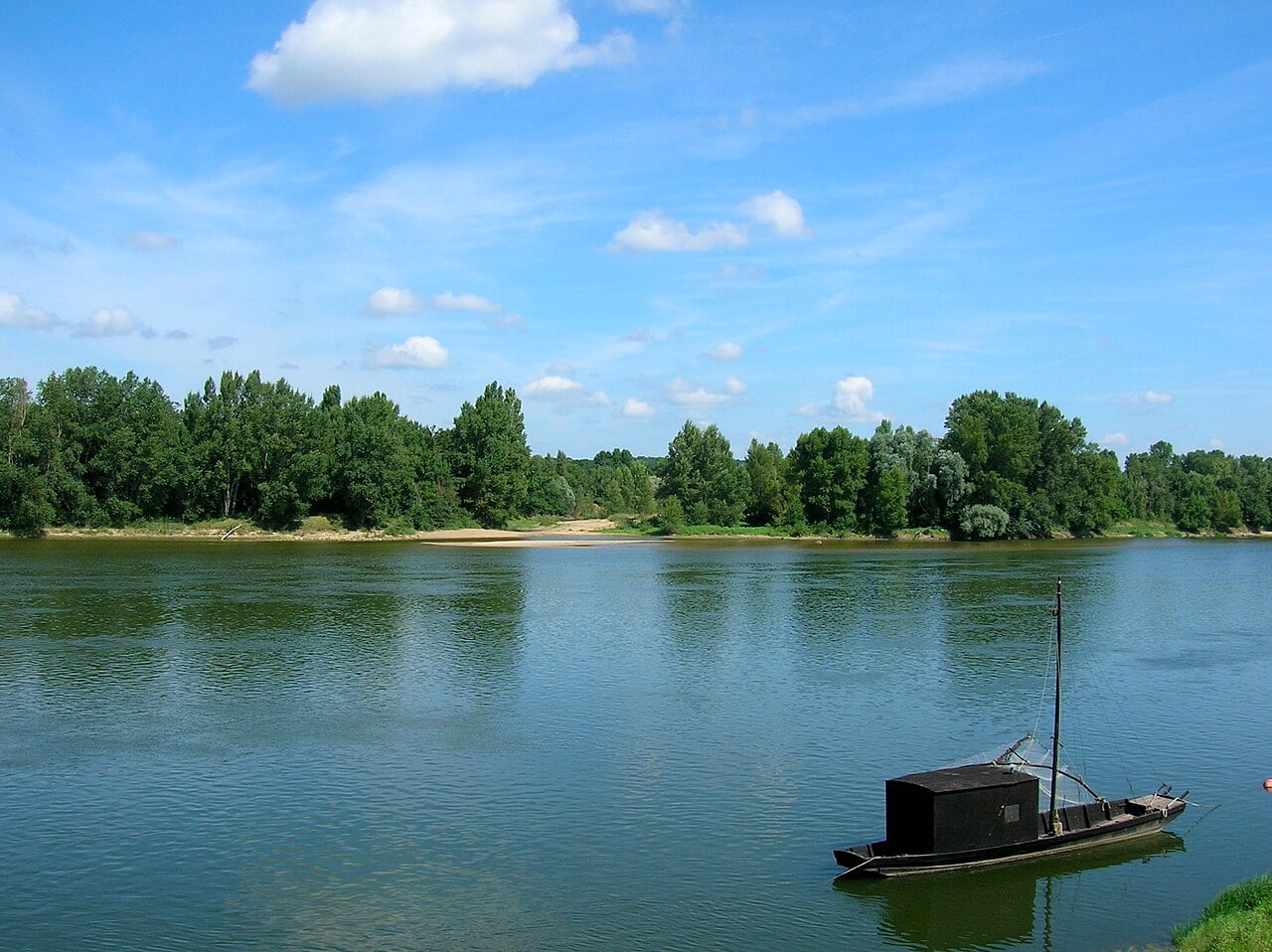
The Loire River, likely part of the Eridanos River of Greek mythology. Credit: Wikimedia Commons, CC-BY-SA 3.0, LPLT
The Eridanos River of Greek mythology is a mysterious river whose location has long been debated. Numerous real-world rivers around Europe have been suggested, but some scholars believe it is completely mythical and corresponds to no real-world location. Nevertheless, some may wonder where this river might actually be situated.
The Eridanos River of Greek mythology
To try to understand which real-world river it might correspond to, we first need to look at what ancient sources say about it. The Eridanos River is most famous for its connection with Phaethon and amber. In the relevant legend, it’s the river into which Phaethon crashes after he steals the chariot of the sun god.
Phaethon’s sisters, the Heliades, grieved the loss of their brother, and the gods transformed them into poplar trees. These trees, in turn, supposedly produced amber for which the river was well known. Numerous scholars have attempted to use this information to identify this body of water.
Furthermore, we know that the Eridanos River cannot have been an obscure, minor river. Hesiod mentions it in his list of the offspring of Oceanus. Eridanos appears first in the list, and Hesiod even calls it “deep-swirling,” which is an expression normally reserved for the great Oceanus itself.
Where was the Eridanos River?
With these facts in mind, what have scholars argued about the location of this river? Well, one popular candidate is the Vistula River, since this flows through Poland and leads to the Baltic Sea. This was a major source of amber in the ancient world, and this fits the criterion of the Eridanos River being a source of amber.
Furthermore, Herodotus associates the Eridanos River with a certain “northern sea.” Since the Baltic Sea is to the north of Greece, it could fit Herodotus’ description. However, another popular candidate is the Po River, which flows through northern Italy and enters the Adriatic Sea. In fact, several ancient sources explicitly identify the Eridanos with this real river. At first, that might seem to settle the matter. However, it’s more complicated than that.
A closer look at Herodotus’ description
Herodotus, in the fifth century BC, was not the first person to mention the Eridanos River. As we saw earlier, that was Hesiod. However, he does seem to provide the earliest useful description of it. His description reads:
“As to the extremities of Europe towards the West, I am not able to speak with certainty: for neither do I accept the tale that there is a river called in Barbarian tongue Eridanos, flowing into the sea which lies towards the North Wind, whence it is said that amber comes; nor do I know of the real existence of the Cassiterides from which tin comes to us… However that may be, tin and amber certainly come to us from the extremity of Europe.”
As we can see from this description, the Eridanos River was explicitly said to flow into the sea which lies towards the North Wind, and Herodotus refers to this region as the “extremity of Europe”. This definitively rules out the Po River, which flows into the Adriatic Sea near Greece itself.
Does this mean that the Vistula River is the most likely candidate? At first, that might seem to match Herodotus’ reference to the “extremity of Europe” and the fact that the river flowed into the sea towards the North Wind. However, that does not work either. Herodotus prefaces this passage by referring to the “extremities of Europe towards the West”.
Since the Vistula and the Baltic Sea are essentially directly north of Greece, this does not match this aspect of Herodotus’ description.
Jason and the Argonauts
Jason and the Argonauts disembark at Colchis, Charles de La Fosse, 1672. Credit: Wikimedia Commons, CC-BY-SA 3.0
The Argonautica, by Apollonius Rhodius of the third century BC, reveals the answer to this conundrum. Although it contains some fictional geography, it is clear about where the Eridanos River was supposedly situated, and this aligns perfectly with Herodotus’ description.
According to Apollonius, Jason and the Argonauts sail from the Black Sea through the Danube and then reached the Adriatic Sea via a fictional channel between the two. They then sail up into the Eridanos River, actually signifying the Po River in this context. Eventually, they make it to the Rhodanus River, or the Rhone as it is known today, a body of water which flows through France relatively close to the Po River source and then spills into the the Mediterranean Sea on the country’s southern coast.
This is significant because it demonstrates that the Greeks believed the Po and the Rhone were connected. In fact, other ancient texts attest to this same belief. Consequently, this means Apollonius is presenting the Rhone as part of the Eridanus River.
How the Argonautica reveals the true location of the Eridanos River
At this point in the Argonautica, the true nature of the Eridanos River is made clear. Apollonius writes:
“Thence they entered the deep stream of Rhodanus which flows into Eridanus; and where they meet there is a roar of mingling waters. Now that river, rising from the ends of the earth, where are the portals and mansions of Night, on one side bursts forth upon the beach of Ocean, at another pours into the Ionian Sea, and on the third through seven mouths sends its stream to the Sardinian sea and its limitless bay.”
Apollonius refers to the Eridanos River as having three mouths. One arm of the river flows into the Ionian Sea, which is an ancient reference to the Adriatic Sea. That is the arm of the river that Jason and the Argonauts have just been described as sailing up. Another one of the arms of the river is said to flow into the Sardinian Sea. That would be the Rhone, in accordance with Apollonius who explicitly presents the Rhodanus (the Rhone) as part of the Eridanos.
The third arm is the final piece of the puzzle. According to Apollonius, it flows into the “beach of Ocean.” Incidentally, this matches Herodotus’s description of the Eridanos flowing into the sea on the other side of Europe, which doesn’t match the Rhone nor the Po. The notable point is that this shows that the Ancient Greeks believed the Po, the Rhone, and a third river were all part of one enormous waterway in Europe, which they referred to as the Eridanos.
What was the third arm of the Eridanos River?
A few lines later, Apollonius refers to the mouth of the river in the southern part of France as the middle of the three mouths of the Eridanos. With the Po River having the mouth closest to Greece, and the Rhone having the intermediate one, the third mouth must have been even further west. This, again, is in harmony with Herodotus’ description, which associated the Eridanos with the western extremity of Europe.
Based on this, the only plausible candidate for the third arm of the Eridanos River is the Loire. This is a river whose mouth is further west than the mouth of the Rhone. It flows out into the Atlantic Ocean on the western side of France and is located towards the north—another detail of Herodotus to keep in mind. Furthermore, it flows quite close to the Rhone near its source, making sense of the belief that they were connected.
In summary, it appears that the Greeks imagined the Loire, the Rhone, and the Po Rivers to all be connected. The Greeks received their amber via the Po River, since it was the final part of the Amber Road which originated in the Baltic Sea. However, they believed that the Po was connected to the Loire.
This perfectly matches up with Herodotus’ description of the Eridanos River in its entirety. As we saw, he claimed it flowed into the sea on the other side of Europe and associated it particularly with the north and the west, which points to the Loire.

 Login
Login






.jpg)